Home Blog Page 1128

Steady tax and a risky gamble: this week at AMLO’s press conferences

0
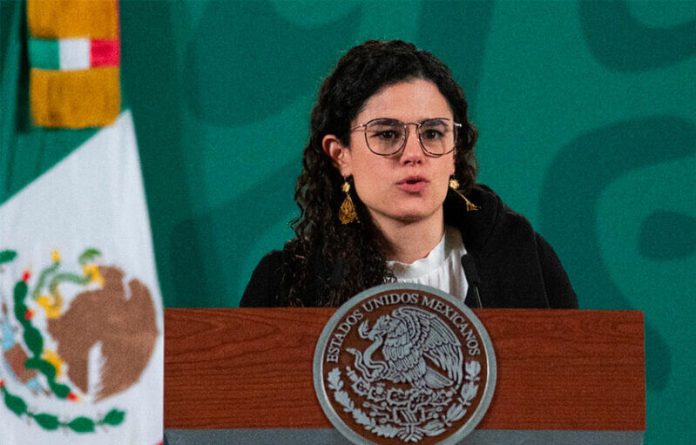
Labor Minister Alcalde
Labor Minister Alcalde speaks about the upcoming vote by Pemex workers to elect a new union boss.

As a young man, President Andrés Manuel López Obrador learned a brutal lesson about power and responsibility.

In 1969, when he was 15 years old, his younger brother, José Ramón López Obrador, was killed by a gunshot to the head. His death is shrouded in mystery. In a 2018 book, journalist Jorge Zepeda Patterson said José Ramón took the pistol to play with it, but it fell to the ground and fired.

However, newspaper reports published at the time implied young AMLO’s culpability. In 2000, the National Action Party’s Diego Fernández de Cevallos accused him of murder in a live debate.

No doubt, José Ramón was on AMLO’s mind on Tuesday, when Mexico observed the Day of the Dead.

Monday

The president took the first two days of the week to reflect during the Day of the Dead holidays, meaning no morning news conferences. Mexicans, especially in indigenous communities, take the first two days of November to honor their ancestors and lost loved ones.

Death is a tricky thing to avoid wherever you are, but in Mexico it is even harder. The cultural motif invades its art, songs, and covers most of its news cycle.

La Llorona, or the weeping woman, is but one popular example. In one version of the story, the mythological character is a beautiful woman named Xóchitl who marries a rich man. She has two children, but one day sees her husband with another woman. In a fit of blind rage, she drowns their children in a river, which she immediately regrets. Consumed by guilt, she drowns herself but is unable to enter the afterlife, and remains on Earth. Now, she roams the world searching for her children.

Tuesday

Octavio Paz, in his 1950 essay The Labyrinth of Solitude argued for the wisdom of the distinct conception of death, best represented by the Day of the Dead holidays, and derided the superficial alternative.

“Modern death does not have any significance that transcends it, or that refers to other values.  It is rarely anything more than the inevitable conclusion of a natural process.  In a world of facts, death is merely one more fact … The cult of life, if it really is deep and total, is also the cult of death. Both are inseparable. A civilization that denies death ends up denying life.” 
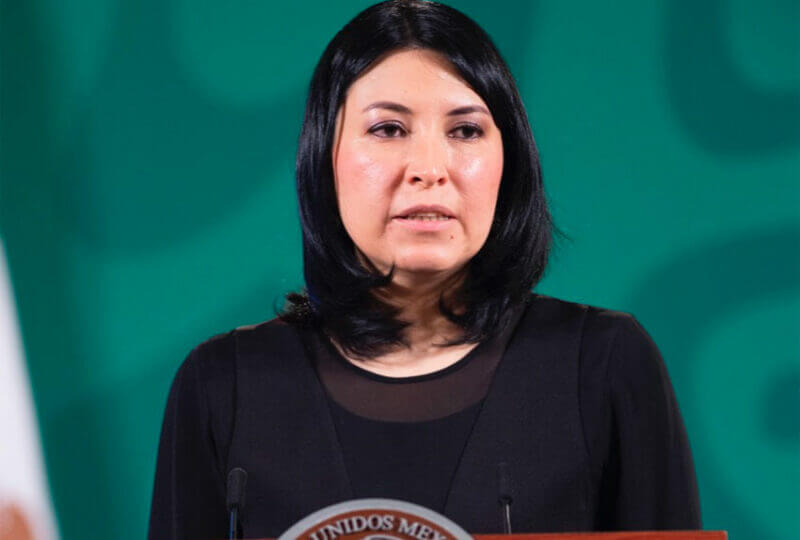
Deputy Finance Minister Victoria Rodríguez
Deputy Finance Minister Victoria Rodríguez gives a report on federal transfers on Thursday.

Wednesday 

“Good morning. Long time no see. Ánimo, ánimo,” said the Tabascan to open the press conference, using the Spanish word for spirit to enliven the room.

Media lies exponent Elizabeth García Vilchis responded to his call. She confirmed that Mexican airlines’ commitment to the new Felipe Ángeles airport and a fall in their share prices was a spurious correlation: the drop was instead related to COVID-19. A corruption study by the World Justice Project which placed Mexico in the bottom 135 of 139 countries was unreliable, she added: “It is financed by a U.S. organization and the specialists consulted are essentially opponents of the government.”

News website La Silla Rota accused AMLO of paying journalists 200,000 pesos to ask the right questions. “You [the journalists] have not requested it and we don’t give out envelopes. There are no bribes anymore,” the president responded.

Security Minister Rosa Icela Rodríguez addressed violence against women. Rape had gone up 28.7% in annual terms, while September saw a 63% fall in femicides compared to August, she said. 

The president confirmed that two migrants killed in Pijijiapan, Chiapas, on Sunday were shot by National Guard officers. “There are other ways to detain people who are breaking the law,” he conceded, thankfully. The some 2,500-strong migrant caravan arrived at the Pijijiapan two days after the shooting.

Chiapas returned to the conference some minutes later. Journalist Fredy López Arévalo was assassinated in the southern state; another journalist played a recording of his widow, who addressed AMLO directly: “Mr. President, I want to tell you that my husband believed in you … he did not miss a morning conference and my daily routine was to pass him his coffee so that he would be with you until the end, to start his day.

“They killed my husband in the most cowardly way, in the dark and from behind. He did not deserve that, he was an excellent father, he was an excellent friend, he was an excellent companion and, in truth, he believed in you, and [believed] that things can improve.” 

Thursday 

What was AMLO’s view on the 15% global corporate tax agreed by G20 countries, which included Mexico, on October 30?

“There is a monstrous inequality in the world and the United Nations has to act. I’m going to talk about that next Tuesday [at the UN summit], because that’s where all the problems originate,” he said.

The president added that his pandemic tax strategy, to not provide tax breaks to big companies, proved effective. “When the pandemic came … they pressured me. They suggested that we had to contract debt and we had to — I remember the proposal well — decree that large corporations weren’t going to pay taxes for a while to get them back on their feet. I said, ‘No, no, no. We are going to apply another formula.'” 
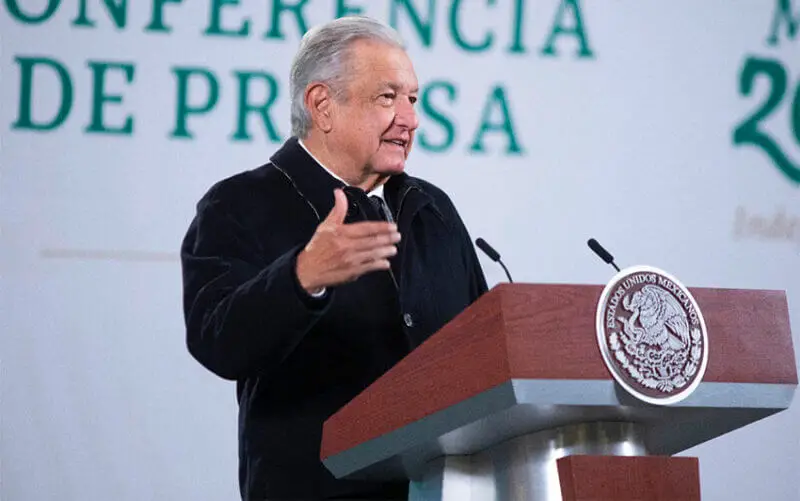
lopez obrador
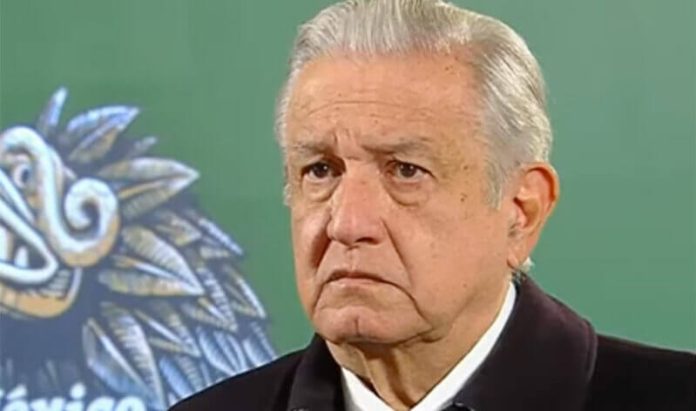
It was a cool morning Friday and the president was dressed for the weather.

On corruption, the president referred back to Odebrecht, the corrupt Brazilian construction company, to illustrate a justice problem. “It was very unfortunate that in the case of Odebrecht, corrupt officials were punished in all countries except in Mexico. The matter was covered up. I remember that the transparency institute decided at one time to keep Odebrecht’s file under wraps,” he said. 

Friday

“It’s getting cold,” the president said, as he opened the conference wearing a thick coat.

Elections for the Pemex union were coming up, and Labor Minister Luisa Alcalde was present to inform. “For the first time [Pemex workers] are going to elect their general secretary,” she said, adding that 89,000 workers were set to take part in the democratic exercise through electronic voting.

Later in the conference, AMLO pledged to retire not only if he lost the vote but if he lost and voter turnout did not reach the legally binding level of 40%.

“I’ll leave … even if I do not get 40% [turnout], because how am I going to govern without the support of the people? What can I do without the support of the people? How do I confront the mafia of power without the people?”

The weekend beckoned, and it would see the president in three states. Refineries were the common thread in Salamanca, Guanajuato; Tula, Hidalgo; and Madero, Tamaulipas.

Mexico News Daily
Indigenous families in medical crisis find a second home in Casa Huichol

0
Casa Huichol, Guadalajara
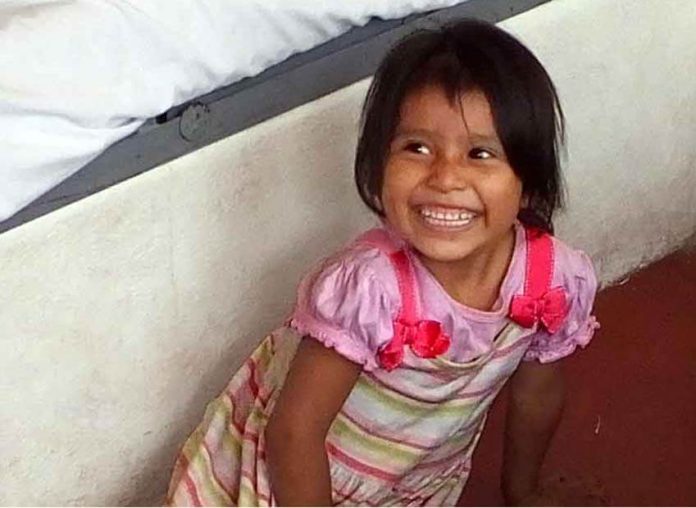
A happy face in one of Casa Huichol’s three dormitories.

Before nurse Rocio Echevarría founded Casa Huichol in Guadalajara to shelter members of Jalisco’s Wixáritari who had family in the public hospital, there was usually one option available to the hospitalized person’s loved ones.

Sleep on the street behind the hospital building.

But for the last 38 years, members of this indigenous group of the Sierra Madre Occidental, more well-known as the Huichol, have found lodging and food here, thanks to Echevarría.

The name Huichol, by the way, means “one who runs away,” while Wixárika means “person with a big heart who loves knowledge.” (The plural is Wixáritari.) It’s easy to see which name these people prefer; Huichol has been used for so many years, however, that it’s hard to eliminate it completely.

Echevarría’s story with the Wixáritari began in 1970, when she graduated from university as a nurse.

“At that time,” she told me, “the president of Mexico, Luis Echeverría, organized a conference in which he said that no previous government had ever opened a door to the indigenous people of Mexico but that now university graduates in the healthcare field from all over the country could carry out their servicio social in native communities.” Servicio social is the two years of required volunteer service that students must give to the nation.

Casa Huichol, Guadalajara
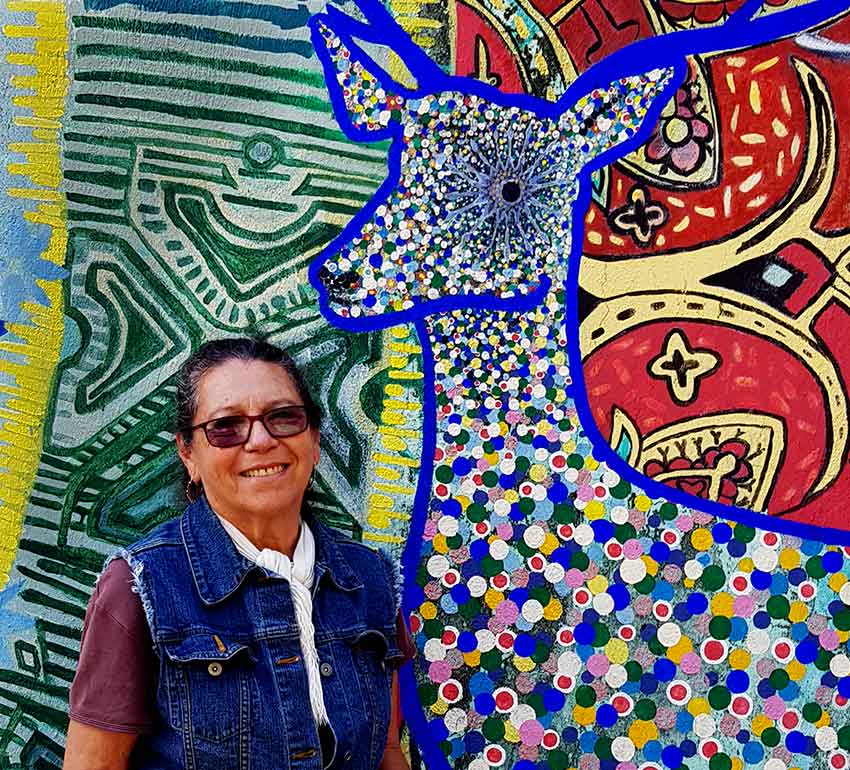
Rocío Echevarría ran health centers in remote Wixárika villages for 10 years before founding Casa Huichol.

Previous to 1970, she told me, the indigenous communities had been excluded from rights common to all other Mexicans: to education, to healthcare and to agricultural and cattle-raising programs. They had been considered separate and had been disregarded — and they themselves had made no effort toward integration.

“Those were also the years when women first started attending universities, and I had taken advantage and had become a nurse,” Echevarría said. “And now, along came this chance to get to know the native people of this country, so my mother said, ‘Hey, Rocio, why don’t we go to one of the Huichol missions?’

“Well, at first, I said, ‘No way,’ but then I ended up at the mission of Santa Clara, which is one hour from San Andrés Cohamiata, located 200 kilometers north of Guadalajara in very rugged territory in the middle of nowhere.”

Echevarría immediately fell in love with the Wixáritari and decided that this was exactly where she would work.

“The [federal] Health Ministry, however, said, ‘Hold on a minute! This is a federal project, and you need permission!’ So I had to go to Mexico City, where I told them I’d like to do my social service in the health center of San Andrés Cohamiata. It turned out that they were very surprised because absolutely no one else had shown the slightest interest in working in that isolated place.”

With the blessing of the Health Ministry, she went back to San Andrés Cohamiata for the next six years.

Casa Huichol, Guadalajara
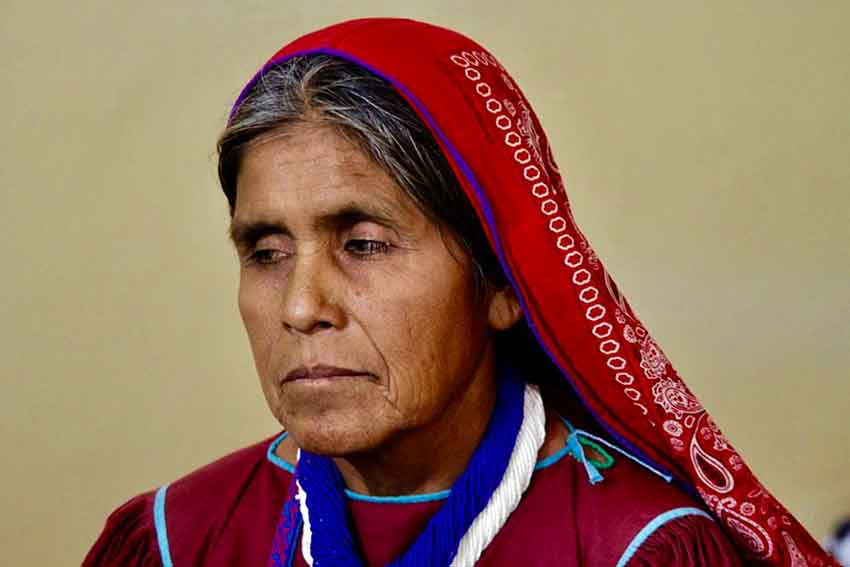
Carmela’s husband is in the hospital with a burst tumor. The couple hitchhiked seven hours to reach Guadalajara. Brince Tapia

“It was a very strong experience for me. It changed my whole outlook on health and medicine. I discovered that salud [health] is very, very relative,” she said. “That little town had never had a doctor in its entire history, but everybody was still alive! OK, they had plenty of health problems like fungi, parasites, fleas and lice and lots of ticks. And they suffered from epidemics; influenza would appear, and it would tear through the community. Some would die. But in the end, most of them survived. And there they were!”

Over time, Echevarría grew close to the residents. It was then that she began to know the people who had been taking care of local health problems long before her arrival: the marakames (medicine men, or shamans).

“The marakames have an extraordinary ability to see an infirmity holistically, even if it’s a case of ticks or fleas,” she said. “They help you refocus on your problem, to see it in a wider context so that you can transcend it. If you really know what the problem is, you can resolve it. Observing the marakames at work led me to believe that the majority of diseases are psychosomatic.”

Echevarría believes that her fellow nurses and doctors are missing something that the marakames possess.

“They are psychiatrists and psychologists. They know how to deal with psychic and spiritual problems without making you feel that you’re crazy, without giving you tranquilizers or some drug that saps your energy, keeps you drowsy all day and takes away your will to fight,” she said. “You go to them and say, ‘My husband left me,’ and they show you that you are passing through a bad moment but that you’re not crazy.

Casa Huichol, Guadalajara
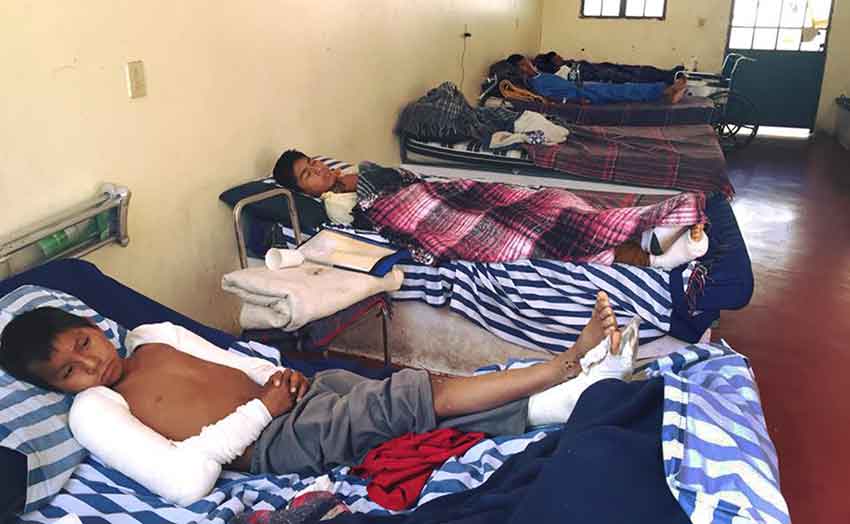
Living in remote villages, it’s not feasible for families to return to Guadalajara for medical follow-ups, so discharged patients stay here to recuperate or do rehab.

“The marakames taught me that the most important thing … is that I need to be well-centered, perfectly well-centered, in my totality. Really, I wish that we had people like them in [the medical] profession. The marakame is like an M.D., a priest and a psychiatrist all rolled into one — and he’s a member of your community, a neighbor whom you know.”

Another discovery she made during her 10 years of work in remote Wixárika villages related to the traditional indigenous diet.

“Today we have severe health problems that the COVID pandemic is pointing out to us,” she said. “All the people who have died of COVID were already damaged. Their bodies were not fortified because we have replaced alimentación [nutrition], with comida [food].

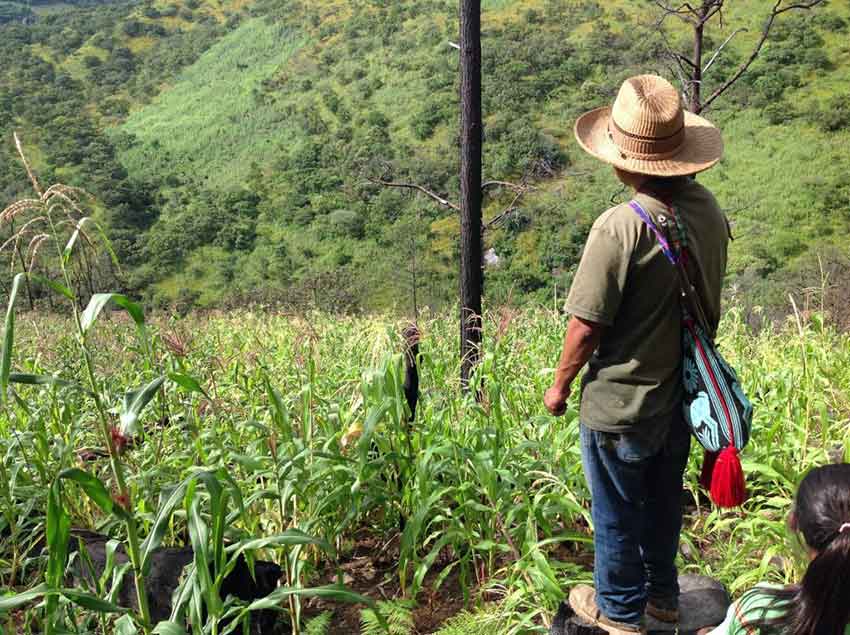
“But the Wixáritari still have their coamiles [plots of land where corn, beans and squash grow together]. They plant their corn — real corn, not genetically modified corn — and they eat their beans, wild fruits, camotes del cerro [mountain yams] and mushrooms in the rainy season. And all these foods are really nutritious.”

Echevarría says that she has come to the conclusion that “the really healthy person is the person who is equilibrado — balanced and centered. You can solve your problems, and once you do, your mind can rest, your body can rest,” she said.

“We eat a lot,” she added, “but very little of it is healthy. They [the Wixáritari] eat little but with complete nutrients.”

Casa Huichol, Guadalajara
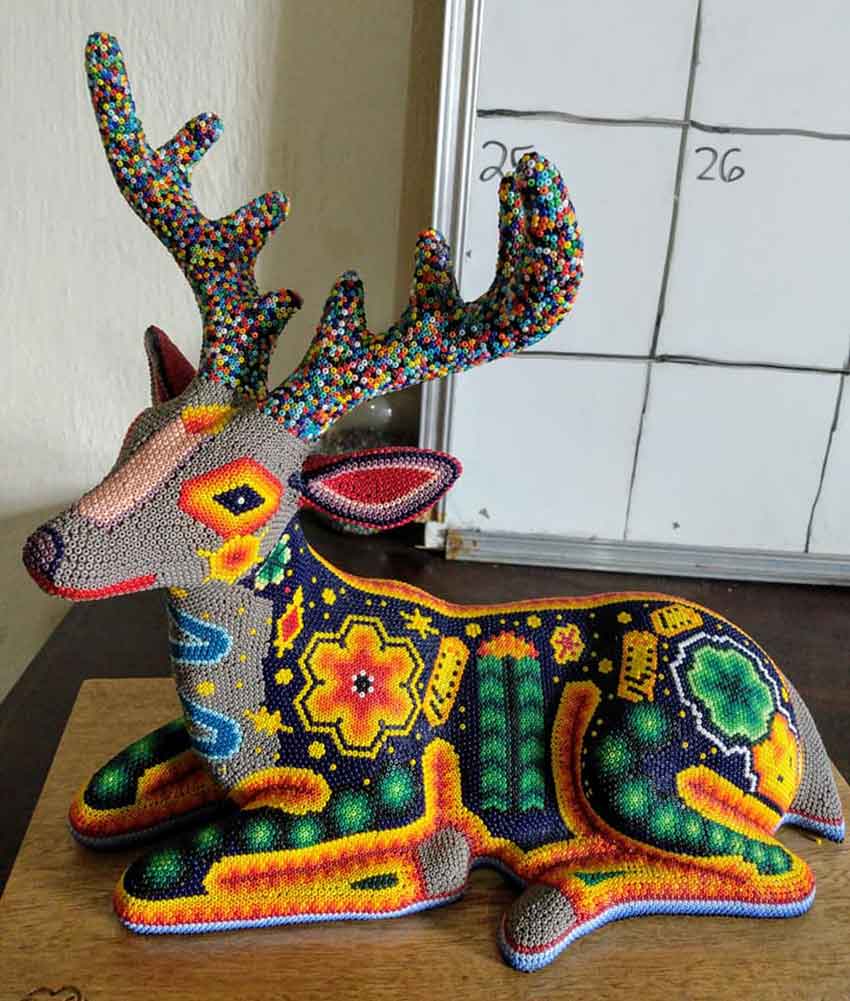
A deer covered with chaquira (beads). It is said that the deer led the Wixáritari to their sacred peyote.

Casa Huichol has three dormitories with 36 beds. “Here, we receive all the people that the Health Ministry sends to Guadalajara for surgery, for hemodialysis, for cancer treatment,” she said, “and we receive them free of charge.”

Besides providing shelter and food for family members who accompany a patient, Casa Huichol also accommodates people who are released from the hospital.

“Very frequently, the patient is told to come back in a week or in 15 days for a checkup,” she said. “So here is where that person stays until they are free to go back to their village. They eat here, they bathe here, they wash their clothes. From day to day, Casa Huichol typically cares for 25 or 30 persons.”

Running the operation keeps Echevarría on her toes.

“It’s a dance,” she said. “At any moment, some people are leaving, others are arriving and some are long-term residents — children who are undergoing rehabilitation, for example. Some of them might stay here for five years easily.”

“If it weren’t for us,” she explained, “they wouldn’t go through with the entire rehabilitation program and they would end up being a burden to their family and their community. Those recuperating from cancer are also long-term. These people need to follow their complete treatment protocol, which can be extensive. Since they don’t have a place to live in Guadalajara, this becomes their home.”

Casa Huichol, Guadalajara
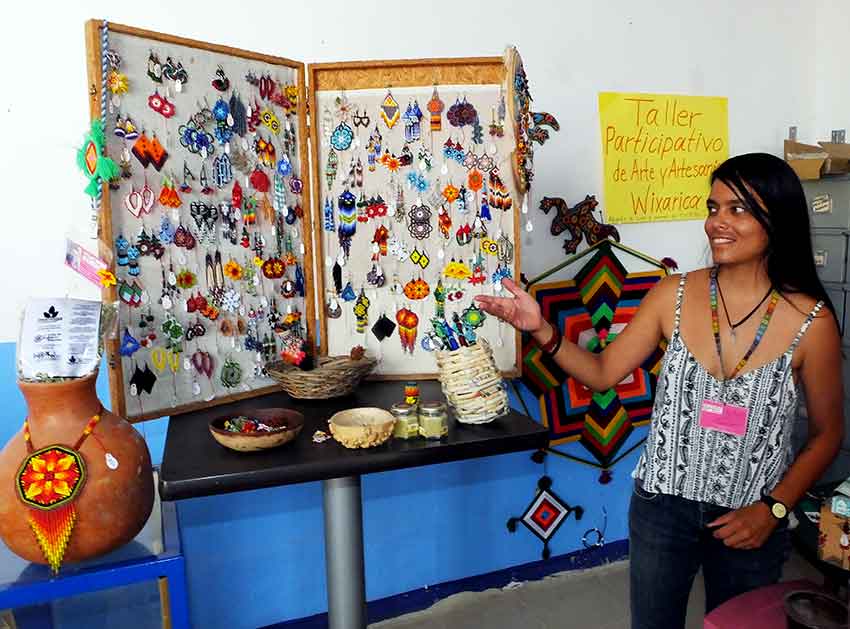
Marina Torres with a few of the many handicrafts for sale at the center’s gift shop.

Everything that goes on at Casa Huichol depends either on the sale of Wixárika arts and crafts or on donations. Fortunately, the Casa De Salud Huichol website has big buttons you can easily click on (even if you don’t speak Spanish), should you like to help them out. Casa Huichol is also on Facebook, the easiest place to find out which craftwork is currently available.

And, yes, they can ship to anywhere in Mexico or elsewhere.

The writer has lived near Guadalajara, Jalisco, since 1985. His most recent book is Outdoors in Western Mexico, Volume Three. More of his writing can be found on his blog.

Casa Huichol, Guadalajara
A morral de chaquira (traditional haversack, decorated with beads) is for sale on Casa Huichol’s Facebook page.


Casa Huichol, Guadalajara
What you can find on a Wixáritari coamil (a small plot of land): mume (beans), ikú (corn), rutsi (squash) and green tomatillos.


Casa Huichol, Guadalajara
“And I found this incredible mandala in the gift shop,” says visitor Rodrigo Orozco.


Casa Huichol, Guadalajara
A member of the Tateikie, a Wixáritari community in San Andrés Cohamiata, Jalisco, looks over his crops. Brince Tapia

AMLO takes aim at middle class for lack of humility at vaccination sites

0
lopez obrador
AMLO plays the role of the angry and ungrateful middle class vaccine recipient.

The middle class should be more grateful to be vaccinated against COVID-19, President López Obrador said Friday in another monologue revealing his antipathy for a large sector of the population.

The president held up the poor as a better example of human nature during his morning press conference.

“Humble people are grateful, are good. They are not know-it-alls; they act with humility. The other day I was saying that when a middle class person gets vaccinated, I’m not generalizing, but they arrive at the vaccination center upset,” the president opined before proceeding to generalize.

“‘How long will it take?’ ‘No, señora, it won’t be long,’” he said, imitating a dialogue between his archetypical angry middle class woman and a harried healthcare worker.

“What vaccine is it? … I don’t want the vaccine where they give me the communist chip,” he continued haughtily, mocking the recipient. “Why did it take so long? … They are obligated to vaccinate us. It’s our money, it’s our taxes.”

The poor, meanwhile, are silent and thankful, he said.

“A humble person, even knowing that it is money from the budget and that it is a government responsibility … goes in silence, gets the vaccine, [and says] ‘Thank you, many thanks.’”

“Hopefully as we move up the social ladder, the economic ladder, we don’t forget humility,” the president concluded, adding that humility is power.

Mexico News Daily

Cartel threatens musicians with violence if they perform at México state fair

0
Metepec narco banner
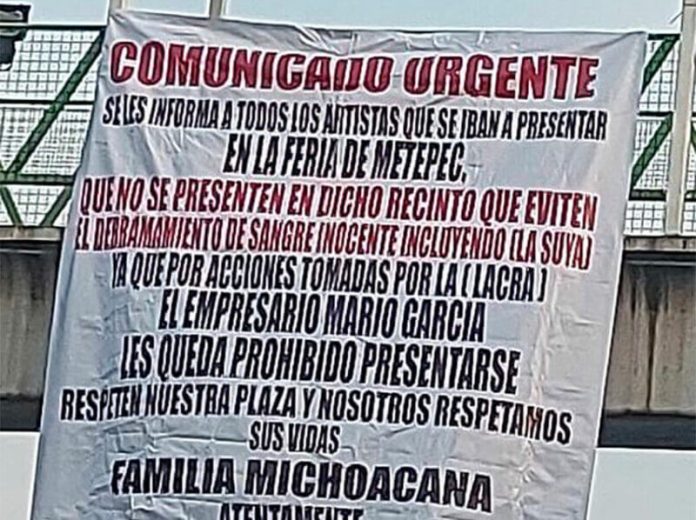
Metepec narco banner: 'Innocent blood will be spilled.'

A drug cartel is attempting to shut down live music performances at a popular fair in the state of México.

On Friday morning, narco banners appeared around the city of Metepec threatening the lives of any musicians who dared to perform at the 2021 Metepec Fair, in a possible case of unpaid extortion.

The banners, signed by the Familia Michoacana, were hung from overpasses and directed at the fair promoter Mario García.

“Urgent message: We inform all the artists who were going to perform in the Metepec Fair not to perform at that venue, to avoid the spilling of innocent blood including theirs … due to the actions of that bum, the businessman Mario García, they are prohibited from performing. Respect our organization and we will respect your lives. Familia Michoacana,” read the banners.

The fair started with a performance by El Komander on October 29 and is scheduled to continue through November 14, with shows by many prominent musicians including La Sonora Dinamita, La Arrolladora Banda El Limón, Christian Nodal, Julión Álvarez and more.

On the opening day, the state government suspended proceedings for several hours due to missing permits and security measures, but eventually allowed the event to proceed.

So far, neither municipal authorities nor the fair organizers have made statements as to whether the fair will be suspended.

The threats follow a Thursday confrontation between police and presumed members of the Familia Michoacana in southern México state. The incident left two officers dead and six injured.

With reports from Reforma and Plana Mayor

National Guard accused of undue force; migrants respond with vicious attack

0
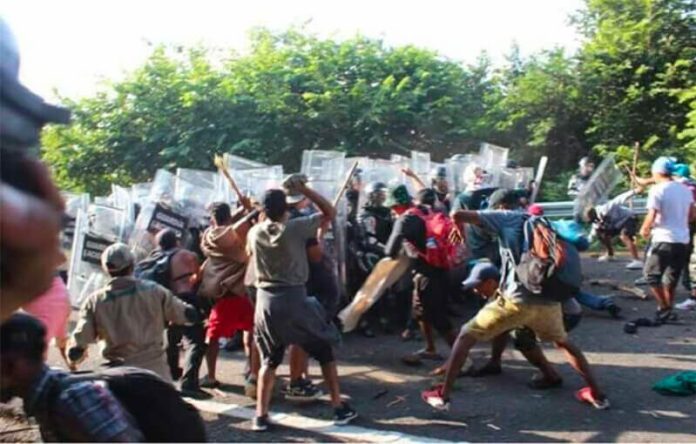
Migrants take on the National Guard on a highway in Chiapas.
Migrants take on the National Guard on a highway in Chiapas. el orbe

Violence broke out between migrants and security forces Thursday when the National Guard detained about 30 migrants at the back of the 2,500-strong caravan which has been traveling north through Chiapas since October 23.

The move triggered a vicious attack against some 50 National Guardsmen equipped with riot gear. At least as many members of the migrants caravan armed themselves with sticks and stones and eventually began forcing the troops back along the highway.

At one point, one of the National Guard troops fell and was immediately fallen upon by at least a dozen people who launched a violent attack, kicking the man and throwing rocks at him from point-blank range as he lay unconscious on the roadway. One took up his shield and struck the man repeatedly with its edge.

But shortly after other migrants arrived, provided the Guardsman with protection and carried him away from the scene.

The migrants caravan had departed from Pijijiapan at 6 a.m. Thursday in the direction of Tonalá. In a short time, it became dispersed, with faster walkers racing ahead despite efforts by organizers that the convoy be led by slower walkers. 

At the back of the line, meanwhile, the Guard appeared to move in to detain the stragglers. Witnesses said children were being handled with undue force; in one case a girl was picked up by her hair. About 30 migrants were detained, the newspaper El Orbe reported.

The National Guard said in a statement later that “between 100 and 150 migrants … attacked [them] with sticks and stones” and five Guardsmen had been hospitalized with injuries. 

A representative of the National Human Rights Commission observed that most of the National Guard are drafted directly from the military, and some are carrying mental health issues from conflict. He added that they are better trained for combat than controlling migration.

With tensions high under a blazing sun, the caravan reconvened and continued to Nuevo Milenio Santa Cruz where it rested at midday before moving on to Tonalá.

Some migrants walked but the majority hitched rides on empty trucks despite truckers having been warned not to pick up migrants because they could face charges of migrant trafficking, the Associated Press reported.

The migrants are now nearing Arriaga, seen as an important milestone on the journey because it is the southernmost point of the rail line on which the freight train known as The Beast operates. The train has long been a transportation option for migrants, albeit a dangerous one.

Caravan leader Irineo Mújica has said he plans to make for the Chiapas capital of Tuxtla Gutiérrez.

Meanwhile, there is also an immigration checkpoint on the way to Arriaga, where some observers have predicted another showdown with security forces.

Mexico News Daily

This annual contest in Querétaro is a mournful affair

0
María Ofelia Ramírez in Queretaro mourning contest
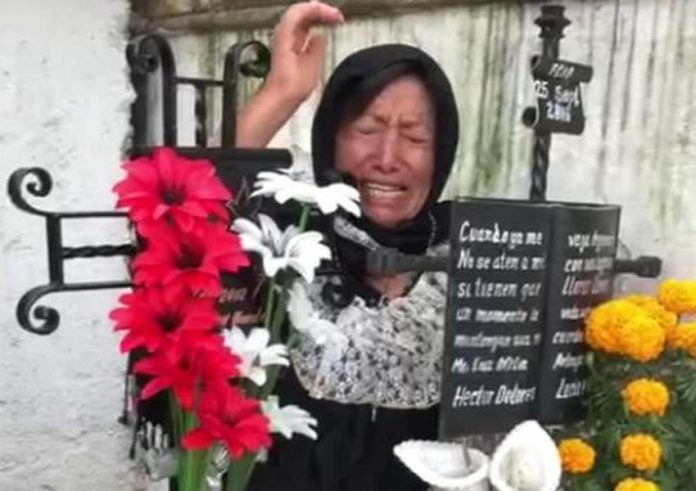
María Ofelia Ramírez's screams of anguish won her 4,000 pesos and the glory of being named San Juan del Río's No. 1 mourner. photos from Facebook

“My God, why did you take him? My love, I can’t believe it. Ay, Señor!”

Those words, amid sobs and screams of anguish, won María Ofelia Ramírez Arteaga 4,000 pesos in the 15th annual Querétaro mourning contest, held to celebrate Day of the Dead.

Hosted by the San Juan del Río municipality, the contest commemorates not just those who have passed away but also a tradition that is in the process of disappearing. The competition is known as a plañidera contest, plañideras being the women formerly hired by rich Mexicans to cry at high-status funerals.

The work of the plañideras “has diminished year after year, especially in the cities. The history [of the tradition] is very old and came to Mexico via Spain. It represented circumstances of status to have people crying in the funerals,” said Luis Guillén, minister of culture, tourism and youth for San Juan del Río in 2020.

To participate, contestants sent in videos of dramatic mourning reenactments to the municipal Institute of Culture, Tourism and Youth, where a panel of three judges selected the winners. The top mourners were announced on November 1, and prizes were awarded the following day.

In her first-place entry, Ramírez enters the cemetery at Tequisquiapan, Querétaro, in an edited cell phone video. Stately stone pathways pass under tall pines, leading her to the flower-strewn grave of her lost loved one. Carrying a rosary and sobbing plaintively, Ramírez bemoans her loss for several minutes.

Isidra Ávila Salauz took second place and won 2,500 pesos for a theatrical rendition that included writhing in the dirt next to the grave of “Roberto.”

“Roberto, you had only just accomplished your goal! The presidency!” Ávila shouted, pounding the grave with her fist. “Oh God, why?”

Finally, María Silveria Balderas Rubio took third place and 1,500 pesos, and Mariana Rodas Aguilar won a special comedy prize for a video mourning the loss of her doctor.

“My doctor, who will calm me now? Who will cure me? Migraine, gastritis, hypothyroidism, hypertension …” she sobs in a similarly campy cadence to the non-comedy winners. “Who will give me my … medicine?” she asks, tenderly stroking the coffin and glancing slyly at the camera.

San Juan del Río’s popular Day of the Dead festivities also included infant costume contests, altar competitions, Day of the Dead-themed mask contests, traditional dance and much more.

Mariana Rodas Aguilar mourning contest
Mariana Rodas Aguilar won a special comedy prize for an over-the-top comedic video of a woman mourning the loss of her doctor.

With reports from Milenio

Baja man had little time to enjoy his new truck, so he was buried in it

0
burial with truck
The truck is lowered into the grave, left, followed by the coffin.

It took rather more than a six-foot grave to bury a Baja California Sur man this week: it had to be big enough to accommodate his pickup truck as well as his coffin.

Fisherman Adán Arana of San Carlos, located some 260 kilometers north of La Paz, died after suffering health problems during the last two months.

Those problems, according to local media reports, prevented him from enjoying the pickup truck recently given to him by his son.

So when he died, his son decided the best he could do was bury his father with his truck.

A large grave was excavated in a local cemetery and lined with concrete blocks before a crane was brought in to lift the truck and place it inside.

The final step before covering the grave was to lower the deceased’s coffin into the cargo bed of the truck.

Some observers applauded the gesture but others questioned its legality. Local authorities were unaware of the construction of the tomb, there having been no request for a permit.

But in the meantime Adán Arana rests in peace in his pickup.

With reports from El Universal and BCS Noticias

Cold front No. 7 to deliver lower temperatures in 19 states

0
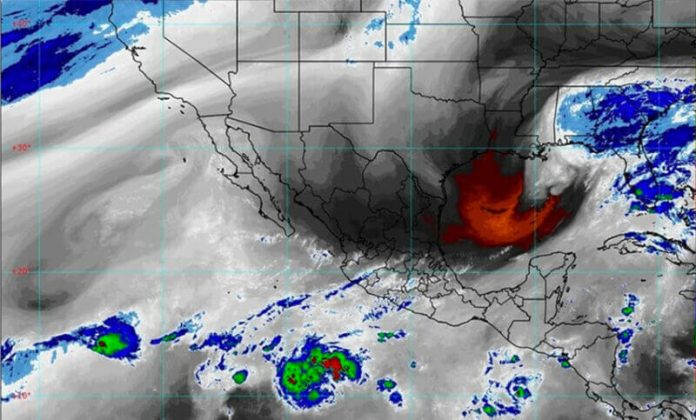
The cold front as of 5:00 a.m. CT Friday.
The cold front as of 5:00 a.m. CT Friday. conagua

Cold front No. 7 is expected to sweep through Mexico over the next few days, bringing low temperatures in 19 states.

The National Meteorological Service (SMN) said the front will move through the northeast, east and southeast regions, bringing rain and electrical storms in addition to cold to those areas while also affecting the center of the country.

Mountainous areas of Chihuahua and Durango can expect temperatures from -5 to 0° C and frost. Temperatures of 0 to 5° C and possible frost are forecast in mountainous zones of Baja California, Sonora, Coahuila, Nuevo León, San Luis Potosí, Zacatecas, Guanajuato, Jalisco, Michoacán, Querétaro, Hidalgo, Veracruz, Oaxaca, Puebla, Tlaxcala, México state and Mexico City.

The coast Veracruz can expect wind gusts up to 80 kilometers per hour, a phenomenon known as “El Norte,” with increased wind speeds extending down through the Gulf and Isthmus of Tehuantepec.

The cold front will also deliver heavy rain on Friday in Tabasco, Veracruz, Oaxaca and Chiapas.

Mexico News Daily
Record seizure of 118 kg of fentanyl in Sinaloa; laboratory shut down

0
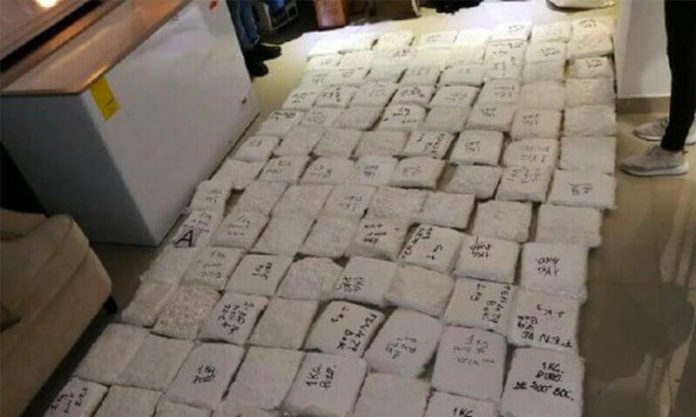
Fentanyl seized at a laboratory in Sinaloa.
Fentanyl seized at a laboratory in Culiacán.

Mexico has made its largest seizure ever of pure fentanyl and simultaneously arrested an important Sinaloa Cartel leader, the Ministry of Defense (Sedena) announced on Thursday.

The bust seized 118 kilograms of fentanyl worth nearly 1 billion pesos (US $50 million). It occurred October 28 in Culiacán, Sinaloa, but was not confirmed by the government until November 5. The army, National Guard and personnel from the federal Attorney General’s Office also arrested Armando “El Inge” Bátiz Camarena, a prominent leader of the Sinaloa Cartel, and four collaborators, all without firing a shot, the government said.

Fentanyl is a powerful opioid, 50 times stronger than heroin, and has been a leading cause of death by overdose in the United States opioid crisis.

In addition to the fentanyl, authorities seized four bags of fentanyl paste precursor; two kilograms of Inositol, a substance used to cut illegal drugs; five firearms and ammo; two vehicles; US $14,660; tens of thousands of pesos and a small amount of Venezuelan bolivars. The facility included five buildings, including a laboratory and a distribution center. Authorities estimated that the arrested individuals produced up to 70 million fentanyl pills a month.

The bust is the second blow to the Sinaloa Cartel in a matter of weeks: on October 23, Francisco “El Jaguar” Arvizu Márquez, another Sinaloa Cartel cell leader, was arrested in Madera, Chihuahua, after a shootout with the military.

Seizures of fentanyl have been on the rise in the past year, Sedena announced in October. From the beginning of the year to September 21, 2021, the government seized 1,225 kilograms, a 16.5% increase over the same period in 2020.

Mexico News Daily

Amid questions and criticism, electrical reform initiative postponed till next April

0
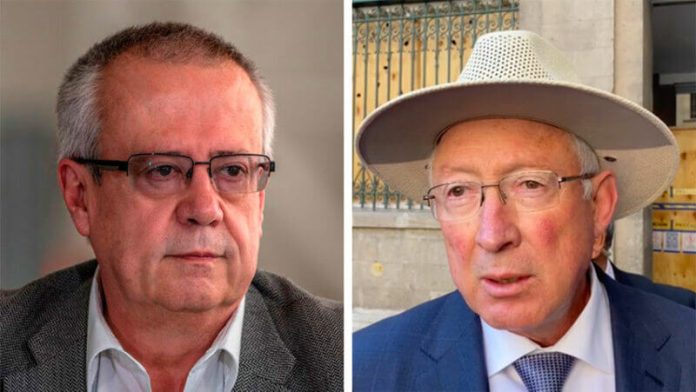
Ex-minister Urzúa, left, and Ambassador Salazar
Ex-minister Urzúa, left, and Ambassador Salazar: criticisms and concerns over reform plan.

The Morena party and its allies in the lower house of Congress have agreed to postpone the vote on President López Obrador’s controversial electrical reform in the midst of a growing chorus of criticism.

But it doesn’t appear to be the critics who have delayed the vote but the lack of support for it among lawmakers. 

The reform, which the government insists is necessary to guarantee low energy prices, requires a two-thirds majority vote in Congress because it means changing the constitution.

On Thursday, Morena, the Labor Party and the Green Party decided to wait until next April before proceeding with the reform initiative.

Among the critics this week were U.S. lawmakers and López Obrador’s first finance minister. In addition, U.S. Ambassador Ken Salazar stepped in with a Twitter post expressing concern.

“I had important meetings with the Mexican government to discuss the reform of the power sector. I want to learn more about the impetus for the proposed constitutional reform. I also expressed serious concerns for the United States. We committed to continuing our dialogue on these critical issues.”

Former finance minister Carlos Urzúa warned that the reform could prove to be the worst mistake of the López Obrador government, with effects in the short, medium and long term.

Speaking on Wednesday before the Citizens Movement bloc of lawmakers in the lower house of Congress, he said the plan underestimates what may happen as a result of the rejection of clean energy.

“It won’t only have a strong environmental impact but will also cause a long and costly legal process for the compensation they will have to pay, and all this to defend a state company that doesn’t have the resources or the efficiency to guarantee electricity supply throughout the country.”

It would also have a negative affect on the foreign investment that Mexico needs due to the coronavirus pandemic, said Urzúa, who left the federal cabinet after less than a year as finance minister due to differences of opinion with the president.

He described the reform as “the great challenge that Mexico faces” and called on opposition parties to fight it. If it passes he said, it will be “extremely dangerous” for the nation.

In the U.S., 40 Republican lawmakers called for pressuring Mexico over what they called discriminatory actions that hurt U.S. energy companies.

They said in a letter on Wednesday that Mexico’s plans violate the terms of the U.S.-Mexico-Canada trade agreement, and called for “a timely and clear response” to policies and actions that they say violate and undermine the treaty. 

The reform would give the Federal Electricity Commission 54% of the electricity market, and eliminate two independent energy regulators. 

A draft study by the U.S. Department of Energy warned last month that the bill would bump emissions by up to 65% as more electricity would be generated by inefficient and dirty power plants operated by the Federal Electricity Commission. It also predicted higher electrical generation costs.

With reports from El Universal