Home Blog Page 1190

Potholes are bigger worry for citizens than security: López Obrador

0
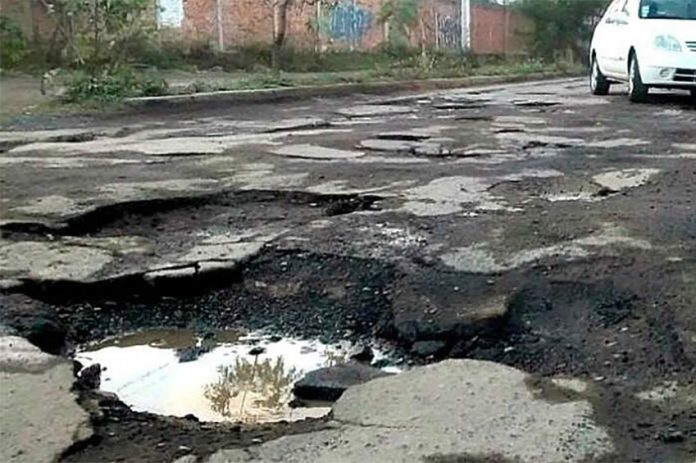
Potholes in Mexico City
Potholes in Mexico City: of greater concern than crime.

The president announced a nationwide plan to repair potholes during Monday’s press conference in response to a question about the security situation in Mexico.

A journalist challenged the president on security and presented data published by the federal statistics agency Inegi indicating that 66.6% of adults feel that living in their cities is unsafe.

But the president pointed to other Inegi data: 75.9% of respondents believe the main problem in their cities is potholes, while 58.5% listed street lighting as an issue.

Crimes such as robberies, extortion and kidnappings appeared as the fourth highest concern, at 56.7% in March and 56.2% in June.

“Soon we’re going to run a special program for potholes [in cities] all over the country. We are going get agreement with state governments, with municipal governments, because it is the main problem for the people who live in the cities,” the president said.

“Look what is in first place: potholes in the streets … We’re going to allocate a special budget,” he added.

As for security, the president attributed high rates of homicide to the mistakes of his predecessors.

Earlier in the conference, which took place in Puerto Vallarta, Jalisco, Governor Enrique Alfaro Ramírez revealed that homicides had increased 20.6% in the state in the first six months of 2021 compared to the same period in 2018.

Of the 1,492 murders reported in the first half of the year, 194 of the victims were found in clandestine graves and 1,296 were victims of direct attacks. Alfaro added that 81% of the murders were related to organized crime.

Jalisco is the base of the Jalisco New Generation Cartel, which is arguably the most powerful organized crime group in the country.

With reports from Reforma

Searching mothers plea for cartel truce to allow search of ‘extermination camp’

0
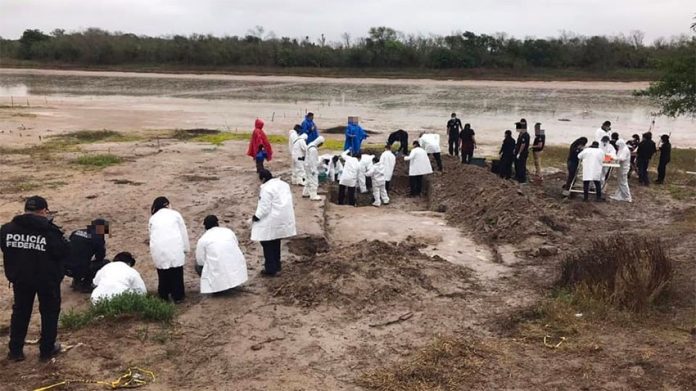
Forensics investigators search for bodies
Forensics investigators search for bodies at La Bartolina, Tamaulipas.

Mothers of missing children in Tamaulipas have issued a plea to the Gulf Cartel to allow them to search for their loved ones’ remains in an “extermination camp” near the border city of Matamoros.

The Tamaulipas Union of Collectives of Searching Mothers sought a “truce” from the criminal organization, which is based in the northern border state, to allow them to enter a property in an area called La Bartolina, located about 25 kilometers east of Matamoros.

“We’re not looking for culprits, we’re looking for our children, fathers, mothers, siblings and [other] relatives,” the group said in a statement.

The mothers and other relatives of missing people said they intend to stage a protest at the property to demand that authorities exhume and identify buried remains and turn them over to their families.

“As the good human beings we are, we appeal to your compassion and good heart so that you allow us to go the La Bartolina property in your city to demand that the authorities of the three levels of government do the necessary work to start to exhume the remains that they find [there],” the union of collectives said.

Signed by members of 200 families of missing people, the statement was directed to the leader of the Gulf Cartel faction known as the Cyclones of Matamoros.

They described not knowing the whereabouts of their missing loved ones as “endless torture” that is too much to bear.

The statement called on the Cyclones to respond to the request via a narco-banner, several of which were hung in public places in Tamaulipas cities last week to announce a truce between three feuding factions of the Gulf Cartel.

“… We’re relatives of missing people who just want to know if our family members are at La Bartolina; we’ll tie a white kerchief to our left elbows and carry white flags as a sign of peace,” it said.

The head of the National Search Commission said last month that federal and state authorities have been recovering remains from the site since 2017.

“Since 2017 to May 28 [of 2021] at least 500 kilograms of charred bone remains have been recovered,” Karla Quintana said.

The federal government recently acknowledged that the property operated as an effective extermination camp for the notoriously violent Gulf Cartel between 2009 and 2016. The army first detected in April 2016 that it had been used as a location to torture, kill, burn and bury kidnapping victims.

Despite the recovery of hundreds of kilograms of human remains, the family members of missing people evidently believe that more body parts are located at La Bartolina. The fact that the Tamaulipas collectives directed their statement to the Gulf Cartel’s dominant faction in Matamoros, rather than authorities, is testament to the power the criminal group holds.

Federal authorities accuse state Governor Francisco García Cabeza de Vaca of having ties to organized crime but have been unable to take him into custody due to his immunity from prosecution in Tamaulipas.

With reports from Milenio and Animal Político 

Mexico wins gold in international math competition

0
Gold medal winner Rodrigo Saldívar.

Mexico has won a gold medal in mathematics for the second time at the International Mathematics Competition (IMC).

Elementary school student Rodrigo Saldivar Mauricio, 11, from Zacatecas won the gold in an individual competition.

The tournament was organized by Indonesia, but took place remotely from July 27 to August 1 due to the Covid-19 pandemic. The country was originally destined to host the 2020 competition, but it was postponed.

Sixteen Mexican competitors also won four silver medals and nine bronze medals spread across team and individual contests, and the country was awarded an honorable mention.

Mexico won gold for the first time at the IMC in 2019 when it was held in South Africa. That year primary school student Mateo Iván Latapí Acosta from Mexico City took a gold medal, which prompted organizers to recognize the country as an “emerging mathematical powerhouse.”

The competition consists of two parallel contests: the IWYMIC (Invitational World Youth Mathematics Intercity Competition) for high school students and the EMIC (Elementary Mathematics International Contest), for elementary school pupils. In 2010, Mexico was invited to participate for the first time in the IWYMIC. This year, the country participated in the EMIC for the fourth time.

In both contests two exams are presented: one individual and one team exam. Each team is made up of four members.

Two high school and two elementary school teams from Mexico took part, among 304 primary and 284 secondary school children from 30 countries including China, South Korea, Thailand, Taiwan, Vietnam and Hong Kong.
The exams present challenges that correspond to the basic high school curriculum: algebra, arithmetic, counting and geometry.

Meanwhile, a Zapotec teenager also triumphed last month at the World Innovative Science Fair organized by Indonesia, with a short film about chauvinism.

With reports from Milenio and Radio Fórmula

Controls bring LP gas prices down nearly 11% on average

0
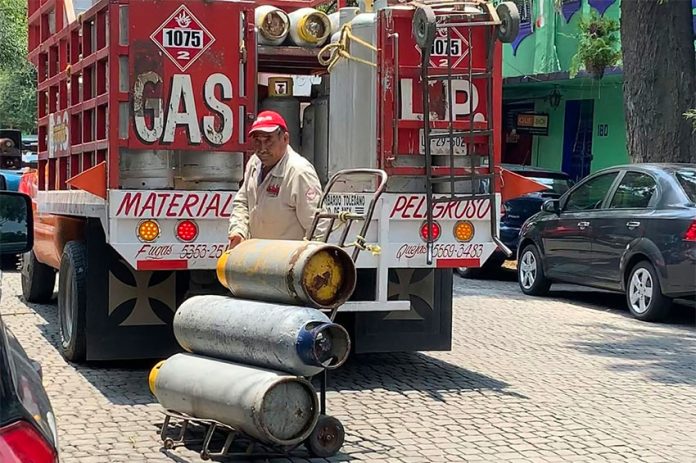
gas truck
Prices were down 24% in Mexico City.

Liquefied petroleum gas prices have fallen almost 11% on average after the Energy Regulatory Commission (CRE) published price ceilings for 145 regions across Mexico.

The CRE set maximum prices for the gas used by most Mexican households for cooking after the Energy Ministry (Sener) directed it to do so last week.

It was undeterred by a warning from Mexico’s antitrust regulator, the Federal Economic Competition Commission (Cofece), that the Sener directive was illegal because the Hydrocarbons Law establishes that the market determines gas prices and they can only be fixed if it is determined there is a lack of competition.

The average cost of gas fell 10.87% compared to the first fortnight of June after the CRE published price ceilings on Saturday.

CRE data shows that a kilogram of LP gas cost 25.94 pesos (about US $1.30) on average in the first half of June while the average price on Sunday was 23.12 pesos.

There was a 24.1% reduction in price in Mexico City, with a kilogram of gas selling for 21.33 pesos on average yesterday compared to 28.11 pesos in the first half of June.

The Mexican Employers Federation (Coparmex) noted in a statement that the price ceilings were published despite Cofece not having determined the existence of monopoly pricing practices in the gas market. Cofece began an investigation on May 31 to determine whether such practices were occurring but has not concluded its probe.

Coparmex also said that the ceilings established by the CRE and endorsed by the National Commission for Regulatory Improvement (Conamer) could have an irreversible negative impact on investment and the participation of new investors in the sector, “which plays against the urgently [needed] economic recovery and the competitiveness of the country.”

It said Conamer hastily approved the price ceilings set by the CRE without conducting an analysis of the impact and a public consultation process.

“… Sener asked the CRE to issue a very complex pricing policy in just three days, which places the quality of the regulation at risk and doesn’t allow the content to be enriched by the voices of experts on the issue,” Coparmex added.

To bring gas prices down, “more efficient alternatives” outlined in the Hydrocarbons Law, such as subsidies, should be applied, the employers’ group said.

Publication of the price ceilings comes almost a month after President López Obrador announced that the government would create a new state-owned company to distribute LP gas directly to customers.

He blamed five large distribution companies for “unjustifiably” raising gas prices above inflation and asserted that the new firm, to be called Gas Bienestar (Well-Being Gas), will sell the essential fuel at fair prices.

With reports from Milenio and El Universal 

A growing network of cable cars paints the skies over Valley of México

0
Cablebús cabins carry passengers over Mexico City.

In the Valley of México, home to more than 20 million people, almost 25 kilometers of cable car lines now form part of the skyline.

Two cable cars, soon to be three, transport thousands of passengers from elevated areas to more central, better connected locations.

Development of cable car lines shows no sign of abating: another line is under construction, and two more are under consideration.

In the north of Mexico City, the new Cablebús system has introduced the airborne transport. Line 1 went into full operation on June 11, connecting the Gustavo A. Madero borough to the Indios Verdes Metro and bus station. It has registered 56,000 users per day compared to the 48,000 predicted, which makes it the second most used cable car in Latin America, even by pre-pandemic numbers, according to city officials.

Line 2 of the Cablebús will be put into service in a matter of days. At 10.2 kilometres, with 308 cabins, the line will be the longest in Latin America and will connect residents in Iztapalapa to the Metro stations of Santa Marta and Constitución de 1917.

The first cable car in the Valley of México was the Mexicable in October 2016, north of the capital in Ecatepec, state of México. The line has seven stations and 185 cabins and runs over the Mexico-Pachuca highway, to the neighborhood of La Cañada.

A new 8.2-kilometer line is under construction in Ecatepec, which is 70% complete. Mexico City Mayor Claudia Sheinbaum has stated that there is discussion about a new cable car service in the west of Mexico City in Naucalpan and another in the southwest of the city to connect the neighborhoods of Magdalena Contreras and Tlalpan.

When the first section of Line 1 of the Cablebús was opened on March 4, Sheinbaum attested to the social benefit the form of transport would provide. “It’s a historic day because we’re opening a new system of collective transport … it’s social transport … Having the best transportation for the poorest parts of the city reduces inequality,” she said.

However, sustainable development expert at Tec de Monterrey university, Mariajulia Martínez Acosta, urged caution on transportation infrastructure, saying that all options should be considered. “They [cable cars] are in vogue … they are solving very immediate mobility problems, but in the long term we do not know if it will really have a positive impact, or if in a year only one person will travel per cabin,” she said.

“I think it would be good to know the cost-benefit analysis of increasing the cable car network … Yes they are a solution, they promote mobility and bring [elevated] neighborhoods closer, but it’s not all about having the skyline full of cable cars. We should look at which transportation options can have the greatest impact. I understand that developing a cable car is cheaper than a Metro line, but the impact that a Metro network can have is greater,” she added.

With reports from Forbes México

Active Covid case numbers soared to 137,000 on Saturday, well over previous highs

0
Covid case numbers increased 212% in July.

The estimated number of active coronavirus cases is at a near record high as the third wave of the pandemic continues to grow across Mexico.

There were 131,632 active cases as of Sunday, according to Health Ministry estimates, down from a record high of 137,777 on Saturday. Transmission of the highly contagious Delta strain of the virus is fueling the high numbers.

Estimated active cases exceeded 100,000 at the height of the second and worst wave of the pandemic in late 2020 and early 2021 but didn’t rise as high as their current level. They rose 16% over the week to Sunday, the Health Ministry reported, adding that they account for 4.4% of all cases since the beginning of the pandemic.

Mexico City easily has the highest number of active cases with 36,531, or almost 28% of the total. México state ranks second with 12,749 followed by Jalisco, 7,246; Nuevo León, 7,191; Veracruz, 4,973; Tabasco, 3,588; and Quintana Roo, 3,583.

Health authorities reported 328,983 confirmed cases in July, the second highest monthly total of the pandemic after January, during which almost 440,000 were detected. Case numbers increased 212% last month compared to June but Covid-19 deaths – 7,859 were reported in July – were 17% lower.

At the national level, there is still significant capacity to treat Covid-19 patients with 46% of general care beds and 38% of those with ventilators currently occupied. However, federal data shows that hospitals in some states are under significant pressure.

Just over 95% of general care beds set aside for Covid patients are taken in Colima, while Mexico City, Nayarit, Durango and Guerrero all have rates above 70%. More than 95% of beds with ventilators are also occupied in Colima, while Nayarit, Oaxaca, Nuevo León and Sinaloa have rates above 60%.

Mexico’s accumulated case tally currently stands at 2.85 million while the official death toll – widely considered a significant undercount – is 241,034, the fourth highest total in the world.

Although Mexico only ranks behind the United States, Brazil and India for Covid deaths, President López Obrador declared Friday that the country is not among the worst affected by the pandemic. He pointed out that Mexico ranks sixth in the Americas for its per capita Covid death rate.

Above Mexico, which has recorded 188.9 deaths per 100,000 people according to mortality data compiled by Johns Hopkins University, are Peru (which ranks first in the world with 604.2 deaths per 100,000 people), Brazil, Colombia, Argentina and Paraguay.

López Obrador also claimed that Mexico ranks second in the Americas for vaccination rates and is one of the “countries of the world with the most vaccines administered.” However, those assertions don’t stack up.

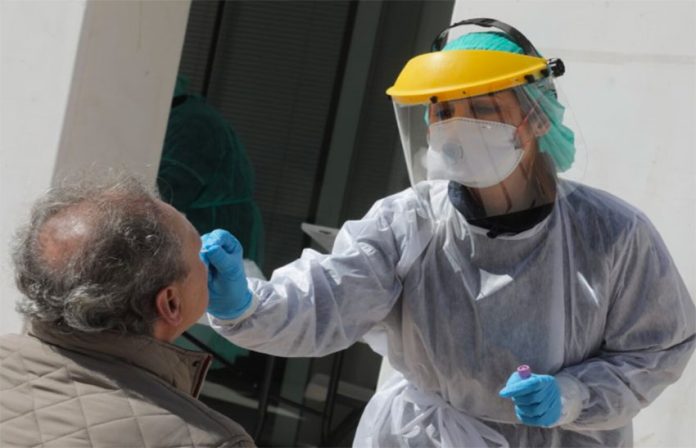
covid patient
Hospitals in some states are feeling increasing pressure.

About 67.35 million shots have been administered in Mexico since vaccination began late last year and 53% of adults have received at least one dose, according to the latest Health Ministry data.

But The New York Times vaccinations tracker shows that Mexico ranks 70th in the world for doses given per 100 people. Ahead of Mexico are 13 Western Hemisphere countries: Uruguay, Chile, Canada, the United States, the Dominican Republic, Cuba, Argentina, Brazil, El Salvador, Ecuador, Costa Rica, Panama and Colombia.

As a percentage of Mexico’s entire population of just over 126 million, only 20% of people are fully vaccinated while 37% have received at least one shot. The rates are 49% and 57%, respectively, in the United States and 60% and 72% in Canada.

Data shows that millions of people across several age groups in Mexico remain unvaccinated despite having had the opportunity to get a shot.

Vaccination has now extended to people in the 18-29 age bracket in some parts of the country, and strong demand was evident in Mexico City last week with young adults flocking to vaccination centers. In the northern borough of Gustavo A. Madero, thousands of people waited for up to three hours to get a shot. However, some people were turned away despite claiming they lived in the borough because their voter ID showed an address outside Gustavo A. Madero.

Meanwhile, an internal document from the United States Centers for Disease Control and Prevention (CDC) obtained by The Washington Post stated that the Delta variant appears to cause more serious illness than other strains and spreads as easily as chickenpox.

Citing unpublished data, the document also said that vaccinated people infected with the Delta strain – which was first detected in India late last year – may be able to pass on the virus just as easily as unvaccinated individuals.

“Vaccinated people infected with Delta have measurable viral loads similar to those who are unvaccinated and infected with the variant,” the Post said, citing the CDC document.

Despite the growing dominance of the Delta strain around the world, Mexico didn’t tighten restrictions on incoming travelers, who can enter the country without having to show a negative Covid test or proof of vaccination and without having to go into quarantine upon arrival.

Among the states that have recently seen sharp increases in case numbers are Quintana Roo and Baja California Sur, where popular beach destinations such as Cancún, Playa del Carmen and Los Cabos are located.

UPDATE: The Coahuila state government announced it had downgraded its coronavirus stoplight designation from green to yellow as of Monday after new cases put increased pressure on hospitals.

With reports from Reforma, EFE and The Washington Post

The Mexico-based fintech that decided to buy a bank

0
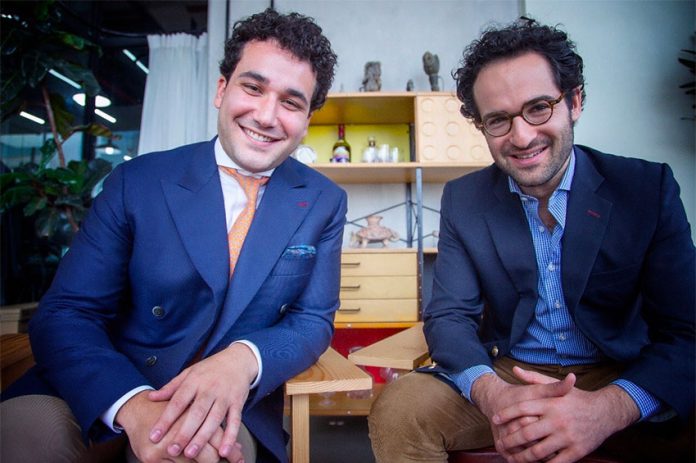
Apoj, left and Poritz of Credijusto.

In the six years since launching Credijusto, a Mexican fintech lending to small businesses, David Poritz and Allan Apoj delivered more than 250% annual revenue growth and managed to turn Covid-19 into an opportunity.

But when the co-chief executives decided to go mainstream by buying a bank, even one of their biggest backers baulked.

Hernán Kazah, co-founder of Latin America’s biggest venture capital firm, Kaszek, feared the purchase of Banco Finterra could cause the duo to lose focus. Or as he puts it: “When David and Allan said they were buying a bank, I thought they were mad.”

Poritz, a 32-year-old U.S. anthropologist-turned-entrepreneur with a masters in public policy from the University of Oxford, smiles at the irony: “Fintechs were created to disrupt the banking sector,” he says. And yet, in June, Credijusto spent an undisclosed sum under US $50 million to become a bank itself.

For them, it proved their core belief that after successfully challenging the stodgy financial establishment from the outside, they can now change it from within.

Like Credijusto, Finterra targets the nearly 5 million small and medium-sized companies that make up half of Mexico’s gross domestic product and employ 70% of workers, but struggle to access credit. But Credijusto’s unique selling point is the way it crunches electronic invoice, tax and other data to grant customers loans within hours.

Kazah had been concerned that the price tag would be too high “and there could be surprises under the rug” but Poritz and Apoj stuck to their guns. They had begun evaluating whether to apply for a banking charter to take their business to the next level.

That can take years, though. When Finterra came up for sale in 2019, “we chose to buy rather than to build a bank from scratch — it’s faster and we saw a lot of alignment,” says Apoj, 31, a Mexican economics graduate who cut his teeth as an entrepreneur during a year out from college.

The goal now is “to have the speed and flexibility of a fintech service with the costs a bank is able to provide,” Apoj adds. At present, their lowest interest rate is 7.5% and with Finterra, “we can now be financially competitive with any major bank.”

In addition, with combined assets of $300 million “this [acquisition] doubles our size . . . It positions us for a lot of growth,” he says.

Mexico has 51 banks but just a handful grant most of the country’s loans. Even successful entrepreneurs such as Poritz and Apoj, who grew Credijusto’s revenues more than 250% every year from the company’s inception in 2015 to 2019, have been turned down for personal credit cards — something Apoj says was “symptomatic of a financial system where it’s so hard to access services.”

credijusto

Market concentration has left a funding gap for SMEs amounting to more than $160 billion, according to the World Bank, the International Finance Corporation and the SME Finance Forum.

“The SME segment has really been left behind,” says Poritz. “We want to build the first truly digital banking solution for SMEs.”

Credijusto has already issued some $500 million to $600 million in loans and aims to double the two companies’ combined client base to 12,000 by the end of this year, with a particular focus on the agricultural sector, which is poorly served by banks.

Within a fortnight of the Finterra purchase, the still-to-be-named combined entity launched a credit card in partnership with American Express offering buy-now-pay-later services of up to five months and integrated digital financial planning tools to make operations for small companies nimbler and cheaper.

The pair, who met at Brown University in the U.S. in 2008 — in Apoj’s first week — are not shy of taking risks. In the middle of the Covid-19 pandemic, they launched a revolving, mortgage-backed credit line which proved a lifeline for restaurants. President López Obrador offered small businesses loans worth a little over $1,000 but little other pandemic help.

Credijusto also clinched a deal with Uber Eats to become the delivery service’s exclusive financial partner in Latin America, enabling businesses on Uber Eats’ platform to have access to speedy loans.

“Covid helped prove our business model in a very unexpected way,” says Poritz. “We were able to navigate Covid very well and validate our business in a much shorter time.” Indeed, even during the pandemic, revenues have grown an “incredibly respectable” 30% and Apoj says delinquent loans were “not as bad as they could have been.”

That has been music to the ears of the A-list venture capitalists and funds — including Goldman Sachs, Credit Suisse, Point72 Ventures, New Residential Investment Corp, QED Investors and John Mack, as well as Kaszek — who have poured in some $400 million in debt and equity.

“Capital on its own doesn’t make a business successful, but institutional capital in Mexico is a major differentiator that has enabled us to grow in scale,” says Poritz.

Mexico has long lagged other Latin American countries in terms of “unicorns” — start-ups worth more than $1 billion.

But since October last year, it has amassed three, and Credijusto has set its sights on joining them — something the duo see as validating their success in building what Poritz calls a “high growth, high impact business that truly solves a major pain point.”

banco finterra

Three questions for David Poritz and Allan Apoj

Poritz

Who is your leadership hero?

Josef Mittlemann, a successful developer, taught leadership at Brown. We used to go on 90-minute cycle rides. He was a really important leadership coach at a really pivotal time just as I was graduating from college.

What is the most important leadership lesson you have learned?

If you communicate clearly and manage expectations, 90% of friction and conflict can be avoided.

What would you be doing if you were not working at Credijusto?

I’d have split my time between academia and the non-profit world.

Apoj

Who is your leadership hero?

Barack Obama defended his healthcare plans, saying it was important not to let the perfect be the enemy of the good. A lot of people in tech are purists — if you aim for perfection, it often slows innovation.

What is the most important leadership lesson you have learned?

If you don’t like something, say so very quickly. I’ve learned you’ve sometimes got to pull the plug.

What would you be doing if you were not working at Credijusto?

I’d have gone to law school — it’s the best gateway to business. I always wanted to work in finance.

Apoj, who is in charge of tech and internal operations, while Poritz manages investor relations and finance, already sees international expansion on the horizon, with loans to small businesses further up North America’s integrated supply chains in the U.S. and Canada, as a big driver of growth.

Being friends as well as business partners has been a bonus. “When you’re in the trenches of a start-up, you need to do it with someone you enjoy being with,” says Poritz. “But to say we always agree isn’t the case.”

One disagreement, in fact, held the company back by more than a year, he says. “I made a bit of a tactical error. Allan wanted to create a multi-product business from the beginning. I was of the view we needed to be focused on a small number of products,” says Poritz. “I was too conservative.”

Apoj, in turn, regrets “not pulling the trigger sooner” on some unsuitable hires, something he said ended up taking two years off the company’s technical development. But the pair were in their mid-20s and inexperienced, and “we were not confident making those decisions in the early days.”

As a result, the pair have evolved into what they call “hypercommunicators.”

“We’re really, really open with staff,” says Poritz.

Both men dabbled in other entrepreneurial ventures before Credijusto. Poritz founded Equitable Origin, a non-profit focusing on indigenous rights, and is still its president. While at Brown, Apoj took a year out to design a healthier landfill solution for a tender in Ecuador. He ultimately lost, but recalls it as a “great experience.”

Now, the quest is to become “THE neobank for SMEs,” Poritz says.

Or as Apoj puts it: “There’s tonnes still to build.”

© 2021 The Financial Times Ltd. All rights reserved. Please do not copy and paste FT articles and redistribute by email or post to the web.


Air Canada plans to reactivate Mexico flights September 7

0
air canada

Air Canada has announced plans to reactivate flights to Mexico on September 7, the date the Canadian government has set to reopen borders to fully vaccinated travelers.

The airline will run 22 weekly flights to Mexico City: two daily from Toronto, five weekly from Vancouver and three weekly from Montreal. Flights from Quebec City to Cancún, Quintana Roo, will restart on December 4, with two per day.

However, the resumption of flights is no certainty: it has been postponed on two previous occasions. Initially scheduled for May, it was postponed until July, only to be postponed again until September 7.

Canada’s July 19 announcement said the loosening of restrictions would only happen “provided that the domestic epidemiologic situation remains favourable.” In the same statement, it said that fully vaccinated United States residents would be allowed to enter the country as of August 9.

Travelers will have to fill in the ArriveCAN (app or web portal) before flying and won’t be required to quarantine on arrival, save for in exceptional circumstances. All travelers must have been given an approved vaccine at least 14 days prior to entry. Canada’s approved vaccines are Moderna, Pfizer, AstraZeneca and Jonson & Johnson.

For the Mexico City routes, the airline will use its Boeing 737 MAX fleet. Flights to Toronto will depart from the capital at 12:40 a.m. and 1:25 p.m.; to Montreal Mondays, Tuesday and Thursdays at 6:00 a.m.; and to Vancouver on Monday, Tuesday, Thursday, Friday and Saturday at 6:00 a.m.

Air Canada’s Latin America chief Luis Noriega anticipated the benefit for Mexicans. “With Mexican citizens eager to travel back to Canada, we are ready to reunite clients with their families … As travel restrictions ease around the world, we are committed to rebuilding our international network and continuing as a global airline connecting the world with Canada,” he said.

Canada is the second most important international market for the Mexican Caribbean for volume of travelers per year, behind only the United States. In 2019, Cancún airport welcomed 1.18 million Canadians, which plummeted to 475,843 in 2020, a drop of 59%, due to Covid-19 travel restrictions. From January to May this year only 18,809 Canadians arrived to Quintana Roo.

In contrast, the United States Department of Homeland Security announced on July 21 that land borders with Mexico and Canada would remain closed until at least August 21. The United States has continued to extend the restrictions on Mexico and Canada on a monthly basis since March 2020; the U.S. restrictions do not bar U.S. citizens and lawful permanent residents from returning to the United States.

With reports from A21 and El Economista 

Vote to investigate ex-presidents gets resounding ‘yes’ but only 7% turnout

0
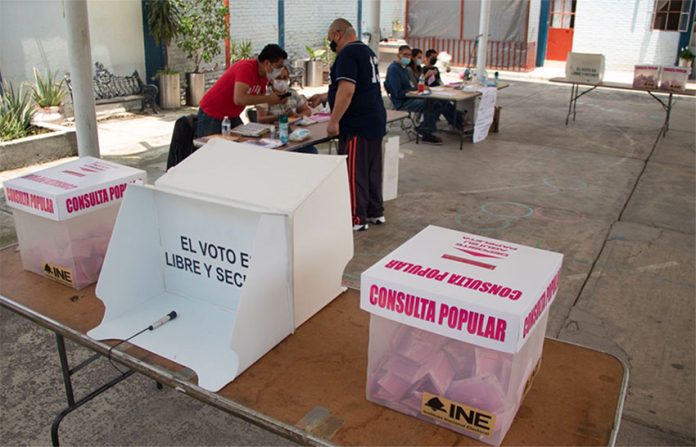
One of many quiet voting stations on Sunday.

An overwhelming majority of citizens who cast ballots in a referendum on Sunday voted in favor of investigating Mexico’s five most recent presidents for crimes they might have committed in office. But participation was well below the level required to make the vote binding.

According to a “quick count” by the National Electoral Institute (INE), between 89.4% and 96.3% of participants voted yes in response to a convoluted question drawn up by the Supreme Court that asked whether decisions taken in the past by “political actors” should be subjected to “actions of clarification” aimed at guaranteeing justice and the rights of possible victims.

The INE said that turnout was 7.1% to 7.7% of registered voters, less than one-fifth the 40% participation, or approximately 37.5 million voters, required to make the vote valid.

Just 1.4% to 1.6% of participants voted no while 2.2% to 9.2% cast invalid ballots, the INE said.

Despite the low turnout, the INE declared the referendum a success. “The referendum is successful because it’s the first with certainty and legality,” said institute president Lorenzo Córdova.

He said that the vote was carried out “with civility” and thanked the officials who made it possible as well as President López Obrador, who proposed the referendum but didn’t cast a ballot. “We should all feel proud,” Córdova said.

López Obrador, whose government has staged its own consultations to gauge public opinion on infrastructure projects including the previous government’s Mexico City airport and a brewery in Baja California, said Monday that he was happy with the results and described the referendum as “transcendent.”

“I want to congratulate everyone who participated in the citizens’ consultation yesterday, which was the first constitutional referendum that has been carried out in the history of our country,” he said at his regular news conference.

The president previously declared that he wouldn’t vote in the referendum because revenge is not his strong suit and he prefers to look to the future rather than dwell on the past. He has nevertheless blamed past presidents for all manners of problems Mexico faces today, including insecurity and inequality.

López Obrador is set to face voters himself next year as he subjects himself to a so-called “revocation of mandate” vote to determine whether citizens want him to remain as president for his full six-year term or leave office early.

Sergio Gutiérrez Luna, a deputy with the ruling Morena party and its representative at the INE, said lawmakers will take an initiative to Congress to change the law and allow referendums to be held the same day as elections in order to boost participation. Mexicans went to the polls to vote in municipal, state and federal elections just eight weeks before Sunday’s consultation but the law forbade the concurrent staging of a referendum.

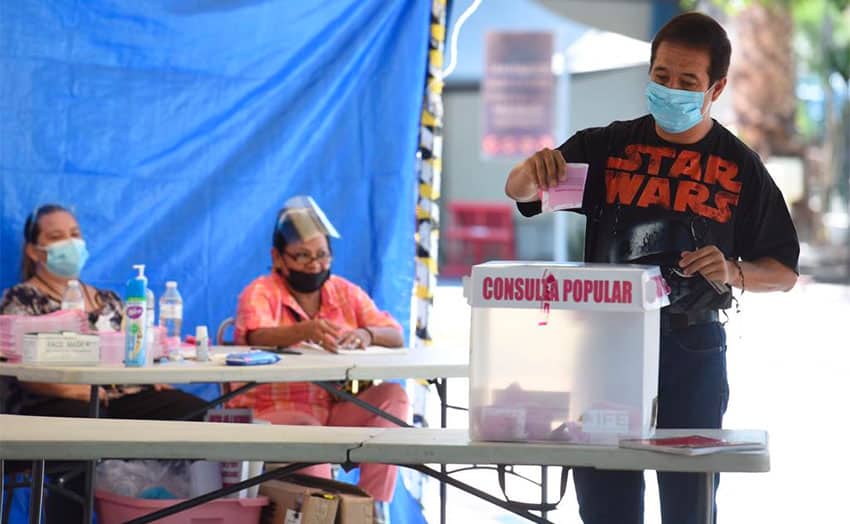
A man casts his ballot in Torreón, Coahuila, in Sunday's referendum.
A man casts his ballot in Torreón, Coahuila, in Sunday’s referendum.

Gutiérrez renewed Morena’s attack on both the INE – the party claims the electoral institute sabotaged the vote by not promoting it sufficiently and only setting up one-third the number of voting points it set up at last month’s elections – and opposition political parties, which called for citizens to boycott the referendum.

The Institutional Revolutionary Party (PRI) and the National Action Party (PAN) – parties which the five most recent ex-presidents represented – sought to sabotage the referendum because the no vote never had a chance of winning, he said.

“Of 7.2 million people, 97% said yes to the trial of [past presidents] Fox, Peña, Calderón, Salinas [and Zedillo]. This referendum is successful, despite the attempt of sabotage by [INE] president Lorenzo Córdova and councilor Ciro Murayama,” Gutiérrez said.

In contrast, opposition parties characterized the vote as a failure. “Members of Morena: nine out of 10 Mexicans said no today to this circus, this farce and you – the worst government at the worst time,” said Víctor Hugo Sondón, PAN’s representative at the INE.

“The failure of the referendum showed once again that Mexicans are fed up with a government that hides in the past in order to not face up to the present,” PRI national president Alejandro Moreno wrote on Twitter.

José Woldenberg, a former president of the Federal Electoral Institute, INE’s predecessor, said before the vote was held that it was regrettable that the first national referendum staged by the INE didn’t have a clear question.

“It’s an indecipherable consultation; you only have to read the question to realize that what is being asked is smoke and nothing but smoke. This is a referendum that shouldn’t be held, that’s my conviction. It’s a shame that the first national level referendum is an indecipherable consultation,” he said.

The López Obrador administration had proposed asking citizens directly whether past presidents should be investigated and face trial for alleged wrongdoings but the Supreme Court rejected that plan in order to protect due process and the presumption of innocence.

Woldenberg, who described the Supreme Court’s question as “gibberish,” said he hoped future referendums would have clearer questions.

“I’m not against referendums, quite the contrary. I’m against this referendum because it’s whimsical, deceptive and indecipherable,” he said.

With reports from Milenio, El País and El Universal 

This Mexican Independence Day, don’t forget pomegranates and walnuts

0
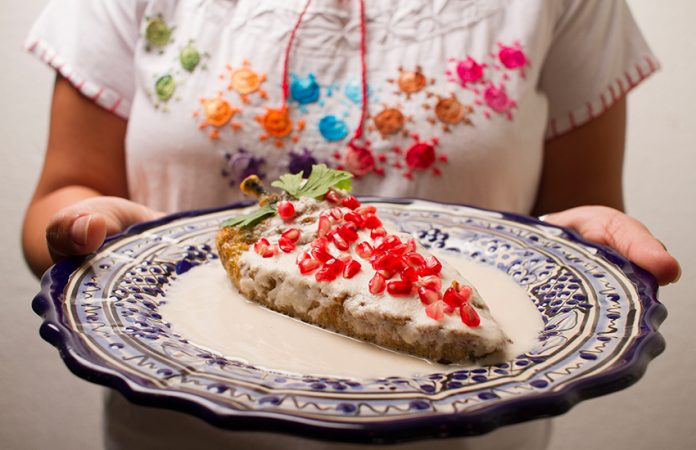
chile en nogada
A classic presentation of chile en nogada, said to have been invented to celebrate Independence hero Agustín de Iturbide’s arrival in Puebla. Misraim Álvarez B/Shutterstock

Chiles en nogada, Mexico’s traditional Independence Day dish, may be the nation’s only case where one particular crop is almost exclusively dedicated to one particular food preparation.

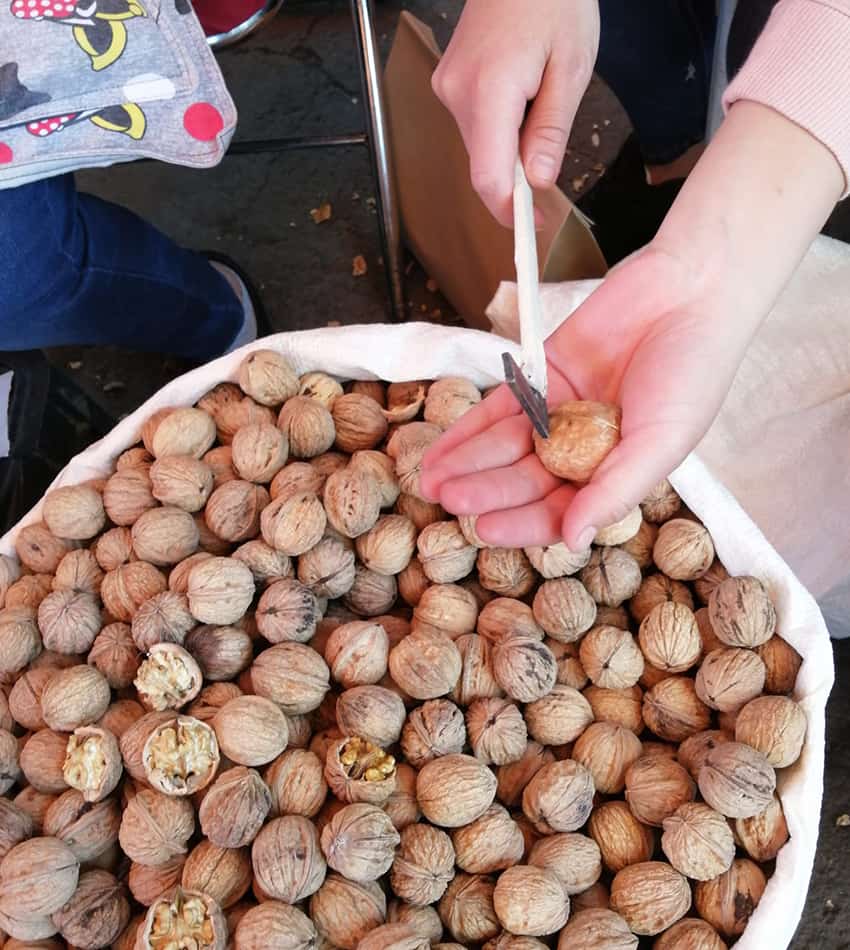
If you live in the areas around Mexico City and Puebla, you probably see individuals at markets, tap-tapping away at walnuts, carefully displaying the half-exposed meats in their baskets. This is your first cue that walnuts are, indeed, a luxury item, more expensive than even macadamias.

As such, the fresh meats are carefully selected to go in chile en nogada (chile pepper in walnut sauce), a dish available only from late July through September.

The origin of the dish is somewhat disputed, but the most accepted story is that it was invented by nuns of the Santa Monica convent in Puebla city in 1821. The occasion was the arrival of Agustín de Iturbide, soon to become Mexico’s first emperor, and his Army of the Three Guarantees.

The War of Independence was nearing its end when he arrived at the convent. Using what they had from their gardens in late summer, the nuns stuffed roasted poblano peppers, covered them in a delicate sauce made from cheese and ground fresh walnuts, then sprinkled the dish with pomegranate seeds.

walnut vendors
Walnut vendors cracking walnuts open to display the quality of the meats at the Mercado San Ciprian in Mexico City.

The effect was to mimic the green, white and red of the flag of this army, which would be the basis of the flag of independent Mexico.

The most traditional preparations of chile en nogada stay true to those ingredients common in Puebla in late summer: panochera apples, de leche pears, criollo peaches and the walnuts that gave the dish its name.

It is an unusual dish for Mexico, sweet and not spicy in the least. At least one source claims that the dish began as a dessert, with ground pork added to the stuffing later.

It is now so strongly associated with celebrations of Mexico’s independence that it seems almost unpatriotic to make changes to it, even if said changes would make the dish available year-round or more economical.

There has been some experimentation, substituting other nuts like pecans, almonds or macadamias in the sauce and using dried cranberries for the pomegranates, but these efforts are often met with derision.

The insistence on pomegranate seeds and fresh walnuts keeps chile en nogada a specialty, highly seasonal and rather expensive dish by Mexican standards. (It should be noted that if you find the dish at a significantly lower price, there is a very good chance real walnuts were not used.)

chile en nogada
Chile en nogada surrounded by its ingredients. Germán Abal

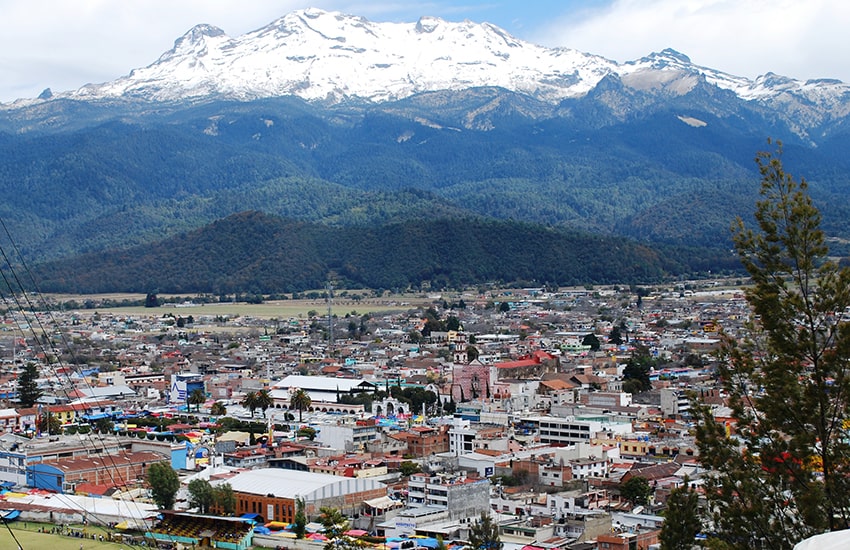
The Spanish introduced both ingredients to Mexico. Pomegranates grow fairly widely in the center of the country and in some northern areas, but walnut production is almost exclusive to the slopes of the Iztaccihuatl and Popocatépetl volcanoes, which separate the states of Puebla and México.

Archaeologist Eduardo Merlo established that the first walnut trees were planted in 1539 at a Franciscan monastery in the small town of Calpan, Puebla, which calls itself Mexico’s “walnut cradle.” Today, almost all of Mexico’s walnuts are grown on these iconic volcanic slopes because of their climate.

There are an estimated 60 producers in this region, with over 3,000 families dependent on the crop in some way. Both Puebla and México state claim to produce the most, but what is clear is that the majority of this crop winds up in chiles en nogada one way or another.

About a third are sold directly to restaurants, another third to events dedicated to the dish and the rest to traditional markets. The dish is most popular in central Mexico, but it is fairly common in restaurants in tourist and major metropolitan centers such as Acapulco, Baja California and Monterrey.

The dish has always been important to Puebla as a seasonal tourist attraction. In 2011, the state created the largest chile en nogada in the world. With the help of 2,000 people, restaurants in Atlixco layered 1,800 poblanos in a mold to create a dish that measured 1.5 meters long and 60 cm wide.

This year marks the 200th anniversary of the dish, and the state of Puebla is taking advantage of this to promote it with events both in Mexico and the United States this summer. Despite the pandemic, Puebla tourism officials hope to sell well over 3.5 million chiles en nogada statewide, beating the 3.1 million sold in 2019.

Panoramic of Amecameca with Iztaccihuatl volcano in the background
Panoramic of Amecameca in México state with the Iztaccihuatl volcano in the background. Alejandro Linares Garcia

Festivals dedicated to the dish are popular in Puebla and México state in August and September. These fairs were canceled in 2020 but were green-lighted this year with limited capacity and other restrictions. As of this writing, the national coronavirus stoplight map shows Puebla at yellow and México at orange. According to various municipalities, their fairs are still on, but checking with authorities online or by telephone is recommended before you attend.

The main fairs celebrating chile en nogada and walnuts in Puebla are held in Calpan and San Nicolás de los Ranchos.

Calpan’s fair is scheduled for September 1–15. In San Nicolás, the festival will occur during the weekends of August, starting on August 7.

The main fair in México state is held in Amecameca. The Walnut and Mushroom Fair takes place August 7–15. It includes a chile en nogada-making contest. Other regional dishes will be available as well. Wild mushrooms are also in season at this time and are also very much worth tasting.

These fairs and participating producers try to promote the making and selling of walnuts in other preparations, in particular liquors and baked goods, but by far, chile en nogada remains the king.

Leigh Thelmadatter arrived in Mexico 18 years ago and fell in love with the land and the culture in particular its handcrafts and art. She is the author of Mexican Cartonería: Paper, Paste and Fiesta (Schiffer 2019). Her culture column appears regularly on Mexico News Daily.