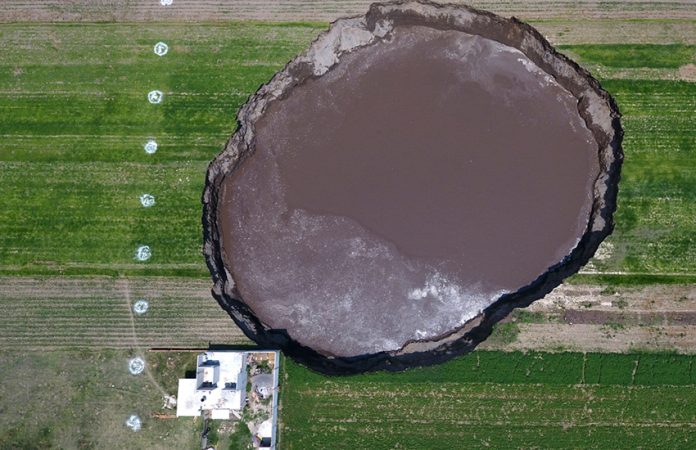
An aerial view of the sinkhole in Puebla. The white construction is the Sánchez Xalamihua family's home.
A sinkhole filled with bubbling water that first appeared in a Puebla field on Saturday has grown rapidly and is threatening to swallow a family’s home.
The Sánchez Xalamihua family heard a loud crash on Saturday night and initially thought it was a clap of thunder. But the noise was in fact caused by the collapse of ground in a field that adjoins their home in Santa María Zacatepec, a community about 20 kilometers northwest of Puebla city.
The sinkhole, which was initially about 10 meters wide, grew to 30 meters across on Sunday and reached a diameter of 60 meters on Monday, according to authorities. It continued to expand on Tuesday as large chunks of earth broke away from its rim and now reaches more than 100 meters across, according to a report by Uno TV.
The sinkhole’s rapid growth has brought its edge dangerously close to the family’s home. Heriberto Sanchez, originally from Veracruz, told reporters that the house could fall into the 20-meter-deep chasm and they will be left without a home.
“We have nothing. We’re not from here. We have no relatives. We’re alone.”
Tremendo #socavón se formo el sabado en #Zacatepec municipio de Juan C Bonilla #Puebla
Con solo 5m de diámetro y hoy alcanza 60m y 20m de profundidad
Posible origen por extracción de mantos acuíferos.😱 pic.twitter.com/6Njhxyh9j8
According to authorities and scientists, among the possible causes for the sinkhole’s sudden appearance are a geological fault or variations in the soil’s water content. Some locals believe that it’s related to the overexploitation of groundwater reserves.
Magdalena Xalamihua said that her family noticed a sulfur smell three days before the sinkhole appeared.
State and federal authorities were dispatched to conduct geological studies and the area surrounding the sinkhole was cordoned off by municipal police.
A video posted to social media showed two men approaching the sinkhole just before it abruptly widened, forcing them to quickly retreat to safety. Locals have flocked to the site to look at the unusual phenomenon — from a safe distance.
“It will grow until nature decides, when the water stops exerting pressure,” Puebla Governor Miguel Barbosa said. “The important thing now is public safety.”
Any people adversely affected by the sinkhole will be compensated by authorities, Barbosa said.
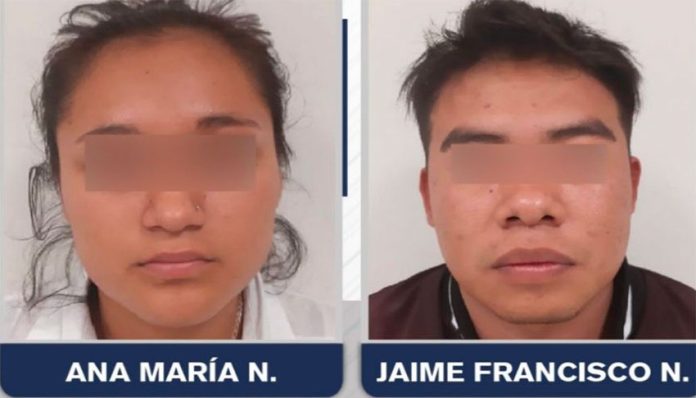
A Morena party lawmaker has called for an end to using censor bars in photos of criminal suspects, a practice intended to obscure their faces.
Guerrero Deputy Coyolxauhqui Soria Morales proposed an amendment to the criminal procedures code which would prohibit photos of suspects being distorted when they are given to the media.
Mexican law does not explicitly require the media to use censor bars. However, it does defend a suspect’s right not to be presented to the public as guilty, and not to be exposed in the media, hence the practice has become customary.
(Another measure designed to protect suspects is the use of the letter “N” instead of the person’s surname.)
Morales argued that anonymizing suspects is tantamount to putting their rights above those of victims. “Higher priority has been given to the alleged perpetrator, putting the victim second … negating the legal equality of both parties and overprotecting the accused …” she said.
Morales added that obscuring the identity of the accused is a barrier to securing a prosecution. “… the face of the detained defendants must be revealed to provide legal certainty and viability, in order to carry out physical identification by the victims,” she said.
Anticipating an objection, the deputy asserted that the principle of presumption of innocence does not afford suspects anonymity. “The presumption of innocence is not affected by the fact that their faces are covered or distorted, or that a bar is placed on their eyes. Their integrity is not protected by that measure, but with respect for their human rights as criminal suspects,” she said.
The proposed modification to article 113 of the National Code of Criminal Procedures reads: “When the alleged perpetrators are arrested, at the point they are presented to the media, it is forbidden to cover the face or distort the image or put a bar over the eyes of the accused, with the exception of minors.”
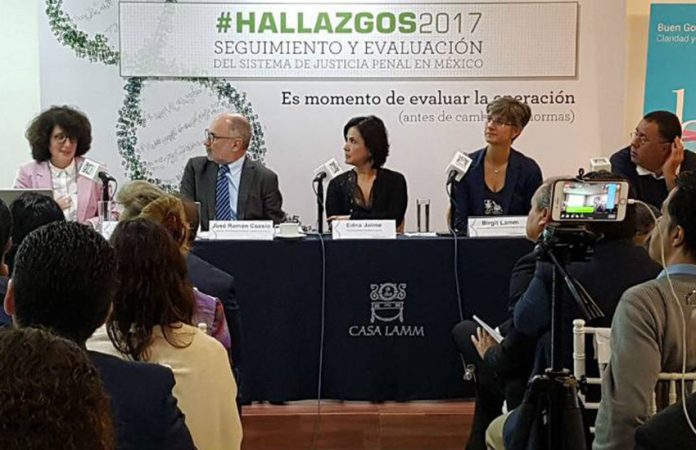
Mexico Evalua, a Mexican organization that benefitted from the National Endowment for Democracy, at a 2018 panel on penal system reform.
President López Obrador has been railing against the United States’ funding of what he says are political groups opposed to his administration, accusing the U.S. government of meddling in Mexico’s internal affairs.
Now, more details have emerged about the quantity of money the U.S. government has sent south of the border since AMLO, as the president is commonly known, took office in late 2018 and who has received it.
The United States Agency for International Development (USAID) and the National Endowment for Democracy (NED) have provided approximately US $591.5 million to organizations operating in Mexico, according to documents reviewed by the newspaper Milenio.
That figure — made up of the amounts the two agencies sent to Mexico in 2019, 2020 and the first five months of this year — is more than double the entire 2021 budget of Mexico’s Interior Ministry, Milenio said.
The newspaper said that the USAID and NED money goes to projects led by Mexican organizations, projects led by United States organizations that are active in Mexico and to municipal, state and federal governments.
USAID will provide $90 million in funding to municipal, state and federal governments in Mexico this year.
“It’s used to help strengthen civil society organizations, improve public initiatives like the National Anti-Corruption System, protect human rights, combat drug trafficking, look for missing people, eradicate violence against women, promote democratic ideals, support the media and promote the use of renewable energy sources, among other projects,” Milenio said.
Among the organizations that have received funding from USAID since AMLO assumed the presidency are the Mexican Institute of Human Rights and Democracy, the Institute for Security and Democracy, the Mexican Institute for Competitiveness and the National Social Communication Center.
Freedom House, a United States-based NGO that conducts research and advocacy on democracy, political freedom and human rights, is one example of an American organization that has received USAID funding for its work in Mexico.
USAID has also provided funding for a range of government projects. This year, it will provide $90 million in funding to municipal, state and federal governments. That figure is set to increase in 2022.
The NED, an agency founded in 1983 to promote democracy abroad at a time when the United States and the Soviet Union were Cold War foes, has provided funding to Mexicans Against Corruption and Impunity (MCCI), México Evalúa — a public policy think tank — the news website Animal Político and a range of other organizations, Milenio said. It has also provided funding to events such as Mexico City’s International Documentary Film Festival.
The United States’ funding of MCCI, which has exposed corruption in the current and previous federal governments, has particularly roiled AMLO. The federal government sent a diplomatic note to its U.S. counterpart in May to ask it to explain why it has provided funding to the group. The government has also asked the U.S. to stop funding opposition groups, but López Obrador said Monday that there has been no response to that request.
Last August, AMLO accused civil society organizations and Animal Político of using funding they received from the NED and private U.S. foundations to oppose the federal government’s Maya Train project. But the NGOs and the news site rejected the accusation.
López Obrador said Monday that his government would continue asking the United States to stop funding groups such as MCCI and the press freedom organization Article 19, which has also criticized him.
Effects of the intense fighting as it was going on in May.
Israel’s Foreign Ministry summoned the Mexican ambassador this week to explain Mexico’s vote in favor of a United Nations investigation into alleged violations of international humanitarian law during last month’s intense fighting in the Middle East.
The United Nations Human Rights Council voted last Thursday in favor of establishing an international commission of inquiry into violations during fighting between Israel and Palestinians in Israel, Gaza, East Jerusalem and the West Bank.
Mexico was one of 24 countries that voted in favor of an investigation. Nine countries opposed the move while 14 abstained.
United Nations High Commissioner for Human Rights Michelle Bachelet told the Human Rights Council’s special session that Israel’s airstrikes on Gaza, which killed more than 250 Palestinians, might constitute war crimes. She also said that Hamas, the militant group that controls Gaza, violated international humanitarian law by firing rockets into Israel.
In light of Mexico’s vote in favor Israeli Foreign Ministry official Modi Ephraim told Mexican Ambassador Pablo Macedo that Israel expects that its good relations with countries such as Mexico “be reflected in the international arena as well.”
Mexico’s ambassador to Israel Pablo Macedo.
According to the ministry, Ephraim also told the ambassador that Mexico should “stand by Israel’s side just as Israel has done for it.”
Mexico “should show understanding for the security challenges Israel faces and recognize its right and duty to protect its citizens, who found themselves under fire by 4,300 Hamas rockets,” Ephraim said.
In addition, the official told Macedo that it was “unthinkable” that Mexico would “stand beside Israel’s enemies in a decision that does not contribute to peace and constitutes a reward for terrorism.”
The Mexican government has not publicly commented on the meeting.
The resolution supported by Mexico and 23 other countries of the 47-member Human Rights Council states that the investigation will also examine “all underlying root causes of recurrent tensions, instability and protraction of conflict, including systematic discrimination and repression based on national, ethnic, racial or religious identity.”
Mexico may have also made waves with Israel in early May when Mexico’s Foreign Affairs Ministry expressed “grave concern” on social media about the intense fighting going on at the time and called on all sides to “reject violence and provocation.” It also expressed its support for a two-state solution to conflict in the region.
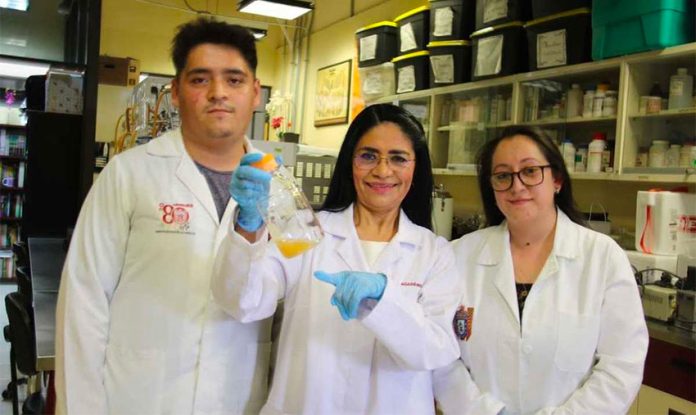
IPN researchers who were on the team that made the discovery.
Pulque, an alcoholic drink from fermented agave, contains a cancer-inhibiting probiotic, researchers have found.
The finding indicates that a lactic acid bacteria found in the drink called Lactobacillus brevis prevents the proliferation of colon cancer cells by up to 40%.
Mexican and French scientists made the discovery in a joint study of Mexican fermented beverages by the National Polytechnic Institute (IPN) and France’s National Institute for Agricultural Research (INRAE).
Researchers isolated 20 strains of Lactobacillus brevis from pulque sediment to test their ability to block the proliferation of tumorous cells, and found that the strain which is endemic to Nanacamilpa, Tlaxcala, to be most effective.
The two research institutions have obtained a patent for the discovery, and detailed information has been shared with experts in the United States, Canada and the European Union.
Dr. María Elena Sánchez Pardo, an IPN researcher, attested to the value of the acid to fight cancer. “Lactobacillus brevis has an effect similar to that of the drug 5-fluorouracil, without causing any adverse effects on healthy cells … This is a very important scientific achievement that opens the possibility of having an innocuous treatment against colon cancer,” she said.
Tests were also carried out on an animal model of colon cancer, which provided further evidence of the anti-cancerous effect.
Dr. Pardo added that the discovery motivated the research team, and that their work would continue to search for other beneficial properties of fermented Mexican drinks.
Pulque is known as the drink of the gods as it was considered sacred in pre-hispanic Mexico. It is a milk-colored drink with a yeast like taste.
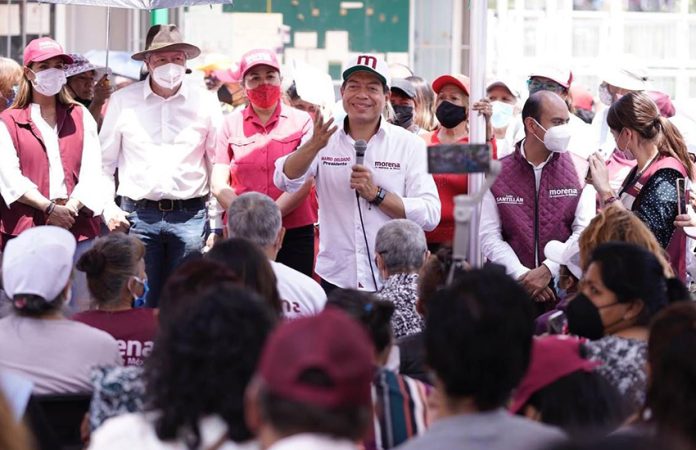
In Mexico City on Monday, Morena president Mario Delgado said the ad's authors resent no longer having access to 'privileges' as under previous administrations.
Some 430 intellectuals, businesspeople and other prominent Mexicans have put their name to a full-page newspaper advertisement calling on citizens to vote against the ruling Morena party at the municipal, state and federal elections this Sunday.
Published Monday in the Reforma and El Universal newspapers under the title “Manifesto for the republic, democracy and freedoms,” the advertisement-cum-open letter declared that Mexico is at a crucial time in the life of the nation due to President López Obrador’s actions in the 2 1/2 years since he took office.
Mexico is torn “between democracy and authoritarianism, between freedoms and the abuse of power, between knowledge and demagoguery, between responsibility and caprice, between federalism and centralism, between the division of powers and an autocratic presidency, between the path of institutions and the discretion of one sole will,” the ad said.
“It’s up to the citizens to tilt the scales,” it said, adding that the upcoming elections are important because Mexicans will have the opportunity to do just that.
After running through a laundry list of problems the authors said plague the country — among which they cited poverty, inequality, violence, medicine shortages, a lack of legal certainty, an unfriendly environment for investors and government disrespect for the women’s movement — the ad said that putting an end to “institutional decomposition and [governmental] improvisation” is urgent.
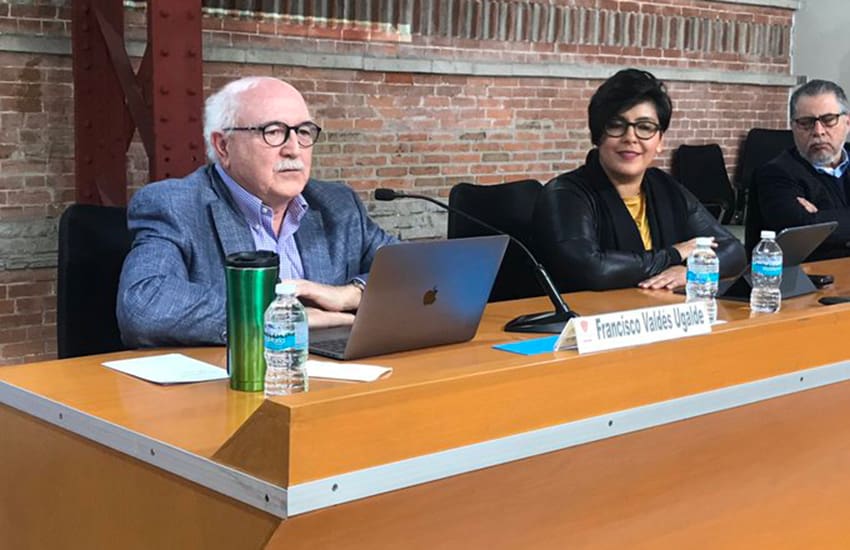
Francisco Valdés Ugalde, one of the authors of the ad published in El Universal and Reforma newspapers. file photo
It also said it was urgent “to boost the impartiality of the public service and place the citizen at the center of political action; to defend the importance of autonomous [government] organizations … and to respect the work of civil society organizations, taking advantage of their contributions in order to improve public policies … and combat bad practices.”
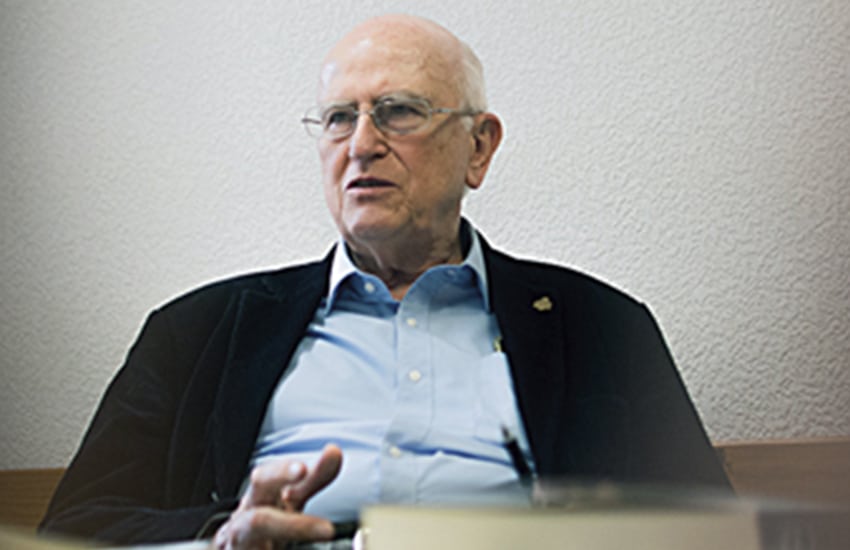
Achieving this “requires stopping the establishment of an autocracy and respecting pluralism as a means to transform Mexico,” said the ad, which was submitted for publication by political scientist Francisco Valdés Ugalde and sociologist Roger Bartra and endorsed by people such as historian Enrique Krauze, businessman Claudio X. González, former foreign minister Jorge Castañeda and ex-immigration chief Tonatiuh Guillén.
“Let’s be clear: in order to correct the path, we need to defeat the pro-government coalition of Morena and its satellite parties at the ballot box,” it said.
“It’s not about returning to the undesirable situation prior to the present administration, in which there were abuses, corruption and frivolity, but rather re-channeling changes toward the deepening of democracy and the strengthening of transparency, accountability and citizens’ participation,” the advertisement said.
The ad called for citizens to “vote strategically” and opt for more competitive candidates “so that the opposition vote is not diluted.”
“It’s time to join forces. … This election is not the end of the road, but it’s fundamental — not just to advance in the common aim to build a viable and attractive alternative in the face of a populist and authoritarian regression but also to stop the political, economic and institutional deterioration of the country. Today a free vote can still determine the result, but if the opportunity of this [electoral] process is wasted, maybe it won’t be the same at the next election. You have the power; exercise it with intelligence on June 6.”
Roger Bartra, the other author of the open letter urging citizens to vote against the Morena party at the upcoming June 6 election. File photo
Mario Delgado, leader of the Morena party, dismissed the importance of the ad and told El Financiero that the group behind the open letter only wished to regain access to millions in public resources and to what he referred to as their privileges.
“What bothers them is the loss of their privileges and legitimacy in the face of a country that no longer believes them and has already changed,” he said, adding that he was sure that the people’s support for Morena’s transformation of Mexico would be reflected in the June 6 election results.
Valdés and Bartra, the academics who submitted the ad, previously published a statement that accused President López Obrador of sowing “hatred and division” among Mexicans. That document, published online last September, was endorsed by more than 650 academics, journalists, poets, scientists, artists, writers, filmmakers and other intellectuals.
Remittances to Mexico jumped almost 40% in April, posting the sharpest increase in nearly two decades, according to the Bank of México.
Cash sent from abroad hit US $4.05 billion, a rise of 39.1% on the same month in 2020, when uncertainty sparked by the pandemic dented the flow of transfers. The percentage jump was the biggest since 2005.
In the first four months of 2021 remittances totaled $14.7 billion, 19% higher than the equivalent period in 2020.
So far this year March has counted the highest receipts, with an unprecedented $4.15 billion.
However, the average remittance payment was $4 higher in April than March, rising to US $375.
Banorte experts said the level of remittances sent from nationals abroad has been driven in part by the economic support of the United States government to families, and the recovery of employment among Mexicans abroad.
The country is on track to surpass its record 2020 year for remittances and Banorte estimates that payments could be up 10% at year’s end.
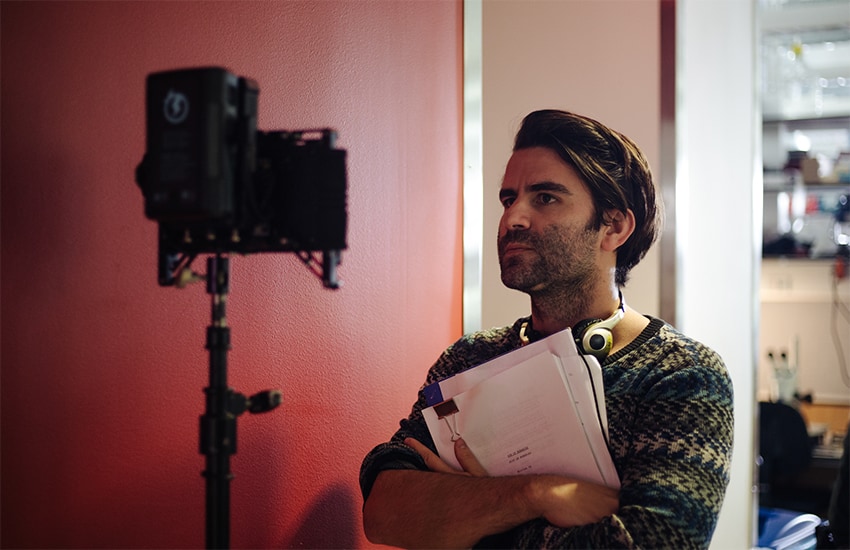
Son of Monarchs director Alexis Gambis behind the scenes of his film. Photos courtesy of Alexis Gambis
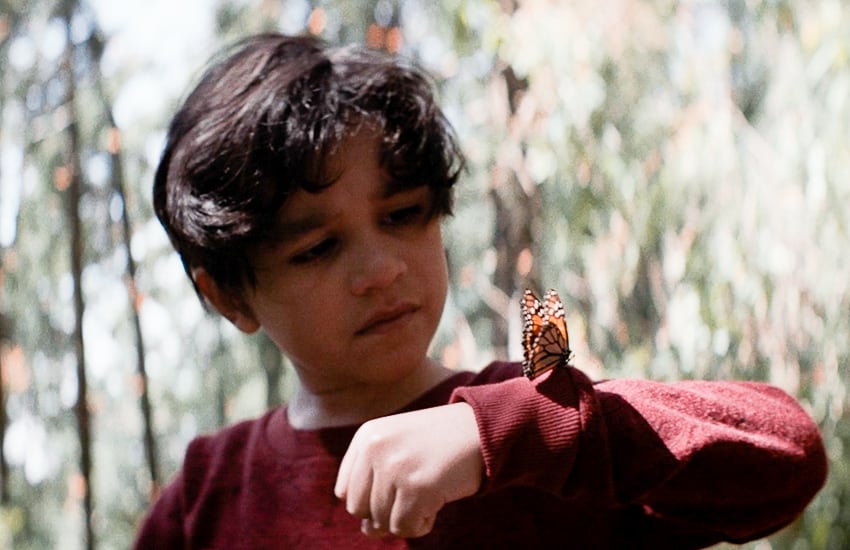
In a forest in Michoacán, two young children, Mendel and Simon, walk past towering colonies of monarch butterflies that have completed their epic migration from Canada. Each colony has a different shape. One colony, Mendel says, looks like a bear. His brother Simon replies that it looks more like a hanged man.
Fraternal dynamics and the monarch butterfly migration are two of the themes in a new, ambitious feature film, Hijo de monarcas or Son of Monarchs by French-Venezuelan director Alexis Gambis.
The film has been making several successful United States festival showings in 2021, among them Sundance in January, where it won the Alfred P. Sloan 2021 feature film prize; the Seattle International Film Festival in April, where it won the grand jury prize for new American cinema and at the Atlanta Film Festival and Milwaukee Film Festival in May.
“In every film I make, an animal is kind of the centerpiece,” Gambis said. “In this case, I was really interested in the monarch butterfly migration from Canada to the U.S. arriving in Mexico. They have multiple identities.
“The butterflies are both a scientific curiosity and also a spiritual one, linked to politics because of everything happening at the border.”
Lead character Mendel as a child. The scene was filmed at Mexico’s Monarch Butterfly Biosphere Reserve with special permission.
The film interweaves the monarchs’ story with Mendel’s narrative. The character is played by Mexican actor Tenoch Huerta Mejía (Narcos: Mexico). The child version of the character emulates his namesake, Gregor Mendel, the founder of genetics, by becoming a biologist in present-day New York.
“Working with Tenoch was unbelievable,” Gambis said. “He is very interested in science.”
So is Gambis. A trained biologist, Gambis went on to become a filmmaker, creating several shorts in Mexico. Son of Monarchs premiered at the Morelia International Film Festival in the fall of 2020.
This November, around the time of the monarchs’ arrival in Mexico, the director said the film will be distributed in the U.S. on a yet-to-be-disclosed streaming platform.
“Science is a big part of our lives right now because of the pandemic, the virus,” Gambis said. “Everybody realizes the importance of science and research.”
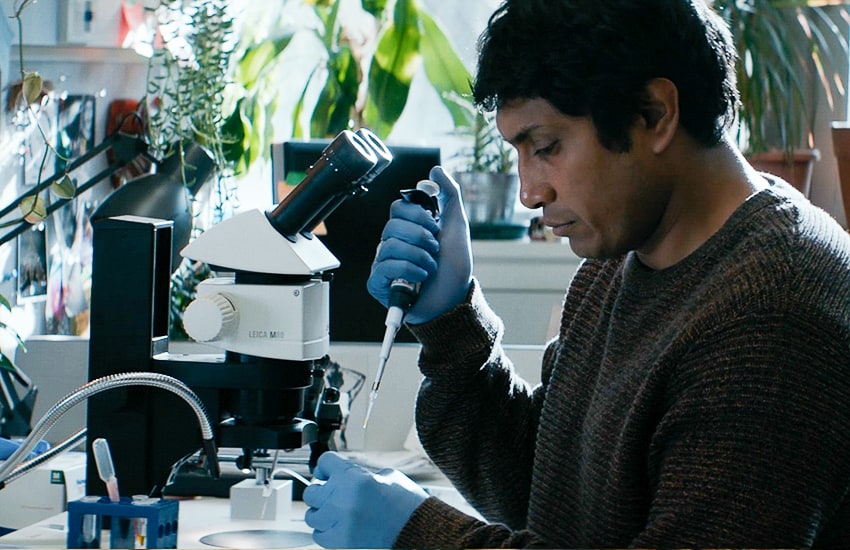
In the film, Mendel works in a lab to influence the genetics of the very monarch butterflies he grew up admiring, through the game-changing gene editing technology called CRISPR. Meanwhile, he increasingly feels the influence of his Mexican heritage, especially after his beloved grandmother Rosa dies and he returns to Michoacán for her funeral.
The adult Mendel working on gene-edting of monarch butterflies in a New York lab.
“I couldn’t ask for a better partner in crime [than Huerta] for this picture,” Gambis said. “There’s a really powerful way he depicts being an immigrant trying to figure out his path in the world.”
That path begins in Michoacán, with scenes filmed in multiple locations in the state, including the Monarch Butterfly Biosphere Reserve, where Gambis received a permit to film the butterfly colonies.
He had to arrive early in the morning and could only use natural light for shooting.
“It was a very stunning experience,” he said, “millions of butterflies having come from different parts of the U.S. and Canada, all arriving in the area. It was magical.”
He also filmed in the town of Angangueo, a key destination for the insects’ migration, where children honor the annual event by dressing up as monarchs for school plays. The monarchs normally arrive at the beginning of Día de los Muertos [Day of the Dead]. The holiday is beautifully recreated in the film in a scene that took all day to shoot.
“We had a special Mexican crew involved in all the production of everything that goes with El Día de los Muertos, from cempasúchil [Mexican marigold] flowers to building monuments,” Gambis said. “It was quite a remarkable day.”
Before he made movies, film director Alexis Gambis studied to be a biologist.
Overall he calls it “a film about Michoacán, a love message to Michoacán.” Yet there is also pain in the film caused by a tragedy that estranges Mendel from Simon and causes him to leave Michoacán for a science career in New York.
Gambis describes Mendel’s lab as “a place of refuge. When he is not well, when he needs space, he goes to the lab.”
There, he works with CRISPR, using it to alter the color and pattern of butterflies. The film features lab footage shown from New York University with real-life scientists.
“What’s amazing about CRISPR is it’s a new, high-precision tool that allows us to understand our genetic identity,” Gambis said. “It’s microscopic scissors that do a very, very precise type of editing, both very promising and very scary if it’s in the hands of the wrong people.”
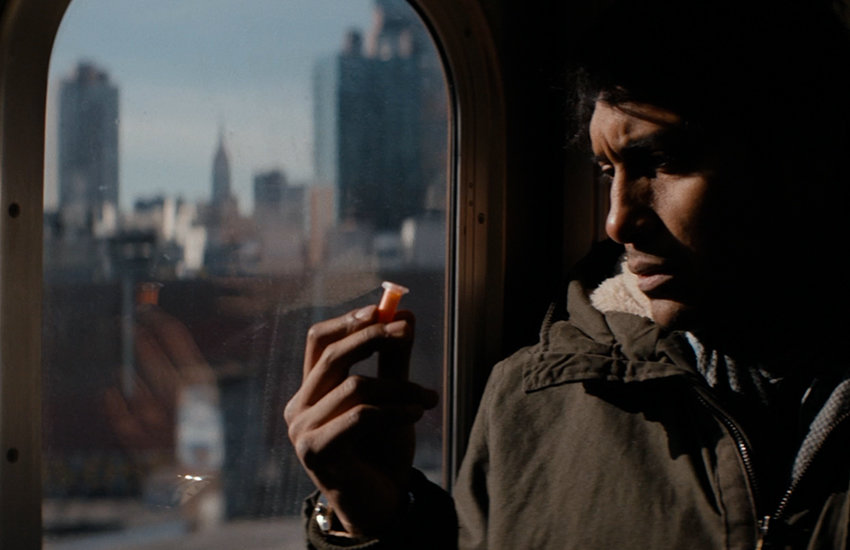
In the film, Mendel starts thinking along a more metaphysical plane. His girlfriend, Sarah, is a human-rights lawyer with a unique hobby, taking trapeze lessons. Watching Sarah in class, Mendel starts thinking about how butterflies use flight to transcend borders.
“Monarch butterflies fly over any border,” Gambis noted. “During [the debate over] DACA repeal [the Deferred Action for Childhood Arrivals immigration policy in the U.S.], monarch butterfly signs were put up: ‘Everybody is a monarch butterfly; we all have the right to migrate.’”
The character of Mendel is played by Mexican actor Tenoch Huerta Mejía, who recently appeared in the TV series Narcos: Mexico.Mendel also recalls his abuela (grandmother) teaching him about another insect, la gran cochineal. He explores incorporating monarch pigment into himself through butterfly-wing-pattern tattoos.
“The idea of him becoming a butterfly, I was always fascinated with. There are elements of magical realism, and a blend of science fiction also,” Gambis said, although he explained that it was a conversation with a real-life butterfly scientist that gave the idea further shape.
Gambis is concerned with the monarch butterflies’ situation. Their population has gone down around 80% over the last 10 years, he said. “Everybody’s fascinated with butterflies,” he said, but “not at the attention of other endangered species. They’re an insect. We don’t spend so much [time on them].”
Gambis identified “multiple issues” monarchs face on their 3,000-mile migration route from Canada and the U.S. to Mexico. In Mexico, he said, there is deforestation and mining, and “all the contaminants of mines that affect the forests.”
And, Gambis said, “climate change affects the migration. They used to arrive on Day of the Dead, right on the day. Because of climate change, there have been changes, breaks with tradition. They don’t arrive exactly in early November but [now] in the middle of November.” He also cited a big snowstorm a few years ago where all the butterflies became frozen and “everything happening around Michoacán, the violence.”
When Mendel returns to Michoacán for his grandmother’s funeral, he sees how the area has changed. He grimly predicts that the land will become a desert and is worried about the mining industry, which employs his brother Simon. He mentions the devastating snowstorm in a voiceover.
Gambis’ film won the Alfred P. Sloan Feature Film Prize at Sundance, which awards films focusing on science or technology as a theme.
Yet there are also scenes involving more hopeful messages, including one with Mendel and Sarah and the monarchs, all having reached their destination.
“[Mendel is] returning to his roots, talking about how, in the last voiceover, for centuries people have been migrating,” Gambis said. “There’s a story about elders trying to join the younger generation. They would rest at the bottom of trees. The branches lowered themselves and said, ‘I will help you reach your destination by turning you into butterflies.’”
Rich Tenorio is a frequent contributor to Mexico News Daily.
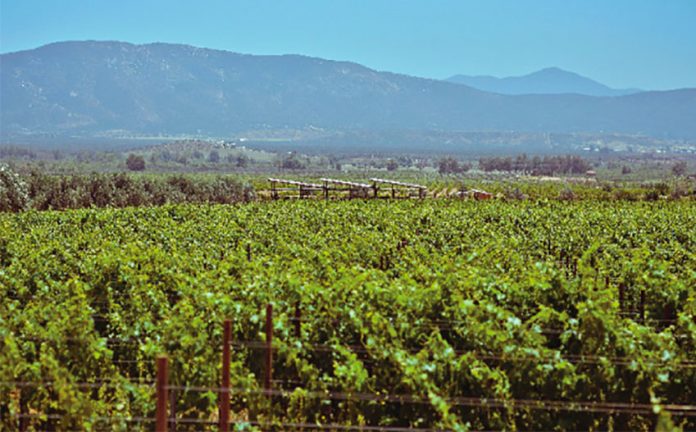
The Finca La Carrodilla in Baja California was one of the Mexican winemakers to win gold.
Four Mexican wines have triumphed at a Spanish wine competition, taking home gold medals.
Producers from Guanajuato, Querétaro and Baja California were on the list of 32 gold-medal winners, which excelled among 1,692 entries.
Bacchus Wines 2021 saw 83 international experts take part in blind tasting sessions, which ended Thursday in Madrid.
From Baja California two Ensenada vineyards were awarded gold medals: a 2017 tempranillo from Finca La Carrodilla and a 2019 chardonnay from Chateau Camou.
From Dolores de Hidalgo, Guanajuato, a 2019 nebbiolo-sangiovese from Tres Raíces vineyard took home the prize, as did the 2019 Tío Neto from Parque Enológico Puerta del Lobo in Querétaro.
Thirteen countries were represented at the competition, which predominantly featured still white and red wines, as well as sparkling wines, rosés, dessert wines and vermouths, among others.
Mexico made news on the international stage in 2019 when two vineyards won grand golds at the Concours Mondial de Bruxelles, a wine contest often referred to as the United Nations of Fine Wines.
A study has documented 20 years of cases of sexual abuse of students by educational staff members.
Child sexual abuse and exploitation rings have operated in public and private schools in at least seven states during the past 20 years, according to a civil society organization, the Office of Defense of Childhood Rights (ODI).
The children’s rights advocacy and defense group said in a new report that teachers, principals, administrative staff and maintenance workers have all participated in the abuse of children inside and outside schools in Mexico City, México state, Jalisco, Baja California, Morelos, San Luis Potosí and Oaxaca.
Entitled It’s a secret: child sexual exploitation in schools, the report details a wide range of abusive practices over the past two decades. They include adults inappropriately touching children and forcing children to touch each other, rape, teachers indecently exposing themselves to students, tying children up, sexual abuse in which urine, feces or vomit was used, forcing children to watch sex acts between adults, gagging children with tape and the filming of children while forced to engage in sex acts.
Children as young as three have been subjected to heinous sexual abuse, according to the ODI, which has provided legal assistance to families of students from at least 18 schools.
“Numerous preschools and primary schools have been captured and used as spaces for the commission of child sexual exploitation crimes,” the report said.
“… Consistently, boys and girls described being penetrated with syringes filled with water, with drinking straws and with dirty papers, including ones stained with excrement,” ODI said.
The organization said that children have also reported being filmed and photographed and being forced to harm their fellow students.
The report said that more than 100 cases of sexual abuse and exploitation have been reported to authorities but didn’t indicate how many people were arrested or how many investigations were ongoing.
One facility where sexual abuse was rife was the Andrés Oscoy preschool in the Mexico City borough of Iztapalapa. Hundreds of children aged between three and five were allegedly sexually and physically abused, but the families of just 30 students filed formal complaints.
The federal Attorney General’s Office contacted the ODI in 2011 to seek legal assistance for the victims and their families. Children identified 10 people as “direct aggressors,” including teachers, the teenage son of one of the teachers and the preschool’s principal. Children were sexually abused in the school’s bathrooms, the principal’s office, classrooms and other locations.
The victims also described “grotesque rituals” that were passed off as games, the ODI report said.
The report also cited a 2008 case at an unidentified private preschool. A five-year-old girl and other young children were removed from the school and taken to a house occupied by six adults they didn’t know. The young students were allegedly drugged and sexually abused by the adults. The five-year-old girl said that babies were also abused at the home.
The ODI report also cited numerous complaints filed in 2011 against staff at the Laura Elena Arce Cavazos public preschool in Cuautitlán, México state.
Acts of “unheard-of cruelty” were perpetrated against young children, the report said. “Three children showed cuts on their legs that they say were inflicted by a teacher with a knife during an attack. Three of the 10 declarants said that they were photographed or filmed.”
Similar cases of sexual abuse and exploitation occurred at other schools in Mexico City, México state, Jalisco, Baja California, Morelos, San Luis Potosí and Oaxaca, the ODI said. The organization also documented other cases in which young children were removed from their schools and abused at private homes. Many acts of abuse were recorded on film.
“While this fact might not be important for a boy or girl who lacks understanding of issues of digital sexual exploitation, it’s an extremely important element in order to understand possible explanations for what happened,” the report said.
The ODI suggested that child sexual abuse was streamed online to people who paid to watch it from around the world.
As it is unclear how many teachers and other school staff were investigated and prosecuted, it is not known whether the people involved continue to work in educational settings.
ODI director Margarita Griesbach Guizar told the newspaper El Universal that more thorough and competent investigations are needed to ensure that people perpetrating sexual crimes against children are arrested and jailed.
“I don’t dare to say that there is a [sexual abuse] network, many networks or simply a new modus operandi, a new form of crime. What is clear is that we’re facing complex criminal behavior and because of this, an investigation with a broad outlook is needed to understand what is happening in Mexico with these crimes,” she said.
“I believe that incompetence is the best friend of corruption and impunity because what happens over and over again, both with criminal investigations and the intervention of the Ministry of Public Education, is that there is incompetence … in the selection of teachers [and] in investigations,” Griesbach said. “… And there are cover-ups [of sexual crimes].”