Matthew McConaughey, author of the memoir Greenlights, will be interviewed by the San Miguel Literary Sala in a public online event on May 14.
The San Miguel Literary Sala continues its online series of interviews, talks and discussions with distinguished authors with an unusual guest on May 14 — Academy Award-winning actor Matthew McConaughey.
McConaughey will be interviewed live on Zoom about his book Greenlights by comedian and author Jamie Brickhouse, a fellow Texan. Viewers who tune in will be allowed afterward to talk to McConaughey briefly.
The book, published in 2020, was a New York Times bestseller for over 25 weeks. The unconventional, raucous memoir reflects McConaughey’s well-documented adventurous, shamanistic explorer personality as he pores through memories of his childhood and younger years as a single man.
“I wore the leathers. I rode the Thunderbird. I took a lot of showers in the daylight hours, rarely alone. I partook,” he says.
McConaughey has confirmed he is considering a run for governor of Texas, saying he wants “to get into a leadership role in the next chapter of my life.” He is currently polling ahead of current Governor Greg Abbott.
Brickhouse is a standup comedian and author of the one-man show, Dangerous When Wet: A Memoir of Booze, Sex, and My Mother, described by author Wally Lamb as “a poignant, hilarious and sharply observed story of a gay man’s exchange of self-destruction and self-loathing for wisdom and a mature understanding of love.”
The Literary Sala is known as the organizer of the annual San Miguel Writers’ Conference in San Miguel de Allende, Guanajuato, which has a tradition of allowing audience members to have one-on-one time with authors after events. The tradition will be allowed at this Zoom event as well, where audience members will be able to get a few moments to talk with McConaughey and Brickhouse over Zoom.
Tickets for the event are available on a sliding scale price from US $5.00 to $50.00 and may be purchased at the San Miguel Literary Sala Website.
Clashes between cells of the Jalisco New Generation Cartel (CJNG) and the Sinaloa Cartel have forced residents of Teocaltiche, Jalisco, to flee their homes.
Since Thursday, there have been several confrontations in the municipality, located 170 kilometers northeast of Guadalajara on Jalisco’s border with Zacatecas and Aguascalientes.
According to preliminary reports, a convoy of 18 vehicles emblazoned with the CJNG initials was in Teocaltiche on Thursday. The Jalisco cartel, generally considered Mexico’s most powerful and violent criminal organization, is fighting the Sinaloa Cartel for control of the municipality and surrounding area.
The newspaper Reforma reported that at least one man was killed in the clashes that occurred in several communities, including El Saucito, El Rosario, Rancho Mayor and Rancho Nuevo. Cattle have also been killed and one home was set on fire, Reforma said.
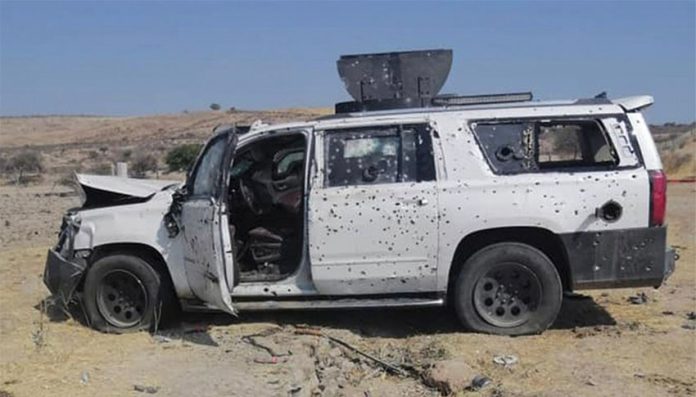
Two burnt-out vehicles and three that were riddled with bullets were located on Friday morning as was a slain, handcuffed man. All told, authorities seized seven abandoned vehicles on Friday, four of which were armored. They also found two grenades and large numbers of spent bullet casings but no arrests were reported.
[wpgmza id=”297″]
The news agency Quadratín reported that some Teocaltiche residents have fled their homes due to the violence and that municipal and church authorities have set up temporary shelters. Residents of a neighboring municipality have donated food, medications, footwear and personal hygiene products to the displaced people.
On its official Facebook page, the Teocaltiche council published a statement Friday calling on residents to keep their calm despite the violence. It said that it is working hand in hand with the Jalisco government and security authorities to restore peace.
“This is a time at which we must act with caution, responsibility, calmness and unity,” the council said. It also urged people to ignore rumors about the security situation in Teocaltiche, especially those spread on social media.
“We ask the public not to disseminate information that doesn’t come from official sources in order to avoid creating panic,” the council said. Its statement was criticized by some social media users.
“Is this serious?” wrote Miriam Álvarez, adding that it was irrational to ask people who cannot return to their homes to remain calm. “I would like to see you in the shoes of those people,” she said.
The outbreak of violence occurred just a few weeks after the presence of state and federal security forces was bolstered in the Altos Norte region of Jalisco, which includes Teocaltiche. But the deployment of additional state police as well as members of the National Guard and army has not put an end to the violence in the area.
There was also a series of attacks in the Altos Norte region late last month. On April 27, a group of armed men opened fire on state police in Lagos de Moreno, located east of Teocaltiche on Jalisco’s border with Guanajuato. The police returned fire and two criminals were killed.
There was another clash the next day in Encarnación de Díaz, which is situated between Teocaltiche and Lagos de Moreno. No deaths were reported but a tortilla shop was set ablaze and two reporters covering the violence were beaten, Quadratín reported. A day later, on April 29, a state police officer was shot dead in Tepatitlán and three others were wounded.
The CJNG is also involved in turf wars in several other states, including Michoacán where it is facing off against the Cárteles Unidos and Guanajuato – Mexico’s most violent state – where it is feuding with the Santa Rosa de Lima Cartel.
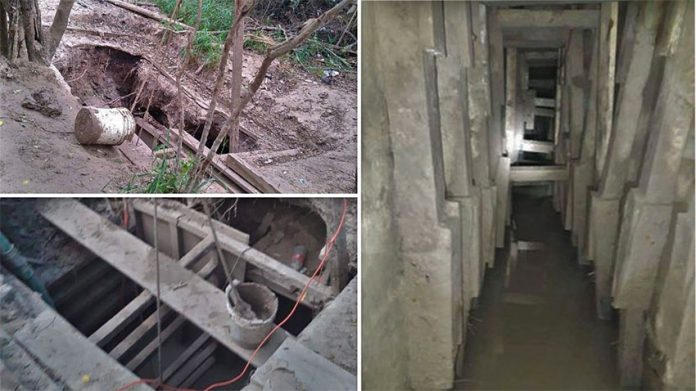
The Tijuana narco-tunnel was outfitted with ventilation and rails.
A narco-tunnel at least 200 meters long has been found in Tijuana at a house directly across from a National Guard base.
The tunnel had no connection on the United States side but it is located near another tunnel discovered years ago. Authorities suspect the goal was to connect to the older one. The new tunnel had systems for ventilation and lighting as well a cart and rails.
The tunnel was discovered after a package of marijuana was found on the street outside the house. A search of the houses revealed electrical cables ready to be installed in the tunnel.
In the last three years, border authorities have found at least 200 narco-tunnels, including one discovered in August of 2019 that connected Tijuana to San Diego. According to the U.S. Drug Enforcement Administration (DEA), there are at least 13,300 narco-tunnels in Mexico, most of them built in territory where the Sinaloa Cartel is active.
The DEA said that jailed drug lord Joaquin “El Chapo” Guzmán was the mastermind behind the construction of the tunnels, which run up to 450 meters in length. The tunnels have been used to transport drugs, cash and sometimes migrants.
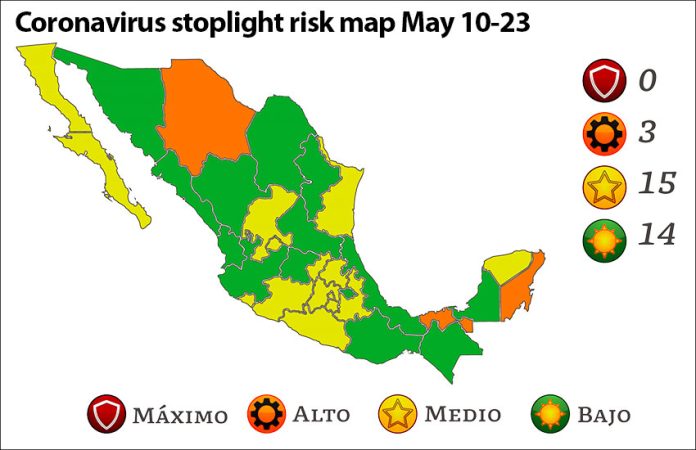
Mexico’s improving coronavirus situation is reflected on the federal government’s updated coronavirus stoplight map, which shows that all but three of the country’s 32 states are either low risk green or medium risk yellow.
There are 14 green states and 15 yellow states on the new map, which was presented by the Health Ministry on Friday and will take effect on Monday. There are just three high risk orange light states and none at the red light maximum risk level.
The 14 green states, an increase of eight compared to the map currently in force, will be Chiapas, Campeche, Coahuila, Veracruz, Jalisco, Guanajuato, Sonora, Nuevo León, Sinaloa, Durango, San Luis Potosí, Oaxaca, Tlaxcala and Nayarit. The first six states are already green while the other eight will switch from yellow.
The 15 yellow states, a decrease of five compared to the current map, will be Baja California, Zacatecas, Aguascalientes, Colima, Michoacán, Guerrero, Morelos, Puebla, Querétaro, Tamaulipas, México state, Yucatán, Baja California Sur, Hidalgo and Mexico City. The first 12 state are already yellow while the last three will switch from orange.
The three orange states for the next two weeks will be Chihuahua, Tabasco and Quintana Roo, all of which are already at the high risk level.
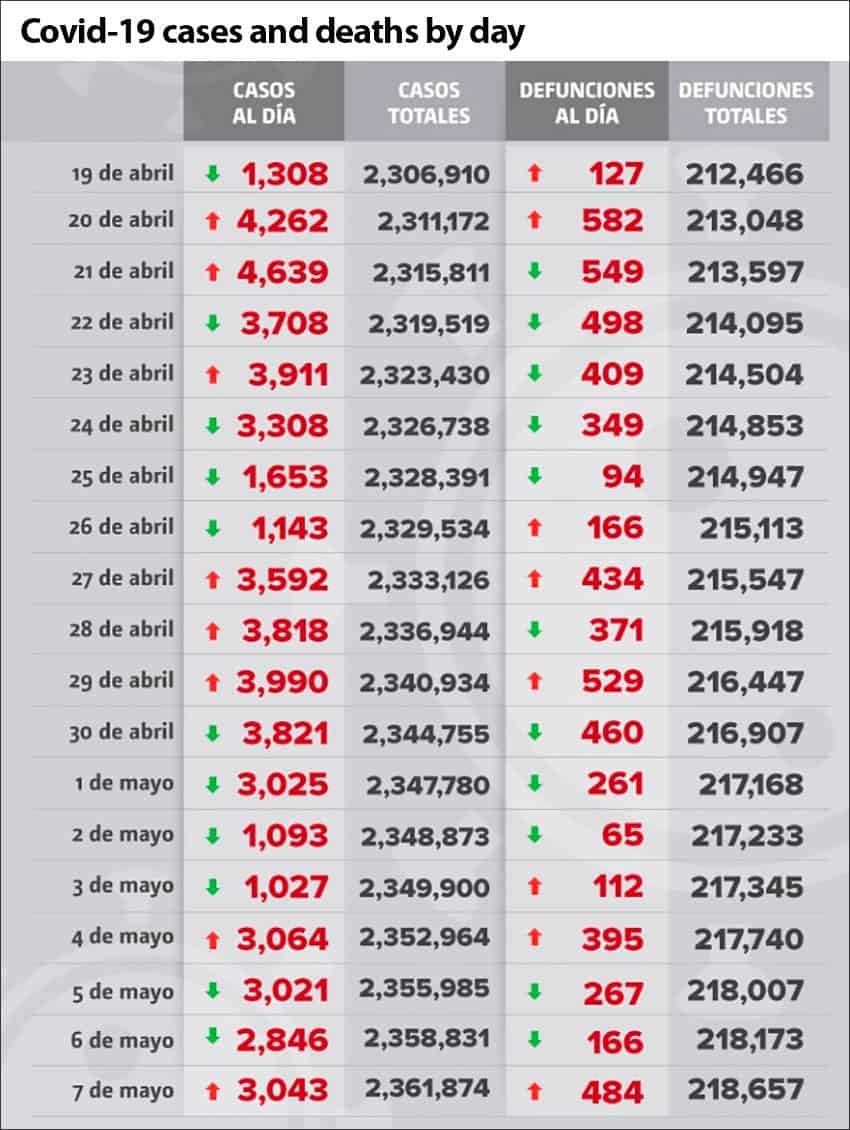
Coronavirus cases and deaths in Mexico as reported by day. milenio
Each stoplight color, determined by the Health Ministry using 10 different indicators including case numbers and hospital occupancy levels, is accompanied by recommended restrictions to slow the spread of the virus but it is ultimately up to state governments to decide on their own restrictions.
In addition to presenting the updated stoplight map, health official Ricardo Cortés displayed a graph at Friday night’s coronavirus press briefing that showed that the national hospital occupancy rate has declined 82% from the peak recorded at the start of the year, when many hospitals were overwhelmed with Covid patients. Only 11% of general care beds set aside for Covid patients are currently occupied while 16% of those with ventilators are in use.
Cortés also presented a graph that showed that Mexico’s epidemic curve has declined significantly in recent weeks. The number of new cases reported in April was 30% lower than March, while during the first seven days of May an average of 2,445 cases was reported daily, a 31% decline compared to last month’s daily average.
There are currently 21,706 active cases in the country, according to Health Ministry estimates. That number was above 100,000 at the peak of the second – and worst – wave of the virus in January.
Reported Covid deaths also declined in the first week of May to an average of 250 per day from 456 in April, a 45% drop.
The data on new cases for April and early May show that Mexico avoided a spike in infections that authorities warned could occur after last month’s Easter vacation period. Deputy Health Minister Hugo López-Gatell acknowledged Thursday that the feared third wave didn’t occur.
“Very fortunately, the third wave didn’t arrive,” the coronavirus point man said, adding that health authorities had an obligation to warn of the risk as it urged the public to continue to take precautions over the Easter period. “There was success,” López-Gatell declared.
Still, the fact remains that Mexico has been one of the world’s worst affected countries by the coronavirus pandemic. The national accumulated case tally – considered a vast undercount due to low testing rates – currently stands at 2.36 million, the 15th highest total in the world, according to data compiled by Johns Hopkins University.
The official Covid-19 death toll – also widely believed to be a significant undercount – is 218,657, the world’s fourth highest total after those of the United States, Brazil and India.
Mayor Huerta, in custody for enforced disappearance.
Oaxaca police have arrested a mayor and two other government officials who are suspected of kidnapping British-Mexican citizen Claudia Uruchurtu.
Uruchurtu disappeared the evening of March 26 after taking part in a protest outside government headquarters in the Mixteca municipality of Asunción Nochixtlán, where Mayor Lizbeth Victoria Huerta is now in custody.
Witnesses said Uruchurtu was grabbed and pushed into a vehicle, according to Uruchurtu’s family.
The arrests come after her family lobbied the British foreign ministry, the UN Committee on Enforced Disappearances, and the Inter-American Commission on Human Rights to demand justice. The family said Uruchurtu had denounced Huerta before state authorities for embezzlement of public resources before her disappearance.
The family said they received death threats via phone calls and acts of intimidation at their homes in Oaxaca after Uruchurtu disappeared. The Oaxaca human rights commission established a security escort for the family in response, and demanded that security and justice officials not harass the family or violate their human rights.
Uruchurtu disappeared in Nochixtlán in March.
Uruchurtu’s accusations of financial impropriety were not the first for Mayor Huerta. On September 14 of last year, the state elections council said Huerta broke the law when she used public resources to fund personal propaganda. She faced other accusations of using public funds for her personal political goals in April and May 2020.
The March 26 protest where Uruchurtu disappeared was in response to the beating and arrest of a local man, allegedly on Huerta’s orders. Alfonso Avendaño, a supplier to the Nochixtlán government, showed up at government offices asking to be paid money he was owed. The mayor allegedly ordered local police to beat the man, leaving Avendaño with a fractured skull, according to his family. A witness who filmed the beating said she was later threatened by Huerta.
The mayor is currently seeking reelection as the Morena party’s candidate after having been chosen in an internal party survey. In reference to Uruchurtu’s disappearance, Huerta claimed to be the victim of a “dirty game” aimed at quashing her political ambitions. She also said she was the victim of political gender violence and demanded authorities find Uruchurtu.
The latter’s family has called the incident the first enforced disappearance during President López Obrador’s administration and have sought the intervention of the Inter-American Commission on Human Rights.
The capital goes to medium-risk yellow on the coronavirus stoplight system on Monday, bringing 12 weeks of high-risk orange light restrictions to an end.
For the first time since the federal government’s coronavirus stoplight system was introduced last June, Mexico City will switch to medium-risk yellow as case numbers and hospitalizations continue to fall.
City official Eduardo Clark announced Friday that the risk level will be lowered on Monday, bringing 12 consecutive weeks of high-risk orange light restrictions to an end.
Prior to February 15, when the capital switched to orange, red-light maximum-risk restrictions had been in place for eight weeks.
For the first time since the beginning of the pandemic, Mexico City has seen sustained improvements in the different indicators used to determine the stoplight color, said Clark, who is the director of the government’s Digital Agency for Public Innovation.
He said that 16.5% of hospital beds set aside for coronavirus patients are currently occupied, the lowest level in over a year. There are 1,404 Covid-19 patients in hospitals in Mexico City, 277 fewer than last Friday.
Estimated active coronavirus cases in the capital have also declined from more than 8,000 a week ago to 6,419.
However, even with the decline, Mexico City — the country’s coronavirus epicenter since the beginning of the pandemic — still has far more active cases than the other 31 states, according to Health Ministry estimates. The only other states with more than 1,000 estimated active cases are México state and Tabasco with 1,558 and 1,085, respectively.
Nevertheless, restrictions will be eased in Mexico City due to the downgrade in the official risk level. Stores and movie theaters will be permitted to increase their capacity to 40% of normal levels starting Monday, and restricted opening hours will no longer apply to banks.
Hotels will be able to host events with attendance of up to 50% of normal levels, and restaurants will be allowed to add extra tables in outdoor dining areas. Starting next Wednesday, open-air sporting events will be permitted, while indoor venues such as theaters will be allowed to open at up to 30% capacity from May 17.
Children’s parties at party halls with up to 50 guests will be allowed starting May 27 as long as the risk level in Mexico City doesn’t increase, and public expos will be permitted as of the same date with attendance capped at 30% of normal levels.
The shift to yellow will bring Mexico City in line with the majority of Mexico’s states. On the map currently in force, 20 states are yellow, six are orange and six are low-risk green. The federal Health Ministry will present an updated map at Friday night’s coronavirus press briefing.
The national coronavirus situation has also improved considerably in recent weeks: the number of new cases reported in April was 30% lower than March while Covid-19 deaths were down 22%.
Mexico’s accumulated case tally rose to almost 2.36 million on Thursday with 2,846 new cases reported. The official Covid-19 death toll increased by 166 to 218,173. However, a new analysis by the Institute for Health Metrics and Evaluation at the University of Washington School of Medicine puts Mexico’s real death toll at over 600,000.
Meanwhile, Mexico’s national Covid-19 vaccination program continues to make progress in inoculating the adult population, with the first doses given to people aged 50–59 this week. A total of about 20.5 million doses had been administered by Thursday night, including more than 1 million in Mexico City. Most of the doses have gone to people aged 60 and over and frontline health workers.
Mexico had received 26.6 million doses of five different vaccines, meaning that about three-quarters of those delivered had been used by late Thursday.
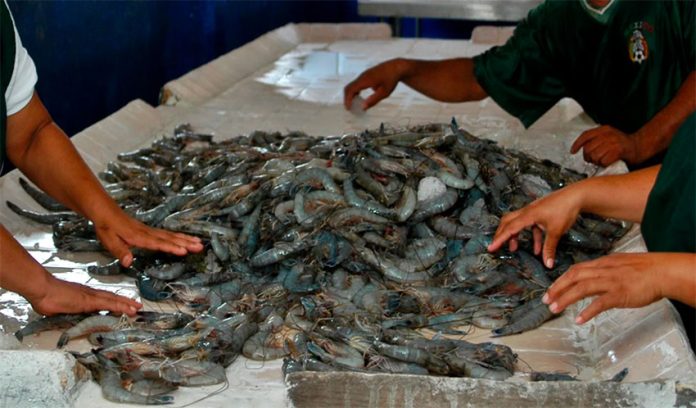
Shrimp can be exported as long as they are not caught by trawlers.
Wild-caught shrimp exports to the U.S. can resume after Mexican officials came to an agreement with their U.S. counterparts, reactivating a US $300-million industry.
United States officials had suspended Mexico’s shrimp certification due to what they saw as inadequate protection measures for sea turtles.
The agreement allows for shrimp exports which are not caught by deep sea trawlers, and so pose no threat to turtles.
For trade to proceed, Mexico must find a way for the origin of a shrimp catch to be identifiable, and present the strategy before U.S. officials by June 1.
Turtle excluder devices offer a means of escape through fishing nets for turtles caught unintentionally.
Authorities from both countries have committed to solving outstanding problems to remove all barriers on shrimp trade for the fishing season when it opens in September.
Head of the National Aquaculture and Fishing Commission (Conapesca), Octavio Almada Palafox, stressed the importance of compliance and cooperation. “In the next few days there will be an intense exchange of information with the aim of reaching a positive outcome for Mexico. The compromise of all those involved is required so that the product is sent in compliance with transparency and integrity, for which the Mexican government has established strict controls,” he said.
Total shrimp exports to the United States in 2019 were 30,000 tonnes, according to the Agriculture Ministry.
Mainly located in Sinaloa, Sonora, Tamaulipas, Nayarit and Baja California, Mexico’s shrimp fishermen send about 80% of their exports to the United States, with smaller quantities going to countries such as China, Japan, Malaysia, Singapore and France.
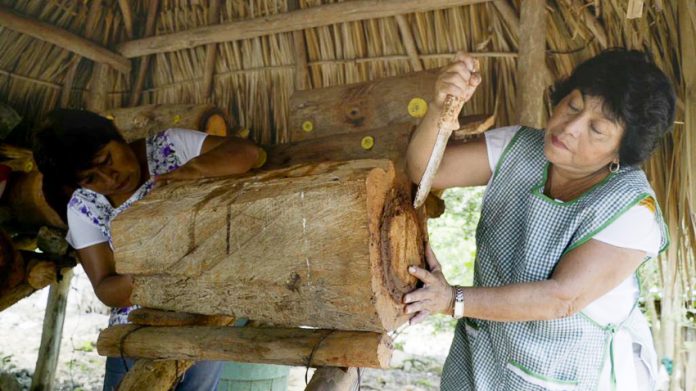
Leydy Pech, right, in a still from the documentary film What Happened to the Bees?
A documentary that explores the deadly effects of agrochemicals on bees premieres in cinemas in several states on Friday.
Made by filmmaker Adriana Otero and photographer Robin Canul, What Happened to the Bees? tells the story of Maya beekeeping communities in Campeche that came together in 2012 to investigate the cause of the deaths of millions of their bees. They subsequently confront authorities and the agrochemical company Monsanto over putting their livelihoods at risk.
Led by beekeepers Gustavo Huchin and Leydy Pech, the communities fight to put an end to the sowing of genetically modified soybeans on or near their land.
The documentary also seeks to educate viewers about the importance of looking after bees, given that they are pollinators of huge numbers of wild and commercially grown plants.
“We show the fight of the Mayan beekeepers like Gustavo Huchin and Leydy Pech, who dedicate their lives to the protection of bees … to look after the life of the planet,” Otero said.
“… The documentary shows the negative effect of agro-industry and the use of agro-toxins on pollinators, our environment and our health. It’s a tribute to the farmers of Mexico,” she said.
Canul said the documentary also explores the impact of public policy on beekeeping and agriculture. The policies are “designed at desks and don’t take the wisdom and knowledge of communities into account,” he said.
What Happened to the Bees?, which has only previously been shown at film festivals, will be screened at cinemas in Mexico City, Guadalajara, Cuernavaca, Mérida and Campeche city starting Friday. More information about the 68-minute documentary and screening times and locations can be found on the website of its production company.
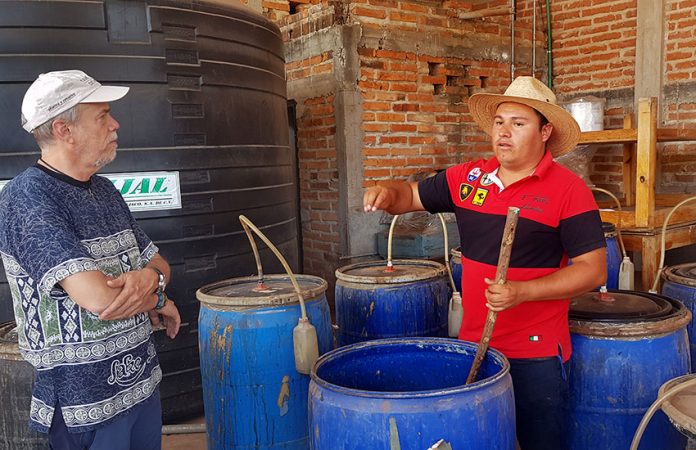
Agave Azul distillery uses environmentally sustainable techniques. The blue barrels contain liquified bat guano from abandoned opal mines.
San Juanito Escobedo is perhaps the archetype of the quiet unassuming, forgotten pueblito located in the middle of nowhere.
That “nowhere” just happens to be within the bounds of what was once Mexico’s third-largest lake, La Laguna de Magdalena, which was drained in 1936 to create great stretches of flat, arable land.
This being the case, I was surprised indeed to receive the following message from my friend Rick Echeverría.
“John, have you visited the big distillery in San Juanito? If you do, don’t miss their tequila-aging cava — it may be the biggest in the world.”
I soon learned that the distillery is called Agave Azul, and I was kindly invited to tour the place by members of the García family, which runs the business.
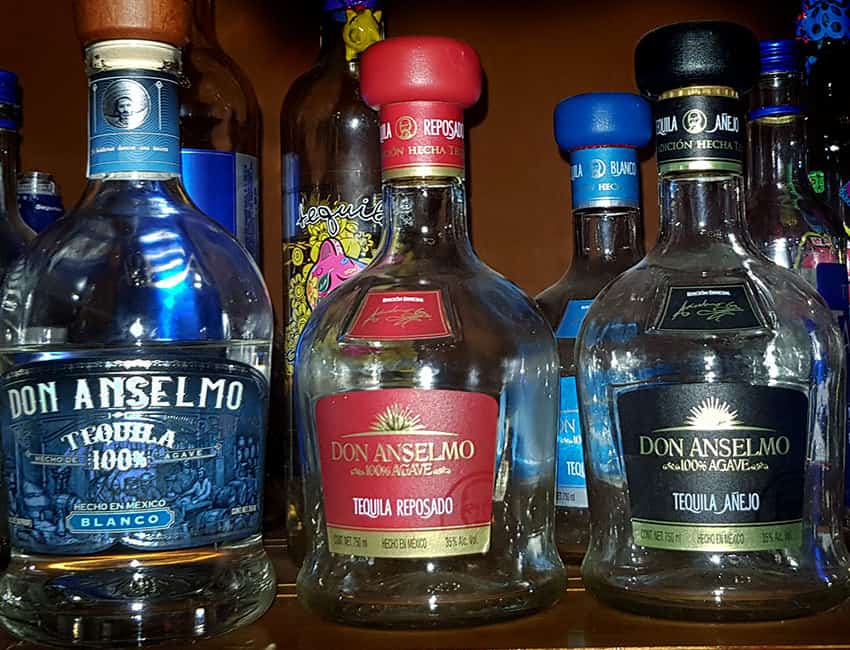
Tequila Don Anselmo. Some say it has “a touch of vanilla, oak chips and dark chocolate, with a pinch of cinnamon.”
Agave Azul and San Juanito are located 60 kilometers west of Guadalajara. Google Maps took my friends and me right there but via a truly adventurous route, including dirt roads and back streets that tested the mettle of our four-wheel-drive vehicle.
But after bouncing over the last pothole of a rut-ridden back alley, we suddenly arrived in front of a huge, modern industrial complex, and there we met José de Jesús García García, owner of Agave Azul.
“Our aim,” Señor García told me,” is to preserve the traditional way of making tequila, using stonework ovens and stills, the historical approach.” He added that many distilleries buy their agaves from others, but not his.
“Just look out the window and you can see hills covered with our agaves azules [blue agaves], 500 hectares of them, to be exact.”
García then surprised me by announcing that all those agaves are organic.
“We fertilize them with compost made from our own waste products, from our own bagasse [in this case, the shredded fibers of the agave hearts]. So we are returning to the soil what we have taken out of it, and we are not contaminating. Instead of killing the land around us, we are enriching it, we are making it more productive.”
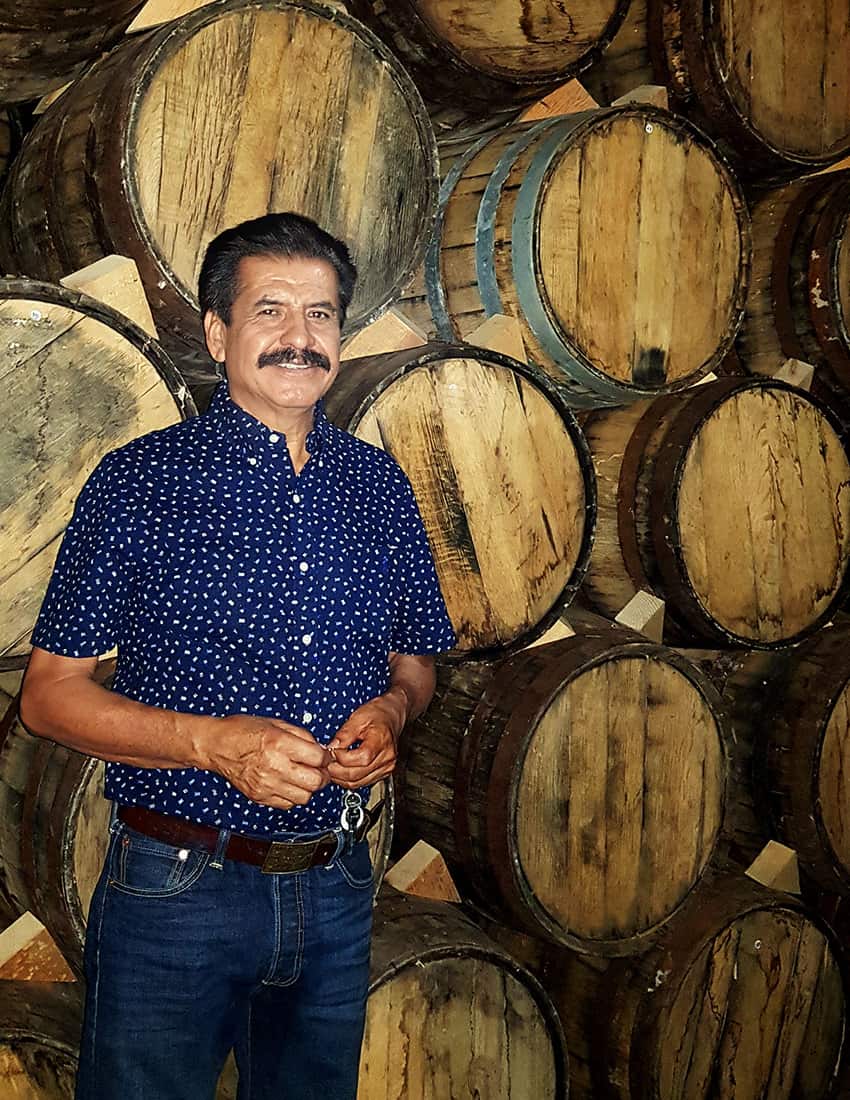
José de Jesús García is following in his great-grandfather’s footsteps.
José García then launched into the story of how this tequilería came into being, and quite a story it is.
” I am the great-grandson of Don Anselmo García. I didn’t know him because I was born in 1957, a few years after he died, but he was a craftsman. He produced and sold all sorts of artesanías made from tule, the reed that used to grow all around the edge of the Laguna de Magdalena.
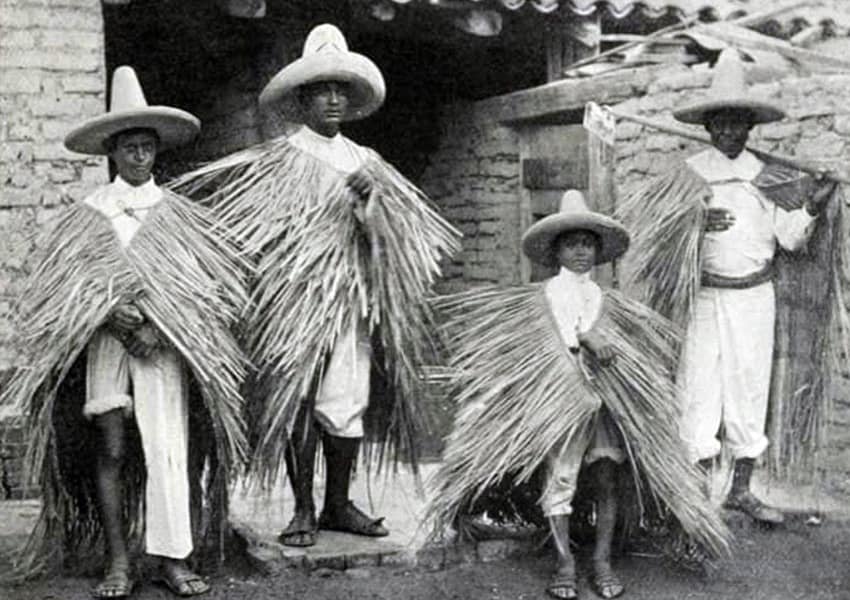
“He made petates [sleeping mats] and sopladoras [hand fans for stoves and fireplaces] and curious-looking chinas that served as raincoats in bygone times. Don Anselmo would travel all around this area, selling his products of tule along with queso enchilado, which is so called because the outside of this cheese is literally covered with chile for two reasons: first to make sure flies don’t land on it, and second to preserve its correct consistency. This procedure, in fact, preserves the cheese for over a year.
“Now, one day, when my great-grandpa was in Tequila, Don Javier Sauza said to him: ‘Why don’t you plant agaves in your pueblo?’ And it was because of him that agaves were introduced to San Juanito.
“So my bisabuelo [great-grandfather] brought someone here to show people how to plant and cultivate and harvest agaves. Years later, when the first of them were ready for harvest, they set up what we traditionally call a taberna here, with distilling equipment made of copper.
“But all of this was for friends, and they didn’t call it tequila; they called it aguardiente [firewater]. Then my great-grandfather died, and that was the end of the taberna.”
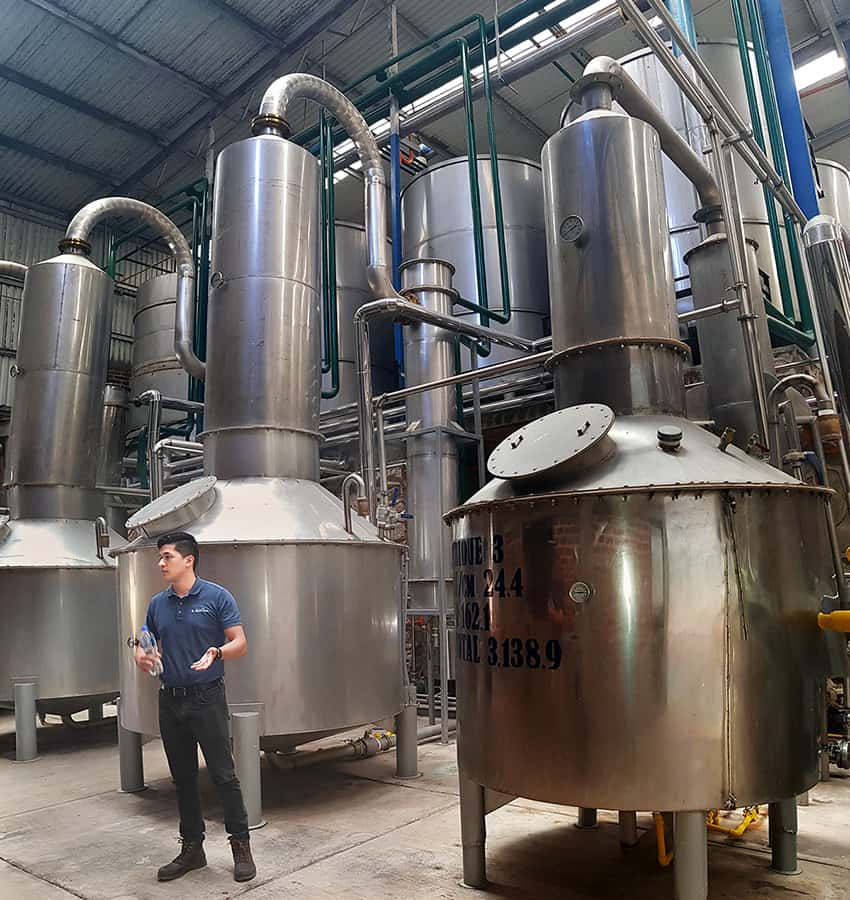
Aldo García in front of Agave Azul’s stills.
José García told me that friends of the family eventually revived the taberna and even got him involved in the project, but he never knew that the distillery had anything to do with his great-grandfather “until one day, I ran into my great-uncle and I said: ‘Uncle, why don’t we have a little drink?’ And he replied, ‘But where can we go?’
“‘To the tequila factory,’ I answered.
“‘What factory? You’re crazy.’
So they got into a truck and headed along a little dirt road in the middle of nowhere.
“… my great-uncle says, ‘Isn’t this Los Reyes?’”
When García replied that it was, the great-uncle said, “Bueno, Los Reyes is the place where my father used to make a really good aguardiente.”
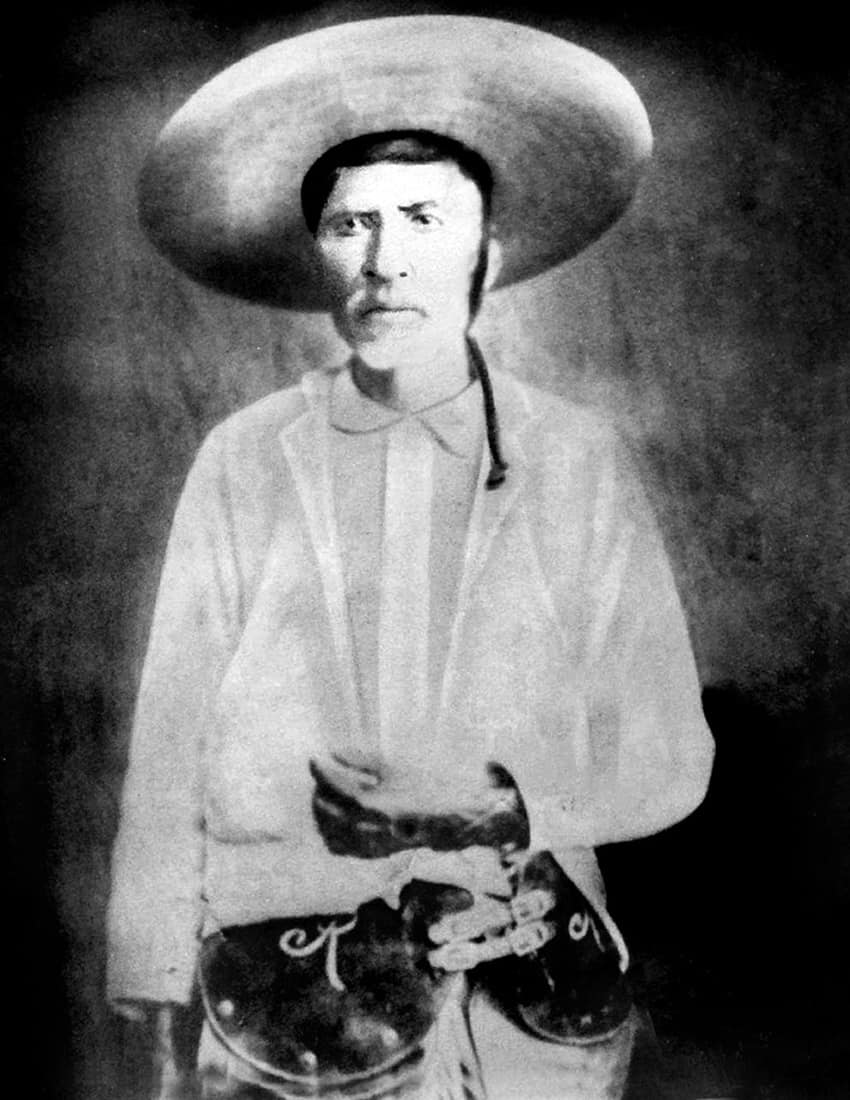
Don Anselmo García sold artesanías made of the reeds which grew all around the Magdalena Lagoon.
“And that is when I put it all together,” García explained. “I understood that this distillery where I was helping out was, in fact, the very same [one] my great-grandfather had set up years ago. That is when I decided to take up what my great-grandfather had been doing and to make it my own. Now, finally, we are completing the obra [life’s work] that he began a long, long time ago.”
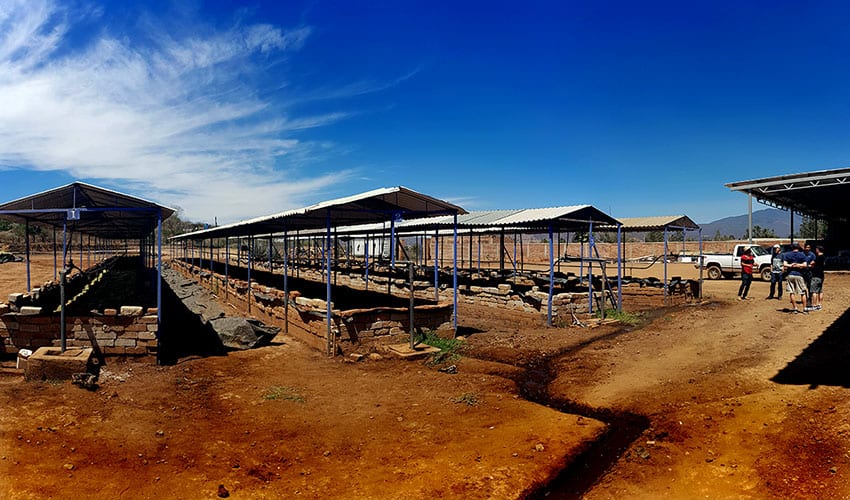
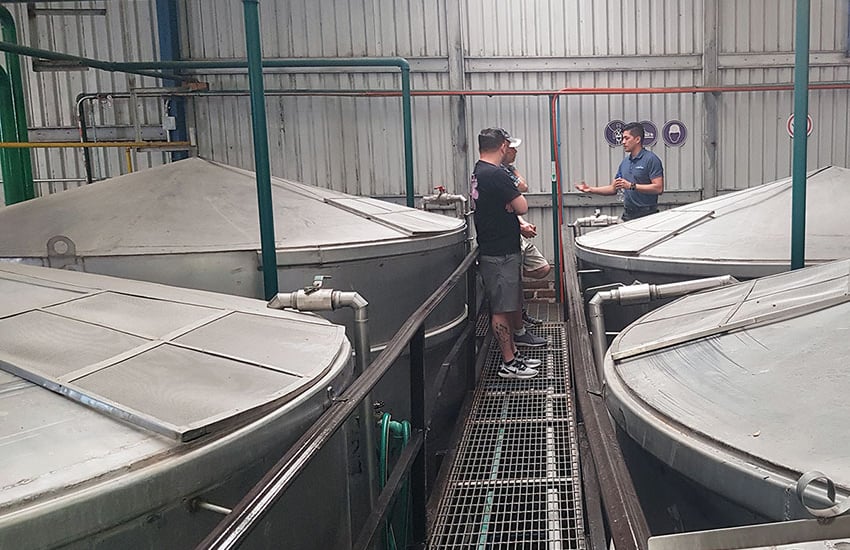
After hearing this story, we went on a tour of the distillery, following the process whereby the piñas de agave are cooked in a huge stone oven, crushed and squeezed dry. Then the juice goes into fermenting vats, followed by distillation in huge alambiques, or stills.
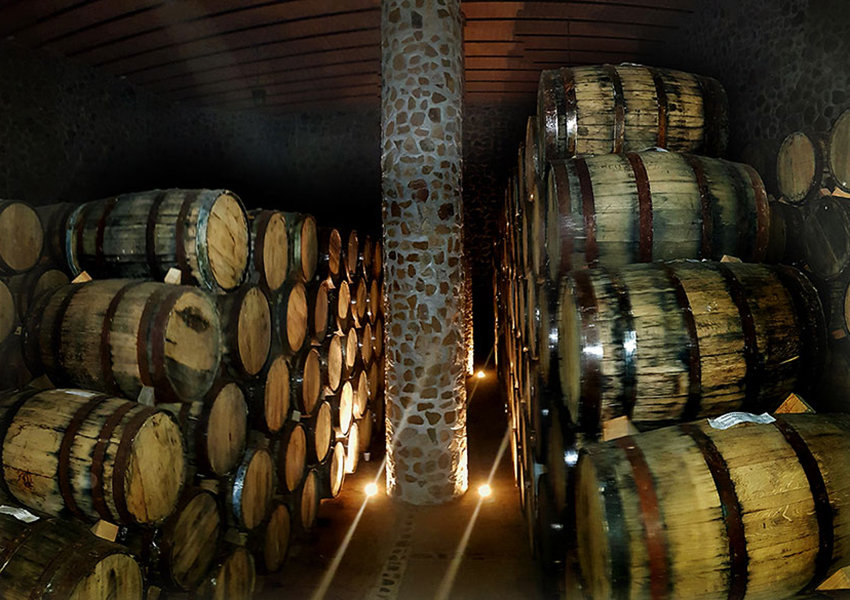
All these works are built on a hillside to take advantage of gravity, with the final product ending up in their cava. There it is aged in oak barrels from France and the United States for up to three years.
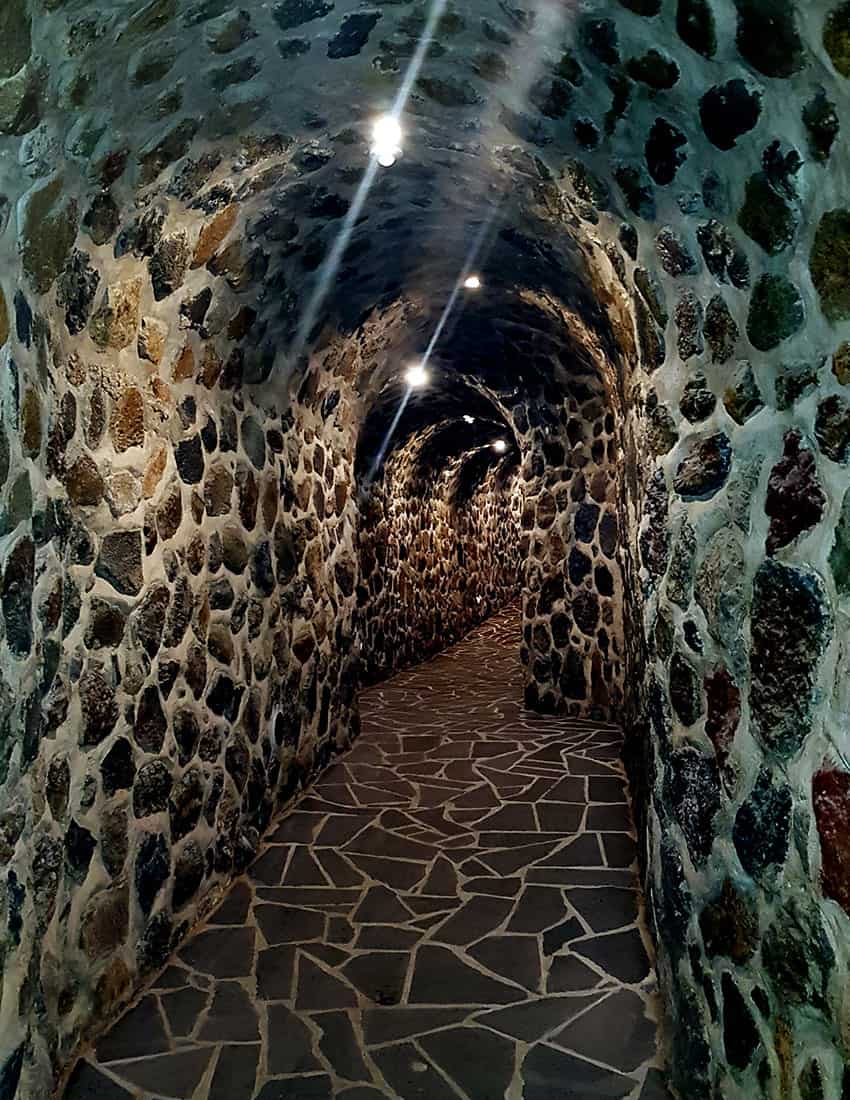
This cava — which is accessed via a long, spooky passageway right out of Edgar Allan Poe’s The Cask of Amontillado — is a huge underground room that provides the perfect temperature (10 to 13 C) and conditions for aging.
In other distilleries, over 10% of a barrel of tequila is lost to evaporation every year, but deep underground, this phenomenon is greatly reduced.
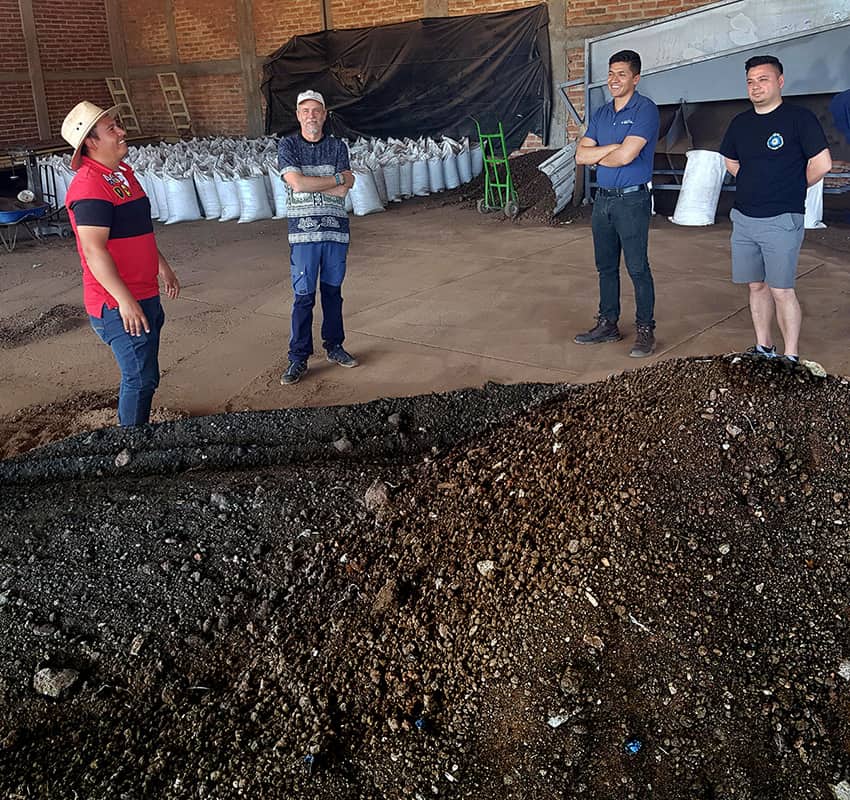
After touring the distillery, we went off to the composting facility located five minutes away. Here, in front of row after row of composting beds, we met Luis Ángel Ruvalcaba, who explained how Agave Azul makes its own fertilizer.
Agave Azul’s composting beds.
Most other tequila makers throw away their bagasse and their distillation slops (the top and bottom portions of the fermented must or wort). Not Agave Azul.
It sends all of it to Ruvalcaba, who mixes it with cow, sheep and rabbit manure and bat guano and spreads the mixture on top of the composting beds, where countless California red worms transform it into the very best fertilizer imaginable.
None of Agave Azul’s waste products are dumped into local rivers. The river outside the town of Tequila is badly polluted.
While many tequilerías are concentrating mainly on volume, this one, and a few others I’ve seen, appear to have a genuine concern for quality.
“Yes, you can find something called tequila on the market for US $10 a bottle,” Aldo García told us,” but what is it made of?”
He explains further: “Just do the math: to make one liter of tequila, you need more or less seven kilos of agaves, and each kilo costs 30 pesos, so the mere cost of the raw material is 210 pesos, a little over $10.”
The long tunnel leading to the cava is made entirely of volcanic rock.
Just what the biggest distilleries — most of which are no longer owned by Mexicans — are pouring into those liter bottles, I can’t say, but if you would like to taste what Agave Azul is producing in San Juanito, look for their brands: Don Anselmo, La Tarea, Chulavista and El Pial, all available both in Mexico and in the United States.
¡Salud!
The writer has lived near Guadalajara, Jalisco, for 31 years and is the author of A Guide to West Mexico’s Guachimontones and Surrounding Area and co-author of Outdoors in Western Mexico. More of his writing can be found on his website.
Behind a great heap of compost, visitors learn about the distillery’s methods for fertilizing their agaves.
The cava can hold 1,500 barrels, each containing 220 liters.
San Juanito was famed for its excellent “chinas,” raincoats made of reeds.
Visitors among Agave Azul’s huge fermentation vats.
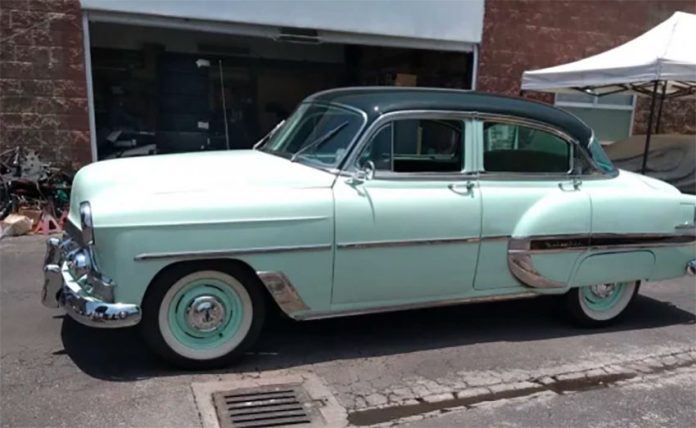
This 1953 Chevrolet Bel Air was one of the vehicles restored.
An electoral court judge has admitted that he used the court’s repair shop to restore his vintage cars but denies any wrongdoing, saying that he paid for the work out of his own pocket.
According to a report by the newspaper El Universal, Federal Electoral Tribunal (TEPJF) Judge Felipe Alfredo Fuentes Barrera used the court’s Mexico City mechanical workshop for the restoration of at least five classic cars worth a combined 2.35 million pesos (US $117,700). The restorations were completed between 2017 and 2020.
TEPJF sources told El Universal that Fuentes, who became an electoral court judge in 2016 and was its president between 2019 and 2020, is under investigation for his actions and that a request for his resignation has been submitted to the court’s internal control body.
The newspaper reported that the total cost to restore the vehicles – a 1975 Chevrolet Nova hatchback, a 1969 Chevrolet Chevelle, a 1953 Chevrolet Bel Air, a 1967 Ford Galaxie and a 1973 Ford Mustang Mach 1 – was almost 1.8 million pesos but almost a quarter of that amount – 417,500 pesos – is still owed to the TEPJF garage, where a fleet of some 300 court vehicles are maintained.
Asked why his vehicles were restored at his workplace’s repair shop, Fuentes said the decision was taken by the mechanic he hired, who works there. He asserted that no TEPJF resources were used to pay for the restoration of his cars.
“Everything has been paid out of my salary, all of the expenses agreed to were covered in advance. There was no use of public resources … and I have proof, I have everything documented,” Fuentes said.
“I hired the mechanic from that workshop because I trusted him. It was a personal and private contract. I can prove that with the contract,” he said.
“… I made use of my resources and not those of the Electoral Tribunal for the restoration of the vehicles,” Fuentes reiterated.
The car restoration issue is not the only matter tarnishing the judge’s reputation. According to another El Universal report, Fuentes is guilty of nepotism.
The newspaper said the judge has used his position to gain employment for family members in the court, including his brother. It also said that he has found positions for close relatives of people who work for him.