Home Blog Page 1406

Sinaloa native Julio Urías becomes World Series star

0
A tumor and a shoulder injury have been among the challenges facing the 24-year-old.

Culiacán native Julio Urías has traveled a long, challenging and at times dark road to reach Major League Baseball’s 2020 World Series.

But it will all be worth it if the Los Angeles Dodgers pitcher is, as predicted, given the opportunity to take the field in Saturday’s fourth game against the Tampa Bay Rays.

Urías, 24, moved to the United States as a teenager to pursue a baseball career after being signed to the Dodgers on his 16th birthday by scouting legend Mike Brito.

His talent as a pitcher was recognized at a very young age, recalls Carlos Urías, his father, in an interview with the newspaper Reforma.

“A lot of people who watched how my son played from the age of 5 said … ‘He can play good ball.’”

While recognizing his talent, Carlos Urías said he didn’t want to place any pressure on his son by making a big deal about his baseball skills, explaining that all he wanted was for him to enjoy the game.

Besides, Julio already had a significant challenge to deal with – he was born with a benign tumor on his left eye that grew larger as he did.

Carlos said he taught his son to accept the problem and see it as “something normal” but he was bullied by other kids who singled him out as being different.

Three surgeries to remove the tumor didn’t slow down Julio’s progression through the junior baseball ranks in Mexico. He began playing for the Mexican youth team in his early teens and caught the attention of Brito at a showcase event in Oaxaca in 2012.

A year later, at the age of just 16, he made his debut in the U.S. minor leagues, playing for the Great Lakes Loons in the Midwest League. In 2016, at the tender age of 19, he made the step up to the big time, debuting in the Major League as the Dodgers’ starting pitcher. He was the youngest starting pitcher to debut for the dodgers in more than 70 years.

Urías pitched 18 games in his debut season in the Major League but was sent back to the minor leagues in 2017 before suffering an injury to his valuable left shoulder that threatened to put an end to his fledgling professional career.

Urías after last week's win over the Atlanta Braves.
Urías after last week’s win over the Atlanta Braves.

But after surgery and a long rehabilitation process, he returned late in the 2018 season and his career got a further boost at the start of the 2019 season when he was selected as the Dodgers’ starting pitcher on several occasions.

But just as things were looking up, his career was abruptly put on pause as he was suspended for 20 games after being arrested in Los Angeles on suspicion of domestic battery.

CBS Sports reported that Urías was arrested in May 2019 after witnesses said he shoved his girlfriend to the ground in a parking lot in L.A. While he was arrested, police didn’t charge the then 22-year-old because the woman didn’t suffer any injury and “she at no point indicated to either the uniformed police officers or to civilian witnesses that she believed she was a victim.”

Nevertheless, Major League Baseball suspended Urías, concluding that he had violated the league’s domestic violence policy.

The pitcher chose not to challenge the decision, saying in a statement that he took “full responsibility” for his “inappropriate conduct.”

“Even in this instance where there was no injury or history of violence, I understand and agree that Major League players should be held to a higher standard,” he said.

“I hold myself to a higher standard as well. I have taken proactive steps to help me grow as a person on and off the field, and in my relationships, including attending counseling sessions. I am deeply grateful for all the support I’ve received during this challenging time. I look forward to proving it is well deserved.”

Urías returned to the Major League later in the 2019 season and in January 2020 agreed to a US $1-million deal for this year’s pandemic-shortened season.

In the seven-game series against the Atlanta Braves that the Dodgers won 4-3 to qualify for the World Series, Urías played an important role, throwing a career high 101 pitches in game 3 before returning to the mound after three days’ rest to throw 39 pitches and claim the final nine outs in game 7.

The Los Angeles Times concluded that the Dodgers had “removed the last layer of bubble wrap from left-hander Julio Urías, the pitching prodigy who was eased into the major leagues as a teenager in 2016 and stamped with a “fragile: handle-with-care” label for a solid year after returning from major shoulder surgery in 2018.”

Dodgers manager Dave Roberts said much the same, telling reporters last week that “we’ve kind of handled him over the last four years with kid gloves” and acknowledging that Urías “hasn’t really liked and appreciated” the treatment. He described his young charge as “very talented, very smart and very tough.”

He hasn’t yet pitched in the World Series (currently tied at 1-1 ahead of game 3 Friday) but according to ESPN, the Dodgers are “lining him up to start game 4 on Saturday.”

If he does take the field in Arlington, Texas, tomorrow, there is no doubt that he will have massive support both in his adopted home town of Los Angeles and back home in Mexico, something that is not lost on the pitcher.

“Ever since my debut, ever since the moment I signed, we all know which team is the most popular among Latino people, among Mexican people,” Urías said recently, attributing the Dodgers’ popularity with Mexicans to the fact that Sonora native Fernando Valenzuela played for the team throughout the 1980s.

Possibly the most famous Mexican who will be cheering Urías on as he throws against the Tampa Bay Rays is President López Obrador, an avid baseball fan who took time out of his own batting practice this week to acknowledge the Culiacán pitcher’s performance in the final game of the series against the Braves.

“Julio Urías, our compatriot from Culiacán, got us out of a hole. He pitched very well and did a very good job. I’m supporting the Dodgers to be the champions of the 2020 World Series,” he said in a video message.

“[Urías’ performance] is a tribute to Fernando Valenzuela, … the best Mexican baseball player of all time, an extraordinary pitcher. Julio Urías is following in his footsteps.”

Source: Reforma (sp) 

Baja California Sur predicted to finish the year with 3 million tourists

0
Early-morning shot of boats at the Bisbee's Black & Blue this week in Cabo San Lucas.
Early-morning shot of some of the boats at the Bisbee's Black & Blue this week in Cabo San Lucas.

Tourism appears to be rebounding in Baja California Sur (BCS).

Luis Humberto Araiza of the state’s Ministry of Tourism, Economy and Sustainability (Setues) says that BCS will close out the year with three million tourists, around 70% of the number of visitors the state saw in 2019. 

Araiza said that Setues had projected that the national market would be the first tourism sector to recover. However, he was surprised to see that it was the luxury sector that came back first, BCS Noticias reports. 

Araiza said travelers feel comfortable returning to BCS due to all the safety regulations and health certificates held by businesses in the state’s destinations. More than 500 companies have obtained “Clean Point” certifications from the federal Ministry of Tourism, more than any other state, he said.

“The change in the Covid-19 [risk level] stoplight has allowed more visitors to arrive through more flights, which has generated more reservations. There is optimism for Baja California Sur …” he said.

“Faced with the Covid-19 pandemic, Baja California Sur is consolidating itself as a safe and reliable destination, thanks to the actions and sanitary measures that we have taken together with the tourism sector to protect the health of both visitors and those who live here.”

As of Thursday, BCS had recorded 11,900 confirmed cases of the coronavirus, which has killed 577 people. 

Party patrols

Officials warn that bars and restaurants that hold Halloween or Day of the Dead parties this year run the risk of being shut down after celebrations of both holidays were canceled in the state.

With tourists returning to the region as it moves into high season, authorities want to make sure that another outbreak of the coronavirus does not occur. 

Authorities will be particularly vigilant in Cabo San Lucas, where large costume parties are a tradition this time of year, and will be conducting security and surveillance patrols downtown, Metropolimx reports.

No costume parties this year, officials warn.

Bisbee’s Black & Blue underway

The world’s richest fishing tournament wraps up Friday after three days of fishing. Thus far no qualifying marlin has been caught, meaning that whoever catches the largest black or blue marlin over 300 pounds today stands a chance to go home with a serious chunk of the US $4.6 million purse, the largest ever.

This year, 127 teams are participating in the tournament, and just 15 of the boats belong to locals. The rest are from elsewhere in Mexico or other parts of the world, mainly the United States, BCS Noticias reports.

“All those that come from the United States or other states of the republic come with their family and obviously spend money on plane tickets … hotel rooms, breakfasts, meals,” said tournament coordinator Clicerio Mercado, noting that in fishermen alone the Bisbee’s has drawn 790 people to Cabo San Lucas who normally spend around US $12 million.

The largest fish ever caught in the tournament was a 993-pound blue marlin in 1994.

Cabeños celebrate beach access decree

After President López Obrador published a decree on Wednesday guaranteeing free access to beaches in Mexico, residents of Los Cabos cheered the new law which can levy fines of more than 1 million pesos against anyone who block paths to the beach.

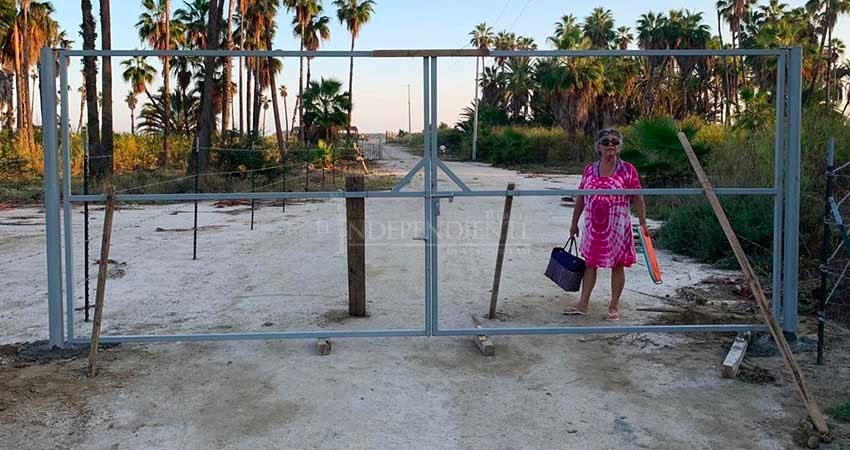
For years local residents have battled with hotels and developers who block access with impunity, most recently in Puerto Los Cabos where the El Ganzo hotel has fenced off and padlocked the gate to a beach access path, outraging locals.

Beach access has also been blocked in Buenavista in recent days and is a daily occurrence in Cabo San Lucas where a hotel fences off a portion of El Médano beach, Diario El Independiente reports.

Los Cabos councilor Tabita Rodríguez Morales says that nearly 200 beaches in the municipality have their accesses blocked, and she hopes the decree will open them to the public. 

“There are practically 192 closed accesses to beaches along the entire coastline, from Migriño to Buenavista, and when the municipal authority has taken action, the developers use legal arguments to continue to violate the regulations and municipal development plans,” she said.

“Citizens in the country will have this tool that will mark a watershed in the defense of our public beaches [and] free access.” 

A gate blocks access to a beach in Puerto Los Cabos this week.

Traffic tickets discounted

For those who enjoy speeding, driving without a seatbelt or other minor infractions, the police in La Paz have good news. Until the end of the year, traffic fines will be discounted by 70%. The savings is not applicable to those who are ticketed for using their cell phones while driving, driving drunk or parking in handicapped zones, El Informante BCS reports.

Citizens are not encouraged to violate the law, but rather to take care of any outstanding fines they may have during the reprieve.

Mexico News Daily

Organized crime behind occupation of Morelos toll plazas: prosecutor

0
A motorist approaches toll plaza extortionists in Morelos.

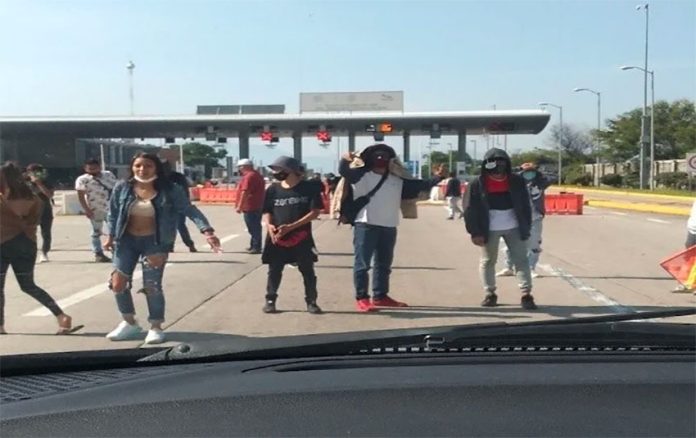
Protesters who hijacked a toll plaza in Alpuyeca, Morelos, for 15 days were hired by organized crime, authorities say. 

Adriana Pineda Fernández, head of the state’s specialized anti-kidnapping unit (UECS), said that the young people collecting fees from drivers at toll booths were paid up to 1,500 pesos, around US $72, per day to do so by a criminal group from Guerrero.

On Tuesday, three bus drivers who had been held hostage since October 12 by protesters at the Francisco Velasco Durán toll plaza were released after police intervened, Pineda noted. 

In addition, 78 people — 43 men, 14 women and 21 minors — were arrested in the operation. The minors were turned over to the DIF family services agency. 

On Thursday, 69 others — who were demanding the release of those arrested Tuesday — were arrested near police facilities in Cuernavaca after they threw rocks at police and damaged patrol cars. 

Pineda says those hired by organized crime to extort money from drivers were recruited from Ometepec and Chilpancingo, Guerrero. 

Pineda did not identify which criminal organization is responsible, citing an ongoing investigation. 

Governor Cuauhtémoc Blanco said he had consulted with Interior Minister Olga Sánchez Cordero about the toll plaza situation and that the National Guard will be dispatched to protect the integrity of the toll plazas and arrest those who attempt to commandeer them.

Blanco also applauded the mass arrests. “I reiterate to all the people of Morelos that we are not a government with its arms crossed, but we are not an arbitrary state either. We respect all social causes and all ideas, but we are not going to stand by as the law is violated at the expense of the rights of the majority,” Blanco said.

“You are seeing the images, they are violent, they are people who attack drivers who are really desperate to get to their homes, and we are not going to allow this,” he said.

Hijacking toll plazas has become an important source of income for many people in Mexico. Last year alone the country saw revenue losses totaling 3 billion pesos (US $143.7 million), according to Capufe, the federal highways and bridges agency.

Source: Proceso (sp)

Worst of the pandemic will be seen at year’s end: former health minister

0
jose angel Córdova
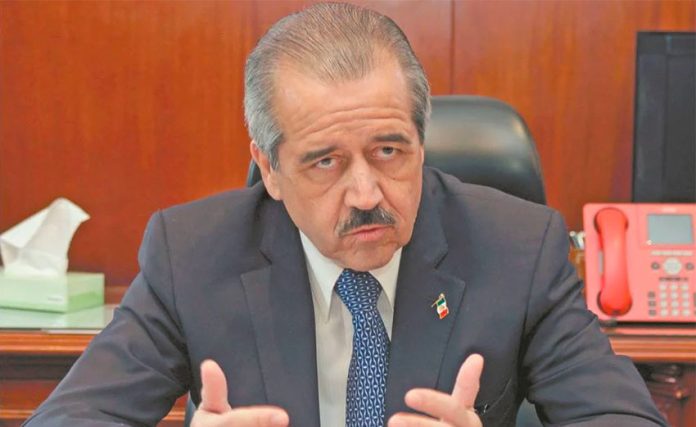
Córdova says government should do more testing, promote face masks and encourage people to go to the hospital sooner rather than later.

Mexico will see a large new wave of coronavirus cases in the next two months, predicts a former federal health minister.

In an interview with the newspaper El Universal, José Ángel Córdova Villalobos, health minister during the 2006-2012 government of former president Felipe Calderón, said the recent increase in case numbers is not the start of a new wave of infections but rather a spike in a lengthy first wave.

“This new outbreak that we’re seeing in Europe, which is truly very significant, is not what we’re seeing here. What we’re seeing here is a new ascent in the number of cases … [but] we’re still in the same wave,” he said.

Although Deputy Health Minister Hugo López-Gatell said this week that there are already “early signs” of a new wave of infections, Córdova predicted that new case numbers will “probably” decrease from their current level before making a resurgence in November and December.

“The most dangerous stage is probably coming, … we’re talking about November and December, [that’s] when we’ll have a true new outbreak as is happening in Europe,” he said.

Córdova, a medical doctor, said the federal government should not be afraid to order a new lockdown to mitigate the impact of the second wave he predicts is coming.

He also urged the government to ramp up Covid-19 testing – Mexico has only tested about 17,000 people per 1 million residents, promote the widespread use of face masks and encourage people to go to hospital sooner rather than later.

Córdova criticized the government for not doing those things from the beginning of the pandemic. He is one of six former health ministers who last month presented a new national strategy to stop the spread of the coronavirus that includes a nationwide testing campaign and the mandatory use of face masks.

The government made no response to the former ministers’ proposals.

Asked whether the federal government has done anything in response to the pandemic that is worthy of praise, Córdova nominated its efforts to bring medical supplies into the country from China.

He acknowledged the importance of the role Foreign Minister Marcelo Ebrard played in securing supplies from China early in the pandemic and also recognized his efforts to secure access to vaccines if and when they become available.

The former minister predicted that a vaccine could be available at the end of December or beginning of January but said that it is unlikely that Mexico will have access to a large number of does before the second quarter of 2021.

Until at least 70% of the population is vaccinated against the coronavirus, citizens and authorities need to continue taking steps to slow its spread, Córdova said.

Lifting all economic and social restrictions before the majority of people is vaccinated is “impossible,” he said. “We have to understand that.”

Source: El Universal (sp) 

Man dies after being trapped in well for five days

0
Rescue workers and machinery at the site of the collapsed well.

A man who spent five days in a well waiting to be rescued has died, authorities say. 

Efforts to extricate Julio Cesar Hernández Rivera, a 36-year-old from Montitlán, Colima, began last Friday after the ground gave way and buried him in the well he was cleaning.

The soil in the area is volcanic, rich in clay and not compacted, making any kind of excavation complicated, especially that of rescue efforts.

By Wednesday Civil Protection workers had managed to pull his torso free of the constantly collapsing, 12-meter deep pit, but subsequent collapses and Hernández’s deteriorating state of health made further efforts impossible and it was determined he had perished after once again being buried up to his neck.

A doctor with the Jalisco Red Cross said that being buried for so long caused a lack of blood flow to Hernández’s extremities, which led to a deterioration of injured tissues. 

“When that blood flow is restored, all those toxins or injuries in the extremities begin to generate problems in the respiratory, circulatory and neurological systems. This happened to Julio César, whose health deteriorated in minutes until he was unconscious and reached a critical stage,” the doctor said.

Around 50 people assisted in Hernández’s rescue efforts. Heavy equipment was used to retrieve Hernández’s body on Thursday. 

Source: El Universal (sp)

AMLO likens political movement’s logo to that of Chilean dictator

0
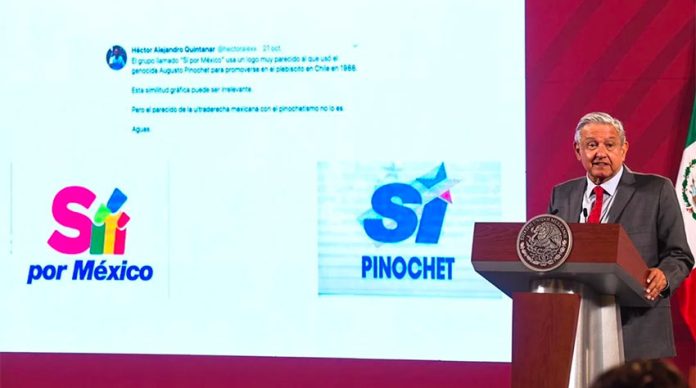
The president displays the two logos during his press conference.

A new political movement has responded to President López Obrador after he compared its logo to that used by Chilean dictator Augusto Pinochet.

At his news conference on Thursday, López Obrador said the logo of the new political movement Sí por México (Yes for Mexico) is similar to the Sí logo used by Pinochet 32 years ago before Chilean voters rejected the extension of the military leader’s rule.

AMLO, as the president is best known, made the remark while the two logos were projected onto a screen behind him. Also projected onto the screen was a Twitter post from a social media user who noted a similarity between the two logos a day before the president.

“The group called Sí por México is using a very similar logo to that which the genocida [a person guilty of genocide] Augusto Pinochet used to promote himself at the plebiscite in Chile in 1988,” the post read. “This graphic similarity might be irrelevant. But the resemblance of the Mexican extreme right with Pinochetismo is not. Watch out.”

López Obrador said the similarity between the two logos might be a “coincidence” but noted that Claudio X. González, a businessman, member of Sí por México and outspoken critic of the government, said in 2006 that if he won that year’s presidential election, a coup against him similar to that which overthrew Salvador Allende in Chile in 1973 and installed Pinochet as president might be needed.

Sí por México responded to the president’s comparison of the two logos on Twitter.

“What bothers you, Mr. President? Are you worried that citizens are organizing and getting involved [in politics]? You did it yourself … for many years. Are you worried that we’re holding you to account?” the movement said.

“Mr. President, we’re here to build the future with DEMOCRACY and FREEDOM. The change … our country needs will come hand in hand with a new way of doing politics – citizens’ participation,” it added.

Sí por México, which describes itself as a “large community of people and organizations that believe another Mexico is possible,” formally launched on Tuesday and published a six-point agenda the same day.

Under the heading, “What  do we want?” the movement listed full democracy; security and access to justice for all; sustainable economic growth that combats poverty and inequality; universal and high quality healthcare and education; substantive gender equality and the effective combatting of violence against women; and a healthy and sustainable environment.

Sí por México said it would challenge all political parties to endorse its “citizens’ agenda” and commit to makings its proposals reality.

It also said that it is not a front for anyone, although it has some high-profile members including Claudio X. González and Gustavo de Hoyos, president of the Mexican Employers Federation.

“Sí por México means that we all face up. Thousands of citizens and dozens of civil society organizations are at the front [of the movement]. … We’re here to demolish the walls that divide politics from citizens. We’re here to promote national unity,” the movement said.

López Obrador earlier this month likened Sí por México to the National Anti-AMLO Front, or Frenaaa, which continues to occupy Mexico City’s main square after setting up camp there last month.

AMLO reiterated Thursday that people have the right to oppose his government, organize against it and protest without fear of repression. He said last month that he was happy that people were protesting because it meant that his government is changing Mexico for the better.

“Those who benefited for a long time are now protesting and they think that the times of abuse and corruption are going to return,” López Obrador said.

“That’s why I’m happy because imagine if the conservatives didn’t protest, I would feel frustrated. I would say: ‘We’re not doing anything, there is no change.’ But things really are changing …”

The president rarely misses an opportunity to draw attention to his “adversaries” at his daily press conferences.

Source: El Universal (sp) 

Passengers shoot thieves, throw them off the bus

0
The thieves attempted to rob passengers near the Tepotzotlán toll plaza.

Two armed robbery suspects and a bus passenger died in México state Thursday morning after other passengers on the bus apparently rose up against a pair of alleged would-be robbers who had tried to steal their belongings.

El Universal newspaper reported that while the bus was traveling on the Mexico City–Querétaro highway, a pair of thieves began shouting threats and shooting off firearms in the bus, wounding an unidentified male passenger whom police described as in his 60s. According to witnesses, he died on the bus before the driver could contact police.

Police said they believe that after the man was wounded, some of the passengers eventually managed to overcome the pair and shoot them. The bodies were thrown onto the highway, where they were later found dead.

The bus, owned by Autobuses Coyotepec y Anexas, routinely travels between México state and Mexico City. The incident took place between Coyetepec and the Metro Polytechnic and Metro Valle subway stations in Mexico City.

After passengers threw the bodies off the bus, witnesses say the driver continued until reaching the Tepotzotlán toll plaza, where the passengers exited the bus to find other connections and the driver notified authorities.

One recent tally of robberies with violence on public transit in the state revealed there had been on average 19 per day since January.

Source: El Universal (sp)

La Laguna: could it be a model for bringing peace elsewhere in Mexico?

0
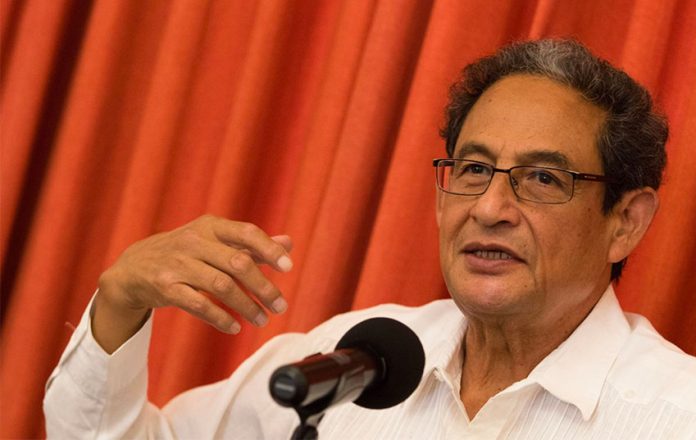
Sergio Aguayo
Sergio Aguayo is one of the authors of a book that examines a successful strategy in the area that takes in Coahuila and Durango.

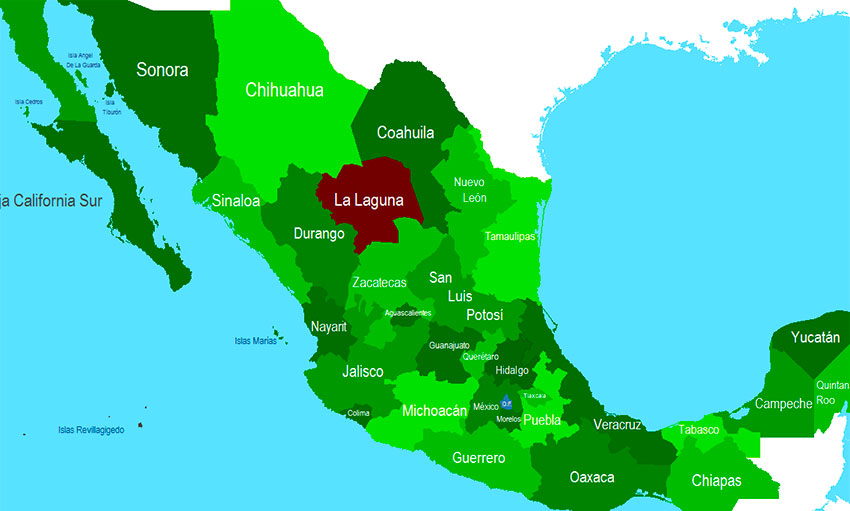
In 2012, there were 1,060 homicides in the Comarca Lagunera region of Coahuila and Durango that encompasses several cities including Torreón and Goméz Palacio and is commonly known as La Laguna.

But in 2018, there were just 139 homicides, a reduction of 87% compared to six years earlier.

A new book titled Reconquistando La Laguna (Reconquering La Laguna) examines the multi-faceted security strategy that was implemented in the region and was ultimately successful in significantly reducing violence.

Its authors, who describe the La Laguna initiative as the “most successful experience in the construction of peace in Mexico,” say that the security model could serve as an example for governments in other parts of the country.

First some context.

Between 2006 and 2014, La Laguna was the focus of a vicious turf war between the Sinaloa Cartel – led by notorious drug lord Joaquín “El Chapo” Guzmán at the time – and Los Zetas, which began as the armed wing of the Gulf Cartel but subsequently struck out on its own.

In La Laguna, Los Zetas used particularly aggressive tactics to assert itself, designing a “strategy to terrorize the entire population,” according to the book, written by the academics Sergio Aguayo and Jacobo Dayán with the collaboration of Javier Garza.

The cartel recruited police and military commanders to its ranks by giving them the option to accept their bribes or pay with their lives (the so-called plata o plomo, or money or lead, approach), the book says, and frequently kidnapped local businessmen.

Los Zetas, which arrived in La Laguna in 2003 or 2004, was not just involved in drug trafficking in the region – located on a smuggling route between the Pacific coast and the United States – but a range of other illicit activities including money laundering and extortion.

Mainly due to its turf war with the Sinaloa Cartel, there were 3,941 homicides in La Laguna between 2008 and 2014 and there were 463 abductions in the same period.

The central aim of the security strategy implemented in the area was to put an end to the criminal operations of Los Zetas.

The comarca lagunera region of northern Mexico.

That strategy was beneficial to the interests of federal, state and municipal governments, the United States – and the Sinaloa Cartel, Aguayo said in an interview. But the Zetas were seen as the more violent of the two.

“There was a confluence of interests. … It was decided to behead the cartel that was perpetrating more violence,” he said.

All three levels of government and the local business community contributed to defeating Los Zetas in La Laguna and thus reducing the violence of which the cartel was the main instigator, the book says.

The Coahuila state government led by former governor Rubén Moreira – now a deputy in the federal Congress – played a key role, the book contends.

Once Moreira’s government took office in late 2011, “passivity disappears,” it says. “Los Zetas were contained, beheaded and fragmented.”

The book identifies a number of government actions that contributed.

Police forces were cleansed of corrupt officers, paving the way for the creation of more professional and trustworthy forces and a strategy was developed that sought to attack organized crime’s economic and social structures.

Slot machines were banned, there was a crackdown on the sale of illegal alcohol and casinos were shut down because cartels, especially Los Zetas, were collecting extortion payments from them. Cock fights and horse races were outlawed, strip clubs were shut down and gas stations, which were owned by and/or laundering money for the Zetas, were subjected to strict audits.

In the cultural realm, public altars to Santa Muerte (Holy Death) – worshipped by many drug traffickers and other criminals – were destroyed and narcocorridos (narco ballads) were taken off the airwaves.

Authorities also urged citizens to report crime and implemented strategies designed to create jobs and encourage people to play sports.

The local business community also played a fundamental role in reducing violence in La Laguna, the book authors concluded.

Business people in Coahuila and Durango were behind three large-scale projects whose aim was to stamp out organized crime: the creation of a metropolitan police force in La Laguna, the establishment of a metropolitan anti-kidnapping organization and the formation of civil society association that monitors the local situation and seeks to hold authorities to account.

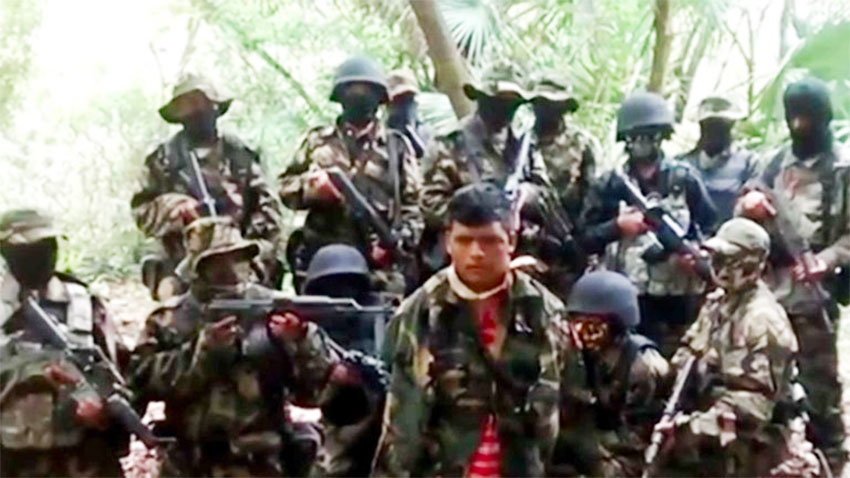
Los Zetas
The strategy went after Los Zetas, seen as the more violent of two warring cartels.

The metropolitan police force, made up of federal police and state officers from Coahuila and Durango working under a military command, “worked because it solves problems associated with the conflict created by the different [cartel] rivalries,” the book says.

Apart from providing military personnel and Federal Police to the metropolitan force, the federal government helped bring peace to La Laguna by establishing a new intelligence center in Monterrey, Nuevo León – located about 340 kilometers east of Torreón – whose main focus was combatting Los Zetas.

The overall strategy was effective in significantly reducing violence in La Laguna, the authors concluded, but it was by no means perfect.

Dayán said that impunity remained, and remains, a problem and that more still needs to be done to investigate police protection of organized crime and to track money generated by illicit activities in the area.

“Where did Los Zetas funds end up?” he asked.

However, there is a consensus that the achievements of the security model outweigh its flaws. Aguayo said the model is not a one-size-fits-all strategy, acknowledging that local security conditions and characteristics must dictate a plan to combat criminal activity.

But there are a lot of lessons to be learned from the strategy.

Aguayo said that political will of all three levels of government, coordination between them and the willingness of the government to listen to society were part of the model implemented in La Laguna and could be part of successful formulas elsewhere.

The academic said that he and his colleagues are now carrying out studies about the crime situation and social fabric in Mexico City with the aim of developing a strategy that could work in the nation’s capital, where a number of organized crime groups operate.

“We’re going to see what the formula could be here,” Aguayo said, adding that the Laguna approach outlined in his book will inform the process.

Source: Animal Político (sp), Reforma (sp) 

Baby that had been pronounced dead found alive in morgue refrigerator

0
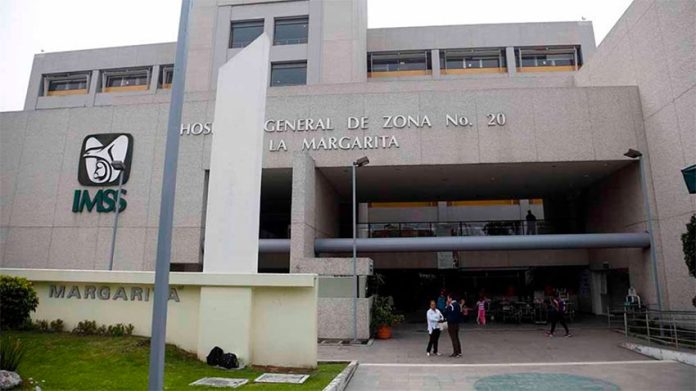
The Puebla hospital where a newborn was mistakenly pronounced dead.

A newborn baby declared dead was found alive by funeral home employees after the infant spent six hours in a morgue refrigerator. 

The baby was born prematurely on October 21 after just 23 weeks of gestation at the General Hospital La Margarita in the city of Puebla.

Medical staff at the hospital told the parents that the baby had died and the child was sent to the morgue at 4 a.m. where he remained in refrigeration while the parents filled out paperwork and hired a funeral home to retrieve his body.

When the funeral home’s driver arrived at 10 a.m., he noticed the child was crying and moving. 

“When we got to remove the body, we noticed that it began to cry and move; the social worker even got upset when we told her he was alive because she said ‘What’s wrong, don’t be liars’ and things like that, So we told the father to approach and he also saw that the baby was crying,” said the owner of the funeral home.

In a video, the baby can be seen wrapped in a blue sheet and whimpering as his father looks on.  

“Here I am; I’m your daddy (…) hold on, my love,” he says while filming the child with his cell phone. 

“The protocols for the extreme premature newborn were applied, but he did not present vital signs, so death was certified. He was transferred to the mortuary area,” the hospital said in a statement.

“Upon delivering the body to the relative, the medical and funeral home staff realized that the baby was alive. He immediately received supportive medical care and was transferred to the neonatal intensive care unit,” the statement continued. 

“The institutional authorities are in constant communication with the minor’s parents to offer them care and the necessary support, as well as timely information on his health status.”

The hospital announced two parallel investigations into the incident, one looking into the facts of the case and another carried out by the state’s Social Security Institute ethics committee.

Puebla Governor Luis Miguel Barbosa announced his intention to file criminal complaints against those responsible for erroneously declaring the child dead, commenting that if doctors do not have “the emotional tranquility to care for such a child and cannot differentiate between whether he is alive or dead, they should ask for a vacation or quit working.”

Source: El Universal (sp)

Time for return to stricter Covid measures, warns minister as cases rise

0
Increase in numbers most marked in Chihuahua: López-Gatell.

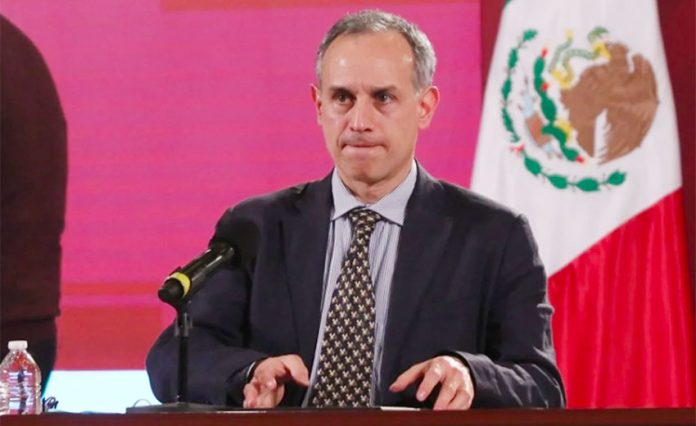
As new coronavirus case numbers rise, Deputy Health Minister Hugo López-Gatell warned Thursday that stricter measures are needed to control the spread of the virus.

Speaking at the Health Ministry’s coronavirus press briefing, López-Gatell noted that national data now shows that new case numbers increased 8% in epidemiological week 41, which ran from October 4 to 10, compared to the previous week.

He said the increase in new case numbers is most marked in Chihuahua – which is set to return this weekend to the highest risk level on the national coronavirus stoplight system – Coahuila, Durango, Zacatecas and Nuevo León.

The deputy minister also noted that new case numbers are on the rise in Aguascalientes and Querétaro.

“If you live in these federal entities, the risk of Covid infection is higher,” López-Gatell said. “Therefore we have to return to general control measures similar to previous stages of the epidemic.”

Adrián Ghilardi
‘People move and the virus moves … we’re going to continue seeing an increase:’ Adrián Ghilardi.

Between late March and the end of May, the federal government mandated the suspension of all nonessential business activities but starting in June coronavirus restrictions applied on a state-by-state basis and the economy began to reopen.

López-Gatell didn’t specify the “general control measures” to which he referred but urged people, especially residents of high-risk states, not to go out if they don’t need to, wear face masks, practice social distancing and wash their hands frequently.

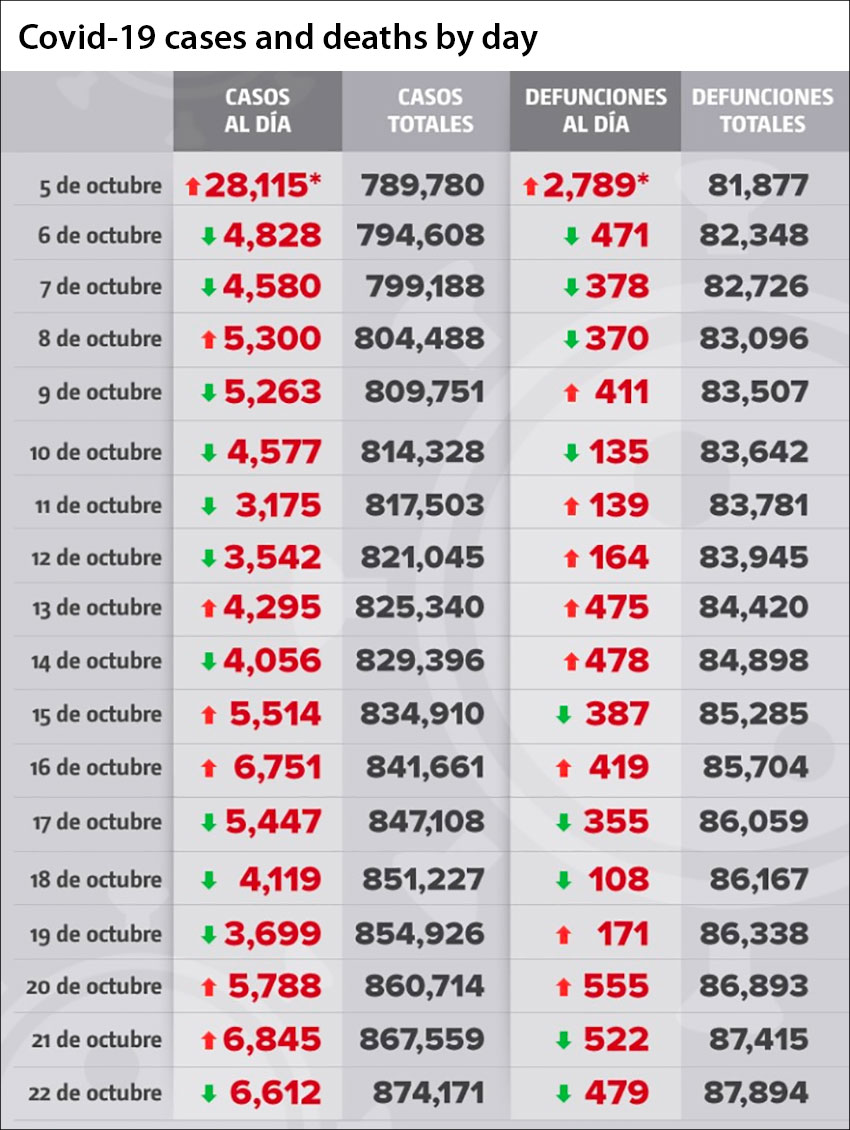
His remarks came after Director of Epidemiology José Luis Alomía presented data showing that Mexico’s accumulated case tally had increased to 874,171 with 6,612 new cases registered on Thursday. It was the second consecutive day that the Health Ministry reported more than 6,000 new cases after the single-day tally reached its highest level since mid-August on Wednesday.

Mexico’s official Covid-19 death toll rose to 87,894 on Thursday with 479 additional fatalities registered. Although Covid-19 case numbers have risen recently, deaths from the disease are on the wane, the Health Ministry said earlier this week.

Adrián Ghilardi, a researcher at the National Autonomous University and a member of the team managing the university’s Covid-19 geographic information platform, said the recent spike in case numbers is unsurprising.

“There was never a true lockdown here. People move and the virus moves, … we’re going to continue seeing an increase in positive case numbers,” he said.

In Chihuahua, where several hospitals have reached capacity, Governor Javier Corral blamed family gatherings and poor compliance on public transit systems for a sharp increase in new coronavirus cases.

Authorities in the northern border state will step up health and safety protocol enforcement to limit Covid spread, he said Thursday after Chihuahua’s state health council announced the switch from orange to red on the coronavirus stoplight system.

In neighboring Durango, also identified as a hotspot state, Governor José Rosas Aispuro said his government is looking at the possibility of implementing red light restrictions in parts of the state with high levels of infection including the capital.

“If we see next week that there is no reduction in Durango city, we’ll have to take that decision,” he said.

The governor said the state, currently orange on the federal government’s stoplight map, has sufficient space in hospitals to accommodate more coronavirus patients but noted that many healthcare facilities are understaffed.

“We have hospital infrastructure with more capacity – what we don’t have is sufficient personnel. We have beds with ventilators, … all the equipment but in many cases we lack staff,” Rosas said.

Another federal entity where tighter coronavirus restrictions are likely to be implemented is Mexico City. Mayor Claudia Sheinbaum said Monday that stricter rules would be announced Friday if hospitalizations of Covid-19 patients continued to increase this week.

Coronavirus cases and deaths in Mexico as reported by day
Coronavirus cases and deaths in Mexico as reported by day. milenio

As of Thursday, hospitalizations had been on the rise for 13 days. There are currently more than 2,700 Covid-19 patients in hospitals in the capital including more than 700 on ventilators.

Sheinbaum said she didn’t want to prohibit any economic activities that have already been allowed to resume – among which are the operation of bars, cinemas and gyms – but suggested that the opening hours of some businesses could be reduced or they could be limited to operating only on certain days.

There has been some speculation that Mexico City could regress to red on the federal government’s stoplight map after remaining at the orange light level since late June.

The capital has recorded 151,917 confirmed coronavirus cases since the start of the pandemic and 14,554 Covid-19 deaths.

No other state in the country has recorded more than 100,000 confirmed cases and only one, México state – where 94,208 people have tested positive – has recorded more than 50,000.

Similarly, Mexico City easily leads the country for Covid-19 deaths. México state, which includes numerous municipalities that are part of the greater metropolitan area of the capital, ranks second for fatalities, with 10,348 as of Thursday.

No other state has recored more than 5,000 Covid-19 fatalities but more than 4,000 people have lost their lives to the disease in each of Puebla and Veracruz.

Mexico City also ranks first for estimated active cases, with 10,617. Nuevo León ranks second with 4,259 while México state and Chihuahua have 3,387 and 3,000, respectively.

Source: El Universal (sp), El Financiero (sp), Reforma (sp), Milenio (sp)