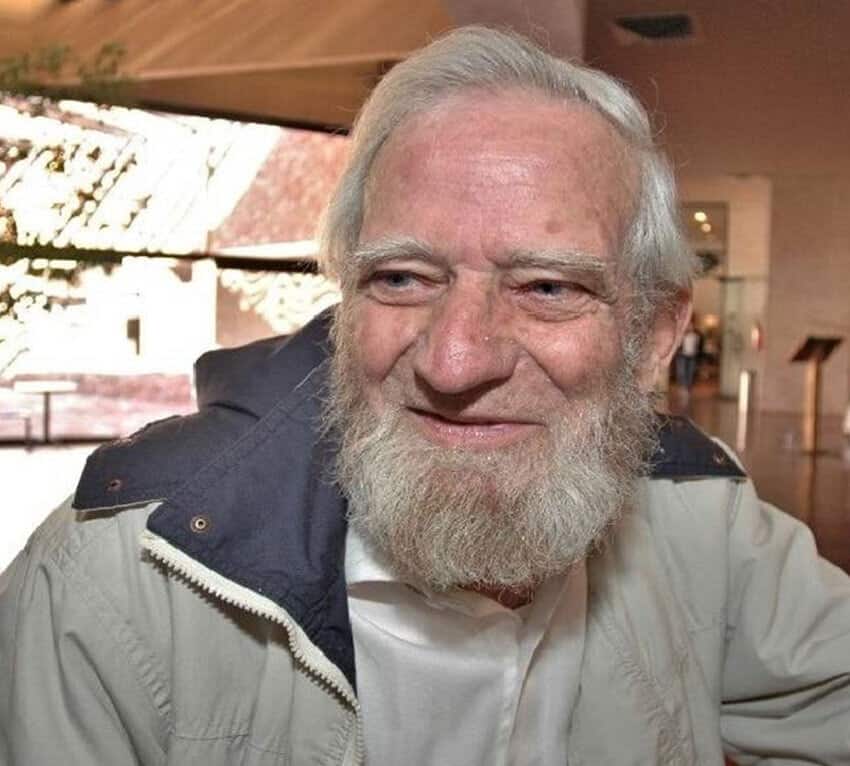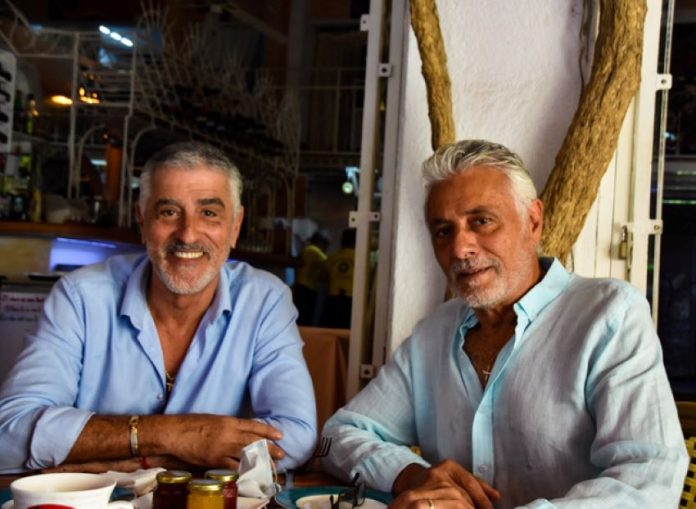
Finance intelligence chief Nieto, left, and target No. 1, cartel boss Oseguera.
Financial investigators have frozen the bank accounts of 1,770 people, 167 businesses and two trust funds linked to the Jalisco New Generation Cartel through a money-laundering network of front companies passing themselves off as vendors of tequila.
The amounts frozen in the operation, which took place over the last 48 hours, total US $1.1 billion.
Activity in the accounts included the equivalent of $666 million in suspect domestic transactions, $330 million in international transfers and $137 million in US dollar cash transactions.
The operation, dubbed “Blue Agave” for the main ingredient in tequila which is distilled in Jalisco, was carried out in cooperation with the United States Drug Enforcement Administration (DEA) by Mexico’s Financial Intelligence Unit (UIF).
“There is cooperation with the United States government, with the agencies. It is always an official and transparent cooperation, not clandestine or hidden,” President López Obrador said at his Wednesday morning press conference.
According to the UIF, the investigation involved “the main leaders, financial operators, relatives, businesses, lawyers and public servants that used corruption to benefit the illegal activities of this organized crime group.”
The cartel is one of the most brutal criminal gangs in Mexico.
The DEA says the cartel is responsible for elevated levels of violence in Mexico and describes it as “one of the fastest-growing transnational criminal organizations in Mexico, and among the most prolific methamphetamine producers in the world.”
The United States is offering a US $10-million reward for information leading to the capture of the group’s leader, Nemesio Oseguera Cervantes.
President López Obrador said battling organized crime remains a priority for his administration, but “without declaring wars, without massacres, with intelligence and without allowing corruption or impunity.“
President López Obrador announced Wednesday that the body of Francis Anel Bueno Sánchez, a Morena party legislator in Colima, was found yesterday in a hidden grave.
The 38-year-old Ixtlahuacán politician was attacked by a group of hooded men and forced into a car on April 29 after she and coworkers had spent the day cleaning streets and public areas in the small town of Tamala to prevent the spread of the coronavirus.
A video of those sanitation efforts was the last thing she posted to Facebook.
Her abduction had been kept quiet at the request of authorities in order not to interfere with the investigation and further risk Bueno’s safety.
However, after two weeks the victim’s mother and Morena party legislators decided to break their silence and demand that Bueno be returned alive as soon as possible. Eventually authorities issued an amber alert to help find her which appeared on her sister’s Facebook page on May 25, nearly a month after she was abducted.
President López Obrador also announced Wednesday that suspects in her abduction and murder have been detained and the investigation will be handled by the Colima Attorney General’s Office with the aid of federal authorities.
Confirmed coronavirus cases in Mexico City as of Tuesday evening. milenio
The daily death rate in Mexico City – the country’s coronavirus epicenter – is expected to return to 2019 levels in September, the capital’s health minister said on Tuesday.
Oliva López said there are currently around 230 deaths per day in Mexico City, 53% more than the daily average of 150 in 2019.
She said authorities expect to see daily Covid-19 deaths start to decrease once the capital has been allocated an orange light on the federal government’s stoplight system to determine which coronavirus restrictions can be lifted and where.
Along with every state in the country except Zacatecas, Mexico City was allocated a red light for the first week of “the new normal” after federally mandated social distancing measures concluded on Saturday.
López said the capital could be allocated a green light once death rates stabilize in September.
Health Minister López said hospital admissions are still increasing.
The health minister explained that the predictions about future Covid-19 death rates are based on an epidemiological model developed by the Mexico City government.
Mexico City had recorded 2,850 Covid-19 fatalities as of Tuesday, according to official data, but the real number of deaths is widely believed to be much higher.
López said that hospital admissions of coronavirus patients are still increasing and that hospital occupancy levels need to be below 65% before an orange light will be allocated to the capital.
Data presented by the federal Health Ministry on Tuesday night showed that 80% of general care beds set aside for patients with serious respiratory symptoms in Mexico City are currently occupied while 66% of those with ventilators are in use.
Hospital occupancy levels are also well above the national average in México state, which includes several municipalities that are part of the greater Mexico City metropolitan area.
Deputy Health Minister Hugo López-Gatell said last night that the possibility of allocating the same color stoplight to six federal entities in central Mexico — Mexico City, México state, Morelos, Puebla, Hidalgo and Querétaro – was under consideration because large numbers of people and goods frequently move between them.
He said that Hidalgo Governor Omar Fayad, Mexico City Mayor Claudia Sheinbaum and other state leaders had expressed their support for one sole stoplight to be allocated to the central Mexico region.
“If that’s what they decide, we think it’s an excellent idea,” López-Gatell said.
Querétaro, however, has not agreed to be lumped in with the other states. Governor Francisco Domínguez said Wednesday that Querétaro “has not accepted [the plan] to use a single stoplight.”
“I respectfully ask the [federal] health authorities to abstain from publishing said stoplight without our agreement and consent. We will continue … attending to the reality of our state during the evolution of the Covid-19 crisis,” he wrote on Twitter.
The former hacienda in Veracruz that is now home to La Ceiba Gráfica.
Tucked away in the rainforest of northern Veracruz is La Ceiba Gráfica, a restoration and community project dedicated to researching and preserving pre-20th century printing processes.
The first visual cue that a visitor is in the right place is a huge ceiba (kapok) tree in front of an old colonial-era mansion. The second cue are racks of snow-white paper set out in the sun to dry.
The mansion was the center of La Orduña hacienda which, at its height, grew over 6,000 hectares of sugar cane and coffee. Today, most of that land is the municipality of Coatepec, a Pueblo Mágico (Magical Town) near the Veracruz capital of Xalapa.
Now it is the home of La Ceiba Gráfica, a non-profit arts center whose goal is to unite art, ecology, and community involvement to create an institution that is self-sustainable and helps the economically depressed region.
The main activity here is lithography, a printing process using simple chemicals and ink over stone, but it also works in rotogravure, Japanese woodblock printing (moku hanga), book binding, textiles and more.
Per Anderson lifts fibers into a mold to make a sheet of fine paper. leigh thelmadatter
One of its signature activities is making the fine paper needed for this work. The hacienda’s old garage is the paper-making workshop called the Living Museum of Paper (Museo Vivo del Papel). Here, paper is made completely by hand, using cotton, recycled materials and a Japanese plant called kozo (paper mulberry).
With help from the National Institute of Ecology, the plant is now grown on the hacienda’s remaining hectare of property, and other properties that are rented for its cultivation. La Ceiba not only makes all of the paper it uses, there is a surplus that is sold in Mexico and abroad.
In addition to paper, La Ceiba has other activities that allow it to be almost entirely self-sustaining. One of the organization’s main economic activities is the artistic residency program, in which artists travel to the hacienda to work on projects and/or learn about printing processes.
It has hosted famous Mexican artists such as Francisco Toledo and José Luis Cuevas, and it draws many artists from other countries. La Ceiba also offers classes in all of its craft and artistic activities. It receives support from the state, but that is entirely for the reconstruction and preservation of the hacienda’s house and grounds as a historical site. The mansion’s many rooms are dedicated to workshops, a gallery, a store, guest rooms and a communal kitchen.
Anderson came to Mexico in 1974 from Sweden and began teaching at the Universidad Veracruzana. Tasked with teaching printmaking at the school, he quickly found that such an activity was not practical. He barely had resources to teach, and graduating students would need thousands, maybe millions of pesos to set up their own workshops.
The reason for both problems was the same: artistic printmaking in Mexico is heavily dependent on the importation of all the machinery and supplies from developed countries.
An artist places stone on a lithography press in one of La Ceiba’s workshops. leigh thelmadatter
Anderson has since dedicated his life to finding alternative ways to make fine quality and artistic prints in Mexico. He learned how to design and build presses, then searched to find raw materials in the state: marble from Tatalita, silicon from Alvarado, leather from Orizaba, etc.
Over the years, Anderson himself learned every facet of the craft of printing, not just the art. He has cultivated and harvested bark, scooped fibers into box sieves to form sheets of paper, ground pigment for ink, designed and redesigned presses and has done all kinds of carpentry.
Not a fan of capitalism, Anderson believes that in the La Ceiba project he has worked out many of the problems that economic cooperatives can have. “Everything can be resolved without resorting to commercial projects, if only you reflect on how to resolve the challenges of contemporary art.”
La Ceiba has become a model for similar ventures: about 35 organizations in Mexico have adopted its organizational structure and techniques for making equipment or both.
In 2013, it won the sustainable printmaking and community award from the Southern Graphics Council based in the San Francisco Bay Area and holds an annual conference that attracts over 2,000 participants from all over the world.
Leigh Thelmadatter is a regular contributor to Mexico News Daily and writes a weekly culture column that is published every Saturday.
An illustration of the 'bomb' attached to the bank official's waist. excélsior
A “belt bomb” enabled thieves to help themselves to 14 million pesos (US $647,000) from a BBVA branch in Mexico City on Friday.
The bank said Tuesday that the theft was carried out with the use of a belt of fake explosives that a bank official was forced to wear to ensure her cooperation.
The official, a teller manager identified as Karina S., 36, was intercepted and kidnapped by the thieves while driving to work at a branch in the Mexico City borough of Gustavo A. Madero on Friday morning.
They forced the belt onto her and gave her a cell phone, with which they threatened her life and the safety of her family via video calls in order to compel her carry out the robbery.
The teller manager was ordered to continue driving to work, where she enlisted the help of another employee to remove cash from the vault and bank machines. Following the thieves’ instructions, she then delivered the money to a location in Ecatepec, México state, where she was told to abandon her vehicle.
The woman subsequently removed the “bomb” without incident and contacted the bank to report the theft.
According to Mexico City investigators, the thieves had studied her movements to and from work for weeks in order to plan their attack.
Police said the bomb was a “poorly made” device that employed four fireworks rockets but did not clarify whether it could have been detonated remotely.
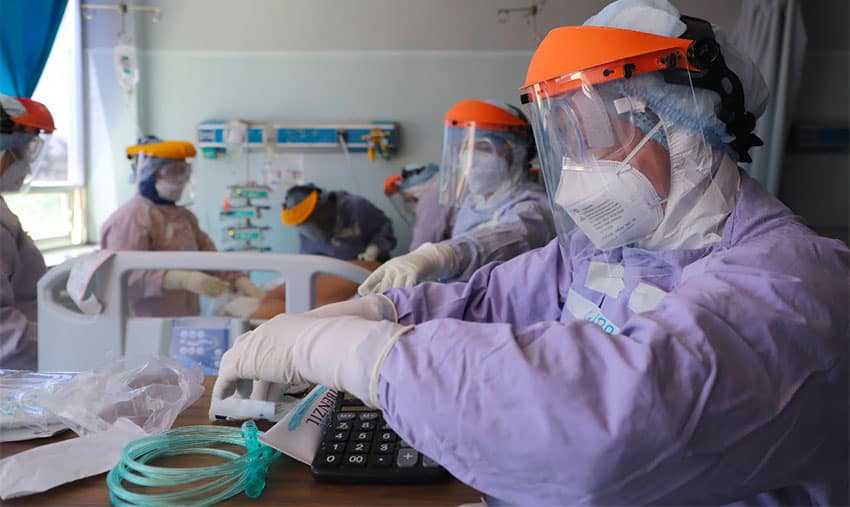
Over 20,000 healthcare workers have contracted Covid-19 since the outbreak began.
Mexico’s coronavirus epidemic is “at its maximum level of intensity,” Deputy Health Minister Hugo López-Gatell said on Tuesday as the biggest single-day increase in case numbers pushed the country’s cumulative tally toward 100,000.
“The Covid-19 epidemic isn’t over, it’s continuing. In fact someone said that it’s at its maximum level of intensity. That was me,” he told reporters at the nightly coronavirus press briefing.
His remarks came after Health Ministry Director of Epidemiology José Luis Alomía reported that Mexico’s cumulative case tally had increased to 97,326 with 3,891 new cases registered on Tuesday.
Alomía said that 16,940 cases are considered active, an increase of 637 compared to Monday. He also said that there are 42,151 suspected cases across the country and that 293,078 people have been tested for Covid-19.
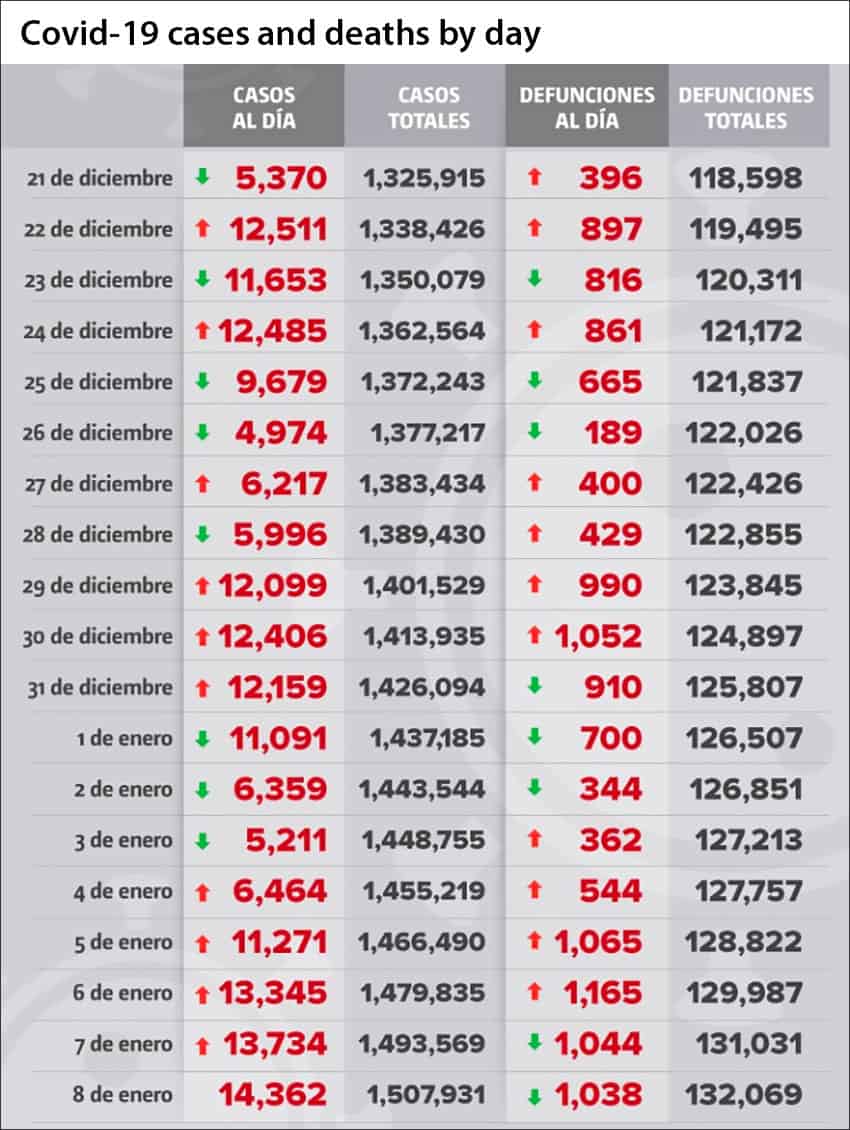
Coronavirus cases and deaths as reported daily in the last two weeks. milenio
Among the more than 97,000 people who have tested positive are 20,217 health workers, of whom 271 have died.
Mexico’s official coronavirus death toll increased to 10,637 with 470 additional fatalities registered on Tuesday. The number of deaths reported yesterday is the third highest after Tuesday of last week when 501 fatalities were registered.
An additional 924 deaths are suspected of having been caused by Covid-19 but haven’t yet been confirmed.
Even though the Covid-19 pandemic is still in a growth phase, federally mandated social distancing restrictions concluded on Saturday in favor of state-based restrictions.
Even though some parts of the country have been impacted by the pandemic much more than others, every state in the country except Zacatecas was allocated a “red light” last week on the federal government’s stoplight system to determine which coronavirus restrictions can be lifted and where.
The stoplight system will be updated this week and the color allocated to each state – red, orange, yellow or green – will be publicly announced on Friday before taking effect next Monday.
Virus case totals by state as of Tuesday. milenio
López-Gatell reiterated that four factors are taken into account to determine the risk level for each state: case number trends (whether new infections are increasing, decreasing or stable), hospital admission trends for coronavirus patients, hospital occupancy levels and positivity rates (the percentage of people tested who are confirmed to have Covid-19).
The stoplight color allocated to each state, at least in the early phases of the “new normal,” will be determined by its worst result in the four different areas, he said. That means that if just one of the four indicators is found to be at a “red light” level, the state will be allocated a stoplight of that color even if it has orange, yellow or green lights in all other areas.
López-Gatell said that the country is feeling its way into the “new normal” and as such must act cautiously to limit new outbreaks of Covid-19 that are seen as inevitable.
Ten people were murdered in two armed attacks in the municipalities of Celaya and San Luis de la Paz, Guanajuato, on Tuesday.
Among the victims were three women who were working in a restaurant that was attacked.
The first incident occurred at around 4:00 a.m. when several individuals carrying high-caliber rifles entered a highway food stall in San Luis de la Paz and opened fire on those eating and working in the establishment. They killed three male diners and three female employees.
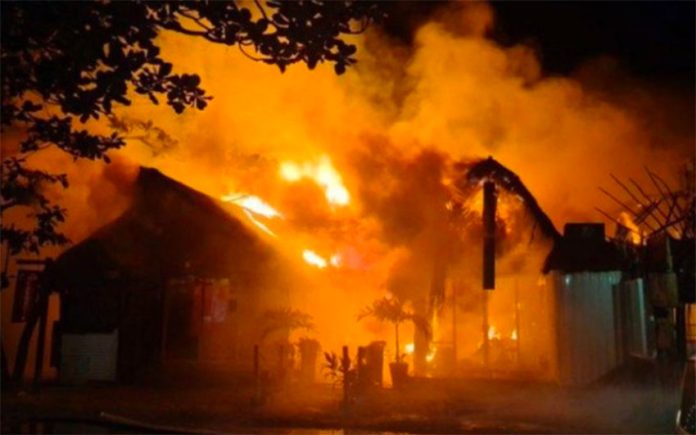
The second attack occurred around 4:00 p.m. when armed men shot up and allegedly detonated grenades in an auto repair shop on the Celaya-Cortazar highway. Police responded to a 911 call about the incident, which left four people dead and the business in flames.
The Guanajuato Attorney General’s Office (FGE) announced that its specialized homicide unit is investigating the incidents.
“Criminal experts processed the scene and gathered evidence in the [highway restaurant] …, among them ballistics that were preserved for analysis. The corresponding forensic studies are being carried out on the bodies … to determine their legal identities,” the FGE said in a statement.
More Covid cases could be the result of opening too early.
The Pan American Health Organization (PAHO) has warned Mexico not to reopen the economy if the Covid-19 pandemic is still growing because doing so will likely accelerate the spread of the disease.
Speaking at a press conference, PAHO Assistant Director Jarbas Barbosa said “there is no magic formula” to help countries decide when to lift coronavirus restrictions, “but if transmission is still growing” – as is the case in Mexico – “that’s a sign that economic activities must not be immediately started.”
If Mexico’s economy is reopened too soon, there is a risk that transmission of the virus will speed up, he said.
Barbosa said the federal government needs to provide more support to economically disadvantaged people so that they are not forced to leave their homes while the risk of infection is high.
He also said that the government needs to ramp up coronavirus testing in order to detect more cases and limit transmission within the community.
The government has resisted doing either, insisting it won’t take on new debt to provide such support, and arguing that tests are expensive and have no value.
PAHO Director Carissa F. Etienne also warned countries in the Americas – currently the world’s coronavirus epicenter – against opening up their economies before the pandemic is under control.
“Think twice before relaxing social distancing measures,” she said, adding that they are “our best tool” to control the virus.
“We have to be careful. My advice is not to open too quickly or we will run the risk of a resurgence of Covid-19 that could erase what we’ve achieved,” Etienne said.
In Mexico, federally mandated social distancing measures concluded on Saturday in favor of state-based restrictions.
Mexico has the 15th highest official case tally in the world, according to data compiled by the Johns Hopkins University, and the seventh highest death toll behind only the United States, the United Kingdom, Italy, Brazil, France and Spain.
Land that was cleared of trees to construct a nursery to supply trees for planting.
The federal government’s tree-planting employment program is riddled with operational flaws and corruption, according to some participating farmers.
A report published by the newspaper El Universal says that many of the more than 230,000 farmers who are paid 5,000 pesos (US $230) a month to plant and tend fruit and timber-yielding trees have experienced a range of shortcomings in the Sembrando Vida (Sowing Life) program, one of the government’s most important social schemes.
They include the late distribution of saplings after the conclusion of the rainy season, a lack of water for irrigation, being forced to plant on drought-stricken land, the provision of dead saplings and a shortage of supplies and tools.
Ministry of Welfare documents obtained by El Universal via a freedom of information request support the farmers’ testimonies and suggest that the management of Sembrando Vida is based on improvisation rather than being guided by a well-thought-out plan.
Some farmers also say they have been forced to pay moches – cuts or kickbacks – to the on-the-ground officials in charge of the scheme.
Raúl Esteban, a farmer in Campeche, said he has been forced to make occasional payments of 100 to 200 pesos to the program’s operators, while Charly López of Tabasco said he has been threatened with removal from the program if he doesn’t pay the 50-peso monthly moches asked of him under the pretext that the cash will be used to buy supplies.
“Nobody questions anything because we live with the threat that they are going to remove us from the program. We hand over the money to avoid that,” said López, a 25-year-old farmer.
El Universal said there is also a lack of saplings to support the program, highlighting that nurseries operated by the army lack supplies, materials and tools to grow the number of young trees it requires.
The minutes of a meeting last September attended by members of the technical committee of the Sembrando Vida program indicated that “one of the most significant challenges” in the operation of the scheme was to ensure that the saplings are planted at a time when they have the best chance of not just surviving but thriving.
However, that goal is complicated by the fact that the number of saplings being grown is insufficient to meet demand, the minutes said. The program fell well short of its target last year, planting trees on 150,000 hectares of land, only just over a quarter of the goal of 570,000 hectares.
Minutes from a technical committee meeting in October said that it had not been possible to purchase all the tools and materials required for the program because suppliers’ capacities were exceeded.
Sembrando Vida has been touted by President López Obrador as a major job creation program.
One farmer said he was told by Sembrando Vida officials that he and other participants would have to buy their own seeds and saplings. Armando Cruz said he and other farmers were given about 200 saplings to plant on their land after they signed up in March 2019.
However, the farmers were subsequently told that they would have to purchase their own seeds and saplings out of their 5,000-peso monthly wage.
“I’ve spent up to 1,500 and 1,800 pesos a month so I’m left with 2,700 or 2,800 pesos to live off. … It’s nothing really, you can’t live off that but the technicians [the program officials] force us to dedicate ourselves 100% to the program; we can’t work in anything else,” Cruz said.
In response to the claims that the on-the-ground officials have committed acts of corruption, the Welfare Ministry said they are constantly supervised by superiors and corruption is not tolerated. It also said that new data about the program will be presented at a press conference this Thursday.
According to the president of the Mexican Network of Forestry Farming Organizations, another problem with the Sembrando Vida program is a lack of clarity with respect to how participants are selected.
Gustavo Sánchez said there is no public call for applications and it’s not clear what criteria are used to select participants. He added that there is no “external evaluation” of the recruitment process, a situation that allows corruption to occur.
Sánchez said that government financial support to combat poverty has traditionally been allocated in exchange for support at the ballot box and suggested that is still occurring.
“It’s a problem,” he said, adding that there is a lack of clarity about whether Sembrando Vida is an anti-poverty program, a reforestation scheme or an environmental assistance project.
Yet another problem with the scheme is that cases have been identified in which people have deforested parcels of land so that they can join it and thus collect a monthly salary from the government.
The practice – known in the context of the scheme as sembrando muerte, or sowing death – has occurred in several municipalities where the Sembrando Vida program operates, El Universal said.
Sergio Rivera, a member of a community organization in Veracruz, cited one case in which a coffee plantation was cleared in a mountainous region of the state so that locals could apply to participate.
The government has also been guilty of deforestation, ironically clearing trees from land in the Quintana Roo municipality of Felipe Carillo Puerto in order to set up a military nursery to grow saplings for Sembrando Vida.
Although trees were planted on just 150,000 hectares of land in 2019, President López Obrador said in December that the goal for 2020 is to plant one billion saplings on one million hectares.
However, the goal seems fanciful because an expansion of the program is likely to perpetuate and exacerbate the problems already identified and denounced by the participating farmers.
The navy has asked the Ministry of Finance (SHCP) to approve spending of 90.2 million pesos (US $4.2 million) to combat the arrival of sargassum on Caribbean coast beaches.
In a document seen by the newspaper Milenio, the Ministry of the Navy (Semar) proposes buying five sargassum-gathering vessels, materials for the construction of two more, containment barriers and beach sweepers.
Semar said the investment will allow Quintana Roo’s beaches to be kept clean and attract more tourists.
However, Quintana Roo is still classified as a “red light” maximum risk state, according to the federal government’s stoplight system to determine which coronavirus restrictions can be lifted and where.
But the color allocated to each state is updated on a weekly basis, meaning that there is hope that Quintana Roo will start next week with a lower coronavirus risk level. There are currently 284 active cases in the Caribbean coast state, according to official data published on Monday.
Before the emergence of the infectious disease, the biggest threats to the tourism sector were insecurity and the annual arrival of sargassum, an unsightly and smelly seaweed.
The amount of sargassum was up 40% last year, according to Semar, affecting the coastline of mainland Quintana Roo as well as the islands of Cozumel and Isla Mujeres.
In its submission to the SHCP, Semar said that almost 85 million tonnes of sargassum were cleared from beaches last year and that 544 cubic meters of the weed were removed from the sea off the Quintana Roo coast.
It said that an alternative to purchasing its own sargassum-fighting equipment – the federal government gave the navy the responsibility to combat the problem at the start of last year’s seaweed season – would be to hire a private company that specializes in the removal of the macroalgae.
However, containment barriers and machinery to clean beaches, such as tractors and sweepers, would still have to be purchased, Semar said.
The total cost, including the hiring of a private company, would be just under 111.4 million pesos, the navy said, over 20 million pesos more than its own proposal.
This year’s sargassum invasion is expected to be smaller than those seen in the last two years. The first of this year’s seaweed arrived in early May but as of late last week very little had arrived in Quintana Roo so far.