Home Blog Page 1523

Mexico will promote anti-force stance at UN Security Council

0
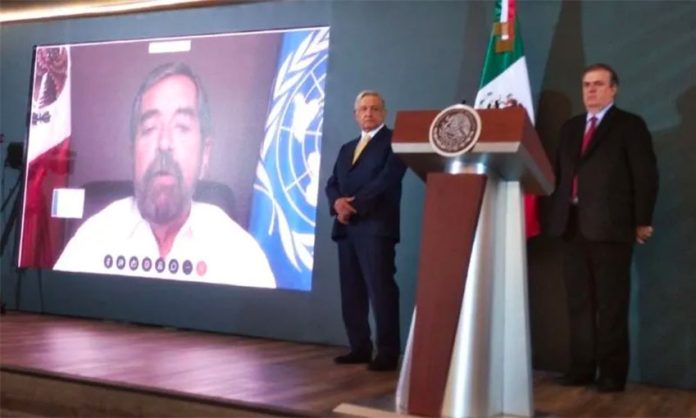
Mexico's ambassador to the UN, Juan Ramón de la Fuente, speaks via video link at the president's press conference on Thursday.

President López-Obrador’s “hugs, not bullets” security philosophy is on its way to the United Nations (UN).

Mexico was elected unopposed on Wednesday as the new representative for Latin America and the Caribbean on the UN Security Council for its 2021-22 sitting period.

López Obrador said Thursday that Mexico will use its seat on the council to promote the peaceful resolution of international problems and to push for a prohibition on the use of force.

“Mexico will always vote in favor of not using violence, guided by [former] president Benito Juárez García’s principle that, ‘among individuals as among nations, respect for the rights of others is peace,’” he said.

“We don’t want military cooperation, … we don’t want to confront violence with violence.”

The federal government has favored a non-confrontational approach to combating insecurity in Mexico, betting that greater spending on social programs will help to reduce violence. However, violence has remained stubbornly high, and López Obrador signed a decree last month ordering the armed forces to continue carrying out public security tasks for another four years.

Speaking at a press conference in Hidalgo on Thursday, the president said that Mexico will also use its two-year term on the Security Council to push for greater international cooperation on human rights and development issues.

López Obrador said that Mexico will seek to comply with the four freedoms espoused by United States wartime president Franklin D. Roosevelt: freedom of speech, freedom of worship, freedom from want and freedom from fear.

Mexico will also be an advocate for sustainable development and environmental protection, he said, adding that it will push for “rich nations” and international financial organizations to provide greater support to combat hunger, epidemics, racism, classism. sexism, xenophobia and all other forms of discrimination.

From its non-permanent position on the Security Council, the United Nations’ most powerful decision-making body, Mexico will seek additional investment and support for development programs so that “no human on earth” is forced to migrate from their place of origin due to a lack of employment opportunities or violence, López Obrador said.

He claimed that Mexico’s election to the 15-member body amounted to recognition by the United Nations of the country’s historical and cultural grandeur.

“In other words, the recognition is bestowed on the people of Mexico.”

However, Mexico won the seat to represent Latin America and the Caribbean because it was the only candidate. No other country contested it.

Source: El Universal (sp) 

Fusion food: enchiladas married with pizza in Querétaro

0
enchilada pizza
The Querétaro restaurant's new creation.

For indecisive diners in search of the ultimate comfort food, a restaurant in Querétaro city has you covered with a creation some may see as odd whereas others may call it a product of divine inspiration: behold the enchilada pizza. 

Images of the cheese pizza topped with eight chicken enchiladas in green sauce have made the rounds on social media where the unusual Mexican-Italian fusion is being well-received by the internet’s hungry denizens, although some users have mistaken the photo of the dish for a meme. 

The restaurant behind this culinary achievement is Vete a la Burger, a hamburger, hot dog and pizza joint where one can purchase the 41-centimeter enchilada pizza (although at Vete a la Burger they call it picsa) for just 289 pesos, around US $12.80.

Its creators said the combination of the two dishes seemed logical.

“Really, we don’t know anyone who doesn’t like green enchiladas,” they say, and being able to eat both enchiladas and pizza at the same time is, for them and their customers, a “fantasy come true.”

Source: El Universal 

Killing of indigenous leader labelled ‘crime of the state’

0
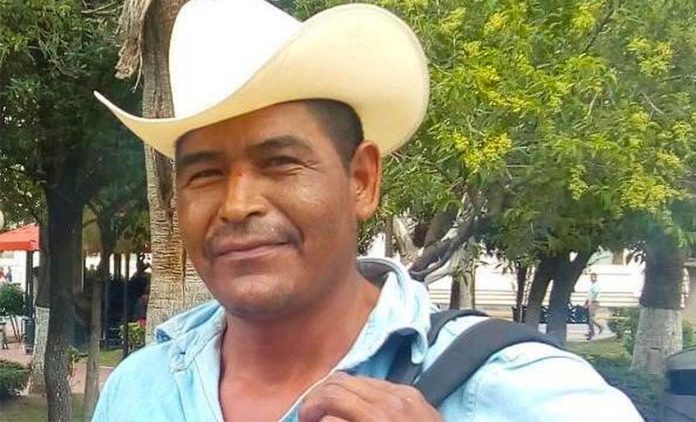
Rarámuri leader Antonio Montes.

The indigenous Rarámuri community of Bosques de San Elías Repechique, Chihuahua, is demanding justice after the murder of leader and activist Antonio Montes Enríquez, whose death has been called a “crime of the state.”

Montes, 43, who was killed on June 6 due to blunt force trauma to the head, had previously been the target of an armed attack and his family home was burned to the ground earlier this year. 

The activist had been planning a protest at the site of the Barrancas del Cobre airport in the town of Creel to denounce the misuse of a trust created in 2016 to compensate residents for the airport’s construction on land belonging to the Rarámuri.

The state Attorney General’s Office reported that Montes died during a fight in which his attacker hit him in the head with a large rock. Witnesses have identified the suspect and an arrest warrant has been issued. 

Bosques de San Elías Repechique, located in the Tarahumara mountains, is a small community of 403 people belonging to 132 indigenous families who live in 33 ranches spread out over  ​​11,300 hectares. 

The airport trust, founded in 2016 after an agreement was reached in court, offered the Rarámuri 65 million pesos (around US $2.9 million) to be used for the benefit of the community and for cultural and environmental preservation projects. 

Montes, who had also spoken out about illegal logging in the region, had been a vocal opponent of the airport project for years as courts sorted out the land issues with the Rarámuri.

The new international airport is scheduled to open for private aviation later this year, with commercial flights arriving in 2021 from several cities within Mexico, as well as proposed direct flights from U.S. cities such as Las Vegas, Dallas, Denver, San Francisco and Houston. 

Its opening is expected to be a major boon to the region’s tourism sector, drawing new visitors eager to explore the mountains and Chihuahua’s breathtaking Copper Canyon.

Source: Milenio (sp), La Jornada (sp), El Heraldo de Chihuahua (sp), Tiempo (sp)

Searches have turned up remains of 42 in Jalisco

0
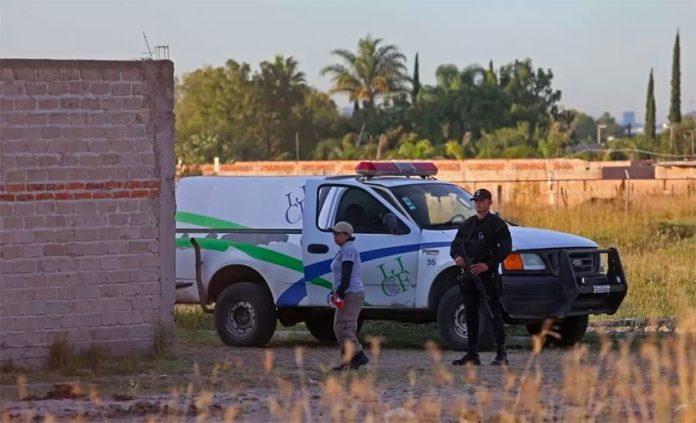
Officials continue to find bodies in Jalisco.

Forensic personnel are examining the remains of at least 42 people found on ranches in Lagos de Moreno and Tlaquepaque on the outskirts of Guadalajara, Jalisco, state Attorney General Gerardo Octavio Solís Gómez reported.

All of the bodies found over the past 10 days showed signs of violence, authorities say. 

Some were bound hand and foot, others were decapitated or otherwise dismembered, making the process of determining exactly how many people were found difficult for investigators. 

One of the sites was located next to an abandoned mine where the bodies of two men and one woman were found lying on the ground covered in lime. One man has been identified after going missing in May, as has a woman who was last seen on June 11.

At another site, nine men and one woman were found. Some had been handcuffed and all but one of the men had been decapitated.  

In the Santa Anita neighborhood of Tlaquepaque, 60 bags of human remains have been recovered belonging to at least 26 people. 

Two bags containing human remains were found half-buried on a farm in Tlajomulco de Zúñiga. 

“When the officers arrived, they located a 1-by-2-meter grave in the courtyard of an abandoned home, inside it were two black plastic bags which contained decomposing human remains,” police reported. The National Guard was dispatched to protect the crime scene.

State forensics experts have been working all week to identify the bodies and verify the number of dead.

From January to May alone, the state Attorney’s Office located 17 clandestine graves. More than 100 bodies and 500 body parts have been recovered.

Between January and May of this year, Mexico has recorded 14,631 homicides, with the highest murder rates occurring in Guanajuato, the state of México, Baja California, Chihuahua and Jalisco, respectively.

Source: El Financiero (sp), Informador (sp), Infobae (sp), 24 Horas Puebla (sp)

Homicides down slightly in May; Guanajuato continues to lead

0
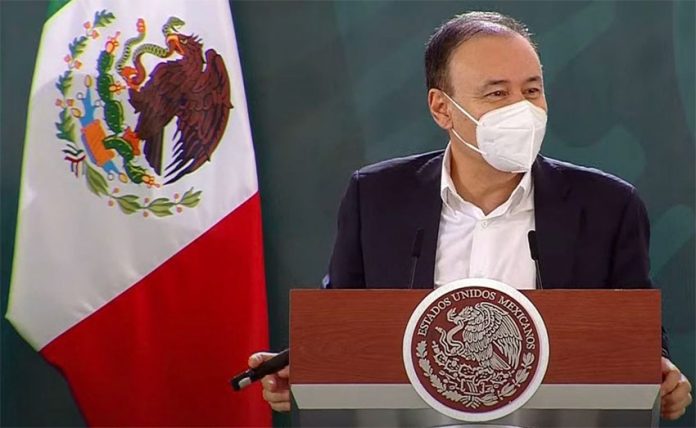
Security Minister Durazo presents the latest homicide data at Friday morning's presidential press conference.

Homicides declined slightly in May compared to both March and April, according to data presented Friday by Security Minister Alfonso Durazo.

There were 2,913 homicides last month, 116 fewer than March and 13 fewer than April.

Despite the decline in May – and the coronavirus lockdown measures over the past three months – Mexico remains on track to record its most violent year ever in 2020.

Data presented by Durazo showed that there were 14,631 homicides in the first five months of the year, an average of 2,926 per month. If the same trend continues, Mexico will end the year with more than 35,000 homicides.

With more than 1,900 between January and May, Guanajuato was the most violent state in the first five months. The next five most violent states, all of which recorded more than 1,000 homicides in the same period, were México state, Baja California, Chihuahua, Jalisco and Michoacán.

On a per capita basis, Colima was the most violent state, with almost 40 homicides per 100,000 inhabitants in the first five months of the year. Baja California and Guanajuato were the second and third most violent per capita, with rates just above 30.

Yucatán was the least violent state in the first five months, recording just 18 homicides.

Eight other states recorded fewer than 100 in the period: Baja California Sur, with 22; Campeche, 32; Aguascalientes, 39; Tlaxcala, 51; Durango, 68; Nayarit, 77; Querétaro, 84; and Coahuila, 95.

Femicides – the killing of women and girls on account of their gender – also declined slightly in May compared to the previous two months.

There were 69 femicides in May, eight fewer than March and four fewer than April. Compared to December 2018, the first month of President López Obrador’s six-year term, femicides were down 31% in May.

Data also showed that there were a total of 385 femicides in the first five months of 2020. México state recorded the highest number followed by Veracruz, Nuevo León and Mexico City.

Several large protests against gender violence were held earlier this year after the brutal murders of a seven-year-old girl and 25-year-old woman in Mexico City shocked the nation.

A national women’s strike was also held on March 9, a day after large numbers of women marched in cities across Mexico to mark International Women’s Day.

Source: El Financiero (sp) 

Thursday’s 5,662 Covid-19 cases set new daily record; total reaches 165,455

0
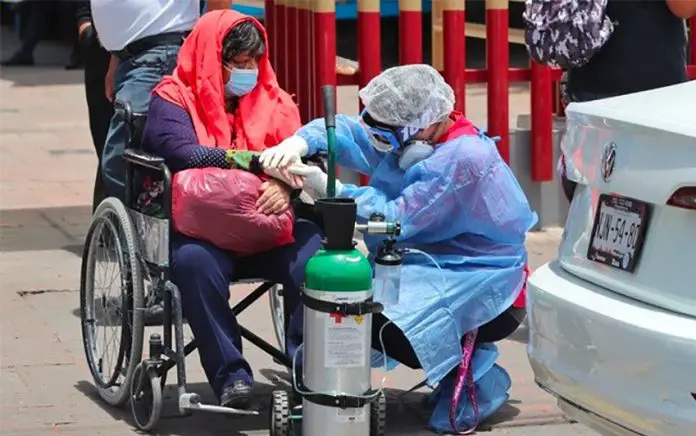
A coronavirus patient is released from a Mexico City hospital after overcoming the disease.

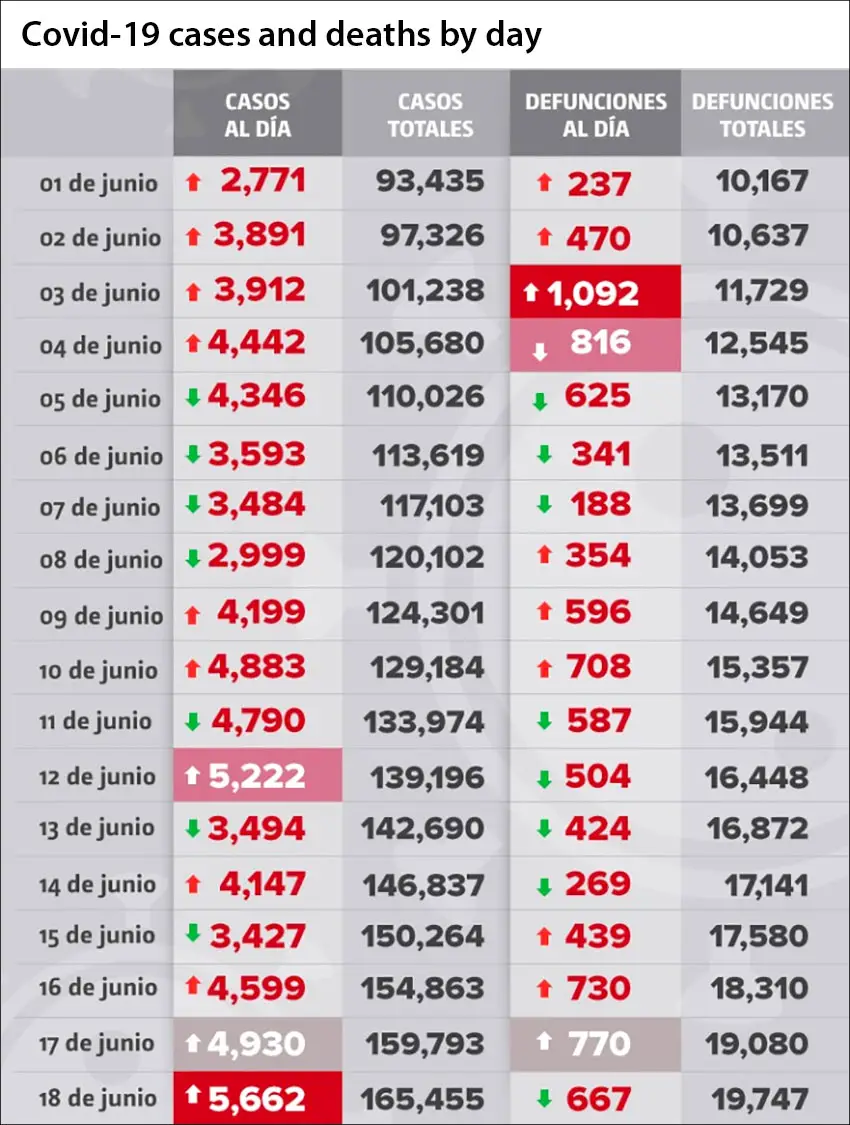
A new single-day record of 5,662 confirmed Covid-19 cases were added to Mexico’s tally on Thursday, while 667 additional fatalities were reported, lifting the death toll to close to 20,000.

The Health Ministry reported that the cumulative case tally had increased to 165,455 and that confirmed Covid-19 deaths had risen to 19,747.

An additional 1,868 fatalities are suspected of being caused by Covid-19 but have not yet been confirmed.

About a quarter of Covid-19 patients who have died did not have an identified underlying health condition that made them more vulnerable to the disease, Health Ministry data shows.

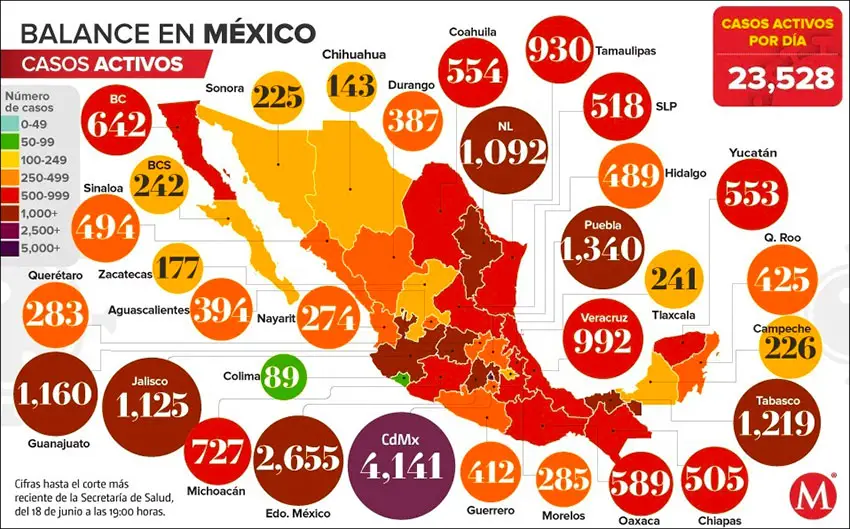
There are currently 23,528 active coronavirus cases across the country while the results of 59,778 tests are not yet known. Just under 453,500 people have been tested for Covid-19, and three-quarters of those who tested positive have now fully recovered.

The daily tally of coronavirus cases and deaths
The daily tally of coronavirus cases and deaths. Deaths are numbers reported and not necessarily those that occurred each day. milenio

Mexico City continues to lead the country for accumulated coronavirus cases, active cases and deaths while México state ranks second in all three categories.

Just over 40,000 people have tested positive for Covid-19 in the capital since the start of the pandemic, with 10% of confirmed cases – 4,141 – currently active. Mexico City’s official coronavirus death toll is 5,184.

After Mexico City and México state, Puebla and Tabasco have the largest active coronavirus outbreaks. Just over 1,000 of Puebla’s 1,340 active cases are in the state capital, which has a larger active outbreak than any other municipality in Mexico.

At the municipal level, the Mexico City borough of Iztapalapa has the second biggest active outbreak followed by León, Guanajuato, and Centro (Villahermosa), Tabasco.

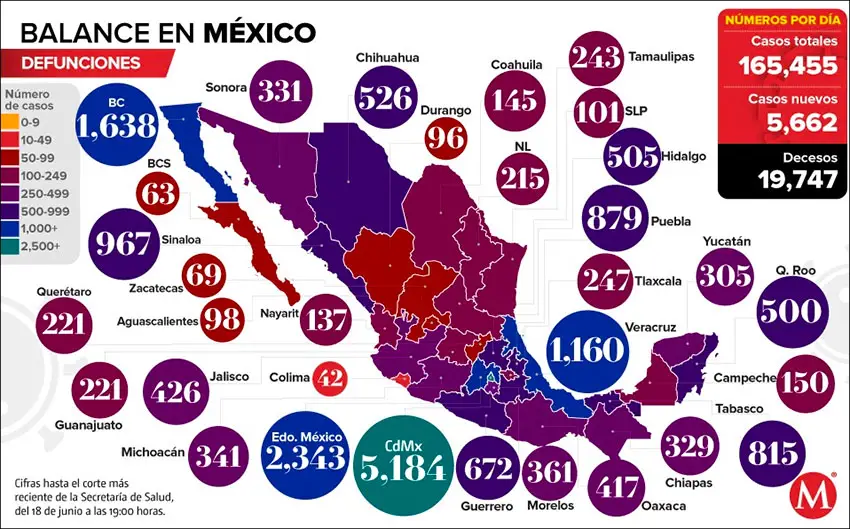
In addition to Mexico City, three states have recorded more than 1,000 Covid-19 deaths: México state, with 2,343; Baja California, with 1,638; and Veracruz, with 1,160. Seven others – Sinaloa, Puebla, Tabasco, Guerrero, Chihuahua, Hidalgo and Quintana Roo – have recorded 500 or more.

Mexico’s biggest success story of the pandemic is Colima, which has the lowest coronavirus case tally and death toll in the country. The small Pacific coast state has recorded just 339 cases, 89 of which are currently active, and 42 deaths.

Active cases of Covid-19 as of Thursday.
Active cases of Covid-19 as of Thursday. milenio

Zacatecas is the only other state to have recorded fewer than 1,000 cases while four others – Baja California Sur, Zacatecas, Durango and Aguascalientes – have death tolls below 100.

National data presented at the Health Ministry’s coronavirus press briefing on Thursday night showed that 46% of general care beds set aside for patients with serious coronavirus symptoms are currently occupied while 39% of those with ventilators are in use. However, hospital occupancy levels are significantly higher in Mexico City and México state.

At Friday night’s press briefing, the Health Ministry will present a new “stoplight” map indicating the risk of coronavirus infection in each of Mexico’s 32 states.

Exactly half of the states are currently at the “red light” risk level while the other half were allocated an “orange light” last Friday that allowed them to ease restrictions this week. The new risk levels for each state will take effect on Monday.

Source: La Jornada (sp), Milenio (sp)  

Coronavirus deaths in Mexico as of Thursday.
Coronavirus deaths in Mexico as of Thursday. milenio

Airline provides passengers with indigenous-made face masks

0
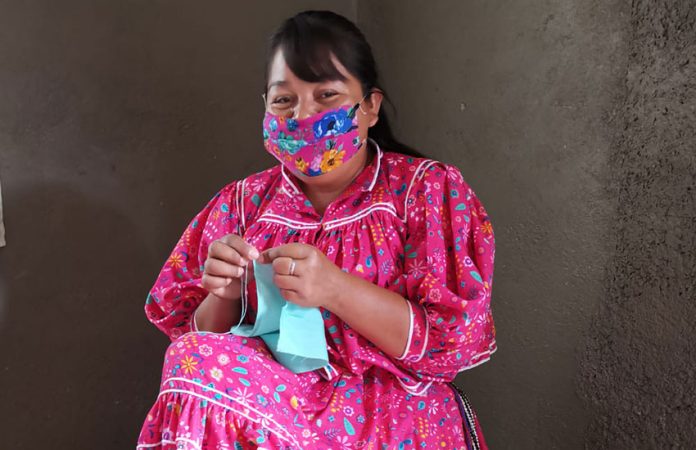
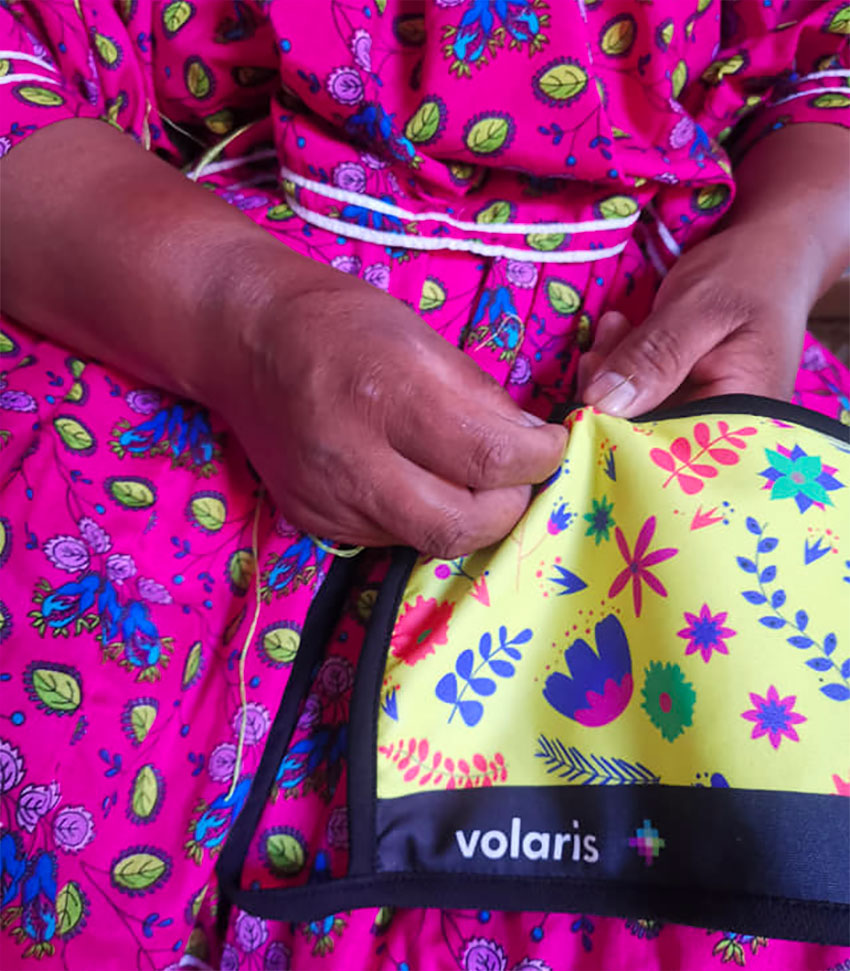
Soledad, a Rarámuri artisan, has a new job sewing coronavirus face masks.

The Mexican budget airline Volaris plans to provide passengers with masks created by indigenous women from the mountains of Chihuahua. 

The colorful masks, made from a fabric that is 65% polyester and 35% cotton and meets health standards, are hand-sewn by women from Sínibi Jipé, a small group of Rarámuri artisans who have shifted from producing clothing to making masks due to the coronavirus pandemic. 

Each mask distributed to passengers comes with the name and photo of the woman who sewed it. 

The Rarámuri, or Tarahumara as they are also known, are native to the mountains and canyons of Chihuahua’s Sierra Madre Occidental. Many still practice a nomadic lifestyle, and they are well known for their impressive ability in long-distance running, including marathons and ultramarathons.

Their culture is explored in the popular short documentary Lorena: La de Pies Ligeros (“Lorena: Light-footed Woman) through the story of Lorena Ramírez who won the Guachochi, Chihuahua, ultramarathon in 2017 running 100 kilometers clad in sandals and her traditional dress. 

A Rarámuri seamstress at work on a Volaris face mask.

Luisa Fernanda Martínez, director of Sínibi Jipé, which means “Always Today” in Rarámuri, hopes that by making the masks for Volaris Rarámuri female artisans will begin to gain the kind of fame that the tribe’s runners have achieved.

They have already garnered numerous media reports including a mention in the pages of Vogue México.

The number of employees has increased from just four to 15 as they work to meet demand, but Sínibi Jipé is not only concerned about growing the business, it’s about personal growth as well. 

“This business is one that seeks to get the best out of each person,” says Martínez, which she says is one of the reasons Volaris chose them to create the masks.

“Our main objective is the integral development of the artisans, and we have used clothing as a tool to achieve many purposes, such as raising their self-esteem and preserving their culture.”

Volaris is making another change to honor the seamstresses and their culture by translating health safety information cards into Rarámuri, marking the first time a national airline has translated information into an indigenous language. 

The trailer for Lorena, Light-footed Woman.


In addition, Volaris has pledged that it will fly the women of Sínibi Jipé to Mexico City on August 30 so they can watch the Mexico City Marathon. 

“This approach with Sinibí Jípe is very significant for Volaris because it allows us to offer our clients a fundamental piece of protection in the context of the health contingency, and also collaborate with the development of a community that faces exceptional challenges in our country,” said Holger Blankenstein, executive vice president of Volaris.

Source: Milenio (sp), Vogue (sp), El Heraldo de Chihuahua (sp)

Playa sinkhole opens up a large cave beneath highway

0
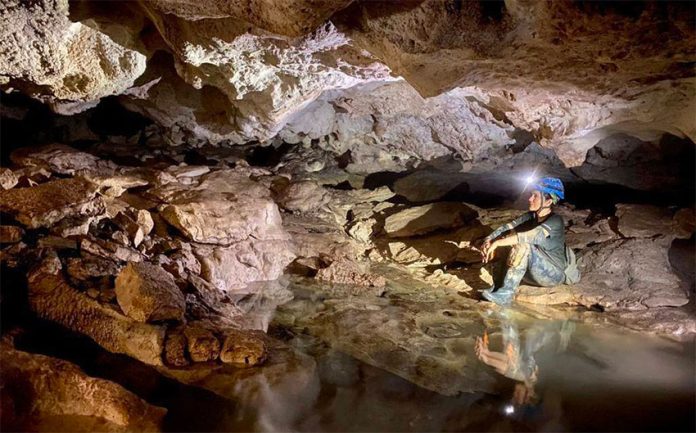
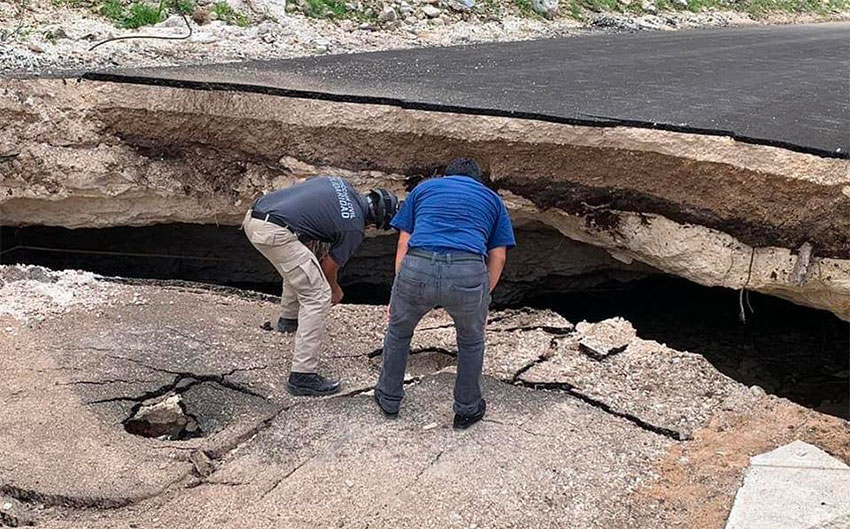
Inside the cave that was revealed by a sinkhole.

A sinkhole that opened up on the highway between Playa del Carmen and Tulum, Quintana Roo, has exposed a large water-flooded cave filled with the fossils of ancient sea snails and rocks that date back to the Pleistocene era.

Speleologists, or cave explorers, used the Playa del Carmen sinkhole as a portal to enter the cave, which is approximately 60 meters long and eight meters deep.

In addition to 2 1/2-million-year-old sea snail fossils and old rocks, they found crustaceans, mollusks, shrimps and other living creatures in the cave’s crystal-clear water.

The members of the Mayab speleology club also completed studies to make a topographic map of the cave, which is located beneath a stretch of road that will be near the Playa del Carmen-Tulum section of the Maya Train railroad.

They dubbed one section of the cave “Snail’s Heaven” because of the large numbers of sea snail fossils adhered to its walls.

The sinkhole on the Playa-Tulum highway.

Roberto Rojo, a biologist and speleologist, said that the cave has conduits that allow water from the Caribbean sea to flow into the cave and vice versa. He said that filling in the sinkhole and thus closing off the portal to the cave would be “ecocide.”

Rojo and other experts are preparing a report that will detail the characteristics of the cave and provide recommendations for its conservation.

The Yucatán Peninsula has an elaborate aquifer system that includes thousands of natural sinkholes called cenotes.

Some experts have warned that construction of the Maya Train poses environmental risks to the region’s underground water networks as well as the long-term survival of the jaguar.

Construction of the US $8-billion project started this month and is scheduled for completion in late 2022.

Source: La Jornada (sp), Milenio (sp) 

Judge orders protection of mammoth remains be given priority at airport

0
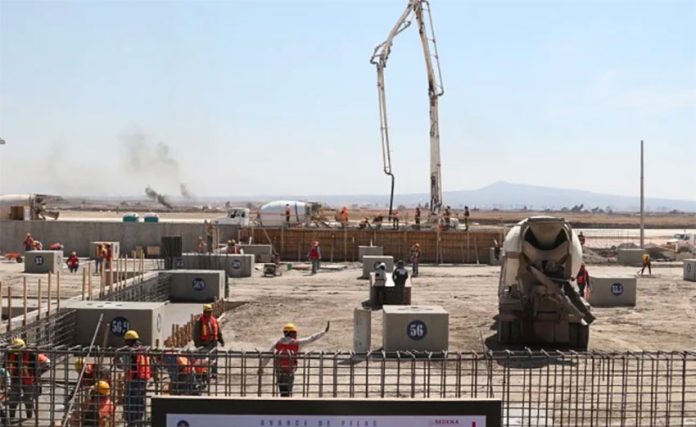
Construction at the new airport, where mammoths once roamed.

A federal judge has ruled that archaeological explorations at the Santa Lucía Air Force base must be prioritized over the construction of the new Mexico City airport.

Archaeologists have already found the bones of more than 60 mammoths at the México state site as well as remains of other Pleistocene era animals and pre-Hispanic human burial pits.

Pedro Francisco Sánchez Nava, chief archaeologist with the National Institute of Anthropology and History (INAH), said last month that it was possible that more mammoth remains will be found at the airport site as exploration continues.

The federal judge ordered INAH to report whether construction of the airport will interfere with its archaeological work. The court order doesn’t halt work on the multibillion-dollar airport but establishes that archaeological and paleontological relics must be protected and that the work to uncover them must take precedence over the construction work.

The ruling came in response to an injunction request filed by a complainant who argued that the airport project could violate his human right to have access to culture as well as international commitments Mexico has made to protect its cultural heritage.

The judge said that the INAH project is seeking to uncover 20,000 years of history in an area where the Xaltocan Lake was once located. The area’s history includes possible interactions between Pleistocene era fauna such as mammals and early human settlers of the region, he said.

The judge also directed INAH to clearly demarcate the areas of the site it is exploring to ensure that heavy machinery doesn’t cause any damage to animal remains, artifacts or other objects of historical importance.

Source: El Universal (sp) 
Ex-Morena party leader accused of embezzlement, money laundering

0
Polevnsky was party president from 2017 until earlier this year.

Mexico’s ruling party has filed a criminal complaint against its former national president for embezzlement and money laundering.

Members of the Morena party’s National Executive Committee filed the complaint against Yeidckol Polevnsky directly with Attorney General Alejandro Gertz Manero, federal officials said.

Morena’s executive committee, now led on an interim basis by former lawmaker Alfonso Ramírez Cuéllar, began an audit of Polevnsky’s 2017-2020 tenure on June 10.

The audit, reported the Milenio newspaper, specifically probed Morena’s purchase of real estate while Polevnsky was at the helm of the party. It examined payments she made totaling 809 million pesos (US $35.5 million at today’s exchange rate).

The audit found that payments of 394 million pesos were made to two real estate companies owned by Enrique Borbolla García, a businessman who allegedly collaborated on an embezzlement and money laundering scheme with Polevnsky.

The funds were supposed to be used to complete renovations at properties owned by Morena. But some of the properties didn’t even exist and none of the services paid for was completed, the Morena executive committee says.

“Not a single brick was laid, the party can’t lose that money,” said one member of the party leadership, according to the newspaper Reforma.

Borbolla was arrested in 2014 on charges that he sold an aircraft for 2.5 million pesos but never delivered it to the purchaser. However, he was never convicted.

Polevnsky has denied any wrongdoing while at the helm of Morena, a party founded by President López Obrador.

Source: Milenio (sp), Reforma (sp)