Home Blog Page 1542

In Chipilo, descendants of Italian settlers have kept their traditions alive

0
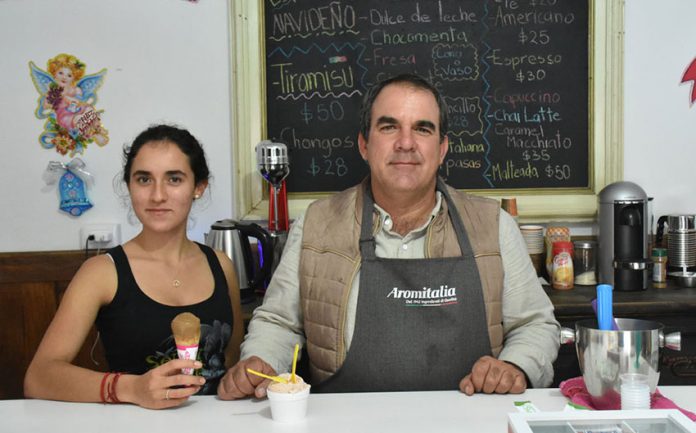
Romina and Santos Zanella at their gelato shop in Chipilo.

Like cafes all over Mexico, everybody seems to know everybody in the cafes in Chipilo, Puebla, a small pueblo about 2 1/2 hours from Mexico City and 20 minutes from the city of Puebla.

People greet each other with hugs, kisses and shouts of hello. Conversations tend to be happy and loud. The difference is that in Chipilo the shouts and conversations are often in Italian. That’s because Chipileños, as they’re known, have kept alive the language that they brought over from Italy 138 years ago. 

Beginning in the mid-1800s, the Mexican government encouraged Europeans to settle in Mexico, hoping they would help modernize the country’s agriculture. Joining the wave of Italians that decided to seek their fortune in Mexico were 38 families from the Veneto region in northern Italy who made their way to Chipilo on October 2, 1882.

Italians that settled in other pueblos across Mexico eventually assimilated but Chipileños have maintained many of their Italian traditions and their language. And, of course, their cuisine. It can truly be called an Italian pueblo.

Chipileños worked hard, starting farms and dairies in the new land. “When they arrived in Mexico, they did not have money,” said Eduardo Piloni Stefanonni, the director of Chipilo’s Casa d’Italia. “They did not speak Spanish and it took a long time to establish a community. There was only work … they did not have time for anything else.”
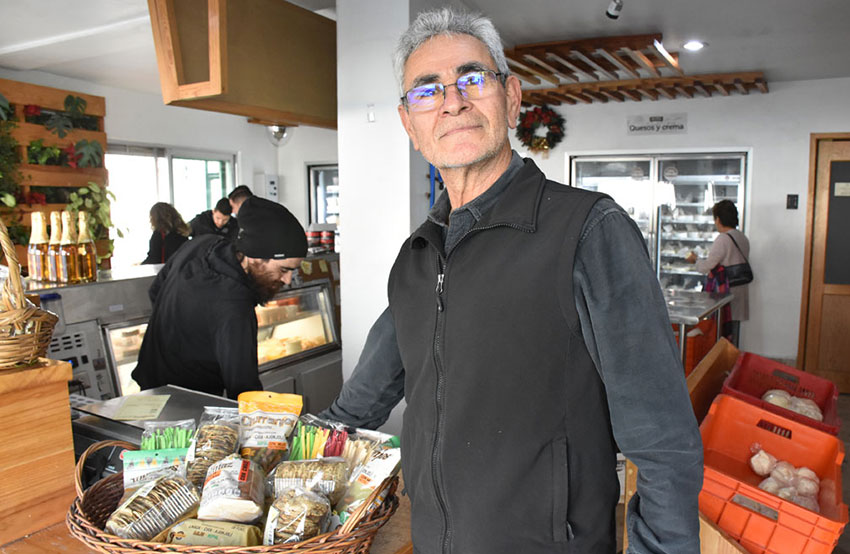
Samuél Rosales in his Chipilo cheese store.

The dairies prospered and the pueblo eventually became famous for its cheeses and other dairy products.

Samuél Rosales Galeazzi took over a cheese store 12 years ago and today stocks it with a variety of Italian delicacies and cheeses — both classic Mexican, like Oaxaca cheese and panela, and Italian cheeses like provolone and mozzarella. He said that his cheeses are different from those found in other pueblos. “The milk here is different,” he said. “It is less acidic.”

Across the street from Galeazzi’s store is a gelato shop owned by Santos Zanella Galeazzi and his daughter Romina Zanella Pérez. “We use a family recipe,” said Zanella Pérez. “It is all artisanal, 100% natural and all made by hand using Italian techniques.”

When I mentioned it was the best ice cream I’d ever tasted she gently corrected me. “It is not ice cream,” she said, “it is Italian gelato.” As I left the store Zuri Merlo, who has served as my guide in Chipilo, said, “The secret ingredient is the cream. It is Chipileño.”

Of course, no Italian pueblo would be complete without restaurants serving honest-to-goodness Italian food. I’ve lived in Mexico for a year and a half and, as much as I love Mexican food, being Italian-American I missed my pasta.

As you might expect, Chipilo gives visitors many options. I’ve eaten at The Gondala (which is a little outside the pueblo) and Bella Pizza and they’re both excellent but I tend to gravitate towards Paolo’s Restaurante, which is on Avenida Cinco de Mayo, Chipilo’s main street, just across from the church.

[wpgmza id=”243″]

It may be my favorite spot because on my second trip to Chipilo, as I sipped a delicious coffee in Caffé Italiano, Paolo noticed me and said, “You are Italian, right?” This was unusual. I usually get “You are an American” or “You are a gringo.”

When I answered that I was, in fact, Italian, he gave me a big hug. When I learned he owned a restaurant just two doors down, I had to eat there. After the meal, which was terrific, he asked me a second question. “Do you like wine?”

“Of course,” I replied. He ducked into a back room and handed me a bottle. “A gift,” he told me.

Although Chipileños still hold tight to their Italian roots, the pueblo is changing. There are now more carpentry shops than dairy farms. “My grandfather had cows but my father no,” said Jorge Merlo Piloni, who owns one of the pueblo’s many carpentry shops.

“I worked with cows but my family never had them. In the future, the identity of the pueblo will be furniture, not cows. The price for milk hasn’t gone up, but the price of food for the cows, yes. It is more difficult to sustain the business.”

Furniture made in Chipilo is now sold in several European countries and in the U.S.

Chipileños have maintained their language and traditions for more than a century and a walk through the streets clearly shows it’s an Italian pueblo: Italian flags painted on poles, signs on stores in Italian, the Venetian dialect in the cafés and restaurants.

But when Pedro Bronca Mazzocco was asked whether he felt he was Italian or Mexican, he echoed what all Chipileños believe. “I’m Mexican,” he asserted. “I’m proud to be Italian but I was born in Mexico and I’m Mexican.”

Joseph Sorrentino is a frequent contributor to Mexico News Daily. He lives in San Gregorio Atlapulco, Mexico City.
Mexico has not fared poorly during coronavirus crisis: AMLO

0
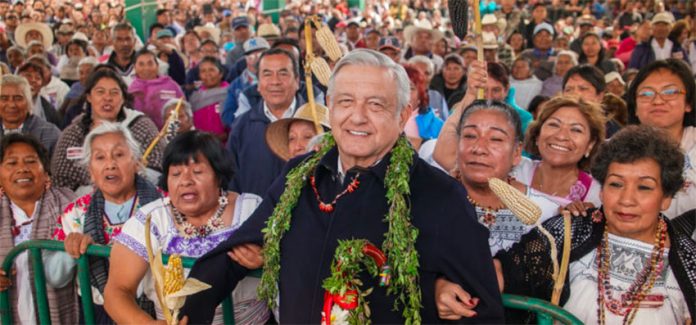
The president resumed his cross-country touring on the weekend, but there weren't to be many meet-and-greets this time.
The president resumed his cross-country touring on the weekend, but there weren't to be many meet-and-greets this time. file photo

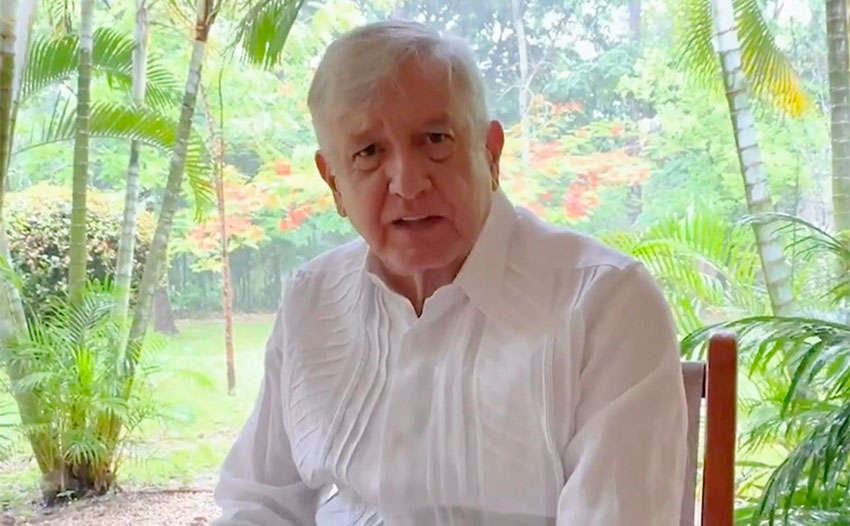
Mexico is already recovering from the coronavirus-induced economic crisis, President López Obrador said on Saturday, pointing to the recent appreciation of the peso and the resurgence of oil prices.

In a video message recorded in Palenque, Chiapas, López Obrador said the crisis hasn’t destroyed the economy and “step by step we’re recovering” from the damage that it did cause.

He acknowledged that the peso dropped to a record low of more than 25 to the United States dollar in late March but highlighted that it was trading at 22.2 to the greenback on Friday. (The exchange rate was just above 22 to the dollar at 1:00 p.m. Monday).

He also highlighted that the price of Mexico’s export crude had recovered after dipping into negative territory in April as global demand for oil slumped due to the coronavirus pandemic. A barrel of Mexican oil was selling for almost US $30 at the close of trading on Friday, López Obrador said.

The president also noted that large companies such as Femsa (the world’s largest Coca-Cola bottler and the operator of the OXXO convenience store chain) and Walmart have begun paying back their multi-billion-peso tax debts.

AMLO celebrates an economy in recovery from his home in Palenque, Chiapas, on Saturday.

“The [economic] model we’re applying is yielding results and is for the benefit of all people,” he said.

However, the road to economic recovery is unlikely to be as smooth and quick as López Obrador would like.

More than 750,000 people have already lost their formal sector jobs as a result of the pandemic and analysts and financial institutions are predicting a deep recession for the Mexican economy in 2020.

The economic crisis could push an additional 10.7 million people into poverty, according to the federal government’s social development agency, while two federal officials predicted last week that violence and crime will increase as a result of the downturn.

All but one of Mexico’s 32 states still face “red light” restrictions, according to the government’s stoplight system, meaning that nonessential economic activities are still prohibited and some key industries, such as tourism, could take years to recover fully.

While the nation as a whole has not yet returned to what is being called “the new normal,” the president has resumed one of his  hallmark pre-pandemic activities: touring the country.

López Obrador traveled by road to Chiapas on Saturday and was to continue from there to the Yucatán Peninsula, where he will preside over a ceremony to mark the commencement of one of his pet infrastructure projects, the Maya Train.

No large campaign-style rallies of the kind the president held regularly before the pandemic – and even after Covid-19 was first detected in Mexico – are planned for the tour but opposition lawmakers and party leaders still criticized López Obrador’s decision to travel while the pandemic continues to rage.

The leader of the National Action Party (PAN) in the lower house of Congress said that people will ask themselves, “If he’s already going on a tour, why can’t my children and I go out to do our activities?”

The president has a responsibility to send an “exemplary message” to the Mexican people that will help to avoid new coronavirus infections, Juan Carlos Romero Hicks added.

He said that López Obrador’s decision to resume his national tours is one of a range of errors he and his government have made in response to the coronavirus pandemic.

Among them: downplaying the dangers of the outbreak, not testing widely for the disease, launching a plan to reactivate the economy at the peak of the pandemic and not reporting the real number of cases and deaths.

PAN national president Marko Cortés said in a statement that the resumption of presidential tours could cause new outbreaks of Covid-19, while Democratic Revolution Party lower house leader Verónica Juárez Piña said that traveling the country while most of the country is at the “red light” risk level is “a grave act of irresponsibility.”

By going on tour, López Obrador encourages other people to break quarantine and thus “creates the conditions for infections and deaths to increase,” she said.

“From the beginning to the end, the president hasn’t [accurately] measured the magnitude of the pandemic and has always prioritized his political interests over the interests of citizens,” Juárez said.

Institutional Revolutionary Party national president Alejandro Moreno Cárdenas offered a scathing assessment of the federal government’s response to the pandemic, including the decision to end the national social distancing initiative while the risk of infection remains high.

“We have to raise our voices loudly because … when … almost the entire country is in a maximum risk area, they’re abandoning the healthy distance initiative without any plan to take care of lives and save hundreds of thousands of jobs that have been lost. We’re worried that infections, death and unemployment will continue [to increase] due to a lack of clear decisions,” he said.

Moreno also charged that the government has committed a series of errors in forecasting the impact of the pandemic.

“They were wrong about when the peak of infections would be; they were wrong about the number of deaths we would have; they were wrong about the fatality rate the virus would have in our country; they were wrong about the number of jobs that would be lost. … The federal government can’t blame anyone but itself for its inefficacy and inefficiency. There’s no excuse, … it wasn’t corruption, the conservatives or a conspiracy – it was them and their bad decisions.”

Source: Milenio (sp), El Universal (sp) 

Lawmaker: don’t let CFE turn off the lights

0
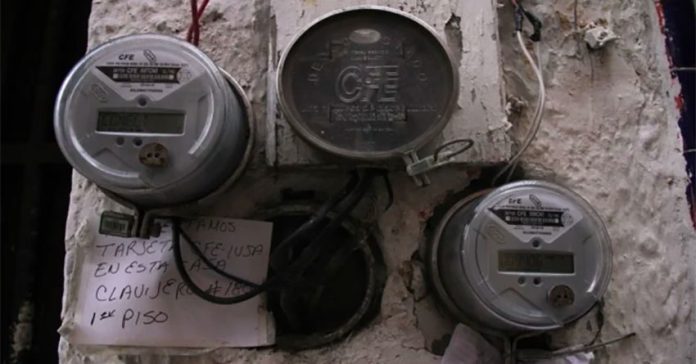
electric meters
If CFE workers show up to turn off electricity, run them off, says deputy.

A Yucatán legislator has called for citizens to chase off workers from the Federal Electricity Commission (CFE) if they arrive to turn off customers’ power for nonpayment, urging that they throw rocks at them if necessary.

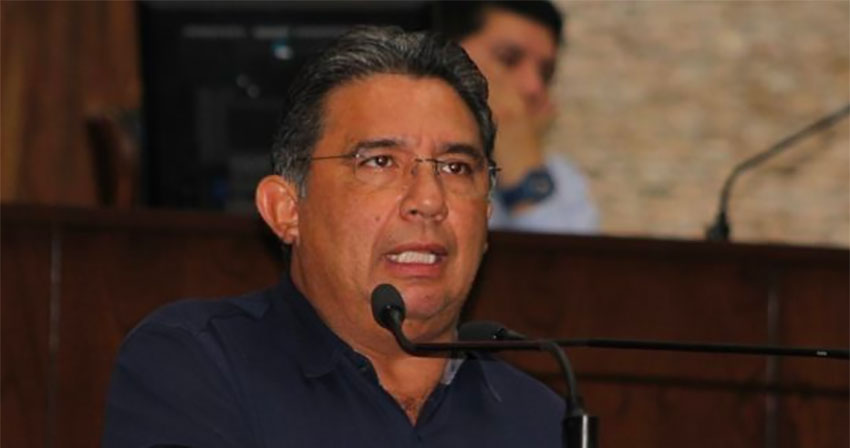
Democratic Revolutionary Party (PRD) Deputy Mario Alejandro Cuevas Mena took advantage of his time on the lower house floor to denounce what he called abuses by the CFE with regard to charges for its service.

He called his suggestion a drastic but necessary action in the face of the “lack of sensitivity” on the part of the commission, which has been cutting off customers’ electricity for nonpayment.

Cuevas said that the CFE is cutting off service even as the coronavirus pandemic is in full swing, having escalated drastically nationwide over the last couple of weeks.

He said the commission should take into account the extremely high numbers of people who are unemployed due to the economic effects of the pandemic.

Deputy Cuevas: CFE 'insensitive.'
Deputy Cuevas: CFE ‘insensitive.’

Massive debt forgiveness is not unprecedented at the CFE. In May 2019, the commission cancelled 11 billion pesos (then valued at US $577.6 million) of debt owed by over half a million Tabasco customers who began a civil disobedience campaign more than 20 years earlier.

In Yucatán on Saturday, CFE customers turned off their own electricity to protest what they see as excessive charges by the utility. Some 17 municipalities participated in the hour-long blackout.

Source: El Universal (sp)

Thousands of horses, cattle at risk on ranches of fugitive ex-governor

0
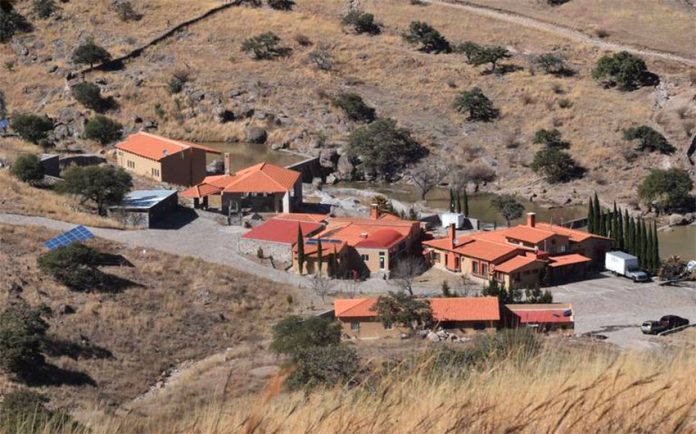
The El Saucito ranch, one of the properties owned by Duarte.

Thousands of head of cattle, thoroughbred horses, wild boars, llamas and other exotic species that were seized by the government from the ranches of former Chihuahua governor César Duarte are in danger of dying due to lack of resources and abandonment, the newspaper Milenio reports. 

Duarte, governor of Chihuahua from 2010 to 2016, is wanted for embezzlement after it was detected that 6 billion pesos (around US $317 million at the time) had gone missing from public coffers during the last six months of his administration.  

Duarte is also accused of cattle rustling after the majority of 1,500 head of cattle that the state government imported from New Zealand to help drought-stricken ranchers in 2015 ended up on his ranches.

The former Institutional Revolutionary Party (PRI) governor is a fugitive from justice and thought to be living in Texas or New Mexico. 

Prosecutors have seized Duarte’s properties in Mexico, which have been under the administration of Héctor Hugo Pérez. He claims that he has yet to be paid for his services by the Chihuahua government

Pérez said he had been paying the bills himself for three ranches and five walnut orchards seized from Duarte, but he exhausted his line of credit and claims that he hasn’t seen a check from the state government since the beginning of 2019.

In January of this year, the state brought on a new administrator and barred Pérez access to the properties. Since then, more than 200 head of cattle have died due to neglect, the newspaper El Heraldo De Juárez reports.

Last week 1,000 calves were auctioned off and the proceeds of the 10-million-peso sale (US $433,566) went directly to the state government. 

Attorney General César Augusto Peniche Espejel estimates that there are around 4,000 head of cattle remaining on the former governor’s properties. 

Source: Milenio (sp), BBC (en), El Heraldo de Juárez (sp)

April remittances plummet 28% compared to March

0
cash

After a record-setting month of March in which Mexicans working abroad sent US $4.02 billion back home, Mexico’s central bank reports that the amount plummeted by 28.5% in April to $2.86 billion. 

The remittances help support the basic needs of an estimated 10 million Mexicans. The average amount sent in April was $329, down from $377 in March, according to the Bank of México. 

April’s decline is the largest monthly decrease since November 2008, yet still roughly equal to money sent back to Mexico in April 2019. 

The March total was up 39% over the same month last year.

Explaining the spike in March may be more difficult than the decline in April. “The significant acceleration in remittances in March is difficult to square with labor market conditions and sentiment in the United States,” said Alberto Ramos, chief economist for Mexico at Goldman Sachs.

Most of those Mexicans sending money back home work in the United States, where the unemployment rate in April skyrocketed to 14.7% of the population, an increase of 10.3% over March, the U.S. Bureau of Labor Statistics reported.

Jonathan Heath, deputy director of Mexico’s central bank, said that although remittances decreased in April, “the purchasing power of remittances over the last 12 months managed to increase 7.7% in April compared to the previous year,” if tabulated in pesos, he said on his Twitter account.

“As far as this news is concerned, it is good,” he wrote.  “There was no collapse due to the significant increase in the unemployment rate of Latinos in the United States.” 

In the first quarter of 2020, remittances to Mexico totaled US $12.16 billion, a 12.6% increase over the same time period in 2019.

Source: El Economista (sp), Milenio (sp), El Heraldo de México (sp)

10 police from Colima disappear during Jalisco assignment

0
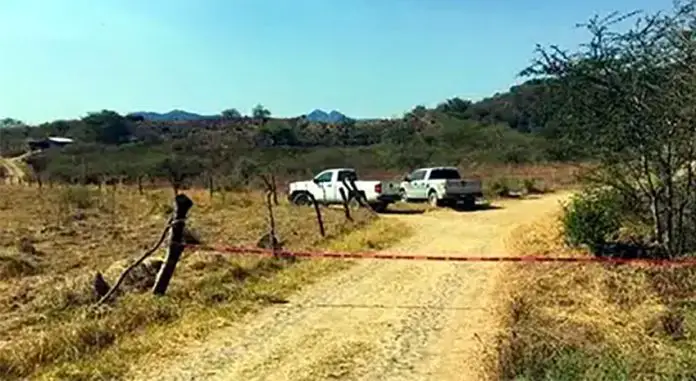
Vehicles carrying the missing officers were located in Colima.

Ten Colima state police officers went missing on Thursday, May 28, after escorting a group of businessmen to the municipality of La Huerta in the neighboring state of Jalisco.

The Colima Ministry of Public Security (SSP) reported that the officers met the investors at the Playa de Oro International Airport in Manzanillo that day in order to escort them to La Huerta, about an hour’s drive away.

“When the state police officers were still in Jalisco, they completely lost communication with the emergency command center in Colima, for which we immediately solicited the collaboration of authorities from the three levels of government,” police said in a press release.

A search was organized by the Colima SSP, Jalisco authorities, the National Guard, the army and marines. Within hours the search operation located the three Colima police vehicles that had been used by the missing officers. They were found with the keys still inside and showed no signs of a struggle.

Media reports mentioned two other vehicles that were found in the community of Río El Mojo, about an hour and a half east of La Huerta on Friday, but did not specify how they were linked to the case of the missing officers. Authorities found blood stains and satchels containing personal items in the vehicles.

As for the businessmen the officers escorted, Colima police announced that they returned from La Huerta aboard a helicopter and are not in danger. However, two other civilians in the region were reported missing over the weekend.

Source: Sin Embargo (sp)

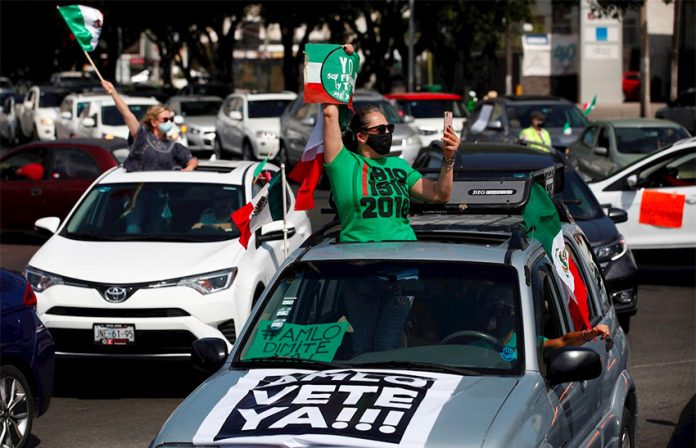
Protest caravans in 40 cities demand AMLO resign

0
Protesters on Saturday in Guadalajara.

Protesters hit the streets in at least 40 cities across Mexico on Saturday to demand the resignation of President López Obrador.

It was a protest indicative of the times: the demonstrators didn’t march shoulder to shoulder but instead expressed their disapproval of AMLO, as the president is widely known, and the federal government while maintaining a safe distance from each other in their cars and on motorcycles and bicycles.

Organized by several groups including one known as the National Anti-AMLO Front, the protests – dubbed “honk your horn against the federal government” – took place in cities in more than 20 states including Mexico City, Guadalajara, Acapulco, Aguascalientes, Hermosillo, Cuernavaca, Morelia, Oaxaca, Pachuca, San Luis Potosí, Chihuahua, Durango, Tijuana, Tuxtla Gutiérrez, Xalapa, Querétaro, Puebla and Mérida.

The Mexico City protest “caravan” set off from the National Auditorium on Saturday morning and headed to the National Palace – the seat of executive power – in the capital’s historic center, where demonstrating motorists sounded their horns in anger and shouted slogans against the president and his government’s “communist” policies.

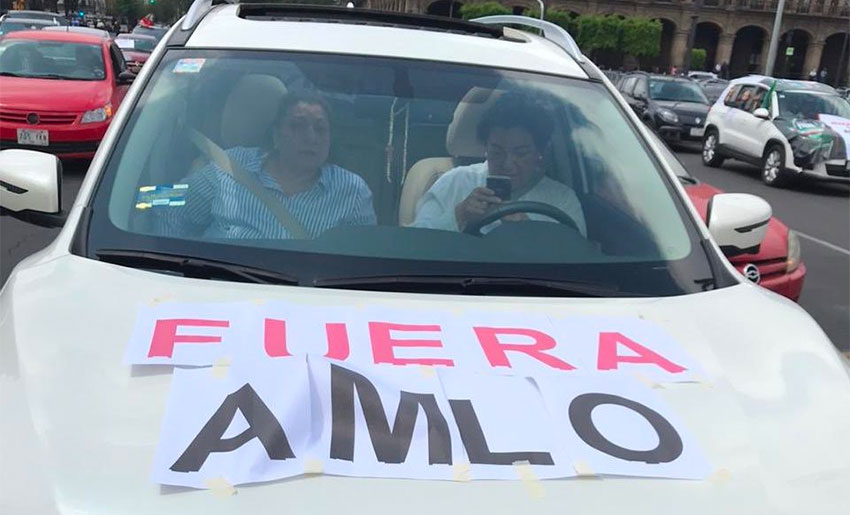
“AMLO, you’ve devastated Mexico, leave now!” read one placard held up by a protester.

'AMLO out,' reads protesters' sign.
‘AMLO out,’ reads protesters’ sign.

Others read: “We’re not elitists, we’re Mexicans fed up with you!”; “AMLO, you’re toxic, inefficient and inept. You’re killing Mexico day by day, leave now!”; “AMLO out!”; and “Resign now!”

About 1,500 cars formed a long protest caravan that traveled between the Minerva and Niños Héroes roundabouts in Guadalajara, Jalisco, while the occupants of about 300 vehicles protested against AMLO through the streets of Morelia, Michoacán.

In Mérida, the capital of Yucatán state, dozens of motorists participated in a “protest on wheels” against López Obrador’s planned visit to the city on Tuesday.

Dissatisfaction with AMLO and his 18-month-old administration was also evident on social media, with the hashtags #AMLOVeteYa (AMLO leave now) and #MéxicoNoTeQuiereAMLO (Mexico doesn’t love you AMLO) trending on Twitter over the weekend.

Speaking in a video message on Sunday, López Obrador attributed the protests to his “very corrupt, very individualistic and conservative adversaries” who don’t want to lose the privileges they enjoyed under previous governments.

He urged his detractors not to be impatient, telling them that they will have the opportunity to have their say at the 2021 mid-term federal elections and in a 2022 “revocation of mandate” vote at which citizens will have the opportunity to terminate his six-year term before its scheduled conclusion in late 2024.

“Don’t get impatient, I established the rules myself because I’m a man of principles. I won’t be in government if the people don’t support me,” López Obrador said.

“People will vote [in the mid-terms]; if they want a return of conservatism, of corruption, of privileges, the people are free [to vote that way]. I will always respect the people’s mandate,” he said.

López Obrador said that he was unconcerned by the protests against his administration because they are a natural consequence of the “transformation” his government is undertaking.

“I’m attacked a lot now but it’s a badge of pride, … they’re questioning me because of the transformation process that is being carried out.”

Source: Animal Político (sp), Reforma (sp) 

Mexico City adopts measures for ‘the new normal’ on Monday

0
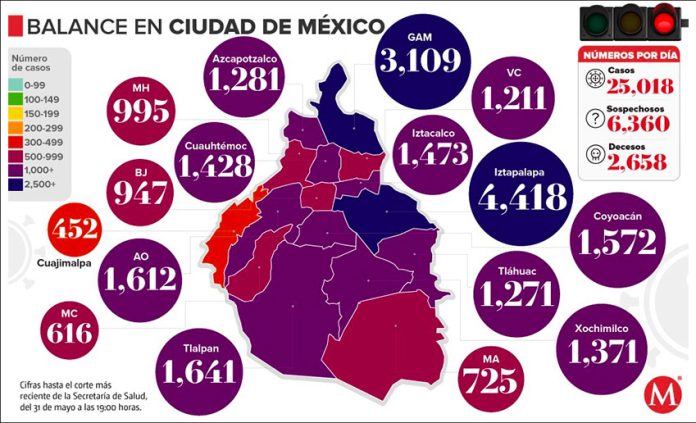
Coronavirus cases by borough in Mexico City as of Sunday
Coronavirus cases by borough in Mexico City as of Sunday. milenio

Mexico City will adopt new health protocols as it welcomes “the new normal,” the next stage in the coronavirus pandemic.

The measure comes as the city looks to ease into lifting the coronavirus restrictions put in place two months ago, yet still remains at “maximum risk” for the coronavirus, according to the federal government.

The use of face masks in public places remains obligatory, and maintaining a healthy distance — 1.2 meters between individuals — is recommended.

The biggest change effective Monday is that construction, mining, transportation equipment manufacturing, public markets, bicycle sales and beer making will reopen. 

Health checkpoints will be established at the entrance to businesses to check employees’ and customers’ temperatures, as well as to distribute antibacterial gel. Masks remain obligatory, and workers are being asked not to wear scarves, necklaces or ties and to be clean-shaven in order to limit the potential spread of the virus.

Construction workers will work from 10 a.m. to 7 p.m. to avoid morning and evening rush hours. Brewery workers will also work with a modified schedule and be divided into two groups in order to keep just 25% of personnel at the job site at any given time. Breweries will be shuttered Wednesdays and Saturdays for a thorough cleaning.

Public markets are to operate at 30% of capacity from 6 a.m. to 5 p.m. and provide special shopping hours for the elderly and those with pre-existing health conditions. 

Restaurants and bars, meanwhile, will remain closed.

On Tuesday, the government will partially reopen public parks, Mayor Claudia Sheinbaum announced, although parks can only be used for exercise and will operate at 30% of their capacity. 

Park-goers will have to wear masks and practice social distancing. Zoos and children’s playground equipment will remain closed.

The mayor’s office will evaluate the city’s progress each Tuesday, with announcements regarding the easing or tightening of restrictions in the nation’s capital to come on Fridays. 

As of Sunday, Mexico City had seen 25,018 confirmed cases of the coronavirus and 2,658 deaths.

Source: El Universal (sp)

Coronavirus cases pass 90,000 mark; no return to normal yet

0
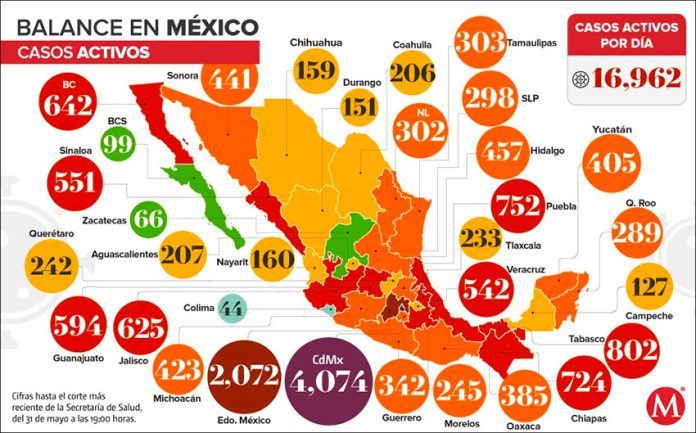
Active Covid-19 cases as of Sunday
Active Covid-19 cases as of Sunday. milenio

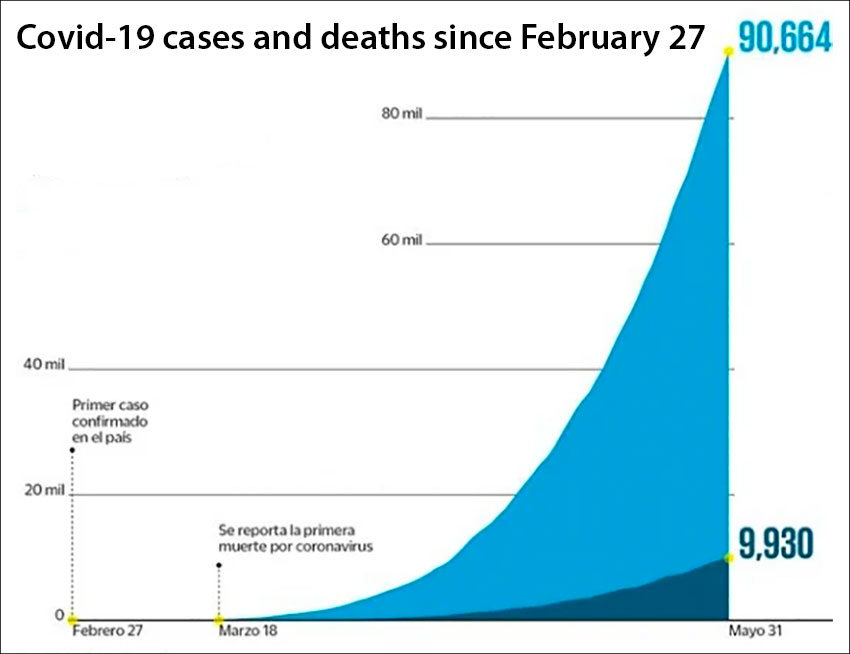
Mexico’s coronavirus case tally passed 90,000 on Sunday while the death toll is approaching 10,000.

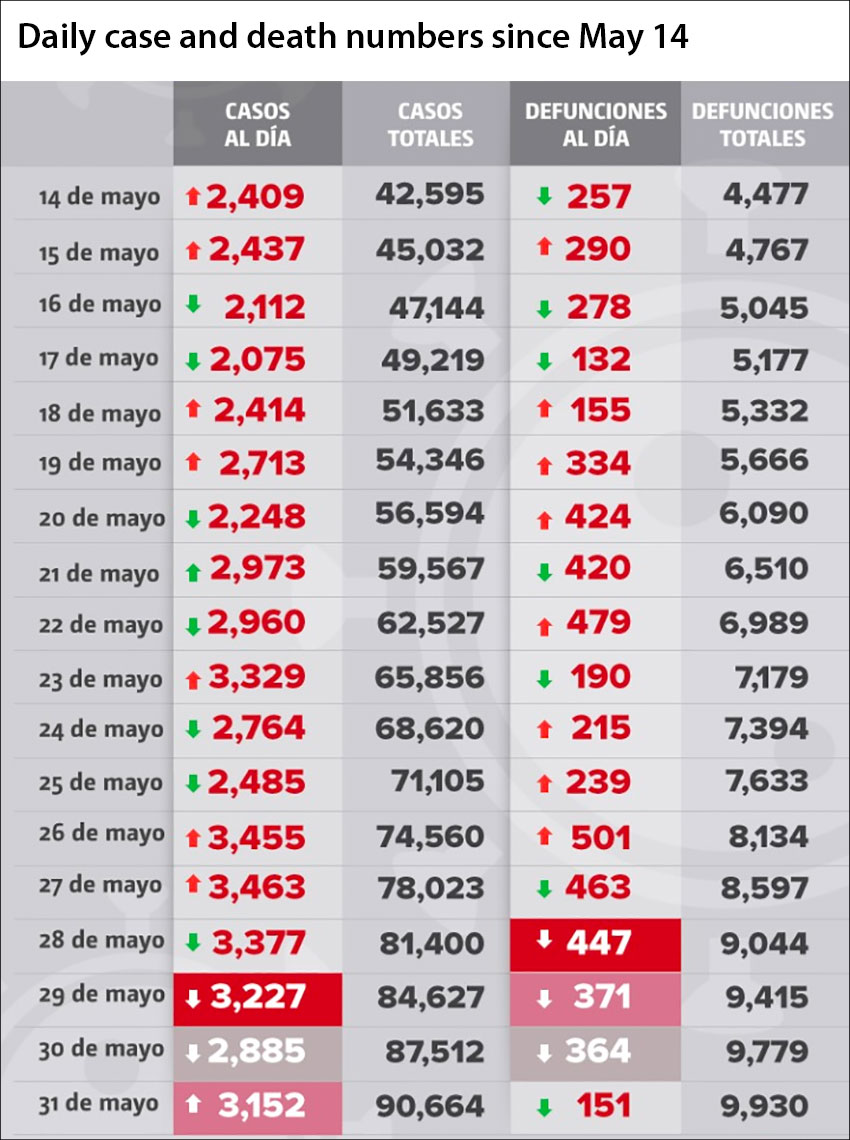
Deputy Health Minister Hugo López-Gatell reported that 90,664 people have tested positive for Covid-19 since the start of the pandemic, an increase of 3,152 compared to Saturday.

He said that 16,962 cases are considered active, 476 more than the number reported a day earlier.

Mexico City has more than 4,000 active cases and just over 2,000 people in México state tested positive for Covid-19 after developing symptoms in the past 14 days.

The Valley of México metropolitan area, which includes the capital as well as several México state municipalities, continues to be the nation’s coronavirus epicenter.

How coronavirus cases (in light blue) and deaths have risen steadily since February and March
How coronavirus cases (in light blue) and deaths have risen steadily since February and March. el universal

The country’s third biggest active coronavirus outbreak is in Tabasco, where there are 802 cases. The next biggest outbreaks are in Puebla, Chiapas, Baja California and Jalisco.

In addition to the confirmed cases, there are 36,803 suspected cases of Covid-19 across Mexico while just under 275,000 people have now been tested for the disease.

López-Gatell said that the death toll had risen to 9,930 with 151 new fatalities registered by the federal Health Ministry on Sunday.

An additional 788 deaths are suspected to have been caused by the coronavirus but have not yet been confirmed.

Based on the number of confirmed cases and deaths, Mexico’s fatality rate is currently 10.9 per 100 cases, much higher than the global rate of 6.

Mexico City has the highest death toll in the country, having recorded 2,658 fatalities – 27% of the country’s total – as of Sunday.

Number of Covid-19 cases and deaths reported daily.
Number of Covid-19 cases and deaths reported daily. milenio

More than 1,100 people have lost their lives to Covid-19 in neighboring México state, while Baja California has the nation’s third highest death toll with 865 fatalities.

López-Gatell said that 41% of general care beds set aside for coronavirus patients are currently occupied while 36% of those with ventilators are in use.

The government’s national social distancing initiative officially concluded on Saturday but the deputy minister stressed that Mexico’s epidemic has not ended and that measures to limit the spread of the coronavirus are still needed.

Every state except Zacatecas was allocated a “red light” on the federal government’s stoplight system to determine which coronavirus restrictions can be lifted and where, meaning that bans on nonessential activities remain in place in the vast majority of the country.

“June 1 is not a return to normality,” López-Gatell said, explaining that there are still restrictions on economic, social and educational activities.

“I emphasize it because it’s essential that society know that the danger persists and that the entire republic with the exception of Zacatecas has a red light,” he said.

López-Gatell said that state authorities, “with the support and technical advice of the federal Health Ministry,” will be responsible for taking the necessary decisions to limit the spread of Covid-19 within their borders.

Amid concerns that the termination of safe social distancing might have come too soon, the deputy minister on Saturday defended the move. He said when the program began the transmission of Covid-19 was widely scattered around the country, requiring “widespread national intervention.”

López-Gatell said that is no longer the case and regional management at the state level is now more appropriate.

However, the fact that 31 states are labelled red — at maximum risk — would indicate that the challenge remains national in nature.

After the federal government uncovered its stoplight map on Friday, the governors of Jalisco, Colima, Michoacán, Durango, Nuevo León, Coahuila and Tamaulipas voiced their dissatisfaction with the red lights they were allocated.

Source: El Universal (sp), Reforma (sp), El Financiero (sp)

Photography fundraiser collects over 6.7 million pesos for Covid struggle

0
This photo by Lorena Velázquez was one of those in the online sale.

Over 200 Mexican photographers raised more than 6.7 million pesos (US $300,000) to donate to the fight against Covid-19.

Under the banner “Buy photos, save lives,” Fotos Por México (Photos For Mexico) sold copies of select photos from 213 established and up-and-coming Mexican photographers to raise funds for the Salvador Zubirán National Institute of Medical Sciences and Nutrition.

The institute responded by saying that Fotos Por México’s support “will allow [us] to save lives, protect our health professionals and continue combatting Covid-19.”

The 15-day campaign came to an end on Monday, May 26, and all funds have been delivered directly to the institute.

Each photo cost 2,500 pesos (US $113) and will be printed and delivered to buyers after phase three of the pandemic has concluded.

Organizers thanked the photographers for their work, but said that their contributions were merely the first link in “a chain of help to which the media and the people connected in order to create a community of solidarity and support.”

Photographer and organizer Adel Buzali said she was excited about the response from all three of the groups that came together to raise the money and expressed her gratitude for the work that medical professionals are putting into their struggle against the coronavirus.

“We recognized the gigantic effort that the Salvador Zubirán Institute … is doing to deal with this situation. … The way [medical professionals] have taken on the challenge in front of them is our biggest inspiration. It fills us with pride to know that we’re helping them take care of lives of their patients and the health of their research team,” said Buzali.

Mexico News Daily