Home Blog Page 1652

Narcos, fuel thieves stymie social assistance delivery in 50 municipalities

0
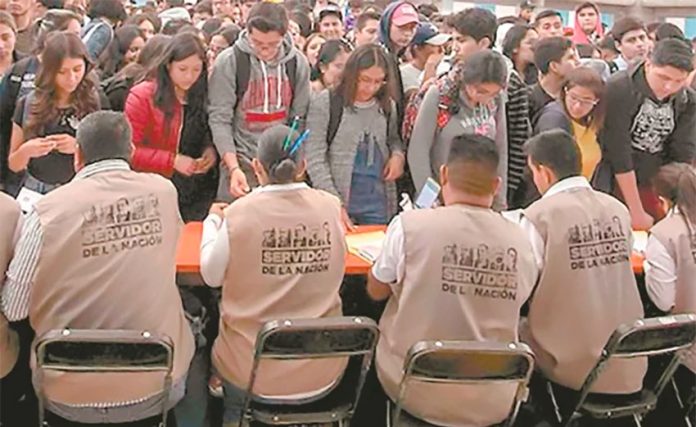
Government workers called servidores provide aid to citizens.

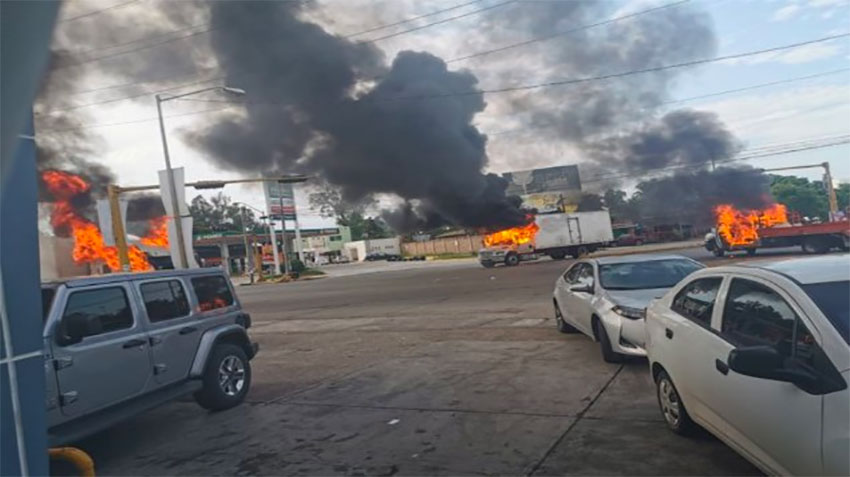
Drug cartels, fuel theft gangs, community conflicts and insecurity in general are hampering the delivery of the federal government’s social programs in 50 municipalities, according to an official report.

Obtained via a freedom of information request by the newspaper El Universal, the Welfare Secretariat report says that government employees responsible for conducting censuses to determine who is eligible for government support and explaining to citizens how they can register for programs have suspended their activities or only carry them out intermittently in high-risk municipalities.

Eighteen of those are in Puebla, 14 in Oaxaca, 11 in Tamaulipas, five in Chiapas and one each in Sonora and Durango.

A main aim of the social programs, which offer employment to disadvantaged people and provide payments for pensioners, the disabled and students, is to address the root causes of crime and violence, such as poverty and lack of opportunity.

Ironically, crime and violence are hindering the delivery of the very government support whose intention is to combat them.

El Universal reported that some servidores, or national servants, as the employees tasked with promoting the social programs are known, have been mugged and even attacked with firearms. One government worker was shot and killed in Puebla, while another sustained a gunshot wound in a separate incident in the same state.

The safety of the national servants has also been threatened by political and social conflicts that plague some communities, according to the report.

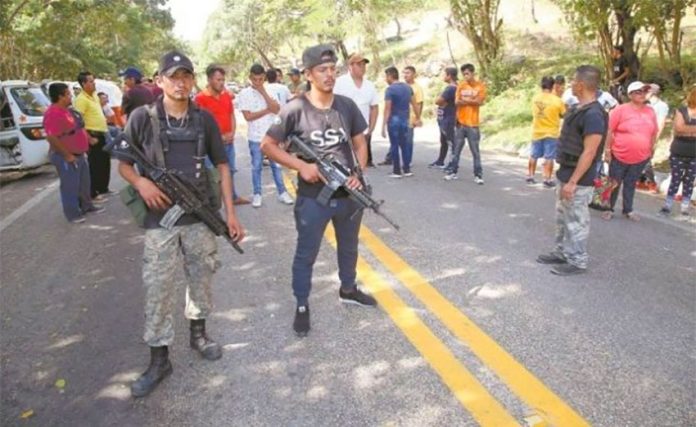
In Puebla, criminal groups involved in the robbery of trucks and the theft of fuel from pipelines pose the main threat to the government employees, although drug gangs also have a presence in the state. The social program workers are closely watched by gang members and have been warned not to attempt to enter certain communities.

Among the 18 municipalities where the national servers have been unable to complete their work are state capital Puebla, fuel theft hub San Martín Texmelucan, and Tepeaca, which is part of the Red Triangle, a region notorious for the tapping of petroleum pipelines.

In Oaxaca, community and agricultural conflicts have proved to be the main impediment to the work of the employees, the report said.

Other factors that have kept the workers from carrying out their duties within the state include the high rate of homicides, the threat posed by armed men and the presence of hidden graves.
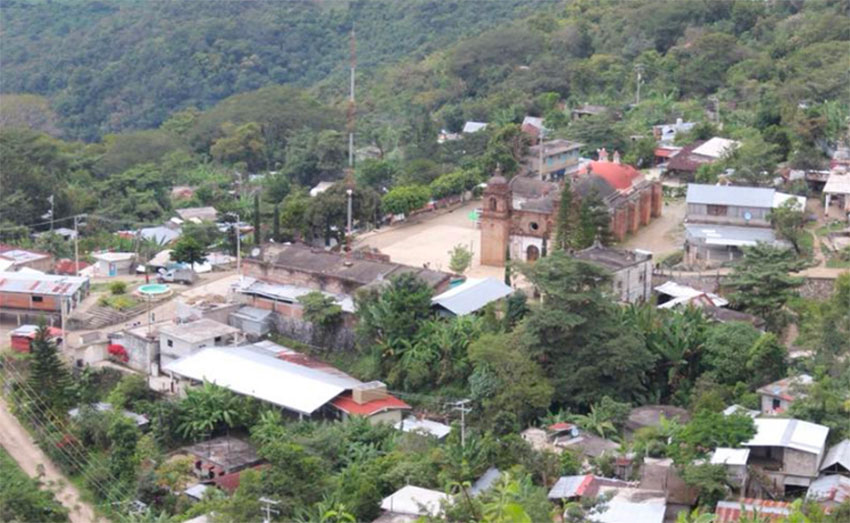
Santiago Xanica: no feds allowed.

The Welfare Secretariat report said that national servants have been unable to enter the municipality of Santiago Xanica since September because a group called the Defense Committee of Indigenous Peoples has placed a blanket ban on the entry of security forces and federal government workers.

“We find ourselves in a position of not being able to attend to that municipality because the safety of the nation’s servants would be placed at risk,” the report said.

In San Pedro Ixcatlán, located on the banks of Lake Miguel Alemán, the discovery of “several clandestine graves on islands that belong to the municipality. . . create uncertainty and suspicion among residents towards [government] personnel carrying out fieldwork,” the Welfare Secretariat said.

Among other Oaxaca municipalities where the delivery of social programs has been affected are Juchitán, Tlaxiaco, San Francisco del Mar and Soyaltepec.

In the northern border state of Tamaulipas, the presence of armed groups involved in drug trafficking and other criminal activities has interrupted the work of the national servants in 11 municipalities including Mainero, Villagrán, Hidalgo and Miguel Alemán, all of which border Nuevo León.

However, Nuevo Laredo, located across the Rio Grande from Laredo, Texas, has proven to be the most difficult municipality in which to work.

Of the 115 most problematic locations that have been identified, 33 are in Nuevo Laredo. The city, a stronghold of the Northeast Cartel, is “controlled by organized crime,” the Welfare Secretariat said.

As is the case in Oaxaca, violence generated by community conflicts is the main barrier to the delivery of the government’s social programs in Chiapas.

Social conflicts and the presence of “apparent organized crime” have prevented national servants from going into eight communities in the municipality of Bochil, while they have been unable to enter five towns in Pueblo Nuevo Solistahuacán due to a territorial conflict.

In Chiapa de Corza, residents won’t let the government workers in because “they don’t want federal support,” the Welfare Secretariat report said, while the Zapatista Army of National Liberation, which has long had a testy relationship with President López Obrador, refuses to allow social program employees into the municipality of Tila.

The national servants have also been prevented from entering two communities in Acalá that are controlled by the National Front of Struggle for Socialism.

In Nácori Chico, Sonora, the work of the social program promoters has been made difficult by a turf war between rival criminal gangs, while the workers have been warned not to enter some parts of Tamazula, Durango.

Source: El Universal (sp) 

Second narco-plane intercepted; US $12 million in drugs seized

0
The second narco-plane to be captured this week in Quintana Roo.
The second narco-plane to be captured this week.

The army seized drugs from a plane flown by narcotraffickers for the second time in two days in Quintana Roo.

The National Defense Secretariat said the air defense system detected an unauthorized aircraft flying over international waters on Tuesday, destined for Cozumel from Argentina.

Planes from the Mexican Air Force forced it to land at the airfield in Mahahual where two Bolivian citizens on board were arrested.

Military personnel on the ground seized around a tonne of a white substance believed to be cocaine; the nature and exact amount remains to be determined by authorities.

The market price of the confiscated drugs is estimated at 224.6 million pesos (US $12 million).

The seizure and arrests were the second such military actions in as many days. Military personnel seized cocaine and guns from a plane forced to land on the highway near Chetumal early Monday morning. One soldier was killed and three wounded in that operation.

Source: Noticaribe (sp)

Thieves make off with some truly hot goods in Sonora

0
Chiltepín peppers grow wild in Sonora.
Chiltepín peppers grow wild in the desert.

More than 1,000 kilos of chiltepín peppers valued at more than 1 million pesos (US $53,000) were stolen from a private home Saturday in Sonora.

Businessman Braulio Navarro Salcido said he had left his home, located in the Centenario neighborhood of Hermosillo, early in the day and on returning noticed that the front door had been forced, as well as the garage door. Once inside, he saw that the product he had stored in 47 sacks had vanished.

One witness said he had seen a pickup truck in the crime victim’s garage, as well as a van parked outside. The thieves apparently needed more than one vehicle to haul away the “red gold” due to the large volume.

After filing a report with the Attorney General’s Office, Braulio remained confident that the thieves would be nabbed, as a cache of that scale was unique in the chiltepín market, a business he’s been in for around 40 years.

The peppers had been purchased from harvesters in the Sierra Alta and several communities on the Sonora River for eventual sale in Tijuana, Mexicali, Culiacán and Los Mochis.

The chiltepín is harvested from wild plants in the Sonora desert. It can be hotter than the habanero but its strength can vary, depending on the weather conditions under which it grew.

Source: El Universal

Shocking! Beautiful Xalapa is upgrading its infrastructure

0
potholes
This way to China.

I think a lot about asphalt these days.

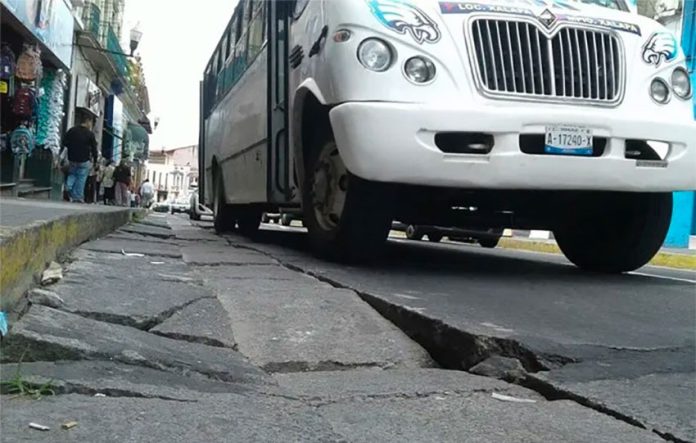
When classes got out for winter break this year in Xalapa and it seemed as if half the city emptied from one day to the next, the municipality, in a rare and shocking show of logic, got to work on fixing some of the more gaping craters in our city’s roads.

I don’t mean to be condescending. It’s just that I’m exactly as weary and cynical as most residents of this city are nowadays. We’ve come to expect as a matter of course the rapid deterioration of the infrastructure and snail-paced repairs using the equivalent of Dollar Store-quality materials that only last until the next heavy rain comes.

We know that we’re just as likely to have an accident from driving too close to the person in front of us as we are from swerving to miss something in the road that shouldn’t be there. This problem isn’t unique to Xalapa, but it is solvable.

As a driver now, I spend a lot of time memorizing where the unpainted speed bumps are on my regular routes, and where the biggest potholes typically sprout, over and over again. I know what “lane” (I use the term “lane” loosely, as it’s actually rare to see painted divisions) to be in on my way home from my daughter’s school to avoid falling into a gaping crater and possibly winding up in China.

As anyone who reads my column has probably deduced by now, I care a lot about both sustainable aesthetics and function. Needless to say, I’m a frustrated but hopeful resident.

Xalapa is beautiful. Situated high in the cloud forest, its gorgeous views of both the Pico de Orizaba and the Cofre de Perote in the distance and green spilling over onto everything that will stand still for more than two days are enough to make you feel like you’re in an urban Fern Gully. Some parts are positively Avatar-esque.

Add to that copious amounts of delicious coffee, the best food in the country, and the city’s artsy and academic vibe, and you’ve got the potential for paradise (I’m biased, of course).

So why can’t we go all the way? I used to assume that the state of Veracruz, for whatever reason, was simply incapable of well-thought-out and fast infrastructure projects, but then I saw Orizaba and I’m doing a terrible job at stifling my jealousy. Why can’t we have nice things, too?

Don’t get me wrong, we’re tentatively making progress. When I returned this month after a couple of weeks in the U.S., several of the streets had been patched up and smoothed over. Great!

Other areas of the city have received or are receiving durable hydraulic pavement rather than the Dollar Store-variety asphalt that’s typically slabbed on the streets, complete with the underground installation of those unsightly cables.

Many of the new projects in the city are being undertaken specifically with pedestrians in mind: expanding and rehabilitating sidewalks, making them handicapped-accessible, adding bike lanes, etc. I just hope we don’t forget that the ability for cars to get around safely is also a big part of making a place safe for pedestrians.

So without further ado, here are my uninvited suggestions to my city and other similar ones for making things as awesome as they should be:

  1. Get that hydraulic pavement everywhere! Really, we have got to stop using cheap materials that wash away with the first rain to repair anything — what’s even the point? We’ve got some great homegrown “green” ideas as well. One other writer suggested that it’s about making sure there’s always work to do but honestly, I think there are enough needed repairs in this city to keep people busy for decades.
  2. If we’re going to have speed bumps everywhere, let’s at least make sure they stay painted so unsuspecting drivers slow down when they’re meant to rather than hitting the roof of their car as they rush over.
  3. We need big, easy-to-read signs indicating two things on every. single. block: the name of the street, and whether or not the street is one-way (once in a while I can’t tell, and have to wait until someone coming from the other direction yells and gestures at me).
  4. For goodness sake, let’s paint some lanes on our major roads — driving should involve as little guesswork as possible about where you should be.
  5. The stoplights need to be retimed based on current traffic patterns rather than the original ones from when they first went up.
  6. Designate a reasonable amount of parking. If we need more parking garages, we need more parking garages. The cars that are in the city aren’t going away, so it’s time to figure out a way to accommodate them.

Every neighborhood in this city knows what it needs: repaired roads, updated official signs, designated parking, repairs of lamp posts, safe places for kids to play. Let’s institutionalize neighborhood organizations that can report problems that need fixing, and even make suggestions for neighborhood beautification projects like more plants and trees or murals.

Experts and workers in the areas needed could be sent by the city to work with the people in the neighborhood, and it could double as a training program for those interested in urban development. A simple lunch could be offered to volunteers, and other benefits for the neighborhood — such as paint for the outside of people’s houses, or trees — could be tied to the number of volunteers that participate.

The real test will be upkeep. And if things arent going to be done well the first time around, all were doing is throwing money away, anyway. As a friend recently said, “Xalapa has stayed in the 90s.” What he meant is that not a lot of serious updating has been done to the city’s infrastructure since then, and I think he’s right.

Convivencia (coexistence) and participation in civic life is already built into the culture. It’s time to take advantage of that for the betterment of our cities.

Sarah DeVries writes from her home in Xalapa, Veracruz.

Since 2014, Mexico has seen hottest weather in the last 70 years

0
cooling off in heat wave
It's been getting hotter.

The last six years were the six hottest on record in Mexico and climate change is to blame, according to the heads of the National Metrological Service (SMN) and the National Institute of Ecology and Climate Change (INECC).

The hottest year in the period – and in the almost 70 years since temperature records were first kept– was 2017 when the average temperature across the nation was 22.6 C, 1.7 degrees higher than average of 20.9 C over the period since records were first kept in 1953.

The title of second hottest year ever was shared by 2016 and 2019, both of which recorded an average nationwide temperature of 22.4 C – 1.5 degrees higher than the long-term average. The other years in the six-year period exceeded the average nationwide temperature by at least 1.2 C.

“As a planet, we’re one degree above the average that existed in the period from 1850 to 1900, and remember that the goal has been set to [not exceed a temperature increase] of 1.5 C,” SMN chief Jorge Zavala told a press conference last Wednesday.

“In Mexico’s case, 2019 was the second hottest year; we had an average temperature in the country of 22.4 C nationwide – this includes maximums and minimums of each day and in each region,” he said.

In a subsequent interview with the newspaper Milenio, Zavala said that the fact that six of the past 10 years were the hottest in the last 70 made it possible to conclude that the high temperatures were indeed attributable to climate change.

INECC general director María Amparo Martínez Arroyo offered a similar assessment.

“. . .What’s happening in the rest of the world is also happening in Mexico, we’re going through the process of global warming,” she said.

“All countries, including Mexico, have to accelerate their [emission reduction] actions in order to meet the Paris Agreement because we’re already seeing a very clear trend” that temperatures will likely continue to rise, Martínez added.

SMN forecaster Reynaldo Pascual Ramírez told Milenio that temperatures have been rising in Mexico since 2005, with only one year – 2010 – bucking the trend.

He said that most parts of the country experienced hotter weather last year than in 2018 although some regions including the Sinaloa coast and the states of Sonora, Baja California, Guerrero and Oaxaca didn’t see temperatures rise.

“. . .But it was hotter in Chihuahua, Coahuila, Zacatecas and the entire Huasteca. . .” Ramírez said, referring lastly to a region that encompasses parts of several states including Tamaulipas, Veracruz, San Luis Potosí and Hidalgo.

The forecaster also said that a severe drought affected eastern Mexico last year, highlighting that the region normally receives regular rainfall.

The National Water Commission said in September that two-thirds of Mexico was in drought of varying severity after almost 20% less rain than normal fell between in the first 8 1/2 months of last year.

Raúl Pacheco, a water management expert at the Mexico City research university CIDE, said in October that climate change will cause periods of drought to lengthen and that Mexico’s cities have to adapt to that reality.

“It’s important for cities to adapt to the lack of water and to do that they need a plan . . . They must invest money and there must be coordination between environmental agencies and those working on climate change . . .” he said.

Source: Milenio (sp) 

Mexico’s most famous entrepreneur celebrates 80th birthday

0
Slim turns 80.
Slim turns 80.

Carlos Slim Helú, one of Mexico’s and the world’s leading entrepreneurs, turned 80 today.

Slim’s business education started when he was young: his father gave him and his siblings a bank book along with his allowance, as the story is told on carlosslim.com. From then on, Slim saw savings and investment as an integral part of his life and eventually rose to become one of the world’s mightiest business magnates.

Slim ranked 11th on the Bloomberg Billionaires Index at the end of last year, with a fortune valued at US$61.5 billion, to which he added $6.72 billion in the past year.

His realm embraces the telecommunications, infrastructure, energy and building sectors, among others, thanks to such firms in his possession as Telmex-Telnor, the subsidiaries of América Móvil; and the conglomerate Carso which runs such companies as Grupo Sanborns, Carso Infrastructure and Construction (CICSA), Grupo Condumex and Carso Energía.

The market value of his companies added up to $82 billion, a 2.5% jump over the past five-year period, according to Bloomberg.

It isn’t just his astronomical net worth that sets the business magnate apart, but also his proximity to key political figures, among them President López Obrador.

Slim has successfully forged agreements with the current administration, as was the case when his companies IEnova, TC Energía and Grupo Carso renegotiated gas pipeline contracts with the Federal Electricity Commission (CFE).

In addition the businessman has also demonstrated interest in working on infrastructure projects initiated by the current government, such as the National Infrastructure Investment Accord.

The reality is quite different for his telecommunications firms, however, as the Federal Telecommunications Institute (IFT) has mandated the splitting up of Telmex-Telnor to form a new company, which cannot be subsidized, as a result of measures that were put into effect in 2017.

Another disciplinary action is in store for Telmex on the same basis that could result in a fine of up to 5 billion pesos.

Source: El Financiero

Airplane raffle undecided but the tickets have been designed

0
The president presents raffle ticket design at today's press conference.

President López Obrador presented on Tuesday the design of a raffle ticket for the presidential plane even as he admitted that there is no certainty that the raffle will go ahead.

Projected on a screen at the president’s morning news conference, the 500-peso (US $27) ticket features an image of the Boeing 787 Dreamliner used by former President Enrique Peña Nieto and is emblazoned with the words “Premio Mayor Avión Presidencial,” or Top Prize Presidential Plane.

According to the ticket, the “Grand Special Drawing” will be held on May 5 to commemorate the 158th anniversary of the Battle of Puebla in which the Mexican army defeated invading French forces.

However, López Obrador clarified that the date was tentative and explained that a final decision about the sale of the plane will not be announced until February 15.

The president first floated the raffle idea earlier this month, explaining that it was one of five options under consideration to get rid of the unwanted plane that failed to sell during the nine months it spent in a hangar in the United States.

The National Lottery could raffle the plane off by selling six million tickets to raise 3 billion pesos (US $160 million), López Obrador said on January 17, explaining that the amount would cover the estimated US $130-million value of the plane.

The idea was widely ridiculed and spawned countless memes but López Obrador nevertheless asserted on Tuesday that the raffle would “very probably” go ahead. He also said that he has received “a lot of support” for the raffle, explaining that “the people” want to participate.

Reading from the ticket, he told reporters, “[The ticket price] is a contribution for medical equipment and hospitals where poor people are attended to free of charge.”

López Obrador suggested that the National Lottery could sell two million tickets to the general public and that the remaining four million could be bought by 100 or 200 companies.

If the plane isn’t sold in the coming days, he added, “we’ll continue with this plan. . .the raffle is very probably going [ahead].”

The president ruled out the possibility of there being any problems with the plane being raffled off because it belongs to “the people of Mexico.”

Asked about an article in the National Lottery Organic Law that stipulates that only cash can be offered as lottery prizes, López Obrador said that his administration was looking at ways to ensure that the raffle is legal.

“To proceed, a complete adjustment to the legal framework has to be made,” he said. “For example, the payment of taxes has to be resolved because the winner of a prize has to pay a tax.”

López Obrador also said that when the final decision about the sale of the plane is announced next month, the government will present the “official history” of the luxuriously-outfitted Dreamliner, which was purchased for US $218 million in 2012 but not delivered until February 2016.

The rundown, he explained, will include information about how much it cost his administration to keep the plane at the Southern California Logistics Airport while a buyer was being sought, because the figure disseminated by the media is “exaggerated.”

Source: El Financiero (sp) 

Butterfly conservationist’s family victims of extortion

0
Butterfly sanctuary administrator Gómez.

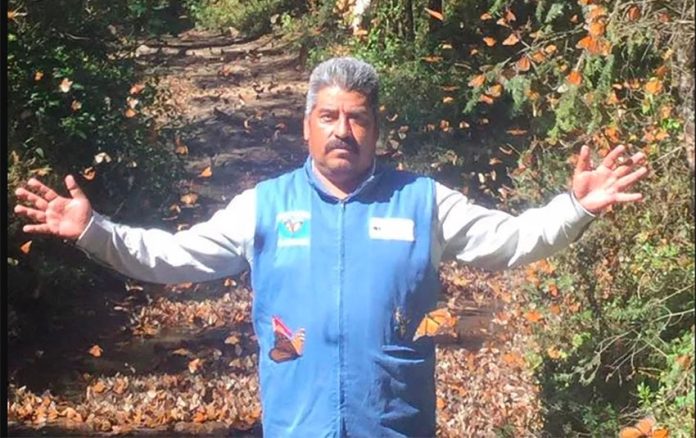
Family members of missing butterfly conservationist Homero Gómez González have been the victims of an extortion campaign related to his disappearance.

“They have been extorting the family with alleged photos and [the family] has been depositing money,” said Michoacán Governor Silvano Aureoles at a press conference on Monday morning.

“We’re going to find him. I hope we find him alive,” the governor said.

He added that he will meet with members of the Michoacán Missing Persons Search Commission later this week.

Monday marked two weeks since the disappearance of the head administrator at the El Rosario monarch butterfly sanctuary in Angangueo, Michoacán.

Gómez’s brother Juan said that Homero was last seen on January 13 at a fair in the town of Ocampo with Mayor Roberto Arriaga Colín and other municipal officials. He left at around 9:30pm and was not seen or heard from afterwards.

Juan said he was unaware of what happened to his brother or whether he had received threats before his disappearance, as Homero Gómez was reserved about such matters.

He added that they are not ruling out any clue or line of investigation.

“The authorities are working and I hope that they do their job well so that this doesn’t go unpunished like so many cases, not just in Michoacán but nationwide,” he said.

The National Search Commission reported earlier this month that there are more than 61,000 missing persons in Mexico.

Source: La Voz de Michoacán (sp)

Migrant-smuggling networks believed widespread in Mexico

0
Migrants in Caravan 2020 at the southern border last week.

The National Immigration Institute (INM) is investigating 20 internationally active migrant-smuggling networks believed to be operating in Mexico.

“These criminal networks take advantage of people’s transport needs to charge them amounts that can rise above 200,000 pesos (US $10,600) per person,” the institute said in a press release issued on Sunday.

The networks provide transportation and shelter for the primarily Central American migrants to reach their destination, most often the United States, offering up to five attempts.

The office said that it is committed to fighting such cases of people smuggling, as well as maintaining a safe, ordered and stable migration system.

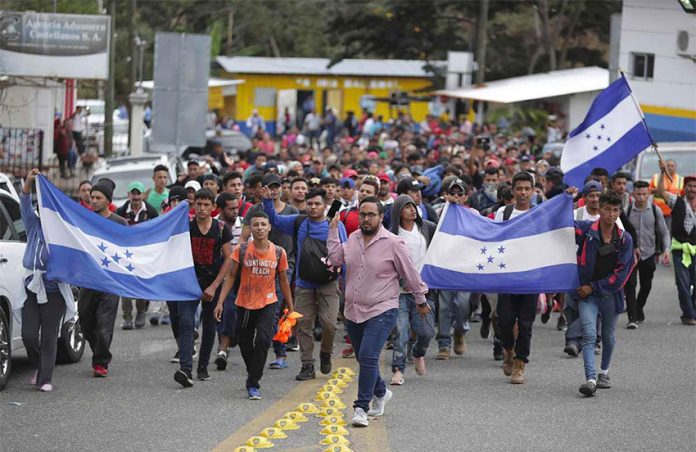
The first migrant caravan of the year reached the Mexico-Guatemala border on January 20. Around 3,000 mainly Honduran migrants were stopped at the international bridge at Ciudad Hidalgo, Chiapas.

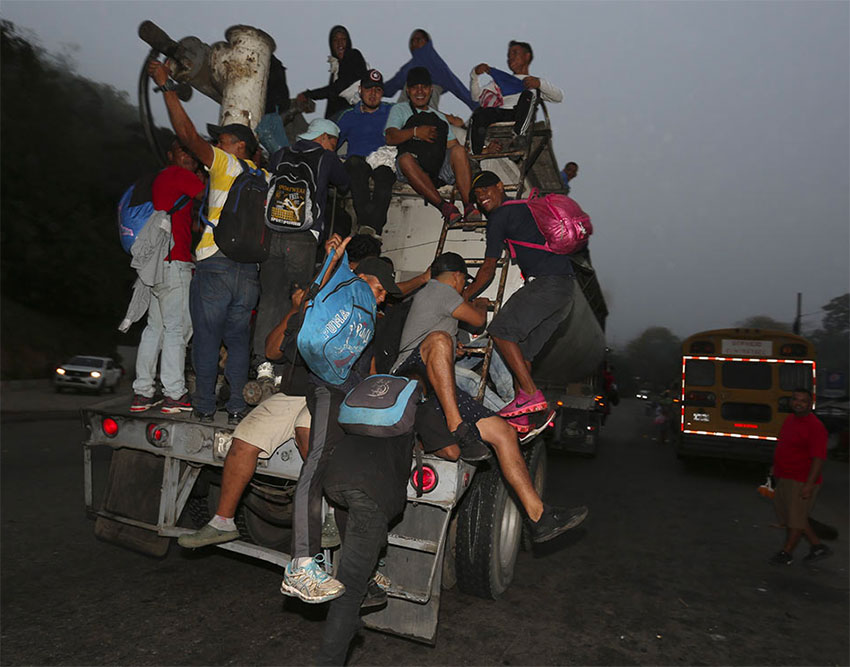
Migrants cling to a truck as they attempt to head into Mexico.

The National Guard then used batons and tear gas to repel hundreds of migrants who crossed the Suchiate River in an attempt to enter the country.

President López Obrador said days later that the migrants had been rounded up to protect them from criminal gangs.

Despite the government’s efforts to hold the migrants back at the border, as many as 1,000 crossed into Mexico on Thursday, marching over seven kilometers toward Tapachula, Chiapas, before being blocked by National Guard troops who fired tear gas at them.

As many as 1,000 migrants entered the country legally on the weekend and were taken to migration facilities. Although their cases for asylum or employment are being evaluated, authorities said that the majority of them will be deported.

As of Monday, the immigration institute had deported more than 2,000 migrants from the so-called Caravan 2020 in nine days.

And according to reports yesterday, immigration agents will be busy once again at the end of the week. The self-designated Devil’s Caravan is expected to bring more migrants Friday from El Salvador.

Source: El Sol de México (sp)

Conflicts to worry about: NGO sees potential for cartel insurgency

0
Indications of an impending insurgency.

There is a “high risk” of a cartel insurgency in Mexico this year, according to a non-governmental organization that analyzes violence around the world.

The Armed Conflict Location & Event Data Project (ACLED) said in its report Ten Conflicts to Worry about in 2020 that Mexico is facing a deteriorating security situation and continues to suffer “unprecedented levels of criminal and drug-related violence.”

Under the subheading “What to watch for in 2020,” the NGO said that Mexico is confronted with “an increasingly complex, fragmented and multipolar criminal market and a resolution to these structural problems is unlikely in the short term.”

The situation increases the possibility of “intensified conflict” this year, the ACLED said, anticipating that “brutal everyday violence” will continue to plague the country.

The record-high murder numbers seen in 2019 – there were more than 35,000 victims of homicide and femicide – will be surpassed in 2020, the organization predicted.

Several “particularly brutal” attacks last year have raised concerns that Mexico’s notorious drug cartels are “increasingly adopting insurgent techniques,” the ACLED said.

The response of the Sinaloa Cartel to an operation in October to capture a son of convicted trafficker Joaquín “El Chapo” Guzmán was a prime example.

In an unprecedented show of force, the cartel virtually seized control of Culiacán after the arrest of Ovidio Guzmán López, outmuscling state and federal security forces and forcing authorities to take the decision to release the suspected criminal leader in order to avoid a bloodbath on the streets of the Sinaloa capital.

The retaliatory attack raises fears that cartels are stronger than the military, the ACLED said.

Indeed, Mexico’s most powerful criminal organizations have large arsenals of military-grade weapons at their disposal – and are not afraid to use them.

In contrast, the federal government continues to pursue a so-called “abrazos, no balazos” (hugs, not bullets) security strategy that favors addressing the root causes of violence with social programs rather than combating it with force.

Culiacán: one of several 'particularly brutal' attacks last year.
Culiacán: one of several ‘particularly brutal’ attacks last year.

To support its “high risk” of insurgency thesis, the ACLED noted that security forces also came under attack last October in Michoacán and Guerrero.

Thirteen state police officers were killed in the notoriously violent Tierra Caliente region of the former state on October 14 in an ambush allegedly perpetrated by the Jalisco New Generation Cartel, considered Mexico’s most powerful and dangerous criminal organization.

The very next day, the army came under attack in a community just outside the Guerrero city of Iguala. Fourteen suspected members of the Guerreros Unidos, a crime gang that allegedly murdered the 43 students who disappeared in Iguala in September 2014, were killed along with one soldier.

Further substantiating its insurgency prediction, the ACLED noted that nine members of a Mexican-American Mormon family were murdered in an ambush on a rural road in Sonora on November 4 and that a cartel “launched a military-style invasion” into the town of Villa Unión, Coahuila, on November 30.

The Coahuila attack, believed to have been committed by the Northeast Cartel’s military wing Hell’s Army, precipitated an hours-long gun battle with state and federal forces, leaving 22 people dead.

The ACLED asserted that “in addition to high levels of impunity, untrained security forces, and the general weakness of public institutions, the escalation of violence can be partially attributed to the fragmentation of cartels caused by law enforcement campaigns targeting their leaders . . .”

It said that splinter groups are competing violently over the existing drug trade but also diversifying their criminal activities by engaging in kidnapping, extortion, fuel theft and human trafficking.

The NGO also acknowledged that “by some accounts,” President López Obrador’s assumption of power may be linked to increased rates of violence because complicity between public officials and criminal groups has been undermined, “spurring uncertainty amid a struggle for new arrangements.”

In addition, it noted that critics argue that López Obrador has been unable to develop a coherent and effective security policy to fight cartel violence.

For his part, the president has conceded that his administration has not yet been able to reduce homicides but he and other senior officials have expressed confidence that the government’s social programs, along with the deployment of the National Guard, will soon achieve positive results.

To deflect growing criticism of the government’s approach to tackling the record high levels of violence, López Obrador maintains that the poor security situation is inherited.

“. . . I want to make it clear that we’ve been left with the aftermath . . . of a mistaken and corrupt security policy,” he said on January 22.

Mexico News Daily