Solar installations were up 62% in 2019, according to the Mexican Solar Energy Association (Asolmex).
It said 5,000 megawatts of solar energy capacity were installed, the equivalent of powering 25 million homes.
“Today there are 63 functioning solar power plants in 16 states of the republic, 24 more than at the end of 2018. Among them is the largest solar plant in the Americas, located in Viesca, Coahuila,” Asolmex said in a press release.
The US $8.5 billion in investments in the sector generated over 64,000 jobs throughout the whole value chain and a reduction of over 60 million tonnes of carbon dioxide — the equivalent of taking 13 million cars off the road.
There were 112,660 contracts for solar panel roofing in Mexico by the end of 2019, distributed among residential, commercial and industrial users, totaling an installed potential of 818 megawatts.
Asolmex added that the country has big potential for rooftop solar energy production. It estimated that Mexico’s 29 largest cities have a total of 10,000 square kilometers of available rooftop space that could potentially produce 84,000 megawatts of power.
“The boost in the solar energy sector contributes toward the government’s goal of energy sovereignty, in terms of access to clean and competitive energy across the country, as well as diversifying the energy mix,” said Asolmex.
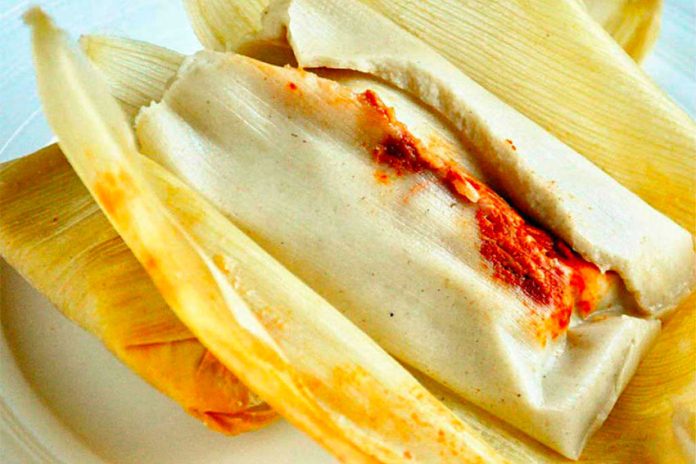
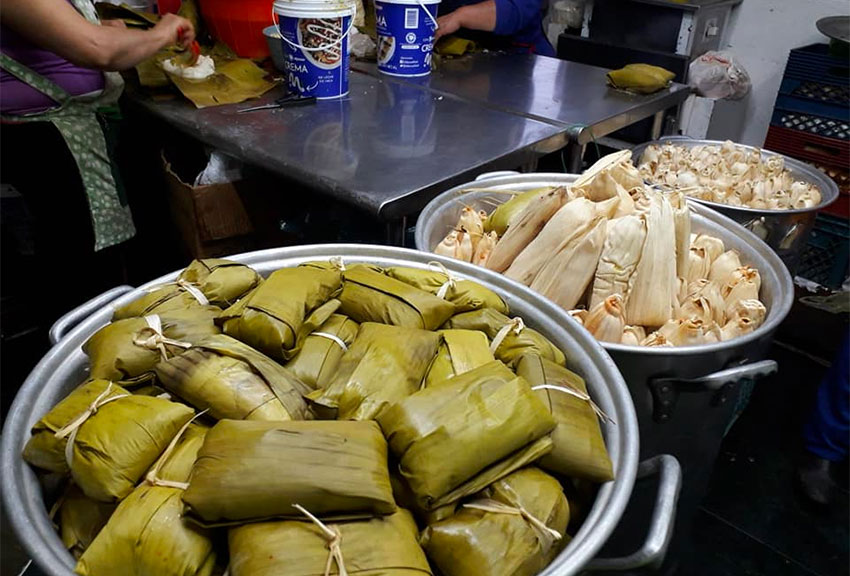
Fill up on tamales at the annual fair in Coyoacán.
As the date approaches for a traditional holiday offering of tamales throughout the country, one Mexico City museum is celebrating the pre-Hispanic recipe.
Over 50 tamaleros, or tamal makers, from across Mexico will gather at the National Museum of Popular Cultures in Coyoacán to show off and sell a wide variety of tamal recipes at the 28th annual Feria del Tamal.
The fair begins today and will run through February 2. The museum is open from 10:00am to 8:00pm and admission to the fair is free.
Visitors will be able to find all of the possible varieties, including the Oaxacan-style green chile, mole and sweet tamales steamed in banana leaves. There will also be beverages like chocolate, coffee and the corn-based champurrado to accompany the tamales.
Mexican tradition holds that anyone who finds a baby Jesus figurine in their slice of rosca de reyes (Kings Day bread) must provide tamales for everyone on the Día de la Candelaria, or Candlemas, observed on February 2.
Candlemas is a Catholic holiday that celebrates the day the Virgin Mary first presented the baby Jesus at the temple in Jerusalem. It was customary for women to bring doves as a purification offering 33 days after a boy’s circumcision, but this changed to candles over time.
This Old World celebration was held around the same time that the Mexicas — the inhabitants of the Valley of México when the Spanish arrived — held their Atlcahualo festival to mark the beginning of the planting season.
The indigenous celebration was held to bless the corn to be planted by offering tributes to Quetzalcóatl, god of fertility, light and life; Tláloc, god of rain and lightning; and Chalchiuhtlicue, goddess of lakes, rivers, streams and baptisms.
As the Spanish worked to evangelize the native peoples of Mexico, these customs began to mix and were ultimately syncretized into Mexican Candlemas in its modern form, tamales, chocolate and all.
No matter which team takes home the trophy at the Super Bowl this Sunday, the Mexican avocado will be a big winner.
A truckload of the fruit known colloquially as “green gold” is leaving Mexico for the United States every six minutes in the lead-up to the National Football League championship game, according to estimates from the Mexican Association of Avocado Producers, Packers and Exporters (APEAM).
The association expects the volume of avocados sent across the border in January to exceed the 110,900 tonnes exported in the same month last year, the newspaper El Financiero reported.
January exports of Mexican avocados to the United States increased more than 300% between 2010 and 2019 and currently account for about 10% of annual shipments to that country, statistics show.
Mexico, or more precisely Michoacán – it is the only state with authorization to export to the United States – dominates the U.S. market, providing 87.6% of all avocado imports to the country to enjoy a market share of around 80%.
With per capita annual avocado consumption in the United States increasing from about 0.7 kilograms in the year 2000 to 3.6 kilograms in 2018, according to University of California agricultural economist Hoy F. Carmen, the market is an extremely lucrative one for Mexican producers and exporters.
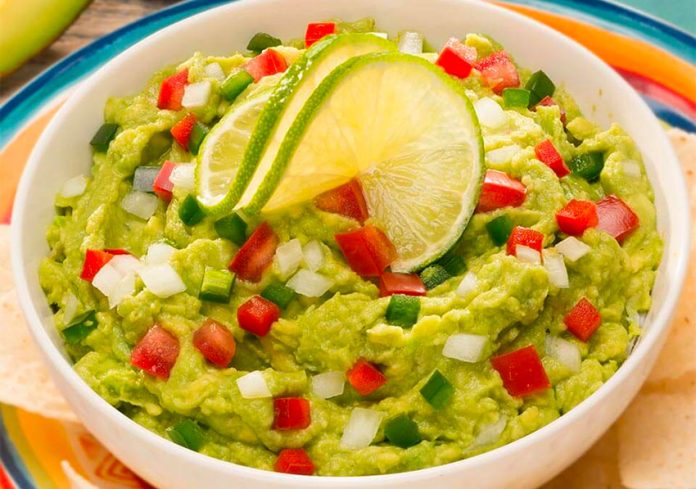
Super Bowl Sunday, when millions of Americans prepare guacamole to enjoy during the game, is especially good for sales.
Matt Lally, associate director of market research firm Nielsen, said the popularity of avocados in the United States has increased due to the fruit’s “creaminess and versatility,” a Mexican cooking boom and growing demand for healthy foods.
“While consumers are looking for options for healthy fats, avocados will reap the benefit,” he said.
Among the companies that are cashing in on the demand by exporting Mexican avocados north are Del Monte, Mission de México, Grupo West Pak and Sar Quality Avocados.
The Super Bowl, however, is not just an opportunity for more than 28,000 Mexican growers and 62 packing and export companies to sell more avocados in the United States in January and early February.
For the past six years, APEAM’s marketing division has promoted its product during the U.S. broadcast of the event in quirky commercials that conclude with the association’s trademark “Avocados from Mexico” jingle.
To be shown during the second quarter of Sunday’s game, this year’s ad features American actress and singer Molly Ringwald and promises to be just as unconventional as those screened in recent years.
The “Avocados from Mexico” YouTube channel has already released two teasers of the commercial, which show Ringwald pampering an avocado she intends to eat by placing a mini tiara on it, and traveling in a car alongside one that has a neck pillow placed around its top.
APEAM’s marketing chief Álvaro Luque said that promoting Mexican avocados to 112 million Super Bowl television viewers in the United States is an opportunity that producers and exporters “couldn’t let pass this year.”
Sunday’s game between the Kansas City Chiefs and San Francisco 49ers will be played in Miami, Florida, and kicks off at 5:30pm CT.
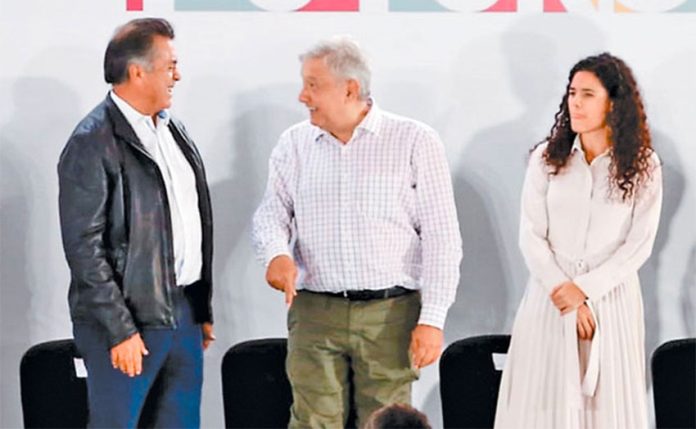
Governor Rodríguez, López Obrador and Labor Secretary Luisa María Alcalde.
It’s time for Mexicans to unite and move the country forward rather than play partisan politics, President López Obrador declared on Sunday at an event in the central square of Monterrey, Nuevo León.
“We’re seeking the unity of the whole country, we’re not going around fighting,” he told attendees, adding that when the next election campaign comes “everyone can clutch to their [preferred] party” but now is not the time for that.
“All of us together have to take our beloved country forward,” López Obrador said.
The president’s remarks came at the end of a weekend tour of Nuevo León and Coahuila, where he assessed the implementation of the federal government’s social programs.
López Obrador heaped praised on the people of the former state, asserting in the Monterrey macroplaza that they are “hard-working, enterprising” and have always been an “example” for other Mexicans.
“I’m taking everyone into account, from the poorest to the richest,” he said.
“[You’re] always concerned about the development of the state and the country. Long live Nuevo León,” López Obrador said to a supportive crowd.
The response wasn’t as warm for Governor Jaime Rodríguez Calderón, who was met with hissing and booing when he took the microphone.
“I know that many of you are here to welcome the president. I am, too. . . and I want to say that I dared to compete for the presidency but I acknowledge the victory of the president, who was capable of persuading the majority of Mexicans,” said the governor who only attracted 5% support in the 2018 presidential election.
El Bronco, as Rodríguez is commonly known, also offered his support for López Obrador’s call for unity.
“. . .Politics in Mexico has to change and I’m with you. Politics is not about dividing [people] or confrontation,” he said.
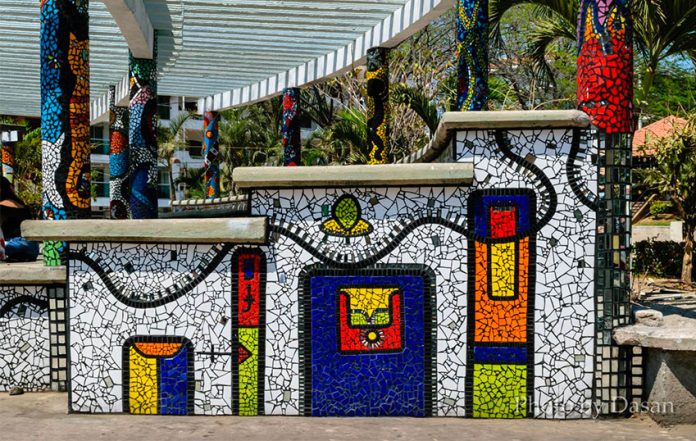
Mexico is no stranger to tile, but it’s been considered more of a utilitarian medium than an artistic one. Mosaics or trencadís (work with broken tiles), though fairly common in southern Europe, are few and far between here.
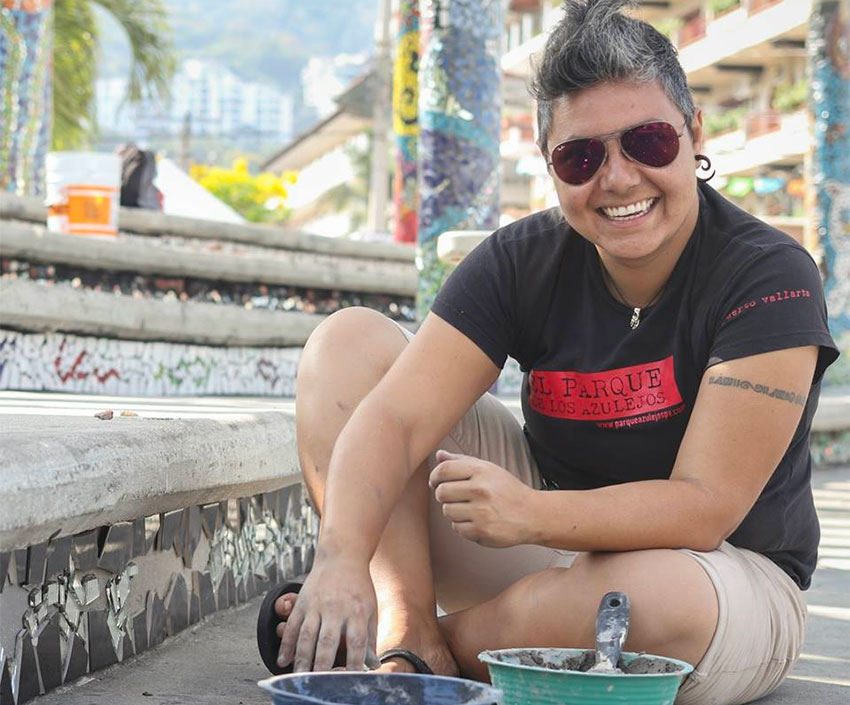
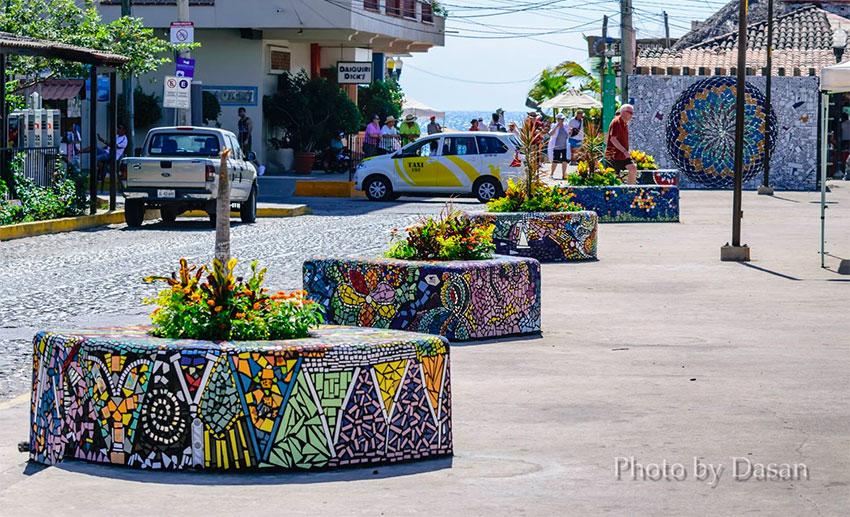
But Natasha Moraga is out to change that. The largely self-taught mosaic artist has made her mark covering the walls and public spaces of the Pacific Coast resort city of Puerto Vallarta tile by tile, often in collaboration with the local and foreign communities.
Born in La Mirada, California, to a Chilean father and a Mexican mother, Moraga was 8 years old when her parents chose to move the family to Mexico — eventually to Puerto Vallarta. Although she had some difficulty adjusting initially, Moraga doesn’t regret her parents’ decision.
Moraga’s American background shows in her fierce sense of independence. After a tumultuous period of rebellion, at age 15 she moved out. She’s taken care of herself ever since, living in various parts of Mexico and having several relationships. She moved to Germany with a girlfriend but soon moved on, finding the culture and people there to be cold. During a trip to Barcelona she discovered the trencadís work of Antoni Gaudí.
Despite an inability to draw, Moraga always felt the need to to work at an artistic endeavor. She experimented with various forms of expression but was drawn to tile, in no small part due to its highly tactile nature.
Tile artist Moraga.
On returning to Vallarta she told a friend about what she had seen in Barcelona. The friend immediately offered to cover her travel and lodging if she could get a scholarship to train with award-winning mosaic artist Isaiah Zagar in Philadelphia. Moraga described her week there as “carrying buckets” and “watching,” but it formed the basis of her later work and organization.
Friends and family were mostly skeptical of her artistic aspirations. After the time with Zagar, her father convinced her to follow his example and open a restaurant, but after two years in that line she lost interest and shut it down.
At that point, she had only 20,000 pesos to her name and was living in an apartment in Old Town near a school wall full of unsightly graffiti. Moraga went to the city for permission to install a mosaic there, fully expecting to be turned down. Pleasantly surprised by a positive response, she went to work on it in October 2011.
“After I put up the first tile, I knew what to do.” But there was a practical issue. How could she support herself in this line of work? The answer came when a woman approached the site and offered US $100 to put her name on one of the tiles as a sponsor. Sales of such tiles paid for her materials and time. It has been a key source of financing ever since.
The school wall remains Moraga’s favorite, but she has gone on to more ambitious projects. The city proposed a mural project at the marina. Officially called Episodio 2, it is the second largest mosaic mural in Mexico. (The first is at Ciudad Universitaria in Mexico City.)
This was soon followed soon by an assignment to cover the standing letters spelling out “Puerto Vallarta” at the north entrance to the city. Municipal authorities initially opposed the idea, but support from the hotel association, which saw tourism value in the work, eventually won out.
Tile Park is an exercise in community building.
While Moraga has done smaller projects at various local hotels and on public benches, she tends to think big … very big.
Her current project is the Parque de Azulejos, or Tile Park, located in Lázaro Cárdenas Park on the south side of the city. It was started in 2017, coinciding with the 100th anniversary of the official founding of the city.
The long-term project has become an exercise in community building with an accent on artistic expression. Tile Park brings together locals, foreign residents and even any tourists who want to contribute — and more than a few want to get their hands dirty.
Here is where Moraga’s bilingual and bicultural background comes in handy. She can work with both local bricklayers, who prepare the surfaces, and otherwise idle retirees with little to no Spanish. The project is entirely financed with private funds. Sponsorship tiles are sold through its website, which also features an old-fashioned donation box.
Calling the organization Mosayko Vallarta, she’s made a stir in the city, though few may realize she’s the person behind it all. The effect comes not only from the works themselves, but from the hundreds of people Moraga has trained “to carry buckets” through volunteer workshops. Some of the participants have contributed to the designs in Tile Park, and some have even gone on to do their own projects.
Moraga learned with U.S. materials but had to adapt to Mexican ones. Most of the works are done in local tiles, but they can also include stone, glass, mirrors and recycled materials. Most of the designs are abstract or semi-abstract, incorporating various types of symbolism. Moraga believes such symbols have an effect, whether or not onlookers recognize them.
The artist classifies what she does as urban or street art, as it is community-based, done by and for the public. She finds galleries intimidating and isn’t interested in creating works “for rich people to purchase.”
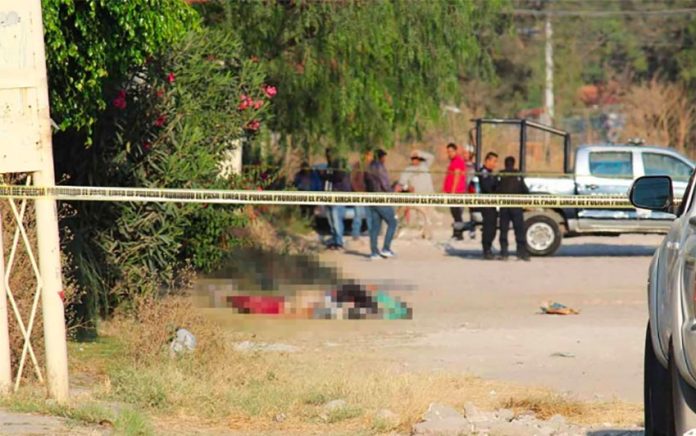
The security situation in Guanajuato – Mexico’s most violent state in 2019 – is “complicated,” President López Obrador said on Monday.
“The Guanajuato situation is something we’re attending to . . .” López Obrador told reporters at his regular news conference. “Indeed, there’s a lot violence,” he added.
The president said the government is giving “special attention” to the state, explaining that the deployment of the National Guard is being reinforced and that the armed forces are also providing assistance to combat insecurity.
“We have a lot of [security] elements [in Guanajuato] . . . from the National Guard, the Secretariat of National Defense and the Secretariat of the Navy because yes, [the state] is messed up,” López Obrador said.
The president declared that the violence problem predates his government before conceding that the situation has worsened since he took office in December 2018.
One in five murders over the weekend were in the Bajío, he added, referring to a region of central Mexico comprising parts of Guanajuato, Querétaro and Jalisco states.
The president, whose non-confrontational security strategy is coming under increased pressure after homicides hit a record high in 2019, insisted that violence is falling in the majority of the country, specifically citing Durango, Sinaloa, Nayarit and Tamaulipas.
However, the situation in Guanajuato is “out of the ordinary,” López Obrador said. “The crime rate increased a lot [due to] groups that are fighting.”
Once considered among Mexico’s safest states, Guanajuato recorded the highest number of homicides in Mexico for a second year in a row in 2019.
More than 3,500 people were murdered there last year, almost 700 more than the number of homicide victims in Mexico’s second most violent state, Baja California.
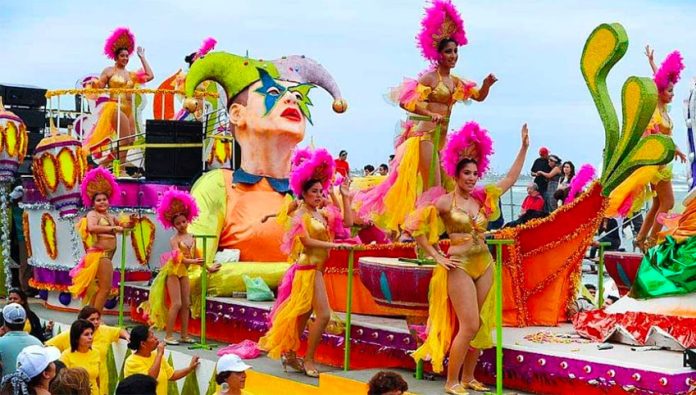
A float in last year's Carnival parade in Veracruz.
Despite its international reputation for loving a good party, Mexico isn’t known for its Carnival although it is celebrated in one form or another in about 225 communities. But none is anywhere as big or famous as those of Rio de Janeiro or New Orleans.
The reason behind the festival’s lack of visibility is historical. Like other celebrations on the Catholic calendar, Carnival was brought to Mexico by the Spanish. It gained acceptance by many indigenous communities because it fell around the same time as the “lost days” of the Mesoamerican calendar. This and Carnival share traditions of donning masks and letting certain social rules slide.
In fact it was those two things that caused colonial authorities to suppress Carnival in New Spain by the 17th century. Celebrations by the indigenous and lower castes had become too irreverent and mocking of authority. By the early 18th century, major Carnival celebrations had been successfully banned in the cities.
A number of small towns in rural areas managed to evade enforcement, and their Carnivals survived. However, the ban had the effect of isolating such celebrations, one reason why their fiestas have very localized characteristics.
Major public Carnival celebrations began to make a comeback in the very late 19th and early 20th centuries, especially in the coastal cities of Veracruz, the Yucatán peninsula and Baja.
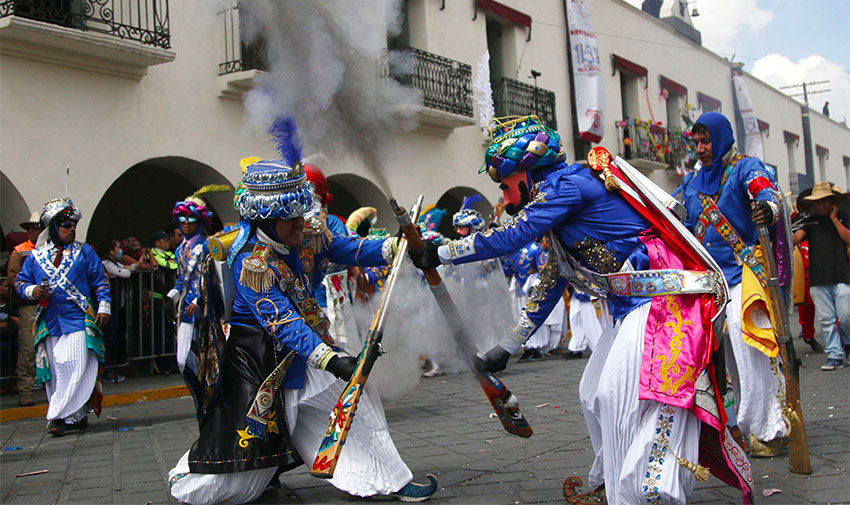
The mock battle at Carnival in Huejotzingo, Puebla.
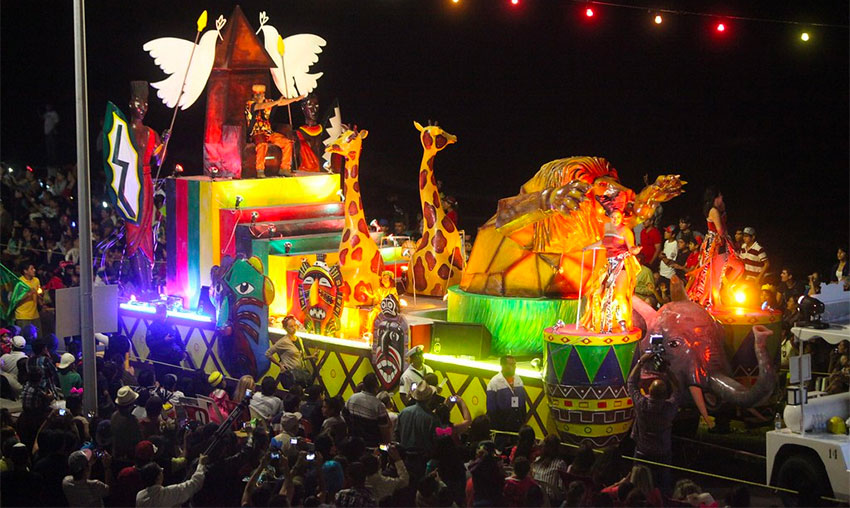
The two largest and most renowned are those of Mazatlán and Veracruz. Mazatlán’s is slightly older, dating back to 1898, but Veracruz’s is much larger, lasting nine days with six major parades. It has been particularly successful because of the area’s musical traditions, a blend of European, indigenous and African.
Other cities with modern Carnivals include Ensenada, Mérida and Cozumel but all of those closely resemble their counterparts in other countries. They have become locally important as a source of tourism income. The 2019 Veracruz Carnival attracted 1.5 million visitors to the city; in the same year, Mazatlán’s earned the city 300 million pesos (US $15.86 million).
Far more “Mexican” are those Carnival celebrations found in small towns off the beaten tourist paths. They can be found in many parts of central and southern Mexico in states such as Jalisco, Oaxaca, Chiapas and Tabasco, but the greatest concentration of such celebrations is found in the states of Morelos, Puebla and Tlaxcala, even reaching into the eastern sections of Mexico City.
What makes these celebrations important is that they are blends of European Carnival traditions with local indigenous cultures and history. While such modern features as parades with floats are a part, the focus is almost always on traditional dance, costume and music.
The most common element in the Carnivals just east and south of Mexico City are wood, wax or paper maché masks that represent European men with beards. These masks represent how the indigenous of the colonial period saw the Spanish and bear witness to these Carnivals’ survival of colonial-era repression.
In the state of Morelos, the stars of the state’s many small Carnivals are the Chinelos, a style of dance and costume which emerged as a way for the local indigenous to mock the ostentatiousness of their Spanish overlords, safely behind a wooden mask. In Tlaxcala and Puebla, the dance is the Huehues, which originated with the indigenous imitating the dress and manners of the Spanish at parties they could never attend.
Mazatlán Carnival parade in 2019.
The largest and most famous of these traditional Carnivals is that of Huejotzingo, Puebla. It is also quite unique. The town’s center is dominated by its 16th-century monastery church, seriously damaged in the 2017 earthquake. In its shadow, over 2,000 of the town’s people take part in a mock battle (very) loosely based on the Battle of Puebla, when Mexican forces repelled the invading French on May 5, 1862. Although Cinco de Mayo is not a major holiday nationally, it is a big deal in Puebla.
This reenactment is not a dance per se, but rather a massive secular ritual. The town’s four traditional barrios are assigned different roles. Two represent the invading French, called Zuavos, and their hired mercenaries the Turcos. The other two represent Mexican forces called the Indios Serranos and the Zacapoaxtlas.
During the days of Carnival, people run around with fake muskets which explode real gunpowder (no bullets). Even small children get into the act, with smaller versions of the dress and muskets, minus the gunpowder. Unfortunately, the mix of gunpowder and alcohol usually means one or more serious injuries, usually to the participants’ hands.
Although Mexico City is the country’s largest metropolis, there is not (as of yet) a major Carnival celebration. Instead there are various small carnivals of the rural-type located in the far eastern and southeastern boroughs of Iztacalco and Iztapalapa. This is because these areas were all very rural until the mid-20th century. In the case of the Carnival of Peñon de los Banos, next to the city’s airport, its existence is due to the migration of people from Puebla settling in this neighborhood.
Authorities in the various states have done some work in promoting the smaller Carnivals as tourist attractions. One notable exception to this is Mexico City. This is likely because these Carnivals take place in poor neighborhoods with crime issues.
It is important to note that these small Carnivals are community and family focused, especially the daytime. If public drunkenness and related problems occur, they are after dark.
This year, the most active days for Carnival in Mexico are between February 20 and 25 (ending at midnight, when Lent officially begins), but starting dates of local events can vary widely.
Some other traditional Carnivals by state:
Chiapas: San Juan Chamula, Huistán, Carnaval Zoque Coiteco Ocozocoautla
México state: Amecameca
Hidalgo: Calnali, Pisaflores, Jaltocan, Tenango de Doria
Mexico City: Santa Cruz Meyehualco, San Andrés Tetepilco, San Andrés Tomatlán, Santa María Tomatlán, San Sebastián Tecoloxtitlán. Santiago Acahualtepec, Los Reyes Culhuacán, San Lorenzo Tezonco (all in the borough of Iztapalapa)
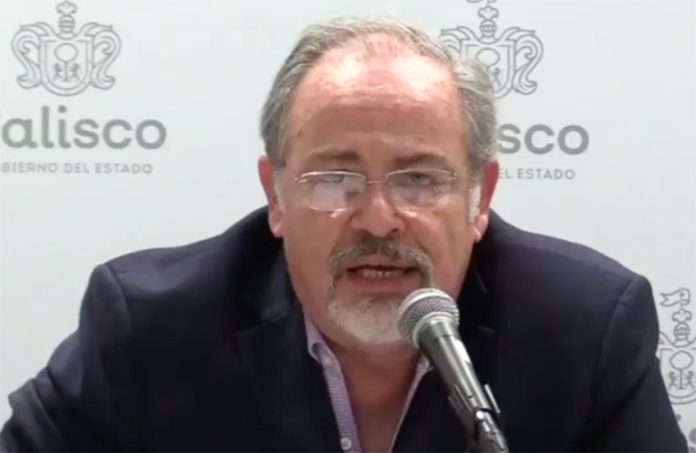
Three people hospitalized in Jalisco for possible cases of the coronavirus have tested negative for the disease, the state Health Secretary announced on Saturday.
“Mexico is free of the coronavirus for now,” said Fernando Petersen Aranguren at a press conference.
The suspected patients were a 42-year-old man who had traveled to Wuhan, China, where the outbreak began, and a 37-year-old woman and a two-year-old girl with whom he had contact. They are currently receiving medical treatment for other respiratory illnesses.
Mexico has seen a total of seven possible cases of the coronavirus, none of which have tested positive.
No new possible cases were identified over the weekend.
The epidemiology department of the federal Health Secretariat reported that the virus’s mortality rate is 2.8%, and not 1% as previously thought.
The total number of confirmed cases worldwide has risen to 2,835 and 81 people have died from the disease, all in China.
Meanwhile, 57 people have recovered from it and have been discharged from hospital.
All of the confirmed cases reported outside of China stemmed from travel to the country, except for one case in Vietnam, which was transmitted from the first case reported in that country.
The Health Secretariat announced that a travel advisory to avoid all unnecessary travel to Wuhan, China, is still in effect.
The Chinese aren’t the only ones with an early spring New Year. Although based on a very different calendar, Mexico’s modern Purépecha people also celebrate a New Year’s tradition from the distant past.
Descendants of a pre-Columbian empire, the Purépecha today are concentrated in the northwest part of the state of Michoacán. Their calendar is a variant of the Mesoamerican calendar, a system that emerged with the Olmec civilization, passing through time and geography to be used in one form or another by the Mayans, Zapotecs, Toltecs and up to the Aztecs and Purépecha.
The stone representation of the Aztec version is one of the most photographed pieces in the Museum of Anthropology in Mexico City. Its use was cut off in 1521, replaced by the Christian calendar and Christian rituals.
Like its siblings, the Purépecha civil calendar consisted of 18 “months” of 20 days each for a total of 360 days. To keep the calendar aligned with the solar cycle, five days would be periodically added. But as they did not align with any month, those days were considered ominous.
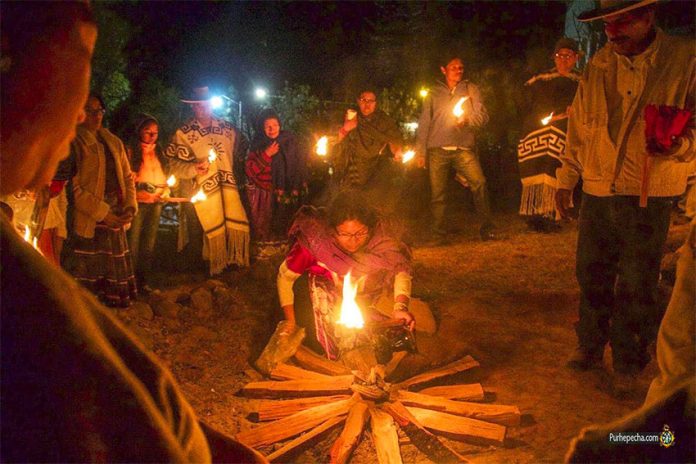
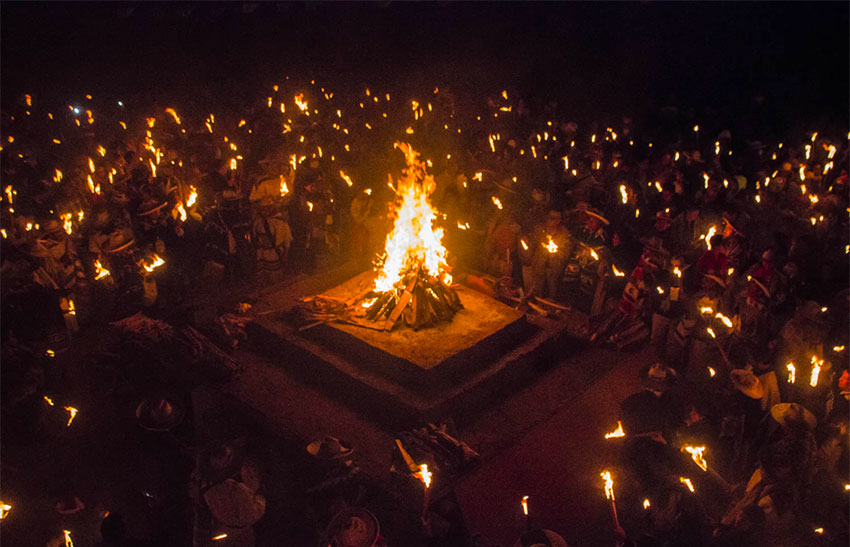
In 1983, a group of Purépecha intellectuals and community activists reintroduced the use of the old calendar by celebrating its new year. This auspicious date is marked by the night when the constellation of Orion reaches its highest point in the sky. In the past, this meant it was time to make offerings to Kurhíkuaeri, the god of the Sun and of fire. This year that happens on the night of February 1-2.
New Fire ceremony celebrates the New Year.
The Purépecha new year is now celebrated with what is called the New Fire ceremony. This is also a Mesoamerican ritual, but originally it was performed once every 52 years, corresponding to the cycle of Pleiades; it was also the day when the civil and ritual calendars coincided.
Today, the New Fire ceremony has been repurposed so that the celebration of the new year can move from town to town in the territory once defined by the Purépecha Empire. A town receives the Old Fire from the community that guarded it during the previous year and then lights the New Fire. It then shelters and guards this fire until it is delivered to the next town to host the event.
The first modern Purépecha New Year ceremony was held at Tzintzuntzan, site of the area’s most famous archaeological site, with round platforms overlooking Lake Pátzcuaro. Since then, it’s become key to reasserting the identity of the Purépecha people as a community.
“Even though the New Fire ceremony is the most representative aspect of this indigenous people, it is one of reflection rather than religious or political in nature,” says Patricia Terán Escobar, a researcher at the National Institute for Anthropology and History (INAH). “Some of the objectives are to rescue the collective memory and all the cultural elements of the past, such as the ancient Purépecha tradition of verbally transmitting knowledge from one generation to another.”
This year, the New Fire/New Year ceremony will take place on February 1 in Capácuaro, which will receive the Old Fire from Cuanajo. Capácuaro is located north of the city of Uruapan, near Paracho.