Home Blog Page 1668

Parents protest against lack of medications for cancer treatment

0
Parents demand medications for their children with a protest in Veracruz.
Parents demand medications for their children.

Parents of children with cancer protested in Xalapa, Veracruz, on Tuesday to denounce a longstanding shortage of cancer medications in the state’s hospitals.

Gathering from all over the state, the parents demanded life-saving medications such as vincristine, folinic acid, cytarabine and even catheters to combat what they say is an ongoing shortage.

Said one of the protesters’s signs: “Our children run the risk of dying without their chemotherapy.”

Protester Maricarmen Mendoza said that over 100 children have not received their medication since October, along with some adult patients.

“The [children’s condition] needs to be controlled with chemotherapy . . . if they don’t receive it their illness keeps advancing and becomes more dangerous,” she said.

She called out the administration of Veracruz Governor Cuitláhuac García Jiménez for the lack of medications.

“We’re going to [protest] until the [health] secretary gives us an answer as to why there has always been a shortage . . .” she said.

A mother of a young girl with leukemia, Karla Arias, said that she has to spend as much as 10,000 pesos (US $532) a month on outpatient chemotherapy, since the shortage has raised the prices of medicines that normally cost 100 pesos to as high as 850.

“I have to pay for the medicine, the shipping . . . so that my daughter can have her complete therapy,” she said.

She wanted to know what state Health Secretary Robert Ramos Alor has done with the half a million pesos allocated for each juvenile cancer patient by law via the Catastrophic Expenses Insurance, since it hasn’t gone to buying medicine for the children.

She and other parents have had problems with medications for their children in the past.

Former governor Miguel Ángel Yunes accused the administration of ex-governor Javier Duarte of administering watered-down medicine to children with cancer.

“The chemotherapy administered to children wasn’t really medicine, but an inert compound, it was practically distilled water. This seems to me to be an incredible sin, an attack on the lives of the children,” he told a press conference in 2017.

The Mexican Association to Help Children with Cancer called the deception a serious act that threatened the lives, health and recovery of the children and said it should be treated as a crime against humanity.

Source: El Universal (sp)

Good privacy laws may not withstand more tracking by ‘Big Brother’

0
smart home device
Who's watching?

When I read about surveillance cameras being shot out over the new year, I couldn’t help but let out a cynical chuckle.

While public cameras are likely the least of our worries when it comes to issues of personal privacy, the ever-increasing scrutiny and monitoring of ordinary citizens, often without our knowledge, will likely be completely out of hand by the time most people realize it’s a problem.

On a recent trip back to the States I didn’t notice many cameras — which is not to say they weren’t there — but I was amazed at the trust that so many there have in “smart systems” in their homes. I suppose it’s nice to be able to tell a device to play a song or turn up the air conditioner without having to do it oneself, but what’s it up to when it’s not “working?”

What kind of data is it collecting, and what is it doing with that data? Are conversations I have within earshot being recorded or collected somewhere?

When novelists of the 20th century imagined “Big Brother” in its various forms, it was always assumed that it would be the government keeping tabs on us. In the U.S., it’s private companies. In Mexico, where many have accounts with those American companies, it’s impossible to know the extent to which our data is being used and shared, and by whom.

There seem to be two trains of thought on the issue of privacy in general. The first is a generally cynical and resigned attitude that goes something like this: “It’s already happening and there’s nothing we can do to stop it, so you might as well adapt and just assume that nothing you do, say, write, or post is private.”

The other is filled with quite a bit more worry and panic, and often leads to feelings of helplessness in the face of being used for our data at best, and exposed to those who would hurt us at worst.

I used to be of the former group: “I’m just a drop of water in the ocean,” I’d say to myself. “There’s no reason for anyone to focus on me.” I was confident in my anonymity, and thought of the risk level as similar to that of getting into a vehicle to go somewhere. It’s true, there could be an accident, but we’re confident enough that there won’t be that we get in the car anyway.

Now, as an increasingly public figure, I’m leaning toward the latter. I’ve let my Instagram account go untouched for years, and no longer put family photos on Facebook. I don’t Tweet, sure that I’ll say something that will be misunderstood and become an international outrage, placing me as the poster child for whatever is the worst thing to be these days.

At least with writing articles and blog posts, people will have to do some digging to find my not-always-brilliant quips.

Mexicans, likely more because of economy and availability than anything else, have not embraced the “smart home” with the same zeal that Americans have, and I hope they won’t.

With the high level of impunity and a general lack of respect for the law, it’s hard to expect that Mexico’s quite good privacy laws surrounding personal data are or will always be heeded or even noticed.

The laws on the books state that, basically, a person’s personal information, like access to their phone messages and social media accounts, for example, cannot be accessed without justification. That said, telecommunications companies report a high number of requests for personal information, often from those who did not have the authority to ask for it in the first place.

In most cases, it was given. (For an excellent overview, check out State of Privacy – Mexico on privacyinternational.org.)

While it is likely that no one wants third parties sniffing around their phones and computers, most are in favor of video surveillance in public places. If a crime takes place, video evidence can ensure the guilty parties are trapped, and live monitoring could ensure that law enforcement is sent to a trouble area as soon as possible.

The problem with surveillance technology, unfortunately, is that it’s available for anyone. The police can purchase and use drones, but so can robbers, as several in Mexico City have started to do.

As well, of course, surveillance cameras can only do their jobs if they’re actually operational. Many of the cameras on the Mexico City Metro have not been in working order, and it’s always been obvious in my home state of Veracruz that the majority of cameras set up over the past few years are not actually operational.

In the end, security is a tradeoff: we sacrifice personal privacy for presumed safety, or maybe even for discounts or access to fun apps for our phones or easy, live driving instructions.

For now, at least, going by appearances alone it doesn’t seem that ordinary Mexican residents are being systematically tracked at the level of our friends to the north.

I hope and pray that our justice system and privacy laws will be ready for the inevitable onslaught when the degree of organization and sophistication reaches the necessary level.

Sarah DeVries writes from her home in Xalapa, Veracruz.

Disguised as cop, thief relieves police station of weapons and radios

0
tonala police
Where's my gun?

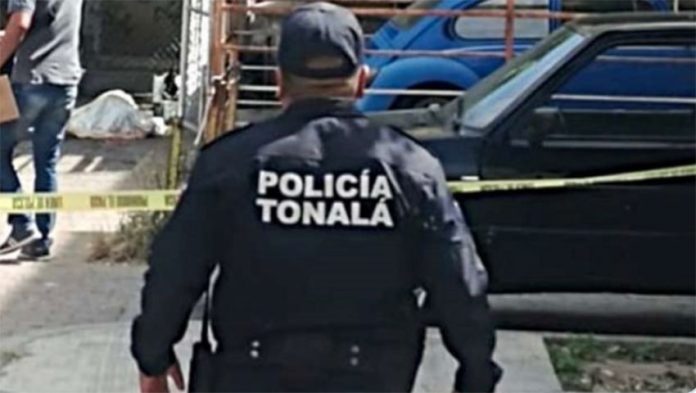
A man disguised as a police officer broke into the police station in Tonalá, Jalisco, Sunday and stole guns and radio equipment.

The officer on duty said the man handcuffed and gagged him in order to gain entrance to the station.

He then proceeded to rob 11 hand guns, four rifles, 20 magazines and four portable radios.

Tonalá residents say the police aren’t the only victims of such crimes.

“We see a big lack of security, there are few police officers and those few really don’t appear to be worried about the criminals,” said one woman. “We see armed vehicles pass by and no one stops them, no one pulls them over.”

Other citizens have called for the National Guard or army troops to be brought into the neighborhood of Loma Dorada to reinforce the police due to their inability to keep residents safe.

“It would be better for them to bring in the armed forces so they can help us,” said another resident who asked to remain anonymous. “This park is very dangerous. At 6:30 in the afternoon when it gets dark, it’s really unsafe. Come and you’ll see that there’s no one here.”

Source: El Milenio (sp)

US reporter harassed by police while doing Tlaxcala sex-trafficking story

0
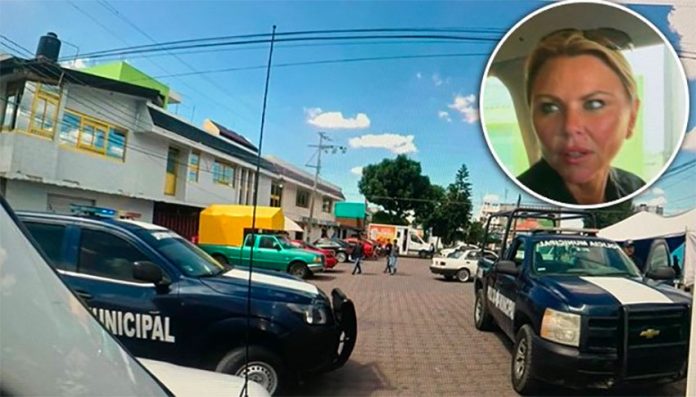
Police react when reporter Logan (inset) visits Tenancingo.

A Fox News reporter was asked by police to leave Tenancingo, Tlaxcala, while working on a sex-trafficking story “for the safety of the town.”

Veteran war correspondent Lara Logan and her team traveled to the town known as the Mecca of human trafficking with two U.S. Homeland Security Investigations (HIS) agents last October to film for a new Fox Nation series Lara Logan Has No Agenda.

While traveling through the center of Tenancingo, HSI special agent Thomas Countermine tells Logan that there is no town “quite like this” in terms of the number of sex workers sent to the United States.

“. . . Hundreds, probably thousands of women have come from Tenancingo” to New York. They sent money back and basically built this town, Countermine adds.

“So, are there scouts tracking us as we move through the town?” Logan asks the HSI agent. “That’s what it appears,” Countermine responds.

In a voiceover, Logan says that “here in Tenancingo they don’t like outsiders, what’s normal for the people who live here is unimaginable for most – an entire town built on sex trafficking.”

Later in the preview clip, a municipal police truck pulls up beside the vehicle in which the reporter and the HSI agents are traveling.

As a Mexico City-based agent identified only as Gus speaks to a police officer, Countermine warns Logan that “if they see you filming them, they’re going to get pissed off.”

Another police truck pulls up to block their path after which Logan says in a voiceover that “the police are guardians of the traffickers and their secrets, moving in to force us out; a veiled threat.”

Gus then reports that “we’ve been asked to depart the area,” adding that “about a week ago they did lynch a couple of people that were here just asking around about the town.”

He also says the police officer told him that there are people “down the street and up the street . . . wondering why we’re here.”

“The policeman told you they lynched some people here?” Logan asks. “Yes, and he’s asked me to calmly leave the area,” Gus responds.

“For our own safety?” probes the South African reporter. “For the safety of the town, he said,” the HSI agent replies.

Fox News reported that Tenancingo police escorted Logan and her team to the outskirts of the town located 15 kilometers north of Puebla city “where the situation escalated further, requiring Gus to immediately get them far away from Tenancingo.”

In a Fox News television interview, Logan said that speaking to the media can even be dangerous for people involved in the sex-trafficking trade.

“One of the pimps from Tenancingo who we interviewed, he had to meet us in a nearby town because he was afraid that his family would kill him if he was talking to us. So that’s the kind of people you’re talking about,” she said.

Sex trafficking began in Tenancingo around the middle of the last century after working age-men returned to the town from neighboring states to find few opportunities beyond badly paid factory jobs, the newspaper The Guardian reported.

“Pimping and trafficking, which they had seen while working away, was a way to get ahead, and many set up small, family-run sexual exploitation rings.”

Source: Fox News (en) 

After beating record last year, Kings Day bread in Coahuila is just 1 km long

0
Kings Day bread in a size that is more common.
Kings Day bread in a size that is more commonly seen.

The municipality of Saltillo and Vizcaya University worked together Monday to make rosca de reyes, but they kept it small this year — to just a kilometer in length.

Last year’s rosca was 2.65 kilometers long, making it into the Guinness World Records for the largest in the world. It was more than twice the size of the previous record holder which came in at just under a kilometer and was made in Switzerland. The record was taken this year by a rosca made in Tizimín, Yucatán, which measured three kilometers.

The tradition of eating a circular sweet bread on Three Kings Day, or Epiphany as it is also known, has its origins in Europe and was brought to Mexico by the Spanish. It has since become firmly rooted here.

Epiphany has more cultural importance in Catholic countries such as Mexico. Not only is the recognition of the Three Kings (or Three Wise Men) celebrated religiously, it is also the traditional day when children receive gifts, much the way Jesus received gifts of frankincense, gold and myrrh.

The rosca was made by 180 culinary students at the university. The mega-bread used 730 kilograms of flour, 14 kilograms of yeast, eight liters of orange blossom extract, eight liters of vanilla extract, 165 liters of milk, 60 kilograms of sweetened fruit paste, 165 kilograms of sugar, 132 of margarine, 4,620 eggs, 33 kilos of lard and 105 kilos of powdered sugar. As the ring was prepared, 1,600 miniature figures of the baby Jesus were hidden in the dough.

Traditionally, the sweet bread is cut and shared among family and friends, and those who find the figurines are responsible for providing tamales for Candlemas, the very last event of the Christmas season on February 2.

Source: Milenio (sp)

At 3 kilometers long, Three Kings Day bread breaks world record

0
World's longest rosca.

Three Kings Day bread-making was a competitive event on Monday in the Yucatán city of Tizimín, which broke the Guinness World Record for the longest Kings Day bread in the world.

The rosca de reyes, as it’s called, measured 3,009 meters and making it required two tonnes of flour, 13,000 eggs and 19,000 tiny baby Jesus figurines. Mexican Three Kings Day tradition dictates that anyone who finds a baby Jesus must make tamales for friends and family on Candlemas Day, February 2.

Tizimín took the record from Saltillo, Coahuila, which baked a 2.65-kilometer rosca last year.

The measuring process took over five hours on Monday, with the result that some of the people who went to witness the record-breaking event lost interest and left. But hundreds remained when the time came to serve the bread, a requirement for winning the record.

Guinness World Records certification official Carlos Reyes Tapia said that each individual piece of the rosca must not exceed 50 centimeters in length, that they must be perfectly joined and that the bread be cooked according to the traditional recipe.

The various pieces that made up the record-breaking bread were cooked in four different bakeries in Tizimín, which is renowned for its Three Kings Day celebrations.

Over 1,000 people worked all through the weekend to help bake the rosca.

In addition to the flour and eggs, the recipe also called for 50 kilograms of yeast, 50 kilograms of salt, 625 kilograms of sugar, 625 liters of milk and 1,500 pieces of candied fruit.

Source: El Universal (sp)

Bus races train to crossing in Guaymas, Sonora; 7 dead

0
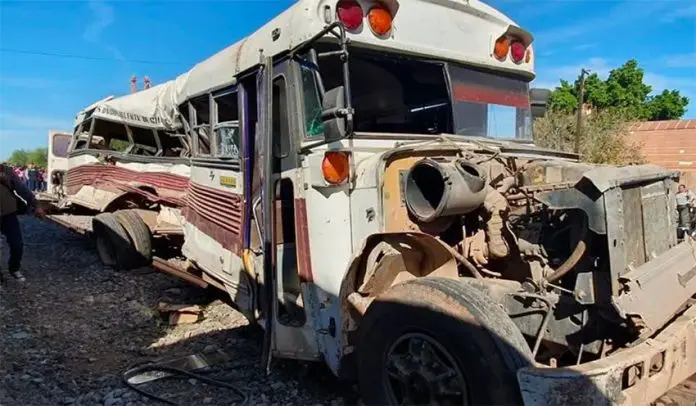
Wreckage of the bus that lost race with train.

Seven people died and 36 were injured after a train struck a bus that was attempting to race it to a level crossing in Guaymas, Sonora, on Tuesday morning.

The Sonora Attorney General’s Office (FGJE) said the bus was carrying agricultural day laborers.

Witnesses said the bus driver, who was arrested at the scene, caused the crash when he tried to beat the train to the crossing.

The seven passengers who lost their lives ranged in age from 16 to 50.

Authorities reported that the majority of the injured passengers were taken to a hospital in Ciudad Obregón, while four were taken to the IMSS clinic in the Guaymas community of Vícam.

Ferromex issued a statement lamenting the accident and vowing to support the investigations.

“Ferromex staff have been . . . in constant communication with Sonora state authorities and those of the community of Yaqui de Vícam, with the goal of supporting the emergency services and corresponding investigations,” it said.

The company also expressed condolences for the dead and wounded and asked the public to heed safety signs, measures and regulations in order to avoid accidents.

Source: Milenio (sp)

Presumed cartel leader freed due to police error—and rearrested

0
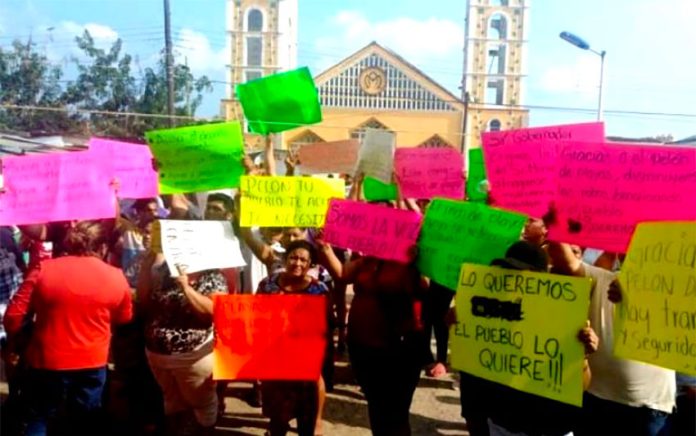
'We love you:' a protest against suspected cartel leader's arrest.

A federal judge ordered the release of a suspected cartel leader in Tabasco on Monday due to police error, but he won’t leave prison because state authorities reactivated a previous criminal procedure against him.

The judge said that José Trinidad Alberto de la Cruz Miranda, also known as El Pelón de Playas del Rosario, was not required to stand trial on charges of possession of military-grade weapons because there were errors in the police report detailing his arrest.

Following the ruling, the Tabasco Attorney General’s Office reopened a case against de la Cruz for possession of stolen goods, meaning that the presumed leader of the Pelón de Playas del Rosario Cartel will remain in preventative custody.

De la Cruz was arrested by the National Guard and Federal Police officers on December 30 after allegedly robbing a grocery store truck at gunpoint. The night of the same day, narco-banners signed by the cartel appeared in Villahermosa demanding the release of El Pelón, and at least five cars were set on fire in the city.

Residents of Villa Playas del Rosario, de la Cruz’s hometown, marched on December 31 to demand El Pelón’s release, while pieces of a human body appeared on a bridge in Villahermosa on January 4 alongside a cardboard sign that warned the judge that he would face consequences if he didn’t acquit him.

It is unclear whether the pressure and intimidation were factors in the decision reached by the judge. It is not uncommon for suspected criminals to be released in Mexico due to inconsistencies in police reports detailing their arrests.

Tabasco Governor Adán Augusto López Hernández said later on Monday that a state judge had revoked the release order issued by the federal judge. De la Cruz will spend at least the next 10 days in prison before attending a hearing on the possession of stolen goods charges, he said.

El Pelón was convicted on the charges and given a three-year prison sentence in September last year. However, his legal team appealed the decision and de la Cruz was released on the condition that he attend court on a weekly basis to sign before a judge.

The suspected cartel chief failed to comply with the requirement, making him a fugitive from justice until his capture on the penultimate day of last year.

Source: El Universal (sp) 

‘Bank of the Poor’ will have largest network of branches in the country

0
banco de bienestar

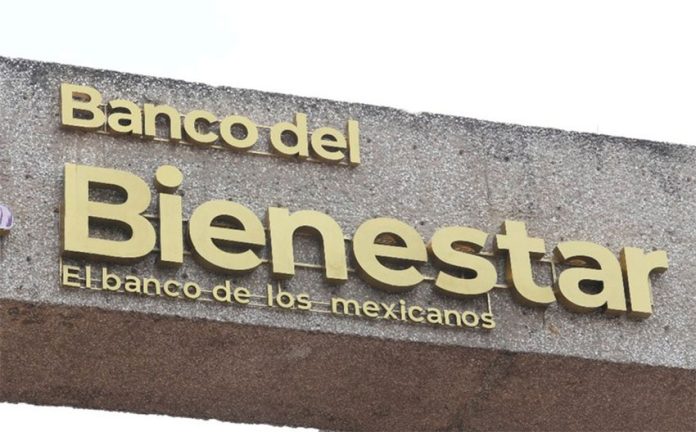
The state-owned Banco del Bienestar (Bank of Well-Being) will have the largest network of branches in the country if President López Obrador’s ambitious construction plans come to fruition.

The construction of 2,700 branches of the so-called “bank of the poor” has been approved, the president said at his regular news conference on Monday.

Half the branches will be built this year and the other 1,350 will follow in 2021, López Obrador said, explaining that military engineers will build the new banks for a total cost of 10 billion pesos (US $528.7 million).

While still ambitious, the plan to build 2,700 new Banco del Bienestar branches to supplement the existing 538 ones (formerly branches of the federal savings bank Bansefi) is well short of a figure of 13,000 floated by the president in December.

The branches will provide banking services to recipients of financial support from the government including the elderly, disabled people, scholarship holders and Mexicans employed by the state-run tree-planting program Sembrando Vida (Sowing Life) and the “Youth Building the Future” apprenticeship scheme, López Obrador said.

Construction will be prioritized in the nation’s “most isolated, most marginalized communities” where the “poorest people of Mexico” live, he added.

Construction of 2,700 new banks would bring the total number of Banco del Bienestar branches to 3,238, a figure equivalent to almost 28% of the 11,687 private bank branches in the country. The well-being bank would have far more branches than the largest of the 51 private banks that operate in Mexico.

According to a report by the newspaper Milenio, Banco Azteca currently has the highest number of branches with 1,860, followed by BBVA México with 1,850; Citibanamex with 1,465; Santander with 1,227; BanCoppel with 1,168; Banorte with 1,165; Scotiabank with 553; and HSBC with 362.

López Obrador’s plan to build so many new branches goes against the trend seen in the last 10 years, Milenio said, noting that commercial banks have placed greater emphasis on providing services to their customers through their websites and mobile apps.

Data from the National Banking and Securities Commission shows that the number of bank branches in Mexico has grown by just 3% since 2010.

The president of the Mexican Banking Association (ABM) has said on numerous occasions that increasing the number of bank branches is not the solution to incorporating more Mexicans in the formal banking system because of the massive investment it entails.

Luis Niño de Rivera said that ABM member banks have focused instead on strengthening their digital capacity, pointing out that they collectively invest about 70 billion pesos (US $3.7 billion) a year in technological innovation. All banks in Mexico are now offering their customers the option to pay for goods and services using the CoDi (Digital Charge) app developed by the central bank.

Milenio also noted that the president’s strategy to bring financial services to people in isolated, rural areas is not consistent with that implemented by governments in other countries such as Russia, China and Honduras.

More people in those countries are entering the formal banking system thanks to greater availability of digital payment systems including one accessible by mobile telephone, as well as the ease with which an account can be opened without having to go into a bricks and mortar branch.

Source: Milenio (sp) 

‘Forgotten’ by the 3 kings, despondent 8-year-old runs away

0
Juan Daniel opens a Kings Day gift.
Juan Daniel opens a gift after 'the kings' came through in the end.

Being told by his mother that he had been forgotten by the three kings was too much for a Guanajuato boy who had been hoping to find presents waiting for him on the morning of January 6: he decided to run away from home.

Juan Daniel, 8, was later found wandering the streets by police in Santa Teresa. They said the boy told him that he had found his unanswered letter to the three kings inside his shoes where he had left it the night before.

When he asked his mother why they hadn’t brought him the talking robot he had asked for, she told him that they had forgotten about him. Upset at the oversight, Juan Daniel ran away.

Moved by the story, officers and administrative staff at the police station took up a collection to buy him the gifts that had not appeared.

Soon after, a police officer carrying a bag of toys came to the station pretending to be an emissary of the three kings. He told Juan Daniel the kings had been busy so they had asked him to help pass out toys to children.

The boy opened the bag to find the robot he had asked for, as well as a train, a ball, notebooks and a box of crayons.

Meanwhile, social workers provided support to the boy’s mother for problems with addiction.

Source: El Universal (sp)