Home Blog Page 1667

26 bags of body parts found in ravine in Tonalá, Jalisco

0
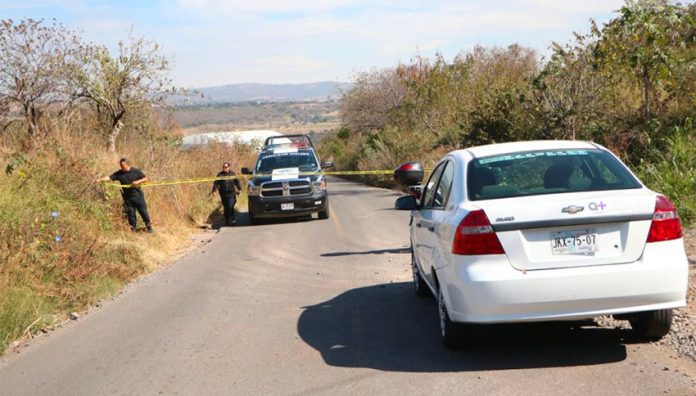
The area in which bags of human remains were found in Jalisco.

After a gruesome discovery on Tuesday of 14 plastic bags of human remains, search efforts turned up another 12 bags Thursday in a ravine in Tonalá, Jalisco, the state Attorney General’s Office reported.

The bags were found by the Santiago River, near the highway to Mazatlán.

The Attorney General’s Ofice has yet to determine how many bodies the bags might contain, as analyses of the remains are still in the initial stages.

The newspaper Reforma reported that experts were having trouble identifying the remains and determining the cause of death due to the advanced state of deterioration of the body parts.

During the 12 months ending November 30, 62 secret graves were found in Jalisco, yielding 156 bodies and the remains of another 50 people. Many other body parts were found in the graves but it has not yet been determined how many bodies they might represent.

Source: Reforma (sp)

New health scheme touts free universal care but the reality is different

0
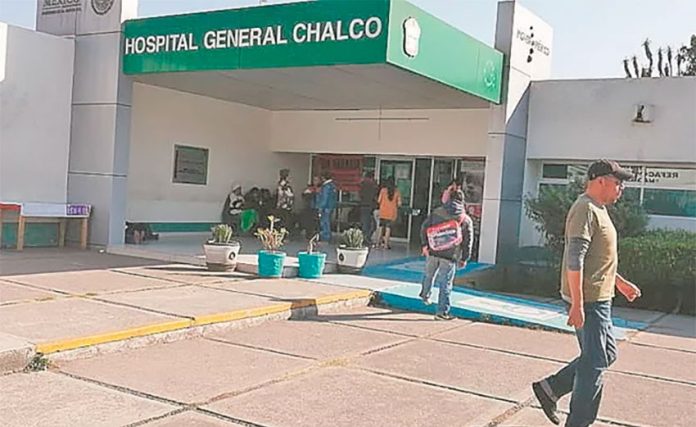
The hospital in Chalco was one of those where patients have been charged for medicine.

It has been touted as completely free but a week after the federal government’s new universal healthcare scheme went into effect, patients are finding a very different reality.

The National Institute of Health for Well-Being (Insabi), a new government department tasked with providing medical services to millions of Mexicans without insurance, started operations on January 1.

A week later, the newspaper El Universal found that patients at the General Hospital in Mexico City, two healthcare centers in Nezahualcóyotl, México state, and the Chalco General Hospital in the same state have had to buy their own medicine and medical supplies such as gauze, rubbing alcohol and ointments even though the Insabi website states that beneficiaries of the healthcare scheme will receive free treatment “without restrictions.”

Some patients who qualify for the Insabi program because they are not covered by the IMSS and ISSTE social security schemes have also been charged daily rates as high as 3,000 pesos (US $160) for their hospital stays.

One person who has been charged for his treatment is Óscar Quintana, a diabetes patient who was admitted to the General Hospital in Mexico City on January 2 after experiencing extreme pain in his left foot.

“They’ve charged us for everything,” family member Alma told El Universal.

“[They charged us for] the emergency care, the healing material – they sent us to buy antibiotics and [other] medicine. For a day in hospital, it’s 450 pesos [US $24] when before it was just over 200. We’ve spent almost 5,000 pesos in the past days. I wonder when free care will be a reality . . .” she added.

Another patient at the General Hospital in the capital is Ángel López, a young man who was hit by a car on January 5. His family is currently trying to raise 45,000 pesos (US $2,400) so that he can undergo the surgery he requires.

The man’s aunt said that her nephew was first taken to a hospital in Zumpango, México state, where he was admitted after showing that he was covered by Seguro Popular – the insurance program the new Insabi scheme is designed to replace.

“. . . They accepted the policy but for two days during which they didn’t do anything to him, they charged us 6,000 pesos,” Angélica Pérez said.

“Then they transferred him to the General and the doctors said they needed a pin to operate on him; [they said] they had it here but we would have to pay 25,000 pesos [for it] plus 20,000 for the operation,” Pérez added.

At a healthcare center in México state, Chalco resident Karla Cárdenas told El Universal that she brought her young son in after he fell and suffered a cut beneath one of his eyebrows. She said the staff told her that they could treat her son but didn’t have the necessary materials.

“[Buying the materials] is not expensive but I think I could provide the same [treatment] at home. What I needed was to know if my child needed stitches and fortunately they said that he didn’t. I don’t know how Insabi works but I hear the president saying every day that the care is free and that the medicine is as well but . . . [at] the hospital they tell you that they don’t have any so who do you believe? The care is good, you can see that the people are committed [to their work] but how can they do it if they don’t have what they need?”

Back at the General Hospital in Mexico City, Guerrero resident Angélica Durán had a different experience, telling El Universal that she hadn’t been required to pay for any of her treatment, which included blood tests and an ultrasound.

“They haven’t charged us anything. I came because I had a pain in my stomach that was so strong that I couldn’t even walk. We went to a hospital in Guerrero but they sent us here, they told us that they would attend to us for free and that’s the way it’s been,” she said.

However, at least among the people who spoke with El Universal, Durán’s experience is unique.

In response to complaints from patients and family members who had to pay for hospitalization, treatment, medicines and supplies, Insabi clarified that medical care is only free at primary and secondary healthcare facilities, and not at specialist, tertiary hospitals.

“In relation to the questions that have arisen due to the charging of fees at national health institutes and federal hospitals, Insabi provides [free] medical services at the primary and secondary level of care to all people who don’t have social security. In accordance with article 36 of the General Health Law, national health institutes and federal hospitals are subject to obtaining fees. . . for providing tertiary level services,” the National Institute of Health for Well-Being said.

The statement doesn’t, however, explain why patients at healthcare centers in Nezahualcóyotl, for example, were required to pay for medicines and supplies.

Insabi also addressed uncertainty among people formerly covered by Seguro Popular with regard to how to access its free services.

The institute said there is no need to enroll in the scheme prior to receiving medical treatment, explaining that the registration process will be completed by staff at the healthcare facilities where people seek care.

Source: El Universal (sp) 

Police confuse family with bad guys, killing 2-year-old

0
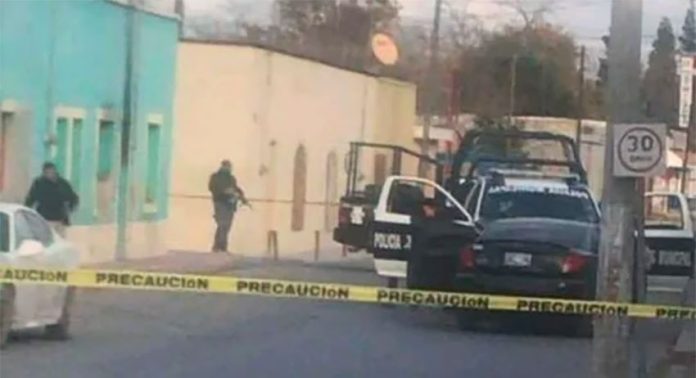
Scene of mistaken identity in Coahuila.

Police in Zaragoza, Coahuila, killed a two-year-old girl and wounded her parents and sister when they confused the car they were traveling in with that of criminal suspects.

The incident occurred at 4:20pm on Wednesday as Rafael Vázquez Muñiz, 34, drove home with a 21-year-old woman believed to be his wife and their three daughters.

But police said they confused their black Saturn with the vehicle of suspects who had threatened to kidnap a senior Zaragoza police officer, and opened fire.

The victims were taken to a hospital in the neighboring town of Allende for treatment, but the two-year-old died there as a result of a gunshot wound to the neck.

The two officers were arrested.

The Coahuila Human Rights Commission opened an investigation into the girl’s death.

Sources: El Universal (sp), Vanguardia MX (sp), Sin Embargo (sp)

LeBarón: attorney general asked for public’s help to pressure lawmakers

0
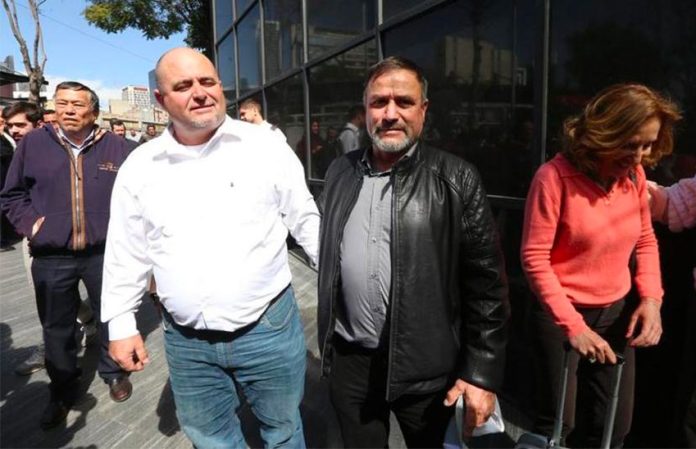
Julián LeBarón, front left: law protects criminals.
Julián LeBarón, front left: laws protect criminals.

Mexico’s justice system leaves citizens “defenseless” against crime, according to a relative of the nine members of the Mormon family murdered in Sonora in November.

After a meeting with federal Attorney General Alejandro Gertz Manero, anti-violence activist Julian LeBarón said in a radio interview that “it seems that laws protect criminals more” than citizens.

He also said that Gertz Manero asked him and other members of his family to issue a call for citizens to join forces to pressure lawmakers to change existing laws to build a stronger law enforcement and justice system.

“The attorney general told us that they have serious problems in the whole country, he told us that 33 million crimes were committed in 2019 and that the laws don’t give police the instruments to do their job,” LeBarón said.

“[He told us] that we need to organize social pressure so that we get the tools, the powers, that they need to bring criminals to justice,” he added.

LeBarón, who called on citizens to “take up the battle” against organized crime at an anti-violence rally in Mexico City last month, said that Gertz Manero described crime as “a serious problem” that successive governments haven’t been able to stop.

He added that the attorney general said that “the underlying laws” of the justice system – which was overhauled during the administrations of the past two federal governments but has been plagued by problems – need to be changed.

“A lot needs to be done but if he [Gertz Manero] is asking us for help, he’s confirming what we said: the political class won’t provide the solution . . . they haven’t given us the instruments so that the citizens can defend life, we’re left defenseless with the justice system,” LeBarón said.

He also called for the Chihuahua government to be investigated in connection with the massacre of three women and six children in Bavispe, Sonora, on November 4 because police from that state were in the area but didn’t respond to the attack.

Chihuahua Attorney General César Augusto Peniche refuted LeBarón’s claim, replying that state police did attend the scene of the crime.

“We have evidence that they did arrive . . .with Federal Police officers [stationed] in Chihuahua,” he said.

Seven people have been arrested in connection with the attack allegedly perpetrated by La Línea, a criminal gang with links to the Juárez Cartel.

One of the suspects is the chief of police of Janos, Chihuahua, who was taken into custody in late December.

Investigations have led authorities to believe that Fidel Alejandro Villegas Villegas could be an active element in the La Línea gang and that through his influence and staff he procured protection for members of the organization.

Source: Milenio (sp) 

Automotive production took a tumble in 2019

0

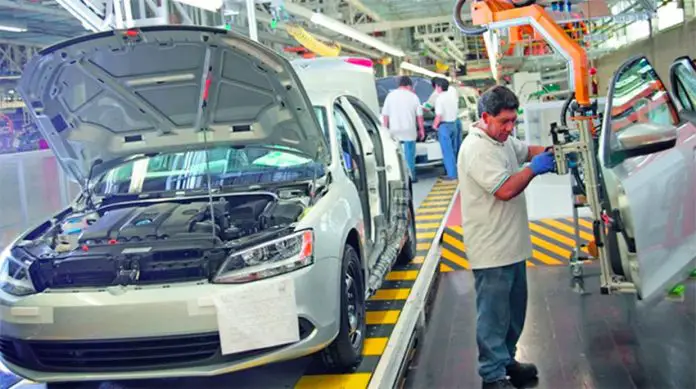
Automotive production declined 4.1% in 2019 compared to the previous year, while vehicle exports fell 3.4%, according to official data published on Wednesday.

The national statistics agency Inegi reported that automakers manufactured just over 3.75 million vehicles in Mexico last year, the lowest number since 2016 when 3.46 million units rolled off production lines.

The General Motors strike in the United States between September 15 and October 25 and lower domestic production by Ford due to the changing of equipment at its Mexico plants were among the factors that caused the decline.

Exports fell to 3.33 million cars in 2019, Inegi said, the first annual decline since 2009 although above the 3.25 million units sent abroad in 2017. About 80% of exports went to the United States, the only country to which Mexico sent more vehicles in 2019 than the year before.

Lower global demand for new cars was also reflected in Mexico, where sales declined 7.7% last year to 1.31 million. The figure is the lowest in five years and indicative of a weak Mexican economy that entered a light recession in the first half of 2019.

The automotive production and export figures were even worse in December. Auto output fell 12.7% to 208,073 vehicles and exports slumped 16.7% to 229,227 units.

The signing of a revised version of the new North American free trade agreement last month does, however, provide greater certainty for the Mexican auto industry and could help it recover in 2020.

Source: Reuters (sp) 

9 Mexico City cops dismissed for extortion, police chief reveals

0
Mayor Claudia Sheinbaum Police Chief García.
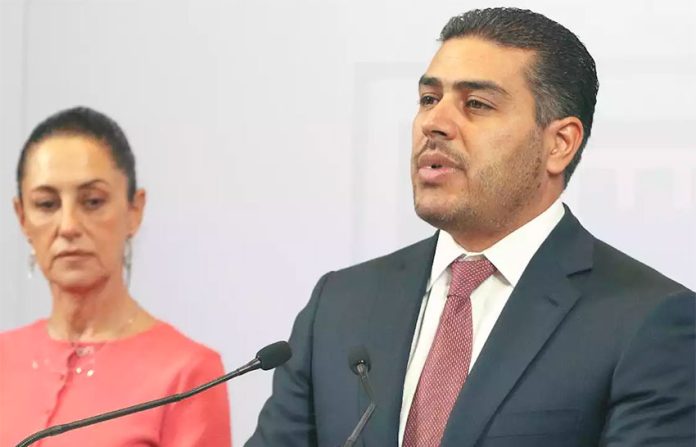
Mayor Claudia Sheinbaum and Police Chief García.

Nine Mexico City police officers were dismissed for extortion in the last three months of 2019, police chief Omar García Harfuch said on Tuesday.

The officers are among 12 police who were referred to the Mexico City Attorney General’s Office between October and December for allegedly committing high-impact crimes, he told a press conference.

“We have ongoing investigations that have not yet resulted in arrests but in these past three months . . .12 ex-colleagues were sanctioned and referred to the Attorney General’s Office for a range of crimes, mainly extortion . . .” García said.

President López Obrador said on Wednesday that a zero-tolerance approach to corruption in the nation’s police forces is “essential” in order to combat the high levels of crime.

“. . . If there’s corruption [within police forces] nothing is resolved . . .” he told reporters at his regular news conference.

The president said the federal government is working with the states to help them expel corrupt police and professionalize their forces.

“. . . The National Conference of Governors has agreed to deal with this issue and they’re making an effort to purge police forces and improve their conditions,” López Obrador said.

In the capital, 120 officers in the investigative police division were reassigned to desk jobs late last year after failing confidence tests, while countless police in forces across the country have been dismissed in recent years for corruption and links to organized crime.

Poor pay for police is seen as a major reason why officers become involved in illegal activities, prompting López Obrador to push for higher salaries.

The Mexico City government has taken heed, announcing a 9% pay increase in December, while earlier last month Guanajuato Governor Diego Sinhue said that officers in that state would receive monthly salaries of 24,400 pesos (US $1,300) starting in January, making them the best paid in the country.

Source: El Universal (sp) 

Guerrero’s Christmas vacation numbers reach historic high: governor

0

The number of visitors to Guerrero during the Christmas vacation period and the economic spillover they generated were the best ever, Governor Héctor Astudillo said on Tuesday.

More than 1.5 million people visited the state’s tourism destinations, spending 4.75 billion pesos (US $252.8 million), Astudillo said at a government meeting.

Hotel occupancy levels increased 3.2% from the 80.6% recorded during the 2018-19 winter holiday season to 83.8% during the recent vacation period, he added.

The governor said that 628,460 tourists flocked to the Pacific coast resort city of Acapulco, generating an economic spillover of 2.76 billion pesos. The latter figure represents 58% of all tourism pesos spent in the state over Christmas.

Astudillo said that occupancy at Acapulco hotels was up 4.2% to 83.4%.

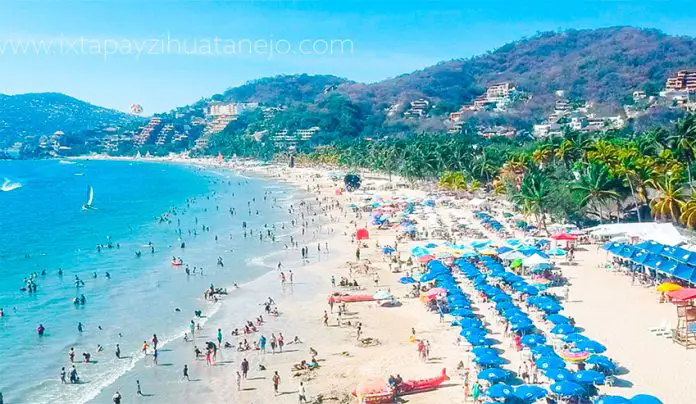
Further north, the twin cities of Ixtapa and Zihuatanejo welcomed 456,549 tourists who spent 1.57 billion pesos, the governor said. Hotel occupancy in the former city rose 3% to 87.3% and 4.2% in the latter to 82%, Astudillo said.

An additional 61,880 people visited Taxco, he added, generating an economic spillover of 142.3 million pesos in the colonial city. Hotel occupancy increased 7.3% to 70.9%.

“The number of visitors [to Guerrero] was a historic high and the economic spillover was a historic high,” the governor said.

“Our recognition and appreciation go to everyone who has worked on tourism issues in recent times. It’s an activity that we must look after, an activity that’s good for the economy and without a doubt, it’s the nice face of Guerrero state . . . It was a great [holiday] season . . .”

Source: Milenio (sp) 

Zacatecas’ baby Jesus statue gets a makeover

0
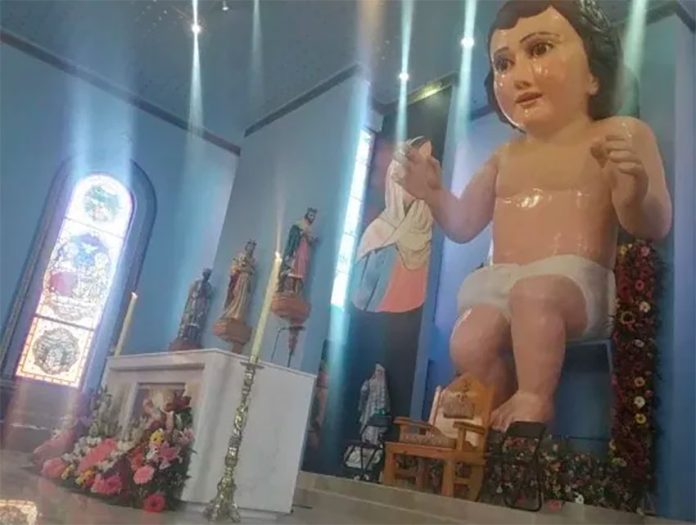
Jesus' new look gives him bangs and brown eyes.

Zacatecas’ giant baby Jesus has undergone some cosmetic surgery to give its face a more agreeable appearance.

The world’s largest baby Jesus statue has been modified to make it look more childlike.

The 6.5-meter-tall statue caused a stir when it was installed in the Church of the Epiphany in Guadalupe in November.

But the statue was ridiculed on social media. Some compared it to Genesis drummer Phil Collins, others to actor Nicholas Cage, while others edited the statue into clips of monster movies such as Godzilla and Power Rangers.

The statue’s face was thus modified to make it appear more like that of a child. Bangs were added to the forehead and its eyes were changed from blue to brown, among other modifications.

The new face was inaugurated on Monday with a ceremony attended by Zacatecas Bishop Sigifredo Noriega Barceló and Governor Alejandro Tello Cristerna.

The church was filled to its 400-person capacity, as hundreds of people had waited in line for hours to get a glimpse of the updated statue.

Although parishioners had been sewing an oversized cloak for it, the ceremony was held with the giant baby Jesus swaddled only in the white diaper painted onto it.

Parishioners are hoping that the 750-kilogram statue will turn the church into a religious tourist attraction once the new church is finally opened to the public.

Sources: El Universal (sp), Televisa News (sp)

Mexico City airport moved record 50 million passengers, up 5.5%

0
Mexico City airport is running well over capacity.

The Mexico City International Airport (AICM) transported a record 50.3 million domestic and international passengers in 2019, 5.5% more than the previous year.

Preliminary reports state that December — the busiest travel month of the year — saw over 4.5 million passengers, a 6% increase over 2018. One factor that would have contributed to the increase was that Emirates began service to Dubai via Barcelona during the month.

Despite the record number, the airport actually showed a slowdown in growth compared to previous years.

Upgrades are currently under way at the airport with an initial investment of 3 billion pesos (US $160 million).

Still, some airport users have called the improvements insufficient.

Head of the Mexico City Airport Group, Gerardo Ferrando, has asked for patience and understanding and said that passengers will see big improvements this year.

“Of course it is important for us that out visitors feel comfortable, but we have to recognize that since the airport was going to be closed, investments to it stopped being made and the infrastructure was forgotten. We’re going to have a better airport, that’s what we’re working on,” he said.

The airport’s capacity is 32 million passengers a year.

Source: El Economista (sp)

Government’s new bank will be financially independent: AMLO

0
AMLO: new banks are state's social responsibility.

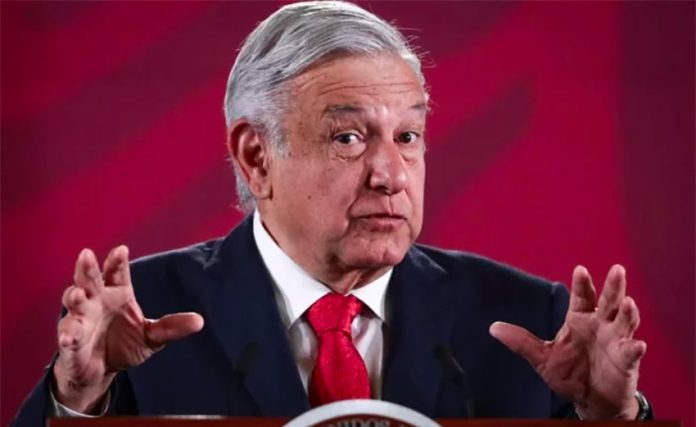
The state-owned Banco del Bienestar (Bank of Well-Being) will be financially self-sufficient, President López Obrador said on Wednesday.

Speaking at his regular news conference, López Obrador said that the annual operating costs of the bank – of which the government intends to build 2,700 new branches by the end of next year – will be 6 billion pesos (US $319.1 million) but that amount will be covered by small commissions paid on each transaction by customers, most of whom are welfare recipients.

The bank will distribute 300 billion pesos in welfare payments annually to the nation’s elderly, disabled and scholarship holders, among others.

“The bank is self-sufficient, it doesn’t need subsidies,” López Obrador said.

The president’s remarks came after the newspaper Reforma published a report that said the Banco del Bienestar operated at a net loss of 233 million pesos (US $12.4 million) in the first nine months of 2019, and that the construction of an additional 2,700 branches will place even greater pressure on its finances.

But López Obrador defended the ambitious construction plans and accused past governments of not promoting financial inclusion because they got rid of many state-owned bank branches, ceding the market to private banks whose services are concentrated in cities rather than rural areas.

“There are more than 1,000 municipalities that don’t have a bank branch. We’re dispersing [welfare] resources but we don’t have a way to do it . . . People have to go to branches that are two, three hours away. If we don’t bring these services close to the people, we’re not going to bring development to the people,” he said.

“There’s no reason to be complaining about us building these branches. Besides, if private banks want to build branches they have every right to go to the towns and build their branches but as they won’t because they believe that it’s not [good] business, we have to do it . . . it’s our social responsibility, the state can’t shirk its social responsibility,” López Obrador added.

The president said the 10 billion pesos to build the new branches of the so-called “bank of the poor” will come from government savings, explaining that 5 million has already been transferred to the Banco del Bienestar which in turn will pass the resources on to the Secretariat of Defense, whose engineers have been given responsibility for construction.

“. . . They’re already building, I’ll invite you within two months, three at the most, to the inauguration of the first branches because they’re already working, they’re getting the land . . . because we have to do it quickly,” López Obrador said.

He also said the government will speak to central bank officials to ensure that there is no obstacle to the operation of the new bank branches.

“We’re going to speak with those from the Bank of México, respecting the autonomy of the Bank of México we have to educate them because for them this is an anachronism, even sacrilege because they have other ideas. But we’ve arrived here [in government] after telling the people that the neoliberal economic policy was going to change,” López Obrador said.

“There shouldn’t be obstacles. How is the Bank of México going to stop us from having a [bank] branch that disperses resources in favor of the people? What damage does that do? Whom does it harm?”

Source: Milenio (sp), Reforma (sp)