Home Blog Page 1699

Government announces US $43-billion infrastructure plan to confront recession

0
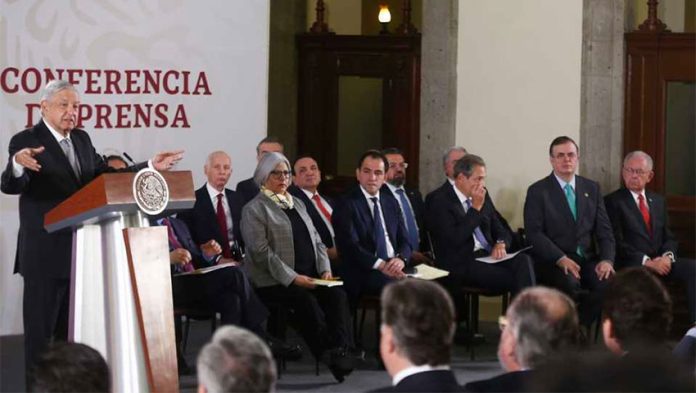
Cabinet secretaries listen as President López Obrador presents infrastructure plan.

The federal government and representatives of the private sector on Tuesday presented a US $42.95-billion infrastructure plan designed to give the ailing economy a “little push.”

President López Obrador told reporters at his morning press conference that almost 80% of investment in the National Infrastructure Plan (PNI) – which includes 147 projects in its first stage – will come from the private sector.

“. . . [The plan] is basically with private investment. This is important because the participation of the private sector is needed for the economic growth of the country,” he said.

“Public investment is important but it basically functions as seed capital to trigger growth with the participation of the private sector,” López Obrador added.

He thanked the business sector for its commitment to contribute to the social development of the country, asserting that it is a “clear and frank show of support” for the government and that together they will “take our beloved Mexico forward.”

Business representatives listen to presentation of infrastructure plan.

The president’s chief of staff, Alfonso Romo, described the 147 initial projects as “a first chapter” of the PNI.

“It’s a living program [that will grow]. We will be reporting continually, approximately every three months . . . This project will create a lot of jobs, it will improve the country’s competitiveness,” he said.

“. . . I want to be very clear, this is a commitment, they’re projects that we’ve been reviewing . . . very closely with [government] secretaries, who are responsible for the tenders and transparency,” Romo said.

Energy and healthcare projects are not part of the PNI and will be presented separately, the chief of staff said.

Speaking on Monday after revised data showed that Mexico entered a technical recession in the first half of the year, Finance Secretary Arturo Herrera said the infrastructure plan will give the economy a “little push” forward.

“If we want the country to grow, we need to invest in infrastructure,” he said, acknowledging that the economy is not expanding as the government would like.

Business Coordinating Council (CCE) president Carlos Salazar explained today that the first PNI projects will build highway, telecommunications, transport, energy, tourism, water and sanitation infrastructure.

They will be split more or less evenly throughout the country: 45 will be built in central Mexico, 49 in the north and 42 in the south, Salazar said. The other 11 projects will extend across regions, he added.

About a third of the PNI investment – just over US $14.5 billion – will go to the transportation sector, including highway, rail, airport and port projects, the CCE chief said.

The other big winner is the tourism industry: about US $12.9 billion will be allocated to 15 projects, most of which will be built in 2020.

Salazar explained that US $6 billion will be invested in telecommunications and that US $2.4 billion will go to water and sanitation projects.

Salazar said that 72 projects will be built next year, 41 more will be completed between 2021 and 2022 and the remaining 34 will be finished in 2023 or 2024, the last year of the government’s six-year term.
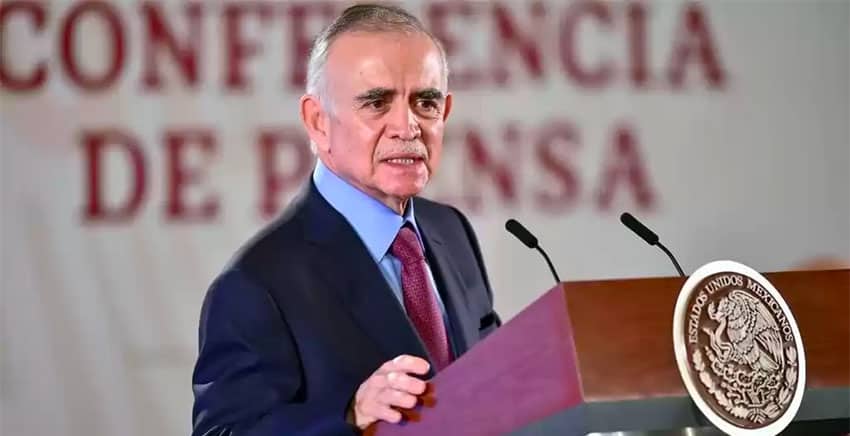
The project will create a lot of jobs and improve competitiveness, Alfonso Romo said.

“This [public-private] agreement implies a call to businesspeople to join with the authorities . . . The private sector is united . . . We want to demonstrate our commitment with Mexico, with you [López Obrador] and the government you represent,” he said.

Salazar also said the private sector is committed to being transparent about the projects in which it participates.

“. . . We will be constantly reporting the progress of each of these projects and we will definitely ask for the help of [government] secretaries in order to overcome any obstacle,” he said.

For his part, Mexican Banking Association president Luis Niño said that banks have set aside the peso equivalent of US $40.9 billion for infrastructure project investment and therefore PNI funding is guaranteed.

Mexican Business Council President Antonio Del Valle Perochena said the first stage of the PNI should serve as a base for more projects and greater investment.

Mexico is an attractive country in which to invest, he asserted, a claim supported by data that shows that foreign direct investment increased 7.8% in the first nine months of 2019 compared to the same period last year.

Among a who’s who of business leaders who are backing the National Infrastructure Plan is Mexico’s richest man, Carlos Slim, who last week asserted that the country needs a boost in infrastructure spending to trigger economic growth.

Source: El Economista (sp), Milenio (sp), El Financiero (sp) 
‘No more femicide:’ over 3,000 women march in Mexico City against violence

0
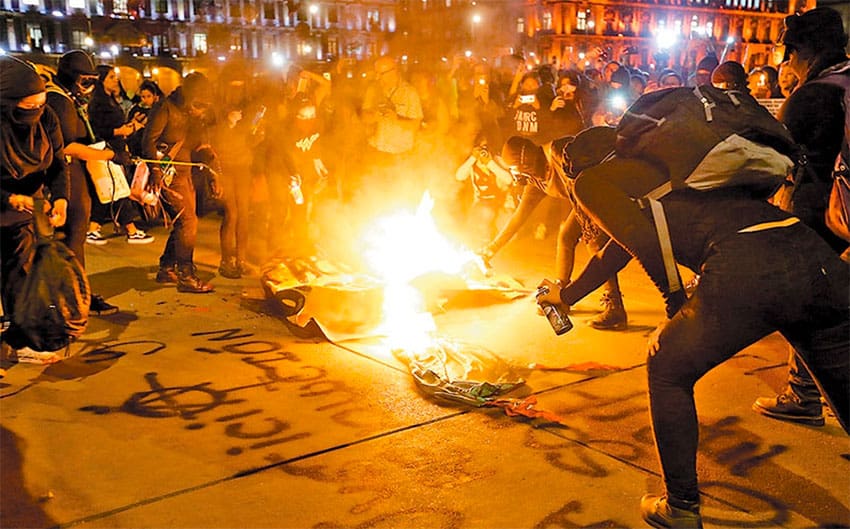
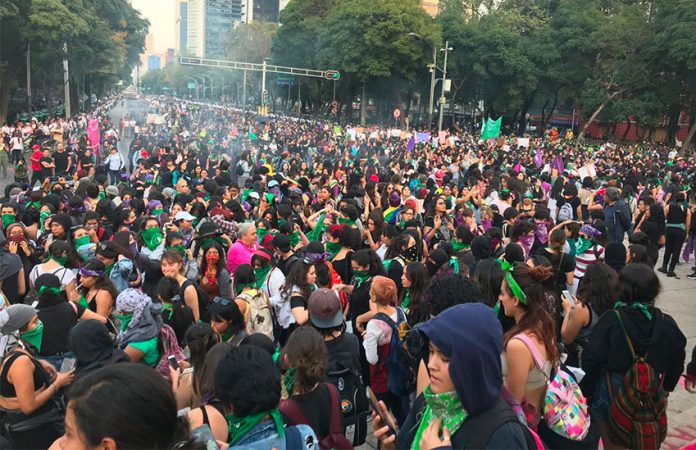
Monday's march in Mexico City was mostly peaceful.

Over 3,000 women marched in Mexico City on Monday to commemorate the International Day for the Elimination of Violence Against Women and protest the country’s high levels of gender-based violence.

Although the majority of the protesters marched peacefully, a small group in black hoodies and face masks broke windows, vandalized bus stops, lit fires and vandalized historical monuments with graffiti.

The protest began around 5:00pm near the Angel of Independence monument on Mexico City’s Paseo de la Reforma avenue, which a similar women’s protest left vandalized in August.

Although authorities had wrapped many monuments in plastic ahead of the march, protesters used knives and fire to remove the plastic and paint them with graffiti.

The marchers arrived in the zócalo around 7:00pm, where they set up a bandstand as police hurried to protect the Metropolitan Cathedral and National Palace with shields and fire extinguishers.

A small number of marchers resorted to violence.

In a pronouncement made outside the National Palace, various women’s rights organizations voiced their demands that the government put an end to violence against women and forced disappearances.

“No more femicide! Not one less! We want to be alive. A life where the right to make decisions for our own bodies is not questioned by any dogma. A life where what is questioned is rape, not abortion, where the secularism of the state is respected,” they exclaimed.

“Today we raise an angry voice because we want safe abortion. We are in a time of emergency, the enemies are strong, they are many, they’re everywhere. We need a pact among women, to be together . . . We’re in a time of war . . . and we want to be alive, free and together,” they added.

The mother of a femicide victim recounted how her daughter’s partner, José Ramón, murdered her daughter and kept her body for days before being discovered.

Over 2,500 female police officers were deployed to maintain order and protect historical monuments and buildings during the protest.

“We’re policewomen and we are eliminating violence!” they chanted as they attempted to repel the protesters by discharging fire extinguishers at them.

Although no arrests were made, police did seize a number of hammers, mallets, knives and other objects used to vandalize public property.

A group of 2,000 female volunteers in white shirts meant to represent peace joined the efforts of police to calm the protesters, but they withdrew once the vandalism began.

Despite confrontations between protesters and security forces, only two people were injured during the protest, one protester and a reporter.

Sources: Milenio (sp), Expansión Política (sp)

21 Mexican films to be screened at 5th annual film festival

0
Cinema on the beach in Puerto Escondido.

The fifth annual Festival del Puerto film festival will screen 21 new Mexican films in Puerto Escondido, Oaxaca, on December 4-8.

With screening locations on beaches and in local markets among other distinctive venues, the festival promises to be a unique experience for anyone interested in seeing what Mexico’s current filmmakers are producing.

One such filmmaker is Yudiel Landa, whose film Lo que nos queda (What Remains) is about the armed self-defense forces that organized in Michoacán in 2013 to combat drug cartels in their communities.

The new film by director Joshua Gil, Sanctorum, will also be shown. Set in illegal marijuana fields in the Sierra Mixe of northeastern Oaxaca, Gil used actual local harvesters to act in the film, and converted most of his script to their native Mixe to create authenticity.

All of the films will be shown with English subtitles.

This year’s festival will also include a series of culinary events hosted by talented chefs from Puerto Escondido and Oaxaca city. Each day, a respected chef will serve an inventive array of foods inspired by the day’s films.

All the screenings are free to the general public. Check the festival’s website (Spanish only) for times and locations.

Mexico News Daily

Mexico City museum apologizes for removal of breastfeeding mother

0
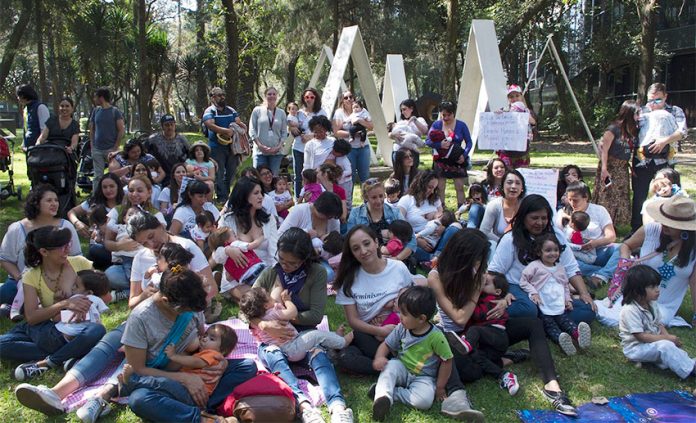
Breastfeeding mothers at the museum on Sunday.

Dozens of mothers gathered in Mexico City’s Modern Art Museum (MAM) on Sunday to protest the removal of a breastfeeding mother from the museum last Tuesday.

The woman was told by a security officer that feeding babies, either by breast or bottle, was prohibited on museum grounds.

On Saturday, the museum offered a public apology for the incident, claiming that the security employee had made a “misinterpretation of the regulation.”

The museum said it was committed to promoting awareness of the issue among its staff because “this attitude is not compatible with the viewpoint of this facility.”

Since the protest, the museum has posted a series of works on Instagram that feature women breastfeeding their children.

The museum also posted photos of the protest, showing dozens of women breastfeeding inside the museum and in its gardens, on its Twitter account.

The protest was organized on social media by the Association to Normalize Breastfeeding in Mexico and the Luperca maternity center.

Sources: El Universal (sp), Animal Político (sp)

Motorcyclists will require special license for making deliveries

0
motorcycle deliveries
Your license, please.

Motorcycle couriers in Mexico City will soon be required to obtain a special license to deliver food and goods in the city.

The rise in popularity of app-based messenger and food delivery companies has caused a rise in the number of motorcyclists on the capital’s roads, and with them, a rise in the number of accidents.

The new requirement is part of Mayor Claudia Sheinbaum’s new road safety strategy, the goal of which is to reduce the number of traffic accidents and deaths, above all those involving motorcyclists and those occurring in the early morning hours and on weekends.

The decision for the new license came after Sheinbaum’s administration consulted the data compiled by a number of government agencies and private sector entities.

The study found that motorcyclists are 10 times more likely to be involved in traffic accidents and 10 times more likely to die in them too. In the last four months of 2019, the city recorded 1.8 deaths for every one million motorcycle trips.

Such numbers prompted the city’s Mobility Secretariat (Semovi) to decide to enact the new licensing regulations.

As an added safety measure, delivery motorcyclists for Uber Eats, Rappi, iVoy and Sin Delantal and couriers for companies like Domino’s Pizza will be required to take a motorcycle safety course in order to receive the license.

Other traffic safety initiatives will include the reinforcement of drunk driving checkpoints, temporary license suspensions for those caught driving while drinking and doubling the number of traffic cameras and radar devices, among others.

There will also be a new traffic operation called “Not On Red,” which will issue tickets for running red lights.

Source: Infobae (sp)

Mazatlán mayor accuses state police of extortion of locals, tourists

0
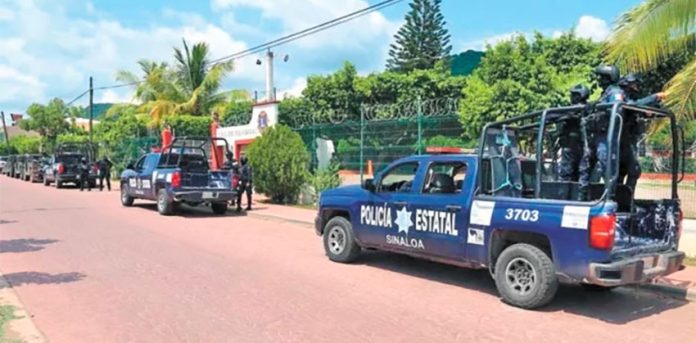
State police accused of extortion in Mazatlán.
State police accused of corruption.

The mayor of Mazatlán, Sinaloa, has accused state police of extortion of local residents and tourists.

In a November 16 letter that municipal authorities made public on Sunday, Luis Guillermo Benítez Torres cites two cases of alleged extortion in the Pacific coast resort city.

In the first, a vehicle driven by a Mazatlán resident was stopped by state police who conducted an inspection of the vehicle “in an overbearing way and without any justification” before demanding an unspecified quantity of money from the driver, Benítez claimed.

In the second case, tourists from Durango traveling on motorcycles were stopped at 12:30am on November 16 on a road near the Galerías shopping center, the Morena party mayor said. The police then “practically snatched” 3,000 pesos (US $155) from the tourists, Benítez said.

The mayor provided the identification numbers of the two police cars in which the allegedly corrupt officers were traveling.

Benítez said municipal authorities had already notified the Sinaloa government about the “irregular conduct” of state police but claimed that no action had been taken.

“For that reason, in the most courteous and respectful way, I express to you my discontent with respect to the conduct of the officers deployed to this municipality,” he said in the letter to Governor Quirino Ordaz Coppel.

“. . . Far from offering security and protection to the population, their acts generate an environment of insecurity and distrust . . . toward authorities.”

Benítez added that Mazatlán’s positive image as a tourist destination for both Mexicans and foreigners was damaged by the conduct of the police.

He said on Sunday that similar cases of police abuse have occurred in the municipalities of Rosario and Escuinapa although the mayor of the former municipality said he had no complaint about the conduct of state officers.

In response to the allegations, Sinaloa Public Security Secretary Cristóbal Castañeda Camarillo said he will speak to Benítez at a security meeting Tuesday and ask him to present proof to support his claims.

Source: Noroeste (sp), El Universal (sp) 

For a brown sugar substitute, try rich and earthy-flavored piloncillo

0
Piloncillo empanadas are best right out of the oven.

As someone who likes to bake, I was surprised not to find brown sugar as I knew it in any stores when I first moved to Mexico. I actually remember bringing it from the States and hoarding it; in fact, I know of a friendship that was broken over a bag of brown sugar promised and then given to someone else.

Eventually I realized that piloncillo – those cones of what looked like brown sugar in every market and grocery store – is similar enough to use as a substitute. True, it takes some effort to grate them, but the flavor is well worth the effort.

A bigger issue perhaps was how to pronounce “piloncillo” (pea-loh-n-SEE-yo). It’s actually quite a pretty word, and here is exactly what it should sound like: https://www.youtube.com/watch?v=lf6SK3i0JhM

So what exactly is piloncillo? Some people think it’s like a solid form of molasses, but that’s incorrect. Piloncillo is its own product; molasses is a by-product of refining sugar, and thus has a much more bitter taste.

What we know as “brown sugar” is just refined white sugar with molasses added. Piloncillo has a richer, earthy flavor and an abundance of B-vitamins and minerals not found in other refined sugars.

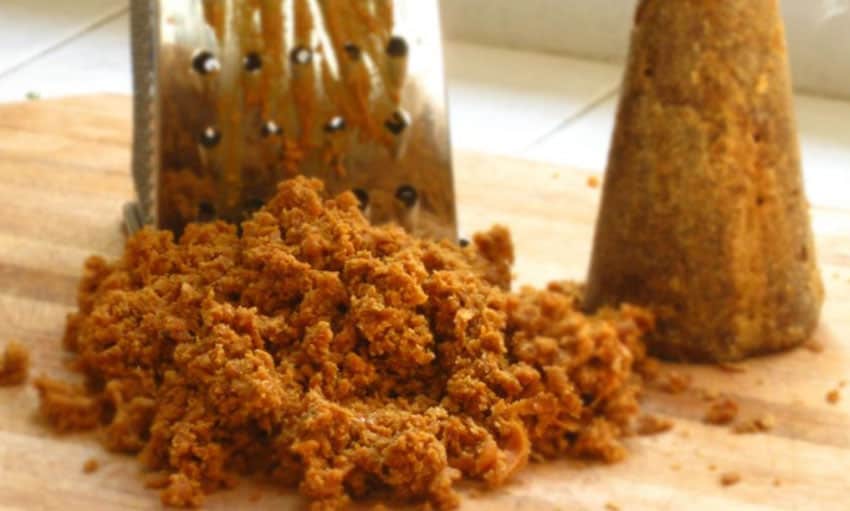
Grating piloncillo takes some effort but it's well worth it.
Grating piloncillo takes some effort but it’s well worth it.

In the simplest terms, piloncillo is evaporated sugar cane juice. The sugar canes are crushed, releasing a clear, greenish liquid – sugar cane juice, which is actually quite delicious to drink, chilled, on its own. That liquid is boiled and boiled, and as it evaporates what’s left gets darker and sweeter as it concentrates.

Finally the thickened syrup is poured into molds, most commonly small cones or blocks, and cooled. Voila! Piloncillo. Other countries have similar products: In India, it’s called jaggery or gur; in most other Latin and South American countries it’s known as panela (confusing in Mexico because that’s a kind of cheese) and in Brazil it’s called rapadura.

It’s OK to store the little cones in a glass jar or plastic bag or container in a cupboard, but I prefer keeping them in the fridge just because, well, it’s sugar, y’know? It’s not a bad idea to have a little jar of it already grated on hand for easy use.

Depending on the recipe, there are different ways to use piloncillo. It dissolves surprisingly quickly in hot water, if that works for your recipe. This can also be done in a microwave, as long as the bowl is big enough for it to bubble up a lot. Otherwise, you’ll need to grate it with a hand-held cheese grater.

Piloncillo Empanadas

Best eaten warm right out of the oven, these empanadas can also be reheated in a conventional or toaster oven. Use a prepared pie crust or your own recipe to make the dough from scratch.

  • 2-3 piloncillo cones
  • 1 prepared pie crust, unbaked
  • 1 Tbsp. milk
  • Optional: 1 egg, lightly whisked & 2 Tbsp. granulated sugar

Preheat oven to 350° F. Grate piloncillo to make 2 cups. Spray a cookie sheet lightly with cooking spray. Roll pie crust flat on a lightly floured surface. Cut crust into 4 equal sections. Fill each triangular section with 3-4 Tbsp. of grated piloncillo.

Moisten edges of each triangle with milk, then fold in half. Using a fork, pinch the edges to seal and then poke several holes in the top of each empanada to allow steam to escape. 

Arrange empanadas on prepared cookie sheet. For a more crunchy, shiny crust, brush with the beaten egg and sprinkle with a bit of granulated sugar. Bake 12-15 minutes or until golden brown. Makes 4 yummy empanadas. —Adapted from QueRicaVida.com

Piloncillo Syrup

This is a wonderful simple syrup to serve with waffles and pancakes, stirred into oatmeal, as an ice cream topping, in barbecue sauce, with fruit and yogurt, as a sweetener for coffee or tea – its sweet, earthy, caramel-like flavor tastes good in almost everything.

Rich with flavor, it’s also what’s drizzled over the bunuelos, the big, round flat fritters traditionally served during the Christmas holidays in Mexico.

  • 2 cones piloncillo
    2 cups water
Piloncillo syrup tastes good in almost everything.

Put the whole piloncillo cones and water in a heavy pot and boil, covered, until the piloncillo dissolves, 15-20 minutes. (Stir frequently until cones are dissolved.) Remove lid and continue boiling to reduce the syrup. The cooled syrup will have a consistency similar to maple syrup when it coats the back of a spoon. (104°C / 220°F on a candy thermometer.)

Serve immediately while warm, or let cool and store in an airtight container in the refrigerator. Makes about 1 ¾ cups. Keeps in the refrigerator for about a month.

For a more complex flavor you can add orange zest, cinnamon, star anise and cloves to the boiling syrup. Vanilla extract can be added after you remove the syrup from the heat.

Spicy Piloncillo Vinaigrette

The kick comes from the jalapeños, either roasted or you can substitute rajas, which are canned marinated jalapeño peppers. Use as a salad dressing or marinade for fish or shrimp.

  • 2 Tbsp. grated piloncillo
  • ¼ cup champagne, rice or other lightly flavored vinegar
  • 2 medium jalapeños or equivalent rajas
  • 1½ tsp. Dijon mustard
  • 3/4 cup extra virgin olive oil
  • Salt & pepper

Put sugar and vinegar in a small bowl and mix until sugar dissolves. Roast jalapeños in toaster oven or over open flame till blackened. Cool and remove stems and seeds. Using a blender or food processor, mix together the jalapeños, Dijon mustard and vinegar/sugar mixture. Blend on high speed and slowly add olive oil until thoroughly mixed. Season to taste with salt and pepper as needed.

Janet Blaser of Mazatlán, Sinaloa, has been a writer, editor and storyteller her entire life, and feels fortunate to write about great food, amazing places, fascinating people and unique events. Her work has appeared in numerous travel and expat publications as well as newspapers and magazines. Her first book, Why We Left: An Anthology of American Women Expats, is available on Amazon. Contact Janet or read her blog at whyweleftamerica.com.

2 arrested for killing 4-year-old because he wouldn’t stop crying

0
police line

A mother and her boyfriend of Villagrán, Guanajuato, were arrested and charged with murder after they beat her four-year-old son to death because he would not stop crying.

The public prosecutor brought murder charges against the two, identified only as Nidia N. and Omar N., for the killing of the former’s son in the early morning hours of November 17. Both are being held in preventive custody.

Police said the couple beat the child repeatedly after he began to cry. The crying stopped but only because he was dead. Paramedics said the child suffered chest and head trauma.

Source: El Universal (sp)

350 volunteers clean 4 tonnes of garbage from Nuevo León river

0
River clean-up in Nuevo León Saturday.

Over 350 people cleaned up more than four tonnes of garbage from the Santa Catarina river in San Pedro Garza García, Nuevo León, on Saturday.

The event, called 50TON, brought together high school and university students and other residents of the city that neighbors Monterrey to collect all kinds of waste from the river.

The head of the San Pedro Environmental Department, Ada Marcela Ita Garay, said the large number of people who came out emphasizes how the clean-up event is growing.

“More people come each time, but still, we never clean everything because apart from what was already there, we’ve also got what tropical storm Fernand dragged in,” she said.

She stressed that despite the preventative actions and campaigns to encourage the public to reduce and reuse the waste generated in their homes, bad habits continue to wreak havoc on the river.

“Here we’re making a call to the public to be more conscious when consuming products and later disposing of them, and to be more responsible for their waste,” she said.

Saturday’s garbage included tires, paper, plastic bags, Styrofoam, cardboard boxes and even furniture.

A number of local environmental organizations, universities, schools and museums teamed up with the local government to take part in the clean-up.

Source: Milenio (sp)

Woman finds missing brother after call leads volunteers to grave

0
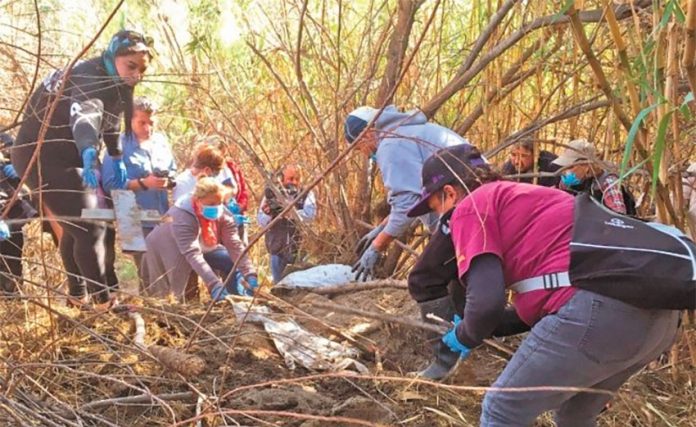
Searchers look for bodies Saturday in Tijuana.

Family members of missing persons and other volunteers have begun searching a Tijuana property where more than 50 bodies could be buried.

According to a report in the newspaper El Universal, a 21-year-old woman received a phone call last Wednesday from an unidentified man who told her that her missing brother was buried in the 10 de Mayo neighborhood of the Baja California border city.

The woman, who asked to be identified only as Lucía, was told that her 18-year-old brother, Cristian – missing since October 31 – was in a grave amid thick vegetation inhabited by pigs and strewn with rubbish. The site is near Arroyo Alamar, a tributary of the Tijuana river.

With members of groups made up of relatives of missing persons, Lucía set out to find her brother on Saturday. After a three-hour search, the collective found two decomposed bodies, one of whom was Cristian.

“. . . As soon as I saw the body, I recognized him,” Lucía said.

Angélica Ramírez, a member of a group that participated in the search, said that one of the bodies was found in the open air while the other was in a shallow grave.

After the discoveries, Lucía told El Universal that she received a second call from an anonymous man who said: “Keep searching because there, in the same place, there are another 50 bodies.”

A contingent of about 20 people returned to the site on Sunday accompanied by state police but no further bodies were found.

According to Ramírez, it was the first time that authorities showed an interest in assisting in the search for their loved ones.

“The search brigade hasn’t had a good response from the authorities. Petitions have been submitted, we’ve spoken to the missing persons prosecutor and we hadn’t had a response until today [Sunday]. It’s very regrettable that we have to reach this point . . . for the authorities to start to take notice,” she said.

For his part, Baja California investigation agency chief Alejandro Corona Zamora said the property hadn’t been searched previously because state authorities hadn’t received any information to suggest that bodies were buried there.

There are more than 40,000 missing persons in Mexico, according to official statistics, and the discovery of hidden graves is a common occurrence.

Presenting a 400-million-peso plan to fund search efforts for missing persons in February, human rights undersecretary Alejandro Encinas described Mexico as an “enormous hidden grave.”

Source: El Universal (sp), El Imparcial (sp)