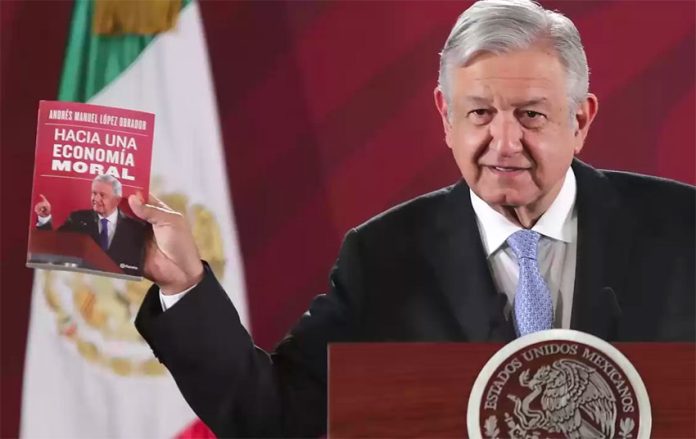
AMLO and his latest book, an answer to neoliberalism.
Serving as president has not stopped Andrés Manuel López Obrador from writing: on Tuesday he announced the publication of his latest book, Toward a Moral Economy, his 18th.
“[The book] is ready, it will begin to be distributed to bookstores, and the publisher tells me that it will be available [in digital format] online starting tomorrow,” he announced at yesterday’s press conference.
“Here it is,” he said, holding up a physical copy of the book, “the foundation of our policy, what is being applied in the post-neoliberal era.”
The e-book is now available on digital platforms Amazon, Google Play and iBooks for 139 pesos (US $7). Published by Editorial Planeta, it is currently only available in Spanish.
The physical book will have a first edition print run of 40,000 copies.
López Obrador first mentioned the book in July when he said he was considering writing a text on his “alternative” to neoliberalism.
“If I have time, I’m going to write a book about the moral economy . . . in order to explain the alternative model to neoliberalism . . . I’d call it the moral economy, were it up to me to define it,” he said at the time.
The president’s first 17 books have been described as either political analysis or historical essays. His first was published in 1986.
Political scientist Genaro Lozano told BBC Mundo in an interview last year that López Obrador’s writing style is pragmatic: “He writes as a politician, with political intentions, to try to win votes.”
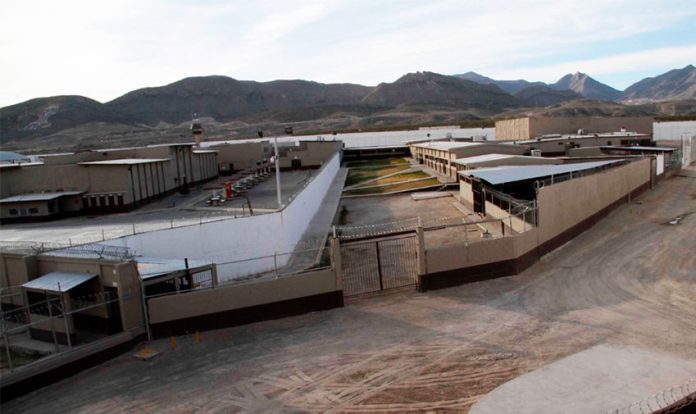
The state prison from which criminal activity is believed to be directed.
A wave of violence in Ciudad Juárez, Chihuahua, this month was directed from inside a state prison in the border city, according to authorities.
There have been 91 homicides in Juárez in November and 50 bomb scares at factories, schools, businesses and government offices. At least 37 vehicles have also been set on fire, killing eight people.
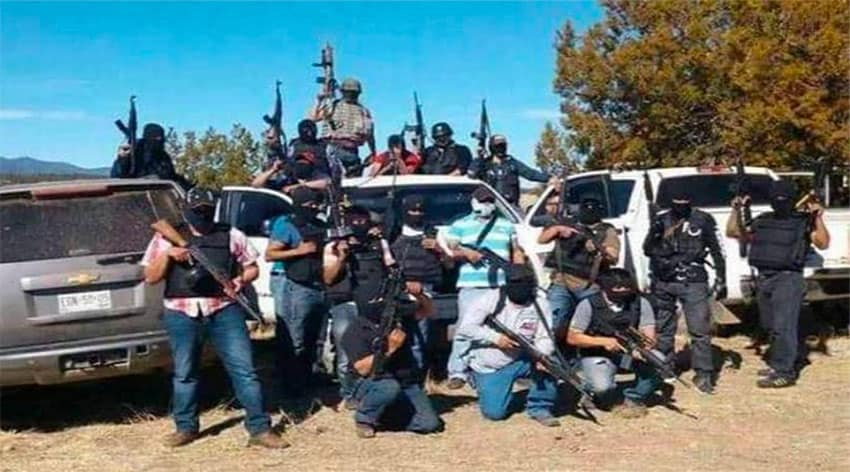
Chihuahua authorities say the violence was ordered by imprisoned members of the Mexicles, a Juárez gang allied with the Sinaloa Cartel that has allegedly controlled the Cereso 3 prison since 2016.
The aim of the violence, authorities say, is to stop an inspection to detect weapons, drugs, cell phones and other prohibited items inside the jail.
State Attorney General César Peniche Espejel said there are two main instigators: imprisoned Mexicles leaders Luis Santiago E.C., also known as El Milo, and Jesús Eduardo S.R., aka El Lalo.
Mexicles members on the outside who follow their orders are rewarded with drugs, he said.
The joint federal and state inspection at the prison began on November 5, triggering an outbreak of violence that claimed the lives of at least 26 people in just four days.
At least 20 vehicles, including transit and factory-owned buses, were set on fire in the same period. In addition to deaths, nine factory workers suffered first and second degree burns in vehicle fires.
The chaos and violence were reminiscent of scenes from 2010, the most violent year in Juárez’s history, and terrorized local residents.
There was a lull in violence for 60 hours from November 11, the newspaper El Universal reported, but attacks resumed on November 14, killing 15 people.
Several bomb threats were made the same day and a bus was set on fire. Six passengers managed to escape unharmed.
A show of force by suspected members of the Mexicles.
A further 21 people were murdered between November 15 and 18, a period that coincided with the annual four-day shopping event called Buen Fin.
Two weeks after the commencement of the prison inspection and the resulting surge in violence, the Chihuahua Attorney General’s Office has still not disclosed what it has found inside Cereso 3.
Isabel Sánchez, head of a Juárez citizens’ group that focuses on security and justice issues, urged state authorities to provide an update about what is happening inside the penitentiary as the inspection continues.
She condemned the reaction to the inspection by organized crime, saying that innocent people were victims of the violence and that society had once again become a hostage of crime gangs.
The federal government’s super-delegate in Chihuahua, Juan Carlos Loera de la Rosa, said that state authorities are working with the federal Attorney General’s Office to bring the perpetrators to justice.
He agreed with state authorities that the violence is a reaction to the prison inspection, saying it was designed to sow terror among citizens.
Homicides rose sharply in Juárez in 2018 compared to 2017 and this year is even more violent. There were 1,440 murders last year, while as of Monday there have been 1,347.
The record for homicides was set in 2010 when there were more than 3,600.
According to Chihuahua authorities, 80% of homicides in the border city are linked to turf wars between drug cartels. The United States Drug Enforcement Administration has said that the fragmentation of criminal groups has also contributed to increasing violence in Juárez.
Among the internal conflicts is one between the Mexicles and the Artistas Asesinos, both of which are affiliated with the Sinaloa Cartel.
A teenage son shot and killed his father on Monday after the man confessed to abusing him and his sister.
After hearing his father’s confession, Ángel Israel N., 15, of Naucalpan, México state, went into his parents’ bedroom and returned with a .38-caliber pistol in his hand.
He then shot his father five times in the chest and face.
“I’m going to tell you something that has been tormenting me,” Ángel’s father had said. “I don’t know if you’ll forgive me, or if your mother will either. When you were little, I abused you and your sister.”
As he made his confession, his wife Ana asked incredulously, “This is a joke, right? When did it happen?”
After killing his father, Ángel hugged his mother and told her not to worry. He said it was not her fault, that his father abused him and his sister while she was at work.
The two decided it was best that Ángel turn himself in to authorities.
The youth has been charged with intentional homicide with a firearm.
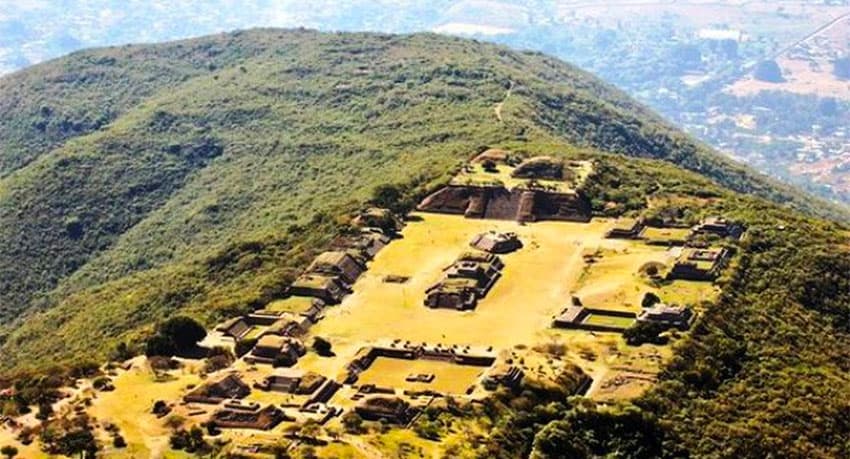
One of Oaxaca’s top attractions, the Monte Albán archaeological site, was closed to the public on Tuesday after a gunfight broke out nearby over a land dispute in the surrounding area.
A group of communal landowners arrived in the area near Monte Albán about 9:00am with the intention of driving out people whom they claim to have occupied the land illegally. Neighbors reported hearing gunfire soon after.
The gunfight left one person dead and three wounded. The attackers also demolished and burned some houses that the alleged invaders had built on the land.
Oaxaca Public Security Secretary Ernesto Salcedo deployed police to the scene in order to avoid further confrontations.
The National Institute of Anthropology and History (INAH), which is responsible for the site, installed a chain-link fence in the area to demarcate the contested land. But it too has been accused of being part of the problem.
The Monte Albán archaeological site in Oaxaca.
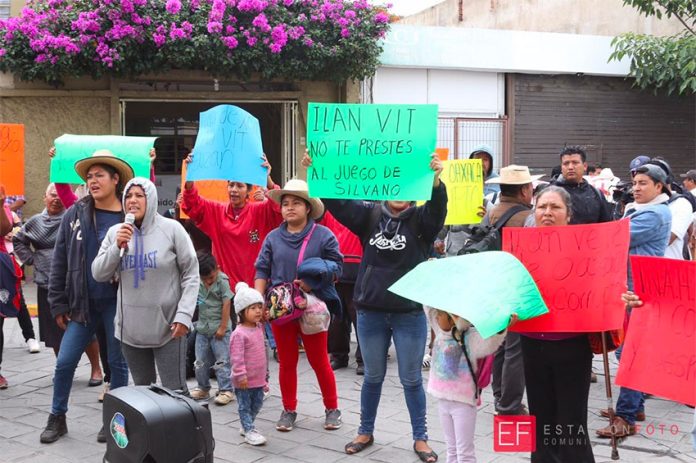
The alleged occupants of the disputed land have accused INAH director Ilan Vit Suzan and deputy director Silvano Reyes Medina of having violated their human rights.
The 300 families claim that they are the rightful owners of 3,000 hectares adjacent to the Monte Albán site.
In August, they protested outside the INAH offices in Oaxaca city, demanding that the institution recognize their ownership and allow them to use the land. They claimed to have been beaten and robbed during previous eviction attempts.
“We bought our land in good faith. We are not responsible for the fact that the prevailing institutional corruption has allowed the sale of land in a prohibited area, which INAH now argues,” said one of the protesters in August.
After Tuesday’s eviction, the invaders blocked roads and broke into the INAH offices in Oaxaca city, where they detained workers in order to demand that their rights be respected.
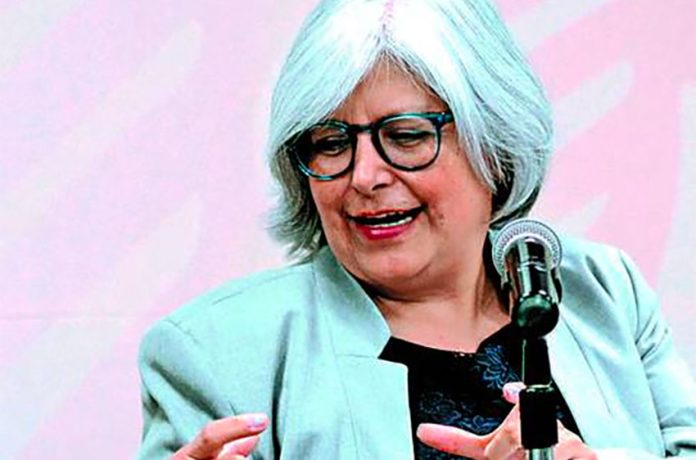
Economy Secretary Márquez announces investment figures on Tuesday.
Preliminary figures for foreign direct investment (FDI) show a 7.8% increase in the first nine months of 2019 compared to the same period last year to reach its second highest level ever, the Economy Secretariat (SE) reported on Tuesday.
Data shows that Mexico received US $26.05 billion in FDI between January and September.
The figure is the second highest for the first nine-month period after 2013 when the purchase of brewer Grupo Modelo by Belgian multinational Anheuser-Busch InBev gave a significant boost to foreign investment numbers.
It will almost certainly be revised upward once companies have formally reported all foreign investment in the period to the SE.
Economy Secretary Graciela Márquez said the Trans-Pacific trade pact known as TPP11, which took effect on December 30, and higher investment in the energy sector were factors in the FDI increase in the first nine months.
Energy investment included $580 million for the extraction of oil and gas as well as additional resources to carry out projects related to the upgrade of Mexico’s refineries.
The manufacturing sector captured $11.63 billion in FDI between January and September – 44.6% of the total – an increase of 4.8% compared to last year. About $5 billion went to the automotive industry.
The financial services and insurance sector captured 13.9% of FDI; 11.9% came via trade; 5.8% went to the energy, water and gas industries; 5.3% was invested in media companies; and 5.2% was directed to mining.
Márquez said that investment in mining has fallen due to insecurity but added that the federal government is taking action in order to provide guarantees and greater certainty to companies operating in the sector.
The United States was the biggest foreign investor in Mexico, contributing 34.9% of total FDI between January and September.
Spain, Canada, Germany and Italy followed, providing 15.5%, 10.4%, 10.1% and 4.1% of foreign investment respectively.
Reinvestment of profits provided 55.2% of FDI, 36.1% came through new investments and 8.7% was sourced via payments to Mexican companies by foreign enterprises.
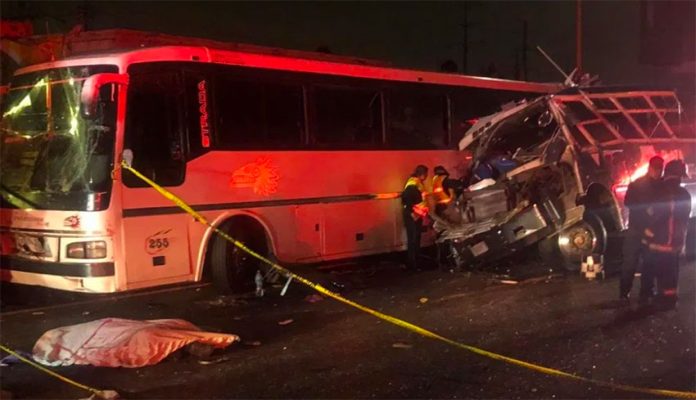
At right, the bus that is believed to have attempted to pass on the shoulder.
Authorities have arrested the driver of a bus that caused a three-bus pile-up that killed 13 people on the Mexico City-Pachuca highway Monday night.
México state Attorney General Alejandro Gómez Sánchez said the suspect is believed responsible for colliding with the other two buses, which had stopped on the shoulder to allow passengers to board.
“We have now arrested one of the drivers, apparently the one who hit the other two vehicles,” said Gómez. The other two drivers fled the scene.
Gómez said the dead were being turned over to family members while the 29 people who were injured, 19 men and 10 women, had been taken to various hospitals in Mexico City and México state for treatment.
“It’s clearly a terrible accident,” he added.
The crash occurred when the driver who was arrested allegedly attempted to pass other vehicles by driving on on the shoulder of the highway.
Passengers aboard his bus have claimed that he smelled of alcohol, that he was talking on the phone at the time of the accident and was driving too fast, but none of the claims have been confirmed.
One of those passengers was a 23-year-old student who was sitting on a bench next to the driver because all the seats were occupied. She was flung through the windshield by the impact of the collision and was still conscious when she landed on the road.
The biology student at the National Autonomous University called her parents on her cell phone after dragging herself away from the scene, thinking there might be an explosion due to the strong smell of gasoline.
She was hospitalized with various injuries but they proved minor and she was released a few hours later.
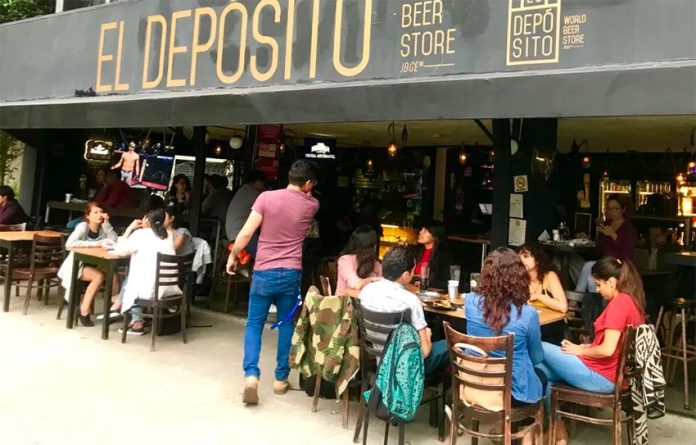
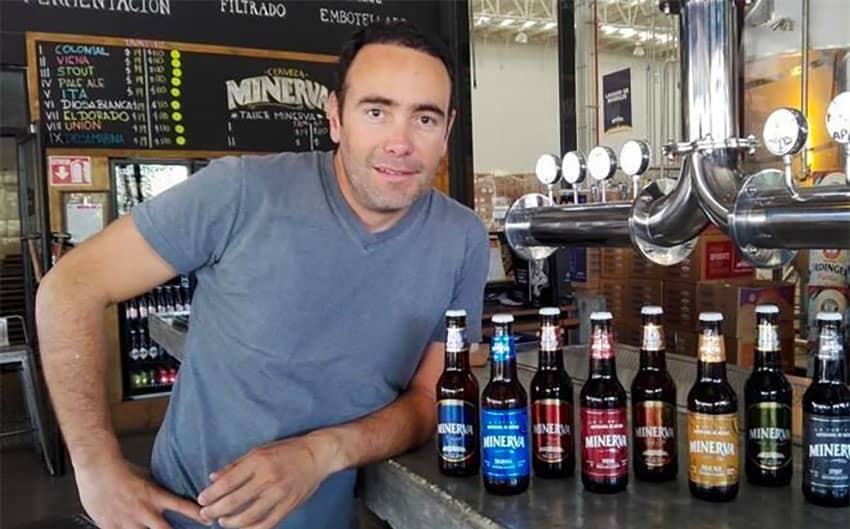
The founder and director of Jalisco brewery Minerva and beer bar chain El Depósito has rejected a media report that his businesses were opened with illicit funds linked to fugitive drug lord Rafael Caro Quintero.
The newspaper El Universal reported on Tuesday that family members and associates of Caro Quintero opened more than 30 businesses in Guadalajara while the cartel founder and convicted murderer was serving a 40-year prison term.
Minerva and El Depósito were named among the businesses because founder Jesús Briseño is married to Roxana Elizabeth Caro, a daughter of the former Guadalajara Cartel leader, who along with other family members is on the black list of the Office of Foreign Assets Control, a financial intelligence and enforcement agency of the United States government.
In an interview, Briseño declared that “not a single peso” of Caro Quintero’s money is invested in his businesses.
“We have wealth generated from other places. We’ve been working hard for 15 years to be at the level we’re at today,” he said in reference to Minerva, one of Mexico’s best-known and most successful craft breweries.
Minerva founder Briseño.
Briseño said the accusation made by El Universal is unfounded and not supported by any evidence.
“We’ve just turned 15 with achievements and a lot of setbacks [along the way] . . . We started as a restaurant with a small brewery called Tierra de Malta, we’re five partners and we decided to take the leap and invest in used [brewery] equipment . . . to start to produce off site, since then we’ve grown little by little every year,” he said.
Minerva now produces 20,000 hectoliters of beer per year in a Guadalajara brewery with an annual capacity of 25,000 hectoliters.
Briseño said that 5% of production is exported, mainly to Japan, South Africa and Australia, and that increased brewing capacity might be necessary in two years.
“There is a lot of interest in Mexican beer so importers seek us out. We’ve developed very good relationships with some of them,” he said.
Briseño and his partners at Minerva – which also imports beer from Belgium, Germany and England – opened their first El Depósito bar in 2010 and there are now 17 branches in Guadalajara and Mexico City.
Caro Quintero’s son-in-law said there will be no further expansion of the chain in the short term because Minerva is involved in a new business venture with the craft breweries Loba and Colima.
“We’re not thinking about growing the El Depósito model at the moment. We’re opening some concept bars with other craft breweries, they’re called Tres Gallos, we already have two and we’ll probably open more with this business model,” Briseño said.
Meanwhile, Caro Quintero, who was convicted of the 1985 murder of U.S. Drug Enforcement Administration agent Enrique “Kiki” Camarena but released in 2013 on a technicality 12 years before his sentence was due to end, remains a fugitive from justice.
The FBI placed him on its 10-most-wanted list in 2018 and offered a US $20-million reward for information leading to his capture.
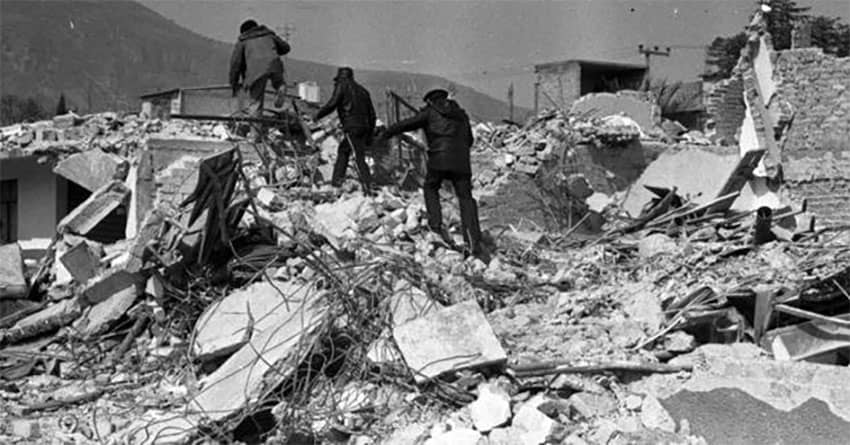
“Something like this should never happen.” Those are the words of Efraín García Domínguez, a survivor of the San Juanico explosions, one of the world’s worst industrial disasters.
Tuesday is the 35th anniversary of the disaster than rocked – and burned – San Juan Ixhuatepec, a neighborhood just north of Mexico City in the México state municipality of Tlalnepantla.
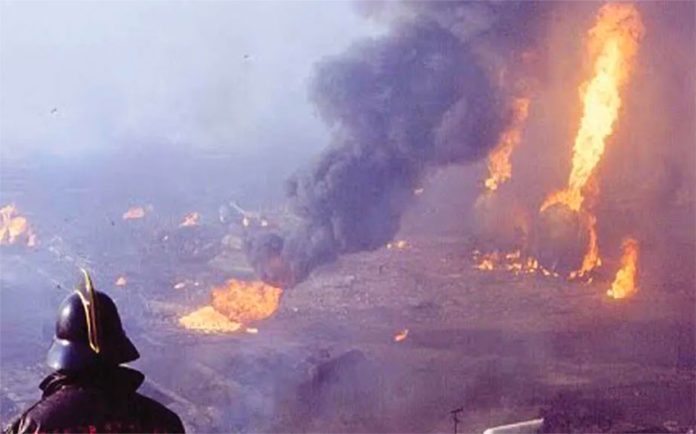
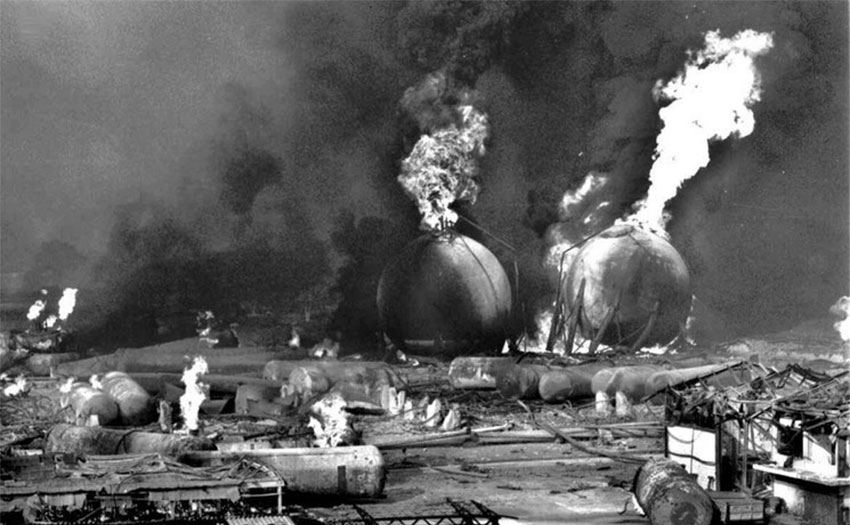
In the early morning of November 19, 1984, a series of huge explosions at a Pemex liquid petroleum gas (LPG) storage plant and the massive fire they triggered killed between 500 and 600 people and left as many as 7,000 others with severe burns.
About one-third of Mexico City’s LPG supply, some 11,000 cubic meters, burned in the fire following the explosions, which authorities said were caused by a gas pipe that ruptured due to excessive pressure.
In the lead-up to the anniversary of one of Mexico’s darkest days, the state news agency Notimex spoke with survivors of the disaster, who described the intense heat, thick smoke and atmosphere of fear that enveloped San Juan Ixhuatepec 35 years ago.
“Fortunately, my parents’ house was far from the point of the explosions but when I went out to the street, it felt like my face was burning because of the blaze of fire,” said García Domínguez, a mechanic who was 16 when the disaster occurred.
“. . . There was a lot of smoke and you could see ash falling as if it were rain,” he added.
García, who lost friends in the disaster, recalled being awoken by his mother’s screams after the first explosion. He also said that he experienced a sensation akin to being in hell.
“My mother told me that if I behaved badly I would go to hell and . . . that those who behave badly burn in that place. When the first explosion occurred at 5:40am . . . I innocently thought that I was already in hell because of the intense heat,” García said.
The now 51-year-old said that he and his family rushed out of their home not knowing what had happened although it was clear that they were in danger because all the windows of their house – two kilometers from the Pemex plant – had broken and the walls were shaking.
“The heat was unbearable, we couldn’t breathe, that was enough reason to escape,” García said, explaining that he and his family went to his aunt’s house in Mexico City.
Gas tanks burn at the Pemex plant in San Juan Ixhuatepec.
“Through an uncle who didn’t leave we found out about the tragedy of entire families who burned to death. The whole neighborhood burned, what happened was worse than the 1985 earthquake,” he added.
Elvira Castro Vazquéz, a 72-year-old who still finds it difficult to talk about the disaster, agreed.
“I never heard of a such a tragedy again. I remember that the [Mexico City] earthquake the next year was devastating but in the face of nature’s power, you can’t do much. But when we’re talking about human errors, that’s when you feel more anger,” she told Notimex during an interview alongside her 77-year-old husband, Juan Camacho.
Castro recalled that she, her husband, their four children and many other residents fled San Juan Ixhuatepec on foot, knowing instinctively that they were in danger.
“. . . There was no public transportation so we walked along the train tracks until we arrived at the lower slopes of the Chiquihuite hill, where people helped us,” she said, struggling to hold back tears.
“It looked like a pilgrimage. A lot of people escaped along the tracks, we walked in the direction of the [Mexico City] borough Gustavo A. Madero and people were saying, ‘this is the end of the world,’” Castro added.
Searchers in the wreckage. More than 500 people were killed.
“Everybody was scared . . . there was another explosion and then more followed so we quickened our pace until Mrs. Agripina, who lived on Chiquihuite avenue, offered us a place to stay and eat breakfast. Since then I’ve lived in gratitude to her,” she said.
Camacho recalled that a neighbor left his home early that day to sell tacos outside the Pemex plant.
“He used to sell in the school area on the Politécnico Nacional avenue but it was far from his home so he decided to go to the gas plant . . . He lost his life in his eagerness to work,” he said.
“Everything felt like hell itself, or a subsidiary of it. I remember the gigantic flames that were seen from afar and the scorching heat that burned out skin and restricted our breathing,” Camacho added.
Smaller explosions continued at the plant until the morning of the next day as more and more gas tanks were consumed by flames. Almost 150 homes were completely destroyed in the disaster.
In December 1984, the federal Attorney General’s Office determined that Pemex must take responsibility for the explosions and pay compensation to victims.
However, some people claimed that they never received a peso even though they were burned or their homes were damaged by the explosions or ensuing fire.
Design of the new airport by architectural firm FGP Atelier.
Traveling via the new Santa Lucía airport will be a “memorable experience,” according to the architect chosen to design it.
In his project proposal, Chicago-based Mexican architect Francisco González Pulido said he envisions a relaxation zone in the terminal building that will incorporate spaces for yoga, meditation and massage therapy as well as rest areas with garden views.
To help passengers de-stress after a long journey, soft Mexican and classical music will be piped into baggage collection areas, González said in his pitch for the 92-billion-peso (US $4.8-billion) project to be built at the Santa Lucía Air Force base in México state.
He said the terminal walls will be made largely of glass, while its ceiling will have plenty of skylights, allowing outside views from all parts of the building.
The architect also proposed that airport restaurants and shops promote environmental sustainability by avoiding single-use plastics and providing customers with cloth bags and compostable containers for their purchases. They will source local produce including herbs grown on farms near the airport, González suggested.
The government has not disclosed details about the monetary value of the contract it has signed with González’s firm, FGP Atelier, which collaborated on the design of the Suvarnabhumi international airport in Bangkok, Thailand, and a Mexico City baseball stadium inaugurated in March.
Preparation for construction at the Santa Lucía airport site began last month, the day after the last of seven suspension orders against the project was revoked by a federal court.
President López Obrador pledged that the airport will be built in 2 ½ years, meaning that it will be ready to open in early 2022.
On its website, FGP Atelier said “the extremely condensed timeframe for design and construction as well as the very limited budget could have been seen as negative limitations.”
However, the firm said it “saw the existence of these constraints as an opportunity to refine our longstanding interest in modularity and honest use of unornamented materials on a vast scale in order to create an exceptional work of architecture.”
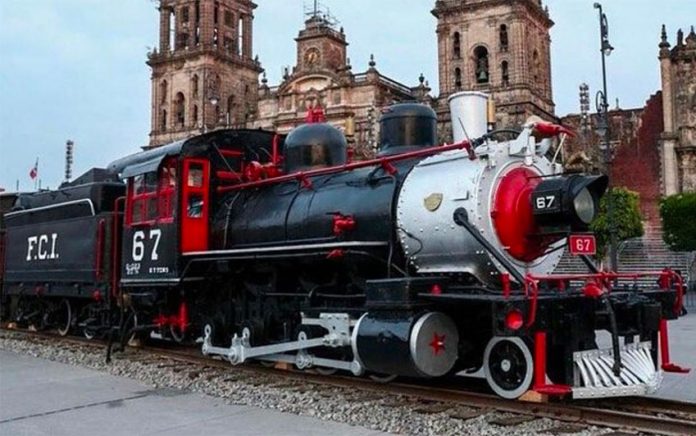
A 130-year-old locomotive has been put on display in the Mexico City zócalo to mark the 109th anniversary of the beginning of the Mexican Revolution.
The train will be the symbolic centerpiece of a parade that will take place in downtown Mexico City on Wednesday after it was moved for the event from its permanent home at Mexico City’s Railroad Museum.
The display consists of a steam-powered locomotive named Petra and two cars, one for passengers and one for cargo.
Named after Petra Herrera, commander of a women’s brigade who participated in the taking of Torreón, Coahuila, on May 30, 1914, the locomotive is 130 years old. It weighs 66 tonnes and is 15.6 meters long and 3.7 meters high.
The two cars are similar to those that transported troops and loads of weapons, food and other necessities for the armed conflicts during the Revolution.
In his morning conference on Monday, President López Obrador said the parade will highlight horses and railroads as they were vital forms of transportation during the Mexican Revolution, which began on November 20, 1910.
The parade will recreate the revolutionary movements led by Francisco “Pancho” Villa, Emiliano Zapata and Lázaro Cárdenas. It will begin at 10:00am in the zócalo.
The opening ceremony will feature the awarding of medals and a concert by María “La Rumorosa” Inéz Ochoa, who will sing folk songs from the Revolution era.
From the zócalo, the parade will make its way west along 5 de Mayo to the Avenida Benito Juárez, from which it will turn left onto the Paseo de la Reforma. The parade will end at the Campo Marte equestrian and military events center in Chapultepec Park.