Home Blog Page 1706

Pemex workers union leader resigns after 26 years

0
Former senator Romero.

The secretary general of the Pemex petroleum workers’ union resigned on Wednesday amid accusations of corruption.

Carlos Romero Deschamps had held the post for 26 years. His right-hand man, union official and federal Deputy Manuel Limón Hernández, is expected to succeed him.

Romero has faced many accusations of corruption over the years, but is now facing charges of money laundering and illicit enrichment.

Romero joined the union in 1969 and was named secretary general in 1993 during the administration of then-president Carlos Salinas de Gortari. He has also served in both houses of the Mexican Congress.

He has been a member of the Institutional Revolutionary Party (PRI) since 1961 and has coordinated political campaigns for the party in Tamaulipas.

President López Obrador commended Romero’s decision to step down during his morning conference on Thursday.

“I’m really pleased by what happened yesterday and that it happened without violence, because in other cases there is violence and now this is being achieved peacefully,” he said.

He went on to state his hopes for a future without union corruption.

“How is a labor union leader going to be a tycoon at the same time? Where does that money come from? We have to end this stage and put democracy and honesty first,” he said. “. . . We now have to respect workers so they can freely and democratically elect their leaders.”

He said he views the resignation as an opportunity to effect change in union procedures.

The union must hold an election to replace Romero’s successor, whose appointment is only temporary, the president said. “There is an opportunity to . . . do things right and legally . . . We must not fear democracy.”

Yesterday, Mexico News Daily reported that federal financial authorities had frozen bank accounts belonging to Romero and family members. The information, provided by Romero’s lawyer, was later denied by the Financial Intelligence Unit of the Secretariat of Finance.

Sources: Milenio (sp)

Biodiversity pavilion is gift of Carlos Slim Foundation to UNAM

0
Carlos Slim looks on as new museum is unveiled at a press conference on Wednesday.
Carlos Slim looks on as a scale model of new museum is unveiled at a press conference on Wednesday.

Businessman Carlos Slim has announced that the Carlos Slim Foundation will donate a biodiversity pavilion to the National Autonomous University (UNAM).

In a press conference on Wednesday, Slim said the 3,800-square-meter installation on the main UNAM campus will promote science education.

To be built with an investment of 200 million pesos (US $10.4 million), the museum will be three stories high and have the capacity to house 300,000 species in 12 exhibition rooms, one of which will be dedicated to the origins of life, and another to megadiversity in Mexico.

The pavilion will be located near the University Contemporary Art Museum, and will house a significant part of UNAM’s Biology Institute, as well as a digital library.

Slim is a graduate of the UNAM’s School of Engineering, and has a degree in civil engineering. In 1993, he joined a group of other UNAM graduates to found the UNAM Foundation, a scholarship program for students with limited economic resources.

Source: Infobae (sp)

Slim plans infrastructure investments of up to 120bn pesos, with focus on southeast

0
Carlos Slim will continue to invest in Mexico.

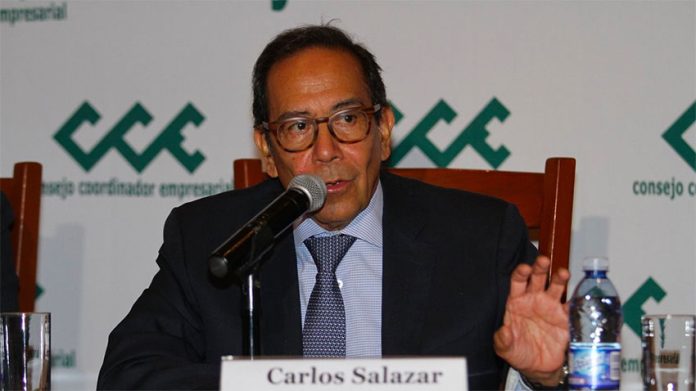
Telecommunications mogul Carlos Slim said on Wednesday that he would invest up to 120 billion pesos (US $6.3 billion) in infrastructure projects during the six-year term of the federal government.

The billionaire businessman, who is Mexico’s richest man, told a press conference that he is particularly interested in investing in the southeast of Mexico, stating that economic development there is “urgent” and “essential.”

Slim said that he was “100% behind” the government’s plans to boost development in the region as well its wider agenda.

He said that his companies would bid for contracts for the Maya Train project, which will link cities in the states of Chiapas, Tabasco, Yucatán, Quintana Roo and Campeche.

“There will [other] infrastructure projects,” Slim said. “I think it will depend on what [contracts] we win but obviously [investment] could be more than 100 billion pesos.”

The businessman also said that his companies Telcel and Telmex will invest 40 billion pesos (US $2.1 billion) annually in the coming years of the López Obrador presidency.

Investment in telecommunications will extend to Guatemala and El Salvador, Slim said, adding that he has already spoken with the governments of both countries.

He also said that Carso Energy will invest 20 billion pesos (US $1 billion) annually and that another 12 to 14 billion pesos per year will go to real estate projects.

Turning to the outlook for the Mexican economy, Slim said that it was possible that there will be no growth at all in 2019.

“That’s the bad news but what’s the good news? The good news is that inflation is going to fall by half,” he said.

Inflation was 4.8% last year and this year it will drop below 3%, Slim predicted.

He said the government could take credit for lower inflation, praising its policy to eliminate excessive operating costs and implement other austerity measures.

Slim also praised the government for increasing the minimum salary and offered support for its fiscal reform that seeks to crack down on companies that sell fake invoices and receipts and those that purchase and use them to avoid paying tax.

“The [fake] invoices thing is a scandal,” he said, adding that companies have made use of them as though it was “the national sport.”

Slim downplayed the possibility of a downgrade to Mexico’s sovereign credit rating, highlighting the stable exchange rate and healthy public finances.

While praising the government’s policies, the businessman stopped short of offering a full-throated endorsement of the president.

Asked to evaluate López Obrador’s performance as he approaches the completion of his first year in office, Slim replied “I’m not an evaluator of presidents.”

Source: El Universal (sp), Animal Político (sp) 

Public-private partnership eyed for high-speed Querétaro train

0
high speed train
Mexico City to Querétaro in 58 minutes.

The high-speed passenger rail line between Mexico City and Querétaro, suspended four years ago by the previous federal government, could go ahead through a public-private partnership, says the governor of Querétaro.

Francisco Domínguez Servién told the newspaper El Economista that the Querétaro government will continue to meet with its federal counterpart to discuss the viability of a rail link between the state and national capitals.

The master plan for the project, which was postponed in 2015, is in the hands of the Secretariat of Communications and Transportation (SCT), the governor said.

Domínguez acknowledged that no funds were set aside in the 2020 budget for the rail link but he noted that the right-of-way for its construction has already been obtained.

He said he hoped to meet with officials from President López Obrador’s office as well as representatives of Canadian manufacturer Bombardier to discuss the possibility of establishing a public-private partnership to complete the project.

“. . . Remember that Bombardier, their train division, is in Mexico, in Hidalgo . . .” Domínguez said.

Two months before he was sworn in as president, López Obrador announced that Bombardier would make the rail cars for the Maya Train at its Ciudad Sahagún plant.

El Economista said the company could also play a key role in the revival of the Mexico City-Querétaro project.

Domínguez said the railroad would trigger economic development in Querétaro and the wider Bajío region and would also be of “great utility” for Mexico City.

In contrast to the previous government’s plan to run only passenger trains on the line, the current proposal is for freight trains to use it as well, the governor said. The aim of that proposal is to ensure that the rail project doesn’t operate at a loss, Domínguez explained.

Communications and Transportation Secretary Javier Jiménez Espriú said even before he took office that the Mexico City-Querétaro project was part of the government’s transportation plans.

He reiterated in February that the López Obrador administration remains interested in carrying out the project and estimated that an investment of 50 billion pesos (US $2.6 billion) would be required.

Jiménez is expected to travel to Querétaro on Thursday to discuss a range of issues with state officials.

Under the previous government’s plan, the 210-kilometer train would have carried up to 23,000 passengers a day at speeds up to 300 km/h. Traveling time between the two cities was to be 58 minutes.

A decision to revive the rail link would add to an already ambitious infrastructure plan being pursued by the government.

Among the projects the López Obrador administration intends to build are the Santa Lucía airport in México state, a new oil refinery on the Tabasco coast, the Maya Train railroad on the Yucatán peninsula and a trade corridor on the Isthmus of Tehuantepec between Salina Cruz, Oaxaca and Coatzacoalcos, Veracruz.

Source: El Economista (sp) 

Tribunal removes last suspension stopping Santa Lucía airport

0
With latest court ruling, this could soon become an airport.

A federal court has revoked the seventh and final suspension order against the Santa Lucía airport, removing the last legal impediment to the commencement of construction of the US $4.8-billion project.

The 10th Collegiate Tribunal in Mexico City annulled the injunction during a hearing on Wednesday.

The suspension order and six others that were recently repealed were all obtained by the #NoMásDerroches (No More Waste) collective, a group made up of civil society organizations, law firms and citizens.

While today’s ruling gives the Secretariat of Defense the green light to start work at the Santa Lucía Air Force Base in México state, a lawyer for #NoMásDerroches argued that beginning construction would be illegal because the government still hasn’t presented all the studies required.

“If they move machinery tomorrow as a show of power and they cut the ribbon . . . that would be illegal because the airworthiness studies are missing and the master plan . . . hasn’t been presented,” Gerardo Carrasco said.

He also said the government has failed to present information about the environmental impact of the airport project.

The newspaper Milenio noted that the Supreme Court could invoke its constitutional power to rule on the legality of the injunctions granted against the airport but said that eventuality was “improbable.”

Two judges and a court secretary sitting in for suspended magistrate Jorge Arturo Camero Ocampo unanimously made today’s decision to overturn the final suspension order.

The #NoMásDerroches collective claimed last week that the suspension of the judge while he is investigated for questionable financial dealings was proof of pressure being exercised by the federal government for the airport issue to be “resolved according to its interests.”

Camero was part of a panel of judges that granted an injunction against the Santa Lucia airport in June and also voted on more than one occasion against lifting suspension orders that had been granted to #NoMásDerroches, which said in June that reviving the previous government’s abandoned airport project was “legally possible.”

The partially-built project was canceled by President López Obrador after a controversial and legally-questionable public consultation last October that found almost 70% support to convert the Santa Lucía Air Force base into a commercial airport.

The president says that the airport will be completed in three years once construction begins.

Both López Obrador and Communications and Transportation Secretary Javier Jiménez Espriú said last week that the project would start as soon as the final injunction was lifted.

Source: Milenio (sp), El Financiero (sp) 

A perfect storm of factors has created Mexico’s obesity problem

0
Vendors of ice cream and other treats are ever-present temptations.

I try to hide my apprehension when my daughter begs for “one more dulce.” I’m caught between wanting to give her a treat that she highly values and not wanting to contribute to a lifetime of struggle with food that does quite the opposite of nurturing her.

The endless bags of piñata candy and the ever-present ice cream vendor outside her school every afternoon do not help.

It’s a hard call between wanting her to be healthy and have a body that lets her do whatever she wants to physically and my instinct to say “even if you’re fat later it doesn’t matter because that’s not important.”

But it is important. I could care less what she looks like and what body shape she has — she’ll always be the most beautiful creature I’ve ever seen. But I care very much about how she feels — her health, her vitality, her energy, her confidence.

My own childhood was full of these kinds of treats: some of my most cherished memories are making chocolate chip cookies and birthday cake with my grandmother, going for snow cones or milkshakes with my mother on a hot summer day, stopping at Wendy’s with my dad and sister on the way back from a long trip. Food so often offers emotional sustenance as much as it does physical.

Mexico is a leading country when it comes to obesity of the general population and childhood obesity here is increasing with no end in sight. In 2016, Mexico was classified as the most obese/overweight country in the world, though to be fair, this classification depends on how it’s measured and can fluctuate as a result.

The World Obesity Federation counts obesity as a medical condition; the fact that it’s a true epidemic speaks to something going on beyond simply unwise food decisions and weak wills. This, I think, is a hard pill for a lot of people to swallow, as one’s weight is usually seen as a personal choice (or more likely, a personal failure).

But if education is not enough — most of us certainly know what we should eat — then what exactly is going on here?

In Mexico as in other developing and developed countries around the world, we’ve got a perfect storm of factors.

A big part of the issue is, of course, availability. Junk food is ubiquitous and cheap, and U.S.-style fat and sugar combinations that push our evolutionary buttons with terrifying precision are cheap, available and acceptable. No celebration is a real celebration without Coca-Cola.

I often hear people say “oh my, look at this stomach — I’ve got to lay off the tacos!” but I suspect that laying off the sugar-filled sodas would do much more good than ceasing to eat what’s essentially meat and tortilla with fresh ingredient-filled salsas.

We also know that Mexico was recently classified as the number one country in the world for workplace stress. Most of our schoolchildren are not in the workforce (at least not officially), but the fact that their parents must work long hours, usually away from home, has a ripple effect in many ways: children must be “contained” in some place safe, usually indoors where they don’t get natural exercise through play.

When their parents get home, it’s difficult to whip up a delicious and nutritious home-cooked meal for everyone.

Screen time can happen indoors, doesn’t require constant supervision of adults who likely don’t have time for it anyway, it’s entertaining and it’s safe. With crime and insecurity up in much of Mexico it’s not surprising that parents would rather have their children safe inside, even if that means less exercise.

Mexico’s gender-based division of labor, while not always great for women, traditionally kept people healthy: for several meals a day filled with fresh and healthy ingredients, someone who is responsible for mostly just that is usually necessary.

As more women now enter the workforce outside the home — for many, because they want to, but for many others out of necessity — the kitchen is becoming an emptier space than it traditionally has been.

Home-cooked food is good and good for us, but it takes time, and it usually requires someone to be at home actually preparing it.

While natural ingredients in Mexico are very affordable, junk food, especially since the onset of North American free trade, is also increasingly affordable and available. Unfortunately, we’re biologically programmed to go after sugar and fat. While genetics plays a role in our susceptibility to addiction to these types of food (roughly a third of the population is not very susceptible at all, another third moderately so and another third extremely susceptible — see the work of Dr. Susan Pierce Thomson for more on this subject), their availability and acceptance seals the deal.

As obesity expert James Hill, says, “Our bodies are well adapted for enduring famines, for getting the most out of each calorie. We are not built for abundance.”

We still have those cravings, but we’re in no danger of starving. The fact that it’s possible to be both overweight and malnourished is one of the saddest unintended consequences of the wide availability of cheap, processed food.

So what can we do to help the situation, especially for children?

Nutritious meals served at school and extensive physical education programs are a start, but we need to go beyond that. School cannot be the only time that children get physical activity: we need safe outdoor spaces, gyms, and recreation centers with trained adults where parents can trust that their children are safe.

Mexico has undoubtedly one of the best culinary traditions in the world. Let’s pass that on to our children as well through special cooking classes so that Mexico’s world-famous cuisine doesn’t fade in the face of pre-packaged cupcakes and chips.

We’ve done a good job at taxing sugary sodas; let’s keep going, and move the food that’s bad for us — that’s bad especially for kids — away from eye level. It’s time to start valuing our health more than we value the market.

We haven’t lost this battle yet, Mexico, but it’s time to fight. We need these programs to be widespread and publicly-funded. Health isn’t something that only the rich and privileged deserve.

Sarah DeVries writes from her home in Xalapa, Veracruz.

Fiscal reform widens divide between AMLO, private sector

0
sat
Business groups say the text of the reform is imprecise.

President López Obrador has hit back at business groups for criticizing fiscal reform that punishes tax fraud with penalties comparable to those established for organized crime.

The Business Coordinating Council (CCE), the Mexican Employers Federation (Coparmex) and the Confederation of Chambers of Commerce, Services and Tourism (Concanaco) were among the groups critical of the law, which sets jail terms of up to nine years for tax fraud exceeding 7.8 million pesos (US $406,000).

The reform seeks to crack down on companies that sell fake invoices and receipts and those that purchase and use them to avoid paying tax. Authorities will be able to hold people accused of serious tax offenses in preventative custody as they await trial.

Business groups claim that the reform poses a risk to investment and could have a range of other unintended consequences.

“The CCE regrets that . . . the legislature didn’t take into account the diverse voices of society that, in a timely fashion, warned about the negative consequences that this reform will have on legal certainty and formal productive investment . . .” the business group said in a statement.

The CCE stressed that it fully “supports the fight against illegality and tax fraud,” adding that the purchase and use of “invoices with simulated [financial] operations is an illegal practice” that must be punished with “the full weight of the law.”

However, it warned that imprecise text of the reform “will generate a justified fear” among law-abiding companies.

“In order to invest, people and companies need certainty and clear rules that don’t leave room for abuse,” the CCE said.

It called on authorities to “implement the new legislation sensibly, without arbitrary interpretations and with the resolute aim of penalizing real fraudsters, not compliant taxpayers.”

Coparmex chief Gustavo de Hoyos said the employers’ federation is willing to support any legal action initiated by its members if they are unfairly affected by the reform, which has been approved by the Chamber of Deputies.

He said he supported the government in its attempt to crack down on companies that use false invoices to evade tax but claimed that the text of the reform contains “elements of uncertainty” that are a concern.

Concanaco chief José Manuel López Campos also said that the wording of the reform – which makes changes to the Federal Law Against Organized Crime and the National Security Law as well as the federal tax and criminal codes – was problematic. The law now goes to the president for promulgation.

At his morning press conference on Wednesday, López Obrador questioned the private sector’s opposition to the reform.

“How can a business organization be in disagreement? How can the forgery of invoices be supported? What they’re showing is that they were in agreement with these crimes. I’m not talking about all business people, I’m referring to the attitudes of the leaders,” he said.

The president claimed that the criticism of the reform is evidence that companies that use false receipts and invoices to evade tax have been protected in the past even though they cost the treasury billions of pesos.

“Where was the honesty and decency of conservatism?” López Obrador asked, referring to the governments that ruled Mexico during the past 36 years. “Weren’t they good people?”

Source: El Financiero (sp), El Economista (sp) 

Construction to begin next year on first-ever private oil refinery

0
Privately-owned refinery will be built in Soto la Marina.

Construction on Mexico’s first-ever privately owned oil refinery is expected to begin by the summer of 2020.

The facility will be built and financed by the companies Refmex and Caxxor Group with an estimated investment of US $800 million to $1 billion.

To be located in Soto la Marina, Tamaulipas, the refinery is part of a plan announced by Refmex in 2016 that included the construction of modular refineries, but to date has not materialized.

Caxxor Group, the operative arm of British investment fund National Standard Finance, will finance the project through Mexican investors, while Refmex will be in charge of the project’s development and the refining plan.

Refmex CEO Marco Jorge Espinosa said the company is in the final process of completing the requirements necessary to begin construction.

“We have 17 of the 19 requirements demanded by the law, so as long as there are no changes from the government at this time with regards to refining, we are going to be able to execute this project relatively quickly . . . We could begin construction by the middle of next year,” he said.

The refinery will have the immediate capacity to process 60,000 barrels a day and up to 110,000 barrels in the future.

The fuel produced will cover the demand in Tamaulipas and northern Veracruz.

Source: El Financiero (sp)

Acapulco police chief quits after just seven months

0
Former chief of police Rosas.

After only seven months in office Acapulco’s police chief resigned on Tuesday amid continuing crime and violence.

Gerardo Rosas Azamar’s resignation was confirmed by Mayor Adela Román Ocampo, who said Rosas planned to return to his post as a captain in the navy.

The resignation comes after Rosas faced questions over a series of violent incidents in the beach destination.

After public transit workers marched to demand an end to violence and extortion, allegedly at the hands of the Los Capuchinos and Los Viruz gangs, two bus drivers were killed and two others were kidnapped.

Gangsters also set fire to several buses and transit vans around the city. In response, transit workers suspended service between Thursday and Saturday, paralyzing much of the city, especially neighborhoods in eastern Acapulco.

Mayor Román said the violence is related to a struggle for territory between criminal groups.

Chief Rosas’ tenure was also marked by protests by officers demanding better pay and working conditions.

Source: El Financiero (sp), El Sur (sp)

‘Work with us or we’ll kill you,’ Jalisco cartel warned Michoacán police

0
Relatives grieve at the memorial for slain Michoacán police officers.

Before gangsters ambushed and killed 13 state police in Michoacán on Monday, the Jalisco New Generation Cartel (CJNG) threatened to retaliate if officers didn’t agree to work for them.

The threats made by CJNG members in Aguililla – the municipality where the ambush occurred – began four days ago, according to a report published on Wednesday by the newspaper El Universal.

Police officers said the criminal organization made contact with middle-ranking commanders in the Tierra Caliente region of Michoacán.

The cartel wanted police to provide protection that would allow CJNG leader Nemesio “El Mencho” Oseguera Cervantes to return to his home town in Aguililla.

The cartel members told police that if they refused to cooperate, they would kill all officers who entered territory under their control.

The governor comforts a survivor of a victim in Monday's attack.
The governor comforts a survivor of a victim of Monday’s attack.

Police who spoke with El Universal said that while on patrol last Friday, they became aware via radio communication that an armed group was about to intercept them. That allowed the officers to change their route and avoid being ambushed.

However, luck was not on the side of a contingent state police deployed Monday to Aguililla, who came under attack by armed men traveling in several trucks. Narco-banners left at the scene in the community of El Aguaje were signed by the CJNG.

Governor Silvano Aureoles blamed Aguililla Mayor Osvaldo Maldonado for the police massacre, claiming that he hadn’t signed a security agreement with the state government

However, the mayor refuted the allegation, stating that he personally signed a “unified command” agreement in September last year.

Maldonado also said that he was told by the state government that there would be meetings with mayors to discuss security issues in different parts of Michoacán. But the meetings never took place, he said.

Friends and families of the slain police officer blamed state authorities at a memorial yesterday, where yells of “Killer!” greeted Michoacán Governor Silvano Aureoles, who called on President López Obrador to confront the violence in the state.

There was anger and grief among those at a memorial on Tuesday.

Several families refused to participate in the event, accusing authorities of attending only to have their photos taken.

One of the police officers who survived the attack has questioned the length of time it took — about an hour, according to media reports — for the army and the National Guard to send support to the officers who were attacked.

He also said they were ill-prepared: several officers were not armed for a gun battle, carrying only their sidearms.

The army has since bolstered its presence in the state’s notoriously violent Tierra Caliente region.

National Defense Secretary Luis Cresencio Sandoval said that 80 soldiers including military commanders from Apatzingán are carrying out reconnaissance to locate those responsible for the police killings.

Security Secretary Alfonso Durazo said state authorities are in charge of the investigation but the federal government is offering support.

Meanwhile, the Michoacán Commission of Human Rights issued an urgent call to the federal Security Secretariat to attend to the security situation in the state.

Commission president Víctor Manuel Serrato Lozano urged the federal government to provide its full support to Michoacán. The citizens of Michoacán are demanding the provision of public security as a human right, he said.

Former self-defense force leader Hipólito Mora claimed on Tuesday that cartels are being allowed to operate with impunity in the state and urged the federal government to change its security strategy.

Source: El Universal (sp)