Home Blog Page 1865

Congress approves law giving employment rights to domestic workers

0
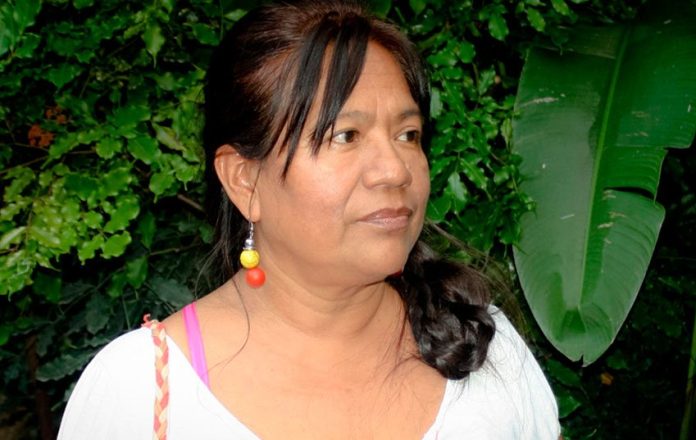
Domestic worker Petra Hermillo.
'This law gives us dignity,' says domestic worker Petra Hermillo.

The Senate has unanimously approved a new labor law that grants basic employment rights to domestic workers, including social security and paid vacations.

Already passed unanimously by the lower house of Congress, the legislation is expected to benefit more than two million people employed in private homes as cleaners, cooks, live-in maids, babysitters and gardeners, among other domestic roles. The vast majority of them are impoverished women.

President López Obrador, who presents himself as a champion of the poor and underprivileged, is now expected to sign the measure into law.

Under the legislation, anyone who employs a domestic worker must formalize the relationship with a written contract.

The law stipulates that employees must have the same rights as any other worker including a minimum wage, paid vacations, social security benefits, health care, annual bonuses and maternity leave.

A study by the International Labour Organization published this year revealed that only four in 10 domestic workers earn more than US $156 a month – a figure which is close to the minimum wage – and nine in 10 don’t have formal contracts or access to health care benefits.

“This law will help so many women like me continue to do this work but with awareness, with legal rights and without the shame that usually comes with it,” Petra Hermillo, a 60-year-old domestic worker, told The New York Times.

“This gives us dignity,” she added.

The law also prohibits people under the age of 15 from working in private homes and limits working hours to six per day for older teenagers. Live-in workers must be afforded a minimum of nine hours of consecutive rest in a 24-hour period.

In addition, domestic workers must be provided with the same quantity and quality of food for personal consumption as that provided to members of the family for whom they work, and dismissal due to pregnancy will be considered discrimination and carry legal consequences.

There is a long history in Mexico of discrimination against domestic workers, many of whom are indigenous women who travel to large cities from rural areas in search of work.

Hermillo, who founded an organization that offers counseling to those workers, said that some of her former employers didn’t allow her to eat the same food or use the same bathroom as they did.

When working as a live-in housekeeper, employers sometimes refused to pay her salary, she recalled, claiming that her board was her payment.

While approval of the new labor legislation by Congress is a big win for domestic workers, some people say that its enforcement could prove challenging.

“Many people will likely continue to hire domestic workers without registering or complying with the laws,” Maite Azuela, a Mexico City-based human rights activist and political analyst, told The Times.

“This will undoubtedly require a gradual cultural shift. It won’t happen overnight,” she said, adding that further legislation is needed to establish enforcement mechanisms.

Other experts argue that the financial cost of complying with the law – paying social security benefits alone could be as high as US $500 per year – will likely deter employers, and employees fearful of losing their jobs, from registering.

Nevertheless, senators from all parties praised the legislation.

Malú Micher, a lawmaker with the ruling Morena party, said the work of women in the home will finally be recognized for what it’s worth.

National Action Party (PAN) Senator Xóchitl Gálvez, a key proponent of the law, called on her colleagues in the upper house to immediately reach agreements with their domestic employees and register them for social security benefits on the website of the Mexican Social Security Institute (IMSS).

Approval of the labor law by Congress comes six months after the Supreme Court ruled that domestic workers must have access to Mexico’s IMSS social security scheme like any other worker.

Source: Milenio (sp), The New York Times (en) 

It takes a pueblo: family support was key during postpartum depression

0
In Mexico, families do things together, as a unit.

I haven’t always liked little kids. In fact, most of my adult life I’ve been one of those people who scowl when they’re being noisy or nosy or running around in public, and as my husband tells me “I don’t see my face” — I think I have a mostly neutral expression with maybe 5% annoyance showing, but the 70% I actually feel is clear.

I was one of those people who stirs that particular mix of anxiousness with indignation in even the most confident parent. Boy, have I ever had to eat my lousy attitude!

My daughter was born in the fall of 2013, and while she had us fooled for the first couple of weeks we soon realized that she was not a chill baby at all.

She’s 5 now and a dream of a child, but I have yet to meet a baby as consistently upset as she was; she cried and screamed at the top of her lungs as if she were being tortured pretty much constantly until well into her second year of life. She hardly slept.

It took us a good three months to really get breastfeeding down. I remember arriving, weepy, at the pediatrician’s office for her four-month appointment saying, “You said she would be so much better by her fourth month! What’s happening?”

“Colic,” he said.

But really, that’s just what we say when seemingly healthy babies cry all the time and we can’t figure out why.

During my pregnancy I’d planned on traveling around with her once she’d reached a couple of months. We’d go to Querétaro for a wedding and to see family and friends, get her United States passport in Mexico City, then home to Texas for her to formally meet her other country.

That is not what happened. She was so upset so much of the time that I just couldn’t, for one, subject an innocent public to her ear-splitting and constant screaming, least of all people confined to a bus for five hours with no way to escape.

I was also, simply put, a mess. In retrospect, I recognize that I suffered from severe postpartum depression that simply went untreated.

I don’t know if it’s simply not a well-known problem here or if fewer women in Mexico suffer from it because of a generally stronger support system for raising babies, but it was so bad at one point that I was petrified to walk out on to the second-floor balcony with her, terrified that in a moment of sudden exhaustion-induced psychosis after hours of her screaming that I’d toss her over.

All of this was with extensive help: from my mother-in-law and sister-in-law, from my husband doing everything he could short of nursing her himself, from the lady that helped us with the housework.

As Mother’s Day approaches (this article will come out a few days after) and Children’s Day festivities end, I’ve been thinking a lot about how we care for our children here, the spaces in general that children are allowed and expected to occupy, and the impossibility of being classified as a “good mother” by everyone you might come across.

After all, if something happens to a child, the question is never “but where was the father?” If a child arrives at school with messy hair or dirty clothes, no one thinks “I cant believe her dad would send her to school like that.”

That said, there’s a kind of organically emotional and structural support here for mothers and children that our North American compatriots and neighbors don’t get to experience, and people tend to reserve (open) judgement about one’s particular child-rearing methods.

It’s nice and necessary, of course, for parents to have some alone time and solo outings, but the expectation for parties, ceremonies and other events is that the family will arrive as a unit, no matter how small some of the members, and that everyone will keep an eye on the kids together in a way that lets them have a bit of freedom and movement without any parent having to “helicopter” above them 24/7.

There’s value in times and spaces that are only for children, but I love that so few things are considered “off limits” for them here; it integrates them into a real community from early on.

I also appreciate so much all of the “natural” help I receive from friends and family members, often without having asked for it. The proverb, “It takes a village to raise a child” is exactly right, and I’m a firm believer that humans are creatures of community, and that children were never meant to be raised by one or two isolated parents in one isolated, private home.

Mexico has proved that truism to me, and I am grateful every day to be raising my child here.

Five years later, I have the best daughter I could have hoped for. We can travel now, and people at the very least pretend to be charmed by her wherever we go (I, of course, think they really are, but in the end all we know is what we perceive. In either case, I appreciate the show of kindness.)

She’s my little buddy, affectionate and sharp. She is everything I wanted in a child: brave, smart, kind and outgoing in a way that I was always too shy to be but always hoped to achieve.

The childhood I’ve been able to give her in Mexico is not something I’d trade; she is welcome, expected and enjoyed in every space that people occupy, and every day I am proud and grateful to raise her here.

Happy (belated) Mother’s Day.

Sarah DeVries writes from her home in Xalapa, Veracruz.

CFE forgives 11 billion pesos in debt owed by half a million in Tabasco

0
cfe
For many in Tabasco, there's nothing to pay.

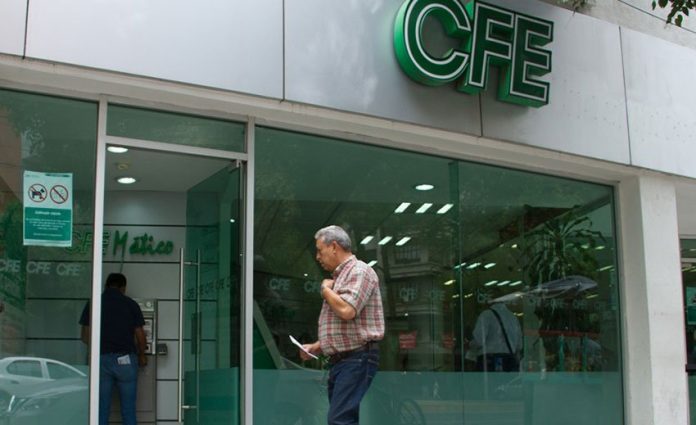
The Federal Electricity Commission (CFE) will cancel 11 billion pesos (US $577.6 million) in debt owed by more than 520,000 customers in Tabasco who joined a “civil resistance” movement against the public utility that began more than two decades ago.

Governor Adán Augusto López Hernández announced yesterday that his government had reached an agreement with the CFE for a “clean slate” to apply from June 1.

From that date, electricity customers in the 17 municipalities of the Gulf coast state will be charged “the lowest rate in the national electrical system,” he said.

The Morena party governor asserted that the deal called “Goodbye to Your Debt” represents the end of the “just and long-established complaint” of Tabasco residents about excessive electricity charges.

Speaking at an event attended by lawmakers and members of the business community, López said his government had been working on the agreement since the start of the year and that Tabasco native President López Obrador played an integral role.

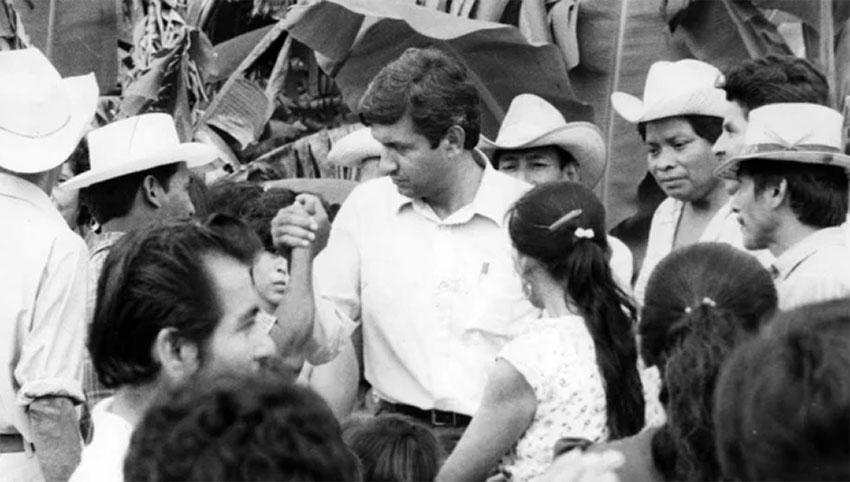
López Obrador in 1995, when he called on citizens to refuse to pay their electricity bills.

“Without his support, this agreement, which is truly a historical achievement for Tabasco residents, would not have been possible,” he said.

But the president’s involvement goes deeper than that.

After running for governor of the state 25 years ago and losing the election, López Obrador called on his supporters to refuse to pay their CFE bills, property taxes and water bills and disclaim responsibility for paying financial obligations to banks and government as a protest against alleged electoral fraud.

The civil resistance movement he launched in 1995 has continued to this day.

Tabasco Governor López explained that electricity customers with debts they wish to wipe clean must go to a CFE office to enter into a new billing arrangement. Cancelation of debt does not extend to business customers, López added.

Verónica Hernández, an electricity customer who declared “civil resistance” 10 years ago, welcomed the news, stating that she stopped paying her bills because she couldn’t afford them.

Ángel Antonio Jiménez, a resident of the municipality of Jalapa, also said he was happy about the deal but questioned what the benefit would be for people who have kept up with their bills.

“Those who have paid punctually also expect to receive some other benefit apart from the new rate . . .” he said.

There are also large numbers of electricity customers who haven’t paid their bills for years in Mexico City, México state, Chiapas and Veracruz as part of the “civil resistance” movement, which began in 1995.

The CFE said in October that four of every 10 customers in the capital don’t pay their bills and that it has lost billions of pesos in revenue as a result.

Shortly after he won last year’s presidential election, López Obrador pledged that his government would cancel debts owed to the CFE by people in “civil resistance,” declaring they “will not pay a single peso.”

Source: El Universal (sp), Radio Fórmula (sp)

Student can take his pick from some of world’s top universities

0
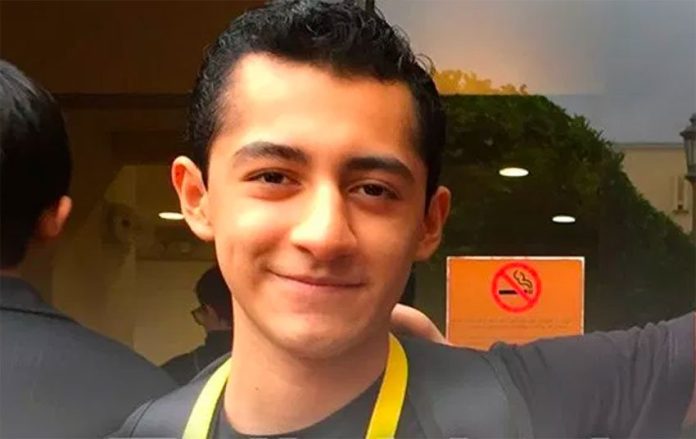
Nuevo León student Daniel Marín.

A high school student in Nuevo León has been invited to continue his studies on a full scholarship by some of the world’s top universities.

Nine universities —Harvard, Yale, Stanford, Columbia, Rice, Duke, Brown, Dartmouth and the University of Pennsylvania — have granted admission and scholarships to Daniel Marín Quiroz, 18, and all but one would be on a full scholarship.

Yale was the exception, offering to waive 92% of his tuition. Additionally, Harvard and Stanford universities offered to cover all of the young scholar’s living expenses.

Marín, who is a student at the Tecnológico de Monterrey Preparatory School, said that to gain admission to the universities he had to attend numerous interviews in person and on Skype, pass the SAT college admissions exam and submit a series of letters of recommendation.

He was further able to demonstrate his abilities through his history of participation in international and national physics and mathematics competitions. He has won the gold medal twice at the National Physics Olympiad and won a bronze medal last year at the International Physics Olympiad in Portugal.

Marín also composes electronic music, plays drums, guitar and piano, and tutors other students in mathematics and physics in his spare time.

He is currently taking stock of his options to decide which course of study will best further his career and research goals.

“My choice as to where I will study for the next four years of my life is right now between Harvard and Stanford University. I will study economics, computer science and theoretical physics.”

Source: El Universal (sp)

Grand Prix’s Mexico City run could end this year but talks continue

0
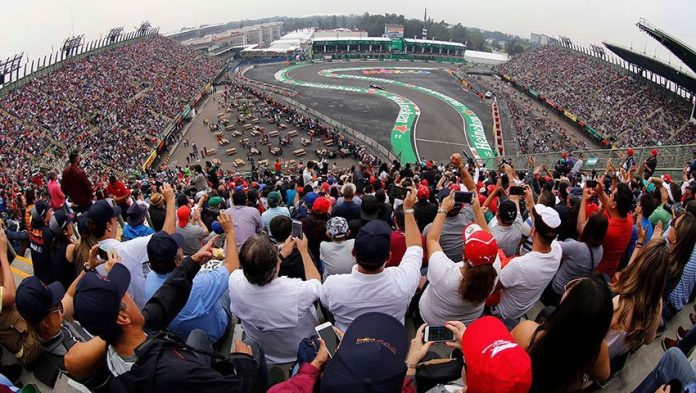
Racing fans fill the stands at the Mexican Grand Prix.

The future of the Mexican Grand Prix auto race remains in doubt as the race’s organizing committee has failed to reach an agreement with the federal government on funding.

The ESPN sports network reported that President López Obrador’s administration has not been willing to provide the 800 million pesos (US $42 million) necessary to keep Mexico in the Formula 1 races over the next five years.

Mexico City Mayor Claudia Sheinbaum offered to provide 400 million pesos to maintain the Hermanos Rodríguez racetrack and suggested that the rest of the funding should come from the private sector.

Mexico’s five-year contract with the Grand Prix provided 360 million pesos, most of which was public money.

Mexico is not the only country considering dropping out of Formula 1: Spain, Germany and the United Kingdom are also considering not renewing their contracts.

However, newcomers Vietnam and the Netherlands have been added to the race calendar.

The Grand Prix is returning to the Netherlands after a 35-year absence, but the race will not be dependent on government money. The newspaper El Economista revealed that the necessary funds will be provided by corporate sponsors and ticket sales.

According to statistics provided by the previous Mexican government, the 2017 Grand Prix generated 14.8 billion pesos (US $778.2 million) in economic spillover, making it the country’s most economically significant sporting event that year.

Meanwhile, negotiations in Mexico continue.

Source: El Economista (sp), ESPN (sp)

Brother of quake-damaged school’s owner will get 5-million-peso reward

0
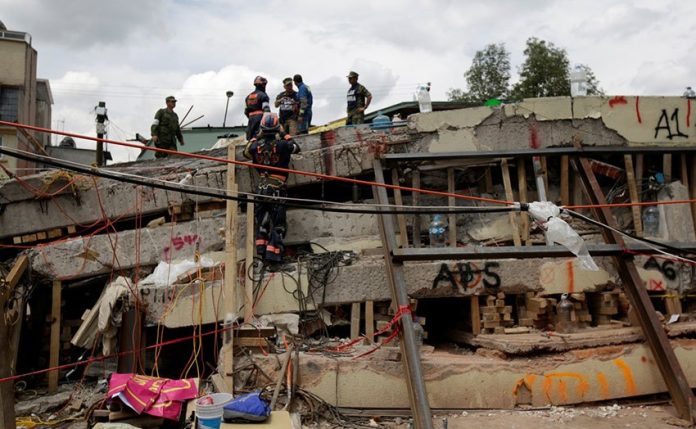
The Enrique Rebsamen school after it collapsed in the 2017 earthquake.
The Enrique Rébsamen school after it collapsed in the 2017 earthquake.

The brother of the owner of a Mexico City school that collapsed in a powerful September 2017 earthquake, killing 19 children and seven adults, will collect a 5-million-peso reward for providing information that led to the arrest of his sister on manslaughter charges.

Mónica García Villegas was arrested at a restaurant in the capital Saturday morning, Mexico City Attorney General Ernestina Godoy told a press conference the same day.

It is alleged that an apartment built on top of the wing of the Enrique Rébsamen school that collapsed had put too much weight on the structure and contributed to the September 19, 2017, tragedy.

García is suspected of colluding with corrupt officials in the borough of Tlalpan to gain permits to build the apartment, which was her residence.

On Monday, the Mexico City Attorney General’s Office (PGJ) formally accused her of falsifying construction permits.

The school owner and principal known as Miss Mónica is currently in preventative custody in a Mexico City prison and will face a court hearing tomorrow which will determine whether she is to stand trial.

Mexico City officials said yesterday that the PGJ will pay 5 million pesos (US $262,300) to a family member of García who has been identified as her half-brother Enrique García because he provided details about his sister’s whereabouts that led to her arrest.

However, that version of events has been called into question by García’s former lawyer.

Javier Coello Trejo said the school’s owner called him on Saturday morning to tell him that she had “turned herself in at government headquarters.”

The lawyer said in an interview that García’s sister-in-law and brother also told him that was the case, adding that he had no reason to lie.

The assertion by Mexico City authorities that García was arrested at 11:28am Saturday at a restaurant in southern Mexico City where she was eating breakfast with her father “doesn’t add up or check out,” Coello charged.

Video footage that purportedly shows García entering a restaurant shows images of a different woman, the lawyer argued.

“She [the woman in the video] is not the teacher [García] and I don’t know the man. How did they die Monica’s hair gray so quickly? Besides, you don’t see the police arresting her . . .” Coello said.

However, if García turned herself in, as the lawyer claims, she would not have been remanded in preventative custody, PGJ officials said.

The newspaper Milenio pointed out that neither involuntary manslaughter nor the use of falsified documents is considered a “serious” crime that warrants preventative prison.

But Carlos Marín, a prominent journalist for the same newspaper, disputes the officials’ claim that García would have been allowed to await the outcome of her legal proceedings in freedom because she was a fugitive for 17 months before her arrest.

“. . . It’s very probably not true because those who evade legal prosecutions are sent to prison because of the understandable presumption that they tend to abscond,” he wrote.

Marín has maintained in his newspaper column that García is innocent.

Source: Milenio (sp) 

Mother’s Day celebration goes south after barbacoa poisons 27

0
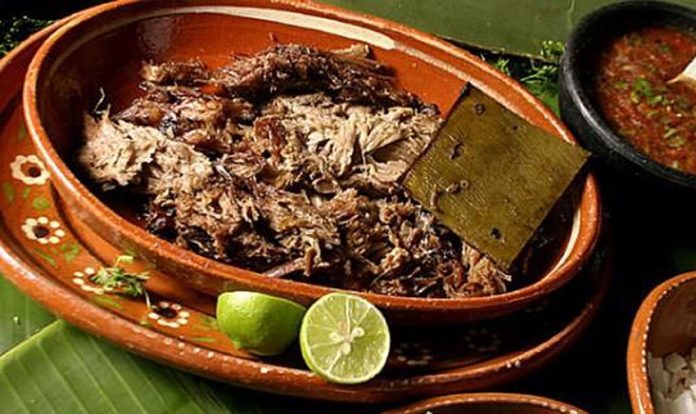
Barbacoa has been blamed for poisoning 27 in Oaxaca.
Barbacoa has been blamed for food poisoning in San Sebastián Coatlán.

Enjoying a bite to eat at public events is proving risky: two weeks ago more than 1,000 people came down with food poisoning after eating cake at Children’s Day celebrations, while the latest incident has been blamed on bad barbacoa.

At least 27 people became ill in San Sebastián Coatlán, Oaxaca, where the municipal government hosted a Mother’s Day celebration last Friday and served barbacoa for the event.

Health official Mario Martínez Rojas said the local IMSS clinic was overrun by the number of cases and ran out of medical supplies to care for the victims of food poisoning.

In response, the state government sent Health Secretariat personnel to help out.

Martínez ventured a guess that the barbacoa, a dish of meat usually cooked by steaming, could have spoiled due to high temperatures or because hygiene protocols were not observed during its preparation.

Source: Milenio (sp)

Choose your adventure of history, gastronomy or art at Saturday Bazaar

0
Some of the beautiful pieces by Ceramicas de Tonalá that can be found at the Saturday Bazaar.

Saturdays are the busy days along the beautiful cobblestones of Colonia San Ángel in southwest Mexico City as tourists flock, flaunt and ogle their way to El Bazaar Sábado. But there’s still a bit of solace to be had, if you know where to look.

The Saturday Bazaar is, perhaps, the most high-end of Mexico City’s weekly markets and one of the most popular, even featured on Gwyneth Paltrow’s goop.com (to give you an idea what we’re working with).

Live Bossa Nova music outside the fancified Saks Restaurant sets the scene for an upscale afternoon in San Ángel.

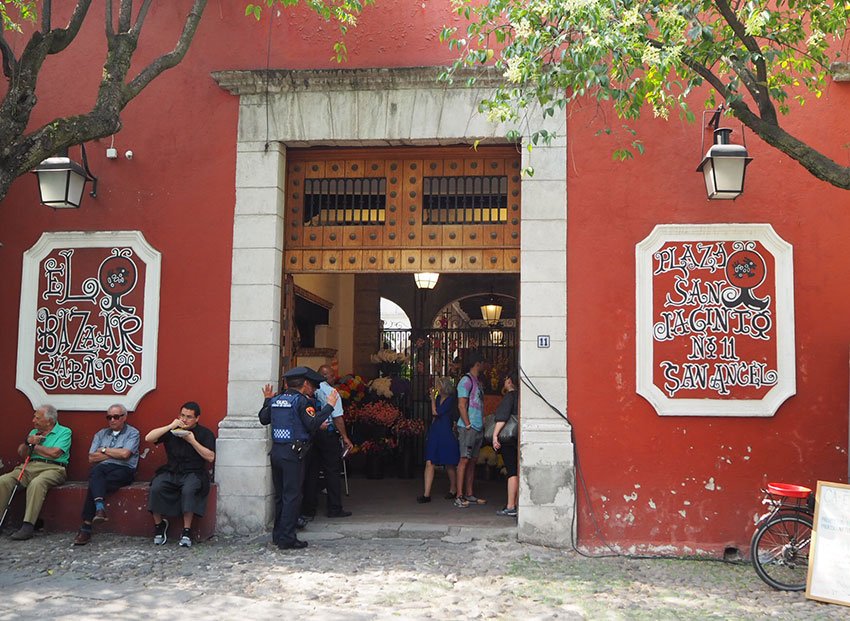
Bazaar Sábado, given its Anglo-Spanish name by its American founders, was conceived as a weekly tianguis to display Mexican crafts and international contemporary art. The bazaar opened at Doctor Gálvez #23 in 1960 but quickly overtook its space and moved to its current, gorgeous 17th-century colonial home at Plaza Jacinto #11 in 1964.

As you enter the stone archway there is a deep country club vibe among the pressed cottons and wide-brimmed sun hats. You almost expect a passing polo player to pull you up into the saddle for a better view of the works.

The entrance to El Bazaar Sábado at Plaza San Jacinto #11.

Yet nearly all the items are flawlessly crafted. The shops are run out of separate rooms throughout the mansion and mostly tended by the artisans who actually make the product.

At the entrance, José Antonio Rodríguez Pérez (the son of one of Bazaar Sábado’s founders) sells his sexualized surrealist sculptures. The intricate designs beg to be touched and the moveable circular mirrors to be spun for a trippy view of the room.

At Cerámica de Tonalá, the figures and dinnerware in ceramic and glass are well-priced for their perfection – the styles ranging from kitschy/cute to minimal utilitarian.

Upstairs, young devotees of famed jewelry maker Olga Hinojosa sell her flora-inspired, intricately designed sterling silver rings and pendants to a whole new audience, while the artist, at 82, continues to design and teach in Cuernavaca.

In the stunning courtyard, the feel of the country club continues with a sun-dappled buffet at Restaurante Bazaar Sábado. However, the fare is thoroughly homecooked Mexican and a surprisingly good deal at 215 pesos.

Across the street, Plaza San Jacinto is chock full of artworks for sale by their creators, running the gamut from original talent to telltale hackery. There are new artists in their 20s and some who have been selling here for decades, from the time when sales began.

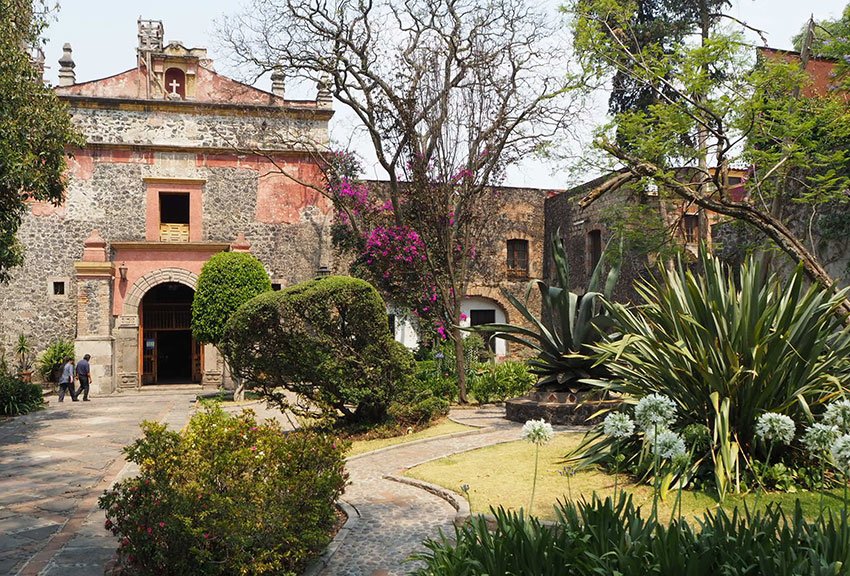
The gardens outside the Parish of San Jacinto.

Perfect photo realism; huge, horrendous vomits of color; traditional sculptures and masks; punkified historical figures; or, sure, a portrait of a cat pilot barrel rolling his fighter jet over patches of farmland below. But this is one of the largest weekly sales of working artists in the city, and there is certainly something to be found for every taste.

Across from the plaza is Museo Casa Del Risco, worth a free visit for the centerpiece fountain alone, which is made of hundreds of broken pieces of historical pottery from around the world. The museum was the former home of the one-time governor of the state of México, Isidro Fabela, and features his collections of Baroque religious paintings and European portraits.

Take a walk up the winding staircase for the 1850s lithographs of Plaza San Jacinto and compare it to the ultra-modern, live view out the window to the plaza below.

Continuing on Calle Benito Juárez, you’ll run along the outdoor Saturday Bazaar with a bit more of a modestly priced selection, curated toward local and international tourists of the eclectic, individualist, natural fabrics variety.

The occasional Lamborghini passes as we (I) all hope that it might just smash a fender on a larger than average cobblestone. And middle-aged ladies meander through in blinding pink and yellow floral prints that challenge the color spectrum, threatening to break a rainbow right in half.

Just a touch farther on Benito Juárez, a lady selling tiny sweet pancake-like gorditas keeps watch at the gate to the Parish of San Jacinto, a Dominican church from 1596.

Ariosto Otero's 2008 mural outside of Mercado Melchor Múzquiz.
Ariosto Otero’s 2008 mural outside of Mercado Melchor Múzquiz.

The bougainvillea-covered walls and lush grounds are small but wonderfully tended, and it’s a welcome, surprisingly silent escape from the surrounding bustle. Don’t miss the little cafe in the back, so small that it’s almost hard to find.

Back down into town along Calle Arteaga and the scene is lively, though decidedly more local. Along the back entrance to Mercado Melchor Múzquiz run a number of taco stands with the chopped or stewed tacos of your choice – all of them good.

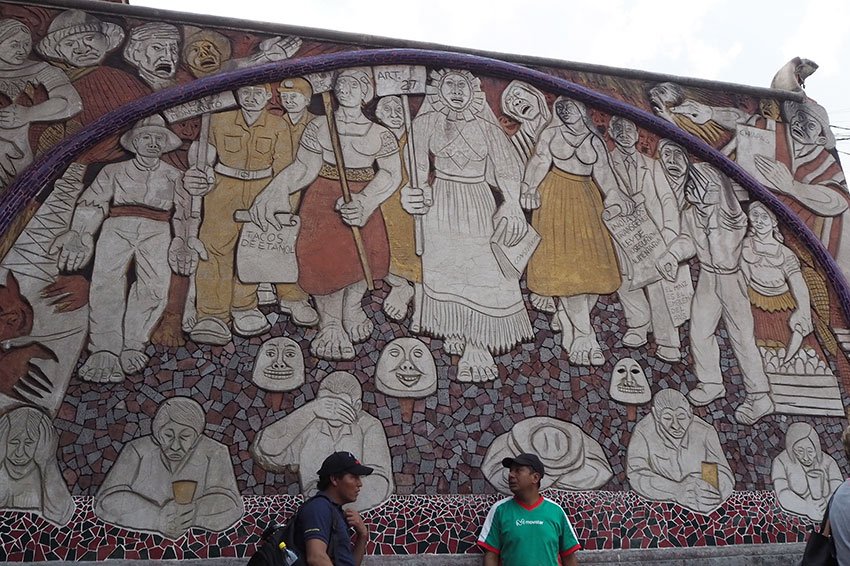
Mercado Múzquiz is said to be where Frida Kahlo and Diego Rivera regularly did their shopping in San Ángel, and the market’s main attraction runs across the façade at the Avenida Revolución entrance – a mural by Ariosto Otero. A huge creation in concrete and stone, the mural was added when the market was renovated in 2008, and represents everyday market activities and features popular artists of music, cinema and the visual arts like Rivera, Cantinflas and Pedro Infante.

And you can take it all in while you wait in the deep but fast-moving line for San Ángel’s best seafood, just through the mural threshold at Marisquería La Bamba San Ángel.

• Bazaar Sábado is on Plaza San Jacinto #11, open Saturdays from 10:00am to 6:00pm and Mercado Melchor Múzquiz is at Avenida Revolución and Múzquiz, open from 11:00am to 6:00pm, both in Colonia San Ángel.

This is the 10th in a series on the bazaars, flea markets and markets of Mexico City:

600 evacuated after fires break out again in Primavera Forest

0
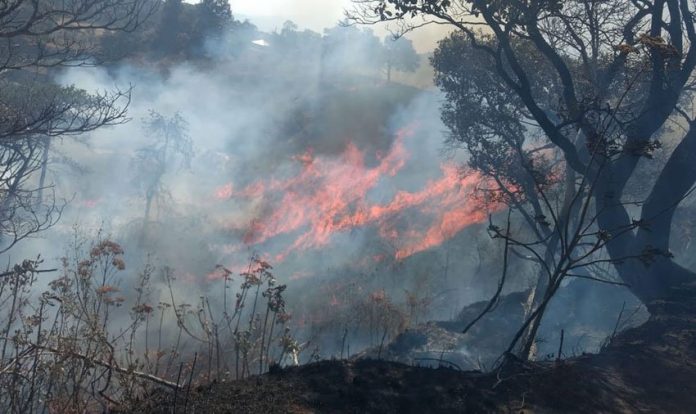
Wildfire yesterday in Pinar de la Venta, Jalisco.
Wildfire yesterday in Jalisco.

There were more fires in the Primavera Forest in Jalisco yesterday and after one threatened an inhabited areas, authorities evacuated 600 people.

The state government said a fire broke out in the Mesa de los Caballos region of the forest yesterday at 3:40pm, but was later controlled.

At 6:10pm, another fire broke out in Paredones de la Venta, prompting the evacuation of 600 people from the Pinar de la Venta neighborhood in Zapopan.

[wpgmza id=”109″]

The governor said on Twitter that although no injuries or loss of real estate had been reported, an undetermined number of vehicles had been destroyed in the blaze.

Footage shot by residents of Pinar de la Venta showed people using hoses and buckets in an attempt to control the fire as it crept closer to their properties and consumed power lines.

Shifting wind direction and speeds made firefighters’ work more difficult, but the fire was declared under control shortly before midnight.

As of Tuesday afternoon the state was fighting 15 active wildfires.

Source: Reforma (sp)

High ozone levels worsen Mexico City contamination, trigger another alert

0
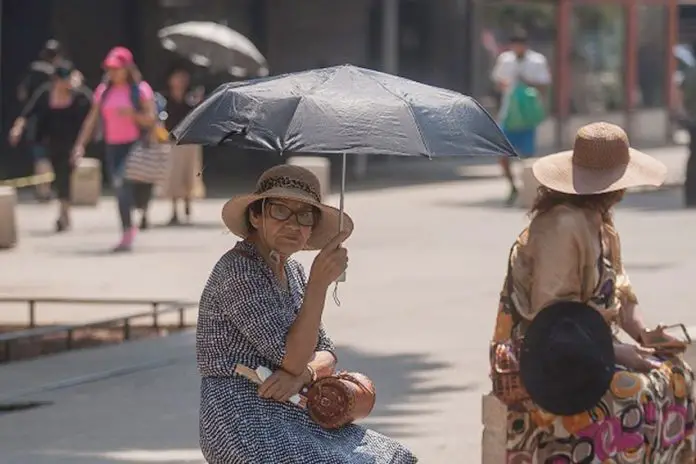
A woman shades herself from the sun in Mexico City, where more hot weather is in the forecast.

High ozone levels worsened already severe contamination in Mexico City yesterday, leading authorities to declare another emergency alert and impose restrictions on the circulation of vehicles.

Air quality in the capital on Tuesday was the worst in five years, according to a report in the newspaper El Universal.

Smoke from fires burning in and around Mexico City and in central and southern states is the primary cause of the contamination but hot and dry conditions with little wind have exacerbated the situation.

The Environmental Commission of the Megalopolis (Came) issued an Extraordinary Environmental Contingency yesterday morning for the Mexico City metropolitan area after measuring extremely high levels of fine particulate matter known as PM2.5.

Later yesterday, Came activated an additional Environmental Contingency due to high levels of ozone in the atmosphere.

“Today, at three in the afternoon, two contaminants combined, contaminants of particles 2.5 and ozone,” Mayor Claudia Sheinbaum said in a video on social media.

“This can cause greater harm to health. So we made the decision to increase the measures of environmental contingency for tomorrow [Wednesday].”

Electric and hybrid cars as well as vehicles that have passed emissions tests and are identified with “0” and “00” holographic stickers are free to use roads in the Mexico City metropolitan area today.

But higher-emission vehicles and private cars with license plates from a different state or a foreign country are not permitted to circulate today between 5:00am and 10:00pm.

Authorities in México state have imposed restrictions on the circulation of vehicles in 16 municipalities of the Valley of Toluca, where an Environmental Contingency has also been declared.

In addition to the vehicular restrictions, Sheinbaum said that roadwork has been suspended and a professional soccer match scheduled for Mexico City today has been postponed.

The mayor explained that restrictions were not imposed on cars as a result of the initial emergency alert because current contingency plans are not activated by high levels of fine particulate matter.

However, federal environmental official Sergio Sánchez told a press conference yesterday that a PM2.5 contingency program will now be established.

While fewer cars on the roads in the capital today will help to prevent a further deterioration of air quality, the Environmental Commission of the Megalopolis said in a statement this morning that there are “unfavorable [climatic] conditions for the dispersion of contaminants.”

At 10:00am today, Came said that air quality in most of the metropolitan area of the capital is still “bad” due to the high presence of fine particulate matter and that wind speeds were just 7 kilometers per hour.

Ciudad Nezahualcóyotl, a municipality just east of the capital in México state, continues to be the most polluted area of the Valley of Mexico, according to the Imeca index.

Source: El Universal (sp)