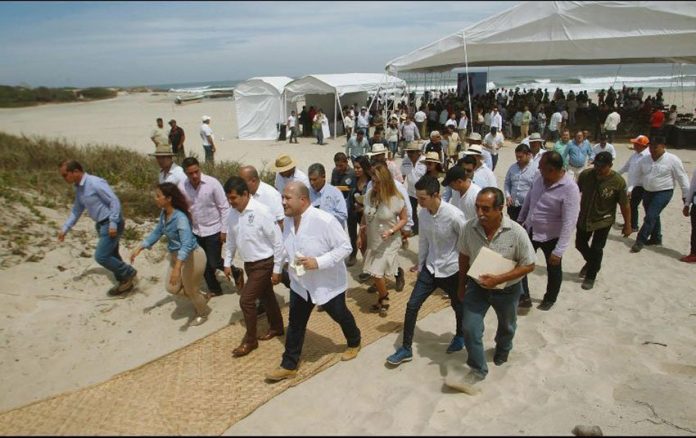
Governor Alfaro leads a tour of the beach during the announcement of a Costalegre development plan.
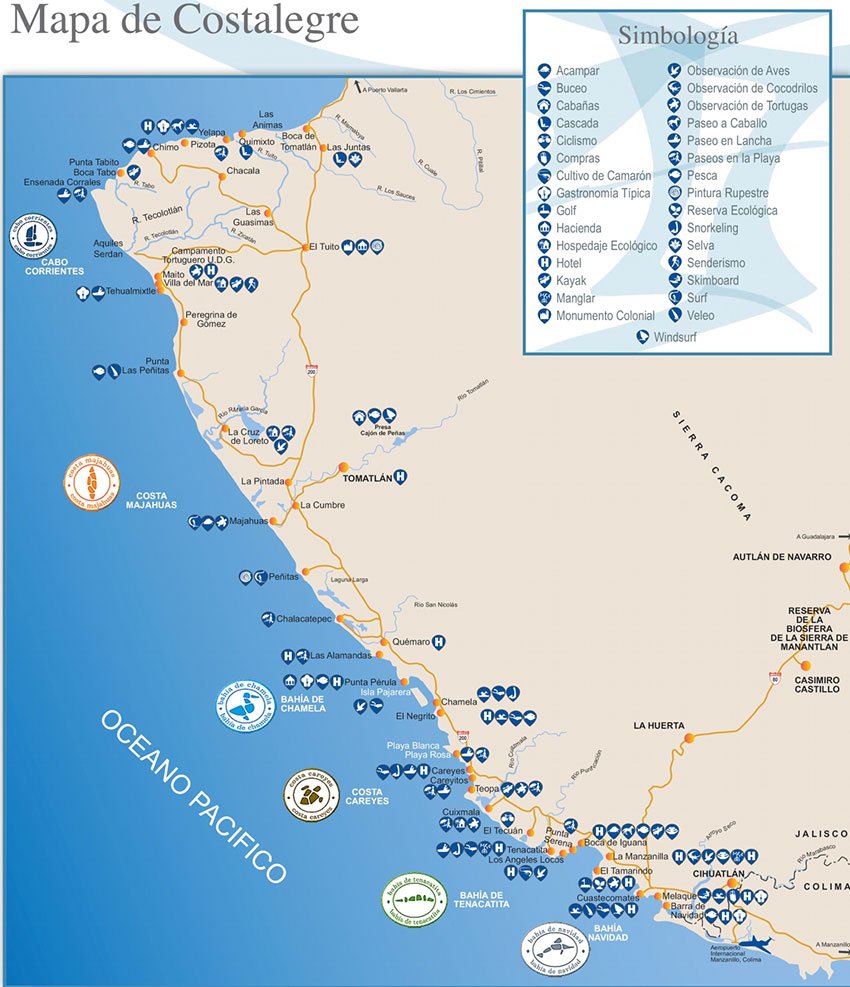
The governor of Jalisco has announced a 30-year master development plan for the coastal region of the state known as Costalegre.
Speaking at an event Saturday at Chalacatepec beach, Enrique Alfaro Ramírez said that the plan will guarantee economic growth and development in the municipalities of Cabo Corrientes, Tomatlán, La Huerta and Cihuatlán during the next three decades.
A 3.8-billion-peso (US $200-million) highway linking Puerto Vallarta to the region will be the centerpiece of the plan, which will also include other infrastructure projects such as new schools and health clinics.
Construction of about 3,000 new hotel rooms — mainly five-star — will be permitted within an economic corridor that will urbanize just 1.7% of the 743,300 hectares that make up the Costalegre region, Alfaro said.
A governing body made up of members of civil society, state and municipal authorities, investors and experts will be responsible for drawing up the specific details of the development plan and implementing it, he explained.
The Costalegre region of Jalisco.
“The intention is that this year we will be able to have a great agreement established with the political, social, economic and academic actors of Costalegre in order to define the direction of this region,” Alfaro said.
“This project will have a direct impact on social well-being, the economy, land-use planning and protection of the environment. It’s a historic day because today the Costalegre [region] begins a new stage,” the Citizens’ Movement governor declared.
Alfaro said the plan will help to improve the quality of life of Costalegre residents and explained that environmental impact studies for the highway project as well as the process to obtain rights of way will conclude soon, meaning that tendering to find a company to build the new road will take place this year.
Once built, travel time between the Puerto Vallarta International Airport and Chalacatepec – a destination sometimes referred to as the new Cancún because of its natural beauty and tourism potential – is expected to be just 50 minutes.
Alfaro stressed that the development in the Costalegre region will not be harmful to the environment and that particular care will be taken not to affect sea turtle nesting grounds.
“. . . The basic core from which this [development] model will be built is to take care of our environmental assets [and] to look after sustainability . . .”
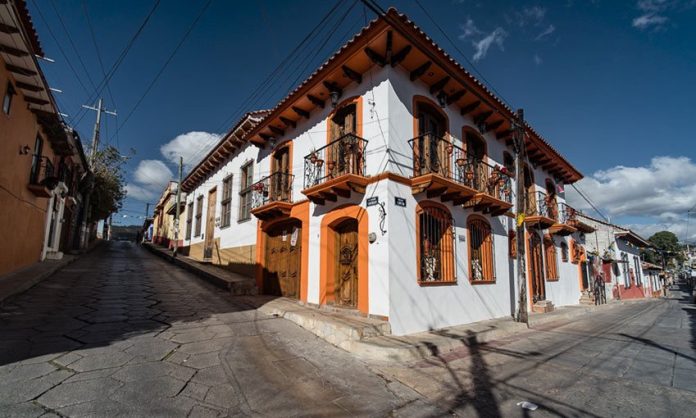
A street corner in El Cerrillo, which provides a unique Mexican experience.
Few cities in Mexico combine colonial architecture with indigenous heritage like San Cristóbal de las Casas.
This Pueblo Mágico is famous among adventurous tourists looking for a unique Mexican experience, and one neighborhood in particular provides this experience in spades.
Founded by freed indigenous slaves in the middle of the 16th century, El Cerrillo hosts some of San Cristóbal’s top attractions, from the arts and crafts of the artisan market to the museum and library in Casa Na Bolom. A day spent exploring this neighborhood is well worth it for any visitor to San Cristóbal.
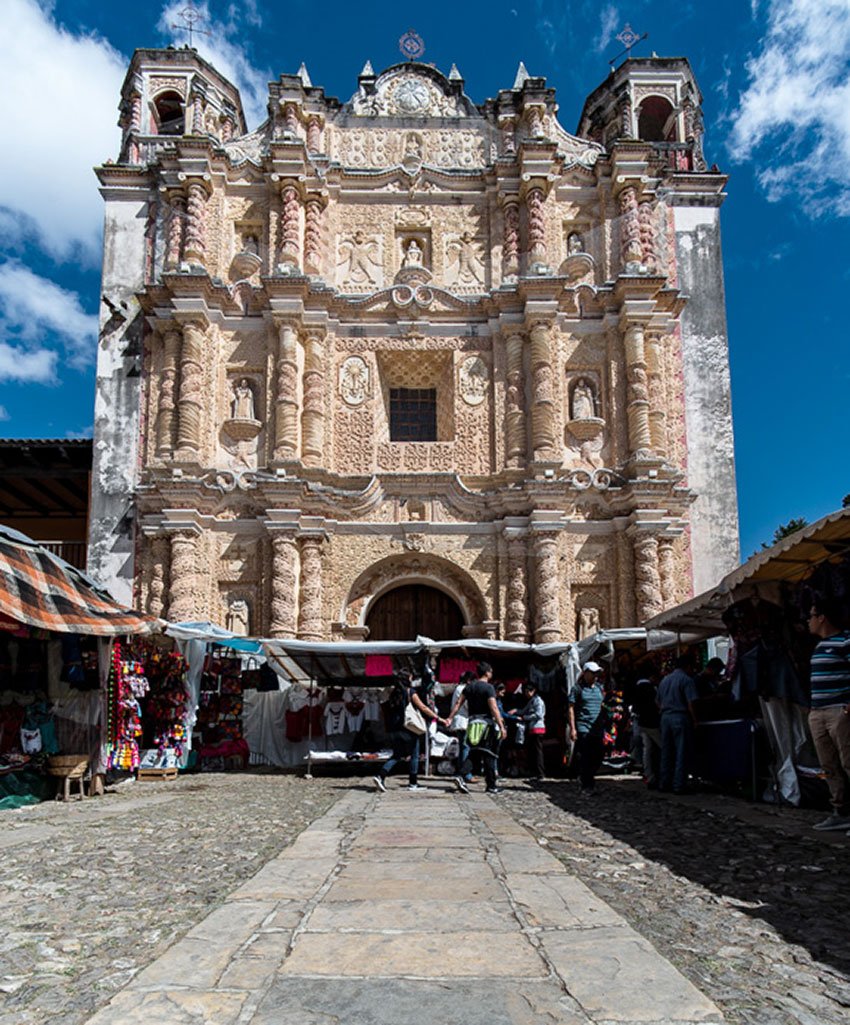
I begin in the Museo de Los Altos de Chiapas to learn more about the history of Chiapas and San Cristóbal de las Casas. The museum is housed in the Ex-Convento de Santo Domingo, one of the oldest buildings in San Cristóbal, on the western edge of the El Cerrillo neighborhood.
Inside the baroque styled ex-convent, the museum houses a collection of artifacts from both pre-Hispanic times and the period of colonization by the Spanish. Alongside the relics, there is a dedicated space to the history of the town up to the end of the 19th century.
Facade of the Ex-Convento de Santo Domingo.
Here, I learn that the city, originally called Villa Real, was founded by Spanish conquistador Diego Mazariegos in 1528, making it one of the oldest colonial towns in Mexico. However, the local Tzotzil and Tzeltal people call the area Jovel, meaning “the place in the clouds.”
That’s perhaps a more fitting name, given the usual low-lying fog that greets early risers most mornings in San Cristóbal de las Casas.
Being a lover of maps, my favorite piece in the museum was the wall-sized city plan dating from 1844. Written in the margins of the map is the history of the various barrios of San Cristóbal at that time, including the fascinating history of El Cerrillo.
In the conquest of Latin America, the Spanish set up encomiendas, a system that granted land rights to conquerors and other well-connected elites, and allowed these encomenderos to exploit the labor of the native population. These encomenderos rarely treated the laborers well and in 1549, a Spanish judge named Gonzalo Hidalgo de Montemayor arrived in San Cristóbal to investigate the mistreatment of the indigenous.
Upon discovering many of the abuses the encomenderos inflicted upon the workers, he ordered the indigenous released from slavery. While some returned to their homes, most of the now free people established the El Cerrillo neighborhood on a small hill overlooking the center of town. Here, they were free to live in their own settlement, alongside the Spanish.
Occupying the same building as the museum, the Centro de Textiles del Mundo Maya hosts one of the finest collections of the most ubiquitous form of Mayan art: textiles. Elaborately designed homemade clothing is found everywhere in the city, as most of the native population still wear their traditional dress every day. However, I didn’t realize the importance of the dress to the indigenous until I visited the Textiles Center.
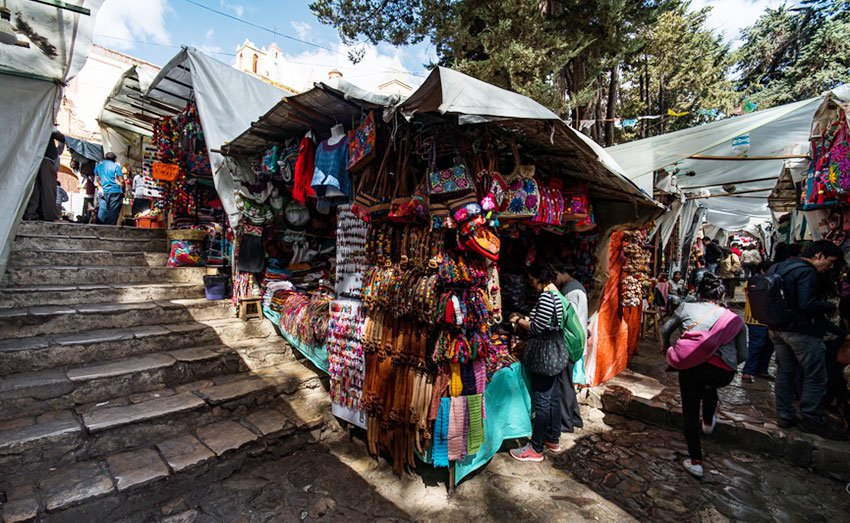
The Artisan Market in El Cerrillo, San Cristóbal.
The craft is a form of artistic expression and has been passed down from generation to generation, dating back to pre-Hispanic times. Although methods and materials have changed and evolved since the classic period of Mayan civilization, the importance of the art to the modern-day descendants of the Maya still exists.
Most communities have their own distinct styles and incorporate various materials based on the local climate. For example, in the warmer areas such as Lacanja, cotton is generally used, while areas with colder climates, such as nearby San Juan Chamula, wool is the primary fabric used.
The center hosts upwards of 2,500 pieces of textiles from all over the region, with items rotating in and out of display to prevent the older materials from degrading too much. Also inside is a gallery area, where temporary exhibits are displayed throughout the year.
Right on the steps of the ex-convent is the local artisan market, San Cristóbal’s largest market for handcrafted textiles. The maze-like outdoor bazaar is packed full of vendors selling brightly colored and detailed shirts and blouses, blankets and bags. Along with the textiles, the market also has vendors selling amber and jade jewelry from the town of Simojovel, located to the north.
While I enjoy meandering through the artisan market and admiring the artisanal goods, food markets are more my thing, so I make my way north along Avenida Gral. Miguel Utrilla to Mercado Municipal Jose Castillo Tielemans.
In the outer plaza in front of the mercado, rows of large umbrellas and tarps provide shade for the vendors in the open-air portion of the market. Mangos and papayas are stacked high in buckets, while fresh lettuce, tomatoes and onions await local shoppers looking for their weekly groceries.
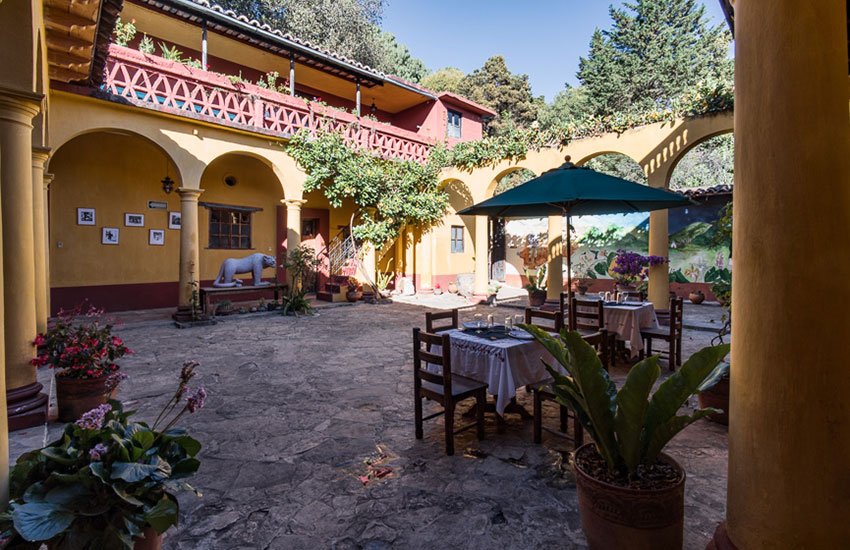
Dining area of Casa Na Bolom.
Many Tzotzil and Tzeltal people make their living selling the fruits and produce that come from the countryside of Chiapas, and the market is ground zero for locals looking to do their weekly shopping.
I enter the front doors of the market and wait for my eyes to readjust from the bright sun outside to the dimly lit interior.
As I regain my vision, I notice the different world inside, with rows of fruit vendors replaced by butchers and fish shops. The aroma of spices and meat from nearby taco stands fill the air as I make my way through the market, past the squawking of live chickens and turkeys, and out the back and on to the city streets.
I wander through the cobblestone alleyways, through El Cerrillo’s main plaza where the 17th-century Temple of the Lord of Transfiguration still stands, up and down the hilly terrain, past galleries, residences and restaurants housed in multicolored colonial buildings designed with elaborate ironwork, to finally reach Casa Na Bolom on the far side of the neighborhood.
Casa Na Bolom, or House of the Jaguar in the Lacandon language, is a museum, restaurant and hotel with a focus on preserving Lacandon culture and heritage while working to conserve the rainforest of Chiapas.
Originally the home of Danish explorer Frans Blom and his journalist and documentary photographer wife Gertrude Dubi Blom, today the museum hosts many of the artifacts and findings from Frans Blom’s numerous expeditions into the jungles of Chiapas from the early and mid-20th century.
The inner courtyard is reached via a mustard yellow entranceway, where a garden-like atmosphere with vibrant flowers and green plants competes with large trees for the sunlight from the sky above.
Doorways on each side of the courtyard lead to various exhibits, from art galleries and selections of Gertrude Blom’s photography to artifacts from the Lacandon jungle and ancient Mayan ruins such as Palenque.
A connecting walkway near the back of the property leads to a smaller, more jungle-like courtyard. Down a narrow path, a grand room with a beautiful brick fireplace and an expansive bookshelf appear. How I yearn to pull up a seat in front of a fire and glance through one of the 9,000+ books on the shelf! But alas, it’s time to leave and head back to the center of town.
As one of the oldest neighborhoods in Mexico, El Cerrillo provides a glimpse into the history and culture of the indigenous peoples of Chiapas in a well-preserved colonial town. A day spent exploring this area should be on the agenda of every visitor to San Cristóbal de las Casas.
Mark Locki is a Canadian writer and a frequent contributor to Mexico News Daily.
The costs of initial studies for construction of the Maya Train are below international standards for similar projects, according to the head of the National Tourism Promotion Fund (Fonatur).
New statistics provided last week by Fonatur – which is managing the ambitious Yucatán peninsula rail project – showed that study costs have shot up 710% to 972 million pesos (US $50.8 million) from 120 million pesos (US $6.2 million) five months ago.
But Rogelio Jiménez Pons sees no reason for concern, stating that the latter figure was merely a preliminary forecast from the former government – “a favor” to ensure that initial costs for the current administration’s signature infrastructure project were considered in 2019 budget calculations.
“A project of this nature normally involves costs for studies and plans of 2% to 5% of the total cost of construction,” he said.
“For the specific case of the Maya Train we’re thinking that in consideration of the 150 billion pesos [US $7.9 billion] that the project will cost, the maximum cost of the studies shouldn’t exceed 3 billion pesos,” Jiménez added.
“I calculate that we’ll be far [short] of that [figure] . . . If we pass 3 billion pesos, then yes, we would be in a difficult situation.”
The Fonatur chief predicted that more previously unconsidered costs will arise but he also pointed out that the 972-million-peso estimate is more than 2 billion pesos short of 2% of the total projected cost for the Maya Train.
The results of the various studies for the project, including ones on social impact, soil mechanics and archaeological preservation, will inform the environmental impact statement (EIS), which is expected to be presented to the Secretariat of the Environment (Semarnat) in the last quarter of this year at the latest.
The EIS will determine the viability of building a new railroad between Escárcega, Campeche, and Cancún, Quintana Roo.
Tracks already exist between Palenque, Chiapas, and Izamal, Yucatán, meaning that new environmental studies are not needed for that section of the route, the newspaper El Economista reported.
The government has said that rehabilitation work will be undertaken to prepare the existing railroad for incorporation into the 1,500-kilometer-long Maya Train.
Jiménez said that while that work is being carried out indigenous people who live in communities near the train’s route will be consulted about the project in accordance with the International Labor Organization’s Indigenous and Tribal Peoples Convention.
In March, the Mexican Institute for Competitiveness (Imco), a think tank, said in a report that “if planning is not optimal,” the project could cost almost 1.6 trillion pesos (US $85 billion), an amount more than 10 times that estimated by the federal government.
Criminal groups have stolen medications worth tens of millions of pesos from the State Workers’ Social Security Institute (ISSSTE) during the past decade, insurance documents show.
In countless robberies of ISSSTE warehouses since 2008, thieves have made off with large quantities of controlled, specialty and high-cost drugs used to treat autoimmune diseases, cancer and psychiatric disorders, the newspaper Milenio reported.
The largest heist occurred in April 2009 when armed men stole medications valued at more than 27.8 million pesos (US $1.5 million at today’s exchange rate).
When Milenio asked ISSSTE for a list of the drugs stolen, the federal agency denied that the robbery had occurred.
However, the newspaper confirmed that both the federal Attorney General’s Office and its counterpart in Mexico City opened investigations into the theft, and insurance records obtained by Milenio show that several costly drugs were stolen on April 8, 2009.
They included Sorafenib, a drug used to treat kidney and liver cancer, Eptacog Alfa, a hemophilia medication, and leukemia medicine Dasatinib.
Many extortion calls are made by inmates in Mexican prisons.
The United States revealed that the FBI investigated 113 kidnapping cases involving U.S. citizens and residents in Mexico in 2018, and warned its citizens to take extra care when traveling to Mexico City because of the “serious risk of crime.”
Of the 113 cases, 64 involved a U.S. citizen, in 10 cases the victim was a U.S. permanent resident of Mexico and in 39 cases, an extortion call or ransom demand was placed to a number in the U.S.
A report by the Overseas Advisory Council (OSAC) found that the general crime rate in Mexico City exceeds the U.S. national average.
“The low rate of criminal convictions contributes to the high rate of crime. Although there is no pattern of criminals specifically targeting foreign or U.S. businesses/personnel, criminals will target anyone perceived as lucrative and vulnerable.”
The report warns visitors of the risk of killings, armed robberies, kidnappings, sexual assault, auto theft, credit card fraud. It also singles out Colima, Guerrero, Michoacán, Sinaloa and Tamaulipas for the added risk of cartel violence and roadblocks, advising U.S. citizens not to visit those states.
The agency has included Mexico on its list of 35 countries where its citizens were at increased risk of being kidnapped and noted that the Mexican government recorded a total of 1,480 kidnaping cases in 2018. The report asserted that the states with the highest recorded numbers of kidnappings were Guerrero, Veracruz, México and Tabasco, warning that “police (or former law enforcement officials) have been implicated in many of these incidents.”
The State Department report added that the increase in crime is due to diverse factors that have strengthened organized crime operations in recent years, allowing them to operate with relative impunity.
“Mexico is experiencing a combination of conditions that collectively degrade the security environment in certain areas. The government has captured some of its most wanted criminals. Consequently, organized criminal groups are becoming much less organized and disciplined. Various groups have splintered into smaller gangs, which have branched out into different illegal business activities, and associated violence is spreading across Mexico.”
The report also expressed a litany of additional concerns, including virtual kidnappings, weak or corrupt police, dangerous travel conditions, cargo theft and some incidences of police harassment.
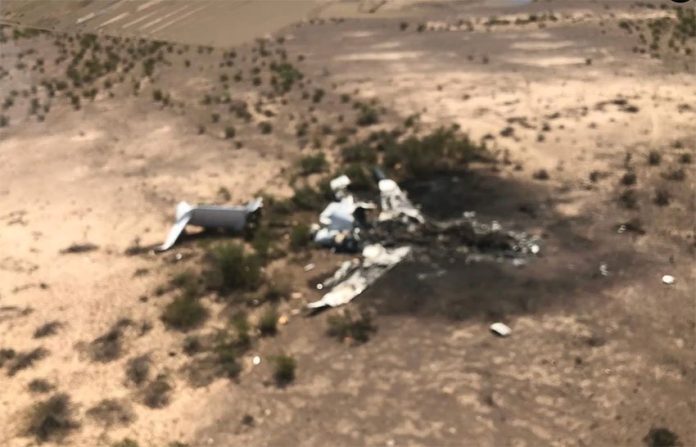
A private plane crashed on Sunday in Coahuila, killing all 14 people aboard.
The Bombardier Challenger 601 executive jet was en route from Las Vegas, Nevada, to Monterrey, Nuevo León, with 12 passengers and two crew aboard when it ran into bad weather, according to a preliminary report.
The passengers had been in Las Vegas to attend the Saturday night boxing match between Mexican boxing champion Saúl “Canelo” Álvarez and Daniel Jacobs.
Air traffic control lost contact with the aircraft when it was flying over the municipality of Sierra Mojada, 258 kilometers from the city of Monclova.
The plane was located today in the municipality of Monclova.
According to meteorological data, the aircraft traveled through a cumulonimbus cloud, which can produce severe turbulence and hail.
It crashed in a mountainous region of the state during a severe storm.
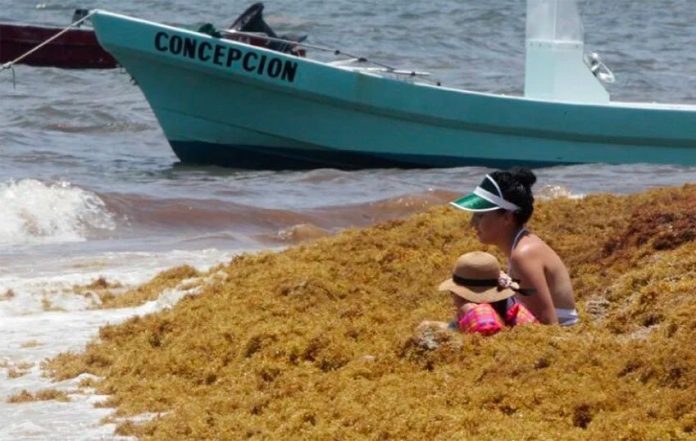
A woman and child appear unfazed by the surrounding seaweed.
A plan to combat this year’s expected million tonnes of sargassum on the beaches of Quintana Roo is beginning to take shape.
The state government has announced emergency sargassum protocol that will divide the state into nine zones where efforts will be concentrated on preventing the seaweed from accumulating on beaches.
Environment Secretary Alfredo Arellano will head the initiative intended to keep the beaches clean and find a sustainable use for the collected plant matter.
The state has identified beachfront hotel owners and businesses that might be affected by the algae’s arrival, all of whom received a summary of the state’s plan, which outlines cooperation with business owners and residents to erect retention barriers and organize clean-up crews.
In a Friday meeting with hotel owners in Zone 7, which extends from Punta Maroma to Playa Mamitas in Solidaridad, Tourism Secretary Marisol Vanegas Pérez related the state’s plan and stressed the importance of federal support to combat the problem.
This morning, President López Obrador announced a Tuesday meeting with Fonatur director Rogelio Jiménez Pons, Quintana Roo business owners and Governor Carlos Joaquín to discuss solutions for the sargassum, which is expected to continue arriving over the next few months.
Asked at his daily press conference if the federal government will provide economic assistance to industries affected he said “we are going to help.”
The arrival of sargassum over the weekend didn’t quite live up to the forecasts but those are expected to be fulfilled over the next 72 hours, affecting beaches from Holbox in the north of the state to Xcalak near the border with Belize. Authorities are actively monitoring the situation’s progress with the help of satellite images and drones.
The Cancún sargassum monitoring network reports that beaches in Puerto Morelos, Solidaridad (Playa del Carmen) and Tulum are the most affected.
In Solidaridad, paid and volunteer workers have been removing more than 100 tonnes of sargassum a day from the beaches.
#AMLOresignation, reads the hashtag on the banner at the Mexico City march.
More than 20,000 people took to the streets in 19 cities yesterday to protest against the federal government and demand the resignation of President López Obrador.
The largest protest took place in Mexico City where about 15,000 people marched along the Paseo de la Reforma boulevard holding signs on which they had written “AMLO out!” and “Wise people made a mistake with you,” among other anti-government messages.
Dubbed “La Marcha del Silencio” (The Silence March), some protesters covered their mouths with masking tape emblazoned with a clear message: “AMLO resign.”
The government’s cancelation of the new Mexico City international airport, insecurity, the staging of legally questionable public consultations, the dismissal of bureaucrats and López Obrador’s use of divisive language. He frequently describes his “adversaries” as fifí (elitist) or conservatives – were the protesters’ main complaints.
Plans to build the Maya Train on the Yucatán peninsula and a new oil refinery on the Gulf coast in Tabasco were also criticized.
Toluca, Saltillo, Veracruz, Mérida, Puebla, Chihuahua, Monterrey, Guadalajara, Morelia and Tijuana were among the other cities that saw protests, which were organized on social media by a group called Chalecos México (Mexico Vests).
Homero Velázquez, one of the group’s founders, told the news website Animal Político that Chalecos México has been organizing protests against López Obrador since before he was sworn in as president last December, and that its opposition to the new government initially focused on the decision to cancel the partially-built airport project at Texcoco, México state.
The group’s leaders and most of the people who participated in yesterday’s protests said they are not members of any political party but rather ordinary Mexicans who are concerned about the direction in which the five-month-old government is taking the country.
However, not all the protesters could claim to be everyday Mexicans.
Former president Vicente Fox, a frequent critic of the president, led a march of about 1,000 people in León, Guanajuato, while carrying a sign that called on the government to use “better criteria” in its decision making.
Former tourism secretary Enrique de la Madrid also took part in the protests although he said that he attended as a private citizen and not as a representative of the Institutional Revolutionary Party (PRI), which lost power at last year’s elections.
“It’s a very delicate moment in which freedoms are being lost,” de la Madrid said without explaining what those freedoms were.
Former president Felipe Calderón, who has clashed repeatedly with López Obrador, praised Mexicans who participated in yesterday’s protests in a Twitter post in which he also invited them to join a new political movement in which he is involved.
At his morning press conference today, López Obrador was unperturbed about the protests and reiterated that people have the right to freely express their opposition to the government.
“They have the complete right to demonstrate. I’m even pleased that this protest was organized and hopefully those who are not in favor of the government will continue to protest with freedom,” he said.
“This is logical, it’s natural. When we won we said that there was going to be a change of regime, that we were going to put an end to corruption, privileges, luxuries of government; that we were going to listen to everyone, respect everyone; and that we were going to give preference to the dispossessed . . . for the good of all, the poor come first,” López Obrador continued.
“It’s new politics, a transformation and this of course doesn’t please [some people] . . .”
Andrick, left, and his family arrive for their beach holiday.
A young boy’s dream of building sandcastles on a beach came true last weekend when he and his family were flown from Monterrey, Nuevo León, to the Pacific coast beach destination of Puerto Vallarta.
It all began at the end of the Easter vacation when a television reporter and a camera crew sought to interview low-income families who were unable to go the beach during the holiday.
The reporter found Andrick playing with other children around a fountain, leading to the now viral interview in which the boy said that what he liked to do the most during the holiday was build sandcastles. He told the interviewer that he had never actually been to the beach, and that he only built the castles in his dreams.
It didn’t take long for several companies and organizations in Nuevo León and Jalisco to come up with a plan to make Andrick’s dream come true.
On Friday, he and his family flew from Monterrey courtesy of the airline VivaAerobus. En route, Andrick visited the cockpit, donned a pilot’s cap and sat at the controls.
The dream fulfilled.
Once in Puerto Vallarta, he and his family were welcomed by tourism officials, who documented Andrick’s holiday and shared photos of his experience on line.
Accommodation was provided by the Buenaventura Hotel where Andrick was given a warm welcome by pirates who gave him a kit of sandcastle-building tools.
In addition to building castles and playing on the beach, Andrick rode a zip line.
Andrick was a special guest aboard a VivaAerobus flight.
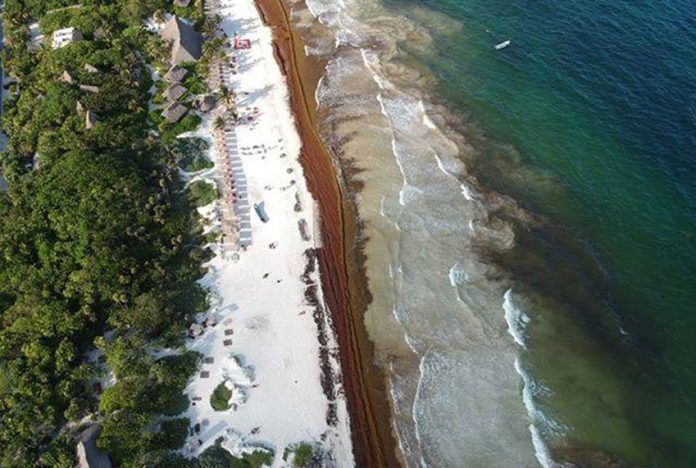
Sargassum on a Tulum beach yesterday. cancún sargassum monitoring network
As sargassum seaweed steadily invades the beaches of Quintana Roo, from Isla Holbox in the north to Xcalak near the Belize border, there is no money to do anything about it.
The federal government does not have the billion pesos needed to combat the massive waves of sargassum, revealed Pablo Careaga, the state representative of the tourism promotion fund. Fonatur.
There were hopes that Fonden, the natural disaster fund, could help. But this week it was discovered that under the agency’s rules, sargassum does not qualify as a natural disaster.
With winds and ocean currents driving the seaweed in to shore, it was forecast that by Saturday or Sunday the state’s entire coastline would lie under a bed of sargassum, with no immediate let-up in sight.
One report on Sunday said satellite images indicate the sargassum will continue to arrive over the next 72 hours.
Fonatur’s Careaga said lawmakers are working with businesses, organizations and other government agencies to find a way to free up funds to deal with the problem in the months ahead, which are forecast to see record amounts of the weed continuing to wash up on Quintana Roo shores.
“We are looking into the matter with the secretary of finance to see what other options might exist, but yes, we’re stuck on the funding.”
The Cancún sargassum monitoring network estimates that as much as one million tonnes of sargassum could finish up on the beaches this year. As of Saturday, one of the worst affected areas was Tulum, where a 25-meter strip of sargassum lined the beaches.
Quintana Roo Senator Marybel Villegas said Friday a multidisciplinary task force consisting of federal, state and local authorities, along with businesses, universities and NGOs will be created to address the problem.
Villegas said the problem is a priority for the federal government for its significant economic impact. She said that while an aid package of 240 million pesos (US $12.7 million) was pledged in August of last year, the measures implemented so far have been ineffective.
The Cancún-Puerto Morelos hotels association estimated that cleaning the beaches of sargassum will cost at least 700 million pesos.