Tuesday, March 3, 2026
Home Blog Page 1982

Cartels battle in Aguascalientes and trigger a resurgence in violence

0
Asientos, where Zacatecas police were ambushed.

The incursion of criminal groups from surrounding states into Aguascalientes has triggered a resurgence in violence over the past two years, authorities say.

There were just 38 intentional homicides in the small central Mexico state in 2015 and 39 the following year, according to statistics from the National Public Security System (SNSP).

But the homicide rate more than doubled to 82 cases in 2017 while between January and September this year, there were 63 murders.

Aguascalientes authorities say that gangs from Zacatecas, Jalisco and San Luis Potosí are behind the increasing violence.

In a report on the state’s security situation that was released earlier this year, Attorney General Jesús Figueroa Ortega said the increase in homicides can be attributed to turf wars between narcomenudistas, or small-scale drug traffickers, declaring that “there are no large cartel structures” in the state.

However, there is evidence that Mexico’s two most powerful cartels are indeed operating in Aguascalientes.

On September 11, the Jalisco New Generation Cartel (CJNG) announced its arrival in the state by hanging narcomantas, or narco signs, in public spaces.

More narcomantas, on which the Sinaloa Cartel claimed to be in control of Aguascalientes, appeared a few days later.

In addition to those two cartels the Zetas and a gang called Los Talibanes are also operating in Aguascalientes, state Interior Secretary Enrique Morán Faz said.

“We have [both] a permanent incursion and a transient one . . . they come in and leave via both borders, the northern border as well as the southern one . . . This is something that we have to be careful with and continue to live our lives but I don’t say that it is normal,” he said.

The governors of Aguascalientes and the neighboring state of Zacatecas, Martín Orozco Sandoval and Alejandro Tello respectively, as well as high-ranking security officials met in February and agreed on a strategy that involved working together to combat organized crime.

While the suspected leader of Los Talibanes was captured by Aguascalientes police in July, authorities have failed to stem the tide of violent crime.

In addition to a rising homicide rate, robberies, kidnappings and attacks on police have also continued an upward trend that started last year.

A state police officer is currently in intensive care in hospital after he was attacked last week by armed men in the municipality of Asientos.

The chief of police of Loreto, Zacatecas, and three officers were injured on October 23 when they were ambushed by armed men in the same Aguascalientes municipality.

The resurgence in violent crime is reminiscent of the period between 2004 and 2010 when Aguascalientes went through some of its most violent times ever.

Source: El Universal (sp)

Day of the Dead means it’s time to clean up the family bones

0
Cleaning skeletons and conversing with the dead is a Day of the Dead tradition in Campeche.

Families all over Mexico traditionally visit their dearly departed on the Day of the Dead, often organizing meals and celebrations next to their graves.

But in Pomuch, Campeche, the celebration is rather different: they polish the family bones.

The people of the Mayan town located in the northern reaches of the state celebrate Hanal Pixán — a Mayan term for Day of the Dead — by digging up their dead and cleaning their bones.

Preparations start in the last days of October when a white blanket embroidered with the name of a deceased family member is laid on the ground.

The bones are then unearthed, laid on the blanket and cleaned. It is also a time to update the deceased with the latest family news. As they clean up the skeletons, Pomuch residents talk to them, updating them on their everyday lives and telling them how much they are missed.

As in the rest of the country, traditional altars dedicated to the dead are set up in people’s homes but one unique feature is the inclusion in the altar of clothing that had belonged to the deceased.

Mayans believe that death does not mark the end of one’s existence, but is instead an alternative plane of reality. The same beliefs explain that both the living and the dead can cross back and forth at any given time.

Source: Infobae (sp)

Cancún police go on strike to demand removal of ‘corrupt’ chief

0
A police officer gets in a shoving match with Cancún's police chief.

Police officers in Cancún have gone on strike to demand the removal of the city’s top cop, whom they accuse of mistreating them and having links to organized crime.

Jesús Pérez Abarca was forced off the job yesterday by angry officers who physically pushed him out of the city’s police headquarters while shouting “to the street, to the street!”

When the commander asked the police why he was being removed, they responded “for being corrupt.”

Officers claim that Pérez is colluding with criminal gangs and complain that they have been ordered to investigate members of the city’s business community without any apparent motive.

“Mr. [Pérez] Abarca wants to investigate all the business people, their homes and addresses. He has ordered it. I don’t know why he wants to investigate them . . . the only thing that should concern him is the insecurity the municipality is living through, coming up with strategies so that the crime rate goes down . . .” one of the striking police officers said.

Pérez’s personal bodyguards failed to intervene to stop the commander from being pushed out of his workplace and he consequently found himself alone in front of the police offices.

The newspaper El Universal reported that Pérez then proceeded to make a few telephone calls before walking to a shopping center parking lot where he was picked up by an unlicensed vehicle.

The mayor of Benito Juárez, the municipality where Cancún is located, met with the officers yesterday and told them that she couldn’t take a unilateral decision to dismiss Pérez.

Mara Lezama explained that any move to remove Pérez would need to be agreed to by all three levels of government because municipal authorities approved a mando único, or single-command policing system in Cancún which involves federal, state and local security forces working together under central leadership.

The Quintana Roo public security secretary indicated that state authorities would not support the dismissal of Pérez.

Alberto Capella sought to discredit the officers’ claims and attributed their work stoppage to opposition against a move to carry out a “cleansing” of the municipal force to remove corrupt police.

He added that Pérez had filed a criminal complaint with the state Attorney General’s office following his physical removal “against those . . . responsible for the crimes of riot and sedition.”

The striking officers will face work-related and administrative repercussions, Capella said, adding that “the exercise of policing is not to be negotiated with anyone.”

Source: El Universal (sp) 

Cuernavaca’s mayor-elect says there’s a contract out for his life

0
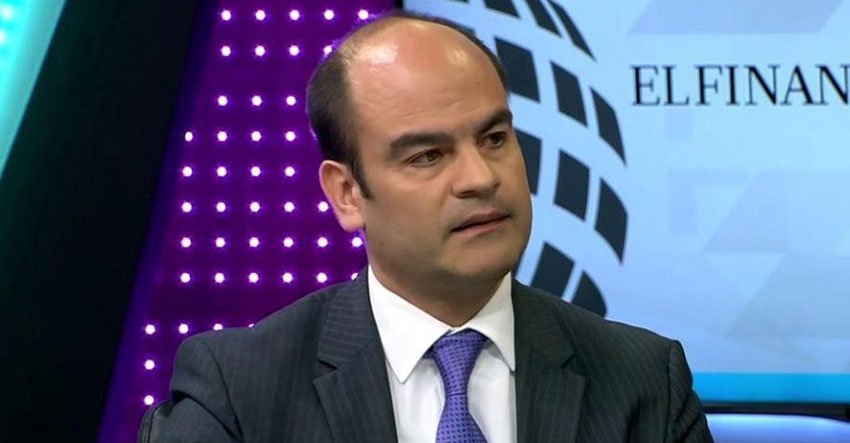
Villalobos, foreground, fears for his life.

The mayor-elect of Cuernavaca has announced that he will withdraw from the political stage until he is sworn in because he fears for his life.

“My concern is about my security . . . I express my concern because there is a contract out for my life. My security team has traced it, that’s why I have to withdraw from political life,” Francisco Antonio Villalobos Adán told a press conference Saturday.

Villalobos explained that he won’t make any statements or appear in public until January 1 when he takes office in the Morelos capital for the coalition led by the Morena party.

The home of the mayor-elect was the target of an attack with firearms last month.

Villalobos said that he has received several threats dating back to when he was an official in the city government.

In a statement issued Saturday, the Morelos government said the state’s security chief had assigned two police officers to provide personal security to Villalobos.

Source: El Financiero (sp) 

As El Chapo’s day in court begins, El Mayo fights to control the Sinaloa Cartel

0
US agents escort Guzmán at his extradition last year.

As preparations proceed for Mexico’s most notorious drug lord to face trial in the United States, his successor continues to bring in massive profits for the Sinaloa Cartel.

Almost two years after his extradition to the United States, Joaquín “El Chapo” Guzmán is on the cusp of having his first day in court.

Selection of the jury to pass judgement on the former boss of the Sinaloa Cartel began in New York today under tight security.

The names of all potential jurors will not be released and those selected to make up the panel will also remain anonymous and be afforded special security.

Opening statements in the trial, which is expected to last for between two and four months, are tentatively scheduled for November 13.

Guzmán, who gained additional notoriety for his two prison escapes, faces the possibility of life imprisonment if convicted on charges of criminal enterprise, drug trafficking, money laundering and homicide, among other crimes.

Meanwhile, Ismael Zambada García, a 70-year-old former poppy-field worker and long-time partner of “El Chapo,” is fighting to continue the cartel’s lucrative illicit activities as other criminal organizations try to expand their influence.

During several decades, the trafficker better known as El Mayo, along with Guzmán and other Sinaloa Cartel members, built a multi-billion-dollar empire on cocaine and heroin among other drugs as well as human trafficking.

In addition to life imprisonment, authorities in the United States are seeking a US $14-billion forfeiture from Guzmán while the Bloomberg Billionaires Index estimates that Zambada has a net worth of at least US $3 billion.

Their vast riches are fruits of the cartel’s ability to switch the products it sells in response to demand, virtually monopolize key markets in the United States and expand its export links to countries on the other side of the world, such as Australia.

“Their reach is incredible,” said Anthea McCarthy-Jones, a professor at the University of New South Wales who researches the structure of transnational crime networks from Canberra, Australia.

“Sinaloa still remains the organization with the best international connections. That’s something that they seem to be really good at.”

The cartel has allegedly laundered ill-gotten gains through some of the world’s largest banks to subsequently invest in both Mexican and foreign companies or to shift funds to offshore accounts.

According to the United States Drug Enforcement Agency (DEA), leadership of the Sinaloa Cartel has injected cash into some 250 companies, many of which are still in business.

The network of cartel businesses, the news agency Bloomberg said, stretches from the Sinaloa capital of Culiacán to Honduras, Panama and Colombia.

A water park and a children’s daycare center allegedly run by Zambada’s daughter María Teresa are among El Mayo’s many interests.

“He has a very diversified portfolio,” said Mike Vigil, the former head of international operations for the DEA.

“Even though he’s only had maybe an elementary-school education, he’s received a Harvard-level education from some of the most prolific, knowledgeable and astute drug lords that Mexico has ever had,” he added.

A Bloomberg analysis based on seizure and pricing figures from the DEA found that the Sinaloa Cartel rakes in, on average, US $11 billion a year.

However, that figure is likely below the real dollar-amount because it doesn’t include revenue from markets outside the United States and it assumes that 50% of all drugs shipped to the U.S. are seized, the news agency said.

According to people with knowledge of the cartel’s activities who spoke to Bloomberg, at least 5% of the total revenue has gone to the criminal organization’s top leadership, meaning that since 2011 Zambada would have received US $3 billion.

But with a US $5-million reward from the United States State Department on his head and as he continues to hide out in the mountains of northern Mexico, “the last capo standing may be losing his grip on the world’s largest drug cartel,” Bloomberg said.

With Chapo’s former allies sensing a power vacuum and other criminal organizations – most notably the Jalisco New Generation Cartel (CJNG) – filling or aiming to fill it, Mexico’s homicide rate is going through the roof.

With more than 30,000 murders, 2017 was the most violent year in at least two decades and this year is on track to be even bloodier.

But as the blood flows in Mexico, so too does the money.

U.S. authorities have “shut down some of the businesses [the Sinaloa Cartel is involved in], not all,” Vigil said.

Mexican “asset-forfeiture laws and seizures have a lot of loopholes,” he added.

The Sinaloa Cartel also continues to diversify not only the products it deals in but also the markets it buys and sells in.

Under Zambada’s reign, the Sinaloa Cartel has widened its supply sources for precursor chemicals used to make drugs such as fentanyl and methamphetamine to markets as far away as China.

It imports the raw materials and later ships the final product across the northern border or further afield, generating enormous profits.

Some proceeds are used to buy clothing — often counterfeit products from factories in China. The goods are then imported to supposedly legitimate businesses in Mexico, where prices are marked up, generating yet more profits.

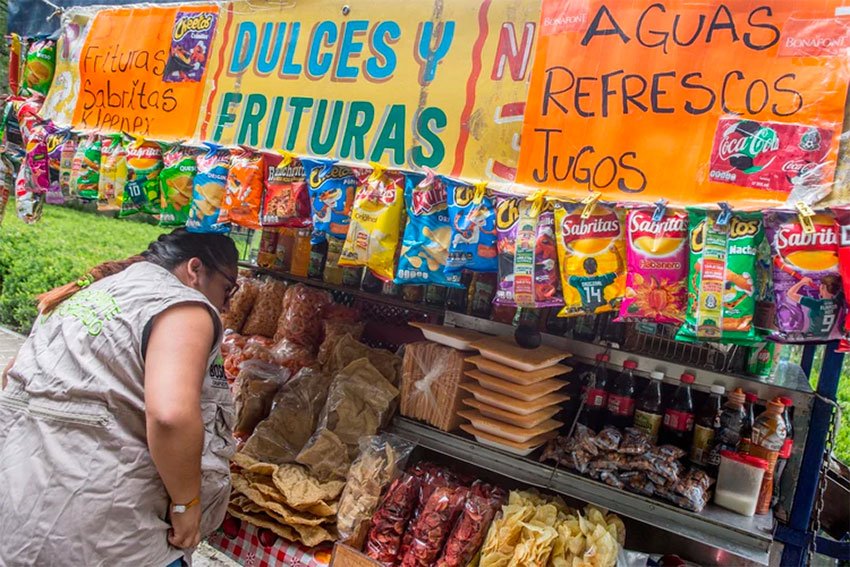
Pirated clothing and other goods, known colloquially as fayuca, abound in certain tianguis, or street markets, such as that in the notoriously dangerous Mexico City neighborhood of Tepito.

Sales of fentanyl, a synthetic opioid for which demand in the United States has grown as that country’s so-called opioid crisis unfolds, has provided a potent injection to the Sinaloa Cartel’s finances.

Diversification into the product is perhaps its “most successful innovation,” Bloomberg said.

One kilogram of the drug bought in China can generate revenue 24 times greater than a kilo of traditional heroin bought in Colombia, according to the DEA.

“In the last three or four years, we started to see this fentanyl hit the streets,” said Bryce Pardo, an associate health policy researcher at Rand Corp.

“It seems like China is the primary source, at least with regards to the precursors, if not the finished product itself. The Mexican cartels have been involved with trafficking the finished products across the border.”

However, while the Sinaloa Cartel’s continued profits appear to be assured, there is less certainty about its long-term leadership.

Zambada, who suffers from diabetes, is getting on in years while one of his sons is set to be sentenced in Chicago next month on drug trafficking charges and another pleaded guilty to the same crime in California in 2013.

El Chapo, who has allegedly continued to wield some influence in the Sinaloa Cartel despite being behind bars, is about to face trial.

His sons, one of whom is on the DEA’s 10 most wanted fugitives list, are increasingly involved in the cartel’s operations but according to Vigil, they lack the criminal expertise of their father and Zambada.

For El Mayo, death – from illness or otherwise – or a decision to step down voluntarily, rather than capture by authorities, would appear to be the most likely ways for his reign to end.

“I have been up into those mountains and it’s very difficult to capture anybody,” Vigil said.

“Mayo Zambada is one of the most astute drug traffickers that Mexico has ever spawned.”

Unlike El Chapo, he has never escaped from prison. In more than half a century in the drug trade, he’s never had to.

Source: Bloomberg (en), USA Today (en) 

Pemex shipments get police escorts after trucks stolen

0
Tanker truck gets a police escort in Guanajuato.

Not only must it face fuel theft from pipelines in Guanajuato, the state oil company Pemex is now having to deal with theft on another front: tanker trucks on the state’s highways.

The company has requested official protection from Federal Police to provide escort vehicles.

The newspaper Milenio reported that there have been at least two instances of tanker truck theft in the last two months. Only one of the vehicles has been recovered.

Sources within the company told Milenio that the two cases had triggered the request for protection after formal complaints were filed before the federal Attorney General’s office.

The most dangerous highways are those between Celaya and Acámbaro and between Querétaro state and San Luis de la Paz.

The Federal Police have detected not only fuel theft on those routes, but also the illegal transportation of small amounts of gasoline and diesel in private vehicles and taxis.

The protection requested calls for surveillance of the tanker trucks from the moment they leave a Pemex facility until they reach their destination.

Source: Milenio (sp)

How effective are Pueblos Mágicos in attracting tourism? No one really knows

0
Valle de Bravo is one of the few magical towns that have tracked visitor numbers.

Seventeen years after the federal government introduced the Pueblos Mágicos program to boost visitor numbers to lesser known destinations in Mexico, the number of towns designated as magical has grown to 121.

But how effective are pueblos mágicos in attracting tourism? No one really knows.

In separate interviews, Francisco Madrid, a former federal tourism undersecretary, and Armando Bojorquez, president of the Latin America Confederation of Tourism Organizations (Cotal), told the newspaper Milenio that efforts to measure the effectiveness of the initiative in increasing tourism are limited.

Only a small number of magical towns – on their own initiative – are systematically counting the number of domestic and international visitor arrivals and measuring private investment and job creation as a result of their inclusion in the federal program.

Madrid, the head of the school of tourism at Anahuác University, said that he was only aware that Valle de Bravo in México state and the state government of Puebla, where there are nine pueblos mágicos, are keeping records of visitor arrivals and private investment.

“Perhaps some other states are doing it but I don’t think it’s the rule,” he said.

For his part, Bojorquez said that “we’re lacking a lot of statistics in order to really know how the Pueblos Mágicos [program] is working.”

“. . . [We don’t know] if it’s getting results everywhere and how good those results are,” he explained.

José Díaz Rebolledo, the Secretariat of Tourism (Sectur) official responsible for the program, said that one of the very few pieces of data the government has about magical towns is that the arrival of Mexican tourists to their hotels represents 3.6% of total visitor numbers to Mexico.

Díaz also said it is known that federal and state governments have invested 6.1 billion pesos in magical towns since former president Vicente Fox launched the program in 2001, but total private investment in the same period is unknown.

Federal Tourism Secretary Enrique de la Madrid confirmed that there is no collated data about how much money private companies have invested in magical towns to build hotels, restaurants and tourist attractions.

Francisco Madrid said that a study was completed at Anahuác University six years ago that showed the Pueblos Mágicos program had achieved “a certain level of success [that is] more visible in some places than others.”

However, he added that more detailed and up-to-date data would help authorities to know how they could make the Pueblos Mágicos program better.

“It would be desirable to have a more complete system of indicators that allowed the real effect of the program to be evaluated, what it is that the tourists are enjoying, what they don’t like and how [the program] can be improved,” Madrid said.

Future tourism secretary Miguel Torruco has indicated the incoming government will conduct a review to assess whether towns are complying with their obligations under the Pueblos Mágicos program and whether they will continue to be included in it or not.

Source: Milenio (sp) 

Smugglers beach boat and flee, leaving nearly a tonne of cocaine

0
Cocaine smugglers head for the beach.

Navy officials say that close to a tonne of cocaine was seized from a boat abandoned Saturday by smugglers in Petatlán, Guerrero.

The small, high-speed craft was sighted during a surveillance operation 148 kilometers northeast of Acapulco.

A sea and air operation chased the boat to shore in the town of El Calvario, where its occupants fled.

Federal officials found 800 kilograms of cocaine, along with a large supply of fuel.

The navy has mad a number of such seizures in recent months.

Source: Quadratín (sp)

Ahal: changing the face of Mexican cosmetics with natural products

0
Cosmetics maker Iliana Loza in the lab.

Ten years ago chemical engineering student Iliana Loza began making soaps at home after a discovery she made during the cosmetic formulation section of her chemical engineering degree.

She found that there are many synthetic and non-biodegradable ingredients in cosmetics and wanted to see if she could do things differently.

“When we use a shampoo or use a soap, we don’t realize that they contain many ingredients that don’t biodegrade,” Loza told Mexico News Daily. “In the end that impacts the environment and then our health because the ingredients get absorbed [into the skin].”

Initially, she made the soaps in her apartment and sold them to friends and family before taking the sales online. She credits the use of social media and the ability to utilize live broadcasts as having played a huge role in the success of her brand, Ahal, since it allowed her to easily spread a message about the impact of synthetic materials on the environment and health.

Ahal, which means “awakening” in Maya, is now one of the leading names in biocosmetics in Mexico.

A decade ago “there was no brand in Mexico that offered a super sustainable alternative,” said Loza. However, today many “large companies [in Mexico] are looking for a local, sustainable option,” she said, explaining that this year Ahal had found its way on to the shelves of the Liverpool department store.

Ahal produces more than 40 different products, everything from foundation, powder, blush, lipsticks and mascara to facial serums and oils as well as shampoos and soaps. The line is constantly expanding as Loza and her team find new and powerful ingredients.

Back in the early days when Loza realized there were no Mexican cosmetic companies using Mexican ingredients, she began to study endemic herbs and remedies from across the country.

“There were things that have been used for hundreds of years that weren’t in any commercialized product,” she said.

Her interest well and truly piqued she began to work with a laboratory to test certain plants and remedies to see what effect they had on the skin, discovering that many traditional ingredients do indeed have healing properties.

Loza spoke enthusiastically about tepezcohuite, the so-called arbol de la piel (tree of the skin) found in Chiapas that the Maya have been using for generations.

“When we studied it in the laboratory, we discovered that it has a lot of antioxidants,” Loza said.

It is not just the tepezcohuite that caught the attention of the now 14-strong team at Ahal. They now have a huge variety of other Mexican-sourced ingredients.

“The cacao butter comes from Tabasco. We use coconut, that comes from Colima. We use sustainable beeswax, which we bring from a Maya community in Yucatán in the middle of the jungle,” Loza said, also listing milk from goats that live in a cruelty-free environment in Nuevo León.

One of the newest products to make the cut is a face tonic made using the cempasúchil or marigold flower and well as the tuna roja, or red prickly pear fruit. The team discovered that the prickly pear hydrates the skin and allows it to retain moisture, while the marigold is great in combatting the effects of pollution on the skin.

Ahal also uses some oils from southern Africa and Madagascar. Marula, kalahari and mongongo oils used in some of their cosmetics come from fair trade organizations, ensuring that those producing them are treated and paid fairly.

It is clear that Ahal is focused on being socially and environmentally ethical in its practices. Another important issue for the firm is the whitening of the world’s coral reefs which is happening in part due to the chemicals used in commercial sunscreens.

“Octavio our biologist studied the problem of the whitening of the reef,” said Loza, “and we have created a sunblock that is coral-friendly.”

The sunblock uses the only active ingredient that doesn’t damage the reefs, zinc oxide. While it might not be as transparent as more chemical sunblock for Loza it is a tiny price to pay since coral reefs provide so much of the world’s oxygen.

There could be a problem convincing consumers that they should pay more for natural products that are sustainable and biodegradable. Some are already invested in the cause and need no convincing, but when others see a lipstick available for 60 pesos in their local supermarket, it can be hard to convince them to pay a higher price for one that is sustainable and natural. However, Loza has a direct response to this problem.

“I tell customers that right now it might be cheap, but in the future it is going to be costly for the next generations.”

To help further educate customers in being conscious consumers Loza and her team gives workshops at their stores in Monterrey, explaining what ingredients are in regular cosmetics and the effects that these can have on the environment and the health of consumers. She described how she has seen women’s skin change just by switching to a natural makeup base. Until then they had been unaware they were “poisoning their skin every day.”

The workshops and videos on social media also provide information on using natural make-up and help Loza achieve her mission to “change consciousness around the use of cosmetics.”

This mission is also being supported by the Sephora Accelerate program. Loza was one of just 13 female brand creators from around the world working in beauty to be picked to take part in the scheme. The program allows Loza to work with mentors to help her grow her business, all within the framework that the future of beauty is a conscious and aware one.

Speaking of the future, Loza has great plans. Having achieved so much in Mexico in the last 10 years she will be looking further afield in the years to come.

“In five years, we want to be in international markets. We want the United States to know what tepezcohuite is,” she said with a smile.

And if her ability to go from making soaps in her apartment to selling over 40 products on the shelves on one of Mexico’s largest department stores is anything to go by, the U.S. should look forward to seeing Ahal products there sooner rather than later.

To find out more about Ahal and their great variety of products, head to their website.

Susannah Rigg is a freelance writer and Mexico specialist based in Mexico City. Her work has been published by BBC Travel, Condé Nast Traveler, CNN Travel and The Independent UK among others. Find out more about Susannah on her website.

China-Mexico trade forum on this week

0
Chinese auto maker BAIC is one of the relatively new investors in Mexico.

Over the past eight years the China-Mexico trade forum and show has introduced 1,000 Chinese firms to the Mexican market, according to its organizers who are preparing for another edition of the event this week in Mexico City.

The director of the Zhonghua Business Association in Mexico told the newspaper El Financiero that the goal of the forum is to forge new alliances between business people from both countries, along with expansion into the rest of Latin America.

Chinese firms specializing in furniture, appliances, power generation, illumination, consumer goods, textiles, automobiles, construction and heavy machinery have successfully ventured into the Mexican market through local alliances, said Jenny Wang.

The firms “are not looking for end customers but for strategic alliances that enable them to export to Mexico.”

According to the Bank of México, almost US $54 billion in goods were imported from China during the first eight months of the year, a year-on-year increase of 14.8%.

It was the second largest increase since 2010, when it was a whopping 43.9%.

Events such as the trade forum have brought automotive manufacturers including BAIC and JAC, tech companies like Huawei and Lenovo and transportation companies such as Mobike and Didi to Mexico.

The forum will be hosted by the Expo Santa Fe convention center in Mexico City November 6-8, and will be attended by 200 Chinese investors and entrepreneurs.

Source: El Financiero (sp)