Home Blog Page 2000

AMLO will go after ex-presidents for corruption—if the public demands it

0
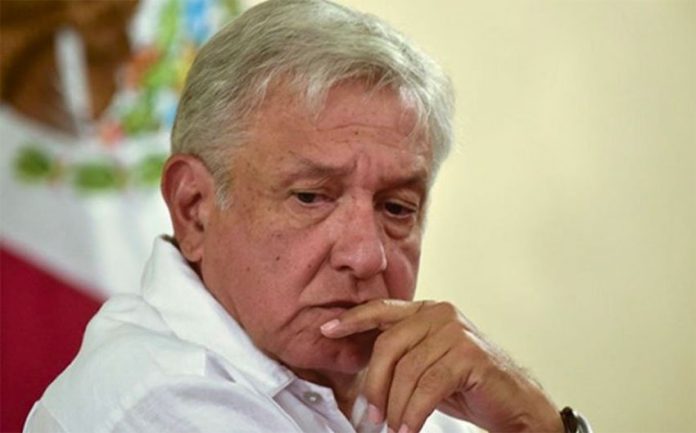
Former president Salinas: he would be the first to face corruption charges, says AMLO.

Justice for corrupt ex-presidents will depend on what the people want, says president-elect López Obrador, but his own personal opinion is to let bygones be bygones.

During an interview yesterday López asserted that if the public demands it, former presidents will be brought to justice, “starting with Carlos Salinas de Gortari,” who was president from 1988 to 1994.

López also recalled that he had previously filed formal complaints with the federal Attorney General’s office against former presidents Salinas, Ernesto Zedillo, Vicente Fox and Felipe Calderón and current president Enrique Peña Nieto. He filed the complaints at different times, he said, accusing them of treason and corruption. “I have never kept quiet.”

López Obrador insisted he is a “democrat” and that “the people should decide.” But he also said it would be better “to forget that horrible history. We must understand that the most important thing is to truly put an end to corruption and start a new phase.”

For the president-elect this means moving forward with zero impunity and no pardons, not even for the president. “If I betray the people, I should be judged.”

He said corruption investigations will continue, but those implicated could well be pardoned.

“. . . I do not believe it is good for the country to be bogged down in prosecuting allegedly corrupt people.”

If the country were to go down that road, he continued, justice should go after “those at the very top and from very long ago . . . because this crisis did not start last month.”

Source: El Financiero (sp)

Economic outlook not as rosy as it was a month ago as confidence eroded

0
López Obrador: recent developments have triggered a gloomier economic outlook.
López Obrador: recent developments have triggered a gloomier outlook.

In the space of a single month the outlook for the Mexican economy in 2019 in terms of the value of the peso, growth, inflation and interest rates has deteriorated significantly.

And some economists believe that the forecast could become even gloomier in the months to come and that president-elect López Obrador, who takes office in 10 days, is partially to blame.

A month ago, the Citibanamex financial outlook survey, which canvasses the opinions of more than 20 private sector economists, predicted an exchange rate of 18.85 pesos to the US dollar at the end of 2019.

But the same survey conducted this month revealed a consensus that one greenback would buy 20 pesos at the end of next year, a prediction that is steady with the current exchange rate.

López Obrador’s announcement late last month that the new Mexico City International Airport project will be cancelled generated concern among investors that wasn’t based solely on the potential financial impact of the decision but also the manner in which it was made.

Financial institutions and risk analysts have warned that if the new government continues to make important decisions via public consultation, a loss of confidence in Mexico, from both domestic and international investors, will follow.

“The deterioration of economic expectations is happening quickly and I wouldn’t be surprised if in the next surveys they deteriorate even more, even if nothing [negative] happens,” said Ernesto O’Farrill, president of brokerage firm Bursamétrica.

“There are several factors that are being brought on [within Mexico] as well as an international environment that is further clouding the internal factors that are eroding confidence,” he added.

Despite scathing criticism from the private sector and a large protest in Mexico City over the airport cancellation and the public consultation that preceded it, López Obrador was not deterred from announcing another referendum that will be held this weekend to seek opinion on the Maya Train and a new oil refinery as well as a range of social programs.

The president-elect has said that his government will target 4% annual economic growth and that the infrastructure projects he has proposed will help to achieve it.

But López Obrador’s growth goal, at least for next year, appears fanciful.

Bursamétrica economists are forecasting GDP growth of just 1.5% in 2019, half a percentage point less than what they were predicting last month.

Analysts consulted by Citibanamex also cut their growth projections between October and this month, albeit by a more modest margin from 2.1% to 1.9%.

O’Farrill believes that growth estimates could even drop into negative territory at some point after López Obrador becomes president.

“With very poor communication from the transition team and poor signals from the new Congress, confidence has diminished more than normal. What’s normal is for a six-year presidential term to begin with a lot of expectations, with prospects for investment but what’s happening now is the opposite,” he said.

Gabriela Siller, a director at Banco Base, said the reduction in the value of the peso over the past five weeks has placed greater pressure on inflation, which in turn led the Bank of México to raise its benchmark interest rate by 25 basis points to a nearly 10-year-high of 8%.

Higher interest rates, she said, act as a disincentive to consumption and investment, which will translate into lower economic growth.

Citibanamex is currently predicting an inflation rate of 3.9% in 2019 compared to a 3.7% rate it forecast last month.

Bursamétrica, Scotiabank and Pro Asset Management are anticipating even worse inflation figures next year, with forecasts of 5%, 4.34% and 4.2% respectively.

Analysts from the same institutions said they don’t foresee another interest rate hike this year or next, meaning that they expect rates to remain steady at 8%. However, that figure is 0.75% higher than their prediction last month for the close of 2019.

In contrast, analysts consulted by the news agency Bloomberg last week said there is a 100% probability that the central bank will increase rates again next month.

The Bank of México itself said in a statement that it would take any necessary action, including holding or hiking rates, to get inflation on track to achieve its 3% goal.

Source: El Financiero (sp) 

Taxi, semi-trailer collide on Oaxaca highway, killing 5

0
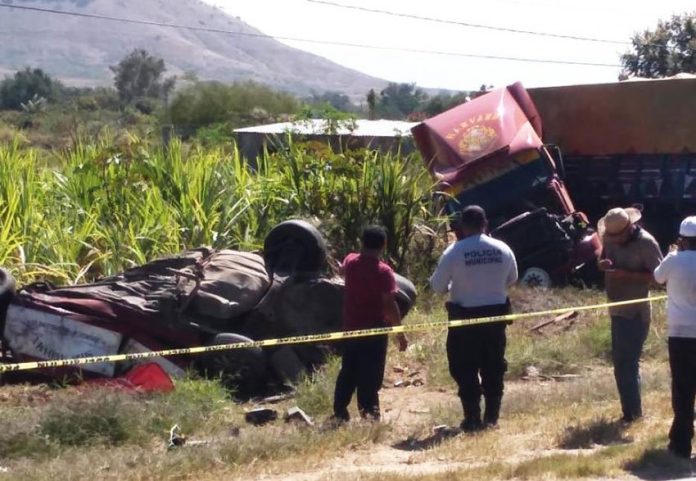
The taxi and semi in yesterday's accident in Oaxaca.

Five people were killed when a taxi/colectivo and a semi-trailer collided on a highway in Oaxaca yesterday.

Three people were injured in the accident, which occurred on the Oaxaca-Puerto Escondido highway near the community of Ciénega Zimatlán.

According to one report, the driver of the semi lost control of the vehicle and crossed into the oncoming lane, striking the taxi. Another report blamed the taxi for being in the wrong lane on a curve on the winding, mountain highway.

The taxi driver was killed as were some of his passengers, who were flung from the vehicle on impact. The vehicle was completely destroyed.

The semi-trailer was carrying pilgrims to the popular shrine of the Virgin of Juquila. The driver fled the scene immediately after the crash, authorities said.

Source: NVI Noticias (sp), El Imparcial (sp)

Three chocolate makers win seven medals at international competition

0
Chocolate in production at TA.CHO.

Mexican chocolate makers cacao producers were recognized and awarded medals in international and regional competitions last weekend.

Three chocolatiers won five gold, one silver and a bronze at the 2018 world final of the International Chocolate Awards on Saturday in Florence, Italy.

The big winner was Mexico City-based TA.CHO Taller de Chocolate, awarded a gold medal for its Consuelo 73% bar in the micro-batch dark chocolate category.

It was also crowned best chocolate maker, best direct trader and best growing country in the micro-batch – plain/origin dark chocolate bar category, winning three more gold medals.

Tabasco-based Chocolates Wolter and its Quetzalli 70% with chicatana (ant) salt and cardamom bar won a gold medal in the rough ground flavored dark chocolate bars category.

In the chocolate ganaches or truffles category, Mexico City-based Que Bo! Chocolatería Mexicana Evolutiva competed among six other finalists, winning a bronze medal with its passion fruit and pink pepper bonbon.

The same chocolatier competed in the milk chocolate enrobed whole fruit, winning silver among four finalists with its chile mangos with 50% cacao milk chocolate.

Chocolates Wolter was the top Mexican winner last December at a regional competition, winning 10 medals.

On Friday, the first Mesoamerican Biodiversity-Friendly Cacao Award was celebrated in Mexico City, with three producers from Comalcalco, Tabasco, winning the first, second and third places among competitors from 10 different countries.

Source: El Financiero (sp)

Work begins on refinery but no permits have been issued: environmental group

0
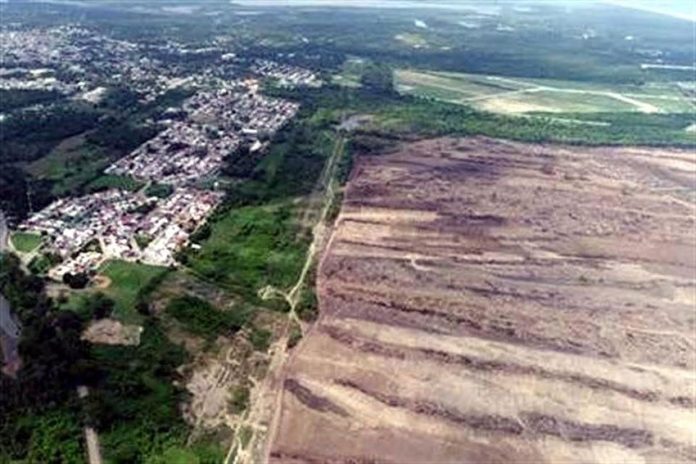
Land that has been cleared for the new oil refinery — without permits.

A 300-hectare site in Tabasco on which the incoming federal government intends to build a new oil refinery has been cleared of jungle and mangroves despite no permits having been issued, an environmental group claims.

The Mexican Center for Environmental Law (Cemda) said that neither environmental authorization nor permission to change the land use of the site at Dos Bocas was granted before the preparatory work began in September.

The non-governmental organization has filed complaints with both the federal Environmental Protection Agency (Profepa) and the Agency for Safety, Energy and the Environment (ASEA).

“The first thing that has to be asked is who did it?” said Gustavo Alanís Ortega, the president and founder of Cemda.

“The complicity of local authorities has caught our attention because the clearing of the land was permitted, there are around 300 hectares and it’s very surprising that local authorities have allowed [it],” he added.

The Cemda complaints allege that state oil company Pemex contracted a firm called SCCA to undertake the work to clear vegetation from the coastal site.

The environmental group also questioned the decision of president-elect López Obrador to put the oil refinery to a public vote on November 24/25 when the project has clearly already begun.

“. . . This is a project that is going to be put to consultation and the question we ask is: why are you holding a consultation on a project that you already started, for which you have already cleared the land and are already allocating a budget to for next year? Why are you consulting on something that you have already decided? I don’t know if it is mockery,” Alanís said.

“Projects of this nature have to be subjected to an environmental impact assessment to establish whether or not there is the possibility of it going ahead. Here that was skipped over and it’s more than obvious that damage has already been caused,” he added.

Cemda issued requests to Profepa and ASEA to take urgent steps to ensure that further damage to the ecosystems and natural resources at and surrounding the refinery’s planned site is avoided.

López Obrador’s proposal to build the Maya train railway project on the Yucatán peninsula will also be put to public consultation this weekend without an environmental impact assessment having been conducted but with a December 17 starting date already set.

In a statement directed to the soon-to-be president, a range of groups representing Mayan communities rejected the project and declared that nobody has asked their opinion about it.

“They’re doing things back to front,” Cemda’s Alanís said of the new federal administration.

“The first thing they have to do is the environmental impact study, submit it for review, then run the public consultation and public meetings and later . . . decide what is appropriate but here we’re starting the other way around.”

Source: Reforma (sp)

300-strong migrant caravan No. 5 arrives at southern border

0
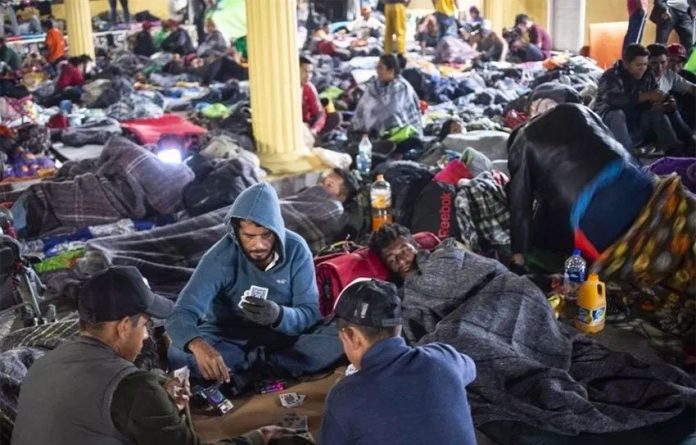
Migrants bed down, play cards in Tijuana.

About 300 people, mostly from El Salvador, have arrived at the Guatemala border town of Tecún Umán, intending to cross into Ciudad Hidalgo, Chiapas, when they will become the fifth migrant caravan to enter Mexico since October 19.

The migrants are mostly men; only about 10% are women, some of whom are traveling with children.

The charitable organization Oxfam said it distributed 268 food vouchers to the migrants, while local health authorities said they provided care to about 50 people suffering from fever, headaches and pain.

The latest caravan caught up with 200 who have been staying in churches and shelters in Tecún Umán. The two are expected to merge and cross into Mexico together, on their way to the United States.

There are unofficial reports that more people are planning to leave El Salvador soon, expecting to unite with those at the border and form an even larger caravan.

It is possible that they see greater safety in numbers against efforts by Mexican officials to stop them: members of a small group of 250, also from El Salvador, were arrested November 9 three hours after crossing into Mexico by wading across the Suchiate river.

The waiting caravan has been preceded by four others: 7,000 from Honduras in the first one, followed by a second 10 days later.

The 450 members of the third caravan, this one from El Salvador, decided to turn themselves in to immigration authorities soon after crossing on October 30.

The last caravan to cross into Mexico did so on November 2. It was composed of 3,000 people from El Salvador.

Immigration officials estimated today there are now about 13,800 Central American migrants in Mexico whose destination is the United States. The majority of those are in Tijuana or Mexicali or elsewhere in Baja California.

Source: El Universal (sp) López Dóriga (sp)

Chapo wanted to kill anti-drug boss, bribed security officials with millions: witness

0
El Chapo's diamond-encrusted .38 was presented as evidence in court in New York.

Plans to kill an anti-drug czar and the names of two senior government officials who accepted million-dollar bribes are among the revelations so far this week at the trial of former drug lord Joaquín “El Chapo” Guzmán.

A former Sinaloa Cartel operations chief said Guzmán wanted to kill the federal government’s top anti-drugs prosecutor in 2005 because he wouldn’t accept bribes, a key prosecution witness said yesterday.

Jesús Zambada, who is providing insider testimony about the accused’s alleged criminal activities, told jurors that Guzmán and his brother and current cartel leader Ismael “El Mayo” Zambada planned to kill José Luis Santiago Vasconcelos because “he didn’t cooperate with anyone.”

The former drug czar, who worked for the federal Attorney General’s office (PGR), was respected and feared by everyone because he wouldn’t accept cartel money, Zambada said.

The ex-cartel member told the court that he was asked to participate in the murder plot by helping to locate Santiago and “providing security to the gunmen” tasked with killing him.

Zambada said that he initially agreed to the request but after asking his brother’s chief sicario, or hitman, how he planned to kill the official, he backed away from his commitment because “what they were going to do didn’t seem right.”

The witness said that his brother later told him to forget about the plan.

Santiago was eventually killed in November 2008 when a government aircraft in which he was traveling crashed in Mexico City. Juan Camilo Mouriño, federal interior secretary at the time, also died in the accident.

In court today, Zambada began naming names. He said he gave US $6 million to Genaro García Luna in the mid-2000s when García was Mexico’s head of security and made other million-dollar payments to Gabriel Regino, who was head of security in Mexico City when president-elect López Obrador was mayor.

García, now a consultant and partner in a company that evaluates risk and security, has made no public response to the accusation.

Regino denied the allegation with a reply on Twitter and declared he was prepared to testify to his innocence before any national or foreign authority. He now works as a criminal lawyer and teaches at the National Autonomous University of México.

In the Brooklyn federal court yesterday, Guzman’s defense team once again portrayed Zambada as a liar who has agreed to frame their client in exchange for a reduction in his own prison sentence.

William Purpura, a lawyer for the infamous 61-year-old ex-capo, attempted to discredit the testimony Zambada has given.

Last Wednesday, he identified El Chapo as “one of the most powerful drug traffickers in Mexico” and spilled secrets on the inner workings of the lucrative trafficking operation that allegedly shipped billions of dollars’ worth of drugs to the United States under Guzmán’s leadership.

He continued his testimony the next day, telling jurors that the Sinaloa Cartel paid regular bribes – in dollars – to high-ranking police officers and officials at all three levels of government.

He has also provided intimate details about the Sinaloa Cartel’s violent turf wars with rival gangs. Yesterday, Zambada said that Chapo was always armed, either with a diamond-encrusted pistol or an AK-47 assault rifle.

During his attempts to convince the jury that Zambada couldn’t be trusted, Purpura said it was curious that the only people who could corroborate much of the evidence Zambada has given are dead.

Guzmán, who was extradited to the United States in January 2017 and has been kept in solitary confinement in a Manhattan prison cell ever since, has pleaded not guilty to 17 counts of drug trafficking, conspiracy, firearms offenses and money laundering.

If convicted, he faces possible life in prison. The trial, which has been held under extraordinarily tight security, continues today.

Source: El Universal (sp), Associated Press (en)

Oaxaca mayor accused of diverting social funding to finance election run

0
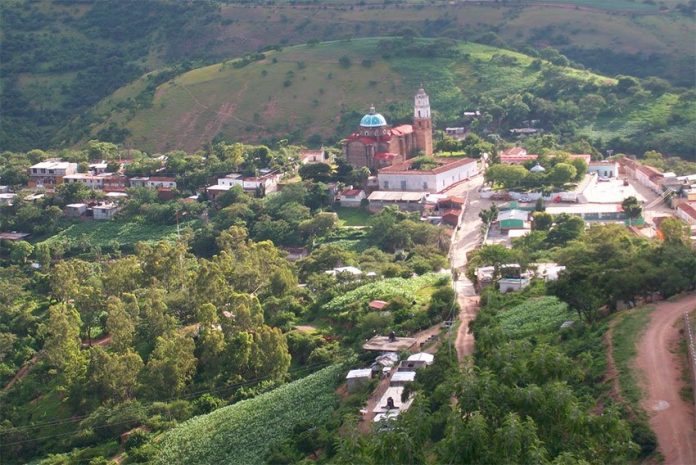
San Miguel Amatitlán, where the mayor is in hot water.

A Oaxaca mayor has been accused of embezzling more than 10 million pesos (US $490,000) in social services funding to use in his reelection campaign.

The state auditor’s office charged that funds allocated by the federal Social Development Secretariat (Sedesol) were diverted by Mayor Alejandro Vázquez Mata to finance his campaign for mayor of San Miguel Amatitlán.

The accusation followed a formal complaint by a non-governmental organization.

The money had been intended to finance public works projects and investments that were to benefit citizens living in extreme poverty.

A representative of the organization told local news outlets that Vázquez’s mismanagement of the municipal coffers also left municipal employees without pay.

The auditor’s office has found enough evidence of irregularities — including the fact that there have been no social projects implemented during 2018 — to order a full audit of the Vázquez administration.

Vázquez’s election triumph is also under scrutiny after accusations of irregularities and fraud.

Last month, the federal electoral court ordered its Oaxaca counterpart to review several complaints filed by the Institutional Revolutionary Party regarding the election of Vázquez, who ran under a three-party coalition of the National Action, Democratic Revolution and Citizens’ Movement parties.

The results gave Vázquez the victory with only 32 votes more than his closest competitor.

Source: Reforma (sp)

Human rights violations put Ayotzinapa’s ‘historical truth’ in doubt

0
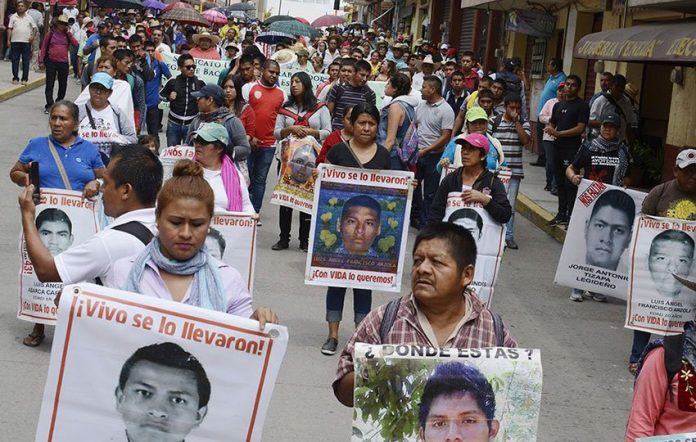
An Ayotzinapa protest march
An Ayotzinapa protest march, one of hundreds — if not thousands — held since 2014.

A judge has cast doubt on the federal government’s “historical truth” regarding the 2014 disappearance of 43 students in Guerrero by ruling that statements on which the findings were based were obtained illegally and must be dismissed.

Martha Georgina Comte Villalobos, a federal court judge in Matamoros, Tamaulipas, said the 83 statements made by the majority of people accused of involvement in the crime must be omitted from the Ayotzinapa investigation due to evidence that their human rights were violated.

Guerrero state police, agents from the federal Attorney General’s office (PGR), Federal Police and army and navy personnel, “among others,” committed the abuses, the judge declared.

In a resolution issued on October 25, Comte said that most of the people accused of playing a role in the disappearance and presumed death of the students were subjected to “torture [and] cruel, inhumane and degrading treatment,” “illegal arrest” or unlawful “prolonged detention.”

Some of those detained were subjected to all three violations of their human rights, the judge said.

Statements made by three men identified as being actual perpetrators of the crime – Agustín “El Chereje” García Reyes, Jonathan “El Jona” Osorio Cortés and Patricio “El Pato” Reyes Landa – were among those dismissed by the judge.

The three men, all of whom supported the federal government’s official version of events, were released from custody.

“The majority of the witnesses whose fundamental rights were violated . . . ended up accepting the deeds attributed to them and those who didn’t formulated accusations against various people . . . It’s not explicable that practically all of them, despite having the right to not give evidence and to not self-incriminate, ended up doing so . . .” the judge’s resolution said.

According to the government’s “historical truth,” the 43 students from the Ayotzinapa rural teachers’ college were intercepted by corrupt municipal police in Iguala, Guerrero, in September 2014 while traveling on buses they had commandeered to travel to a protest march in Mexico City.

The police then handed them over to members of the Guerreros Unidos gang who killed the students, burned their bodies in a municipal dump and scattered their ashes in a local river.

Former Attorney General Jesús Murillo Karam told a press conference in January 2015 that the version of events he described was “a legal certainty.”

However, the government’s conclusion has been widely questioned both within Mexico and internationally and authorities have been heavily criticized for their handling of the case.

Many suspect that the army may have played a role in the disappearance and presumed murder of the students.

The United Nations (UN) said in a report published in March that 34 people were tortured in connection with the investigation.

The report, entitled Double Injustice: Human Rights Violations in the Investigation of the Ayotzinapa Case, said that “there are solid grounds to believe that torture” including “beatings, kicks, electric shocks, blindfolding, attempted asphyxia, sexual assault and various forms of psychological torture” was committed against 33 men and one woman who were arrested in relation to the case.

Torture mainly occurred in the first 48 hours after arrest, and some cases occurred at the offices of the Special Prosecutor for the Investigation of Organized Crime (SEIDO), a division of the PGR, the report said.

Judge Comte corroborated that finding, stating in her resolution that there are medical opinions that “confirm the deterioration” of the physical condition of many of the accused while held in SEIDO custody.

Medical examinations found that the three recently released men – García, Osorio and Reyes – had all sustained injuries but, according to authorities, they occurred before they were arrested.

A doctor who assessed García said that he was injured while working at home but the judge declared that the claim was “absurd,” pointing out that a naval medical report stated that he was in good health at the time of his arrest.

According to the PGR, the two other men, who were allegedly drunk at the time of their arrest, suffered injuries after falling while trying to evade capture.

But Comte questioned why the three men would have “spontaneously declared” to belonging to the Guerreros Unidos gang and killing the students if they were not under duress.

There are no “reasonable explanations” for the men’s “spontaneous confessions about very serious events,” she said.

The disappearance of the 43 students is considered the biggest of several blemishes on the record of President Peña Nieto.

However, the president said in August that he stood by the “historical truth” declared by investigators, a stance that was quickly criticized by the Centro Prodh human rights group.

It said that the federal government continues to insist on maintaining its “historical lie.”

President-elect López Obrador met with parents of the missing students on September 26 – the fourth anniversary of their disappearance – and vowed to discover the truth about what happened to them.

In June, a federal court ordered the creation of a truth and justice commission to undertake a new investigation into the case, declaring that the initial one was not “was not prompt, effective, independent or impartial on the part of the PGR.”

However, the federal government has not acted on the court’s directive.

López Obrador said that if the commission has not been created by December 1 – the date he will be sworn in as president – he will create it by decree.

Source: Milenio (sp) 

Veracruz dancers break a Guinness record with La Bamba

0
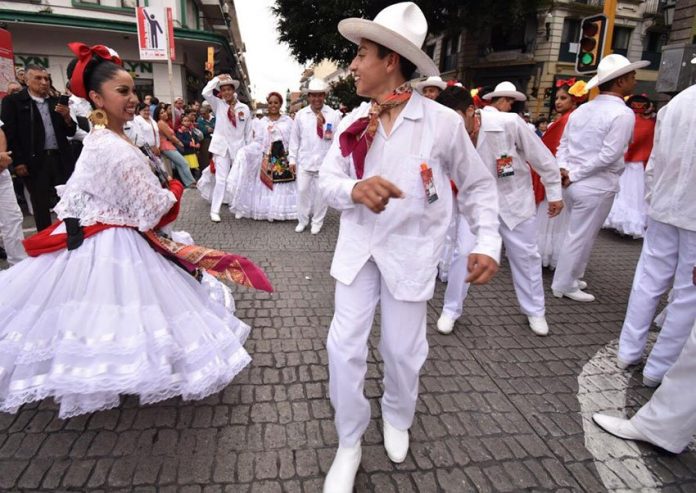
Record-setting dancers yesterday in Xalapa.

Yet another Guinness World Record was set on Mexican soil yesterday: 2,370 men, women and children danced simultaneously to the Mexican folk song La Bamba.

The successful record attempt took place in the historic center of Xalapa, the capital of Veracruz.

La Bamba, an example of Veracruz’s son jarocho musical style, is considered an anthem of the Gulf coast state.

The song was played live during yesterday’s mass dance by the group Tlen Huicani.

However, it was not just jarochos, as natives of Veracruz are known, who had the honor of claiming the new record as dancers from México state, Puebla, Hidalgo and Morelos, among other states, also took part.

All the participants dressed in traditional white costumes adorned with red neck ties for men and red scarves for women.

The annual record attempt was organized by the folkloric ballet ensemble of the University of Veracruz.

The previous La Bamba record was set a year ago by 1,938 professional and amateur dancers.

All manner of weird and wonderful Guinness World Records have been set in Mexico.

They include the world’s biggest marzipan, the biggest bead mosaic, the largest foosball tournament and – of course – preparation of the largest number of flautas, or crispy, fried tacos.

Source: Excélsior (sp), Al Calor Político (sp)