Home Blog Page 2050

Mexico City tops growth in interest for Christmas destinations

0
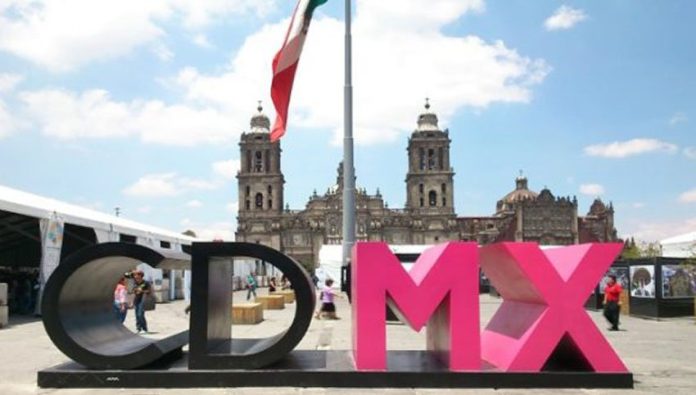
CDMX a popular Christmas holiday destination.

Mexico City ranks No. 1 on a list of Christmas holiday destinations that have seen the highest growth in interest and bookings this year on the online hospitality service Airbnb.

Out of all the world’s destinations Mexico City recorded a 117% growth based on reservations, searches and the number of site visitors who added it to their wish list.

The capital was not alone on the list of the top 10. Puerto Vallarta ranked third with 92% more interest, while Tulum, Quintana Roo, was fourth with 78% more.

A search conducted by the newspaper El Financiero found that Airbnb lodging rates in the country’s capital range from 400 to 4,200 pesos (US $20 to 210) per person per night.

Hosts offer travel experiences that include tours of the Teotihuacán pyramids, dining on tacos al pastor, mezcal tastings and bar hopping in the borough of Coyoacán and the districts of Polanco and Condesa.

The online service also compiled a list of trending destinations to visit in 2019 and put the city of Puebla, in the state of the same name, in third place. This list too was based on various criteria and comes out as a compilation that skews heavily towards off-the-beaten-path towns and regions.

Airbnb says the list reflects travelers’ increasing focus on sustainable and authentic tourism and helping communities recover from hardships or disasters.

Puebla’s principal attractions for travelers were its museums, culinary hotspots and distinct architecture.

Airbnb explained that the destination “provides a unique alternative to the typical Mexican beach vacation and trip to the capital city, and we’ve seen tremendous inbound growth and wanderlust despite 2017’s earthquake.”

Source: El Financiero (sp) Forbes (en)
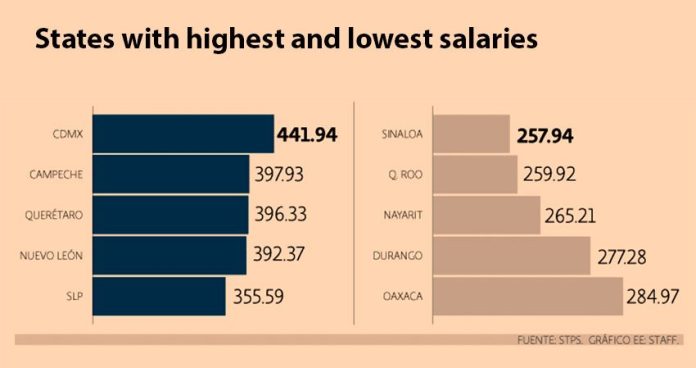
Querétaro leads Bajío region with salaries up 7.5% in 2018

0
On the left, states with the highest daily salaries. Those on the right are at the bottom of the scale.

Salaries in the state of Querétaro increased by 7.5% in 2018, according to a review of collective labor agreements at 330 companies.

The pay rise is the highest of any state in the Bajío region this year, state Labor Secretary José Luis Aguilera Rico said.

“. . . With an average 7.5% [increase] in salaries and benefits . . . We can say that it is a good result for the state, that we’re in first place in the Bajío and that generates a lot of investor confidence. In states such as Guanajuato, Aguascalientes and San Luis Potosí, we’re talking about [an increase] of under 6%,” he said.

Aguilera explained that the revision of 330 contracts, conducted by the secretariat he heads, met the state government’s review target and represented a 32% increase on the number of agreements assessed in 2017.

“The goal last year was [to review] the collective agreements of 250 companies; the truth is that we’re ending the year at 100% of the goal,” he said.

The secretary also said there had been no work stoppages in the state this year and that the goal to create 30,000 new jobs was exceeded.

“It gave us a lot of confidence that in spite of the elections [and] the turbulence that was speculated about, Querétaro came out with 7,600 more jobs [to the end of October] than the goal of 30,000. Querétaro surpassed the goal. There was speculation that the change of president . . . [would] stop [the creation of] jobs but Querétaro continued to make progress,” Aguilera said.

He highlighted that Querétaro is in second place nationally in terms of job creation and that employment is more stable than in tourism-oriented states which often feature at the top of the list.

“We create stable employment, unlike Quintana Roo or Baja California Sur, where because of tourism their [job creation statistics] are very high but the vacation period ends and they’re left without a job,” Aguilera said.

Querétaro is the hub of Mexico’s growing aerospace industry and has also attracted investment from automotive companies such as Continental AG, which opened a research and development center in the state earlier this year.

In October, daily wages of its workers with IMSS social security insurance – at 396 pesos (US $19.50) – was the third highest in Mexico behind only Mexico City and Campeche, official statistics show.

Querétaro’s GDP expanded by 3.92% last year, making it the 10th fast growing economy in Mexico.

Source: El Economista (sp) 

New self-defense forces surface in Guerrero coastal region

0
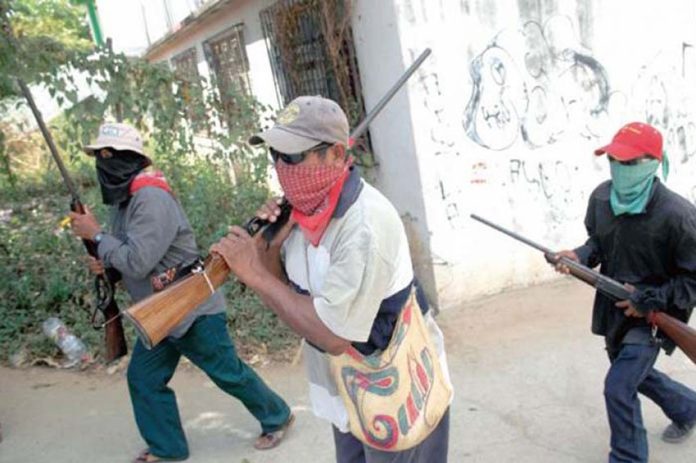
Self-defense militia on the move in Guerrero.

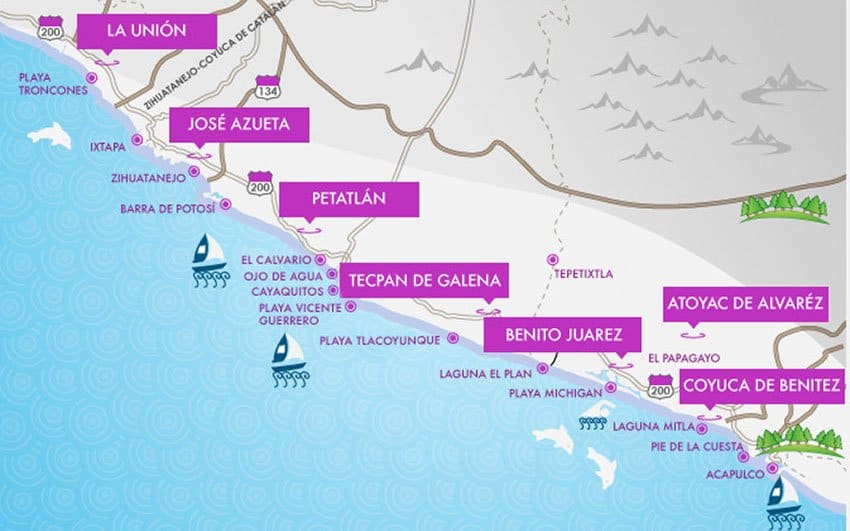
Two new self-defense forces have emerged in two municipalities in the Costa Grande region of Guerrero in response to ongoing violence and insecurity while another may soon be required in a third municipality.

On Monday, a group supported by the Union of Peoples and Organizations of Guerrero (Upoeg) took over security in the municipality of Petatlán by occupying municipal police headquarters and assuming control.

Yesterday, an unrelated self-defense militia force announced itself in nearby El Llano, Tecpan.

“. . . we are prepared to defend ourselves once more from any external threat posed by the presence of criminal groups that have overcome the state government,” it said in a statement.

The state Public Security Secretariat has counted at least eight active criminal organizations operating in the Costa Grande region: the Rodríguez, the Granados, Guardia Guerrerense, Sangre Nueva Guerrerense, the Knights Templar, the Viagras, the Cornudos and the Jalisco New Generation Cartel.

The Costa Grande region extends from Acapulco to the Michoacán border.

The state government says there are 23 self-defense groups operating in over 60% of state territory.

Atoyac, meanwhile, has no self-defense force but its municipal police have gone on strike over unpaid salaries.

The officers have also denounced Mayor Yanelly Hernández Martínez for making unauthorized deductions to their salaries and accused the police chief of violating their labor rights.

Source: La Voz de Michoacán (sp)

Canadian woman’s companion chief suspect in her death

0
Bergeron and St-Onge.

Authorities in Baja California Sur said the traveling companion of a Canadian woman who disappeared December 4 in Los Cabos is the chief suspect in her death.

The body of Christine St-Onge, 41, was found yesterday near the hotel in which she was staying, said the state Attorney General’s office.

The discovery was made after evidence of extreme domestic violence was found in the hotel room where she was staying with another Canadian, 53-year-old Pierre Bergeron.

He had returned to Canada alone on December 5, one day prior to the couple’s scheduled return. He had St-Onge’s ticket in his possession but was carrying no luggage.

Bergeron committed suicide the following day, according to Canadian authorities.

In Mexico, authorities said St-Onge died as a result of cranial trauma and had been dead about five days. Blood stains were found in the hotel room.

Police in Canada said an autopsy would have to be performed to confirm that the remains are those of the Laval, Quebec, woman.

The two had traveled to Mexico on November 29.

Source: Peninsular Digital (sp), Montreal Gazette (en)

López Obrador, Trump chat by phone on migration, job creation

0
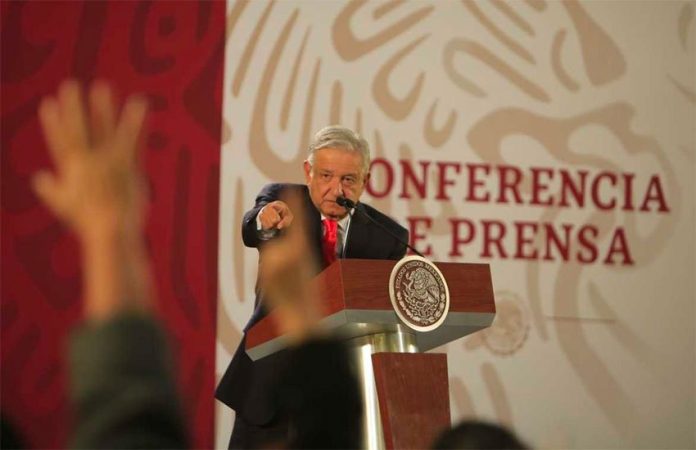
López Obrador said at this morning's press conference that the border wall has never come up in talks with US President Trump.

President López Obrador discussed migration and job creation in Mexico and Central America during a telephone call yesterday with United States President Donald Trump.

“In respectful and friendly terms, we spoke about the migration issue and the possibility of implementing a joint program of development and job creation in Central America and our country,” López Obrador wrote on his Twitter account.

The conversation between the two presidents followed an announcement by Foreign Affairs Secretary Marcelo Ebrard earlier this week that Mexico will invest more than US $30 billion over the next five years on a Comprehensive Development Plan with Guatemala, Honduras and El Salvador aimed at curbing migration to the United States.

López Obrador has called on the United States to contribute to the plan, which Ebrard said last month would need to be on the scale of the Marshall Plan that rebuilt western Europe after World War II.

Thousands of Central American migrants have entered Mexico in large groups known as caravans over the past two months to travel to Mexico’s northern border and seek asylum in the United States.

Several thousand are now stranded in Tijuana and other border cities, where many will face a frustratingly long wait for the opportunity to plead their case for protection to United States authorities.

A growing number of migrants are crossing or attempting to cross the border illegally to hand themselves over to U.S. border agents and thus expedite the asylum request process.

Trump has described the caravans as an “invasion” and frequently urged Mexico to do more to stop them from reaching the border.

Interior Secretary Olga Sánchez said yesterday that the government will stop illegal entries at Mexico’s southern border with Guatemala but gave no detail about how it would achieve it.

“In the south there will be only one entry, on the bridge,” she said. “Anyone who wants to enter illegally, we are going to say: ‘Get in line and you can enter our country.”

In spite of the contentious migration issue and their position on opposite sides of the political spectrum, the relationship between López Obrador and Trump has been mostly cordial.

Two days after his swearing-in on December 1, Trump congratulated López Obrador in a Twitter message and declared that “we will work well together for many years to come!”

Mexico’s first leftist president in a generation has stressed the importance of the relationship with the United States and said that he wants to maintain respectful dialogue.

Neither the United States president nor the White House commented on yesterday’s telephone conversation but Trump returned to Twitter this morning to comment on the issue that has come to characterize the strained relations with Mexico during his administration.

“I often stated, ‘One way or the other, Mexico is going to pay for the Wall.’ This has never changed. Our new [trade] deal with Mexico (and Canada), the USMCA, is so much better than the old, very costly & anti-USA NAFTA deal, that just by the money we save, MEXICO IS PAYING FOR THE WALL!” he wrote.

At his daily press conference this morning, López Obrador said he has never spoken to Trump about the border wall issue.

He echoed the sentiment in his Twitter message yesterday, stating that his conversation with the U.S. president was “good” and “friendly” and stressing his intent to maintain a relationship of respect.

López Obrador also said that Trump had invited him to Washington and that there was a possibility he would go but added that “there must be a motive” for any meeting.

Source: Associated Press (en), Milenio (sp) 

Government sweetens offer to airport investors but to no avail

0
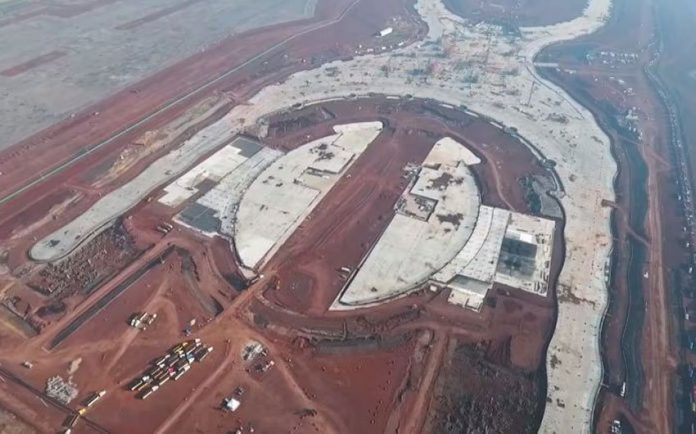
The cancelled airport project.

The federal government sweetened its buyback offer this week for bonds issued for the cancelled Mexico City airport project but investors once again rejected it, although they said it was an improvement on last week’s proposal.

The Secretariat of Finance presented the new offer Tuesday, increasing the repurchase price for US $1.8 billion in bonds from US $900 for US $1,000 invested to an even US $1,000 plus accrued and unpaid interest.

It also said that a consent payment would be made to investors who agree to the deal by December 19.

The offer, which closes on January 4, also added a new default trigger if any new airport begins operations within a 70-kilometer radius of Mexico City’s existing airport.

The offer was well received by bond markets with the US $3-billion bond due in 2047 spiking to as high as 93 cents to the dollar yesterday compared to 83 cents after the original December 3 offer.

But an ad hoc group representing holders of bonds worth more than half the US $6 billion in debt issued by the Mexico City Airport Trust (MexCAT) to partially fund the now-scrapped US $13-billion project said in a statement yesterday that while “the amended proposal makes incremental improvements, fundamental problems . . . .”

It also objected to a new timetable that is half that of the original proposal issued on December 3, suggesting that the early-tender deadline should be extended to at least December 21.

The group, represented by international law firm Hogan Lovells, claimed that it was not consulted on the amended offer.

President López Obrador confirmed at the end of October that the airport project at Texcoco, México state, would be scrapped after a four-day public consultation found 70% support to kill it.

Instead, the Santa Lucía Airforce Base in México state is to be converted for commercial aviation use and the existing Mexico City airport and that in Toluca will be upgraded.

Deputy finance secretary Arturo Herrera told reporters after this week’s offer was made that the bonds were to be repaid via funds collected in passenger taxes and that the default clause was designed to ensure that there would be enough passenger revenue to do so even with a multi-airport system in operation.

But the ad hoc group of bondholders said that the new proposal’s terms “are insufficient to compensate for the reduction or complete elimination of passenger volume at the [Mexico City] Benito Juárez airport to be expected over time as a result of the opening of such alternative airports.”

It argued that without “additional collateral (such as from alternative airports or otherwise) to compensate for the removal of the originally agreed Texcoco collateral protection, bondholders remain without effective substitute sources of payment.”

The statement concluded by saying that “the Ad Hoc Bondholder Group, consisting of a group of large international investment institutions, still desires, and looks forward to, discussing its concerns and proposed resolutions with MexCAT.”

Mario Castro, an economist and vice-president at Nomura Securities, said “the new deal shows a willingness to negotiate by the Mexican government and will likely prevent a further deterioration of sentiment, but it doesn’t fix the damage that was done by the initial cancellation of the airport.”

Source: El Financiero (sp), Financial Times (en)

Concrete producers says prices will rise 20%

0
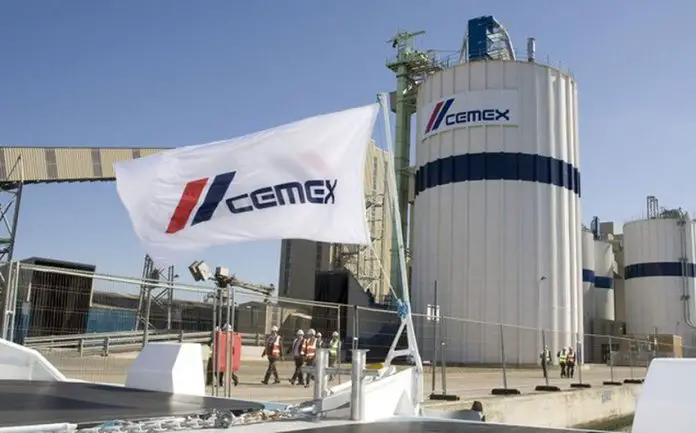
Cemex wouldn't say how much cement prices will go up.

The price of concrete will increase by 20% on January 1, an industry group has announced.

The Mexican Association of Independent Concrete Producers (AMCI), which represents companies that make 70% of the material nationwide, said in a statement yesterday that a range of factors are behind the price hike.

ACMI president Emanuel García Villarreal pointed to the rising cost of cement and aggregates including sand and limestone as well as higher prices for diesel and electricity.

“This increase . . . is due to the rise in 2018 of all our inputs . . .” he said.

Jorge Pérez, spokesman for Nuevo Léon-based Cemex, the second largest building materials company in the world and a large supplier to independent concrete producers, declined to say when and by how much it would increase its prices for cement.

“Cemex will increase its prices in Mexico according to the inflation of our inputs, which could vary depending on the geographic area,” he said.

However, Javier Fernández, CEO of concrete producer Mecasa, said he had been informed that Cemex’s cement prices would increase by 12% to 13% from January 1.

Cement and diesel contribute to 50% of the overall cost of producing concrete, he explained.

Víctor Salazar, director of real estate development company Clúster de Vivienda de Nuevo León, urged concrete producers to reconsider raising their prices by such a significant amount due to the damage it will cause to the construction sector, which is already confronted with rising costs.

He said that the increase went above inflation and producers’ price indices.

The head of the Nuevo León branch of the National Chamber for Housing Development (Canadevi), Marco Salazar, said “the increase in the price of concrete concerns us but we hope that it doesn’t materialize in a generalized way.”

He added that the exchange rate could be another factor that affects the price of new housing but nevertheless predicted that 50,000 new dwellings will be built in Nuevo León next year.

“We are very hopeful that economic uncertainty won’t increase in 2019,” Salazar said.

According to the National Statistics Agency (Inegi), construction costs rose by 10.23% between January and November, the biggest increase for the same period over the past decade.

Cement prices increased between 3% and 9.9% in the first nine months of the year, depending on the supplier, but respective 30% and 28% increases in the cost of steel and wire rods have contributed even more to rising building costs.

Source: Reforma (sp), El Financiero (sp)  

GM opponents wonder about AMLO’s commitment to a ban

0
AMLO has declared himself against GM corn.
AMLO has declared himself against transgenic products.

President López Obrador’s commitment to not allow the use of genetically-modified (GM) organisms has been called into question by two non-governmental organizations, including Greenpeace.

In his inauguration speech on December 1 the new president pledged that the use of transgenic products, such as genetically-modified seeds, would not be permitted in Mexico under his government.

However, López Obrador’s appointments of Alfonso Romo as his chief of staff and Víctor Villalobos as agriculture secretary have raised eyebrows among GM opponents.

Both men have been involved in organizations that support the GM food industry.

Romo was the founder and CEO of the company Seminis, a transgenic seeds pioneer that was sold to United States agricultural biotechnology corporation Monsanto for US $400 million.

Villalobos was previously the head of CIBIOGEM, a federal government agency that develops policies for the safe use of genetically modified organisms.

María Colín, legal adviser for Greenpeace México, questioned whether Romo and Villalobos – who she said “come from a long career of promoting genetically modified organisms” – would “really have the will” to follow through with López Obrador’s pledge.

She added that the government needs to provide more details about how it plans to go about prohibiting the use of transgenic products and clarify if “everything is going to be banned or just corn.”

Adelita San Vicente, director of the Semillas de Vida (Seeds of Life) Foundation, an organization dedicated to the conservation of corn in its traditional form, also said that the presence of Romo and Villalobos within the upper echelons of government was cause for concern but pointed out that there are also new officials who have spoken out against GM foods.

They include María Elena Álvarez-Buylla, head of the National Council for Science and Technology (Conacyt), and Víctor Suárez, who was named undersecretary for food self-sufficiency.

“. . . The doctor Álvarez-Buylla has been important in the fight . . . against genetically modified organisms because she’s provided us with scientific information,” San Vicente said.

Planting GM corn in Mexico has been prohibited since 2013, pending the outcome of a lawsuit. Álvarez-Buylla has advocated the ban be made permanent.

Source: El Financiero (sp) 

53 years for Gulf Cartel plaza chief; 90 for kidnapper

0
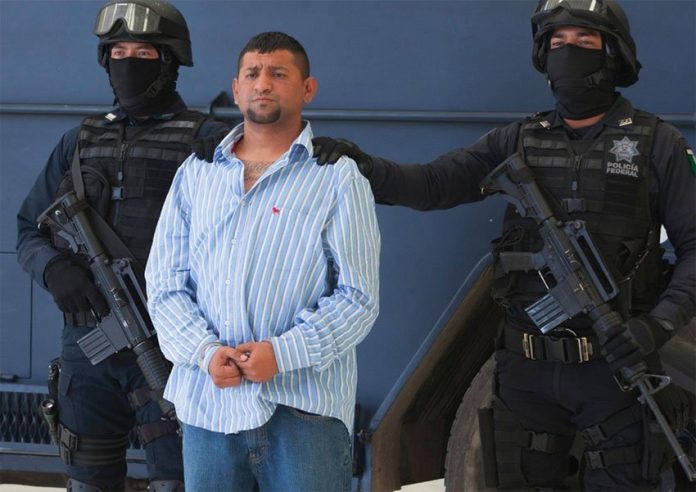
Former Gulf Cartel plaza chief Rosales.

Criminals who operated in the northern border states of Nuevo León and Tamaulipas have been sentenced to hefty prison terms.

David Rosales Guzmán, identified as the Gulf Cartel leader in Monterrey, Nuevo León, has been ordered to spend to 53 years behind bars.

Also known as “El Comandante Diablo,” Rosales was found guilty of organized crime, kidnapping, homicide, crimes against health and carrying an unauthorized firearm.

He was arrested in 2012 for the murder of two men whose bodies were hung from an overpass. He was also linked to an attack on a bar in Monterrey in which 14 people were killed.

In Tamaulipas, a man identified only as Benedick N. was sentenced to 90 years for a kidnapping that took place early last year.

A complaint filed by the victim’s family led to his rescue and the apprehension of the kidnapper.

Source: Milenio (sp)

Millions of dollars in drug money bought professional soccer teams

0
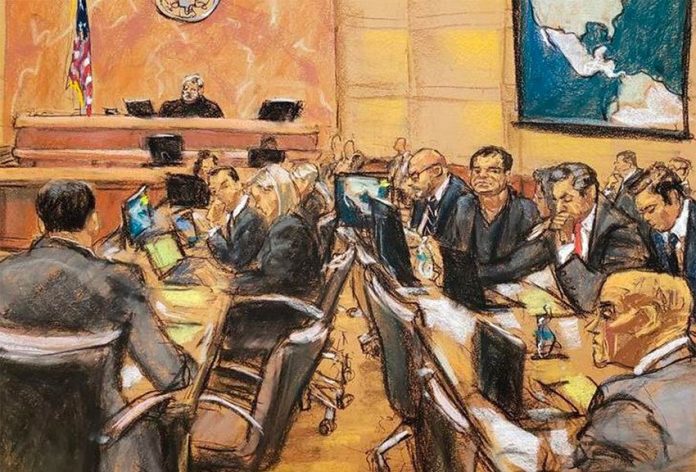
The New York trial of former drug lord 'El Chapo' Guzmán, seated just to the left of the map on the wall.

A drug trafficker testified at the New York trial of Joaquín “El Chapo” Guzmán that he spent millions of dollars buying professional Mexican soccer teams.

Tirso Martínez Sánchez, nicknamed El Futbolista, told jurors Monday that he was the owner of teams in Querétaro, Celaya, Irapuato, La Piedad and Mérida, all of which were bought with the proceeds of distributing drugs in the United States for Mexican cartels.

The trafficker, who according to his own testimony worked for both El Chapo’s Sinaloa Cartel and the Juárez Cartel between 1995 and 2003, said he bought the Venados club in Mérida, Yucatán, for between US $600,000 and $700,000 and the Reboceros club in La Piedad, Michoacán, for US $2.2 million.

Martínez added that he sold the latter club in 2004 for $10 million, explaining that he made a $4 million net profit after paying off players and other employees.

Once the Mexican Football Federation became aware of his ownership of soccer teams in 2006, the witness said, it offered to buy his interests in the clubs for $10 million.

In just three years between 2000 and 2003, Martínez’s trafficking activities are estimated to have netted him between $40 million and $50 million.

But the witness said that he lost between $2 million and $3 million betting on cockfights held at palenques, or cockfight rings, in several Mexican cities.

With his remaining riches, Martínez said, he bought one restaurant in Tijuana and another in the state of Illinois, a car dealership in Los Angeles, four clothing stores and a light plane and cars, among other purchases.

“I spent all my money betting on cocks, horses, properties, cars, houses, parties and women,” the 51-year-old said.

He told jurors that he only had five assets left – a house, a ranch and three other properties – all located in Mexico.

Martínez also testified that he had collaborated with Guzmán on the operation of a train route that transported cocaine from Mexico to the New York area. He said that El Chapo “invented” the route that terminated in a New Jersey warehouse.

The witness said he met Guzmán after the former drug lord’s first escape from prison in 2001 and estimated that during the time he worked with him, the Sinaloa Cartel earned between $500 million and $800 million in cocaine sales in the United States.

Martínez told the court that he stopped working for the cartel in 2003 because he believed that the police were closing in on him, after which he said that he feared that patas cortas (short legs), as he called Guzmán, would have him killed.

Arrested in Mexico in 2014, Martínez was extradited to the United States the following year where he pleaded guilty to drug trafficking and importation charges.

He, like other cartel witnesses who have appeared at Guzmán’s trial, hopes to receive a reduction to his prison sentence.

If convicted of crimes including trafficking, criminal conspiracy and money laundering, Guzmán faces a probable sentence of life imprisonment. The trial continues.

Source: Notimex (sp)