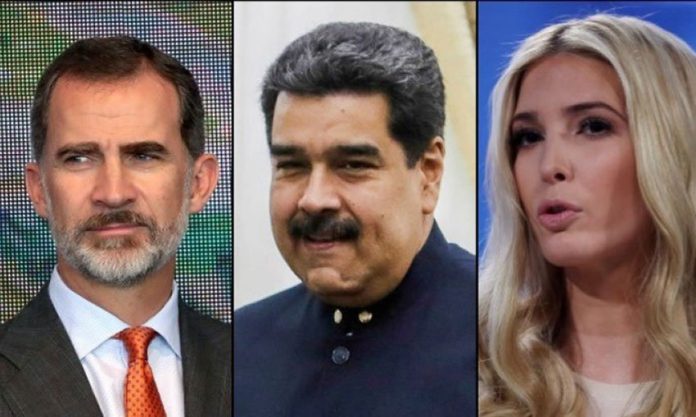
Guests on Saturday include, from left, the king of Spain, Venezuela's Maduro and US presidential advisor Ivanka Trump.
At least 400 representatives of foreign governments have been confirmed as guests for tomorrow’s inauguration ceremony in Mexico City, where Andrés Manuel López Obrador will be sworn in as Mexico’s 58th president.
Organizers describe the event as historical for the international representation, which includes 20 heads of state.
About 900 guests are expected in total at the event, which will be held at the legislative palace of San Lázaro, but they will be outnumbered by journalists. Some 1,800 have been accredited to attend.
Notable on the foreign guest list are the king of Spain, Felipe VI, United States vice-president Mike Pence and Venezuelan President Nicolás Maduro, whose invitation sparked an outcry of protest.
The day’s events begin at 9:00am, when the 628 members of both legislative chambers meet for a Congress of the Union session at the Chamber of Deputies.
President Peña Nieto and López Obrador will arrive at 11:00am for the transition of power ceremony. The latter intends to break with tradition and address the nation from Congress, a first in the nation’s recent history.
Enrique Peña Nieto will leave Congress after the singing of the national anthem, bringing the ceremony to a conclusion.
López Obrador will attend a private event with his Mexican and foreign guests at the seat of the federal executive, the National Palace, at 2:00pm.
A festival — dubbed AMLOFest — will kick off two hours after that on the streets and zócalo outside, and Mexico’s new president will address the crowd later that evening from a balcony at the palace.
A traditional indigenous ceremony will also part of the inauguration. At 6:00pm, López Obrador will be presented with a leader’s baton by representatives of Mexico’s 68 indigenous peoples to acknowledge him as their leader.
It will be the first time in Mexico’s history that a president has been accorded the honor.
President-elect López Obrador takes office tomorrow and hopes are high that he will quickly bring change to Mexico.
The survey Expectations of Government 2018-2024, conducted by the polling firm Consulta Mitofsky for the newspaper El Economista, shows that 45% of Mexicans polled believe that change will be noticeable within a year.
More than half of those respondents said they expected change to be apparent within six months.
A further 25% said it would take between one and three years for López Obrador to achieve change in the country.
A pessimistic 5% of respondents said that change would never be seen in Mexico while another 5% said it would take longer than the six years the new president will have in office.
Asked whether the general situation in Mexico under López Obrador’s leadership would improve or get worse, 43.2% said that things would get better and 17% said that they would continue equally as well.
Only 12.8% of those polled said that things would get worse while another 12% said that the situation would remain as bad as it is now.
The combined 60.2% of people who believe that Mexico “will improve” or “continue just as well” during López Obrador’s administration is higher than the percentages who said the same about the previous two governments when they took office.
In November 2012, just before President Peña Nieto was sworn in, 52.3% of poll respondents said that they anticipated that the country’s situation would improve or continue just as well under his leadership, while in November 2006, just 48.8% said that they expected the same during the Felipe Calderón administration.
López Obrador also fared five points better than Peña Nieto on a question asking whether the incoming president would succeed in maintaining control of the country through his six-year term.
However, almost one-third of respondents said the new president would “lose the reins” of the country at some point.
The poll found that people’s three main demands of the new government are to change the security strategy to combat violence, put an end to corruption and create jobs. Other lesser demands were to improve the economy, be honest and improve salaries.
Just under 52% of poll respondents said they expected López Obrador to keep all or most of his campaign promises while 9% expected he wouldn’t keep any of them.
Over 62% of those surveyed said they approved of the way that López Obrador conducted himself as president-elect while just under 35% said that they disapproved.
While many people welcomed the chance to have their say, others said that the referendums were illegal and unrepresentative.
The leftist political veteran will take office tomorrow with a “credibility” rating of 60%, a figure around 15 points higher than those enjoyed by Peña Nieto and Calderón when they were sworn in.
However, Vicente Fox, president between 2000 and 2006, enjoyed even higher ratings than López Obrador both on credibility and approval of his actions as president-elect.
Asked whether the new administration will bring a change to the way Mexico is governed or merely a change of personnel, 53.9% said the former while 27.8% opted for the latter.
Five months later, he still has a strong approval rating. Another recent poll found 67.2% of respondents had a good or very good opinion of their new president.
López Obrador will be sworn in tomorrow morning at a ceremony at the federal Congress, where heads of state and dignitaries from around the world will be in attendance.
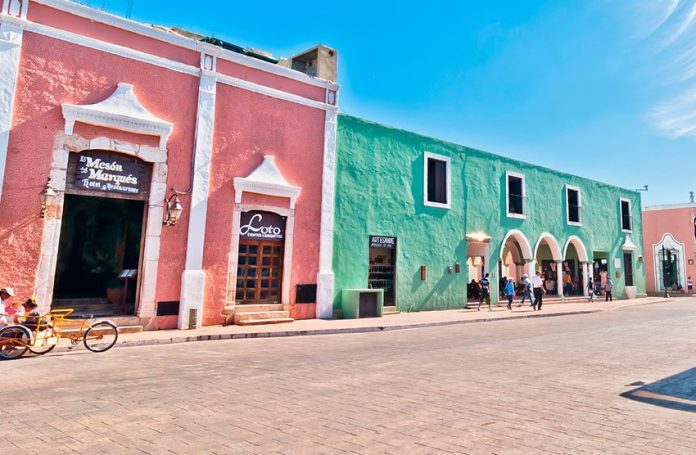
The Yucatán colonial town of Valladolid has been named one of the top nine emerging travel destinations in North America for 2019 by the travel website Travel Lemming.
An expert panel of six of the world’s top travel influencers — travel bloggers and YouTubers known worldwide — selected “the next nine hot and trendy spots” from dozens of submissions sent in by tourism organizations from around the globe.
In describing why Valladolid won, the website said: “. . . Those who build in the time to soak up this magical village will soon come to wonder why it wasn’t at the top of their list to begin with. From stunning Spanish colonial architecture to bustling markets, visitors to Valladolid will be spoiled for choice of activities.”
[wpgmza id=”115″]
Among the judges’ comments: “Valladolid is often missed by tourists but we think it should be on everyone’s bucket list. If you looking to go to some of the best cenotes in Mexico and check out some Mayan ruins, base yourself in Valladolid for a day or two.”
The city, which is also a Pueblo Mágico, or Magical Town, is located about 160 kilometers east of the capital, Mérida, and a 30-minute drive from the Chichén Itzá archaeological site.
Travel Lemming promotes travel to emerging travel destinations, encouraging travelers to think beyond the popular destinations and forge their own path.
Poppy production is up, but so are efforts to destroy crops.
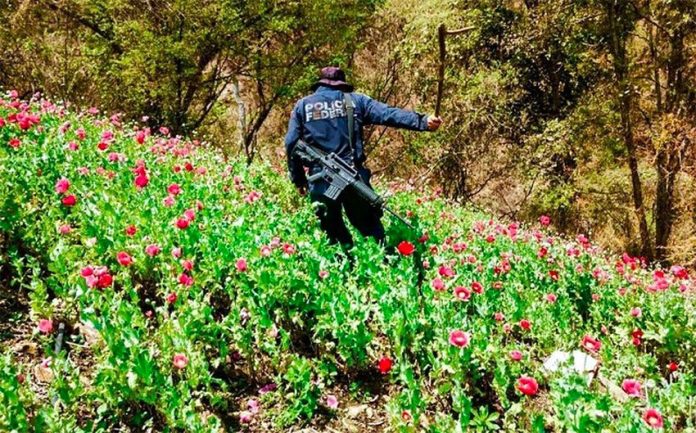
The area of land on which opium poppies are cultivated grew by 21% between 2015 and 2017, according to the United Nations Office on Drugs and Crime (UNODC).
A new UNODC report, completed in conjunction with the Mexican government as part of the Illicit Crops Monitoring Program, said that between July 2015 and June 2016 poppies were grown on 25,200 hectares.
In the following year, poppies covered 30,600 hectares.
The monitoring program, conducted via satellite and navy aircraft flyovers, identified three main poppy production regions.
The largest extends across the Sierra Madre Occidental in the states of Sinaloa, Chihuahua and Durango, a region known as the Golden Triangle.
Large opium poppy crops were also detected in the Sierra Madre del Sur of Guerrero and Oaxaca and in the north of Nayarit.
Mexico’s efforts to eradicate the crops also increased.
Óscar Santiago Quintos, head of the PGR drug policy office, said authorities destroyed 29,692 hectares of poppies last year compared to 26,436 hectares in 2015.
UNODC Mexico representative Antonino de Leo called on the incoming federal government to formulate and adopt policies that will prevent the expansion of poppy production by focusing on the socioeconomic needs of the people who live in the regions where the plant is grown.
“I would especially like to invite the elected authorities to contribute to the eradication efforts with the formulation and execution of alternative, broad and sustainable development programs in the areas where illegal crops are grown . . .” he said.
“Alternative development doesn’t center on drugs, it focuses on people and communities. Alternative development programs help farmers to escape the poverty trap of illicit crops with measures that favor rural development and improve infrastructure, inclusion and social protection,” de Leo added.
He said the UNODC doesn’t currently have enough information to calculate total opium production nor has it determined how many people are involved in the cultivation. However, those figures could be quantified by future studies, de Leo said.
He added that the UNODC stood ready to help the incoming government in the fight against illegal drug production.
“I would like to make available to the authorities of the elected government the knowledge, experience, advice and technical assistance of the United Nations Office on Drugs and Crime. Efforts against drugs, crime and corruption [must] focus on sustainable development,” de Leo said.
Another option that the new government may be considering is the legalization of the cultivation of opium poppies for use in the pharmaceutical industry.
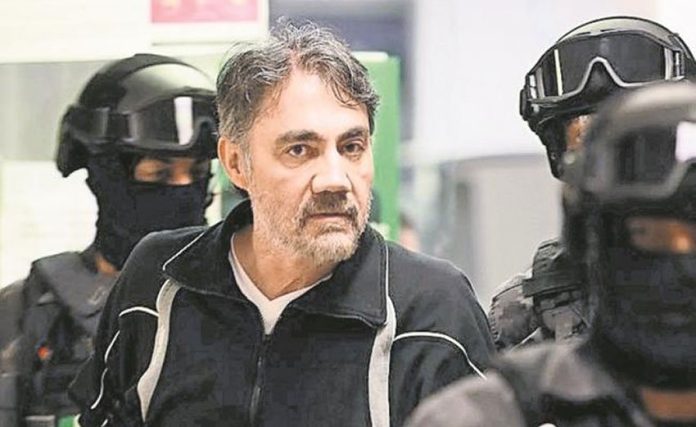
A former high-ranking member of the Sinaloa Cartel and Joaquín “El Chapo” Guzmán’s right-hand man has been sentenced to life in prison by a United States court.
Dámaso “El Licenciado” López, 52, surprised the court on September 28 when he pleaded guilty to importing cocaine into the U.S. He admitted that he had been a member of the Sinaloa Cartel for 15 years, rising to a leadership post and becoming responsible for smuggling drugs into the U.S.
After his sentencing today, which included an order for the seizure of US $25 million, López offered an apology to the people of the United States for his acts.
López’s relationship with Guzmán dates back to 1999 when the drug lord was an inmate at the Puente Grande maximum security penitentiary. López was the penal facility’s deputy director of security at the time.
López played a crucial role in Guzmán’s prison break on January 2001, when he joined the criminal organization.
The friendship between the two men became stronger as time went by, and Guzmán was chosen to be the godfather of López’s son.
But the relationship came to an abrupt end with Guzmán’s third and final arrest in January 2016. Knowing of the imminent extradition of the former drug lord to the United States, López sought to seize control of the Sinaloa Cartel, which was under the control of Ismael “El Mayo” Zambada, who also had the support of Guzmán’s sons.
But his ambitions were ended when he was arrested last year in Mexico City and later extradited to the United States.
López is off to jail now but he might be back in the limelight before long. U.S. authorities see him as a potential key witness in Guzmán’s trial, now under way in New York.
He might also shed some light on last year’s murder of journalist Javier Valdez in Culiacán, Sinaloa. His lawyer said in a statement that López wants to collaborate with Mexican authorities in the investigation.
He is “prepared and anxious to help,” said Manuel Retureta, but the Mexican government has not responded to his offer.
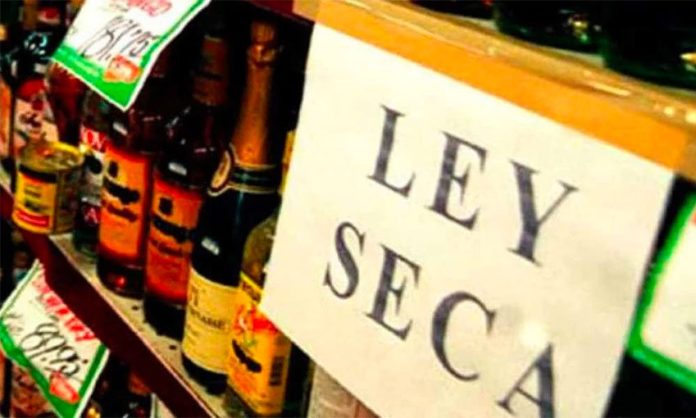
No alcohol sales as new president takes the oath of office.
Some authorities seem to view tomorrow’s swearing in of Andrés Manuel López Obrador as president as a sober affair, and wish to keep it that way.
In Chiapas, the Health Secretariat issued a statement to announce that the so-called “dry law,” commonly invoked on election day, will be in effect starting at 12:00am Saturday and concluding at 11:59pm Saturday night.
The sale of alcohol will not be permitted during those hours.
Another ban will take place in Campeche but the booze-free period is shorter, starting at 3:00am and concluding at 6:00pm.
Those appear to be the only states where a state-wide prohibition will be in effect, but some municipal governments will impose their own.
In Silao, Guanajuato, the ban on alcohol sales starts at midnight tonight and will conclude at 11:00pm tomorrow.
A day-long ban will also be imposed in Reynosa, Tamaulipas.
The governments of Sonora, Quintana Roo, Querétaro, Hidalgo, Zacatecas, Morelos, Oaxaca, Sinaloa, Veracruz, Michoacán, Yucatán, Baja California Sur, Chihuahua and Tabasco went out of their way to assure citizens that there will be no dry law tomorrow.
The government of Nuevo León made a similar announcement, remarking that the state’s 51 municipalities were free to make their own decision.
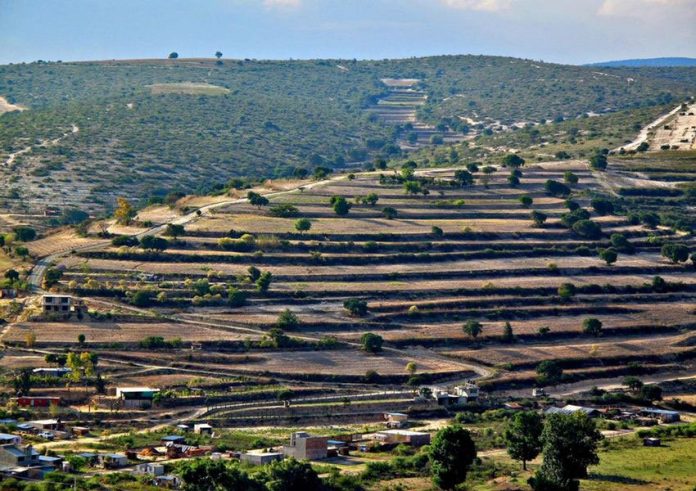
The Mixteca Alta under cultivation after erosion was brought under control. DGCS UNAM
I recently learned that one of my neighbors, Javier Vergara-Blanco, was carrying out a most unusual project inside the huge Primavera Forest which lies adjacent to the city of Guadalajara.
“It has something to do with helping to solve erosion problems caused by heavy rainfall,” I was told. “You ought to interview him.”
Well, I contacted Vergara-Blanco, pulled out my recorder and said, “Tell me something about yourself.”
“OK,” said my neighbor in excellent English. “I was born in the town of Tlaquepaque, just east of Guadalajara. I got a B.A. in computer engineering, worked for IBM for several years doing systems development and analysis and then got an M.A. in applied economics at the University of Michigan at Ann Arbor. After that I began a Ph.D. program in information technology at the University of Guadalajara.”
“Wait a minute!” I interrupted. “How did the background you just outlined ever lead you to work on solving rainfall-related problems in a forest?”
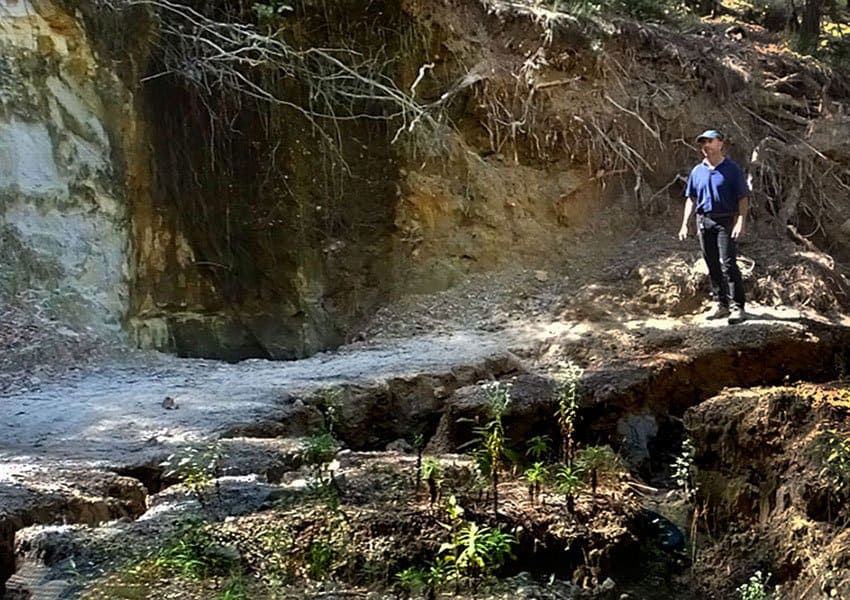
Erosion alongside trail in Jalisco’s Primavera Forest.
Vergara-Blanco then told me he had also spent some years in Monterrey carrying out the financial evaluation of investment projects, meaning that he had to predict what would probably be the outcome of such projects.
“And then,” he added, “I got a job at the national headquarters of Conafor [the National Forestry Commission] and worked for them for seven years.”
At Conafor, Vergara-Blanco used his skills to have the forest-related subsidy programs evaluated in order to support the development and conservation of national forests. “After that I got a job working with people doing applied geophysics and I learned about laser technology for precision mapping not only of the surface of a forest but also of what lies beneath the surface: is it rocky? Sandy? Full of holes? Is there water there already?”
During his years with Conafor, Vergara-Blanco developed a soft spot for forestry and when he began to think about a project for his Ph.D., he decided to “do my bit for forests.”
For the next five years, Vergara-Blanco applied his computing skills to create a program which simulates a storm event on any forest surface and could be instrumental in predicting the effects of forest fires or tree clearing on flooding.
As a model, he used an actual 100-hectare section of the Primavera Forest: a big hill cut by ravines located 10 kilometers west of Guadalajara. New, laser-based technology is used to overlay a three-dimensional mesh on this surface. The program takes into account not only the surface topography and rugosity (roughness), but the soil infiltration capacity as well.
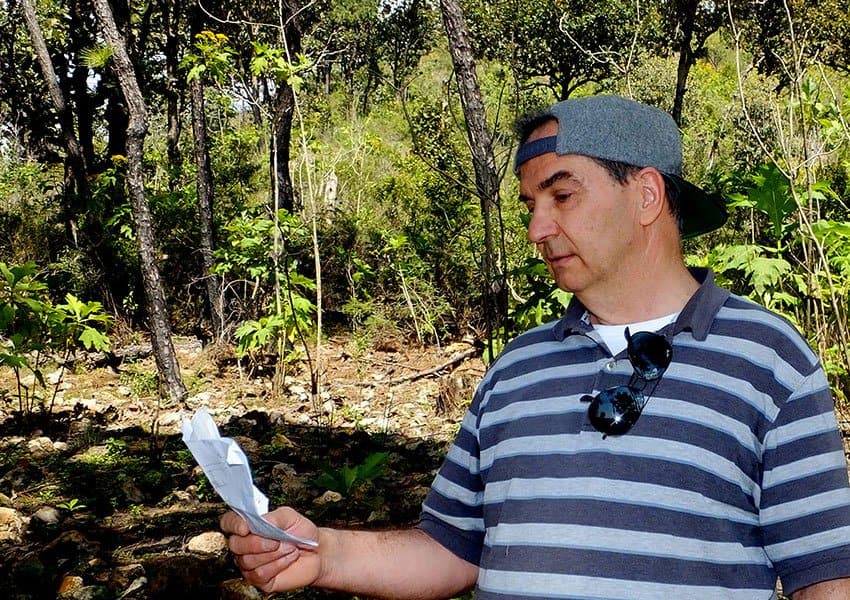
Vergara-Blanco checks map during visit to his study site.
It simulates rainfall and shows how much of this water is retained and how much becomes runoff. It can also show what a storm does to the very same area after a forest fire has swept through it, or tree removal has occurred.
All of this became much clearer when my neighbor said, “Look, let me show you a simulation of an actual event, a particularly bad storm which hit my hills in the Primavera Forest on June 27, 2016. The storm lasted 92 minutes with precipitation of 50 millimeters, which is considered violent rain.”
On the computer screen I saw a three-dimensional mesh representation of the hill complete with ravines. As minute after minute ticked off at the top of the screen, blue shading appeared, showing water accumulation, movement and flooding.
With only a click, Vergara-Blanco switched from this animated video of rain and runoff to a second video showing the same hill protected by what forestry people call “land remediation controls” to minimize rainfall runoff and to maximize rainfall infiltration.
These controls could take the form of terraces, retaining walls, or strategically placed ditches, and their spatial distributions are designed by algorithms. Algorithms may seem esoteric, but Vergara-Blanco’s animation, which shows subsequently more effective spatial distributions, is mind-boggling.
“This is actually artificial intelligence at work,” he told me. “For this optimization test, 355 plans are generated, each plan including 100 alternatives. After each plan, comparisons and judgments are made and yet more solutions are proposed. The computer program can aim solely at minimizing overland flow volume and velocity, preventing or reducing erosion, or principally at infiltration: getting the rainfall into the subsurface so the water stays on the hill instead of flowing elsewhere. Finally, at the end, the very best proposals are presented.”
[soliloquy id="66418"]
In practical terms, this means that a ranger could run Vergara-Blanco’s program to find out the best land-control spatial distribution for a target area, and send out a crew to build structures of predefined sizes, which they can locate out in the forest by GPS. This could minimize the chances of flood, or erosion damage, that would otherwise occur perhaps several months later when the rainy season arrives.
The hill shown in the two videos mentioned above is located within the boundaries of the Primavera Forest and is visible from the community where I live. “I last visited that hill four years ago when I began my thesis,” Javier told me one day. “I would like to take another look at it, but it’s rather difficult to access.”
By chance I knew of a trail that skirts the southern side of this hill and I easily found friends willing to accompany us on a reconnaissance of his study site.
“On this hike,” said the computer programmer, “I was impressed by the great damage wreaked by erosion alongside the road and paths leading to the study area, but when we began to climb the hill, we found no erosion. I was happy to see how healthy the tree cover was, and I was delighted to see once again the watershed I had been analyzing with so much detail, the watershed clearly shown in the computer model of this hill. I could also verify first-hand that the soil texture is prone to sediment loss. It is therefore very likely that significant erosion will occur here if a high severity wildfire, or tree clearance, takes place.”
“This corroborates the conclusions shown in the thesis and makes the distribution of land remediation works all the more relevant.”
Javier Vergara-Blanco’s thesis project was inspired by the work of Jesús León Santos, an indigenous Mixtec farmer who, at the age of 18, decided to change the landscape of his homeland, the barren, dusty Mixteca Alta in Oaxaca, which is “one of the most arid places on earth” thanks to the deforestation and grazing introduced by the conquistadores.
To remedy this, León employed terracing techniques used by his pre-Hispanic ancestors and when the benefits were seen, more and more local people joined his organization, the Center for Integral Small Farmer Development in the Mixteca (CEDICAM).
Over a period of 25 years, León and his friends managed to bring erosion under control and to plant around four million native species of trees that did well in the local climate. They also developed an agricultural system that did not require pesticides.
“Today,” says the organization ProMéxico, “the miracle has happened. The Mixteca Alta is restored. It is green once again. Aquifers have filled up with more water. There are trees and crops and people remain to live on their land.”
By 2008 Jesús León had restored 8,000 hectares of previously barren land and was awarded the Goldman Environmental Prize, the equivalent of the Nobel Peace Prize for work in ecology.
Vergara-Blanco now hopes to find financing to continue his research. He would like to add the removal and redepositing of soil during storms to his simulation and optimization system and develop it into a program that provides additional support for reforestation projects, which woodland conservationists could adapt to their particular needs.
The writer has lived near Guadalajara, Jalisco, for more than 30 years and is the author of A Guide to West Mexico’s Guachimontones and Surrounding Area and co-author of Outdoors in Western Mexico. More of his writing can be found on his website.
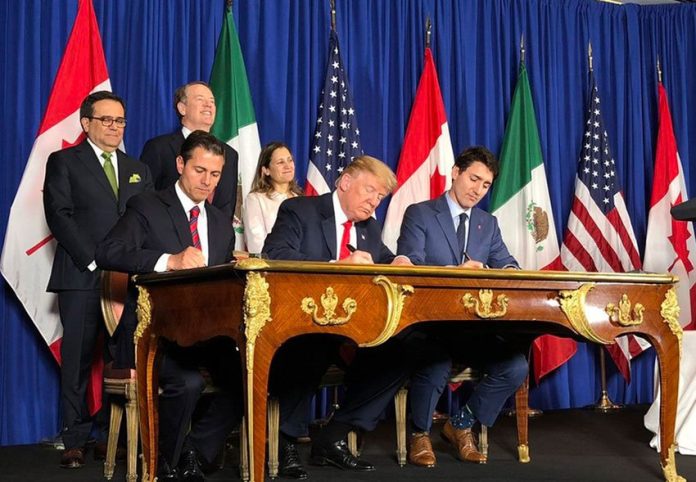
Peña Nieto, Trump and Trudeau sign the new agreement this morning in Argentina.
Mexico, the United States and Canada signed a new trade deal today, officially ending a drawn-out negotiation that lasted more than a year and was characterized by hardline demands by the U.S. and repeated threats by President Donald Trump to pull out of a three-way accord.
On his last day in office, President Peña Nieto joined Trump and Canadian Prime Minister Justin Trudeau at the G20 meeting in Buenos Aires this morning to sign the new North American trade agreement, now known as the United States-Mexico-Canada Agreement (USMCA).
The signing took place despite strong demands by Mexican business leaders last month that the U.S. withdraw its steel and aluminum tariffs first. The tariffs remain in place.
The agreement will now be sent to the respective legislatures of the three countries for ratification, with expectations that it will take effect at the start of 2020.
Trade rules established by the nearly quarter-century-old North American Free Trade Agreement (NAFTA) will remain in force while the ratification process takes place.
The chief negotiators of the three countries, Economy Secretary Ildefonso Guajardo, U.S. Trade Representative Robert Lighthizer and Canadian Foreign Affairs Minister Chrystia Freeland, were on hand at the signing ceremony, which took place at a hotel in the Argentine capital.
Flanked by Peña Nieto and Trudeau, Trump acknowledged that the process to reach the agreement had, at times, been difficult but praised the result.
“It’s been long and hard. We’ve taken a lot of barbs and a little abuse, but we got there,” he said.
“This has been a battle and battles sometimes make great friendships. This is a model agreement that changes the trade landscape forever.”
Trudeau also praised the new agreement but reminded Trump that tariffs on Canadian steel and aluminum exports to the United States still apply and called for their removal.
“The new agreement lifts the risk of serious economic uncertainty that lingered throughout the trade renegotiation process – uncertainty that would have only gotten worse and more damaging had we not reached a new NAFTA,” Trudeau said.
“There is much more work to do in lowering trade barriers and in fostering growth that benefits everyone, but reaching a new free trade agreement with the United States and Mexico is a major step for our economy.”
Both Trump and Trudeau congratulated Peña Nieto for his role in reaching the new agreement, which in Mexico is known as T-MEC.
The outgoing president said that the new “treaty is an expression of the will shared by our three nations to work for well-being and prosperity.”
Peña Nieto added: “The act that we formalize today is proof that Mexico, the United States and Canada are close not just because of geography but because of the values and ambitions they share. They are ready to start a new stage of shared history.”
On Twitter, he wrote that the USMCA “is the first trade agreement with elements to respond to the social impact of international trade: it facilitates the participation of more sectors of the economy, increases the protection of workers’ rights and strengthens the care of the environment.”
Moises Kalach, a businessman and international trade official for the Business Coordinating Council (CCE), told the newspaper El Financiero that the new agreement would provide “clear rules for 75% or a little more” of Mexico’s exports.
He said that the signing of the agreement was cause for celebration.
“It’s a great message to send to markets, it’s a great message of optimism for our country. We can say ‘here there are things that are working,’ this [agreement] is something that is solid, valid . . . it’s a bet for the future that goes beyond a six-year presidential term . . . it’s an instrument that will last going forward,” Kalach said.
Kenneth Smith, the head of Mexico’s technical negotiating team, said that Mexico’s automotive, aerospace, pharmaceutical and agri-food sectors were among those that stood to benefit most from the new agreement.
For Peña Nieto, who tomorrow will hand the presidential sash on to Andrés Manuel López Obrador, the signing of the agreement allowed him to finish his six-year term, which has been tarnished by corruption and violence, on a positive note.
“On my last day as president, I feel very honored to have participated in the signing of the new trade agreement between Mexico, the United States and Canada . . .” he said.
The Virgin of Zapopan during the annual pilgrimage.
The annual Jalisco pilgrimage in honor of the Virgin of Zapopan was added today to the UNESCO list of intangible cultural heritage.
Every year on October 12, more than two million Catholic pilgrims walk about nine kilometers from the Guadalajara Cathedral to the Basilica of Our Lady of Zapopan accompanied by a 34-centimeter figure of the Virgin of Zapopan, an event known as La Romería.
The virgin is believed to have saved the inhabitants of Jalisco from a series of epidemics and floods in the 17th century and soon after became the local patron against storms, the website Religion News Service reported.
“The annual celebration of La Romería on 12 October, honoring the image of the Virgin of Zapopan, is a tradition that dates back to 1734,” UNESCO said in a statement announcing the pilgrimage’s inclusion on its cultural heritage list.
“The day marks the final phase of the annual ritual cycle popularly known as ‘The Carrying of the Virgin’, which begins in May and encompasses many community and liturgical activities,” it continued.
More than 35,000 dancers belonging to a range of indigenous groups also participate in the pilgrimage, and music and fireworks add to the festive atmosphere that spreads over the city’s streets.
Zapopan Mayor Pablo Lemus told the news agency EFE earlier this week that he was confident that the pilgrimage would be included on the UNESCO list because all local residents as well as many other people across the country banded together to support the cause.
The process began three years ago when the municipal governments of Zapopan and Guadalajara and the state government wrote letters to UNESCO in support of the pilgrimage’s inclusion on the intangible cultural heritage list.
Federal authorities, including the National Institute of Anthropology and History (INAH) and the Secretariat of Foreign Affairs (SRE), also supported the inclusion bid.
After a long wait, UNESCO, the United Nations Educational Scientific and Cultural Organization, announced the inclusion of the romería on its prestigious list during a meeting today in the island nation of Mauritius.
A small group of danzantes zapopanos, or Zapopan dancers, dressed in elaborate pre-Hispanic costumes performed at the meeting after the announcement was made.
UNESCO also noted that the romería plays an important role in bringing different sectors of the community together.
“Throughout the year, the planning of the activities depends on the interaction of different communities, helping them to renew and reinforce their social ties. Thanks to the community’s support for the practice year after year, La Romería is considered one of the most popular and strongly rooted traditions in west Mexico,” it said.
Among the other traditions and customs that were included on the list today were reggae music of Jamaica, traditional Korean wrestling and a traditional form of Sri Lankan string puppet drama.
Mexico, Guatemala, El Salvador and Honduras will sign on to a Central American development plan in Mexico City Saturday that seeks to stem migration by tackling its core causes of poverty and violence, the Honduran government said this week.
Honduran Foreign Secretary María Dolores Agüero Lara said the plan will be signed while the respective presidents of the three countries are in Mexico for the swearing-in ceremony of president-elect López Obrador.
The Comprehensive Central American Development Plan will be “aimed at generating opportunities on Mexico’s southern border” and in Central American countries, Agüero said.
In a statement sent to the newspaper El Universal, she added that the United Nations Economic Commission for Latin America and the Caribbean (ECLAC) is supporting the initiative.
“. . . The four countries took the decision to present the plan to the United Nations because it’s the first plan that deals with the origin, transit and destination of migration.”
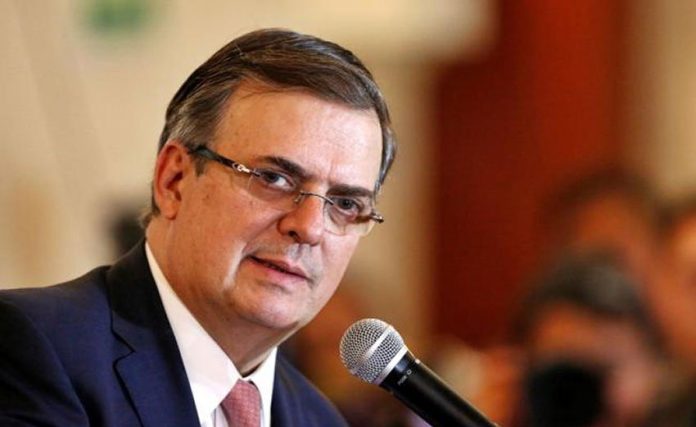
Future foreign affairs secretary Marcelo Ebrard said Tuesday that to contain migration flows originating in Central America, an effort on the scale of the Marshall Plan – which rebuilt Western Europe after World War II – would be needed.
There are currently thousands of Central American migrants in Mexico who have arrived over the past month as part of at least five caravans.
Ebrard told a press conference in Mexico City that the solution to stemming migration might not be similar to the Marshall Plan “but it will be in terms of the scale of the effort that needs to be made.”
He said that estimates were still being prepared to determine how much funding would be needed to develop Central America but suggested that the amount could be similar to the US $20 billion the incoming government intends to invest in southern Mexico.
“. . . Any serious effort undertaken for our brothers in El Salvador, Honduras and Guatemala would need to be a similar sum,” Ebrard said.
The future foreign secretary will meet with United States Secretary of State Mike Pompeo Sunday to discuss the border and migration.
Shortly after his victory in the July 1 election, López Obrador sent a letter to United States President Trump in which he proposed that the migration problem be addressed “in a comprehensive manner through a development plan that includes Central American countries.”
The president-elect proposed that Mexico, the United States and each Central American nation contribute resources according to the size of its economy and that 75% of the collective funds be allocated to finance projects that create jobs and combat poverty, while the other 25% would go to border control and security.
Ebrard said that the aim was for Canada to contribute as well to the investment in Central America, especially the so-called Northern Triangle area of Honduras, El Salvador and Guatemala, which are the largest migrant source countries in the region.
With regard to the Hondurans currently in Mexico, Foreign Secretary Agüero said the government completely rejected any “xenophobic attitude” towards them, adding that “the right to migrate is a human right.”
The arrival en masse of Central Americans in Tijuana triggered an anti-migrant backlash, including from the city’s mayor who has been dubbed Tijuana’s Trump.
United States authorities, led by President Trump, have also made it clear that the migrants are not welcome.
Ebrard said that Mexico was not considering deporting all of the migrants currently stranded on the border as they face a lengthy wait for the opportunity to file an asylum request with U.S. authorities.
“What’s to be done? Get ready to assume that some of them are going to be on Mexican soil and in that area during the next few months,” he said.