Home Blog Page 2075

Farmers protest auto maker’s use of hail cannons to protect vehicles

0
Hailstones can be unkind to new vehicles.

A practice employed by automotive manufacturer Volkswagen México to protect its new vehicles from hailstorms has led to a dispute with local farmers, who claim their crops are being damaged.

But now the Puebla state government has announced it will intervene to look for a solution.

Farmers blocked access to Volkswagen’s assembly plant in the state earlier this month to protest against the German auto maker’s use of hail cannons, which they claim has caused a drought that has affected their crops.

Volkswagen (VW) started using the shockwave generators in June to prevent new vehicles, which are parked in an outdoor lot, from being damaged by the falling ice pellets. The practice purportedly disrupts the formation of hailstones.

But farmers from the municipalities of Puebla, Amozoc and Cuautlancingo — where the plant is located — say the cannons have stopped not only hail from falling but also rain and as a consequence their crops, covering at least 2,000 hectares, have suffered.

They are asking for 73 million pesos (US $3.8 million) in compensation.

The Puebla government said it will meet with both the factory’s management and the affected famers to reach an agreement.

In the meantime, it ordered that Volkswagen temporarily suspend the use of the hail cannons — which are also referred to in Mexico as “bombas antigranizo” or anti-hail bombs — until the National Water Commission issues a ruling about the effect the technology has on precipitation.

Despite the government’s order, the farmers claim that the cannons have continued to be used but according to local media the company agreed to the ban and says it has not used the hail cannons since.

Governor José Antonio Gali Fayad promised that the dispute will be resolved through dialogue this week and didn’t rule out the possibility that the affected farmers would be awarded compensation.

He added that Volkswagen had sought and received authorization to use the cannons.

Ironically, the machines are usually deployed by farmers as a storm approaches as a means to protect their crops from being damaged.

However, according to a 2016 article published by the online magazine Atlas Obscura, “today, hail cannon technology still lacks any scientific evidence supporting its efficacy — but people continue to make and use the devices.”

Source: Sin Embargo (sp)

Maya Train route doubled to include additional stations in Yucatán, Campeche

0
López Obrador announces extension of the Maya Train.

The Cancún-Palenque tourist train announced last month by the incoming federal government has grown in terms of its route and its budget.

Incoming president Andrés Manuel López Obrador announced this afternoon that the original 830-kilometer route has been extended to 1,500 kilometers and will include new stops in Mérida and Valladolid in Yucatán and three more in Campeche.

The train’s route will run from Palenque, Chiapas, to Candelaria, Escárcega, Xpujil, Bacalar, Tulum and Cancún. Another leg will run from Cancún to Valladolid, Mérida and Campeche before connecting with the first leg in Escárcega.

The project’s earlier announcement came with a preliminary budget of 64.9 billion pesos (US $3.39 billion), but that has now doubled to an estimated cost of between 120 billion and 150 billion pesos.

López Obrador said a public-private partnership will be pursued, with the contribution of the former coming from tourism taxation revenues, which he said generate 7 billion pesos a year.

[wpgmza id=”49″]

He intends to have the project, dubbed the Maya Train, ready to go to tender on December 1, the day he takes office, with completion in four years at the latest. That is down from the earlier prediction of a six-year-long construction project.

The president-elect also confirmed the appointments of two tourism officials.

Former Tabasco tourism director and federal tourism official Rogelio Jiménez Pons will head up the National Tourism Promotion Fund, known as Fonatur, while businesswoman-chef Gabriela Cámara will be general manager of the Tourism Promotion Council.

She is the owner of Contramar restaurant in Mexico City and Cala restaurant in San Francisco.

Source: El Financiero (sp)

Tabasco’s hopes are high that new refinery will spur economic recovery

0
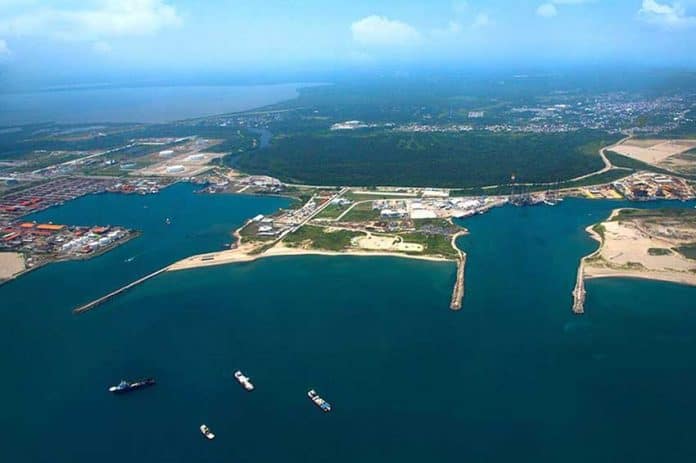
Dos Bocas, site of a new refinery in Tabasco.
Dos Bocas, site of a new refinery for Tabasco.

The incoming government’s announcement to build a new oil refinery in Tabasco is generating high expectations among residents and industry that the project will revitalize the state’s waning economy.

President-elect Andrés Manuel López Obrador, a Tabasco native, said last month that his government will invest 160 billion pesos (US $8.3 billion) to build the facility at Dos Bocas, a port on the coast of the oil-rich Gulf of Mexico.

Between 2014 and this year, the state’s gross domestic product (GDP) decreased by more than 8%, while Tabasco’s unemployment rate, at just under 8%, is one of the highest in the country. Insecurity has increased as a consequence of the economic downturn.

Herminio Silván, a state government undersecretary for industrial development and commerce, told the newspaper Milenio that the 2013 energy reform and a consequent restructuring of Pemex forced the state oil company to abandon many of its service contracts in Tabasco.

That, he charged, is to blame for the difficult situation the state finds itself in.

The reform, a flagship initiative of the current government, opened the sector to private and foreign companies for the first time in 75 years.

Silván added that the economic problems also stem from “putting all our eggs in one basket because 50% of our wealth comes from an industry that suddenly collapsed.” He explained that the decline in the petroleum sector had also affected the state’s commercial and service industries.

Among those who are hopeful that a new refinery can help rescue the Tabasco economy is Miguel Ángel de la Fuente Herrera, president of the Villahermosa branch of the National Chamber of Commerce (Canaco).

He said that both building and operating the refinery will generate much-needed employment in the state and help to stimulate other industries.

Dos Bocas is already Mexico’s most important port for the transport of petroleum, with 24% of the country’s entire yield passing through its facilities.

Rocío Nahle, López Obrador’s nominee for energy secretary, has said that among the advantages of the location chosen for the new refinery are its close proximity to the production of crude oil and its existing infrastructure, which includes the capacity to receive, supply and dispatch oil tankers.

[wpgmza id=”48″]

In neighboring Campeche there are also high hopes that the López Obrador-led administration could build a second new refinery on the state’s Atasta Peninsula.

While campaigning in the lead-up to the July 1 election, the political veteran promised that a government he leads would upgrade Mexico’s six existing refineries and build two new ones.

López Obrador has also pledged to both reduce reliance on foreign countries for the nation’s energy needs and thus reduce the prices that domestic consumers pay.

Like Tabasco, Campeche’s economy also suffered from the introduction of the energy reform and Pemex’s reconfiguration, with formal employment in the state decreasing by 22% between 2013 and 2017, according to statistics compiled by the Mexican Social Security Institute (IMSS).

Canaco Campeche president Jean Du Bar said that building a new refinery in the state and moving Pemex headquarters there, as proposed as part of the new government’s decentralization plans, would translate into more and better jobs for residents.

He also charged that Campeche has been neglected by the present and past governments despite the state being the nation’s oil-producing powerhouse.

“As Campechanos [residents of Campeche] we have said on many occasions that Pemex and the federal government turn their backs on us in a certain way because practically 80% of oil is from Campeche and we don’t get anything back from what we give,” Du Bar said.

Gustavo Rodríguez, president of the Business Coordinating Council (CCE) in the state, also threw his support behind the idea of building a second new refinery and transferring Pemex offices to Campeche.

“. . . The two proposals could help to revive economic activity as in previous years,” he said.

Rodríguez added that a Campeche refinery would cut down on logistics and transportation costs involved in transforming crude into fuel, which could “directly benefit the consumer.”

Laura Baqueiro Ramos, a member of the Campeche Congress, said if the projects go ahead in the state, local residents must have access to the jobs they create rather than all positions being filled by personnel from elsewhere.

“. . . We want the jobs to be local, for Campechanos . . . The two initiatives of the next president . . . are very important. We want the proposals to materialize once he takes office on December 1.”

Source: Milenio (sp)

Done with your gum? In Mexico City you can recycle it

0
City official María Fernanda Olvera deposits a piece of used gum in one of the new receptacles.

What to do with that wad of flavorless, chewed-up gum in your mouth? In Mexico City you can recycle it for the manufacture of plastic garbage buckets.

Chewing gum manufacturer Mondelez has kicked-off a recycling program called El chicle al bote (gum to the bin) in the historic center of the city through an alliance with the recycling company TerraCycle and the city government.

The project has installed 75 special containers in which the gum can be disposed of.

Placed on lamp posts on various streets, the containers will be emptied once a week and their contents sent to a TerraCycle processing plant in Monterrey, Nuevo León.

The gum will be cleaned and converted into new polymers that can be used to create new products, said the United-States based TerraCycle on its website.

The popularity of chewing gum among Mexico City residents made national news some five years ago when the local government had to purchase special machinery to remove the massive amount of used gum that was stuck to the sidewalks on downtown streets.

The president of the Citizens’ Council in Mexico City, Luis Wertman, explained that removing a single piece of gum from the sidewalk costs 9 pesos (nearly US $0.50). Multiplied by 200,000, the estimated number of pieces of gum stuck on just five streets in the historic center, its removal represents a cost of at least 2 million pesos (over $104,000).

Such an amount could instead be invested in something of greater importance, said Wertman.

The domestic market for Mondelez’s Trident brand chewing gum is its second largest in the world, second only to the United States.

The company says Mexicans consume up to 210 grams of chewing gum per person per year.

The newspaper Excélsior reported that the largest chewing gum production plant operates in Mexico. Half of the plant’s yield is sold domestically, while the other half is exported to other markets.

Source: Excélsior (sp), Milenio (sp)

National Defense paid twice for Oaxaca wind farm

0
Wind farm project contested by National Defense.
Wind farm project at the center of legal action.

The Secretariat of National Defense (Sedena) was forced to pay twice for the construction of a wind farm on an air force base in Oaxaca after a contractor failed to deliver the project, financial records show.

The department contracted with Grupo Tradeco to build the project, whose purpose was to make the Ixtepec base in the Isthmus of Tehuantepec region energy self-sufficient.

But Sedena cancelled the contract in 2015, arguing that Tradeco had presented fabricated details about the project’s progress.

“In December 2012 and January 2013, Tradeco presented six assessments about the work at the wind farm that contained false information as no progress had been made on the project,” Sedena said.

Late last month, Sedena sought to initiate legal action against Tradeco to secure 595 million pesos (US $30.9 million) in compensation for failing to comply with the contract it signed and a 374-million-peso (US $19.4-million) payment because no energy was produced at the base between March 2014, when the project was supposed to be completed, and June 2018.

“The company didn’t deliver the construction for which it was contracted despite the fact that two amending agreements were signed in order for it to comply with the work [it committed to],” the lawsuit states.

However, a judge from a civil district court where the suit was filed refused to admit it based on the argument that because the contract involved public resources, the case must be resolved by the Federal Administrative Justice Tribunal (TFJA).

Sedena is also seeking the return of an additional 495 million pesos (US $25.7 million) that it paid to the company in 2012 when the contract was signed.

Due to Tradeco’s failure to deliver, Sedena had to pay 221 million pesos (US $11.5 million) to other companies to finish the wind farm, the newspaper Reforma reported today.

When its contract with Sedena was cancelled in 2015, Tradeco initiated its own legal action and, according to legal counsel Rafael Macedo Núñez, the TFJA ruled in February that the decision to annul the contract was illegal and ordered the defense department to reinstate it.

If the contract is not reinstated, Macedo said, Tradeco could seek its own compensation from the federal government.

Sedena requested a review of the ruling before a collegiate tribunal and the case has not yet been resolved.

Macedo also said that the company had no knowledge of the lawsuit Sedena is seeking to file against it.

During 2011 and 2012 — the final two years of former president Felipe Calderón’s six-year administration — the federal government awarded six contracts worth a combined 6.9 billion pesos (US $360 million at today’s exchange rate) to Tradeco.

However, several were cancelled due to breaches committed by the financially embattled company, which previously also faced legal action from a Sedena contractor for failing to comply with another contract.

Source: Reforma (sp)

Judge orders investigators reopen case of Tlatlaya massacre

0
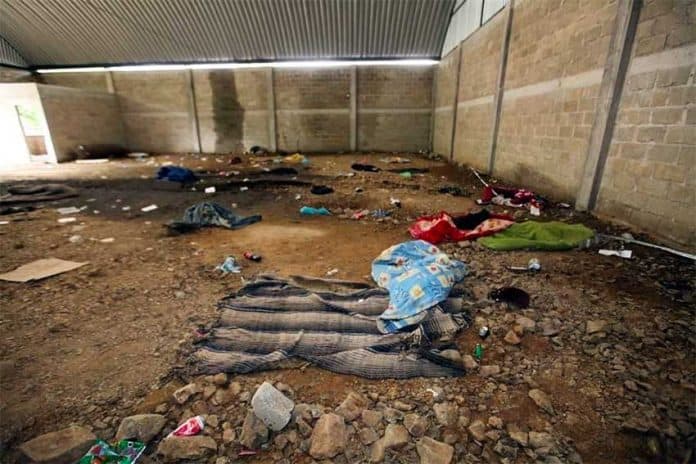
Warehouse where the Tlatlaya shooting occurred.

A federal judge has ordered that the Attorney General’s office (PGR) reopen the case of the 2014 Tlatlaya massacre, ruling that the original investigation lacked due diligence.

According to a statement issued by the human rights advocacy group Centro Prodh, Judge Erik Zabalgoitia Novales ruled on May 25 that the investigation carried out by PGR was not exhaustive, adequate or effective, and ordered a series of actions to clarify the case and establish responsibilities.

It remains unclear why it took nearly three months for the order to be made public.

There was evidence from the start of a cover-up in the June 2014 shooting in which soldiers gunned down 22 civilians in a warehouse in the municipality of Tlatlaya, México state. It was initially described as a clash with a group of armed criminals who allegedly opened fire on an army patrol.

The details of what actually happened began to surface after the Associated Press found discrepancies at the crime scene. A witness later confirmed a reporter’s suspicion that the scene had been altered by army personnel.

The National Human rights Commission (CNDH) later determined that between 12 and 15 of the victims did not die in a gunfight, as officials had stated, but were arbitrarily executed.

“Due to this faulty investigation, to this date there is not a single person that has been held accountable, as [the PGR] did not present enough evidence to individually single out those responsible,” said the document issued by Centro Prodh.

“This lack of due diligence is one of the many forms taken by the unacceptable covering-up of serious human rights violations in Mexico,” concluded the statement.

Source: Reforma (sp)

Morena party protests against alleged election fraud in Puebla

0
Barbosa and Polevnsky lead yesterday's march.

The president-elect’s political party held a demonstration yesterday to protest alleged electoral fraud in the state of Puebla.

The national leader of the Morena party, Yeidckol Polevnsky Gurwitz, led a march in the city of Puebla, accompanied by her party’s gubernatorial candidate, Miguel Barbosa Huerta, who lost the election by 122,000 votes.

As many as 5,000 party members and supporters joined the march to the city’s zócalo to declare that Barbosa was the legitimate winner of the July 1 election.

Polevnsky stated that the party’s priority is to sue and avert electoral fraud, and that president-elect Andrés Manuel López Obrador has instructed his party to not let its guard down.

“The most important thing for him is this fight, this defense. Andrés Manuel’s full support is in favor of Miguel Barbosa for the governorship of Puebla,” said the Morena leader.

Barbosa declared that he would not be intimidated and that he would continue with the legal battle to overthrow the electoral results that gave National Action Party (PAN) candidate Martha Erika Alonso Hidalgo the governor’s seat.

He said the election was plagued with flaws, while party official Horacio Duarte said there were sufficient legal elements to confirm that fraud had taken place. Duarte, who represents Morena on the National Electoral Institute, has previously accused PAN Governor José Antonio Gali Fayad of interfering in the electoral process.

Barbosa added that he has “the best lawyers” and that he will prove that electoral fraud took place, ensuring his supporters that a new election will be organized in January or February.

Alonso was declared the winner with 1,153,079 votes, or 38% of the total. Barbosa polled 1,031,043 votes, or 34%.

The elections for state Congress saw a different outcome. There, Morena won 33% of the vote and the PAN 20.5%

Source: El Universal (sp)

Traffickers captured with 161 migrants in Nuevo León

0
The migrants found yesterday in Nuevo León.

Two human traffickers were arrested yesterday in Nuevo León when police found 161 Central American migrants crammed into a semi-trailer.

Police were conducting a routine inspection of the truck in Aramberri when they encountered the human cargo en route to the United States border.

One of the two smugglers attempted to flee the scene but injured both hands after jumping from the trailer. He was admitted to the municipal general hospital where he remains under guard.

The state Public Security Secretariat said it had identified 39 families from El Salvador, six from Guatemala and 21 from Honduras.

Authorities said six minors, whose nationality was not revealed, were traveling unaccompanied.

All 161 were reported in good health.

Source: El Universal (sp)

Scientists assess sargassum invasion, warn it could trigger health crisis

0
Swimming with sargassum in Quintana Roo.

As sargassum continues to wash up on Mexico’s Caribbean coast beaches, scientists warn there is a risk that the huge masses of seaweed could cause a health crisis.

Once sargassum leaves the ocean it emits sulfuric acid and arsenic, which not only threatens thousands of species of marine creatures but could also seep into Quintana Roo’s freshwater sources.

The warning comes from a group of 28 scientists from three universities who met last Thursday in the state capital of Chetumal, where they discussed strategies to control the seaweed’s environmental impact.

Large quantities of sargassum have been arriving on beaches in Quintana Roo since May and, at least in the short term, the smelly, brown seaweed looks set to continue showing up en masse.

A councilor from Solidaridad, the municipality where the resort city of Playa del Carmen is located, said the risk sargassum poses continues to increase.

“Satellite images obtained by the National Chamber of Commerce and Tourism Services this weekend showed offshore sargassum formations heading to the coast of Quintana Roo that are up to 10 times larger than those recorded until now,” Gustavo Maldonado said.

He added that according to scientists the seaweed does not come from the Sargasso Sea in the North Atlantic Ocean as originally thought but rather from the mouth of the Amazon River in Brazil.

Scientists say that global warming, ocean pollution and changing sea currents are all factors that contribute to the growing quantities of sargassum on Mexican beaches.

Marta García, a biologist and postdoctoral researcher at the National Autonomous University of México, added that it has also been discovered that formations of sargassum can double their biomass in less than 18 days, which she said “explains its rapid growth in coastal waters.”

Further complicating the problem is a new, more aggressive variety of sargassum developing off South America’s Atlantic coast due to the use of chemical products in agriculture in Brazil. Those products enter the ocean via the Amazon River.

In addition to the health and environmental risks the seaweed poses, the mass arrival of sargassum is affecting Quintana Roo’s tourism industry.

The state’s most famous and popular beaches in destinations including Cancún, Playa del Carmen, Tulum, Isla Mujeres, Cozumel and Holbox have been invaded by the seaweed, whose stench worsens in the heat and rain.

Quintana Roo Governor Carlos Joaquín González has asked the federal government to declare the state an emergency zone.

Brigitta Ine van Tussenbroek, a scientist at UNAM’s Institute of Marine Sciences and Limnology, said that dealing with the problem requires the creation of contingency plans that “reduce the impact on the natural ecosystem and tourist activities.”

Even after the sargassum is removed from beaches, sediments of the seaweed that remain on the sand and in shallow waters can continue to kill plants, marine creatures and other organisms that come into contact with them.

In response to the problem, the government of Quintana Roo is installing a system of containment booms to keep sargassum off the beaches.

The federal Environment Secretariat (Semarnat) has also acquired special machinery to remove the seaweed in the Caribbean Sea, but it won’t be delivered until November.

Earlier this month, Ine van Tussenbroek warned that the large quantities of sargassum that are arriving could trigger a serious environmental disaster, explaining that the seaweed affects oxygen levels in the water, brings contaminants to the coastline, changes the ecological balance of coral and causes beach erosion.

José Luis Godínez Ortega, a seaweed specialist and the director of UNAM’s phycology laboratory, said that it is possible to exploit sargassum economically because it can be added to flour and other products.

However, he added that due to the large quantities of the seaweed that are washing up on the Caribbean Sea coastline, it is impossible to process it all before it begins to decompose.

Source: Milenio (sp)

Mexico’s largest wind farm to be inaugurated Monday

0
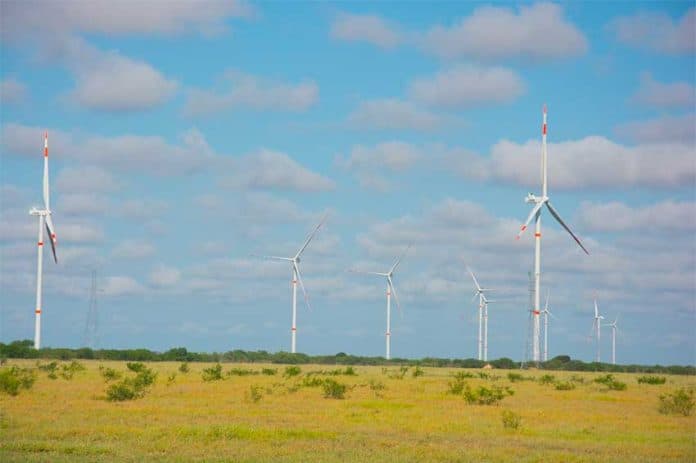
Reynosa I, Mexico's biggest wind farm.
Reynosa I wind farm in Tamaulipas.

A new wind farm that will be Mexico’s largest and one of the biggest in Latin America will be inaugurated Monday in Reynosa, Tamaulipas.

The US $600-million Reynosa I project will have the capacity to produce 424 megawatts (MW) of energy annually and supply electricity to 900,000 people.

Located on the Charco Escondido ejido (community lands) to the south of the northern border city, the 8,000-hectare wind farm was built by the Spanish firm Acciona Energy for the Mexican company Zuma Energía and has 123 turbines, each reaching 120 meters into the sky.

It will prevent the emission of 739,000 tonnes of carbon dioxide into the atmosphere every year.

The project is the result of Mexico’s second long-term energy auction, which was conducted by the Secretariat of Energy (Sener) and the National Energy Control Center (Cenace) in September 2016.

Zuma bid successfully for contracts to produce 725 MW of renewable energy.

The company will eventually operate four other wind farms: Reynosa II, III and IV at the same site and Reynosa V at a different location 14 kilometers away.

There are currently five wind farms in operation in Tamaulipas while another seven are being built.

The US $126-million El Porvenir wind farm, a project developed by Grupo Ecos in Reynosa, generates 156.4 MW of energy and a second construction phase will soon add a further 72 MW.

French company Engie operates a US $80-million wind farm in the municipality of Llera that generates 200.2 MW annually, while Mexican firm Gemex has two wind farms in Güémez, which generate power that is supplied to 311 Soriana supermarkets.

Among the projects under construction in the northern border state are a US $119-million project built by Engie that is expected to start operations in 2020 and a 100 MW wind farm built by Italian multinational Enel Green Power that is slated to enter into service in June 2019.

Source: El Financiero (sp)