Home Blog Page 2076

Scientists assess sargassum invasion, warn it could trigger health crisis

0
Swimming with sargassum in Quintana Roo.

As sargassum continues to wash up on Mexico’s Caribbean coast beaches, scientists warn there is a risk that the huge masses of seaweed could cause a health crisis.

Once sargassum leaves the ocean it emits sulfuric acid and arsenic, which not only threatens thousands of species of marine creatures but could also seep into Quintana Roo’s freshwater sources.

The warning comes from a group of 28 scientists from three universities who met last Thursday in the state capital of Chetumal, where they discussed strategies to control the seaweed’s environmental impact.

Large quantities of sargassum have been arriving on beaches in Quintana Roo since May and, at least in the short term, the smelly, brown seaweed looks set to continue showing up en masse.

A councilor from Solidaridad, the municipality where the resort city of Playa del Carmen is located, said the risk sargassum poses continues to increase.

“Satellite images obtained by the National Chamber of Commerce and Tourism Services this weekend showed offshore sargassum formations heading to the coast of Quintana Roo that are up to 10 times larger than those recorded until now,” Gustavo Maldonado said.

He added that according to scientists the seaweed does not come from the Sargasso Sea in the North Atlantic Ocean as originally thought but rather from the mouth of the Amazon River in Brazil.

Scientists say that global warming, ocean pollution and changing sea currents are all factors that contribute to the growing quantities of sargassum on Mexican beaches.

Marta García, a biologist and postdoctoral researcher at the National Autonomous University of México, added that it has also been discovered that formations of sargassum can double their biomass in less than 18 days, which she said “explains its rapid growth in coastal waters.”

Further complicating the problem is a new, more aggressive variety of sargassum developing off South America’s Atlantic coast due to the use of chemical products in agriculture in Brazil. Those products enter the ocean via the Amazon River.

In addition to the health and environmental risks the seaweed poses, the mass arrival of sargassum is affecting Quintana Roo’s tourism industry.

The state’s most famous and popular beaches in destinations including Cancún, Playa del Carmen, Tulum, Isla Mujeres, Cozumel and Holbox have been invaded by the seaweed, whose stench worsens in the heat and rain.

Quintana Roo Governor Carlos Joaquín González has asked the federal government to declare the state an emergency zone.

Brigitta Ine van Tussenbroek, a scientist at UNAM’s Institute of Marine Sciences and Limnology, said that dealing with the problem requires the creation of contingency plans that “reduce the impact on the natural ecosystem and tourist activities.”

Even after the sargassum is removed from beaches, sediments of the seaweed that remain on the sand and in shallow waters can continue to kill plants, marine creatures and other organisms that come into contact with them.

In response to the problem, the government of Quintana Roo is installing a system of containment booms to keep sargassum off the beaches.

The federal Environment Secretariat (Semarnat) has also acquired special machinery to remove the seaweed in the Caribbean Sea, but it won’t be delivered until November.

Earlier this month, Ine van Tussenbroek warned that the large quantities of sargassum that are arriving could trigger a serious environmental disaster, explaining that the seaweed affects oxygen levels in the water, brings contaminants to the coastline, changes the ecological balance of coral and causes beach erosion.

José Luis Godínez Ortega, a seaweed specialist and the director of UNAM’s phycology laboratory, said that it is possible to exploit sargassum economically because it can be added to flour and other products.

However, he added that due to the large quantities of the seaweed that are washing up on the Caribbean Sea coastline, it is impossible to process it all before it begins to decompose.

Source: Milenio (sp)
Mexico’s largest wind farm to be inaugurated Monday

0
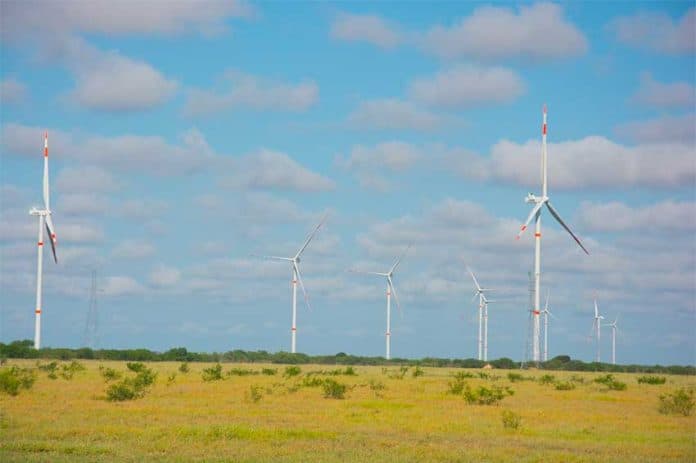
Reynosa I, Mexico's biggest wind farm.
Reynosa I wind farm in Tamaulipas.

A new wind farm that will be Mexico’s largest and one of the biggest in Latin America will be inaugurated Monday in Reynosa, Tamaulipas.

The US $600-million Reynosa I project will have the capacity to produce 424 megawatts (MW) of energy annually and supply electricity to 900,000 people.

Located on the Charco Escondido ejido (community lands) to the south of the northern border city, the 8,000-hectare wind farm was built by the Spanish firm Acciona Energy for the Mexican company Zuma Energía and has 123 turbines, each reaching 120 meters into the sky.

It will prevent the emission of 739,000 tonnes of carbon dioxide into the atmosphere every year.

The project is the result of Mexico’s second long-term energy auction, which was conducted by the Secretariat of Energy (Sener) and the National Energy Control Center (Cenace) in September 2016.

Zuma bid successfully for contracts to produce 725 MW of renewable energy.

The company will eventually operate four other wind farms: Reynosa II, III and IV at the same site and Reynosa V at a different location 14 kilometers away.

There are currently five wind farms in operation in Tamaulipas while another seven are being built.

The US $126-million El Porvenir wind farm, a project developed by Grupo Ecos in Reynosa, generates 156.4 MW of energy and a second construction phase will soon add a further 72 MW.

French company Engie operates a US $80-million wind farm in the municipality of Llera that generates 200.2 MW annually, while Mexican firm Gemex has two wind farms in Güémez, which generate power that is supplied to 311 Soriana supermarkets.

Among the projects under construction in the northern border state are a US $119-million project built by Engie that is expected to start operations in 2020 and a 100 MW wind farm built by Italian multinational Enel Green Power that is slated to enter into service in June 2019.

Source: El Financiero (sp)

School hazing ceremony suspected in death of Durango student

0
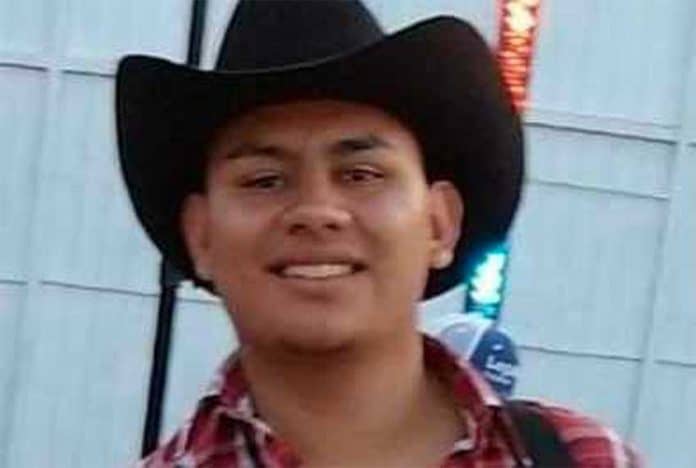
Mujica, dead after a suspected hazing.

A 19-year-old student died early this morning in Durango after a suspected hazing at a rural teacher training college.

Ronaldo Mujica Morales was admitted to hospital on Monday in the state capital and remained in serious condition until his death.

One report said the induction ceremony at the Guadalupe J. Aguilera normal school entailed eating whole eggs including the shell, drinking alcoholic beverages, doing extreme exercises and eating spicy foods over the course of seven days. Students were also deprived of sleep during that time.

The director of the school, located in Canatlán, has been suspended while the incident is under investigation.

The director of a local hospital told a reporter that eight aspiring teachers had been admitted to the hospital over a five-day period with injuries incurred during the week-long hazing.

It is the second hazing incident in three weeks at a teacher training college.

One student died and two others were left with kidney damage after a hazing at the Mactumactzá college in Tuxtla Gutiérrez, Chiapas, July 21.

The director of the school is in custody on homicide charges.

Source: La Crónica (sp), La Prensa (sp)

Mobile shower unit will serve Tijuana’s homeless population

0
Tijuana's new mobile shower unit.

People living on the streets of Tijuana will soon have a new option for bathing, thanks to an initiative to be launched by a church group in the border city in Baja California.

On August 25, members of the city’s Iglesia Ancla (Anchor Church) will inaugurate a mobile shower unit to serve Tijuana’s homeless community.

Bethsabe Sandoval, the church’s director of missions, told the newspaper El Universal that the idea for the project came from a community of people with a desire to do more to help others.

While considering the main needs of homeless people, Sandoval said, she couldn’t think of anything better than to offer a shower to those who have limited or no access to clean water.

The church group then got to work raising money for the project and studying similar projects in Costa Rica and Los Angeles, California.

Nine months later, La Regadera (The Shower) is on the verge of dispensing free showers.

The converted cargo van features three bathrooms, each with a shower, toilet, washbasin and mirror. Volunteers will provide users with a towel, soap, shampoo, a change of clothes — and a smile.

People wishing to use the facilities will be given a 15-minute allotment after which they will be offered a food package and, if they wish, counseling.

Sandoval said the mobile unit will go twice a week to parts of the city with the highest concentrations of homeless people.

One person who stands to benefit from the new program is long-term homeless man Fernando, who told El Universal that he currently washes himself in the fetid waters of the Tijuana canal.

“I haven’t had a proper shower for 14 years,” he said.

Fernando, whose arms and legs are covered with both open wounds and scars, explained that he stripped off every day between 9:00am and 10:00am “when everyone else is occupied” to go into the canal waters near Puente Negro, where a large homeless community lives.

“This water full of shit is better than nothing . . . for us there is nothing else,” he said.

A younger homeless man who also lives at Puente Negro expressed disbelief upon hearing of the church’s initiative, but added that it was something that is much needed.

“Will I really be able to take a shower?” he asked.

“If it’s true, it would help us. I almost faint with this heat because I can’t even refresh myself but imagine . . . [with a shower] maybe I’ll get a job or even a girlfriend.”

Source: El Universal (sp)

MIT student loses scholarship over missing electronic signature

0
MIT student Pablo: needs US $42,000.

The student from a small village in Oaxaca who overcame inequality and racism and went on to obtain a doctorate in chemistry at MIT is at risk of losing his dream due to a mistake on a form.

Ricardo Pablo Pedro earned his doctorate earlier this year from the Massachusetts Institute of Technology and was counting on a scholarship from the National Council for Science and Technology (Conacyt) to cover the tuition of a post-doctorate courseat MIT for which he is already enrolled.

But after he forgot to add his electronic signature to the scholarship application, Conacyt rejected it.

Pablo has now set up a GoFundMe account to seek donations. “Unfortunately, I have not found the financial resources to continue with this important project during my post-doctorate and for that reason I see the need to ask for your support to reach the amount of US $42,000 and to continue with the project at MIT.”

The 27-year-old Zapotec scientist, originally from Tuxtepec, Oaxaca, has been engaged in researching nanomaterials such as silicon and other polymers, “which are very useful in the semiconductor industry.”

Now he wants to focus on thermoelectric properties “that can be used in our daily lives.”

“A thermoelectric material is a material that can use heat to convert it into energy and vice versa. The objective is to find a material that is a good thermoelectric at room temperature. This would radically change different forms of transportation, among other things,” Pablo wrote on GoFundMe.

If he wants to start school in the fall, Pablo must pay the $42,000 by September 11.

Source: Noticias de Oaxaca (sp)

Selfie with a tiger turns up man wanted for homicide

0
Lozano and one of his pet tigers.

Taking a selfie with a Bengal tiger proved to be costly in more ways than one for a casino owner in Yucatán.

Roberto Gabriel Lozano Támez, owner of a casino in Mérida, was attacked by one of two tigers he keeps on a ranch when his son entered the cage in order to take a photograph of himself with the animals.

When his father attempted to get the 150-kilogram tiger off his 15-year-old son, he too was attacked.

Lozano was last reported as being brain dead in a private hospital, but his son was recovering after surgery.

Lozano is not only under care in hospital, but under guard. A background check by police revealed he is wanted in Nuevo León for murder and theft.

In 2005, Lozano killed Juan Ramón Treviño Garza over an unpaid debt of 50,000 pesos (US $5,400 at the time) and stole 7,000 pesos in cash and jewelry.

Lozano was subsequently convicted of the crime and sentenced to 25 years in prison, but in 2010 a judge ordered his release on the grounds that there were errors by the prosecution and Lozano relocated to Mérida.

In the intervening years, however, the justice system of Nuevo León reversed the 2010 ruling and ordered that the original sentence stood.

Lozano is to be transported to Nuevo León if and when he recovers from his injuries. One report quoted medical sources saying his chances of recovery were slim.

Source: Milenio (sp), La Policiaca (sp), Diario de Yucatán (sp)

No incentives for business; instead, conditions favorable for investors

0
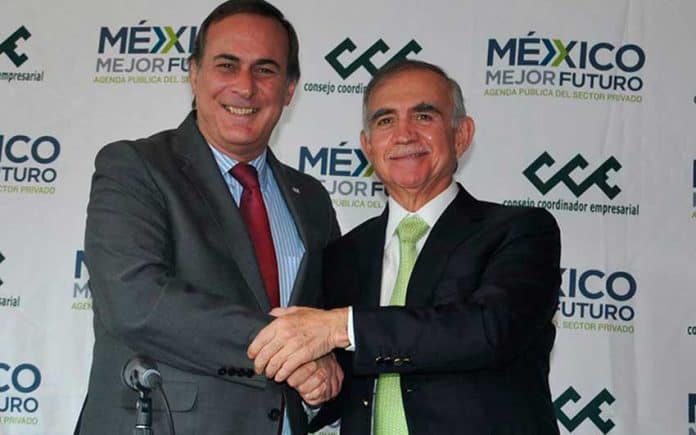
Businessman Castañon, left, and businessman-bureaucrat Romo.
Businessman Castañón, left, and businessman-bureaucrat Romo.

There will be no tax incentives for business when the next federal administration takes office, says the proposed chief of staff of president-elect Andrés Manuel López Obrador.

Instead, the new government will prioritize making savings and generating conditions that are favorable to investors, Alfonso Romo said.

Speaking after a meeting with the leadership of the influential Business Coordinating Council (CCE), Romo added that the government’s position wouldn’t be inflexible throughout its six-year term.

“Once we have the house in order, then we can speak. If there is an emerging plan, we’ll speak about it with the Business Coordinating Council,” he said.

Among the tax incentives implemented by the current government are a stimulus scheme to alleviate the burden of the excise tax on gasoline and a capital repatriation initiative that allows both individual and business taxpayers to bring funds generated by overseas investments back into Mexico at a lower tax rate.

However, the private sector has requested the introduction of more incentives, such as the ability to deduct employee benefits from tax payments, an investment tax deduction scheme for medium-sized businesses and a reduction in income tax.

Romo said that before the incoming government designs its tax package, it will conduct an analysis to determine what it can and can’t do but said that cutting debt and deficit would come first and that the López Obrador-led government would be “very austere.”

The president-elect has previously said that his administration will review energy sector contracts but Romo stressed that the review would extend across all government secretariats.

“There will be a detailed analysis of where we are and based on that the cabinet will coordinate the new budget. The Secretariat of Finance will bring it together and from that we’ll see how much room for maneuver we have,” he said.

For his part, CCE president Juan Pablo Castañón said that an agreement had been reached to hold 12 roundtable discussions with the incoming government during the transition period to look at ways to promote investment, certainty and employment.

He said the CCE will meet with the future secretaries of economy and labor, Graciela Márquez and Luisa María Alcalde, to discuss issues relevant to their roles, as well as the prospective interior secretary, Olga Sánchez Cordero, and the president-elect’s nominee for the economy portfolio, Carlos Urzúa.

López Obrador and his cabinet will be sworn in on December 1.

Source: Milenio (sp)

Petroleum thieves turn to other sources of funds after pipeline shut down

0
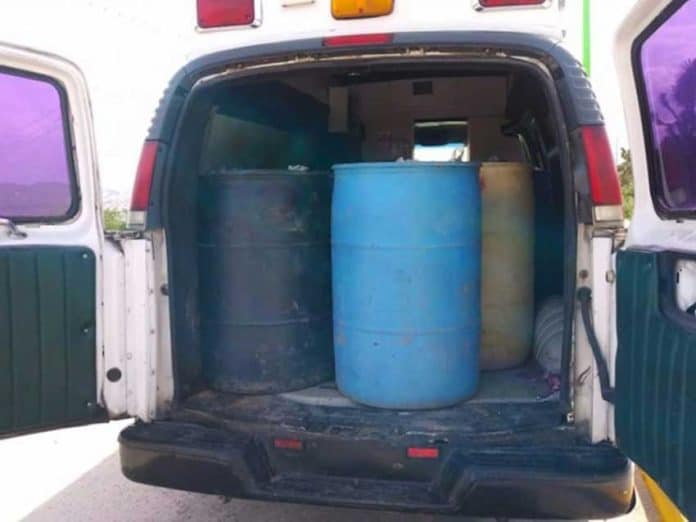
No paramedics in this ambulance, just drums of fuel.

Shutting down a pipeline in Sinaloa has left thieves looking other sources of funds, and boosted sales of fuel at gas stations.

Pemex shut down a stretch of pipeline in February between the cities of Guámuchil and Culiacán due to the high incidence of illegal pipeline taps and the ensuing damage to infrastructure.

On July 24, Pemex Logistics announced that the pipeline would remain out of service until further notice while it continued to assess the damage and determine whether it could be repaired.

Ricardo Jenny del Rincón of the State Council for Public Security said there were 322 illegal pipeline taps in the state between January and July, up 70% over last year.

One effect of shutting off the flow of fuel was felt by local gas stations. They reported increases in sales of up to 30% after suffering declines of 50% to 70%.

But now others are suffering as the criminals turn to other illicit activities, such as stealing vehicles, machinery and products from local farmers.

However, the huachicoleros, as the petroleum thieves are called, are still busy elsewhere in the country and in some cases are coming up with unique methods of moving their product.

In Hidalgo, state police discovered 1,600 liters of stolen fuel in an ambulance

An anonymous tip led them to check the vehicle as it was traveling on the Pachuca-Sahagún highway. Instead of a patient, it was carrying eight drums of fuel reported stolen in Tlalnepantla, México state.

Two people were taken into custody.

Source: El Universal (sp), El Norte (sp)

Trade talks extended another week; new sticking points have surfaced

0
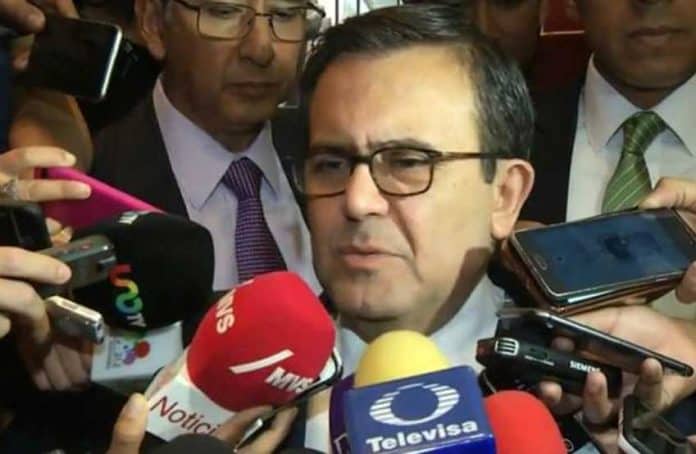
Guajardo talks to reporters about NAFTA progress.

Trade talks between Mexico and the United States will continue next week as new sticking points have surfaced over U.S. President Donald Trump’s threat to impose tariffs on Mexican-made vehicles.

Officials from both countries have been meeting in Washington D.C. for the past three weeks to try to iron out their differences over bilateral issues before Canada retakes its place in negotiations for a new North American Free Trade Agreement (NAFTA).

Automotive industry officials with knowledge of the talks told the news agency Reuters that the Trump administration wants the capacity to enforce national security tariffs on future production from new auto assembly and parts plants in Mexico.

The officials said United States negotiators had essentially agreed that existing automotive plants in Mexico would be exempt from any “Section 232” tariffs that Trump may impose but they don’t want to extend the same guarantee to new plants.

The United States imposed tariffs on Mexican and Canadian steel and aluminum on national security grounds effective June 1, while at Trump’s direction the U.S. Commerce Department in May launched an investigation into whether vehicle imports pose a national security risk.

White House officials and United States congressional aides have said that both the metal tariffs and the auto probe are in part aimed at winning concessions in the ongoing NAFTA renegotiation process.

Ildefonso Guajardo, Mexico’s Secretary of Economy and lead NAFTA negotiator, said yesterday in Washington that “a lot of progress” had been made over the past three weeks of discussions and that a deal was still possible by the end of the month.

However, he acknowledged that “we still have a lot of work to do.”

Asked about progress on rules of origin for the automotive sector, Guajardo said “nothing is closed until everything is closed but there are items in every element that are being discussed.”

Once bilateral issues between Mexico and the United States have been resolved, Canada will rejoin the talks, he said, adding that could take place in “the next few days or weeks.”

Industry officials said the United States had barely softened its stance of wanting 75% regional content in order for a vehicle to be afforded tariff-free status while it is also pushing for 40% to 45% of content to come from high-wage areas, which would currently exclude Mexico.

However, Guajardo last week publicly accepted for the first time the United States’ proposal to include set minimum wages for the auto industry in a new NAFTA deal.

Auto industry officials said that Mexico sought reassurances that new content rules would not lead to the loss of existing facilities and jobs.

Another contentious issue — the so-called sunset clause that would see the trade pact automatically expire after five years if it is not renegotiated — has not been raised during the current talks and will be left until the end of negotiations, Guajardo said.

Both Mexico and Canada are opposed to its inclusion in a modernized version of the 24-year-old agreement.

Trump, who has called NAFTA “the worst trade deal ever” and repeatedly threatened to terminate it, wrote on Twitter yesterday that the “deal with Mexico is coming along nicely,” adding that “autoworkers and farmers must be taken care of or there will be no deal.”

He also wrote that president-elect Andrés Manuel López Obrador “has been an absolute gentleman.”

Jesús Seade, whom López Obrador has tapped to be his chief trade negotiator, has also been in the United States capital for the trade talks.

Trump concluded his tweet by declaring that “Canada must wait. Their tariffs and trade barriers are far too high. Will tax cars if we can’t make a deal.”

Trump has previously floated the possibility that the United States could seek separate trade deals with both its neighbors but reaching a new agreement with Mexico and Canada that is favorable to the U.S. could work to his benefit at the upcoming midterm elections in November.

In a July 20 letter to López Obrador, Trump wrote that he believed that a successful renegotiation of NAFTA will lead to more jobs and higher wages in both Mexico and the United States before adding “but only if it can go quickly, because otherwise I must go a very different route.”

The Mexican government is also eager to reach a deal before President Enrique Peña Nieto leaves office at the end of November.

Source: Reuters (sp)

Costco opens its fourth gas station in Mexico

0
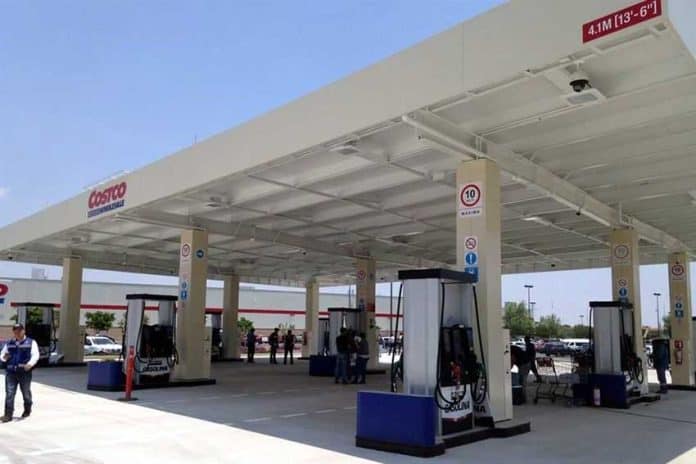
Costco has opened a gas station in Celaya, its first in Guanajuato.
Costco's new station in Celaya.

Costco opened its first gas station in the state of Guanajuato this week, its fourth in Mexico.

The 63-million-peso (US $3.3-million) station is on Tecnológico avenue in Celaya, and includes a convenience store.

The company has already opened stations in Culiacán, Sinaloa; Saltillo, Coahuila; and San Luis Potosí, selling Costco’s Kirkland Signature gasoline brand.

The company assured customers that they will receive the exact quantity of gasoline they pay for.

Costco only accepts credit or debit cards for payment. Members who use their Costco card get a 3% discount.

Source: Via Noticias (sp)