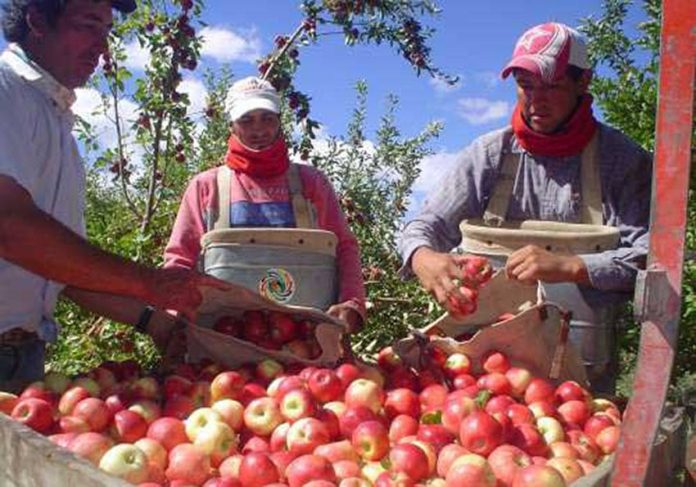
Mexico’s 20% tariff on apples imported from the United States has translated into a significant decline in sales as consumers turn to cheaper alternatives.
Imported apple sales have dropped by 70% to 80%, said Elías Chavez López, commercial director of the apple distribution firm Grupo MLA, which is also one of the apple suppliers to the Central de Abasto, the main wholesale market for produce and other food products in Mexico City.
The price for a crate of apples has risen between 100 and 120 pesos (US $5 and $6).
But domestic apples have gone up in price too, “as much or even more than United States apples,” Chávez said.
So many people have stopped buying the fruit. Instead they are opting for melons, guavas or other domestic fruit that costs less.
Apple distributors are doubly affected because they have been paying for the difference in prices caused by a devalued peso.
The United States is by far the largest supplier of apples in Mexico. More than 276,000 tonnes were imported last year. Chile was next with a mere 3,812 tonnes.
Chávez says that while Chile could substitute the United States apple imports, it has to comply with several phytosanitary regulations that elevate its price.
That, coupled with shipping costs, raises the price almost to the same level as the U.S. product.
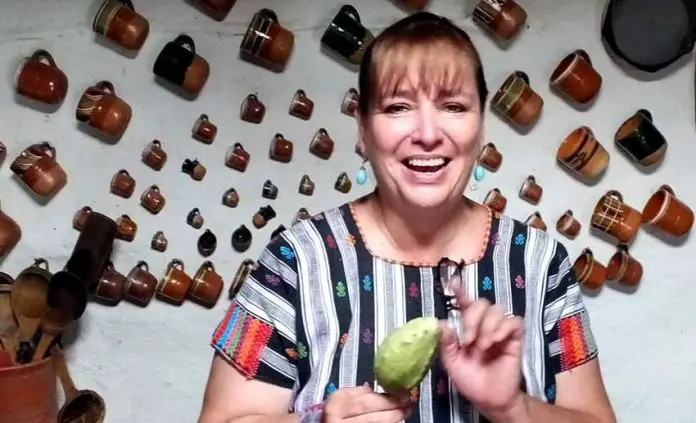
Maru Toledo is an award-winning cook, culinary researcher, radio personality and author of at least 20 cookbooks, typically filled with fascinating anecdotes, interviews and, of course, recipes.
I first met Maru — years ago — beneath a thatched roof in the woods, near Jalisco’s famous circular pyramids, the Guachimontones.
She had invited us to a dinner that would be prepared using pre-Hispanic cooking techniques, which she had learned about both from oral tradition and from the findings of archaeologists with whom she has worked for years. It turned out to be the most unusual meal I have ever eaten.
The first dish on the menu was stone soup. The ingredients were shrimp, both dried and fresh, onions, chiles, epazote (wormseed), cherry tomatoes and jaltomates, western Mexico’s tiny but strongly flavored wild tomato. These ingredients were mixed into cold water inside a bule, a large bowl made from a gourd.
Maru’s helper, Godofredo, then removed a red-hot basalt rock from the fire and dropped it into the bowl. Instantly, the water was steaming and hissing and the soup was cooking.
Naturally, tortillas would go with the soup, but not the sort of tortillas popular today. Maru’s colleague, archaeologist Rodrigo Esparza, had discovered numerous traces of the tortillas eaten in western Mexico by pre-Hispanic people. “They turned out to be made of a mixture of corn and amaranth and were beautifully decorated with grana cochinilla.”
Cochineal is the celebrated red dye which — after gold — was the most sought-after commodity that the conquistadores got their hands on in the new world. This crimson dye is non-toxic and is made from the crushed bodies of tiny insects (Dactylopius coccus) which spend their lives sucking the juices of the prickly-pear cactus (nopal).
Cochineal, it seems, is making a big comeback because it is edible, whereas many synthetic red dyes are now thought to be carcinogenic.
Mesquite mushrooms were the main dish of our pre-Hispanic meal. The ingredients were few: mushrooms, a small amount of chile cora, a little salt and some mesquite pods. The cooking procedure, however, was most interesting, and again based on the discovery by archaeologists of how ancient peoples in Mexico cooked wild turkeys.
The mushroom mix was placed upon a banana leaf nearly a meter long and wrapped up to form a package about the size of a small loaf of bread, which was then tied up with tough agave fibers. Next came a curious step. Godofredo placed the “package” next to a large blob of nearly black mud. This, he told us, was clay from a nearby town famous for its pottery.
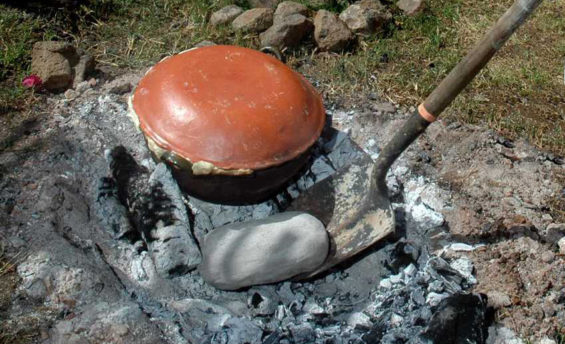
Tamales and mushrooms cooking in hot coals.
Carefully, he coated every side of the green bundle with a layer of clay about three centimeters thick until it looked exactly like a loaf of German black bread. He then rubbed ashes all over the outside of it and buried it in the campfire, under hot coals.
In about half an hour the baked mushrooms were ready. When Maru cracked open the now hard casing, the most savory aroma imaginable filled the air.
Our meal also included tamales prepared “the Mayan way” inside a large pot whose lid was sealed with dough. The tamales were tastily flavored with quelite, or amaranth greens, which were cultivated as a food crop here in Mexico some 7,000 years ago.
Once again those ancient Mexicans seem far ahead of us moderns in nutritional knowledge. We discovered that amaranth greens are a very good source of vitamin A, B6, C, riboflavin, iron, calcium, magnesium, phosphorus, potassium, copper, zinc and manganese. Popeye would have loved these tamales!
With all of this we drank a mixture of aguamiel (sweet juice from the heart of a living maguey root) and pineapple juice. Yes, pineapples, too, originated on this side of the Atlantic and were probably introduced to Europe by Christopher Columbus. The meal ended with a sweet, peanut-based dessert called coscoatl.
This was quite a delightful experience. Personally, I found the fire-baked mushrooms truly delicious, the shrimp soup wonderful and as for those original tortillas: well, they were okay, but I can see why Mexico switched to the nixtamalized maize tortillas popular today.
Maru Toledo lives in a little ranchito called Teuchiteco, 80 kilometers due west of Guadalajara at the foot of the Cerro de Las Piedras Bola, famed for its extraordinary giant stone balls.
“Welcome to the Smoky School of Gastronomy!” said Maru when I visited, explaining that at her place cooking is done the old way, without benefit of gas or electricity. We entered the kitchen, where Maru´s long-time associate Francisca “Pachita” Flores was making tacos de sol, sunshine tacos.
She was placing extra-large tortillas on a comal over a roaring fire. The masa, or dough, was brick brown in color and had been impregnated with a red chile sauce (and then kneaded on a metate, or grinding stone), Pachita explained.
Once a thick tortilla was ready, Pachita would remove it from the comal and immediately scrape off its entire top layer; this she handed to Maru who then put a large spoonful of picadillo (ground beef and potato plus spices) on top of it, folded it over and hermetically sealed the taco with mere finger pressure. Next, the tacos go out into the hot sun where they “bake” for an hour.
Finally, the sunshine tacos go into your mouth and I tell you these were the tastiest tacos I have ever eaten. The exterior was crispy but nevertheless melted in my mouth. It was so delicious it would have been a great treat all by itself, but in this case it was stuffed with amazingly flavorful picadillo. At that moment I felt that the humble taco had been transformed into a gourmet delicacy worthy of Le Cordon Bleu.
And apparently I was not alone in this assessment. Even celebrated chef Ricardo Muñoz Zurita, who was called by Time magazine “the prophet and preserver of (Mexico’s) culinary tradition,” has visited Maru’s Escuela de Humo.
When I mentioned this to Maru, she said with a laugh, “It’s all because of Ricardo’s diccionario.” She was referring to Muñoz’s Encyclopedic Dictionary of Mexican Gastronomy, aimed at accurately describing every ingredient and technique in Mexican cooking: a labor of love representing decades of research, which he is constantly updating.
She went on to explain that Muñoz came to Guadalajara not long ago trying to sort out the various kinds of chile peppers used in this area, which often have different names in different communities. Culinary experts in the City of Roses told the chef to “Go look for Maru Toledo. She’s the only one who knows.”
Muñoz found Toledo and a new chapter was opened in the culinary history of Jalisco. Within days they agreed to produce — together—an encyclopedic dictionary of Jalisco’s gastronomy which is expected to contain 400 recipes in two volumes and for the first time will contain the botanical names of plants featured in local cuisine.
Not long after this first meeting, Maru Toledo received a phone call from Ricardo Muñoz: “I’ve invited 25 chefs from five countries to come to Jalisco, including Rick Bayless (star of the television series One Plate at a Time). Do you think you could give them a cooking class the day after tomorrow?”
Ah yes, in typical Mexican fashion, Maru Toledo’s Smoky School has been discovered and catapulted to international fame. If you’d like to visit her Smoky Kitchen, better do it soon before somebody whisks her off to Paris or London.
Maru Toledo will cook for and/or teach groups of 25 people or more, but arrangements must be made in advance. For these events, she is assisted by a group she founded called Las Mujeres de Maíz, local women skilled not just in cooking, but also in finding or growing all the herbs and plants needed for making a meal. With their help, even large groups of people can be accommodated.
Maru Toledo can be reached on Facebook or on her web page. Locating her Smoky Kitchen is easy. Just ask Google Maps to take you to “Maru Toledo.”
•
The writer has lived near Guadalajara, Jalisco, for more than 30 years and is the author of A Guide to West Mexico’s Guachimontones and Surrounding Area and co-author of Outdoors in Western Mexico. More of his writing can be found on his website.
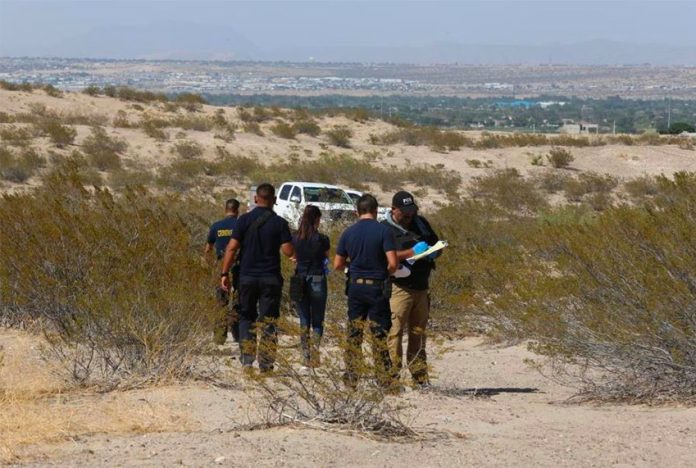
Investigators at one of many crime scenes in Juárez.
After 35 homicides in Ciudad Juárez, Chihuahua, between Friday and Sunday, police chiefs and other security officials met yesterday to review the border city’s overall security situation.
State police commissioner Óscar Alberto Aparicio Avendaño called on security forces to redouble efforts to combat crime through coordinated actions aimed at both preventing and prosecuting offenses.
Among the other attendees were a state prosecutor, a Federal Police commissioner, the municipal public security chief, several high-level state police officials and army personnel.
Aparicio said that working to strengthen and improve security strategies at such meetings was stipulated by the Chihuahua government’s State Development Plan, which also seeks to promote cooperation between all three levels of government.
“We have a great responsibility and commitment to Chihuahua society. Every day, they demand more results from us. That’s why it’s important to analyze what we are doing and work on what can be improved,” Aparicio said.
“There are more of us good guys and I’m sure that with effective strategies, coupled with the valuable support of citizens, we will have better surveillance, better results and a reinforcement of the actions implemented by security forces.”
Of the 35 murders in the three-day period, 21 occurred on Saturday, 10 were committed on Friday and four occurred Sunday.
Two separate incidents within the space of a single hour Saturday left 11 people dead.
Six people were murdered in a home in the Los Alcades neighborhood while celebrating Mexico’s victory against South Korea in the team’s second World Cup match in Russia.
Shortly after, five men were killed inside a barber’s shop in the center of the city.
Armed men in two vehicles fired repeatedly at the people inside the business. A sixth person was wounded in the incident and transferred to a city hospital.
Another victim of the wave of violence was a three-year-old boy who was hit by a stray bullet late Sunday night, the state Attorney General’s office said. The boy was rushed to a local medical facility just before midnight but died upon arrival.
Violence continued yesterday in Juárez, where there were reports of several more homicides.
Police officers found the bodies of two men in the neighborhood of Chihuahua and a 22-year-old man was shot and killed in the Villas del Sur district. There were at least seven other murders in different parts of the city.
Narcomantas, or narco signs, also made an appearance at four different points around the city yesterday including a kindergarten, according to media reports.
The signs reportedly accused a criminal group of killing innocent people in the city as well as carrying out extortion activities.
Between January 1 and yesterday, there were 503 homicides in Ciudad Juárez, 45 more than in the same period last year.
Juárez — which is on the opposite side of the border to El Paso, Texas — was ranked the 20th most dangerous city in the world last year, according to a study by a Mexican non-governmental organization.
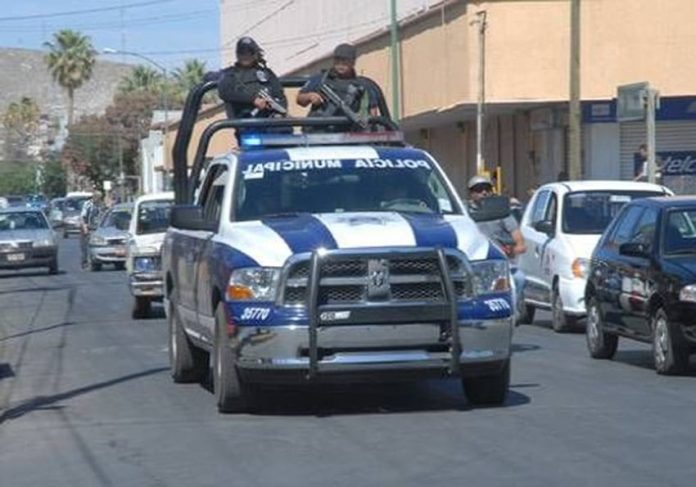
Municipal police are back on patrol, but many are unarmed.
Municipal police officers are back patrolling the streets of Chilpancingo, Guerrero, just over six months after the entire force was removed from duty on suspicion of being involved in the disappearance of seven people at the end of last year.
But more than half will be unarmed after failing to pass evaluation tests.
Of 125 officers who make up the force, 112 returned to duties last weekend while 12 remain under investigation in connection with the cases of enforced disappearance, which led an Amnesty International researcher to conclude that no one is safe in Chilpancingo.
One other officer has been charged and remains in custody awaiting trial.
State authorities said 77 of the 112 officers haven’t passed control and confidence tests and as a result will only carry out limited duties such as guarding public buildings, and they will be unarmed.
That leaves just 35 officers — or less than a third of the force — who are armed and carrying out full policing duties in the capital of one of Mexico’s most violent states.
State security spokesman Roberto Álvarez Heredia justified the return of the uncertified police officers to the streets of Chilpancingo by saying that “there is a pressing urgency for security in the capital.”
He added that the 77 unqualified officers “will be gradually certified in the coming weeks.”
The president of the Chilpancingo branch of the Mexican Chamber of Commerce (Canaco), however, said that the return of the previously suspended police raises a series of questions.
“Why did they keep the officers locked up for six months and not certify all of them? Why haven’t the 12 [officers] who are still under investigation been accused of any crime?” Víctor Ortega Corona asked.
The Canaco president, who was one of the first people to publicly condemn the police’s alleged involvement in the enforced disappearances, added that the return of the municipal force didn’t provide public security confidence or certainty for residents of the state capital.
“We understand that these 112 [officers] were exonerated of [involvement in] the disappearances but that doesn’t mean that they’re trustworthy. The unarmed police will do little to combat crime in Chilpancingo,” Ortega Corona said.
On January 4, a deployment of 330 soldiers and state and federal police assumed policing and security operations in the Guerrero capital.
The day before, black plastic bags containing the remains of Jorge Arturo Vázquez Campos, 30, and Marco Catalán Cabrera, 34, were found in an abandoned lot on the outskirts of Chilpancingo.
The two men had been arrested in the early hours of December 31 while attending a Christmas fair where they were allegedly involved in a brawl.
After a bond was paid by a third man who had also been arrested and has only been identified as Milton, Vázquez and Catalán were released from police custody but upon leaving the police station, Milton and a police officer forced the two men into a car in which armed men were traveling.
The sole officer who remains in custody, identified only as Nicolás “N,” is the same policeman who allegedly colluded with Milton.
According to the state Attorney General’s office, a municipal police commander witnessed the abduction but didn’t react in any way. The two men are believed to have been killed the same day.
On December 29, another man, Efraín Patrón Ramos, also disappeared after being arrested by municipal police.
Two days before, a 20-year old man and two teenagers were arrested by municipal police after allegedly committing a robbery.
The trio were subsequently taken to Acapulco where, according to Amnesty International, they were tortured for a period of seven days and both Chilpancingo municipal police and state investigative police were complicit in the events.
The three young men appeared back in Chilpancingo on January 3 alive but with “clear signs of torture and bound with tape all over their bodies and eyes.”
The first alleged kidnapping victim at the hands of Chilpancingo municipal police was Abel Aguilar García, who disappeared on December 23 while on his way to work.
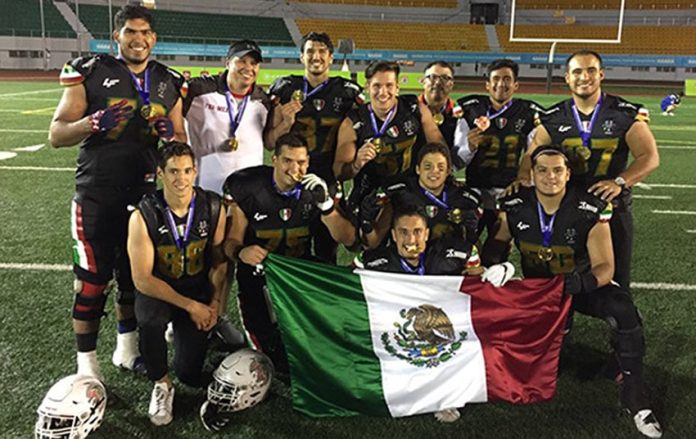
Mexico’s American football team won its third consecutive title at the World University Championships Sunday in Harbin, China, winning every game in the round-robin tournament.
No other country has won the event since its inauguration in 2014.
Team Mexico defeated host nation China, the U.S. and South Korea before winning the final 39-3 against Japan.
The Japanese team took a 3-0 lead in the first quarter but Mexico came back in the second with a touchdown and a field goal to end the half at 10-3. Mexico moved into an even higher gear after that and Team Japan was held to its three points.
The United States finished second after beating Korea 69-0.
Mexico won the inaugural World University Championships in Sweden in 2014 and won again in 2016 in Monterrey, Mexico, when it beat Team USA.
The next championships will be held in 2020 in Hungary.
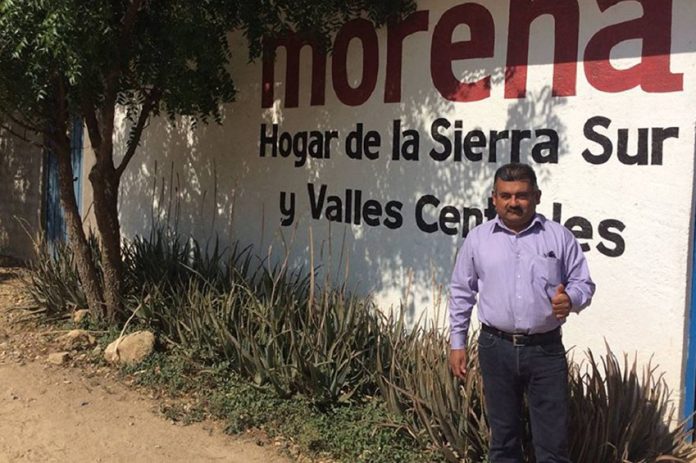
Five campaign workers and a candidate affiliated with the Morena party have been assassinated in Oaxaca and Tamaulipas.
Gunmen ambushed and killed Emigdio López Avendaño and four party workers late yesterday afternoon in San Vicente Coatlán in the Sierra Sur of Oaxaca. Three other other party members were traveling in the group, one of whom was wounded and was reported in serious condition.
López was running for state Congress in the district of Ejutla and was the Morena party’s chief political operator in the state.
He and his associates were traveling on a dirt road between the municipalities of Yogana and San Vicente when armed civilians, hidden in the brush, began firing.
A party spokesman said later that there have been agrarian conflicts for many years in the region in which they were traveling.
Another Morena party worker was assassinated Sunday night in Tamaulipas while returning home from a campaign meeting. Leonardo Díaz was working on the campaign of Jaime Hinojosa Peña, candidate for mayor of Miguel Alemán.
His burned body was found in a bullet-riddled van that had been set on fire.
There have been 46 candidates assassinated since last September.
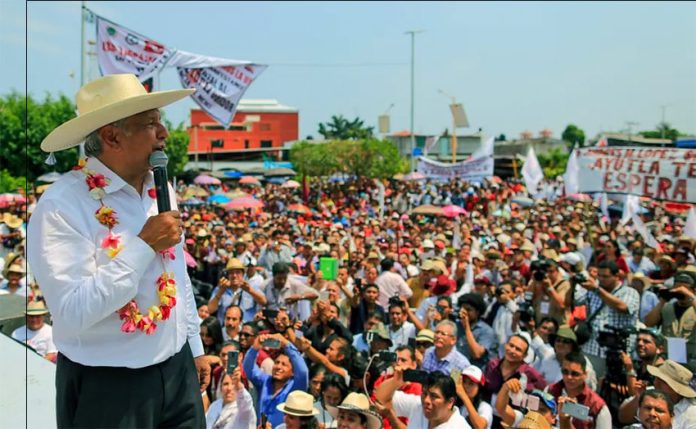
From the start of Mexico’s latest general election campaign, left-wing candidate Andrés Manuel López Obrador (or “AMLO”) has for weeks been the clear favourite to win.
This is his third attempt to win the presidency, and once again he’s running with an agenda focused on curbing corruption and poverty – the combination of which, he argues, is the fundamental cause of Mexico’s social unrest and economic stagnation.
Twelve years after his first try – and the ensuing “war on drugs” strategy that claimed hundreds of thousands of lives across the country – he has floated a new idea to pacify the nation: an amnesty for people involved in drug-related violence.
With the July 1 polling day getting closer, the 64-year-old and his proposals seem to have good support among Mexicans, and he retains a double-digit advantage over his competitors. But his path to the presidency will not be smooth.
At the start of the campaign, López Obrador was up against four other candidates: the incumbent Institutional Revolutionary Party’s (PRI) Jose Antonio Meade; Ricardo Anaya, a member of the conservative National Action Party (PAN) running in coalition with two other parties; and two independent candidates, both former members of traditional parties. One of them, Margarita Zavala, dropped out in May citing her poor chances, while the other, Jaime Rodríguez or “El Bronco,” is polling at less than 3%.
According to most polls, López Obrador could win with up to 50% of the vote, which on the face of it should mean he has little to worry about. But his opponents have at their disposal a variety of ways to thwart his supposedly assured victory.
Some are attempting to rally around a single anti-López Obrador candidate, with the support of the Mexican Business Council, an elite group composed of around 60 of the richest men and women in Mexico. This group has always been against redistributive policies and, by extension, López Obrador’s “poor first” campaigns.
But the clock is ticking, and with the PRI’s campaign failing to gain traction, a new alternative is rising. Some campaign spokespeople have publicly acknowledged that some businessmen have been applying pressure on them to pull out in favour of PAN’s candidate Ricardo Anaya, considering him the only candidate who could plausibly defeat López Obrador.
Even if López Obrador manages to overcome fierce private sector opposition, he may face another hurdle: irrespective of the ultimate turnout and result, the presidential election will have to be validated by an independent tribunal, and local elections as well.
The Electoral Tribunal is crucial for ensuring confidence in the democratic process, but its independence has been contested because of some of its recent rulings – among them the decision to let “El Bronco” run for the presidency in spite of clear evidence that the citizen signatures he gathered to support his candidacy were fraudulent.
Since it has the authority to invalidate the presidential election altogether, the tribunal’s potential vulnerability to compromise or corruption is deeply worrying.
A less likely, but still possible, obstruction to López Obrador’s ambitions is the use of force. In December 2017 the Mexican Congress passed a new home security law ostensibly intended to provide the military with “more certainty” to undertake law enforcement and security tasks amid a continuing battle against criminal organizations.
But the law’s critics have said that this new legal framework will give a free hand to whoever holds power to exert pressure on civilians, repress political opponents or crack down on large-scale demonstrations. The law enables the incumbent president to limit democratic liberties at will.
Victory in the presidential election appears to be a foregone conclusion for López Obrador against corruption and extreme wealth concentration. But Mexico’s opposition parties and monied elites are doing all they can to frustrate his third, and probably last, run for the top job – and to stop him changing the country in ways that don’t suit their interests.
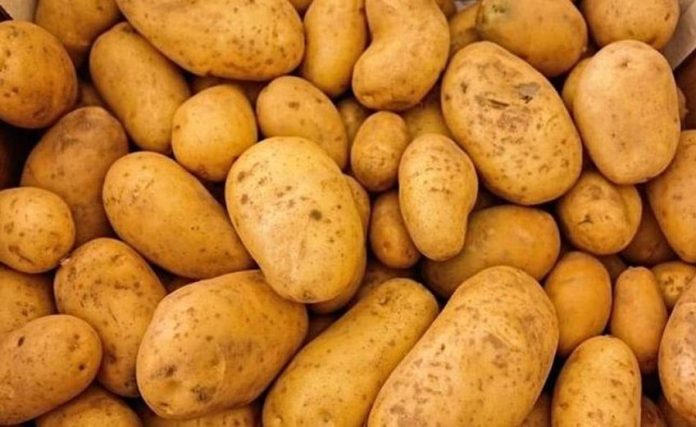
A federal judge barred the import of fresh potatoes from the United States today on national security and biosecurity grounds.
The decision, made by José Francisco Pérez Mier of the Seventh District Court in Los Mochis, Sinaloa — a potato-producing state, overturned a 2016 decision adopted by the Secretariat of Agriculture (Sagarpa) to allow potato imports from Mexico’s northern neighbor.
The judge said that Sagarpa’s reform to the Federal Law on Plant Health was unconstitutional because it didn’t include measures to protect against the introduction of plant diseases and therefore posed a threat to national sovereignty and security and crops such as chiles, tomatoes, eggplants and tobacco.
The domestic potato industry could disappear if fresh potato imports from the United States continue, Pérez said.
The amparo or injunction he handed down said the lack of protective measures “implies an imminent risk of plagues spreading on national soil.”
Pérez also accused the federal government of favoring government-subsidized United States potato farmers instead of supporting local production of the vegetable.
The judge said that would cause Mexico to become food dependent on a “foreign power,” namely the United States.
Pérez described the U.S. as “a power that in recent times has institutionalized hostile policies towards Mexico and on the supposition that it comes to dominate the national market, it will be the only supplier of the tuber.”
He added that “the entry of fresh potatoes from the United States violates the human right to food, is contrary to national sovereignty established by article 39 of the constitution and threatens national security by causing food dependence.”
It is the second time that an injunction banning potato imports from the United States has been handed down.
Following today’s ruling, a Supreme Court judge called on his colleagues to intervene in the case and make a definitive decision to avoid further legal back-and-forth actions that would result from the government appealing the ban.
Alfredo Gutiérrez Ortiz Mena took up the cause of agricultural producers from the northeast of the country by suggesting that the government’s previous appeals be reviewed by Mexico’s highest court.
At least three of the five justices of the First Chamber of the Supreme Court must support his proposal in order for a hearing of the case to proceed.
If the Supreme Court doesn’t assume jurisdiction, it will be up to an administrative court in Culiacán, Sinaloa, to make a definitive ruling.
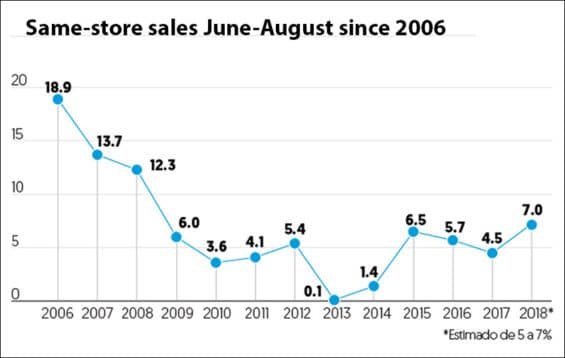
Predicted bumper sales at Mexico’s supermarkets and department stores between June and August could make this summer their best in 10 years, according to market analysts.
Sales will increase between 5% and 7% compared to the same period last year, analysts anticipate, with the World Cup in Russia and this Sunday’s elections expected to drive the surge in household expenditures.
“We expect that consumption will benefit from higher [pre-]election spending in the coming days, in addition to the World Cup, when there is significant demand for televisions as well as snacks and drinks,” said Valentín Mendoza, an analyst at the brokerage division of Mexican bank Banorte.
Another factor is the historically high level of remittances which have increased in value due to a weaker peso.
Even those without money in the pocket from abroad or elsewhere will spend more, according to a Tec. de Monterrey professor.
“Despite the increase in interest rates, at the end of the day Mexicans will consume more this summer and then they’ll worry about [paying back] the credit later . . .” Francisco Javier Orozco said.
In attempts to increase their share of the expected windfall profits, all of the nation’s large retailers have already started rolling out aggressive marketing strategies that include offering discounts on key products to get customers through their doors.
For Fathers’ Day, which was celebrated on June 17, supermarket chains Soriana and Chedraui went head to head on alcohol promotions.
The former offered three for the price of two deals on wine and liquor while the latter dropped their prices on all stock in the same categories by 30%.
All of the Walmart-owned chain stores have also started their summer promotional campaigns.
Its flagship store of the same name has started its “Rebajas para todos” (Discounts for everyone) campaign with former soccer star Jorge Campos as its face.
Summer store sales. el financiero
The company’s membership-only retail warehouse Sam’s Club is offering interest-free purchases and other bonuses, while its premium supermarket chain Superama is offering a variety of three for two deals.
Walmart’s discount chain Bodega Aurrerá is celebrating 60 years in business with a campaign entitled “60 años creciendo contigo” (60 years growing with you) and is offering reduced prices across its range.
Chedraui, Soriana and Comercial Mexicana (La Comer) are also offering a range of promotions, deals and discounts.
Not to be outdone, the department stores Liverpool, Palacio de Hierro and Sears are also intent on grabbing their slice of the sales action and have started their summer sales.
Liverpool began its “Gran Barata de Verano” (Great summer sale) on June 20, with discounts of up to 40% on a range of clothing and accessories.
The sale, which will conclude on July 31, also gives customers with a Liverpool card the option of buying now but not paying until October.
Palacio de Hierro will have discounts of up to 60% until July 12 and “double points” promotions for its cardholders while Sears will offer discounts of up to 50% until July 2 as part of its “WOW!” promotion.
Annual average sales growth for supermarkets and department stores in the three-month summer period has ranged between 0.1% and 6.5% over the past 10 years.
In 2008, however, sales spiked by 12.3% compared to the year before and in 2007 and 2006, growth was even stronger at 13.7% and 18.9% respectively.
An average spend at a Mexican supermarket is 1,550 pesos (US$78) made up of 95 different items, according to consumer knowledge company Kantar Worldpanel.
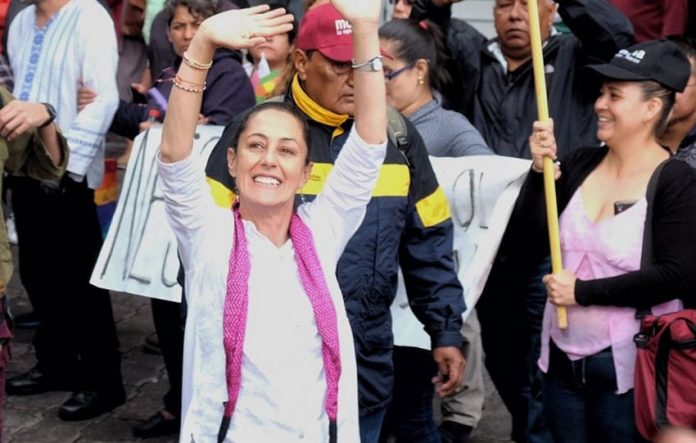
Sheinbaum: polls suggest she will be next mayor of Mexico City.
If the polls are right, voters across Mexico and in the nation’s capital will elect a new president and city mayor on Sunday who represent a political party that didn’t even exist five years ago.
Andrés Manuel López Obrador has a commanding lead in the race to become Mexico’s next president and in Mexico City, Claudia Sheinbaum is on track to become the next mayor.
Both candidates are running for a coalition known as Together We Will Make History, which is led by the leftist National Regeneration Movement or Morena party.
Morena was founded as a non-profit organization in 2012 and registered as a political party in 2014.
With less than a week until election day, the candidate widely known as AMLO has 46.3% voter support, according to today’s update of the Bloomberg poll tracker, while Ricardo Anaya is in second place with 26.5%.
The candidate for the right-left coalition led by the National Action Party (PAN) is just ahead of ruling party candidate José Antonio Meade, who has 24.7% support.
Independent candidate Jaime “El Bronco” Rodríguez, who took leave as governor of Nuevo León to contest the presidential election, is in a distant last place with just 2.9%.
A survey conducted by the polling firm Consulta Mitofsky put AMLO’s lead over Anaya at a slightly larger margin of 23%.
Another new poll — conducted by GEA-ISA — showed López Obrador with 44% voter preference, two points less than in its previous poll but still with a strong lead over Anaya, who had 28% support.
Meade rose five points in the GEA-ISA survey to 26%, just two points behind Anaya.
Both Meade and Anaya will be pushing this week to sell themselves as the second-place candidate in order to convince voters that they are the best choice for an anti-AMLO voto útil, or strategic vote.
However, their chances of closing the gap that separates them from AMLO appear slim. Bloomberg said “it looks like Lopez Obrador’s stars are aligned to win the presidential election and possibly sweep Congress.”
The official campaign period closes Wednesday. López Obrador will hold his final rally at Mexico’s largest sports stadium, the Estadio Azteca, in southern Mexico City.
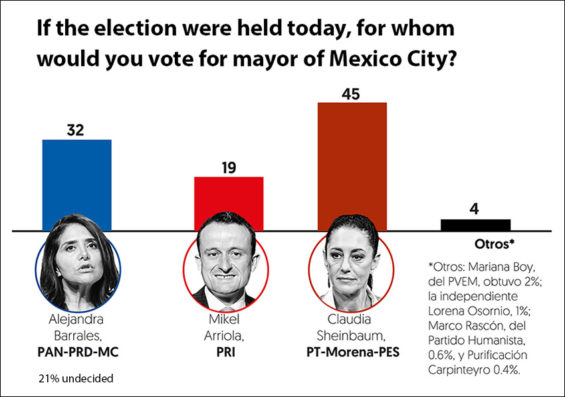
In the capital, Sheinbaum — who previously served as the head of government in the southern Mexico City borough of Tlalpan — has a 13-point lead over her nearest rival in the mayoral race, according to a poll conducted by the newspaper El Financiero.
The Morena candidate has 45% support while Alejandra Barrales of the right-left coalition For Mexico in Front is in second place with 32%. The candidate for the Institutional Revolutionary Party (PRI), Mikel Arriola, is in third place with 19%.
The four other candidates share the remaining 4% of voter preferences, according to the poll conducted between June 14 and 18 with 800 eligible voters.
The survey shows a tightening of the race compared to the last El Financiero poll, which showed Sheinbaum with a 20-point advantage over Barrales.
Morena is also on track to become the largest party in the city’s Congress, with 42% of those polled saying that they would vote for the party followed by 19% who said they intended to vote for the PAN and 15% who indicated a preference for the PRI.
The Democratic Revolutionary Party (PRD), which has governed the capital uninterruptedly since 1997, will be left as the fourth political force in the capital.
Sheinbaum leads in Mexico City poll. el financiero
López Obrador represented the party as Mexico City mayor between 2000 and 2005 and contended the presidency in the 2006 and 2012 elections under the party banner, but later quit to head up Morena.
In addition to voting for a new president and mayor of Mexico City, voters will also renew the federal Congress and residents of eight states will elect a new governor.
Thousands of other state and municipal level positions are also up for grabs, including the head of government positions in the capital’s 16 boroughs.
A total of 100 candidates are vying to become the next mayor in those boroughs but of that number just seven hopefuls have provided declarations of their assets, business interests and tax records in accordance with the transparency initiative known as the 3de3.
Political violence has marred the electoral process, which officially began last September, but the president of the National Electoral Institute (INE), Lorenzo Córdova Vianello, has assured the Mexican public that the July 1 elections are not at risk.




 Victory in the presidential election appears to be a foregone conclusion for López Obrador against corruption and extreme wealth concentration. But Mexico’s opposition parties and monied elites are doing all they can to frustrate his third, and probably last, run for the top job – and to stop him changing the country in ways that don’t suit their interests.