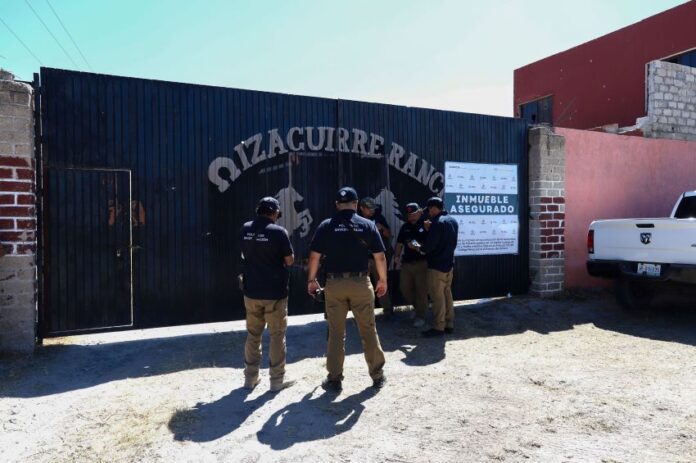
A Jalisco property by the name of Izaguirre Ranch became known as "Mexico's Auschwitz" after search groups found crematoriums, human remains and over 200 shoes at the site. (Fiscalía del Estado de Jalisco/Cuartoscuro)
Ten men implicated in a notorious case involving a ranch in Jalisco where the Jalisco New Generation Cartel (CJNG) allegedly trained new recruits were sentenced to more than 140 years in prison on Tuesday.
On Monday, they were convicted of kidnapping and murder by a court in Jalisco.
The men, identified as members of the CJNG, were arrested at the Izaguirre Ranch in the municipality of Teuchitlán, Jalisco, last September.
When the 10 men were arrested at the ranch on Sept. 18, authorities found one body as well as two kidnapping victims who were being held captive. Human remains have also been found on the property, but it has not been officially determined how many people they correspond to.
In a statement issued on Tuesday, the Jalisco Attorney General’s Office (FGE) said that the 10 men were sentenced to 141 years and three months in prison and ordered to pay fines of almost 1.3 million pesos (about US $70,000).
The sentencing came after the men were found guilty of kidnapping, aggravated kidnapping and murder following an oral trial. Compared to many cases in Mexico, the conviction of the suspects happened very quickly. The FGE only identified the men by their first names.
It noted that they were arrested after the National Guard went to the Izaguirre Ranch after receiving a report about gunshots at the property.
The FGE said that the National Guard personnel came under attack when they arrived at the ranch and they returned fire.
At the property, the ten now-convicted criminals were arrested and the body of one person was found, the Attorney General’s Office said, adding that two kidnapping victims were freed.
One of those kidnapping victims was allegedly detained by municipal police from Tala, Jalisco, on September 16 and subsequently handed over to CJNG members.
The newspaper El Universal reported on Tuesday that a total of 15 people have been arrested in connection with the case.
They are the 10 men who were sentenced on Tuesday; the aforesaid ex-municipal police officers from Tala plus one more policeman from the same municipality; and two men allegedly involved in the recruitment of new members for the CJNG. The ex-police officers and alleged CJNG recruiters are awaiting trial.
Also connected to the case is a former mayor of Teuchitlán, José Ascención Murguía Santiago, who was arrested in May on organized crime and kidnapping charges and ordered to remain in preventive detention. He is alleged to have collaborated with the CJNG and received payments from the criminal group.
The Spanish multinational Barceló, with its Mexican headquarters on Paseo de la Reforma in Mexico City, is a major investor in the national tourism sector.
(Barceló Reforma México/Facebook)
With recent diplomatic difficulties starting to fade, Spanish foreign direct investment (FDI) in Mexico rose 69% in 2024 compared to 2023 and continues to rise, according to data from the Spanish Chamber of Commerce in Mexico (Camescom).
Mexico was the third greatest recipient of Spanish foreign investment in 2024, with Spanish firms investing €3.3 billion (US$3.86 billion) in the Mexican market. This was the largest investment since 2018, when Spain invested €5.5 billion ($6.44 billion) in Mexico.
Just over 72%, or €2.2 billion ($2.58 billion), of the 2024 Spanish investment in Mexico went to the financial services sector.
Spain has 2,300 companies operating in Mexico, supporting over 500,000 indirect jobs countrywide. Meanwhile, Mexico is the sixth-largest investor in Spain, contributing 50% of Latin American investment in the country.
A Camescom survey of Spanish companies operating in Mexico revealed that 75% of firms see the investment climate as good, 39% have seen improvements compared to last year, and 54% perceive it as stable. However, 32% of companies highlighted concerns over the exchange rate.
“Despite all the noise, wars, tariffs and internal Mexican political issues, I’m seeing the same appetite for Mexico, and the good thing is that the numbers support this perception,” said Jordi Peixó Marco, the Spanish bank Santander’sexecutive director of international business and agribusiness in the small and medium-sized enterprise and commercial banking segments.
Camescom’s president, Antonio Basagoiti, points to the sharp rise in Spanish investment in Mexico as confirmation that the two nations have a strong trade relationship: “the figures reflect a real commitment and shared development.” (@camescommx/X)
Just in the first quarter of 2025, Spain has invested over €3.2 billion ($3.758 billion) in Mexico, accounting for 15% of Spain’s total FDI, according to Camescom’s president, Antonio Basagoiti.
“Despite the global challenges, the figures reflect a real commitment and shared development,” said Basagoiti.
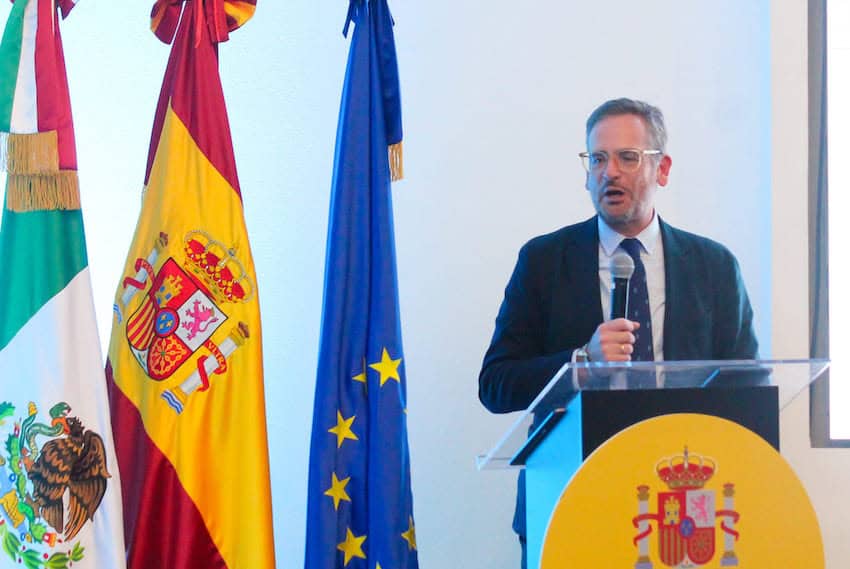
On Monday, the Spanish ambassador to Mexico, Juan Duarte Cuadrado, met with Gerardo Fernández Noroña, president of the Mexican Senate, to request the resumption of the Mexico-Spain Binational Commission, a meeting to advance joint agendas in areas like trade, investment and culture.
“Although we still have a loose end to resolve, from my position as ambassador, I have been working for almost three years to smooth out these minor difficulties, and I am convinced that we can move forward in this final stretch,” Duarte said during the meeting.
During an interview after the meeting, Fernández Noroña was asked if the pause in relations had effectively been overcome.
“We are interested in overcoming whatever differences there may be and strengthening our ties,” he said.
Intercam, one of the three Mexican financial institutions facing sanctions, has assets of US $4 billion. (Intercam Banco/Facebook)
Mexico-based financial institutions CIBanco, Intercam and Vector will have 45 more days to meet certain standards before receiving sanctions, the U.S. Department of the Treasury’s Financial Crimes Enforcement Network (FinCEN) announced on Wednesday.
On June 25, FinCEN issued an order prohibiting the execution of fund transfers to and from the three aforementioned Mexican banks. Implementation of sanctions was to take effect this month, but has now been put off until September 4.
Vector is a brokerage firm that manages almost US $11 billion in assets. (Mario Jasso/Cuartoscuro)
The delay was in large part the result of Mexico’s response to the sanction order, indicating cooperation with the Treasury Department.
“This [45-day] extension reflects that the Government of Mexico has taken further steps to address the concerns raised in FinCEN’s orders,” a Treasury Department statement released Wednesday said.
On June 26, Mexico’s National Banking and Securities Commission (CNBV) assumed temporary management of CIBanco and Intercam to ensure compliance with regulatory standards.
FinCEN said the institutions were “found to be of primary money laundering concern in connection with illicit opioid trafficking pursuant to the Fentanyl Sanctions Act and the FEND Off Fentanyl Act.”
The sanctions do not block property or cut off all global dollar-based activities, but do prohibit U.S. transactions with their locations in Mexico. A survey of more than 200 Mexico News Daily readers revealed that some customers have already experienced inconveniences from the pending sanctions and more fear serious difficulties once they are implemented.
President Claudia Sheinbaum has adamantly demanded evidence to back up the United accusations of money laundering by the three financial institutions.
While U.S. sanctions are fairly common against individuals and companies for links to Mexican organized crime, measures against financial institutions are less common. In addition, this is the first such action taken by the U.S. under the Fentanyl Acts.
FinCEN said it planned to “continue to coordinate closely with the Government of Mexico on these matters and will carefully consider all facts and circumstances in considering any further extensions to the implementation date of the orders.”
Commercial banks CIBanco and Intercam have assets of over US $7 billion and $4 billion, respectively, while brokerage firm Vector manages almost $11 billion in assets.
In 2024, Mexico received over US $65 billion in remittances, equivalent to 3% of the national GDP. (Edgar Negrete/Cuartoscuro)
New legislation introducing a 1% tax on cash remittances sent from the United States to Mexico could result in a 25% decrease in Mexico’s household spending, the president of the National Alliance of Small Business Owners (ANPEC), Cuauhtémoc Rivera, said on Monday.
Approximately 11.3% of Mexican households receive remittances from the U.S., most of which go towards consumer spending, Rivera said in an interview with the newspaper El Economista.
Rivera expects families in the states of Chiapas, Guerrero, Michoacán, Zacatecas, Oaxaca, Guanajuato, México state, Puebla and Mexico City to be most affected by the tax.
Chiapas, on the border with Guatemala, receives the largest amount of remittances nationwide, contributing 14.31% of its GDP.
Although some experts suggest that migrants will accelerate remittance transfers before the tax takes effect, Rivera is not so sure.
“With the persecutory immigration policy [migrants] are subject to in the United States, they surely don’t have the capacity to increase their dollar transfers [in the short term],” Rivera said.
“Remember that migrants live day to day because their jobs are temporary, and they are hiding from immigration authorities.”
Members of the Confederation of National Chambers of Commerce, Services and Tourism (Concanaco Servytur) voiced similar concerns about the 1% remittance levy.
“We cannot ignore the political undertones of this proposal,” said Concanaco Servytur’s president, Octavio de la Torre.
“It goes beyond a fiscal issue; it is a blow to the efforts of migrants, who have sustained a significant portion of the economy for decades.”
De la Torre emphasized the significant contribution of remittances to the Mexican economy. In 2024, Mexico received over US $65 billion in remittances, equivalent to 3% of the national GDP.
Some financial institutions, such as BBVA México, expect that remittance senders will absorb the tax to avoid reducing the amount they send to family members. Migrants may also decide to use informal channels to avoid the tax, according to de la Torre.
During her June 30 press conference, Mexico’s President Sheinbaum said that the Mexican government planned to reimburse the 1% U.S. tax on cash remittances.
In Mexico, cash makes up 1% of all remittances received, though remittances sent electronically via cash deposit (at a Western Union, for example) may account for up to 40% of all remittances sent from the U.S. to Mexico.
The Trump administration has not clarified whether these remittances will be taxed equally.
Isaac Hernández made his ABT debut on June 25 with co-star Isabella Boylston, with whom he had been friends since age 14. (Isaac Hernández/Instagram)
Isaac Hernández has made history by becoming the first Mexican to achieve the rank of principal dancer with the American Ballet Theatre (ABT) in New York, one of the most prestigious ballet companies in the world.
His debut as a principal dancer on the stage of New York’s Metropolitan Opera House (Met) took place on June 25, performing the role of Albrecht in the classic ballet Giselle, marking a milestone for Mexican and Latin American dance.
“This debut isn’t just mine. It belongs to my parents, my family, my teachers,” Hernández said following his debut. “It’s a way to remind the world that excellence can also be born from the backyard of a home. Circumstances shouldn’t determine destiny.”
Hernández, 35, joined the ABT in September 2024, after a period of time with the San Francisco Ballet. His performances at the Met Opera’s summer season, after Giselle, will include The Winter’s Tale (July 2 and 5) with Hee Seo, and Swan Lake (July 14) with Catherine Hurlin.
Many of the dancers he performs with were his classmates at ABT’s summer schools, like his Giselle co-star, Isabella Boylston, whom he has known since they were both 14 years old.
Born in Guadalajara, Jalisco, in 1990, Hernández began his training at the age of eight in the backyard of his home under the guidance of his father, who was also a dancer. From a young age, he received scholarships to international dance academies and built a distinguished career in world-renowned companies before joining ABT.
Hernández’s success has also landed him roles on the silver screen. The Mexican dancer stars alongside Jessica Chastain in the film Dreams, by the Mexican director Michel Franco. The movie premiered at the 2025 Berlin International Film Festival and will be released in Mexico in October. In the film, he portrays a young ballet dancer from Mexico who travels to the United States in search of success.
In an interview with news outlet Los Tubos, Hernández said his debut performance at the Met filled him with pride.
“It feels like my entire career, spanning these 35 years, has led me to this moment, and that makes it feel even more special than performing on other stages,” Hernández said. “After coming off stage, I found entire Mexican families who live in the city but were visiting the Met for the first time — all of these made the night very meaningful for me.”
At a cabinet meeting on Tuesday, Trump enumerated the various products on which his administration has imposed import tariffs.
“We did steel, as you know 50%; we did aluminum 50%; lumber just came out and we did cars. And today we’re doing copper. I believe the tariff on copper we’re going to make it 50%,” he told reporters.
U.S. Commerce Secretary Howard Lutnick said in a subsequent interview that the tariff on copper would likely take effect at the end of July or on August 1. In February, Trump directed Lutnick to “initiate an investigation under section 232 of the Trade Expansion Act to determine the effects on national security of imports of copper in all forms.”
Mexico was the third-largest exporter of copper and copper products to the United States in 2024, behind Chile and Canada. Those exports were worth US $976 million, according to U.S. Department of Commerce data.
The United States spent $17.11 billion on copper imports last year. Therefore, Mexico had a 5.7% share of the United States’ market for imports of the essential industrial metal.
Chile, whose copper exports to the United States were worth $6.11 billion last year, had a 35.7% share, while Canada, whose copper exports to the U.S. were worth $3.99 billion, had a 23.3% share.
Mexico’s copper exports to the United States in the first five months of the year were worth $419 million, a 12% annual increase. Despite the increase, Mexico was only the sixth-largest copper exporter to the U.S. between January and May.
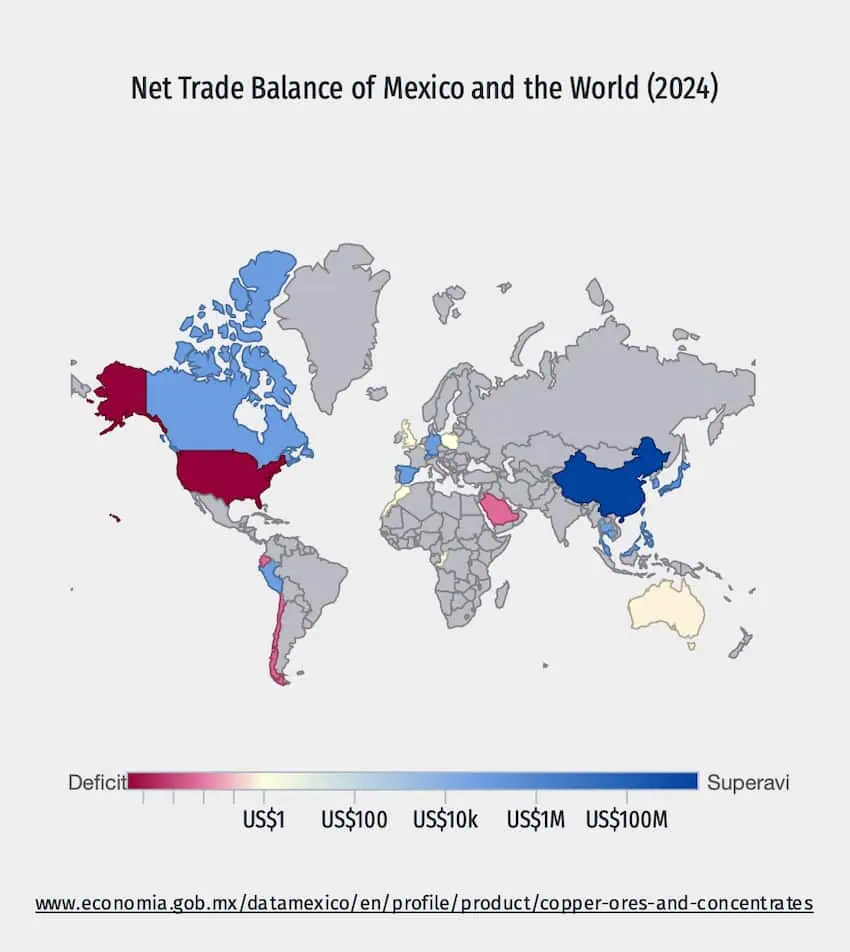
Mexico exports significantly more copper to China than to the United States. The value of Mexican copper ores and concentrates exported to China in 2024 was $3.72 billion, according to Mexico’s Economy Ministry.
Mexico sold US $3.72B in copper ore to China in 2024, making up 60% of Mexico’s total copper ore trade. (Gobierno de México)
Sonora is easily Mexico’s top copper-producing state, accounting for around 80% of total output. The metal is “critical to electric vehicles, military hardware, the power grid and many consumer goods,” Reuters reported.
Sheinbaum: ‘We’re always going to seek the best conditions for Mexico’
“We export more [copper] to China than the United States, but we do export to the United States. A lot of it is scrap copper that is refined in the United States,” she said.
Sheinbaum stressed that the United States needs copper from Mexico.
“That is the big issue when they impose these tariffs for the protection of the United States economy and for additional production. In reality, a good part of exports is because United States industry and companies need [foreign copper],” she said.
After saying “we’re going to wait” to see what happens with the United States’ proposed copper tariff, Sheinbaum noted that a delegation of Mexican officials led by Economy Minister Marcelo Ebrard will meet with U.S. officials in Washington on Friday to work on the bilateral “global agreement” she proposed to Trump last month.
She said on June 18 that the U.S. president had agreed to her proposal to establish a “global agreement” between Mexico and the United States covering security, migration and trade.
On Wednesday, Sheinbaum said that the first “conversations” between Mexico and the United States to that end would take place on Friday.
“Of course, we’re always going to seek the best conditions for Mexico,” she said.
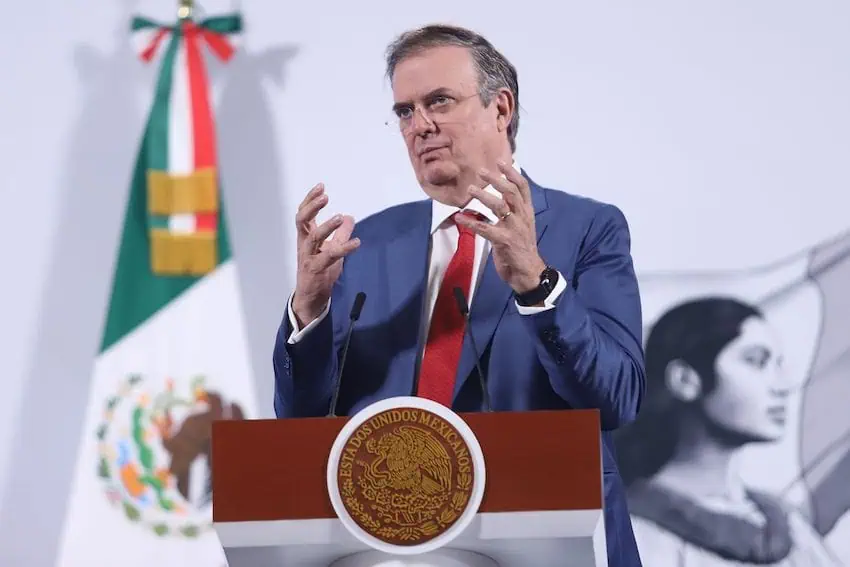
On behalf of the Mexican government, Economy Minister Marcelo Ebrard has spent most of 2025 seeking to win exemptions from the Trump administration’s newly imposed tariffs. (Daniel Augusto/Cuartoscuro)
In recent months, Ebrard has traveled regularly to Washington to engage in trade discussions with Trump administration officials, including Lutnick. On behalf of the Mexican government, he is seeking to win an exemption from, or at least a reduction of, the tariffs the United States has imposed on imports of steel, aluminum and cars from Mexico, even though the two countries have a free trade agreement, the USMCA, which also includes Canada.
On Tuesday, Ebrard said he would seek more details about the United States’ proposed copper tariff.
“I will have a call with United States authorities today and then I’ll be able to give you a more precise position because even they didn’t know [the details],” he told reporters.
“We need to know what it applies to. We’re going to understand that first,” Ebrard said.
While it exports copper to countries including China and the United States, Mexico imports copper from Chile and Peru for use in a range of manufactured products. The newspaper El Financiero reported that Chilean and Peruvian copper in goods manufactured in Mexico “could be subject” to the U.S. tariffs the Trump administration intends to impose.
That would “affect the competitiveness of our most sophisticated exports and make the entire industrial value chain more expensive,” José de Jesús Rodríguez, a tax analyst, told El Financiero.
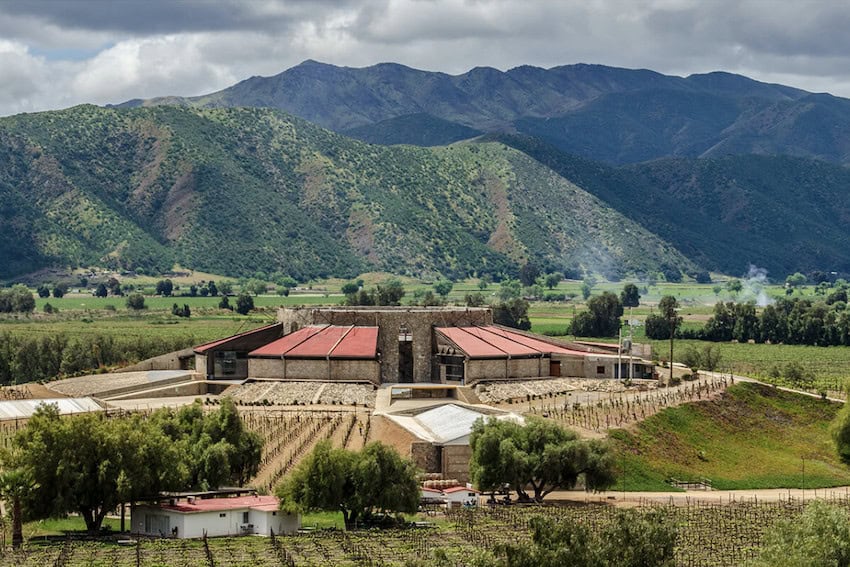
Coahuila lacks the name recognition of major Mexican wine regions — but it has all of the same quality. (Gobierno de Coahuila)
In May, we covered the wine production of Coahuila state, its regions and main wineries. Its incredible potential and significant growth in the last decade meant that we had to divide this article in two in order to be able to cover it all.
In the last decade, Coahuila wineries have won more than 1,500 awards and recognitions in Mexican and international wine competitions, with the participation of Mexico’s iconic Casa Madero — North America’s oldest winery — being a highlight.
Coahuila’s wines are winning awards left and right, including at the prestigious Mondial de Bruxelles international wine competition. (Government of Coahuila)
This recognition of the state’s wineries will hopefully sustain and strengthen Coahuila’s unique wine route, which currently has 11 participating wineries and additional vineyards to visit off the official route.
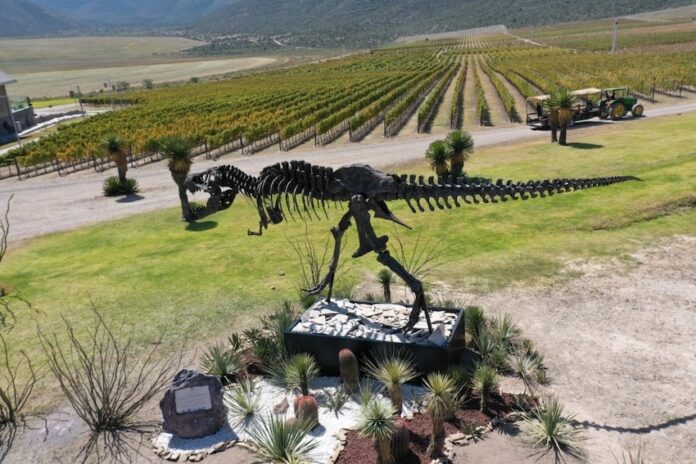
Known as the Wines and Dinosaurs Route for its excellently preserved prehistoric fossil remains found throughout, this route — which features snails, turtles and algae fossils, as well as natural formations from the Mesozoic and Cenozoic periods — has plans to become even more accessible for tourists in the near future.
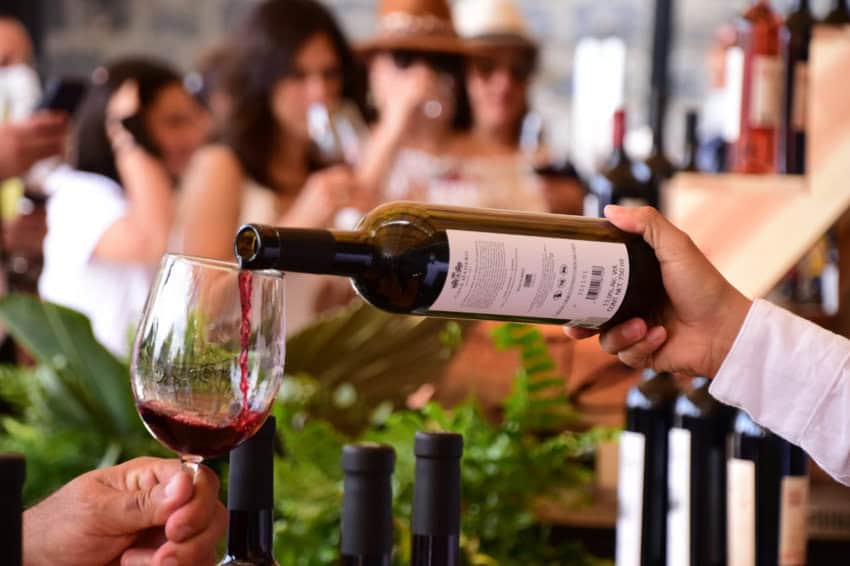
Before we begin part two of our profiles of Coahuila’s wineries, we ought to mention a great way to get to know Coahuila wines that’s coming up this month: La Gran Vendimia Festival Internacional del Vino y la Buena Vida, happening in Parras de la Fuente on July 19 at the Rincón Montero Hotel.
The event will feature local and national wines as well as wines from around the world. This event is expected to strengthen tourism and recognition of Coahuila and Mexican wines, , as well as be a great opportunity for hotels and restaurants in the region.
Can’t make this event? Then check out any of these wineries on your own time!
Casa Náufrago
Casa Naufrago, in Parras de la Fuente, not only has award-winning shiraz, tempranillo and chardonnay wines, it provides not-to-be missed experiences, like a jazz and big band festival it recently hosted at the vineyard. (Casa Naufrago/Facebook)
Located in Los Hoyos, Parras de las Fuentes, this winery spans 100 hectares, boasting several microclimates considered exceptional for grape cultivation.
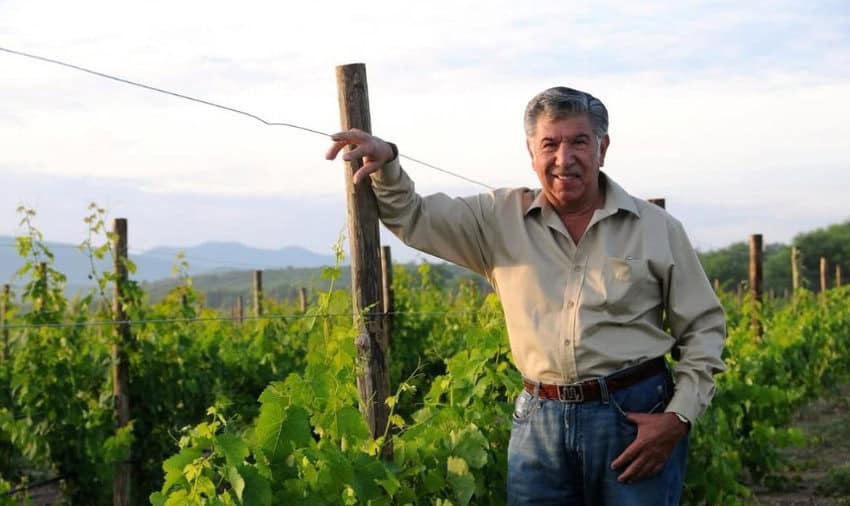
Casa Náufrago’s winemaker is the renowned Francisco “Paco” Rodríguez, a winemaking pioneer previously at the aforementioned Casa Madero. Rodríguez’s wines are undoubtedly a must-try. Casa Naufrago’s wine-tasting experience is complemented by the winery’s architecture, vineyard tours and its cuisine.
Hacienda Florida
Hacienda Florida: Nuestra terraza para Bodas y eventos especiales
Ten years ago, Hacienda Florida celebrated its first grape harvest, led by Salomón Abedrop, its founder and the current president of the Mexican Wine Council. He’s a man known for his experience in the field and his love for his land.
Located in the town of General Cépeda, between Saltillo and Torreón, Hacienda Florida now boasts 20 hectares of vineyards, whose vines are French imports.
From the beginning, Hacienda Florida’s mission has been to produce elegant, standout wines in a boutique setting. It currently has a line of 11 reds that have won many awards at competitions such as the Concours Mondial de Bruxelles and Global Wine.
The day-to-day winemaking is led by Debanhi Torres, a young Mexican winemaker who is also collaborating with winemakers from other countries.
Hacienda Florida’s shiraz and grenache blend is a standout – a Gran Reserva aged for 15 months in French and American oak barrels. The single-varietal malbec is another of this winery’s best bottles, as is a white wine made from verdejo grapes and a rosé blend of grenache and cabernet sauvignon.
The estate’s restaurant, La Terraza, is elegantly decorated with a splendid view of the vineyards and even a dinosaur-themed decor.
Bodega Amonites
Touring Bodega Amonites near Parras de la Fuente, you’ll not only get to try great-tasting malbecs, syrahs, cabernet francs and nebbiolos, you’ll also get a taste of the region’s fossil record. (Bodega Amonites)
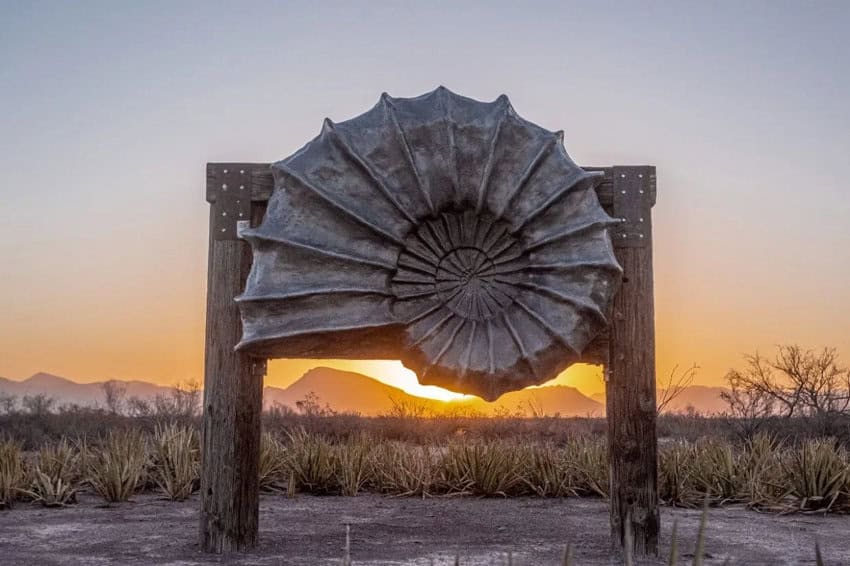
On the road from General Cépeda to Parras, is a newer winery, Bodega Amonites, named for the remains of ammonites — prehistoric marine cephalopods — found in the area. Amonites’ top priority is respect for the terroir, and it’s working to convert its land into a protected nature reserve. This is one of the 11 wineries on the Wines and Dinosaurs Route
At 1,300 meters above sea level, Bodega Amonites has the ideal climate for grape growing — warm days and cool nights. In 2021, the winery planted its first malbec and syrah vines, cultivated on 2 hectares, with purposefully low yields to maintain the grapes’ quality. In 2022, Bodega Amonites planted cabernet franc, nebbiolo and primitivo.
The winery is only open on weekends, and tours there are always accompanied by an archeological tour, tastings, local cheeses, barbecue, charcuterie and, naturally, Coahuila-style burritos!
Vinícola El Fortín
Don Jesús Maria Ramón Valdés, owner and founder of the winery Vinícola El Fortín, in Buenaventura, Coahuila. (Vinicola El Fortin/Instagram)
Located in the municipality of Buenaventura, Vinicola El Fortín’s history began as Rancho El Fortín, with its introduction of France’s Charolais beef cattle to Mexico and to the continent. Rancho El Fortín still sells this premium, hard-to-find meat today. It also bred four-mile horses until it was acquired by Jesús Ramón Valdés, who decided to incorporate wine production into the ranch’s activities.
In 2008, he sought out the help of Jose Milmo, then the owner of Casa Madero, and thus began the history of what is now one of the most prestigious wineries in the country.
Vinícola El Fortin’s vines, imported from France, adapted perfectly to the climatic conditions of their land, which, sits at over 1,200 meters above sea level. Vinícola El Fortín produces elegant and aromatic high-altitude red wines with a powerful palate and polished tannins — wines to savor and pair with a good cut of meat
Wineries in northern and central Coahuila
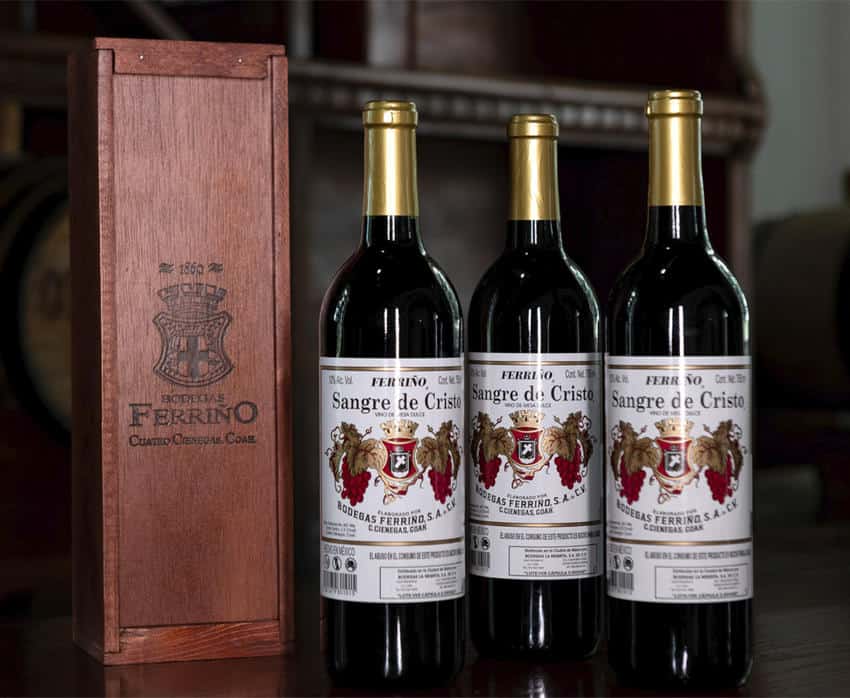
Sangre de Cristo is a notable wine made in Coahuila, by Bodegas Ferriño in Cuartro Ciénegas. (Bodegas Ferriño)
Piedras Negras, Coahuila, the northernmost wine-producing town in the state, is home to Vinicola Don Baldomero, which from its beginnings has primarily produced potent and alcoholic wines made from shiraz grapes.
In the center of the state, in Múzquiz and in Cuatro Ciénegas, are the Ferriño and the Vinos Vitali wineries, both founded by Miguel Ferriño in the 19th century and now owned by his descendants. These wines are sweet, either natural or fortified port-style, and these wineries also produce a brandy.
The dry climate and low rainfall allow the grapes to ripen with high levels of sugars, glucose and fructose, ideal for this type of wine. Ferriño produces the popular and sweet Sangre de Cristo wine and offers tours and tastings.
Wineries from Coahuila’s Sierra del Arteaga region
The high altitudes of the Sierra de Arteaga mountain range are known for producing aromatic wines. (Mexico Desconocido)
The Sierra del Arteaga, a region of valleys nestled between mountains, at altitudes of over 2,000 meters above sea level, is home to what are known as high-altitude wines, with ideal climatic conditions for producing aromatic, fresh, and elegant vintages. Among the wineries you’ll find here is Terra Serena, which boasts an unsurpassed lakeside trail, mountain views, and well-crafted wines. Bodegas Del Viento and Los Pinos benefit from the beauty of the landscape around them; their services include tours and tastings, accompanied by charcuterie and cheeses made in the region.
In coming years, Coahuila, the awakening behemoth, is destined to be the main character in the story of Mexican wine.
Reservations are recommended for all visits and are available online at each winery’s website.
Diana Serratos studied at Universidad Nacional Autónoma de México (UNAM) and UNCUYO in Mendoza, Argentina, where she lived for over 15 years. She specializes in wines and beverages, teaching aspiring sommeliers at several universities. She conducts courses, tastings and specialized training.
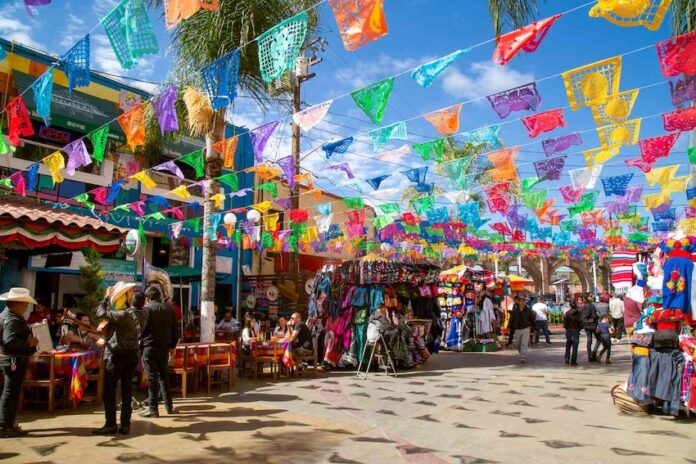
We're big on culture, food and business in the latest news update from Baja California. (Trip Savvy)
Baja California continues to draw massive amounts of visitors. Over 12 million visited the state during the first three months of 2025, an 8% increase across the same period the year prior. If that pace holds, it should easily exceed the 28 million visitors it saw in 2024 and the 30 million it received in 2023.
These aren’t all traditional tourism visits, or the state would have handily surpassed Quintana Roo (21 million tourists) as the country’s top tourism destination in 2024. Instead, many were what is known as “border tourists,” meaning those who don’t stay overnight. But any way these visitors are categorized, or the million people who arrived via cruise ships last year, tourism contributed about one billion dollars (19.8 billion pesos) to Baja California’s coffers in 2024, an impressive number.
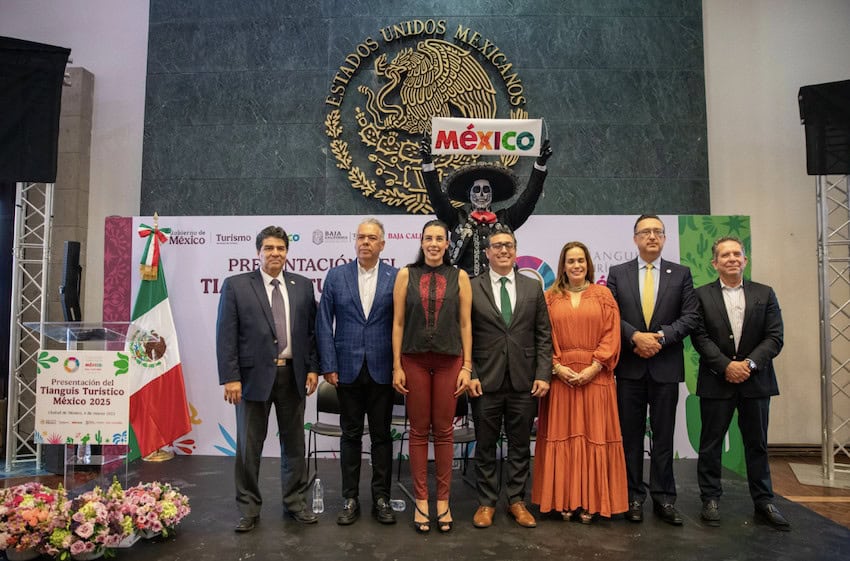
But perhaps the best recent example of the state’s tourism prowess was the overwhelming success of Tianguis Turístico Mexico (TTM), the 49th edition of which was held in Baja California and San Diego, California, from April 28 to May 1, 2025.
Tianguis Turistico Mexico in Baja California set records
The 2025 edition of Tianguis Turístico Mexico in Baja California was an unqualified success. (Gobierno de Mexico)
“What better place than Baja California, the state where the nation begins, to send this message to the world: Mexico is in fashion,” said Josefina Rodríguez Zamora, head of Mexico’s Secretaría de Turismo (Sectur), on the occasion of this year’s TTM, the first-ever binational edition.
That was evident, not only by the fact that the event drew 8,781 participants from 46 nations, or that innumerable deals were done—including the establishment of 35 new flights (28 of them international) to Mexico—but that the TTM set a Guinness World Record for the most people ever to attend a tourism fair in Mexico on a single day (over 7,000). That the event was a rousing success was also seen from the hotel occupancy rates, which hit 98% in Tijuana and 95% in Rosarito.
However, perhaps the biggest long-term announcement locally was that of a new hotel, the Westin Hotel by Marriott, that will open in Tijuana as part of an ambitious 150-million-dollar T10 urban tourism development. The news was announced by the state’s governor, Marina del Pilar Ávila, less than two weeks before the U.S. tourist visas for her and her husband, Carlos Torres Torres, were controversially revoked, the first time that has ever happened to a sitting governor from Mexico.
Opera in the streets of Tijuana
Founded in 2004, Opera en la Calle is one of Tijuana’s most popular annual events. (Fundación Opera de Tijuana)
Opera de Tijuana, which was founded in 2000 by María Teresa Riqué and José Medina, is celebrating its 25th anniversary in 2025. Considering its goal is not just to promote opera and classical music in the city, but to make it more accessible to the public, it’s hard to think of a better way to commemorate the organization’s ongoing relevance than the return of Opera en la Calle, which has brought the musical artform to close to a quarter of a million people since it premiered in 2004 in Colonia Libertad. The event eventually moved to Calle 11, between Avenida Revolución and Avenida Madero, in 2024, where it will once again be held on Saturday, July 12, 2025, from 3 to 11 p.m.
The origins of this now highly anticipated annual festival (12,000 people attended last year) date to 1994, when one of the festival’s founders, Enrique Fuentes, saw the Daniel Catán and Juan Tovar opera Rappaccini’s Daughter performed in San Diego. By 2001, there was no longer enough room for his friends to watch opera videos or listen to recordings in his house in Tijuana’s Colonia Libertad, so he founded Café de la Opera. By 2004, that was no longer big enough, so he, along with his sister Susy, Maria Teresa Riqué, and a few others, founded the first Opera en la Calle on July 10 of that year at Cine Libertad.
They weren’t expecting much of a turnout, so they only put out 320 chairs. By 5 p.m., so many people had shown up (about 3,000) that Fuentes began to get scared (per BC Reporteros). “Please don’t let them come anymore! What are we going to do?” In the years since, the Opera en la Calle has seen everything from traditional operas like Carmen, Pagliacci, La Traviata, and La Bohème performed to more contemporary and cross-cultural productions. This year, an estimated 300 artists, along with 50 vendors and an equivalent number of volunteers and staff, will be on hand to continue the long-running and ever-popular event.
The 2025 wine vintage is shaping up to be another good one in BC
Baja California vineyards, like this one at Santo Tomás, produce some of Mexico’s best wines. (Rutas del Vino de Baja California)
Oenophiles can recall from memory legendary Bordeaux vintages like 1945, 1961, and 1982. Baja California wine-growing areas like Valle de Guadalupe don’t yet inspire that kind of reverence, but the state does produce upwards of 70% of all Mexico’s wines, and as Wine Enthusiast notes, it is the country’s “premier wine region.”
Thus, some do track its vintages, with the hopes of a particularly exceptional quality. If you’re one of them, there’s good news: 2025 is shaping up to be another good year for the region’s 80-plus wineries. BC’s wine valleys enjoy a Mediterranean-style climate, with hot days and cool nights providing the consistently large diurnal temperature range (57 to 96 Fahrenheit this June) so important to producing quality grapes.
Warmer temperatures, it should be noted, concentrate flavors, while cooler ones help retain the acidity necessary for balanced wines and are essential for the development of delicate aromas. Most regional wineries are found within 15 miles of the ocean, which helps, since ocean breezes offer a natural cooling effect.
Cabernet sauvignon and chenin blanc are the most popular among the 40 or so wine grape varieties planted in Baja California vineyards, with the wines they produce notable for their minerality due to terroir and the salinity levels of water in underground wells. Enough rain is expected this year for a lush growing season before the annual harvest in August. Yes, August is early by wine harvesting standards, but the hot regional temperatures accelerate ripening.
So the outlook for quality is good, even though regarding quantity, nothing will likely ever again approach the 13.5 tons per hectare yield recorded in 1982. Yes, 1982 was a legendary vintage in Baja California, too.
Chris Sands is the Cabo San Lucas local expert for the USA Today travel website 10 Best, writer of Fodor’s Los Cabos travel guidebook and a contributor to numerous websites and publications, including Tasting Table, Marriott Bonvoy Traveler, Forbes Travel Guide, Porthole Cruise, Cabo Living and Mexico News Daily. His specialty is travel-related content and lifestyle features focused on food, wine and golf.
Homicides have trended down since Sheinbaum took office last October. (Mario Jasso/Cuartoscuro)
Marcela Figueroa Franco, head of the National Public Security System, presented the latest homicide data at President Claudia Sheinbaum’s Tuesday morning press conference.
Homicides have trended down since Sheinbaum took office last October, an achievement that federal authorities have attributed to the implementation of the government’s new national security strategy.
Homicides declined 15% annually in first half of 2025
Figueroa reported that there was an average of 70.5 homicides per day in Mexico between January and June, according to preliminary data.
The figure represents a decrease of 15% compared to the average of 83 homicides per day that were recorded in the first six months of 2024.
Figueroa highlighted that the first six months of 2025 constituted the least violent first half of any year since 2016.
Compared to 2020 — when an average of 96.5 homicides per day were recorded in the first six months — the decline in murders between January and June was 26.9%.
Last month was least violent June since 2016
Figueroa reported that preliminary data showed there was an average of 65.6 homicides per day last month, a decrease of 26.5% compared to the same month of last year.
She highlighted that the average number of daily murders last month represented a 34.5% decline compared to June 2019, the most violent June of the last nine years.
Marcela Figueroa Franco, head of Mexico’s National Public Security System, highlighted on Tuesday that the first six months of 2025 constituted the least violent first half of any year since 2016. (Galo Cañas Rodríguez/Cuartoscuro)
Sinaloa recorded the highest number of homicides in June
Figueroa reported that Sinaloa recorded the highest number of homicides among Mexico’s 32 states in June. The northern state recorded 207 homicides last month, accounting for 10.5% of all murders across Mexico. Among the victims were 20 people whose bodies were found on a highway in Culiacán on June 29. Rival factions of the Sinaloa Cartel are engaged in a bloody battle in the state.
Ranking second to seventh for total homicides in June were:
Guanajuato: 171 murders (8.7% of the total)
Baja California: 162 murders (8.2%)
Chihuahua: 160 murders (8.1%)
México state: 133 murders (6.8%)
Michoacán: 119 murders (6%)
Guerrero: 110 murders (5.6%)
Figueroa said that 54% of all homicides in June were perpetrated in the seven states with the highest number of murders. There were 1,968 homicides across Mexico last month, according to the preliminary data presented on Tuesday morning.
Guanajuato recorded the most homicides between January and June
Data presented by Figueroa showed that Guanajuato recorded the most homicides among Mexico’s 32 states in the first six months of 2025. There were 1,606 murders in the Bajío region state between January and June, accounting for 12.6% of all homicides across Mexico.
Guanajuato has been Mexico’s most violent state in terms of total homicides in recent years. Among the criminal groups that operate in the state are the Jalisco New Generation Cartel and the Santa Rosa de Lima Cartel, which are engaged in a long-running turf war.
Ranking second to seventh for total homicides between January and June were:
Baja California: 910 murders (7.1% of the total)
Sinaloa: 893 murders (7%)
Chihuahua: 887 murders (7%)
México state: 861 murders (6.8%)
Guerrero: 736 murders (5.8%)
Michoacán: 718 murders (5.6%)
More than half of Mexico’s total homicides in the first half of 2025 — 51.8% — occurred in the seven states that recorded the highest number of murders. There were 12,752 homicides between January and June, according to the data presented on Tuesday morning.
Homicides declined in 25 states in the first half of 2025
Figueroa reported that homicides declined in 25 states in the first six months of 2025 compared to the same period of last year.
Zacatecas recorded the biggest decrease, with murder numbers falling 61.2%
The states that recorded the next biggest declines in homicides were:
Chiapas: Murders down 58.2%.
Quintana Roo: Murders down 51.3%
Tamaulipas: Murders down 50.4%
The seven states that recorded annual increases in homicides in the first half of the year were Guanajuato, Sinaloa, Baja California Sur, Campeche, Nayarit, Tabasco and Tlaxcala.
By Mexico News Daily chief staff writer Peter Davies (peter.davies@mexiconewsdaily.com)
Mexican automakers manufactured more than 360,000 vehicles in June alone, and are expected to produce approximately four million this year. (Shutterstock)
The Mexican automotive industry rebounded in June despite growing trade tensions with the United States. Production rose nearly 4.9% and exports increased by 14% compared to the same month a year ago.
INEGI reported that Mexican automakers manufactured 361,047 vehicles in June — a record for the month — while exporting 331,517 cars, also a new record for June.
The total number of vehicles assembled in Mexico during the first half of 2025 was 0.5% higher than the figure recorded from January-June 2024, representing the most light vehicles ever produced by Mexico automakers during any January-June period.
Mexico produced 2,006,720 units during the first half of the year, only the second time the domestic auto industry has exceeded the two million mark during a six-month period. The only other time this occurred was in 2019, the year before the COVID pandemic, when Mexican automakers manufactured 2,001,272 light vehicles.
Automakers expect to produce approximately four million units in 2025, according to Alberto Bustamante, director general of the National Agency of Automotive Suppliers (Anapsa).
General Motors led the way with 436,106 vehicles manufactured during the first six months this year. Nissan followed with 341,530 units and Ford was third with 223,742 cars produced.
In percentage terms, Toyota’s production rose 55% during the January-June period compared to last year (from 103,264 to 160,282), while KIA Motors’ production rose 15.5% (from 123,850 to 143,080 ). The two Asian carmakers also led the way in June, with their production rising 24.7% and 24.3%, respectively, compared to the same month a year ago.
However, the news is not all good, as cumulative exports and domestic sales remain in negative territory.
Domestic sales declined by 7,329 to 116,062, a 5.9% drop compared to June 2024. Year-on-year domestic sales for the first half of 2025 were also down by just more than 2,000 vehicles.
Nissan remains far and away the most popular car on the domestic market with 128,283 vehicles sold during the first six months of the year. General Motors placed second with 94,601 cars sold.
Despite the 14% upturn in light vehicle exports in June, total exports for the first half of 2025 (166,184) lag behind the figure recorded for January-June last year (1,714,794) by 2.83%, or 48,610 units.
This is partly due to a 2.9% drop in exports to the United States, the destination for 79.7%, or 1,327,892 vehicles, of Mexican automotive exports.