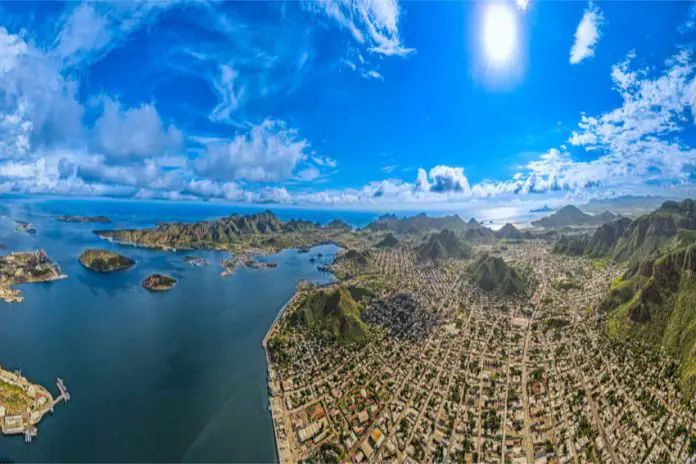
The port city of Guaymas, Sonora, won in its size category for, among other things, having the smallest gender income gap of 66 Mexican cities compared by IMCO. (Government of Guaymas)
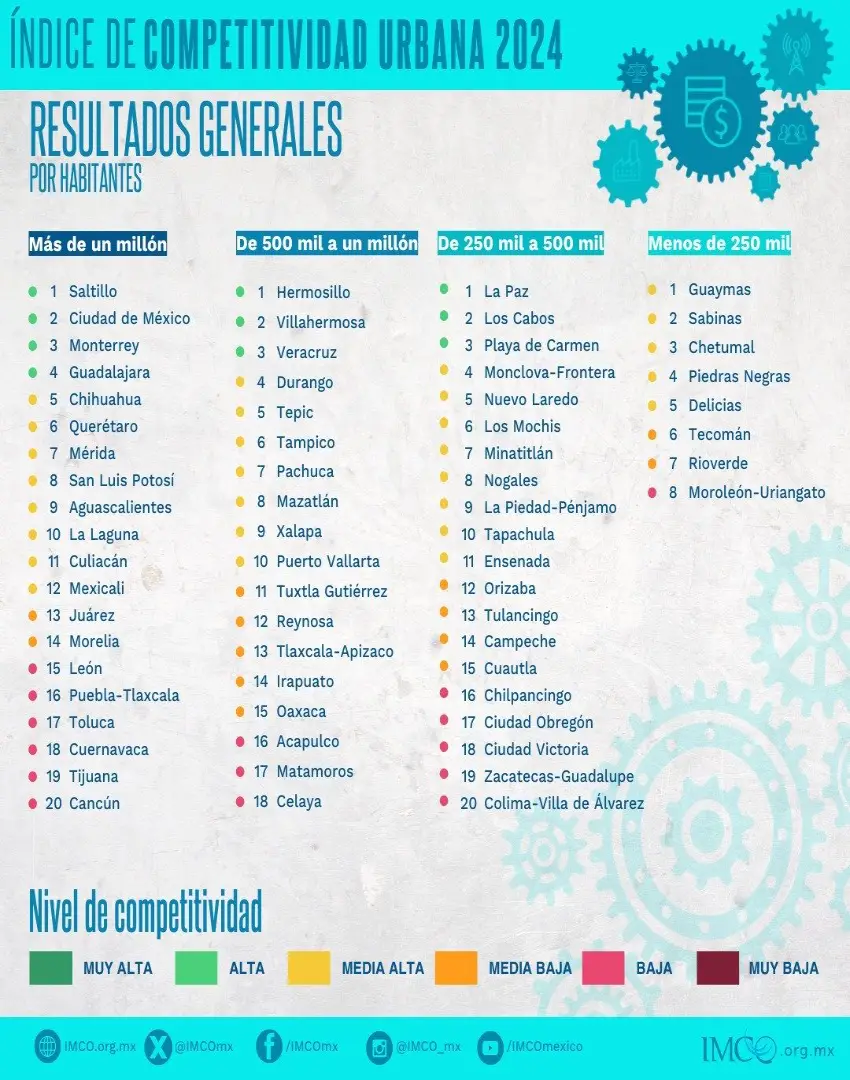
Mexico’s northern region hosts some of the most thriving, and thus most competitive, cities in the nation to live and work, according to the 2024 Urban Competitiveness Index published by the Mexican Institute for Competitiveness (IMCO).
This year, Saltillo, Coahuila; Hermosillo, Sonora; La Paz, Baja California Sur; and Guaymas, Sonora – all located in the north of Mexico – won the overall top spot for competitiveness in 2024 in one of IMCO’s four city-size categories.
The size categories range from cities with 1 million residents to cities with populations of under 250,000.
The four top cities excelled in a long list of competitiveness indicators that included, among other things, innovation, education offerings, patent registration, economic diversification, growth dynamism, and the size of their mortgage market.
Sonora was the only state with two cities in top spots.
Every year, IMCO conducts the Urban Competitiveness Index (ICU) to assess the performance of and challenges faced by cities in Mexico.
The ICU evaluates 66 cities, which in total are home to over 62% of Mexico’s population. IMCO uses 35 indicators grouped into six sub-indices.
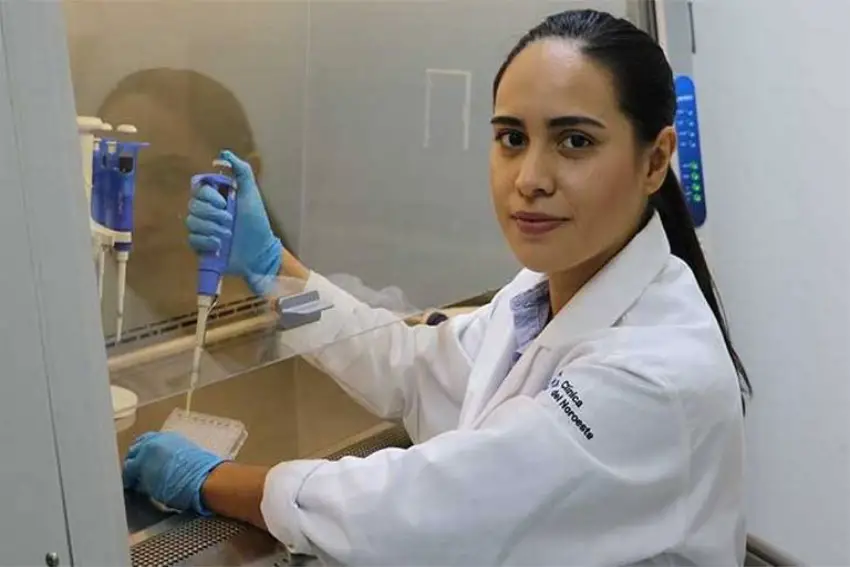
A student at the Research Center for Food and Development, one of Hermosillo’s many research centers cited by IMCO. (CIAD)
Here’s a look at which cities won and why:
Cities with over 1 million residents: Saltillo, Coahuila
Saltillo beat out 20 cities in its size category, including the nation’s capital, Mexico City.
Saltillo’s number one ranking is attributed to its low incidence of homicides and vehicle theft, its booming labor market and its having one of the highest rates of perceived security among residents.
Key areas for improvement that IMCO cited for Saltillo included its low number of health personnel (it ranked No. 56 in this criteria out of all 66 cities competing), its wastewater treatment capacity, and its extent of educational coverage.
Runners-up just behind Saltillo were Mexico City, Monterrey and Guadalajara.
Cities with over 500,000 residents: Hermosillo, Sonora
Hermosillo ranked at the top of its category thanks to its solid labor market and its number of research centers relative to the size of the city’s economically active population.
IMCO also found Hermosillo to have the lowest percentage of households relying on water from external sources, such as water tanker trucks.
Key areas of opportunity for Hermosillo IMCO cited included increasing the construction of vertical housing and more sustainable water consumption.
Cities with between 250,000 and 500,000 residents: La Paz, Baja California Sur
La Paz won its size category in part due to having one of the highest monthly salaries for full-time employees and the highest number of research centers relative to the size of its economically active population. It also ranked high on rates of perceived security among residents and rates of hotel occupancy.
However, La Paz still faces challenges, namely electricity generation costs and infant mortality: in both these categories, La Paz ranked No. 65 out of the 66 competing cities.
Cities with less than 250,000 residents: Guaymas, Sonora
The other Sonora municipality that topped its category, the port city of Guaymas won the top spot thanks to its number of research centers and its superior educational coverage for residents under 15, IMCO said. It also featured the smallest gender income gap.
Guaymas’ areas of opportunity, according to IMCO, included lowering its homicide rate and reducing the number of transport-related accidents in the city.
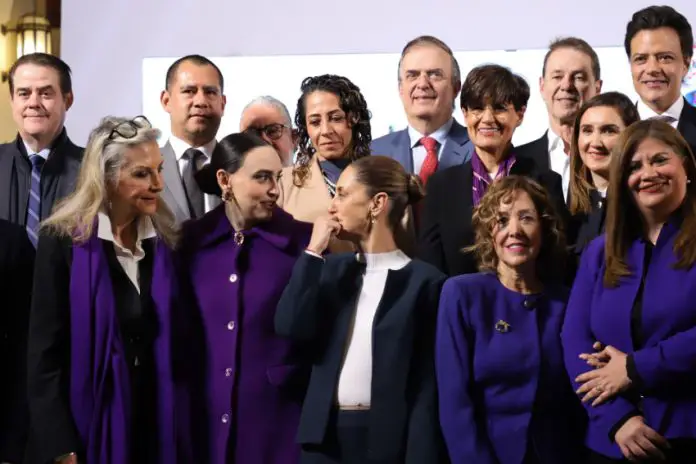
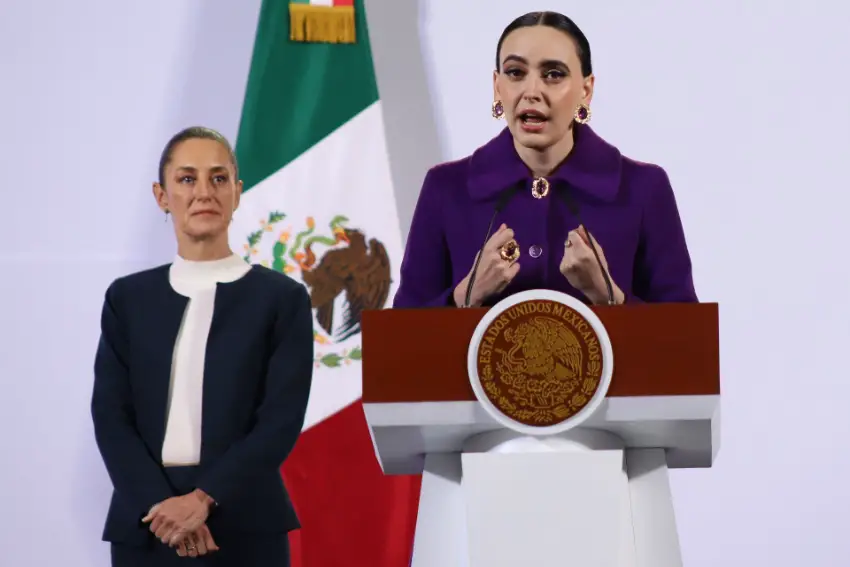
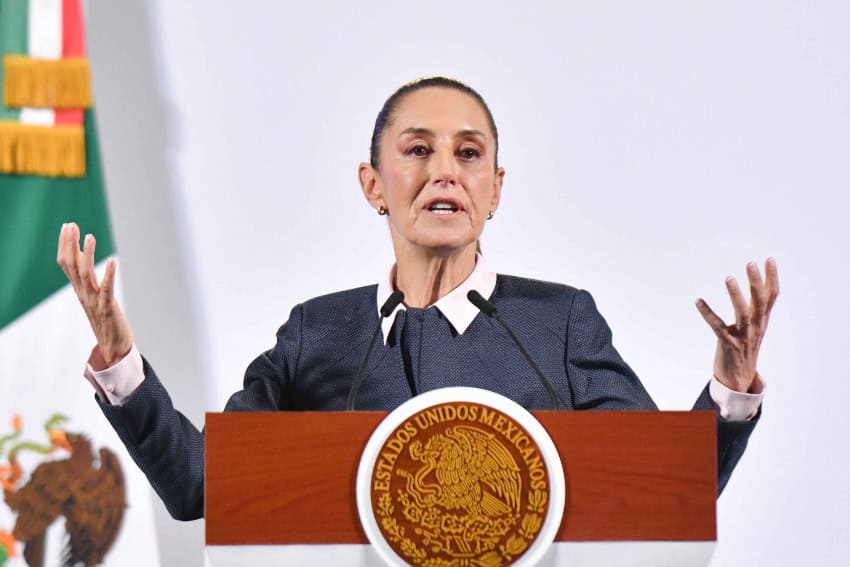
President Sheinbaum shared the presidential podium on Wednesday with CEOs and business group leaders who were there to sign a document creating the government's Advisory Council for Regional Economic Development and Relocation. (Daniel Augusto/Cuartoscuro)
Donald Trump’s latest tariff threat was the dominant issue at President Claudia Sheinbaum’s Wednesday morning press conference.
Economy Minister Marcelo Ebrard spoke about the potential impact of a 25% tariff on Mexico’s exports to the United States (read Mexico News Daily’s report here) and Sheinbaum fielded several questions on the incoming U.S. president’s plan to tax goods sent north from Mexico.
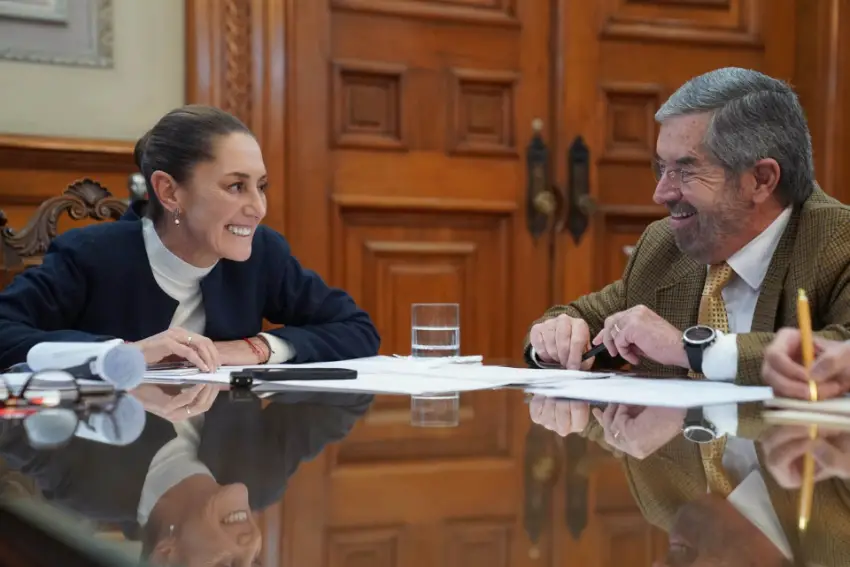
President Sheinbaum, left, on a call with U.S. President-elect Donald Trump on Wednesday afternoon in her office in the National Palace. With her is Foreign Affairs Minister Juan Ramón de la Fuente. (Cuartoscuro)
Sheinbaum said that the government’s Advisory Council for Regional Economic Development and Relocation is a collaboration with the Business Coordinating Council and “other private sector chambers.”
Sheinbaum reminded reporters that she first presented the initiative during the campaign period leading up to the presidential election in June and noted that the plan is to build industrial corridors that focus on the “productive vocations” of the regions in which they are located.
For example, the priority sectors of a corridor running mainly along the Gulf of Mexico coast will be petrochemicals, fossil fuels, lumber, fruit production and fishing.
Business titan Altagracia Gómez Sierra, the coordinator of the government’s new Advisory Council for Regional Economic Development and Relocation, has been called by Forbes magazine one of the most influential business leaders in Mexico. (Daniel Augusto/Cuartoscuro)
Sheinbaum said that the work of the new advisory council, in conjunction with government ministries, will be to support and promote the various industrial corridor projects “that form part of what we call Plan Mexico.”
“It’s a development plan for the country that represents well-being for Mexicans and sustainability – protection of the environment, in other words,” she said.
In a post to LinkedIn, the CEO of the American Chamber of Commerce of Mexico (AmCham), Pedro Casas Alatriste, announced that AmCham had been invited to join the new advisory council.
“Our mission is ambitious and clear,” he wrote before citing the following objectives.
Attract new investment projects to Mexico.
Foster the growth of local suppliers.
Drive sustainability initiatives.
Boost international academic exchanges.
Strengthen Mexico’s development bank to increase small and medium enterprises’ participation in global trade.
“This council represents an unprecedented opportunity for the public and private sectors to unite for the country’s progress. We’ll work daily toward these objectives and report tangible results to the president every two months,” Casas said.
“… We’re aiming for nothing less than a transformational impact on Mexico’s future. Let’s get to work. This is our moonshot,” he added.
Mexican officials to speak with Trump’s team soon, Sheinbaum hopes
Sheinbaum told reporters that Foreign Affairs Minister Juan Ramón de la Fuente is “already in contact” with members of Trump’s team and suggested that Mexican officials could speak with them in the coming days to discuss the president-elect’s tariff threat and other issues.
She noted that Thanksgiving is coming up, but said that “the idea” is to “communicate” with Trump’s team “in these days.”
Undocumented migrants in Tijuana. After a phone call with Trump on Wednesday, President Sheinbaum told reporters that migration would be on the agenda for an upcoming discussion with Donald Trump, but she didn’t say when that would happen. (Omar Martínez/Cuartoscuro)
Beyond Trump’s pledge to impose a 25% tariff on Mexican exports on the first day of his second term as U.S. president, Sheinbaum said that the two parties would discuss migration, violence and the illegal trafficking of weapons to Mexico.
In response to a subsequent question, the president walked back her suggestion that a meeting with Trump’s team would happen soon.
The “best time” for the meeting “will be found,” she said, adding that it will “ideally” take place before Trump’s inauguration on Jan. 20.
Economy Ministry is preparing reciprocal tariffs to impose ‘if necessary’
At her Tuesday morning press conference, Sheinbaum said that U.S. tariffs on Mexican exports would be met by reciprocal tariffs on U.S. exports to Mexico.
On Wednesday, she declined to specify whether Mexican tariffs would apply across the board or target specific U.S. industries or products, only saying that the Economy Ministry was preparing duties to impose “if necessary.”
Sheinbaum once again expressed confidence that Mexico and the United States will reach an agreement to avert the imposition of a 25% blanket tariff on Mexican exports.
Asked about the government’s plan to reduce Mexico’s reliance on imports from China, Sheinbaum stressed that Mexico has “very good relations’ with the east Asian nation and asserted that the government’s objective is simply to “recover” domestic manufacturing capacity that was “lost” over the years.
It’s not a matter of taking a position against China but rather adopting “a policy of national development,” she said.
“It has nothing to do with one nationality or another,” Sheinbaum said.
Mexico favors trade with countries with which it has free trade agreements, but that doesn’t mean goods can’t be imported from other nations, she said.
By Mexico News Daily chief staff writer Peter Davies (peter.davies@mexiconewsdaily.com)
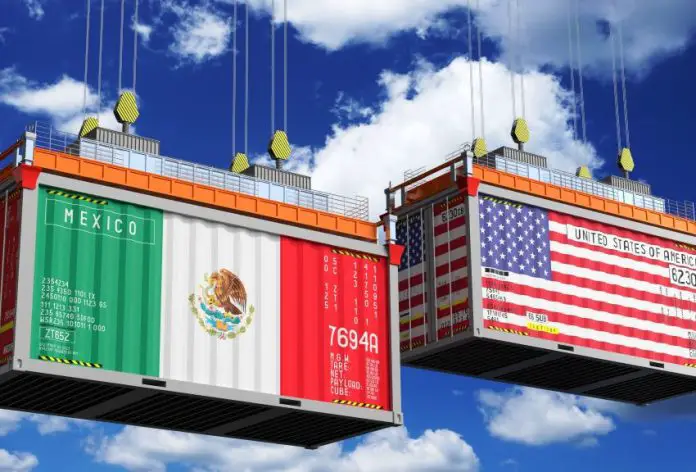
Despite new tariffs, Mexico's trade surplus with the U.S. increased between April 2024 and April 2025. (Shutterstock)
The American Society of Mexico (Amsoc), a community organization focused on bilateral development, said on Wednesday that “Mexico has the most to lose” if a trade war begins with the U.S.
“Both Mexican and American businessmen do not benefit from any type of action by either the Mexican government or the American government, but I think it is very important that instead of escalating the situation, a common understanding is sought,” Amsoc President Larry Rubin told the media outlet El Financiero.
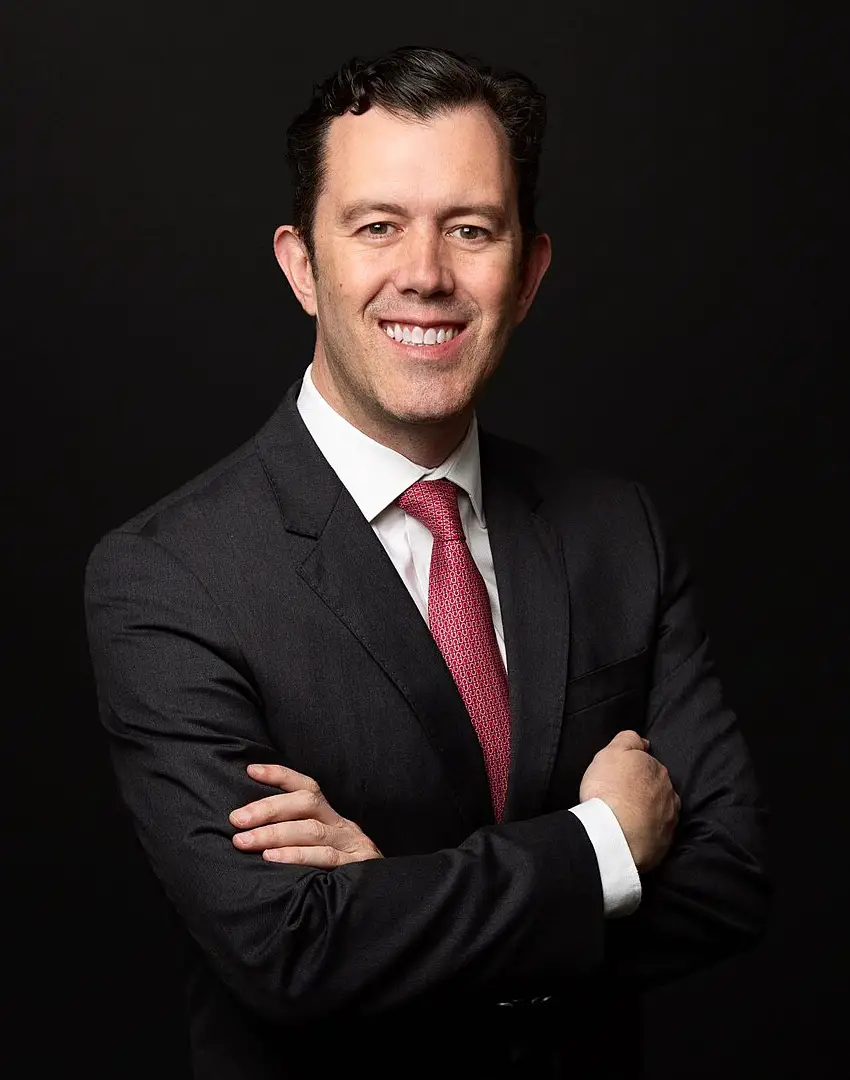
Larry Rubin, president of the American Society of Mexico. (Eduardo B. Osorio/Wikimedia Commons)
Amsoc’s claim follows U.S. President-elect Donald Trump’s pledge this week to impose a 25% tariff on all Mexican and Canadian exports to the United States upon assuming office on Jan. 20.
Trump cited illegal migration and the “flow of fentanyl and other drugs” via Mexico for the decision to impose the tariff on Mexico.
President Claudia Sheinbaum implied on Tuesday that any U.S. tariffs would be met with reciprocal measures on U.S. exports to Mexico and warned that such a scenario would hurt U.S. companies doing business in Mexico.
“Cooperation and reciprocal understanding of these great challenges is needed. To one tariff another will come in response…until we place common companies at risk,” Sheinbaum said in a letter addressed to Trump, which she read out during her morning press conference on Tuesday.
“I believe that dialogue is the best path for understanding, peace and prosperity in our nations. I hope that our teams can meet soon,” she concluded.
Response by Mexico’s private sector
José de Jesús Rodríguez, president of Mexico City’s chamber of commerce organization Canaco, assured attendees of a recent Canaco forum that the U.S. can’t do without Mexico, it’s number-one trade partner. (José de Rodríguez Cardenas/Facebook)
Several private-sector representatives have responded to Trump’s call for tariffs on its North American neighbors, with many stressing the importance of the continuity of the USMCA free trade agreement between the U.S., Mexico and Canada.
“We have to learn to negotiate and talk with our North American suppliers,” President of the National Association of Importers and Exporters of the Mexican Republic (ANIERM) Gerardo Tajonar Castro told El Financiero. “The type of trade war that could arise does not suit us because there would be retaliation from Mexico…”
Meanwhile, Mexico City Chamber of Commerce, Services and Tourism (Canaco) President José de Jesús Rodríguez told attendees of the Canaco Forum that Mexico is the United States’ main commercial partner, “and they [the U.S.] cannot hang themselves.”
“And the problem between China and the United States, which is geopolitical, [is] very complicated,” de Jesús added.
He appealed for calm. “The only alternative they have is Mexico; we are their main supplier, so let’s not lose sight of that,” he said.
Other experts also pointed to the highly intertwined trade relationship between the U.S., Canada and Mexico.
“Trump’s bet is risky since the U.S. economy depends enormously on the Mexican and Canadian markets for its exports, as well as on the inputs from these countries for its industrial production. It is a shot in the foot,” Kenneth Smith Ramos, a former negotiator of the USMCA, told El Financiero.
With 53 days left until Trump takes office, it is unclear if the threat to levy the tariffs is serious or not, or whether the move is an attempt to score an early political win in the ongoing dispute over the U.S.-Mexico border.
Despite President Sheinbaum’s implied threats on Tuesday about imposing retaliatory tariffs on U.S. goods she has not given any specifics about how Mexico would respond.
Mexico's Economy Minister Marcelo Ebrard said Wednesday that if U.S. President-elect Donald Trump makes good on a threat of a 25% tariff on Mexico, 400,000 U.S. jobs would be lost in the auto industry alone. (PX Media/Shutterstock)
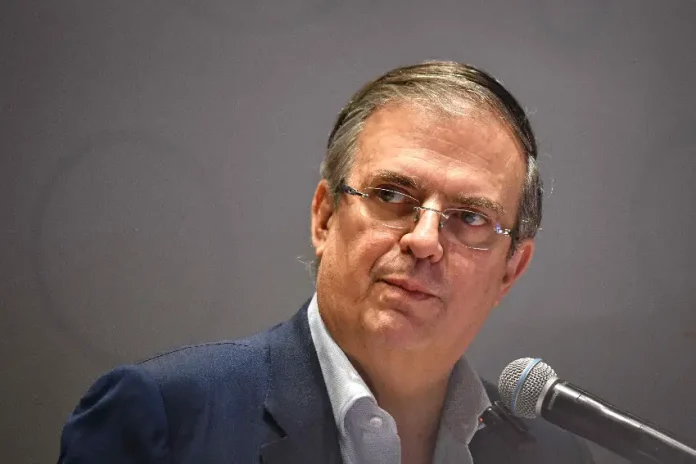
Economy Minister Marcelo Ebrard said Wednesday that the United States would be shooting itself in the foot if it imposes a 25% tariff on Mexican exports, as Donald Trump has pledged to do.
Speaking at President Claudia Sheinbaum’s morning press conference, Ebrard said that 400,000 jobs would be lost in the United States if Trump imposes the tariff he threatened to implement in a post to his social media site Truth Social on Monday.
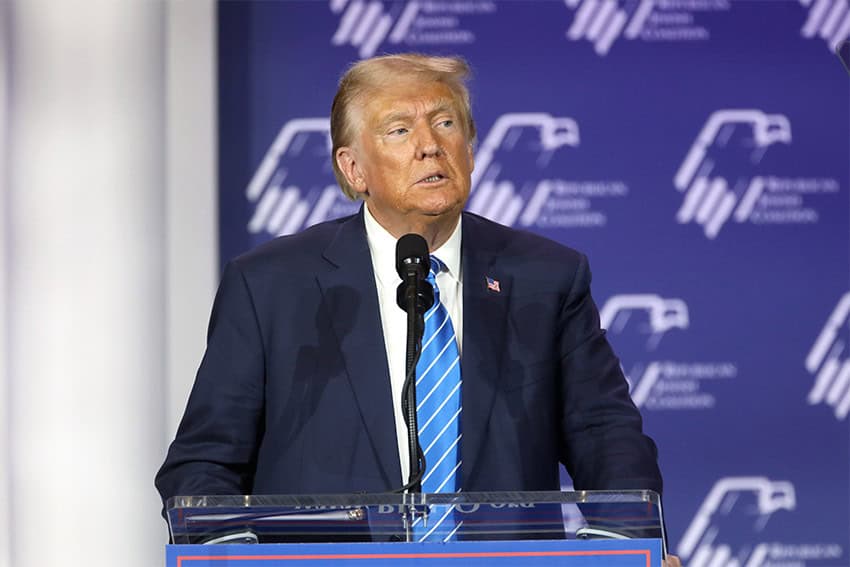
Trump made the threat to immediately implement tariffs on Mexico and Canada upon assuming the U.S. presidency on his social media platform, Truth Social, on Monday (Gage Skidmore/CC BY-SA 2.0)
The U.S. president-elect said that his proposed 25% tariff on Mexican and Canadian imports would be imposed on the first day of his second term and remain in effect “until such time as Drugs, in particular Fentanyl, and all Illegal Aliens stop this Invasion of our Country!”
Ebrard highlighted on Wednesday that a 25% tariff on Mexican exports would affect companies in the United States that operate in Mexico, “particularly” automakers that have long had a manufacturing presence here such as General Motors, Stellantis and Ford.
“What [Trump] is saying is, ‘Dear fellows, we are going to impose a tax on the most important North American companies in the world,'” he said.
Ebrard noted that retaliatory tariffs on United States exports – as Sheinbaum said Mexico would impose – would also affect General Motors, Stellantis and Ford because they send auto parts from the U.S. to their plants in Mexico.
“We’re very integrated, we bring some things from the United States, we produce others here, we incorporate them and you see it as a final product,” he said.
Ebrard stressed that a 25% tariff “is a tax” that would have an outsized impact on the auto sector in North America, “whose main exponents are these three large groups from the United States itself.”
According to a new Barclays analysis, Trump’s proposed 25% tariff could effectively “wipe out” all profits for the major auto manufacturing companies General Motors, Ford and Stellantis, all of whom rely on multiple plants in Mexico. (File photo/General Motors México)
“In other words, it’s a shot in the foot,” he said.
“The taxes – I say ‘taxes’ because a tariff is a tax; the 25% proposed tax would have a direct impact on [U.S.] companies because it’s equivalent to doubling the tax on profits,” Ebrard said, referring to the 21% corporate tax rate in the United States.
“In the end,” Ebrard added, a 25% tariff would “affect the consumer in the United States” and “around 400,000 jobs” in the U.S. “would be lost.”
That figure, he explained, is an estimate made by the Economy Ministry after consultation with the auto sector in the United States.
“That is the estimated impact that we’ve been able to calculate between the [tariff] announcement and now,” Ebrard said.
“… The main impact of this measure is on the consumer in the United States and United States companies [including] the three largest of the North American automotive industry. That’s why we say it’s a shot in the foot.”
Analysts at Barclays, Reuters reported, estimate that Trump’s proposed tariff “could wipe out effectively all profits” of General Motors, Stellantis and Ford, known as the “big three” among U.S. automakers.
“While it’s generally understood that a blanket 25% tariff on any vehicles or content from Mexico or Canada could be disruptive, investors underappreciate how disruptive this could be,” the analysts wrote in a note on Tuesday.
Division or the joint construction of a ‘strong, competitive region’?
Ebrard said “there are two options on the table” for Mexico, the United States and Canada, the three signatories to the USMCA free trade pact that is scheduled to be reviewed in 2026.
A migrant caravan of about 2,500 in Tapachula, Chiapas, in early November, heading north toward the United States. (Damián Sánchez/Cuartoscuro)
“We can fragment and divide ourselves with accusations and tariffs – we can do that if we want …or we can together build a strong, competitive region that is prepared to lead the future and compete with other regions,” he said.
Mexico’s objective, “of course,” is to “create a strong region and not conflict and division,” Ebrard said.
The economy minister said that “the proposal that Mexico will prepare to achieve this” will be based on having “regional stability,” ensuring “shared prosperity” and increasing North America’s “global competitiveness.”
“We have to cooperate on security, on migration, on governance, on many issues,” Ebrard said.
Whether the Sheinbaum administration will be prepared to deploy additional monetary and human resources to combat the flow of migrants and drugs to the United States in order to stave off a 25% tariff on its exports remains to be seen, but the government led by former president Andrés Manuel López Obrador agreed to do so when Trump issued a tariff threat in 2019.
In a letter she sent to Trump on Tuesday, Sheinbaum highlighted the efforts Mexico is already making to reduce the number of migrants and the amount of drugs reaching the United States and gave no indication that Mexico was ready and willing to do more.
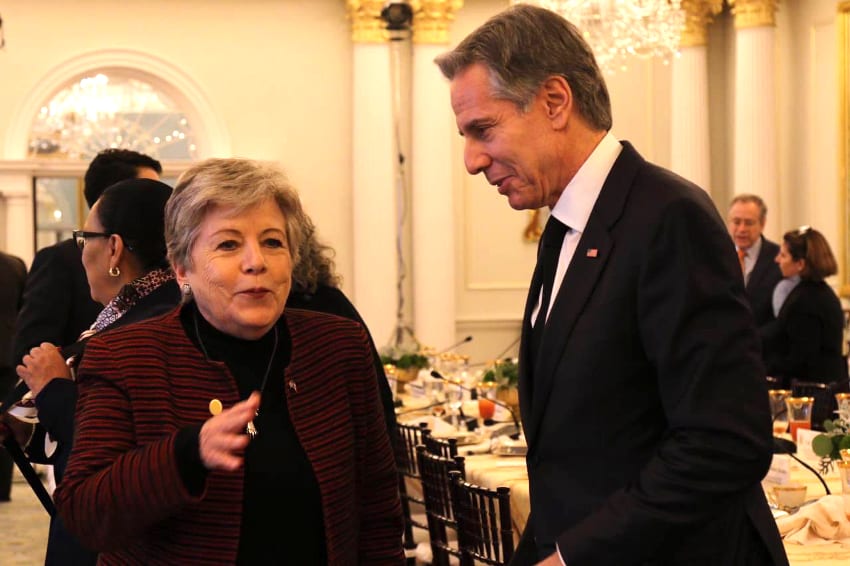
In January, Mexican officials — including then Foreign Affairs Minister Alicia Bárcena, left — met with U.S. Secretary of State Antony Blinken and were told that the U.S. was pleased with Mexico’s efforts to curb illegal migration. (Secretary Antony Blinken/X)
However, Trump is clearly dissatisfied with Mexico’s existing efforts and appears determined to get Mexico to ramp up enforcement against migrants and drug traffickers.
Tonatiuh Guillén, head of Mexico’s National Immigration Institute for the first six months of López Obrador’s six-year term, said earlier this month that the likelihood that Mexico will give in to pressure from Trump, as it did in 2019, is “high.”
With regard to “shared prosperity,” Ebrard said it should be an “objective” of Mexico, the United States and Canada.
Ebrard said that “everything that goes against shared prosperity,” including “unnecessary taxes,” is inadvisable.
“… Tariffs fragment us, hinder the work of industry, cause jobs and competitiveness to be lost,” he said.
“The United States is affected first and foremost, but others are affected as well, Mexico and other partners.”
To increase North America’s global competitiveness, Mexico, the United States and Canada need to “optimize regional supply chains, maintain low costs … and work as a team,” Ebrard said.
“This [idea] has a lot of support in Mexico, in the United States and in Canada as well, and we think it is the correct, intelligent route for the circumstances the world is going through,” he said.
“… So, presidenta, we’re already working on this, on the strategy you gave us,” Ebrard told Sheinbaum.
“And we’re also accelerating conversations with the European Union to finish the modernization of the [trade] agreement with the European Union,” he said, adding that the ministry he leads is also “accelerating agreements with countries such as Brazil.”
By Mexico News Daily chief staff writer Peter Davies (peter.davies@mexiconewsdaily.com)
National statistics agency INEGI reported that Mexican exports were worth US $57.67 billion in October, a 3.55% increase compared to September. (Andy Li/Unsplash)
Revenue from Mexican exports increased 11.2% annually in October and 4% in the first 10 months of 2024, according to official preliminary data.
The value of Mexican imports has increased 4% so far in 2024. (Cuartoscuro)
Mexico’s export revenue between January and October was $513.38 billion.
The 4% annual increase in the value of exports in the first 10 months of the year – assisted of course by inflation – means that Mexico is on track to have a record-breaking year for export revenue.
The value of Mexico’s imports also increased 4% annually between January and October, reaching $524.03 billion.
Donald Trump has threatened to impose up to 25% tariffs on Mexican goods. (Gage Skidmore/Wikimedia Commons)
The publication of the latest data on Mexico’s exports and imports comes two days after United States President-elect Donald Trump pledged to impose a 25% tariff on all Mexican and Canadian exports to the United States on the first day of his second term as U.S. president.
Mexican President Claudia Sheinbaum said that Mexico would retaliate with a reciprocal tariff on U.S. exports to Mexico.
Mexico and the United States are each other’s largest trade partner and can ship products to their neighbor tariff-free under the terms of the USMCA pact. Despite that, Trump has made repeated threats to impose tariffs on Mexican goods until the Mexican government stops or at least significantly stems the flow of migrants and drugs to the United States.
More than 80% of Mexico’s exports go to the United States (see data below).
Exports and imports in October
INEGI’s data shows that 91% of Mexico’s total export revenue in October came from the shipment abroad of manufactured goods.
Manufacturing sector export revenue totaled $52.49 billion, a 13.2% increase compared to October 2023. Auto sector exports generated almost 36% of that revenue, while the remainder came from goods made by other manufacturing sectors. A wide range of manufactured products are made in Mexico including electronics, medical devices, household goods, aerospace equipment, steel and clothes.
The value of Mexico’s agricultural exports increased 3.1% annually in October to reach $1.71 billion, while mining exports surged 57.1% to $1.08 billion.
Oil exports brought in revenue of $2.38 billion, a 24.2% decrease compared to October last year. Mexico is keeping more crude at home as it works toward achieving self-sufficiency for fuel
Oil production saw a US $2.38 billion return last month, though that was 24.2% less than the previous October. (Pemex/X)
The strong year-over-year increase in export revenue in October allowed Mexico to achieve a rare trade surplus last month.
Expenditure on imports increased 9.7% annually to $57.3 billion, leaving Mexico with a trade surplus of $370.8 million.
Mexico’s expenditure on non-oil imports – including non-oil consumer goods, intermediate goods and capital goods – increased 12% compared to October 2023 to reach $54.05 billion, while its outlay on oil imports fell 18.3% to $3.24 billion.
Exports and imports between January and October
Mining exports generated 12.5% more between January and October than in the same period of 2023. (Depositphotos)
Just under 90% of Mexico’s total export revenue in the first 10 months of the year came from products made by the country’s vast manufacturing sector.
Manufactured goods shipped abroad brought in revenue of $461.33 billion, a 5% increase compared to the January-October period of 2023. Just over 35% of that revenue went to Mexico’s auto sector, which includes United States, Asian and European automakers.
Oil exports were worth $23.86 billion between January and October, a 15.2% decrease compared to the same period of 2023, while the value of agricultural exports increased 6.9% to $19.4 billion.
Mexico’s mining sector generated $8.78 billion in export revenue between January and October, a 12.5% increase compared to the first 10 months of last year.
Mexico’s overall export revenue between January and October was $10.64 billion lower than its outlay on imports. The country’s trade deficit was 3.4% higher than in the same period of last year.
Mexico’s expenditure on non-oil imports in the first 10 months of the year increased 7.3% annually to $491.61 billion, while its outlay on oil imports, including gasoline, declined 28.9% to $32.42 billion.
Majority of Mexican exports go to the US
INEGI reported that 84.06% of Mexico’s non-oil export revenue in the first 10 months of 2024 came from products shipped to the United States. Mexico overtook China as the top exporter to the U.S. in 2023 and has maintained that position this year.
Just under 16% of Mexico’s export revenue between January and October came from products shipped to other countries around the world.
The data underscores the importance of the United States as a market for Mexico’s exports. While importers pay tariffs, a 25% tariff on Mexican exports to the United States would have a significant impact on the competitiveness of Mexican products in the U.S. market.
President Sheinbaum said Tuesday that she was confident that Mexico and the United States would reach an agreement to avert Trump’s 25% tariff threat.
“I have a vision that there will be an agreement with the United States and with President Trump,” she said, adding that tariffs would hurt companies in both Mexico and the U.S.
Once upon a time, hundreds of turkeys—each wearing a tiny pair of sandals—would be herded along a 100-kilometer road to Guadalajara. (Canva/Photos by John Pint)
Turkeys wearing traditional huaraches marching through the streets in a giant annual drive? If it sounds like something that could only happen in Mexico, that may be exactly the case.
Is the story true? You be the judge.
Archaeologist Peter Jiménez tells a tale of turkeys in huaraches marching over 100 kilometers from Teúl, Zacatecas, to Guadalajara.
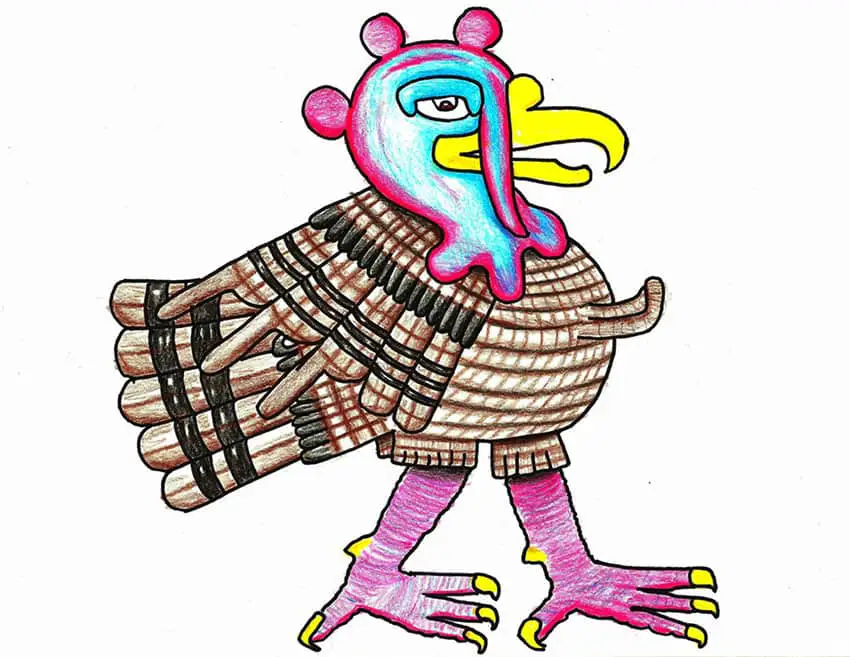
First, let me state that the turkey is very Mexican and it’s likely that the Maya were the first to domesticate it. In Mexico, it is popularly called guajolote, which comes from the Nahuatl “huexólotl,” meaning “old monster,” a rather unkind reference to the male’s looks.
As far as its taste goes, the 16th-century Franciscan missionary and chronicler Bernardino de Sahagún wrote “It has the best meat of all the birds; it is the master. It is tasty, fat, savory.”
That oh-so-tasty bird has been raised in great numbers in Mexico for at least two millennia, creating a special relationship between humans and these birds. One unforgettable episode of that relationship was told to me by archaeologist Peter Jiménez, who spent many years studying and unearthing the celebrated ruins of the Cerro de Teúl archaeological site, located immediately adjacent to the city of Teúl, Zacatecas.
At first, I thought Jiménez was pulling my leg, but the basic facts of the story which appears below have been confirmed by the municipal historian of Teúl, Ezequiel Ávila, as well as other sources.
The Black Cave
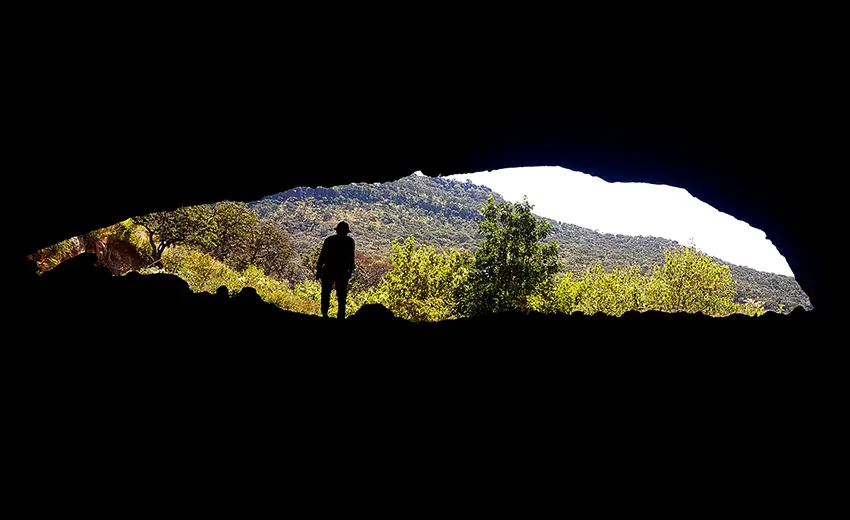
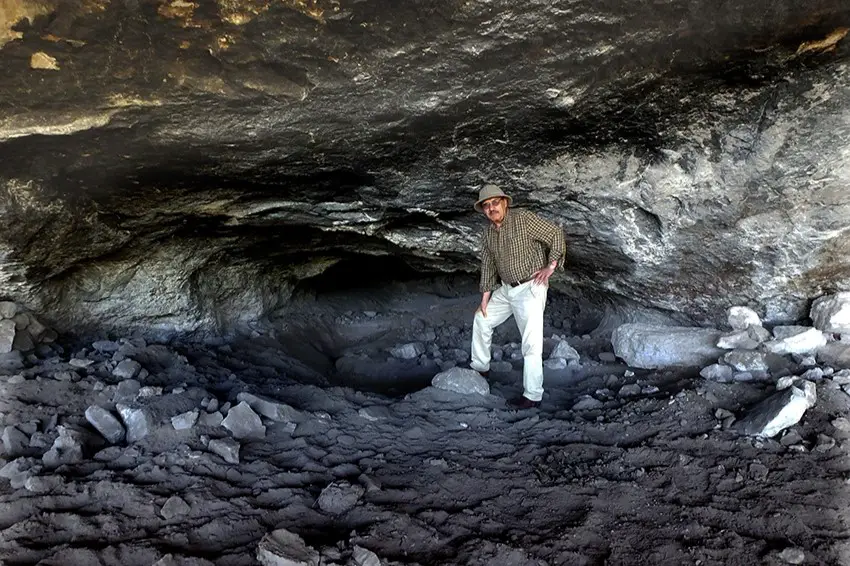
Don Ezequiel Ávila, historian of Teúl, Zacatecas, at the entrance to La Cueva Prieta where turkey drovers would overnight their birds on the long march to Guadalajara. (John Pint)
“In 1984, when I was just a kid studying archaeology in Zacatecas,” Jiménez told me, “we did a tour through the state with the then-Governor of Zacatecas, José Guadalupe Cervantes.”
“One of the most beautiful parts of our visit was the drive through the southern part of the state which is filled with deep canyons. Approaching Teúl, we drove past a large and imposing cave, visible from the highway. It’s called La Cueva Prieta (the Black Cave) and it has a waterfall over its entrance. So I made a comment to the governor: ‘That looks like a great place to excavate for pre-historic remains.’”
The governor smiled, but one of his party, a member of his cabinet, who was sitting next to Jiménez, spoke up: “Well, if you ever dig there, you’re probably going to find 20 or 30 centimeters of turkey guano.”
“Why?” asked Jiménez.
“Because, back when we used to move turkeys from Florencia, near Teúl, over to Guadalajara on foot, that was one of the caves where we would rest the turkeys and where we would all sleep during the night,” the man replied.
“What?” said Jiménez.
Down the canyon to Guadalajara
Don Ezequiel Ávila, historian of Teúl, Zacatecas, inside La Cueva Prieta where turkey drovers would overnight their birds on the long march to Guadalajara. (John Pint)
His informant’s eyes lit up. “Yes,” he said, laughing, “My father used to raise turkeys during the year, in Florencia, and come the fall, we’d move them off to Guadalajara because there was a thriving tianguis there; so we had to walk those turkeys from here in Teúl ten days down the canyon and across the Rio Santiago and back up into Guadalajara to the market.”
Jiménez looked at him: “Wow, I can’t believe that!”
Oh yes,” the cabinet member insisted. “We had measured distances of how much of a journey we’d make every day and where we’d camp at night. Now, caves were really good because we’d put the turkeys inside and then we’d build a number of fires around the outside and one of us would stay awake at night, while the rest of us slept, just to keep the coyotes and the pumas and the lynxes from the turkeys.”
Jiménez said, “That’s an incredible story.”
Leather huaraches for each turkey
His informant went on: “When I was a kid, all my friends would be playing marbles or soccer, but my daily chore every afternoon was to go home and cut little forms out of a huge piece of leather to make a pair of huaraches for every guajolote and each of these shoes would be held on by a little piece of wire.”
Huaraches are the classic sandal of Mexico, manufactured since pre-colonial times. Originally made entirely of leather, modern huaraches often use pieces of car tires as soles.
The cabinet member explained the reason behind the shoes. “You see, a turkey can’t walk great distances. Their feet are very delicate. If they’re going to walk for two weeks to Guadalajara, they need some assistance. So my chore was to make little huaraches for every turkey.”
“Okay, just how many turkeys are we talking about?” Jimenez asked.
The great turkey drive
“Well,” replied the man, “we would raise 200 here in Florencia, and we’d buy another hundred in Fresnillo and walk them down here. Then we’d finally start the great turkey drive to Guadalajara.”
The Mayans were likely the first to domesticate the turkey. The Spaniards took them to Europe and the Turks were soon raising them and exporting them to England, where people took to calling them “Turkey birds” … and the name stuck. (Redblakmonster after the Laud Codex)
“Since I was the youngest, I had to walk behind that big gaggle of turkeys, picking up huaraches which had come off, go find the bird that lost them, and put their shoes back on.”
Jiménez stared at him: “Sir, that is a great story, but it sounds like malarkey. I can’t believe it!”
His informant simply replied: “Come to my office on Monday.”
A few days later, Jiménez went to Zacatecas city, to the official’s office, arriving in the early afternoon.
“Come on in,” said the cabinet member’s secretary. “He’s been waiting for you.”
Jiménez walked into the man’s office and was offered a chair.
“So,” recalled Jiménez, “I sat down in front of his desk and he opened a drawer and pulled out a photograph, all sepia tones, of himself as a little kid, holding in his hand two little pairs of huaraches and behind him something like a hundred turkeys.
“Okay, okay,” said Jiménez, “I surrender!”
John Pint has lived near Guadalajara, Jalisco, for more than 30 years and is the author of A Guide to West Mexico’s Guachimontones and Surrounding Area and co-author of Outdoors in Western Mexico. More of his writing can be found on his website.
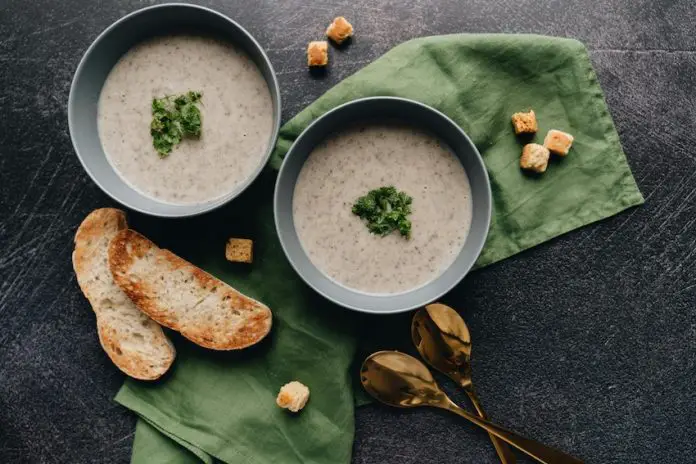
Fight the cold and keep the snow out with a soup that will warm the tastebuds and your insides. (alleksana/Pexels)
The perfect bowl of poblano corn chowder satisfies any chilly fall craving — science meets soul, and “tex” meets “mex”. This tasty soup is designed to deliver warmth, texture, and Tex-Mex magic, especially as winter creeps in.
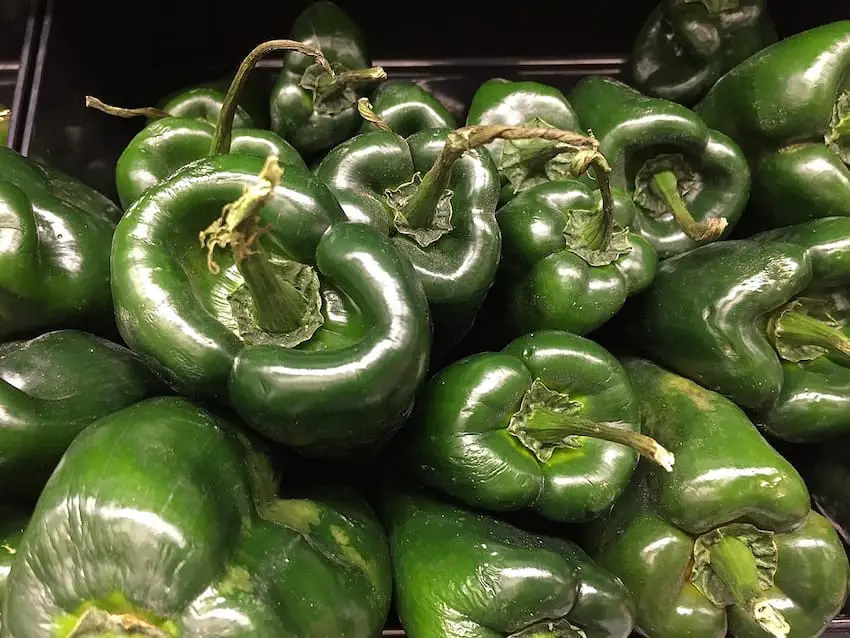
First, let’s talk about the poblano pepper, the star of this dish. Roasting isn’t just for the pyromaniac in you. That charred skin? It’s the Maillard reaction in action, creating layers of smoky, yet sweet flavor. When you peel away the blackened exterior, what’s left is tender, aromatic perfection. It’s like unwrapping a present where you already know you’ll love what’s inside.
The poblano corn chowder is the perfect warm dish for the 2024 Fall season! (Jonathan Cutrer/Wikimedia Commons)
Next, corn. Whether it’s fresh, frozen, or (in a pinch) canned, this is your natural sweetener. Corn brings balance to the smoky poblano and the heat from the jalapeño. And here’s a pro tip: If you’re working with fresh corn, don’t toss those cobs! Simmer them in your broth for an extra hit of flavor — a little culinary hack to maximize every kernel of goodness.
The potatoes act as the backbone of the chowder. Starches released during cooking thicken the soup without needing extra flour or roux. It’s a seamless way to keep things gluten-free and satisfyingly creamy. Speaking of creamy, the heavy cream at the end isn’t just for indulgence; it’s a vital textural element that smooths out the spice and ties everything together.
But the spices — oh, the spices! Cumin, smoked paprika, chili powder:, the essence of Tex-Mex cuisine. They’re what take this chowder from “good” to “where has this been all my life?”
Garnishes are ultra-super-mega important for Tex-Mex food. In this case, tortilla strips and a squeeze of lime add crunch and acidity, and add some shredded cheese, because cheese is awesome. And there you have it, a dish engineered for cold nights, where every element works together like a well-tuned machine.
Poblano corn chowder, step by step
Whether it’s fresh, frozen, or (in a pinch) canned, this is your natural sweetener. (Hari Nandakumar/Unsplash)
Ingredients:
2 tbsp butter or olive oil
1 medium onion, diced
3 garlic cloves, minced
2 poblano peppers, roasted, peeled, and diced
1 jalapeño, minced (optional, for extra heat)
4 cups fresh or frozen corn kernels (about 6 ears of fresh corn)
2 medium potatoes, peeled and diced
4 cups chicken or vegetable broth
1 cup heavy cream (or substitute with coconut milk for a dairy-free option)
1 tsp ground cumin
1 tsp smoked paprika
1/2 tsp chili powder
1/4 tsp cayenne pepper (optional, for heat)
Salt and black pepper, to taste
1 cup shredded cheddar cheese (optional)
1/2 cup chopped cilantro, for garnish
1 lime, cut into wedges
Tortilla strips or crushed tortilla chips, for topping
Poblano Corn Chowder ASMR #food #recipe #shorts
Instructions:
Roast Poblanos:
Place poblano peppers directly over a flame (gas stovetop or grill) or under a broiler, turning frequently, until charred and blistered on all sides.
Transfer to a bowl, cover with plastic wrap or a lid, and let steam for 10 minutes. Peel off the skin, remove seeds, and dice.
Sauté Vegetables:
In a large pot, melt butter over medium heat. Add onions and cook until soft (3-4 minutes).
Stir in garlic, diced poblano, and jalapeño, cooking for another minute.
Add Corn and Potatoes:
Stir in corn and diced potatoes. Add cumin, smoked paprika, chili powder, and cayenne. Cook for 2 minutes, stirring to coat the vegetables in the spices.
Simmer:
Pour in the broth and bring to a boil. Reduce heat to low, cover, and simmer for 15-20 minutes, or until potatoes are tender.
Blend (Optional):
For a creamier texture, use an immersion blender to partially blend the soup, leaving some chunks for texture. Alternatively, transfer a portion of the soup to a blender, blend, and return to the pot.
Finish with Cream:
Stir in heavy cream and simmer gently for 5 minutes. Adjust seasoning with salt and black pepper.
Serve:
Ladle soup into bowls. Top with shredded cheese, cilantro, and tortilla strips. Squeeze a lime wedge over each serving for that Tex-Mex finish.
Let me know what you think in the comments!
Stephen Randall has lived in Mexico since 2018 by way of Kentucky, and before that, Germany. He’s an enthusiastic amateur chef who takes inspiration from many different cuisines, with favorites including Mexican and Mediterranean. He also runs the Recipe Rankers YouTube channel.
The popular norteña band Buyuchek, known for its corridos. (Gabriela Pérez Montiel/Cuartoscuro)
President Claudia Sheinbaum has announced a national contest that seeks to change the tune of one of Mexico’s traditional music genres, which has increased in popularity in recent years: the corrido.
The corrido — a popular song type with a narrative accompanied by distinct instruments — exploded in popularity during the Mexican Revolution at the beginning of the 20th century. Its lyrics detailed the exploits of outlaws, battles lost and won, the lives of revolutionaries, and love and heartbreak.
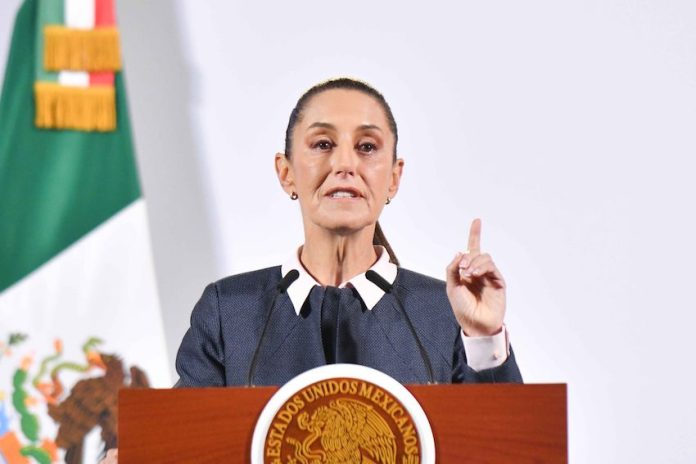
President Claudia Sheinbaum says that banning songs she doesn’t think are good for Mexico is not the answer. She wants to encourage corrido writers to promote higher values, she says. (Mario Jasso/Cuartoscuro)
The corrido genre has come under much criticism from some quarters in Mexico, who say it glorifies crime and criminals. But the songs and the artists known for them are popular in Mexico and increasingly in other Latin American countries.
Sheinbaum’s planned contest seeks to draw groups that sing corridos to explore broader themes and move away from glorifying crime, violence and misogyny. She wants corridos to promote values and culture, instead of violence or crime-related ways of life, she says.
“[Corridos] are not only an apology for violence against women but for violence in general,” Sheinbaum said Monday during her daily morning press conference. “They exalt ways of life linked to crime and cartels as if it were a life option – when they’re really a death option.”
She added that her government doesn’t plan to ban corridos with references to violence and crime. Instead, she seeks to encourage other types of lyrics.
“Banning is not an option. It’s not about that [forbidding],” she said. “It is about promoting another vision.”
Peso Pluma, a singer-songwriter from Guadalajara, sang one of his corridos on “The Tonight Show Starring Jimmy Fallon” in 2023, proving the growing popularity of the genre in and out of Mexico. (@ahoraentiendomx / X)
One of Mexico’s most famous exponents of corridos today is Peso Pluma, who won the Billboard Latin Music Awards’ Artist of the Year in May. Lyrics to his songs have references to drugs, sex and violence. In “Siempre Pendientes,” he goes so far as to praise El Chapo, founder of the Sinaloa cartel.
Sheinbaum said that the contest’s proposal came up during a visit to the northern state of Durango, where she met with Esteban Villegas, the state governor, who is also a banda singer. Banda is another genre of Mexican regional music, representative of Sinaloa and other northern states.
While she didn’t give any further details about the contest, she said they expect to launch it next year.
El Komander - Jacinto y Feliciano (Noche Ranchera En Vivo) Vol.1
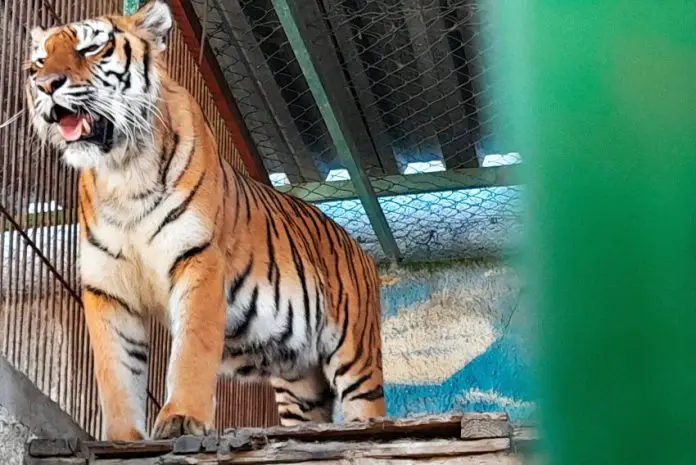
Among the exotic animals found in the México state residence were six Bengal tigers. Profepa. (Profepa)
The Federal Attorney for Environmental Protection (Profepa) announced it is filing a criminal complaint after 36 exotic animals — including eight lion cubs, six Bengal tigers and an American bison — were found at a private residence in the state of México.
According to a press release issued Monday, inspectors from Profepa and the Edomex Attorney General’s Office (FGJEM) went to the site over the weekend to find out if the animals were being kept legally and to review their condition.
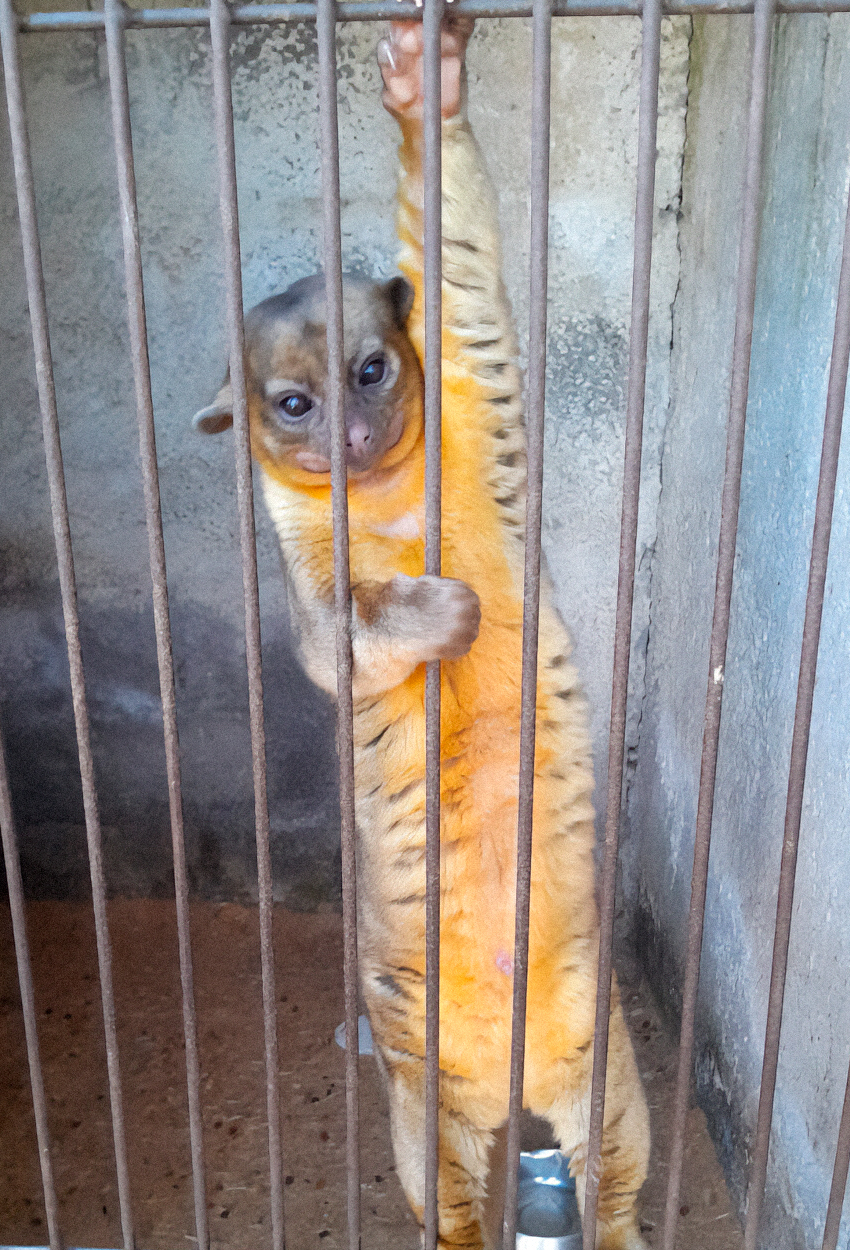
A kinkajou — a tropical rainforest mammal related to raccoons and native to Central and South America — that was found on the property. (Profepa)
The property is located in San Pedro Cholula in the municipality of Ocoyoacac, about 20 kilometers from central Toluca. It is reportedly adjacent to a pallet business.
As of Monday, the animals were at the site under FGJEM custody.
The criminal complaint — based on article 420, section 4 of the Federal Penal Code (CPF) — is for the possession and stockpiling of exotic specimens without documents proving their legal origin.
The animals were found in good health and well-fed, according to Profepa.
Profepa added that “it is important to note that the place allegedly has authorization as an animal sanctuary and refuge. However, the person in charge did not show proof that it is registered to operate as a Wildlife Management Facility or Property (PIMVS) and did not present the document with the corresponding management program.”
The newspaper El Financiero reported that the property owner is “allegedly linked to the Sinaloa Cartel” and that 32 men and eight women — all or some believed to be the animals’ caretakers — were arrested after last week’s initial raid.
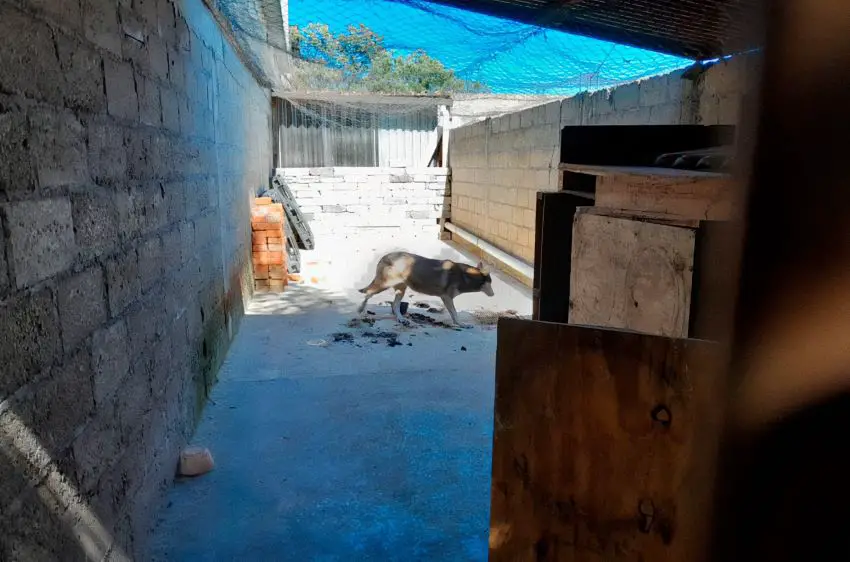
A gray wolf wanders in a walled-off courtyard. Profepa is keeping the animals on the property until their legal status can ve verified. The property owner claims that it is a legal wild animal refuge but has not provided proof. (Profepa)
“The property is allegedly owned by Francisco Torres Palacios, nicknamed ‘El Tigre,’ alleged leader of the criminal organization nicknamed ‘Los Palacios,’ which is aligned with the Sinaloa Cartel,” the paper reported.
According to Profepa, the two-hectare menagerie contained: 17 African lions including eight cubs, six Bengal tigers, four raccoons, two baboons, two jaguars, two pine martens, a coyote, a gray wolf and an American bison. A pine marten is a member of the weasel family.
“The legal representative of the property appointed a worker to continue feeding and caring for the animals while the work of the security authorities and Profepa is carried out,” the agency added.
No details were given on cages or living conditions.
In addition, authorities also found eight taxidermy specimens: two jaguars, two lions, three tigers and a bison.
Some of the animals found are endangered species that have legal protections; Profepa noted the baboons, the African lions, the gray wolf and the Bengal tigers.
El Financiero reported that the initial search of the property also yielded 91,500 pesos (US $4,400), two shotguns (one of them homemade), 368 live cartridges of ammunition, nine fired cartridges, riot gear marked with “Policía,” tactical vests and a computer.
The paper also said Ocoyoacac’s current municipal president, Samuel Verdeja Ruiz, “knew that this place operated and never reported it.”
The Sheinbaum administration appears to be stepping up detentions of unauthorized migrants, amid pressure from U.S. President-elect Donald Trump. (Mario Jasso/Cuartoscuro)
President Claudia Sheinbaum’s first priority at her Tuesday morning press conference was to respond to Donald Trump’s threat to impose a 25% tariff on all Mexican and Canadian exports to the United States on the first day of his second term as U.S. president.
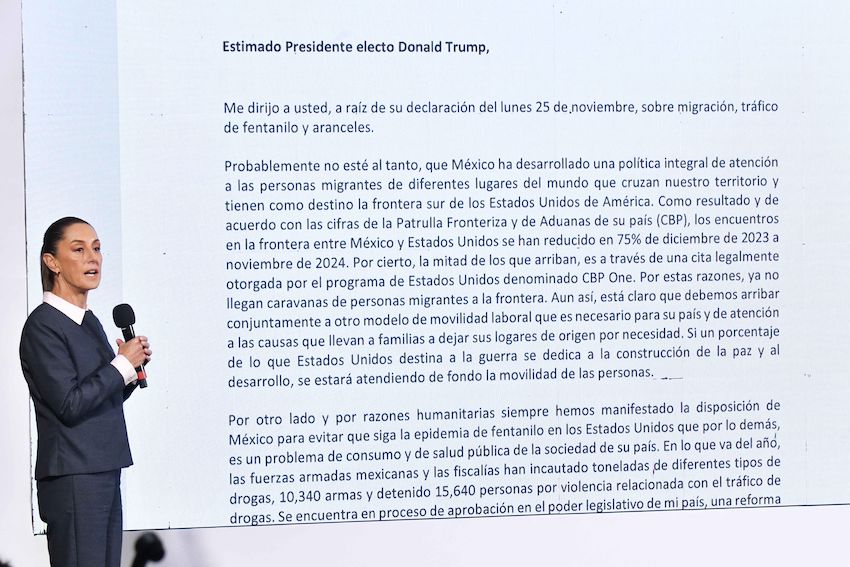
“Before moving on to the issue of health care, I want to share with you, with everyone that’s watching us, a letter that I’m sending today to President-elect Donald Trump,” Sheinbaum said.
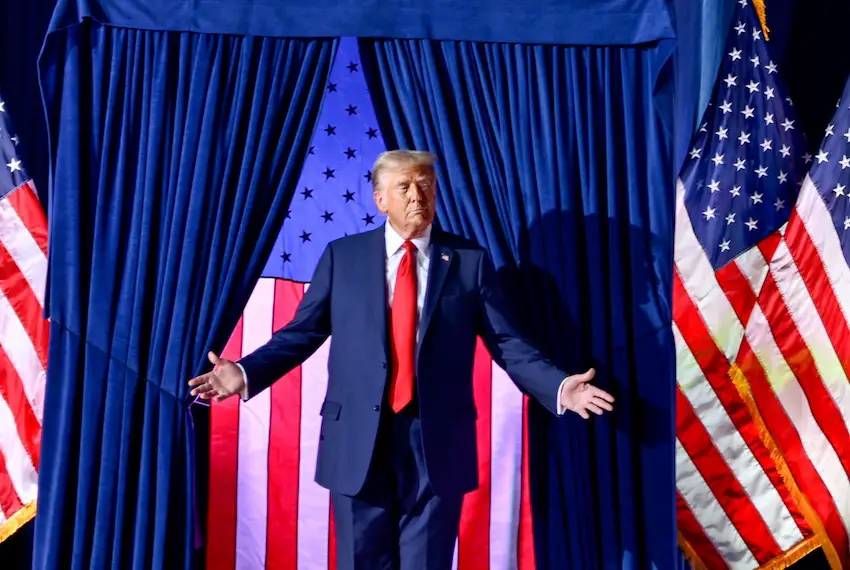
Donald Trump on Monday pledged to impose a 25% tariff on all Mexican and Canadian exports to the United States on the first day of his second term as U.S. president. (Facebook)
The president read out her entire letter, which in its penultimate paragraph said that a U.S. tariff on Mexican exports would be met with a Mexican tariff “in response.”
During her Q&A session with reporters later in her mañanera, Sheinbaum said she believed that Mexico would reach an agreement with the United States to stave off the 25% tariff Trump pledged to impose on Mexican exports to the U.S.
Imposition of tariffs is senseless, Sheinbaum asserts
After a reporter described Sheinbaum’s plan to impose a retaliatory tariff on U.S. exports to Mexico as “potent,” the president expressed confidence that Mexico and the United States would reach an agreement to avert the 25% duty promised by Trump — as occurred during the first Trump administration.
“I have a vision that there will be an agreement with the United States and with President Trump,” she said.
“What we want to say in the letter, and what we’re going to demonstrate tomorrow in more detail, is that raising tariffs on Mexico — which would also mean raising tariffs on this side [of the border] — would lead to … hurting companies that work in Mexico and the United States,” Sheinbaum said.
“And there are United States companies that have been in Mexico for decades,” she said.
“… What we’re saying today is what is the sense of having tariff upon tariff upon tariff when in the end that will lead us to a loss of competitiveness in North America,” Sheinbaum said.
At her regular daily press conference, Sheinbaum shared a letter responding to Donald Trump’s threat. (Mario Jasso/Cuartoscuro)
The president also said that the Mexican government would provide “information” to the United States about the “very significant” efforts it has made to stem the flow of both migrants and narcotics across the Mexico-U.S. border.
A letter for Trudeau, too
Sheinbaum told reporters that she would also send a letter on Tuesday to Canadian Prime Minister Justin Trudeau, who said last week that Canada “may have to look at other options” beyond the trilateral USMCA free trade pact because of the “decisions and choices that Mexico has made” with regard to Chinese investment.
Canada’s outlay on Chinese EVs in 2023 — before the Canadian government imposed a 100% tariff on those vehicles — showed “exponential growth,” Sheinbaum said.
Referring again to the content of her letter to Trudeau, Sheinbaum said that Chinese investment in Mexico’s auto sector is much lower than United States and Canadian investment in the same sector.
Between 2006 and 2024, U.S. and Canadian companies invested more than $33.35 billion in Mexico’s auto sector whereas Chinese investment totaled just $590 million, she said.
Sheinbaum asserted that the data on Canada’s importation of Chinese EVs in 2023 and the comparatively low levels of Chinese investment in Mexico’s auto sector is not widely known.
She said that “of course” Mexico has a relationship with China, but stressed that it favors trade with countries with which it has a free trade agreement, such as the U.S. and Canada.
Sheinbaum said last Friday that her government is aiming to reduce reliance on Chinese goods via an import substitution plan.
By Mexico News Daily chief staff writer Peter Davies (peter.davies@mexiconewsdaily.com)