Home Blog Page 398

Mexico’s governors sign Sheinbaum pact to improve water use by industry

0
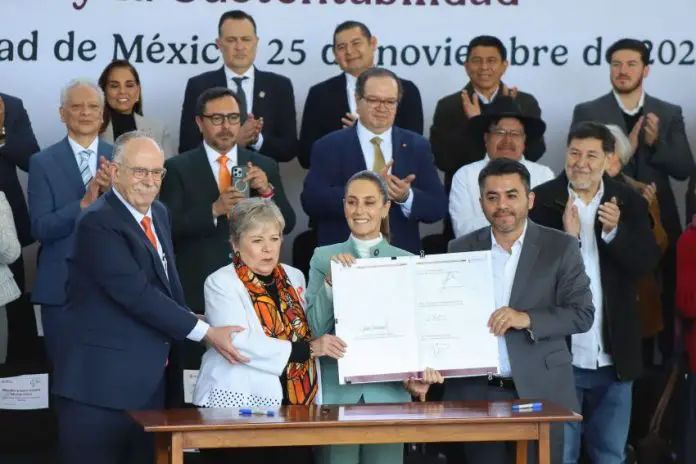
Mexico's President Claudia Sheinbaum and Environment Minister Alicia Bárcena with several of Mexico's governors at the signing of a water-use pact with the federal government. Most of the governors are applauding
The water-use pact was signed by all of Mexico's 32 governors. (Daniel Augusto/Cuartoscuro)

President Claudia Sheinbaum and Mexico’s 32 governors signed a National Human Right to Water Agreement on Monday, a pact that aims to ensure equal access to water for Mexico’s public while also increasing agricultural and industrial efficiency and sustainability.

The private sector joined as a voluntary participant, committing to cede contractual rights to at least 126 million cubic meters of water and promising to invest 21 billion pesos (more than US $1 billion) in infrastructure and technology improvements.
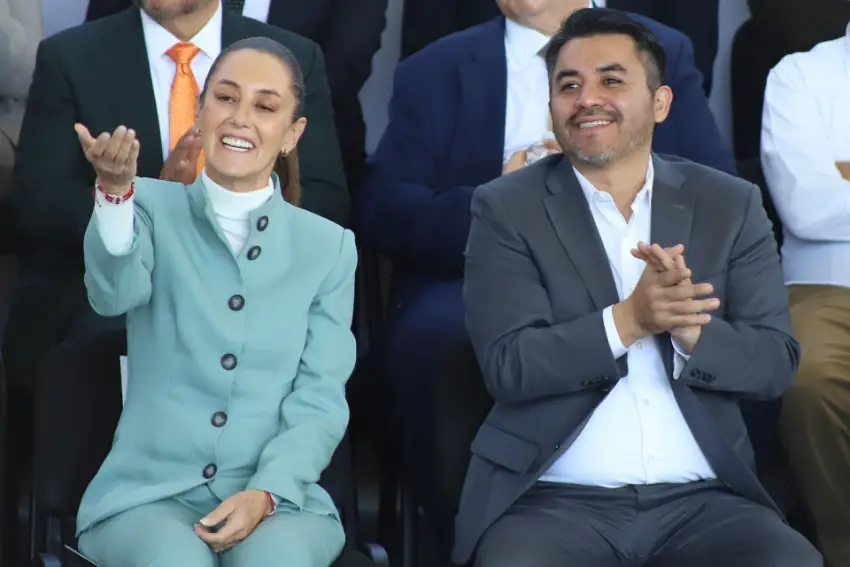
President Claudia Sheinbaum sitting with National Water Commission director Efraín Morales. Sheinbaum is holding her hand up, palm upward, in a gesture at someone off camera. Morales is clapping and also looking at someone off camera.
President Claudia Sheinbaum with National Water Commission director Efraín Morales, creators of Mexico’s recently unveiled National Water Plan, of which this pact with Mexico’s governors was born. (Daniel Augusto/Cuartoscuro)

Federal water districts and irrigation sectors have also agreed to cede control over 2.8 billion cubic meters of water.

During the signing ceremony, Efraín Morales, director of Mexico’s National Water Commission (Conagua), said the accord seeks to “move past the mercantilist vision of water and recognize it as a human right and a strategic asset.”

President Sheinbaum and other speakers at the event emphasized the need to recognize the intrinsic link between social equality, economic growth and the environment.

“We must no longer view water as a commodity. It is a right,” Sheinbaum said, according to Radio Fórmula. “Every Mexican should have access to adequate water … We must guarantee sufficient water for food production, for social and industrial development … and institute a plan that provides sustainability and equitable development for the long term.” 

The agreement is derived from the government’s National Water Plan 2024–2030 — presented by Sheinbaum at her press conference last Thursday, a federal initiative to reassess hundreds of thousands of Mexico’s water concessions, clean up some of Mexico’s most polluted rivers, improve agricultural irrigation technology available to the nation’s farmers, and build water infrastructure projects – including a desalination plant in Baja California and flood mitigation projects in Mexico’s flood-prone southeast.

The historic accord signed Monday by Mexico’s governors recognizes access to water as a human right, declares water a national asset and outlines benchmarks for sustainability, as well as reclamation and purification.
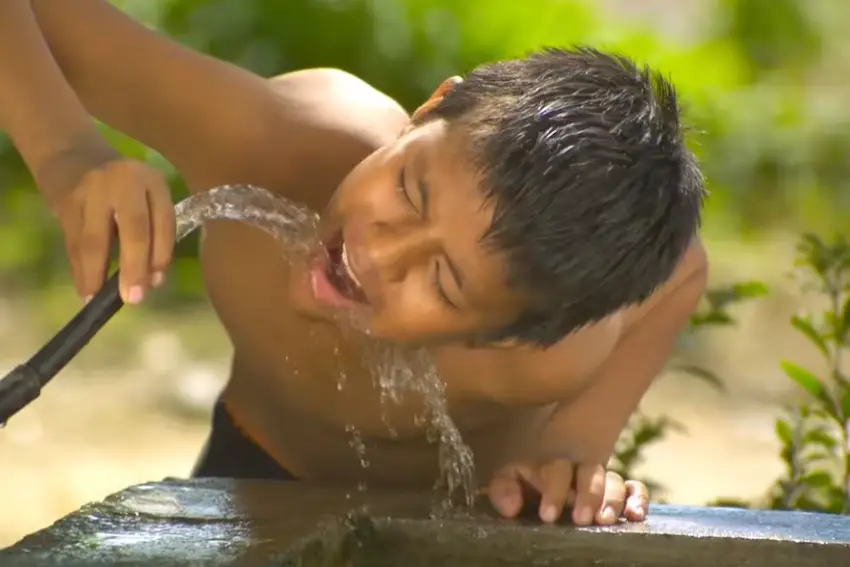
A boy happily drinking water directly from a coursing water hose
Sheinbaum’s government is trying to address a water scarcity problem in many parts of Mexico that has persisted for years. The president says that Mexico needs to see water not as a commodity but as a basic human right for its citizens. (Government of Mexico)

“This agreement is just the beginning of a permanent effort to ensure Mexico has a sustainable and equitable future with regard to water,” Morales said, according to the magazine Fortuna.

The pact includes plans to reinforce the nation’s hydraulic infrastructure, sets standards for water treatment plants, conserves and protects wetlands, establishes river cleanup projects and promotes reforestation and forest conservation endeavors. 

Mexico’s water crisis

Last year, Conagua’s Drought Monitor indicated that more than 80% of Mexico’s territory is facing a water crisis, one that, according to the newspaper La Jornada, affects more than 35 million people. 

Last year, Mexico City’s water supplies were so low that the global press was talking about a “Day Zero” when the metropolis would run out of water.

The drought is threatening 104 of the nation’s 757 drainage basins. In addition, of Mexico’s 653 aquifers, 114 are overexploited, according to Conagua. Plus, two-thirds of sites that Conagua monitors were classified as contaminated or heavily contaminated last year.

“It is past time that we manage water more efficiently, that we incentivize treatment and re-use,” Environment Minister Alicia Bárcena told La Jornada. “The willingness to participate voluntarily is a great sign, and it should result in more productive agricultural and industrial sectors while also ensuring a more equitable distribution.”

In addition to the give-back from the private sector, Sheinbaum said water contracts for industrial use would also be restricted and even restructured, the news outlet Infobae reported. Going forward, concessions would strictly prohibit alternate uses of water that do not benefit the public.

With reports from Fortuna, Radio Fórmula, Infobae and La Jornada
HR Ratings changes Mexico’s rating from stable to negative

1
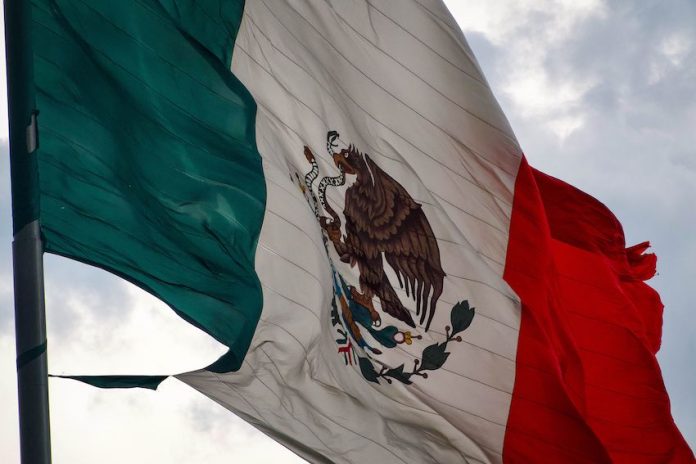
A close-up of a tattered Mexico flag waving in the sky
Economic contraction at the end of 2024 puts Mexico on the verge of recession, according to Banco Base's lead economic analyst. (Cuartoscuro)

HR Ratings has become the second agency to downgrade Mexico’s economic outlook in November. The Mexican ratings agency changed its outlook for Mexico’s sovereign rating from stable to negative on Monday. 

 “The change in the outlook from stable to negative is the result of the deterioration in our estimates of economic growth in 2024 and 2025 for Mexico, as well as our expectation of a slower reduction in the fiscal deficit for 2025, compared to that estimated by the Finance Ministry, which could put pressure on net debt as a proportion of Gross Domestic Product (GDP),” said HR Ratings in a press release. 

An HR Ratings sign
The ratings agency’s predicted economic outlook is for Mexico is now 1.4% growth to GDP in 2024 and 1.1% growth in 2025, both significantly lower than Mexico’s own predictions of 2.1% and 2.3%, respectively. (HR Ratings)

The rating agency expects economic growth in Mexico of 1.4% in 2024 and 1.1% in 2025, lower than the Finance Ministry’s forecast of 2.1% and 2.3%, respectively.

 HR cited the industrial sector’s negative performance over the last year as a reason for the downgrade, “especially due to the lower dynamism of the construction sector, in addition to a slowdown in the manufacturing sector and lower external demand.” 

Although Mexico aims to reduce its fiscal deficit in 2025, it is difficult to maintain low capital expenditure in the long term without negative consequences for economic performance, said HR. The agency also stressed the potentially negative impact that the coming change in U.S. political leadership could have on Mexico’s trade. 

President-elect Donald Trump will take office in the United States in January 2025.

The New York-based credit rating agency Moody’s Ratings recently downgraded its Mexico outlook from stable to negative but maintained the country’s long-term ratings at the second lowest investment grade level. It said the decision was “driven by our view of a weakening in the policymaking and institutional settings that risks undermining fiscal and economic outcomes.”

Mexico’s Finance Ministry: growth outlook ‘positive’

The Finance Ministry responded to HR’s downgrade in a press release

“The growth outlook for Mexico is positive, given that supply shocks have started to decrease, and industrial production has shown greater dynamism during the second half of the year,” it stated. 

 “Our growth forecast, presented in the Economic Package for 2025, remains between 2% and 3%, supported by the strength of domestic demand, the support of social programs and investment in strategic sectors,” the ministry added. 

It also said that the U.S. continues to be Mexico’s main trading partner and highlighted the importance of the USMCA free trade agreement. 

“Mexico has the necessary fiscal buffers to mitigate possible adverse scenarios in the global environment,” the ministry stressed. 

Eight rating agencies that evaluate Mexico’s debt have maintained Mexico’s sovereign debt rating in 2024, the press release stated, which is “a reflection of the confidence in the country’s macroeconomic stability.”

With reports from Expansion, Forbes and El Universal

John Deere confirms US $55M investment in Mexico plant despite Trump’s threats

0
John Deere sign
The new facility will be John Deere's first plant in the country dedicated exclusively to manufacturing equipment for the construction sector. (Shutterstock)

Tractor and farm equipment manufacturer John Deere has confirmed its plans to build a manufacturing plant in Mexico, defying previous threats by United States president-elect Donald Trump to punish the company with tariffs if it moves some of its production south of the border.

In September, the Illinois-based company announced plans to shift some of its production from factories in Iowa and Illinois to Mexico by the end of 2026. Following the announcement, Trump said he would impose 200% tariffs on equipment sold in the U.S. that was made in Mexico.

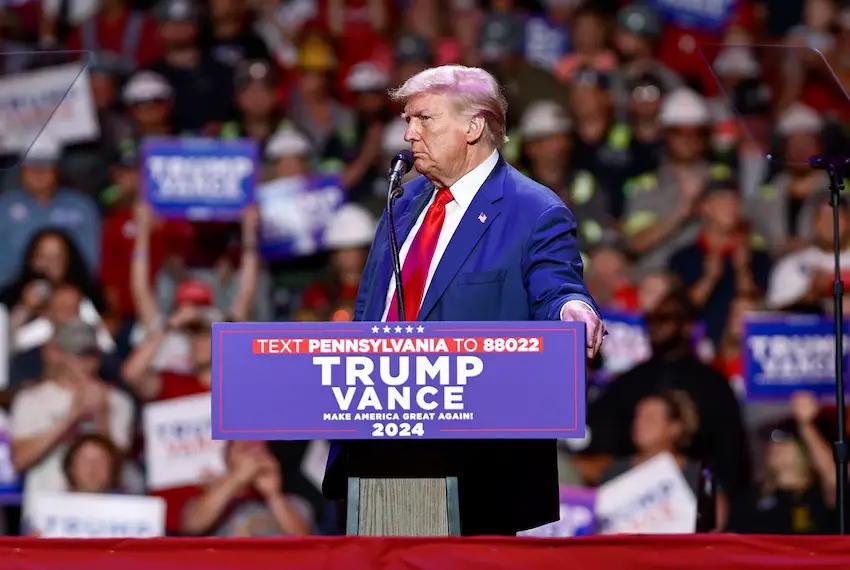
Trump made the comments while meeting with farmers at a campaign event in Smithton, Pennsylvania.
Trump said in September that he would impose 200% tariffs on John Deere equipment made in Mexico. (Donald J. Trump/Facebook)

With a planned investment of US $55 million, John Deere plans to move ahead “regardless” of political changes, said Gecimar Morini, company manager for Mexico, Central America and the Caribbean, in a statement.

The new plant will initially manufacture mini track loaders and mini wheel loaders targeted at the national market, and will be John Deere’s first facility in the country dedicated exclusively to manufacturing equipment for the construction sector.

“Our focus is on developing the company in the agricultural, construction, and, mainly, infrastructure sectors,” Morini emphasized.  

John Deere’s investment announcement comes one day after Trump reiterated his intentions to slap high tariffs on Mexican exports, this time extending the threat to Canada, as well. 

Local media reports that the new plant will be located in the northern state of Nuevo León, where John Deere has its own dedicated export lane in the Laredo-Colombia International Bridge. The company currently has production plants in Ramos Arizpe, Saltillo and Torreón, Coahuila, as well as in Monterrey, Nuevo León.  

The manufacturing center is scheduled to start operations in 2026. 

Why is John Deere relocating production to Mexico?

According to data compiled by John Deere, Mexico is the second largest consumer of its construction equipment in Latin America, with a growth of 76% since 2022. 

“We see Mexico as an attractive market, which is why we are investing in the expansion of our dealers and growth in new territories,” Morini said.

Furthermore, Morini said the compact equipment segment is still developing in Latin America, with an estimated market size of 4,000 units, he added. In contrast, more established markets like the U.S. see approximately 100,000 units sold. 

With reports from Expansión, Cluster Industrial and The Wall Street Journal

Trump tariff threat sends peso tumbling

4
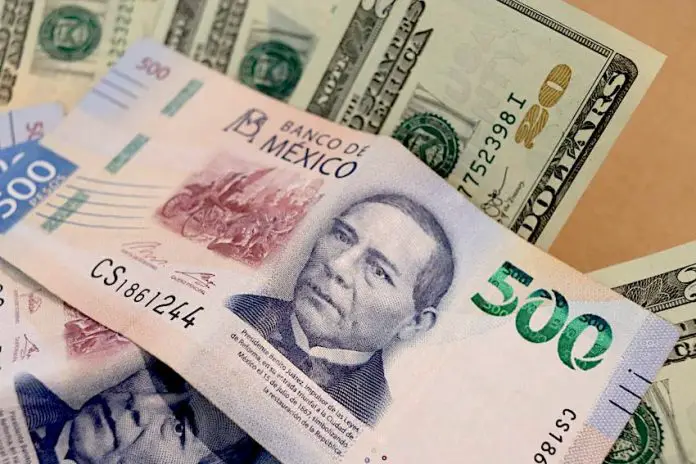
The peso recovered somewhat in early trading on Tuesday, but at 11:45 a.m. Mexico City time, it was trading at 20.81 to the dollar.
The peso closed at 20.57 to the US dollar on Friday. (María Ruiz)

The Mexican peso depreciated sharply against the US dollar on Monday and continued to weaken on Tuesday after Donald Trump pledged to impose a 25% tariff on all Mexican and Canadian exports to the United States on the first day of his second term as U.S. president.

The Bank of Mexico’s official USD:MXN exchange rate at the close of markets on Monday was 20.28.

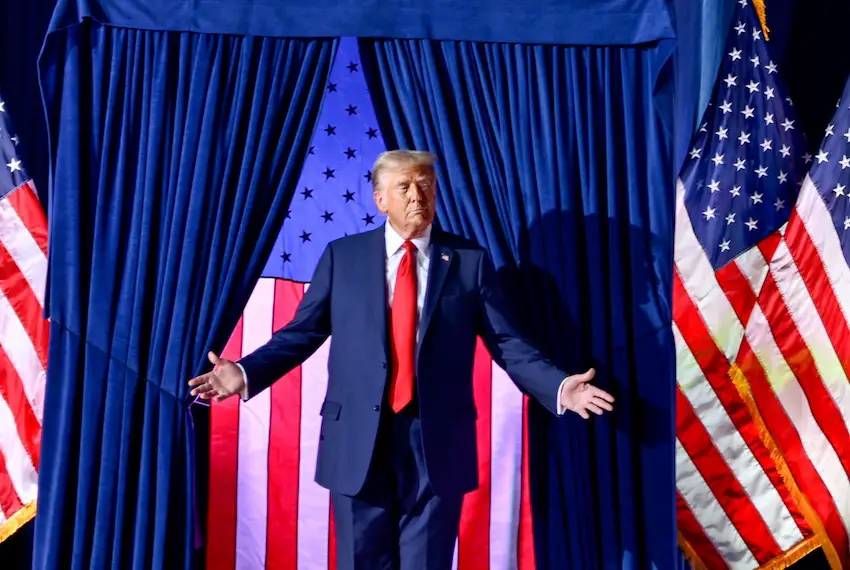
Donald Trump
Donald Trump on Monday pledged to impose a 25% tariff on all Mexican and Canadian exports to the United States on the first day of his second term as U.S. president. (Facebook)

However, the peso depreciated to 20.71 to the greenback shortly after Trump outlined his tariff plan on his social media site Truth Social on Monday evening.

The slide to 20.71 represented a 2.1% depreciation for the peso compared to the Bank of Mexico’s end-of-day rate.

The peso recovered somewhat in early trading on Tuesday, but at 11:45 a.m. Mexico City time, it was trading at 20.81 to the dollar.

Gabriela Siller, director of economic analysis at Mexico’s Banco Base, said on X shortly after 10:30 a.m. that the Mexican peso was the currency that had depreciated the most against the US dollar on Tuesday.

She also noted that the Canadian dollar had depreciated to its weakest position against the US dollar since April 2020, when the COVID-19 pandemic was in its early stages.

On Monday, Siller said that the Mexican economy will go into recession if Trump keeps his word and imposes a 25% tariff on Mexican exports to the United States. She said Tuesday that if the incoming U.S. president’s tariff threat “materializes,” foreign companies will “gradually” leave Mexico.

Supported by strong inflows of remittances and foreign investment as well as the substantial difference between the Bank of Mexico’s key interest rate and that of the United States Federal Reserve, the peso performed extremely well against the US dollar in 2023 and hit an almost nine-year high of 16.30 to the greenback in April.

However, it depreciated significantly after the comprehensive victories of Claudia Sheinbaum and the ruling Morena party in the presidential and congressional elections on June 2.

The federal government’s judicial reform – passed by Congress in September – has weighed on the peso, as have a range of other factors including previous tariff threats made by Trump and the incoming U.S. president’s cabinet picks.

Mexico News Daily 

Trade tensions rise: Sheinbaum ready to match Trump’s 25% tariffs

28
Donald Trump
Donald Trump on Monday pledged to impose a 25% tariff on all Mexican and Canadian exports to the United States on the first day of his second term as U.S. president. (Facebook)

Donald Trump on Monday pledged to impose a 25% tariff on all Mexican and Canadian exports to the United States on the first day of his second term as U.S. president, a move that President Claudia Sheinbaum said would be met with a reciprocal tariff on U.S. exports to Mexico.

Trump outlined his plan on his social media site Truth Social exactly three weeks after he made a similar promise on the eve of the United States presidential election.

“As everyone is aware, thousands of people are pouring through Mexico and Canada, bringing Crime and Drugs at levels never seen before,” he wrote on Truth Social on Monday evening.

“Right now a Caravan coming from Mexico, composed of thousands of people, seems to be unstoppable in its quest to come through our currently Open Border. On January 20th, as one of my many first Executive Orders, I will sign all necessary documents to charge Mexico and Canada a 25% Tariff on ALL products coming into the United States, and its ridiculous Open Borders,” Trump wrote.

The president-elect said that the tariff would remain in effect “until such time as Drugs, in particular Fentanyl, and all Illegal Aliens stop this Invasion of our Country!”

“Both Mexico and Canada have the absolute right and power to easily solve this long simmering problem. We hereby demand that they use this power, and until such time that they do, it is time for them to pay a very big price!” Trump said.

In a separate Truth Social post, the former president said that his administration would impose an additional 10% tariff “above any additional Tariffs” on Chinese imports until the Chinese government stops the flow of fentanyl and other drugs to the United States “mostly through Mexico.”

Imposing tariffs on Mexican and Canadian exports to the United States would violate the terms of the USMCA, but Trump — at least in his rhetoric — appears to have no qualms about breaching the free trade pact he signed during his first term as U.S. president.

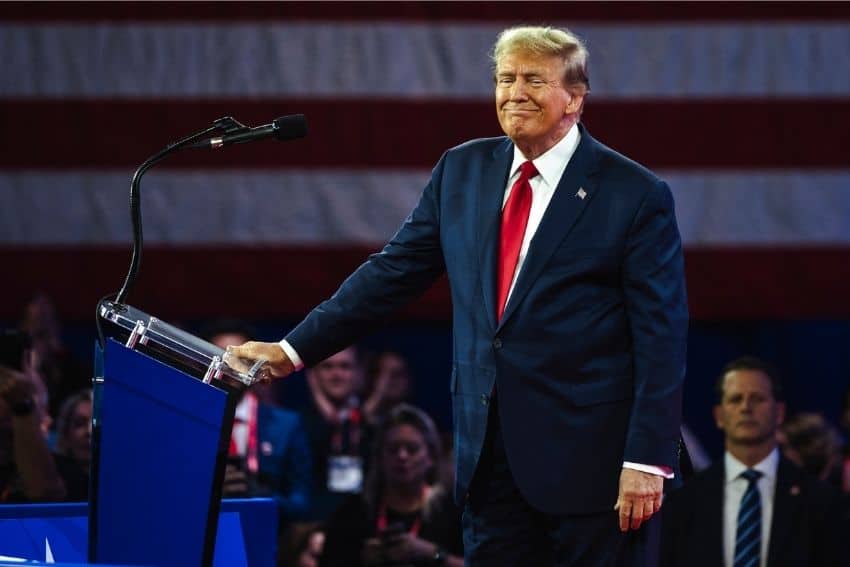
Donald Trump standing sideways next to a podium on a stage in a stadium. In the background is a crowd of spectators and behind them a giant US flag that's not visible in full in the photo due to its size
President-elect Donald Trump appears to have no qualms about breaching the free trade pact he signed during his first term as U.S. president by implementing high tariffs on Mexico and Canada. (File photo/Jonah Elkowitz for Shutterstock)

The president-elect’s pledge to impose a 25% tariff on the United States’ biggest trade partners on his first day in office is a bold but unsurprising move. Whether he actually keeps his word is far from certain, considering his past conduct.

While president in 2019, Trump threatened to impose a 5% tariff on all goods from Mexico if the Mexican government didn’t do more to stem migration to the United States. The two countries subsequently reached a deal that averted the blanket tariffs and resulted in Mexico deploying federal security force members to both its southern and northern border.

At a 2022 rally in Ohio for then U.S. Senate hopeful and now vice president-elect J.D. Vance, Trump boasted that he succeeded in getting Mexico to act in the United States’ interests.

His latest tariff pledge, or threat, could be a similar ploy to pressure Mexico to crack down even further on the flow of migrants and drugs to the U.S. If the Mexican government were to deploy additional human and monetary resources to stem those flows, Trump could claim again that he succeeded in getting Mexico to do what he wanted.

Sheinbaum: ‘To one tariff, another will come in response’

On Tuesday morning, Sheinbaum gave no indication that Mexico would “fold,” as Trump claimed was the case in 2019.

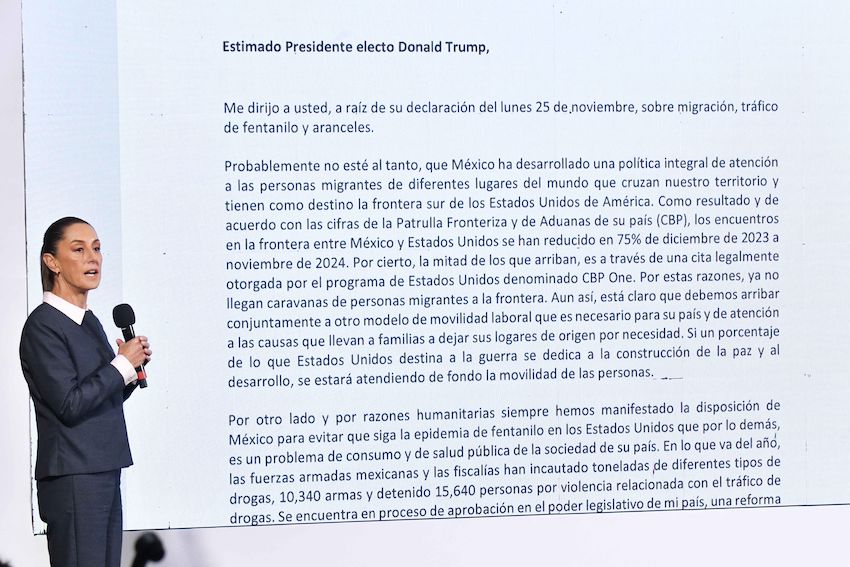
At her regular daily press conference, the president told reporters she would send a letter to the president-elect “today.”

At her regular daily press conference, Sheinbaum shared a letter responding to Donald Trump's threat.
At her regular daily press conference, Sheinbaum shared a letter responding to Donald Trump’s 25% tariff threat.
(Mario Jasso/Cuartoscuro)

Sheinbaum read out the entire letter, which in its penultimate paragraph said that a U.S. tariff on Mexican exports would be met with another tariff “in response.”

In her letter, the president also:

  • Told Trump that Mexico has developed a “comprehensive policy” to attend to migrants who “cross our territory” en route to the United States. She told the president-elect that he “probably” isn’t aware of the efforts Mexico has made to stem migration to the U.S.
  • Highlighted that “encounters” between United States authorities and migrants on the Mexico-U.S. border declined 75% between December 2023 and November 2024.
  • Told Trump that Mexico and the United States need to jointly develop “another model of labor mobility” that responds to the U.S. need for workers and provides “attention to the causes that lead families to leave their places of origin.”
  • Told Trump that if the United States allocated “a percentage” of what it spends on “war” to “the construction of peace and to development,” it would be able to substantially reduce migration.
  • Pointed out that Mexican authorities have seized tonnes of drugs so far this year, confiscated more than 10,000 weapons and arrested over 15,000 people “for violence related to drug trafficking.”
  • Highlighted that 70% of “illegal weapons” seized in Mexico come from the United States.

“We don’t produce the weapons, we don’t consume the synthetic drugs,” Sheinbaum wrote in her letter to Trump.

“The deaths due to crime that responds to the demand for drugs in your country, unfortunately, we are the ones who … [suffer] them,” she told the president-elect.

Sheinbaum told Trump that neither the migratory phenomenon nor drug use in the United States will be effectively dealt with through threats and tariffs.

“Cooperation and reciprocal understanding of these great challenges is needed. To one tariff another will come in response and that’s the way it will be until we place common companies at risk. Yes, common ones. For example, among the main exporters from Mexico to the United States are General Motors, Stellantis and Ford Motor Company, which arrived in Mexico 80 years ago,” she wrote.

"The deaths due to crime that responds to the demand for drugs in your country, unfortunately, we are the ones who ... [suffer] them," Sheinbaum told the president-elect.
“The deaths due to crime that responds to the demand for drugs in your country, unfortunately, we are the ones who … [suffer] them,” Sheinbaum told the U.S. president-elect. (Mario Jasso/Cuartoscuro)
“Why impose a tax that places them at risk? It’s not acceptable and would cause inflation and job losses in the United States and Mexico,” Sheinbaum continued.

“I’m convinced that the economic strength of North America lies in maintaining our trade partnership. In that way, we can continue being more competitive against other economic blocs. I believe that dialogue is the best path for understanding, peace and prosperity in our nations. I hope that our teams can meet soon,” the president’s letter concluded.

The broader response to Trump’s latest tariff threat 

Gerardo Fernández Noroña, president of the Senate: 

What tariffs should we put on … [U.S.] goods until they stop using drugs and illegally exporting weapons to our country?”

Ricardo Monreal, the ruling Morena party’s leader in the Chamber of Deputies: 

The imposition of a possible tariff on Mexican products goes against the USMCA and doesn’t resolve the common problems on the border between Mexico and the United States. We urge [the incoming Trump administration] to use the bilateral institutional mechanisms to combat the trafficking of people, drugs and weapons.”

“… This measure would cause severe damage to the economy and population of North America.”

Chrystia Freeland, deputy prime minister of Canada, and Dominic LeBlanc, Canadian minister of public safety: 

Canada and the United States have one of the strongest and closest relationships — particularly when it comes to trade and border security. Canada places the highest priority on border security and the integrity of our shared border.”

Diego Marroquín Bitar, North America scholar at the Wilson Center think tank: 

Unilateral tariffs imposed by the U.S. on Mexico and Canada “would shatter confidence in USMCA and harm all three economies.”

The New York Times: 

The tariffs would … have serious implications for American industries, including auto manufacturers, farmers and food packagers, which busily ship parts, materials and finished goods across U.S. borders.”

By Mexico News Daily chief staff writer Peter Davies (peter.davies@mexiconewsdaily.com)

A feast for the senses in the markets of San Miguel de Allende

1
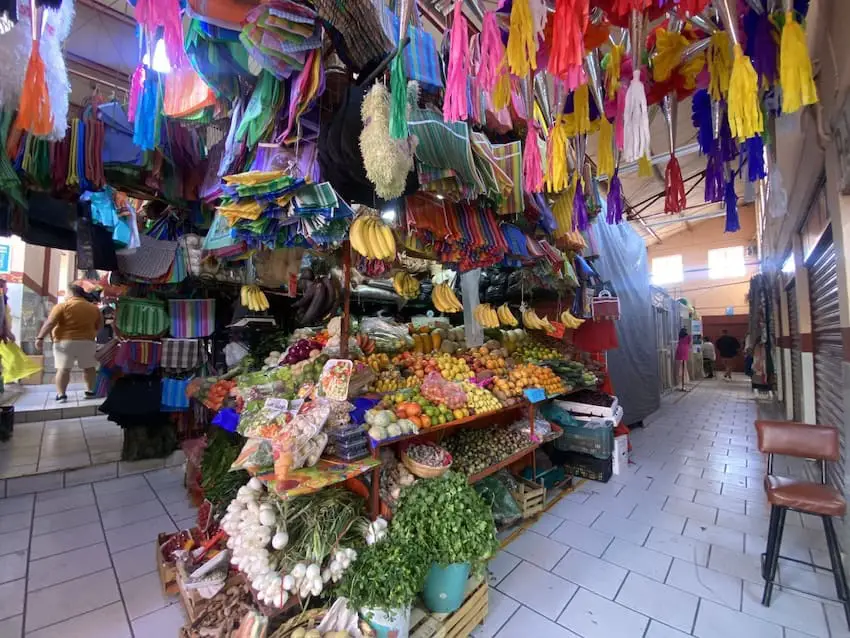
Mercado Ignacio Ramírez
San Miguel de Allende's Mercado Ignacio Ramírez offers visitors the chance to engage with the best of Guanajuato - from art to food. (All photos by Sandra Gancz Kahan)

No trip to San Miguel de Allende is complete without exploring the Mercado Ignacio Ramírez and the Mercado de Artesanías, bustling hubs of tradition, craftsmanship and community. Just a short walk from the city’s central square, this bustling marketplace offers a quintessentially Mexican experience.

Whether you’re a foodie, an art lover or simply looking to soak up the local vibe, these two markets offer a fascinating shopping experience and an exciting peek into the city’s soul. Locals gather for groceries, friendly conversations and shared meals, while visitors are warmly welcomed.

A kaleidoscope of colors and flavors

Mercado Ignacio Ramírez
The Mercado Ignacio Ramírez offers food and local produce to hungry visitors.

Get ready for a sensory fiesta as you step into these vibrant markets. The air buzzes with energy as vendors showcase their offerings. Stalls are tightly packed and overflowing with a mesmerizing array of goods. Spanning three city blocks and housed under the same roof, these two markets promise a long and amusing stroll: wear comfy shoes!

At the Mercado Ignacio Ramírez, the spotlight is on food, including fresh produce, affordable meals, vibrant flowers and medicinal herbs. Visitors settle onto high stools at the bars of food stalls to enjoy irresistible goodies, from tacos and tortas to fruit juices and ice cream. Every bite here is a taste of tradition served with friendliness.

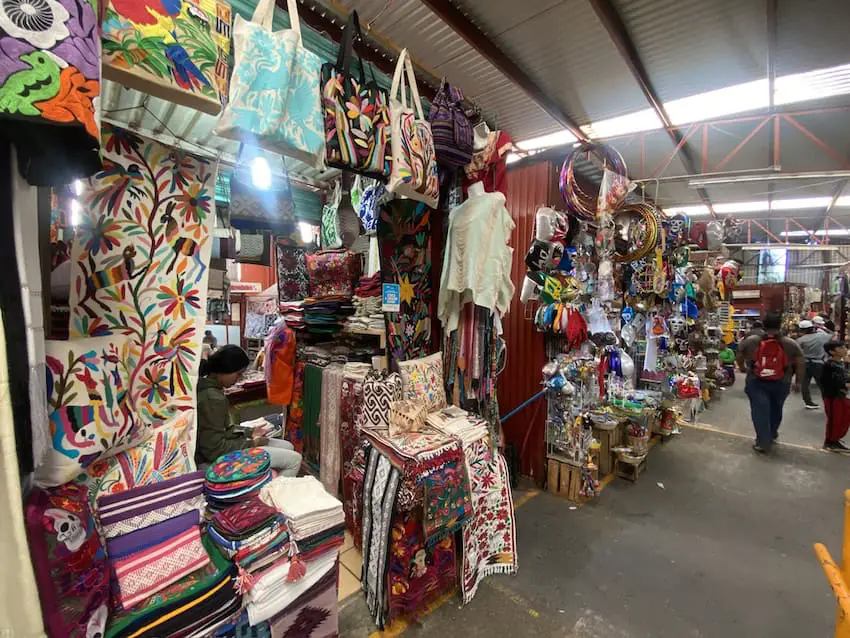
The Mercado de Artesanías (Crafts Market) is a showcase of local artistry, offering beautifully embroidered textiles that range from clothing to tablecloths, alongside an impressive variety of decorative items crafted from papier-mache, tin and clay. You’ll also discover finely made kitchen tools, including authentic molcajetes, Talavera ceramics and colorful glassware. The market is brimming with treasures, from exquisite jewelry to decorative tiles, mirrors, pewterware, leather goods, wool products, shoes, toys and so much more!

Proud longtime vendors

Mercado de Artesanías
Indigenous craft workers sell their products at the Mercado de Artesanías.

Many vendors at the Mercado Ignacio Ramírez have deep roots in the market’s history, with their stalls passed down through generations. When I asked a few vendors how long they’d been there, most of them replied: Forever! For many, the market has been their home and family’s livelihood since childhood. One vendor fondly recalled how her grandmother’s stall, selling the same types of snacks, was originally located in the nearby Plaza Cívica. The move to the current indoor market, she explained, happened when “El Caballito” was installed.

The ‘little horse’ she mentioned is actually a towering statue of Ignacio Allende on horseback, honoring the San Miguel-born hero of Mexico’s fight for independence. The nearby plaza, where the statue now stands, was once the market’s original venue and heart of the town, before the Jardín Principal became the central gathering place.

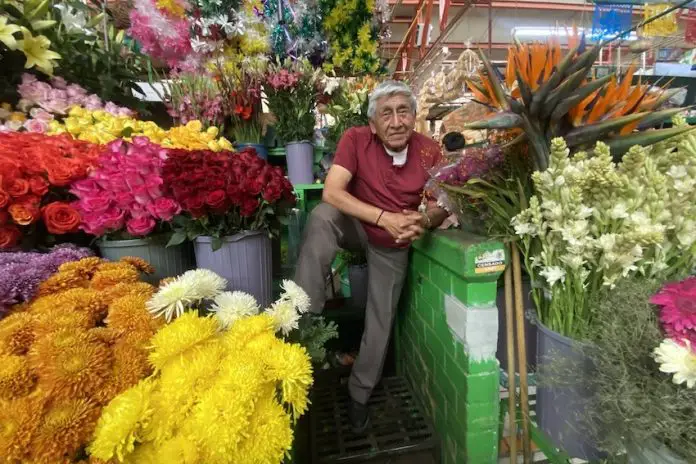
At an impressive flower stall, I met Emiliano, the welcoming vendor behind Florería Mary. He proudly continues a family tradition, running the stall that once belonged to his mother. Florería Mary’s vibrant selection includes stunning bird of paradise flowers for just 20 pesos each and radiant roses for 10 pesos, offering both beauty and great value. Emiliano’s charming demeanor, combined with his dedication to preserving his family’s legacy, has made his stall a beloved spot in the market.

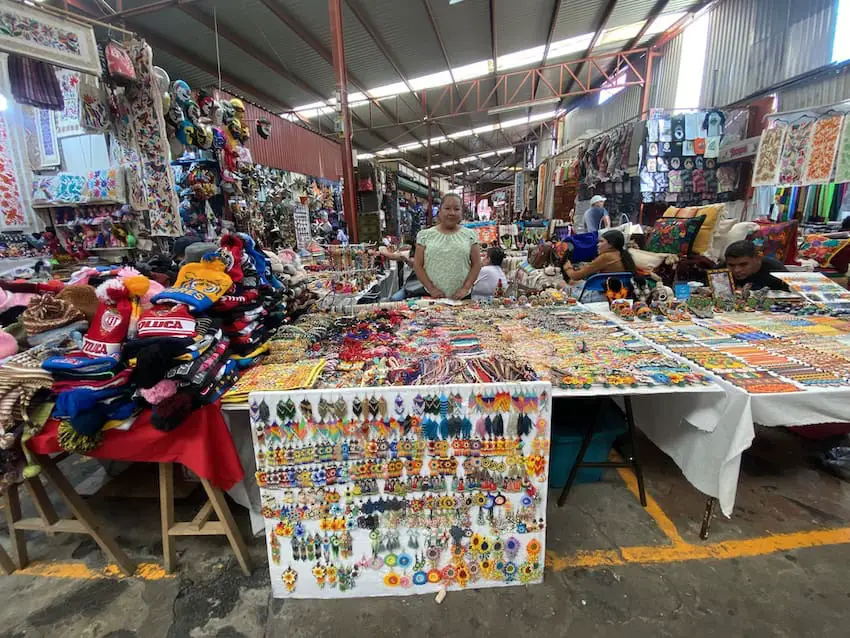
Aida Mendoza greeted me warmly at her stall, where she crafts my favorite earrings using tiny, intricately threaded beads. Her jewelry is unique in its technique, which she explains differs from the Wixárika (Huichol) art sold at the neighboring stand. While other Wixárika artisans glue tiny beads onto sculptures, Aida threads them with string to create wearable art. Originally from San Pablito Pahuaclán in the mountains of Puebla, Aida moved to San Miguel and set up her stand five years ago. She speaks softly, feeling self-conscious about her Spanish, which is her second language. Despite this challenge, she has built a thriving business that supports her family. Her children, born in San Miguel de Allende, attend school in Spanish, while Aida and her husband proudly teach them Hñähñu (Otomí) at home to preserve their heritage.

Mercado Ignacio Ramírez
Vendor Aida Mendoza displays her wares. She works at the market to support her family and preserve her Otomí culture.

The Mercado Ignacio Ramírez and Mercado de Artesanías offer endless inspiration. A visit here is as much about enjoying the moment as it is about purchasing something truly special.

Tips for visiting

  • Forgot your shopping bag? Don’t worry, sturdy grocery bags are inexpensive and abundantly available.
  • Bring cash: Few vendors accept credit cards.
  • How to get there: The four entrances are located on the streets of Colegio, Relox, Hidalgo, and Loreto, but you can simply ask any taxi driver or local and they’ll point you in the right direction.
  • Opening hours: Every day from 7 a.m. to 7 p.m.

Sandra Gancz Kahan is a Mexican writer and translator based in San Miguel de Allende who specializes in mental health and humanitarian aid. She believes in the power of language to foster compassion and understanding across cultures. She can be reached at: sandragancz@gmail.com

Guadalajara hotel area leads the country in convention and business tourism

0
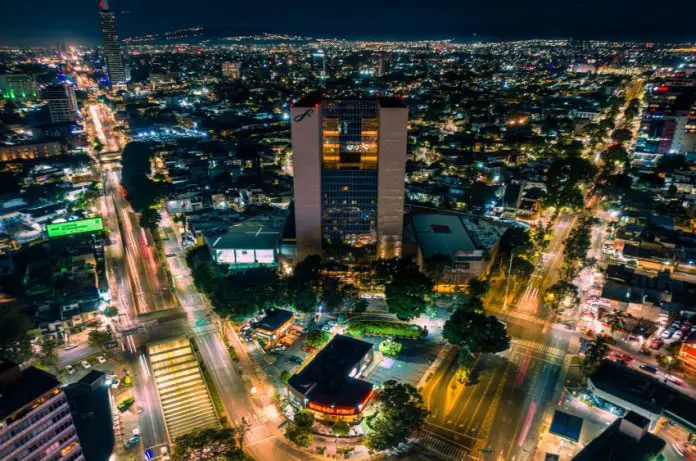
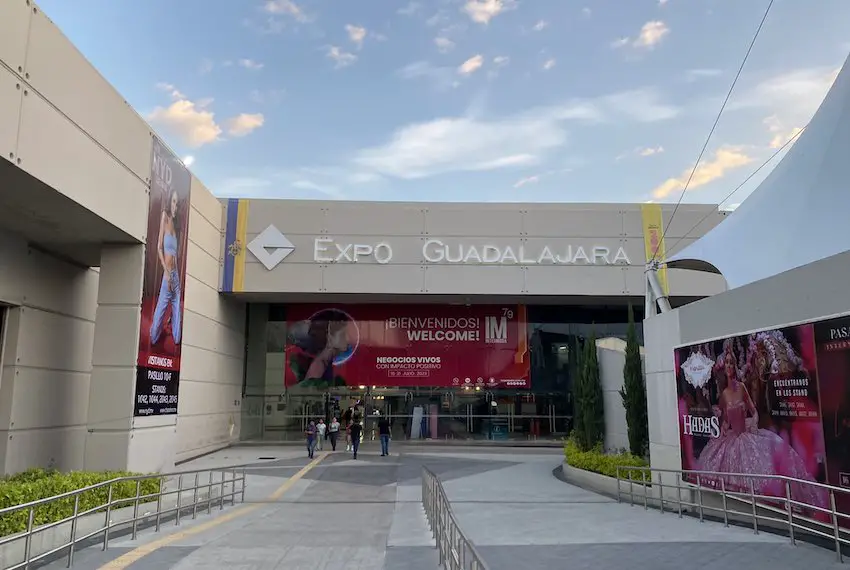
The Guadalajara hotel zone is the area surrounding the Expo Guadalajara Club, a conglomerate of 19 hotels surrounding the Expo Guadalajara.
The Guadalajara hotel zone is the area surrounding the Expo Guadalajara Club, a conglomerate of 19 hotels surrounding the Expo Guadalajara. (Shutterstock)

The hotel area surrounding Expo Guadalajara is one of the most important destinations in Mexico for the convention and business tourism industry, according to Bernardo Aguilar, president of the Jalisco Hotel Association (AHJ) and the Guadalajara Metropolitan Area Tourism Trust.

Aguilar told the newspaper El Economista that in the first 10 months of this year, more than 800,000 people stayed at one of the 19 hotels comprising the Expo Guadalajara Club, a conglomerate of hotels surrounding the Expo Guadalajara. During this period, these hotels reported booking 600,000 rooms and an economic revenue of 700 million pesos (US $34.4 million).

the Expo area has seen around 5,000 events this year, including the events hosted at Expo Guadalajara, Mexico’s largest event venue. 
The Expo area has seen around 5,000 events this year, including those hosted at Expo Guadalajara, Mexico’s largest event venue. (Expo Guadalajara)

“The 19 hotels that make up this group have cutting-edge infrastructure, with an offer of around 3,400 rooms, which makes Guadalajara a fairground and hotel area without comparison at the national level,” Aguilar said. 

According to Aguilar, the Expo area has seen around 5,000 events this year, including those hosted at Expo Guadalajara, Mexico’s largest event venue. 

With a total surface area of ​​119,000 square meters and a capacity for 60,000 people, the Expo hosts over 1,200 events each year and attracts around 2.1 million national and international visitors. 

Some of the scheduled events at the Expo for the next three years include the 2027 World Congress of Dermatology, the 2027 World Congress of Physiotherapy and the 2028 International Conference on Robotics and Automation.

Beyond this hotel complex, other areas of Guadalajara are also attracting hotel investment.  

Within the next two years, six new hotels from international chains plan to open in the city, with a total investment of 2 billion pesos (US $96.4 million), Aguilar said. These will mainly be business hotels, averaging around 150 rooms each. 

Some will be located along the airport highway and Periférico Sur, one will be located in the historic center of Zapopan, and another will be located in the Providencia neighborhood, Aguilar added.  

One of the Expo’s largest events is the Guadalajara International Book Fair (FIL), the largest book fair in the Spanish-speaking world, which will kick off on Nov. 30. Last year, this event drew over 800,000 visitors to the Expo, breaking the FIL’s previous attendance record. 

With reports from El Economista

How do I know it’s a “no”? — A comprehensive guide for foreigners

16
A young woman covers her face in embarrassment
Mexicans have a strong aversion to saying 'no'. How to tell when they're actually trying to turn you down. (Ivan Aleksic/Unsplash)

Mexicans are famous for their polite social graces and good humor. Unfortunately, they’re also known for a strong aversion to saying “no,” or saying anything negative at all.

But what one sees as polite omission, another might take as flat-out lying. Being polite while also communicating what you mean can be a tricky balancing act, it’s true. And for those of us from more direct cultures, it’s downright opaque. Why would someone just not say what they mean?

Merchants of patriotic items, such as flags and tricolor hats, officially started their harvest tolerated in the Center, with a parade that started from the Monument to the Revolution towards the Zócalo.
“Gracias”, “chance sí”, “ahorita” are some of the Mexican favorites to turn down someone. Watch out for them! (Moisés Pablo/Cuartoscuro)

Nothing is as simple as it seems, I suppose. Still, there are plenty of recognizable broad strokes we can examine here.

A lesson in keeping the negative to yourself

An impressive example of this tendency came years ago when I lived in Querétaro. I’d been working at a language school then — the kind that says they’ll help with immigration papers but never do. It was someone’s birthday, and teachers and students alike all went out to a bar to celebrate. It was a good time!

The next day, the director of the school told us teachers that one of the students wouldn’t be coming to class that day; there’d been an issue with his car. What was the issue? Someone had broken into it and stolen his car radio and CD player!

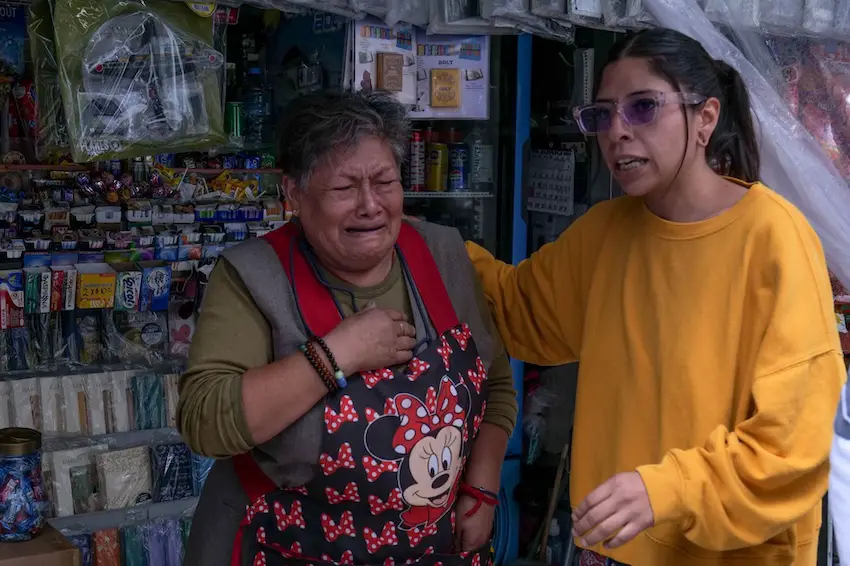
A newspaper vendor cries after protesters fought in front of her newsstand, during a protest where street vendors clashed with police. The above in front of the Palace of Fine Arts
Mexicans have a really hard time saying ‘no’ in fear of hurting someone’s feelings. (Alice Mortiz/Cuartoscuro)

And when had this happened? It wasn’t when we were inside the bar, no. It happened at the school before we all left. He’d given some of us a ride, even, and had said nothing about his missing equipment.

It’s been almost 20 years, and I’m still shocked he kept that in.

He didn’t want to say anything about it because he didn’t want to ruin the evening before it had even begun. I myself would have been physically incapable of not saying anything. Just, wow.

Now that I’ve been here a while longer, I’ve seen more examples. People simply seem loath to talk about things that will make people gloomy. What for? We can get sad all on our own, after all.

So the first rule of communication, then, is to not disappoint. That is, of course, if you want the person you’re talking to to feel good. I’d personally rather be momentarily disappointed than later be sitting around like a dummy waiting for someone who’s not going to show, but that’s on me, I guess.

Woman shaking her head
Don’t expect anything as obvious as a shake of the head. (Christopher Ott/Unsplash)

So knowing that “no” is a “no-no word” here, how might you decipher what people mean when they give you an answer?

Words that actually mean ‘no’: an anthology for foreigners

Well, that’s just what I’m here to help you with! Below is a list of “actually, that might mean ‘no'” words and phrases.

“Gracias” 

This one is tricky. I sometimes have to stop myself from pedantically saying, “Um, that’s not one of the options for a yes or no question.” I can tell you from experience that challenging someone’s politeness in this way makes you look like an ass.

The way I’ve personally gotten around this is to pause comically and ask, “¿Gracias ‘sí,’ o gracias ‘no’?” That will usually get a grin and an actual answer, which, by the way, is almost always “Gracias, no.”Remember that you can use it, too! It’s especially helpful when you’re wandering through a market and merchants are offering their wares. It also usually works if the “market” is coming to you in the form of individual sellers! An emphatic “muchas gracias” will usually transmit the idea that, while you are very grateful for the offer, you will not be purchasing a bottle of perfume on that particular day.

“A lo mejor sí” 

“A lo mejor” is a phrase that means “probably” or “likely.” It’s important to note, then, that all interpretations leave some wiggle room for it maybe not working out. If it doesn’t actually work out, well, they haven’t lied! There was always a chance.

A man wringing his hands
“And then he tried to ask me a question I couldn’t say ‘no’ to.” (Kelly Sikkema/Unsplash)

This is, to me, one of the more dismissive ways to say no, a kind of “uh-huh, sure” version. In Mexico, this kind of dismissive “doing what you can to leave the conversation already” is called “dar el avión” (to… give the plane?). And when you “das el avión,” it’s often detectable. There are two likely outcomes of this, then. One is that the other person sighs, gives up, and goes on their way. Another is that they get frustrated: “¡No me des el avión!” If that happens, you’d better think of a better, more convincing way to say “no.”

“Déjame ver/checar” 

This one is similar to “a lo mejor sí” in that it’s very likely to be an actual “no.” It means “Let me see” and “Let me check.” Spoiler alert: they will likely conclude, and may or may not tell you, that the result of the seeing/checking was negative.

“Ahorita” 

This is one that my kid uses on me all the time, and it drives me crazy. We speak in English together, so her version is “in a minute.” “Ahorita” could be when someone will definitely do something right then. Or it could mean anywhere from right that moment to when hell freezes over.

In my experience it’s typically the latter, or alternatively, after the person’s finally been worn down from enough nagging about it. So beware, people. If you’re hearing “ahorita” from your partner frequently and it’s not turning out to be “right now for real” kind, there will probably be some frustration in your future.

“Estamos en contacto”

This one is kind of fun because it sounds so official and business-like. “We’ll be in touch.” Oh, will we? Most people don’t intend for this to be a lie, it’s just nicer to say than, “We may never see each other again, I don’t know, but you’re pleasant enough.”

Alas, this is a short list. I’ve got a word limit! But I’d love to hear more examples of “This is what they actually meant” in the comments. Consider this your official call for stories!

Sarah DeVries is a writer and translator based in Xalapa, Veracruz. She can be reached through her website, sarahedevries.substack.com

Senate passes legislation that enshrines animal welfare in Constitution

7
There are 80 million pets in Mexico but 70% of all dogs and cats are homeless
Mexico is the third-worst country in the world with regard to the mistreatment of animals, according to a 2021 report by the national statistics agency INEGI. (Galo Cañas/Cuartoscuro)

Last week, Mexico’s Senate approved historic legislation that, once ratified by the states, will enshrine animal protection in the Constitution.

The bill was passed unanimously by the Chamber of Deputies on Nov. 12 (450-0) and, on Nov. 20, the Senate approved the measure unanimously as well (117-0). The legislation must now be approved by a majority of Mexico’s 32 local congresses to become law.

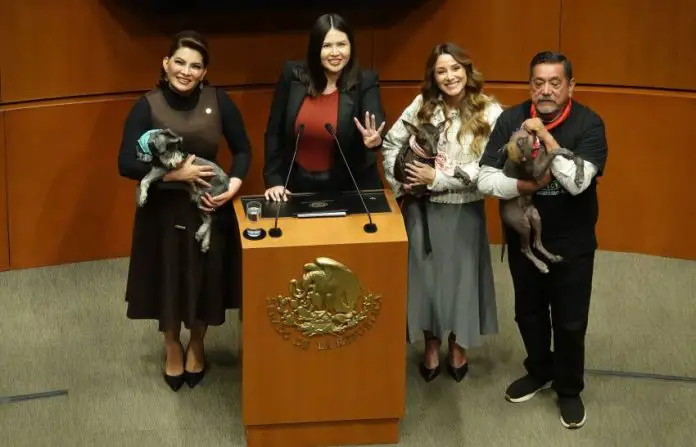
A senator brought his pet to a session that voted on a new animal well-being reform
The reform was passed unanimously in the Chamber of Deputies and the Senate. (Galo Cañas/Cuartoscuro)

The new law amends three articles of the Constitution and empowers Congress to enact animal welfare laws. It also mandates the humane treatment of animals as a mandatory guideline in all educational institutions nationwide.

The Humane Society International (HSI) praised the legislation: “By granting animal protection the highest importance in Mexico’s legal framework, the reform safeguards the legal protection granted to animals from being easily undone by future legislation.”

The reform aims “to protect animals, guarantee their well-being, provide them attention, good treatment, maintenance, accommodation, natural development, health and avoiding abuse, cruelty, suffering, zoophilia and the deformation of their physical characteristics, as well as ensuring the animal health, […] and satisfactory treatment of and general welfare of animals,” as per the bill’s text.

“With this constitutional reform,” said Anton Aguilar, executive director for HSI Mexico, “the government has taken a significant step toward ensuring that the protection and welfare of animals become a priority in public policy.”

Dogs accompany their owner during the Sunday Walk on Avenida Paseo de la Reforma.
The new law empowers Congress to enact animal welfare laws, while also mandating education on the humane treatment of animals in all educational institutions nationwide. (Magdalena Montiel Velázquez/Cuartoscuro)

Secondly, the reform requires all public schools to include the protection and welfare of animals within their curricula.

The reform also requires Congress to pass legislation that coordinates all federal, state and municipal laws related to animal protection and establishes penalties for violations.

According to El Economista, Senator Luis Donaldo Colosio of the Citizens Movement (MC) party said the reform is a crucial step toward making Mexico a country where all forms of life are respected. “Empathy must transcend words and be reflected in our actions,” he said.

Mexico is the third worst country in the world concerning the mistreatment of animals, according to a 2021 report by the national statistics agency INEGI. The survey revealed that more than 60,000 animals die annually in Mexico as a result of mistreatment.

Senator Paloma Sánchez of the Institutional Revolutionary Party (PRI), citing past INEGI surveys, told the online publication Línea Directa that there are 80 million pets in Mexico, but approximately 70% of all dogs and cats are homeless.

“This … reform has the power to transform the lives of millions of animals — from stray dogs and cats enduring cruelty, disease and neglect, to the billions of farm animals exploited for food, and the countless wildlife threatened by illegal trade,” HSI Director Aguilar concluded.

With reports from El Economista, Línea Directa, Wired and Humane Society International

Sheinbaum’s plan to prevent violence against women: Monday’s mañanera recapped

9
President Claudia Sheinbaum points to the audience from her podium during her morning press conference
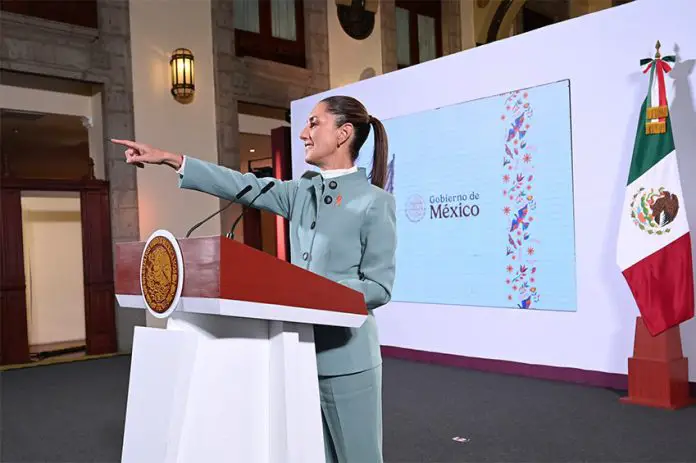
At her Monday press conference, Sheinbaum discussed government initiatives to prevent violence against women and the symbolism of having a female president. (Presidencia)

On International Day for the Elimination of Violence against Women, President Claudia Sheinbaum highlighted that her government is implementing a range of “actions” and making various law changes in favor of gender equality and the protection and strengthening of women’s rights.

Speaking at her Monday morning press conference, Sheinbaum also said that her administration is committed to “eradicating” violence against women.

The two main tenets of the government’s strategy are “prevention” of violence against women and “zero impunity” for crimes committed, she said.

“In the face of any femicide: zero impunity. In the face of sexual violence against women: zero impunity,” Sheinbaum said.

Women’s rights pamphlets will be ready soon 

Sheinbaum told her morning presser that the government’s women’s rights pamphlet is currently being drawn up and will be unveiled soon.

“The pamphlet has to do with the rights enshrined in the constitution, in laws,” she said, adding that it will explain “what equality means” and expose societal prejudices that have an adverse impact on equality.

An advertisement for the 2019 Mexico City Women's Rights Pamphlet
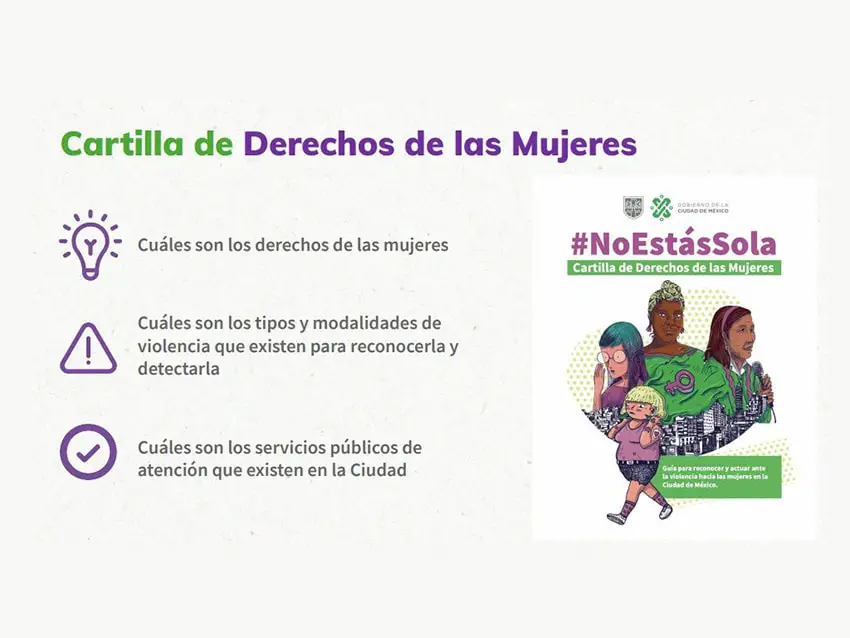
As mayor of Mexico City, Sheinbaum led a similar educational campaign to inform Mexico City residents about the rights women are entitled to, how to recognize various types of violence and the public services available to women. (Gobierno CDMX)

Sheinbaum spoke about some prejudices that remain prevalent in Mexico, such as that women and girls should clear the table at meal times and do the dishes.

“Contributing to household chores is a task for everyone,” she said.

Sheinbaum also said there is no reason why girls can’t play with cars and marbles and boys can’t play with dolls.

“Something as simple” as telling a girl she can’t play with cars can have an impact on her future life, the president said.

“Saying ‘you can’t play with this’ or ‘you can’t play with marbles’ … limits the dreams a girl can have,” she said.

Sheinbaum said last month that the government’s women’s rights pamphlet should be distributed to men as well as women because everyone needs to know about women’s rights.

Having a presidenta for the first time has triggered a ‘cultural transformation’ in Mexico 

One reporter asked Sheinbaum about the impact her ascension to Mexico’s top political position has had on the country. At the conclusion of her question, the journalist noted that a young girl in Chiapas impersonated Mexico’s first female president, or presidenta, at a Revolution Day parade last week. (A video of the girl’s performance went viral on social media.)

A female president “is a symbol that transforms mindsets,” Sheinbaum said.

“It’s not enough [just] with the symbol, we have to develop policy, change the constitution, change legislation and develop actions for the protection and promotion of women’s rights,” she said.

“But … [a female president] is a symbol, when a girl sees a presidenta obviously she can imagine that she too can be a presidenta,” Sheinbaum said.

“… And that represents a change in mindset, and not just in girls, in boys as well, in men as well, it’s a cultural transformation,” she said.

Incoming Veracruz governor is ‘a woman of character with many convictions’

Sheinbaum noted that she will attend Rocío Nahle’s inauguration as governor of Veracruz this Sunday.

Nahle, federal energy minister during most of former president Andrés Manuel López Obrador’s six-year term, is “a woman of character with many convictions, who loves Veracruz, who loves its people,” the president said.

“And I know that she will do a great job. And we’ll be there supporting her with everything she needs,” Sheinbaum said.

She also highlighted that the incoming governor, while energy minister “was able to build a refinery” — the new Pemex facility on the Gulf coast of Tabasco.

Nahle, a native of the state of Zacatecas, was the ruling Morena party’s candidate in the June 2 gubernatorial election in Veracruz, and won the contest easily with close to 60% of the vote.

By Mexico News Daily chief staff writer Peter Davies (peter.davies@mexiconewsdaily.com)