Home Blog Page 396

What’s on in Mexico City in December?

0
Two people ice skating at the Four Seasons in Mexico City
There might not be snow, but Mexico City has all the events you need for a fun-filled December. (Four Seasons)

Mexico City is the city that never sleeps (sorry, Sinatra). Naturally, you’d expect December to be as busy as every other month of the year, just with extra Christmas.

And if you did, then great news! We’ve rounded up some of the best things to do in the capital but this time, we’ve added a festive twist to get you into the holiday spirit.

Piñata Exhibit at the Museum of Popular Art

Museo de Arte Popular
(Gobierno de la Ciudad de México)

One of the best things about being in Mexico for the holidays are the elaborate piñatas hanging all over the city! Instead of wandering aimlessly in search of the giant festive ornaments, make your way to the Museum of Popular Art (MAP), where a colorful exhibit of 200 piñatas awaits. Artists from all over Mexico display their creations, with shapes ranging from the traditional five-pointed star to sea creatures, flowers and typical foods.

Dates: Now through December 15
Location: Museo de Arte Popular
Cost: Entry is 60 pesos person

The Nutcracker
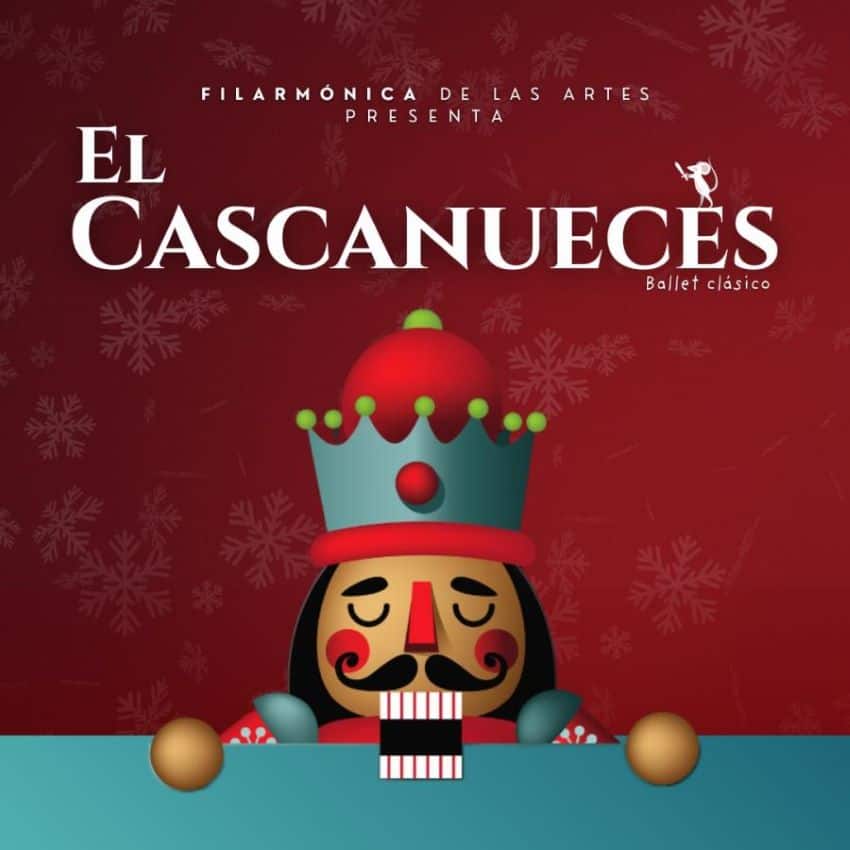
Cascanueces poster
(Filarmónica de las Artes)

Nothing says the holidays like Tchaikovsky’s timeless classic. Head to Ciudad Universitaria for a magical adventure with the Filarmónica de las Artes and the Compañía de Danza de las Artes. This fairy-tale ballet unfolds under the enchanting direction of E. Abraham Vélez Godoy

Dates: Dec. 5, 2024 – Jan. 5, 2025
Location: Auditorio Fra Angelico, Centro Universitario Cultural
Cost: Tickets start at 400 pesos per person

Ice skating at the Four Seasons

Ice skating rink at Four Seasons Mexico City
(Four Seasons)

Find your winter wonderland at the Four Seasons’ dreamy Secret Terrace. Among festive decor and cozy food stalls selling seasonal treats and sweets is a giant, eco-friendly ice skating rink! Admission includes skate rentals, as well as tickets for food and drinks. Entry also grants you 20 percent off at on-site restaurants and bars. Don’t miss the magical Christmas tree in the ground floor lobby.

Dates: Dec. 5 – Jan. 5, 2025
Location: Four Seasons Mexico City (Paseo de la Reforma 500, La Juárez)
Cost: Tickets start at 1,297 pesos for adults and 702 pesos for children

Santa Run in Santa Fe

(Santa Run MX)

Itching to don your Santa costume already? Here’s your chance! Put on your red hat, lace up your sneakers and join fellow run enthusiasts in Parque La Mexicana for a festive Santa Run. Jog with your kid, your pet or on your own. Distances of 1, 5, or 10 kilometers are available, as are the obligatory Santa suits. When you’re done, hit up Fisher’s for a free breakfast. If you love sports and Christmas, this is the event for you!

Dates: Dec. 15
Location: Parque La Mexicana
Cost: Tickets start at 660 pesos per person

Christmas bazaar in Condesa
Woman walking with a dog in La Condesa
(Alcaldía Cuauhtémoc)

Get your holiday shopping done at the vibrant Christmas bazaar in Condesa! The atmosphere will be filled with colorful decorations, twinkling lights and joyful holiday music. This market features an array of unique gifts, so if you’re looking for locally made ornaments, artisanal toys and ceramics, this is a perfect place to find it. While you shop, indulge in holiday snacks like buñuelos and traditional hot chocolate. 

Dates: Dec. 16 – 17
Location: Nuevo León 80
Cost: Free to enter

José Guadalupe Posada at Los Pinos
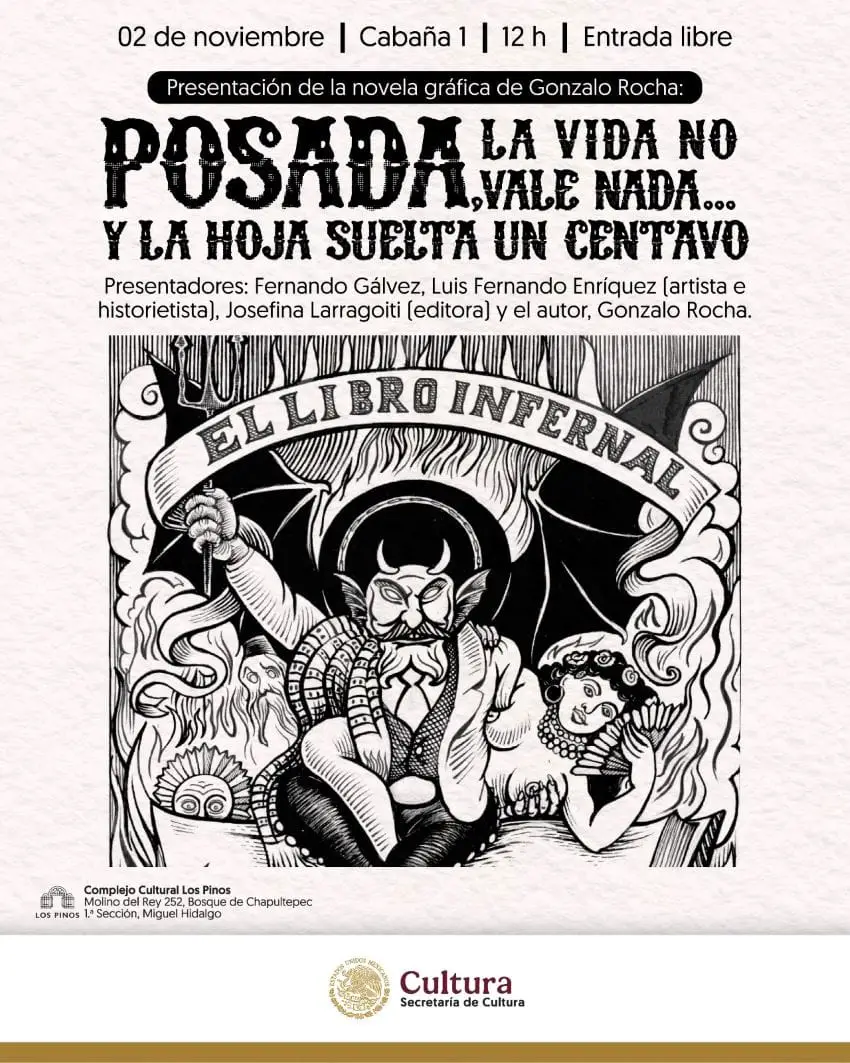
(Secretaría de Cultura)

Celebrate the legacy of famed caricaturist José Guadalupe Posada, best known for creating the Catrina skeleton of Día de los Muertos fame, at the exhibition “La vida no vale nada.” Set in the former presidential residence inside Chapultepec Park, caricaturist Gonzalo Rocha pays homage to the legendary artist with prints and artwork highlighting Posada’s iconic style.

Dates: Month of December
Location: Complejo Cultural Los Pinos
Cost: Free to enter

Alan Glass: A Surprising Discovery

(INBAL)

Explore the whimsical world of Canadian artist Alan Glass at the Palace of Fine Arts. This retrospective showcases 125 pieces spanning over five decades, demonstrating his surrealist creations and collaborations with Leonora Carrington, André Breton and Alejandro Jodorowsky. Browse a peculiar display of paintings, drawings and video installations, all divided into three thematic sections.

Dates: Through Feb. 16, 2025
Location: Palacio de Bellas Artes
Cost: 90 pesos per person

Candlelight Christmas carols

(Victoria Feliniak/Unsplash)

Entertainment platform Fever’s ever-so-popular Candlelight series, an ongoing collection of atmospheric concerts held in iconic venues around the world, is getting in the spirit. For two nights only, immerse yourself in a multisensory music experience highlighting Christmas classics like “White Christmas,” “Holy Night” and “Let it Snow.” The 60-minute performance includes piano, saxophone, drums and guitar, and is accompanied by hundreds of candles, making it an optimal choice for a romantic night out.

Dates: Dec. 20 – 21
Location: El Cantoral
Cost: Tickets start at 250 pesos per person

Ballet Christmas in Mexico 

Nutcracker ballet
(Mario Jasso/Cuartoscuro)

Join the Ballet Folklórico de México for “Navidades en México,” a vibrant celebration of Mexican culture. From the story of the Nativity to the litany heard during a posada, this is one of the best ways to immerse in Mexican holiday tradition. This performance runs from Dec. 25 to 29 and showcases folkloric dances that embody the spirit of the season.

Dates: Dec. 25 – 29
Location: Chapultepec Castle
Cost: Tickets start at 1,180 per person

New Year’s Eve dinner at Galea

(Galea)

If you’re in the mood for something casual and intimate to ring in the New Year, head to this cozy Italian restaurant in Roma Norte. The delicious dishes and European atmosphere recently caught the attention of the Michelin Guide, landing Galea on the Bib Gourmand list. Enjoy an exquisite dinner featuring gourmet bites like foie gras mousse and duck in a black truffle cherry sauce. Of course, it wouldn’t be New Year’s Eve without the bubbly, which comes included in the price. Tasting options are available.

Dates: Dec. 31
Location: Galea (Sinaloa 67, Roma Norte)
Cost: Tickets start at 2,700 pesos per person

Bethany Platanella is a travel planner and lifestyle writer based in Mexico City. She lives for the dopamine hit that comes directly after booking a plane ticket, exploring local markets, practicing yoga and munching on fresh tortillas. Sign up to receive her Sunday Love Letters to your inbox, peruse her blog, or follow her on Instagram.

No ‘firm’ plan for a Chinese auto plant in Mexico, says Sheinbaum: the mañanera recap

3
Mexico's President Claudia Sheinbaum taking a reporter's question with her finger pointing at a reporter off camera
President Claudia Sheinbaum takes a reporter's question on Thursday at her daily press conference. (Galo Cañas Rodríguez/Cuartoscuro)

The Maya Train railroad and the security detail of former president Andrés Manuel López Obrador were among the issues discussed at President Claudia Sheinbaum’s Thursday morning press conference.

Here is a brief recap of the mañanera, as the president’s weekday presser is colloquially known.

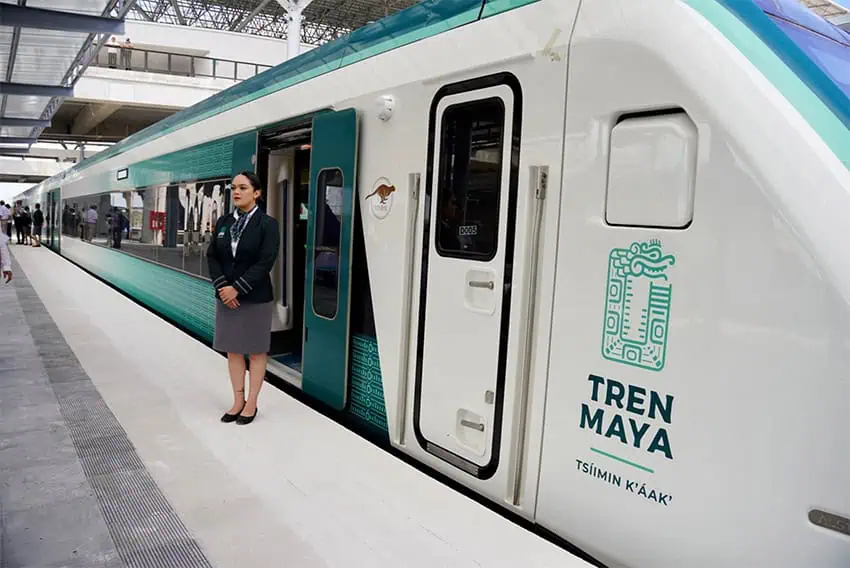
An attendant stands outside the Maya Train, a major Mexican rail project, to welcome passengers
President Sheinbaum defended the government-run Maya Train after a reporter mentioned multiple media reports calling it “a failure” due to low ticket sales and high operating costs. (Presidencia/Cuartoscuro)

´The Maya Train is a success’ 

“The Maya Train is a success; it’s functioning very well, and domestic and foreign tourists are using it,” Sheinbaum said after a reporter pointed out that the rail project has been described as a “failure” by media outlets.

Since the US $20 billion railroad (partially) opened in late 2023, passenger numbers have been lower than expected and operating costs have far exceeded revenue from ticket sales.

Nevertheless, Sheinbaum asserted that it’s “false” that the railroad has “problems.”

“The Maya Train is a success,” she reiterated.

Almost a year after passenger trains began running between Campeche and Cancún, however, the railroad is still not fully open.

AMLO will write a book about conservatism after his retirement to Palenque.
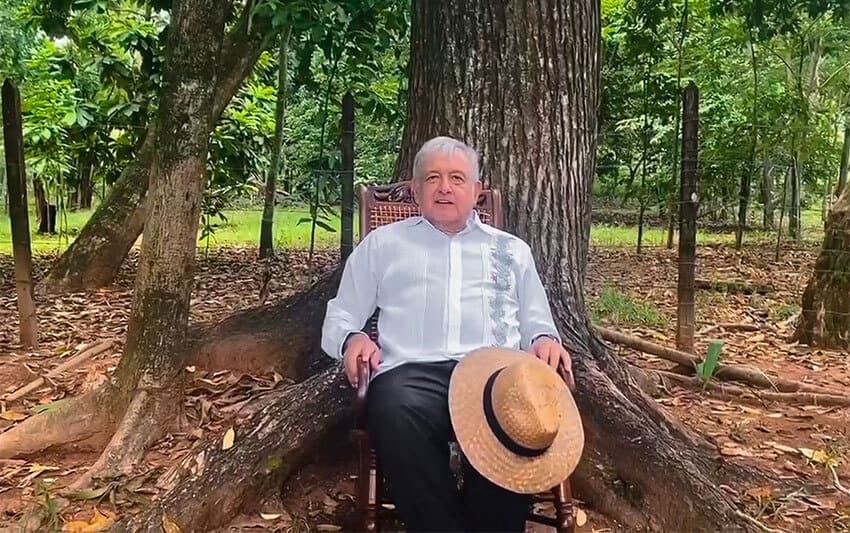
Ex-president López Obrador is well-known to be living in retirement at Palenque, Chiapas, ranch. However, Defense Minister Ricardo Trevilla Trejo told Sheinbaum’s Thursday presser, how many soldiers are protecting him there is a state secret. (File photo/Presidencia)

Sheinbaum said that “the whole circuit” will be complete in December when the section between Chetumal, Quintana Roo, and Palenque, Chiapas, (via Escárcega, Campeche) opens.

The president described the railroad as a “national development project” and noted that preparations for its use by freight trains will commence next year.

‘There is no risk’ to AMLO’s life, says defense minister 

A reporter highlighted that the El Universal newspaper published a report on Thursday that said that the Defense Ministry (Defensa) has “reserved [classified] for five years information about the number and rank of soldiers that are providing protection to Mexico’s ex-president Andrés Manuel López Obrador on his ranch in Palenque, Chiapas.”

El Universal said that it was informed by Defensa that the declassification of aforesaid information could allow organized crime groups to “plan attacks against the former federal leader and the military personnel at his service.”

Defense Minister Ricardo Trevilla Trejo, one of several high-ranking officials that attended Sheinbaum’s Thursday morning press conference, confirmed that there is no current risk to the former president’s life.

“There is no risk, no threat, nothing like that,” he said.

Trevilla said that information about AMLO’s security detail could be used by “people who want to do damage” and for that reason it is classified.

“It’s a matter of security,” he said.

No certainty on Chinese auto plants in Mexico  

Chinese automakers including BYD, MG Motor and Chery have announced plans to open plants in Mexico.

But Sheinbaum said Thursday that there is no certainty that those plans will eventuate.

“There is not yet any firm investment project from any Chinese automotive company,” she said.

Jorge Guajardo, a former Mexican ambassador to China, told Mexico News Daily earlier this year that Chinese companies have “a long history of making investment announcements they don’t follow up on.”

By Mexico News Daily chief staff writer Peter Davies (peter.davies@mexiconewsdaily.com)

US suspends Mexican cattle imports after flesh-eating worm detected in Chiapas

4
Cows in an outdoor corral in a row. The first one is looking at the camera
The U.S. temporarily paused imports of Mexican cattle after Mexico inspectors informed the USDA of the first identification of the New World screwworm in Mexico in 30 years. (Martín Zetina/Cuartoscuro)

The United States has temporarily paused imports of Mexican cattle after a case of New World screwworm was identified at the lakeside town of Catazajá in the southern state of Chiapas, the Mexican government said on Sunday.

“The United States and Mexico are working on implementing measures to resume the normal flow of Mexican exports,” it said in a statement, adding that the temporary suspension was only of Mexico’s cattle and did not apply to other exports.

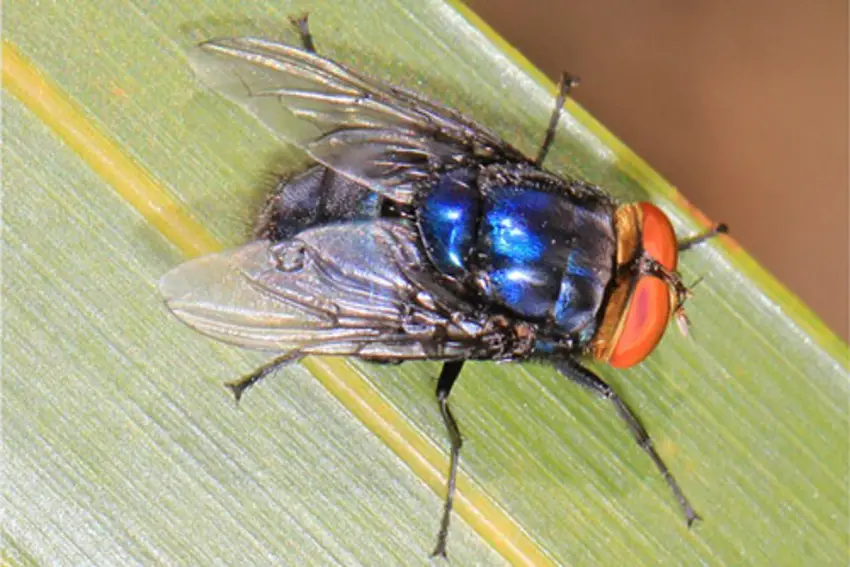
Closeup of the New World Screwworm Fly sitting on a leaf. It has orange at the head and a vibrant blue on its back.
Cochliomyia hominivorax, or the New World screwworm fly. Its larvae infect mammals by burrowing into open wounds. (University of Florida)

Mexico’s Agriculture and Rural Development Ministry (SADER) head Julio Berdegué first announced the cooperative efforts to address the situation on Nov. 17 after a meeting with the U.S. Department of Agriculture (USDA).

Mexico’s chief veterinary officer had notified the USDA of the detection of a screwworm in a cow at a checkpoint near the southern border with Guatemala. The animal originated from outside Mexico, and this detection was the first appearance of the New World screwworm in 30 years, SADER stressed in a press release issued Saturday.

The suspension will remain in place pending further information from Mexico’s veterinary officials regarding the size and scope of the screwworm infestation. The USDA said it is working with regional partners to prevent the pest from entering the United States.

The temporary pause could affect U.S. beef production and prices, especially as the United States has come to rely on livestock from Mexico while U.S. ranchers struggle to rebuild depleted cattle herds.

The U.S. has relied on live cattle imports from Canada and Mexico to fill in the gaps from years of herd declines, according to the trade industry publication Agriculture Dive.

In 2023, imports of cattle from Mexico increased 43% to 1.25 million head following a record low year. That represented about 3.7% of the U.S. calf crop.

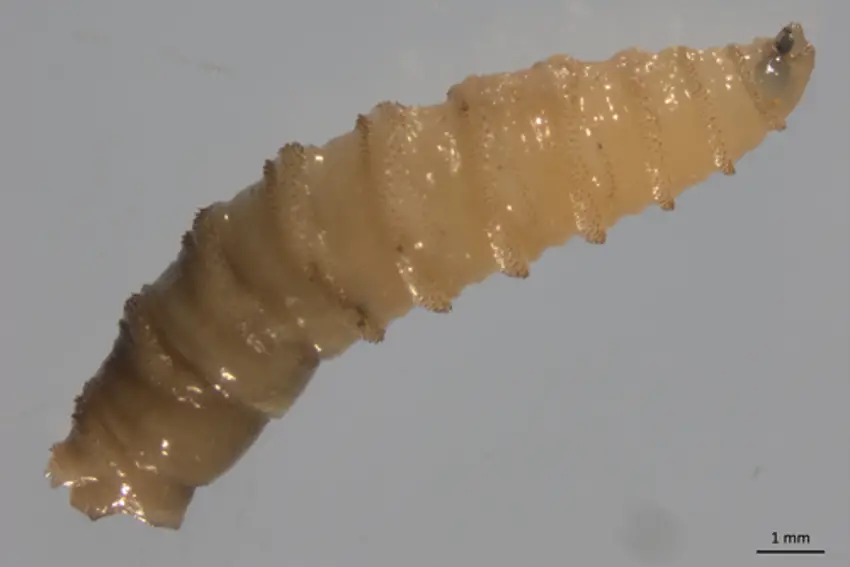
Closeup photo of a New World screwworm larva. It is white and semi-translucent
The screwworm targets the open wounds of mammals, including potentially humans, burrowing into the body via the entry point and feeding off the animal’s flesh. (Heather Stockdale Walden/University of Florida)

What is a screwworm?

The flesh-eating pest, which gets its name from the way it burrows into wounds like a screw, can be fatal to animals and, in some cases, humans. It last appeared in Florida in 2016, marking the first U.S. outbreak in decades, Agriculture Dive reported.

Screwworm maggots often enter through an open wound and feed on the living flesh of warm-blooded animals, including people, USDA said. While the maggots of many fly species eat dead flesh, and may occasionally infest an old and putrid wound, screwworm maggots are unusual because they attack live, healthy tissue. Infected mammals typically die of secondary infections or toxicity. 

Infestations can be difficult to detect but often manifest themselves through growing wounds, creamy larvae and signs of discomfort, the USDA told Reuters.

U.S. authorities are asking ranchers in the area to monitor their livestock and pets, and immediately report potential cases.

Battling the screwworm

The potentially deadly fly larvae is endemic to countries in the Caribbean and South America, according to Agriculture Dive. 

Eradication efforts in North America date back to 1991, according to the magazine Wired, with a containment strategy centered on Panama. 

The USDA has said that the U.S. cattle industry benefitted to the tune of about US $900 million per year as a result, Wired reported, while producers and consumers in Mexico saved roughly US $2 billion since 1991.

Establishment of the barrier zone in Panama was redoubled in 2006, but Agriculture Dive says cases have exploded north of the containment zone over the past two years as more land is converted to farming and more cattle are transported into the region.

Recent studies show that screwworm cases have been spreading northward into Honduras, Costa Rica and now Mexico. Alarms went off with this discovery of the larval worm in Chiapas. According to the Mexican government, it had stepped up monitoring for the New World screwworm earlier this year after it was detected in southern Nicaragua, just over 700 kilometers from Mexico’s border with Central America.

On a side note, the new restrictions on livestock being transported through Mexico could put a choke hold on the thriving practice of cattle smuggling that the think tank Insight Crime wrote about in 2022. 

Insight Crime reported that cattle — primarily from Nicaragua — has been smuggled into Mexico from Guatemala for more than a decade. The report cautioned that the livestock from Central America is not subject to the controls by which Mexican ranchers abide.

The smuggling is not limited to the Mexico-Guatemala border. Costa Rica, Nicaragua and Honduras have each cited an increase in smuggling as the reason for the current outbreak, according to the magazine Wired.

Wired reported that Mexico’s National Confederation of Livestock Organizations has reiterated its long-standing request that the Mexican government take steps to prevent the practice of cattle smuggling.  

With reports from El País México, Reuters, Wired and Agriculture Dive

Sheinbaum responds to Trump claim that she pledged to “stop migration” and close the border

22
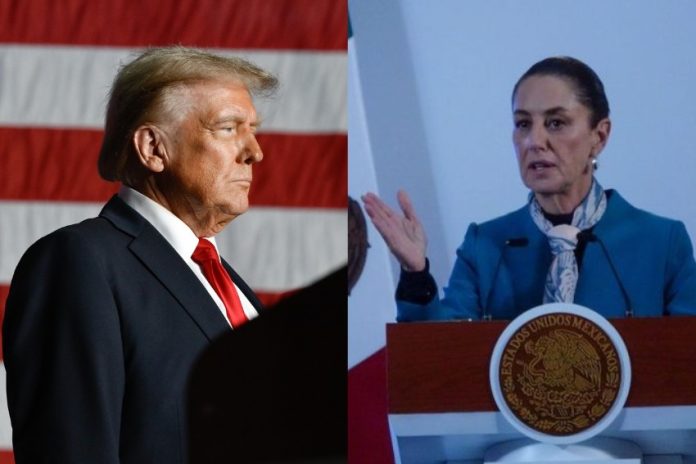
A split screen image of US President-elect Donald Trump on the left and Mexican President Claudia Sheinbaum on the right
With presidential elections over in Mexico and the U.S., the new policy landscape is becoming more clear. (Mexico News Daily via Cuartoscuro/Twitter)

President Claudia Sheinbaum hit back at Donald Trump after the United States president-elect claimed that that she agreed in a call on Wednesday to “stop migration through Mexico, and into the United States, effectively closing our southern border.”

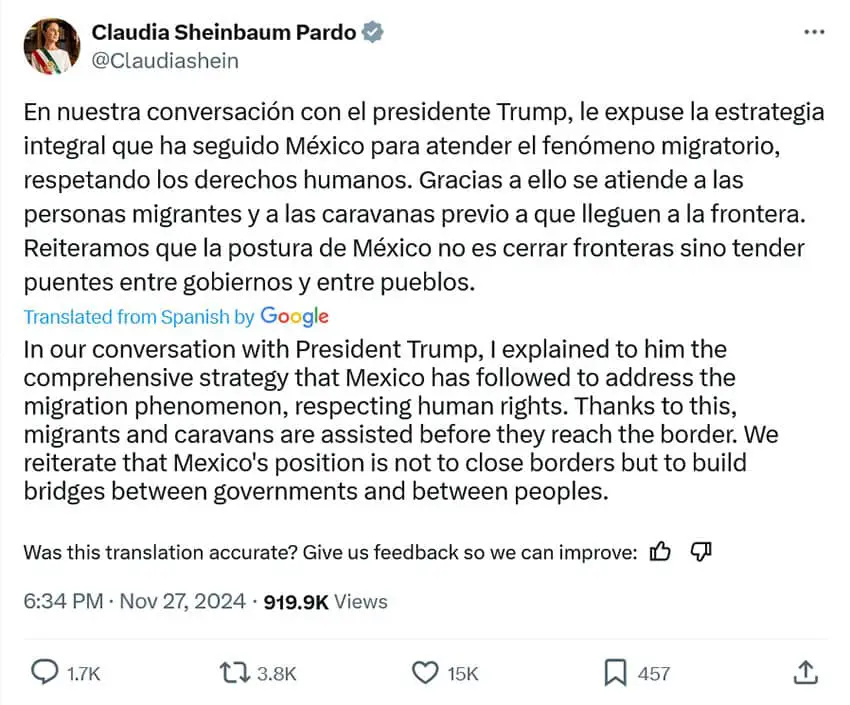
In a post to social media on Wednesday night, Sheinbaum said that she told Trump that “Mexico’s position is not to close borders but to build bridges between governments and between peoples.”

An X post by Mexican President Claudia Sheinbaum denying that she promised Trump she'd close the Mexico-U.S. border to migration.
Sheinbaum denied Trumps claim about promises she made on their Wednesday phone call. (Claudia Sheinbaum/X)

Her conversation with the incoming president came two days after he pledged to impose a 25% tariff on all Mexican and Canadian exports to the United States on the first day of his second term as U.S. president due to what he described as the “long simmering problem” of drugs and “illegal aliens” entering the U.S.

Sheinbaum responded to Trump’s tariff threat in a letter, telling him that a U.S. tariff on Mexican exports would be met with another tariff “in response.”

In her letter, she also highlighted that “encounters” between United States authorities and migrants on the Mexico-U.S. border declined 75% between December 2023 and November 2024, and pointed out that Mexican authorities have seized tonnes of drugs so far this year, confiscated more than 10,000 weapons and arrested over 15,000 people “for violence related to drug trafficking.”

Conflicting accounts of the same call 

On Wednesday afternoon, Sheinbaum described her call with Trump as “excellent,” writing on X that they discussed “the Mexican strategy” to attend to the “migration phenomenon.”

“I shared that [migrant] caravans aren’t arriving at the northern border because they are taken care of in Mexico,” she said.

“We also spoke about strengthening collaboration on security issues within the framework of our sovereignty, and about the campaign we’re carrying out in the country to prevent the use of fentanyl,” Sheinbaum wrote.

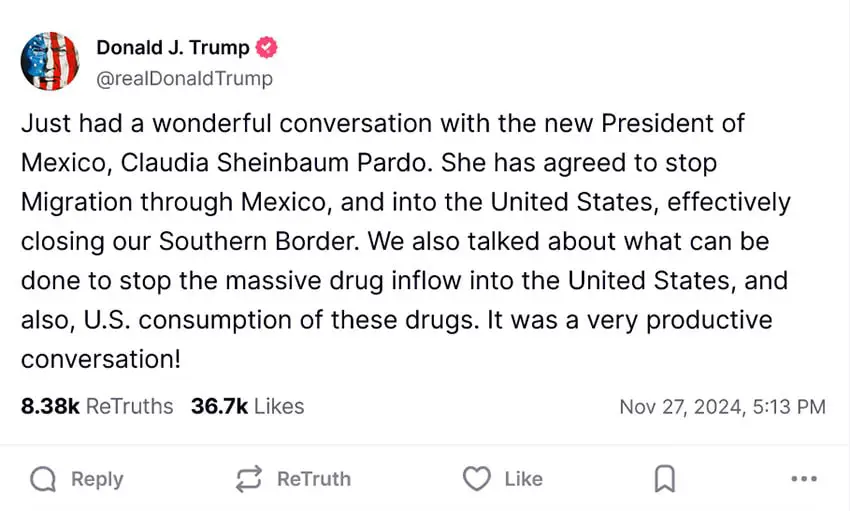
Later on Wednesday afternoon, Trump wrote on his social media site Truth Social that he had “a wonderful conversation with the new President of Mexico” and that “she has agreed to stop Migration through Mexico, and into the United States, effectively closing our Southern Border.”

“We also talked about what can be done to stop the massive drug inflow into the United States, and also, U.S. consumption of these drugs. It was a very productive conversation!” he said.

A screenshot of a Truth Social post by Donald Trump, on the topic of his phone call with Mexican President Claudia Sheinbaum
The U.S. president-elect shared Sheinbaum’s supposed promises on his social media website. (Truth Social/Donald Trump)

Trump gave no indication that he had decided to cancel his tariff plan as a result of the commitment he alleged he received from Sheinbaum.

In a separate Truth Social post, the former and future U.S. president asserted that “Mexico will stop people from going to our Southern Border, effective immediately.”

“THIS WILL GO A LONG WAY TOWARD STOPPING THE ILLEGAL INVASION OF THE USA. Thank you!!!” added Trump, who threatened to impose tariffs on Mexican exports during his first term as president but ultimately didn’t after Mexico agreed to ramp up enforcement against migrants.

In another post to Truth Social on Wednesday afternoon, Trump wrote:

“I will be working on a large scale United States Advertising Campaign, explaining how bad Fentanyl is for people to use – Millions of lives being so needlessly destroyed. By the time the Campaign is over, everyone will know how really bad the horror of this Drug is.”

Sheinbaum: ‘Everyone has their own way of communicating’ 

At her morning press conference on Thursday, Sheinbaum reiterated that she didn’t make any commitment to “effectively” close Mexico’s northern border.

“Everyone has their own way of communicating, but I can assure you … that we never suggested that we were going to close the border, we would be incapable [of doing so],” she said.

“… It has never been our approach and of course we don’t agree with that. President Trump has his way of communicating but what we spoke about on the call was essentially … [Mexico’s] strategy” to stem the flow of migrants, Sheinbaum said.

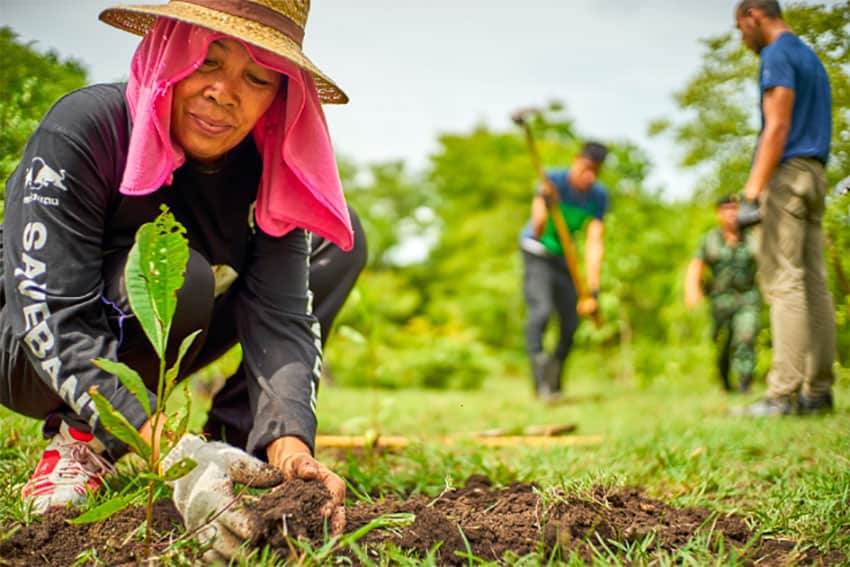
She elaborated on that strategy at her morning press conference, noting that it includes the expansion of the federal government’s employment programs, the Sowing Life reforestation initiative and the Youths Building the Future apprenticeship scheme, to countries in Central America.

A woman in a straw hat plants a tree seedling in a grassy field
Sheinbaum cited the government tree-planting program Sowing Life, which operates in Central America, as an example of Mexico’s work to address the root causes of migration. (File photo)

Mexico also detains large numbers of migrants before deporting them or bussing them back to the country’s south, where they began their perilous journeys to the U.S. border.

Trump, Sheinbaum said, “recognized this effort that is being made.”

She said that she also spoke to Trump about the “fentanilo mata” (fentanyl kills) awareness campaign launched by the government of former president Andrés Manuel López Obrador.

“He was very interested,” the president said, adding that Trump requested information about the campaign.

Foreign Affairs Minister Juan Ramón de la Fuente, who was with the president when she spoke to Trump, has already sent the information to the president-elect’s team, Sheinbaum said.

She noted that she also spoke to Trump about security issues.

“He asked me how we can collaborate. I told him that within the framework of our sovereignty there are schemes for collaboration,” Sheinbaum said.

The president said that she and Trump didn’t specifically speak about tariffs, and rejected claims that Mexico and the United States would engage in a “tariff war,” even though she has indicated her government would retaliate against any U.S. duties imposed on Mexican exports.

“It was a very friendly conversation. We agreed there is going to be a good relationship,” Sheinbaum said.

By Mexico News Daily chief staff writer Peter Davies (peter.davies@mexiconewsdaily.com)

Querétaro prepares to welcome a dozen new data centers, state development minister announces

0
The silouette of a person is visible at the end of a data center hallway filled with computer servers
Querétaro is already a leader in Mexico's data center industry, with over US $2 billion invested in the sector so far. (Shutterstock)

Querétaro — already a leader in the installation of data centers in Mexico — anticipates that up to 12 more centers will be announced in the north-central state in the coming months.

“We already have 18 [data centers],” state Development Minister Marco Antonio Del Prete told the newspaper El Economista, including Microsoft’s new Hyperscale Cloud Data Center Region. “The 18 already in place represent 200 megawatts of energy … and another 10 or 12 are in the process of being established.”

Three images of parts of the new Microsoft data center in Queretaro, Mexico
Microsoft has said its “hyperscale data region” in Querétaro will give companies in Mexico access to higher internet speeds. (Microsoft)

Due to the energy needs required for this specialized industry, Del Prete said the state government is working to ensure that Querétaro has adequate facilities to supply the energy needed.

“This is a collaborative effort involving the CFE [Federal Electricity Commission], the state and the data centers themselves,” he said. “The enormous energy requirements will be met with help from the CFE as well as Cenace and the CRE.”

Cenace is the National Energy Control Center and the CRE is the Energy Regulatory Commission.

Javier Prieto, executive director of solutions development for property management company JLL Work Dynamics, said a reliable energy supply is essential in the data center industry.

“Energy is one of the main operating costs of data centers, and ensuring a reliable and sustainable supply has become a priority for both operators and local authorities,” Prieto told Mexico Business News.

Querétaro strives to meet demand

Data centers have become critical for Mexico’s continuing technological and economic development and demand for data processing and storage is on the rise.

Emerging technologies such as artificial intelligence and the metaverse have prompted the rapid construction of these centers.

Computer servers
The number of data centers in Mexico is likely to surge over the next five years. (Taylor Vick/Unsplash)

A joint study published last April by the Mexican Association of Data Centers (MEXDC) and the International Data Corporation projects that, by 2029, the number of data centers in Mexico will increase significantly.

Del Prete expects that several of these new centers will be built in Querétaro, which has seen an accumulated investment of more than US $2 billion, according to Mexico Business News.

“We expect to have some good news at the beginning of [December] and early in the New Year as well,” he said.

The state is already preparing to meet the growing demand, developing new policies and state universities are adjusting their degree programs to prepare a professional labor pool.

The Polytechnic University of Querétaro (UPQ) will soon be offering a degree in data engineering, Del Prete said, as part of a collaboration agreement signed by the Development Ministry, UPQ and MEXCD.

With reports from El Economista and Mexico Business News

Rolling Stone: Trump team has discussed ‘soft invasion’ of Mexico

15
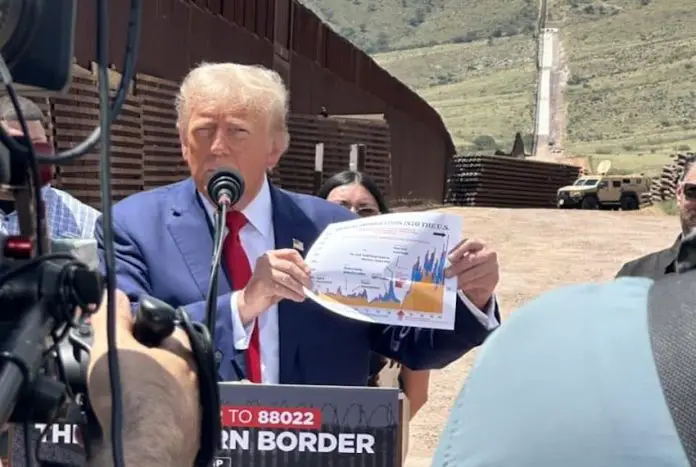
Donald Trump holding a printout of a color line graph whose details are not visible while he stands at a podium in a desert location near the U.S. border.
U.S. President-elect Donald Trump in August 2024, at a press conference with mothers of children killed in cases where the suspects are illegal immigrants. Trump has frequently linked undocumented migrants to the U.S. to drug trafficking and other crimes. (@RLJnews/X)

Four months ago, Donald Trump said he was “absolutely” prepared to launch United States military strikes against Mexican cartels if large quantities of drugs continued to flow into the U.S. from Mexico.

During the second Trump administration, could the United States military even carry out some kind of incursion into Mexican territory to combat powerful transnational criminal organizations such as the Sinaloa Cartel and the Jalisco New Generation Cartel (CJNG)?

Mexico's President Claudia Sheinbaum gesturing with one hand out, palm upward, as she stands at the presidential podium making a point during a press conference.
At her Thursday press conference, President Sheinbaum questioned the validity of the Rolling Stone report, saying she based her beliefs about Trump’s intentions toward Mexico on two conversations she’d had with Trump by phone, one as recently as Wednesday. (Galo Cañas Rodríguez/Cuartoscuro)

That possibility, according to reporting by Rolling Stone magazine, is being debated by members of Trump’s transition team. President Claudia Sheinbaum effectively dismissed the veracity of the magazine’s reporting at her Thursday morning press conference.

Rolling Stone reported on Wednesday that there is “a fresh debate” within Trump’s “government-in-waiting” over “whether and how thoroughly the president-elect should follow through on his campaign promise to attack or even invade Mexico as part of the ‘war’ he’s pledged to wage against powerful drug cartels.”

The magazine quoted an unnamed “senior Trump transition member” as saying: “How much should we invade Mexico? That is the question.”

For its report, Rolling Stone said it spoke with six unnamed Republicans who have each spoken to Trump about the possibility of using U.S. military force against Mexican cartels.

It said that some of its sources have briefed the former and future U.S. president on a range of ways that the U.S. military could be used against the criminal organizations that ship fentanyl, cocaine, methamphetamine and other drugs across Mexico’s northern border. They include:

Rolling Stone cited a “Trump adviser” as saying it is “unclear how far” Trump will go in his quest to combat Mexican cartels and stem the flow of narcotics across the United States’ southern border.

“If things don’t change, the president still believes it’s necessary to take some kind of military action against these killers,” the source said.

Rolling Stone said that “another source close to Trump” described “what they call a ‘soft invasion’ of Mexico, in which American special forces — not a large theater deployment — would be sent covertly to assassinate cartel leaders.”

“Indeed, this is a preliminary plan that Trump himself warmed to in private conversations this year,” the magazine said.

Rolling Stone said that Trump has “told confidants and some GOP lawmakers that he plans to tell the Mexican government they need to stem the flow of fentanyl to America — somehow, in a span of several months — or else he’ll send in the U.S. military.”

Earlier this week, the president-elect said he would impose a 25% tariff on all Mexican and Canadian exports to the United States on the first day of his second term as U.S. president due to what he described as the “long-simmering problem” of drugs and “illegal aliens” entering the U.S.

With his cabinet picks, Trump has emphasized his commitment to taking action against what he calls an “invasion” of the United States.

Rolling Stone reported that several of his cabinet picks, including his choices for secretary of defense and secretary of state, “have publicly supported the idea of potentially unleashing the U.S. military in Mexico.”

“So has the man Trump has tapped to be his national security adviser. So has the man Trump selected as his ‘border czar’ to lead his immigration crackdowns. So have various Trump allies in Congress and in the media,” the magazine added.

After three women and six children were murdered in an ambush in northern Mexico during his first term as president, Trump said that “if Mexico needs or requests help in cleaning out these [cartel] monsters, the United States stands ready, willing & able to get involved and do the job quickly and effectively.”

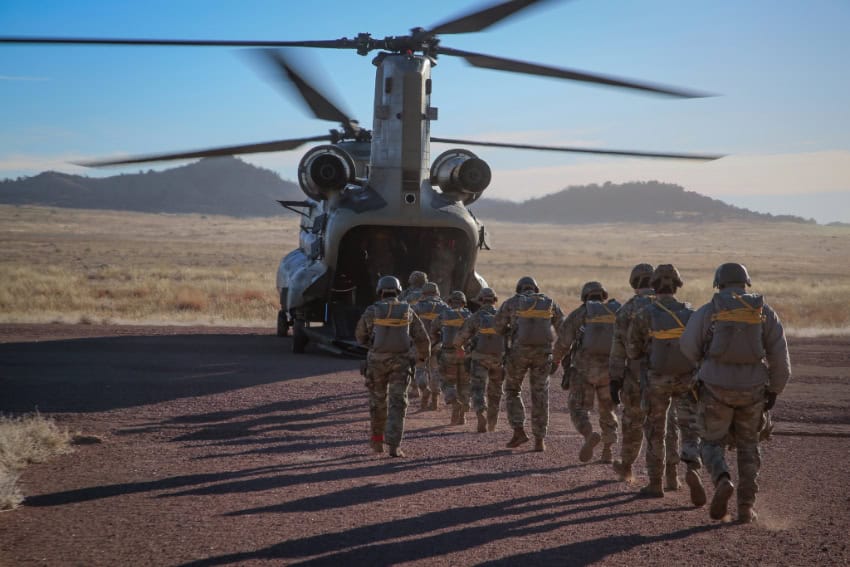
US troops at a military training event getting ready to board a military helicopter landed in front of a grassy plain with mountains in the background.
According to reporting by Rolling Stone magazine, one option the Trump team has discussed is sending U.S. Special Forces soldiers into the country to assassinate key Mexican cartel figures. (US Special Operations/Twitter)

“… This is the time for Mexico, with the help of the United States, to wage WAR on the drug cartels and wipe them off the face of the Earth. We merely await a call from your great new president!” Trump said in a social media post in late 2019.

Former president Andrés Manuel López Obrador declined Trump’s offer.

“We don’t need the intervention of a foreign government to attend to these cases. … We are a free and sovereign country; another government cannot intervene in our territory if there isn’t a cooperation agreement and, of course, without an express request on our part,” Lopez Obrador said at the time.

‘What is their basis?’

At her morning press conference on Thursday, Sheinbaum agreed with a reporter who likened Rolling Stone’s report to a far-fetched movie.

“What is their basis?” she asked.

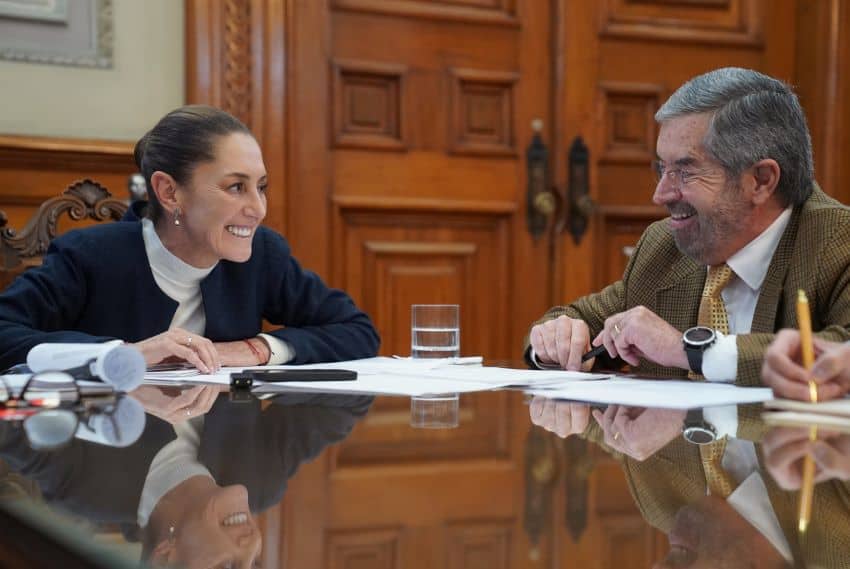
President Sheinbaum, left, and Foreign Affairs Minister Juan Ramón de la Fuente, on a call with U.S. President-elect Donald Trump on Wednesday. (Claudia Sheinbaum/X)

Sheinbaum said that she bases her view on the United States’ intentions during the second Trump administration on the two conversations she has had with the president-elect, including one on Wednesday.

She said that Trump asked her on Wednesday how the United States can collaborate with Mexico on security issues.

“I told him that within the framework of our sovereignty there are schemes for collaboration,” Sheinbaum said.

“… We’re always going to defend our sovereignty. Mexico is a free, independent, sovereign country. And that’s above everything,” she said.

With reports from Rolling Stone 

At overflowing Veracruz landfill, Greenpeace Mexico demands anti-plastic laws

0
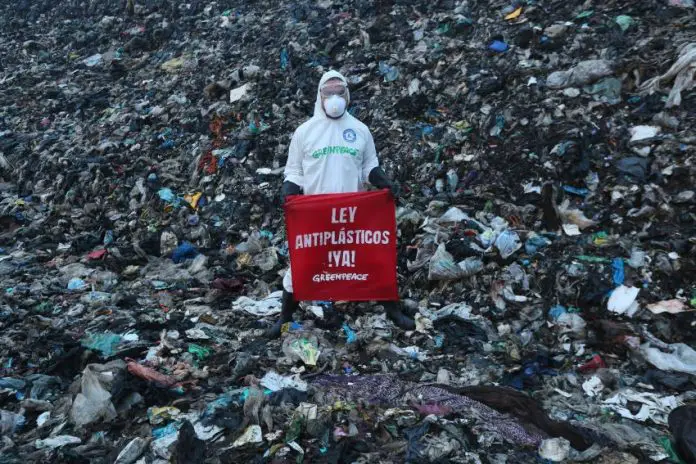
A member of Greenpeace Mexico stands on a mountain of trash at the Coatzacoalcos landfill wearing a hazmat suit with a sign reading "Ley Antiplasticos YA!"
The activists called for the Mexican government to tackle plastic pollution and enforce existing plastic bans. (Greenpeace)

Activists from Greenpeace Mexico and other organizations demonstrated Sunday at a sprawling, open-air garbage dump in the state of Veracruz, denouncing the country’s growing plastic waste crisis and calling for urgent action.

The protesters — some dressed in hazardous material suits and holding a huge banner reading “Anti-Plastic Law Now!” — temporarily blocked operations at the Villa Allende landfill in Coatzacoalcos, a major port city in southern Veracruz on the Gulf of Mexico.

An aerial view of a tanker at port in Coatzacoalcos, Veracruz
Coatzacoalcos, population 212,000, is an important maritime port on the Gulf of Mexico. (Gobierno Municipal Coatzacoalcos)

According to activists with the Allende 213 environmental group, the 33-year-old dump began as a facility for waste only from the locality of Villa Allende.

Now, even though the State Attorney General for Environmental Protection (PMA) has determined the dump should have already been closed, it continues to operate, receiving an estimated 350 to 400 tons of domestic and industrial waste daily, with an estimated 45-60 daily trips by garbage trucks from throughout Coatzacoalcos, according to a Greenpeace Mexico press release.

And since there is no tangible division between the landfill and nearby homes and businesses — some less than 500 meters away  — Villa Allende is being impacted with air, soil, subsoil and water pollution problems, Greenpeace Mexico noted. Nearby residents have long reported issues with noxious odors and health concerns linked to the facility’s operation.

However, the Sunday protest was about more than just Villa Allende.

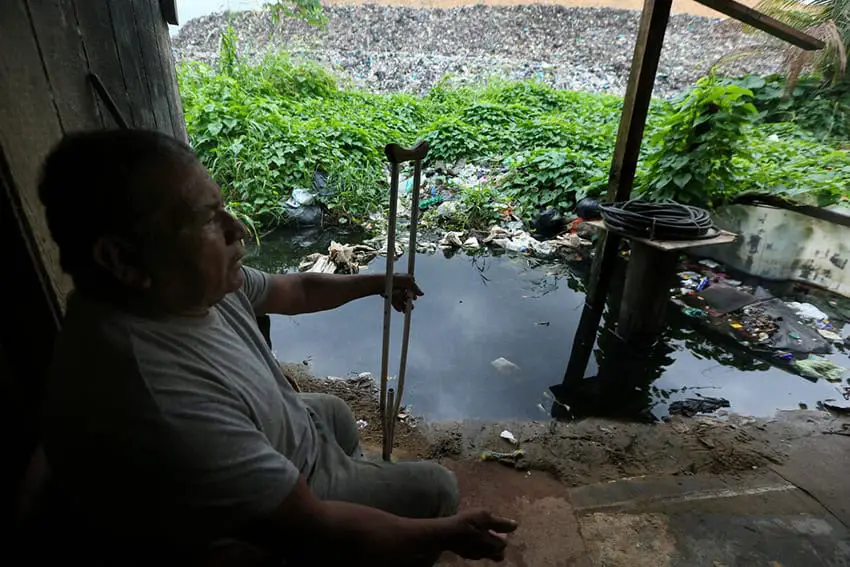
A man with a crutch sits next to a small pond filled with plastic waste, in front of a trash dump.
Without proper divisions between the dump and residential areas, Villa Allende residents like Asunción Ovando Magaña have reported impacts to their health and quality of life. (Greenpeace Mexico)

The activists called for immediate government intervention to tackle plastic pollution and improve management of overflowing and unregulated garbage dumps throughout the nation — where single-use plastics such as PET bottles, industrial plastics and construction materials are usually the most commonly found items.

“Facilities like this exacerbate environmental and public health risks, particularly for nearby communities,” Greenpeace said in a statement.

The activists urged national and local authorities to more strictly enforce existing legal bans on disposable plastics while also prioritizing investments in infrastructure for waste segregation, recycling and composting. They also called for incentives for sustainable alternatives.

Mexico generates an estimated 1.9 million tons of plastic waste annually, but less than 10% is recycled, according to Greenpeace.

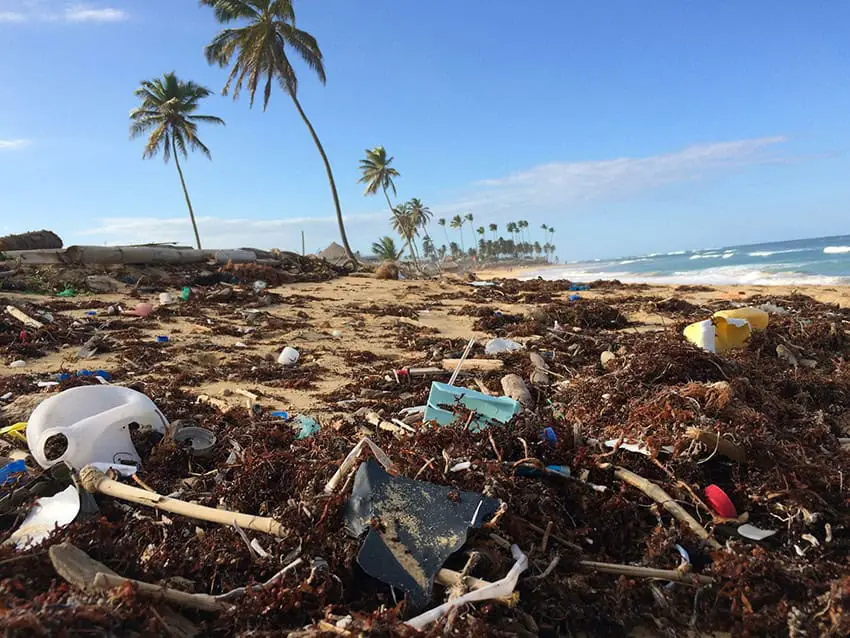
A palm-dotted beach strewn with plastic trash tangled up in sargassum algae
The activists called on authorities to enforce existing laws banning disposable plastics. (Dustan Woodhouse/Unsplash)

The newspaper El País cited a report by the Ministry of Environment and Natural Resources (Semarnat) indicating the situation of plastic pollution on the coasts has reached critical levels, especially in Oaxaca, Guerrero, Chiapas and Veracruz.

Across Mexico, landfills and dumps have become flashpoints for community grievances over pollution and public health risks.

The mayor of Coatzacoalcos, Amado Cruz, has said he will close the Villa Allende dump this year in coordination with Semarnat. However, the local “government has filed an appeal against the closure and so far the dump remains” open, Greenpeace noted.

Greenpeace Mexico urged citizens to sign a petition that aims to get an anti-plastic law presented to the Senate.

With reports from El Universal, Liberal del Sur and El País

Pre-Columbian canal unearthed under Chapultepec Park

5
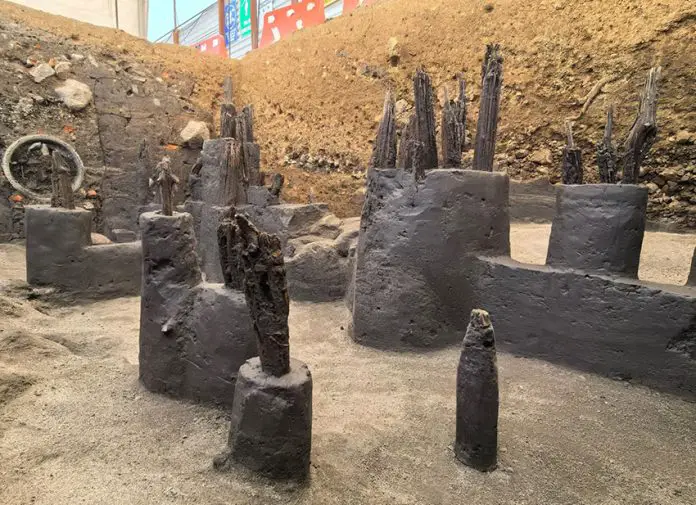
The old wooden posts of an pre-Columbian dock are visible in the hole of an archeological dig in Mexico City's Chapultepec Park
While supervising the construction of a tunnel in Mexico City, the INAH found a pre-Columbian dock and an ancient navigation channel. (Fabián González/INAH)

During construction work to build a tunnel in Mexico City, the National Institute of Anthropology and History (INAH) discovered a small dock and parts of a human-made canal from pre-Columbian times under Chapultepec Park.

Archeologists think the canal, set on what used to be the beach of a peninsula at the foot of the Chapulín Hill, must have been a “water path” connected with Lake Texcoco.

Descubren los restos de un muelle y un canal navegable de época prehispánica

INAH researcher María de Lourdes López Camacho said the discovery was a stroke of luck, given its location in an area that has been heavily disturbed since the end of the 19th century due to construction of housing and the Chapultepec Metro Station.

Furthermore, she said the canal must have been a main waterway.

Flanked by a thin layer of sand, the best-preserved section of the canal is underneath the vehicular stream of Chapultepec Avenue at the intersection with Lieja Street. Last year, archeologists discovered remnants of a housing unit from a pre-Columbian settlement that preceded the San Miguel Chapultepec community in this area.

INAH researcher María de Lourdes López Camacho explained that the house, which dates from the Late Postclassic period (1200-1521 A.D.), is aligned with the canal.

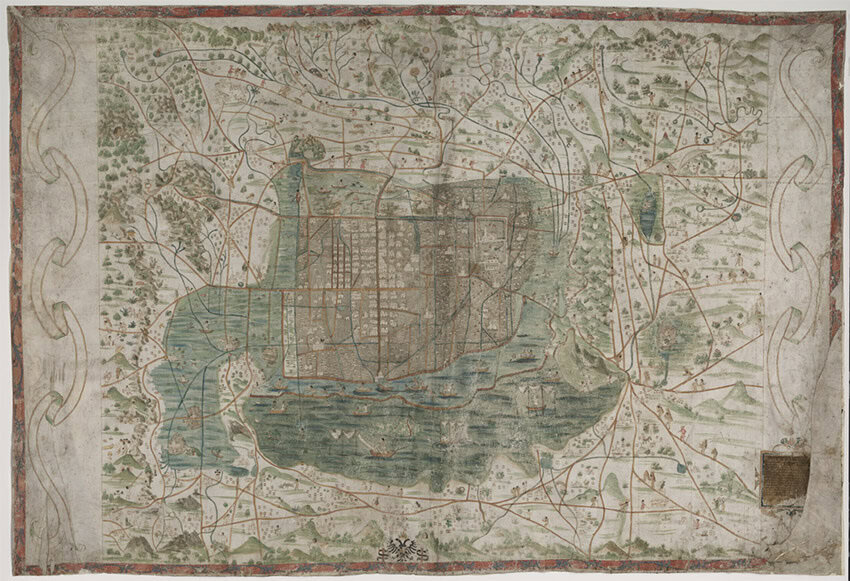
A centuries-old painted map of Mexico City or Tenochtitlán
The canal appears on the Santa Cruz Map, also known as the Uppsala Map. The map was painted between 1550 and 1556, when Mexico City was the capital of New Spain. (U.S. Library of Congress)

“There was a path that the residents used to access the main road. Often, the ‘water paths’ ran parallel to the dirt ones,” she said.

López explained that the canal appears on the Santa Cruz Map, the earliest known map of Mexico City created in the 1550s. The map depicts the canal with a canoe in transit. With a maximum width of 1.8 meters, the canal was wide enough for small vessels to transit.

According to the analyses carried out by the archaeobotanical expert Aurora Montúfar López, some of the canal’s posts are made of fir. Samples of timber used to build the dock, ranging from 40-137 cm tall and 13-29 cm thick, will be sent to the INAH laboratories for analysis.

Excavators also found remains of common lake deposits like seeds, wood, gastropods and roots. Some of the recovered samples reveal that residents of this area had a diet based on quelites (edible herbaceous plants like purslane and lamb’s quarters), squash and tomato. Other objects include items from the early colonial period (1521-1620 A.D.), including the first hammered coins of New Spain and basins bearing the seals of hospitals run by religious orders.

Mexico News Daily

Mexico and Thanksgiving: There’s plenty to this story

2
Mexican Thanksgiving
When you sit down for Thanksgiving dinner this year, take a second to consider how much of your table originates in Mexico. (Shutterstock)

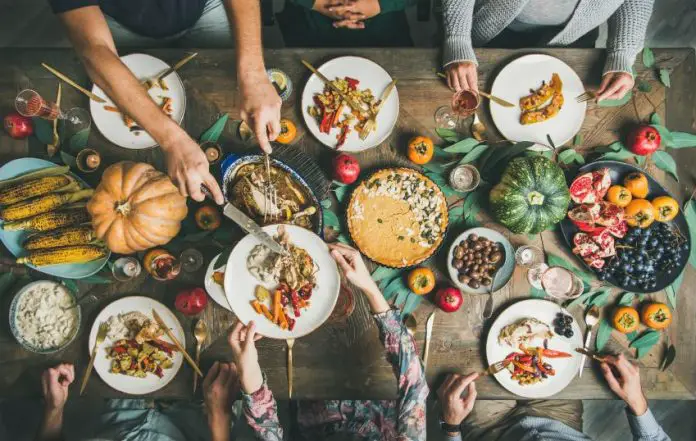
As our friends and families up North belly up to this week’s Thanksgiving table (plenty us here in Mexico will be doing the same), Mexico will likely be far from their thoughts. Why would it be? What do palm trees, sandy beaches and tequila have to do with our favorite autumn meal? However, in ways both subtle and overt, Mexico’s connection to Thanksgiving is worthy of celebration.

For starters — if you use your imagination, there’s a striking resemblance between the iconic Thanksgiving horn of plenty and a map of Mexico. Hold the horn upright, and it’s a stylized map of Mexico’s mainland, with the Yucatan Peninsula to boot.

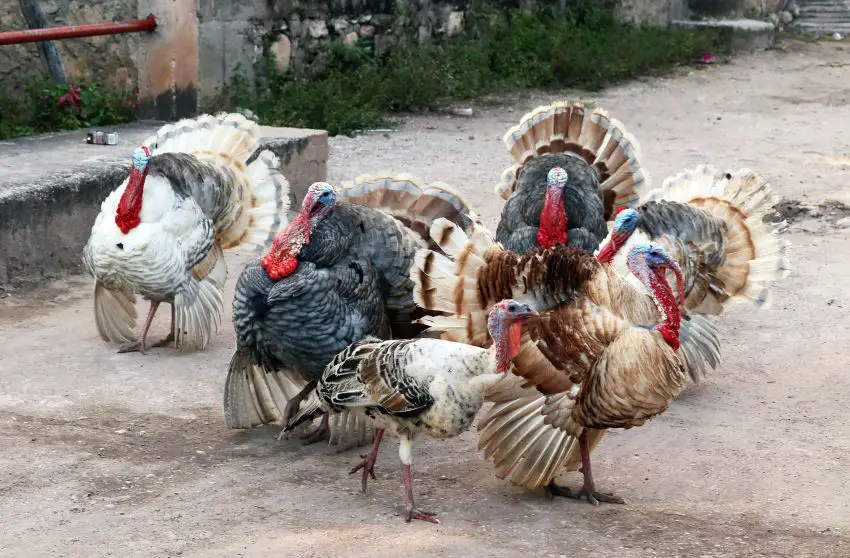
Discovered in Mexico, turkeys were exported to Europe, domesticated, and brought back to American soil for the Thanksgiving celebration. (Margarito Pérez Retana/Cuartoscuro)

Beyond this curiosity of geography, the Thanksgiving dinner table owes an homage to Mexico in more direct ways. Consider how your afternoon of culinary grazing is likely to start. No appetizer table is completed these days without guacamole (a word and dish from Mexico’s Nahuatl heritage) and ripe tomato salsa, gifts from our southern neighbor.

Dip deeper and you may be surprised at how Mexico is, in fact, at the very heart of the Thanksgiving meal. We all know that the wild turkey roamed eastern seaboard forests when the Pilgrims arrived; no big surprise there. Turkey was a main source of pre-Hispanic protein across North America. However, the turkey we today enjoy has a more circumvented path to your dinner table. In the 19th century, the Mexican wild turkey was exported to Europe, domesticated, and then reintroduced to American diners. So, we will all be gobbling down poultry with a Mexican pedigree for the next few days.

Complementing this noble bird, your meal will most certainly include Mexico’s grandest gift to the world — corn. All the world’s corn came from Mesoamerica. Maize is one of the world’s greatest cultural and biological wellsprings, feeding billions around the globe while being at the core of Mexican identity. Rural Mexicans will sometimes refer to themselves as “hombres del maíz,” literally “men of corn.”

But we’re not done. Rounding out your holiday feast are pumpkin, vanilla, and chocolate – all originally from (you guessed it) Mexico. Kahlua on the rocks anyone? Raise a toast to Mexico’s coffee land, verdant Veracruz.

From appetizers to desserts, Mexican ingredients and recipes make their way across just about everyone’s Thanksgiving palate. So, serve yourself another slice and raise a fork to Mexico — a horn of plenty that continues to give.

¡Buen provecho!

Author Greg Custer lives in Mexico. He’s worked for over 40 years in international tourism, educating travel advisors around the world about Mexico and other Latin American destinations. He helps folks explore Mexico for living at www.mexicoforliving.com.

Did you know Yucatán was an independent country – twice?

5
Yucatán independence
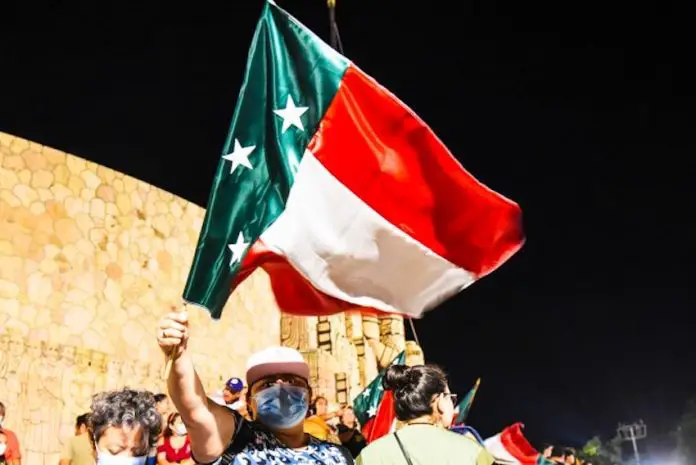
The Yucatán Peninsula has previously declared independence from Mexico on two occasions. Why? (Lineas Emergentes)

In a country whose history is as hyper-focused around its largest city as Mexico is, it’s easy to overlook historical events that didn’t take place in or around the capital. But this is a big and diverse country, and major processes and events happened all across it. One such event is Yucatán’s independence from Mexico, something that has happened not once, but twice.

This period of Mexico’s history is of immense importance to the Maya peoples of the Yucatan Peninsula, as it marked the beginning of the Caste War, a Maya rebellion that spanned generations. Due to the amount of lives lost during the war, the Mexican government extended a formal apology to the Maya community in 2021, in a ceremony held at the community of Felipe Carrillo Puerto.  

President López Obrador
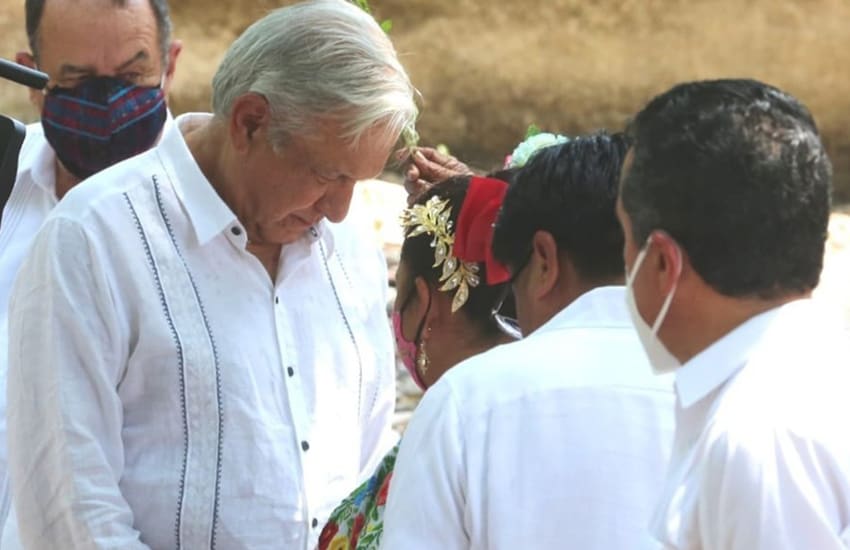
President Andrés Manuel López Obrador issued a state apology to the Yaqui and the Maya Indigenous peoples in 2021. (Archive)

Yucatán and Mexico

The Spanish colony of New Spain was ruled from Mexico City and included the Captaincy-General of Yucatán, which covered the whole peninsula. Due to its great distance from Mexico City, Yucatán’s colonial history was marked by a degree of autonomy from the central colonial government, as well as important cultural differences, as the peninsula is the heartland of Mexico’s Maya peoples.  

When independence movements broke out across the Spanish Americas beginning in 1809, Yucatán had its own movement that operated separately from the one in Central Mexico. The peninsula declared its independence from Spain in 1821. When Mexico declared its independence in the same year, it extended an invitation to Yucatán to become part of the Republic. Yucatán accepted under the condition that it would remain autonomous, and was admitted as the Federated Republic of Yucatán. 

In 1836, the government of Antonio López de Santa Anna abolished the federalist Constitution of 1824, which established the division of powers and granted autonomy to the states, to a centralist state in which the states became departments governed from Mexico City. This act kicked off a wave of rebellions across the country, with several states attempting to secede from Mexico — this was the context, for example, in which Texas took the opportunity to declare independence. Yucatán, unhappy with the new constitution, sought its independence too.

First attempt at Independence

Republic of Yucatan
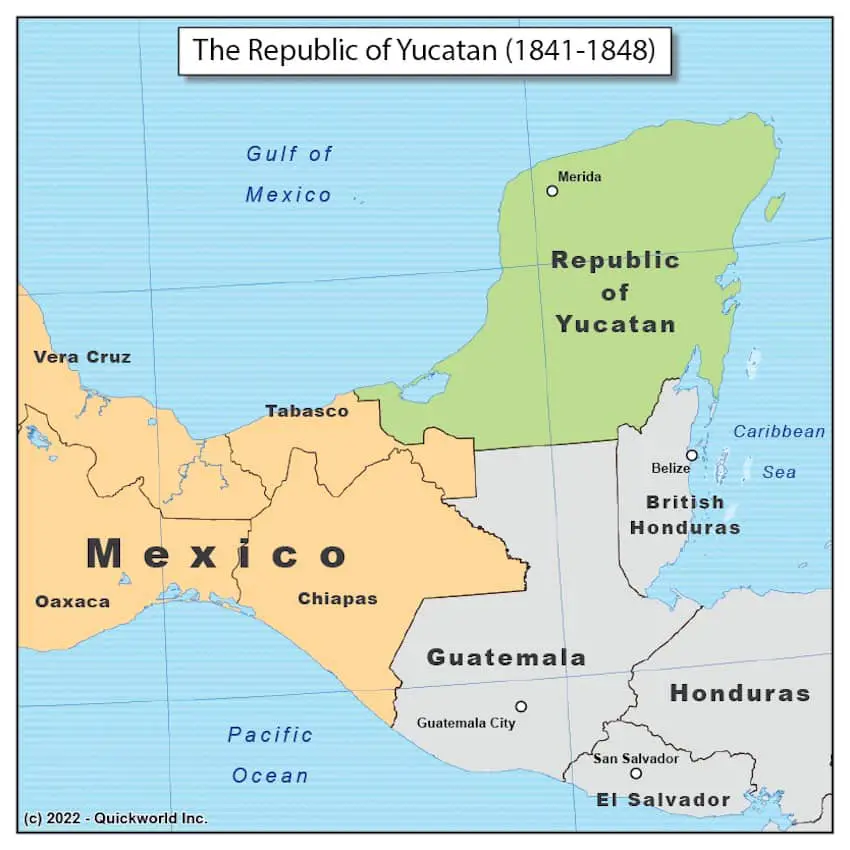
The Republic of Yucatán as it appeared in 1841. (Quickworld)

In 1839, a separatist rebellion broke out in Yucatán, leading the state’s congress to end relations with Mexico until the federal regime was reinstated. On Oct. 1, 1841, the local Chamber of Deputies approved the Declaration of Independence of the Yucatan Peninsula, which stated that “the people of Yucatán, in full use of their sovereignty, declared themselves as a free and independent Republic within the Mexican nation.”

The national government rejected the separation and imposed sanctions on Yucatán. Santa Anna closed commercial ports between Mexico and the Yucatán Peninsula and tried to prevent international commerce between the peninsula and Cuba, Jamaica and the English colonies. 

Santa Anna also sent troops to invade Yucatán in 1842 and 1843. However, with the support of the Maya population, white and mestizo Yucatecans repelled the central government’s forces.

On Dec. 5, 1843, Santa Anna agreed to restore Yucatán’s autonomy if it was reincorporated into the Mexican Republic. Yucatán accepted the deal. Soon, however, the Mexican government declared the agreements null, and on New Year’s Day, 1846 Yucatán declared its independence once again.  

Second attempt at Independence and the Caste War

Caste War painting
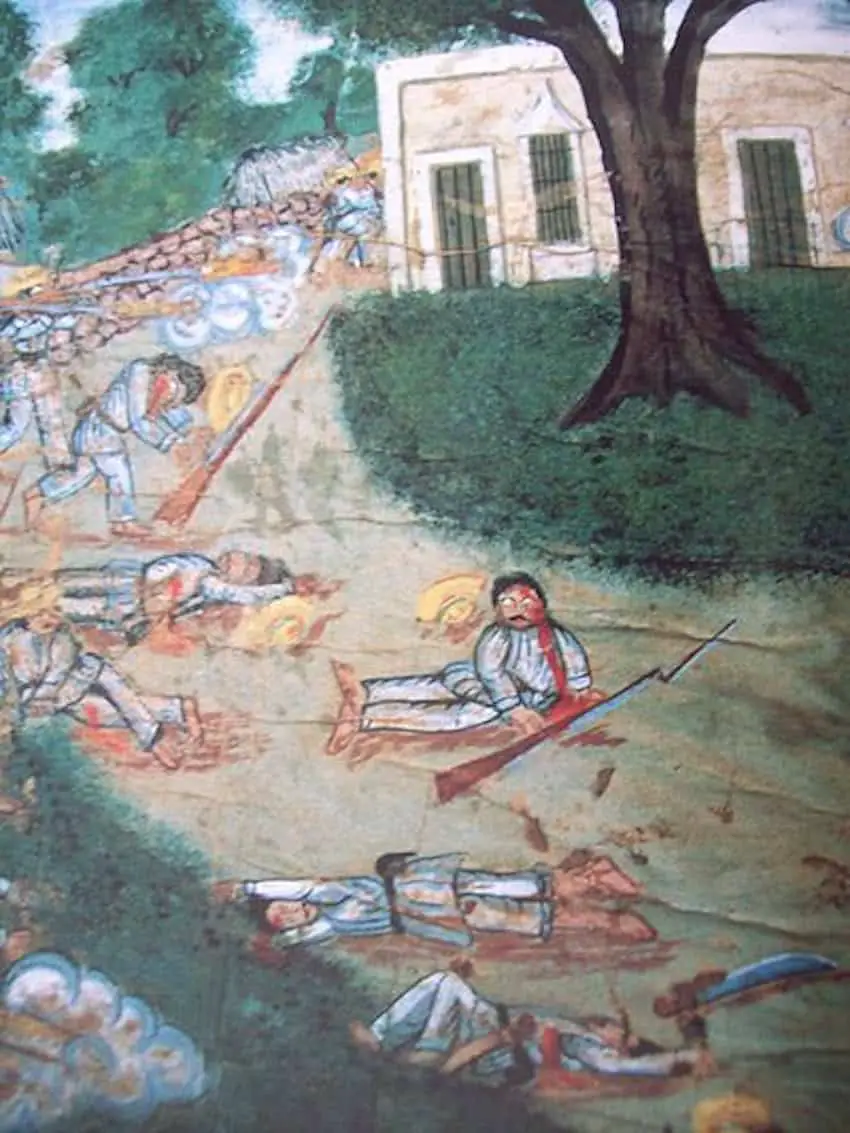
A contemporary oil painting depicting the Caste War, from an unknown artist. (Public Domain)

The situation changed dramatically in 1846. In April, the United States invaded Mexico. The political turmoil the Mexican-American War unleashed in Mexico led to the readoption of the Constitution of 1824 in August. The government in Mérida, led by Miguel Barbachano, received the news happily and prepared to rejoin Mexico, but a rival government led by Santiago Méndez Ibarra had appeared in Campeche. The Campeche government, which also claimed to represent the Yucatecan people, wanted the peninsula to remain independent and neutral in the war.

It was in this context of crisis on the Yucatán Peninsula that the Caste War broke out. This social movement of the Maya population against white and mestizo Yucatecans would last over 50 years, and of all the Indigenous insurrections in  Mexican history, the Caste War in the Yucatan Peninsula posed the greatest threat to the established order, coming within a hair’s breadth of victory. 

The uprising began with the sentencing to death of Manuel Antonio Ay on July 25, 1847. The village chief of Chichimilá, Ay was accused of leading a conspiracy to overthrow white rule on the peninsula. With his execution, Ay became the first Maya martyr of the war. 

With the weapons and training they received from the white Yucatecans during the 1839 rebellion, the conflict with Santa Anna and the struggle between the Campeche and Mérida governments, a group of Mayas led by chief Cecilio Chi and Jacinto Pat took up arms against them. One after the other, the wealthiest settlements south and east of Yucatán fell into the hands of the Maya until they conquered the city of Valladolid. After this, the entirety of the south and east of the Yucatán Peninsula was under Maya control for the first time in hundreds of years. 

Mayan Rebels in Ambergris Caye
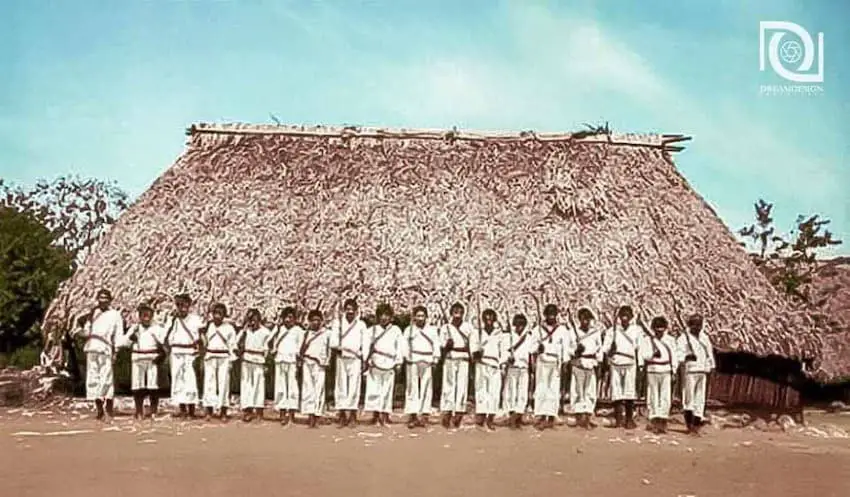
Maya rebels, in what is now Belize, during the Caste War. (Ambergris Caye)

Desperate, then-President of Yucatán Santiago Méndez Ibarra, the leader of the Campeche faction that opposed reincorporation into Mexico, sought support from the United States and Spain. He explicitly offered dominion and sovereignty over the Republic of Yucatan to whichever country offered military assistance. A “Yucatan Bill” paving the way for annexation actually passed in the U.S. House of Representatives, but ultimately stalled.

Unable to put an end to the Maya rebellion, Méndez resigned as president of Yucatán and offered the position to Miguel Barbachano, who ultimately requested assistance from the government of Mexico against the Maya in exchange for the peninsula’s  return to the republic. Yucatán rejoined Mexico in August 1848, and the resources they received from the federal government allowed the Yucatecans to push the Maya back to the southeast of the peninsula. 

The Maya rebellion, however, was revitalized in the 1850s by a religious movement known as the Talking Cross. The Maya established a state in modern-day Quintana Roo known as Chan Santa Cruz, which signed international treaties and was recognized by the British as an independent nation. The Caste War saw some 250,000 people die. Many captured Maya were also sold into slavery in Cuba by the Yucatecans.

The war officially ended in 1901 after troops of the Mexican federal army occupied the capital of Chan Santa Cruz, now the city of Felipe Carrillo Puerto. Fighting continued for decades, however, and it was only in 1935 that the last Maya holdouts signed a peace treaty with Mexico. 

Gabriela Solis is a Mexican lawyer turned full-time writer. She was born and raised in Guadalajara and covers business, culture, lifestyle and travel for Mexico News Daily. You can follow her lifestyle blog Dunas y Palmeras.