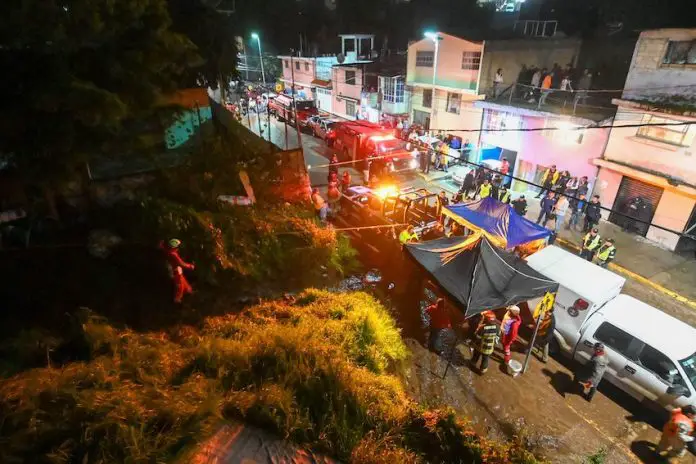
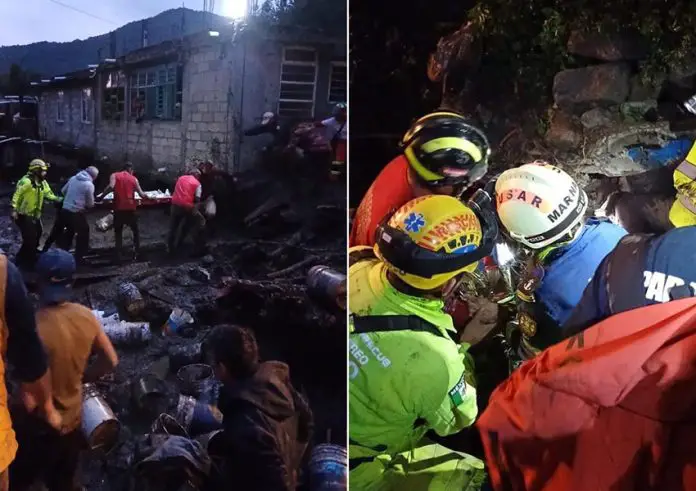
Another day of heavy rains in the Mexico City metropolitan area resulted in a second fatal mudslide in the capital’s outskirts. (Cuartoscuro)
Heavy rains in the Mexico City metropolitan area caused a fatal mudslide in the capital’s outskirts on Monday night, just days after a similar disaster that killed nine people in another México state municipality.
At least six people have been confirmed dead and three others were injured after a hillside collapsed in Naucalpan in México state on Monday night.
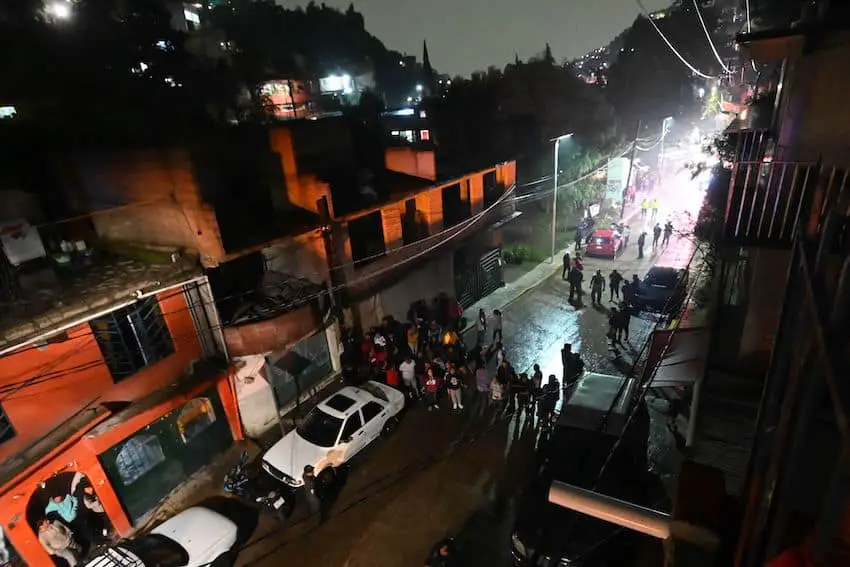
A hilltop that straddles the La Raquelita and Emiliano Zapata neighborhoods in western Naucalpan gave way on Monday night, killing six. (Cuartoscuro)
On Friday, a mudslide about 15 kilometers to the west of Naucalpan resulted in the deaths of at least nine people, after search teams on Monday found the bodies of five victims who had been reported missing.
Monday’s disaster occurred when a hilltop that straddles the La Raquelita and Emiliano Zapata neighborhoods in western Naucalpan gave way. The resulting mudslide destroyed one building and damaged a school.
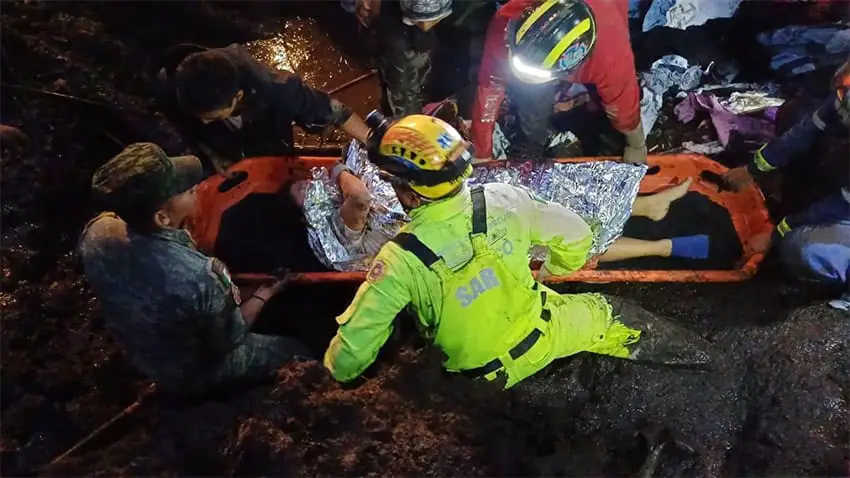
Neighbors immediately came to the rescue, arriving with picks and shovels and pulling two women to safety, but the bodies of four men and two other victims were recovered shortly after. It is not clear if the victims were inside their homes or out on the street when the mudslide occurred.
A third person was rescued and all three survivors are now being treated at the General Hospital of Naucalpan.
The rescue operation in Jilotzingo — the site of Friday’s tragedy — continued on Tuesday. (Protección Civil Edomex)
Governor Delfina Gómez ordered emergency personnel and heavy machinery to the area of the search and rescue operation which continued throughout the night even as heavy rains continued to fall.
The online news site Infobae reported that rescuers were forced to enter the crushed building from an adjacent property as they looked for more victims in the debris.
The rescue operation in Jilotzingo — the site of Friday’s tragedy — continued on Tuesday. Officials had completed the search operation at the location of the largest mudslide, which took down 16 buildings and a mini-mall, while authorities explored the other areas where smaller mudslides had simultaneously occurred.
Clean-up crews were working to remove debris, clear streets and salvage properties. Geologists who examined the area on Monday reported that at least 60 buildings were at risk of another landslide. The authorities ordered those 60 buildings evacuated, prompting officials to establish shelters for displaced families.
The state government set up four command posts to provide medical attention to victims. The state Health Ministry sent doctors and psychologists to attend to the needs of the residents.
The National Meteorological Service (SMN) forecasts more rain in the Naucalpan area this afternoon and another storm tonight.
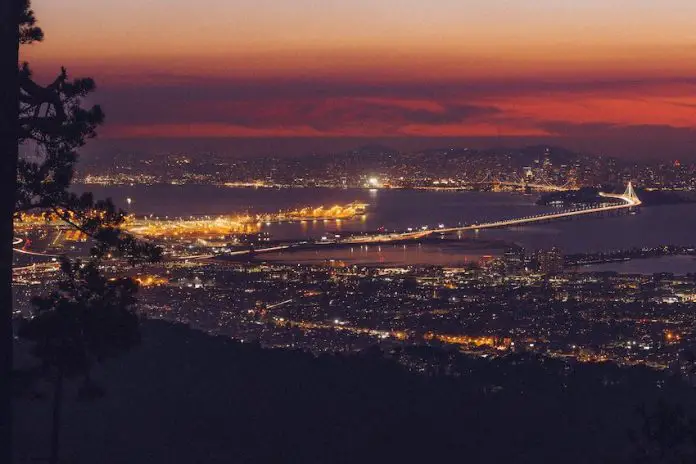
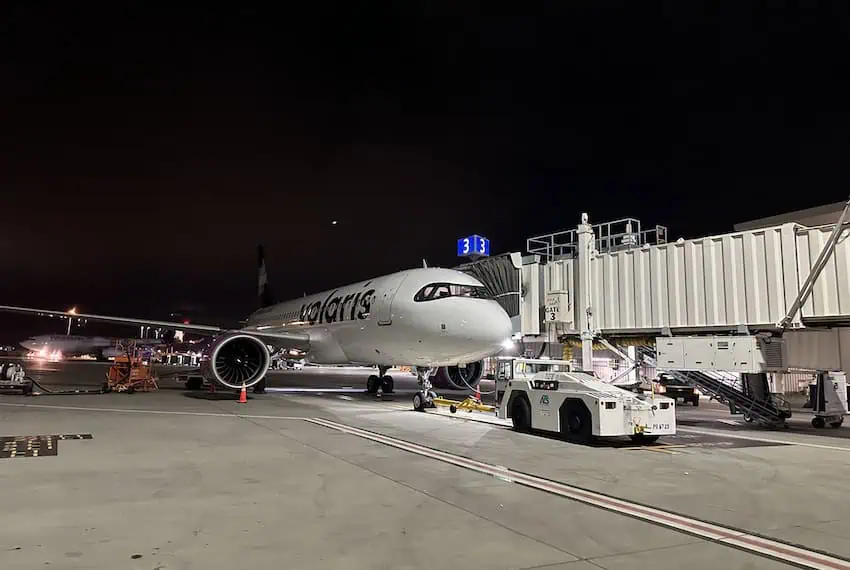
Volaris is the first Mexican airline to offer a direct flight from the San Francisco Bay Area to the Baja California coast.
(Unsplash)
Volaris has announced a new nonstop flight between the Baja California Peninsula and the San Francisco Bay Area.
Starting in March 2025, the flight will connect the city of Los Cabos (SJD), Baja California Sur, with San Francisco Bay Oakland International Airport (OAK) in California.
The southbound flight from OAK will arrive at SJD at 3:38 p.m; the northbound flight will arrive at OAK at 7:49 p.m.(@IFlyOAKland/X)
“We know very well that East Bay residents prefer to start their vacations from OAK, the convenient airport closest to home,” Port of Oakland Director of Aviation Craig Simon said.
“The new flights to Cabo are well timed for hotel check-in and check-out allowing Volaris customers to optimize their fun and relaxation at this very popular destination.”
Daily flights between OAK and SJD will depart OAK at 12:30 p.m. and arrive at SJD at 3:38 p.m. The northbound flight will depart SJD at 4:38 p.m. and arrive at OAK at 7:49 p.m.
This isn’t Volaris’s first route to OAK. The airline already flies from Oakland to Guadalajara (two daily flights), Morelia (six weekly flights), León/Guanajuato (six weekly flights) and Mexico City (one daily flight). Starting on Nov. 5, Volaris will add three weekly flights to Monterrey.
Volaris is the biggest Mexican airline, having transported 33.4 million passengers last year — 7.9% more than in 2022.
“We are thrilled to launch our new service connecting Oakland and San José del Cabo, bringing more low fares to Bay Area travelers,” the Executive Vice President of Volaris Holger Blankenstein said.
The new flight will be operated by Volaris’s fleet of Airbus A320 Neo aircraft.
Los Cabos is one of Mexico’s most visited beach destinations, offering tourists experiences such as whale watching (between December and March), sailing, sportfishing, championship golf and scuba diving.
OAK is the main airport for the greater East Bay, the most populated area in the metropolitan San Francisco Bay area.
Chocoflan's three layers of deliciousness have made it a hit worldwide. (The Spruce Eats)
When researching trending desserts in the United States, I was shocked to see chocoflan touted in both Taste Tomorrow and Bake Magazine as a rising star in the dessert world. The former publication stated that chocoflan is now one of the top trends in the patisserie industry, “reflecting a consumer interest in innovative and nostalgic desserts.”
I was surprised on several accounts. First, I didn’t know chocoflan was Mexican and second, I didn’t realize this “impossible” cake — as it’s known — was such a novelty. Please don’t let me scare you! It is not impossible to make: it’s the way it bakes that defies logic!
Recipe adapted from Edson Díaz-Fuentes (Betty Crocker)
Chocoflan is composed of three layers. The first is caramel. In the vintage version, this caramel, called cajeta, was made from goat’s milk, which adds superior richness to the cake. The second layer is chocolate cake; the third is flan. But the amazing thing is this: when the layers bake, they reverse. The cake ends on the bottom and the flan rises to the top. The process has even been called “miraculous.”
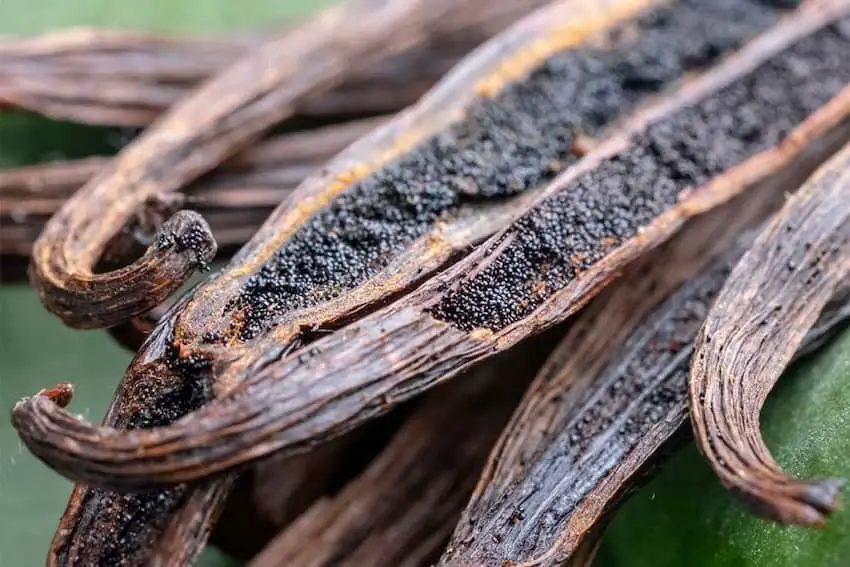
Chocoflan originated in Mexico around the mid-20th century and is a staple of its celebrations and get-togethers. The recipe included here is from Mexican chef Edson Diaz-Fuentes. Before we jump in, let’s talk about the vanilla that’s used in this recipe. “At home in Mexico,” Díaz-Fuentes says, “we traditionally use vanilla from Papantla, Veracruz, the aroma and flavor of which is much appreciated around the world.” That’s because this famous vanilla — and all vanilla — originated in Mexico centuries ago.
It was the Totonac people of Mexico, in around the area that is now Veracruz, who first cultivated the vanilla orchid and processed it into vanilla, which they used for ritual and medicinal purposes. Then the Mexica came and conquered the Totonacs, adopting their methodology for making this sweet, aromatic “spice” — vanilla is considered a spice because it is generated from the pods of orchids. The eventual Spanish conquest of Mexico saw the exporting of vanilla to Europe, and the rest is history.
But there was a problem: vanilla could only be grown in Mexico because its pollination required the Melipona bee, the only known natural pollinator of the vanilla orchid. It wasn’t until the mid-1800s that artificial hand pollination was developed, which expanded the process of making vanilla to the tropical world. By the early 20th century, Madagascar was the world’s leading producer of vanilla, a position it retains today along with Indonesia. Vanilla production, however, continues to be a labor-intensive process, and vanilla is the second most expensive spice in the world, after saffron.
Vanilla was first domesticated by the Totonac people on the Gulf coast of Mexico. (The Gardener)
Authentic Mexican chocoflan
Ingredients
For the caramel
1 cup caster sugar (azúcar estándar). Caster sugar is superfine granulated sugar; to make, simply put granulated sugar in a food processor and give it a couple of pulses.
For the chocolate cake
¾ cup salted butter, softened, plus extra for the pan (mantequilla con sal)
1 cup caster sugar
2 eggs (huevos)
1 ¾ cups all-purpose flour (you may find that the all-purpose flour available in Mexico does not work as well, in which case you can order a familiar brand online)
½ cup cocoa powder (cacao en polvo)
2 tsp ground cinnamon (canela molida)
½ tsp baking powder (polvo para hornear)
½ tsp baking soda (bicarbonato de sodio)
½ cup buttermilk (¾ cup of sour cream plus ¼ cup milk will make 1 cup of buttermilk)
For the flan
1 ¼ cups condensed milk (leche condensada)
1 cup evaporated milk (leche evaporada)
½ cup cream cheese (queso crema)
3 eggs
1 tbsp vanilla extract (extracto de vainilla). Mexican brands: Villa Vainilla, Vainilla Totonac, Molina Vainilla.
1 ¼ tbsp toasted pumpkin seeds (semillas de calabaza)
Optional: crushed ancho chili flakes (hojuelas de chile ancho trituradas)
Instructions
Prep
Heat the oven to 200 C (392 F), or 180 C (356 F) for a gas oven.
Butter and breadcrumb a large bundt pan, about 2.5 liters or 9 cups in volume. Use breadcrumbs instead of flour for easy release.
Select a deep roasting pan to use as a bain-marie (water bath). It should be deep enough to accommodate the cake pan. Pour enough water into the pan to come halfway up the sides.
Put the roasting pan in the middle shelf of the oven while it preheats.
Making the caramel
Put the caster sugar and 1/4 cup of water into a pan and stir to dissolve for 1 minute. Once dissolved, don’t stir again.
Cook over a medium-high heat for a few minutes until it turns a deep golden color.
Pour into the base of the bundt pan.
Making the chocolate cake
Use a stand mixer to cream the butter and sugar for 5 minutes until light and fluffy.
Add eggs and mix for a further 2 minutes until well combined.
Add dry ingredients in small portions, alternating with the buttermilk.
Once everything is well incorporated, put the cake batter into a piping bag and set aside. To make a piping bag, pour batter into a zip-lock or sandwich bag. Squeeze batter into the corner of the bag. When ready to use, snip the corner of the bag diagonally. The size of the snip will determine how much batter is released.
Making the flan
Put all ingredients into a blender and mix on high speed for 2-3 minutes or until well combined.
Set aside.
Assembling the chocoflan
Pipe the cake batter into the cake pan, covering the caramel you added earlier.
Level using a rubber spatula.
Pour the flan mixture on top of the cake batter.
Cover the cake pan with foil and put it in the bain-marie (water bath). If you need to, pour additional hot water into the roasting pan. It should come halfway up the sides of the pan.
Bake for 35-40 minutes or until the cake mixture has floated to the top of the pan.
Test by inserting a sharp knife into the deepest parts of the cake. It should come out clean. If not, bake for another 5-10 minutes.
Remove the cake from the bain-marie (water bath) and let it cool completely before taking it out of the pan. Shake the pan in circular movements to loosen any points of cake that stick to the pan around the edges.
Garnish with chopped toasted pumpkin seeds, toasted amaranth and cacao nibs.
Adding a touch of crushed ancho chili flakes will add a different dimension.
Did this chocoflan recipe work for you? Make any changes? Let us know in the comments below.
Deborah McCoy is the one-time author of mainstream, bridal-reference books who has turned her attention to food, particularly sweets, desserts and fruits. She is the founder of CakeChatter and the author of four baking books for “Dough Punchers” via CakeChatter (available @amazon.com). She is also the president of The American Academy of Wedding Professionals.
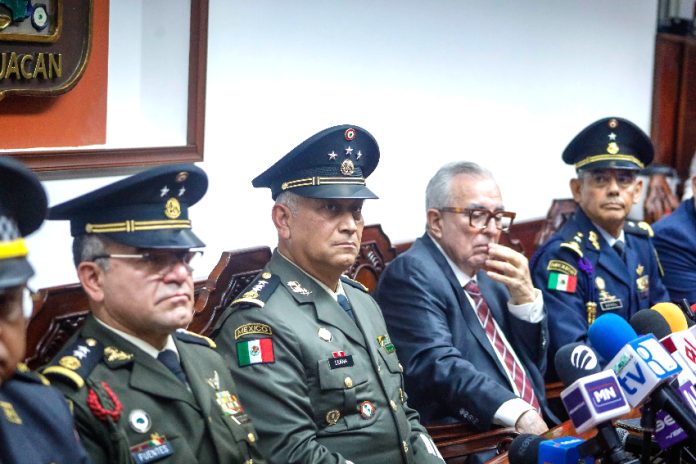
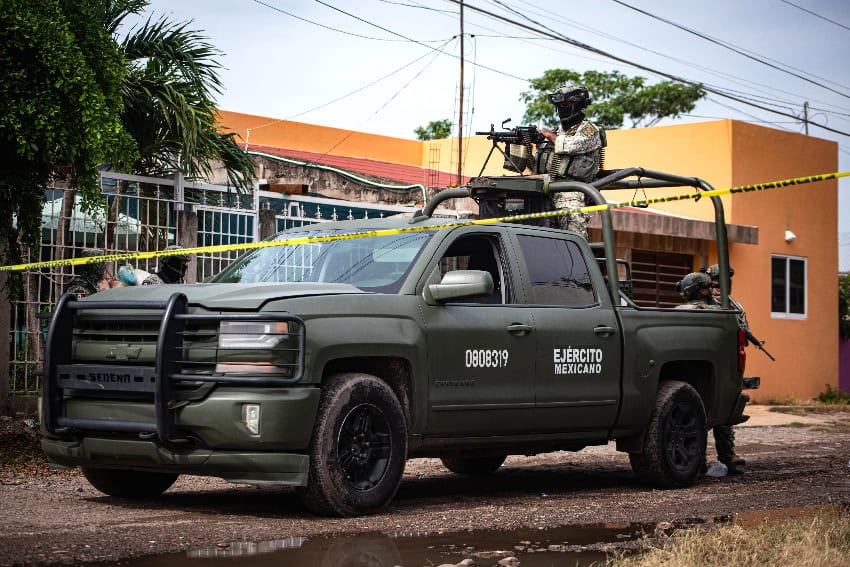
General Jesús Leana Ojeda (center) spoke about the Sinaloa security situation at a press conference on Monday with the state's governor, Rubén Rocha Moya (to the general's left). (Cuartoscuro)
A Sinaloa-based army commander appears to have admitted that the military is incapable of controlling violence in the northern state, saying that the reestablishment of order will only come when rival criminal factions stop fighting each other.
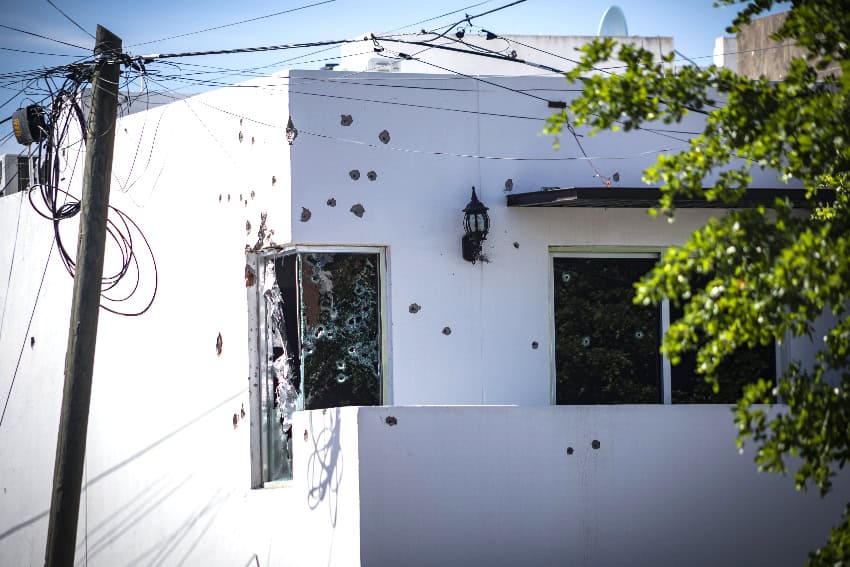
At least 39 people were killed in state capital Culiacán and nearby municipalities between Sept. 9 and 16 as a long-running battle between the “Los Chapos” and “Los Mayos” factions of the Sinaloa Cartel escalated.
Culiacán has seen an eruption of violence in the past week as confrontations between factions of the Sinaloa Cartel escalate. (Cuartoscuro)
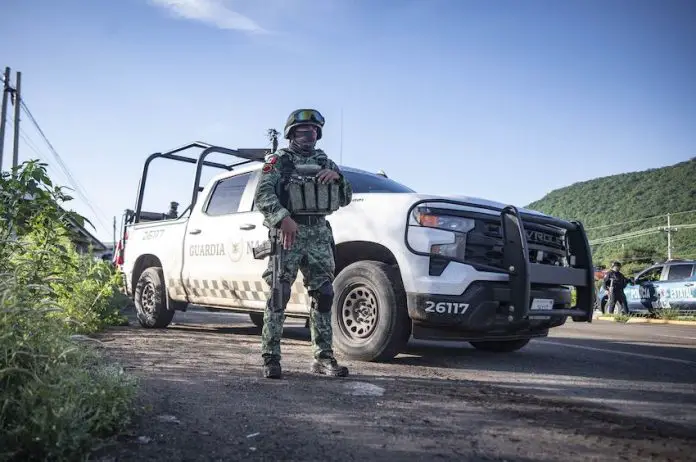
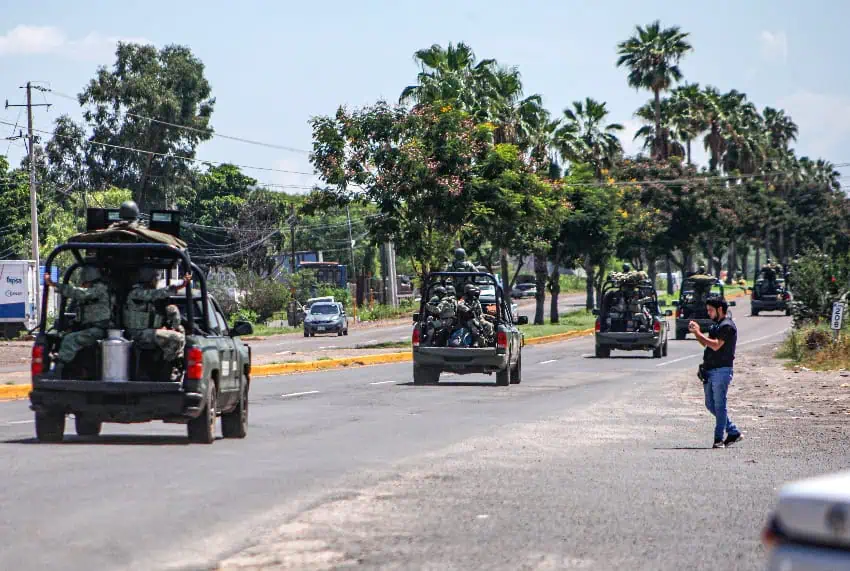
In the same period, the army and National Guard — both of which play a central role in the federal government’s security strategy — were involved in more than a dozen confrontations with armed men in Sinaloa, including one on Monday during which one soldier was killed.
At a press conference on Monday, the top army official in Sinaloa said he hoped that peace would be restored in the state “as soon as possible.”
However, that eventuality “doesn’t depend on us,” said Commander Francisco Jesús Leana Ojeda.
There has been an increased presence of the Mexican armed forces in Culiacán since the arrest of Ismael “El Mayo” Zambada in July. (Cuartoscuro)
“It’s up to the opposing groups to stop confronting each other and to leave society in peace,” he said.
Pressed as to whether security in Sinaloa really depends on a truce between rival criminal groups, Leana responded:
“It depends on them, they’re the ones carrying out attacks and taking lives. We’re not doing that. On the contrary, we’re here to avoid confrontations and the loss of human lives.”
Despite the loss of more than three dozen lives in just eight days, and the abduction of more than 30 people in the same period, Leana asserted that the army has achieved “good results” in Sinaloa.
Ismael “El Mayo” Zambada claims he was kidnapped by one of Joaquín “El Chapo” Guzmán’s sons and forced onto a plane bound for Texas, were he was arrested on July 25. (X)
“We’re living through a confrontation between opposing groups, we’re constantly planning the contention of attacks between them, between factions and we’ve had good results,” said the army commander.
According to state and federal authorities, security forces arrested 27 alleged cartel members in Sinaloa between Sept. 9 and 16 and seized more than 100 firearms, some 25,000 rounds of ammunition and 57 vehicles, including 12 armored pickup trucks and a fake police car.
Leana said that more than 3,000 members of the army, National Guard and Mexican Air Force are currently deployed in Sinaloa.
The escalation in the conflict between “Los Chapitos,” a Sinaloa Cartel faction led by the sons of convicted drug lord Joaquín “El Chapo” Guzmán Loera, and “Los Mayos,” a faction loyal to Ismael “El Mayo” Zambada García and his son Ismael “El Mayito Flaco” Zambada Sicairos, comes after the arrest of Zambada García in the United States on July 25.
El Mayo, a co-founder of the Sinaloa Cartel along with Guzmán Loera, has accused Joaquín Guzmán López, one of “Los Chapitos”, of kidnapping him in Culiacán and forcing him onto a plane that delivered him, and Guzmán López, into the hands of U.S. law enforcement authorities.
Zambada is currently in custody in New York, while Guzmán López is behind bars in Chicago.
A trip to Veracruz's Gulf Coast means escaping the cloud forests for the chaos and magic of the port city - and the downtown that defines it. (Expedia)
I’ve been spending much more time in the port city of Veracruz because of my partner’s job. Downtown Veracruz, to be precise.
Most of Veracruz state is rugged highland. The city of Veracruz itself is a riot of life, humidity and history. (Shutterstock)
It’s never a good idea to leave the house without a sweater and an umbrella. You can practically drink your weight in coffee without even realizing it. People are polite, but not exuberant.
De-pressurizing at sea level
But oh, slide down 1,417 meters of mountain range to the city of Veracruz, and how things change! The air even loosens up, infusing your lungs suddenly with a bounty of unexpected oxygen. If it weren’t for the oppressively wet heat, all that oxygen would have me running giddily in circles.
Once in Veracruz, stepping off the bus — or out of the car — is a shock to the system. The engulfing hot and muggy air always makes me start sweating immediately. It’s hard not to be self-conscious among the city’s residents, who seem perfectly used to it and not at all sweaty.
They’d never make you feel silly for it, though.
Los Jarochos
“Jarochos” are even more vibrant than their city, filled with life, color and passion. (Mexican Routes)
And let me tell you something: they are fun. They are nice. They are exuberant and gregarious. They do not attempt to be coy; they stare openly, and let you know it, though it somehow doesn’t feel aggressive. They say hello, and how are you, and they will probably wish you a good day.
They’re also funny. On a recent trip as I walked along the “malecón” (boardwalk) with my daughter after buying her the requisite güero güera ice cream, a man approached. After calling me “my love,” “my queen” and “my life,” he tried to sell me a watch from his collection. “They’re stolen, but they’re good!” he exclaimed.
If Xalapeños are cats, cool and collected, jarochos are the happiest — and sometimes the naughtiest — of puppies. “Hi, hello! I’m interested in you!”
It’s an interesting cultural personality given the physical backdrop.
The trees of Veracruz: “This is ours now”
If you decide to stroll around downtown Veracruz, you’ll notice that many parts of it seem downright gritty. Building after building is deteriorating, many of the large, old properties abandoned and/or in limbo. I haven’t been to Cuba, but it looks and feels the way I imagine urban Cuba to look and feel.
Some parts of the city center are being reclaimed by nature. It gives the whole town a very Havana feel. (Sarah DeVries)
The main story I’ve heard about the lack of upkeep of historic buildings, which is what most buildings in downtown Veracruz are, is aboutred tape. Some of them have been standing for 500 years, and well, wear and tear is bound to happen. While there’s certainly interest in rehabilitating these old buildings, the nightmare of paperwork and at times contradictory official requirements for remodeling is enough to discourage even the most enthusiastic investors. Some owners have even decided to just wait for their buildings to colapse. The reason? Once they do, they’re free to build on them without all the historical preservation rules.
In the absence of much human intervention, the trees have taken over. “This is mine now,” they seem to say as they grow out of the windows and over the roofs. It’s a part of the city that feels as if nature is reclaiming it, little by little.
Go down the coast a bit, and things get cleaner, nicer. Boca del Río is practically Miami by comparison: the fancier, more modern, more air-conditioned Veracruz. But if you want to take a stroll among the ghosts of early Mexico and meet their gregarious descendants, then Downtown Veracruz is the place for you.
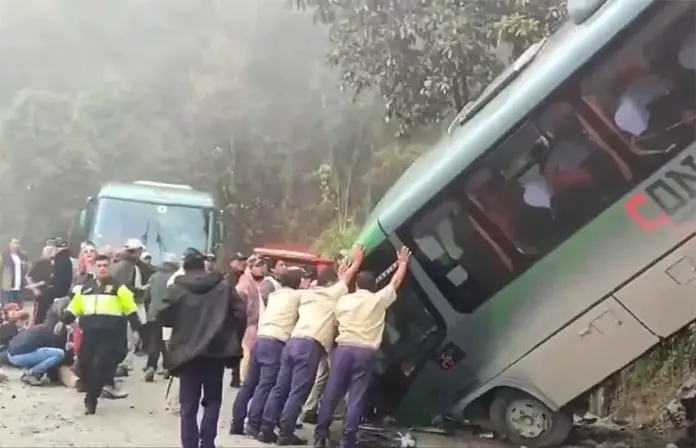
At least 9 people were injured in when the tourist bus went off the road, falling to the switchback below. (Screenshot)
Four Mexicans were injured in a crash on Monday when a tourist bus plunged off a road near the ancient Inca city of Machu Picchu in Peru, the Mexican government said.
The Ministry of Foreign Affairs (SRE) said on social media that four Mexicans sustained “multiple fractures” when the bus in which they were traveling crashed.
#Urgente Bus de la empresa Consettur que traslada turistas de Machu Picchu Pueblo al Parque Arqueológico se despistó hoy en la carretera Hiram Bingham. pic.twitter.com/AzugnsZErB
The bus went off the edge of a winding mountain road near Machu Picchu on Monday, amid foggy conditions.
At least five other tourists were also injured, but no deaths were immediately reported. Those injured were taken to a nearby medical facility for treatment.
In a video posted to social media by the journalist Lourdes Mendoza, a Mexican who was on the bus said that three other Mexicans were seriously injured.
Speaking from a clinic, Jorge Polanco said that those three people — among whom is his wife — had broken their legs and hips.
“They don’t know how to treat them,” added Polanco, who was also injured, according to Mendoza’s post.
The news website Perú 21 reported that approximately 32 foreign and Peruvian nationals were on board the bus when it crashed onto a lower section of a winding road on Monday morning.
The bus was returning to the town of Aguas Calientes from Machu Picchu when the accident occurred, according to the bus company Consettur MachuPicchu.
According to witnesses cited by Perú 21, the bus driver’s sight was impeded by fog.
The SRE said that the Mexican Embassy in Peru was in contact with the injured Mexicans and would provide them with the assistance they require.
AYUDA A los heridos en el accidente en #Perú donde hay mexicanos los están tratando de trasladarlos en un tren “No están organizados , nos saben qué hacer “ me dice Jorge Polanco https://t.co/F3kYwtMxiUpic.twitter.com/DOVIyvfW8l
In another video posted to X by Mendoza, Polanco said that Peruvian authorities were “trying to transport those injured by train,” presumably to a better-equipped hospital.
However, “they’re not organized, no one knows what to do,” he said.
The town of Aguas Calientes is located northwest of the city of Cusco. A train trip between the two destinations takes more than four hours.
According to Reuters, “deadly bus accidents are common in Peru, where many buses travel on precarious mountain roads or are driven by inadequately trained drivers.”
A three-month-old baby was among the four people confirmed dead on Monday, more than two days after the first in a series of deadly mudslides in San Luis Ayucan. (Protección Civil Edomex)
Four people are dead and five were still missing on Monday after a series of mudslides near the México state town of Jilotzingo on Friday night.
Heavy rains caused the inhabited hilltop known as La Peña to come apart, with several houses and large sections of mud thundering down into the San Luis Ayucan neighborhood of Jilotzingo, about 50 km northwest of Mexico City.
Eight houses were destroyed, according to the México state Civil Protection agency.
Emergency responders were quickly on the scene after the first mudslide but other mudslides occurred over the weekend. In addition, sections of the town were under water after a nearby river surged over its banks.
“There have been several mudslides in the municipality,” a Civil Protection official told the newspaper El Universal,” but we are focusing on ground zero where we continue to carry out search and rescue operations.”
Though authorities admitted that finding survivors was less and less likely after three days, they were determined to recover the bodies of all the victims.
Rescuers managed to dig out three survivors, a woman and two children, on Saturday. (Protección Civil Edomex)
On Saturday, three people were rescued and transported to the Lomas Verdes Hospital in nearby Naucalpan. The survivors were described as a 12-year-old boy, a 10-year-old girl and a 34-year-old woman.
The online news site Infobae reported that the rescue occurred after 11 hours of intense labor and the combined effort of state and local authorities, the Army, the Navy, the National Guard and rescue dogs.
Jilotzingo Mayor Ana Teresa Casas González urged local residents to remain indoors. She also asked non-residents to stay away.
“We call upon the general public to avoid driving through San Luis Ayucan since it is the area most directly affected,” she said, according to Infobae. “And [residents] should remain indoors while the authorities evaluate the situation.”
In conjunction with the state Civil Protection authorities, Jilotzingo officials sent emergency personnel into the neighborhood and surrounding areas to check in on the residents. Clean-up crews were also onsite Monday and geologists were examining the surrounding hillsides to determine if evacuation was necessary.
México state Governor Delfina Gómez had been in contact with local authorities to provide all necessary assistance, briefly visiting the site on Saturday.
Two weeks passed before Gómez visited Chalco on Aug. 15, and a month later many streets remain inundated with stagnant, contaminated water. The TV news program Telediario México reported Monday that some progress had been made as the dank waters had been drained away in two Chalco neighborhoods such that a few businesses were opening their doors again.
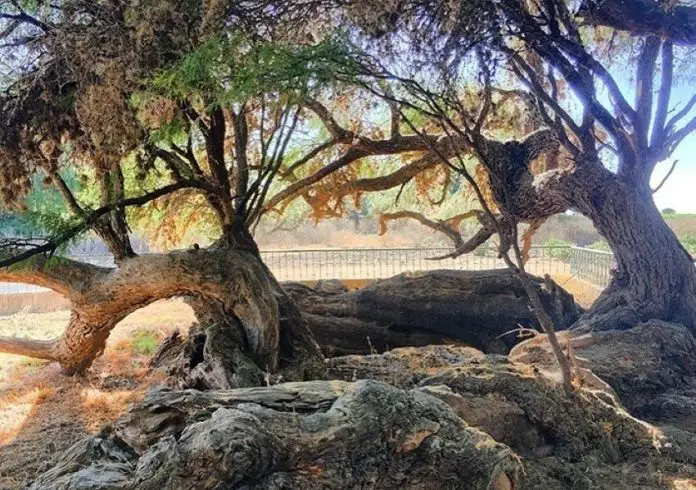
This unassuming mesquite tree was the sight of a quiet mass, held by priest Miguel Hidalgo, as his band of revolutionaries marched to declare insurrection. (Ricardo Espinoza/Facebook)
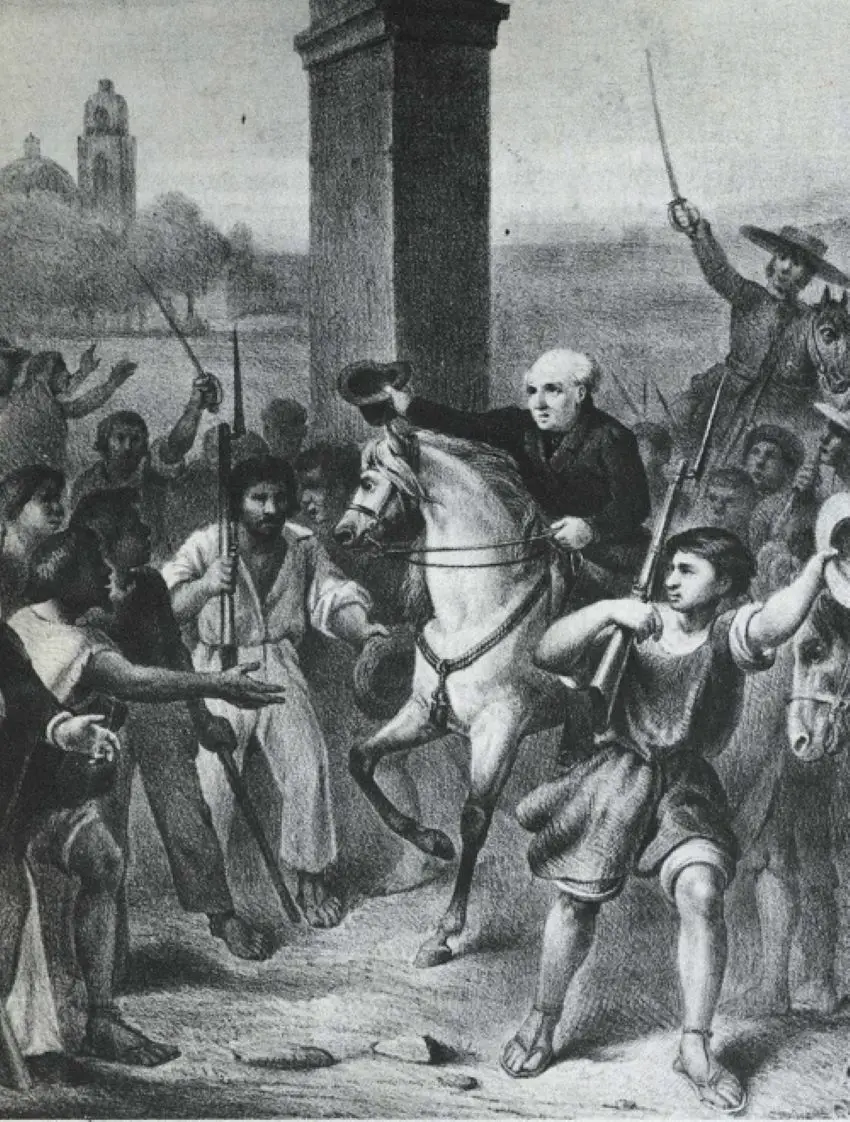
Each year at 11 p.m. on September 15, the Grito de Dolores — the famous call to arms or “cry for independence” made by Father Miguel Hidalgo y Costilla in 1810 on the steps of the parish church in Dolores Hidalgo — is reenacted in cities and towns of all sizes throughout Mexico, followed in most cases by an impressive fireworks display and jubilant celebrations. The festivities continue throughout September 16, Independence Day, with parades featuring schoolchildren dressed as adorable revolutionaries and plenty of patriotic speeches, among other activities.
But one small community with a big claim to fame adds a particularly poignant commemoration to the mix. The community of la Erre, home to the once-powerful Hacienda de la Asunción de la Erre, lies four kilometers from that famous church in Dolores Hidalgo, and it was the first stop for Padre Hidalgo and his ragtag band of soldiers on their march to war.
The early hours of September 16 saw a group of revolutionaries declare independence from Spain in the town of Dolores Hidalgo. (Gobierno de México)
The actual Grito de Dolores happened around 2:30 a.m. on September 16, 1810, when Hidalgo rang the church bells to call his congregation from their beds. With Ignacio Allende and Juan Aldama at his side, the priest urged his people to revolt. While Allende and Aldama then rode off to garner reinforcements, Hidalgo led a band of men to the Hacienda de la Erre, where they arrived around dawn. Allende and Aldama joined them there, and over a meal with the owners of the hacienda, Miguel, Luis and Manuel María Malo, they reflected on what they had just done and considered how best to move forward. They established the first cabildo, or leadership structure, for their fledgling revolutionary army. Moreover, Father Hidalgo said a mass for the assembled rebels—who represented a wide variety of social classes—under a mesquite tree at 11 a.m. that morning, providing a powerful religious imprimatur to the cause of justice and independence. So fortified, the fledgling fighters then marched on to Atotonilco and San Miguel de Allende.
A commemorative mass is now said every year on that exact spot, by the sacred mesquite tree. According to a plaque at the site, the mesquite has survived floods, fires, logging and even a lightning bolt that cracked it, causing many of its branches to lie at ground level, from which new branches have taken root. The tree is fenced off for protection, but at this year’s commemorative mass, no one complained when a young child climbed onto the inviting branches. As one bystander commented, “It is for her, our future, isn’t it, that we preserve the past?”
The Hacienda de la Erre was one of the oldest in Mexico founded by the sixth Mariscal de Castilla, Tristán de Luna y Arellano, soon after his arrival in México in 1535. Construction of the current buildings began in 1635.
At this year’s commemorative mass, subdelegada (local government representative) Erika Morales shared her passion for her community and its place in history. “My family has lived here for generations. I feel a profound connection to this earth and the powerful moment in history that occurred right here. Here, the values of independence, brotherhood, justice, and faith were put forth as the goals of our nation.”
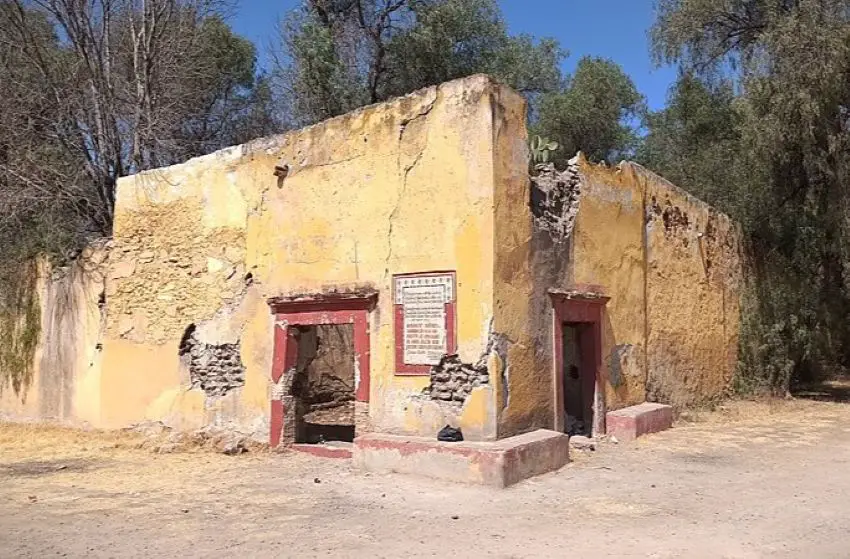
Today, the hacienda lies mostly in ruins. (Wikimedia Commons)
The current condition of the hacienda makes the annual commemorative event all the more poignant. While the 389-year-old exterior walls of the enormous main house still stand, the interior is crumbling into ruin due to severe floods that have caused the foundation to sink by several meters. This and other difficulties such as Conagua expropriation, pillaging, and the economic challenges of maintaining such a property have resulted in it becoming unlivable.
“I feel such nostalgia for my childhood here in this beautiful place,” said Angelina Torres Aguilar, who co-owns the property with other family members. She grew up at the ex-hacienda when it was still a working cattle ranch with turkeys and over a hundred peacocks. The villagers would gather peacock feathers and take them into Dolores to sell. “We dream of one day being able to restore it to a condition worthy of its history.”
Her daughter, Laura Rodríguez Torres, shared more of that history: “The Ruta de la Plata, the main road of Camino Real Tierra Adentro, connecting mines, haciendas and towns from Guanajuato to Mexico City and Veracruz among many more cities, ran right through here, by the hacienda. All major trade routes, such as the Silk Road, bring together people from all over the world with different belief systems, spices, plants, and animals, and that’s exactly what happened here: there was a great mestizaje, a tumultuous mixing of the Spanish, the local Chichimecas, Otomís, free mulatos as well as indigenous cultures brought in from other parts of Mexico, too, plus quite a few Africans. At that time, this region was Nuevo España’s northern frontier. The diverse contributions of so many different cultures forged this country.”
She continued, “There has certainly been suffering in the course of that history. As the priest said in his sermon today, our society still must strive toward justice in order to create peace. We still have work to do — and remembering our history is an important part of it.”
Based in San Miguel de Allende, Ann Marie Jackson is a writer and NGO leader who previously worked for the U.S. Department of State. Her award-winning novel “The Broken Hummingbird,” which is set in San Miguel de Allende, came out in October 2023. Ann Marie can be reached through her website, annmariejacksonauthor.com.
Governor Rubén Rocha said that all areas of the state where violence is occurring are a "priority" for his government, particularly the city of Culiacán. (José Betanzos/Cuartoscuro)
The violent fallout from the arrest of alleged Sinaloa Cartel leader Ismael “El Mayo” Zambada García continues.
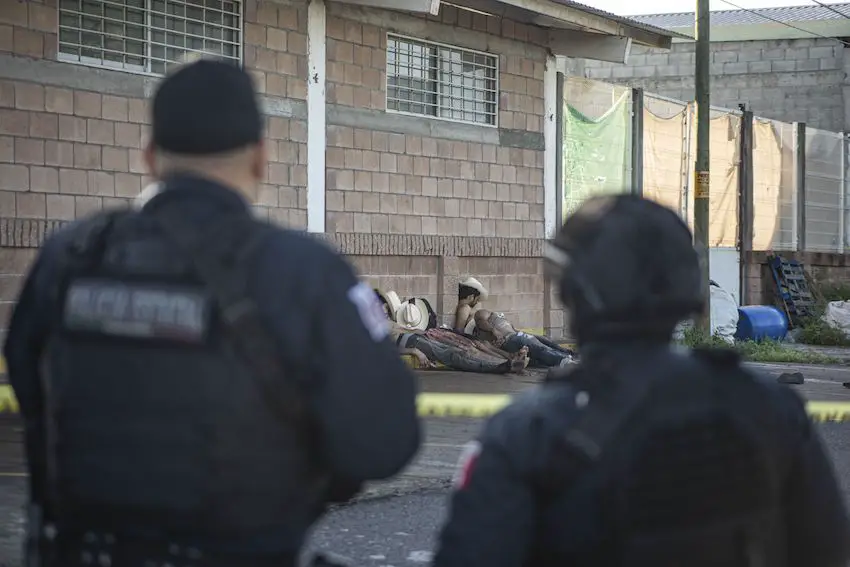
A soldier was killed and two other people were found dead in Culiacán, Sinaloa, on Monday morning, authorities said.
Five men were found murdered on a street in southern Culiacán on Sunday morning. (José Betanzos/Cuartoscuro)
The deaths came after at least 36 people were killed and more than 30 were abducted in Culiacán and nearby municipalities in the seven days to Sunday. Seventeen of those killings occurred on Saturday and Sunday. Three armed men were killed in a shootout with soldiers on Saturday.
Sinaloa Governor Rubén Rocha Moya told reporters that a soldier was killed Monday morning in a clash with armed men in the La Campiña neighborhood of the state capital.
The state Security Ministry said on social media shortly after 7 a.m. that it had received reports of gunfire in La Campiña.
“It’s an attack on military personnel by armed civilians,” the ministry said.
El Mayo has accused Guzmán López, an alleged Sinaloa Cartel leader and one of the sons of convicted drug lord Joaquín “El Chapo” Guzmán Loera, of kidnapping him in Culiacán and forcing him onto a plane that delivered him into the hands of U.S. law enforcement authorities. He is currently in custody in New York, while Guzmán López is behind bars in Chicago.
The main cause of the recent violence in Culiacán is believed to be Sinaloa Cartel infighting between the “Los Chapos” and “Los Mayos” factions of the powerful criminal organization.
Sinaloa government targeted in cyberattack
“Cowards it would be better that you f*** off and don’t come back. More death is coming in Sinaloa.”
Those were the ominous words that appeared on the website of the Sinaloa Tax Administration Service (SATES) website on Sunday afternoon.
The message was signed “Nuevo Virus,” or New Virus.
Durante algunos minutos, la página web del Sates y del Cobaes fueron hackeadas y colocaron un mensaje en contra del Gobernador Rubén Rocha Moya; el hackeo fue confirmado por el Gobierno de #Sinaloa
👉https://t.co/Y8nEWLssx5pic.twitter.com/XINZZfVGrD
A similar message specifically directed at Governor Rocha appeared on the website of a state government school, the Colegio de Bachilleres del Estado de Sinaloa (Cobaes).
“Governor Rocha Moya. Here is not the land of cowards. It would be better that you f*** off and don’t come back. More death is coming in Sinaloa,” the message read.
Both the SATES and Cobaes websites couldn’t be reached when Mexico News Daily attempted to view them on early Monday afternoon.
The social communication department of the Sinaloa government said that the cyberattacks were detected “immediately” on Sunday, security systems were activated and the situation was brought under control in “approximately 10 minutes.”
Rocha, a representative of Mexico’s ruling Morena party, was asked on Monday whether the threats posted online came from a criminal group.
“It could be from anyone,” he said.
“It could be from [political] opponents who are taking advantage of the situation politically,” the governor said.
Rocha said he hadn’t increased his personal security detail in light of the threat, but revealed that he had asked the federal government for additional support to confront the high levels of violence in Sinaloa.
“It would be better that we had a little bit more support — I already requested it from the federal government,” he said, adding that he specifically asked for more planes to assist the fight against crime.
As Mexico and the world turn a new page, what's in store for 2025? (Cuartoscuro)
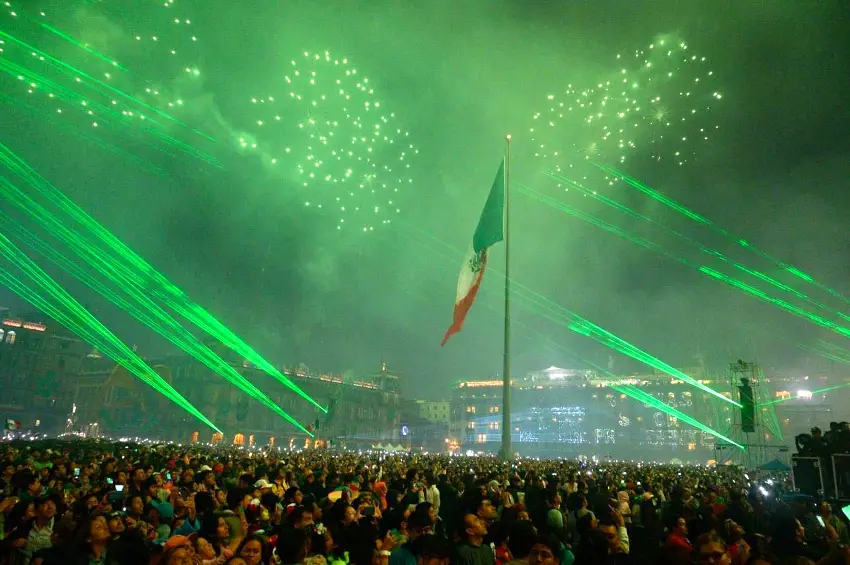
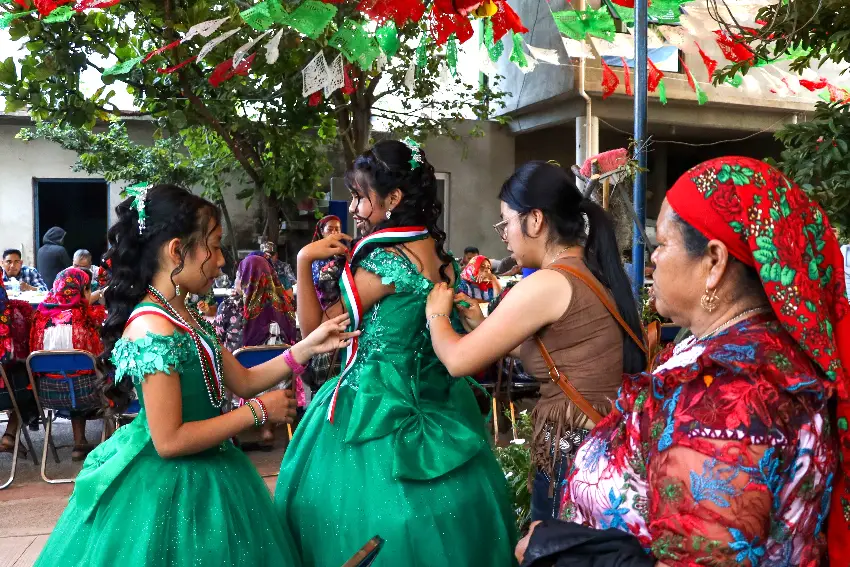
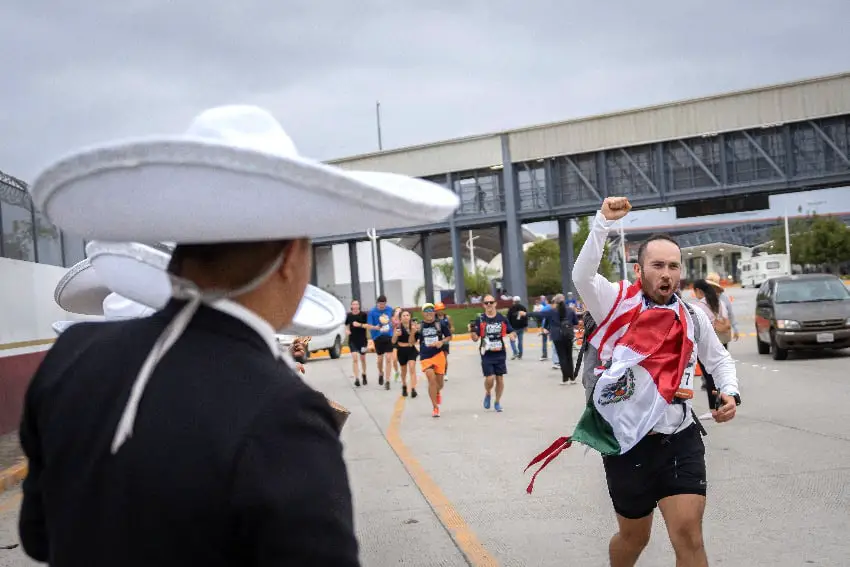
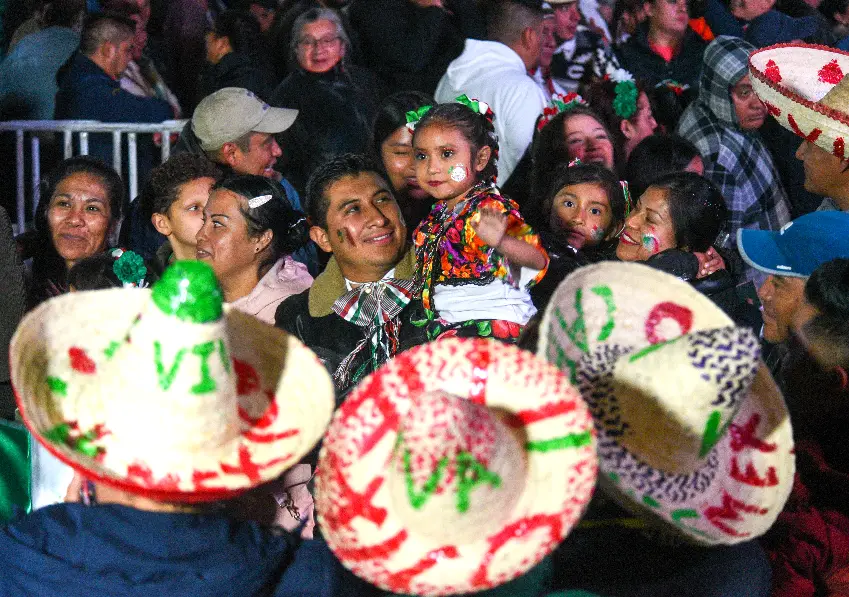
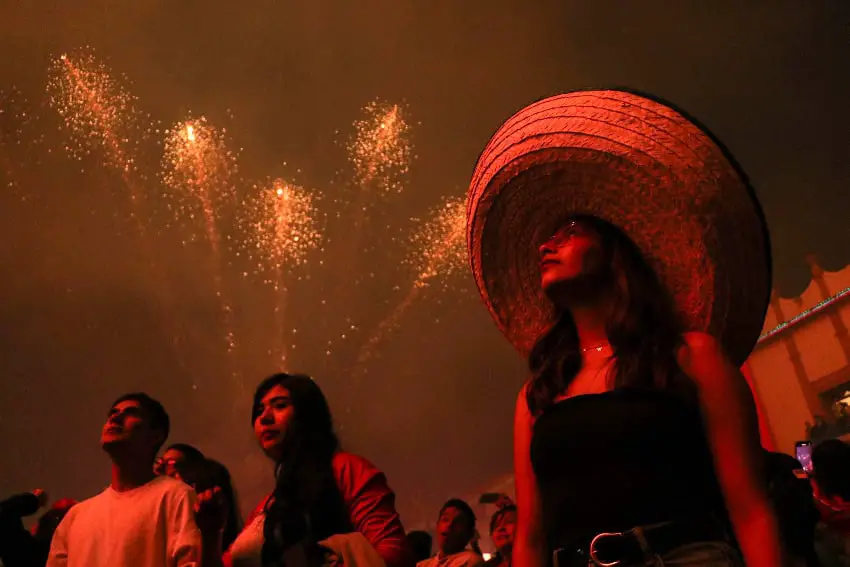
Take a visual tour of Mexico’s celebrations of Independence Day around the country — from the Mexico City zócalo to the border with the U.S. in Tijuana.
Mexico City
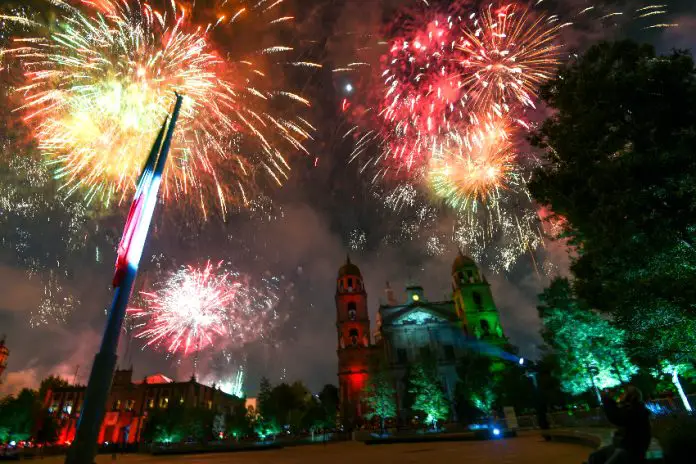
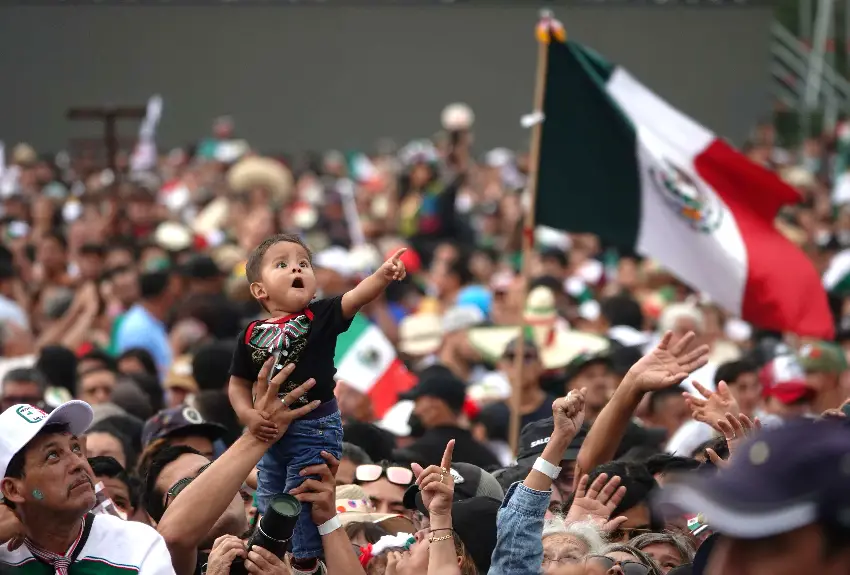
Thousands gathered on Sunday for President López Obrador’s final “Grito de Independencia” as president in Mexico City. (Cuartoscuro)The zócalo or main square in Mexico City’s historic center was lit up with fireworks and lighting displays on Sunday night. (Cuartoscuro)
San Bartolomé Quialana, Oaxaca
In San Bartolomé Quialana, Oaxaca, an Indigenous Zapotec community, a parade is held every year to celebrate Mexico’s Independence Day. (Cuartoscuro)
Tijuana, Baja California
On the morning of Sept. 15, the “binational race” was held in honor of Mexico’s Independence Day, a half-marathon starting on the U.S. side of the border in San Diego and ending on the beach in Tijuana. (OMAR MARTÍNEZ/ CUARTOSCURO.COM)
Toluca, México state
A crowd gathered to watch the “Grito de Independencia” in the capital city of México state, Toluca, on Sunday night. (Cuartoscuro)
Zacatecas, Zacatecas
A crowd watches the fireworks display to celebrate Mexico’s Independence Day in the city of Zacatecas. (Cuartoscuro)