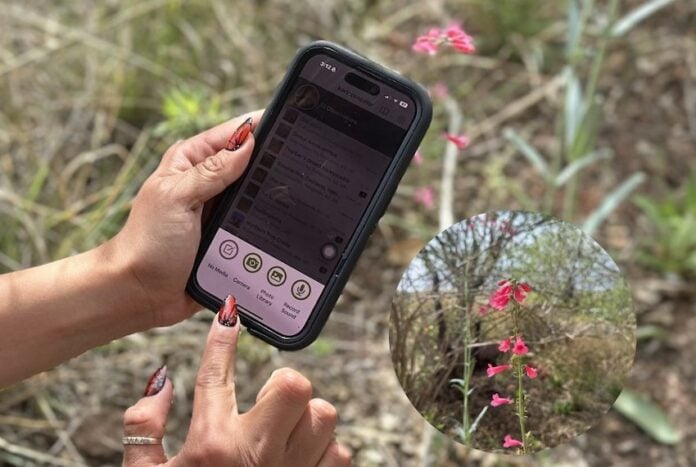
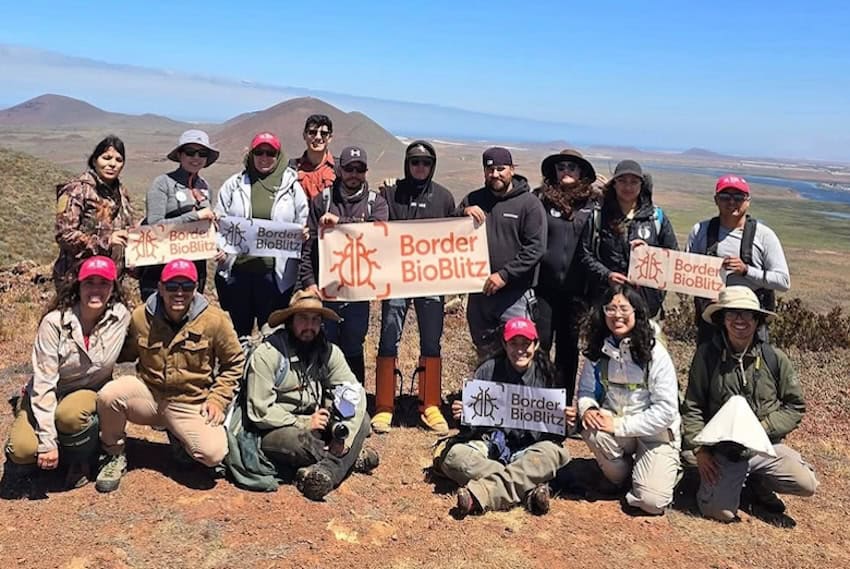
Using their cell phone cameras and the iNaturalist app, BioBlitz volunteers gather together to record the occurrences of plants and animals within 15 kilometers of either side of the border. (Borderlands Restoration Network/Facebook)
Along a border better known for razor wire, patrol trucks and hundreds of miles of steel fencing, volunteers this spring are fanning out with smartphones to count wildflowers, lizards and birds.
Border BioBlitz 2026 — El BioBlitz de la Frontera in Spanish — is a binational “community science” species survey in April and May taking place in various canyons and desert regions adjacent to the 3,145-kilometer U.S.-Mexico border.
The U.S.-Mexico Border BioBlitz has been an annual event since 2018, when participants logged more than 800 species along roughly 500 miles of border. In recent years, the number of volunteers has been around 1,000. (terrapeninsular/ Instagram)
Individuals and teams roam priority areas within 15 kilometers north and south of the international border from the Pacific to the Gulf of Mexico There are also organized events at different points.
Participants use the iNaturalist app to upload photos and GPS-tagged records of plants and animals they find.
Recent observations include a Southwestern speckled rattlesnake and a sweet clover root borer moth, and many people are coming across a rare, mushroom-shaped, parasitic desert plant called “sand food.”
The project’s online “statistics page” includes rankings for most observations and what species (such as saguaro cactuses and California poppies) are spotted most often.
In Ciudad Juárez, tours on April 18 and 26 will send residents into the Muleros/Cristo Rey range and along the Rio Bravo, opposite Sunland Park, New Mexico, and El Paso, Texas, to document borderland species. Similar outings are planned from south Texas to Southern California and from Ciudad Juárez to Tijuana.
“It doesn’t matter if you have experience or not,” said Raymundo Aguilar, coordinator of Sierra de Juárez. “Everyone is welcome. You just need curiosity and a desire to connect with nature.”
Participants are urged to leave rocks, plants and animals undisturbed, and to have their phone loaded with iNaturalist, an app being used in part to build open biodiversity data.
Organizers say the BioBlitz aims to “record as many species as possible,” filling data gaps in an environmentally rich but politically fraught region.
Past editions have discovered rare or little-known plants, such as Tecate cypress and carpets of common goldfields growing right up against a portion of border wall.
The volunteer work dovetails with efforts by botanists who have named dozens of new plant species in the border region and used field data to flag sites that might deserve new protections.
The original U.S.-Mexico Border BioBlitz in 2018 logged more than 800 species at 11 locations along roughly 500 miles of border. In recent years, roughly 1,000 volunteers have participated.
Legends of the Portuguese national soccer team had some fun in Tepito before the March 28 Portugal-Mexico friendly. (Facebook)
Portugal’s national soccer team has stated clearly and publicly that they never felt unsafe during their visit to Mexico City for the March 28 friendly match at Banorte Stadium (Estadio Azteca), adding their voice to the counternarrative to the media-driven assumption that Mexico is too dangerous to host the World Cup.
Joao Madjer, head coach of the Portuguese national team, told ESPN that before the friendly match that inaugurated the still-being-remodeled stadium, they were able to judge the security situation. Their experience in the country was positive.
“We were delighted,” Madjer said. “We saw several landmarks in Mexico City, and there were no problems at all. We even went to Tepito, which they say is a very dangerous area.”
In an event organized by the Portuguese Football Federation on the eve of the match, a group of Portuguese legends made their way to the neighborhood of Tepito — on foot, weaving through the neighborhood’s famous street stalls selling jerseys, sneakers and micheladas — to play a cascarita at the storied Maracaná court, a beloved seven-a-side pitch in the heart of the city.
Former players, including goalkeeper Rui Patrício and forwards Nuno Gomes and Hélder Postiga, along with Ricardinho and Fernando Meira, faced off against a local team in the tricolor. After the match, they signed autographs and posed for selfies with residents and vendors from the neighborhood.
Madjer, who took part in the visit, reflected on the experience on social media. “In one of the most challenging neighborhoods in the world, we always felt safe,” he wrote, adding that the hospitality and warmth shown to the delegation made them feel at home.
The positive statements about Mexico by the Portuguese coaching staff and players are especially meaningful as they follow earlier statements of concern issued by the Portuguese Football Federation in February on the heels of the wave of violent events in reaction to the capture and death of drug lord Nemesio “El Mencho” Rubén Oseguera Cervantes.
At that time, team officials said they would assess the security situation to determine whether the necessary conditions were in place for the team to travel to Mexico.
Paulinho, a member of the Portuguese national team, was in a good position to reassure his national teammates, being a resident of Mexico as a forward for Toluca. He acknowledged that there have been recent violent incidents in Jalisco, but stressed to his teammates that they are not daily occurrences.
“My role was to talk to my teammates, to tell them that Mexico is a safe country,” he said in an interview the day of the match. “I talked to them and reassured them.”
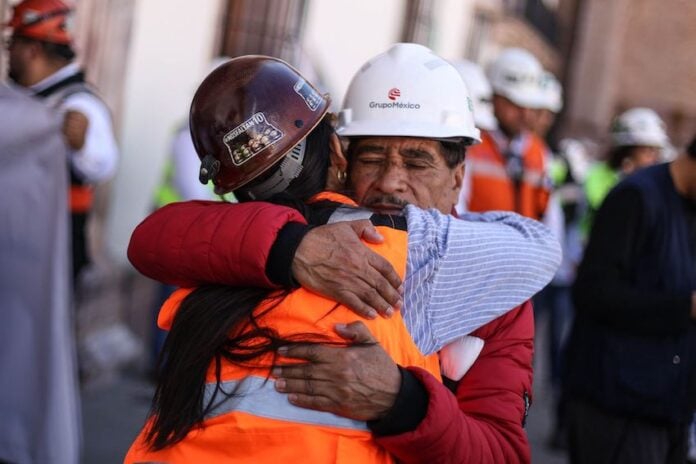
The father of Jose Ángel Hernandez Vélez, one of 9 miners who had gone missing and were later found dead in a clandestine grave, receives a hug from a fellow miner during a march for justice in Zacatecas in February. (Adolfo Vladimir/Cuartoscuro)
“The Company confirms that nine colleagues have now been found deceased,” Vizsla Silver said in a statement.
The Vancouver-based company said it “remains in close contact with the family of one colleague who remains missing and continues to support the authorities in their ongoing investigation.”
The announcement came after the remains of Saúl Alberto Ochoa Pérez and Miguel Tapia Rayón were identified this month. The bodies of seven other Vizsla Silver workers were previously identified. The worker who remains missing is Antonio Esparza.
The remains of the workers who have been identified were found at a clandestine grave site in El Verde, a small community in Concordia, a municipality that borders the state of Durango. The deceased workers were originally from various Mexican states, including Sinaloa, Sonora, Guerrero, Chihuahua and Zacatecas. Most were aged in their 30s or 40s.
On Monday, the president and CEO of Vizsla Silver, Michael Konnert, said that the confirmation of the deaths of Ochoa and Tapia was “a devastating outcome.”
“… Our heartfelt condolences are with all the families impacted. We stand beside them with continued support as we mourn our colleagues and friends,” he said.
Konnert added that “we will always carry this loss with us” and “will honor our colleagues through the work we do every day and our ongoing commitment to their families, our community in Sinaloa, and the values that define us.”
The ten Vizsla Silver workers — including engineers, geologists and security personnel — were abducted from a company housing development in the early hours of Jan. 23. The housing estate is located near the company’s flagship Panuco silver-gold venture.
On Feb. 10, Security Minister Omar García Harfuch said that four people arrested in connection with the abduction told authorities that the victims were mistaken for members of a rival cartel faction. He said that the four people arrested were “from the cell of Los Chapitos,” and noted that that faction of the Sinaloa Cartel is engaged in a “fight” with the Los Mayos faction of the same criminal group.
President Claudia Sheinbaum subsequently said that investigators did not necessarily accept the notion that the abduction was a case of mistaken identity.
According to the newspaper Reforma, former and current Vizsla Silver workers have claimed that the abduction was related to the company’s refusal to pay protection money.
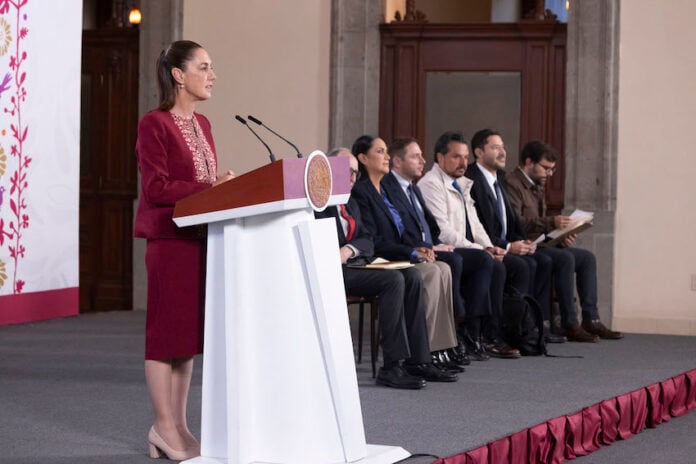
President Sheinbaum on Tuesday also expressed satisfaction that a gun shop owner in Arizona has been formally accused by U.S. authorities of selling weapons to Mexican cartels, mentioning that it could help the Mexican government pursue similar legal actions. (Juan Carlos Ramos Mamahua/Presidencia)
Sheinbaum’s mañanera in 60 seconds
🚫 No corruption, no exceptions: Sheinbaum pushed back on a question about irregular government contracts, insisting her administration has zero tolerance for improper conduct and that no one in her personal circle — family, friends or past associates — has any sway over procurement decisions.
💉 Tainted vitamin drips kill 7 in Sonora: Health Minister Kershenobich confirmed that 10 people fell ill after receiving IV vitamin infusions at a Hermosillo clinic, with the death toll now at seven. Lab tests point to a bacterial contaminant in the drips; the clinic has been shut down and final test results are pending.
🔫 Arizona gun shop owner charged: Sheinbaum welcomed the formal U.S. accusation against an Arizona firearms dealer accused of supplying Mexican cartels, calling it a historic first. The Foreign Affairs Ministry is now exploring how to fold the case into Mexico’s existing lawsuit against five Arizona gun stores — a suit filed in 2022 that remains unresolved.
Why today’s mañanera matters
At her Tuesday morning press conference, President Claudia Sheinbaum took the opportunity to underscore her commitment to combating corruption. Her predecessor and political mentor, Andrés Manuel López Obrador, was elected in 2018 on an anti-corruption platform and, like AMLO, Sheinbaum holds herself up as an example of rectitude.
Tuesday’s mañanera was also noteworthy as the federal government acknowledged two significant recent developments: a healthcare-related tragedy in Sonora and a significant legal case across that state’s border in Arizona.
Sheinbaum reiterates her commitment to combating corruption
Asked about alleged irregularities in government contracts, Sheinbaum said that any improper conduct that is detected must be punished.
Tiene prohibido cualquier servidor público hacer una contratación con alguna persona cercana a mí
Ni Julio Scherer (@JScherer_Ibarra), ni mis hijos, ni mi marido, ni mis amigos, pueden ser recibidos por algún servidor público.
“We don’t tolerate corruption. That has to be made very clear, and there is no impunity,” she said.
Sheinbaum went on to say that no one close to her — “not my children, not my husband, not my friends” — has any influence in decisions related to government contracts.
She said that officials in her government have instructions not to meet with anyone who is personally close to her, or has been close to her in the past.
“Fortunately, my children are dedicated to other things, my mother has an academic career, my relatives don’t participate in any way in actions of this kind,” Sheinbaum said.
“… There can be no influence of any kind for any government contract. None,” she added.
7 people die in Sonora after receiving vitamin drips
Health Minister David Kershenobich told reporters that 10 people became ill after receiving intravenous vitamin infusions in Sonora.
He said that six of those people passed away, two remained in the hospital and two had been discharged from the hospital. According to reports published on Tuesday morning, the death toll has risen to seven.
Kershenobich said that laboratory tests had detected possible evidence of “a bacterial contaminant” in the vitamin infusions that were administered. He said that authorities are still waiting for final results to confirm the cause of the deaths in Sonora. Kershenobich also said that the clinic where the vitamin drips were administered has been shut down by authorities.
Sheinbaum comments on accusation against US gun shop owner
In 2022, the federal government filed a lawsuit against five gun stores in Arizona, accusing them of involvement in illegal arms trafficking to Mexico, where criminal organizations use U.S.-sourced weapons to commit a range of crimes, including homicide. Around 3 1/2 years after the lawsuit was filed, the case still hasn’t been resolved.
By Mexico News Daily chief staff writer Peter Davies (peter.davies@mexiconewsdaily.com)
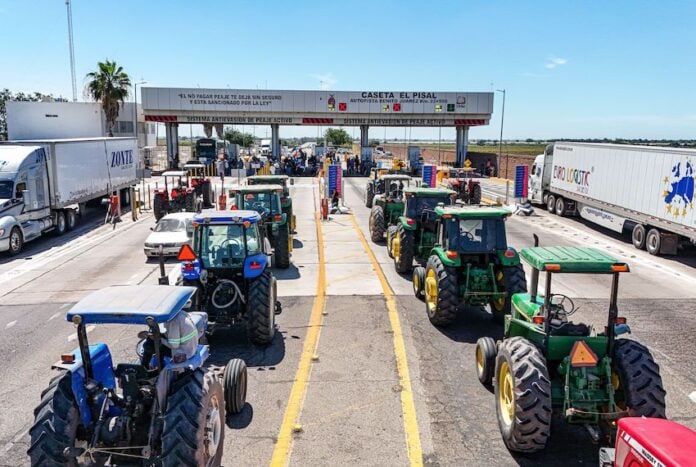
Farmers in Costa Rica, Sinaloa, protested unfair prices for their harvests and insecurity on the highways. (José Betanzos Zarate/Cuartoscuro)
Protesting farmers and truckers decried intimidation tactics while declaring on Tuesday that the highway blockades would continue, though to a lesser extent.
On Monday, blockades were established on a dozen federal highways in protest of highway insecurity and rising business costs, including high fuel prices and extortion. As of 1 p.m. on Tuesday, the only active blockades were in the states of Guanajuato (Federal Highway 110 at several points), Baja California (San Luis Río Colorado-Mexicali), Tamaulipas (Ciudad Victoria-Matamoros) and Michoacán (a stretch of the Mexico City-Guadalajara highway near Contepec).
— Guardia Nacional Carreteras (@GN_Carreteras) April 7, 2026
A Monday evening Interior Ministry press release said “constant coordination with state governments and representatives of the sectors involved” throughout the day led to the dissolution of six of the 11 highway blockades across the country.
Citing the goal of minimizing the impact on citizens, while “respecting the right to free expression,” the government urged the remaining protesters “to use institutional channels of dialogue and clear the roads to … guarantee free transit on the country’s highways.”
In contrast, the National Association of Truckers (ANTAC) and the National Front for the Rescue of the Mexican Countryside (FNRCM) said the government had “sabotaged” their protests, while insisting the strike had not been canceled.
ANTAC spokesperson Jeannet Chumacero accused the authorities of using strikebreakers in the transport and agricultural sectors to sow confusion among truckers and farmers.
Chumacero also criticized the intimidation tactics and said the government would be held responsible for any aggression against leaders and participants in the strike action.
The newspaper El Universal reported that ANTAC claimed some protesters in the state of Tlaxcala were threatened at the point of a gun and beaten, while insisting several others were allegedly “disappeared.”
The Tlaxcala government said any action taken by the authorities was in strict accordance with the law, adding that there was no record of anybody being detained.
“State intervention was carried out under containment protocols and proportional use of force,” the government said, insisting that officials employed non-lethal deterrent agents such as water and tear gas to disperse the protesters.
Although ANTAC insisted the blockades would continue, the federal government said protesters had withdrawn from blocked highways in Tlaxcala and Morelos early Tuesday morning.
Other protesters ended blockades in northern Mexico, allowing the Mexicali–San Luis Río Colorado highway — the main interstate linking Baja California to Sonora — to reopen.
Although truckers have shown support for the strike, freight companies have distanced themselves from the blockades.
The National Chamber of Freight Transportation said that while it is sympathetic to the issues motivating the mobilizations, dialogue is the best way forward.
Tickets for the three days of the congress cost between 7,490 (US $422) and 1,450 pesos (US $82) and attendance is expected to surpass 10,000. (Fearless)
A so-called religious event in the state of Jalisco being promoted as an opportunity to address men’s mental health is attracting criticism for advocating traditional gender roles and discourses associated with the “manosphere.”
Among the sponsors of the congress are the state government of Jalisco and the municipal governments of Guadalajara and Zapopan, all headed by members of the Citizens’ Movement party (MC).
Although MC is classified as a center-left, social-democratic and progressive party, Jalisco has long been considered a socially conservative state, featuring deeply rooted Catholic and traditional values.
“We are living through a silent crisis: men confused, empty and disconnected from their purpose,” reads the website of event organizers Fearless. “Masculine identity has weakened, leaving profound questions: Am I enough? Do I have what it takes?”
Tickets for the three days of the congress cost between 7,490 (US $422) and 1,450 pesos (US $82) and attendance is expected to surpass 10,000.
Andrés Villaseñor, the event organizer, says the project arose in response to a “crisis of male identity.”
In a message widely disseminated on social media, he asserts that “men have lost their way,” and face problems with depression, addiction and a lack of purpose. Villaseñor insists that men should “return to the original plan” to become “defenders, protectors and providers.”
Critics suggest that such statements reinforce traditional gender stereotypes and reduce the complexity of male issues to a conservative vision with a strong religious component.
The manosphere is described as a growing network of online communities that promotes masculinity and spreads misogyny and hate by trivializing gender-based violence and reinforcing discriminatory stereotypes, while suggesting that men are victims of the modern world.
The United Nations has labeled the manosphere a serious threat to gender equality.
Complaints have also arisen about the promotion the congress has received from channels linked to government agencies in Jalisco, Guadalajara and Zapopan, prompting debate about the use of public platforms to promote events with a specific ideological and religious focus.
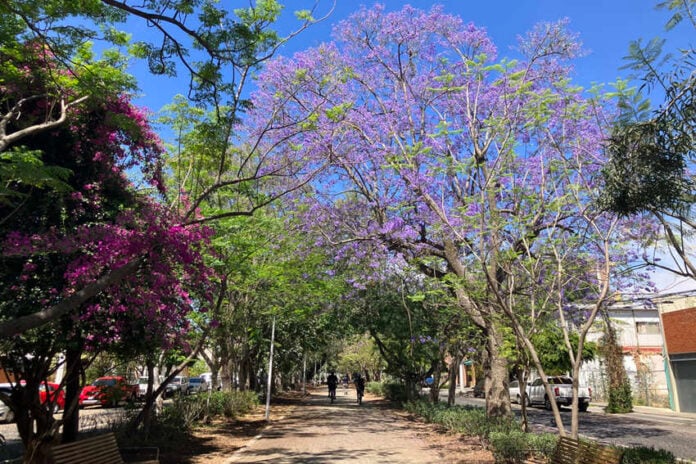
Springtime on Avendia Aurelio Ortega in the Guadalajara suburb of Zapopan. (Dawn Stoner)
April in Guadalajara means enjoying top foreign films screened at the annual film festival in cool, dark theaters to beat the springtime heat. In this week’s article, we also take a look at how Zapopan is doing in protecting its dwindling tree canopy.
Guadalajara International Film Festival returns
The Guadalajara International Film Festival (FICG) is one of the city’s most significant cultural events of the year. It’s also one of Latin America’s largest and longest-running film festivals, now in its 41st edition.
The 41st Festival Internacional de Cine in Guadalajara is your chance to see up-and-coming art films. This year, Chile is the guest country of honor. (FICG)
The event showcases both Mexican and Ibero-American cinema, including full-length features, documentaries, animated films and shorts. In many cases, directors attend the screenings and host post-film Q&As, enabling attendees to gain behind-the-scenes insights into the creative process.
The FICG this year features 192 films from Mexico, Latin America, Europe and the United States. As the guest country of honor this year, there will also be 28 films from Chile, including works that tackle challenging but timely themes, such as political oppression, violence, political resistance, morality and death.
Films are screened at various locations around the city, but most happen at Cineteca FICG in north Zapopan, which is owned and operated by the University of Guadalajara. The vast majority of the festival’s films are shown in Spanish, but a handful are screened in English, Portuguese or German, with subtitles.
To check out the full calendar of screenings and purchase tickets, visit the FICG 2026 homepage.
Date: April 17-25
Location: Cinteca FICG, Centro Cultural Universitario, Av. Perif. Pte. Manuel Gómez Morín 1695, Rinconada de La Azalea, Belenes Norte, Zapopan, plus other locations. View the full schedule here.
Tickets: Available from Cineteca (University of Guadalajara). Most films cost 60 pesos.
Dwindling green spaces in Guadalajara
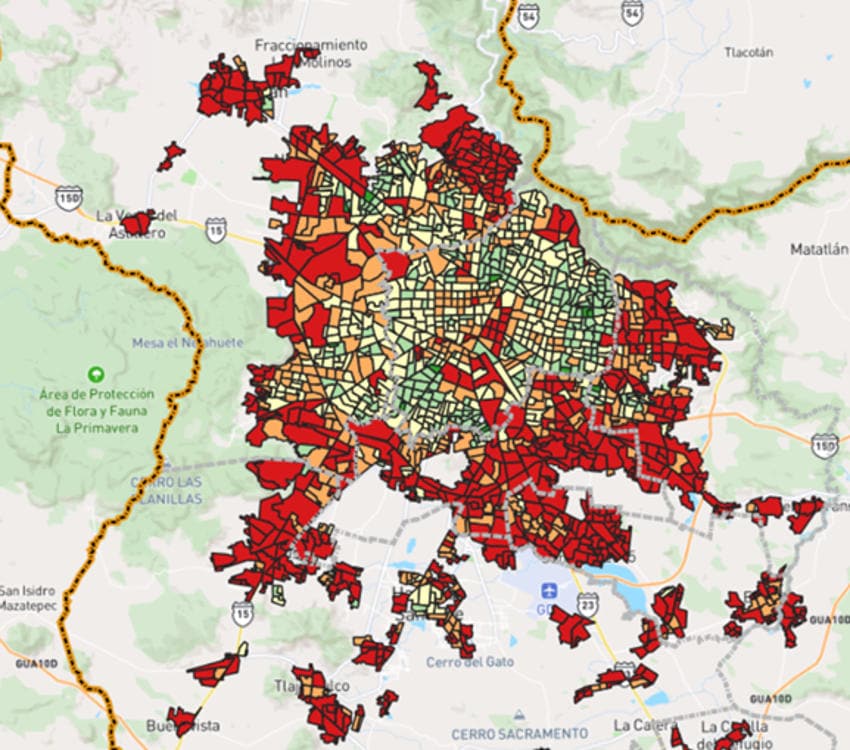
Guadalajara’s new tree census shows the tree canopy is healthier and denser on the city’s wealthier west side. Green areas denote neighborhoods with the most trees per hectare, while red is the least. (Imeplan)
As we approach Earth Day celebrations on April 22, one of the things Guadalajara residents frequently hear is that theirs is the most arboleda (wooded) major city in Mexico. And yet, a new tree census of the Guadalajara Metropolitan Area (GMA) published in January by IMEPLAN (the city’s urban planning institute) suggests that the city’s green spaces are coming under increasing pressure.
The GMA’s tree canopy has been steadily declining over recent decades, according to analyses of satellite imagery. Beyond the ubiquitous towers springing up in the city center, an urban sprawl westward (into Bosque la Primavera) and northward (into Bosque El Nixticuil) has consumed vast swaths of local forest in recent years.
Large infrastructure projects have also contributed, with the Line 3 light-rail route that was completed in 2020, removing roughly 8,000 mature trees along the city’s north side. The tree census found that the Guadalajara Metro Area (GMA) contains 1.3 million trees, or one tree for every four residents. But the distribution is far from equal.
A green space disparity
One of the census’s more surprising findings is that the city of Guadalajara is doing a better job in tree conservation than its suburbs. It also revealed wide disparities in conservation across municipalities — the GMA is made up of nine municipalities — and between wealthier and lower-income neighborhoods.
The city of Guadalajara, which encompasses a mere 6% of the total land area in the GMA, accounts for 42% percent of the total tree cover. Zapopan, which occupies 40% of the GMA’s land area, contains just 29% percent of its tree cover. Examined from another angle, Guadalajara’s wealthier neighborhoods like Monraz, Providencia and Bugambilias contain far more trees per hectare than the city’s poorer areas.
Utilizing these latter insights, Guadalajara’s city government has identified priority areas for reforestation as part of its 2025 tree planting plan. Residents interested in adopting a tree to plant on their sidewalk can request one by sending an email to arboladourbano@guadalajara.gob.mx.
Zapopan residents decry tree removals
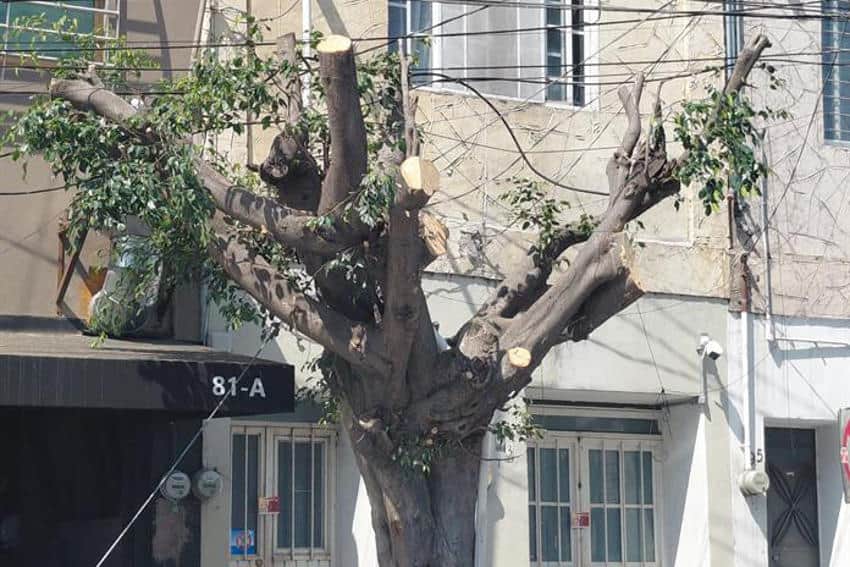
An aggressive tree pruning in Zapopan’s historic center. (Pablo Toledo)
To better understand what’s happening to Zapopan’s trees, we examined earlier urban canopy management in several of its northern neighborhoods.
In February, neighbors in Zapopan’s historic center reacted angrily to the city government’s aggressive pruning and removal of multiple healthy trees. City officials defended their decision, stating that their actions were intended to discourage homeless people from sleeping under the trees.
Area residents bemoaned the aesthetic damage and loss of migratory bird habitats. Others are concerned about how the tree losses will impact temperatures in the historic center.
“People complain so much about the heat, and it’s precisely because of the lack of trees,” a historic center resident who gave her name as Elizabeth told UDGTV.
A short walk east of the historic center, residents who live alongside Villa Fantasia Park were similarly caught off guard when city workers removed 10 trees inside the park last month. When residents sought answers, the government stated that the trees had been eliminated because they were not native species.
Citizen input is not being taken into account
Residents also learned that the trees were cut as part of a park rehabilitation project, created without citizen input. The plan, not yet fully implemented, calls for a total of 36 trees to be removed.
Neighbors have mobilized to seek changes to the plan so that mature trees aren’t sacrificed. As of now, no decision has been made.
Separately, in expat favorite Colonia Ecológica Seattle, residents have been increasingly dismayed by the aggressive culling of more than 80 trees from the Parque Lineal Aurelio Ortega over the past year. This neighborhood is famous for its well-preserved tree canopy, low density and bikeability.
With so much conflict lately, it seems that Zapopan’s municipal government and residents are not well aligned when it comes to the importance of preserving what’s left of the city’s tree canopy.
MND Writer Dawn Stoner is reporting from Guadalajara.
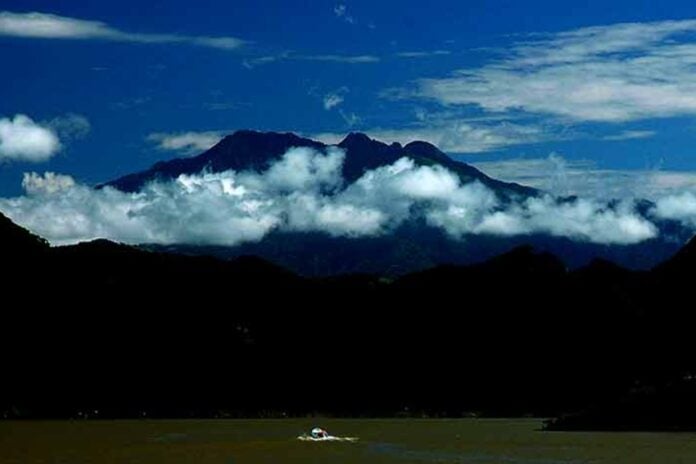
Sangangüey Volcano, 2,340 meters high, looms over Aguamilpa dam, famed for trophy large-mouth bass fishing. (John Pint)
If you love nature and outdoor adventure, you’re going to find the state of Nayarit irresistible.
Located in western Mexico, just northwest of Jalisco, Nayarit has a wide range of geographical attractions. Along the Pacific Coast, you have the popular Riviera Nayarit, a budget-friendly stretch of relaxed fishing villages and laid-back beaches. At its northern end, you’ll find Playa Novillero, Mexico’s longest beach, where you can stretch your legs over 90 kilometers of shimmering sand, while at its southern end lies Mexico’s biggest bay, La Bahía de Banderas, one of the best places in the world for whale watching.
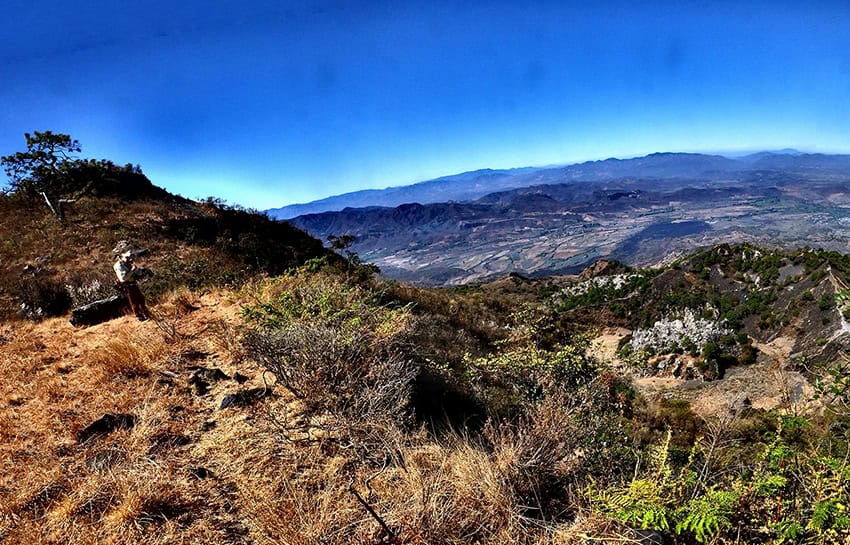
A bird’s-eye view of one of the seven craters of Ceboruco Volcano. (John Pint)
In contrast, you have the eastern side of Nayarit, intersected by the Trans-Mexican Volcanic Belt. Here you’ll find massive volcanoes like Sangangüey and Ceboruco, covered with pines and oaks dripping with Spanish moss.
This rugged area is cut, in turn, by the dramatic Santiago River Canyon, which winds its way through Nayarit for over 200 kilometers. The canyon can get as deep as 600 meters, featuring a semi-tropical environment at the bottom and offering hikers exciting challenges.
Along the river’s route lies the huge Aguamilpa Dam, one of the best places in the world for bass fishing.
Isabel: home of the blue-footed boobies
Nayarit’s geodiversity and biodiversity are greatly expanded by the inclusion of the Marieta and Isabel islands, off its west coast.
Isabel has been called “Mexico’s answer to the Galapagos.” If that sounds like an exaggeration, note that Jacques Cousteau spent weeks there filming a documentary on the island, after which he urged Mexico to turn it into a national park (which it did in 1980).
Just getting to Isabel is an adventure, during which you may make friends with humpback whales and dolphins. On the island, you will discover that the frigate birds and boobies nest on the ground and in low trees, unafraid of visitors. While camping on the island, your hosts will treat you to delicious homegrown oysters and smoked fish. Isabel is an island you will never forget!
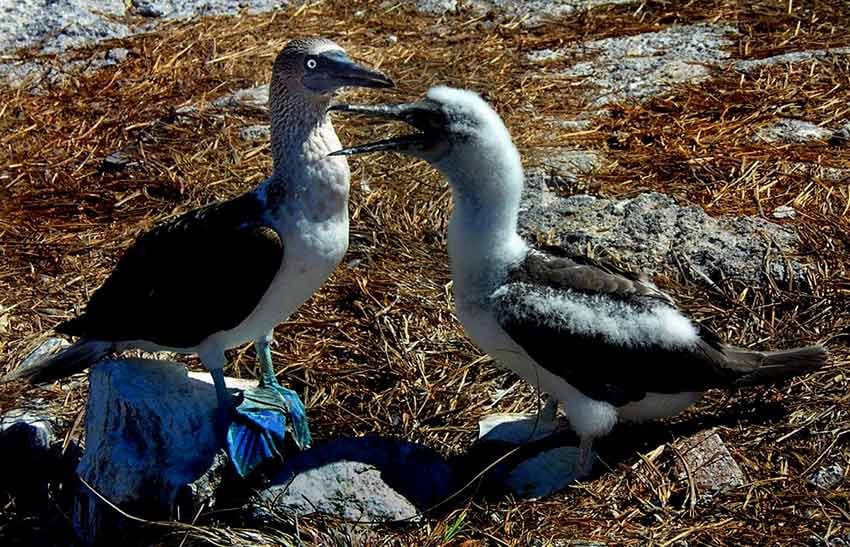
A blue-footed booby with its baby on Isla Isabel, Nayarit, a 90-minute boat ride from the mainland. (John Pint)
Fumaroles and pumas
Ceboruco Volcano is conveniently located along the toll road leading from Guadalajara to Puerto Vallarta. It is 2,280 meters high and you can easily get to the top via an excellent antenna-maintenance road. The volcano last erupted in 1875 and has at least seven craters, all of which are great fun to explore. Among Ceboruco’s many attractions are picturesque green meadows that abruptly butt up against high walls of chunky black basalt. Trees on this mountain top are festooned with lichen, orchids, bromeliads and Spanish moss.
Camp up at the top near a blowing fumarole and the next morning you may discover that you were visited by a puma in the dead of night.
Magic River
El Manto is a one-of-a-kind water park located on the eastern edge of Nayarit, 115 kilometers from Guadalajara in Jalisco.
Here is born a stream of crystal clear, room-temperature water which then flows through a narrow, gorgeously colored canyon, past three small waterfalls.
As a boy, Don Salvador Quintero, owner of El Manto, would blissfully float down this river on an inner tube, dreaming that someday he would transform it into the best water park in the world.
One day, as an adult, he shared his dream with the owner of the land, who then and there sold it to him for 300 pesos.
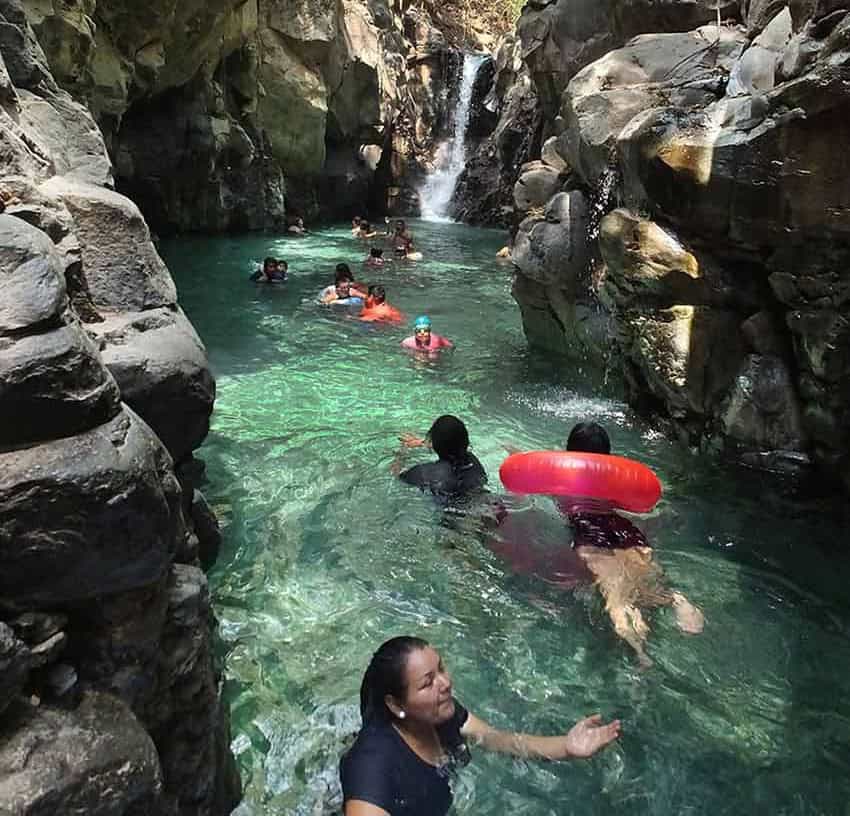
Crystal-clear, room-temperature spring water flows through a narrow canyon at El Manto, Nayarit, a two-hour drive from the west end of Guadalajara. (John Pint)
Don Salvador immediately began constructing the sturdy stairway that now takes visitors from the surface down to the canyon floor.
Everyone who comes to El Manto falls in love with it and they arrive by the busload.
In time, villas and a camping area were built for those who would like to spend the night at this charming hideaway. And today it has two restaurants.
You can have this unique water park all to yourself if you come on a weekday when kids are in school.
Santa María del Oro
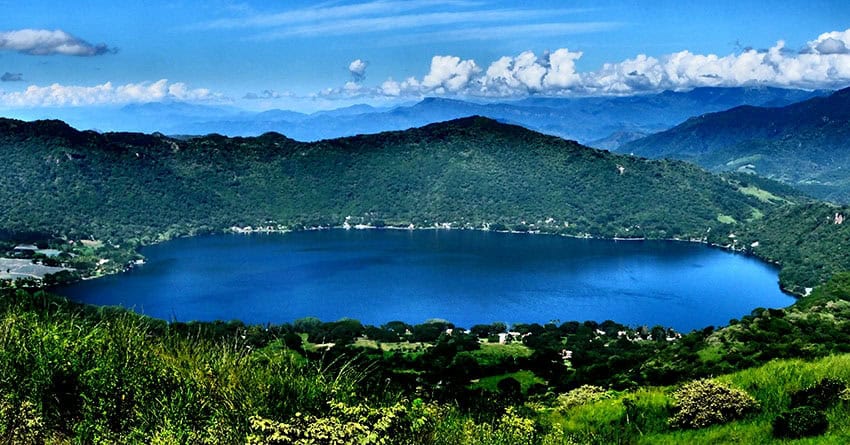
A 40-minute drive from Tepic, this crater lake, whose water transitions from deep blue to emerald green, deserves to rank among the most picturesque and serene crater lakes in the world, but only a lucky few have even heard of it.
Here you can camp or rent a cabin cheaply and then kayak around the lake, which is two kilometers long.
The beautiful crater lake of Santa María del Oro. Warm currents from below keep its waters at the perfect temperature for swimming. (John Pint)
Once said to be bottomless, Santa Maria Del Oro is now known to be 60 meters deep, with warm currents continuously rising to the surface. After touring the lake, enjoy the crater’s famous chicharrón de pescado, small bits of mojarra fried in batter, to be munched, of course, under a thatched roof at the water’s edge.
Visit Santa Maria Del Oro and you may cry out like French documentary maker Christophe Delestre: “Mon Dieu! Here I am floating in a crater lake in Mexico, surrounded by a volcano’s walls … incroyable!”
Other outdoor attractions in Nayarit
There are plenty of other attractive sites in Nayarit. For example, you can take an early-morning panga (small boat) ride through the mangroves of San Blas and see huge numbers of water birds while hobnobbing with crocodiles. South of San Blas, there is the wild and still natural Turtle Beach, where you can camp for free and help release turtles in the evening.
Looking for petroglyphs? There’s a trail at Altavista, near Chacala, that functions as a unique rock-art gallery, ending at an exotic pool called La Pila del Rey, surrounded by hexagonal columns of basalt.
And, of course, Nayarit is famous for its many Wixárika (Huichol) villages. Yes, some of them do accept visitors, especially those alongside Aguamilpa Dam.
To see everything in Nayarit, be prepared to dedicate several lifetimes!
John Pint has lived near Guadalajara, Jalisco, for more than 30 years and is the author of “A Guide to West Mexico’s Guachimontones and Surrounding Area” and co-author of “Outdoors in Western Mexico.” More of his writing can be found on his website.
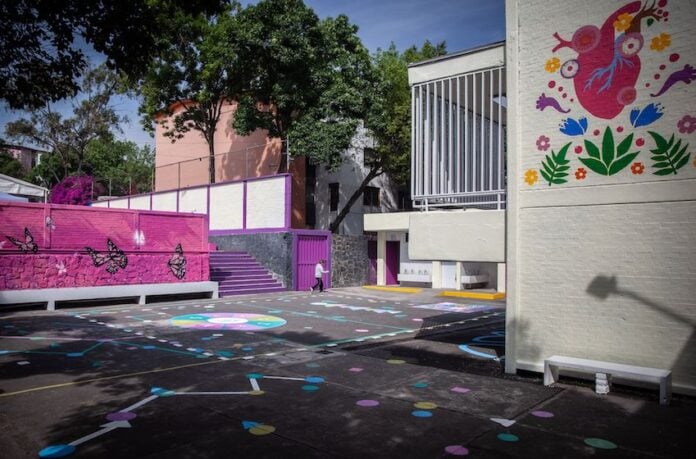
The president's planned allocation of 350 billion pesos on school construction over the course of her term of office is an ambitious demonstration of her government's focus on education. (Andrea Murcia/Cuartoscuro)
President Claudia Sheinbaum announced Monday that 350 billion pesos (US $19.7 billion) will be allocated to school construction and improvement over all grade levels by the time her six-year term ends in 2030.
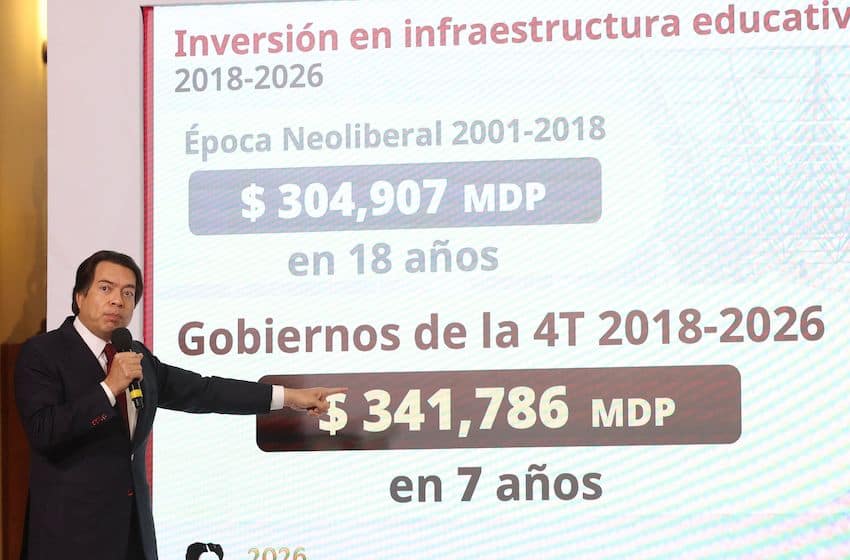
She pointed out that, when combined with her predecessor’s spending on education infrastructure ($12.8 billion), the investment will surpass the total allocated during the Fox, Calderón and Peña Nieto administrations combined (2000-2018).
Sheinbaum emphasized that this reflects the Morena political party’s focus on improving education in Mexico.
Backing her up was Education Minister Mario Delgado, who shared the podium with the president at Monday’s mañanera and said that the incumbent administration views education as a fundamental right and a central pillar of the so-called Fourth Transformation (4T).
Delgado said that significant funds will be dedicated to the expansion of the “La Escuela es Nuestra” (Our School) program, as well as to strengthening educational institutions, such as the Rosario Castellanos University in Mexico City.
In the 2025-2026 fiscal year, the government plans to invest 113 billion pesos in Our School, which has provided 404,588 grants to over 187,000 public schools since its creation in 2019, according to Education Ministry data.
Education Minister Mario Delgado emphasized on Monday that Morena-led governments will have spent more on education infrastructure in 12 years than previous administrations spent over 18 years. (Moisés Pablo/Cuartoscuro)
“This is an incentive that goes directly to the institution, without intermediaries,” Delgado said.
How much did previous administrations spend on education infrastructure?
In the previous four six-year terms, spending on education construction and building improvement was as follows:
2000-2006: 38 billion pesos ($2.1 billion at today’s exchange rate)
2006-2012: 84 billion pesos ($4.7 billion)
2012-2018: 183 billion pesos ($10.3 billion)
2018-2024: 228 billion pesos ($12.8 billion)
These figures show that education infrastructure spending began to increase significantly during the Peña Nieto administration, before the López Obrador government accelerated the spending.
According to an October report by the Research Center for Public Policy (IMCO), the budget for educational infrastructure in upper secondary and higher education will face a 0.5% reduction in real terms from Sheinbaum’s first full year in office in 2025 to what is predicted for 2026, thus moving that 350 billion-peso figure a little farther away.
Education infrastructure spending under López Obrador’s last two years in office and Sheinbaum’s first two:
General Motors, Ford and Nissan suffered the biggest declines in exports to the United States in early 2026. (Unsplash)
The value of Mexico’s auto sector exports to the United States declined 13.4% annually in the first two months of 2026, according to U.S. government data, additional evidence that U.S. President Donald Trump’s tariffs on Mexican-made vehicles are having a significant impact.
The U.S. Census Bureau and the U.S. Bureau of Economic Analysis reported on Thursday that Mexico’s exports of motor vehicles and parts to the U.S. in January and February were worth US $23.15 billion, down from $26.74 billion in the same period of last year. Despite the decline, Mexico was the top exporter of auto sector products to the United States in the first two months of the year.
The decline in the value of Mexico’s auto sector exports to the U.S. in early 2026 came after Trump last year imposed 25% tariffs on light, medium and heavy vehicles made south of the U.S. border, although U.S. content in those vehicles is exempt from the duty. The U.S. president also imposed tariffs on non-USMCA compliant auto parts, although the vast majority of Mexican-made parts do comply with the three-way trade pact.
The publication of the U.S. data on Mexico’s auto exports to its northern neighbor came six days after the Mexican statistics agency INEGI released its own data on exports during the first two months of the year. INEGI’s data shows that Mexico’s auto exports to all countries around the world were worth $24.98 billion in January and February, down 6.1% compared to the same period of last year.
In 2025, Mexico’s overall auto sector exports fell 4.2% annually to $185.79 billion. Close to 80% of Mexico’s auto exports go to the United States. The Mexican auto sector has been able to partially offset the decline in exports to the United States by increasing the shipment of vehicles and parts to other markets, such as Canada and Germany.
Revenue from export of cars to US falls 27%
U.S. data shows that Mexico’s exports of passenger cars to the United States were worth $5.14 billion in the first two months of 2026, down 27.5% from $7.1 billion in the same period of 2025.
Auto sector analyst Cesar Roy told the newspaper El Sol de México that General Motors, Ford and Nissan suffered the biggest declines in exports to the United States in early 2026.
Mexico’s exports of trucks, buses and special purpose vehicles to the U.S. generated revenue of $5.47 billion in January and February, down 18.9% from $6.75 billion in the first two months of last year.
The value of Mexico’s auto part exports to the U.S. declined to $12.53 billion in January and February from $12.89 billion a year earlier. In percentage terms, the drop was 2.7%.
U.S. data also shows that the United States’ auto sector exports to Mexico declined 10% annually to $5.96 billion in the first two months of 2026.
Two-way auto-sector trade was worth $29.12 billion in January and February, down 12.7% from $33.37 billion a year earlier.
Mexico’s overall exports to US increase 4.2% in first 2 months of 2026
Despite the 13.4% annual decrease in the value of auto sector exports to the U.S., Mexico’s overall revenue from goods shipped to its northern neighbor in January and February increased 4.2% annually to $86.82 billion, according to U.S. data.
Meanwhile, the United States’ exports to Mexico were worth $60.49 billion in the first two months of the year, a 10.6% increase compared to the same period of 2025.
Two-way trade between the North American neighbors grew 6.2% annually to $147.32 billion in the period.
In the first two months of the year, Mexico maintained its position as the United States’ top trade partner. Its share of the U.S. market for imports increased to 16.9% from 13.8% a year earlier. Mexico’s outlay on imports from the U.S. accounted for 15.9% of the United States’ total export revenue in the first two months of 2026, down from 16.5% a year earlier.