Home Blog Page 55

‘Season of the Swamp’: What happened when Benito Juárez was exiled in New Orleans?

8
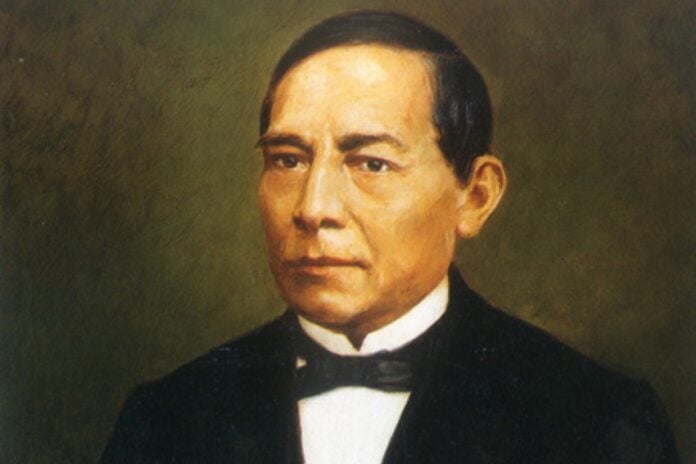
Benito Juárez portrait
Benito Juárez's time in exile in New Orleans is explored in a new historical fiction novel. (Pelegrín Clavé/Wikimedia Commons)

This is the third installment of our Mexico Well Read series. To catch up on the first two entries, click here and here.

In “Season of the Swamp,” Yuri Herrera, one of contemporary Mexican literature’s most distinctive voices, explores a tantalizing silence in the historical record: the 18 months that future president Benito Juárez spent in exile in New Orleans in the early 1850s. For a figure whose life has been so thoroughly memorialized, this gap is striking. Juárez himself barely mentions the episode in his autobiography. Herrera seizes on that absence not to reconstruct it with documentary certainty but to imagine it, treating the historical void as a creative opening to consider the impact this fascinating but cruel city may have had upon Juárez.

The premise of “Season of the Swamp” (Translated by Lisa Dillman, Graywolf Press, English edition: 2024) is historically plausible. In 1853, Juárez, a prominent liberal from Oaxaca who had served as governor and judge, was forced into exile during the dictatorship of Antonio López de Santa Anna, who moved swiftly against his liberal enemies after his return to power. Juárez eventually made his way to New Orleans, where, amid fellow Mexican exiles and conspirators, he awaited the political moment that would allow the liberals to return and challenge Santa Anna’s rule. Herrera’s novel imagines this interlude not as a mere pause in Juárez’s political life but as a formative crucible.

Before he was Mexico’s most impactful president, Benito Juárez was at loose ends in New Orleans
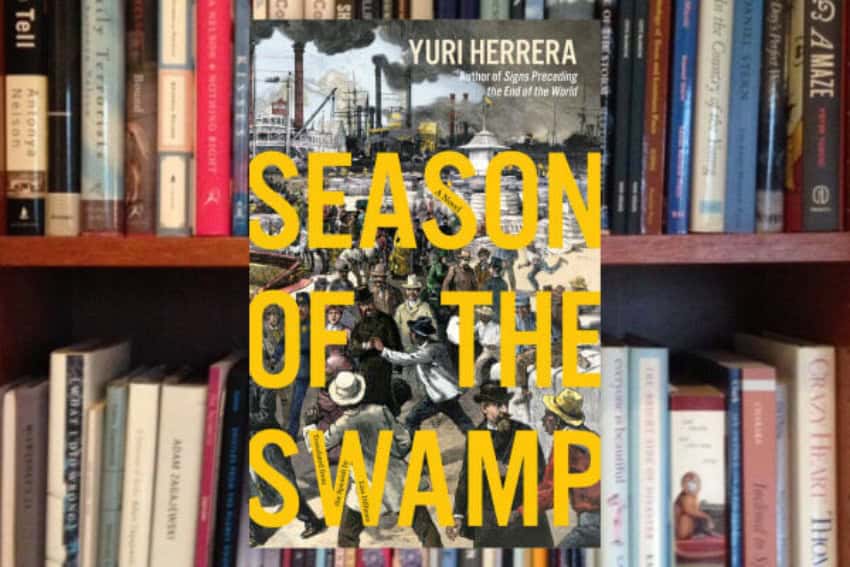
Yuri Herrera "Season of the Swamp"
Yuri Herrera’s “Season of the Swamp” was published in English translation in October 2024. (Inprint Houston)

Herrera’s protagonist is not yet the man known to history as the architect of the liberal reforms that separated church and state, curtailed ecclesiastical privilege and asserted the sovereignty of the republic. He is merely a political exile wandering a foreign city, trying to earn money, learn the language and understand the strange republic in which he has temporarily landed. The narrative frequently withholds even his name, referring to him simply as “he,” a stylistic decision that underscores both his invisibility and the provisional quality of his identity during this period. Herrera’s prose, well translated to English by Lisa Dillman, is characteristically spare.

To be in exile is, in part, to be in suspension, and the novel’s rhythms honor that. One could see Mexico itself as suspended during these years — Santa Anna’s dictatorship stalled the country in a political holding pattern before the cataclysm of the Reform War, the Intervention and the long liberal reconstruction that Juárez would eventually lead.

Opressive heat and relentless spectacle

Yet Herrera is careful not to allow the historical hindsight available to his readers to inflate the figure of his protagonist beyond what the moment can bear. For example, the Juárez of “Season of the Swamp” does not speak in the aphorisms that will later be attributed to him; the famous formulation that “between individuals, as between nations, respect for the rights of others is peace” belongs to a later version of the man. Here he is more tentative, floating through an alien world.

Herrera’s New Orleans is vividly rendered as a place of oppressive heat and relentless spectacle: opera houses and brothels, exuberant parades and coffeehouse debates, and newspapers filled with reports of crime and politics, equally lurid. Herrera delights in the sensory density of the setting: the smell of sewage and jasmine, the rhythms of street music, and the babel of Spanish, English, French, and Creole that surround the bewildered exile. “Season of the Swamp,” said Rien Fertel of The Times-Picayune, “is an impressive tribute to a man, a city and their shared history. I can’t think of a recent New Orleans-set historical novel that better captures the city’s vibe.”

How exposure to the brutality of slavery may have shaped this reformer

Among the book’s most powerful passages are those in which Herrera imagines Juárez confronting, with growing horror, the vast machinery of the American slave economy. Mexico had abolished slavery decades earlier. Herrera portrays the commerce in human beings with unflinching clarity: traders hawking enslaved women as reproductive investments, crowds treating auctions as entertainment, and a printer paid to run ads for escaped slaves rationalizing his role in the system. These observations are rendered without melodrama, which only makes them land harder. Herrera trusts his readers, as well as his protagonist, to understand what they are seeing without editorial amplification.

In Herrera’s telling, these scenes precipitate a moral revelation for Juárez. They place the Mexican liberal project within a broader hemispheric struggle for liberty. The novel does not claim that Juárez’s later reforms, such as the Ley Juárez and the Ley Lerdo, emerged directly from this encounter with American slavery, as that would be historically simplistic. But Herrera does suggest that witnessing the brutality of the slave system clarified something essential about power for Juárez: how institutions normalize cruelty, and how law can either legitimize oppression or dismantle it.
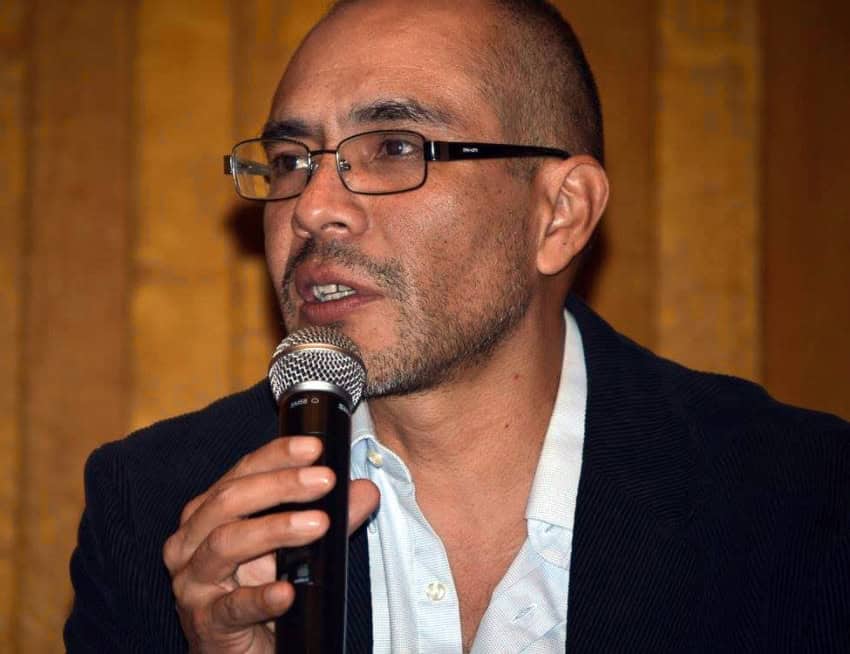
Yuri Herrera
Yuri Herrera, seen here in 2015, is one of Mexico’s most respected contemporary novelists. (Moquijano/Wikimedia Commons)

Juárez comes to know a Black woman named Thisbee, who, while selling coffee, secretly aids enslaved people seeking freedom. In Herrera’s fictional universe, she is an important moral counterpoint: a figure of resistance who embodies the possibility of action within a corrupt system.

Lingering in the space where history has not yet hardened into inevitability

Herrera, author of the acclaimed “Signs Preceding the End of the World,” is known for a distinctive prose style: compressed, lyrical and full of linguistic experimentation. “Season of the Swamp” continues that tradition. The sentences often carry a dreamlike quality, and feverish episodes punctuate the narrative, reflecting both the literal threat of yellow fever and the psychological disorientation of the exiles.

The novel’s episodic structure can feel rather fragmentary, and the digressions occasionally blur the central thread of Juárez’s development. Juárez’s interior life remains somewhat elusive; the man who will later guide Mexico through civil war and foreign invasion appears here as a quiet observer.

Yet this restraint is deliberate. Herrera seems less interested in providing a definitive psychological portrait than in capturing a moment of transition. Herrera’s Juárez does not undergo a single epiphany that transforms him into a liberal hero. Instead, he accumulates impressions: the brutality of slavery, the chaotic pluralism of New Orleans, the precariousness of political exile. These experiences, Herrera implies, contribute to the moral imagination that will later sustain Juárez through tumultuous decades of resistance and reform.

Moments of uncertainty in a strange land

Herrera reminds us that even the most iconic figures once inhabited moments of uncertainty. Before the statues and textbooks, before the title of “Benemérito de las Américas,” there was a man far from home, walking the humid streets of a foreign port. “Season of the Swamp” lingers in that liminal space where history has not yet hardened into inevitability.

Herrera has written a novel about waiting that does not feel static, a story about a foreign city that provides much more than atmosphere, and a work about a great man that does not read as hagiography. “Season of the Swamp” is a small book but a sizable achievement.

Ann Marie Jackson is a book editor and the award-winning author of “The Broken Hummingbird.” She lives in San Miguel de Allende and can be reached through her website: annmariejacksonauthor.com. 
How Mexico entered the Second World War

1
The Potrero del Llano oil tanker
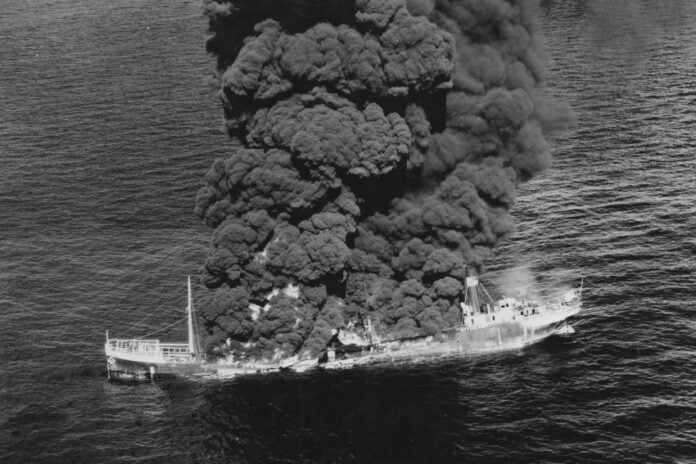
The sinking of the Potrero del Llano oil tanker by German U-boat hastened Mexico's entry into the Second World War. (U.S. Navy)

On May 14, 1942, the Potrero del Llano, a Mexican oil tanker, was sailing from Tampico to New York City, a journey of five to six days. With the U.S. at war, there was a hungry market for Mexican oil, and the 30-year-old ship was carrying 6,132 tons of petroleum. She had been built in Britain, sold to a company in Belgium, and then purchased by Società Italiana Transporti Petroliferi.

In June 1940, she had been in Tampico, where she was first interned and then, after Pearl Harbor, seized by the Mexican government and renamed the Potrero del Llano. Now she was sailing along the coast of Florida on what should have been a routine delivery. As the sun came up, the crew was unaware that they were being followed by a German submarine, the U-564. 

The sinking of the Potrero del Llano

German submarine in World War II
A German U-boat similar to the type that sank the Potrero del Llano. (Public Domain)

The U-564 was a Type VII submarine, the workhorse of the German Navy. The boat was based in Brest, giving easy access to the Atlantic Ocean, but sailing to the Gulf of Mexico took her to the very edge of her range. Given the right conditions, a skillful captain could use the boat’s electrical engines on the surface to save fuel, and it was sometimes possible to rendezvous with a U-tanker, a large submarine that set off ahead to refuel the attack submarines in the Mid-Atlantic. A captain might even ration how much water they carried, which allowed for extra fuel.

Making the long journey west was worth the hardships. By early 1942, the North Atlantic had become a dangerous place for German U-boats, but here, off the coast of America, the defenses were thinly spread. It became the “Happy Time” for German submarines, which sank 609 ships and lost “only” 22 U-boats.

The commander of the U-564 was Reinhard Suhren, still only 26 but already a veteran captain. U-boat crews were noted for being the mavericks of the navy, with officers and men mixing far more informally than on a bigger surface ship. Nicknamed “Teddy” from his training days, where a colleague had once said he looked like a teddy bear when marching, Suhren combined a sense of humor with a professional approach to his work. It was a good combination for a U-Boat captain, and he was popular with his crew.

A U-boat attack for which Mexico demands satisfaction

As Captain Suhren stalked this small tanker off the Florida coast, there was some initial confusion. To advertise her neutrality, the Mexican flag had been painted on her hull, and Suhren mistook this for the Italian flag. As it seemed inconceivable that an Italian ship should be in these waters this late in the war, Suhren ignored the flag and identified the ship as a legitimate target. His torpedo ran true, striking below the captain’s cabin and causing a large explosion that split the vessel in two.

Twenty-two of the crew were pulled from the burning water, one of whom would later die. The Captain and 12 others were killed. News of the attack reached Mexico the same day, May 14, and President Manuel Ávila Camacho dispatched a letter to Berlin, Tokyo and Rome demanding compensation for the ship and assurances that no such event should occur again.  If they did not receive an acceptable response, he warned, “The Republic will immediately adopt the measures required by national honor.”

The case for war in Mexico

The fact that a reply was demanded within a week (the deadline would run out on Thursday, May 21) has led historians to argue that the President was, at this point, already set upon Mexico entering the war. Feelings within the country, however, were mixed. The political left, including the trade unions, was pro-Russia and had already been calling for a declaration of war. The center and right were more concerned with the U.S. If Mexico entered the war, the U.S. was likely to request bases on Mexican soil, particularly in Baja California, where it was feared Japanese submarines might rest up along the deserted stretches of coast. Given recent history, many Mexicans were uncomfortable with the idea of having American troops on Mexican soil.

President Manuel Ávila Camacho
Mexican President Manuel Ávila Camacho with U.S. President Franklin D. Roosevelt in 1943, a year after Mexico entered the Second World War. (Public Domain)

Apathy among average Mexicans

For the average Mexican, with no strong political beliefs, the main response to the sinking appears to have been apathy. There was a fear that young Mexican soldiers would be used as cannon fodder, and a rumour went around that the U.S. had sunk the ship to drag Mexico into the war. When the Potrero’s survivors, along with the body of Engineer Rodolfo Chacon Castro, who had died of wounds in a Miami hospital, arrived in Mexico City’s Zocalo, a crowd of 100,000 had been anticipated. In fact, no more than 15,000  turned out.

Seeing no passion for war amongst the general population, politicians were unusually quiet. Some believed there might be benefits to Mexico in supporting a war that the Allies looked increasingly likely to win. Others thought that participation would be a hollow gesture that would just show how weak the country was. Even Senator León García, leader of the Upper Chamber, who initially took a militant stance, toned down his rhetoric as, like everybody else, he waited for direction from President Camacho.

A second oil tanker is sunk

On May 20, 1942, a second Mexican tanker was attacked and sunk, this time by U-106. It too had been seized by the Mexican government while docked at Tampico, gifted to Petróleos Mexicanos, and renamed the Faja de Oro. The Faja de Oro was sailing south on her return trip to Mexico and was empty of fuel. She was spotted by Kapitänleutnant Hermann Rasch off Key West. He fired two torpedoes, one of which hit, and the ship was finished off 20 minutes later. Ten of the crew were killed, and 27 were rescued.

News of this second sinking reached Mexico on May 21 and was headline news the following day. By then, the date for receiving a reply to the Mexican ultimatum had passed. Japan and Italy had not sent an answer, and Germany had not even acknowledged the letter. On the evening of May 22, there was an emergency cabinet meeting, and it was clear from the beginning that the ministers were there to listen, rather than to debate the issue.

Camacho declares, or at least acknowledges, war with the Axis powers

After the opening speech, President Camacho handed the floor to his Secretary of Foreign Affairs, Ezequiel Padilla, who outlined the case for war.  At the end of the meeting, the press was informed that the President had summoned a special session of Congress to authorize a formal statement that a state of war now existed between Mexico and the Axis powers.

The wording was important. Mexico did not declare war on the Axis but acknowledged that “a state of war existed.” This would give them considerable powers, such as seizing Axis property, spying on suspects, monitoring communications and suspending constitutional guarantees. However, such wording did not necessarily commit Mexico to sending young boys to fight. This wording might well have been adapted to pacify General Lázaro Cárdenas, who objected to troops being sent abroad. As a popular former President, his word carried considerable weight and, more importantly, President Camacho had penciled him in to be his Minister of War. 

And so Mexico entered the war. More ships would be sunk, the United States would send weapons to upgrade the Mexican army, and, eventually, a small group of Mexican airmen would see active service in the Philippines.

Bob Pateman lived in Mexico for six years. He is a librarian and teacher with a Master’s Degree in History.

What homeowners should know before selling property in Mexico

9
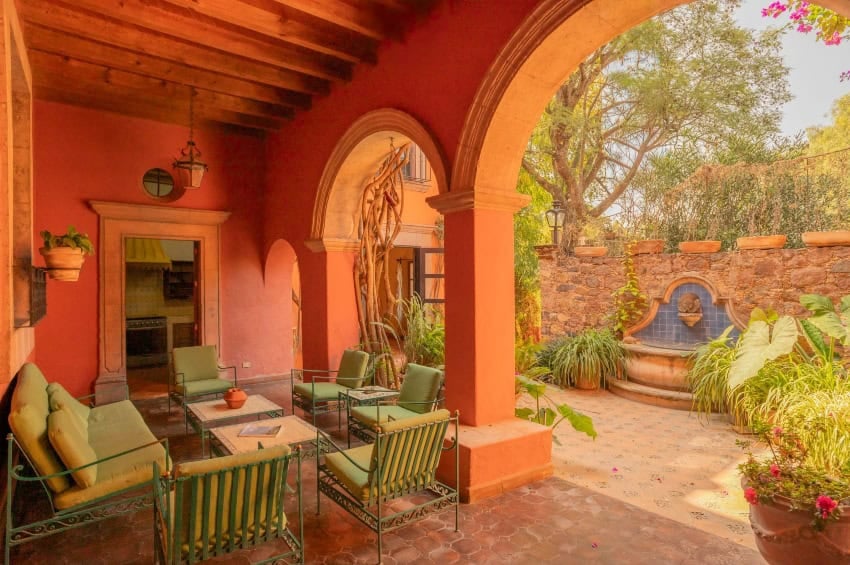
House in Mexico
Selling your property in Mexico doesn't have to be difficult. You just have to get the details right. (CDR San Miguel)

Selling a home in Mexico can feel daunting at first. There are tax rules, documentation requirements and timing considerations that may not be obvious. But with preparation, organization and solid professional guidance, the process is entirely manageable.

In recent years, tighter tax enforcement, stricter documentation requirements and shifting market conditions have made preparation even more important. Homeowners considering a sale — whether next month or in a few years — would be wise to understand a few key elements of the process.

The importance of representation

Home in San Miguel de Allende
Finding the right representation for the property you want to sell is a crucial first step. (CDR San Miguel)

One of the first decisions a seller faces is representation. In most parts of Mexico, serious agents work under exclusive listing agreements. The word “exclusive” sometimes makes sellers uneasy. The instinct is to think that more agents mean more exposure.

In practice, the opposite is often true.

When an agent has an exclusive agreement, they are far more likely to invest real resources in marketing the property. That may include professional photography, video and drone footage, digital advertising, international listing platforms and coordinated promotion through other broker networks. Marketing costs money, and agents are understandably more willing to spend it when their efforts are contractually protected.

An exclusive listing also creates clarity in the marketplace. When multiple agents independently advertise the same property, inconsistencies in price, photos or descriptions can appear online. Buyers notice these discrepancies, and they can undermine confidence. A single, coordinated marketing strategy usually presents a stronger and more professional image.

Equally important — and often more sensitive — is pricing.

The importance of accurate pricing

It does not matter how much a seller hopes to receive for a home. What matters is its economic value in the current marketplace. Buyers base their offers on recent comparable sales, current inventory and broader market conditions. Emotional attachment, renovation costs or long-held expectations do not determine value.

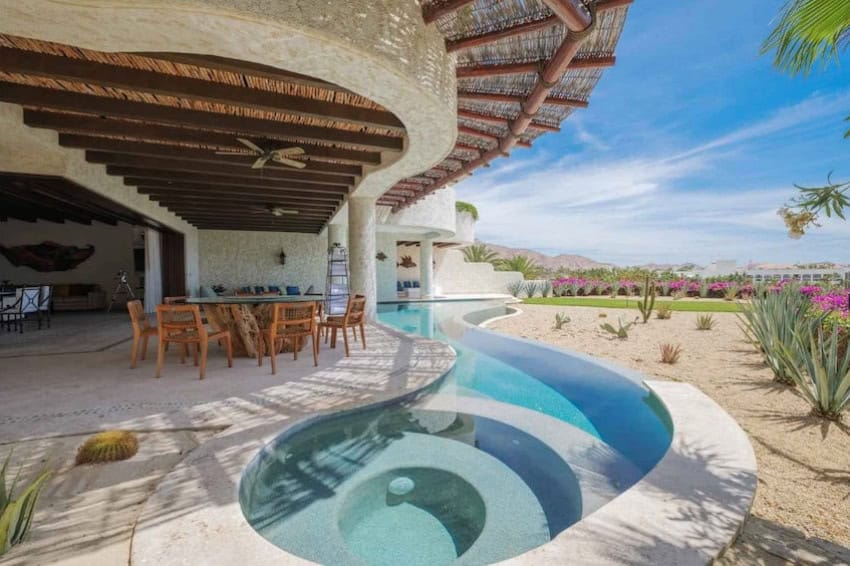
Los Cabos home
Pricing your home correctly is a very important part of the selling process. (Pacaso)

Homes priced accurately from the beginning tend to generate more activity and stronger offers. Homes introduced above market value often sit, accumulate days on market and ultimately require price reductions. By that stage, the property can develop a stigma that affects negotiating leverage. Realistic pricing from the start is important.

Beyond representation and pricing, a significant issue for many sellers is capital gains tax.

Capital gains strategy 

Mexico does offer a primary residence exemption, but it is not automatic. Sellers cannot have claimed the exemption on another property within the previous three years. They must also be able to demonstrate that the property is their primary residence.

If two individuals appear on the deed, each owner may qualify individually for the exemption amount allowed under current tax law. In practical terms, that means two separate calculations may apply, which can substantially reduce or eliminate capital gains tax when structured properly.

The final determination rests with the notary overseeing the transaction. However, sellers should discuss their eligibility well before accepting an offer. Discovering issues at the closing table is never pleasant.

A good real estate agent will also help you think ahead about a capital gains strategy. While the final tax calculation is determined by the notary, experienced agents understand how different ownership structures, documentation and timing decisions can affect the outcome. Addressing capital gains early in the process — rather than at closing — can save sellers significant money.

The detail to get right

Getting your paperwork right, including making sure your RFC corresponds to your property and is on a utility bill, is essential.  (www.susimacdonald.com)

In recent years, one administrative detail has become particularly important: the seller’s RFC, or Registro Federal de Contribuyentes.

To qualify for the primary residence exemption, the RFC must correspond to the property address and appear on a utility bill associated with the home. Typically, that means the CFE electricity bill. The water bill generally does not satisfy the requirement.

This seemingly minor rule has created significant complications. Many homeowners never updated their utility accounts to include their RFC. When the omission is discovered just before closing, it can delay the transaction or jeopardize the tax exemption entirely.

For that reason, property owners — even those not planning to sell immediately — should confirm that their RFC is properly registered and appears on their CFE bill. Updating the account usually requires a current Constancia de Situación Fiscal that is no more than three months old. Handling this in advance is far easier than trying to resolve it under deadline pressure.

Even when a full exemption is not available, certain selling expenses can reduce the taxable gain. Real estate commissions and the IVA paid on those commissions are typically deductible. In some cases, documented improvements and acquisition costs may also factor into the calculation. Organized records make a measurable difference when taxes are being determined.

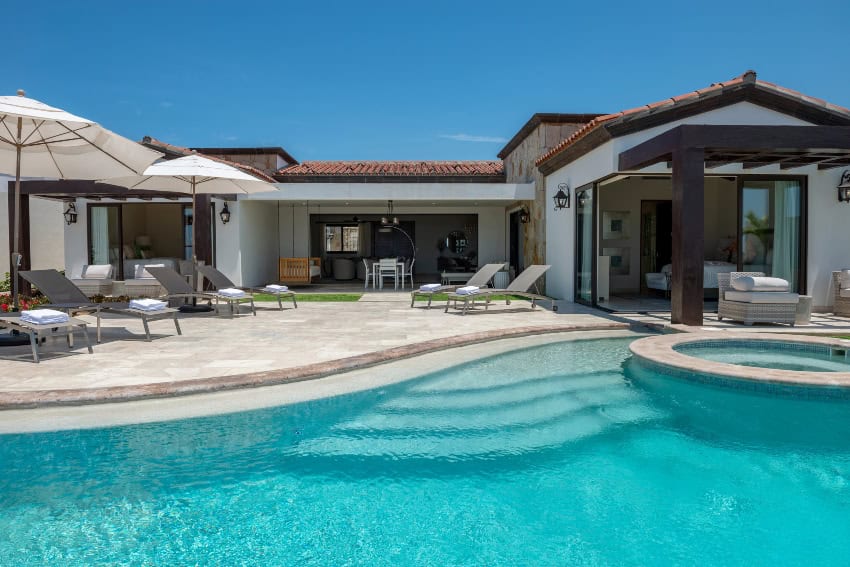
How to prepare your home for showings

Make sure you have your home ready to show before putting it on the market. (Quivira Cabo)

Legal and tax preparation, however, are only part of the picture. Presentation still matters.

Buyers respond to homes that feel orderly and well-maintained. It doesn’t matter if a property is luxurious or not, but it should be clean, uncluttered and easy to show. Small repairs, fresh paint or improved lighting can influence how quickly and how strongly buyers respond. The goal is not perfection. It is accessibility — making it easy for someone else to imagine living there.

Getting the paperwork right

Administrative readiness is equally important. Sellers should expect to provide identification such as a passport, residency card if applicable and sometimes a driver’s license if an escrow company is involved. A current CFE bill and an updated Constancia de Situación Fiscal are increasingly essential. Delays are most often caused not by disputes but by missing paperwork.

It is also worth noting that this overview applies to properties held in direct ownership. Sales involving properties in restricted zones that require a bank trust, or fideicomiso, involve additional procedures and documentation beyond the scope of this discussion. Coastal and border transactions can introduce another layer of coordination.

Ultimately, selling property in Mexico is manageable — but it is not casual. Representation, pricing, tax planning and documentation all intersect. The sellers who approach the process thoughtfully tend to navigate it with far less stress.

In many cases, the most important work happens before the “for sale” sign ever goes up.

Glenn Rotton is a real estate agent with eight years of experience in San Miguel de Allende. Originally from Seattle, he has lived in Mexico for twelve years with his husband, Kiang Chong Ovalle, and their dog, Angus. Read more about Glenn here.

El Jalapeño: Mexico to build delicate, power-intensive supercomputer in seismically active, water scarce country

1
To be fair, Mexico isn't the worst place to build a supercomputer. Actually, on second thoughts... (Samuele Macauda/Unsplash)

All stories in El Jalapeño are satire and not real news. Check out the original article here.

MEXICO CITY — Mexico announced Monday the launch of its national supercomputing program. “Coatlicue” — a machine that will process 314 quadrillion calculations per second, dwarf every other computer in Latin America, and place Mexico among the ten most powerful computing nations on earth — will be built somewhere in Mexico, a location that officials described as “to be confirmed.”

The computer requires four things: low seismicity, reliable water, stable energy, and high connectivity. Officials are looking for a site that has all four. The site has not been found. Construction begins in three months.

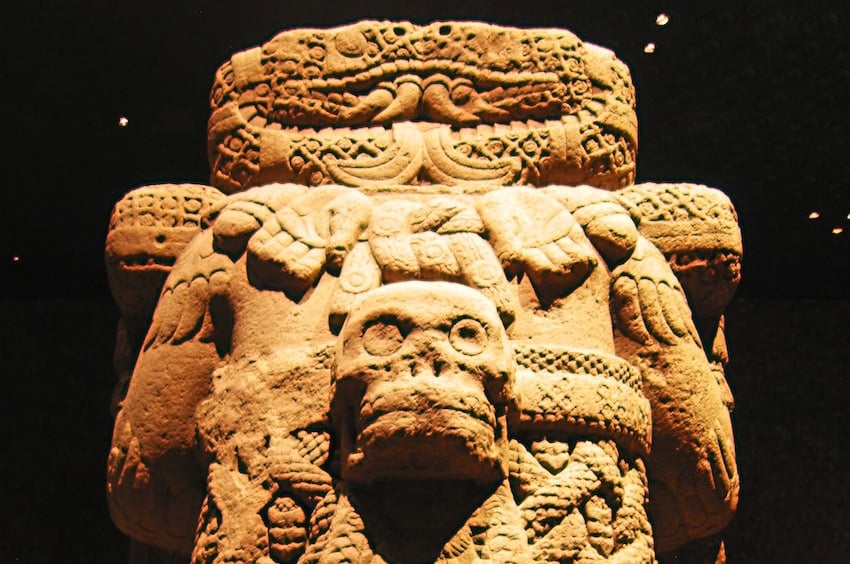
Coatlicue
When I see this, I absolutely think “quantum computing.” (Rageforst æsthir/Flickr)

Mexico City was the first candidate considered and the first eliminated. The capital, home to 22 million people and the country’s entire connectivity infrastructure, sits on the drained bed of a former lake, above an active seismic fault system, in a valley that traps pollution, on ground that is sinking at a rate of up to 50 centimetres per year in some districts. It has excellent broadband. The broadband is sinking with everything else.

Guadalajara was considered next. Mexico’s second city and technology hub offers strong connectivity and a growing tech sector, and experiences water shortages with sufficient regularity that residents have developed private infrastructure — rooftop tanks, delivery trucks, rationing schedules — sophisticated enough that visiting engineers from water-scarce nations have come specifically to study it. Officials noted the water situation was “a consideration.”

The northern states offer space, relative seismic calm, and the kind of flat, open land that data centres typically require. They are connected to a national energy grid that, during last summer’s heatwave, delivered rolling blackouts to 26 of 32 states with a comprehensiveness that power engineers called “thorough” and that the supercomputer, which cannot be switched off mid-calculation, would find professionally incompatible.

The remaining options are, officials confirmed, on the map. The map is described as “a working document.” It has not been shared. Reporters have stopped asking to see it, which officials interpreted as a sign of confidence.

For context, Coatlicue — the Aztec goddess after whom the computer is named — presided simultaneously over creation, death, fertility, and destruction, wore a skirt of writhing snakes, and was so cosmically overwhelming that even other gods found her difficult to look at directly. Officials said the name reflected the project’s ambition. On reflection, it also reflects the site selection process, which is similarly vast, similarly complex, and similarly not yet resolved.

Construction begins in the second half of 2026. The location will be announced before then. Maybe.

Check out our Jalapeño archive here.

Got an idea for a Jalapeño article? Email us with your suggestions!

Mexico’s week in review: A UN rebuke, an export boom and a historic Passion Play

0
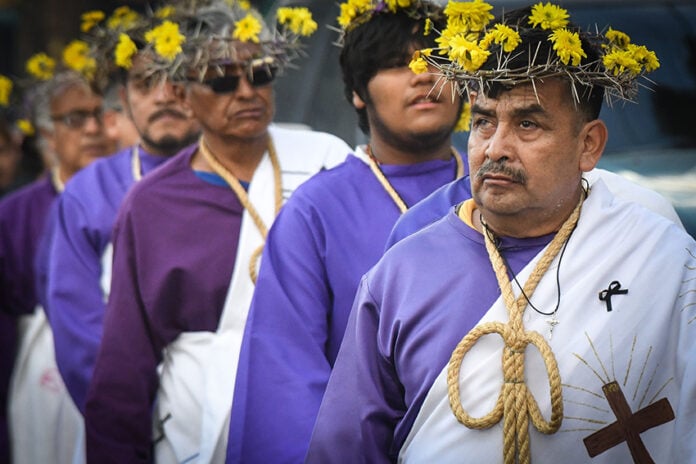
Nazarenes in purple robes and crowns of thorns and flowers walk in Mexico City
As part of the Iztapalapa's Passion Play, thousands of members of the borough's Nazarene Society accompany Jesus to his destination at Cerro de la Estrella, bearing crosses, wearing crowns of thorns and walking barefoot. (Mario Jasoo / Cuartoscuro.com)

Holy Week set the rhythm for the final days of March and the first days of April, slowing the pace of official business while millions of Mexicans headed to the beach, the mountains or hometown celebrations. President Claudia Sheinbaum held no press conference Thursday or Friday, but the news didn’t take a vacation. Trade tensions with Washington deepened, economic data continued to send mixed signals, and Iztapalapa marked its most celebrated Passion Play in 183 years.

Didn’t have time to catch this week’s top stories? Here’s what you missed.

Sheinbaum under pressure at home and abroad

The week opened with the publication of a new poll showing Sheinbaum’s approval rating has fallen to its lowest point since she took office — 53.9%, down from 62.8% in January, according to AtlasIntel’s LatAm Pulse survey. The drop was driven by rising public concern about corruption and crime, both of which jumped roughly 10 percentage points as a concern among respondents in a single month. The poll came despite the February killing of CJNG boss El Mencho, an operation 78% of respondents said they supported.

At her Monday mañanera, Sheinbaum revealed she had made a personal donation of 20,000 pesos to a humanitarian fund for Cuba, emphasizing the contribution had nothing to do with her role as president. She also acknowledged a second Mexican death in ICE custody — José Guadalupe Ramos Solano, who died at California’s Adelanto Processing Center on March 25, at least the 14th such death in U.S. immigration detention this year — and said her government would file a complaint with the Inter-American Commission on Human Rights. On Wednesday, she took aim at Mexican politicians who appear on U.S. television to “speak badly of Mexico,” calling the practice unpatriotic and a threat to sovereignty — a thinly veiled reference to PAN Senator Lilly Téllez, a frequent Fox News guest who has publicly called for U.S. military intervention against cartels.

The economy in two speeds

The week’s economic picture was characterized by a familiar tension between strong external performance and fragile domestic fundamentals. Exports surged nearly 16% annually in February — the second-best monthly performance in three years — driven largely by manufacturing. Within that surge, a structural shift has quietly become a milestone: tech exports have overtaken automotive as Mexico’s leading export sector for the first time, with computer equipment shipments growing nearly 145% in 2025 as U.S. companies redirected demand away from Chinese suppliers. Chihuahua and Jalisco together accounted for nearly seven in ten dollars of Mexican tech exports.

Yet the domestic picture remains more complicated. Mexico added nearly 600,000 jobs in February, but that recovery followed a loss of more than 700,000 positions in January, leaving the first two months of the year in net negative territory. Much of February’s job growth was driven by self-employment rather than formal sector hiring. The Finance Ministry struck an optimistic tone, submitting a budget framework to Congress that projects GDP growth of up to 2.8% this year — but private sector analysts surveyed by the Bank of Mexico are forecasting roughly half that, at 1.49%.

Trade friction with Washington

The U.S. Trade Representative released its annual trade barriers report, formally accusing Mexico of shutting U.S. energy companies out of its market through permit delays, unjustified revocations and regulations that favor Pemex and CFE over private operators. The report revives a dispute that has been unresolved since the U.S. and Canada first requested USMCA consultations on Mexican energy policy in 2022 — and lands squarely in the middle of active review negotiations.

Separately, the U.S. House of Representatives passed legislation that could impose sanctions on Mexico over its long-running dispute with Alabama-based Vulcan Materials, whose limestone quarry near Playa del Carmen was declared a protected natural area under the previous administration. Sheinbaum said her government is exploring alternative sites where the company could continue operations, signaling a willingness to find a negotiated exit — but the bill is now pending a U.S. Senate vote, keeping pressure on.

Security and human rights

The Navy carried out 234 arrests across five states as part of the ongoing Operation Sable, seizing more than a tonne of methamphetamine. A separate maritime operation off the coast of Michoacán, made possible by U.S. intelligence sharing, resulted in the arrest of six suspects and the seizure of 650 kg of suspected cocaine.

In a less welcome international spotlight, the U.N. Committee against Enforced Disappearances published a report concluding that Mexico’s forced disappearances — more than 132,000 missing persons and nearly 4,500 clandestine graves — amount to crimes against humanity, and asked the U.N. Secretary-General to refer the matter to the General Assembly. The Mexican government forcefully rejected the findings as biased and legally flawed, while human rights organizations and families of the disappeared condemned the official response as evasive.

Holy Week: Faith, traffic and a UNESCO milestone

Bearing the cross
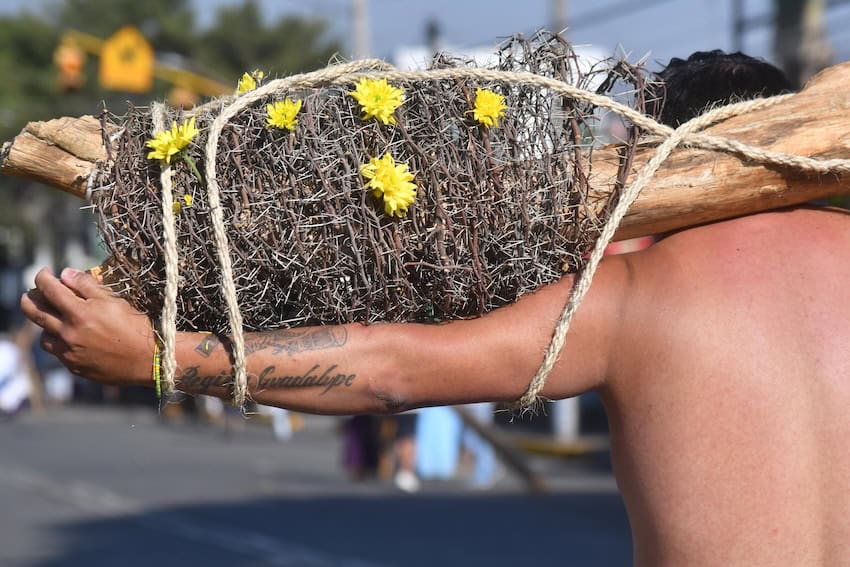
Massive crowds congregated in Iztapalapa on Good Friday to watch the Mexico City neighborhood’s 183rd Passion Play, with 25-year-old Arnulfo Morales playing the role of Jesus. (Mario Jasso/Cuartoscuro.com)

As millions of Mexicans observed Semana Santa, Iztapalapa staged its 183rd annual Passion Play — the first since UNESCO added the event to its Representative List of the Intangible Cultural Heritage of Humanity in December. Record-setting crowds on Good Friday (estimated at 2.8 million people) watched a 25-year-old medical surgeon bear the cross through the borough’s eight historic neighborhoods before the crucifixion scene atop Cerro de la Estrella.

For those heading back to the highways after the break: Truckers and farmers have announced a nationwide mega-blockade for Easter Monday, April 6, targeting major routes including the Mexico City-Querétaro, Mexico City-Cuernavaca and Culiacán-Mazatlán corridors. Organizers say they chose the date to avoid disrupting Holy Week travel — but school holidays don’t end until Friday, meaning some vacationers will be caught in the disruption regardless.

Also in the news this week

Looking ahead

The return from the holiday break will bring the mega-blockade immediately into focus, with truckers and farmers demanding more action on highway insecurity, cheaper diesel and agricultural subsidies. USMCA working groups are expected to continue drilling into the treaty’s 34 chapters against a backdrop of growing U.S. pressure on energy policy. And with the World Cup now fewer than 70 days away, the government will be keen to demonstrate that the country can manage its security challenges and welcome the world at the same time.

Mexico News Daily


This story contains summaries of original Mexico News Daily articles. The summaries were generated by Claude, then revised and fact-checked by a Mexico News Daily staff editor.

On the ground with the Guadalajara water crisis

4
water crisis in Guadalajara
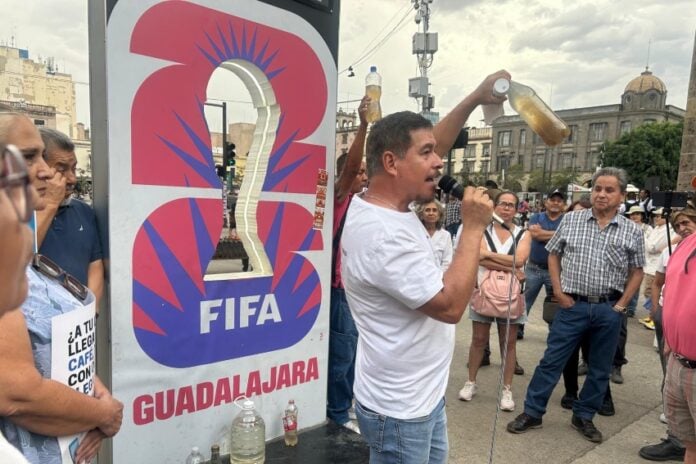
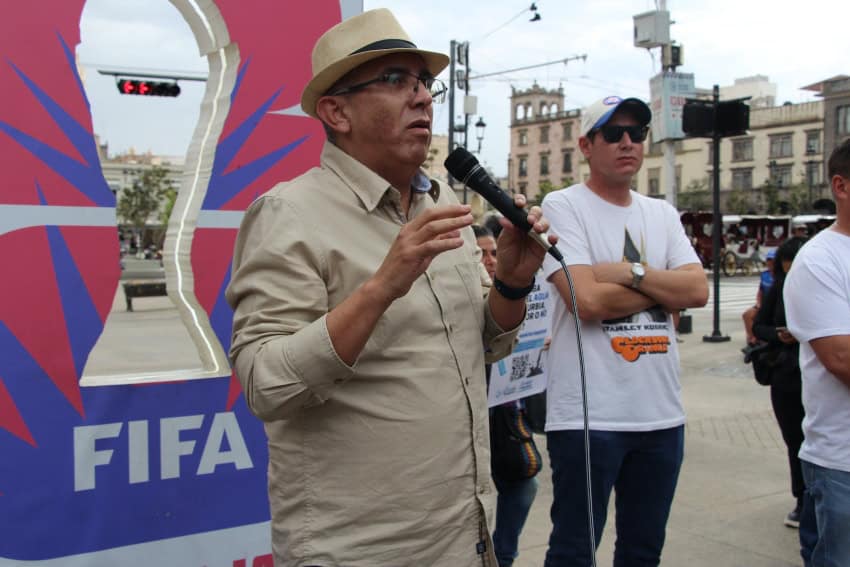
“We may not see it immediately, but contamination and its effects on the body appear over time," said Pepe Lira of Resistencia Civil por El Valle, holding aloft a bottle of contaminated tap water. "That’s why it’s urgent to act now.” (Tracy L. Barnett)

Authorities in Jalisco removed the head of Guadalajara’s water agency on Monday, March 23, amid a surge of complaints about foul-smelling, sediment-laden tap water, prompting citizen groups to demand a full corruption investigation and structural overhaul of the system.

Citizen groups have documented more than 340 reports of contaminated tap water in 12 days, framed within the citizen campaigns #SiapaCorrupto and #SiapaQueQueremos: Water for Life, NOT for Business.”

New director of SIAPA named amid protests

water crisis in Guadalajara
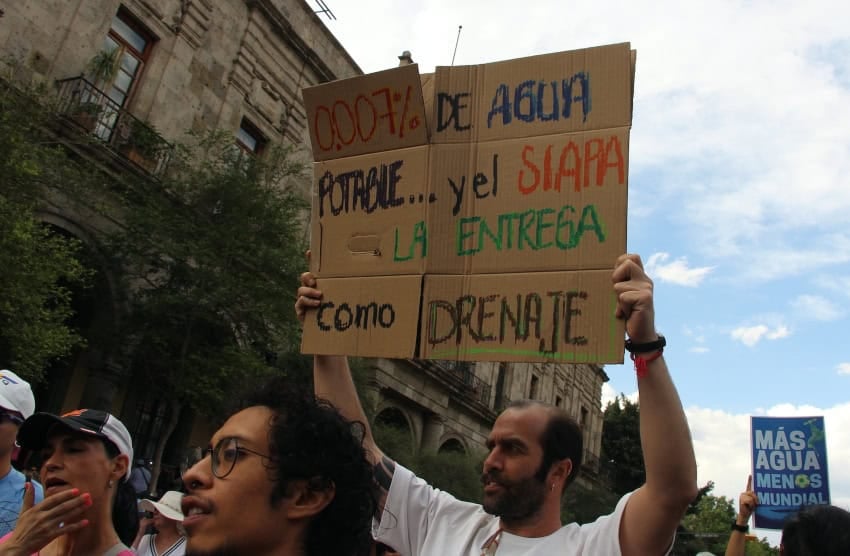
Alexis de Aldecoa, activist and environmental auditor, was one of hundreds who attended the protest: “0.007% of water is potable, and SIAPA delivers it as sewage.” (Tracy L. Barnett)

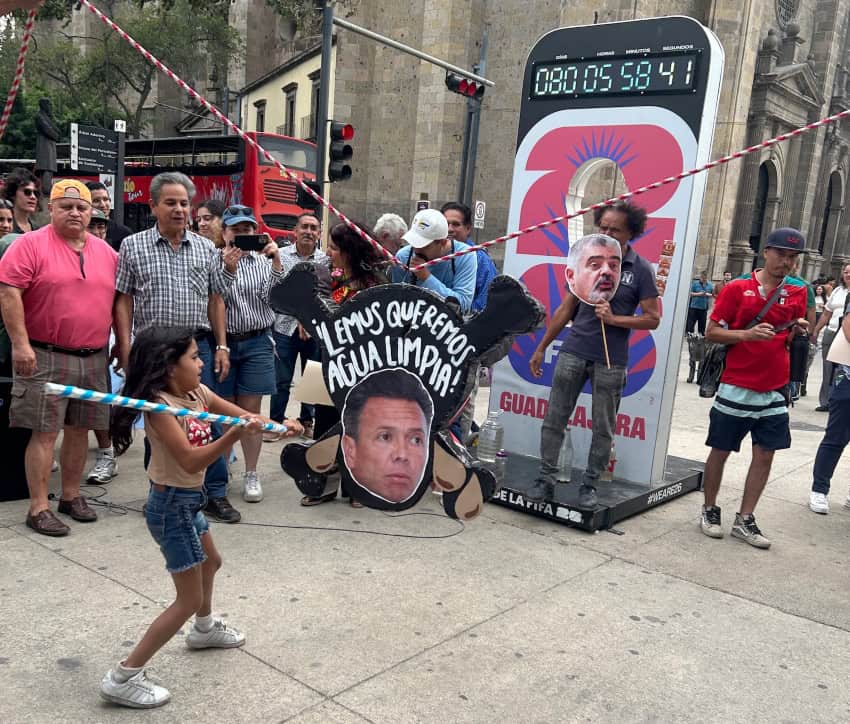
The removal of Sistema Intermunicipal de los Servicios de Agua (SIAPA) director Antonio Juárez Trueba came on the heels of an animated protest in the historic center, where hundreds of participants gathered on Sunday beside the city’s official World Cup countdown clock and chanted “Más agua, menos Mundial (More water, less World Cup). Some hoisted cutouts of Trueba’s face and called for his firing, battered a piñata of Gov. Pablo Lemus and lined up to have their water tested by a citizen water monitoring group. 

With less than three months until the 2026 World Cup— when Guadalajara is expected to host thousands of international visitors — the crisis is raising concerns about Mexico’s second-largest city’s readiness on a global stage.

Lemus responded quickly on Monday, announcing Trueba’s replacement. Citizen groups fired back with a statement calling the move “relevant — though overdue,” and warning that those responsible for the current crisis must still be investigated and sanctioned. 

They also criticized the immediate appointment of a replacement, former Zapopan public works director Ismael Jáuregui Castañeda, without a public consultation process, calling for a national search for a person with the proper qualifications and experience. 

Citizen groups push for community-centered water governance

Citizen groups raised concerns about the new director’s background in construction rather than water management, calling for a trial period to evaluate his performance and warning that the crisis demands specialized technical expertise. They called attention to the failure of a stormwater regulation structure constructed under his watch, leading to major flooding and the collapse of nearby infrastructure. 

The current crisis results from decades of deferred maintenance and failure to address the problem systemically, they say, requiring a broader restructuring and a more transparent, community-centered model of water governance. 

water protest Guadalajara
Children lined up to take a whack at the Gov. Pablo Lemus piñata, one of a full lineup of activities at the World Water Day commemoration and protest in downtown Guadalajara. (Tracy L. Barnett)

“The water crisis and the health and environmental emergency in Jalisco did not begin three weeks ago … they go back at least 30 years and are thoroughly documented, with both testimonial and scientific evidence of their impacts,” said María González, director of the Mexican Institute for Community Development (IMDEC).

Among their key demands are a formal health emergency declaration, immediate access to safe water for affected neighborhoods, comprehensive testing from source to household, and the release of the executive plan for the Chapala–Guadalajara aqueduct for public review, for which they filed an amparo in recent weeks to demand public access under government transparency laws and the Escazú agreement. 

More funding allocated for the Guadalajara water crisis

State authorities also moved to shore up the system financially, announcing on Monday the reallocation of more than 1 billion pesos to improve water quality and distribution infrastructure in the Guadalajara metropolitan area, according to an official statement released Tuesday. Officials described the funding as an urgent response aimed at improving water quality and distribution, particularly in southern areas of the metropolitan region, where problems have been most acute.

Water expert Arturo Gleason, a professor at the University of Guadalajara, questioned the effectiveness of the funding plan, arguing that resources would be better directed toward a comprehensive water system diagnosis to identify the most urgent and appropriate actions in the short, medium and long term. He also called for greater transparency around the proposed projects and said investment decisions should emerge from a broader, multidisciplinary technical consensus.

“Society must demand a proper diagnosis of the problem, from the source to the point of use, backed by scientific evidence. Only once those failures are clearly identified can a serious water plan be built,” said Gleason. As founder of the Institute of Technical Water Research Arturo Gleason Santana A.C. (IITAAC), Gleason has researched water systems internationally and made multiple recommendations to municipal and state governments over the years, with little response.

He criticized the focus on bringing in more water from other communities at great economic, social and environmental cost rather than repairing aging infrastructure or addressing contamination — the underlying causes of the crisis.

Systemic modernizing urgently needed, says water expert

Arturo Gleason, water protest in Guadalajara
University of Guadalajara researcher Dr. Arturo Gleason: “The system that supplies water was built decades ago and today it receives contamination along its entire route. For years, we’ve seen discharges, waste, even dead animals — and what was already serious has worsened due to a lack of oversight.” (Tracy L. Barnett)

“This approach — saying ‘we need more water, give us more money’ — is exactly what has harmed us, because it has neglected the underlying infrastructure without a technical or scientific basis,” he said, referencing the long-delayed El Zapotillo dam and the proposed Chapala–Guadalajara aqueduct, both promoted as solutions to Guadalajara’s water shortages. 

The city’s water network spans some 8,500 kilometers — twice the distance to Tijuana and back — and yet there is still no comprehensive plan to repair or modernize it, Gleason said. “It’s shameful … that two years into the state administration, there is no water plan whatsoever. There is no diagnosis, no evidence, nothing.”

For residents, the consequences are ongoing.

“SIAPA has known since 2023 that the water doesn’t meet the official standard … I obtained that data through a transparency request from SIAPA itself,” said citizen researcher Juan Pablo Macías. “It contained fecal coliforms and manganese above permitted levels. They haven’t shown us any laboratory analyses; the lack of transparency is insulting.”

A public health emergency

For community organizers, the issue is increasingly being framed as a public health emergency.

“If we bathe with contaminated water, the contamination also enters through the skin … and thus our body becomes poisoned little by little,” said Pepe Lira, part of a regional water monitoring collective. He urged residents to join a neighborhood-based citizen water monitoring network to track water quality independently, arguing that official data has been incomplete or lacking.

Water crisis in Guadalajara
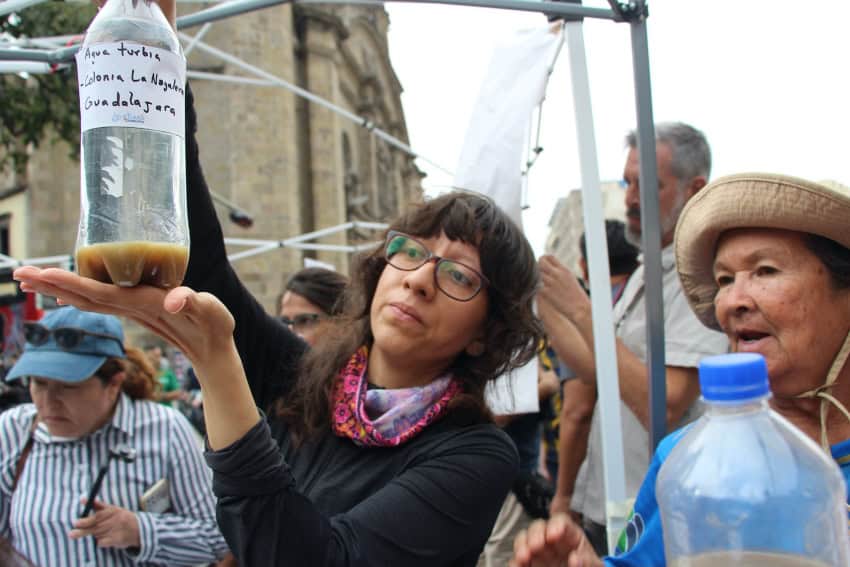
A resident of the Nogalera colonia holds up a bottle of sediment-filled water she collected from her faucet. (Tracy L. Barnett)

Researchers say the risks extend well beyond what comes out of the tap.

“The problem doesn’t start at our taps,” said Alicia Torres, a professor and researcher at the University of Guadalajara and a native of the Lake Chapala area, who has witnessed the gradual contamination of the lake she grew up swimming in. “It starts much earlier, in the rivers, in the watershed … where the water is contaminated every day.” 

Conflict over water quality is likely to intensify

The citizen coalition announced on Monday that it will continue collecting water samples, filing legal actions and pressing for a formal health emergency declaration in the coming days, signaling that the conflict is likely to intensify rather than subside.

“Because it is not enough to have removed Antonio Juárez Trueba from office,” the coalition said in its Monday statement, “the Citizen Campaigns will continue working and demanding the transformation of the #CorruptSiapa until we achieve #TheSiapaWeWant: Water for Life, NOT for Business.”

Tracy L. Barnett is a Guadalajara-based freelance writer and the founder of The Esperanza Project.

MND Tutor | Procesión

0

Welcome to MND Tutor! This interactive learning tool is designed to help you improve your Spanish by exploring real news articles from Mexico News Daily. Instead of just memorizing vocabulary lists or grammar rules, you’ll dive into authentic stories about Mexican culture, current events, and daily news.

The Procesión del Silencio is a solemn Holy Week tradition observed in La Piedad and throughout Mexico’s Bajío region, in which a statue of Jesus’s body is carried through the city in a funeral procession to reenact the transfer of his body to the Holy Sepulchre, accompanied only by the beat of a drum and conducted in complete silence. The practice is believed to date back to the 16th century, rooted in the Spanish spiritual conquest of Latin America, and has remained a deeply communal ritual that draws even non-religious locals to participate out of respect for tradition.

This week, we explore a procession in the state of Michoacán, as we learn Spanish on the way. If you would like to read the original article, click here.


Let us know how you did!

Check out our complete MND Tutor archive here!

Help: The canine plague is now sweeping Mexico

22
huge dog at the mall
Taking your dog to the mall is a bad idea, and not just because this can happen. (Instagram)

I walked into the gym the other and immediately noticed something: a tiny dog in a gym bag.

The dog, at least, was chill. It sat there, albeit nervously, while its owner worked out.

Andaz Mexico City Condesa pets
We all love our dogs and want to treat them like celebrities. But there’s a limit, people. (Hyatt)

Oh no, I thought. It’s starting here, too.

Pets and reason are often mutually exclusive

This story — in my mind, anyway — begins several years ago. A friend of another good friend of mine went to visit her for a few days with his small dog.

The situation quickly turned into a nightmare for my friend: the dog peed and pooped everywhere in the apartment. And the owner? He simply didn’t think it was a big deal and saw no need to clean it up. Really, what on earth was my friend so upset about?

I start with this anecdote to remind us of something important: you cannot count on people to behave reasonably. Especially when it comes to their pets.

Run-ins with pet owners

I’ve personally had several run-ins with dog owners here, something I’m not proud to admit. But my goodness, common sense seems to just leave the room completely sometimes! Usually, my run-ins have been at parks when I’m with my own dog.

My dog is chill. She obeys; she comes when called; she doesn’t bark hysterically for stupid reasons at other people or animals. I don’t let her jump on people, and I immediately pick up her poop so no one has to risk stepping in it. If parents let their kid run up to pet her (a very stupid thing to let one’s kid do if you don’t know the dog), I gently explain to them the best and safest way to get close to a dog.

A labrador in a busy street
Leaving your dog tied to a pole is not nice. But neither is leaving your dog off a leash in public places. (Redd Francisco/Unsplash)

Even so, I would not dream of letting her wander off-leash in a public place. Plenty of people, though, do — hence my conflicts with strangers. Most of my fights with other dog owners have been because they let their own dogs off-leash. These dogs are usually about as well-trained as tantruming toddlers, and often run toward mine, barking and being generally aggressive. “Stoooop it!” they might whine at their dogs half-heartedly as I rush to scoop my dog up before their teeth meet her jugular.

And then it begins: me griping at them for not having their dogs on a leash, and them ignoring me, sometimes with a derisive laugh. “Señora histérica.”

Losing friends and not influencing people

I even lost a friend once because I told her it was her responsibility to get her wandering dog fixed before it was her neighbor’s responsibility to keep her own dog inside.

Really, what is it with people?

Sigh.

My own base assumption, therefore, is this: the general public cannot be trusted to be considerate of other dogs or people when it comes to their own animals.

Business owners know this and keep strict rules about their acceptance of dogs or pets. Many cafés, for example, will only accept dogs on a leash and only allow them at outside tables. This is smart. The idea is to make sure the presence of one’s dog is a privilege, not a right, and one that can be taken away if it bothers workers or other guests.

OMG: Dogs at the mall

dog in the mall
Bringing your dog to the mall may make you feel better. But your dog is likely scared to death. (Peter Plashkin/Unsplash)

So imagine my surprise when I began seeing, on a regular basis, dogs at the mall. Inside.

Usually, the dogs are small. Occasionally, they’re in a stylish bag or even a stroller, but more often than not, they’re simply being walked on a leash. Again, inside.

Now, don’t get me wrong: I love dogs. I’ve pretty much always had a dog, and I probably always will.

But part of caring for one’s dog is not jumping to the conclusion that every other person you come across will also love and be good to your dog. You’d think that fact alone would make people think twice about walking them in a crowded mall. What if someone kicks them? What if someone scares them, or rushes at them and gets bitten?

What if someone’s allergic and has to simply go home because you won’t? What if the dog suddenly darts to the side and someone trips over its leash and hurts themselves?

What if the dog pees on the floor (because what choice would it have?)? Do dog owners come armed with paper towels, trash bags and Fabuloso in a spray bottle? I mean, dogs are mostly angels, but they’re gross angels. Peeing is literally their handshake and their signature. Dog gods forbid a bunch of dogs start “marking” in the same spot.

dog peeing on brick wall
This is just like a handshake for dogs. It’s also kinda gross. (Unsplash)

Gross.

Consider the perspective of dogs

Then there’s the dog itself to think about: an outing to the mall with their owner is most likely not the fun, carefree experience they think it is. Dogs get stressed easily, especially when surrounded by an assault of new people, smells and seemingly endless space. Most of the ones I’ve seen in the malls look downright terrified, jumping at every new sound.

I don’t even want to know what happens if two people walking their dogs at the mall run into each other. With all these dogs suddenly appearing in places that were not built for them, there’s bound to be trouble.

But more than anything, I’m simply flabbergasted that anyone thinks it’s a good idea to take their dogs everywhere with them.

Mexico has come a long way over the past few decades when it comes to how they treat their animals. When I first arrived, pretty much everyone kept their dogs on their roofs or on their patios. They were for keeping places safe, much more than for the emotional comfort of their owners.

Mexico is changing fast when it comes to dogs

I should have guessed how much was changing when the first Petco came to town and actually stayed in business.

Petco bandana on dog
If Petco hasn’t opened in your town in Mexico yet, just wait. It’ll be there soon. (Petco Mexico)

The concept of perrijos is now a familiar one — a combination of the words perro and hijo (“dog” and “son or daughter”).

It works because dogs can be super annoying, the same way other people’s kids can be super annoying. And “dog parents” can be just as inconsiderate about letting their animals terrorize a space the way regular parents allow their kids to do.

The difference, of course, is that we’re all collectively training kids to become part of civilization. It’s part of our job as a society.

It is not part of our job to help socialize one’s dog, especially in a place not made to accommodate them.

Remain calm … for now

So why am I suddenly seeing dogs at the mall?

Partially, I believe, it is that people like to see what they can get away with, and then keep doing it if they can. Having gotten away with it before becomes a justification for continuing a behavior. “But I brought my dog here last month and no one said a thing!”

adoption dog in Mexico
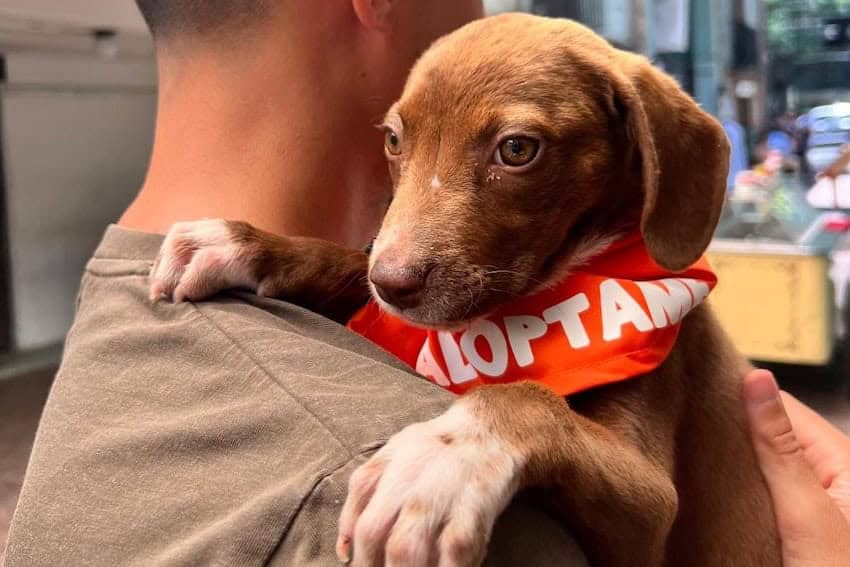
This dog is adorable and 100% deserved to be adopted. But that doesn’t mean it or any other dog needs to go with you everywhere. Just saying. (Monica Belot)

I’ve been looking for information, actually, on whether or not the malls in my city are pet-friendly, and it’s inconclusive. AI says they are, but it’s drawing information from other places, not where I’m looking. And at a mall, who’s stopping people at the doors?

For now, I’m trying to remain calm as I wonder what went wrong. Did the isolation of the pandemic make us forget how to be considerate of others? Do people simply sense the world is falling apart and they’re going to do what makes them happy, other people be damned? Are we becoming the absolute opposite of Japan?

It’s hard to say. For the moment, I’ll simply leave you with a simple plea: for the love of Dog — leave your furry friends at home when you’re going to the mall!

Sarah DeVries is a writer and translator based in Xalapa, Veracruz. She can be reached through her website, sarahedevries.substack.com.

How safe really is Mexico for expats? A message from Travis Bembenek, CEO of Mexico News Daily

49
A white woman strolls the streets of Condesa in Mexico City
Most people who have spent time in Mexico have heard the question: Is it safe? Mexico News Daily's new index sets out to provide an answer based on hard data and real expat experiences. (Shutterstock)

The first quarter of 2026 is over, and the team at MND is very proud of what we have accomplished so far this year. Before I get to something I genuinely need your help with, let me share one number that stopped me in my tracks this week.

In the first three months of 2026, MND’s website, YouTube channel and social media platforms combined for over 10 MILLION reads and views. To put that in perspective, that’s a 10X increase in our reach since my wife and I acquired MND three years ago. Our goal from Day 1 was to reach 10 million people per month — and we are well on our way to hitting it. Thank you for supporting our independent, advertisement-free, agenda-free news platform.

Now — here’s why I’m writing today.

You’ve been asked the question by family and friends. You know the one. Do you feel safe living in, traveling to, or doing business in Mexico? For me personally, it is the single most common question I get asked. I’d be willing to bet it’s the same for you. Think about your own experience — has it come up at dinner tables, on phone calls, in text threads with worried relatives?

And here’s the question I keep coming back to: Would those same people ask you that if you lived in France? Or Italy? Almost certainly not. In fact, not long ago, a friend from Israel told me that even as conflict consumed the Middle East region, his friends kept asking him if he felt safe living in Mexico. Let that sink in for a moment.

So why does Mexico have this narrative? I think it comes down to two things.

First — Mexico does have elevated crime rates in certain cities and states. That’s real and it deserves honest acknowledgment. We at MND have never shied away from covering it, including our coverage of the fall of El Mencho in February, when foreign headlines ranged from alarmist to outright fabricated — including AI-generated images of burning airports that never happened.

Second — and this is where it gets frustrating — international media consistently and selectively focuses on violence in Mexico while often stripping away the context. The result is that millions of people carry a mental picture of Mexico’s safety that bears almost no resemblance to the lived experience of the people actually here. This is, in fact, the reason my wife and I bought Mexico News Daily in the first place. As I wrote in 2024, many media outlets have abandoned impartial coverage in favor of sensationalist stories and opinion masquerading as news. Mexico has been one of the greatest victims of that trend. And as Charlotte Smith wrote powerfully on MND just weeks ago — after watching lies outpace truth on social media in real time — “you don’t get to lie about my home.”

The Mexican government publishes detailed crime and safety perception statistics — but logically and understandably, the focus is on Mexicans living in Mexico. But what about the 2 million-plus expats who call Mexico home? What about the 30 million-plus foreigners who visit each year? What are their real risks? What do they actually perceive? Where are those risks highest — and what does daily life genuinely feel like for the people living it?

Nobody was systematically answering those questions. Until now. MND is launching the MND Expat Safety Perceptions Index™ — a quarterly survey conducted exclusively with expats, immigrants, and foreign nationals living in Mexico. Every quarter, we’ll ask the same questions to thousands of expats living across the country, then analyze and publish the findings as a formal, citable index. This is the kind of fact-based, context-rich resource that I believe the expat community has needed for years — and that the broader conversation about Mexico desperately lacks.

Here is what this will give you:

  • Real data on what expats across Mexico are actually experiencing and perceiving — not what headlines say, not what government surveys of Mexican citizens show.
  • City-by-city breakdowns so you can see how your community compares to others.
  • Trend tracking over time — so we can all see whether things are genuinely getting better, worse, or staying the same.
  • A fact-based resource you can share with worried family and friends — something credible to point to when the question comes up at the next dinner table.

But this only works if you participate. The more expats we hear from across more cities, the more powerful and representative this index becomes. And it takes you less than 5 minutes, four times a year.

If you are an expat, immigrant or foreign national living in Mexico:

CLICK HERE TO JOIN THE MND Expat Perceptions Index SURVEY PANEL — THE FIRST SURVEY GOES OUT NEXT WEEK

(It’s anonymous, takes under 5 minutes, and you can opt out at any time.)

And one more request: Please share this column with expat friends living in Mexico. The strength of this index is directly proportional to how many voices it includes. Your network will help make this index truly representative of the expat experience nationwide.

I’ve spent nearly 30 years living, working and building things in Mexico. I started a podcast named “Confidently Wrong” precisely because I’ve watched smart, well-intentioned people be confidently, completely wrong about this country — about its cities, its people, its risks and its rewards. This is our most direct attempt yet to replace confident wrongness with something better: real data from real people living real lives here. As I noted when examining the narrative being pushed around cartel violence, mainstream media continues to make Mexico sound more dangerous than it is — and in an era where AI can fabricate images of burning airports and deepfakes can manufacture “eyewitness” video of events that never occurred, the only reliable antidote is hard data collected from real people on the ground.

Imagine a world where the conversation about safety in Mexico is actually grounded in reality. A world where your family and friends asking “But is it safe?” can be pointed to hard data from thousands of expats, instead of an influencer looking for clicks.

Thank you for reading MND — and for helping us build something that will benefit every expat in this country, every future expat considering the move, and Mexico itself.

Travis Bembenek is the CEO of Mexico News Daily and has been living, working or playing in Mexico for nearly 30 years.

Campo Alto at Querencia: How a golf course is built in Los Cabos

0
Querencia Los Cabos
Campo Alto golf course at Querencia is scheduled to open by the end of 2026. (Querencia)

Great golf courses are years in the making. That was certainly the case with the first golf course at Querencia in Los Cabos, Campo Bajo, which opened to acclaim in 2001, thanks to the first international design from legendary course architect Tom Fazio. 

“Once I experienced this land, I knew it was an extraordinary setting for world-class golf,” Fazio told Golf.com in 2019. “I’ve designed the course to maximize views of downtown San José del Cabo and the Sea of Cortés and provide a fair balance of risks and rewards.”

Golf Digest agreed when it declared Campo Bajo No. 73 of the World’s 100 Greatest Golf Courses for 2022-2023, noting that the routing “wanders the rugged terrain and low-growth vegetation of a high desert plateau above the Sea of Cortés. Holes jump across or sidle up to the edges of rocky canyons and arroyos, with rippling, humpbacked fairways and a number of greens tucked behind stone outcroppings.”

By then, however, another course was also under construction at Querencia, and it too has now been years in the making.

The differences between Campo Bajo and Campo Alto

When I recently visited Campo Alto, the course, as one might imagine, given its expected opening by the end of this year, was a hive of activity. Some 80 or so workers swarmed across the property, busying themselves in projects large and small with a bewildering variety of machinery. The first 13 holes on the course have already been grassed and look almost ready to play. Not so the five dramatic finishing holes, which are still very much a work in progress.

Given Campo Bajo’s world-class reputation and Tom Fazio’s return, one might think that Campo Alto will be something of a sequel. But that was never the plan. While Campo Bajo is immaculately landscaped, from its colorful bougainvillea to the palm trees that artfully frame many greens, Campo Alto will showcase more of the natural sweep of Baja California Sur terrain, including voluminous elevation changes, as the course winds through ridgeways, valleys and canyons.

What sets Campo Alto apart

According to Fazio, Campo Alto will also be more of a second-shot golf course than Campo Bajo, with smaller and less undulating greens. Even the grass will be different. Campo Baja has, since its 2018 renovation, featured Tifgreen 328 Bermuda for its fairways, TifEagle Bermuda on the greens. These are excellent fine-textured choices, but Campo Alto’s Bermuda TifTuf, a hybrid developed in 2014 at the University of Georgia, has an even better sustainability profile and requires significantly lower water usage. 

The two courses do have commonalities. Where the water comes from, for example. Querencia has an agreement with the city of San José del Cabo to receive its gently used wastewater, which it then filters and recycles as “greywater” for irrigation. So there are no demands on local water resources from Campos Alto or Bajo.

Each course also boasts spectacular ocean views. Campo Bajo, famously, has ocean views from every hole on its front nine. Campo Alto, meanwhile, promises jaw-dropping vistas of its own.

2022

How does one start work on a golf course in Los Cabos? The team at Querencia began the process for Campo Alto in early 2022, when it hosted Tom Fazio and his team for the initial site visits and the development of a routing plan. 

“What I really do is to first analyze whether a piece of land is good or bad,” Fazio said of this initial phase in an interview with Cigar Aficionado. “I don’t immediately see golf holes with bunkers, greens, etc. Instead, I see a piece of paper that has natural contour lines on it, that has restrictions, property lines on it; then I start to think, ‘Where do the holes go? If they have elevation, valleys, how should they be sculptured, and where should the green settings or tees be?’ Determining where holes fit the best is easy, like breathing to me. I just do it, for it’s life, living, surviving.”

2024

The land for Campo Alto, like that at Campo Baja — sourced from the 2,000 available acres at Querencia, just outside San José del Cabo — is extraordinary. However, work could not begin in earnest until the permits were approved, which happened in early 2024. With this crucial stage completed, heavy machinery was purchased and the routing and irrigation plans finalized as clearing began. Then came the heavy earthworks, moving and shaping the landscape to bring Fazio’s vision to life. 

“On every hole, you want people to say, ‘Wow, I can’t wait to play this,’” Fazio enthused to Golf.com in 2024. “And when they’re finished, you want their first thought to be, ‘Can we go play again?’”

2025

In addition to grassing the first nine holes, drainage and irrigation works began in early 2025. They wouldn’t be complete until a year later. Part of this process was the pump station start-up, which can pull from water stores and push water through the network of pipes to any part of the golf course. This crucial step was accomplished at Campo Alto in July 2025. 

2026

More remains to be done before Campo Alto opens later this year. Irrigation and drainage works have to be completed, the final five holes have to be grassed (which they will be in May), and numerous details and finishing touches have to be added — including the comfort stations, a Los Cabos specialty. 

Once all the work is finished and Campo Alto at Querencia is ready, then it can start earning its own acclaim. The first and most important part of this is winning over Querencia residents, who now have two courses on-site to choose from. That should be easy.

“Because there are a lot of elevation changes through valleys and ridges, there is a lot of movement to the land and natural definition to the holes,” Fazio explains. “That creates interesting drama and variety.”  

In fact, the new course is sure to attract new residents to the private master-planned community, including at the 54 new homesites in La Cresta, which feature striking ridgeline views of Campo Alto as well as the picturesque surrounding landscape.

Step two is garnering the good opinion of the golf world at large. Links Magazine has already named Campo Alto one of the top international course openings for 2026. More raves are sure to follow.

“As an architect, you never want to repeat yourself, and we haven’t here. The common denominator is the ocean. That’s what’s really special.”  

Chris Sands is a writer and editor for Mexico News Daily, and the former Cabo San Lucas local expert for the USA Today travel website 10 Best and writer of Fodor’s Los Cabos travel guidebook. He’s a contributor to numerous websites and publications, including The San Diego Union-Tribune, Marriott Bonvoy Traveler, Forbes Travel Guide, Porthole Cruise and Travel, and Cabo Living.