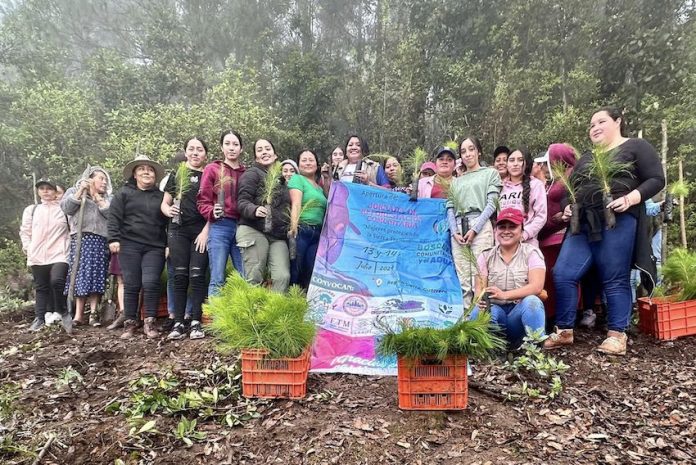
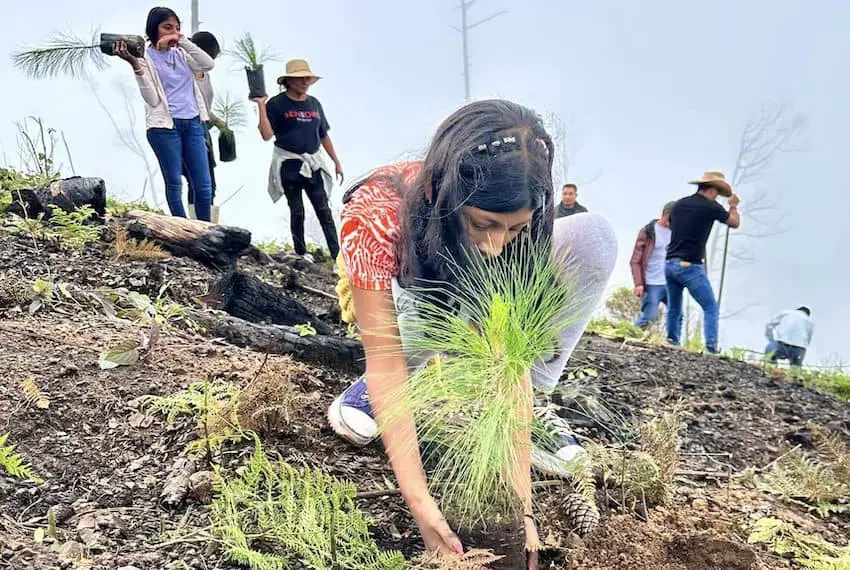
The group planted 3,000 pine trees over the weekend. (Red Mexicana de Organizaciones Campesinas Forestales/Facebook)
Over the weekend, a massive reforestation project led by 500 women from 10 rural communities kicked off in the Sierra Tecuani Biosphere Reserve in northern Guerrero.
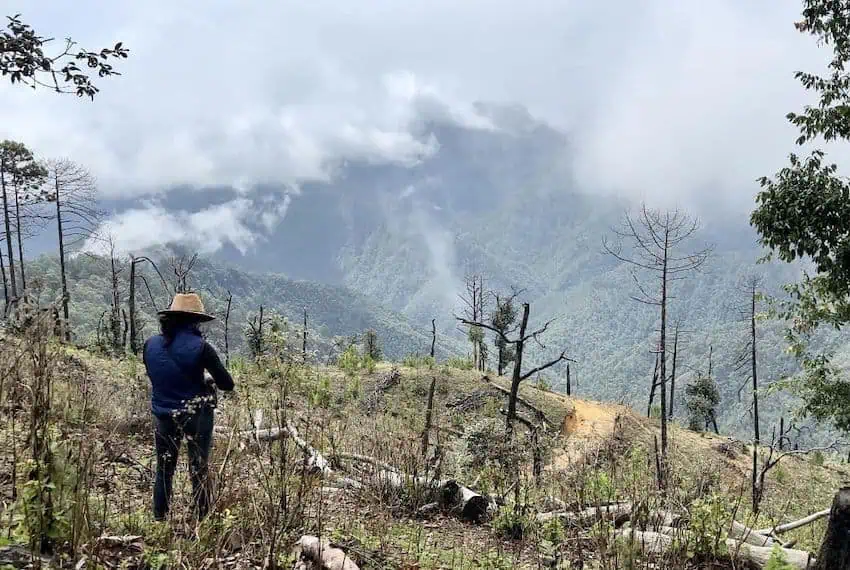
The campaign “Women Protecting the Sierra Tecuani” began with the planting of thousands of pine trees on lands damaged by recent wildfires and former poppy farms that once supplied heroin producers.
The reforestation of this area will help protect local flora and fauna, including endangered species like jaguars. (Red Mexicana de Organizaciones Campesinas Forestales/Facebook)
Restoring land degraded by organized crime
Calling for the planting of 30,000 trees over 30 hectares by week’s end, the initiative aims to combat climate change, restore damaged ecosystems and rejuvenate aquifers in an area ravaged by both criminal activities and environmental degradation.
Two organizations spearheaded the project: the Sierra Region Women’s Collective and the Union of General Hermenegildo Galeana Forest Ejidos, with support in the form of a $30,000 donation from the Mesoamerican Territorial Fund (FTM). The effort also benefits from collaboration with the Mexican Network of Peasant Forest Organizations (MOCAF).
The hundreds of women and handful of men who participated were mainly from 10 ejidos — federally owned communal lands typically used by their residents for agriculture or forestry — in Guerrero’s Sierra Tecuani, a region north of Acapulco.
Communities come together to plant thousands of trees
The activities in communities such as El Balcón, Fresnos de Puerto Rico and Cordón Grande began despite rain and foggy weather. Some ejidos requested support from the Mexican army.
Participants planted as many as 3,000 pine trees over two days in several areas, such as the former poppy fields of El Balcón.
Women of all ages have joined the project to reforest 30 hectares of the Sierra Tecuani. (Red Mexicana de Organizaciones Campesinas Forestales/Facebook)
“In this area, they used to plant poppies, which was necessary for the farmers to survive,” said Emiterio Gamas Quirino of the Chamber of the Forestry Industry. Poppies helped sustain the economy of the Sierra people for more than four decades until prices fell.
The project also aims to benefit communities that are striving to heal and rebuild after many families fled to the United States due to threats and violence.
It will also help areas affected by fires, such as Filo Mayor, which in May “lost 10 hectares of good trees that we protected for many years,” said one resident.
“We are young women and women who have children,” another participant said. “We are doing this so that in the future our children will not have to battle with water [and] climate change. We would like to leave a good future for our children.”
Some of the women involved emphasized the importance of overcoming historical gender barriers and promoting communal work.
The project also aims to improve local infrastructure and access to services, which have been lacking in these remote areas.
“We hope that things will soon get better, that they will fix our roads, send us doctors and our children will study,” said one participant.
The effort is especially crucial in the Sierra Tecuani Biosphere Reserve, where it will help protect local flora and fauna, including endangered species like jaguars.
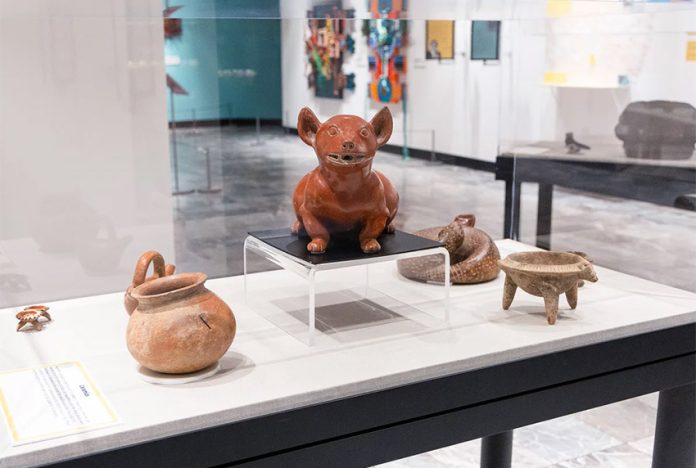
"Colima dogs" like this one were found in pre-Columbian tombs in and near the modern-day state of Colima. (Victoria Metzger/Centennial Park Conservancy)
A museum in Nashville, Tennessee, will soon be repatriating 248 pre-Columbian artifacts originally from western Mexico.
The Parthenon museum and Nashville’s Metro Parks and Recreation department worked with Mexico’s Consulate in Atlanta, Georgia, to arrange for the return of the artifacts that include small adornments, zoomorphic images, ceramic pots, musical instruments and hand tools.
The pieces will be delivered to the Institute of Anthropology and History Museum (INAH) in Mexico City later this summer, the museum explained in a press release.
The Nashville Metropolitan Council on May 7 passed an ordinance change that legally entitled The Parthenon museum to remove the pre-Columbian artifacts from its collection and return them to their country of origin.
“For Metro Parks, the repatriation of these artifacts is a cultural obligation as well as a moral responsibility,” said Metro Parks Director Monique Horton Odom. “These artifacts have value and meaning to the people of Mexico and should be housed where they will have a dynamic impact on understanding the people and culture of the past.”
How the artifacts ended up in Nashville
The Parthenon received the pre-Columbian artifacts in question in the 1960s and 1970s, as donations from Dr. John L. Montgomery and Edgar York.
Rich Montgomery, the son of Dr. Montgomery, told The Associated Press how his father came to donate the artifacts to the Nashville museum. He said he and his brother scoured the hills and villages in the state of Colima in the 1960s looking for pottery and figurines as part of a scheme to lower income taxes via museum donations.
Montgomery insists they did not smuggle the artifacts. “We would show this stuff to the Mexican authorities as we left the country, and those guys could care less about it. And when we came into the U.S., we would show it to the customs people here on this side.”
Mexico did not enforce its antiquities laws very evenly back then, admits Javier Díaz de León, the Mexican consul general in Atlanta who worked with the Nashville Parthenon on the repatriation.
The exhibit “Repatriation and Its Impact” included work by Michoacán artist José Vera González alongside the artifacts, prior to their repatriation to Mexico. (Victoria Metzger/Nashville Parthenon)
A growing awareness of artifacts’ cultural value
Díaz de León had nothing but praise for the museum and he credits the repatriation effort to the public becoming more aware of the ethical issues of keeping artifacts taken from other countries.
“It’s a greater conscience,” Díaz de León said. “People come to us … saying, ‘I got this. It came into our hands. But we don’t think we should have it. We think it belongs to the Mexican people.’”
As part of the deaccession and repatriation process, the Parthenon curated an exhibition entitled “Repatriation and Its Impact” that discussed the effects of cultural looting in the art and antiquities trade. The exhibit closed on Sunday.
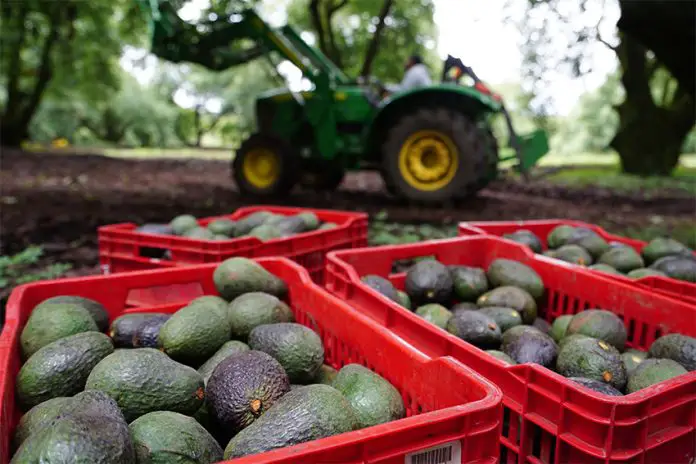
Michoacán has introduced a new certification for forest-friendly avocado production. (Juan José Estrada Serafín /Cuartoscuro)
Mexico’s agricultural and agro-industrial exports increased more than 7% annually in the first five months of 2024 to reach a record high of over US $24 billion.
The federal Ministry of Agriculture and Rural Development (SADER) reported Sunday that agricultural and agro-industrial exports generated revenue of $24.33 billion between January and May, a 7.22% increase compared to the same period of last year.
Mexico’s main export market is the United States, but Mexican agricultural/agro-industrial products are shipped worldwide.
A $4.5 billion thirst for Mexican beer and spirits
Beer — considered an agro-industrial export — was the top agricultural export between January and May, bringing in revenue of just under $2.84 billion, or 11.7% of the total. Mexico is the world’s leading exporter of beer.
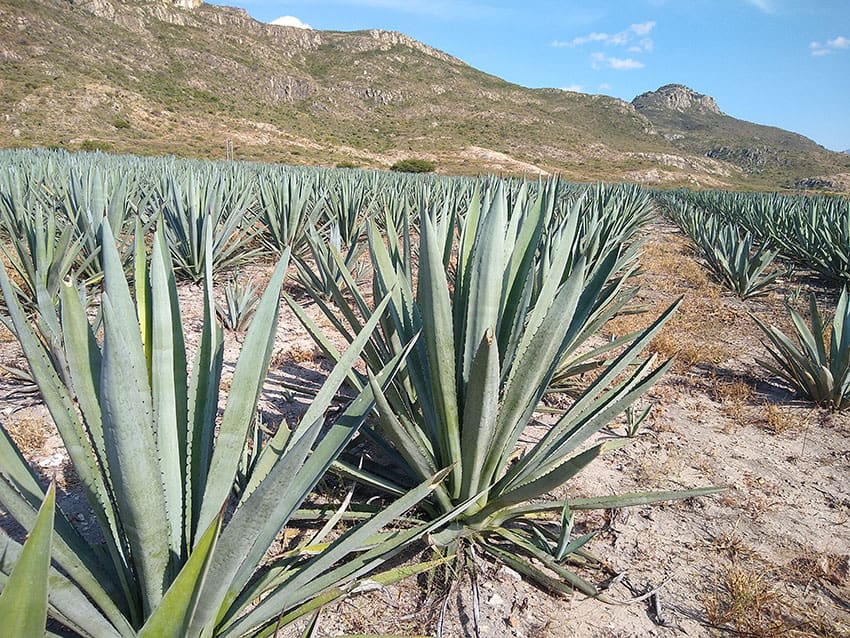
Generating the second highest amount of agricultural/agro-industrial export revenue in the five-month period were tequila and mezcal, Mexico’s famous agave-derived spirit siblings. Exports of the two spirits were worth $1.73 billion between January and May, SADER said.
The export of the agave-based spirits tequila and mezcal brought in more than US $1.7 billion in the first five months of the year. (Thayne Tuason CC BY 4.0)
Beer, tequila and mezcal together generated export revenue of $4.57 billion in the first five months of the year.
Ranking third to fifth for export revenue between January and May were:
Avocados: $1.53 billion
Tomatoes: $1.49 billion
Strawberries and raspberries: $1.2 billion
SADER said that shipments of vegetables brought in 22% of overall agricultural/agro-industrial revenue. Beverages — alcoholic and non-alcoholic — accounted for the same percentage. Fruit exports generated 18% of the total export revenue.
The remainder of the revenue came from a range of products including meat, coffee and tobacco (cigarettes and cigars).
Ag exports more lucrative than tourism and oil
SADER highlighted that agricultural and agro-industrial exports brought in more foreign currency revenue than both international tourism and “the sale of petroleum products” in the first five months of the year.
Ag exports brought in more foreign currency than both oil exports and tourism. (Cuartoscuro)
Mexico records ag trade surplus of nearly $5 billion
SADER said that Mexico imported agricultural and agro-industrial products worth $19.44 billion in the first five months of 2024, a 4.04% increase compared to the same period of last year.
Mexico thus recorded a $4.89 billion agricultural trade surplus between January and May, a 22.06% annual increase.
Ag exports have been on the rise for 15 years
In 2023, the value of Mexico’s agricultural and agro-industrial exports hit a record high of almost $52 billion, a 3.9% increase compared to 2022. Exports increased for a 14th consecutive year, even as drought affected a large portion of Mexico’s territory.
The data for the first five months of 2024 shows that agricultural/agro-industrial exports are increasing for a 15th consecutive year. Based on the average monthly revenue between January and May, exports will total just under $58.4 billion this year, a figure that would represent a 12.6% increase compared to 2023.
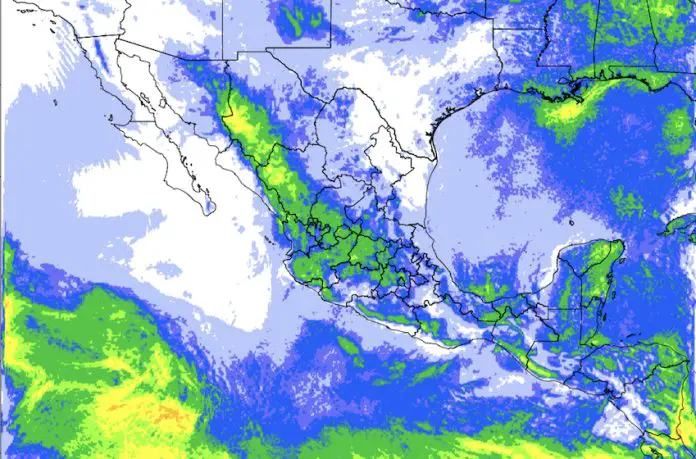
Tropical wave No. 10 is expected to enter the Yucatan Peninsula by Monday evening, bringing abundant rainfall throughout the week. (Conagua)
Rain is in the forecast for all of Mexico’s 32 states on Monday, as tropical wave No. 10 approaches the Yucatán Peninsula.
Tropical wave No. 10 is expected to enter the Yucatan Peninsula by Monday evening, interacting with a low-pressure system in the north and humidity from the Caribbean Sea and the Gulf of Mexico.
This weather pattern will bring thunderstorms and intermittent rains to Chiapas, Oaxaca, Quintana Roo, Yucatán, Campeche, Tabasco and Veracruz.
Intense isolated storms are also expected in Sonora, Sinaloa, Chihuahua, Coahuila, Durango, Nayarit, Jalisco, Michoacán, Guerrero and México state, while heavy rains — with hail and lightning likely — are forecast to hit Zacatecas, Aguascalientes, Colima, Guanajuato, Querétaro, Hidalgo, Morelos and Mexico City.
Showers are forecast for Baja California, Puebla, Tlaxcala, San Luis Potosí, Nuevo León and Tamaulipas, with isolated rains expected in Baja California Sur.
The National Meteorological Service (SMN) has warned residents that heavy rains may reduce visibility, cause flooding and landslides and increase river and stream levels.
Rain is forecast throughout the rest of the week as the tropical wave combines with a cold front approaching northern Mexico.
High temperatures to continue in some parts of the country
Despite the rain, some areas will continue to experience high temperatures. The maximum temperatures forecast for today are as follows:
40 to 45 degrees Celsius: Baja California, Sonora and Sinaloa.
35 to 40 degrees Celsius: Baja California Sur, Chihuahua, Coahuila, Nuevo León, Nayarit, Jalisco, Michoacán, Guerrero, Oaxaca, Tamaulipas, Tabasco, Campeche and Yucatán.
30 to 35 degrees Celsius: Durango, Zacatecas, San Luis Potosí, Colima, southwest Puebla, Morelos, Veracruz, Chiapas and Quintana Roo.
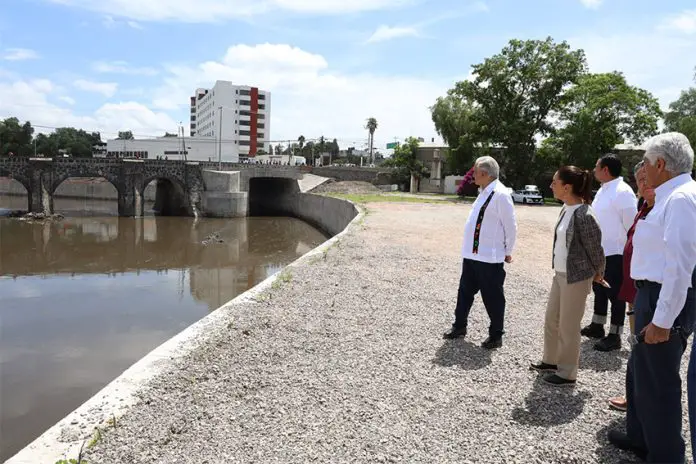
President López Obrador and President-elect Sheinbaum visited the polluted Tula River over the weekend. (lopezobrador.org.mx)
President-elect Claudia Sheinbaum has pledged to implement an extensive water plan for central Mexico, one of various regions of the country affected by drought.
Speaking on Saturday at an event with President Andrés Manuel López Obrador and other officials in the municipality of Tlaxcoapan, Hidalgo, Sheinbaum said her government would work “hand in hand” on water issues with incoming Mexico City mayor Clara Brugada, México state Governor Delfina Gómez and Hidalgo Governor Julio Menchaca.
“We’re going to formulate a great water plan for the entire central area of the country and we’re going to revive the Tula River,” she said.
“We’re going to do a big clean-up of the Tula River,” Sheinbaum said, adding that the river in Hidalgo will consequently have the “viability” to be used as a source for drinking water, “which is also a right for the entire central region of the country.”
Ensuring the ongoing supply of water will be a major challenge for the government led by Sheinbaum, who will be sworn in as Mexico’s first female president on Oct. 1.
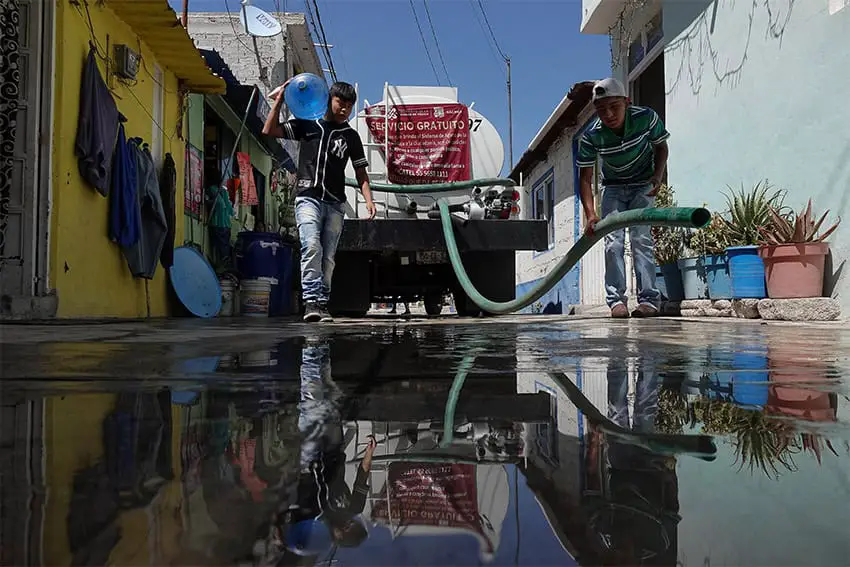
A truck delivers water to Yuguelito, a community in Mexico City’s Iztapalapa borough, in February. (Graciela López Herrera/Cuartoscuro)
The metropolitan area of Mexico City is one part of the country where supply is a major concern. Many areas have limited or no access to running water and depend on water deliveries. What’s more, the capital’s primary water source could run out in 40 years, according to experts from the National Autonomous University’s Water Network.
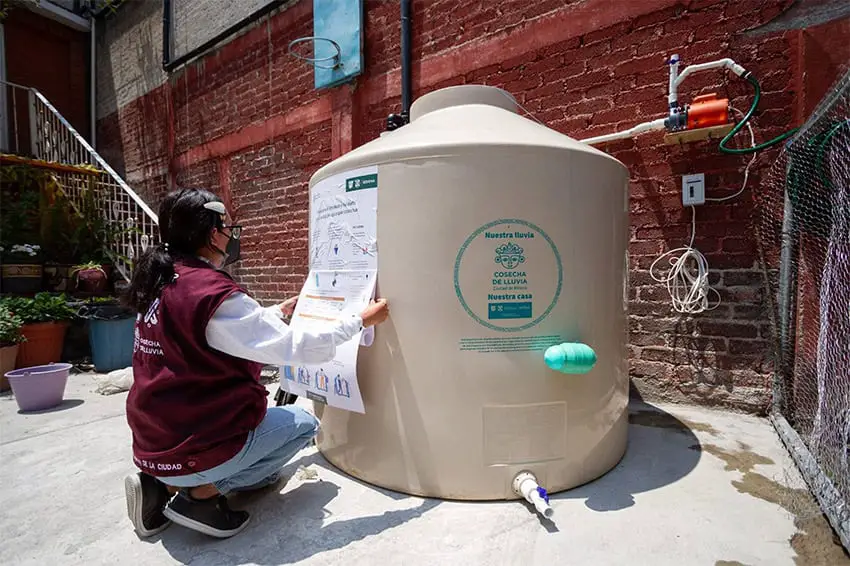
Brugada, who easily won the June 2 mayoral election, has pledged to work with Sheinbaum and Governor Gómez to solve Mexico City’s water scarcity problem. She has promised to create a water-focused ministry in Mexico City, expand the capital’s rainwater harvesting program and establish a new program for the “rehabilitation” of 11 water sources, among other measures.
“Water is a vital resource for Mexico — it’s needed not just for household and workplace consumption, but also for our food security, economic development, energy generation and public health care,” she wrote in the “100 pasos para la transformación” (100 Steps for Transformation) document she released earlier this year.
In that document, Sheinbaum acknowledged that Mexico is going through a “prolonged drought.” However, she asserted that a future in which there is enough water for everyone — “without the need to overexploit” water sources — is possible.
“That future requires us to … rethink the rules that govern the [water] sector and to implement different solutions based on technology,” she wrote.
The president-elect’s plan includes expanding Mexico City’s rainwater harvesting program with the installation of more systems like this one. (Cuartoscuro)
“… We must review the laws to protect the human right to water, allocate water use rights fairly and ensure that water continues to be an asset of Mexico,” Sheinbaum continued.
She said there are “two fundamental pillars” in the water sector — “the efficient use of water in the countryside through the implementation of technology, and the use of treated water in order to divert first-use [potable] water to cities.”
Sheinbaum added that agriculture accounts for 76% of water usage in Mexico, and highlighted that the “efficiency” of the sector’s usage of the resource is “low.”
“… By making water usage more efficient in the countryside, we can release a substantial quantity of water for human consumption, particularly in cities adjoining irrigation districts,” wrote the president-elect, an environmental scientist.
In her “100 steps for transformation” document, Sheinbaum also expressed support for desalination projects provided they don’t have an adverse effect on marine ecosystems. She also acknowledged that more infrastructure needs to be built in order to “resolve water supply problems.”
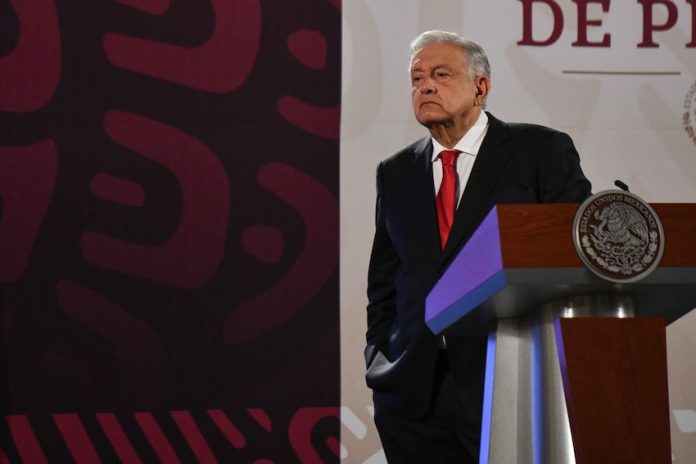
AMLO reiterated his concern for the ex-president during his Monday press conference, saying that violence "contaminates the political environment." (Mario Jasso/Cuartoscuro)
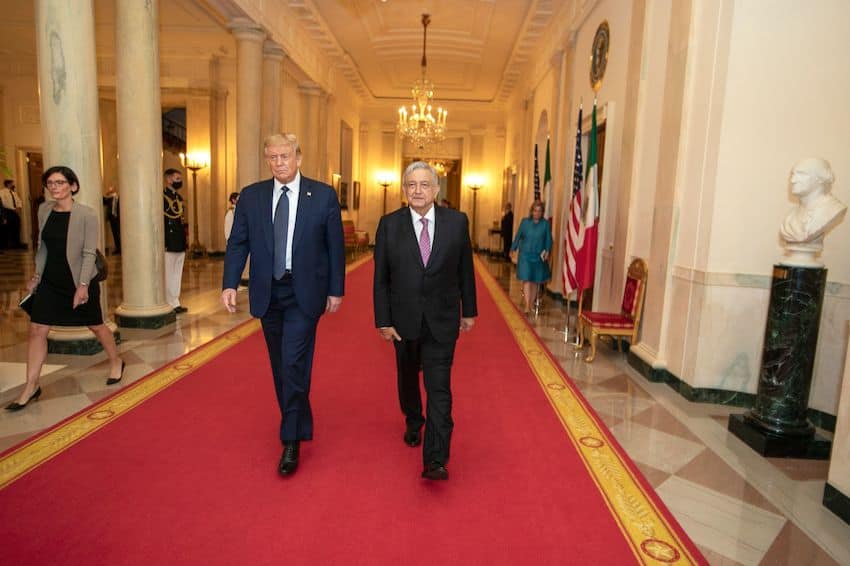
President Andrés Manuel López Obrador condemned the assassination attempt on former United States president Donald Trump, declaring that “any act of violence is reprehensible.”
Shortly after Trump was shot by a 20-year-old gunman while speaking at a rally in Pennsylvania on Saturday, López Obrador wrote on social media that “we condemn what happened to the ex-president… Violence is irrational and inhumane.”
Sea como sea reprobamos lo sucedido al expresidente Donald Trump. La violencia es irracional e inhumana.
President-elect Claudia Sheinbaum said on social media that she agreed with López Obrador and asserted that “violence doesn’t get you anywhere.”
“… It’s good to know that the former president Donald Trump is fine,” she said in a subsequent post.
“We reiterate our condemnation of this attack and the importance of rejecting any form of political violence. Peace and democracy must always be the choice,” Sheinbaum wrote.
Violence “cannot be justified,” he said, adding that it is “irrational” and “doesn’t help” in any way.
“On the contrary, it contaminates the political environment and produces fear [and] suspicion,” AMLO said.
“In addition, it’s very inhumane because in politics we can be adversaries but not enemies,” he said.
“… Fortunately, ex-president Trump wasn’t assassinated,” López Obrador said before acknowledging that one rally attendee and the shooter were killed.
AMLO and Trump had a cordial relationship during the former U.S. president’s time in office. (Cuartoscuro)
“It’s all very regrettable. We’ve already suffered from these moments of great uncertainty and sadness … [with] the assassination of [Luis Donaldo] Colosio,” he said, referring to the 1994 killing in Tijuana of the presidential candidate for the then-ruling Institutional Revolutionary Party (PRI).
Francisco I. Madero was assassinated in 1913, while Venustiano Carranza was killed in 1920. Álvaro Óbregon was assassinated in 1928 just 16 days after he was elected to serve a second term as president.
Donald Trump, who will be formally nominated this week as the Republican Party’s candidate for the Nov. 5 presidential election in the United States, is the first U.S. president or ex-president to be shot since Ronald Reagan survived an assassination attempt in 1981.
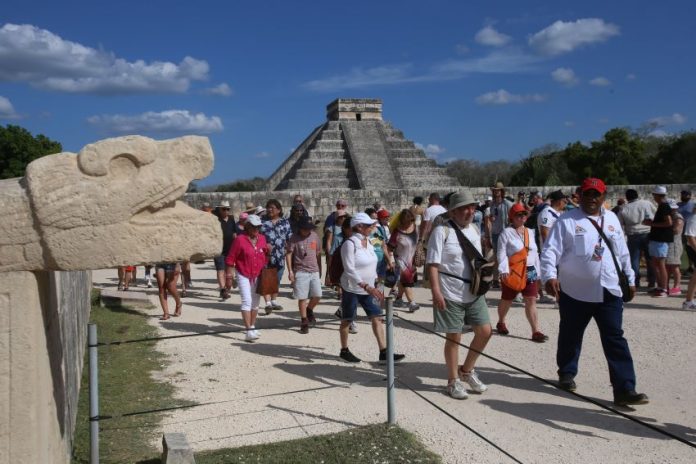
Mexico received over US $2.46 billion in revenue from foreign tourists in May. (Martin Zetina/Cuartoscuro)
Foreign tourism revenue was up 7.7% in May compared to 2023.
According to the National Institute of Statistics and Geography (INEGI), Mexico received over US $2.46 billion in revenue from foreign tourists in May, compared to the $2.23 billion it earned in May 2023.
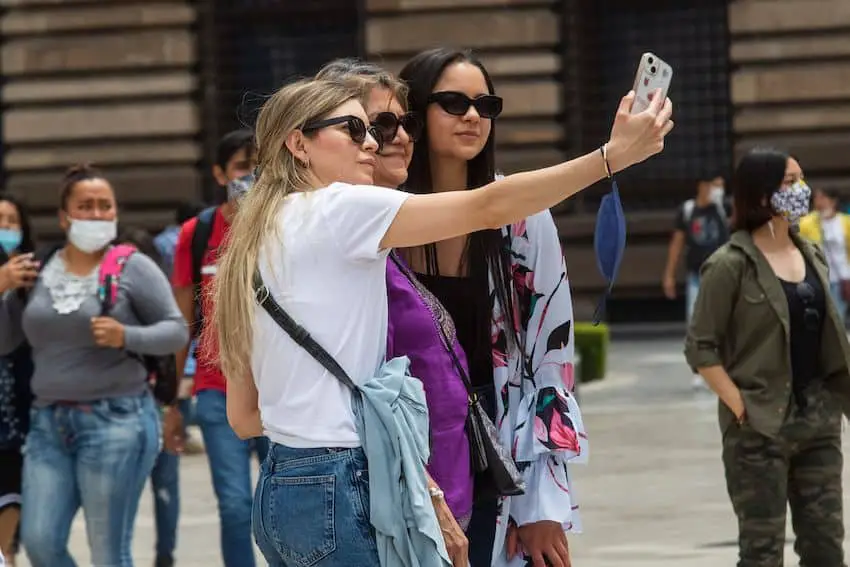
INEGI reported that May saw 6.72 million travelers enter the country, a 14.3% rise over 2023 figures. (Cuartoscuro)
INEGI’s report also revealed that foreign tourists entering Mexico via air spent on average US $1,115.31 — 1.5% more than last year.
In a statement, Tourism Minister Miguel Torruco Marqués said that the increase in foreign currency revenue from international visitors and the average spend by tourists are important measures of a country’s potential in the tourism industry.
As for the number of visitors, the INEGI reported that May saw 6.72 million travelers enter the country, a 14.3% rise over 2023 figures. Of these visitors, 3.4 million were foreign tourists.
In his statement, Torruco added that from January to May, the inflow of foreign currency reached US $14.9 billion, an increase of 8.1% compared to the same period of last year and an increase of 35.1% over the same period of 2019.
From January to May, Mexico saw the arrival of 18.1 million foreign travelers — an increase of 6.1% compared to last year, Torruco said. Of these tourists, 10.16 million travelers arrived by air — up 5.5% over the same period of 2023.
According to official data, nearly 80% of total arrivals in 2024 have hailed from three countries: the United States, Canada and Colombia. The number of tourists from the U.S. was 6,248,000, while travelers from Canada numbered 1,537,000 tourists and 257,273 from Colombia.
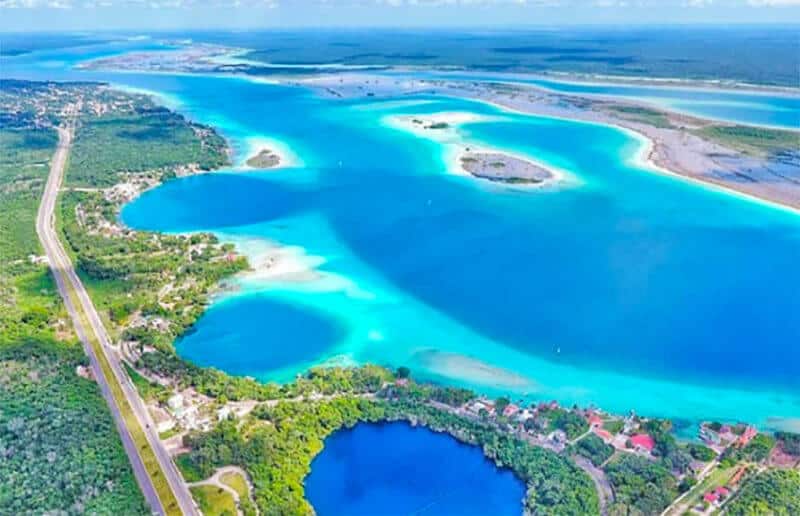
Pioneer Bacalar offers you the chance to discover a part of Mexico that prioritizes the natural wonder of one of the most incredible places in the world.
Picture this: A dreamy, untouched jungle shoreline is kissed by the gentle lapping of the most brilliantly blue turquoise water you’ve ever seen. Thick banks of mangroves tunnel over centuries old pirate canals that lead out to the open sea. Peppered around the waterfront are long, palapa-topped wooden docks, where hammocks sway languidly in the warm, tropical breeze. Now and then, a kayak silently slices through the glassy surface of the water as its paddler looks towards the heavens for one of the many hundreds of species of migratory birds. It’s silent, save for the wind rustling through the fluffy palm trees, stirring up fans of ripples in the water below.
It was exactly this image that first attracted Michel Grondin, lead developer of sustainable living concept Pioneer Bacalar to the sleepy lakeside town almost a decade ago.
“People kept talking about Bacalar,” he said. “I hopped in a car from Tulum and drove down. A couple of hours later, I was in this beautiful lagoon. I rented a boat and went exploring the different nooks and crannies, and I just loved it. It was paradise.”
Looking for development beyond a Tulum that he knew well, Grondin saw Bacalar as a blank canvas and an opportunity to develop in a way that was both luxurious and additive to the natural beauty of a precious ecosystem. He wanted to pioneer a community for people to come to live and experience Bacalar the way it was meant to be lived and experienced — close to nature, protecting the environment, but with an undeniable dose of jungle-inspired luxury. And so, Pioneer Bacalar was born.
Where is Bacalar?
Bacalar refers to two places. First, there is the town, a small community with centuries of history, that is fast becoming one of the buzziest destinations for low-key, creative, eco-minded travelers. Then, there is the lake itself, also known as the Lake of Seven Colors, thanks to the various shades of blue that dance across the surface throughout the day. This breathtaking 26-mile-long freshwater lake sits at the very southern end of the state of Quintana Roo, just before you cross the border into Belize.
Up until very recently, the town and the lake were only accessible from either Cancún airport, a four-hour drive away, or from Quintana Roo’s capital, Chetumal, which has very limited direct flights outside of Mexico. However, with the introduction of the Tulum International Airport last December, Bacalar has become much more accessible to international travelers. The new Tulum International Airport has a capacity of four million passengers a year. It is located 12 miles south of Tulum and will have its own Tren Maya stop to link Bacalar with Tulum directly.
A (carefully) evolving destination
As far as tropical castaway fantasies go, for years Tulum had been the destination du jour. Images of white-sand beaches and crystalline water splashed across international travel magazines, while legends of epic art installations and moonlit dance parties, holistic healing, and organic cuisine made their way around the world.
This is why Bacalar is having its moment now more than ever. Bacalar has always been an eco-conscious destination, drawing travelers to its pristine, Caribbean-clear waters, lush mangrove jungles, wildlife, and an ethos that prioritizes the environment over anything remotely club-scene or overtly “trendy.”
It’s not that Bacalar is a new destination. But the spotlight is now on what a magnificent beauty it is, and travelers are paying attention. With the opening of the Tulum International Airport and the ongoing construction of the Maya Train, it is now easier than ever to move around southern Quintana Roo, bringing Bacalar closer than ever before.
To add to this, the town of Bacalar has been given Pueblo Mágico status by the Mexican government, an award which highlights the unique charm of some of the country’s most special locations. The designation also comes with increased government funding to help develop infrastructure, making Bacalar more accessible to visitors than ever before.
The town and destination are growing. What started as a handful of boutique palapa-topped lakefront hotels and low-impact homes is carefully evolving to become a hideaway for barefoot luxe travelers from around the world. These travelers are drawn to the low-key beach clubs, cozy coffee shops, laid-back burrito trucks and the endless activities that take place both on the lake and within the jungle.
Pioneer Bacalar: A development at the forefront of Mexican history
For visitors who love the history of the Yucatan Peninsula, Bacalar puts them at the doorstep of one of the largest unexplored archaeological sites in Mexico — Ichkabal. Set to open in August 2024, the 2,400-year-old city is said to be the origins of the Kaanul Dynasty, one of the most powerful ruler groups of the Maya civilization. Visitors will be able to explore the set of five buildings, including a 40-meter-high pyramid, which is twice the size of the world-famous Kukulkán temple in Chichen Itza.
Bacalar is truly a treasure trove of opportunity for travelers and investors looking for a slice of paradise to call their own. But unlike other destinations that developed too far and too fast, Bacalar has tighter environmental restrictions to prevent development from spiraling out of control, which is exactly what Grondin was looking for.
Developed with purpose
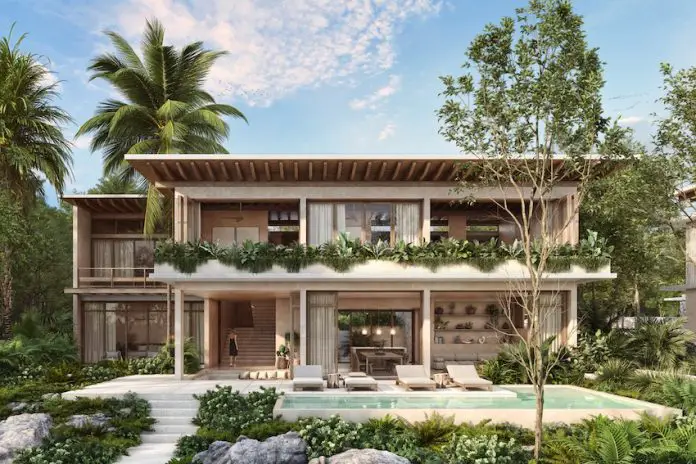
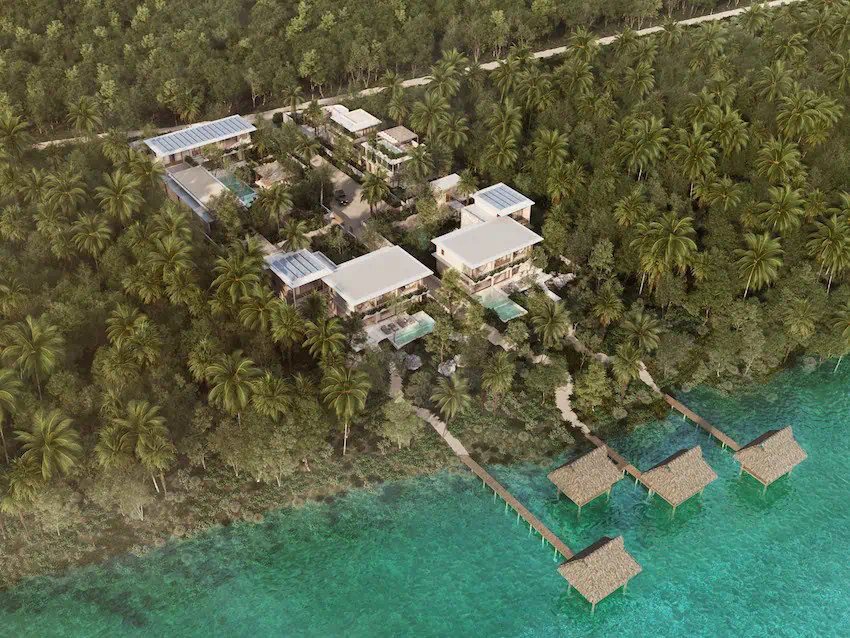
Pioneer Bacalar is a collection of four homes, each on 1,200 square meters of land. One has already sold and three are still available for pre-sale. The project is designed to bring the lake to life for people who are passionate about natural beauty and an intentional lifestyle.
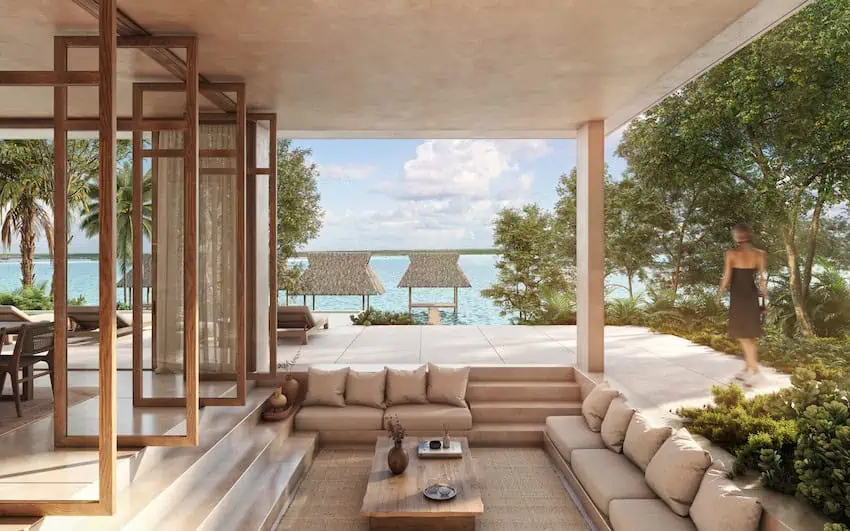
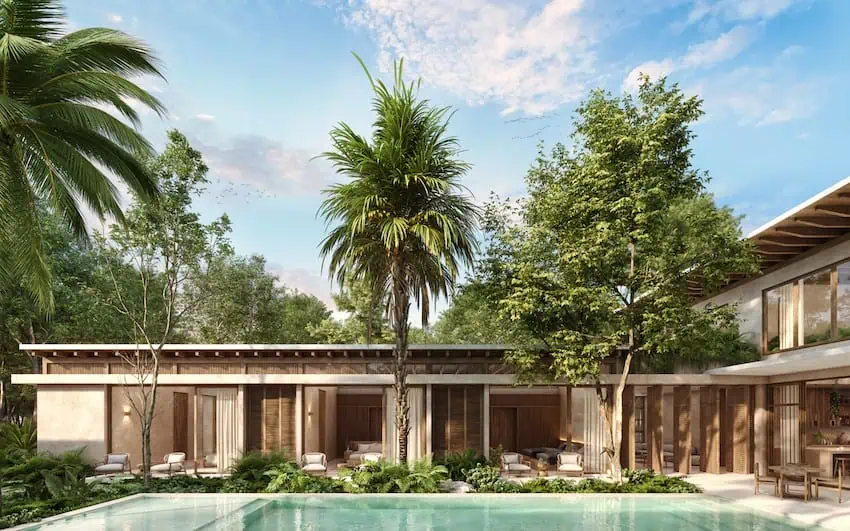
The aesthetic is understated glamor, with locally sourced materials including chukum and native woods. Pops of color are naturally incorporated through the surrounding jungle palette — the blues of the lagoon, the greens of the jungle, and the shimmers of turquoise from each residence’s private pool. Each residence has a private dock with two of the homes at Pioneer having 25+ meters of lagoon frontage where residents can launch their boats, jet skis, and kayaks. Because no developments are permitted on the eastern side of the lake, homeowners will have nothing blocking their views of the protected nature beyond.
Not only does Pioneer adhere to strict development regulations in the region, but it also takes things a step further by incorporating seamless, sustainable concepts into the boho-chic design, without sacrificing a shred of luxury. The entirely off-grid environment was designed with sustainability at the forefront, from the solar energy system to the on-site greywater system which collects, filters, and reuses water from sinks, showers, and laundry to irrigate landscapes, reducing freshwater use and lessening wastewater output. Still, homes will be outfitted with Starlink, air-conditioning paired with strategically installed fans, and top-of-the-line appliances. Spaces will be chic and comfortable, but deeply rooted in sustainability and completely enveloped by nature.
“The goal is to attract buyers who are environmentally conscious, but even if that concept is new to them, the homes do the work for them,” said Grondin. “We believe that we can create something truly sustainable and environmentally positive for decades to come. It’s an environmentally conscious place designed using a holistic approach, without sacrificing any comforts. With this day and age and with the technology currently available, this can be done [here in Bacalar], and at a great price point for the luxury it provides.”
The price of each home ranges from 1.2M to 2.4M USD.
Finding a slice of paradise
At the end of the day, for Grondin and Bacalar loyalists, it’s about the lagoon. It’s about disappearing into nature where it is quiet and peaceful. It’s about living in luxury while carefully caring for the natural world around them.
“Most of the time, when I am on a boat on the lake, I’m alone. The only noises are the birds, the wind, and the water. We want a community where the draw is the lagoon, the goal is to preserve nature, and appreciate the culture, combined with all those things that make a lifestyle luxurious.”
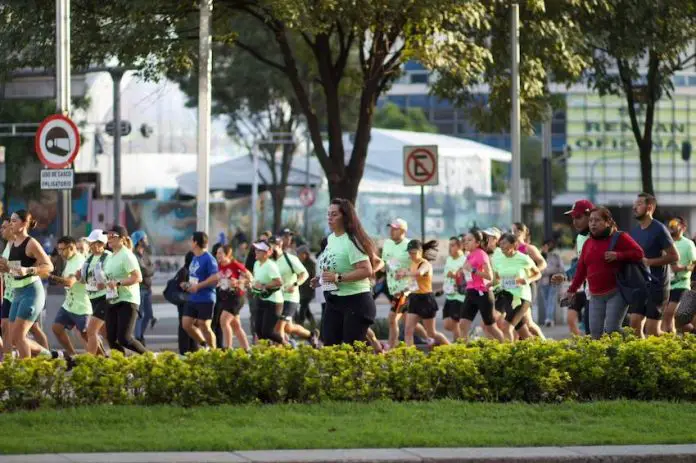
Over 30,000 participated in Mexico City's half marathon race on Sunday. (@21KCDMX/X)
A runner taking part in the 17th Mexico City half marathon died at the finish line on Sunday, enshrouding in tragedy what was by all other accounts a successful event.
According to media reports, the deceased is Juan Stenner, 32, an athlete who competed in the 400-meter hurdles at the 2011 Pan American Games held in Guadalajara. Event organizers said Stenner was not registered for the event and was not wearing a competitor number.
¡Siempre te recordaremos como un gran atleta y ser humano! 🙏🏻
Lamentamos el fallecimiento de nuestro exalumno, Juan Stenner Escalante, integrante de la generación 2008-2011, quién falleció el día de hoy mientras corría el Medio Maratón de la CdMx. pic.twitter.com/emcPsdIgqu
Stenner, who retired from track and field competitions in 2018, reportedly collapsed upon reaching the finish line near the Angel of Independence Monument on Reforma Avenue. Red Cross paramedics at the scene attended to him quickly and rushed him to the nearby Rubén Leñero Hospital, but doctors were unable to revive him.
In a statement posted to social media, the Mexico City Sports Institute and the city government offered “sincere condolences to [Stenner’s] family and friends,” while also ensuring they would support the family in any way they could.
The tragedy overshadowed the popular half marathon event which traversed Reforma Avenue and Chapultepec Park before concluding at the Angel of Independence Monument.
Thousands lined the 21-kilometer route to clap and shout encouragement to the more than 30,000 participants running in a variety of categories.
Nigerian Frederick Yeko Domongole finished the half marathon in just over 1:04. (@21KCDMX/X)
Nigerians Frederick Yeko Domongole and Joyce Chepkemoi Tele won the men’s and women’s race, respectively. Domongole finished the race in 1:04:37, while Tele completed it in 1:10:34, breaking by nearly three minutes the record set by Mexican Citlali Cristian Moscote in 2021.
In the men’s category, Abel Kipkirui Mutai from Kenya finished second and Mexican Jorge Luis Pérez Cruz came in third. In the women’s race, Kenyan Kimutai Jepkosgei Winnie earned the silver medal while Mexican Mayra Sánchez Vidal — the 2022 winner — came in third.
The winners earned 50,000 pesos each, while the second-place finishers came away with 35,000 pesos and the third-place competitors earned 20,000 pesos.
Prizes were also awarded to wheel-chair competitors and visually impaired runners.
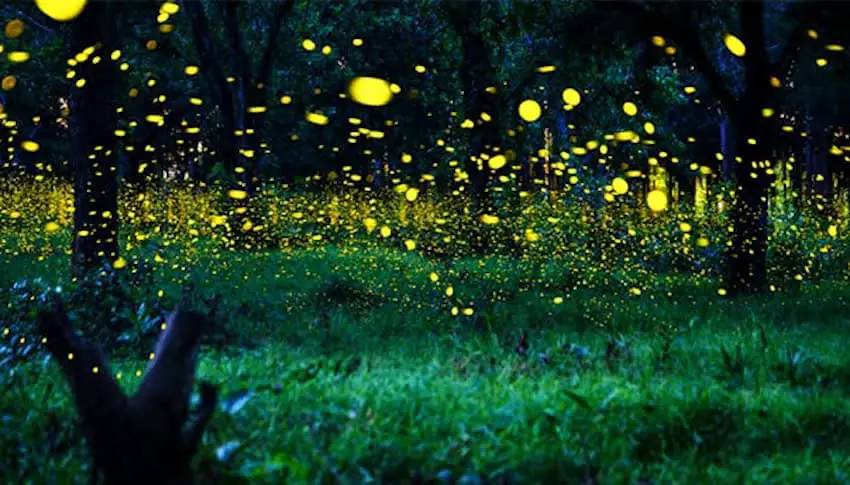
Beat the crowds this year, and head to some of Mexico's most authentic (and dazzling) locations, from fireflies, to castles to long forest walks. (The Fireflies Sanctuary in Tlaxcala/Facebook)
When planning a family vacation in Mexico, it’s easy to start your planning by looking at the usual destinations — popular resorts and attractions like Cancún, Los Cabos, Mexico City and San Miguel de Allende. Many of these could righfully be considered candidates for the title of “best family holiday in Mexico.”
But while there are reasons for these destinations to always be at the top of any travel list, there are lesser known places that can be as rewarding and fun when traveling with kids.
Taking your children on holiday is an amazing experience, but picking the right destination is essential! (Vitolda Klein/Unsplash)
We did our first international trip with my daughter when she was six months old and we haven’t stopped traveling since (she’s now five). So, I’ve got you — I know exactly what to look for when traveling with kids. Luckily, few places offer such a brilliant array of options for families quite like Mexico.
Here is a list of recommendations for incredible and original destinations in Mexico to plan your next family vacation.
Tapalpa, Jalisco
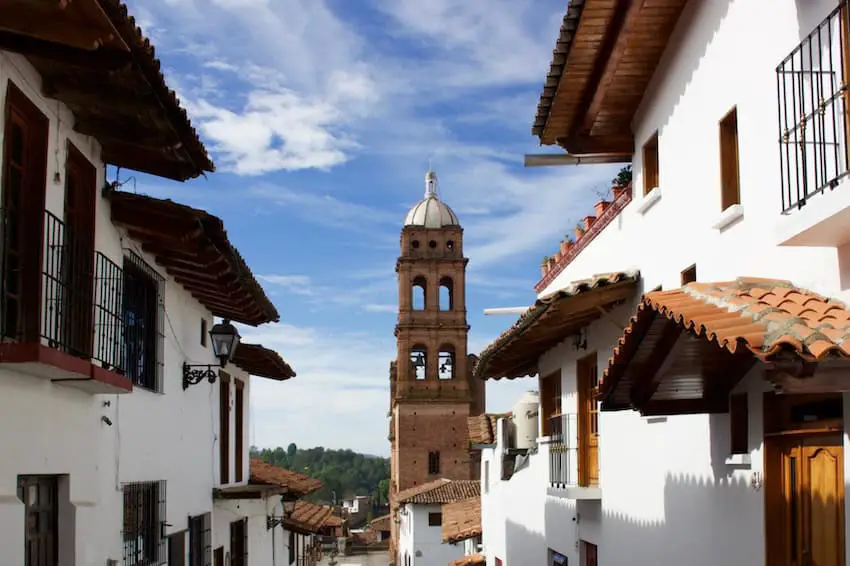
Tapalpa is an authentic piece of traditional small-town Mexico, nestled in the heart of the Jalisco highlands. (Guadalajara)
If you like nature and want to provide your kids with an authentic small-town experience in Mexico, look no further than the Magic Town of Tapalpa, Jalisco.
Nestled in the highlands south of Guadalajara, Tapalpa means “Land of Color” in Nahuatl, a name probably provided by its evergreen landscape. With a pleasant average temperature of 15 degrees Celsius during the summer, people from Guadalajara flock there on weekends to do everything from fishing to hiking, cycling and horseback riding.
Its cobbled stones, tiled roofs, traditional food and countryside feel attract national and international travelers alike, as this stunningly beautiful town starts to get the recognition it deserves.
One of the main attractions in Tapalpa are the “piedrotas” or Big Stones in the Valley of Enigmas, a beautiful prairie with creeks and intensely green grass, while gigantic stones sit scattered around as if they had fallen from the sky.
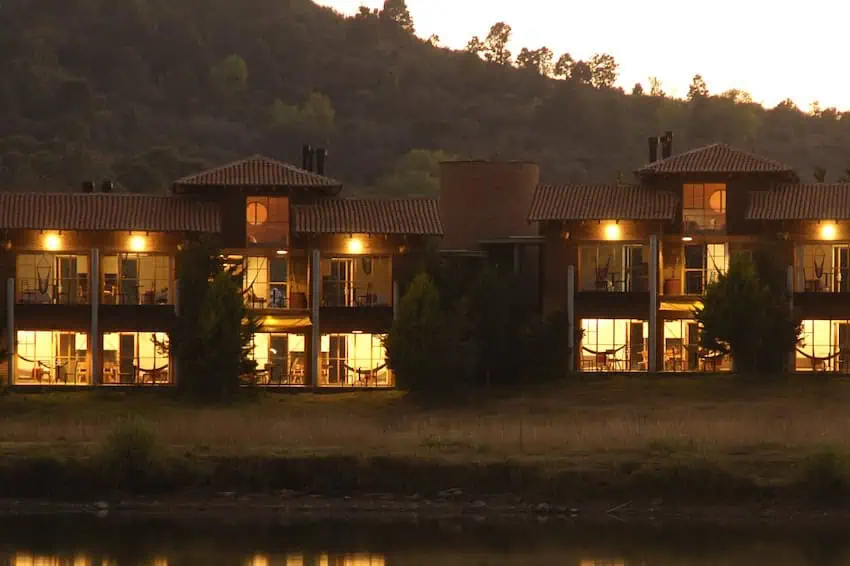
A stay in the Hotel Remanso can give you the chance to base yourself in rural Jalisco – making a perfect base for day trips to other popular towns, including Tequila. (Hotel Remanso)
Where to stay?From stunning Airbnb cabins deep in the forest to 5 star hotels, there are plenty of options. My personal recommendations include Tapalpa Country Club Hotel and Hotel Remanso. Both offer outdoor activities suitable for all members of the family.
Tapalpa is a great addition to the itinerary of any family visiting Guadalajara. It can also be paired with the international tourist destination of Tequila.
Firefly sanctuary, Tlaxcala
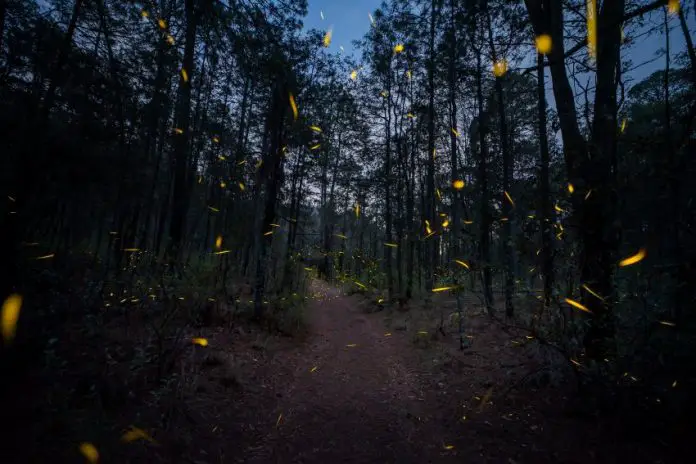
A magical time awaits anyone lucky enough to venture to Tlaxcala’s Firefly Sanctuary. (Zona Turistica)
The firefly sanctuary or Santuario de las Luciérnagas, is one of Mexico’s most stunning natural treasures and probably one of its best-kept-secrets.
Located in the state of Tlaxcala, about a two-and-a-half-hour drive from Mexico City, the sanctuary comes to life between June and the first days of August, when thousands of fireflies light up the thick forest of Nanacamilpa in search of a mate.
Firefly sightings begin at 8:30 pm and last approximately one hour, with the peak lasting around 20-25 minutes. However, the magic of the experience starts the moment you step into the cold coniferous forest of this stunning natural reserve, led by your experienced guide.
During the experience, the use of iPhones, camera flashes, or lamps are strictly forbidden as artificial light interferes with the darkness required to see the fireflies.
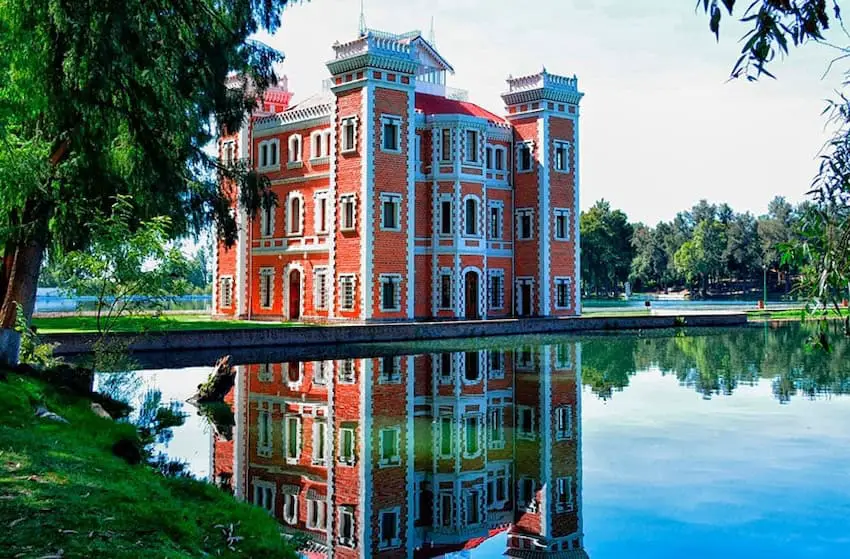
If you’re in the area, the ex-hacienda de Chautla also offers a chance to see European opulence in the heart of Mexico. (Ex-hacienda de Chautla)
This activity is best suited for kids older than four, as the experience requires a few hours of walking and silence.
Where to stay?From hotels to camping spots, you have choices. Piedra Canteada has a wide camping area next to the forest. If you’d like a more comfortable experience, you can check out Villas del Bosque de Santa Clara or Eco-hotel Laguna Azul. Otherwise, you can stay in Tlaxcala, where many hotels arrange night excursions to the reserve.
Mérida, Yucatán
Easy to get to and with all the amenities of city life, Mérida offers a chance to really get to know life in tropical Mexico. (Viator)
The Yucatán Peninsula in the Riviera Maya is mostly known for the hot spots of Cancún, Tulum and Playa del Carmen. These family resorts are incredible, with a wide variety of activities for all the family and are rightly very popular with travellers.
But away from the beach lies the city of Mérida. From exquisite cuisine to cultural and natural activities, Mérida is the perfect destination for families looking for a small city experience and the chance to experience natural adventures.
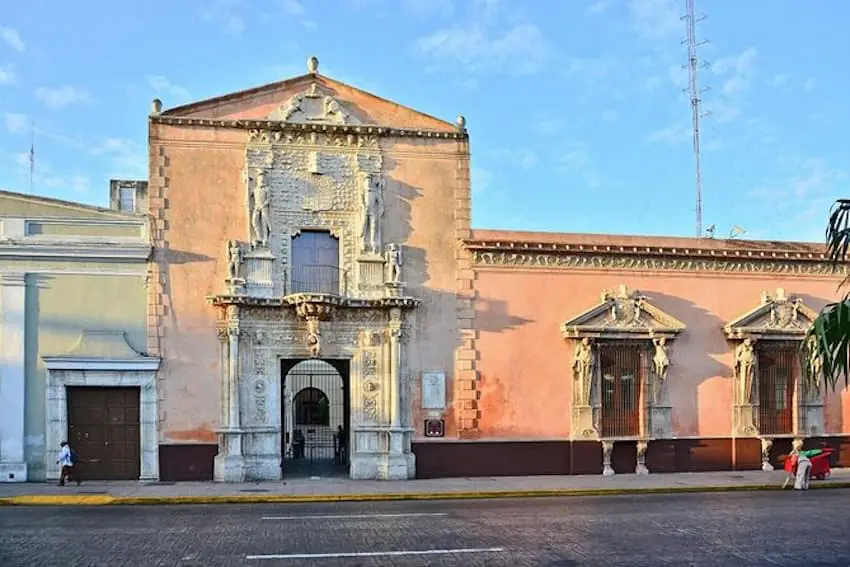
Activities families can enjoy in Mérida include the Gran Museo del Mundo Maya, a stroll around Mérida’s historic main square and a visit to the architecturally dazzling Casa Montejo.
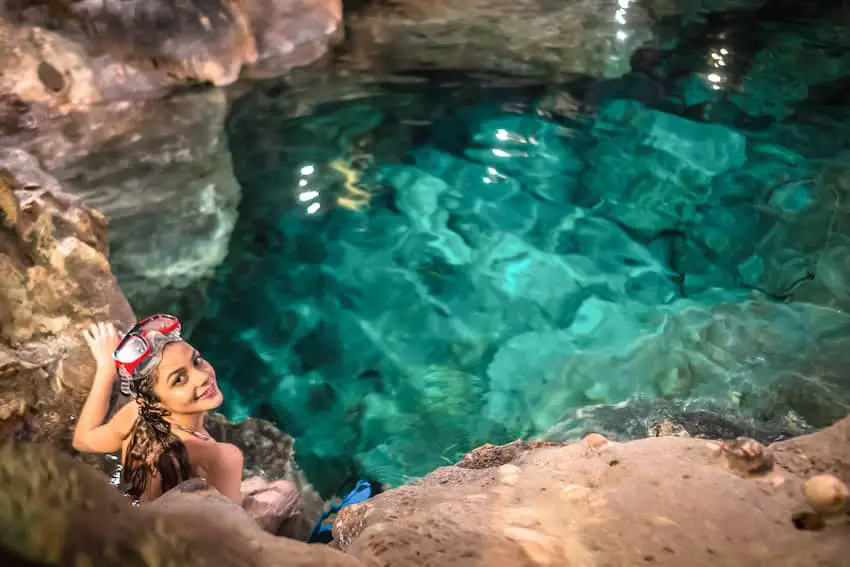
But while you’re in the area, why not explore family-friendly cenotes? These cenotes have infrastructure that can make it easier for the younger ones in the family to enjoy too. The list includes Cenote in the Hacienda Selva Maya, Cenote Santa Rosa, Cenote San Ignacio, Cenote Hubikú or Cenote Santa Cruz.
Cenote San Ignacio offers accessibility options that mean the whole family can enjoy the chance to swim. (Cenote San Ignacio)
Where to stay?Mérida has no shortage of hotels, including local boutique hotels and international hotels and historic haciendas outside of the city. Consider a hotel on Mérida’s most beautiful street, Paseo de Montejo.
Mérida is a beautiful destination that doesn’t need to be paired with other cities, offering plenty for a multi-day vacation.
So whatever your family is like, there is sure to be a vacation in Mexico that is perfect for all of you. If there’s anywhere else you want to recommend, why not tell us about it in the comments?
Gabriela Solis is a Mexican lawyer turned full-time writer. She was born and raised in Guadalajara and covers business, culture, lifestyle and travel for Mexico News Daily. You can follow her lifestyle blog Dunas y Palmeras.