Home Blog Page 592

Mexico’s best brutalist buildings: A comprehensive guide to concrete architecture

5
A far cry from the concrete carbuncles of yore, Mexico's brutalist scene is back, and better than ever. (Yoshihiro Koitani/Archdaily)

Love it or hate it, no architecture provokes a response like brutalism. Once considered the future, the bare-bones concrete style has fallen out of favor with the modern world of design. Despite this fall from grace, there is something about an unpainted concrete arch, or a sharp, neat concrete right angle that gets the pulse going (guess how I feel about it). 

The name is derived from the French term for “raw concrete,” which sure enough explains the defining characteristics of the style. Originating in the devastation of post-war France and the U.K. in the 1950s, and taking the world of architecture by storm in the 1960s, the style led to some of the most legendary (and divisive) pieces of architecture in the 20th century. London’s Barbican, Marseille’s Unite d’ Habitacion and Montreal’s Habitat 67.

An example of modern brutalism in Mexican architecture, Zicatela House was designed by Ludwig Godefroy Architecture. (Jaime Navarro/Archdaily)

In Mexico, brutalism came to the fore in the 1960s and 1970s, as the availability of concrete — seen as a futuristic building material at the time — revolutionized building techniques and was adopted by high-concept designers and discount construction firms alike. Absolute icons of Mexican brutalism include the Azteca Stadium (don’t mention the Hand of God) and the Casa en el Aire.

Just because Brutalism is seen as the epitome of mid-20th century design doesn’t mean it’s not overdue a comeback though – and come back it certainly has. If you’re looking for inspiration to become the next Le Corbusier or Ernö Goldfinger, why not check out some of Mexico’s best modern (and not so modern) brutalist offerings.

Casa TO, Puerto Escondido, Oaxaca

 Puerto Escondido is the new Tulum – and along with the rise in status, some genuine architectural gems are starting to spring up, including this pool (pun intended) on the Oaxaca coast.

Casa TO is situated in the trendy Zicatela area of the town, and is styled after the caravansarays of Istanbul. With all the glamor of a boutique hotel in Mexico’s coolest little surf town, the standout feature is undoubtedly the brutalist pool, which no doubt adorns the Instagrams of every visitor who has been lucky enough to swim in it.

Casa Oyamel, Xalapa, Veracruz

The concrete structure and ribbed slabs are at their best in the tranquil nature of Veracruz. (RP Arquitectos + Adrián Labastida)

The stark concrete of brutalism is often most associated with the sort of urban decay that led to Stanley Kubrick’s visually delicious adaptation of A Clockwork Orange or the towering, unfinished parking lot that dominates Michael Caine’s Get Carter. I’ve always been of the opinion, however, that the medium really shines when it’s in nature.

Casa Oyamel is definitely that. Set admit possibly the most stunning backdrop I’ve ever seen, the house stands out like rock against the mountains and forests of Xalapa. Boasting three bedrooms, a large garage and a 95% bare concrete finish, designer Rafael Pardo Ramos has created a blend of 1960’s style and 2020’s comfort amid the beauty of Mexican nature.

Lookout, Las Cruces, Jalisco

The Pilgrim’s Route lookout offers amazing visuals – both of the valley and the site itself. (Archdaily)

Much like Casa Oyamel, the juxtaposition of bare concrete and nature once again delivers — except this time the view is from a mountaintop and needs to be seen to be believed.

Part of the Pilgrim’s Route, a 117 kilometer walk traversing the mountains of Jalisco, the Lookout provides a place for hikers to stop and appreciate the stunning natural beauty of one of Mexico’s most impressive states. The shelter is open in two directions, allowing travelers to make the most of the mountaintop vista.

Chuumuk Housing Complex, Tulum, Quintana Roo

The façade finish is made of a plaster called Chukum that integrates perfectly with the vegetation. (Aureel Visuals/Archdaily)

Tulum has been leading the beachside fashion crew for some time now, so it’s only natural that it would find a spot on this list. Freshly poured for 2024, Chuumuk is a small, deeply stylish cluster of brutalist homes tucked away on the Caribbean coast. 

At this point, I think we’ve all agreed on the beauty of concrete, so it’s not necessary to harp on at any more length about the bare, sleekly brushed walls, the concrete pools, stairways, floors and even ornaments — but that won’t stop me. The house looks like every wannabe-Owen Luder’s dream. 

Estadio Azteca, Coyoacán, Mexico City

Built in 1962 by architects Pedro Ramírez Vázquez and Rafael Mijares, the Santa Úrsula site is considered a jewel of brutalism. (Stadiony.net)

Ok, it feels like cheating to put this on the list. It is arguably the most recognizable stadium in the world, behind London’s Wembley Stadium, and it is home to some of football’s most defining moments. It has held two World Cup finals (one of only two stadia ever to do so) and will see its third World Cup in 2026.

It’s making the cut here though, because this is your last chance to go and see it in its original, 1966-edition glory. The stadium (and surrounding area) is due to receive a massive refurbishment for the 2026 World Cup, and while it will be upgraded to modern standards, the concrete behemoth that has seen both Pele and Maradona lift the World Cup trophy will sadly be no more.

Make the pilgrimage to a temple of football — and remember, that handball was an absolute travesty.

By Mexico News Daily writer Chris Havler-Barrett

Cave findings show that Tulum ruins still hold untold secrets

2
A Maya ruin on a cliff over the turquoise-blue sea
Scientists are working to understand the findings from a cave accidentally uncovered last year in Tulum. (Laura Labrie/Unsplash)

Mexican archaeologists continue to investigate a cave found late last year in Tulum, Quintana Roo, with 11 human remains that belonged to upper-class people of the time.

Along with the remains, archaeologists found offerings of marine animals, including fish, turtles, snails, shells, parrot fish, manta rays, tiger sharks, barracuda, sea turtles, land turtles, mammals and feline bones that could be from a jaguar or ocelot.

Archaeologists also found a ceramic molcajete from the Late Postclassic period (A.D. 1200 to 1500) inside the cave.

“The significance of the discovery is the location within the walled city between the Palaces of Halach Huinic and Columns,” archaeologist José Antonio Reyes Solís, coordinator of the Program for the Improvement of Archaeological Zones (Promeza), told news outlet EFE on Sunday.

The cave, which is 9 meters long by 6 meters wide and has three chambers, was discovered in December 2023. According to the archaeologists, the cave entrance was blocked by a large rock placed on top of human bones.

The remains inside the cave were transferred to the laboratories of Quintana Roo’s National Institute of Anthropology and History (INAH) for further study.

A small passage leads into a cave with bones visible inside
The small cave entrance was covered by a boulder for hundreds of years, until it was unearthed during renovation work in 2023. (INAH)

Although the excavation work has been completed and the cave has been covered to preserve it, EFE reported that it could possibly open in the future to receive visitors.

The cave is just one of the secrets of Tulum, a site that has been investigated since the 1920s and 1930s.

“Some buildings went through specific research in the ‘90s,” Reyes said.

Tulum, which means “walled city,” sits on a cliff above the Caribbean Sea. It hosts some of the most important archaeological remnants in Mexico, after Chichén Itzá and Teotihuacán.

“It is important for the number of visitors it receives per year and culturally speaking it stands out for its location in the Caribbean, a trade route that goes from Central America to the Yucatán Peninsula,” Reyes explained.

In addition to the cave, INAH reported rescuing and restoring seven figures of the Maya deity known as the “descending god” in buildings at Tulum.

The Maya god is associated with rain, the setting sun, lightning, bees and Venus. A temple in the deity’s honor is found next to the Castle of Tulum.

“Although [it is found] in several places in Mesoamerica, the descending god is the emblematic figure of the Eastern Costa Maya region,” the head of the restoration project, Patricia Meehan Hermanson, told EFE.

With reports from La Jornada Maya

Opinion: On the campaign trail, expect the unexpected

3
Voters in Mexico City
Voters go to the polls on June 2, 2024 to choose not only a new president but new leaders in many other government positions. (Mario Jasso/Cuartoscuro.com)

Electoral contests are akin to military campaigns: an objective is contested, weapons and tools of combat are deployed, and the aim is to defeat the enemy in this case, the contender.

In his biography of Napoleon, Andrew Roberts states, “It was a measure of Napoleon’s resilience and ingenuity — and of the confidence he still had in himself — that, having returned from Russia with only 10,000 effective troops from his invading force, he was able to assemble an army of 151,000 men for the Elba campaign within four months, with many more to come.”

As in military campaigns, both sides believe they’ll emerge victorious, but in elections, only votes matter, and surprises can happen on either side.

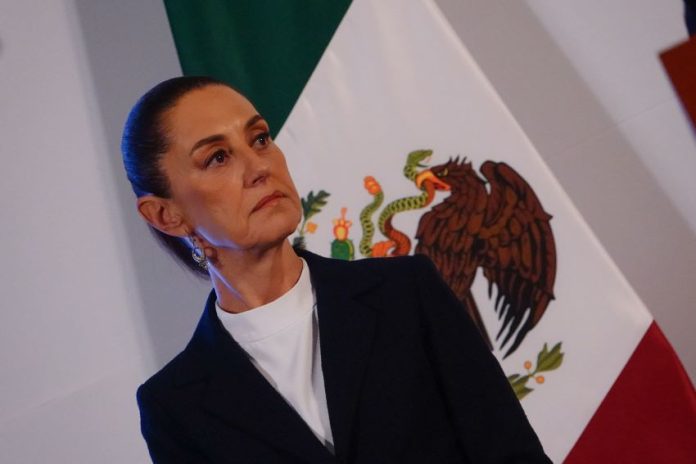
Polls suggest that Claudia Sheinbaum will win the election, but in electoral matters and in the last year of a contentious government, anything can happen. Her campaign, starting with its leader (AMLO), continues to deploy increasingly heavy weaponry (the most recent announced on Feb. 5 with the constitutional reforms package), indicating their own uncertainty about their chances.

There are valid reasons for this uncertainty. The outgoing government focused on succession from day one, neglecting basic citizen concerns like security and economic development. Dedicated to building an electoral base, it now faces the question of whether its efforts guarantee the desired voting outcome, possibly at a high cost. While there have been significant improvements in real family incomes, the certainty of preserving them is lacking. Stretching resources has benefits but also risks.

A victory for Claudia Sheinbaum, the Morena candidate, would bring to power a person who has shown great executive capacity and who has a much more competent and organized team than her predecessor. It’s impossible to know what she would do as president, given that her campaign has focused on reproducing the statements and dogmas of the current government. While her biography suggests a propensity for action, drawing conclusions is challenging. Regardless, her success would depend on her ability to chart a new course, a common challenge in politics.

On the other hand, Xóchitl Gálvez is more transparent and direct, unburdened by a dominant president’s shadow. Her instincts clearly lie in unleashing the population’s potential; instead of aiming to control everything, she would seek to break the obstacles that hinder the citizenry’s development. Her history as an entrepreneur and a politician show a willingness to undertake projects and see them through, while her background and biography indicates a readiness to confront factors perpetuating inequality. Her main challenge would be leading diverse factions within her coalition.

The most dangerous scenario would be either candidate securing a significant majority in both legislative chambers, even a qualified majority. This scenario, hypothetically more likely if Morena were to win, would be especially harmful for Claudia Sheinbaum, who not only faces old and new conflicts within the web of contrasting interests characterizing her party, but it also could empower extreme factions and hinder governance.

This paradox is evident in recent nominations, such as for the mayoral candidate of Mexico City and for the Supreme Court. 

There are still many months to go until this campaign concludes, a period during which numerous factors could alter what seems certain. Some of these factors will stem from the president’s eagerness to influence the outcome, while others are inherent in Mexico’s succession process.

As Chilean diplomat Gabriel Gaspar suggests, the full extent of uncertainty and lack of confidence will be revealed, “two traits that shape the feelings of broad majorities of our societies… Uncertainty for a significant part of the population is very concrete, as it becomes increasingly difficult to survive, to put food on the table, and at the same time, going out into the street becomes more dangerous every day.” And he concludes with what should be obvious for the contenders: “Replacing uncertainty requires certainties.”

Meanwhile, as Thomas Sowell says, “The fact that so many successful politicians are such shameless liars is not only a reflection on them, it is also a reflection on us. When the people want the impossible, only liars can satisfy.

Luis Rubio is the president of México Evalúa-CIDAC and former president of the Mexican Council on International Affairs (COMEXI). He is a prolific columnist on international relations and on politics and the economy, writing weekly for Reforma newspaper, and regularly for The Washington Post, The Wall Street Journal and The Financial Times.

Weekend sports roundup from Mexico: A win for women’s soccer, pro tennis in recovering Acapulco

0
Alex de Miñaur and Casper Ruud pose on a tennis court with their respective first and second-place trophies
Alex de Miñaur and Casper Ruud after winning first and second place, respectively, at the Mexican Open. (Carlos Alberto Carbajal/Cuartoscruo.com)

The upstart Mexican women’s soccer team qualified for the semifinals of a prestigious tournament during a busy weekend on the Mexican sports scene.

The activity included a men’s pro tennis tournament in hurricane-damaged Acapulco that the director called the “first stage in the rebuilding process,” and also the final regular season games in a new women’s pro softball league in Mexico. Here’s the recap:

Red-hot Mexico advances to semifinals

Fresh off its historic 2-0 win over the United States, Mexico beat Uruguay 3-2 in women’s soccer on Sunday to move into the semifinals of the Concacaf W Gold Cup tournament.

Mexico had leads of 2-0 and 3-1 at BMO Stadium in Los Angeles, but Paraguay’s second goal in the 72nd minute made for an exciting and nerve-racking finish.

Aguascalientes native Jacqueline Ovalle scored two goals, giving her five in Mexico’s last three games, and Nuevo León native Karen Luna added one. Goalkeeper Esthefanny Barreras, who was born in Phoenix, saved a penalty shot.

A soccer player in a green jersey jumps for joy and grabs her teammates hand, on a professional soccer field
Karen Luna of Nuevo León jumps for joy after scoring for her team. (Selección Nacional de México Feminil/X)

In Mexico’s  professional women’s league, Liga MX Femenil, Ovalle plays for Tigres UANL, Luna for Club América and Barreras for CF Pachuca.

With three wins and a tie in four games, Mexico next plays in the semifinals on Wednesday against Brazil, which advanced with a 5-1 win over Argentina. Brazil is ranked 11th in the world and Mexico is 35th.

The game will be at Snapdragon Stadium in San Diego at 8 p.m. CST. In Mexico, it can be viewed on ESPN+, which is also available on the Star+ platform.

Wednesday’s other semifinal will be the United States against Canada. The world’s No. 2-ranked U.S. team rebounded from only its second loss to Mexico in 43 meetings to beat Colombia 3-0 in the quarterfinals. Canada beat Costa Rica 1-0.

Women soccer players celebrate a win on the field
Mexico’s 2-0 victory over the U.S. in California last week was the second time the Mexican women’s team had beat the U.S. on that country’s home turf. (Concacaf)

The championship is slated for Sunday night.

Concacaf stands for the Confederation of North, Central America and Caribbean Association Football. The association has had a Gold Cup for national men’s teams  since 1991, but this year marks the first for women.

Tennis tourney ‘worth gold’ in Acapulco

Alex de Miñaur of Australia became the first player to win back-to-back titles at the Mexican Open in more than a decade when he beat Norway’s Casper Ruud 6-4, 6-4 on Saturday in Acapulco.

He was the fourth player to win back-to-back titles in this 31-year-old tournament, joining Austrian Thomas Muster (1993-96), Spaniard Nicolás Almagro (2008-09) and Spaniard David Ferrer (2010-12).

All-time great Rafael Nadal of Spain won the tournament four times, including most recently in 2022, but never consecutively.

Alex de Miñaur celebrates a win on the tennis court
Alex de Miñaur celebrates a mid-tournament win over Stefanos Tsitsipas of Greece. (Abierto Mexicano de Tenis)

“Acapulco is becoming like a second home,” said de Miñaur, 25, after earning his eighth title on the top pro men’s circuit, the ATP.  The win earned him US $412,555 out of a purse of US $2.21 million.

The tournament was in peril due to damage inflicted by a Category 5 hurricane in October, which left at least 52 people dead. The city’s oceanfront Diamond Zone, where the tennis stadium is located, was devastated; Arena GNP Seguros needed more than US $11 million in repairs, the newspaper Milenio estimated.

“We [the tennis players] wanted to bring some joy to this wonderful city and I’m sure that Acapulco will shine stronger than ever,” de Miñaur said.

The tournament drew approximately 35,000 fans over eight days, said tournament director Álvaro Falla, well short of last year’s record of 90,000.

“Much more than expected,” he noted in a press release. “I confess I had my doubts that it would be possible, but the fans really believed in the project. It’s a great number. It’s a nice first stage in the rebuilding process. The most important thing was to take this first step. It is worth gold for Acapulco.”

New women’s pro softball league

On Jan. 25, the Mexican Softball League began its first season after 2½ years of planning. The fastpitch La Liga Mexicana de Softbol (LMS) started with six teams, and most of the games were played in professional baseball stadiums.

The first game in the Monterrey Baseball Stadium drew 13,408 fans — a record for a softball game in the Americas, according to the New York Times. Overall, the league said it drew 109,000 during its first four weeks.

The bulk of the league’s players are from Mexico, but there have also been some “big-name” signings from  the United States and Cuba. Many of the teams wear uniforms that could easily be seen on a big-league baseball diamond.

Softball player Alejandra Casas takes a swing
Alejandra Casas of Veracruz at bat against the Bravas of León on Feb. 29. (LMS)

The short regular season of seven-inning games concluded over the weekend, with Monterrey (15-9) atop the final standings, followed by Jalisco (14-9), Mexico City (14-10) and Veracuz (12-12). Tabasco and León didn’t qualify for the playoffs.

The best-of-five semifinals will run from Tuesday to Sunday, with the inaugural Serie de la Reina (Queen’s Series) beginning March 12.

The championship series in the Mexican Baseball League (LMB) is the Serie del Rey (King’s Series). Opening day in the LMB, which will have 20 teams this year after expanding by two, is April 11.

The pro softball league has fewer teams because ownership groups were asked to make a three-year commitment.

Some of the stars of the league so far are Mexico City’s Leannelys Zayas, a Cuban who had a league-best .479 batting average, and Veracruz pitcher Yilián Tornés (also a Cuban), whose 141 strikeouts beat out 132 by Jalisco’s Yeraldine Carrión for the league lead. Four LMS players hit over .400.

The United States has had a few women’s professional leagues over the years, but all but Women’s Professional Fastpitch, a four-team circuit that launched last year, are defunct. Until now, there had been no other pro softball league in this hemisphere.

“I think we will be a mirror for many Latin American countries, and it is something very important for women’s softball,” said Denisse de Carmen, manager of the Mexico City Red Devils. “I am personally delighted to be part of this story. There is a lot of talent to see.”

Monterrey Sultanes manager Nancy Prieto added that the women are committed to putting on a good show for the fans. “We cannot ignore the great responsibility we have,” she said. “Rest assured that each of us will work to make the games good and attractive to the people.”

With reports from AP, Remezcla, Concacaf and Milenio

By Mexico News Daily staff writer Andy Altman-Ohr

The murder of another mayoral candidate puts the spotlight on violence in local elections

0
A man in a bullet-proof vest reading FGE in front of a crashed car
State investigators collect forensic evidence from the scene of Alfredo González Díaz's assassination. (FGE Guerrero)

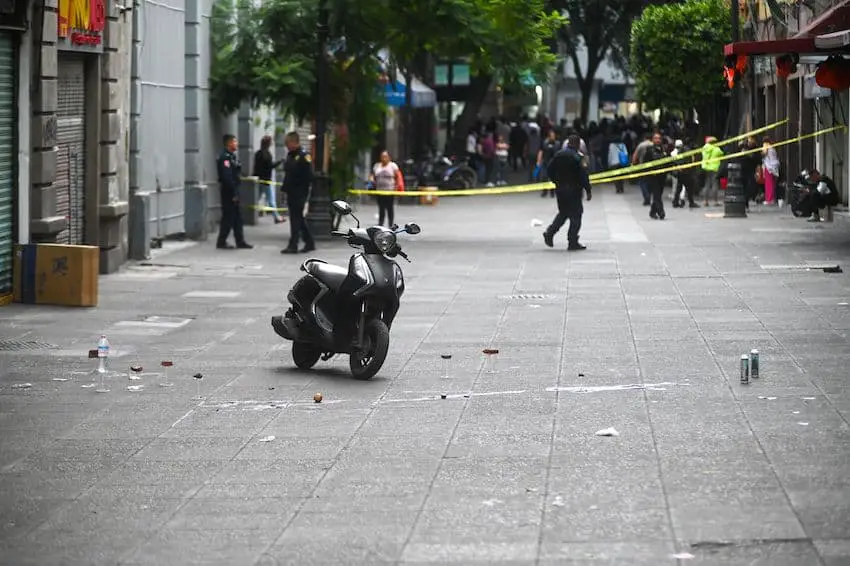
A young man aiming to become the next mayor of a municipality in the southern state of Guerrero was shot dead on Sunday.

It wasn’t an isolated case: Alfredo González Díaz is one of more than a dozen political aspirants who have been murdered during the electoral period leading up to Mexico’s largest ever elections on June 2.

González, who would have represented the Labor Party in the mayoral election in Atoyac de Álvarez, was the third political murder victim in seven days after rival candidates for mayor in the Michoacán municipality of Maravatío were slain within hours of each other last Monday. Another mayoral hopeful in Maravatío was murdered last November.

Aspiring to political office in Mexico — especially at a municipal level in certain states — is indeed a risky business.

Candidates — or “pre-candidates” as political hopefuls are known before the commencement of the official campaign period or before they have won endorsement from a political party — have been killed in around one-third of Mexico’s 32 federal entities during the 2023-24 electoral period, which began last September.

In a report published early last month, the non-governmental organization Laboratorio Electoral said that 16 political aspirants had been killed during the 2023-24 electoral period, and that a total of 33 people had been murdered in acts of violence “directly related to the electoral process.”

A selfie of Guerrero candidate Alfredo González Díaz
Alfredo González Díaz, in a photo he shared on social media hours before he was killed. (Alfredo González Díaz/Facebook)

Those figures have already increased, and with almost three months to go until election day, they will almost certainly continue to do so.

Political violence in Mexico is most common at the municipal level, at which candidates and officials are usually more accessible to the public and have small or non-existent security details. That makes the thousands of people seeking to win an elected municipal position especially vulnerable to violence, as does the fact that influence over governments at that level is highly coveted by organized crime groups and seen as much more obtainable than holding sway at a state or federal level.

“Local power is extremely important to organized crime,” Manuel Pérez Aguirre, a political scientist, told the Associated Press.

“That’s why they look to establish control at the municipal level,” said Pérez, an academic at the College of Mexico who studies electoral violence.

Perhaps in some municipalities — there are close to 2,500 in Mexico — officials are able to be corrupted more easily than their state and federal counterparts.

According to Itzel Soto, a data analyst with Data Cívica and the coordinator of the organization’s electoral violence project, the municipal level is “where corruption agreements” are most common between officials and organized crime.

When a change in municipal power is approaching, “violence is unleashed because those agreements are in dispute,” she told Radio Fórmula.

Desde Apatzingán, cuna de la Primera Constitución Política de México, vamos con toda la fuerza y todo el corazón por un #MxSinMiedo Representamos la Alianza de ideas, propuestas y capacidad. Este proyecto hay cabida para todos. ¡Vamos a ganar y vamos a construir juntos el Michoacán que tanto queremos!
Paco Huacas of Apatzingán, Michoacán, uses a bullet-proof vest as he campaigns to be a federal legislator, a decision he made after an ambush recently killed five soldiers near his town. (Paco Huacus/X)

If a crime group can get its preferred mayoral candidate elected — perhaps by murdering a rival candidate or coercing voters — its operations at a local level could be made much easier given that mayors have authority over municipal police forces, many of which have been have been shown to be corrupt.

“What [crime groups] are looking for is to continue controlling an area or [to begin] to control it by making an impunity pact with a future leader or by keeping a [current] leader with whom they already feel comfortable … in power,” Gerardo Rodríguez, a political science professor at the University of the Americas in Puebla, told the El Economista newspaper.

While data shows that candidates at the municipal level are most likely to be victims of murder and other crimes during the electoral period, the federal government doesn’t provide any specific protection to them, as it does for some hopefuls at the state and federal level.

President Andrés Manuel López Obrador has downplayed the extent of Mexico’s electoral violence problem, saying last month that there was no risk to the integrity of the upcoming elections and that the country was “at peace.”

Guillermo Valencia, president of the Institutional Revolutionary Party in Michoacán, has a very different view, telling AP that in his home state — where several candidates have been killed — and across Mexico “democracy is threatened” by electoral violence, which has affected all the nation’s political parties.

“Four candidates have already resigned on me and I’m struggling to find candidates” for other municipal elections, he told AP.

Soto, the data analyst, noted that the levels of such violence are not the same “in the entire Mexican republic,” pointing out that certain municipalities in states such as Veracruz, Guerrero, Guanajuato, Zacatecas and Michoacán are suffering the most.

The United Nations weighs in 

In an address to the United Nations Human Rights Council in Geneva, Switzerland, on Monday, the UN High Commissioner for Human Rights, Volker Türk, mentioned that “in Latin America and the Caribbean, the prevalence and violence of gangs and organized crime have severe impact on the lives and rights of millions of people, including in Ecuador, Haiti, Honduras and Mexico.”

UN High Commissioner for Human Rights Volker Türk walks across a stage
UN High Commissioner for Human Rights Volker Türk approaches the podium to address the Human Rights Council in Geneva, Switzerland. (UN Office of the High Commissioner for Human Rights)

He also noted that “in Mexico, several electoral processes will coincide in June, resulting in the planned election of more than 20,000 public officers, including the president, all members of the federal parliament, and a wide range of state and local representatives and authorities.”

“This immense exercise of political and civil rights must be safeguarded against violence,” added Türk, tacitly acknowledging the prevailing situation and seemingly issuing a directive to — and perhaps even a veiled attack on — the federal government.

López Obrador responded to the remark at his morning press conference.

“With all respect, the high commissioner is very biased, he’s against us and colludes with those who want to show that Mexico is a very violent country,” he told reporters shortly after describing the murder of the mayoral aspirant in Atoyac as “very regrettable.”

With reports from Radio Formula, El Economista, El PaísAP and El Universal 

‘Checo’ Pérez starts the 2024 F1 season in Bahrain with a ‘good result’

1
Sergio "Checo" Pérez after F1 race
Sergio "Checo" Pérez (left) came in second in the Saturday race in Bahrain. (redbullracing/Instagram)

Mexican Formula 1 driver Sergio “Checo” Pérez, looking to bounce back from the disappointments of last year, began the 2024 season in a one-two finish with Red Bull teammate Max Verstappen at the Bahrain Grand Prix.

Unfortunately for Pérez, he was the one who took second place in Saturday’s race.

The 34-year-old Guadalajara native is in his last year of a contract with Red Bull. (@vladimirrys/Instagram)

But the 34-year-old from Guadalajara wasn’t complaining after fighting his way forward from an unenviable fifth spot in the starting grid. Moreover, few these days can get past Verstappen, the sport’s three-time defending champion who won for the 20th time in his last 22 races.

The Dutchman is on one of the most dominant runs in F1 history. On Saturday, from the pole position, he led all the way and took the checkered flag by a whopping 22 seconds over Pérez.

“It’s a good result after starting fifth,” Pérez told the British journalist and former F1 driver David Coulthard after the race. “It was the maximum we could have hoped for today … The 1-2 is positive for the team.”

Pérez, a hero in Mexico, spent much of last season answering the big question of whether he was about to lose his Red Bull seat. In F1, each team has two main drivers, each driving identical cars, and a reserve driver.

Was it a fair question for someone whose 285 points were second only — albeit a very distant second — to Verstappen’s 575 in the 2023 standings? 

Throughout his F1 career, Pérez has won only six times in 258 starts. Two came last year within the season’s first four races, raising hopes that 2023 might be his year. But there were no checkered flags and only three second-place finishes for Pérez the rest of the way. His qualifying skills were called into question, and his ownership team rarely – if ever – praises him.

Pérez recently talked about his 2023 woes in the podcast “F1: Beyond the Grid.”

Even teammate Verstappen didn’t include Pérez when he was asked last week to name which three drivers will finish atop the 2024 standings. He listed himself first, Mercedes rival Lewis Hamilton second and Ferrari’s Charles Leclerc third.

This season will mean a lot to Pérez, who is in the final year of his contract with Red Bull. The spotlight will be on him again at F1’s next race, the Saudi Arabian Grand Prix in Jeddah, where he is the defending champion. Qualifying is on Friday and the race will be on Saturday.

With reports from Marca and AP

Hot, dry weather in the forecast across Mexico

0
Read on for the region-specific weather forecast for the week of March 4, 2024. (Edgar Negrete Lira/Cuartoscuro)

Hot and sunny weather is in the weather forecast for this week, bringing the first heat wave of the year to Mexico City. 

These weather conditions will be influenced by the circulation of wind in the middle levels of the atmosphere. A dry line over the northeast of the country will reduce humidity, while a low-pressure channel from the Pacific Ocean and Caribbean Sea may create pockets of rain in some states.

Five heat waves are expected in Mexico during the first half of 2024. (Daniel Augusto/Cuartoscuro)

What are the high and low temperatures in the forecast? 

According to the national weather forecast, scorching temperatures between 40 and 45 degrees Celsius (104 to 113 degrees Fahrenheit) are forecast for Guerrero, Michoacán, southern Morelos and Nayarit.

Meanwhile, Campeche, Chiapas, Colima, Guanajuato, Jalisco, Oaxaca, Querétaro, Quintana Roo, San Luis Potosí, Tabasco, Tamaulipas, Veracruz and Yucatán are expected to experience high temperatures between 35 and 40 degrees Celsius (95 to 104 degrees Fahrenheit).

Southwestern México state, Nuevo León, Puebla, Sinaloa and southern Sonora will experience temperatures between 30 and 35 degrees Celsius (86 to 95 degrees Fahrenheit). 

To the north, freezing temperatures between -5 to 5 degrees Celsius (23 to 41 Fahrenheit) are expected at dawn in the states of Baja California, Chihuahua, Durango and Sonora, and in the mountains of Aguascalientes, México state, Guanajuato, Jalisco, Michoacán, Puebla, Tlaxcala and Zacatecas.

The Monday weather forecast across Mexico. (@conagua_clima/X)

Which states could see rain?

Rain is not in the forecast this week for most of Mexico. The few states that could see isolated rain storms are Chiapas, Nuevo León and Tamaulipas, Baja California, Coahuila, Quintana Roo and Veracruz.

What are the regional forecasts?

In the Valley of México, expect cool temperatures and partial clouds in the morning on Monday with a warm afternoon and possible dust devils in Mexico City.

Fog banks and chilly mornings are forecast for the Baja California Peninsula, with temperate to warm weather throughout the day.

In the Pacific states of Sonora, Sinaloa, Jalisco, Colima, Michoacán, Nayarit, Chiapas, Oaxaca and Guerrero, expect cool mornings and warm to hot temperatures towards the afternoon. Similar conditions are expected for central and north Mexico, including Guanajuato, Tlaxcala, Puebla, Chihuahua, Coahuila and Durango. 

The Yucatán Peninsula can expect mild mornings and warm to hot temperatures in the afternoon, while Veracruz and the Gulf of Mexico will see cooler mornings and a temperate climate towards the end of the day. 

Are the high temperatures signs of a coming heat wave? 

Mexico City authorities announced on Monday that the above-average temperatures predicted for the city this week qualify as a heat wave, which may last for as long as 15 days.

A heat wave is defined as at least three consecutive days of above-average temperatures, which vary according to location. 

Mexico News Daily

Authorities say Oaxaca wildfire is now 95% under control

0
(Guelavia/Facebook)

The wildfire in rural Oaxaca that claimed the lives of five people last week is 60% extinguished and 95% contained, according to a statement by government officials on Sunday.

A press conference held Sunday afternoon provided details about the 6-day, 704-hectare blaze in the state’s mountainous Central Valleys region, some 40 kilometers from the state capital Oaxaca City.

The fire has been burning for six days straight. (Salomón Cruz/X)

On Feb. 28, the day after the conflagration began, residents of San Lucas Quiaviní were attempting to keep the fire from reaching their village when the advancing flames surged and took the lives of five farmers.

Since then, the firefight was taken over by the Defense Ministry (Sedena), the Navy (Semar), the National Guard, and state civil protection personnel. 

Other villages affected include San Felipe Güilá and San Pablo Güilá.

Officials at the press conference indicated that more than 400 firefighters were battling the blaze, some of them on behalf of the National Forestry Commission (Conafor).

Some of the 400+ firefighters working to extinguish the wildfire in Oaxaca. (@GobOax/X)

An MI-17 Navy helicopter had carried out six water drops from its 2,500-liter capacity bucket from Saturday through 10 a.m. Sunday, officials noted, but no update was available beyond that.

Mountain residents had held a protest to demand that an aircraft join combat efforts, but at the press conference, officials stressed that water drops are only a small part of the strategy in fighting fires.

Officials said that 9,800 work hours had been put into battling the blaze as of Sunday morning, with 95% of the fight carried out on the ground and 5% through the use of technology such as helicopters.

Much of the on-the-ground work has involved setting up firebreaks and applying counterfire; additionally, there was surveillance to prevent the contained portion of the fire from getting out of control.

Officials also reminded communities to be extra careful when slashing and burning, and in a Monday morning post on the X social media platform, the state’s civil protection unit warned that the burned areas represent a risk for flash floods. “Stay aware of inclement weather if you are in or near an area affected by a wildfire,” the unit wrote.

So far this year, 35 forest fires have been recorded in Oaxaca, affecting more than 1,500 hectares, Magdalena Coello, director of the Oaxaca state forest commission, was quoted as saying in newspaper El Imparcial. At least two are active, including one in the jungles of Chimalapas.

With reports from El Universal, Animal Politico and El Imparcial

Peso starts out the month gaining on the US dollar

3
Mexican peso bills
The peso is the strongest it has been since June 5, shortly after Mexican elections. (Cuartoscuro)

The Mexican peso made a good start to the new week, appreciating to below 17 to the US dollar for the first time this month.

Bloomberg data shows that the USD:MXN exchange rate was 16.96 at 11:40 a.m. Mexico City time.

The USD:MXN exchange rate on Monday, March 4, 2024.

The appreciation on Monday morning followed the peso’s improvement to 17.01 against the dollar at the close of markets last Friday after it traded at 17.09 a week earlier.

The business magazine Fortuna reported that analysts and foreign currency traders are attributing the peso’s positive performance to the expectation that the Bank of Mexico (Banxico) will be cautious in its approach to cutting interest rates.

The central bank’s key interest rate has remained at a record high of 11.25% since it was raised to that level almost a year ago.

The vast difference between Banxico’s rate and that of the United States Federal Reserve Bank (5.25%-5.5%) has benefited the peso, helping the currency appreciate around 13% against the greenback in 2023. Strong incoming flows of remittances and foreign investment also contributed to the peso’s positive performance last year.

The Bank of Mexico board will hold its next monetary policy meeting on March 21. A rate cut this month is seen as possible, but Banxico isn’t expected to aggressively lower rates this year. Interest rates are also expected to decline slowly in the United States, with an initial cut possible over the summer. However, some economists say the Fed might not make any cuts this year.

In Mexico, inflation declined in the first half of February after increases were recorded in November, December and January, but, at 4.45%, the headline rate is still above the central bank’s 3% target. Inflation data for the whole month of February is due to be published this Thursday, March 7.

In its most recent monetary policy statement, Banxico said it would “thoroughly monitor inflationary pressures as well as all factors that have an incidence on the foreseen path for inflation and its expectations.”

“In the next monetary policy meetings, … [the board] will assess, depending on available information, the possibility of adjusting the reference rate. It will take into account the progress in the inflation outlook and the challenges that prevail,” the bank added.

An interest rate cut in Mexico before one is made in the United States would obviously narrow the differential in the prevailing rates in the two countries and would likely benefit the greenback.

However, a range of other factors influence the value of currencies. Therefore, it is no easy task to predict how the USD:MXN rate will behave this year, especially considering that it is an election year in both Mexico and the United States and there is a climate of political uncertainty in the two countries. Donald Trump’s victory in a single primary contest earlier this year was enough to inflict some pain on the peso, although the currency has strengthened since then, despite the former U.S. president’s unrelenting march toward the Republican Party nomination.

In a survey report published late last year, Citibanamex said that the consensus forecast of 33 banks, brokerages and research organizations was that the USD:MXN exchange rate would rise to 18.65 at the end of 2024.

Mexico News Daily 

10 women on what you need to know when moving to Mexico

6
Ten women from across the world share their experiences and wisdom about Mexico. (Unsplash)

Moving to Mexico is incredibly exciting but comes with its own set of challenges. For many of us who have made the move – either full-time or part-time, short-term or long-term – there are likely a plethora of things we wish we had known before the journey, as well as tips and advice we can now offer other women who are considering a life in Mexico. 

Mexico News Daily spoke to ten women who have traded life in their home country for the excitement, beauty and culture of a life in Mexico. From twentysomethings to retirees and sea-seekers to city dwellers, here’s what they had to say. 

Look past your preconceived notions of Mexico to discover the incredible country within. (Kinga Howard/Unsplash)

Escape the Expat Community

“Try not to get stuck in the expat bubble. It’s easy to make only English-speaking friends and stick to areas like Condesa and Roma in Mexico City or Americana in Guadalajara, but is that really why you left your home country?

Practice your Spanish, visit local markets and nightlife spots and make local friends. I promise you, it will open your eyes and show you an entirely new perspective on life in this beautiful country!”

-Elizabeth, 27, [Australian based in] Guadalajara

Patience is a Virtue

The founder of the popular Facebook group Mexico Wild Women Expat Community said, “I am not by nature a patient person. Mexico has taught me the value of being patient and flexible. Being like bamboo is the key to success here. Mexicans have a different sense of time; accept that, and you will be much happier.”

-Wendy, 64, [American based in] Lake Chapala

It’s Safer Than You Think

“I relocated to Mexico in August 2022 without any prior visits or acquaintances in the country, leaving me largely in the dark, aside from clichéd notions of tequila and tacos gleaned from American media. Naturally, my perceptions were colored by skewed portrayals often found in TV and news reports. However, upon arrival, I was pleasantly surprised to find an incredibly warm and welcoming nation.

Hailing from South Africa, where safety is a paramount concern, I am particularly mindful of my surroundings and security. Despite this, I’ve never felt threatened or uneasy in my immediate neighborhood of Condesa. I frequently take solo walks and feel at ease, knowing that the kind-heartedness of Mexicans is always near.”

-Sarah, 33, [South African based in] Mexico City

Mexico can be a great opportunity to find yourself and experience something new. (Unsplash)

Forget Your Expectations

“Arrive with an open heart and mind. Try to lose your expectations about what it could and would be and experience it for what it is. Live in the present and learn to slow down. Try your best. 

First, learn the language and then you start to understand the culture, and it won’t be so foreign and scary. I’ve been here for 10 years, and Mexico has taught me so much.”

-Michelle, 34, [American based in] San Cristóbal de las Casas

Embrace the Challenges

“Living in Mexico is not the same as being on vacation here, and it’s not like living north of the border; comparing life here to life in your country doesn’t help. Learn to love all that Mexico has to offer. I first moved here 27 years ago, and I’m still challenged each day. It keeps me on my toes and feeling young. Mexico is not for everyone, but I would not want to live anywhere else.”

 -Maria, 77, [American based in] Zihuatanejo

Learn the Language

Learn Spanish because it will change your experience in a phenomenal way. I spent a couple of years in an expat community, from 1996-1998, and hung out with only Americans and Canadians. Learned poquito español. Now I live in a non-tourist city and, after eight years, my Spanish is pretty good. I’m 76, so anybody younger can learn a lot faster. Besides, the depth of the friendships you can make with Mexicans… helps in navigating all the stuff in life that comes up.

Looking back, it would’ve been better if I had taken learning Spanish far more seriously early on.”

-Barbra, 76, [American based in] Aguascalientes

Explore Before You Commit

“Don’t make plans, sign a lease or settle down in a place based on what you’ve read or seen on travel sites and Instagram. Move around if you can and see how different places feel. Mexico is huge, and the beaches feel so different from the mountain towns, which also feel different from the cities. But it’s also the people who make the places [what they are] … maybe you make a few friends and discover your happy place in a location you never would have expected.” 

-Jess, 29, [Canadian based in] Mazunte

Don’t be afraid to step out of your comfort zone. Explore all that Mexico has to offer. (Shutterstock)

Travel Far and Wide

“The beauty and diversity of the country surprised and delighted me. I came here for a job but have been lucky enough to see so many amazing places during my years here, from the surreal Xilitla to the stunning Hierve De Agua (and the crazy drive you take to get there). 

I can’t recommend enough exploring beyond the cliched destinations and embracing the country’s cultural wealth, warm people and amazing landscapes.”

-Kate, 37, [Brit based in] Puerto Vallarta

Understand the Cost of Living

“Most North Americans think of Mexico as inexpensive, but the cost of living varies wildly!

The cost of rent, bills and transport in bigger cities and fancy beach towns, like Mexico City or Playa del Carmen, can cost almost as much as living in Canada – especially if you develop a taste for good restaurants and nightlife. Choosing a more local city or rural town – even a gorgeous beach town – can cut your costs by half, and people tend to be friendlier.

If you can accept the slow pace of life, you’ll find absolute paradise.” 

-Joana, 43, [Canadian based in] Oaxaca City 

Just Do It

“What I love about Mexico is not just one thing, it’s a combination of all of them.

You can take your pick of weather, climate and geography. There are mountain ranges, valleys, deserts, jungles, tropical forests, coastlines, cenotes and more. For food, you can choose from fresh seafood, vegetables, meats, farm products, salsas, tortillas and more. Different regions offer different seasonings, varieties of tacos and food for every palate.

As far as the people, how much time do you have? I can’t say enough about people’s warmth, open arms, genuine ways and kindness shown through manners, sharing food and more. 

My advice is DO IT! What are you waiting for?” 

-Marel, 59, Nomadic [American based in different places around Mexico]  

Laurel is a nomadic lifestyle journalist whose favorite stories focus on weird and wonderful travel and culture. Her work has appeared in The Wall Street Journal, Vice, BBC Travel, Travel + Leisure, South China Morning Post, The Culture Trip and more. @laureltuohy. www.laureltuohy.com