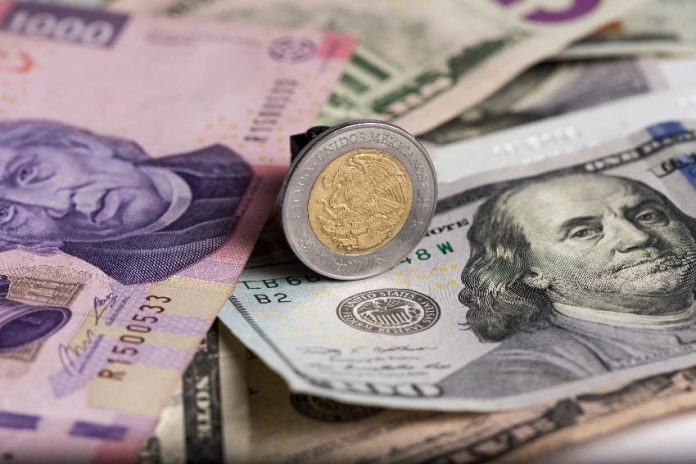
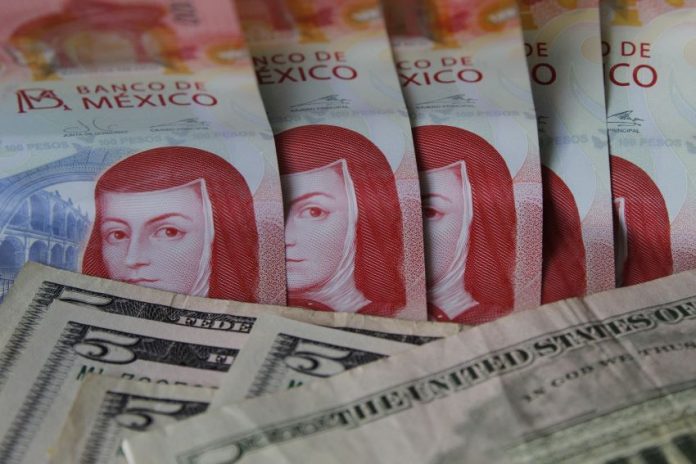
At its weakest point on Monday, the peso was trading at 20.05 to the dollar. (Shutterstock)
The “super peso” rose again on Friday, starting the day trading at 16.47 pesos to the US dollar and closing at 16.46, according to Reuters. This is reported to be its strongest rate since November 2015.
On Thursday, the peso traded briefly at its strongest rate against the dollar this year (16.50) before closing at 16.54.
Despite a strengthening dollar, the peso continues to defy predictions from even the sharpest of currency experts.
“Even Banxico’s rate cut [in March] failed to undermine optimism towards the currency, and the fiscal austerity measures imposed by the government have helped amid tensions with some business sectors,” Eduardo Ramos, senior market strategist for HFM Markets, told the news site Expansión.
In his Friday morning press conference, President Andrés Manuel López Obrador celebrated the peso’s strength, saying that this exchange rate is possible “because corruption has been eradicated and companies are confident about investing [in Mexico].”
According to analysts at Banco Base, the peso is expected to oscillate in a range of 16.41 to 16.67 per dollar in the short term. Meanwhile, the greenback has appreciated about 3.3% this year against a basket of major currencies, and foreign currency specialists polled by Reuters predict it will remain strong.
Presidential elections in Mexico and the United States in 2024, however, may create a more volatile environment for both currencies later in the year.
The tourist had recently disembarked from the Icon of the Seas, the largest cruise ship in the world. (Elizabeth Ruiz/Cuartoscuro)
A tourist traveling on the Icon of the Seas cruise ship went missing on Wednesday in Cozumel, Quintana Roo. The passenger was last seen near the cruise ship docks boarding a taxi to the island of La Pasión, according to anecdotal reports.
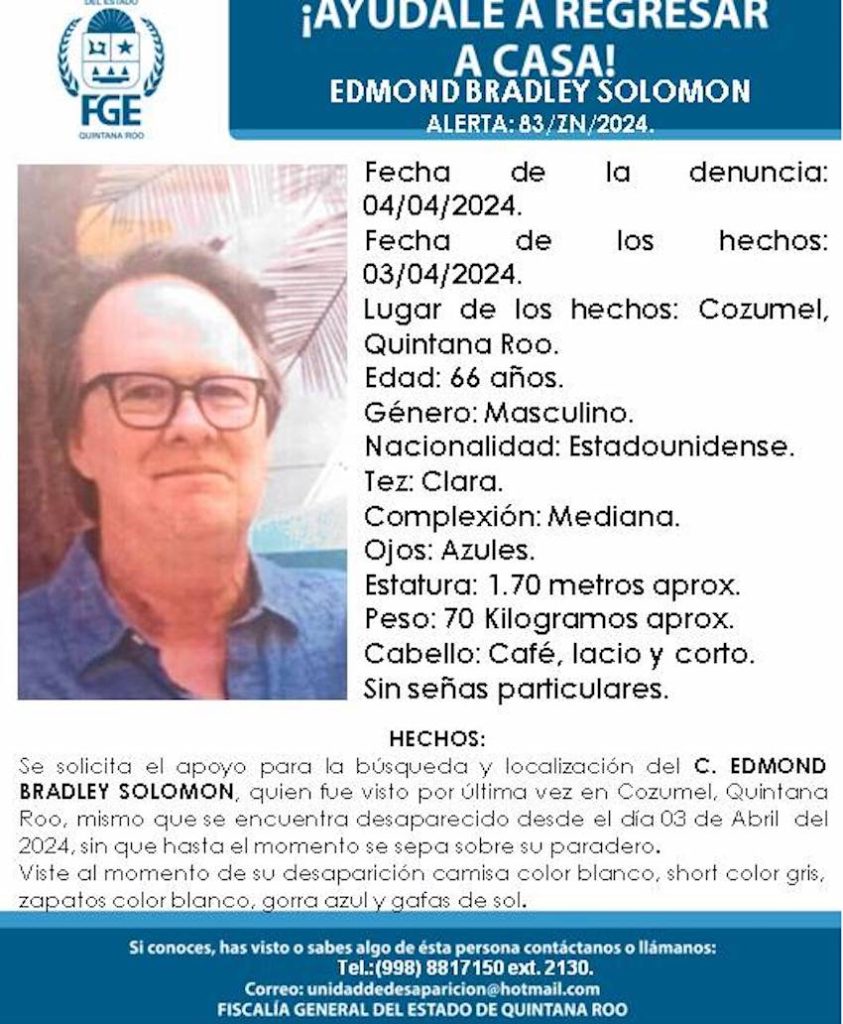
Authorities have identified the missing tourist to be Edmond Bradley Solomon, aged 66 from the United States.
Edmond Soloman was reported missing near Cozumel, Quintana Roo. (FGE Quintana Roo/Facebook)
His disappearance was reported by his wife to the municipal police of Cozumel, prompting an urgent search operation. Other relatives turned to social media to ask the local population for help finding him.
The director of the Municipal Police of Cozumel reported that Edmond suffers from dementia.
Municipal authorities said that they received information from a taxi driver who called the 911 emergency number to report that he had picked up a foreign tourist matching Edmond Solomon’s description on the road to La Pasión island.
Solomon allegedly boarded the taxi on 65th Avenue at approximately 2:30 p.m. on April 3 and asked the driver to drop him off at a road with access to the beach. The taxi driver stated that Solomon paid for the ride with a wristwatch because he claimed to have no money.
The search file issued by the Attorney General’s Office of the State of Quintana Roo (FGR) went into effect on Thursday.
At the time of his disappearance, Edmond Solomon had the following characteristics: wearing a white shirt, gray shorts, white shoes, a blue cap and sunglasses.
Reports of his whereabouts should be communicated to the following phone number: 9 998 8817150 extension 2130.
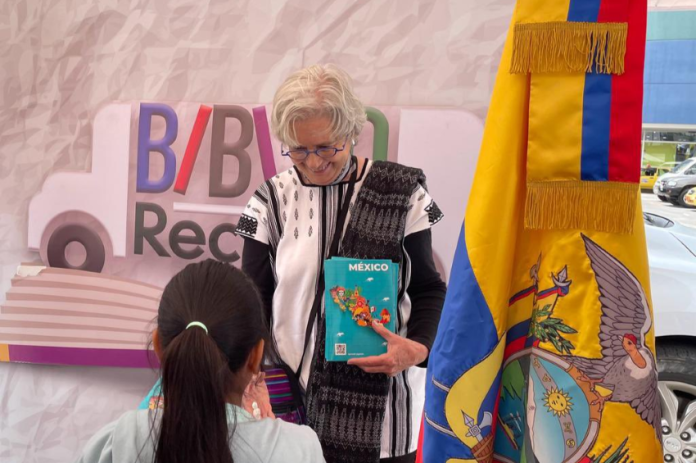
Former Mexican ambassador to Ecuador Raquel Serur was declared a persona non grata in her country of residence last week. (Raquel Serur/X)
Ecuador responded to perceived insults by Mexico’s president by declaring the Mexican ambassador to the country a persona non-grata on Thursday.
On Wednesday, Mexican President Andrés Manuel López Obrador insinuated that Ecuador’s President Daniel Noboa benefited from the assassination of a rival candidate during last year’s presidential elections in the South American nation.
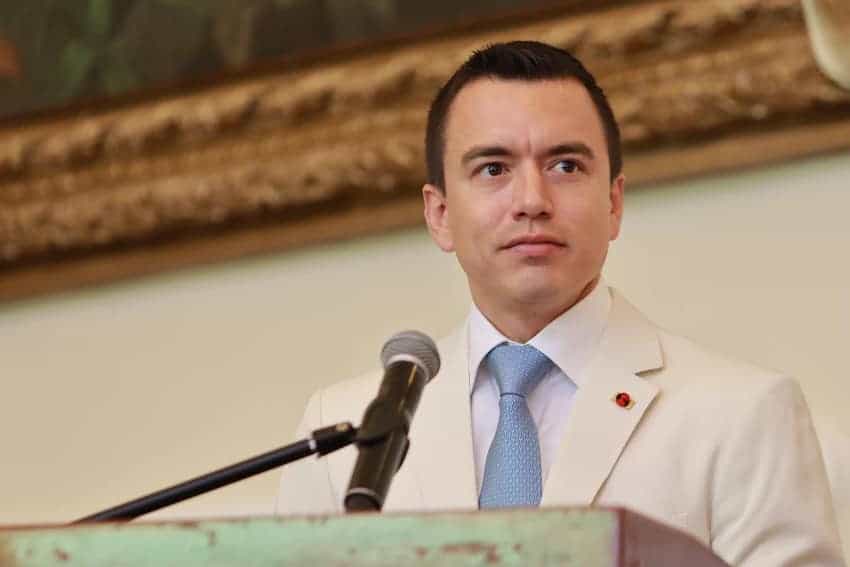
Daniel Noboa, Ecuador’s 36-year-old president, expelled Mexico’s ambassador to the country following remarks by AMLO. (Daniel Noboa Azin/Facebook)
The next day, Noboa formally declared Raquel Serur Smeke persona non-grata, effectively banishing the Mexican diplomat from Ecuador.
“Ecuador is still mourning this horrific act that shocked the public and was an attack on democracy, peace and security,” said Ecuador’s Foreign Relations Ministry in its statement announcing the president’s declaration.
Mexico’s Foreign Ministry (SRE) instructed Serur to return to Mexico and defended the ambassador in a statement.
The SRE declared that Serur had served honorably since presenting her credentials in Quito in June 2019, meeting with all three Ecuadorian presidents that had served during that time. “[The ambassador] strengthened ties between businesses in both countries and energetically promoted cultural exchanges.”
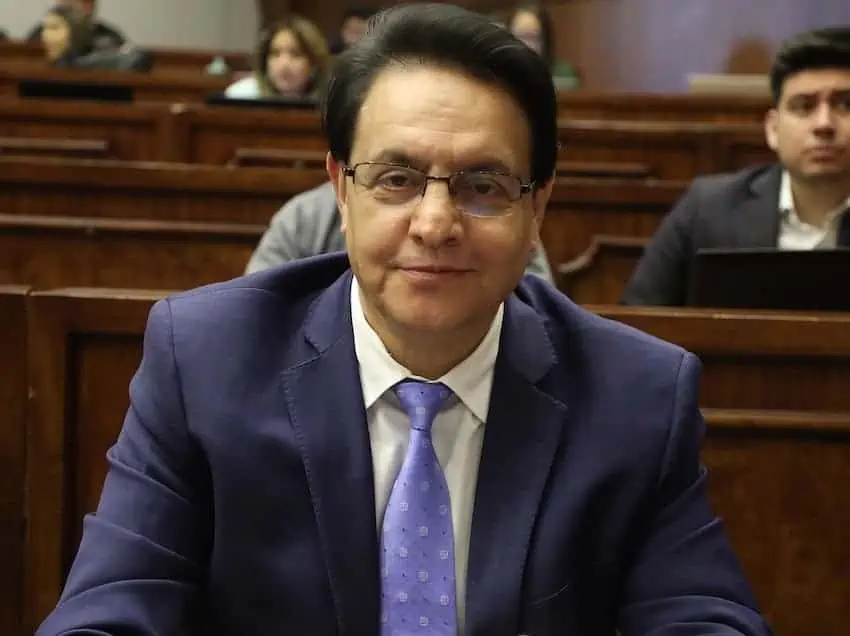
Fernando Villavicencio, an Ecuadorian politician and former journalist, was assassinated in August 2023 ahead of the last presidential election. (Asamblea Nacional del Ecuador/Wikimedia)
During his Wednesday morning press conference, López Obrador questioned the course of the Ecuadorian election after the assassination of candidate Fernando Villavicencio, leader of the right-leaning Movimiento Construye (MC25), last August.
López Obrador claimed that left-leaning candidate Luisa González was unfairly smeared by the local media and that unjust hints of her involvement caused her to drop in the polls. Although she won the first round of elections just 11 days after the murder with 33% of the vote, González lost to Noboa 52% to 48% in the Oct. 15 run-off.
González is a protégé of former Ecuadorian President Rafael Correa, a political ally of López Obrador.
Fernando Villavicencio, a former investigative journalist, was an ardent critic of Correa, who forced Villavicencio into exile after jailing him briefly. He was killed by armed civilians in Quito after holding a campaign event.
In response to speculation at the time that an Ecuadorian criminal gang linked to Mexico’s Sinaloa Cartel was responsible for the murder, both López Obrador and Foreign Affairs Minister Alicia Bárcena denied there was any evidence of the cartel’s involvement.
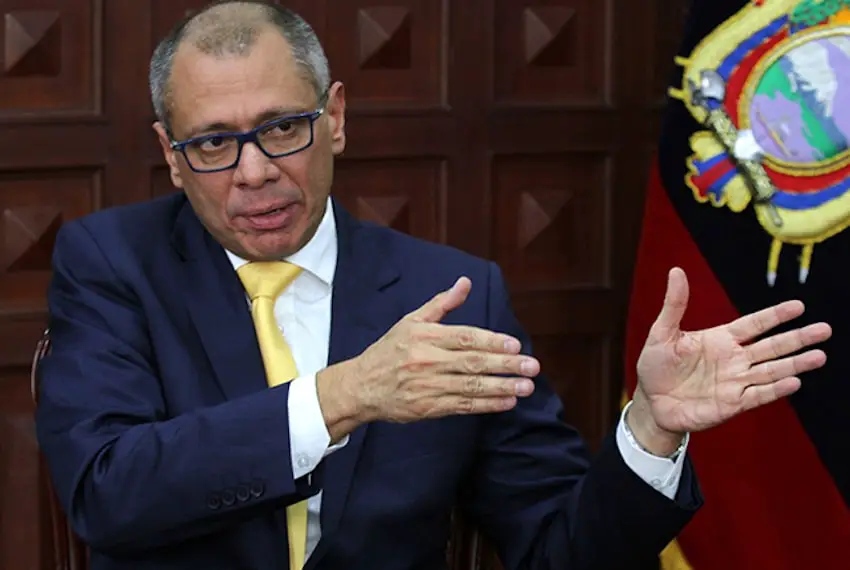
Hard feelings between the two countries emerged last December when former Ecuadorian Vice President Jorge Glas sought asylum at Mexico’s Embassy in Quito after escaping from prison.
Glas served under Correa but was kicked out of office in 2017, after which he was convicted of taking bribes and given a 16-year prison sentence. On March 1, Mexico denied Noboa’s request to enter the Quito embassy to arrest Glas.
AMLO announced on Friday that Mexico would grant former Vice President of Ecuador Jorge Glas asylum. (vicepresidencia.gob.ec)
On Friday morning, Mexico announced it would grant Glas asylum and request that Ecuador guarantee safe conduct out of the country. Noboa has said in the past that he would not grant free passage to Glas and there is a heavy police presence around the embassy to prevent his escape.
The SRE officially objected to the police presence around its embassy in its Friday statement, calling it a flagrant violation of the Vienna Convention on Diplomatic Relations.
According to the statement released by Ecuador’s Foreign Relations Ministry, diplomatic relations between the two countries have not been broken, despite the tensions.
Latin America is expected to see a 43% increase in water demand by 2050. (Daniel Augusto/Cuartoscuro)
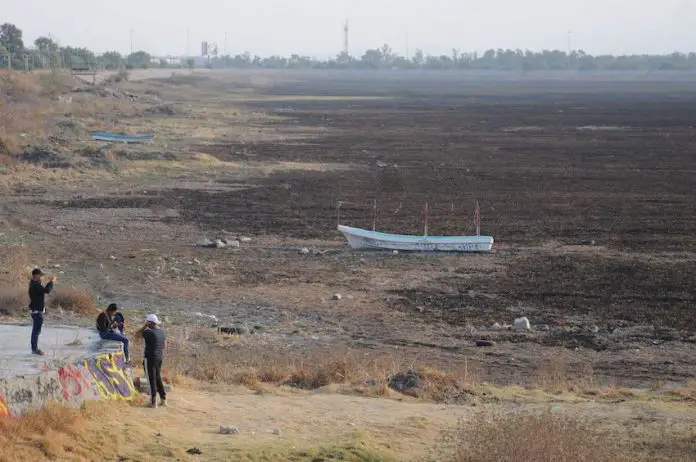
Almost half of Mexican states will face severe water scarcity by 2030, according to projections by the Aqueduct Water Risk Atlasof the World Resources Institute (WRI).
The WRI, which identifies and assesses water-related risks globally, has identified that 14 out of the country’s 32 states are expected to experience extremely high water depletion, exceeding 80%, by 2030.
Experts have recommended massive investment in repairing water infrastructure and in water catchment to help mitigate the crisis. (Cuartoscuro)
In assessing water availability for agricultural, domestic and industrial use, the WRI uses a rating scale from 0 to 5, with 0 representing low water stress and 5 indicating extremely high stress.
Based on those indicators, the following states are projected to have extremely high water depletion: Aguascalientes, Coahuila, Colima, Chihuahua, Durango, Guanajuato, Hidalgo, Morelos, Querétaro, San Luis Potosí, Sinaloa, Sonora and Zacatecas.
Additionally, six states — Jalisco, México state, Michoacán, Puebla, Tamaulipas and Tlaxcala — are expected to experience high water depletion, ranging between 40% and 80%, while Nuevo León could reach a medium-high level of depletion, between 20% and 40%.
Meanwhile, Campeche, Quintana Roo, Veracruz and Yucatán got a positive forecast compared to the rest of the country: they’re expected to reach a level of water exhaustion between 10 and 20%, categorized as medium-low. These states are followed by Chiapas, Guerrero, Nayarit, Oaxaca and Tabasco, which are projected to have a water exhaustion percentage below 10%.
Baja California Sur may face the most severe drought conditions by 2030, followed by Mexico City.
The WRI states that this measurement reflects the connection between total water usage and accessible renewable water sources. The organization notes that higher percentages indicate a more significant strain on local water resources and reduced availability for users.
Campeche, Quintana Roo, Veracruz and Yucatán got a positive forecast compared to the rest of the country: the southeast is expected to reach a level of water exhaustion between 10 and 20%. (Shutterstock)
“Living with this level of water stress jeopardizes people’s lives, jobs, food and energy security,” the WRI said in its report.
According to the study, 1 billion people are expected to live with extremely high water stress worldwide by 2050. Regionally, Latin America is expected to see a 43% increase in water demand by 2050, making it the world’s second-highest demand region after sub-Saharan Africa.
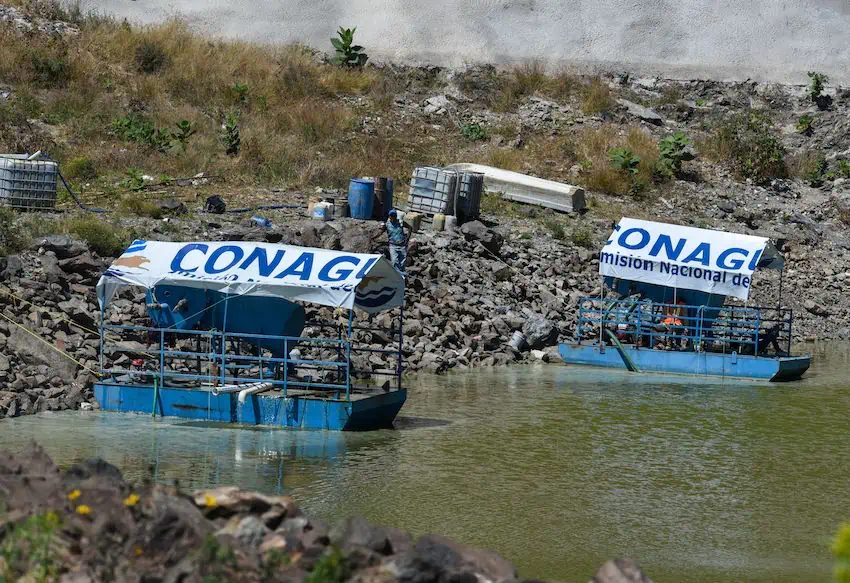
By 2050, US $70 trillion in GDP, or 31% of projected global GDP in 2050, will be at risk of high water stress, up from $15 trillion in 2010. Just four countries — India, Mexico, Egypt, and Turkey — will account for over half of the exposed GDP in 2050. More than half of Mexico is experiencing drought conditions, according to the most recent data from the National Water Commission (Conagua).
Pablo Lazo, director of Urban Development and Accessibility for WRI Mexico, emphasized the urgent need to implement a change in public policies, raise social awareness about the value of water, and optimize irrigation systems in agriculture.
In an interview with the newspaper El Economista, Lazo warned that failure to do so will have serious consequences for water supply in the short and long term.
“Currently, all that’s being discussed is extraction and distribution, but no one is talking about the need for replenishment policies,” he said.
“What we need on the level of public policy and the regulatory framework is to be able to give operating agencies financing mechanisms so they can really modernize and invest in their infrastructure that can increase water recycling, be that through rainwater capture, gray water treatment or increased use in urban areas.”
Psst... What's the chisme?(Carsten Carlsson/Unsplash)
¡No seas chismosa! Or chismoso, if you are a man who’s reading this. Actually, never mind, please be a gender-neutral chismosx and read what this article has to say.
What does chisme mean?
(Vitolda Klein/Unsplash)
“Chisme” refers to casual or informal conversation, often focusing on personal or sensational topics, shared among friends, family, or acquaintances. It can involve anything from juicy rumors to harmless anecdotes about others’ lives.
There are a few theories about the origins of this word, but the one that makes more sense to me is the following: The word “chisme” originates from the Latin “cimex,” meaning bug or insect. Over time, it evolved to refer to the buzzing sound of insects, which metaphorically represents the whispers and murmurings of gossip. Isn’t it cool?
While there isn’t a direct translation for “chisme” in English, the closest equivalents are “gossip” or “rumor” and, when speaking about someone being a “chismoso” the closest translation will be somebody that is being “nosy”. However, “chisme” carries a sense of intimacy and cultural context that these English terms may not fully capture.
Example 1
“¿Supiste del chisme de Andrea? Que se va a divorciar.” (Did you hear the gossip about Andrea? They say she’s gonna get a divorce.)
Example 2
“– ¿Que te vas a divorciar? (Are the rumors of your divorce true?)
– ¡Ash, ya te fueron con el chisme!” (Ugh, who told you about it?)
– “Qué chismes hay en el pueblo?” (What gossip is there in town?)
Example 4
“– De qué hablan?” (What are you talking about)
– No seas chismosx. Qué te importa? (What do you care? Don’t be nosy!)
Being part of the chisme fosters social bonds, provides entertainment, and sometimes serves as a form of social control. While it can be viewed negatively when used to spread malicious rumors, it also serves as a means of communication and community cohesion.
I mean, who doesn’t enjoy a dramatic juicy rumor once in a while?
Paulina Gerez is a translator-interpreter, content creator, and founder of Crack The Code, a series of online courses focused on languages. Through her social media, she helps people see learning a language from another perspective through her fun experiences. Instagram: paulinagerezm / Tiktok: paugerez3 / YT: paulina gerez
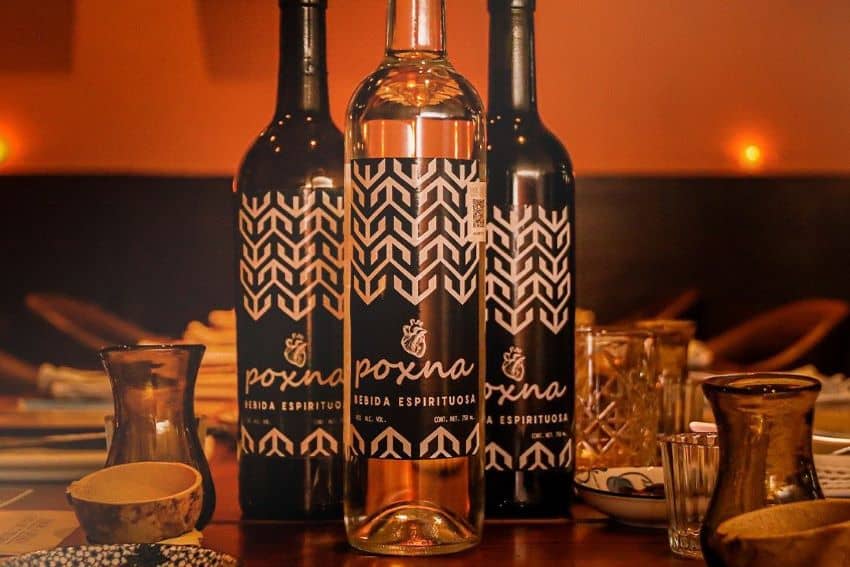
Once derided as the common man's drink, pox is becoming popular with serious spirit lovers. One Chiapas distillery is determined to restore it's reputation. (All photos courtesy of Poxna)
A renaissance of Mexican spirits, resulting from the current mezcal boom both here and across the border, has meant that the nerdiest of spirit lovers are looking even further afield for traditional distillates reflecting Mexico’s vast variety of flavors. If you’ve frequented bars in major Mexican cities lately or have spent any amount of time in the southern state of Chiapas, you may have seen pox, sometimes written posh, on the menu.
Pox, a distilled spirit whose origins go back centuries, is so much more than just an element for a great cocktail.
Originally enjoyed as a religious rite, Pox was banned in Chiapas. The drink is beginning to make a comeback amongst alcohol lovers.
A brief history of Pox
Historically, pox’s original ancestors were the fermented beverages of the indigenous communities of Chiapas. It was made from either corn or sugar cane and referred to as pox or chicha.
Pox’s modern descendant has been used for centuries in local religious ceremonies and community celebrations, where it was valued for its curative properties and ability to transport shamans or healers into a trance-like state. It was also often exchanged as a form of payment and was one way that the mestizo upper classes controlled their day laborers – paying them in pox and then trapping them in a vicious circle of indebtedness when they became addicted.
In 1949, a prohibition on pox and other kinds of liquor was enforced in Chiapas, closing small distilleries around the state in an attempt to supposedly protect the local population from alcoholism. The prohibition, however, only served to strengthen the pox monopoly at the time of the Petrero brothers, who, in cahoots with local law enforcement, brutally attacked indigenous distillers producing clandestinely for their own consumption. The pox monopoly wasn’t truly dismantled until the 1970s, and from then until the early 2000s, the spirit returned to small production and was used mainly for religious and community purposes. It wasn’t until a new generation of distilleries came along that pox started to become popular again in the mainstream.
These days, pox is slowly creeping down from the highlands of Chiapas to appear on bar menus across the country. Only a handful of official pox brands have hit the market – Pox Tres Almas, Pox Siglo Cero, Poxmyl, La Poshería, and Poxna – among them.
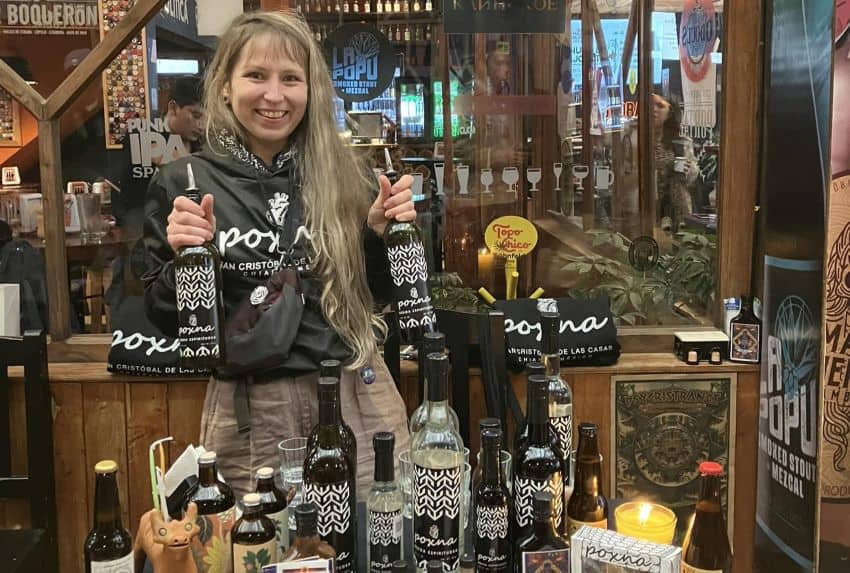
Poxna at a Mezcal Festival in the city of San Cristobal de las Casas, Chiapas, the traditional home of pox.
Meet Sofia Vidal, the woman bringing pox back to Chiapas
Poxna is the only pox brand that is female-owned and operated, by Chiapas local Sofia Vidal. Vidal started her project in 2010 with the goal of not only creating great pox but also educating consumers about the historical and cultural importance of this local spirit.
“I wanted to make a spirit in Chiapas that people could feel proud of and that could be much more than just an alcoholic beverage. Something that we could return to producing and understand the need to recover the original artisanal process of making this spirit,” Vidal says.
“On one hand, it’s a popular drink for parties, but it also has a role that’s very traditional, very ceremonial, full of mysticism. It is still part of the ritual elements of traditional ceremonies of the native peoples in the central part of Chiapas, mainly the Tzotzil and Tzeltal, the two largest indigenous groups in Chiapas.”
The word for pox in Tzotzil, poxyl, literally means medicine, and the liquor is still used by local healers and shamans to cleanse the soul, heal the heart, and ward off evil spirits. It is also employed to extract the medicinal properties of local herbs and plants.
Vidal remembers her mother and her aunts using pox to create a local fruit liqueur called mistela with traditional fruit from the area like peaches or quince, but they would have never drank it straight. That’s because for most of its existence in modern times, pox has been considered a poor man’s drink, sold for cheap in local shops but not taken seriously as a drink for more affluent circles.
There is currently no Denomination of Origin for pox like there is for mezcal, tequila, and some other Mexican spirits, which means that the exact parameters of what can be considered pox are hazy. According to Vidal, many brands are selling what is essentially a sugar cane aguardiente and calling it pox.
For her, the essence of pox is corn.
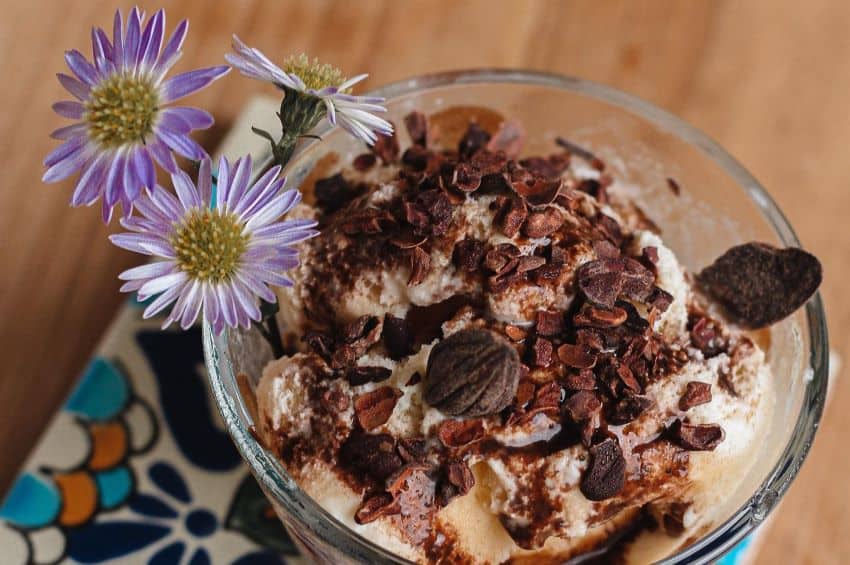
The versatility of pox lends itself to desserts as well as cocktails.
Pox is a distillation of Mexican history
“Corn, as you know, is one of Mesoamerica’s most important grains. In Mexico — and especially Chiapas — its influence is important as the foundation of our cuisine, and we want to continue preserving it. Something very clear to me from the very beginning was that our pox needed to be made with corn.”
Understanding that it would be more expensive and take more time, Vidal decided planting and using local corn was vital to her young project. She started working withBebidas Espirituosos de Chiapas, a local organization dedicated to the research, history and preservation of traditional spirits. They helped Vidal carry out the initial tests to see which of five different varieties of local corn would make the best final product. Once that was decided, they helped her standardize production.
All of Poxna’s products are made from a base of local white corn that grows in the area of Comitán, southeast of San Cristobal de las Casas. Vidal works closely with farmers at each step of the growing process until the corn is ready to be processed.
They then make a first distillation from corn mash and a separate one from a mixture of piloncillo (a type of brown sugar) and wheat bran. These two spirits are then blended together and distilled a second time to create a white pox that is 70% corn liquor.
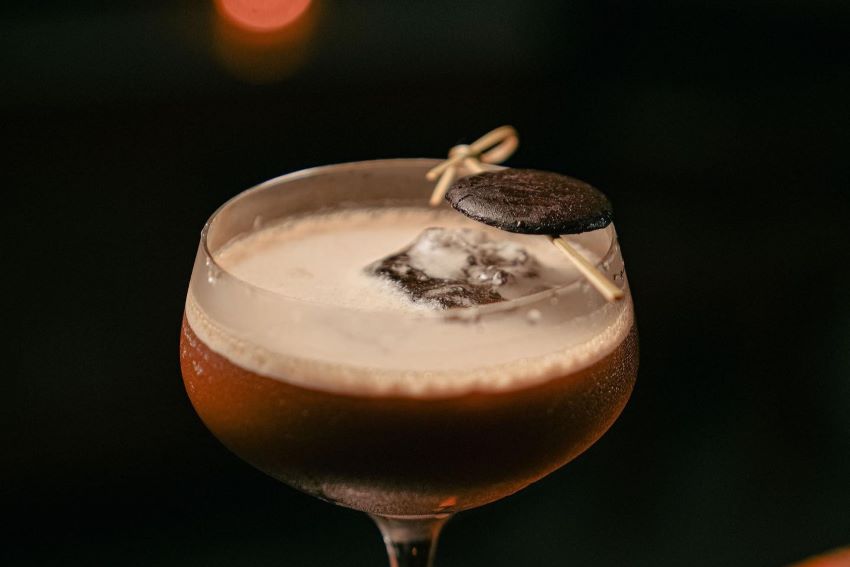
Pox is now appearing in high-end cocktail establishments across Mexico.
The end result is a 45ABV “extra-virgin pox,” according to Vidal, with a silky texture and dry notes from the corn as well as a slight sweetness added by the piloncillo. Poxna is also making pox infused with hibiscus and chocolate pox, more like a cream than a straight spirit but without any dairy.
“It’s really difficult for someone to buy a spirit they have never tried,” Vidal says, which is why she started giving tastings at her shop/bar/restaurant in Chiapas,La Espirituosa. Anyone who stops in can get a free tasting and explanation of pox.
Vidal finds that many of her clients immediately compare pox to mezcal and tequila and generally like it better because of the lack of smokiness and the slightly lower alcohol content, which makes it smoother. She is a strong proponent of the standardization of pox production and hopes that one day, this spirit will have a similar impact to tequila and mezcal.
While she prefers to focus on her project and less on the gender discussion, she says it can be tough to be the woman in charge. “I did a tasting for industry people and invited the son of the farmer I work with. I performed the tasting and gave the explanation, but at the end, all the questions were directed toward him. At one point, I just had to interrupt and say [that] if they had questions about my product, they should be asking me.”
Poxna’s lower alcohol content has made it a popular alternative to traditional tequila and mezcal-based drinks.
Poxna: Coming soon to a cocktail bar near you
Despite having to remind folks that she knows what she’s doing, her bullishness about pox has made Vidal a rising name in the industry She’s built a strong network around Poxna and its products.
In Mexico City, Poxna can be found on the cocktail menus of many prestigious food and drink establishments, such as Baltra, Limantour, and Pujol, and at chef Enrique Olvera’s project, Criollo, in Oaxaca.
This mystical spirit has long been important in the state of Chiapas, but now the rest of the country — and the rest of the world — is starting to take notice.
Lydia Carey is a freelance writer and translator based out of Mexico City. She has been published widely both online and in print, writing about Mexico for over a decade. She lives a double life as a local tour guide and is the author of Mexico City Streets: La Roma. Follow her urban adventures on Instagram and see more of her work at www.mexicocitystreets.com.
The peso began to recover this week from its value dipped following Trump's tariff threats. (Shutterstock)
After closing Wednesday at 16.54 to the US dollar, the peso gained more steam overnight and was trading at 16.50 early Thursday morning — its strongest rate since Dec. 2, 2015.
However, things reversed course over the rest of the day Thursday, leaving one greenback worth 16.58 pesos as of 5:30 p.m. Mexico City time, a 0.24% decrease for the peso from Wednesday’s closing but very close to where it opened the week (16.61).
Nuevo mínimo del año en mínimo de 16.5057 pesos por dólar, no visto desde el 2 de diciembre del 2015 pic.twitter.com/BRIQKboomz
— Gabriela Siller Pagaza (@GabySillerP) April 4, 2024
For the sake of comparison, the exchange rate in April 2020 reached 25.45 pesos to the US dollar.
Meanwhile, according to forecasts for 2024 from the Bank of Mexico (Banxico) released Thursday, the central bank expects the dollar to trade in 2024 between 17.68 and 18.67 pesos to the US dollar. That may be conservative given that the peso surpassed 2023 forecasts, breaking the floor of 17 pesos per US dollar.
Banxico expects inflation to continue its downward trend, which began in 2022, after a historical 8.7% high in September. Banxico predicts 4.02% inflation in 2024, still shy of the bank governors’ ideal of 3%.
Banxico also announced its growth forecast for Gross Domestic Product (GDP): 2.29% in 2024.
Mexico’s economy witnessed a slight drop in consumer confidence, from 47.4 in February to 47.3 in March, according to the national statistics agency (INEGI).
Data shows the economy still growing but that it began to lose some momentum as March’s PMI decelerated amid Banxico’s high interest rates, despite a reduction from 11.25% to 11% last month.PMI, or Purchasing Managers’ Index, is a statistic that surveys companies monthly to gauge economic health.
In the U.S., Federal Reserve Chair Jerome Powell said regarding interest rates Wednesday, “We do not expect that it will be appropriate to lower our policy rate until we have greater confidence that inflation is moving sustainably down toward 2%.”
However, Powell did say that the Fed expects to reduce its rate three times in 2024.
Meanwhile, Mexico’s remittances are still a driver of the peso’s strength. While Mexico received US $36.06 billion in foreign direct investment (FDI) in 2023, remittances for last year amounted to $63.31 billion, a ratio some experts told the publication EL CEO is problematic.
“We must not fail to point out that this is a gap in Mexico’s productive capacity and a lack of opportunities,” El CEO wrote.
A Reuters poll published on April 4 said that most economists foresee the peso weakening 4.7% to 17.38 pesos to the US dollar in 12 months.
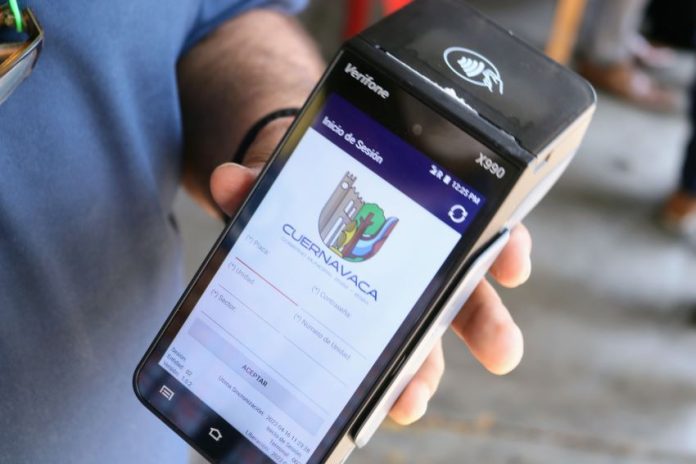
Some businesses in Mexico charge consumers extra commissions for payments made via credit or debit card, but a new law that just passed in the Chamber of Deputies may change that. (Margarito Pérez Retana/Cuartoscuro)
In a unanimous vote on Wednesday, Mexico’s Chamber of Deputies passed an amendment to the Consumer Protection Law that prohibits commissions on purchases made with a credit card or debit card.
Lawmakers in the lower house of Congress voted 446-0 to approve the bill, which now moves to the Senate for consideration.
The legislation not only bans the application of commissions but also establishes penalties for any business that issues a charge against consumers that use a credit card or debit card.
A statement issued by the Chamber of Deputies following the vote stated that the government agency responsible for consumer protection in the financial sector, Condusef, has detected that some commercial establishments impose commissions or charges that range from 3% to 5% more than the total value of the purchase or service if payment is made via a credit or debit card.
This practice violates the agreement forged between businesses and financial institutions regarding point-of-sale terminals. The accord states that businesses should not transfer excessive fees to consumers.
The bill heading to Mexico’s senate amends Article 7 of the Consumer Protection Law by inserting the following language:
“Those who provide goods, products or services are prohibited from charging commissions, fees, additional charges or the equivalent to consumers who use debit cards, credit cards or other protocols as a method of payment.”
“Other protocols” refers to checks, electronic transfers and preauthorized credit card charges.
Should the bill become law, fines of between 701 pesos (US $42) to 2.2 million pesos (US $136,000) could be applied to offenders.
National Action Party (PAN) Deputy René Figueroa Reyes told the newspaper Proceso that the reform is a step toward “eliminating the corrosive practice” that many businesses engage in to make customers believe it is more costly to pay electronically than with cash.
Consumers should be assured that they need not pay extra fees every time they use their credit cards, Figueroa said, adding that the reform will allow more equitable access to financial services and result in greater financial inclusion for the public at large.
Short-term rentals have proliferated in certain neighborhoods in the capital. (Mario Jasso/Cuartoscuro)
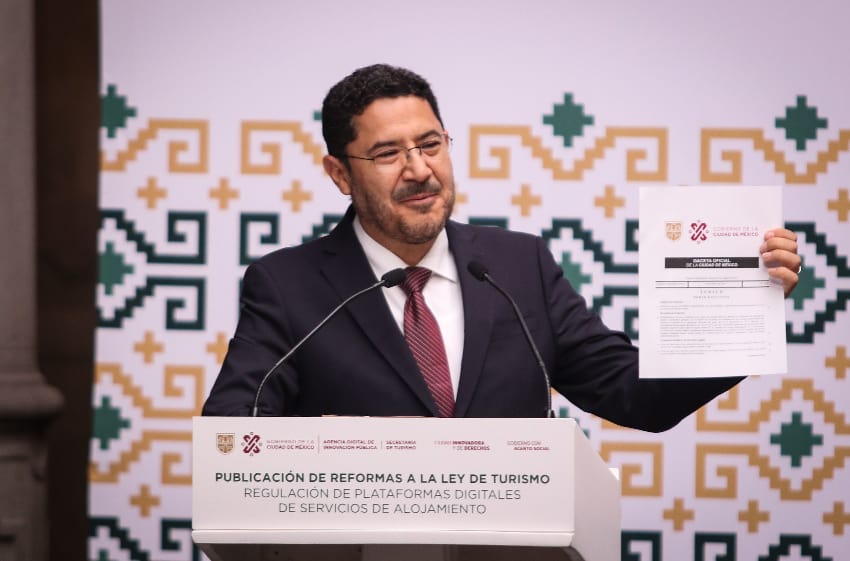
New regulation affecting temporary accommodation services offered via digital platforms like Airbnb and Booking.com came into effect as of Thursday in Mexico City.
The regulations were approved in March after the capital’s mayor, Martí Batres of the ruling Morena party, submitted them to the city congress late last year.
Mayor of Mexico City Martí Batres at a press conference presenting the publication of the new regulations on Thursday. (Cuartoscuro)
What does the new regulation require of hosts?
Under the new rules, which were published Thursday in the official gazette of the Mexico City government, national or foreign hosts must register in a new Registry of Technological Platforms and list the properties they make available to tourists for residential use. When registering, hosts must specify the technological platform or platforms through which each property is being offered. They must also provide proof of civil liability insurance.
Hosts must submit two reports annually to Mexico City’s Tourism Ministry (Sectur) in January and July, including details on property occupancy and nights stayed. Providing false information or failing to submit such reports will result in removal from the registry per the new regulations.
Additional responsibilities include informing neighbors about the property being rented on the platform, maintaining clean and safe facilities for tourists, observing tax regulations, visibly displaying proof of registration with Sectur and ensuring that homes are not used for activities that disrupt public order or are against the law.
Hosts who own more than three properties must apply for a special permit to register a fourth. If granted, they must observe specific tax regulations for commercialized housing.
What does the new regulation require of hosting platforms?
Hosting platforms must also register in the Registry of Technological Platforms and keep their registration current. Registrations are valid for two years and must be renewed at least thirty days before expiration. They must also provide proof of civil liability insurance.
Hosting platforms must require hosts to provide proof of registration with Sectur before listing a property on their website. This registration number must be included in each property advertisement.
They must also submit bi-annual reports to Sectur, including details on property occupancy and nights stayed.
Moreover, hosts must implement security measures to protect minors staying at their properties.
How is this regulation expected to mitigate rising housing costs in CDMX?
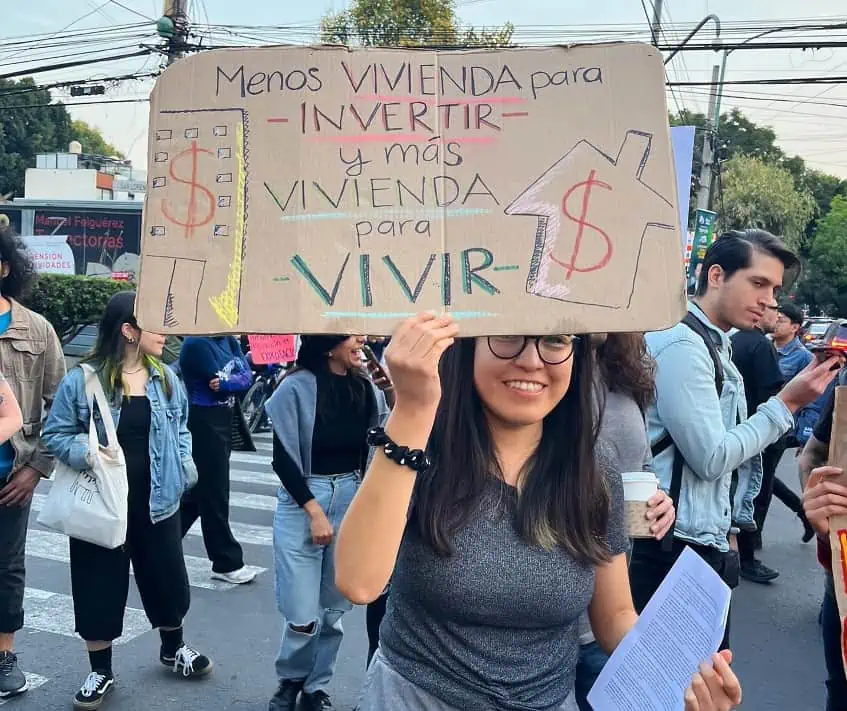
According to the Mexico City Congress, the new law seeks to “generate balance in real estate development without generating land speculation or gentrification scenarios.”
Frida Guillén, a National Action Party (PAN) deputy and head of the Tourism Commission in the city congress, told news outlet Pie de Página that the new regulations are just a “first step” in slowing gentrification. The next step would be the implementation of a “digital nomad” tax, where individuals staying for more than twenty nights would be charged an additional fee.
A protest against gentrification and housing scarcity in Mexico City in 2022. (Gatitos contra la desigualdad/X)
Lawyer and housing specialist Carla Escoffie, on the other hand, told Pie de Página that while requiring liability insurance was a positive step, the modifications to the Tourism Law are insufficient and primarily aimed at benefiting the hotel industry. “In terms of addressing the issues that have emerged around housing and the city in terms of the impact Airbnb can have on cities, this is not a reform that addresses that,” Escoffie said.
When do hosts and hosting platforms have to register?
Starting Thursday, Sectur has 180 days to create the Registry for Technological Platforms. Once the register is available, hosting platforms have 30 days to submit their registration process. In turn, hosts will have 90 days to register.
Upon registration, the hosting platforms may request an one-time extension of 90 calendar days to submit the first bi-annual report.
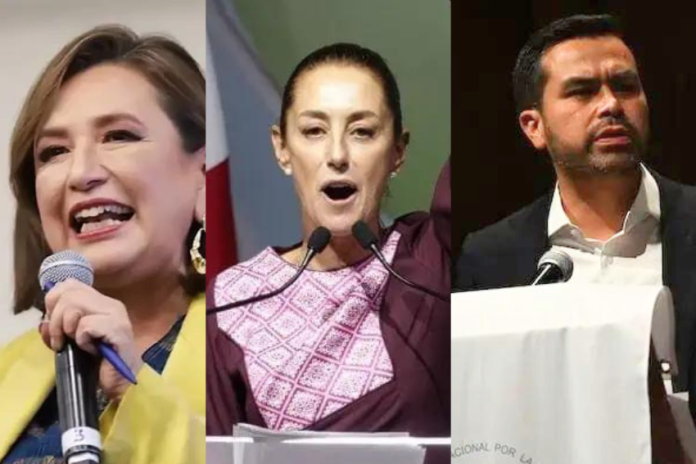
The three candidates to become Mexico's next president, from left to right: Xóchitl Gálvez, Claudia Sheinbaum and Jorge Álvarez Máynez. (Cuartoscuro-Mexico News Daily)
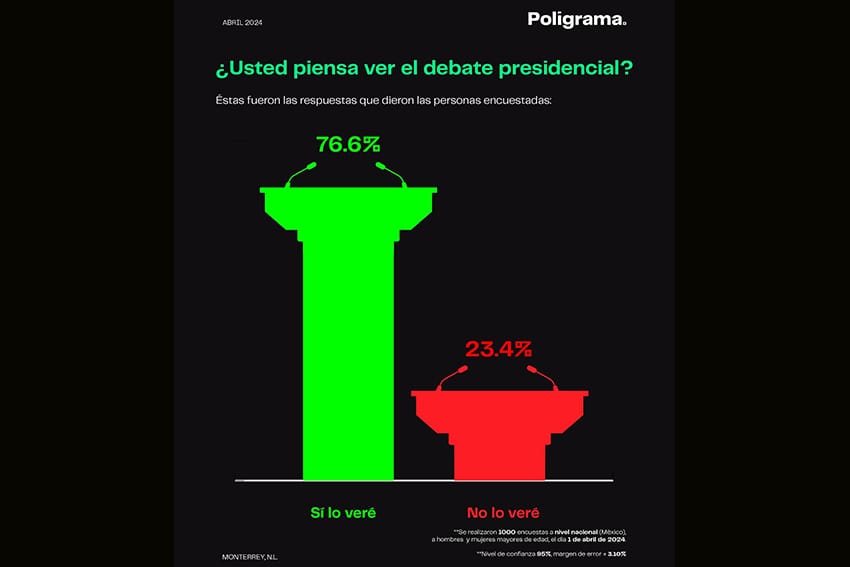
A survey published this week by polling company Poligrama indicates that 76.6% of Mexicans are planning to watch Mexico’s first 2024 presidential debate — but that 60.5% don’t know when it’s taking place.
For the record, the date and time is this Sunday at 8 p.m. Mexico City time, and the participants will be Claudia Sheinbaum, Xóchitl Gálvez and Jorge Álvarez Máynez. Taking place in Mexico City, it will be the first of three scheduled debates before voters go to the polls on June 2 to elect a successor to President Andrés Manuel López Obrador.
When asked whether or not they would watch the upcoming presidential debate this Sunday, over 76% of Mexicans polled said yes, they would see it. The poll questioned 1,000 persons nationwide by phone on April 1. (Poligrama)
According to the Bloomberg Poll Tracker, Sheinbaum leads with 58% of effective votes, comfortably ahead of Gálvez (35%) and underdog Álvarez Máynez (7%). Bloomberg’s tracker, based on data through March 31, excludes undecided voters and those who declined to answer.
Sheinbaum is the candidate for the coalition formed by the ruling Morena party with the Labor Party (PT) and the Ecological Green Party of Mexico (PVEM). Gálvez, a former senator, is representing the three-party opposition alliance made up of the National Action Party (PAN), the Institutional Revolutionary Party (PRI) and the Democratic Revolution Party (PRD), called Strength and Heart for Mexico.
Poligrama’s survey, based in Monterrey, Nuevo León, revealed some other statistics regarding the upcoming debate: almost 1 out of 4 people said they will not watch it; 60% said that they will not change their opinion after watching it; and 20% said they have never seen a presidential debate.
The survey was conducted through 1,000 nationwide telephone calls on April 1 and has a margin of error of 3.1%.
The first debate will be organized by the National Electoral Institute (INE) and held at its headquarters, and can be streamed live on the INE’s official YouTube channel or viewed on various television stations including: Las estrellas (Canal 2), Canal 5, Azteca 7, Azteca uno, A+, ADN40, Cadena Tres, Imagen TV and Excélsior TV.
The debate will be moderated by Noticias MVS journalist Manuel López San Martín, left, and Denise Maerker, right, who anchored Televisa’s nightly newscast until 2023. She now sits on Televisa’s board of directors. (Cuartoscuro)
Earlier this year, the INE’s Debates Commission said citizens could send in their questions, which would then be processed by the Signa Lab of ITESO, the Jesuit University of Guadalajara. As of Wednesday, 108 questions of the 24,000 received had been forwarded to the moderators, former Televisa newscaster Denise Maerker and internet journalist Manuel López San Martín, who will choose the 30 questions they consider most relevant.
Sheinbaum and Morena have opposed the involvement of Signa Lab in the processing of the debate questions. In February, party officials pointed to previous social media posts of its director, Rossana Reguillo, that they said were critical of the Morena party’s policies and supported Gálvez’s candidacy. Reguillo subsequently distanced herself from the selection process.
The theme of this debate will be “the society we want” and will include topics related to education, health, transparency, combating corruption, anti-discrimination measures, vulnerable groups and violence against women.
The day after the debate, the Mexico Institute, of the Washington, D.C-based Wilson Center, will host a free, 90-minute online forum on the event from 3–4:30 p.m. Eastern Time. Participants will include members of Mexico’s Congress who are aligned with each candidate.
Mexico will have its largest election ever on June 2, with 20,375 federal positions up for grabs — including the presidency, 500 seats in the Chamber of Deputies and 128 in the Senate — and elections in nine state governments.
The second presidential debate, on April 28 at Estudios Churubusco in Mexico City, will include video-recorded citizen questions, and the focus will be on economic growth, employment and inflation, infrastructure and development, poverty and inequality, and climate change and sustainable development.
The final debate is scheduled for May 19 at the Centro Cultural Universitario Tlatelolco. It will address social policy; insecurity and organized crime; migration and foreign policy; and democracy, pluralism and the division of powers.