Home Blog Page 643

Magnitude 5 quake in Oaxaca activates mobile alerts in CDMX

0
A stock photo sismograph showing the magnitude of an earthquake
Experts say that shallow, low magnitude quakes.. (Shutterstock)

A magnitude 5.0 earthquake in Oaxaca state set off cell phone alerts in Mexico City on Thursday morning, but initial reports indicated it caused no injuries or significant damage.

The quake struck near the Oaxaca coast at 8:40 a.m., with an epicenter in Crucecita, about 25 kilometers from Santa María Huatulco. It occurred at a shallow depth of about 19.4 kilometers (12 miles), according to Mexico’s National Seismological Service (SSN).

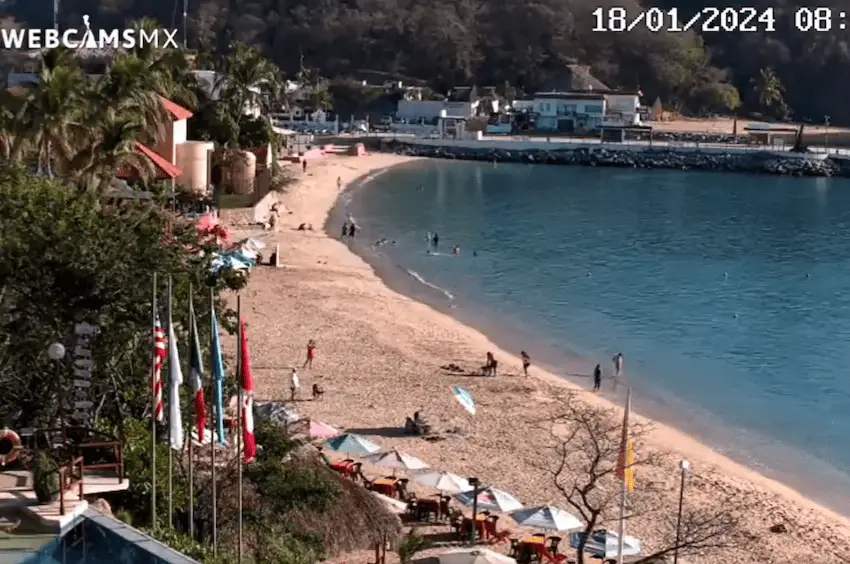
Security cameras captured the moment that the earthquake struck the Oaxaca coast. (Screen Capture)

Light shaking was felt in Oaxaca and in parts of southern Veracruz and western Chiapas. Aside from objects falling from shelves, broken windows and the like, damage is unlikely, but it could take several hours for comprehensive assessments, especially in remote areas.

Though mobile alerts popped up on many people’s phones throughout Mexico City — including on reporters’ phones during the morning press conference of President Andrés Manuel López Obrador — the magnitude and depth of the quake some 500 kilometers away did not warrant the activation of the seismic alert over loudspeakers.

Mexico City Mayor Martí Batres said on the social media site X that “everything is calm and orderly” in Mexico City, where the quake “was totally imperceptible.” The earthquake did not activate the seismic alert in Oaxaca city either.

The National Civil Protection Coordination (CNPC) relayed an assessment from the Navy’s Tsunami Warning Center (CAT-SEMAR) that there would “be no danger to port operations or the population” along the Oaxaca coast. Mexico’s Ministry of Risk Management and Civil Protection (SGIRPC) noted on X that it was in communication with mayors’ offices. 

Oaxaca’s Civil Protection office wrote on X at 11:10 a.m. that “because the earthquake was perceptible in the majority of the state with a moderate intensity, the regional delegations began their monitoring in the [state´s] eight regions to verify possible damage, which so far has not occurred.”

Oaxaca and other areas suffered significant damage in a magnitude 8.2 earthquake on Sept. 7, 2017 that struck off Mexico’s southern coast near the state of Chiapas. It shook all of Mexico City, generated a tsunami with waves 1.75 meters (5.75 feet) above tide level and killed at least 98 people, including 78 in Oaxaca state. Oaxaca also experienced a 7.4 earthquake on March 20, 2012, causing significant damage in the region.

With reports from Milenio, Proceso and Quadratin

Fugitive ex-mayor of Toluca arrested in Mexico City

0
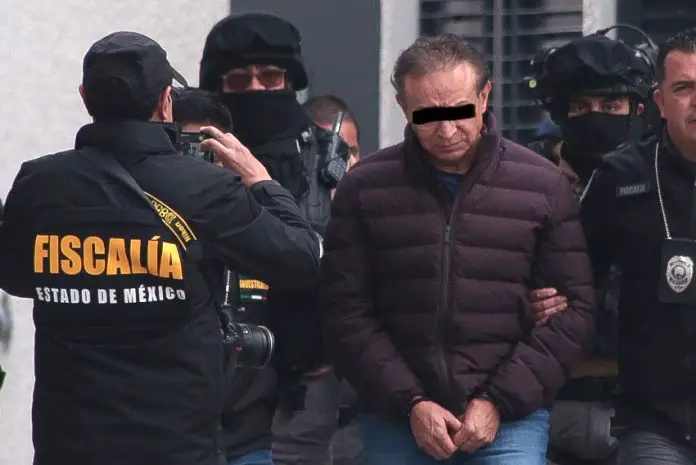
Arrest of Raymundo Martínez Carbajal in Mexico City
The former mayor of the city of Toluca had been on the run for nearly two months, sought by authorities for the unlawful arrest of his father-in-law. (Cuartoscuro)

The former mayor of Toluca, accused of ordering the unlawful arrest of his former father-in-law, has been captured in Mexico City after nearly two months on the run.

Raymundo Martínez Carbajal was arrested in the early hours of Thursday morning by military ministerial police, according to a statement by the México State Prosecutor’s Office (FGJEM). He was transferred to the FGJEM’s facilities under charges including “express kidnapping” and extortion.

Security forces first tried to execute an arrest warrant against Martínez on Nov. 24, carrying out three searches on properties linked to the Institutional Revolutionary Party (PRI) politician in Toluca and Metepec. However, they were unable to locate Martínez, prompting speculation that he had fled the country.

On Dec. 1, Interpol issued a Red Notice for Martínez — a request to international law enforcement to detain a fugitive pending extradition. Martínez was officially removed from his position as mayor of Toluca, to which he was elected in Dec. 2021. On Dec. 12, Juan Maccise Naime, also of the PRI, was appointed to replace Martínez until the end of his term in 2024.

Martínez is accused of ordering Toluca municipal police in April 2023 to arrest his former father-in-law, Emilio Rodríguez, a public official in the National System for the Integral Development of Families (DIF). Rodríguez was held against his will in the Municipal Qualification Office, accused of diverting resources from the DIF. No official warrant was ever issued for his arrest.

Martínez’s ex-wife, Viridiana Rodríguez, subsequently filed a complaint to the FGJEM, alleging that Martínez had orchestrated the unlawful detention to force her to return personal documents and sign a confidentiality agreement following their divorce.

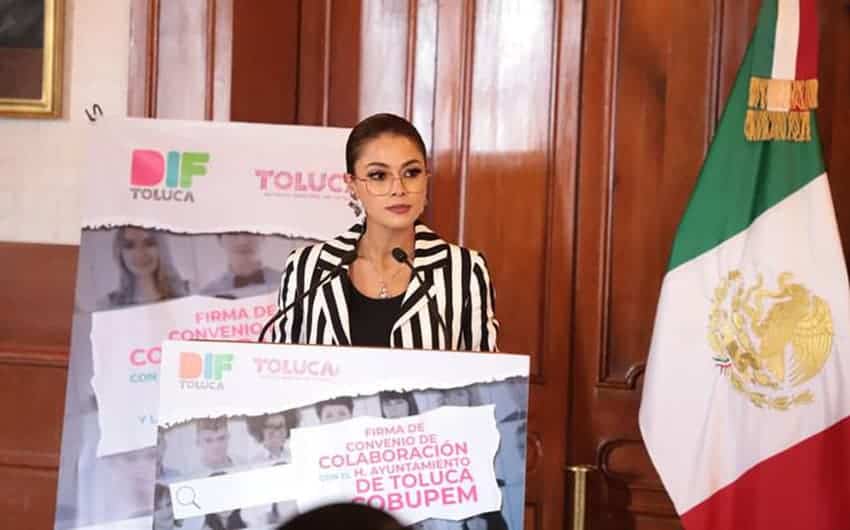
Viridiana Rodríguez
Martínez Carbajal’s wife, Viridiana Rodríguez, accused Martínez of years of abuses as well as the “express kidnapping” of her father-in-law. (Toluca municipal government)

In a video, Rodríguez accused the politician of subjecting her to twelve years of “physical, emotional and sexual violence.” She said that the arbitrary detention of her father was part of a campaign of intimidation against her, also including threats and offensive language, in revenge for her decision to leave Martínez in Feb. 2023.

Two former municipal government officials and a police officer have already been arrested in the case.

It is expected that Martínez will now be transferred to the Santiaguito State Prison, in Almoloya de Juárez, México state, to await an initial court hearing.

With reports from Reforma and El Financiero

7 of 14 missing from Texcaltitlán are found alive

0
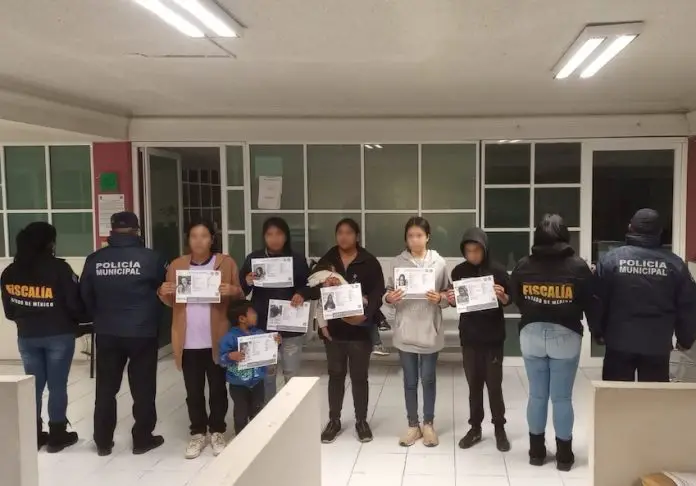
Seven members of the same family were discovered hiding in a chapel in near Nevada de Toluca in México state. (Fiscalía Edoméx)

Seven out of nine family members kidnapped after a deadly shootout last month in México state have been found alive, the state Attorney General’s Office (FGJEM) announced Tuesday night.

An anonymous call tipped the prosecutor’s office to the location of the three women and four minors — in the village of Raíces, about 20 km outside of the state capital of Toluca on the slope of the volcano Nevado de Toluca.

Residents of the town of Texcaltitlán reportedly rose up and attacked members of the Familia Michoacana cartel in December, in a clash that killed 14. (Crisanta Espinosa Aguilar/Cuartoscuro)

All seven underwent preliminary medical evaluations and were in good health, FGJEM reported.

The children (ages 1, 4, 13 and 14) and the three women (19, 23 and 36) are members of the Trinidad Huicochea family. Two men from the same family, a 67-year-old and a 34-year-old, are still missing.

All were abducted shortly after a Dec. 8 violent clash between residents in the small community of Texcapilla and alleged members of the La Familia Michoacana cartel in the surrounding municipality of Texcaltitlán. 

Reportedly, the residents and farmers were fed up with paying extortion money, so they confronted a group of criminals. The ensuing clash on a soccer field left 14 people dead and seven others injured. The deceased reportedly included 10 members of the cartel and four members of the community.

Shortly after the confrontation, 14 local people were taken hostage. One media source opined that their release would be contingent on the handing over those responsible for killing the criminals, although authorities didn’t confirm that.

The nine members of the Trinidad Huicochea family were kidnapped at a cartel roadblock, officials said.

More than a month later, they were reportedly found at the back of a chapel in the municipality of Zinacantepec, State of México, thanks to a Jan. 16 anonymous call.

“Thank you very much, Virgin of Guadalupe, thank you very much. I only ask that you continue to protect my dad and my brother,” an overjoyed relative wrote on social media, according to the newspaper El Universal.

The military were deployed to reinforce security in the area. (Crisanta Espinosa Aguilar/Cuartoscuro)

The rescue operation was a joint effort handled by the National Defense Ministry (Sedena) and the municipal police of Zinacantepec. Media reports made no mention of any arrests.

The search for the seven people still reported as missing will continue, with a reward of up to 500,000 pesos (US $29,000) for information leading to their location.

The Dec. 8 clash has left an emotional scar in the village of Texcapilla, where people remain on edge over possible retaliation.

Schools in the area resumed classes last week after being closed following the incident and students were being offered psychological and emotional support. School directors have set up direct communications with Sedena, the National Guard and other agencies in hopes of preventing any incident in area schools.

With reports from El Universal and Latinus

US offers reward of US $5M for information on Jesús ‘Chuy’ González

0
The United States Department of State (DOS) has announced a reward of up to US $5 million for information leading to the arrest and/or conviction of Jesús "Chuy" González Peñuelas. (DEA)

The United States Department of State (DOS) has announced a reward of up to US $5 million for information leading to the arrest and/or conviction of a Sinaloa-based drug trafficker.

Jesús González Peñuelas, aka “Chuy” González, “reportedly leads an independent methamphetamine, marijuana, heroin, and cocaine distribution and production organization,” the DOS said in a statement on Wednesday in which it announced the reward.

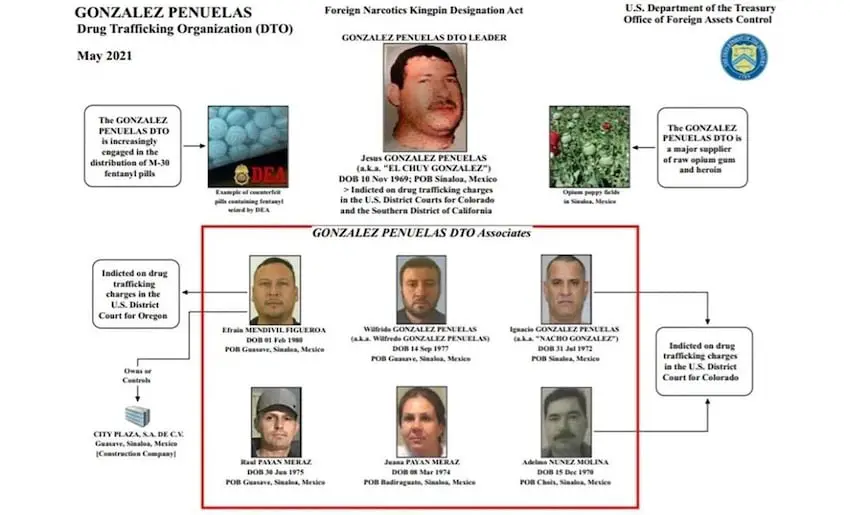
González was indicted for international drug trafficking charges, as part of a criminal network he operates. (Office of Foreign Asset Control)

It also said that González is “believed to be responsible for transporting and selling cocaine and M-30s (fentanyl pills disguised as oxycodone).”

He “was indicted on international narcotics charges in the District of Colorado and the Southern District of California,” the DOS added.

The United States Drug Enforcement Administration (DEA) said in a separate statement that González’ drug production and trafficking organization is based in northern Sinaloa and “has been a prominent source for heroin distribution throughout Colorado.”

“DEA identified González as a primary supplier of heroin in the western United States over a decade ago just as Colorado experienced a spike in heroin-related overdose deaths. … In 2016, González was indicted on three counts by a grand jury in the District of Colorado. A superseding indictment was filed against him in 2018,” the agency said.

The DEA said that the suspect is a 54-year-old Mexican national with black hair and brown eyes. According to a profile on the DEA website, his last known address was in Gabriel Leyva Solano, a town in the Sinaloa municipality of Guasave.

González and his drug trafficking organization (DTO) were formally designated by the U.S. government in May 2021 as “significant foreign narcotics traffickers pursuant to the Foreign Narcotics Kingpin Designation Act.”

The U.S. Department of the Treasury said at the time that González “oversees multiple heroin processing laboratories in Sinaloa” and that “the upper echelons” of his DTO hierarchy consist of his family members.

“The González Peñuelas DTO cooperates with other DTOs within Mexico, including acting as an enforcement arm for the various Mexican DTO’s trafficking routes, and is aligned with Mexican drug kingpins Fausto Isidro Meza Flores and Rafael Caro Quintero, both of whom are subject to Treasury sanctions,” the department said on May 12, 2021.

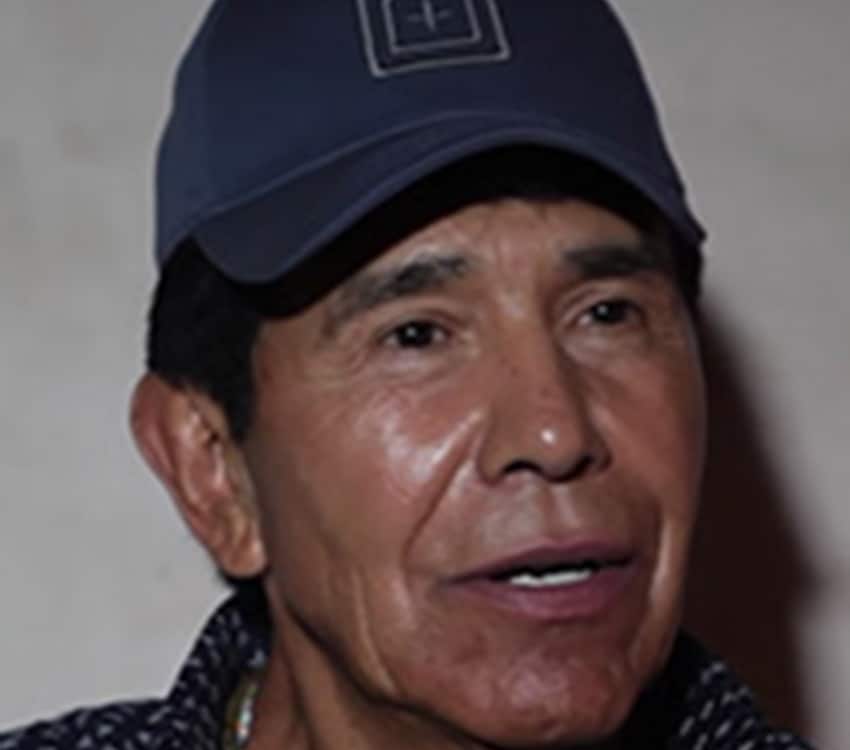
Rafael Caro Quintero
Rafael Caro Quintero was arrested in July 2022 by Mexican authorities and his extradition to the U.S. is still pending. (DEA)

Caro Quintero, a notorious drug lord and convicted murderer of United States DEA agent Enrique “Kiki” Camarena, was arrested in northern Mexico in July 2022.

Meza Flores, an alleged leader of the Beltrán Leyva criminal organization, remains at large.

The $5 million reward for information that leads to the capture of González is offered under the Department of State’s Narcotics Rewards Program (NRP).

The DOS said that the NRP and another U.S. rewards program “have helped bring more than 90 transnational criminals and major narcotics traffickers to justice since the inception of the NRP in 1986.”

“The Department has paid more than $170 million in rewards under these programs for information leading to apprehensions and convictions,” the department added.

Mexico News Daily 

Mexico to review 5 proposals to expand passenger train service

7
The Mexican government has reportedly received five proposals from companies interested in operating cross-country passenger train services.(Presidencia/Cuartoscuro)

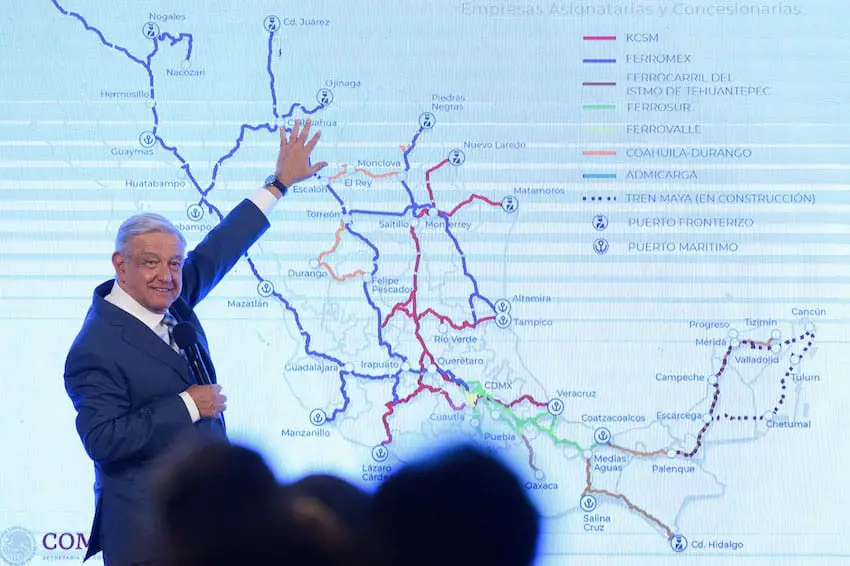
President López Obrador’s plan to revive passenger train services on Mexico’s vast railroad network continues to advance.

The Ministry of Infrastructure, Communications and Transport (SICT) said Tuesday that it had received five proposals from companies interested in operating passenger train services on existing freight tracks.

The announcement came after López Obrador published a decree last November that established the provision of passenger train services as a priority for national development, and called for existing freight railroad concessionaires to present proposals for such services by Jan. 15.

The SICT said in a statement that it is reviewing the five proposals “prior to the carrying out of the respective studies.”

The ministry didn’t identify the companies that presented proposals, but Canadian Pacific Kansas City (CPKC) – which last year committed to study the feasibility of a Mexico City-Querétaro passenger train – confirmed to media outlets including Milenio and Reuters that it had presented a proposal for passenger services on an unspecified number of routes.

Reuters reported that the transport division of the Grupo México conglomerate, a major railroad operator in Mexico, declined to comment when asked whether it had submitted a proposal.

The Federal Economic Competition Commission (Cofece), Mexico’s antitrust agency, said in 2021 that Grupo México, the parent company of Ferromex and Ferrosur, managed 56% of the country’s railroads, while CPKC managed 24%. The state-owned company Ferrocarril del Istmo managed 12%, leaving just 8% of tracks to other concessionaires.

López Obrador’s Nov. 20 decree said that the government would initially issue concessions for seven passenger train routes:

  • Mexico City-Veracruz city-Coatzacoalcos
  • Felipe Ángeles International Airport (AIFA)-Pachuca–Tula
  • Mexico City-Querétaro city–León-Aguascalientes
  • Manzanillo-Colima-Guadalajara-Irapuato
  • Mexico City-San Luis Potosí-Monterrey-Nuevo Laredo
  • Mexico City-Querétaro city-Guadalajara-Tepic-Mazatlán-Nogales
  • Aguascalientes-Chihuahua city-Ciudad Juárez

Citing unnamed sources, the El Economista newspaper reported that existing rail concessionaires hadn’t expressed interested in operating passenger services on the proposed line from AIFA or the one from Mexico City to Veracruz.

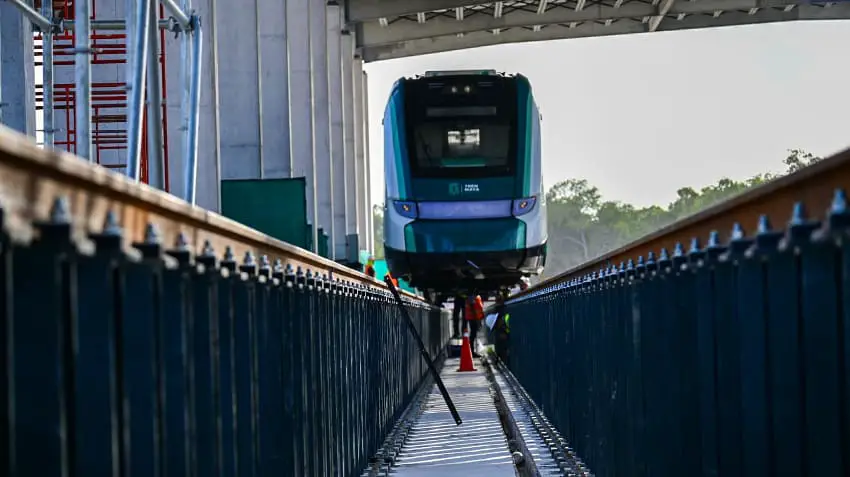
Maya Train car
The massive Maya Train infrastructure project has brought passenger travel back to much of Southern Mexico. (Tren Maya/Twitter)

According to López Obrador’s decree, if the concessionaires “don’t present viable proposals in terms of investment, construction time [and] track modernization” or don’t show any interest at all, the federal government, via the SICT, “could grant titles of assignment to the Ministry of National Defense or the Ministry of the Navy given that they already operate the Maya Train and the Isthmus of Tehuantepec train.”

The decree also acknowledges that non-concessionaire private companies “that present proposals and are interested in providing passenger train services” could be considered.

On Tuesday, López Obrador said he expected to make progress on his rail plan before he leaves office on Oct. 1.

“There are some [companies] that are going to participate. We’re working on it, but before we go we’re going to leave the project [ready to start],” he said.

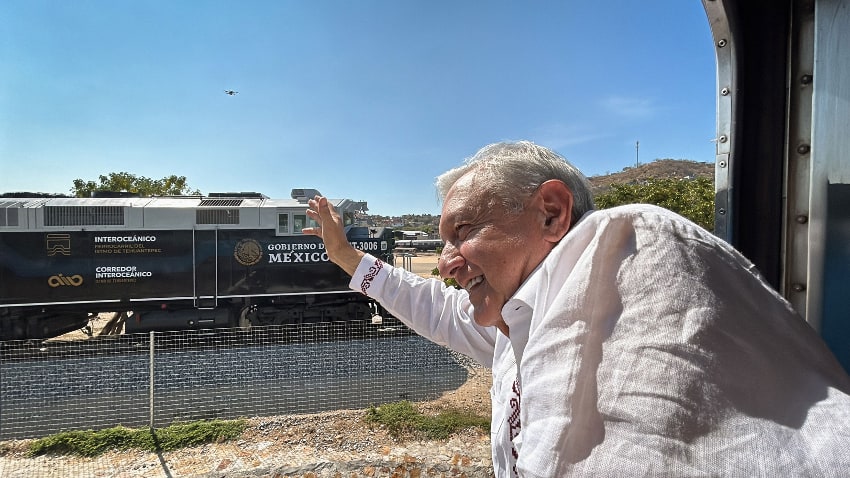
President López Obrador on the Isthmus of Tehuantepec train
President López Obrador on an inaugural ride on the isthmus passenger train. (Lopezobrador.org.mx)

“Just imagine what [passenger train travel] means for the future,” López Obrador said before asserting that public and private investment in rail projects will create jobs and “reactivate the economy of the entire country.”

“It’s about having safe, cheap, non-contaminating transport in all of Mexico, at a national level. The only thing is we can’t start the project, but we can leave the general guidelines and blueprint,” he said.

López Obrador asserted that a project to revive nationwide train travel won’t be an expensive exercise.

“What will it cost? Nothing,” he said, adding that the project would involve nothing more than “fixing the tracks up a bit” and “buying passenger trains – what we did in the Isthmus [of Tehuantepec].”

In December, López Obrador inaugurated the Interoceanic Railroad between Salina Cruz, Oaxaca, and Coatzacoalcos, Veracrauz, as well as four of seven sections of the Maya Train railroad, which connects cities and towns in five southeastern states.

The president is frequently critical of the privatization of Mexico’s railroads during the 1994-2000 presidency of Ernesto Zedillo, and the subsequent suspension of passenger train services across the country.

With reports from Milenio, El Economista and Reuters 

Government says Jaguar Park in Tulum will open by February

5
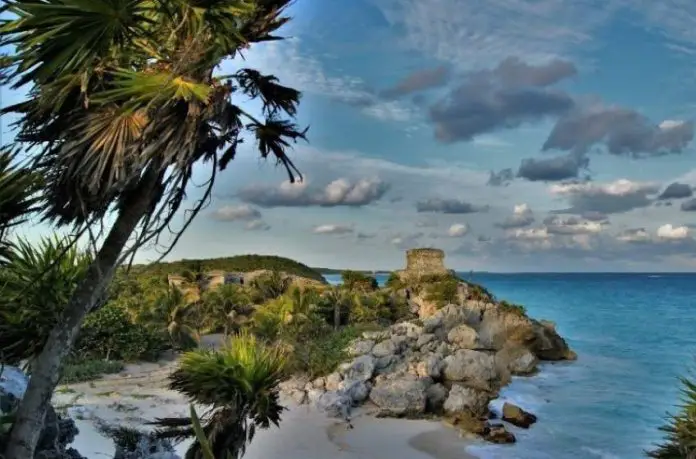
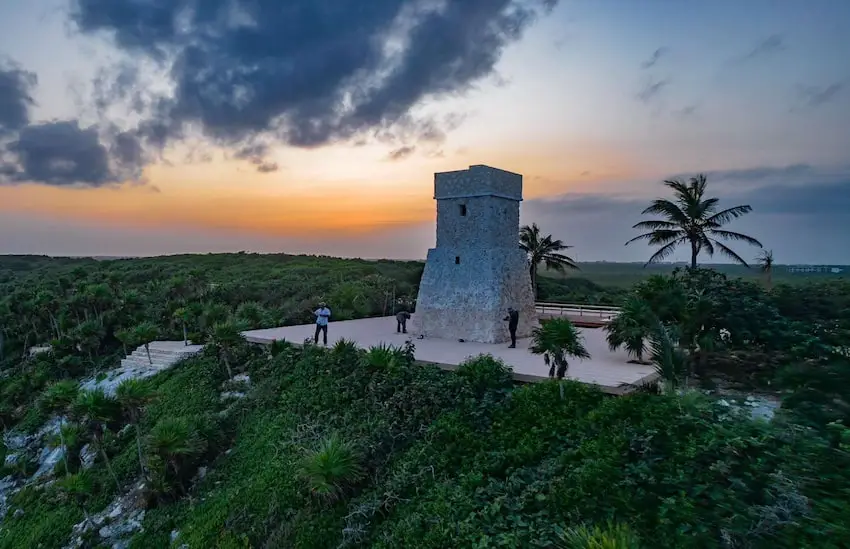
Tulum's new Jaguar Park, which includes the world famous ruins, is expected to be completed in the next few weeks. (INAH)

Tulum’s new Jaguar Park is almost ready to open, according to the Agrarian, Territorial and Urban Development Minister Román Meyer Falcón, who said “the last details” of construction work are being finalized. 

Located in northeastern Tulum, Jaguar Park stretches over 2,249 hectares encompassing numerous protected natural areas such as beaches, forests, the Tulum Archaeological Zone and the Tulum National Park. The site will also house an archaeological museum and a hotel.

The sprawling site takes in acres of jungle and ancient Maya ruins. (Román Meyer Falcón)

During his latest visit to the construction site on Jan. 12, Meyer explained they are “making progress” as they have already finished “the most important part”, including the primary access point, while the southern access point and beach access points are almost done. 

In October 2023, part of the park caught fire and was destroyed during initial construction. Despite the incident, the project is scheduled to open only slightly behind schedule.

“We hope to conclude everything by the end of January or the beginning of February,” he added.  

Once the Jaguar Park operates at total capacity, Meyer said the government plans to use electric vehicles to shuttle guests between the museum, hotel, beaches, and ruins. The park will also contain extensive cycling routes. 

Recently, the park added a further 300 hectares, in which the Archaeological Zone Hotel and the Maya Culture center are being constructed. Both projects are expected to be completed by March.

Meyer said the Jaguar Park will be jointly managed by the National Institute of Anthropology and History (INAH) and the National Defense Ministry (Sedena).

With reports from Radio Fórmula and La Jornada Maya

Got 1 min? Mexico withdraws bid to host 2036 Olympic Games

0
Mexico will not host the 2036 Olympic Games, after the Mexican Olympic Committee withdrew its bid for candidacy. (Indeporte/Cuartoscuro)

Mexico has withdrawn its bid to host the Olympic Games in 2036, according to the Mexican Olympic Committee (COM).

“We spoke with the International Olympic Committee and noticed that the competition is very tough,” the head of the COM, María José Alcalá, told reporters at a press conference in Mexico City. 

This year’s Olympic Games will be held in Paris. (Paris 2024)

South Korea, India, Egypt, and Qatar are reportedly also interested in hosting the event.

At the time of the original bid, then-Foreign Affairs Minister Marcelo Ebrard said that Mexico was “ambitious and successful” and that the country only proposed initiatives it could fulfill. He also suggested hosting the event in 2040 if the government could not commit to the initial date.

Alcalá said Mexico now plans to bid for the 2032 Youth Olympic Games instead, as she said they have more “chances” of securing the nomination.

“We are currently reviewing the country’s ad hoc project to assess the possibilities and have discussed the issue with the International Olympic Committee (IOC),” she explained. 

1968 Olympic Games
The Olympic Games were hosted in Mexico City in 1968. (Archive)

The former Olympic diver said they are assessing the possibility of presenting a bid  to host the 2027 Pan American Games, after the Colombian city of Barranquilla lost the organizing rights for failing to meet the requirements. 

The northern State of Nuevo León has been touted as a possible host, as  “the closest to meeting the necessary standards.” However, plans are still in their initial stages, and details are yet to be confirmed. 

The 2024 Olympic Games will be held in Paris, France this summer and the COM is currently preparing to send the Mexican team to the event, although questions remain over funding.

“We need 220 million pesos (US $12.7 million) for the event,” Alcalá said, adding that she is still discussing the matter with the National Sports Commission (Conade).

Mexico became the first Latin American country to host the Olympic Games in 1968, though the event was marred by the Tlatelolco massacre of student protesters, which took place days before the opening ceremony.

 With reports from El País and El Financiero

How to live to 100, according to my centenarian abuelita

9
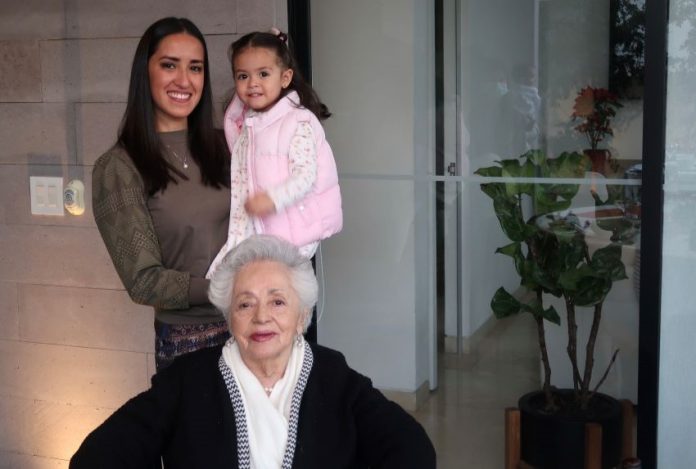
Christmas 2021 with me (granddaughter) and Paola (great-granddaughter). (Courtesy)

My maternal grandmother turned 100 on December 23, 2023, and our family is both impressed and grateful for her remarkable achievement — because it’s not just her age that’s exceptional, but also her physical and mental health.

With an average life expectancy of 70.2 years, Mexico is no “blue zone,” making my abuelita’s achievement all the more impressive.

As expected at her age, she has battled health issues like high blood pressure, eyesight issues and trouble sleeping. But thanks to modern medicine, she has found a way to manage these conditions.  

However, what’s really extraordinary is that at her advanced age, she has remarkably recovered from serious conditions including bone fractures, heart failure, and just a few months ago, pneumonia. 

Her doctors are always amazed by the strength of her body, her heart and her mind, and people close to the family often ask: What’s her secret? 

After a recent conversation with her, I realized what I’ve witnessed all my life — there’s no secret to her lifestyle, only discipline in her healthy habits.

“How have you kept yourself so healthy?” I asked my grandma the other day. 

“Food is the most important thing,” she told me, before adding the advice she has always given. “One must always follow a healthy and balanced diet, exercise often and sleep well.”

To her life mantra, I would add “and socialize” because I’m convinced her busy social calendar has also helped boost her vitality.

So, without further ado, today I’d like to break down my abuelita’s advice to live to 100 healthily and happily.

1. Eat well

“If you have a pot with a flower and expose it to the sun and rain, it will grow. But if you add in fertilizers, it will grow healthy and beautiful. The same happens with our bodies. Vitamins are our fertilizers.” 

Whenever any of my sisters, cousins or I refused to finish our food, my grandma would invariably give us that example. 

 “You should eat everything but with moderation,” she would say. “And don’t forget to take your vitamins.”   

I never saw my grandmother go into strict diets or deprive herself of something she liked. 

She would eat everything from chips with spicy sauce, to Mexican pan dulce along with a cup of hot chocolate as a merienda (a snack before dinner), to ice cream and coffee. She even drank one caballito de tequila with my late grandfather (who died in 2012 at 94) almost daily in the afternoon, along with some cacahuates

She didn’t mind treating herself in moderation because she cooked delicious healthy meals at home that included animal protein, fruits, legumes and vegetables. 

However, one practice that she swears by is taking one spoonful of olive oil with a drop of lemon juice in the morning with an empty stomach. She doesn’t do it anymore, but she did it for over 40 years every day. 

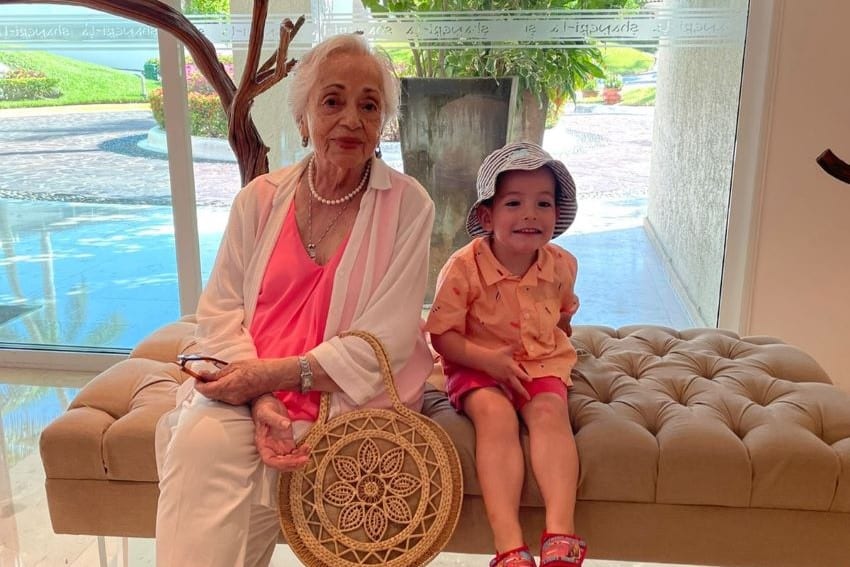
Abu Ene ― Enedina Fregoso ― with one of her great grandchildren last summer. (Courtesy)

2. Exercise often

Most people are shocked when they learn that my grandmother exercised one hour daily until her early nineties. 

She would walk for 30 minutes on a static treadmill she had at home, and bike for 30 minutes on a static bicycle while praying the rosary or making calls to friends and family. 

This exercise substituted her daily walks in the park, just four blocks away from her home, which she stopped doing a few years before my abuelito passed away. 

My two sisters and I would also walk with her to Tacos Providencia (the best tacos al pastor in Guadalajara) at least twice a week and to the Pan Bueno panadería (a staple in Guadalajara) to buy pan dulce for our merienda. Sometimes for a treat, we’d go to the famous nevería and paletería (popsicles and ice-cream shop) Manhattan. All in the same neighborhood.

When my mom was young (she was the eighth of 10 children) and they lived in the Colonia Americana in the ´70s, she said my grandma would walk to the Expiatorio to listen to mass every day, in addition to walking to the market and to local shops. 

I’m sure my grandma has never stepped foot inside a gym — but with 10 children in tow, 23 grandchildren, 23 great-grandchildren, and a life where she would walk everywhere, her life has been nothing short of active. 

3. Sleep well

“Sleep well to take care of your skin, and you will always look young,” she often reminds us. 

I think the main motivation for her getting enough hours of sleep is the appearance of her skin, in addition to having energy the next day.

Even to this day, she treats her skincare routine as a sacred practice, investing both time and money into ensuring that her skin is properly taken care of. 

Being mindful about her sleeping hours is a practice she also shared with my grandfather, who would go to bed at 9 p.m. every day and wake up at 5 a.m. At 1 p.m., he would religiously take a one-hour nap before lunch. 

While my grandma didn’t take naps, she was always mindful about her hours of sleep at night.

4. Have an active social life 

We have a saying in Mexico that my grandfather used a lot to talk about my grandmother’s social life: “Nada más ves caballo ensillado y estás lista para irte a cualquier lado,” which means “You see the horse with a saddle and you’re ready to go anywhere.”

My grandma has a very active social life. She attended many events such as charitable events, gatherings with friends, church duties, weddings, first communions, baptisms — and she didn’t like to skip a thing. 

Not only that but if the event were a family one, she would be one of the last ones to leave — even if it meant staying up after midnight.

Although she has not been as socially active in the past year, she enjoys outings for lunch with my aunts and uncles and travels to Puerto Vallarta often.

Genetics have indeed played a significant role in the well-being of my grandmother (my great-grandmother died at 96). However, I’m confident that her disciplined lifestyle has helped her achieve 100 in the remarkable way that she’s done it — and it is only my hope that I can have a healthy and happy life following her advice.

Gabriela Solís is a Mexican lawyer based in Dubai turned full-time writer. She covers business, culture, lifestyle and travel for Mexico News Daily. You can follow her life in Dubai in her blog Dunas y Palmeras

Dr. Lara’s expert advice on botox treatments in Mexico vs the US

2
Botox is one of the most popular brands administered as a muscle relaxant injection. (Freepik)

When you’re considering facial aesthetic treatments in Mexico — Botox, fillers or dermatological treatments — you might be wondering about important issues like safety, expertise, product choices and affordability. 

Seasoned dermatologist Dr. Daniela Lara, founder of Clinica de la Piel Dermantra in San Miguel de Allende spoke to us about Botox treatments in Mexico, to address some commonly asked questions based on her personal, professional experience.

Medical tourism in Mexico continues to evolve rapidly — as does its reputation — due to the high standard of doctors, facilities, amenities and significantly reduced costs. In 2022, about 1.2 million people traveled to Mexico for elective medical treatment according to Patients without Borders, and medical tourism is expected to grow significantly this year. The medical process — from diagnosis to recovery — can be of excellent quality and cost less than 40% of similar treatments in the U.S., Dr. Lara tells Mexico News Daily. 

She continues, “Currently, due to Mexico’s proximity, many people travel from the U.S. and Canada for neurotoxin or neuromodulator cosmetic procedures. Dermatologists in Mexico can also often provide better access to Asian products, which due to strong lobbying, are not always available in the U.S. Research your Mexican aesthetician’s credentials and testimonials thoroughly.

One of my clients said she was happier with the results from her Botox treatment at my clinic than with her doctor in New York – and the treatment runs at about a third of the cost in the U.S. I’m part of the VIP doctor program with Allergan (Botox, Juvederm) Galderma (Restylane Sculptra) and Merz Aesthetics (Belotero, Radiesse, Ultherapy), and they’ve invested in training me to work with their products.

This has given me the chance to learn with some of the very best aestheticians in the world, like Jani Van Loghen and Dr. Arthur Swift, and attend three to five world conferences annually with the top speakers in the field. It keeps me current with the latest technology, techniques and products, and in turn, I’m able to train my staff.” 

Dr. Lara, what is Botox and how is it used in a cosmetic procedure?

Botulinum neurotoxin, popularly known as Botox, is a pharmaceutical substance made from the toxin produced by bacterium clostridium botulinum — which is in fact the same toxin that produces botulism. 

Botox is one of the most popular brands administered as a muscle relaxant injection, and botulinum toxin or Botox injections are used cosmetically to relax the muscles in your face, thereby smoothing out facial lines and wrinkles, such as crow’s feet around the eyes, frown lines or facial grooves. Studies demonstrate that neurotoxins such as Botox and other brands also affect sensory neurons, so they can work well for chronic pain such as migraines, and can aid with cessation of sweating by blocking the sweat glands. 

Keep in mind that it’s important to check your doctor’s training, both past and current. By attending the international congresses held each year, I validate my license as a Dermatologist and surgical Dermatologist according to the Mexican Dermatology board guidelines. In Mexico and the U.S., a nurse, dentist, or medical assistant can get a license to inject, but poor training or use of non-FDA-approved products and unregulated procedures can lead to a bad experience. You need to trust the doctor you choose, through research and patient recommendations. 

What brands besides Botox are available in Mexico for cosmetic use and what is your opinion of them?

I work with many brands of neurotoxins, from the U.S., Germany, Switzerland, Korea, and China, as most practitioners in Mexico do. I think people come to Mexico for cosmetic treatment not only for the better costs, but the better care. My clients tell me that the one-on-one time we spend in the initial consultation inspires more trust and results in a more satisfactory experience. It’s important to spend quality time on the diagnostic process, which can be very intimate. I will always invite clients to research my suggestions before we begin.

These are some of the brands I choose to work with based on my own training and experience:

Botox by Allergan is the most popular brand, and which I often work with, as it is the most researched product and has an extensive safety profile.

Dysport by Galderma. I choose this brand when working with certain areas, like a larger area under the arms. It works well with sweat glands. But when I need high precision, like the eyebrows, I will work with other brands of products like Botox. 

Xeomin by Merz Aesthetics. This is the purest product on the market so therefore there are often fewer side-effects and is ideal for ensuring skin quality. 

I work with a neuromodulator technique called mesotoxin, which reduces pore sizes by injecting a very diluted and small dose of botulinum toxin into a superficial level of the skin. I use this technique to create smaller pore sizes, reduce sweating in different areas of the body, reduce redness of the skin, reduce oil production on the skin (i.e. face) and to create facial smoothness wherever the client and I decide to target. 

Medytox and Nabota Botox 100U. These are the top two Korean brands, which I like. Dituroxal is a Chinese brand. 

These brands are more affordable than Botox, and I see fantastic results. They are also my clients’ most popular brands, and this particular treatment is minimally invasive. It will radically improve fine lines and wrinkles, smoothing the skin and creating a fresh, radiant and youthful appearance. I recommend a treatment two to three times per year, but it also very much depends on the individual. For some clients, the treatment will last four months and for others it can last over six months.

Without a doubt, the treatment lifespan depends on many factors such as the dosage, the muscle, the type of skin, metabolism, age, gender, and the amount of physical activity you engage in.

Is there a big difference in cost between the U.S. and Mexico and can you give some examples?

As I mentioned, Mexico has become one of the most popular destinations for cosmetic procedures for U.S. and Canadian travelers, due to its short travel time, expertly trained doctors, affordability, amenities and its high level of diagnostic and recovery care. If you travel to San Miguel de Allende, for example, world-class accommodation, culture and gastronomy is also available to you! A consultation at my practice runs around US $40, and the cost of Botox and similar treatments are a third of the cost of the U.S. A complete face and neck Botox treatment can run around US $350.

And finally, social media, i.e. the Kardashians, seem to drive beauty trends. What are you seeing and is this a good thing? 

In young women under age 30, I am starting to see a trend for injectables on the face like, over volumization for lips, cheek, chin, “foxy eyes” or overuse of Co2 aesthetic laser technology, which is very ablative. In my opinion, they don’t really need it. On the other end of the spectrum are women who feel that everyone should just accept their age and wrinkles. When clients ask for my opinion, I like to offer them the analogy of a hair treatment; when you use a lot of hair straightening treatments on curly hair, one needs to repair the damaged hair. This is no different on the face or the body. So, it’s a balance.  It’s a pleasure to help people feel more beautiful, but I also like to say, never overcorrect.

My advice is to do very thorough homework regarding any aesthetician or dermatologist’s credentials and testimonials, and research their chosen products, the price points and the different treatments and techniques available. At my practice, our quality of service and patient satisfaction is at the level of the best clinics in the major world cities.

Disclaimer: This article is for informational purposes only and should not be considered legal or medical advice. The writer and Mexico News Daily assumes no responsibility or liability for any errors or omissions in the content on this site. Individuals should always consult with qualified professionals regarding medical procedures, including plastic and/or cosmetic surgery, and medical aesthetic treatments, as well as consider their jurisdiction’s applicable laws and regulations.

Henrietta Weekes is a writer, editor, actor and narrator. She divides her time between San Miguel de Allende, New York and Oxford, UK.


Cruise ship rescues 6 adrift Cozumel fishermen and their dog

1
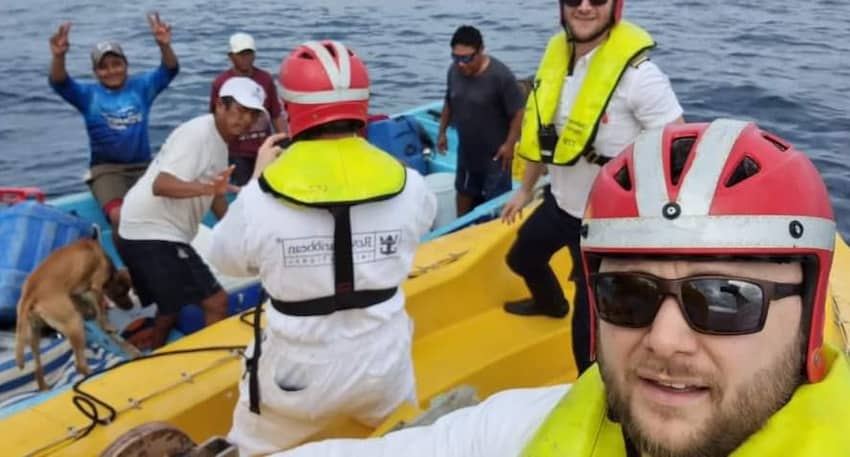
The "Aris" was adrift in the Caribbean for several days after an engine failure on Sunday. The crew was rescued by a passing cruise ship. (Mara Lezama/X)

A missing fishing boat and its seven passengers — including a dog named Canelo —  were rescued off the coast of Quintana Roo on Tuesday thanks to a big assist from a Royal Caribbean cruise ship.

The small fishing craft “Aris” left Cozumel on early Sunday and was adrift at sea for nearly 48 hours after suffering an engine failure and loss of communication, according to the Mexican Navy (Semar).

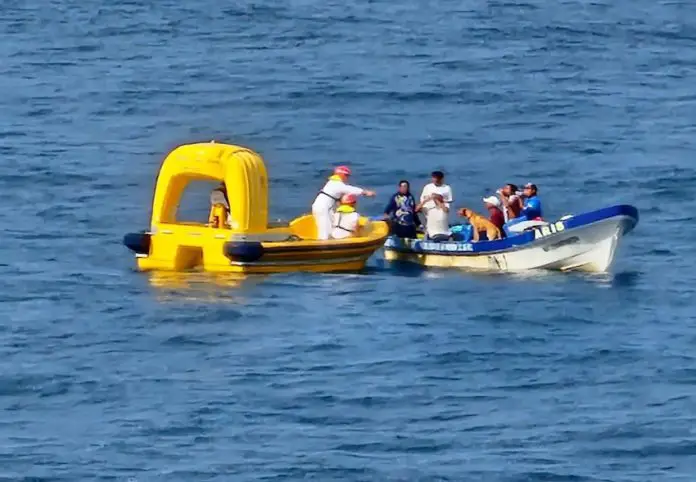
A lifeboat crew from the Harmony of the Seas cruise ship was dispatched to collect the sailors and their dog. (Joana Maldonado/X)

All passengers were dehydrated but in good health after being found in their boat in the Gulf of Mexico, approximately 20 nautical miles from Cabo Catoche, the northernmost tip of the Yucatán Peninsula.

Relatives, friends and colleagues in Cozumel were in a high state of angst after Monday came and went with no sign of the fishermen, despite government-agency searches by air and by sea, and the efforts of local people with boats.

CZM Noticias of Cozumel left a Facebook note Monday night for local fleets: “With all your heart if you go fishing tomorrow, don’t forget to look up to the horizon, in case you see a boat drifting or floating in the sea.”

Hours later, that’s exactly what happened.

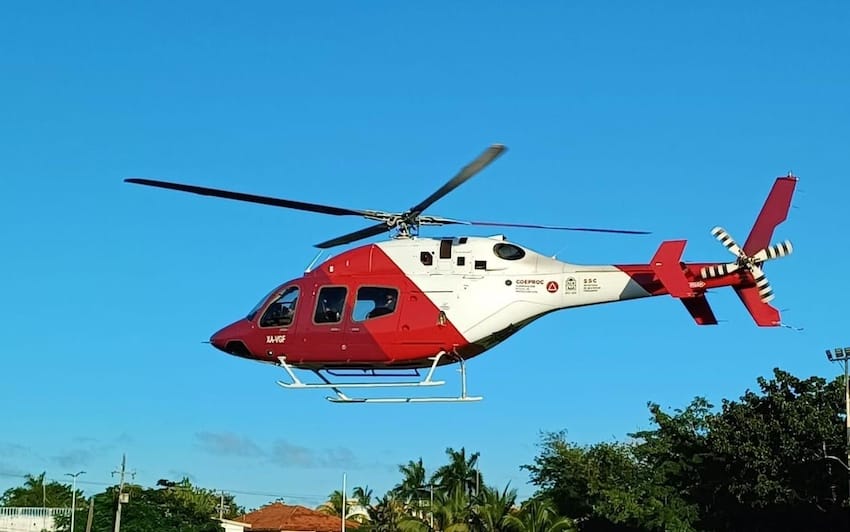
Coastguard teams were dispatched to assist in the rescue. (Gobierno de Quintana Roo)

Harmony of the Seas had left Galveston, Texas, on Sunday on a seven-night Western Caribbean cruise, starting with two full days at sea before reaching its first port in Roatán, Honduras.

Crew from the world’s fourth-largest passenger (originally No. 1 when it debuted in 2010) ship spotted the approximately 25-foot-long fishing boat and quickly sent personnel on a rescue lifeboat to check on the passengers and give them beverages.

The crew also notified the Navy, which completed the rescue of the six “Cozumeleño Castaways,” as they were dubbed by website Diario Cambio 22. The captain of the vessel was identified as Manuel Chimal. 

By Tuesday night, Chimal and his five crewmates (and Canelo) were back in Cozumel with their families and friends.

As for the Harmony of the Seas — which can host 5,479 passengers at double occupancy, along with a crew of 2,300 — the massive ship will stop Thursday at the Costa Maya cruise port in south Quintana Roo and Friday in Cozumel after its Wednesday visit to Honduras.

With reports from Cambio 22, La Jornada and Riviera Maya News