Home Blog Page 67

MND Local: The Baja business deal that soured Trump on Mexico

15
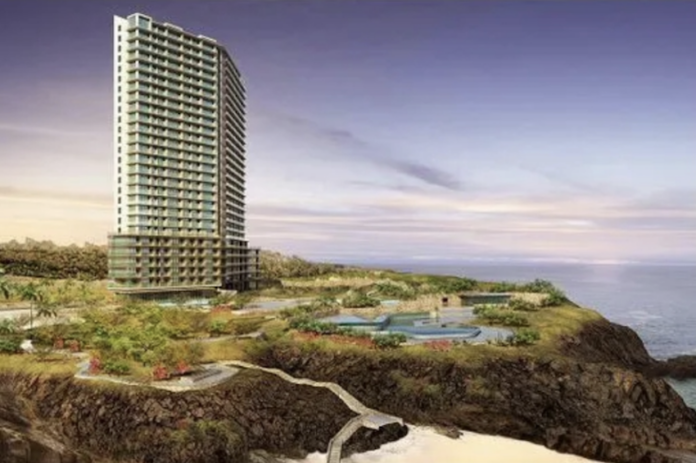
An illustration of a tower at the Trump Ocean Resort Baja Mexico, a condo project that was to have been built just south of Tijuana. (YouTube)

It has been 20 years since the Trump Ocean Resort Baja Mexico was first announced, and just over 10 years since the dust settled on the myriad lawsuits that the ultimately failed project produced. In hindsight, it’s easy to trace the souring of Donald Trump on Mexico in the wake of this disappointment. Following the debacle in Baja California, he invested in two other failed projects in the country, famously declaring in 2015: “Don’t do business with Mexico!”

By that time, he was already floating the idea of building a wall between the U.S. and Mexico as he transitioned from real estate and reality television to run for the U.S. presidency.

The Trump Ocean Resort Baja Mexico

Donald Trump in promo video for Trump Ocean Resort Baja Mexico

Today, the site of what was to be the Trump Ocean Resort Baja Mexico is nothing but mud, literally and figuratively. However, in October 2006, when plans for the 526-unit luxury condo-hotel at Punta Bandera, south of Tijuana, were officially announced, Trump had nothing but good things to say about Mexico and the project, which would include three 25-story towers on 17 oceanfront acres, with luxe amenities such as concierge service for owners, a fine-dining restaurant, multiple swimming pools, and a fitness center and tennis courts. According to Trump, the property would “redefine the standard of premier property ownership and service excellence for all of Northern Mexico.”  

In a promotional video made to entice buyers, Trump added, “One of the things I most love about this project is that it’s in Baja, Mexico, and Baja is one of the really hot places. Baja right now is where Cabo was 10 years ago, and you know what happened to Cabo.” 

Thanks largely to the Trump name and a lavish event held to promote the project in San Diego, buyers were successfully enticed. Condos at Trump Ocean Resort Baja were listed at prices ranging from US $250,000 to up to $3 million for larger units, and over 32 million dollars in deposits were taken, with depositors given promises that the build-out of the property would take three to four years.

Construction did begin, barely, with a hole dug for a foundation and a billboard erected showing Trump’s face and the slogan, “Owning here is just the beginning.” But the project was abandoned in 2009 after the developers failed to secure a construction loan from German bank WestLB. That, not coincidentally, was the same year the first lawsuits were filed.

Lawsuits and litigation

Prospective buyers had been under the impression that the developers of Trump Ocean Resort Baja Mexico were Trump and the Los Angeles-based real estate agency Irongate. However, once lawsuits were filed, it was revealed that Trump had only licensed his name for the project, pocketing a reported US $500,000 for his branding and promotional efforts. 

Buyers, and their lawyers, felt it had gone much farther than that, and that Trump’s role had been fraudulently misrepresented. Nearly 200 were listed on the class-action lawsuit that finally led to a US $7.25 million settlement by Irongate in a Los Angeles court in 2012, with Daniel King, attorney for the plaintiffs, noting that every one of his clients “was led to believe that ‘Trump’ was the developer of the project.”
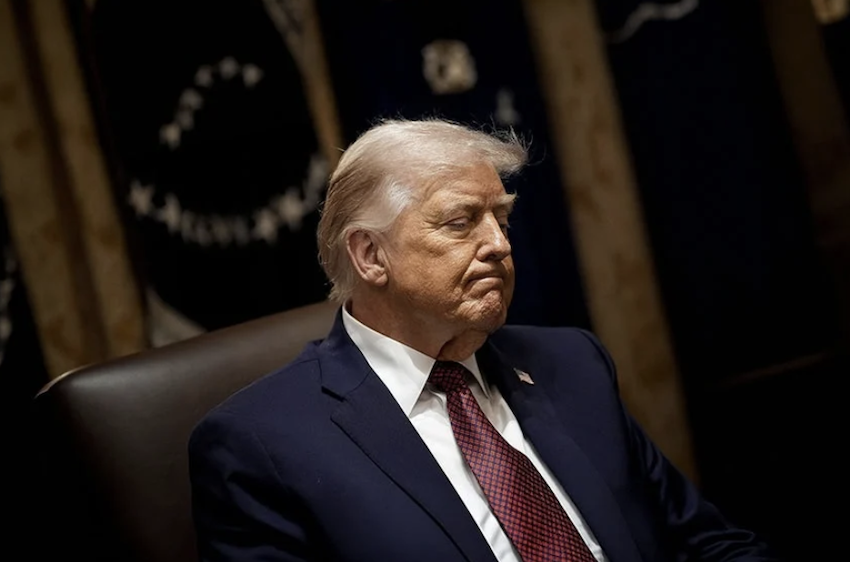
Trump soured on Mexico due to failed business deals before he was elected U.S. president. (Shutterstock)

Trump, whose own culpability in the Trump Ocean Resort Baja Mexico’s collapse would continue to drag on in court for another year, had also turned on Irongate, blaming the company’s Jason Grosfeld and Adam Fisher for the failure in a separate 2009 lawsuit.

The 2008 worldwide financial crisis that decimated housing markets has often been listed as a leading cause for Trump Ocean Resort Baja Mexico’s failure, but claims by a former member of Mexico’s Chamber of Deputies, Jaime Martínez Veloz, that the project lacked proper permits could have doomed it as well. Martínez Veloz filed yet another lawsuit in Mexico in 2016, this one claiming Trump committed tax fraud, later adding failure to obtain proper permits to the complaint. 

More financial woe in Mexico for Trump

The Trump Ocean Resort Baja Mexico became a huge embarrassment for its namesake, both personally and financially (Trump finally settled in court for an undisclosed amount in 2013). It was his first, but hardly his last, business fiasco in Mexico.

In 2007, a year after the Baja California project was announced, Trump attempted to develop the Punta Arrecifes Resort, a luxury complex in Cozumel that would have included a hotel, marina, golf course and private airstrip, but the project was scuttled by environmental pushback. There were also rumors that a local politician had asked for a sizable bribe to approve permits.

Also in 2007, Trump, then the co-owner of the Miss Universe organization of pageants with NBCUniversal, which broadcast them, decided to bring the Miss Universe pageant to Mexico City. To do so, he signed deals with Mexican businessmen Pedro Rodríguez and Rodolfo Rosas Moya to cover the costs of the event, with the latter putting up some properties in Playa del Carmen as collateral. 

There are conflicting reports about whether the pageant was profitable or not, but Trump claimed it wasn’t and that he was owed US $12 million. So he filed suit to seize the property Rosas Moya had put up as collateral. However, despite years of legal wrangling in the U.S. and Mexico, he recouped nothing, leading to a famous series of tweets by the future president in February and March 2015 in which he claimed, “Because of Rodolfo Rosas Moya, who owes me lots of money, Mexico will never again host the Miss Universe Pageant,” and “Mexico’s court system corrupt. I want nothing to do with Mexico other than to build an impenetrable WALL and stop them from ripping off U.S.”
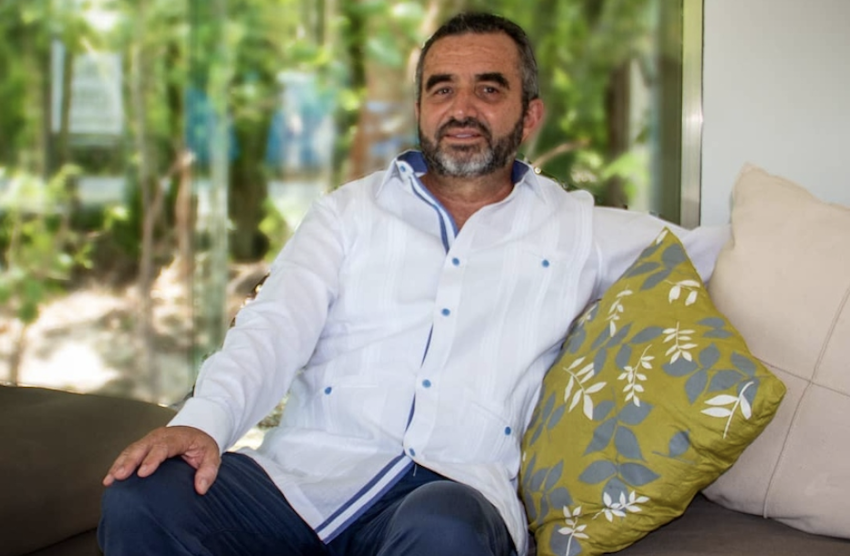
Rodolfo Rosas Moya would boast that two of his attorneys defeated 300 working for Trump to reclaim US $12 million in costs for the 2007 Miss Universe pageant in Mexico City.

Trump’s revenge

Viewed in the light of these business dealings, all of Trump’s subsequent provocations against Mexico after he was elected president, from deportations and the border wall to tariffs and taxes on remittances and pressure to capture cartel leaders, can be read as retribution for the stinging setbacks he suffered first in Baja California, and later in other areas of the country.

Chris Sands is a writer and editor for Mexico News Daily, and the former Cabo San Lucas local expert for the USA Today travel website 10 Best and writer of Fodor’s Los Cabos travel guidebook. He’s a contributor to numerous websites and publications, including The San Diego Union-Tribune, Marriott Bonvoy Traveler, Forbes Travel Guide, Porthole Cruise and Travel, and Cabo Living.
 

Mexico has shown progress against childhood obesity, but still among world’s top 10

0
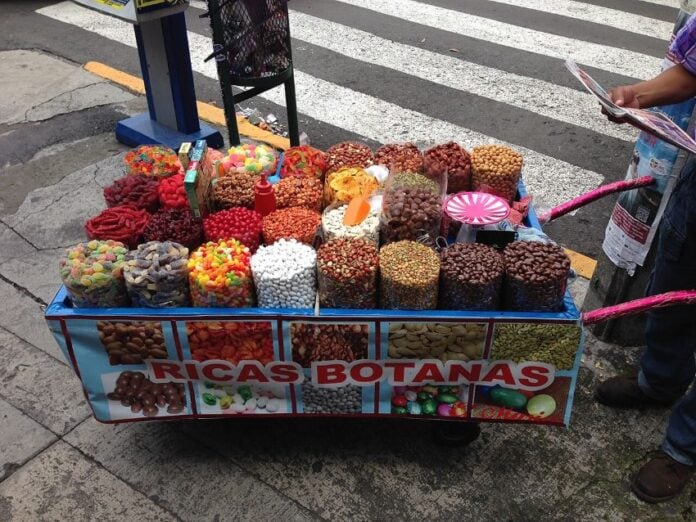
Cart of candies on a city street. Cart reads "Botanas"
Mexico has been taking the problem of childhood obesity seriously, with new policies that ban junk food and sugary drinks from schools. The results are starting to show, but there's much work ahead. (Keizers / CC BY-SA 3.0)

The 2026 edition of the World Atlas on Childhood Obesity ranks Mexico among the top 10 countries with the highest rates of childhood obesity, an improvement over the previous narrative that put Mexico in the top spot, but still a cause for alarm.

The Atlas revealed that Mexico ranks No. 8 in childhood obesity, with some 6 million children between the ages of 5 and 19 living with obesity. The top three countries in the ranking are China (33 million), India (14 million) and the United States (13 million).

When children who are overweight but not obese are factored in, the order of the top 10 remains the same. The number of overweight and obese kids in No. 1 China is 62 million, in No. 2 India 41 million, in No. 3 U.S. 27 million and in No. 8 Mexico 13 million.

“We are no longer the first country, nor are we among the first countries with obesity, neither in adults nor in children, fortunately,” Simon Barquera, president of the World Obesity Federation, told the news magazine Expansión. “This doesn’t mean we should celebrate yet. It means that things have been held back a bit, possibly.” 

Another reason not to celebrate the new ranking is the different measurement used to determine it. When the OECD and other organizations named Mexico as the No. 1 country in childhood obesity more than a decade ago, it was based on the percentage of the childhood population with obesity. The current World Obesity Federation ranking simply counts the total number of overweight or obese kids in each country.

In that light, Mexico’s 13 million compares less favorably to China’s 62 million when it’s remembered that China’s total population is about 10 times greater than Mexico’s.

In recent years, the Mexican government has prioritized policies aimed at preventing childhood obesity. In 2020, the country introduced a law requiring warning labels on packaged food that are high in saturated fat, trans fat, sugar, sodium or calories. 

Barquera said this strategy has helped 60% of consumers choose healthier alternatives.

Last year, Mexico also banned the sale of junk food and sugary drinks in schools, in an effort to improve children’s eating habits. 

These policies have earned Mexico international recognition by the World Health Organization (WHO) and UNICEF, which have called on other countries to adopt similar strategies.

“There are reasons to believe that [Mexicans] are already beginning to see positive results,” Barquera said, adding that it is vital to “remain cautious.”

“We shouldn’t assume that we have already contained the disease,” he said. “Rather, we should say: ‘We are on the right track, but we must reinforce all our actions.’”  

In Mexico, the northern state of Chihuahua leads in childhood obesity, the most recent National Health and Nutrition Survey revealed. 

Official data in the state shows that 25,000 children under 4 years old are obese or overweight, while some 64,000 children between the ages of 4 and 12 face the same challenge. 

With reports from NMás

The ‘Healing Words Project’: The Querétaro exhibition by artist Kate Van Doren

2
Kate Van Doren
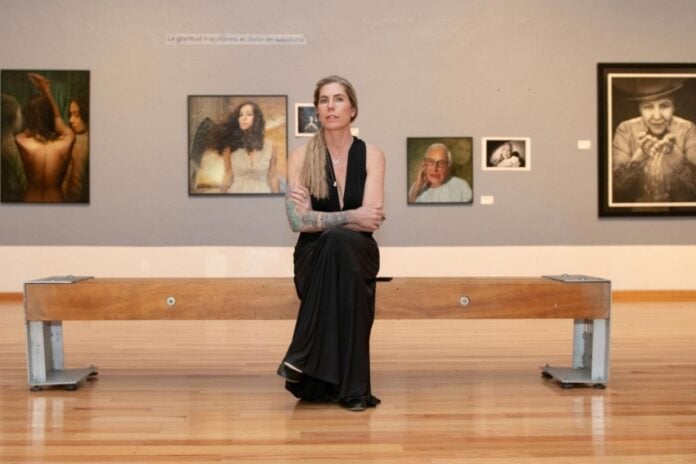
“This work has never belonged only to me. It belongs to the people who trusted me enough to stand in front of the camera and speak their truth,” says artist Kate Van Doren. (Chloe Zola)

On March 6, artist Kate Van Doren welcomed nearly 500 curious attendees to the opening night of her new solo exhibition at the Museo de Arte de Querétaro (MAQRO), which runs through June 6. 

Filling three huge galleries, “The Healing Words Project” is a living body of work composed of hundreds of women’s deeply compelling stories of survival, displacement, grief, resistance and healing — expressed through Van Doren’s arresting photographic, drawn and painted portraits, as well as video installations.

The ‘Healing Words Project’

Kate Van Doren
“Love as Resistance” features Palestinian Ambassador to Mexico Nadya Layla Rasheed. Oil painting by Kate Van Doren. (Kate Van Doren)

Van Doren, a registered art therapist, centers self-authored narratives in this project. Each participant contributes her own words — often a mantra, prayer or declaration — which are written directly onto her body and documented in photographic portraits. These images then become the foundation for additional artworks that reflect both individual and shared human experience.

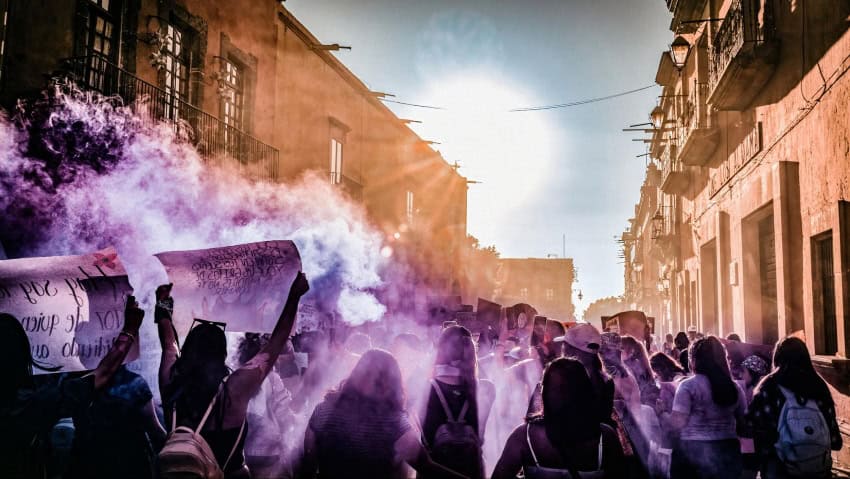
The Healing Words Project began in Mexico in 2020 during Un Día Sin Mujeres, a national day of protest initiated as a response to Mexico’s crisis of gender-based violence. Van Doren offered her photography as a form of art-based activism. 

For Un Día Sin Mujeres, women wrote words on their bodies as acts of visibility, solidarity and resistance and Van Doren photographed them. 

Then, as she explained, “Something inspiring happened: The photographs became conversations. Conversations became stories. And stories became healing.” 

So far, she has documented the healing journeys of over 2,000 women. 

Palestinian Ambassador Nadya Layla Rasheed introduces the artist

On opening night, MAQRO Director Antonio Arelle and Ana Paola López Birlain, Secretary of Culture for the state of Querétaro, welcomed the crowd of attendees and discussed the significance of the exhibition. Van Doren was introduced by Palestinian Ambassador to Mexico Nadya Layla Rasheed, who was also a participant in the project. 

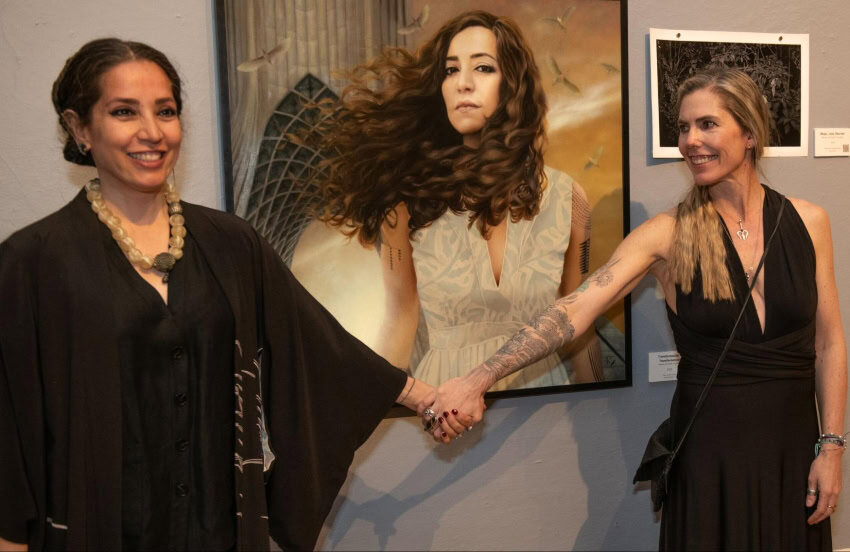
Iranian artist Shadi Yousesfian
“This is so much more than a portrait,” says renowned Iranian artist Shadi Yousesfian of Van Doren’s image of her. “Through the ‘Healing Words Project,’ every woman’s story is heard, every journey of resilience is honored.” (Chloe Zola)

“To be Palestinian is to carry memory in the body and responsibility in the heart,” Rasheed said. “For us, art is never simply creativity; it is memory, resistance and survival … That is why the “Healing Words Project” matters so deeply to me. It plants something our world desperately needs today: humanity. And when humanity is planted with care, it grows — in communities, in movements and in the hearts of those who choose to listen.”

Van Doren is donating proceeds from the sale of each portrait to a charity designated by the woman in that picture. Proceeds from Ambassador Rasheed’s painting, for example, support the Noor Gaza Orphan Care Program for children in Gaza who have lost one or both parents. The program provides care for Gaza orphans to grow with stability, safety and dignity. In the case of several other women in the project who are living in conflict zones, the money has gone to their families to help ensure their survival.

Participants were among the attendees 

Many of the women featured in the “Healing Words Project” portraits attended the opening of the exhibition, some of them traveling great distances with their families to do so. 

“I have looked in a mirror and not seen myself as clearly as I see myself in this portrait,” said Alzenira Quezada. “This art show is one of the best things I have been a part of. I will never forget that my portrait was in an important place, one of the most important museums in Mexico.

“Every one of us was chosen for our unique strength — by an artist with eyes powerful enough to see our truth.”

Over the years, explained Van Doren, she’s worked with survivors of violence, with activists, and with mothers, daughters, elders and young people “learning the language of self-worth for the first time.”

Navigating trauma, displacement and recovery

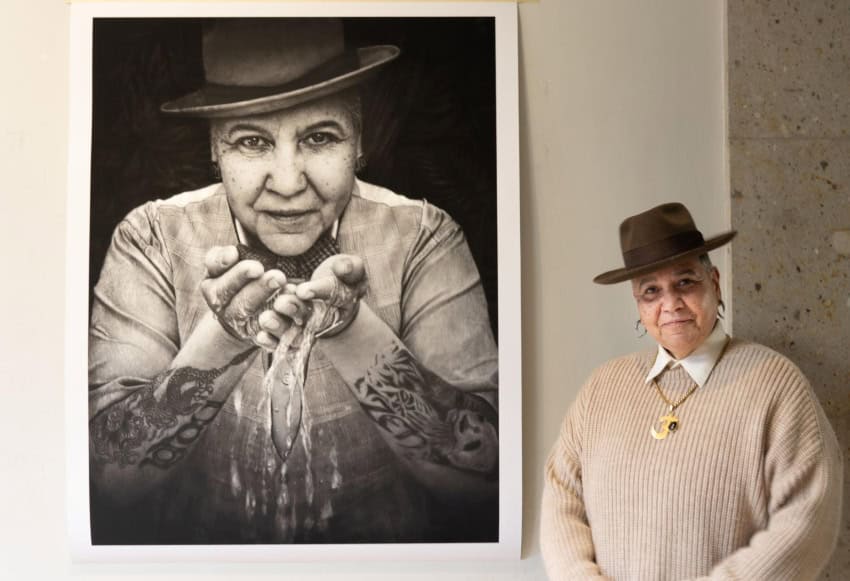
Alzenira Quezada
Alzenira Quezada poses with their own Van Doren portrait, “Mister Lady Zen.” 

“I have worked with communities navigating trauma, displacement and recovery,” Van Doren says. “But just as importantly, I have worked with individuals who simply wanted to grow — to redefine themselves, to mark a transition and to honor healing already underway.” 

“The most profound thing I have learned is this,” Van Doren continues. “Healing is rarely solitary. When one person speaks honestly, others recognize themselves. The courage of one becomes permission for many.” 

“This project exists to amplify voices that have been silenced or misrepresented, but also to remind us that every person carries a story worth witnessing — including our own,” she says.

“Her work evokes perseverance and the depth we carry as women: creators with our bodies, minds, hearts and souls,” said Michelle Wedderburn, the director of “Peace Not Pieces” healing retreats for women at Casa ELM in San Miguel de Allende.

Another participant at the event, Gabriela Osorio, shared her story of rebuilding herself after a series of violent and complicated events. 

 “The ‘Healing Words Project’ provided a reminder that my daughter and I once were wounded and lost, but we never stopped believing in ourselves,” Osorio said. “We kept up the fight. We learned to hear our hearts louder than ever, stronger than ever.” 

What happens when women are believed?

Kate Van Doren project
Kate Van Doren has documented the healing journeys of over 2,000 women through the “Healing Words Project.” (Chloe Zola)

Van Doren’s exhibition arrives at a moment of global reckoning around gender-based violence as well as around issues of migration, displacement and other forms of collective trauma. Some of the women represented in the exhibition are refugees, activists, survivors, mothers, artists and leaders. Some have been impacted by war and displacement, some by economic instability. Others are navigating systems that have long silenced them. 

Rather than framing these stories through a lens of victimhood, the “Healing Words Project” centers agency. The women are not merely subjects of the artwork; they are collaborators and coauthors.

At its heart, the project asks a radical question: What happens when women are believed? And further, what becomes possible when their stories are not edited, interpreted or extracted but honored exactly as they are offered?

An entire gallery wall, for example, is dedicated to the work of Sorroras y Rebeldes, a group of feminist activists whom Van Doren has documented for the past five years. An impactful article by Irene Fuentes, a member of the feminist collective, accompanies their photographs.

The exhibition also includes several videos capturing the stories of women from around the world, such as Citlalli Parra, a textile artist preserving the art of Indigenous communities in Mexico and Lee Asheroff, a 98-year-old Jewish woman whose mantra is “trust yourself and go forward,” and Ambassador Rasheed, who participated with her mother, Hanan Rasheed.

Van Doren’s ‘empathic realism’ invites collaboration

Van Doren describes her approach as empathic realism — a socially engaged form of realism rooted in ethical collaboration and deep listening. Her paintings and drawings are technically precise and emotionally complex, showing grief and strength, anger alongside tenderness, vulnerability coupled with power.

Sorroras y Rebeldes, feminist activists in San Miguel de Allende
For five years, artist Kate Van Doren has documented the work of Sorroras y Rebeldes, feminist activists in San Miguel de Allende.

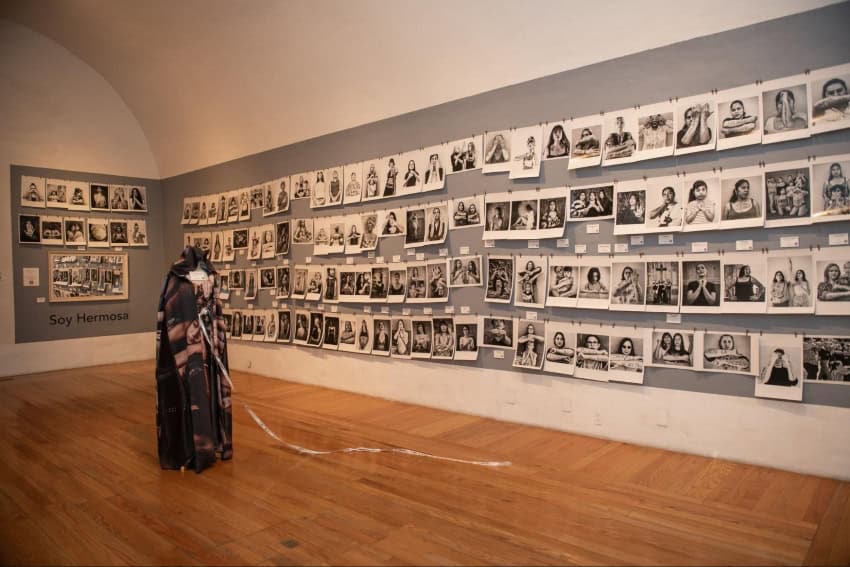
The exhibition unfolds across three rooms, inviting viewers into an immersive encounter. The cumulative effect is intimate and expansive at once — each woman’s story stands on its own while also contributing to a collective chorus. The repetition of words, faces and gestures becomes a form of visual testimony. 

And, for a deeper encounter, QR codes near the images connect viewers to the personal stories of hundreds of women on the project website, giving them greater context for what they’re seeing.

Healing moments

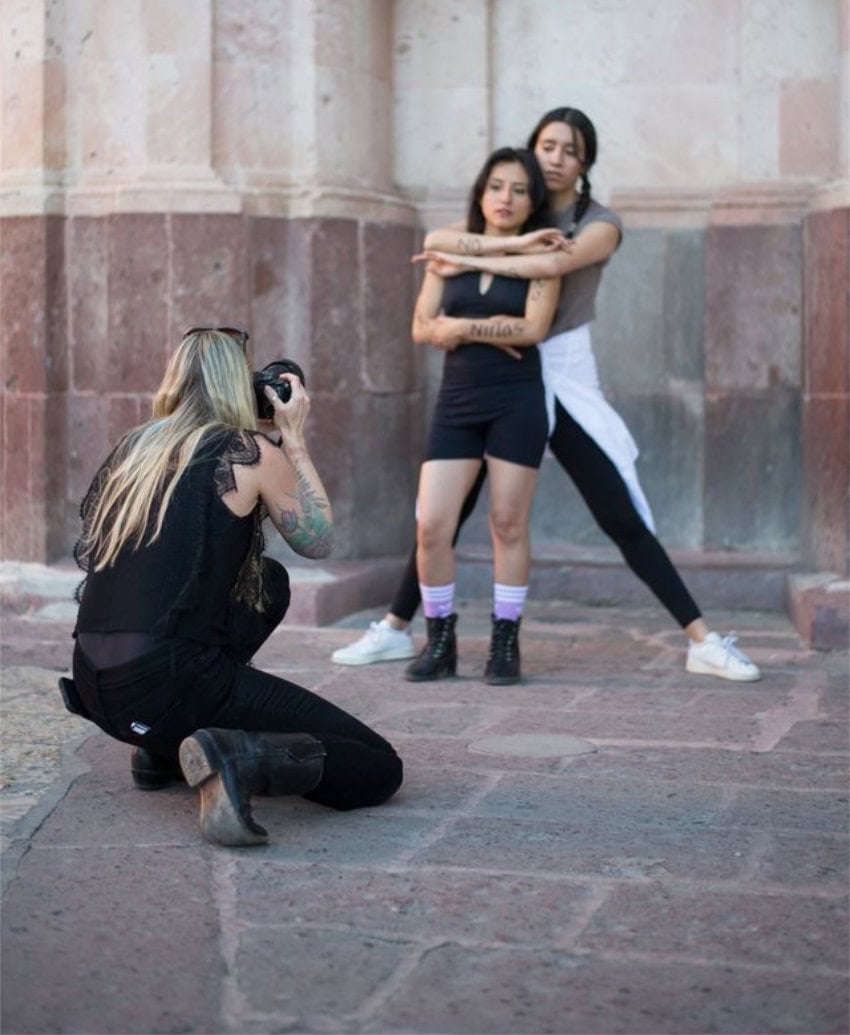
Artist Kate Van Doren with her back to the camera as she takes photos of two young Mexican women posing with one woman dressed in exercise bothing and sneakers in back of the other woman, holding her arms around her. The women both have words written in Spanish on their arms. They are posing in front of a niche of an old cantera building in San Miguel de Allende, Mexico.
Kate Van Doren at work with Isabel Castrejòn and Tuti Acosta. (Sean Reagan Photography) 

Van Doren hopes that visiting the exhibition will be a healing moment for many women, and the exhibit includes interactive elements to enhance that experience. For example, visitors are invited to write their own words on strips of cloth and tie them to a graceful metal sculpture, where hundreds fluttered already by the end of opening night, creating its own collective work of art. The sculpture was created by Van Doren’s husband, Alex, of Van Doren Metal Art. 

Museumgoers will also encounter a mirror inscribed with the sentence “I am beautiful,” a declaration difficult for many women to own. The mirror is positioned so that when a person looks into it, they are framed by a powerful sisterhood — the faces of dozens of Van Doren’s participants. Another particularly impactful work on display is a dress made of fabric printed with Van Doren’s images of the women, sewn by local seamstress Inés Trujillo Chávez.

The exhibition does not promise resolution or closure; instead, it offers an invitation to feel, to listen and to recognize the core of one’s own story in that of another person. 

Learn more at healingwordsproject.com and katevandoren.com and follow the artist on Instagram: @catvandoren.

Ann Marie Jackson is a book editor and the award-winning author of “The Broken Hummingbird.” She lives in San Miguel de Allende and can be reached through her website: annmariejacksonauthor.com. 

CDMX launches axolotl chatbot to help visitors discover the best of the city

2
axolotl chatbot that helps visitors enjoy Mexico City
Mexico City tourism officials described Xoli as “a new chilango chatbot that will accompany you during your stay.” (Gob CDMX)

The Mexico City government has unveiled Xoli, an AI-powered virtual assistant capable of holding conversations in both Spanish and English, whose main objective is to enhance the experience of visitors to the capital.

The tool, developed by city authorities with the support of the federal government, is accessible via any web browser and WhatsApp and aims to simplify access to information in one of the world’s most complex urban centers.

Available now, Xoli operates 24/7 and functions as a digital guide that answers questions about transportation, events, cultural attractions and services in seconds.

“We want every visitor to experience Mexico City in a simple and digital way,” said Ángel Tamariz, director of the capital’s Digital Agency for Public Innovation. “This new tool is an open window to our city and everything it has to offer.”

The chatbot was introduced last week by Mayor Clara Brugada in anticipation of the 2026 FIFA World Cup, which begins in June, but will remain a permanent option for tourism after the conclusion of the international soccer tournament.

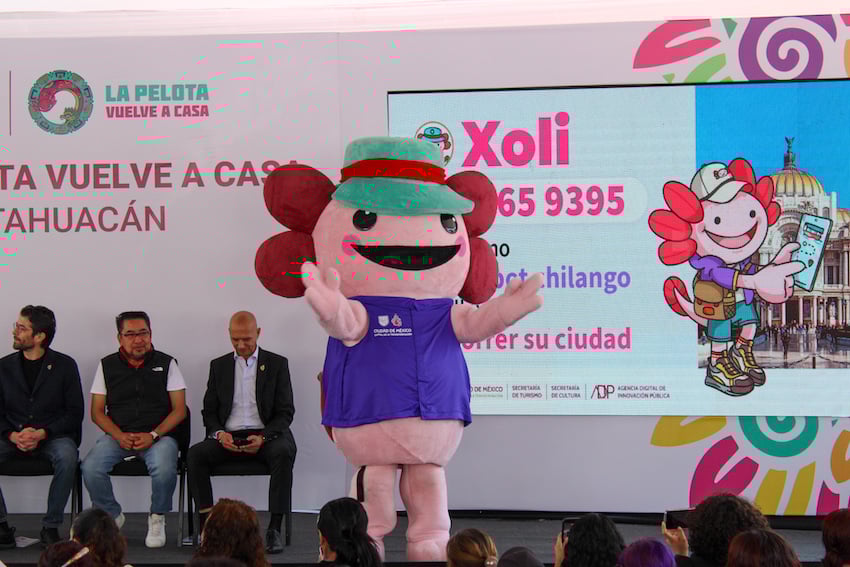
Xoli is depicted as an axolotl, an aquatic salamander endemic to the Lake Xochimilco area that also serves as Mexico City’s symbol.

A mascot of Xoli attended the launch of the bot last week.
A mascot of Xoli attended the launch of the chatbot in Mexico City last week. (Gob CDMX)

The newspaper El Economista said the chatbot is “part of an innovative strategy combining immediate attention, accessibility and efficient use of technology” to enhance the experience of visitors to the capital.

The news magazine Wired described Xoli as Mexico’s latest technological innovation aimed at “turning the World Cup into an engine of development.” 

Mexico City tourism officials described Xoli as “a new chilango chatbot that will accompany you during your stay.”

“Xoli represents the hospitality that characterizes Mexico City, brought to the digital realm,” said Mexico City Tourism Minister Alejandra Frausto. “The city offers tourists and visitors more than 3,000 activities each day, and this chatbot helps ensure that everything can be experienced in an organized and memorable way.”

The tool — which works with decision trees and is powered by Artificial Intelligence — stands out for its inclusive and accessible approach. 

The design of the chatbot does not include complicated menus and is said to allow users to experience a more natural and faster interaction.

How to use Xoli

  • Open WhatsApp and text +52 55 6565 9395
  • Go to the official website and click on Xoli in the right-hand corner
  • Select language: Spanish or English
  • Ask open-ended questions or choose categories
  • Immediate answers are provided, like in a person-to-person chat

With reports from El Economista, ADN40, Wired and MLQ.ai

Mexico’s economy minister inaugurates consortium of binational trade chambers in bid for greater cooperation

0
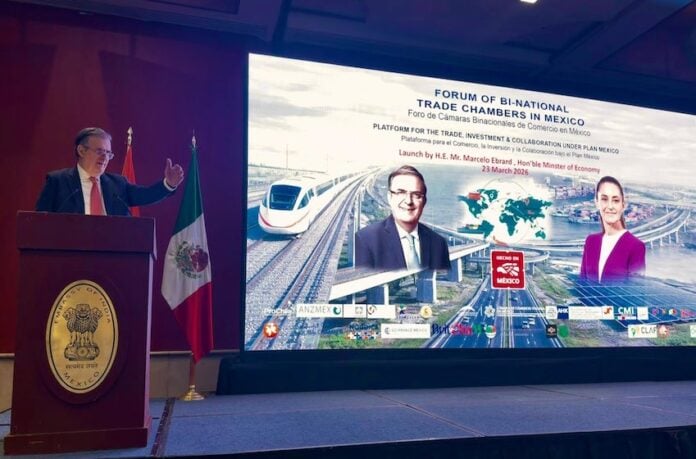
During his address at the inauguration, Economy Minister Ebrard expressed his gratitude to the Indian Embassy for their organization of the event and shared that he plans to visit India to fortify the growing bilateral trade relationship.
During his address at the inauguration, Economy Minister Marcelo Ebrard expressed his gratitude to the Indian Embassy for their organization of the event and shared that he plans to visit India to fortify the growing bilateral trade relationship. (@m_ebrard/X)

Economy Minister Marcelo Ebrard on Monday formally launched a grouping of more than 20 Mexico-based binational trade chambers, including ones that represent companies from the United States, Canada, China and India.

The grouping is called the Forum of Binational Trade Chambers in Mexico, and is described in official literature as a “collaborative platform that brings together various binational trade chambers in Mexico and their members under a shared commitment to strengthen economic cooperation and advance mutual prosperity.”

Among the chambers that are part of the new forum are the American Chamber of Commerce of Mexico, the Canadian Chamber of Commerce in Mexico, the Mexico-China Chamber of Commerce and Technology and the Trade and Commerce Council of India and Mexico.

Also part of the forum are Mexico-based trade chambers that represent companies from Argentina, Australia, New Zealand, Belgium, Brazil, Chile, France, Germany, Ireland, Israel, Italy, Japan, the Netherlands, Spain, Switzerland, the United Arab Emirates and the United Kingdom.

In addition, the Latin-African Chamber of Commerce and the Nordic Chamber of Commerce in Mexico are part of the group, which the Embassy of India in Mexico had a central role in creating.

The participating trade chambers look set to work together toward their common goals, with their officials gathering at regular meetings to discuss the progress they have made and future initiatives. It appears that those meetings will also use the name Forum of Binational Trade Chambers in Mexico.

In a social media post on Monday morning, Ebrard thanked India’s Ambassador in Mexico, Pankaj Sharma, for “his kind invitation to inaugurate” the Forum of Binational Trade Chambers in Mexico at an event held at a Mexico City hotel.

“The main topic of the forum is President Claudia Sheinbaum’s Plan Mexico,” he wrote, referring to the ambitious economic initiative first presented by the federal government in early 2025.

In a separate social media post, Ebrard conveyed a succinct message to the binational chambers of commerce that operate in Mexico: “The government of President Sheinbaum supports and accompanies investment and trade with our international partners.”

The formation of the Forum of Binational Trade Chambers in Mexico comes after Mexico received a record high of almost US $41 billion in foreign direct investment (FDI) in 2025.

As part of Plan Mexico, the federal government is actively seeking to increase FDI in Mexico and spur greater domestic production across a range of manufacturing sectors in order to reduce reliance on imports.

Interestingly, the new grouping of binational trade chambers brings together organizations that represent companies from the United States and China, countries that are engaged in a trade war that has escalated significantly during the second term of U.S. President Donald Trump. At the start of this year, Mexico imposed new and higher tariffs on goods from China, a measure widely seen as an attempt to appease the Trump administration ahead of this year’s review of the USMCA trade pact.

Indian Ambassador: ‘Collaboration across borders is not optional, but essential’

Sharma, India’s ambassador to Mexico since early 2022, gave a welcome address at the Monday morning event at which the Forum of Binational Trade Chambers in Mexico was launched.

“This gathering represents far more than the coming together of institutions,” he said, according to a copy of the ambassador’s remarks provided to Mexico News Daily by the Indian Embassy.

“It reflects a shared belief that collaboration across borders is not optional, but essential, and that economic partnerships must be built on trust, continuity, and a shared purpose,” Sharma said.

The ambassador also said that “the initiative” launched on Monday in the form of a grouping of binational trade chambers “aligns closely with Plan Mexico.”

Mexico and India eye tech investment, pharma deals in push to deepen trade ties

The Mexican government plan outlines “a vision that resonates deeply with all of us present here, because it mirrors our own commitment to contribute constructively to the development of Mexico, our second home, while strengthening ties between our respective countries,” Sharma said.

He also said that the newly created forum “enables us to think collectively, collaborate effectively, and deliver meaningful outcomes.”

“More importantly, through this platform we can ensure that our joint efforts are harmonized with Mexico’s national priorities and contribute to the country’s broader development vision,” Sharma added.

“… The success of this initiative will not be defined by its launch, but by what we build through it. It is the beginning of a deeper engagement for growth and prosperity with a sense of common purpose,” he said.

Each trade chamber is a ‘bridge’ to Mexico 

The president of the Mexico-Israel Chamber of Commerce in Mexico delivered a speech on behalf of all the trade chambers represented in the new forum.

“The binational chambers … [present] in this room represent decades of silent work [and] real connections between companies, markets and governments,” said Sony Chalouh.

“Each one of us is an active bridge between Mexico and a partner country,” he said.

Chalouh declared that “it’s time” for binational trade chambers and embassies in Mexico to “act in a coordinated and strategic way, pooling capabilities to consolidate investments that drive the development and competitiveness” of Mexico.

He also said that the launch of the new forum is “not just an event,” but the “beginning of a work agenda aimed at concrete results in the area of investment.”

The forum is “a mechanism that aligns the market intelligence of each chamber with the priority projects of Plan Mexico,” Chalouh said.

Directly addressing Economy Minister Ebrard, he declared that the Mexico-based binational chambers and embassies in Mexico are a “strategic asset that can increase the reach of Plan Mexico to the international markets that each of us represent.”

“Today we propose that you convert this asset into a real productive force with a shared agenda, follow-up and measurable results,” Chalouh said.

He also acknowledged the work of Ambassador Sharma for making the new binational trade chamber forum a reality.

“Ambassador, you made possible what many of us imagined, but few were able to achieve,” Chalouh said.

More about the new forum 

According to a prospectus provided to Mexico News Daily, the Forum of Binational Trade Chambers in Mexico “seeks to play a constructive role in the country’s ongoing transformation” by “aligning the interests of the participating chambers with Mexico’s national development priorities.”

In addition, the forum:

  • “Serves as a structured mechanism to foster dialogue, promote investment, and deepen commercial ties among the participating countries and Mexico.”
  • “Strives to strengthen trust and long-term engagement between international business communities in Mexico and national stakeholders.”
  • “Aims to contribute” to the “strategic vision” of Plan Mexico “across key sectors such as energy, automotive, technology, healthcare, agriculture, manufacturing, green energy and sustainability.”
  • “Provides a platform for participating chambers, international businesses, and local stakeholders in Mexico to engage in collective problem-solving and coordinated action on shared challenges, ranging from supply chain resilience to sustainability and inclusive growth.”

The forum brings together chambers that represent companies from countries that are the largest investors in Mexico, namely the United States, Spain, Canada, the Netherlands and Japan.

Also represented are trade chambers representing companies from countries whose trade with, and investment in, Mexico has increased in recent years, such as China and India.

During his address at the forum launch event, Ebrard said that he plans to visit India as Mexico’s trade with the world’s most populous country “is growing.”

Still, the two-way trade relationship “doesn’t have the dimension it should have or could have,” he said.

Mexico News Daily 

The world can’t get enough mezcal. Oaxaca’s forests are paying the price

2
agave plants
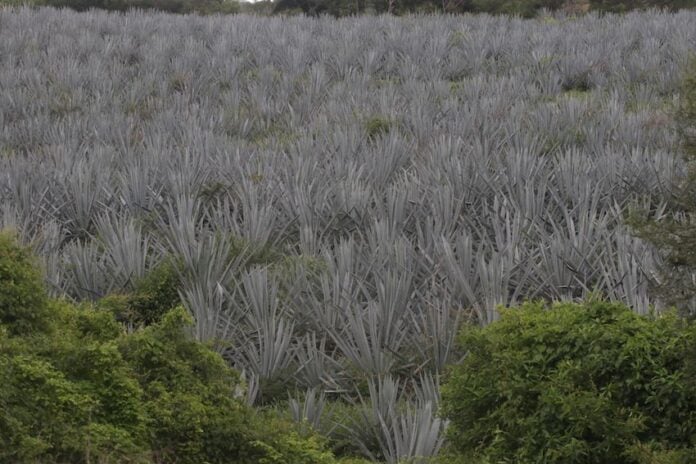
The espadín agave used for mezcal now dominates hillsides in Oaxaca, creating a monoculture that accelerates soil erosion, reduces groundwater replenishment and limits carbon dioxide capture in the forests. (Margarito Pérez Retana/Cuartoscuro)

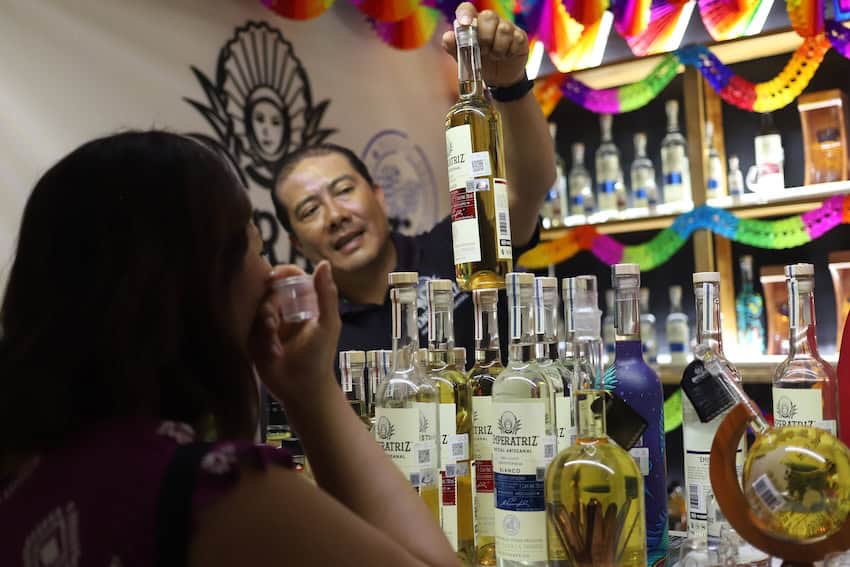
A global thirst for mezcal has turned Oaxaca’s signature spirit into a multimillion-dollar export engine — and is stripping hillsides of forest, stressing water supplies and leaving rivers fouled by waste, researchers and producers say.

Mexico produces more than 11 million liters of mezcal per year, and most of that production is in Oaxaca. More than 70% of that mezcal is sent abroad, with most of the exports going to the United States.

tequila bottle
The global boom in the popularity of mezcal has resulted in a more than tenfold increase in the production of Oaxaca’s signature spirit. Environmental issues ensued. (Daniel Augusto/Cuartoscuro)

That 11 million liters per year is even more impressive when you consider that the total produced in 2010 was only 1 million.

To feed that boom, agave fields now blanket slopes that used to be tropical dry and pine-oak forests — in the Central Valleys of Oaxaca and in areas such as Santiago Matatlán, the “World Capital of Mezcal” with more than 150 mezcal distilleries.

A 2025 study led by Rufino Sandoval-García of the Technological University of the Central Valleys of Oaxaca estimated that 34,953 hectares of those forests disappeared over 27 years as plantations expanded by more than 400% in three decades.

The predominance of espadín, the main agave used in commercial mezcal, is pushing monoculture, accelerating soil erosion and reducing carbon sequestration by roughly 4 million tons of carbon dioxide a year in the areas studied, the research found.

Sandoval-García’s team also warned that concentrating crops in cleared zones creates heat islands and limits groundwater recharge.

Mezcal production is water- and wood-intensive, as one liter of spirit can require at least 10 liters of water for fermentation and distillation. Fibrous residue (bagazo) and wastewater (vinazas) are often dumped untreated into rivers, while large volumes of firewood — some from illegal logging — are burned to roast agave and fuel stills, according to the study.

Producers say the shift has displaced traditional farming systems such as the milpa, an Indigenous intercropping method in which corn, beans and squash are grown together in the same plot.

To combat the polluting of rivers, some distilleries are installing systems to cool and reuse water or reintroducing wild agaves and trees, but they say scaling up such practices is difficult.

Mezcal's popularity is booming. That comes with a growing environmental cost in Mexico

Federal law requires authorization from the Environment Ministry (Semarnat) to convert forests to plantations, yet the agency says it has received no requests to clear forest for agave in Oaxaca in the past three years. 

It is investigating nine public complaints since 2021 over alleged illegal deforestation linked to mezcal.

Major brands say they are trying to curb damage.

Del Maguey, one of the most internationally recognized labels, reports using bagazo and vinazas in infrastructure meant to prevent flooding and contamination, and says it has backed tree-planting programs. Del Maguey specializes in small‑producer, “single village” bottlings from Oaxaca (and some from Puebla).

Community groups are also pushing back. The Guardianas del Mezcal collective and the conservation project Tierra de Agaves promote reforestation and mezcal made with practices such as using only fallen trees for firewood and intercropping agave with other crops.

Even critics concede the boom has brought jobs and higher incomes in one of Mexico’s poorest states, underscoring the tension between protecting land and livelihoods.

With reports from Vanguardia, Associated Press and La Jornada

Brazil’s president floats joint venture between Mexican state oil company Pemex and Petrobras

0
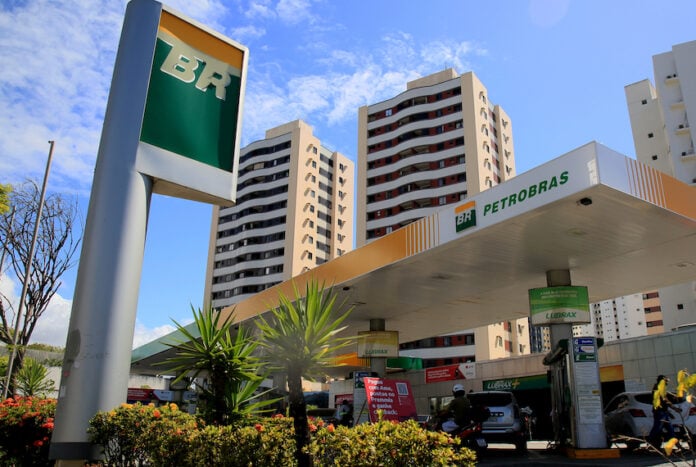
salvador, bahia, brazil - january 6, 2021: view of Petrobras' gas station in the neighborhood of Stiep, in the city of Salvador.
Founded in 1953, Petrobras already operates in the Gulf of Mexico via a joint venture with Murphy Exploration & Production, according to Reuters. (Shutterstock)

Mexico and Brazil are seeking to strengthen their economic ties. Could part of a more robust bilateral relationship be a joint venture between Mexico’s state oil company Pemex and its Brazilian counterpart Petrobras?

Brazilian President Luiz Inácio Lula da Silva believes so.

According to Reuters, da Silva told an event last Friday that he had proposed to Mexican President Claudia Sheinbaum a partnership between Pemex and Petrobras to explore oil in the Gulf of Mexico.

“Pemex could get a great deal of help from Petrobras,” said da Silva, who highlighted the Brazilian company’s longstanding expertise in deepwater oil production.

His remarks came the same day that the foreign ministers of Mexico and Brazil met in Colombia and spoke about the upcoming visit to Mexico by Petrobras president Magda Chambriard. According to the Mexican Ministry of Foreign Affairs, Chambriard will hold meetings with Pemex “with a view to future collaboration.”

Lula, as the 80-year-old Brazilian president is best known, apparently made the Petrobras-Pemex proposal to Sheinbaum during a telephone call earlier this month.

The two leaders spoke on March 9 and Sheinbaum subsequently said she would likely take up Lula’s invitation and visit Brazil later this year.

Sheinbaum likely to visit Brazil this year to strengthen bilateral energy cooperation

The Brazilian president revealed on social media that he and Sheinbaum had discussed strengthening the economic relationship between Brazil and Mexico, particularly in the energy sector.

Founded in 1953, Petrobras already operates in the Gulf of Mexico via a joint venture with Murphy Exploration & Production, according to Reuters.

For its part, Pemex has a joint venture with the Australian company Woodside Energy to develop the ultra-deepwater Trion oil and gas field in the Gulf of Mexico.

A partnership with Petrobras could potentially help Pemex to exploit other deepwater fields in the Gulf of Mexico and thus contribute to the achievement of the government’s goals of self-sufficiency for gasoline and reduced reliance on natural gas imports.

Reuters said that neither Petrobras, Pemex nor Sheinbaum’s office responded to its request for comment on Lula’s proposal.

With reports from Reuters 

Night at the stadium? Airbnb is offering fans a free stay at Estadio Azteca hosted by Hugo Sánchez

0
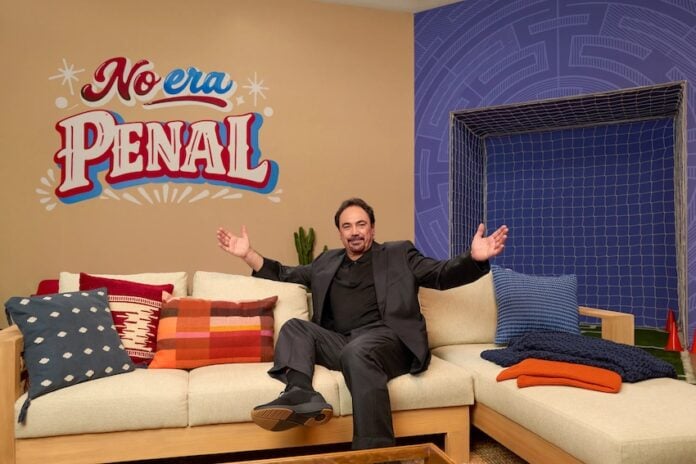
Hugo Sanchez inside Estadio Azteca
Former Mexican footballer Hugo Sánchez will welcome four lucky visitors for an overnight stay in the Mexico City stadium where he forged the greatest career in Mexican soccer history. (Airbnb)

In anticipation of the 2026 FIFA World Cup, Airbnb has announced a one-of-a-kind experience at Azteca Stadium in Mexico City: a free one-night stay inside the stadium hosted by Mexican soccer legend Hugo Sánchez.

The experience, which will be offered on April 5-6 to four guests selected by draw, includes an even more valuable feature — tickets to return to the stadium for the World Cup’s opening match on June 11. 

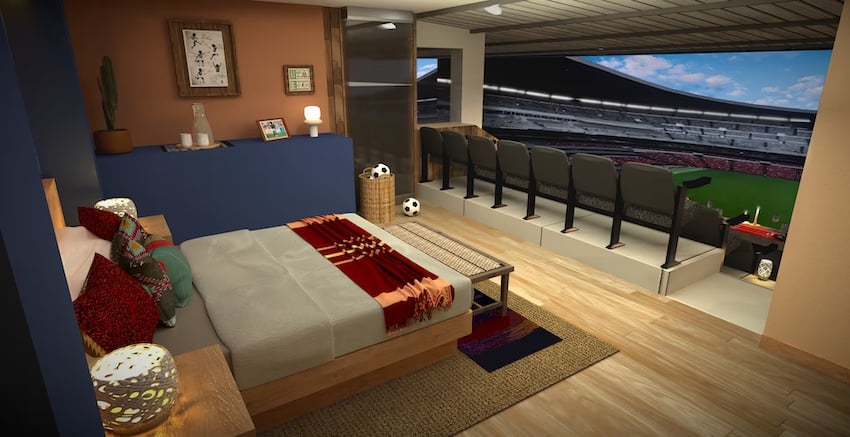
an Airbnb sleeping area in Estadio Azteca
Each guest will have a private sleeping area in a box suite converted into an Airbnb bedroom. (Airbnb)

“I invite you to enjoy exclusive access to the temple of Mexican football while I share my most cherished memories with you,” Sánchez wrote for Airbnb 

The experience will feature Sánchez himself giving a private tour of the stadium — recently rebranded as Estadio Banorte and then again by FIFA as Estadio Ciudad de México — as he shares personal anecdotes linked to the stadium and his career.

“The Estadio Ciudad de México is one of the most iconic football venues in Mexico and has been a fundamental part of my story,” Sánchez told Airbnb. “I scored my first professional goal here, and I also experienced moments here that have marked me forever. It’s a place that commands respect, inspires and holds unforgettable memories.”

Guests will spend time in an area called “La Tribuna de Hugo” (Hugo’s Grandstand), which honors Sánchez’s exceptional career through an exhibition of memorabilia. Moreover, fans will hear from the legend himself about technical secrets to achieving his legendary “bicycle kick,” a move also known as “la Hugiña” in his honor.

Other activities include a friendly mini-soccer game with Sánchez and the opportunity to design your own soccer balls and caps, taking home a souvenir of the experience.

In the evening, guests will enjoy a traditional Mexican dinner prepared by a private culinary service, before heading to bed in box suites converted into private sleeping areas overlooking the pitch. 

The experience will end the following morning, after breakfast, prepared on site.  

Sánchez, known as “Pentapichichi” for his five La Liga scoring titles, is recognized by the International Federation of Football History and Statistics as the best Mexican soccer player of the 20th century. 

The guests will experience the renovated stadium days before its official opening to the public. 

To participate in the draw, fans must send a reservation request on March 23 by 9 p.m. GST through Airbnb

Mexico News Daily

Clock ticks on remodel of Mexico City International Airport as World Cup nears

2
renovations at Mexico City international airport
The original schedule allowed for 10-20% of the remodel to be completed after the World Cup concludes. But with under three months left before the World Cup kicks off on June 11, more than one-third of the renovations remain. (Camila Ayala Benabib/Cuartoscuro)

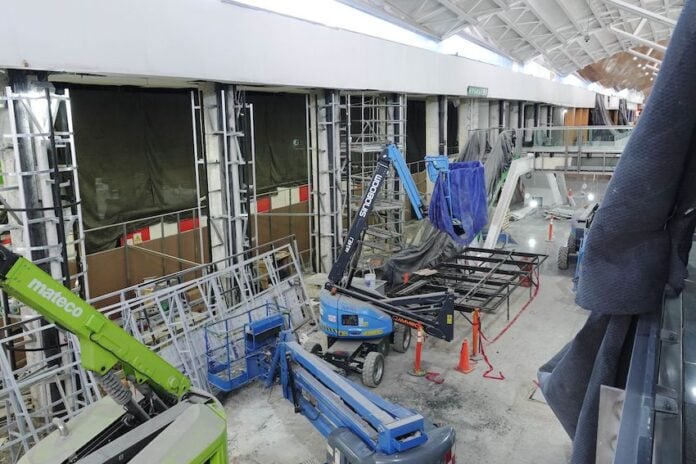
Renovations at both terminals of Mexico City International Airport (AICM) are only around half complete after 10 months of construction, meaning they will not be finished in time for the 2026 FIFA World Cup, according to the airport’s Director General Juan José Padilla.  

Starting in May 2025, a US $416-million overhaul has been underway at AICM, which serves around 46 million passengers a year. The renovations include changes to facade finishes, interior and exterior lighting, walls, ceilings, flooring, waterproofing, bathroom renovations, repairs to plumbing and electrical systems and the installation of automatic doors.

“We are working at full speed,” Padilla said in a radio interview on Feb. 18. “We hope that the Easter holidays will be a good exercise to test our capabilities. Unfortunately, some work will continue, but not at the scale it is currently; it will be much less.”  

The director acknowledged that some sections of the Terminal 1 concourse, baggage carousels, elevators, drainage, parking, road improvements and other areas will not be ready for the World Cup, which kicks off on June 11.  

However, the works that are completed by this date are expected to help improve the passenger experience for those flying through AICM, according to Padilla.

“Phase One, as we call it, which is specifically for the World Cup, will be 100% complete, and we will have 10-20% left of the work to finish after the World Cup,” José Padilla explained.

Renovations are expected to be halted during the World Cup before resuming after the tournament, between Aug. 1 and Nov 17. This second stage, known as Phase Two, was part of the original schedule

Meanwhile, with the busy Easter, or Holy Week, holidays coming up, there are concerns about disruptions for passengers such as loud machinery noise, blocked sidewalks, out-of-service staircases, fewer waiting areas and narrower corridors.  

Additionally, the ongoing dispute between ride-hailing apps, such as Uber, and taxi firms operating at the airport has caused confusion in the arrivals area. Uber and other rideshare services continue to operate at the airport; however, there are uncertainties about whether they will be permitted to collect and drop passengers off with the same liberty at AICM in the future. 

With reports from El Financiero

Mexico expecting over 4 million tourists during Holy Week holiday

0
Tourists on a boat ride in Acapulco, Guerrero, Mexico
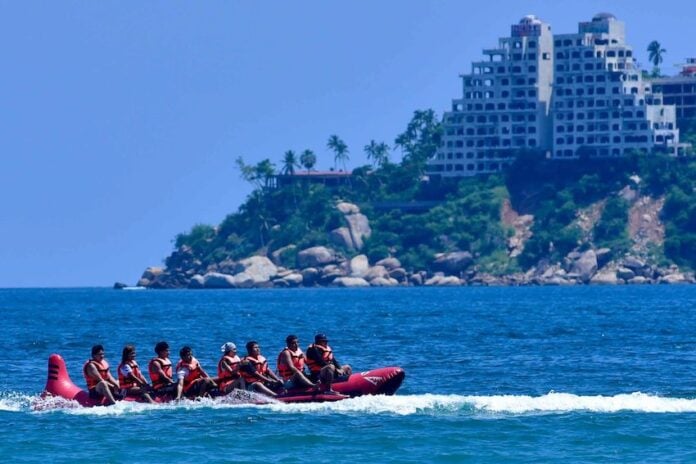
Acapulco is projected to draw around 447,000 visitors — a 31.7% jump year-over-year — with hotel occupancy reaching 71.8%. (Carlos Alberto Carbajal/Cuartoscuro)

Mexico is gearing up for one of its busiest travel seasons yet, with the Tourism Ministry (Sectur) projecting more than 4 million visitors during the Holy Week holiday period, which runs from March 29 to April 12 this year.

Tourism Minister Josefina Rodríguez Zamora announced that 4.03 million tourists are expected at the country’s top destinations — a 2.6% increase over the 3.93 million recorded during the same period of 2025. The surge is forecast to generate 55.89 billion pesos in tourism spending from hotel guests alone.

National hotel occupancy is expected to average 63.8%, with beach destinations leading the way. The Riviera Maya, Puerto Vallarta, Los Cabos and Cancún are all projected to exceed 75% occupancy.

Among the standout stories is Acapulco’s continued recovery. The Pacific port city is projected to draw around 447,000 visitors — a 31.7% jump year-over-year — with hotel occupancy reaching 71.8%. According to state Tourism Minister Simón Quiñones, the city now has 17,000 hotel rooms available, approaching the roughly 19,600 it had before Hurricane Otis.

Mérida is another to watch, with 108,000 tourists expected and an 18.5% increase over last year, cementing its rise as a cultural and culinary destination in the southeast.

On the urban side, Mexico City leads with more than 458,000 projected visitors and a hotel occupancy rate of 56.2%, followed by Guadalajara with over 152,000 and Monterrey with more than 141,000.

Rodríguez Zamora urged Mexicans to explore their own country, calling Holy Week “a great opportunity to travel, support local communities and live unique experiences in every destination.”

Sectur has published a national events calendar covering all 32 states on its Visit México website.

Mexico News Daily