Femsa's Spin card allows Oxxo custmers to make deposits and withdrawals, pay bills and carry out other financial transactions, but it hasn't boosted clientele as much as hoped. (Femsa)
Citing sources familiar with the matter, Bloomberg News reported that Femsa has eliminated hundreds of jobs at its Spin unit as part of a wave of about 1,300 layoffs across various divisions of its business, including retail (Oxxo) and bottling (Coca-Cola).
🔹 FEMSA FRENA SU APUESTA DIGITAL: REESTRUCTURA SPIN
• ⚠️ Ajustes internos: la compañía recorta personal y replantea su estrategia en su fintech
• 📊 Resultados flojos: Spin no logró consolidarse ni generar el impacto esperado
• 🏪 Sin efecto en Oxxo: la app no ha impulsado… pic.twitter.com/AhKVtiS4CB
Femsa describes Spin — which manages a digital wallet that allows users to deposit and withdraw cash at the conglomerate’s ubiquitous Oxxo convenience stores — as “an ecosystem of financial and digital solutions.”
The March 2021 launch of Spin was intended to transform Femsa’s more than 24,000 Oxxo stores into a provider of financial services for a population generally distrustful of traditional banking.
The goal was to attract workers in the informal economy by simplifying access to loans and financing, while also encouraging these customers to shop more frequently at Oxxo.
With 16 million active users, Spin has succeeded in attracting a banking base, but not higher store traffic, leading Femsa’s new CEO “to narrow the business’s focus, replace the unit’s top executive and integrate it into the parent company’s corporate structure.”
Femsa’s new management team has also decided to tighten spending, Bloomberg reported, describing the layoffs as “a sign of how difficult it is to gain ground in Mexico’s increasingly competitive financial system.”
In deciding to postpone the application for a banking license, Femsa’s goal is to focus on strengthening Spin’s integration with Oxxo while also developing financial capabilities through strategic alliances.
According to Finnovista Fintech Radar, a research initiative that tracks fintech startups across Latin America, Mexico’s fintech market is in a consolidation phase.
This stage is “characterized by the absence of abrupt growth and by greater maturity of the ecosystem,” it said, adding that the initial explosive growth has slowed and “existing players face the challenge of scaling their models and consolidating their competitive positioning.”
Finnovista predicted that success in Mexico’s fintech sector in 2026 will depend less on raising capital and more on improving operations.
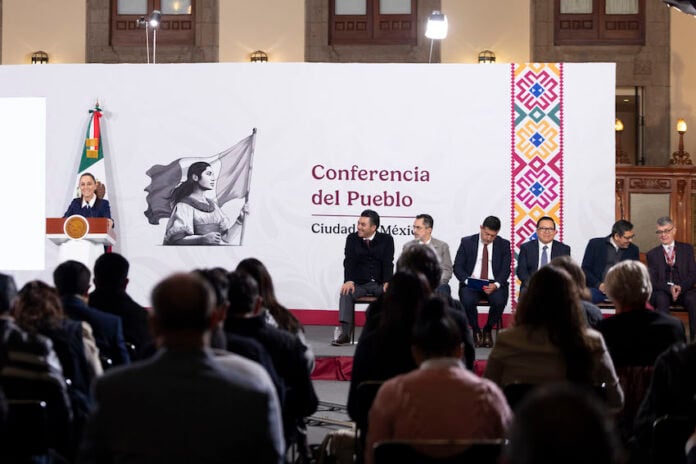
President Sheinbaum confirmed on Monday that her administration tells the governments of both the United States and Cuba that Mexico is "always" ready to do what it can "to avoid any conflict." (Gabriel Monroy/Presidencia)
Sheinbaum’s mañanera in 60 seconds
🚢 Mexico is sending another humanitarian aid vessel to Cuba today, doubling down on its support for the island amid escalating tensions. Following Trump’s remarks about “taking Cuba,” Sheinbaum called for dialogue through the UN, rejected any military solution, and reaffirmed Mexico’s opposition to the U.S. embargo.
🕊️ Sheinbaum noted that the U.S. and Cuba are already in talks, and said Mexico is positioning itself as a peace broker, telling both governments it’s ready to help “avoid any conflict” while backing Cuba’s right to self-determination.
⛽ On energy, the government is analyzing the environmental impact of fracking to cut Mexico’s massive dependence on U.S. natural gas imports — currently at 75% — though zero dependence isn’t the goal, just a meaningful reduction.
⚖️ Sheinbaum confirmed that some women remain imprisoned for having abortions in Mexico. She said the federal government will review whether it has authority to intervene, though abortion laws ultimately fall under each state’s jurisdiction.
Why today’s mañanera matters
The situation in Cuba, Mexico’s longstanding and ongoing support for the Cuban people, and the United States’ posture toward the country’s communist regime have been recurring issues at President Claudia Sheinbaum’s morning press conferences in 2026.
Today’s presser was significant as Sheinbaum revealed that Mexico is sending more humanitarian aid to the island nation, and reaffirmed her government’s desire for peace amid ongoing tensions between Washington and Havana.
Also of note at the first mañanera of the week were the president’s remarks about her government’s analysis of the environmental impacts of “non-conventional” gas exploration — i.e., fracking.
Sheinbaum’s remarks about Mexico’s latest humanitarian aid shipment came after a reporter highlighted that Cuba’s Deputy Foreign Minister Carlos Fernández de Cossio said on Sunday that the Cuban military “is preparing these days for the possibility of military aggression.”
“We would be naive if, looking at what’s happening around the world, we would not do that. But we truly hope that it doesn’t occur. We don’t see why it would have to occur, and we find no justification whatsoever — why would the government of the United States force its country to take military action against a neighboring country like Cuba,” Fernández told the NBC program Meet the Press.
On Monday morning, Sheinbaum noted that it is public knowledge that the United States and Cuba have held talks and asserted that the two countries are seeking a “peaceful solution” to their differences.
She said that her administration speaks to the governments of both the United States and Cuba, telling them that Mexico is “always” ready to do what it can “to avoid any conflict.”
Sheinbaum also said that Mexico will always support “the right of the Cuban people to self-determination.”
“In the face of any conflict, what should be used [to resolve it] are multilateral channels — the United Nations,” she said.
🇨🇺🇺🇸 Desde Palacio Nacional, la presidenta Claudia Sheinbaum habló sobre la situación entre los gobiernos de Cuba y Estados Unidos y dijo que la ONU debe pedir respeto para Isla.
Señaló que las Naciones Unidas debería enviar ayuda y reiteró la postura de México para mandar ayuda… pic.twitter.com/g8cTYAPwOd
“And the United Nations should also send humanitarian aid [to Cuba]. … [We shouldn’t have] one country over another, no to invasion, no to a violent solution [to differences],” Sheinbaum said.
She added that Mexico is opposed to the longstanding U.S. embargo against Cuba, and the Trump administration’s current oil blockade of the country.
Mexico seeks to cut reliance on gas imports
One month after she indicated her government could allow a form of sustainable fracking in order to increase domestic production of natural gas, Sheinbaum said that “the environmental impacts” of “non-conventional [gas] exploitation” — i.e., fracking — are being analyzed.
Part of that analysis, she said, is the consideration of “new technologies” that can purportedly make fracking more sustainable.
Sheinbaum said that her government would present the analysis in due course as well as a “very specialized team, because we don’t want to generate negative environmental impacts.”
The government’s objective is to reduce reliance on imports of natural gas, primarily from the United States.
Sheinbaum reiterated that Mexico imports around 75% of the natural gas it uses.
She said that getting that figure down to 0% is not possible, but stressed that “reducing the dependence we have today” can be achieved. The tapping of Mexico’s conventional — and unconventional — gas reserves looks set to be the government’s chosen path toward reducing the current reliance on foreign gas.
Federal government to review cases of women imprisoned for having had an abortion
Asked whether it is possible to release women have who are imprisoned for having had an abortion, Sheinbaum responded that she had discussed the issue with Attorney General Ernestina Godoy.
She acknowledged that there are women in jail for having had an abortion, but asserted that they are few in number.
Sheinbaum said that the federal government would review whether it has the power to intervene in such cases, but stressed that regulations regarding abortion correspond to Mexico’s states.
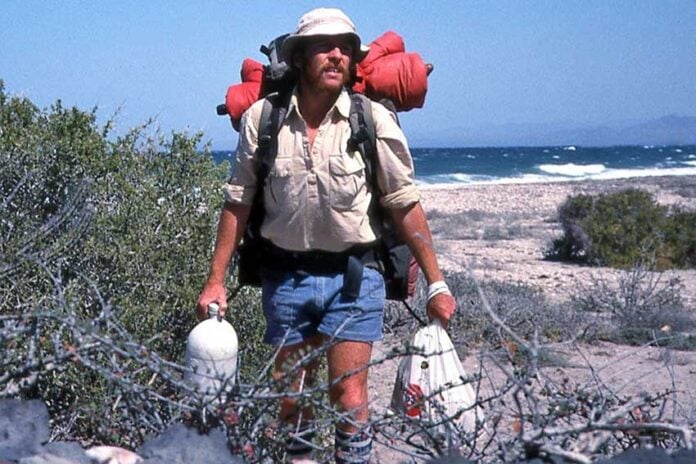
Over a period of nearly two years, British school teacher Graham Mackintosh wore out seven pairs of boots walking the perimeter of Baja California and had to go back to the USA three times to re-equip. (Graham Mackintosh)
In 1979, Scotch-Irish Englishman Graham Mackintosh was “bitten by Baja.”
While visiting friends in Los Angeles, he had taken a bus to Ensenada and then could not resist hitching another 1,400 kilometers further south to see the rest of the peninsula.
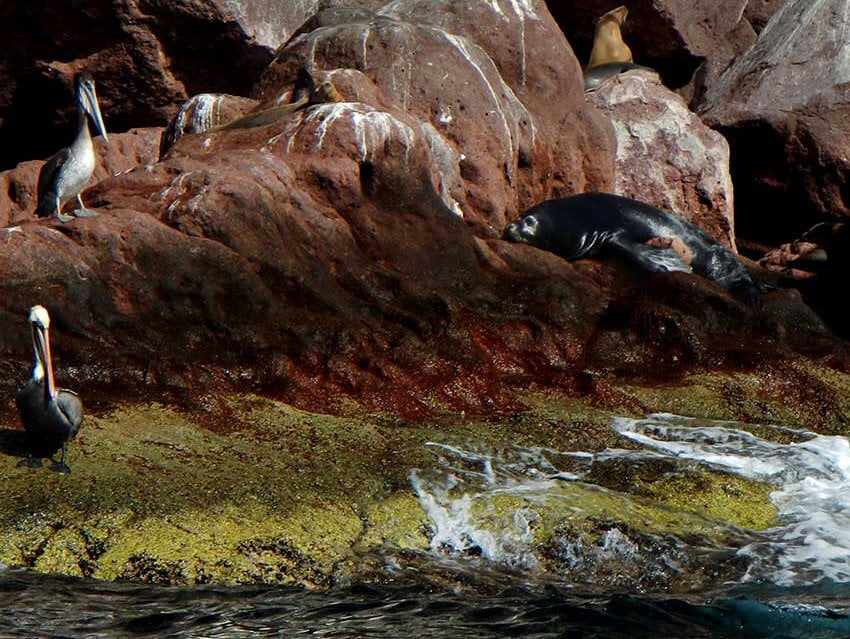
Edging his way along the base of tall cliffs, Mackintosh might suddenly find himself staring into the eyes of a sea lion stretched head to tail across his path. (John Pint)
“My first glimpse of Bahía de los Ángeles, a fisherman’s paradise on the shores of the Sea of Cortez, was unforgettable. I thought it was a landlocked lake studded with deserted islands. The sea was warm and beautifully calm, the bluest of blue. Monster stingrays shuffled around in the shallows. Huge fish chased smaller fish almost onto the beach. Dolphins skipped around the bay. Friendly fishermen invited me out to try my luck. With each fish I hauled aboard, I became more hooked on Baja.”
This was the moment Mackintosh came up with the extraordinary idea of walking the entire coastline of the peninsula.
“I thought it was the most wonderful place I’d ever seen in my life,” he told me. “I fell in love with it.”
Out of water, out of luck
With no previous experience in hiking or camping, Mackintosh started from San Felipe, typically carrying a gallon of water in each hand and a 60-pound pack on his back.
“A lot of the problems I had came from dehydration,” he told me. “If I ran short of water, I was in real trouble. And occasionally I went inland. I couldn’t get by sheer cliffs, so I’d go inland a little bit to try and get around them. And very often, I got into trouble doing that. I ran out of water and it was a real struggle to get back to the coast. And that could have been very, very serious, especially when it’s hot and you need water continuously to keep hiking.”
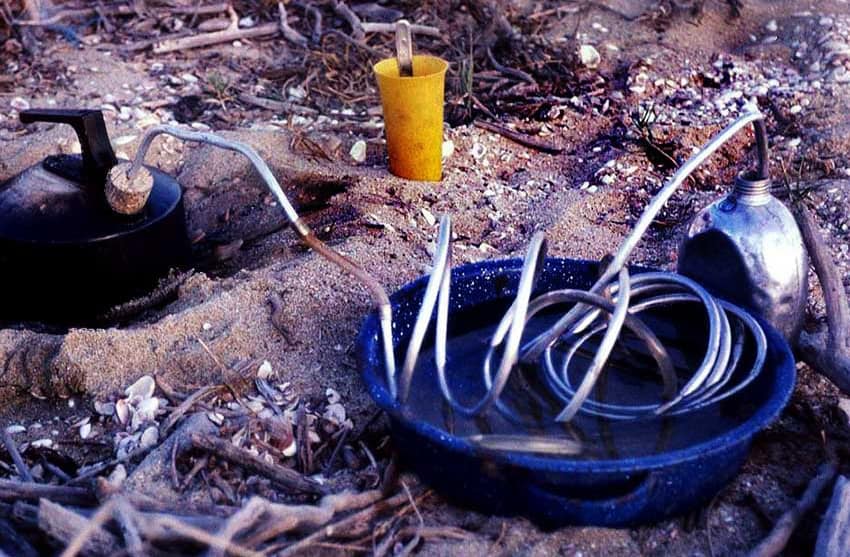
On several occasions, Mackintosh survived only thanks to this simple setup which allowed him to distill sea water. (Graham Mackintosh)
Leaving the beach and climbing cliffs was often daunting.
He writes: “Jagged rocks, stunted trees and tearing bushes spitefully conspired to thwart my ascent. I hated to see seagulls flying below me. The sea looked a long way down. After pausing to catch my breath and admire the view, I began the descent and was soon sliding and scrambling down a narrow gulley of chute-like steepness. Brittle rocks came away in my hands and crumbled underfoot. Avalanche-like slides threatened to send me tumbling to my doom.”
Life is beautiful!
Having survived this experience, his reflection on it is very Graham Mackintosh and gives us an insight into how he could pull off a stunt that everyone (and I do mean everyone) told him was impossible.
“‘God, life is beautiful! Baja is beautiful,’ I chuckled to myself … who needs drugs? This is the greatest high in the world. These were the highs we were made for. They enable us to see further, do better and stand taller.”
One night, Mackintosh reached down to feed a log further into his campfire.
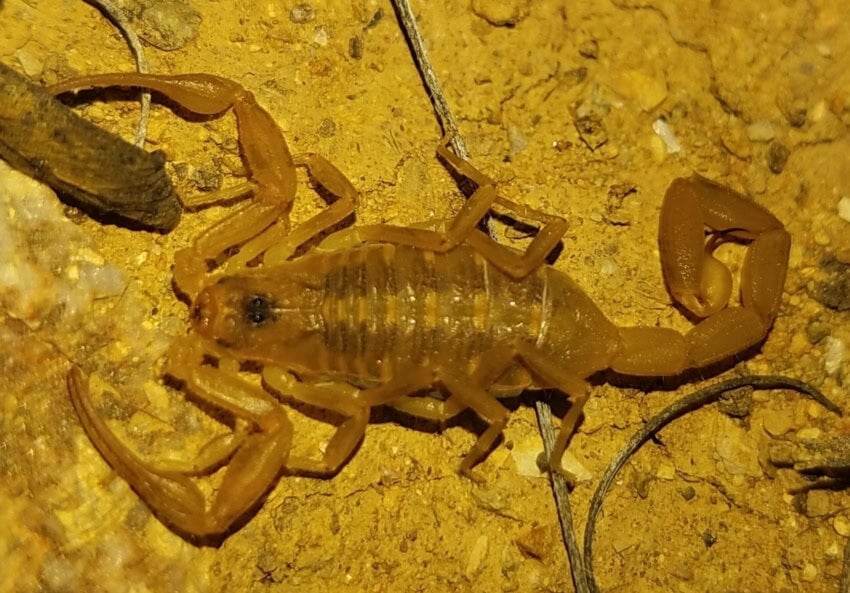
The dark, yellow scorpion
“Shock! Pain! I dropped the wood and leapt to my feet, cursing and trying to brush off what I assumed to be a red-hot ember. Then I saw the culprit in the firelight. A two-inch-long, dark yellow scorpion was still swinging his tail wildly … I could feel the venom spreading up my arm as a wave of tingling numbness. The key question was what would happen when it reached my chest. I hurriedly left a message in my diary and on my tape recorder, just in case.”
Bitten by a dark yellow scorpion, Mackintosh thought he might die. (Alan Rockefeller/Wikimedia Commons)
Shivering, he felt his throat tighten and his tongue thicken. An hour later, “the worst of the burning pain had passed. If I were about to die tomorrow, I thought, I might as well get a good night’s sleep.”
The next morning, he wrote in his diary: “Just a slightly stiff arm.”
Ode to a can of Tecate
After days of battles against cliffs and cacti, Mackintosh sees a cold can of Tecate beer in an entirely new light:
“Dry mouth watered as I clutched its cool promise. With foreplay relish, my fingers slipped along the can, wiping off the condensation. There was a little gasp as I opened it up. Oh, the first sip of cold beer when you’re thirsty! I could have drunk the lot in one go, but like one or two of life’s pleasures, it needed to be savored, experienced and definitely not rushed.”
Wild man of the beach
How did Macintosh appear to the Mexicans and foreigners who saw him coming down the coast?
“I looked a sight: boots taped together; clothes blood-stained, sweat-soaked and tattered; lips cracked; wild carrot-colored hair; unshaven; face as red as a beetroot and beaming elation; not the kind of thing you’d want to bump into with the sun going down.”
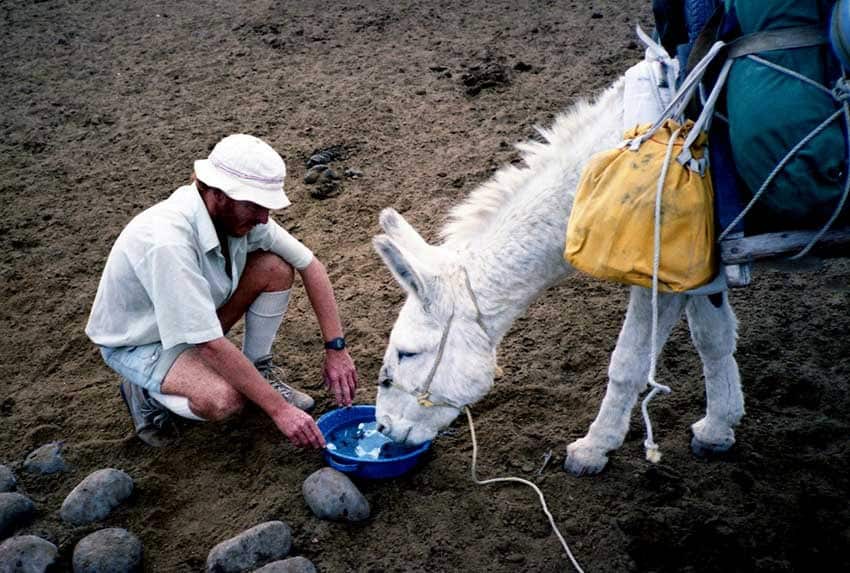
For US $30, Graham Mackintosh purchased Bonny the burro to carry his load, but in the end, Bonny stole his heart. (Graham Mackintosh)
Whereas rattlesnakes were high on a long list of the dangers Mackintosh expected to find in Baja, he eventually came to see them in an entirely different light:
“The increasingly long, hot days ensured that I had a steady supply of rattlesnakes for my frying pan.”
Bonny
On the last leg of his long trek, Mackintosh came to a four-hundred-mile-long stretch of mangroves and soft sand, with no cliffs to climb. So, he decided to get a burro to carry his gear.
It was a male, and he named it Bonny at the request of his mother, in the good old Scottish tradition.
With Bonny’s arrival, the story takes on an irresistible charm and pathos.
Bony’s quirks, Bonny’s lice, Bonny’s fears, Bonny’s ecstasy at the sight of an orange peel, Bonny’s horrifying entrapment in the sucking mud of Magdalena Bay …
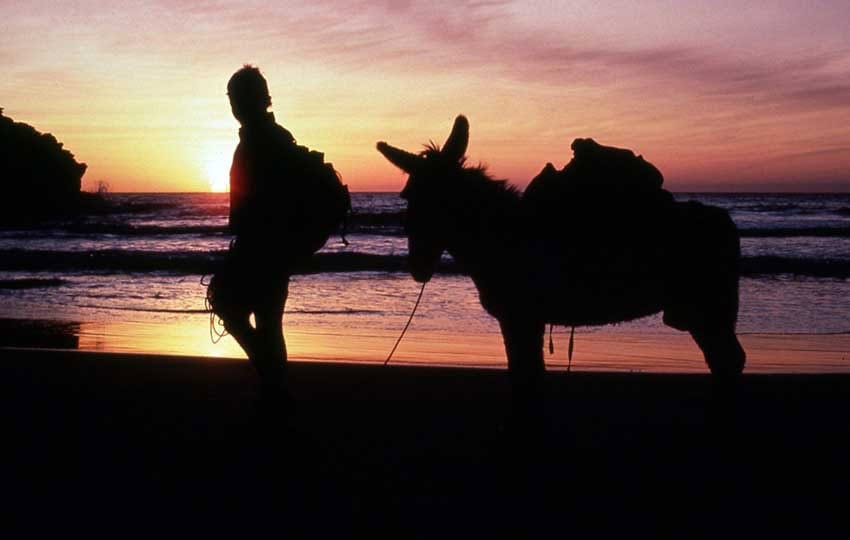
Graham Mackintosh and his inseparable companion, Bonny the burro. (Graham Mackintosh)
It is a beautiful story, a wonderful story, and you simply have to read “Into a Desert Place” to fully appreciate it.
But beware. By the time you finish this book, you may find yourself booking a ticket to Baja California.
John Pint has lived near Guadalajara, Jalisco, for more than 30 years and is the author of “A Guide to West Mexico’s Guachimontones and Surrounding Area” and co-author of “Outdoors in Western Mexico.” More of his writing can be found on his website.
The Mariposario Jardín Mágico is one of Puerto Vallarta's most underrated attractions. (Mariposario Jardín Mágico)
Just outside of Puerto Vallarta proper, a narrow hillside road leads to something most visitors never think to look for. People come to this part of Mexico expecting beaches, sunsets and margaritas on the malecón. And that’s fair. Puerto Vallarta does those things extremely well.
But a few miles inland, tucked into the green hills, sits a place that offers something completely different: Mariposario Jardín Mágico, a small butterfly sanctuary that quietly reminds you there’s more to the region than sand and ocean.
The butterfly sanctuary
There’s more to Puerto Vallarta than beaches and margaritas. (Mariposario Jardín Mágico)
At first glance, it doesn’t feel like a typical tourist stop. There’s no giant entrance sign and no crowds lining up for tickets. Instead, you walk through a wooden gate and step directly into a living garden.
Plants spill over narrow paths. Flowers lean towards the sunlight. And if you pause for a moment, you start noticing movement.
Butterflies.
Lots of them.
They drift through the garden in slow, unpredictable patterns. Some flash bright colours when sunlight hits their wings, then disappear the moment they land.
A vivid blue morpho butterfly glides across the path like a piece of blue glass, catching the light. When its wings close, the brilliant colour vanishes completely, replaced by dull brown camouflage.
The Puerto Vallarta butterfly sanctuary is a place that rewards patience, with the occasional picturesque vantage. (Villa del Palmar Beach Resort and Spa Puerto Vallarta)
It’s the kind of small, natural trick that makes you stop and look twice.
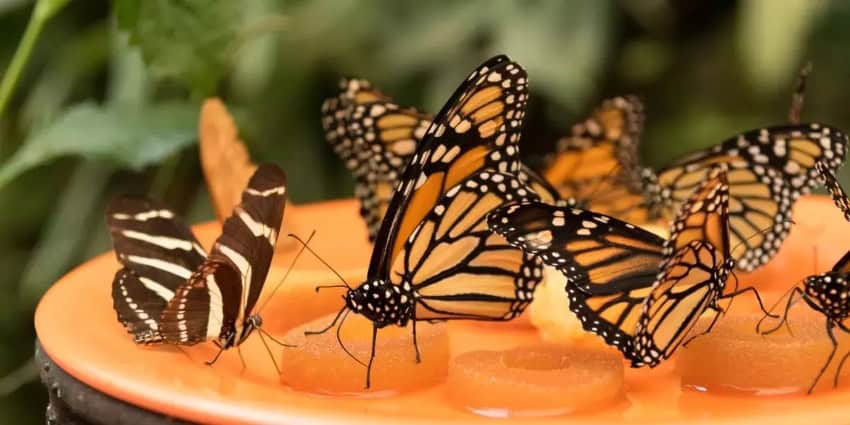
Further down the path, a few Monarch butterflies float between flowering plants, moving with a steady, almost effortless rhythm. They’re quieter flyers than the morphos, less flashy, but just as captivating when you take the time to watch them.
That’s really the secret of the sanctuary. It rewards patience.
The life cycle of a butterfly
The garden isn’t massive, but it’s carefully designed to support the entire life cycle of several butterfly species.
Every plant has a job. Some feed caterpillars, others produce nectar for adult butterflies, and shaded branches provide safe places for chrysalises to hang undisturbed.
Look closely beneath a leaf and you might find a caterpillar slowly working through its next meal. Nearby, tiny chrysalis pods hang from stems like little ornaments. They look still, almost decorative, but inside them, a complete transformation is happening.
Butterfly species rely on specific plants to survive. (Mariposario Jardín Mágico)
A caterpillar dissolving and rebuilding itself into something entirely different.
The staff at the sanctuary are quick to point these things out. They’ll show visitors the host plants where butterflies lay eggs and explain how specific species rely on specific plants to survive. Without those plants, the butterflies simply wouldn’t exist.
It’s a reminder that ecosystems run on relationships; those quiet connections that most of us rarely notice.
The garden itself feels relaxed and unpolished in the best way. You won’t find loud music or flashy displays here. Instead, visitors wander slowly along shaded paths, occasionally stopping when a butterfly passes close enough to admire.
Sometimes one even lands nearby. Not because anyone trained it to, but simply because the garden belongs to them as much as it does to the people walking through it.
Transformation
Children tend to gravitate towards the caterpillars. Watching one inch along a leaf might seem like the slowest show on Earth, but once someone explains that the tiny creature will eventually become a butterfly, suddenly everyone pays attention.
Children gravitate towards caterpillars and love to get a closer look. (Mariposario Jardín Mágico)
Transformation has a way of doing that.
There’s also a cultural layer to the story. In Mexico, the return of monarch butterflies each year often overlaps with Día de los Muertos. In many communities, the butterflies are believed to carry the spirits of loved ones returning home during the celebration.
Whether taken as tradition or symbolism, the idea fits surprisingly well when you’re standing in a garden filled with drifting wings.
What makes the sanctuary special isn’t just the butterflies themselves. It’s the contrast.
Something else entirely
Visitors come to Puerto Vallarta expecting sun, sand and ocean views. They imagine beach umbrellas, boat tours and margaritas served with salt on the rim.
And all of that is here.
Puerto Vallarta’s butterfly sanctuary offers a hands-on experience. (Villa del Palmar Beach Resort and Spa Puerto Vallarta)
But the Mariposa sanctuary offers something else entirely.
No sand. No cocktails. No loud beach music. Just a quiet little hillside garden where butterflies move through the air.
It’s the kind of place people don’t plan for when they book a trip to Puerto Vallarta. Yet many who stumble upon it end up remembering it long after the beach photos fade into their camera rolls.
Because while beaches are easy to find in coastal Mexico, a living butterfly sanctuary tucked into the jungle hills offers something far less common.
A chance to slow down.
To notice small things.
And to discover that sometimes the most memorable experiences in a place famous for its coastline happen nowhere near the ocean at all.
Charlotte Smith is a writer and journalist based in Mexico. Her work focuses on travel, politics, and community. You can follow along with her travel stories at www.salsaandserendipity.com.
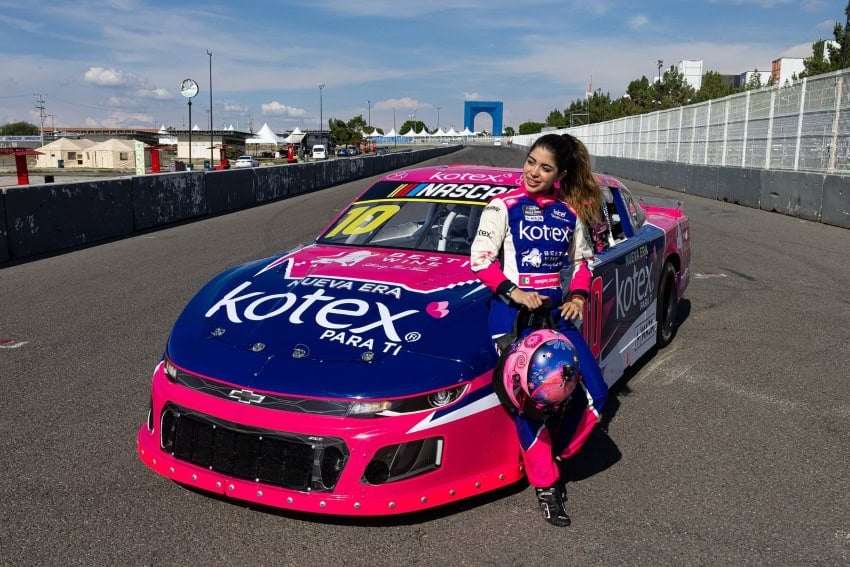
This Barbie doll likely won't be sold to the public, but NASCAR driver Regina Sirvent earned it as a Barbie Role Model. (Instagram)
Unless you’re a diehard race car enthusiast, you’ve likely never heard of Regina Sirvent. But that’s about to change.
The 23-year-old from Mexico City, who competes in the National Association for Stock Car Auto Racing (NASCAR) series, is a potential star in the making. To date, Sirvent has already become the first woman to win a race in the NASCAR Mexico Truck Series, as well as the first Latina driver to emerge victorious in a NASCAR international race, in the NASCAR Mexico Challenge Series, and in the NASCAR Weekly Series.
Sirvent has been making news on the track, becoming the first Latina woman to win a NASCAR international race. (Facebook)
She’s also a former member of the NASCAR Driver Development Program (formerly known as Drive for Diversity), where she was selected based on her outstanding performance as a 14-year-old competing in professional races. In 2017, she competed in her first NASCAR event, achieving her best overall season in 2020. Since then, she has steadily remained in the mix.
Becoming a Barbie Role Model
Sirvent’s latest win, however, is off-the-track. At the end of February, the young Mexican race pilot was selected as a Barbie Role Model — a recognition created by the Mattel toy company to celebrate influential and inspiring women around the globe. The Barbie Role Models campaign was launched on International Women’s Day in 2018 and is inspired by earlier Barbie initiatives such as the “Sheroes” series in 2015. It’s not often that the recipient is a young Mexican woman who speeds around race tracks at up to 180 miles per hour. In honor of her singular achievements, Sirvent will also receive her own Barbie doll, which further recognizes her impact in the male-centric arena of stock car racing (as of this writing, less than 1% of today’s NASCAR drivers are women).
Having started her racing career at just 9-years-old behind the wheel of a go-kart, Sirvent has defied the odds to become one of only 134 women who have formally raced in any of NASCAR’s national or regional touring events. Of all the women to have taken the wheel in NASCAR’s 78 years of competition, Sara Christian became the first, and the legendary Danica Patrick holds the record for most top-10 finishes in the Cup Series. And yet, Sirvent is the first Mexican woman to have joined NASCAR’s ranks, dating back to 1949, when the racing league was founded in Daytona Beach, Florida, by the mechanic and driver Bill France Sr.
Racing motivations
Sirvent isn’t the first in her family to strive for the racing podium; her abuelo, José, was a professional racer who claimed the Campeonato Mexicano de Rally in 1974. Regina has cited him as a motivation for her barrier-breaking career, which includes a high-profile appearance at the Michigan International Speedway as part of Sirvent’s involvement in the ARCA Menards Series. Another of Sirvent’s role models has been Daniel Suarez, a Mexican NASCAR driver who, as Sirvent explains in a former interview, exposed her and many others to the NASCAR Driver Development Program during his time as a participant.
The only bad news? Unfortunately, the Barbie doll is an exclusive item that will not be available to the public. Sirvent announced it on social media on February 20 with a heartfelt post about young women achieving their dreams, along with photos of the one-off doll, but as of now, there are no indications of it being purchasable.
In the meantime, look out for the real Sirvent on the race track, where she promises to keep racking up accolades and making a name for herself — all while being a role model for future Mexican women racers.
Alan Chazaro is the author of “This Is Not a Frank Ocean Cover Album,” “Piñata Theory” and “Notes From the Eastern Span of the Bay Bridge” (Ghost City Press, 2021). He is a graduate of June Jordan’s Poetry for the People program at UC Berkeley and a former Lawrence Ferlinghetti Fellow at the University of San Francisco. His writing can be found in GQ, NPR, The Guardian, L.A. Times and more. Originally from the San Francisco Bay Area, he is currently based in Veracruz.
LOS GATOS, CA — Citing an exhaustive search of the historical record, Netflix announced Monday it would be developing a new streaming series about Frida Kahlo and Diego Rivera, confirming that these remain the only two Mexicans the company is able to locate.
“We looked everywhere,” said Carolina Leconte, Netflix Mexico’s VP of Content. “We checked the whole country. Very big place. And yet, when our writers’ room asked ‘but who though,’ the answer kept coming back the same.”
The monobrow that launched a thousand series. (Public Domain)
The series, whose title has not yet been determined, will explore the couple’s love, betrayals, and artistic genius — themes Netflix stressed had never previously been dramatized in the 2002 Salma Hayek film Frida, the Paul Leduc film Frida, or any of the roughly four hundred Frida Kahlo documentaries currently available on Netflix.
“The fact that it’s a series gives us a very broad canvas,” director Patricia Riggen told reporters. “We don’t want to fall into the trap of a stuffy period piece or a magical Mexico. We want something entirely fresh, which is why we went straight back to Frida.”
Development executives acknowledged they had briefly considered profiling other historical figures before concluding that none of them had unibrows or large husbands.
“We did think about Sor Juana Inés de la Cruz,” admitted one executive who asked not to be named. “Seventeenth century poet, proto-feminist, genuinely one of the most fascinating minds in the hemisphere. But then someone said ‘what if Frida’ and honestly the room just lit up.”
Netflix stressed the project represented a bold commitment to Mexican stories and that viewers should expect further bold commitments in the future, possibly involving Frida Kahlo’s house, Frida Kahlo’s diary, or a prequel series about Frida Kahlo’s eyebrows.
Emiliano Zapata, Octavio Paz, and approximately 130 million living Mexicans were unavailable for comment.
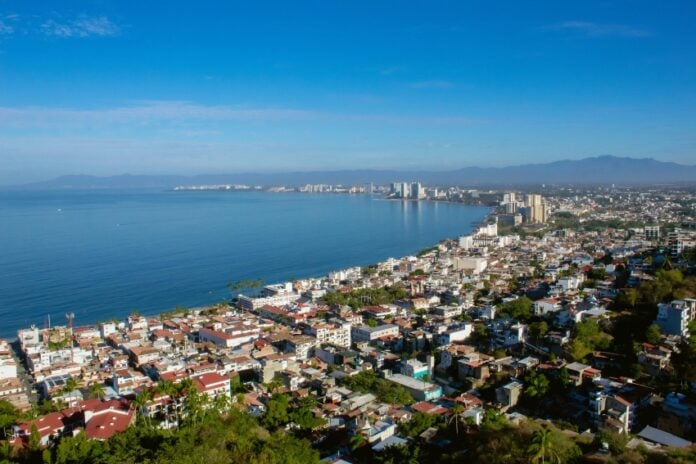
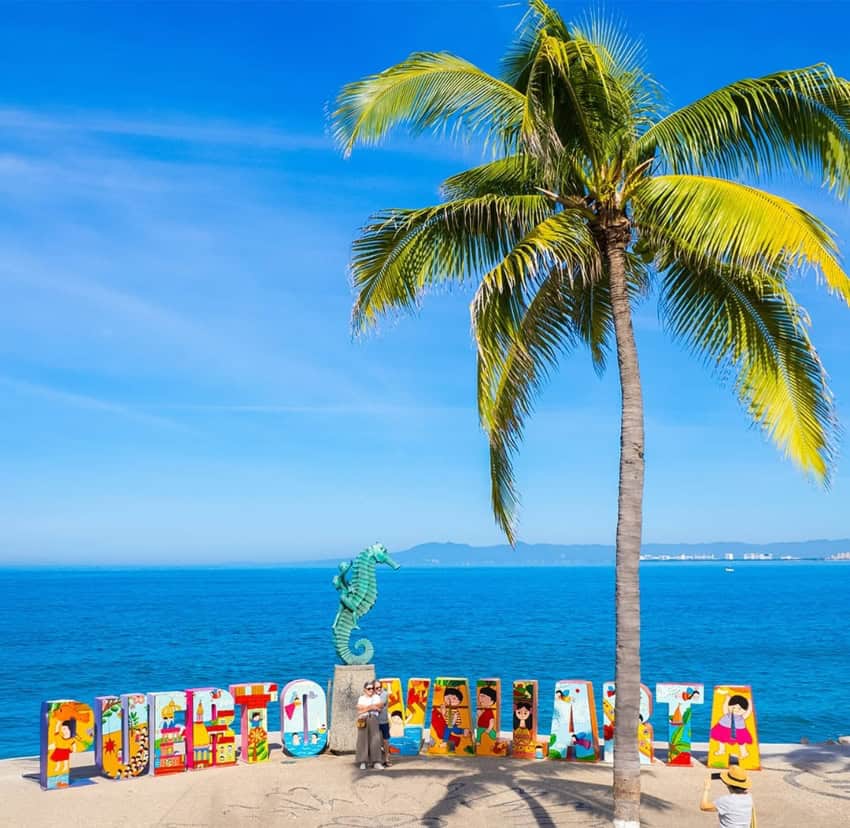
Puerto Vallarta is a great place to visit, and a place where volunteers are always welcome. (Roman Lopez/Unsplash)
At some point, almost everyone who spends substantial time in Puerto Vallarta arrives at the same thought.
It might occur after your third winter season here or your fifth visit. Or maybe while grabbing a beer at El Solar, watching the familiar mix of tourists, vendors, dog walkers, retirees, remote workers and school kids pass by as the sun dips down into the Bay.
After a few visits to Puerto Vallarta, or maybe after moving there, it feels good to give back. (Instagram)
Vallarta is so much more than a vacation destination. It’s truly a beach city where everyone participates. That’s what drew me in 13 years ago, and it’s why I continue to love this city so much, even as it feels increasingly crowded by rising tourist numbers and developments, which have a direct impact, both positive and negative, on the local community.
Why Puerto Vallarta needs support
For expats, long-stay visitors, and repeat travelers, the question isn’t whether Puerto Vallarta needs support. Every growing city does. The question is where to begin. The good news is that Vallarta, despite its reputation as a tourism-driving beach destination, has a long-established network of nonprofit organizations that welcome volunteers.
One of the most visible organizations in the city is Vallarta Cares, known primarily for its community soup kitchen and food assistance programs. The organization’s 2024 Annual Report offers an important snapshot of conditions many visitors may not immediately notice.
According to CONEVAL (National Council for the Evaluation of Social Development Policy) data, Puerto Vallarta’s poverty rate increased from 32.2% in 2020 to 36% in 2024. In neighboring Cabo Corrientes, the rate rose even more sharply, from 37.2% to 44.6%. These figures highlight a reality that often exists alongside Vallarta’s expanding tourism economy.
Vallarta Cares
Within that context, organizations like Vallarta Cares play a significant operational role. In 2024 alone, the group served more than 116,000 meals, supported an average of 628 people per month through its soup kitchen, delivered weekly food packages to 120 families and provided care to more than 170 patients through its medical and dental clinic.
For volunteers, involvement typically centers on practical tasks such as food preparation, meal service, logistics and general support. The structure is straightforward, allowing participation without specialized training or long-term commitments.
SPCA helps spay and neuter pets in Puerto Vallarta and helps them find foster homes. It also takes them for regular walks. (SPCA Puerto Vallarta)
SPCA Puerto Vallarta
Another widely recognized entry point for volunteers is SPCA Puerto Vallarta. Animal welfare initiatives tend to attract immediate interest, and the shelter’s programs are designed with accessibility in mind. Morning dog walks enable volunteers to socialize animals by taking them beyond the shelter grounds, while seasonal outreach activities, including staffing booths at the Olas Altas Farmers Market, support fundraising and public education.
SPCA Puerto Vallarta also hosts regular spay-and-neuter clinics, where volunteers assist with animal monitoring during recovery. As with many Vallarta volunteer programs, experience is rarely required, and guidance is provided onsite.
International Friendship Club
Organizations such as the International Friendship Club (IFC) provide a broader framework for community involvement. Founded within Puerto Vallarta’s expat community, the IFC supports a diverse portfolio of initiatives, including medical assistance, educational support, food distribution and fundraising for local programs. Volunteer roles vary widely, ranging from event coordination and administrative support to skill-based contributions.
For many long-term residents, participation in IFC activities becomes part of everyday life in Vallarta, bringing together social connection and community engagement.
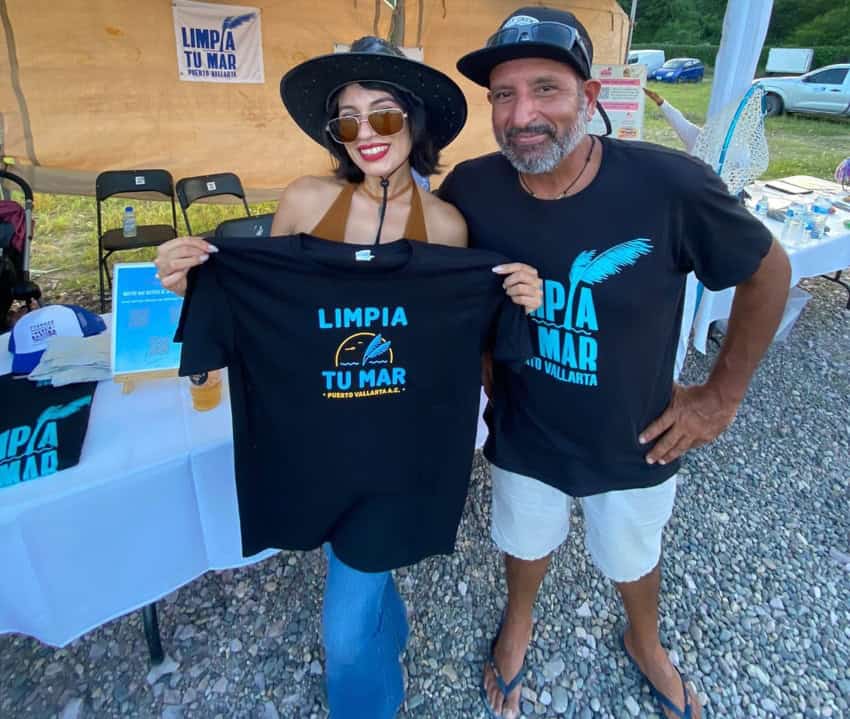
Limpia Tu Mar Puerto Vallarta A.C.
Among the organizations leading these efforts is Limpia Tu Mar Puerto Vallarta A.C., a civic association founded in 2022 dedicated to cleaning the sea and beaches while promoting waste reduction and responsible disposal practices. The group has become particularly well known for its international Litter Fishing Tournament, an event that combines environmental action with public awareness.
The tournament held its second annual competition in October 2025, drawing participants to the waters of Banderas Bay with the objective of removing, sorting and recycling at least 1 ton of solid waste from the ocean.
Organized in collaboration with local businesses, hotels, NGOs and tourism service providers, the event highlights a challenge familiar to many beach destinations.
Volunteer to help Limpia Tu Mar Puerto Vallarta keep the local waters clean and you might earn a cool t-shirt. (Facebook)
While the tournament itself is a high-profile initiative, Limpia Tu Mar also offers year-round volunteer opportunities focused on beach cleanup and environmental education.
Exploring other volunteering opportunities
Beyond Limpia Tu Mar, Puerto Vallarta hosts a network of environmental and conservation groups operating throughout the region. Beach and bay clean-up initiatives, typically organized around seasonal transitions, continue to attract participation from both residents and visitors seeking tangible ways to engage.
For those exploring volunteer opportunities, logistics are relatively simple. Most organizations recommend contacting coordinators directly, as schedules and staffing needs fluctuate throughout the year. Volunteer commitments are typically short-term, unpaid and structured to accommodate Vallarta’s large population of seasonal residents and repeat visitors.
Participation can range from a single morning to recurring involvement over months or years. Many programs are structured around flexibility, allowing individuals to engage in ways that suit their personal interests, availability and comfort levels.
In a city best known for dining, leisure and beachfront, volunteering has become a familiar component of how many residents and repeat visitors experience Puerto Vallarta. It becomes another form of participation in a place that, for many, no longer feels temporary.
Meagan Drillinger is a New York native who has spent the past 15 years traveling around and writing about Mexico. While she’s on the road for assignments most of the time, Puerto Vallarta is her home base. Follow her travels on Instagram at @drillinjourneys or through her blog at drillinjourneys.com.
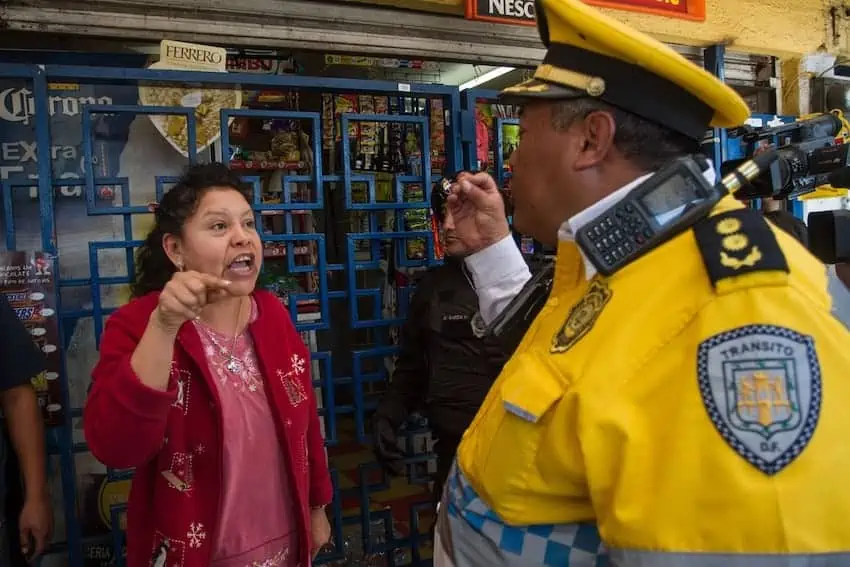
Be warned: Our guide to Mexican curses could be very useful, but it certainly isn't polite. (YouTube)
The time has come, my friends: it’s time to talk about cursing and swear words in Spanish, and in Mexico particularly.
Several specific regions of Mexico are well known for their — ahem — colorful language. One of those places is my home state, Veracruz, where curse words flow as freely as the beer from our much-loved caguamas (those liter-sized returnable beer bottles), a mere expansion pack of our casual speech.
Mexico City is known for its colorful language, so knowing the right words will help you fit in with the chaos of big city life. (Isaac Esquivel/Cuartoscuro)
Other places, particularly those closer to the center of the country (save Mexico City), tend to be more conservative and proper in their speech, lest they be seen as crass or vulgar. Coastal cultures, particularly ones that became accustomed quickly to receiving “guests,” have by necessity developed a more open and relaxed attitude, pearl-clutching being something that just holds everyone up.
That’s my theory, anyway.
Anyway, let’s get this show on the road! Though before we begin, the necessary heads up: there are very bad words below; don’t read them if you’re easily offended by off-color language. Below each, I’ve given a non-cursing alternative.
Common variations of chingar
This is the closest Mexican Spanish equivalent to the word “f*ck” in English. And like its English equivalent, it’s both very rude and very common. Common variants include the insults chinga tu madre (“F*ck your mother” — yikes) and vete a la chingada (Go f*ck yourself), the exclamation chingada madre! (Motherf*cker!) and the more tame chingao, whose equivalent might be an emphatic “damn it!” in English. Chin is closer to “darn it” if you want to use something extra tame but still common. Honestly, an entire book could be filled talking about just this word. It’s complex and varied, with plenty to unpack culturally. But we’ll let someone else write it.
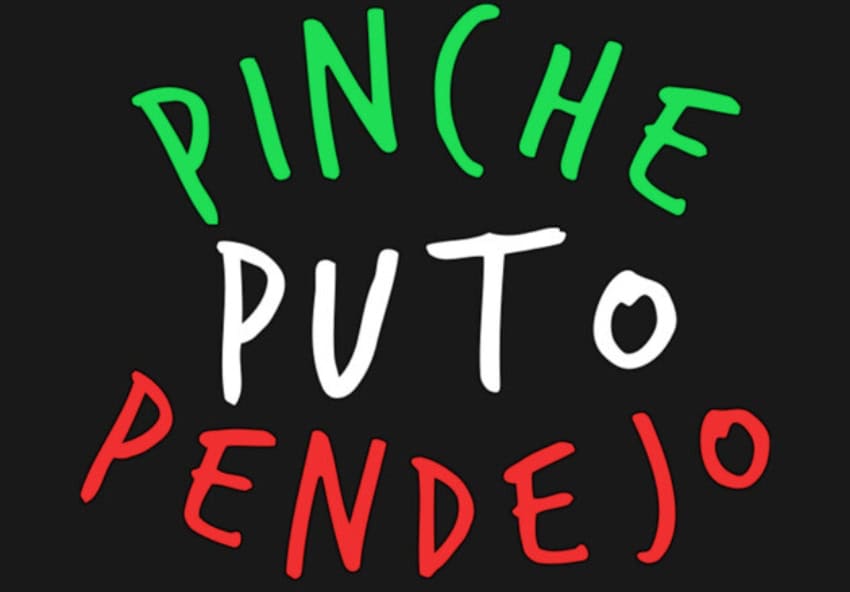
Pendejo/pendeja
This is a common insult for calling someone something between an *sshole and an idiot. Incidentally, idiota sounds about as harsh to the Mexican ear as “*sshole” does to ours, so careful with that one! If you want to say something like “dummy,” tonto or zonzo are safe non-curse options, the latter being closer to “silly.”
Be careful with this alliterative threesome of Mexican Spanish swear words. (TeePublic)
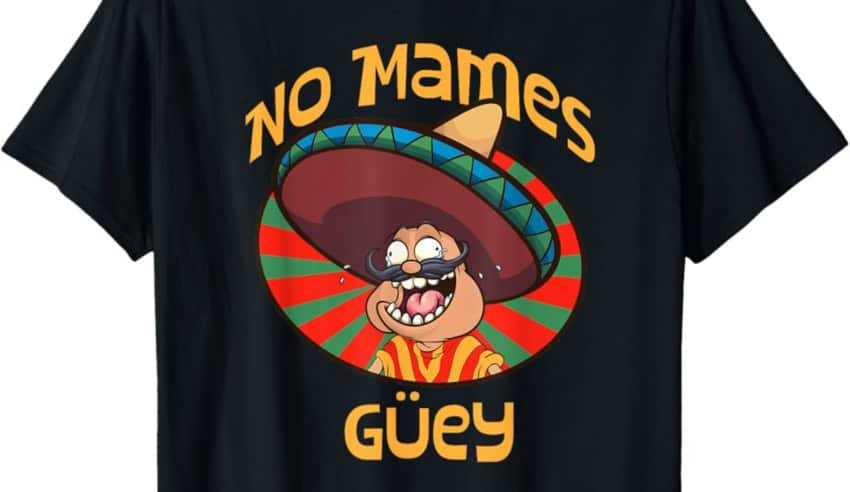
No mames
This is also an exclamation you’ll likely hear pretty frequently that means, basically, “Come on,” or “No f*cking way,” or “You’ve got to be kidding me.” It literally means “don’t suck,” and you say it when you’re calling someone out on their bad joke or misbehavior, or when you’re in disbelief (usually disappointed disbelief). One way to take the cursing sting out of it is the more tame No manches (literally, “Don’t stain”), which means the same thing. No puede ser (“It can’t be”) is a good slang-free option. (Funny side-note: my partner, a native veracruzano, saw this list and said, “What? No mames isn’t cursing!” It is.)
Pinche
This word is an adjective meaning “bad,” and I’d put it somewhere between “damn” and “f*cking” in terms of rudeness. It typically precedes another word (Pinche comida fea — “f*cking disgusting food”), and is used to emphasize your distaste for something. Alternatives include any other negative adjective or adverb, like terrible or terriblemente, depending on which part of speech you need.
Desmadre
De…mother? Don’t ask me how anyone came up with that. Anyway, a desmadre is a big damn mess, or maybe even “sh*t show,” and can be used both for actual physical messes (Con la construcción el tráfico está hecho un desmadre — “With the construction going on, traffic’s just a big damn mess”) or for some kind of big blow-up fight. A tamer way to say it: desorden (literally, “disorder”).
As I’m sure you know, this isn’t anywhere near a complete list. That said, all the words and phrases above are quite common.
I personally curse quite a lot in both languages — I learned Spanish in Veracruz, after all. I’m neither proud nor ashamed of it; it’s simply part of my vocabulary. Here in Veracruz, nobody bats an eye, but I once said desmadre to a friend in Querétaro and promptly got a speech about how ladies don’t talk like that.
Just like in all languages, who is doing the cursing matters, as does the context. Hanging out with friends and having a few beers, fine; in a job interview or with someone’s grandma, not so smart.
You’ll hear this phrase a lot in Mexico, but wearing the shirt is not polite. (Amazon)
So go forth, my fellow compatriots, immigrants and visitors, and understand more of what people are actually saying!
Just be sure to proceed with caution if you plan to partake.
Sarah DeVries is a writer and translator based in Xalapa, Veracruz. She can be reached through her website, sarahedevries.substack.com.
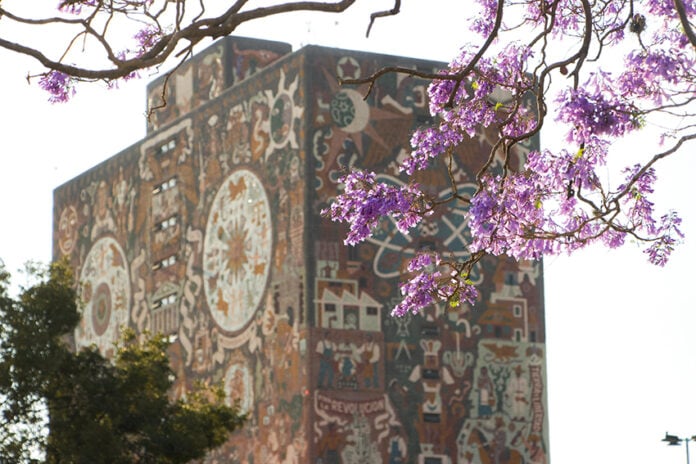
Blooming jacaranda trees announce the arrival of spring on the campus of the National Autonomous University of Mexico (UNAM) in Mexico City. (Tomás Pérez de la Cruz / Cuartoscuro.com)
The middle of the week brought two significant gatherings of Mexico’s business and financial establishment. On Wednesday — the 88th anniversary of Mexico’s historic oil expropriation — the American Chamber of Commerce held its annual assembly, where U.S. Ambassador Ronald Johnson struck an optimistic note on trade and the bilateral relationship. That same day, Sheinbaum traveled to Veracruz for an oil expropriation anniversary ceremony where she pledged to sharply reduce the country’s dependence on imported natural gas. On Thursday she addressed the 89th Banking Convention, announcing that cash payments at gas stations and highway toll booths would be phased out before the end of the year — part of Mexico’s push to digitalize its economy.
The week closed on a more difficult note. Friday found Sheinbaum in Cancún demanding a full U.S. investigation into the death of a 19-year-old Mexican in ICE custody in Florida — a sobering counterpoint to the week’s diplomatic optimism — as record-breaking spring heat blanketed more than a dozen states across the country.
Didn’t have time to catch this week’s top stories? Here’s what you missed.
Electoral reform and presidential accountability
The week opened with Sheinbaum laying out a legislative path forward after her original constitutional electoral reform fell short in the lower house of Congress. As MND reported, she framed her scaled-back “Plan B” proposal as a strike against political excess, targeting bloated state legislature budgets — some allocating up to 39 million pesos per deputy — and outsized politician salaries. On Tuesday, Interior Minister Rosa Icela Rodríguez presented further details of the plan, including that citizens would have the right to request a presidential recall election in either 2027 or 2028. The provision aligns with one of Sheinbaum’s 100 commitments on taking office. With her approval ratings consistently polling well above 60%, few expect such a vote to go against her.
Trade: USMCA takes center stage
The most consequential development of the week for Mexico’s economic future was the formal launch of USMCA review negotiations. Economy Minister Marcelo Ebrard sat down with U.S. Trade Representative Jamieson Greer in Washington on Wednesday, with both sides marking the official start of talks that will shape North American trade for years to come. Canada is expected to join the process in May. Mexico’s stated priorities are the removal of U.S. tariffs on automotive, steel and aluminum. By Thursday, Sheinbaum said her government had responded point-by-point to the 54 non-tariff barriers raised by Washington, declaring the majority of concerns settled.
Security Minister Omar García Harfuch traveled to Washington on Monday to meet with DEA Administrator Terrance Cole, with both sides proclaiming an era of “historic” bilateral cooperation on drug trafficking and weapons seizures. The warm tone was complicated by somber news later in the week. A New York Times investigation found up to 500,000 guns still flow from the U.S. into Mexico annually. Then on Thursday, Interior Minister Rodríguez reported that Mexico’s “Mexico Embraces You” repatriation program had registered nearly 190,000 returnees since January 20, 2025 — a measure of the scale of Trump’s deportation drive. The week ended on a still darker note when Sheinbaum demanded a full investigation into the death of 19-year-old Royer Pérez Jiménez, an Indigenous Maya man from Chiapas who died in ICE custody in Florida on March 16 — reportedly the youngest person to die in U.S. immigration detention under the current Trump administration. Mexico sent diplomatic notes to Washington and pledged to pursue all legal avenues.
Security and cartels: Mencho’s crime scene and El Mayo’s daughter
Fallout from the February killing of CJNG boss El Mencho continued on multiple fronts. The week opened with the Army arresting a key CJNG logistics operative known as “Pepe” — the man who had driven El Mencho’s romantic partner to the Tapalpa hideout where the cartel boss was ultimately tracked down and fatally wounded on Feb. 22. The Federal Attorney General’s Office also acknowledged that journalists freely entered the Jalisco cabin complex where Oseguera had been hiding, saying the site was too dangerous to secure immediately. The FGR conceded the scene was “altered and contaminated,” raising chain-of-custody concerns about evidence including alleged cartel payroll documents showing bribes to police and government officials.
In a separate cartel development, Mexican forces briefly detained Mónica Zambada Niebla — daughter of imprisoned Sinaloa Cartel boss “El Mayo” Zambada — during a Thursday raid near Culiacán that killed 11 cartel members, then released her within hours. Critics pointed out she remains on the U.S. Treasury’s sanctions list, though she has no arrest warrant active in Mexico or the U.S.
Energy and economy: Sovereignty, a deadly fire and a digitalization push
On the anniversary of Mexico’s oil expropriation, Sheinbaum declared reducing natural gas imports Mexico’s next major energy goal, noting the country currently imports 75% of its consumption almost entirely via pipeline from the United States. That same week, the troubled Olmeca (Dos Bocas) Refinery in Tabasco became the site of tragedy when an oily water overflow sparked a fire that killed five people, prompting an FGR investigation. Pemex said the refinery itself was undamaged and operating at full capacity.
Also on the economic front, Sheinbaum used her address at the 89th Banking Convention to announce that cash payments at gas stations and highway toll booths would be phased out starting this year, part of a broader push to digitize the Mexican economy. Currently cash accounts for roughly 80% of all transactions in Mexico. The government is coordinating with the banking sector and Banco de Bienestar to ensure access to digital payments for all citizens.
Meanwhile, new INEGI data showed Mexico’s manufacturing sector contracted 1.8% in January — the steepest monthly drop since 2015 — with employment in the sector down 2.5% year over year, weighed down by U.S. sectoral tariffs on automotive and steel products.
International headlines: Spain, AMLO, FIFA and a UN win
Former president AMLO broke his post-retirement silence for the third time, calling on Mexicans to donate to a newly created NGO supporting Cuba amid a U.S. fuel blockade. The appeal sparked controversy over how the association obtained fast-tracked tax-agency authorization to collect donations; Sheinbaum pledged a personal contribution while critics said she evaded the transparency questions. At the U.N., Mexico scored a multilateral win when the Commission on Narcotic Drugs approved a Mexico-led resolution aimed at preventing pharmaceutical manufacturing equipment from being repurposed for the production of synthetic drugs.
Separately, the government was also studying setting a minimum age for social media use following similar moves by Australia and France, with concrete proposals expected by June.
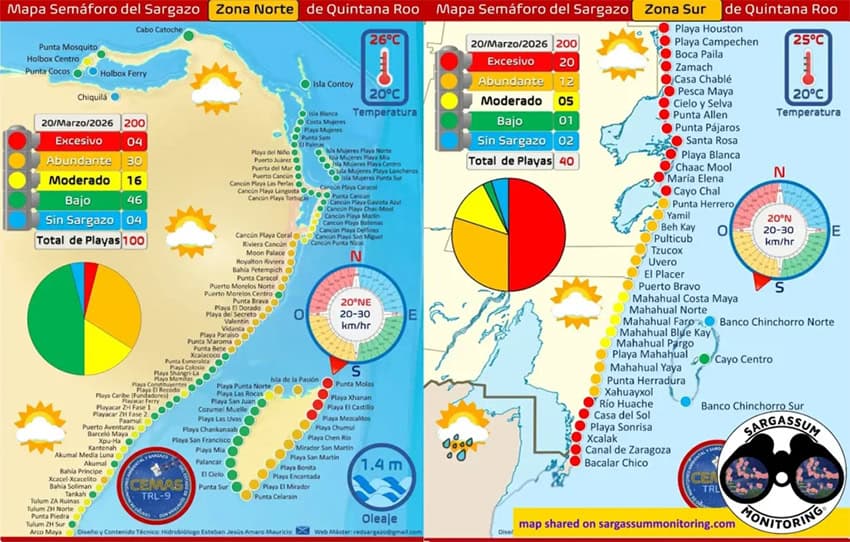
Friday marked spring’s arrival, and with it came a record heat wave: 12 states recorded temperatures above 40°C (104°F) going into the weekend, with Hermosillo and Mexicali both setting new records for March. Climatologists warned that spring heat is now arriving weeks earlier than it did a decade ago, driven by climate change. On the coasts, researchers warned that the Riviera Maya could be heading into its worst-ever sargassum season, with seaweed arriving early and a record 9.5 million tonnes already spotted in the Atlantic — a worrying backdrop as spring break and Holy Week vacations kick off.
Masses of sargassum seaweed have already begun washing ashore in Quintana Roo, just in time for an influx of spring break vacationers. (Sargassum Monitoring)
Hundreds of migrant children in Mexico City have been training since late February for “Goals for Inclusion,” an EU-funded soccer tournament in April aimed at integration and community-building for kids fleeing violence and poverty.
Looking ahead
Mexico enters the coming weeks with several high-stakes processes in simultaneous motion. USMCA working groups will begin drilling into the treaty’s 34 chapters, while Sheinbaum’s Plan B electoral reform heads to the Senate. The death of Royer Pérez Jiménez in U.S. detention will test the limits of bilateral cooperation rhetoric. Meanwhile the World Cup — and millions of arriving tourists — is now less than three months away, with sargassum, heat and security all posing potential complications for a government keen to show Mexico at its best.
This story contains summaries of original Mexico News Daily articles. The summaries were generated by Claude, then revised and fact-checked by a Mexico News Daily staff editor.
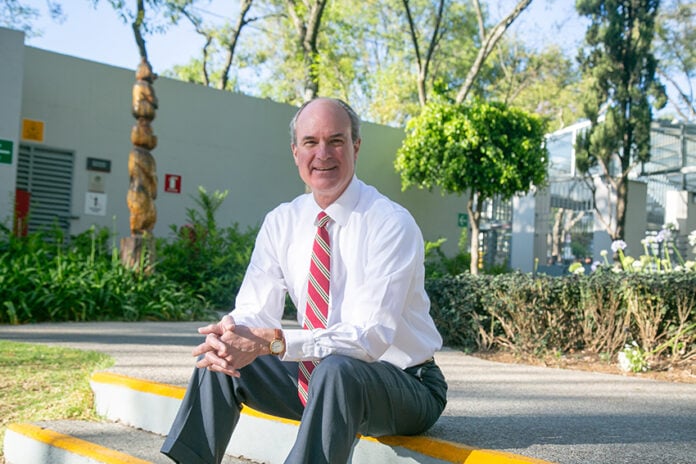
"Confidently Wrong" interviews Kolia O'Connor, Head of School at the American School Foundation in Mexico City, for this week's podcast episode. (Courtesy photo)
In this second season of “Confidently Wrong,” we are bringing you real life perspectives of raising and educating kids in Mexico. We have talked to parents as well as administrators of small schools on the Pacific Coast and in San Miguel de Allende. In this episode, we head to the big city and go straight to the leader of the more than century-old American School Foundation in Mexico City. The school had the first kindergarten in Mexico, as well as the first computer.
Of course a school like this isn’t for everyone. To begin with, it is not inexpensive compared to many other options in the country. But it gives an excellent comparison to the other schools (and the school leaders) that we have interviewed and provides some real insight into educating kids in another country.
The American School Foundation of Mexico City is a pretty special place. Located on the edge of the massive Chapultepec Park in the central city, I had the opportunity to visit it personally a few months ago and was totally impressed with the sprawling campus. Why did I go there? I had heard about the school for years, decades really, and wanted to check it out first hand myself.
The classrooms are impressive, as is the performing arts center. The sporting facilities, fields and the common areas are all first rate. The place exudes coolness and confidence. I was equally impressed that the entire campus is a “cell phone free zone.” Wow! Who would have thought you could get kids (and parents for that matter) to agree to do that in this day and age?
The impact of the policy is real. Kids talking, playing, making eye contact, laughing, flirting. Kids even seem to have normal posture, as they are not hunched over their cell phones. The energy of the place felt very different.
So check out the latest episode of “Confidently Wrong” on Spotify or YouTube, and be inspired by the possibilities and potential of educating your child in Mexico!
🎙️ Confidently Wrong Podcast – Episode 6: Insights from Mexico's first American school
Travis Bembenek is the CEO ofMexico News Daily and has been living, working or playing in Mexico for nearly 30 years.