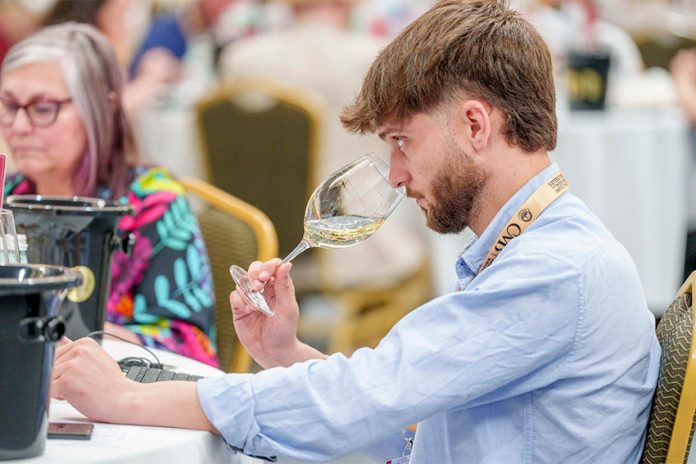
Wine sampling at the Concours Mondial de Bruxelles 2024 red and white wines competition in León, Guanajuato. The León event, held earlier this month, was the first time that the prestigious wine competition has ever been held in the Americas. (Concours Mondial de Bruxelles)
Mexican wines sparkled at the 31st Concours Mondial de Bruxelles, one of the world’s most prestigious wine competitions, held in León, Guanajuato, earlier this month.
A special Mexican edition of the Concours Mondial de Bruxelles competition called the Mexico Selection has taken place before in various Mexican states, but this was the first time that the main competition was ever held in the Americas.
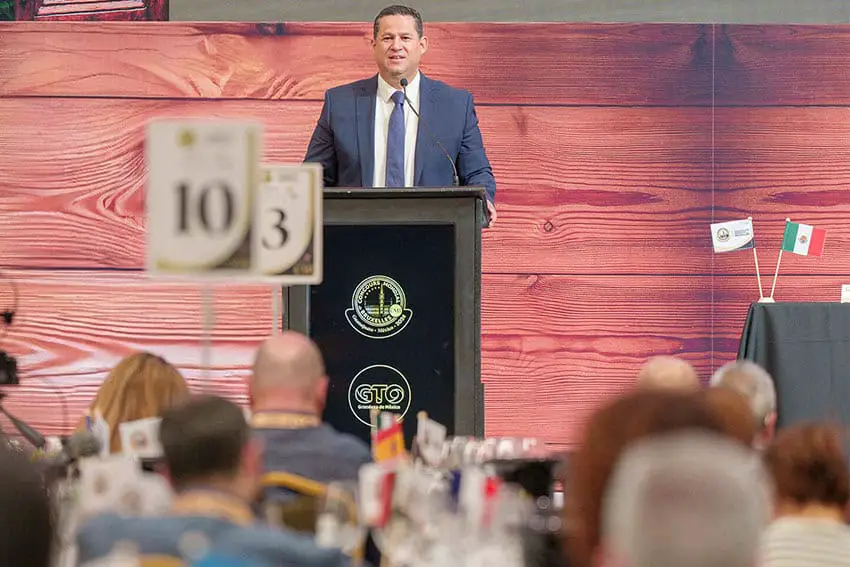
Guanajuato state Governor Diego Sinhue Rodríguez spoke at the event, a testament to how important the Guanajuato government viewed Concours Mondial de Bruxelles’ decision to bring its competition to their state. (Concours Mondial de Bruxelles)
The León event, which took place June 7–9, was a competition for red and white wines. The 2024 event’s three other competitions — one for rosé, one for sparkling wine and one for sweet and fortified wines — are taking place in European locations.
Nearly 7,500 red and white wines from 42 countries took part in the blind-tasting contest judged by experts from around the world.
Of the 663 wines presented by Mexican producers, 152 won medals (including nine Grand Gold Medals), a record, according to the newspaper El Economista.
That outcome allowed Mexico to break into the list of top five countries in terms of numbers of medals won, according to journalist Liz Palmer. Only 30% of all the wines presented in the competition took home medals.
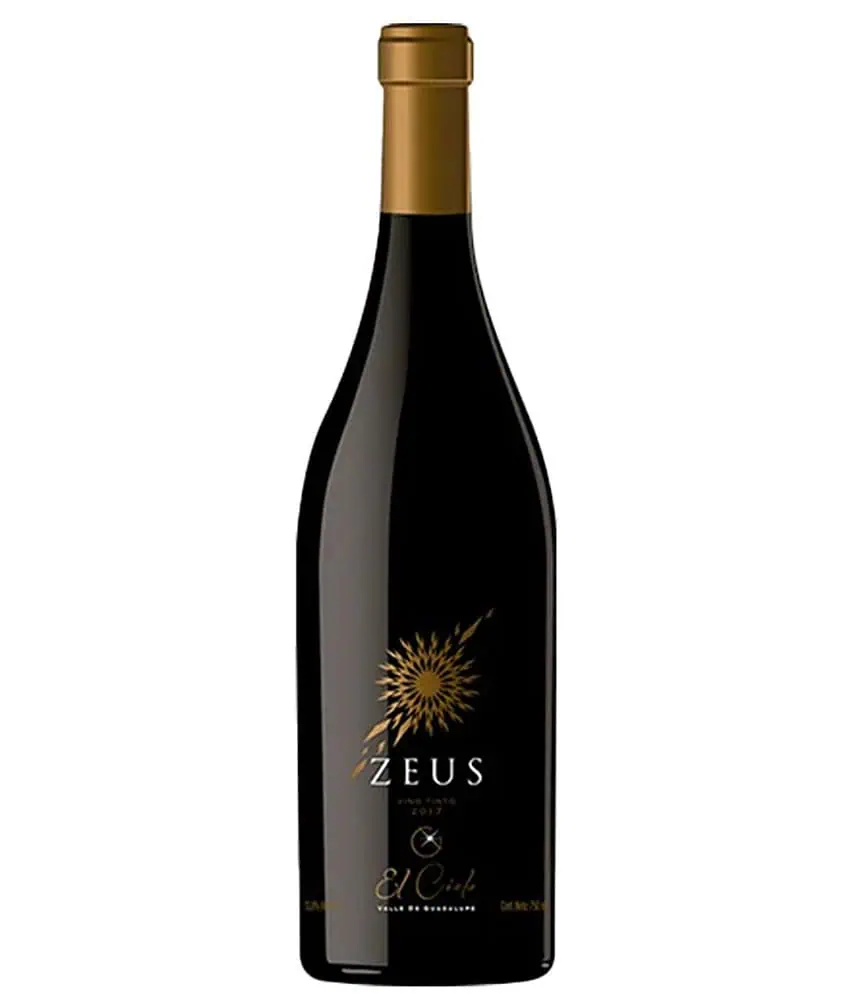
The top-performing Mexican entrant at this year’s event was Zeus Tinto 2020, an oaked red wine from the Valle de Guadalupe wine region of Baja California by the Baja winemaker El Cielo. Made from zinfandel grapes, Zeus Tinto was recognized with the Mexico Revelation distinction and earned a Grand Gold Medal.
Less than 1% of competing wines at the event earn Grand Gold Medal recognition, the top award at the Concours Mondiale de Bruxelles.
A Grand Gold Medal winner, Zeus Tinto 2020 is a red from the Valle de Guadalupe region of Baja California. It’s produced by El Cielo winery. (El Cielo)
The Mexican Grand Gold Medal Winners
The other Mexican wines that earned Grand Gold Medals were:
a López Rosso Cavas Viognier 2023 from Zacatecas
two winners from Guanajuato wineries: Dos Buhos’ Grenache Gran Reserva 2019 and a 2020 red blend from Pájaro Azul
G&G by Ginasommelier Gran Reserva Malbec 2019, from Baja California
Another Gran Reserva Malbec, this one a 2020 from Coahuila’s Casa Madero
a Nebbiolo-Merlot-Syrah 2017 from Inspiración winery in Baja California
a Merlot Reserva 2020 from Baja California’s Bajalupano winery
A 2022 Syrah from Solar Fortun winery in Baja California.
Sixty-nine Mexican wines won a Gold Medal while 75 won Silver Medals.
Spain was recognized as the top producer in the competition, collecting 31% of the awards, while Uruguay and Romania swept the top two medals.
Uruguay’s Balasto 2017 (produced by Bodega Garzón) won the International Red Wine Revelation award while Romania’s Issa Chardonnay Barrique 2022 (produced by Crama La Salina) was awarded the International White Wine Revelation.
Guanajuato was selected as host in recognition of its growth as one of the top players in the Mexican wine industry, in part because of the state’s ideal climate for grape cultivation. The state is in fifth place among Mexico’s states in the building of vineyards, with 485 planted hectares and more than 100 planned hectares, representing 4.5% of land in Mexico used for the production of quality wines, according to Concours Mondial de Bruxelles.
In 2021, the state’s Tourism Ministry launched Guanajuato, Tierra de Vinos, (Guanajuato, Land of Wines), a new initiative to create tourism opportunities using the state’s vineyards.
The state is also the fifth-largest grape producer in Mexico and ranks fourth in overall wine production (more than 1,240,000 liters of wine annually).
Guanajuato boasts 46 wine businesses and 25 wine tourism businesses, while the Guanajuato Grape and Wine Association is comprised of 34 wineries. It is also home to one of only two wine museums in Mexico.
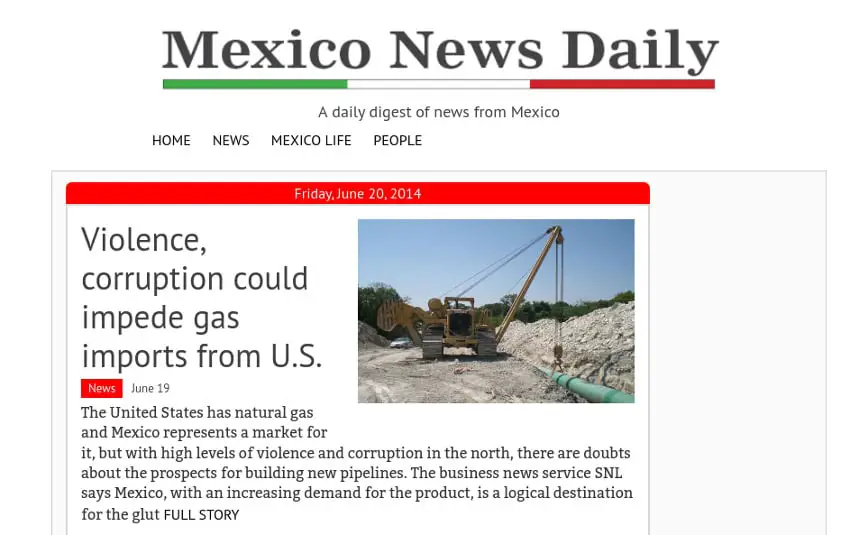
Thanks to Wayback Machine, we can see a snapshot from Mexico News Daily on June 20, 2014. (Wayback Machine screen capture)
To mark the occasion, we thought it would be interesting to take a look at 10 ways in which Mexico has changed since MND published its first article in June 2014. I’ll do that in this listicle.
This Saturday, look out for Mexico News Daily CEO and publisher Travis Bembenek’s column, in which he will continue the 10-year anniversary celebrations and look ahead at what’s in store for MND in the next decade.
MEXICO: THEN VS NOW
Political power
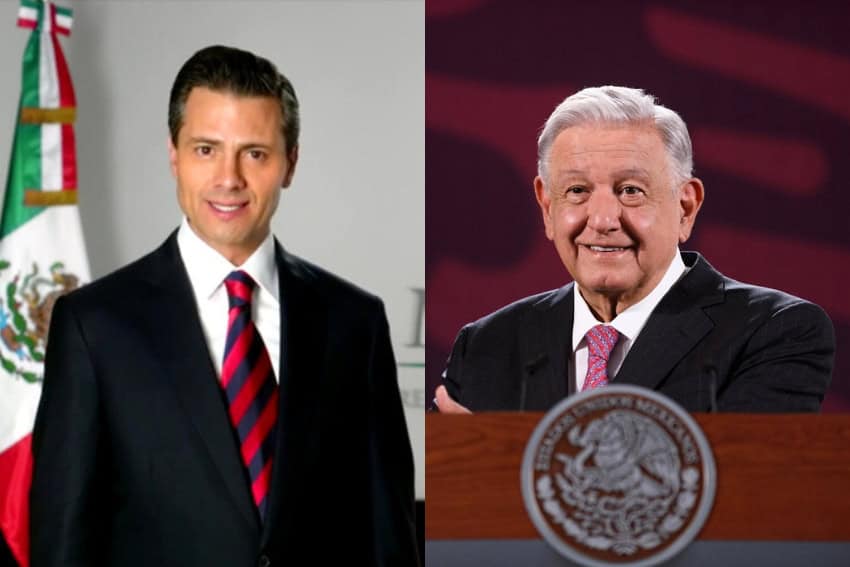
In 2014, Enrique Peña Nieto of the Institutional Revolutionary Party, or PRI, was Mexico’s president, while the current president is Andrés Manuel López Obrador of the National Regeneration Movement, or Morena.
A remarkable transformation in Mexico’s political landscape has occurred over the past decade. It can be summarized in just 10 words: the rise of Morena and the fall of the PRI.
Enrique Peña Nieto (PRI) was president in 2014 (left), while Andrés Manuel López Obrador (Morena) is president today in 2024. (Gob MX/MND)
In 2014, the PRI was in office in 20 of the country’s 32 federal entities, while the National Action Party (PAN) governed six and the Democratic Revolution Party (PRD) held power in four, including Mexico City.
The Citizens Movement (MC) party and the Ecological Green Party of Mexico (PVEM) governed one state each, while Morena — which was registered as a political party in 2014 — was not in power anywhere.
Fast forward a decade and Morena is Mexico’s most dominant political force by far. The party governs 22 federal entities, including Mexico City, while the PRI is now in office in just two states.
The number of states with PAN governments has declined to five, while MC now rules two states. The PVEM — now a Morena ally — is in office in one state.
After new governors are sworn in later this year, the number of Morena state governments will increase to 23, as the party triumphed in Yucatán in the June 2 elections and will take power there for the first time ever.
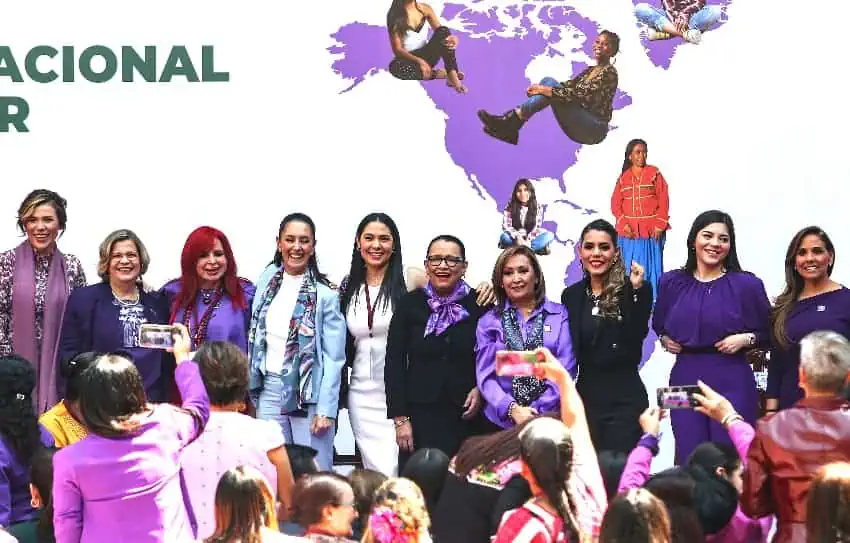
Women governors and members of President López Obrador’s cabinet are seen here celebrating International Women’s Day in March 2023. Gender quotas have brought women into all levels of Mexican politics. (ANDREA MURCIA/ CUARTOSCURO.COM)
Mexico now has gender parity in Congress, while there are higher numbers of female governors and federal ministers compared to 2014.
Peña Nieto had just three women in his cabinet in 2014, while López Obrador currently has nine women in his cabinet.
There are currently nine female governors, while in 2014 there were none.
And on Oct. 1, Claudia Sheinbaum will be sworn in as Mexico’s first female president.
The Mexican peso
There has been a lot of talk about the “super peso” lately (well, before its very recent depreciation), especially when it reached an almost nine-year high of 16.30 to the US dollar in April.
However, a decade ago, the peso was significantly stronger against the greenback. In 2014, the average USD:MXN exchange rate was 13.31.
Compared to its current position — 18.40 to the dollar on Thursday morning — the peso has depreciated almost 28% against the greenback over the past 10 years. In turn, the US dollar has appreciated 38% against the peso.
The minimum wage
There has also been a significant change in Mexico’s minimum wage over the past 10 years.
In 2014, the daily minimum wage was 63.77 to 67.29 pesos, with the higher rate applying in Mexico City, Baja California, Baja California Sur, and a number of large Mexican cities including Guadalajara and Monterrey.
Based on the average exchange rate in 2014, the higher minimum wage rate was equivalent to US $5.05 per day.
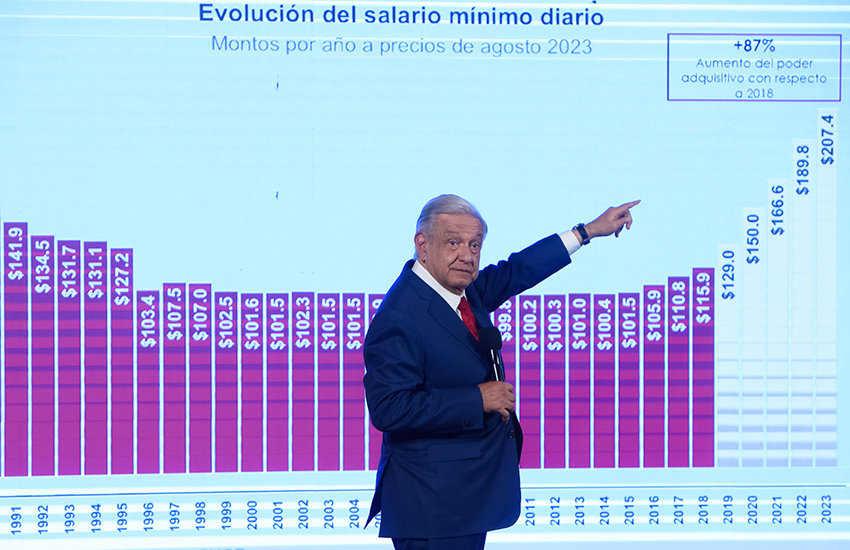
Adjusted for cost of living, the minimum wage decreased over the course of the 1990s then plateaued in the early 2000s. (LopezObrador.org.mx)
Compared to the higher minimum wage rate in 2014, Mexico’s sueldo mínimo has increased 270% in most of the country in peso terms and 457% in the north.
In dollar terms, the minimum wage has increased 167% in most of the country and 304% in the north.
Prices, of course, have also risen over the past 10 years, but the minimum wage has increased more.
Another metric indicating that Mexico has become less conservative over the past decade is the number of federal entities where abortion has been decriminalized.
In 2014, Mexico City was the only entity where first-trimester abortion was legal regardless of the circumstances, whereas the termination of an early pregnancy is now permitted in 12 entities. Jalisco looks set to become the 13th state to allow first-trimester abortion.
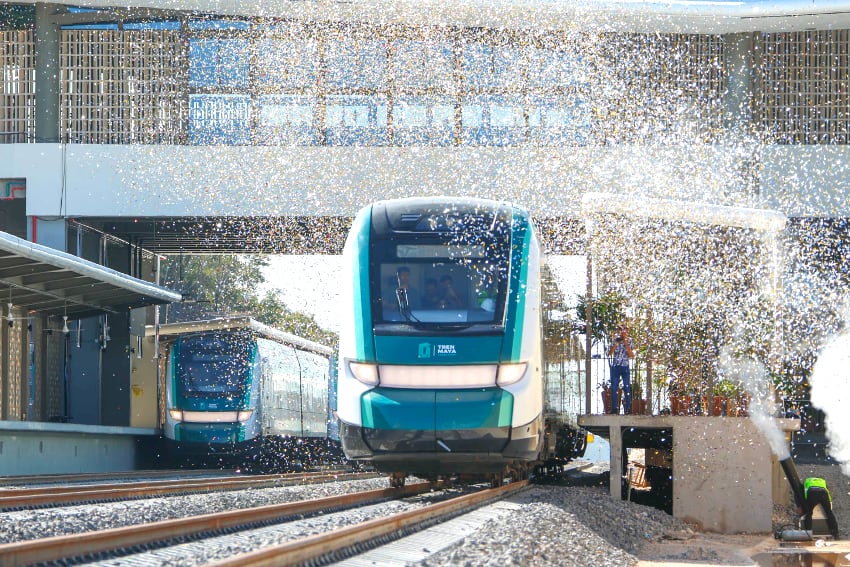
The first phase of the Maya Train was inaugurated on Dec. 15, 2023. (Lopezobrador.org.mx)
One project that was announced in 2014 but never completed is the previous government’s international airport project in Texcoco, México state, which López Obrador canceled in 2018.
* Of course, the list above is not an exhaustive one. Mexico has changed in many other ways over the past 10 years.
What would you add to the list? And what hasn’t changed in Mexico since 2014 that you would like to see change, or which you hope never changes.
Let us know in the comment section.
By Mexico News Daily chief staff writer Peter Davies (peter.davies@mexiconewsdaily.com)
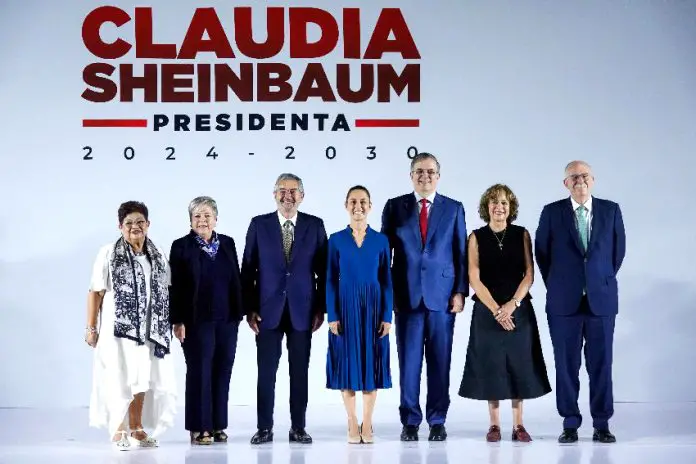
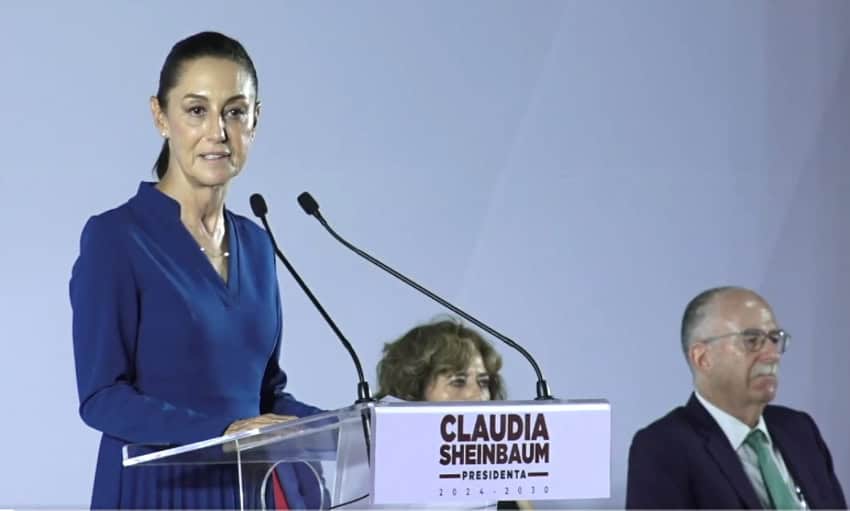
On Thursday morning, President-elect Claudia Sheinbaum presented her first six cabinet appointments, three women and three men. (Cuartoscuro)
President-elect Claudia Sheinbaum has made her first cabinet appointments, announcing on Thursday a selection of three men and three women who will serve in her administration.
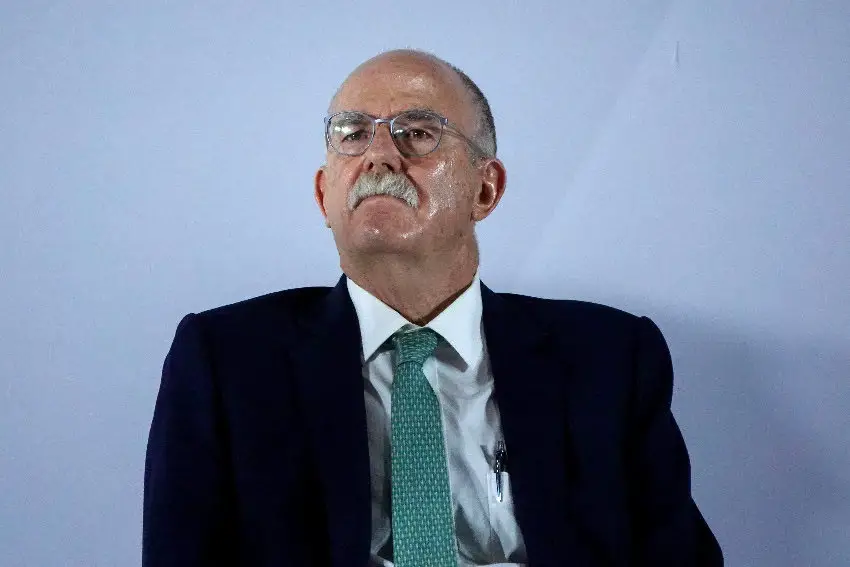
Sheinbaum, who will take office on Oct. 1, announced that former foreign affairs minister Marcelo Ebrard will be her economy minister, while current Foreign Affairs Minister Alicia Bárcena will be her environment and natural resources minister.
Sheinbaum held a press conference on Thursday morning to present six members of her cabinet. (Claudia Sheinbaum/X)
Juan Ramón de la Fuente, Mexico’s former permanent representative to the United Nations and head of Sheinbaum’s transition team, will succeed Bárcena as foreign affairs minister.
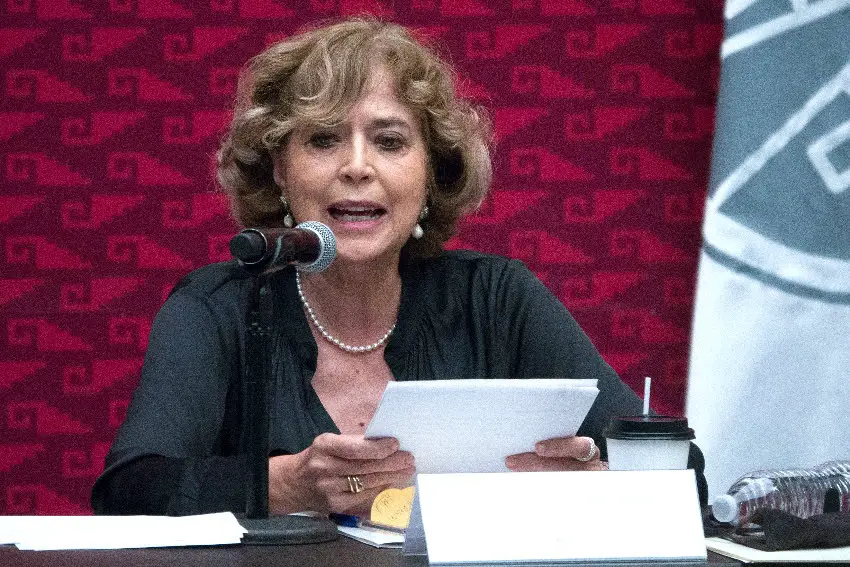
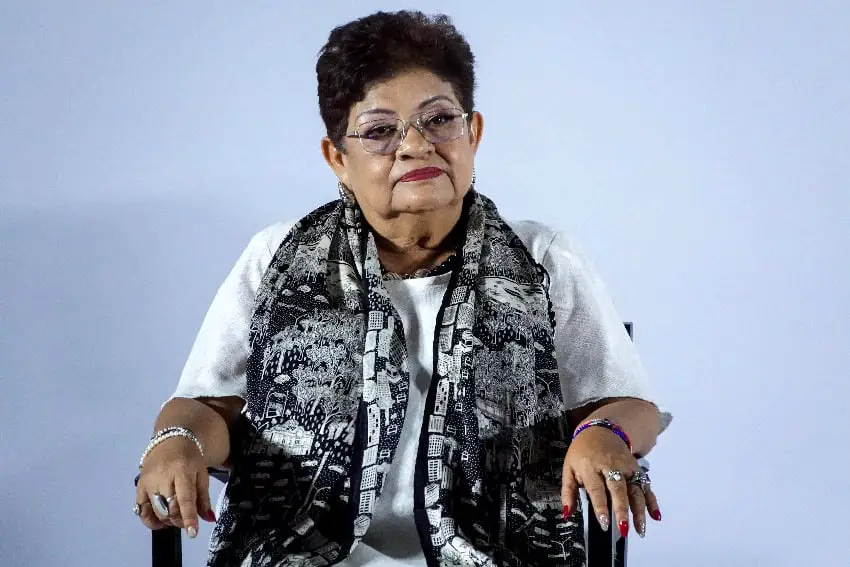
The other three appointments to Sheinbaum’s cabinet include Rosaura Ruiz as minister for science, humanities, technology and innovation; Julio Berdegué as agriculture and rural development minister; and Ernestina Godoy as legal counsel to the president.
Ruiz will lead a new ministry that will incorporate the National Council of Humanities, Science and Technology.
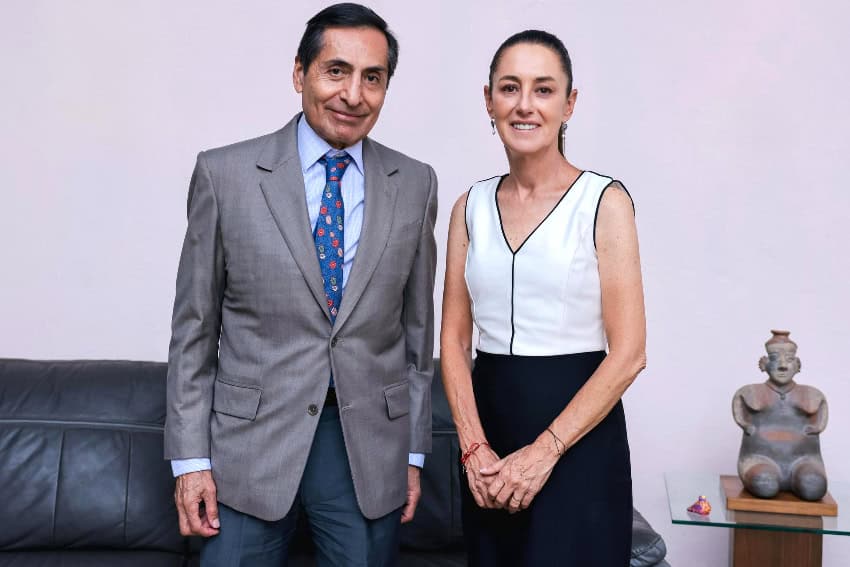
Rogelio Ramírez de la O will stay on as Finance Minister “indefinitely” and has laid out a list of economic commitments endorsed by President-elect Claudia Sheinbaum. (Claudia Sheinbaum/X)
She said Thursday that the six additional cabinet members who will be sworn in with her on Oct. 1 are “first-class men and women with experience” who will “help us a lot to achieve our objectives in the next six years.”
Two of the appointees, Ruiz and Godoy, were members of Sheinbaum’s government when she was mayor of Mexico City between 2018 and 2023.
Among the key appointments still to be announced are the interior minister, security minister, defense minister and energy minister roles.
What are the backgrounds of the cabinet appointees?
Marcelo Ebrard
The soon-to-be economy minister served as foreign affairs minister in the current federal government between December 2018 and June 2023, when he stepped down to pursue the ruling Morena party’s nomination for the 2024 presidential election.
Former Foreign Affairs Minister Marcelo Ebrard thanked President-elect Sheinbaum for her “trust” in appointing him as economy minister. (Cuartoscuro)
Ebrard was mayor of Mexico City between 2006 and 2012 and served as a minister in the capital during President Andrés Manuel López Obrador’s 2000-05 mayorship. He has also served as a federal deputy.
Ebrard will succeed Raquel Buenrostro as economy minister.
Alicia Bárcena
Mexico’s next environment minister has been foreign affairs minister for almost a year, succeeding Ebrard last July.
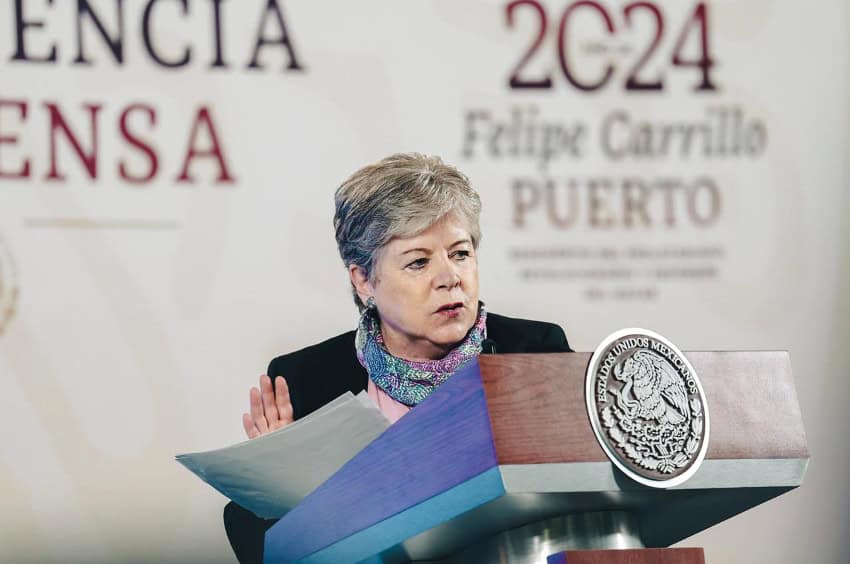
Foreign Affairs Minister Alicia Bárcena will become the environment minister in Sheinbaum’s administration. (SRE/X)
She was Mexico’s ambassador to Chile between September 2022 and June 2023 after serving almost 14 years as executive secretary of the United Nations Economic Commission for Latin America and the Caribbean.
Bárcena will succeed María Luisa Albores as environment minister.
Juan Ramón de la Fuente
The soon-to-be foreign affairs minster was Mexico’s permanent representative to the UN between 2018 and 2023.
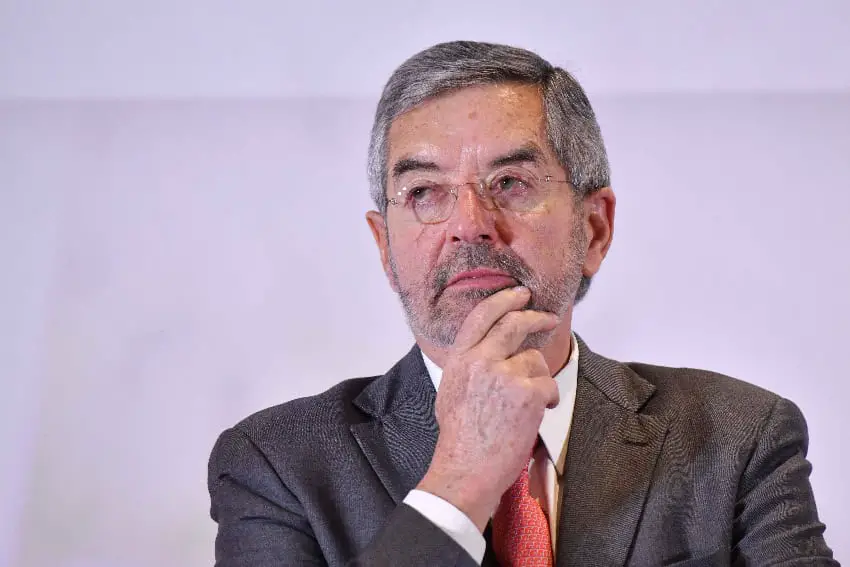
Juan Ramón de la Fuente will take over from Alicia Bárcena when Sheinbaum takes office in October as foreign affairs minister. (Cuartoscuro)
A psychiatrist by profession, de la Fuente was rector of the National Autonomous University (UNAM) between 1999 and 2007 and federal health minister during the presidency of Ernesto Zedillo (1994-2000).
He will replace Bárcena as foreign affairs minister.
Rosaura Ruiz
The future science minister headed up the Mexico City Ministry of Education, Science, Technology and Innovation for four years during Sheinbaum’s 2018-23 mayorship in the capital.
Rosaura Ruiz will be the minister for science, humanities, technology and innovation, a new cabinet-level position.(Cuartoscuro)
Ruiz, who has a PhD in biology, was head of UNAM’s Faculty of Science between 2010 and 2018.
When she becomes minister for science, humanities, technology and innovation she will effectively succeed María Elena Álvarez-Buylla, the current director of the National Council of Humanities, Science and Technology.
Julio Berdegué
Mexico’s next agriculture minister was assistant director-general for the Food and Agriculture Organization of the United Nations between 2017 and 2022. He also served as the organization’s regional representative for Latin America and the Caribbean.
Julio Berdegué will succeed Victor Villalobos as the Mexico’s next agriculture minister. (Cuartoscuro)
Originally from Mazatlán, Sinaloa, Berdegué has worked for and with a number of other international organizations, including the International Institute for Environment and Development.
The agronomist will succeed Víctor Villalobos as agriculture minister.
Ernestina Godoy
The woman set to be Sheinbaum’s chief legal advisor was Mexico City attorney general between 2018 and 2024. She previously served as a federal and Mexico City lawmaker.
Ernestina Godoy was most recently the attorney general of Mexico City, and will next be the chief legal advisor to the president. (Cuartoscuro)
Godoy, who completed her law degree at UNAM in 1979, has held a range of other government positions in Mexico City.
She will succeed María Estela Ríos as legal counsel of the federal executive.
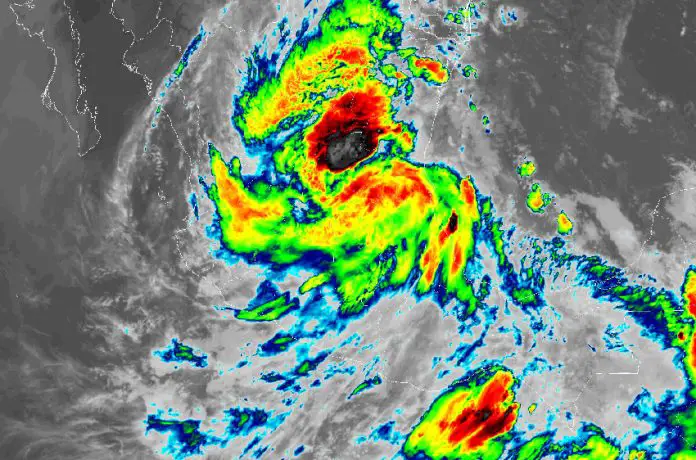
Satellite imagery showing Tropical Storm Alberto as it made landfall near Tampico, Tamaulipas on Thursday morning. (NOAA)
Tropical Storm Alberto, the first named storm of what is expected to be a busy Atlantic hurricane season, made landfall in the state of Tamaulipas and quickly weakened into a tropical depression Thursday morning.
The U.S. National Hurricane Center (NHC) noted that heavy rains and flash flooding were expected to continue as Alberto moved west at 30 km/h. Storm warnings and coastal watches were discontinued, however, even though wind and rain extend far from the storm’s center.
#Entérate | En Ramos Arizpe, #Coahuila pasajeros que viajaban en un autobús tuvieron que ser rescatados al quedarse en medio de una inundación. La tormenta tropical #Alberto los dejó atrapados en el Parque Industrial Santa María. pic.twitter.com/pSyUNSo6C4
Stranded passengers being rescued from a bus in Ramos Arizpe, Coahuila, Thursday morning after flash flooding caused by Tropical Storm Alberto filled the Santa María Industrial Park.
On Thursday morning, the most intense rains were occurring in the states of Tamaulipas, Coahuila, Nuevo León and San Luis Potosí, according to Mexico’s National Meteorological Service (SMN). Rain totals of 13 to 25 centimeters were expected at higher elevations, which could lead to reduced visibility, landslides, flooding and rising rivers and streams.
Very heavy rains (75 to 150 millimeters) are expected in Durango, Zacatecas, Guanajuato, Querétaro, Hidalgo, Puebla, Veracruz, Oaxaca and Chiapas.
In Chiapas, four portions of roadway were rendered impassable Thursday due to landslides and flooding, with emergency services unable to immediately reach the affected areas due to heavy rains. In Veracruz, a landslide dropped huge boulders onto one stretch of roadway, and a sinkhole developed in the capital city of Xalapa.
Many other states across Mexico will experience some amount of Alberto-related rain on Thursday, ranging from heavy rains to occasional showers.
Alberto was named a tropical storm on Wednesday, leading to the suspension of classes in several regions and the implementation of other safety preparations.
🚨 #RíoSantaCatarina, #NuevoLeón, al momento. Recuerda ☝️⛑ evita cruzar vados, arroyos y ríos.
No expongas tu vida.
— Webcams de México (@webcamsdemexico) June 20, 2024
Footage of the Santa Catarina river in Monterrey, Nuevo León, around 1 p.m. Thursday, being lashed by heavy rains from Alberto. (Webcams de México)
But it weakened rapidly after making landfall early Thursday morning. By 9 a.m., it was downgraded to a tropical depression when it was located 155 kilometers west of Tampico, Tamaulipas.
Maximum sustained winds were 75 km/h when Alberto made landfall, but then they slowed to 55 km/h.
Initially, there was some chagrin in Tampico that the amount of rainfall was low and wouldn’t put much of a dent in Mexico’s ongoing drought, reported the Associated Press (AP).
“We had hoped that it would come because water is so needed here, but at far as I can tell, it went somewhere else,” Tampico resident Marta Alicia Hernández told AP.
However, the outer bands of the system will likely bring the heavier rains that other areas experienced Thursday morning.
In Nuevo León, civil protection authorities have linked three deaths to Alberto’s heavy rains. A 16-year-old in Monterrey died in a river, trapped by the currents when he attempted to retrieve a soccer ball, and two 12-year-olds in the state were electrocuted in the municipality of Allende when they rode their bikes through a large puddle that was in contact with a live wire.
Nuevo León Governor Samuel García wrote on the social media platform X that metro and public transportation services would be suspended in Monterrey from Wednesday night until midday Thursday.
In Tamaulipas and Veracruz, officials closed all schools on Thursday (and some on Friday), and shelters were prepared in case residents would need to flee high waters.
Areas at higher elevations could see as much as 50 cm of rain, which could result in mudslides and flash flooding, especially Tamaulipas, Coahuila and Nuevo León.
Raúl Quiroga Álvarez, the Tamaulipas state minister of hydrological resources, said at a press conference Wednesday night that because the wind speeds were not “a risk,” his drought-ravaged state was actually looking forward to all the rain.
“This is what we’ve been waiting for for eight years in all of Tamaulipas,” he said. “This is a win-win event.”
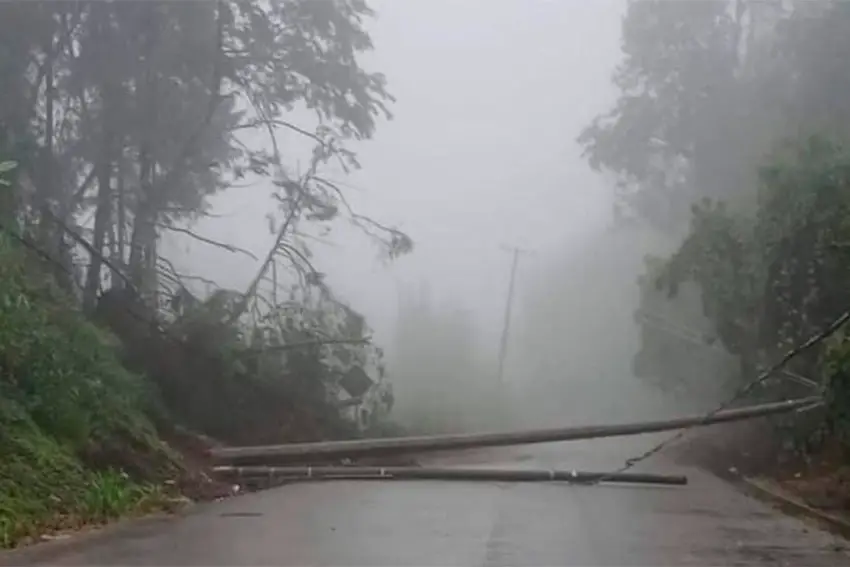
In Veracruz, Alberto brought winds and heavy rains that took down trees, power lines and even created a sinkhole in the city of Xalapa. (Escuadrón Nacional de Rescate)
In his Thursday morning press conference, President Andrés Manuel López Obrador said that members of the armed forces had been deployed in the storm areas to address possible damage.
Forecasters have predicted that the 2024 Atlantic hurricane season could be much more active than usual, with 17 to 25 predicted named storms this year. On average, there are 14 named storms per season.
The U.S. Hurricane Center currently is monitoring a broad area of low pressure that’s forming in the southwestern Gulf of Mexico.
As it moves over southeastern Mexico on Friday and over the Bay of Campeche on Saturday, it could develop into a tropical depression that will likely move slowly to the north and west.
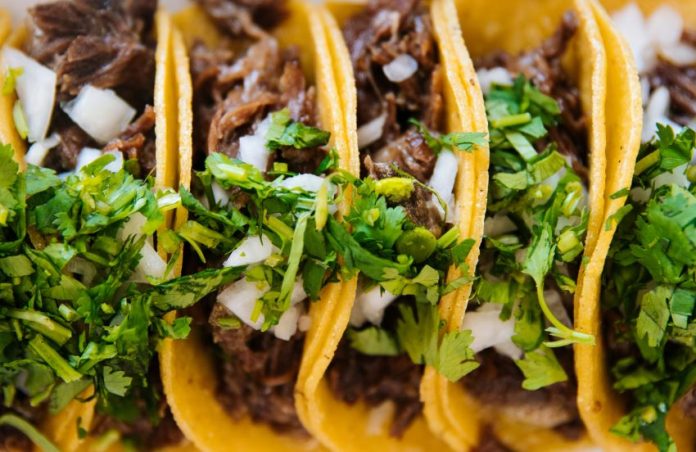
Cilantro is the best accompaniment for tacos and other Mexican dishes. (Unsplash)
First introduced by the Spanish in the 16th century, cilantro is a quintessential part of traditional Mexican dishes, from salsas to tacos to chilaquiles and soups.
As the price of cilantro in Mexico has risen steeply in the past month, some restaurants and vendors are having to cut back on using it, to the disappointment of their customers.
In a report by El País newspaper, a taco vendor in Mexico City told a customer who asked for cilantro on her tacos that he could only serve it mixed with onion, since it’s so expensive right now.
The newspaper reported that in the wholesale market in Iztapalapa borough, the price for a five-kilogram bushel of cilantro went from 130 pesos to 450 pesos in the last 30 days, according to data from the Economy Ministry.
According to the most recent inflation data from the national statistics agency INEGI — the annual headline inflation rate in May rose for a third consecutive month to 4.69%, driven by rising food costs — the price of cilantro in Mexico quadrupled between early May and early June.
Why is cilantro getting so expensive?
Multiple climate factors are impacting cilantro harvests, including drought, hail storms and extreme heat. Another factor is the presence of pests, particularly aphids.
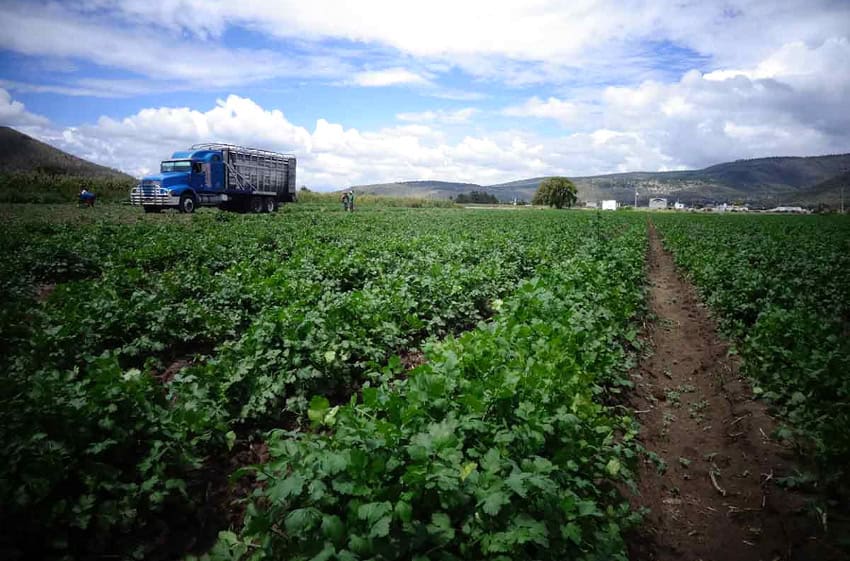
Drought, extreme heat and hail storms all contributed to crop failures in major cilantro-producing states, including Puebla and Hidalgo. (Senasica)
The state of Puebla leads Mexico in cilantro production, with more than 40% of the market. In explaining the price increase, Puebla’s Rural Development Ministry (SDR) pointed to a series of hail storms in April and May that affected up to 60% of all crops in the region, including cilantro, corn, chili, green beans and broccoli.
The presence of aphids — a problem that began three years ago — has also contributed to shortages of the popular herb. The SDR said that aphid infestations led to the loss of 1,000 hectares of cilantro over the past two months.
The pests stunt the growth of cilantro, leading to total crop loss and lower yields, explained Agustín Navarro, a Puebla producer who spoke to the news magazine Forbes México.
Navarro also said that “all the best quality cilantro goes for export” and that up to 80% of the cilantro produced in Puebla is exported to the United States.
Another factor prompting the price increase is that producers are having to spend more on fertilizers and agrochemicals, and hire extra labor to protect the cilantro from pests. These conditions have led some Puebla producers to opt not to plant the herb this summer.
In the state of Hidalgo, another top cilantro producer, extended drought has stunted production. Extreme heat has also made the crop less robust, and unable to withstand transportation to supply centers.
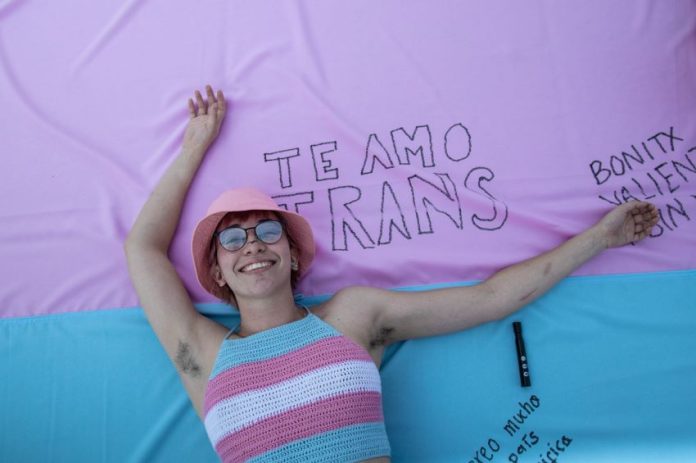
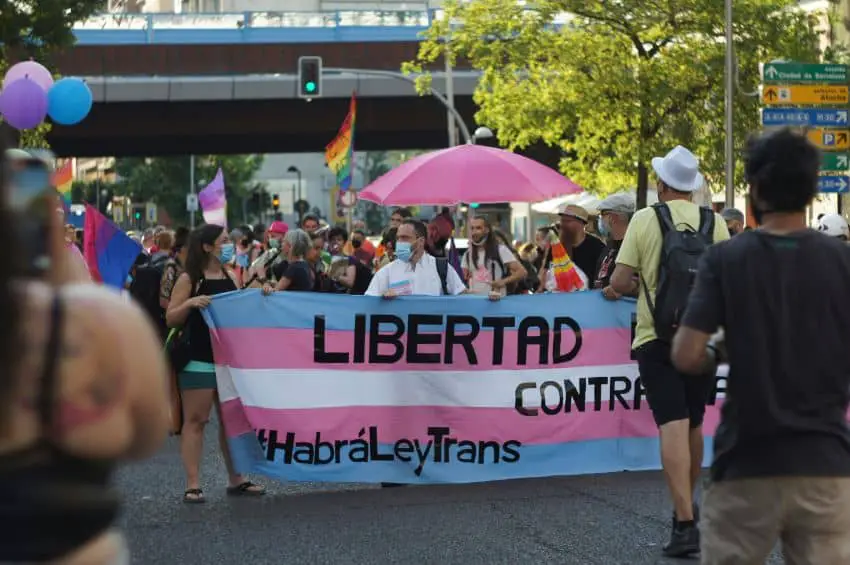
Mexico is fast developing good working rights for transgender people. What is being done to uphold dignity in the workplace? (Andrea Murcia/Cuartoscuro)
The first major protections for LGBTQ+ people in the workplace in Mexico came in 2016, thanks to a program called Mejores Lugares para Trabajar LGBTQ+ (Better Workplaces for LGBTQ+). This initiative was founded by the Washington D.C. based Human Rights Campaign Foundation (HRC). But what rights are available to transgender employees in the workplace today?
To determine whether a company is LGBTQ+ friendly, HRC evaluates three aspects. The first is the adoption of non-discrimination policies. The second is the creation of employee groups or councils that work internally on diversity and inclusion. Thirdly, companies are required to participate in public activities to support LGBTQ+ inclusion.
Trans rights are developing in Mexico, but there is still some way to go to ensure equality in the country. (Mari Vlassi/Unsplash)
The 2023 edition introduced a requirement for training and skills development strategies for LGBTQ+ inclusion with an LGBTQ+ perspective for entry-level personnel, programs for leadership personnel and on an ongoing awareness training for all personnel.
After seven years of the program, the results of the 2024 index show overwhelming improvement. Three hundred and five employers are already participating, with a workforce of more than 1.5 million people across the country.
Since 2022, non-binary gender identities have become legal for ID cards and passports. These are now administrative processes before the civil registry in some states, although these are not yet available at a federal level. This recognition has meant that companies are now making efforts to accommodate the gender identities of their workers.
Workplace issues facing transgender people
According to the National Survey on Sexual and Gender Diversity (Endiseg), more than 908,000 Mexicans identified as transgender. Of these, around 520,000 are trans men, with the remainder trans women.
“The likelihood of suffering some type of violence in the workplace is higher if people self-identify with an orientation or are higher if people self-identify as having a non-normative orientation or identity,” according to the Monthly Report on the Behavior of the Economy, June 2023, from National Commission on Minimum Wages (Conasami). Those who belong to the LGBT+ population are between 5 and 19% more likely to be denied a job. Trans women are the most affected, “with a probability of 18.8%,” the report states.
The questions asked by the “Best Places to Work LGBTQ+”program
The 2025 edition includes in its questions key issues to accompany trans, queer and non-binary talent in workspaces. Businesses will be asked to demonstrate progress within the company in several ways:
To show that their human resources systems have at least three sex or gender options.
Whether there are internal surveys, questionnaires or internal measurement systems allowing employees to self identify and accurately express their sexual orientation and gender identity.
Morganna Love is a Mexican trans woman, actress and singer. Trans visibility is increasing in Mexico, with accommodations being made for those who identify outside the traditional gender binary. (Facebook)
To provide a legal protocol for the recognition of a change of name or gender of a person and to ensure that they do not lose any benefits accrued under their previous name and contract.
Provide policies to promote the use of preferred names and pronouns. Companies must also accommodate bathroom and dressing room choices and dress codes that accommodate all workers.
If you want to learn more about the HRC Equidad MX 2024 Report, you can find it here.
What do you think of the employment challenges experienced by trans people in Mexico?
Camila Sánchez Bolaño is a journalist, feminist, bookseller, lecturer, and cultural promoter and is Editor in Chief of Newsweek en Español magazine.
Ecotourism in Mexico is an experience unlike any other, thanks to the stunning natural beauty and diversity of the country. (Linda Meisinger/Unsplash)
Ecotourism is a form of travel that focuses on minimizing environmental impact and maximizing benefits for local communities and nature conservation. This approach seeks to reduce the ecological footprint of travel by choosing sustainable options, such as low-impact transportation, eco-friendly accommodations, activities that respect the natural environment, and support for local initiatives that promote conservation and sustainable development. Mexico has many destinations ideal for ecotourism thanks to its bountiful nature.
Here are some of the best places in Mexico if you want to travel sustainably:
Chiapas
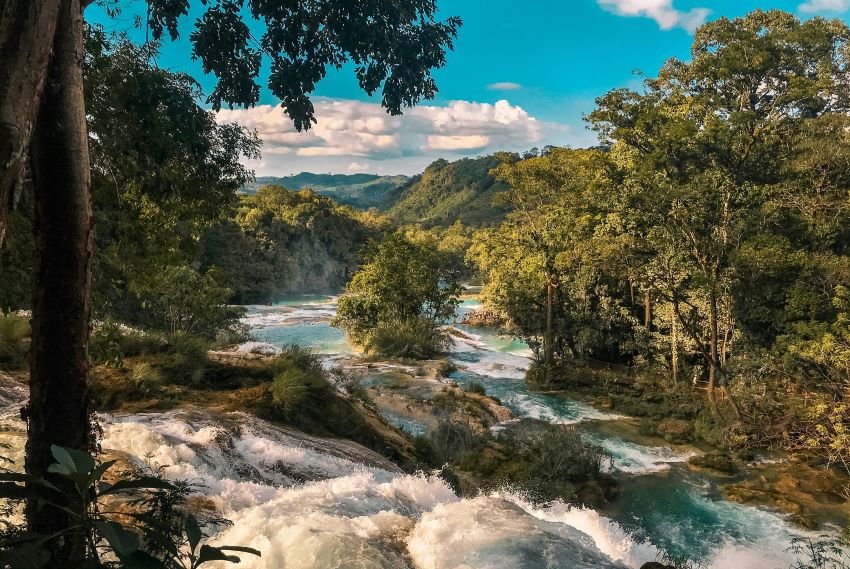
Cascadas de Agua Azul, Chiapas. (Lorraine Mojica/Unsplash)
Located in southeastern Mexico, Chiapas is a treasure trove of biodiversity, culture, and breathtaking landscapes. With its lush tropical jungle, majestic waterfalls, ancient Mayan ruins, and vibrant indigenous culture.
Nature: Chiapas is home to one of Mexico’s most biodiverse tropical forests. Travelers can immerse themselves in pristine nature while exploring national parks and biosphere reserves. One of the highlights is the Montes Azules Biosphere Reserve, which hosts an impressive variety of flora and fauna, including jaguars, tapirs, howler monkeys, and many birds. Waterfalls like Agua Azul, Misol-Ha, and Cascadas de Roberto Barrios offer spectacular waterfalls surrounded by vegetation, ideal for swimming, hiking, and enjoying the natural beauty.
Culture: Chiapas is home to vibrant indigenous cultures, where ancestral traditions intertwine with daily life. Travelers can visit the villages of San Juan Chamula and Zinacantán, where they will witness ancient religious practices and traditional crafts. Palenque, with its huge temples and palaces surrounded by jungle, is one of Mexico’s most impressive archaeological sites. Other sites like Bonampak and Yaxchilán offer the opportunity to explore remote ruins amidst nature.
Eco-friendly Accommodation:
Hotel Chan-Kah Resort Village: Located in Palenque, near the famous Mayan ruins. It combines luxury with sustainability, offering comfortable and environmentally friendly rooms. They also offer jungle excursions to explore the local flora and fauna.
Hotel Maya Tulipanes, Montes Azules biosphere. (Facebook)
Eco Hotel Maya Tulipanes: Located in the Montes Azules Biosphere Reserve, the rooms are built in harmony with the environment and offer stunning jungle views. The hotel organizes bird-watching, kayaking, and guided hikes.
EcolodgeLas Nubes: In the community of Tziscao, near the Guatemalan border. Its rustic cabins overlook the lake and the surrounding mountains. The hotel is committed to conserving the natural environment and offers activities such as boat rides, hiking, and visits to local communities.
Oaxaca
Located on the Pacific coast, Oaxaca is one of Mexico’s most iconic states. With its varied geography, pristine beaches, mountains, valleys, and forests, it offers a unique experience for travelers seeking to explore eco-consciously.
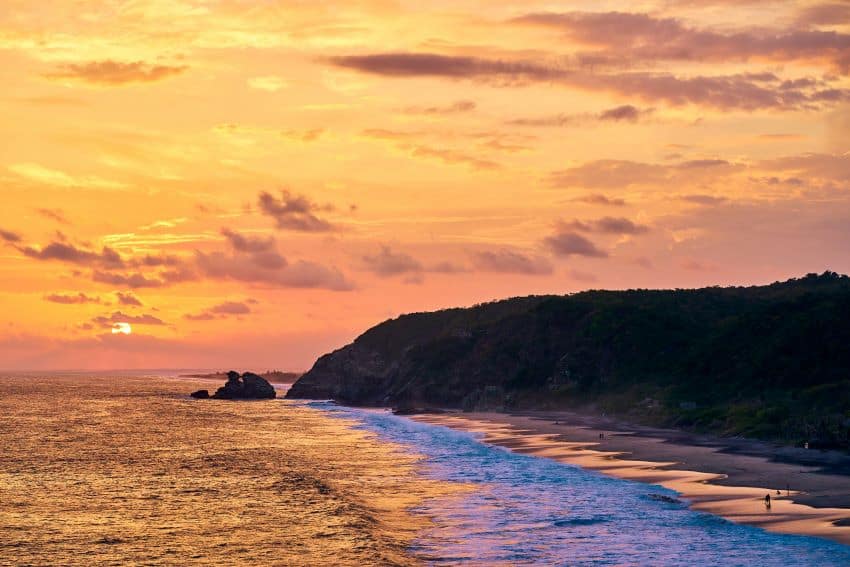
Nature: On the coast, places like Puerto Escondido and Mazunte offer pristine beaches and opportunities for surfing, diving, and whale watching. In the state’s interior, the Sierra Norte de Oaxaca is a paradise for travelers interested in exploring fog forests, spectacular waterfalls, and indigenous communities that preserve ancestral traditions. Destinations such as Hierve el Agua, Sierra Juárez, and the ecological community of Benito Juárez offer unique natural experiences.
Mazunte, Oaxaca. (Amauri Mejia/Unsplash)
Culture: In cities like Oaxaca de Juárez and Ocotlán de Morelos, travelers can explore colorful markets where local products such as textiles, ceramics, mezcal, and traditional food are sold. Ancient Zapotec and Mixtec ruins are another major attraction; sites like Monte Albán, Mitla, and Yagul offer the opportunity to explore the region’s archaeological legacy and learn about the indigenous cultures that flourished here centuries ago.
Eco-friendly Accommodation:
Celeste del Mar: Located in Mazunte, this eco-hotel offers peace and relaxation experience by the sea. The rooms are built with local and environmentally friendly materials, and the hotel has a restaurant serving organic and seasonal food.
Mixtli Ecohouse Zipolite: Located on Zipolite beach, these eco-friendly cabins offer simple and comfortable accommodation in harmony with nature. The hotel also promotes sustainable practices, such as using renewable energy and water conservation.
Santa Catarina Lachatao: Located in the Sierra Norte de Oaxaca, this eco-lodge offers a unique chance to commune with nature. The cabins are built with panoramic views of the mountains. They also offers hiking, bird-watching, and craft workshops with the local community.
Quintana Roo
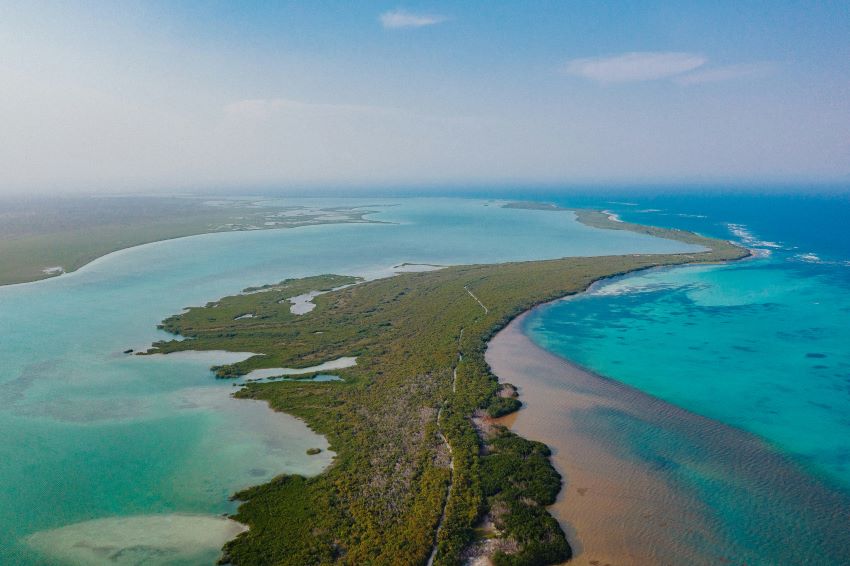
Sian Ka’an biosphere reserve. (Tom Robak/Unsplash)
Located on the Yucatán Peninsula, it is known for its stunning white sand beaches, turquoise waters, and coral reefs. However, beyond its popular tourist destinations like Cancun and Playa del Carmen, Quintana Roo also offers a variety of opportunities for eco-conscious tourism, where travelers can enjoy the natural beauty of the region responsibly and sustainably.
Nature: Quintana Roo is home to a great marine biodiversity, with coral reefs, mangroves, and protected areas that are home to a variety of marine species. One of the main destinations for eco-conscious tourism is the Sian Ka’an Biosphere Reserve, a vast and pristine ecosystem that includes jungles, mangroves, lagoons, and coral reefs. Here, visitors can participate in guided tours to observe birds and manatees, kayak in the mangroves, and snorkel in protected reefs.
The beaches of Quintana Roo are an important nesting site for sea turtles, including species such as the green turtle and the loggerhead turtle. Several local organizations work on conserving these species, protecting nests, educating the community, and offering volunteer programs for travelers interested in contributing.
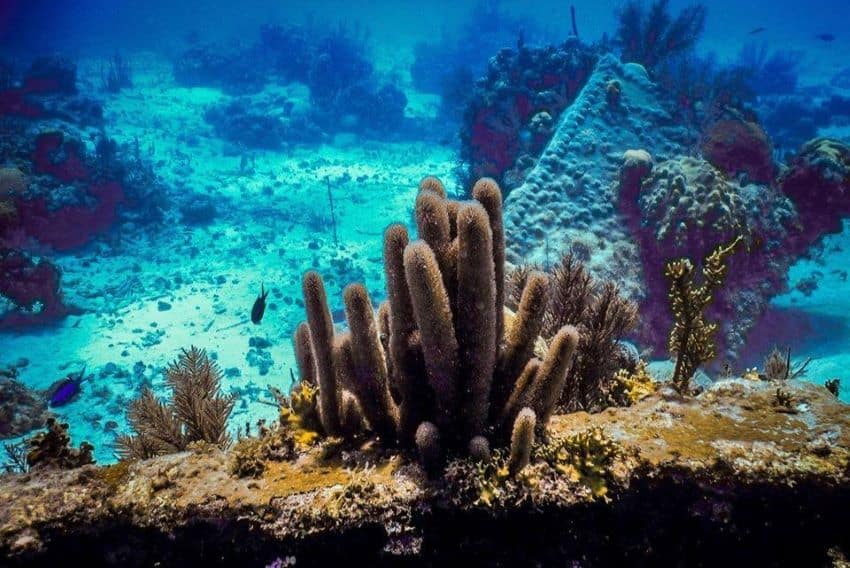
Eco-tourism in Marine Reserves: Places like the Banco Chinchorro Biosphere Reserve and the Xcalak Reef National Park are popular destinations for diving and snorkeling, where visitors can explore coral reefs and observe an incredible variety of marine life.
Reserva de la Biosfera Banco Chinchorro. (Gobierno de México)
Eco-friendly Accommodation:
Azulik: Located in Tulum, this eco-luxury wellness retreat combines unique architecture with a focus on sustainability and well-being. The resort is built in harmony with nature and offers villas and cabins with stunning views of the Caribbean Sea. They promote environmental conservation and offer unique experiences, such as dinners under the stars and natural spa treatments.
Hotel Esencia: This boutique hotel is located in Xpu-Ha, between Playa del Carmen and Tulum. Esencia offers a luxury experience alongside a respect for nature. The hotel is surrounded by tropical gardens and pristine beaches and offers comfortable rooms with sea or garden views. They also promote sustainable practices, such as water and energy conservation.
Hotel Cielo y Selva: Located in the Sian Ka’an Biosphere Reserve, this glamping offers a unique chance to get up close with the wild side of Mexico. Their tents are built with natural materials and equipped with modern amenities. The camp promotes environmental conservation and offers hiking, kayaking, and bird-watching activities.
Baja California Sur
Todos Santos, Baja California Sur. (Nick Dunlap/Unsplash)
Located at the southern end of the Baja California Peninsula, it is an iconic destination offering a unique combination of natural beauty, marine biodiversity, and local culture. Its stunning desert landscapes, pristine beaches, and crystal-clear waters make it an ideal destination for eco-conscious tourism, where travelers can enjoy nature responsibly and contribute to its conservation.
Nature: This is one of the world’s best destinations for marine life. Places like the Upper Gulf of California, Colorado River Delta Biosphere Reserve, and the Revillagigedo Archipelago Biosphere Reserve offer unique opportunities to observe whales, dolphins, manta rays, whale sharks, and other marine species in their natural habitat. Regional tour operators are committed to sustainable wildlife-watching practices that protect animals and their environments.
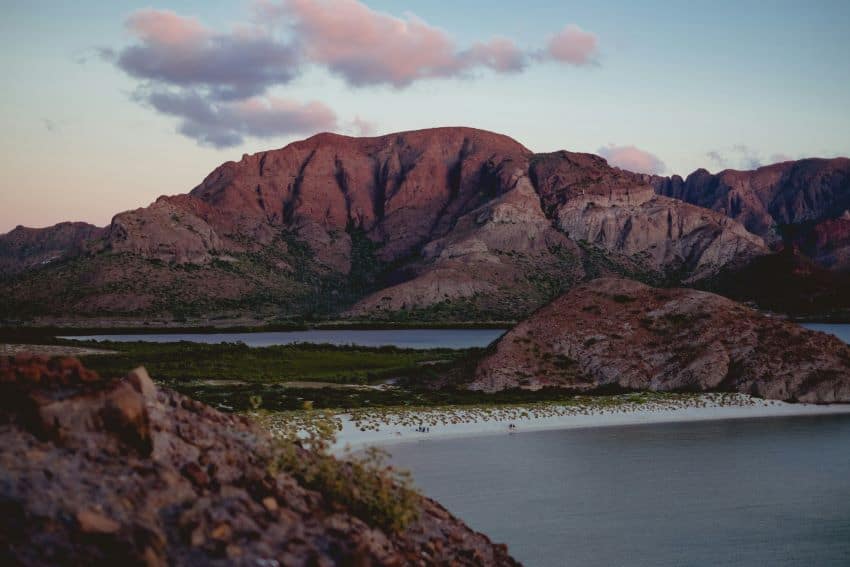
Baja California Sur boasts a wealth of pristine beaches and protected areas that offer opportunities for eco-conscious tourism. Places like Cabo Pulmo, a marine reserve that hosts the oldest coral reef in North America, and Espíritu Santo Island, a paradise of deserted beaches and crystal-clear waters, are popular destinations for ecotourism. Here, visitors can enjoy activities such as diving, snorkeling, kayaking, and hiking while contributing to environmental conservation.
Culture: Towns like Loreto, Todos Santos, and La Paz offer the opportunity to explore local culture, gastronomy, and traditions. Many local communities are involved in tourism initiatives promoting sustainable development and preserving local culture and heritage.
Eco-friendly Accommodation:
White Lodge Baja: Located in Los Cabos, this eco-luxury wellness retreat features an on-site spa and 10 private cottages built in total harmony with nature. It’s 45 minutes from the Historic Center of San Jose del Cabo.
Hotel Baja Club: This historic mansion-turned-hotel in La Paz is now one of the most luxurious properties in La Paz. Its architect, Max von Werz, is a fervent advocate of sustainable architecture. In fact, his team rescued original timber beams and restored as much of the original materials as possible to create this beautiful hotel. The property’s onsite Greek restaurant also serves sustainable seafood.
Camp Cecil de la Sierra: In the quiet town of Todos Santos, this luxury tent camp offers glamping on a local ranch in the Sierra Laguna Mountains. In addition to gorgeous views, guests can enjoy homemade food, cultural immersion, and organized tours around the local reserve.
Traveling responsibly in Mexico is possible in protected areas where eco-tourism is ingrained in local policy and culture and everywhere we go. As travelers, we have the opportunity — and obligation — to ensure our impact is positive in our destinations. This is especially important when visiting places not officially designated as protected.
Camila Sánchez Bolaño is a journalist, feminist, bookseller, lecturer, and cultural promoter and is Editor in Chief of Newsweek en Español magazine.
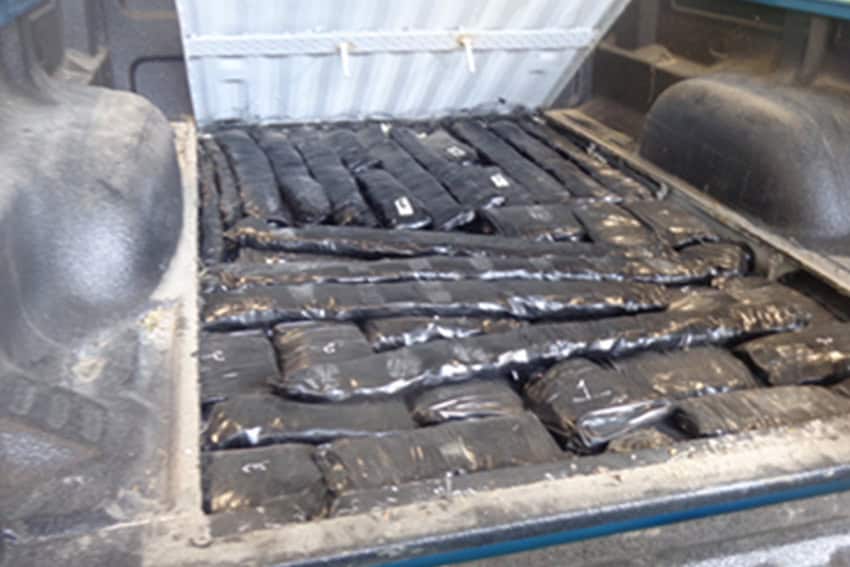
The Department of Justice said the arrests were the result of a five-year investigation into a symbiotic relationship that had developed between the Sinaloa Cartel and Chinese underground banking that provided Chinese nationals with ways to illegally convert yuan into US dollars. (Shutterstock)
The Justice Department in the United States has charged 24 people in connection with an alleged Sinaloa Cartel drug trafficking and money laundering conspiracy involving Los Angeles-based associates of the Cartel and groups linked to underground banking in China.
A superseding indictment, returned on April 4 and unsealed on Monday, according to a DOJ press release, charged the defendants with a mutually beneficial money laundering conspiracy to “aid and abet the distribution of cocaine and methamphetamine.”
DEA head Anne Milgram told reporters Wednesday that “the Sinaloa Cartel “has entered into a new criminal partnership with Chinese nationals who launder money for the cartels.” (File photo/Shutterstock)
It also charged defendants with conspiracy to “launder monetary instruments” and a conspiracy to “operate an unlicensed money transmitting business.”
The indictment is the result of a multi-year, multi-agency investigation dubbed “Operation Fortune Runner,” during which US $5 million in drug proceeds, firearms and significant quantities of narcotics were seized.
Drug Enforcement Administration chief Anne Milgram told a press conference on Tuesday that the investigation “shows that the Sinaloa Cartel has entered into a new criminal partnership with Chinese nationals who launder money for the cartels.”
During the conspiracy, “more than $50 million in drug proceeds flowed between the Sinaloa Cartel associates and Chinese underground money exchanges,” the DOJ said.
U.S. Attorney Martin Estrada said that at least 22 of the 24 defendants — some of whom face additional charges — have been arrested.
Twenty are expected to appear in court in Los Angeles in the coming weeks. If convicted on all charges, they face jail sentences ranging from a minimum of 10 years to a maximum of life.
The DOJ said that “Chinese and Mexican law enforcement informed United States authorities that those countries recently arrested fugitives named in the superseding indictment who fled the United States after they were initially charged last year.”
The partnership between Chinese money launderers and the Sinaloa Cartel came about, US officials said, because drugs sold by the cartel in the U.S. resulted in millions of US dollars that the Sinaloa Cartel needed to turn into pesos to send back to Mexico. The Sinaloa Cartel provided the Chinese money launderers with plenty of US dollars it needed to supply to Chinese nationals seeking to move yuan out of China. (CBP/X)
Mexico and China arrested one fugitive each, according to Homeland Security Advisor Liz Sherwood-Randall.
Exchanging dollars for pesos and yuan for dollars
In its statement, the DOJ said that “the Sinaloa Cartel is largely responsible for the massive influx of fentanyl into the United States over the past approximately eight years,” and noted that its criminal activities “generate enormous sums of U.S. currency in the United States that belong to the cartel in Mexico.”
“Profits from the drug trade must be repatriated to Mexico for use by the cartel,” the department said.
It noted that the superseding indictment alleges that “a Sinaloa Cartel-linked money laundering network collected and, with help from a San Gabriel Valley, California-based money transmitting group with links to Chinese underground banking, processed large amounts of drug proceeds in U.S. currency in the Los Angeles area.”
“They then allegedly concealed their drug trafficking proceeds and made the proceeds generated in the United States accessible to cartel members in Mexico and elsewhere,” the DOJ added.
The statement also said that lead defendant Edgar Joel Martinez-Reyes and others “allegedly used a variety of methods to hide the money’s source, including trade-based money laundering, ‘structuring’ assets to avoid federal financial reporting requirements, and the purchase of cryptocurrency.”
The DOJ said that Martinez-Reyes allegedly traveled to Mexico in January 2021 to meet with Sinaloa Cartel members “to strike a deal with money remitters with links to Chinese underground banking to launder drug trafficking proceeds in the United States.”
“After the deal was struck, the Sinaloa Cartel — through their connections and associates — distributed cocaine, methamphetamine and other narcotics, generating US dollars as drug proceeds,” the department said.
According to the press release, Martinez-Reyes and other conspirators allegedly then delivered the currency — “frequently in amounts of hundreds of thousands of US dollars in cash” — to other members of the Chinese underground money exchange and remitting organizations to be laundered for a fee that was lower than that charged by other launderers.
“The remitting organizations possessed large amounts of U.S. currency and could help wealthy Chinese nationals evade China’s currency controls,” the DOJ said.
The Chinese underground banking system is used by Chinese nationals who wish to move hundreds of thousands of dollars out of China. Beijing only allows citizens to move US $50,000 per year out of the country. (Shutterstock)
In a “background” section of its press release, the DOJ said that Chinese underground money exchanges in the United States assist the Sinaloa Cartel and other criminal organizations to move their profits from the United States to Mexico “by providing a ready market for U.S. currency in the United States.”
“Many wealthy Chinese nationals who live, work, or invest in China wish to transfer assets to the United States for various reasons but are barred by the Chinese government’s capital flight restrictions from transferring the equivalent of more than $50,000 per year out of China,” the department said.
“These individuals seek informal alternatives to the conventional banking system to move their funds.”
The DOJ said that a China-based person who wishes to transfer money to the United States contacts an individual who is selling US dollars in the U.S. The currency vendor subsequently provides details for a bank account in China and instructs the China-based person to make a deposit in Chinese currency (renminbi). Once the owner of the account sees that the deposit has been made, an equivalent amount of US dollars is released to the buyer in the United States.
That money could be used to buy real estate in the United States or pay tuition, for example.
The DOJ noted that “the sellers of U.S. currency in the United States obtain dollars in a variety of ways,” including from drug traffickers.
Traffickers “increasingly have partnered with Chinese underground money exchanges to take advantage of the large demand for U.S. dollars from Chinese nationals,” it said.
“The funds that are transferred in China are then used to pay for goods purchased by businesses and organizations in Mexico or elsewhere, such as consumer goods or items needed to aid the drug trafficking organization to manufacture illegal drugs, such as precursor chemicals, including fentanyl,” the DOJ said.
Estrada, the U.S. attorney, described the situation as a “cycle of destruction.”
“The drugs being sold here in the United States are then being used to fund precursor chemicals which will be used to make even more drugs that are sent into our country,” he said.
Estrada said that the superseding indictment and the United States’ “international actions” show that the U.S. “will be dogged in our pursuit of all those who facilitate destruction in our country and make sure they are held accountable for their actions.”
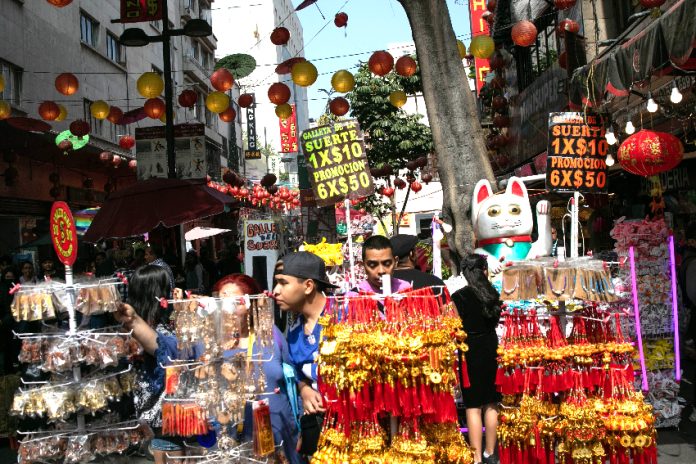
Products on sale in Mexico City's "barrio chino" or Chinatown, ahead of Chinese New Year. (Cuartoscuro)
Chinese commerce is conquering the historic center of Mexico City, where huge Chinese-operated wholesale centers are filled to the brim with products made in the East Asian economic powerhouse and scores of buildings have been turned into warehouses to store the goods.
This week, the Reforma newspaper has published a series of articles on what it described as a “tsunami of Chinese commerce” in the capital’s downtown in the post-pandemic period.
Its reporting delves into the significant and very notable changes that have occurred in the centro histórico as a result of the proliferation of Chinese-operated establishments, and reveals that at least some Mexicans are far from happy about the situation.
Chinese shopping plazas and warehouses
Reforma reported that at least four Chinese-operated “macroplazas,” or large wholesale shopping complexes, have opened in a 1-square-kilometer area of Mexico City’s historic center.
The area, located just south of Mexico City’s main square, has turned into a kind of Chinatown replete with Chinese restaurants and supermarkets.
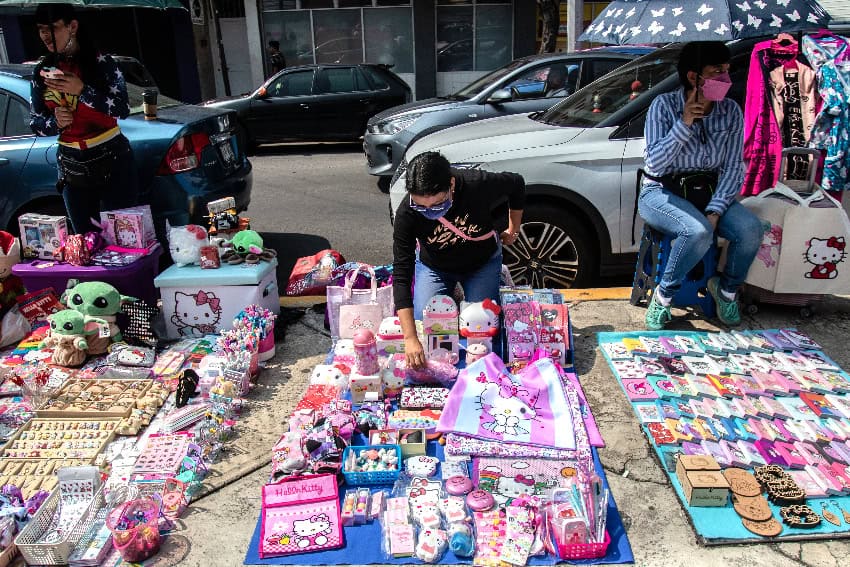
The macroplazas supply (mainly) cheap Chinese-made products of all types to both formal businesses and vendors who work in the informal economy, selling goods in the street or in the capital’s elaborate subway system, for example.
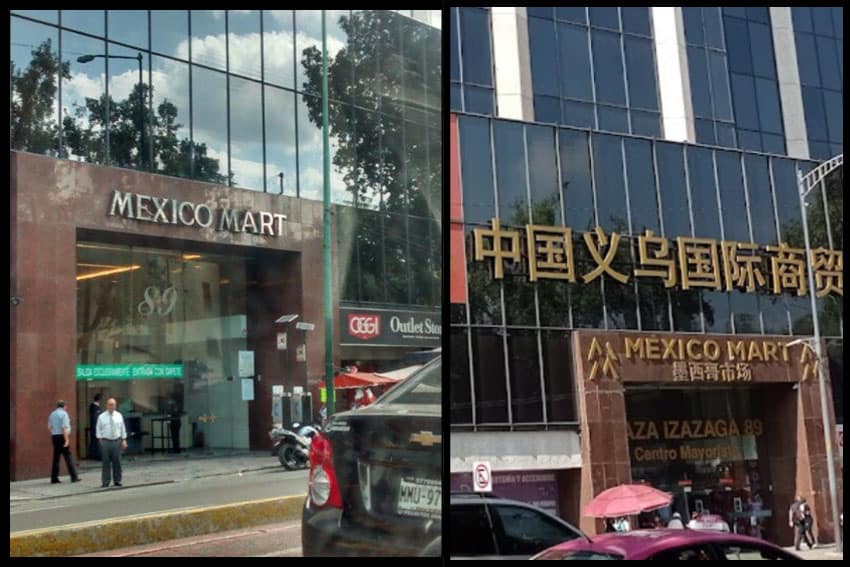
The Mexico City macroplaza known as Mexico Mart, or Plaza Izazaga 89, in 2014 (left), and in 2021 (right), after the mall building in the capital’s historic center became a mecca for goods produced in China. (Foursquare/Google)
The largest of these shopping plazas is a 16-story building on Izazaga Street that has some 40 wholesale stores per floor. In Spanish, it’s called Mexico Mart or Plaza Izazaga, but a sign in Mandarin identifies it as the International Trade City of Yiwu, China.
The building, which sustained some damage in a 2017 earthquake when it housed Mexico City government offices, “is a pioneer in the sale of thousands of products brought [to Mexico] from China,” Reforma reported.
The newspaper said that the managers of the stores in Mexico Mart and other Chinese macroplazas are Chinese while most of the rank-and-file employees are immigrants from Latin American countries such as Honduras and Venezuela. Those workers are paid in cash and don’t have contracts or access to benefits, Reforma said.
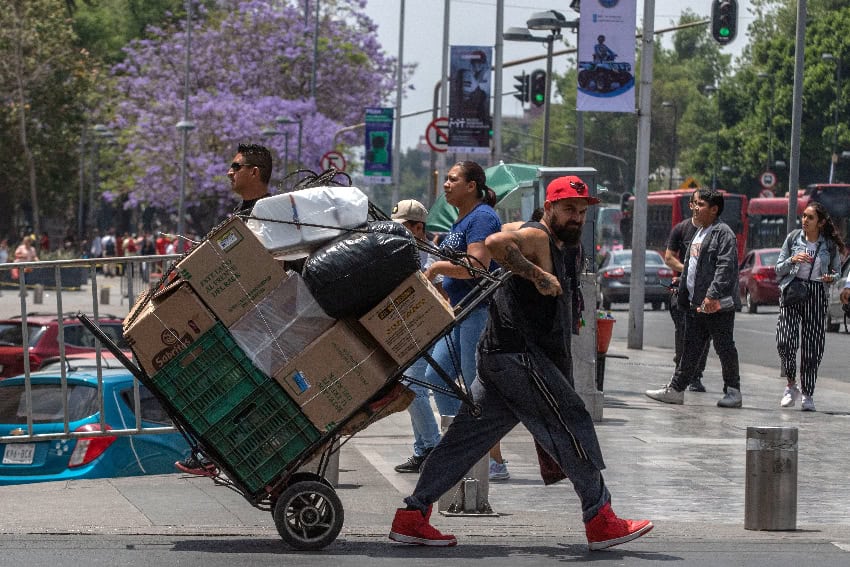
According to Reforma, the Chinese owners and managers of the wholesale stores have “armies of diableros,” or hand truck operators, who move goods around the historic center of Mexico City, including from warehouses to the shopping plazas.
The Chinese plazas employ hand truck operators to move merchandise around the city. (Cuartoscuro)
Jesús Rodríguez, president of the Mexico City Chamber of Commerce, told Reforma that the downtown has become a “bodegón” or large warehouse for Chinese products.
José Santiago, a long-term owner of a bridal wear store on Chile Street, said that at least 100 buildings in the historic center — some of which were recently restored with public money — have been partially or wholly converted into warehouses for Chinese products.
Many Mexican-owned businesses — and a significant number of residents — have been displaced as a result. Among the shops that have closed down are ones that sold bridal wear, handmade shoes, books, textiles, religious items and furniture.
Rents soar due to the influx of Chinese commerce
According to business owners, commercial spaces that were rented for 20,000 or 30,000 pesos (US $1,100 to $1,600) per month last year have been turned into warehouses and are now rented for 50,000–90,000 pesos (US $2,700 to $4,900) per month.
Reforma reported that people who introduce themselves as lawyers have approached the historic center property owners to inquire about rental prices and subsequently offered to pay double or triple in order to turn the spaces into warehouses for Chinese products. Existing tenants who are unable to match the offers have, in many cases, been asked to leave or evicted.
“I don’t blame those who rent the [spaces to Chinese businesses] … because we’re coming out of a pandemic, we’re coming out of years of an economy restricted to subsistence,” said Santiago, the bridal store owner.
Local retailers in the historic center say they have been pushed out by Chinese businesses that sell cheap products to street vendors. (Cuartoscuro)
However, he complained that local businesses have been displaced by commerce “that supplies street and Metro vendors.”
Santiago also said that he and other business owners have seen a significant decline in their sales because fewer people are coming to shop in the historic center, turned off by the reduction in the number of stores and the many diableros moving products through the streets.
They’re ‘destroying’ the streets of CDMX centro
Santiago asserted that the “armies” of hand truck operators — which have been a common sight in Mexico City for years — are “destroying what has just been built in the streets of the [historic] center.”
“They destroy the ground with such big loads, the bollards, the trees. And they get in the way. One day — a Sunday — the firefighters couldn’t get past,” he said.
“If you try to put a ladder [on the sidewalk] to clean your sign, the hand trucks knock you over,” he said, adding that motorbikes pulling trolleys laden with goods also cause problems by going down one-way streets in the wrong direction.
“I can’t understand how it’s possible that this is happening in the centro,” Santiago said.
“… Where’s the urban plan? Why did they allow the warehouses?”
Workers lose their jobs
The takeover of commercial spaces by warehouses inevitably led to a loss of jobs by people who were employed by the shuttered businesses.
One such person is former clothing store employee Mary Gudiño, who had worked at the same business for 36 years. Many other stores in the same area also closed when their owners were unable to match the high rents offered by Chinese businesses.
Mexican retailers in the historic center say they have been pushed out by the Chinese businesses, leaving shop employees without work. (Cuartoscuro)
“I’m sad, what’s happening is frustrating,” Gudiño told Reforma.
“The golden age [of commerce in the historic center] was 30 years ago; we couldn’t keep up with attending to people,” she said.
“… Today there is no control over rents, … a lot of stores closed and now, the truth is, [customers] don’t come,” said Gudiño, who found another retail job but fears that her new employer will be forced to shut down as well.
She also expressed concern about the conditions faced by the diableros, who often transport extremely heavy loads, placing themselves at risk of accident or injury.
“I would ask the government to have more awareness, … to not allow the country to be sold. It can’t be possible that [Chinese businesses] put all these things [in warehouses] and our companies with Mexican people are closing,” Gudiño said.
Chinese entrepreneurs make handsome profits
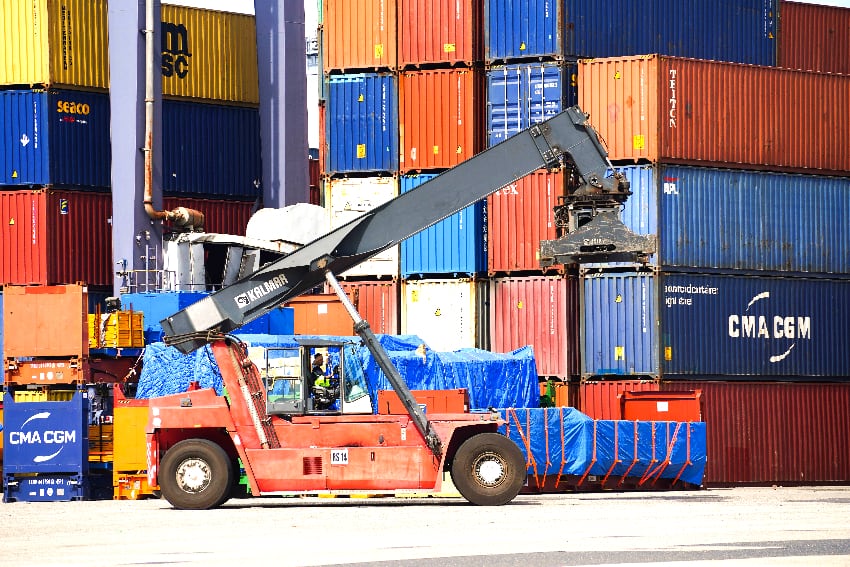
According to Reforma, Chinese products sold in the Mexico City macroplazas mainly enter the country at the Mexico City International Airport, and at the port in Lazáro Cárdenas on the Pacific coast of Michoacán, where illicit goods such as the chemicals used to make fentanyl also come into Mexico from China.
One of the Chinese entrepreneurs that sells Chinese-made goods in the historic center is known by his employees as “Jin Lan” — the name of a brand of bathroom products — because they don’t know how to pronounce his real name, Reforma said.
The newspaper reported that the entrepreneur — like many other Chinese business owners in Mexico City — comes from Zhejiang, a province on the East China Sea below Shanghai.
“Jin Lan” started with one store in Mexico Mart but now has at least seven shops in different macroplazas in the historic center of Mexico City. Reforma said he “has seen his income grow like foam” — i.e. very rapidly.
The businessman doesn’t speak Spanish but manages to communicate with his employees by “shouting and waving his hands about,” according to one worker.
The unnamed employee told Reforma that workers — many of whom are migrants to Mexico — are paid just 1,200 pesos (US $65) per week in cash, excluding sales commissions.
He acknowledged that the pay is not much but said he is learning about the business and that his goal is to one day import his own 22-tonne shipping container of Chinese products and compete against the East Asian entrepreneurs.
The port of Lázaro Cárdenas in Michoacán is the entry point not only for most Chinese merchandise, but also precursor chemicals for illicit drug production. (Cuartoscuro)
The goods made in China — colloquially known as “the world’s factory — are purchased for mere “centavos” and sold in Mexico for “pesos,” said the employee, a situation that allows businessmen such as “Jin Lan” to make very healthy profits.
“It’s a great business,” the worker added, explaining that vendors who buy goods at the macroplazas to resell them can also mark up the products significantly. “It’s a resellers’ paradise here,” he said.
Everything from shower curtains to scooters to speakers — and virtually any other product you can think of — is available at reasonable prices at the Chinese-run stores in the wholesale centers.
The majority of the products don’t come with a guarantee, Reforma noted.
Huge losses for longtime businesses and tax authorities
Reforma reported that the “massive” influx of Asian goods — mainly Chinese, but also Korean products — and “the growth of macroplazas to sell and distribute them” comes at a huge cost to long-established businesses, as well as to tax collection.
The newspaper said that established businesses have missed out on sales totaling 65 billion pesos (US $3.5 billion) as a result of the new competition they face. They have consequently paid 38 billion pesos less in taxes to Mexico’s tax agency, the SAT, Reforma said, citing information from the Mexico City Chamber of Commerce.
In addition, tax avoidance by Chinese-owned businesses generates additional losses for the SAT.
In many cases, such businesses avoid tax by paying workers in cash and only accepting payments for goods in cash. According to Reforma’s reporting, they also take advantage of loopholes that allow them to avoid paying the value-added tax on products they import from China.
Authorities shut down Mexico Mart, but only for 1 day
In March, Mexico City authorities shut down the 16-story wholesale center on Izazaga Street due to alleged irregularities related to the importation of products, Reforma reported.
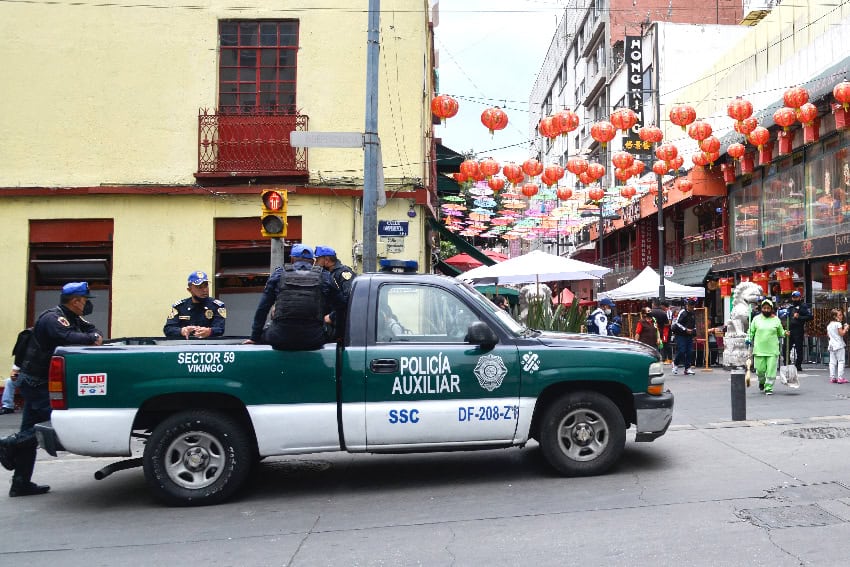
There have been various police operations in recent years in the area (pictured one in 2021), including a temporary closure of Mexico Mart in March. (Cuartoscuro)
Authorities carried out an investigation aimed at determining whether contraband was being sold at the macroplaza and whether tax evasion was occurring. Most transactions at the stores that operate in the Chinese-run wholesale centers are conducted in cash.
Authorities in the capital spoke about an operation of “great impact” and announced that 3 tonnes of merchandise were seized.
However, the suspension of operations at Mexico Mart lasted only one day, according to Reforma.
Chinese business owners subsequently hired halcones — hawks or lookouts — to give them advance warning of any possible police raids, Reforma said. A warning allows them to close their stores before an operation commences, a former hand truck operator told the newspaper.
Chinese immigration on the rise
Given the influx of Chinese-owned businesses in the historic center of Mexico City – and increased interest from Chinese companies in investing in Mexico more broadly – it is perhaps not surprising that the number of Chinese people living here has increased.
Reforma reported Tuesday that 5,018 temporary resident visas were issued to Chinese nationals last year, a number that exceeds the figure for 2022 and 2021 combined.
It said that an additional 1,879 temporary resident visas were granted to Chinese citizens in the first four months of this year. Chinese nationals have become the third largest recipients of such permits, after citizens of the United States and Colombia, Reforma said.
Of the temporary resident visas received by Chinese nationals last year, 41% were issued in Mexico City, while 11% were issued in Nuevo León, where a lot of Chinese investment is concentrated.
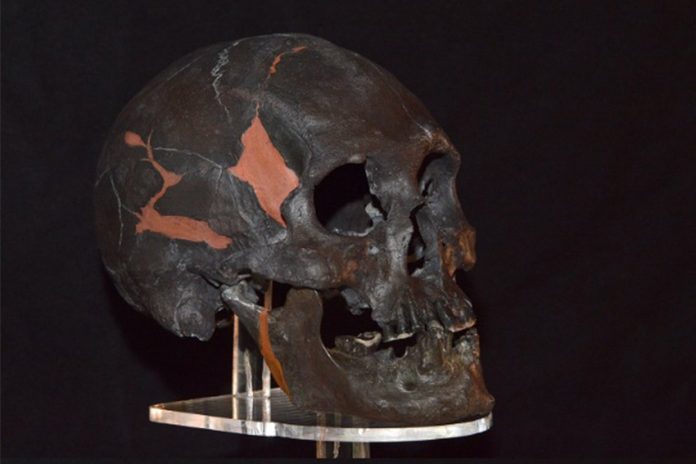
An INAH reproduction of Chimalhuacán Man, a prehistoric skull from the Holocene Era discovered in the Valley of Mexico in 1984. Until recently, it was the only human remains from the era found in the Valley of Mexico. (INAH)
In 1984, archeologists found the 10,500-year-old skull of a prehistoric human skull in Chimalhuacán, México state, which for the next 40 years became the first and only pre-ceramic human remains found in the Valley of Mexico — that is until the recent discovery of “Yotzin,” a prehistoric human skeleton of a hunter-gatherer male that INAH estimated Tuesday is at least 10,000 years old.
But the soil layer in which Yotzin was found could place it as older, even possibly the oldest human remains ever to be found in the Valley of Mexico.
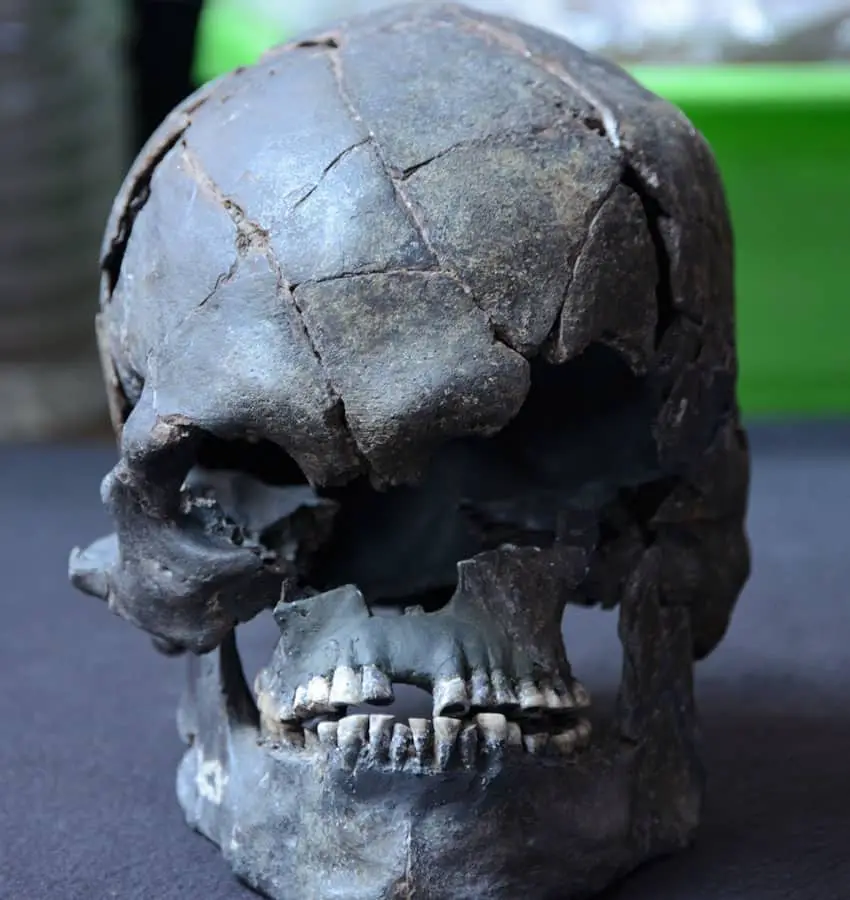
The skull of “Yotzin,” a prehistoric human skeleton found in México state during the construction of Felipe Ángeles International Airport. (Mauricio Murat/INAH)
Yotzin, found during the construction of Felipe Ángeles International Airport, will undoubtedly provide archaeologists with important information about human evolution in the region. But he also could turn out to be the oldest human remains found in the Valley of Mexico.
INAH announced Tuesday that while it has yet to carbon date the remains, it’s currently estimating the skeleton, based on its physical features, to be around 10,000 years old, from between the late Pleistocene Era and the early Holocene Era.
INAH physical anthropologist Arturo Talavera González said that Yotzin has an elongated skull and wide jaws, suggesting that he belonged to late Pleistocene hunter-gatherer groups, before the first known settler civilizations in the area.
Marks found on Yotzin’s bones, along with its “poorly flattened femurs and transverse flattening of the tibia,” indicate intense physical activity, such as long walks and the use of teeth to wear down various materials, Talavera said. These features, which tended to decrease with the arrival of agriculture and a more sedentary lifestyle, are characteristic of primitive hunter-gatherer peoples.
“If an individual shows signs of wear and tear on their teeth but no cavities, it could indicate a pre-ceramic diet,” he said.
If INAH’s current estimates are correct, Yotzin would be about the same age as Chimalhuacán Man, which INAH dates at 10,500 years old. The soil in which Yotzin was discovered, however, could indicate that the prehistoric skeleton is significantly older.
The layer of soil in which Yotzin was found appears to correspond to an interglacial warming period that occurred between 13,000 and 20,000 years ago, according to INAH biologist Lauro González Quintero.
INAH’s preliminary report states that scientists need to confirm Yotzin’s exact age and validate his place in the chronology of the Valley of Mexico’s first settlers. Researchers also hope to soon conduct the next phase of research on the site in which Yotzin was found, known as Santa Lucia M3, in the town of San Mateo Xóloc.