




Mexico is no stranger to hosting World Cup games between nations at war
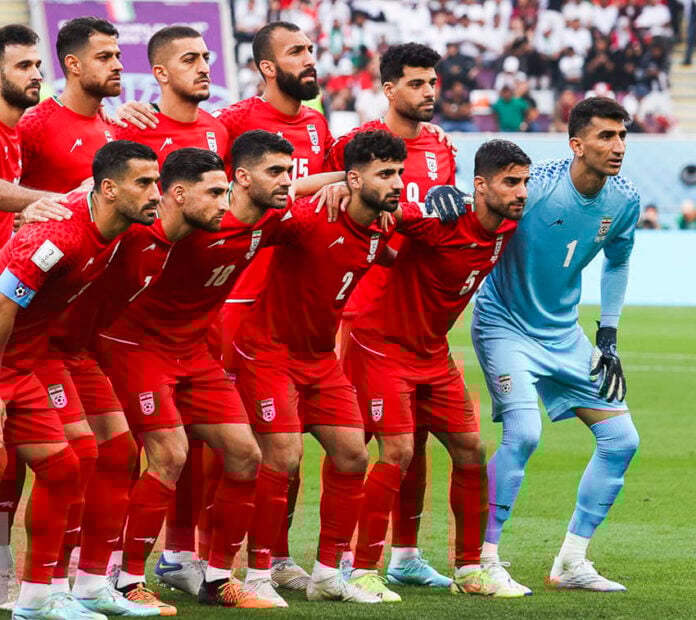
With the 2026 FIFA World Cup — part of which will take place in Mexico — finalizing the last qualifiers, events in the Middle East have raised serious questions about the tournament, particularly concerning Iranian participation.
But this is perhaps not surprising, if only because every other time Mexico has hosted the World Cup, there has been some political upheaval going on in the background.
The first Mexico-hosted World Cup: 1970
For our first instance, we have to go back to 1969, when Mexico was preparing for the 1970 FIFA World Cup.
Mexico was such a dominant regional soccer power in Latin America at the time that no Central American team had ever reached the World Cup finals before. This time around, however, with Mexico as host getting an automatic slot in the tournament, a Central American nation had the chance to qualify.
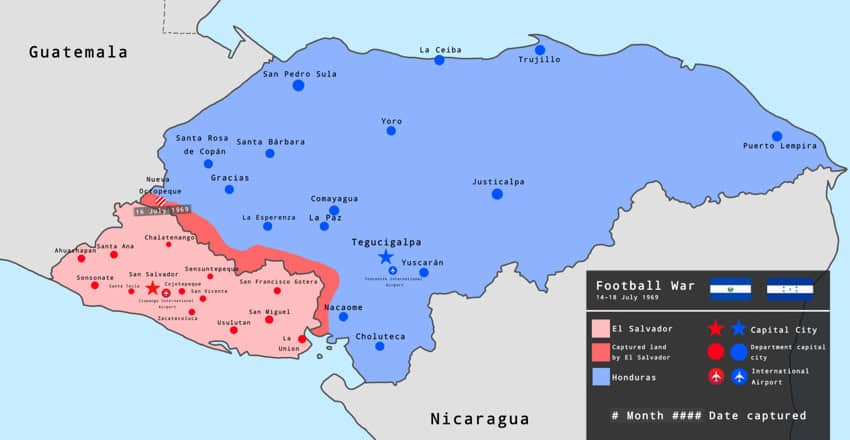
But when El Salvador was drawn in to play neighboring Honduras in the summer of 1969, the matchup was such an emotionally and politically charged one that it indirectly led to a military conflict between the two countries, often referred to today as “The Football War.”
Also dubbed The 100-Hour War, the conflict was reported in the press outside Latin America as a brief, quirky event in which hot-blooded Central Americans were so passionate about football that they went to war with each other over it. Yet it was not a joke. Nor was the conflict over just a football match.
Although the fighting “only” lasted 100 hours, it was an intense conflict, and fatality estimates range from 3,000 to 6,000, the vast majority of whom were civilians.

While the World Cup qualifiers in Mexico may have sparked this war off, the conflict’s true roots were in long-standing boundary disputes and tension in Honduras over the thousands of El Salvadorans who had migrated there over the years to find work.
From rocks to riots to broken diplomatic ties
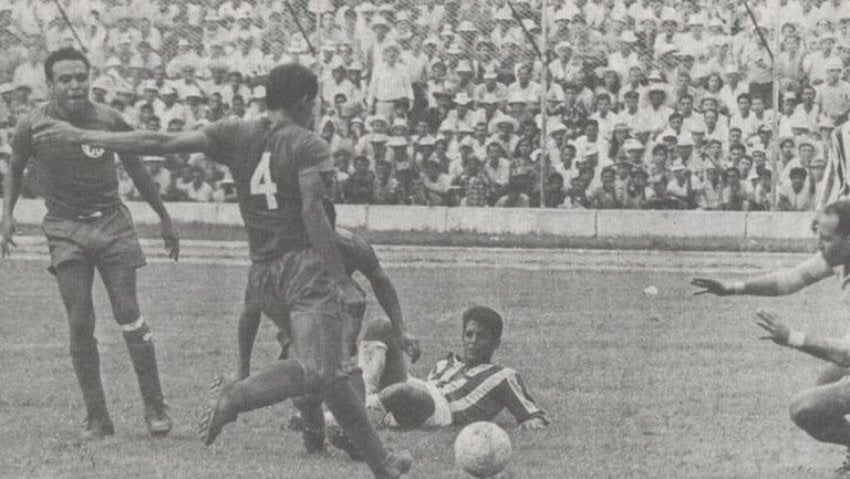
The teams played their first qualifier match of what would become a three-game series on June 8, 1969, in Honduras. The home side won 1-0, but this first matchup was not without conflict: The night before the game, Honduran fans threw rocks at the visitors’ hotel and banged on drums to keep the Salvadoran team awake. There were also riots at the match.
This set the scene for an even more tense second qualifier in San Salvador a week later, on June 15. Salvadoran fans rioted outside the Honduran team’s hotel — some even reportedly threw dead rats into the team’s hotel room windows — and the Honduran team had to be driven to the stadium in armored vehicles.
El Salvador won that match 3-0, with the Honduras coach famously saying that had his team won, he wasn’t sure that his players would have gotten out of the stadium safely. His statement was apparently not an exaggeration: During the post-match celebrations in the streets of El Salvador, violence broke out between the opposing teams’ fans.
The hostile treatment of their team in San Salvador, combined with resentment over old economic grudges, helped to provoke anti-Salvadoran riots all across Honduras, with Hondurans burning Salvadoran immigrants’ homes and thousands of Salvadorans fleeing the country.
Then, the day before the two teams arrived in Mexico City for a third and final game on June 27, El Salvador broke diplomatic ties with Honduras in protest against what it said had been the Honduran government’s failure to protect Salvadoran citizens.
At this point, the potential for fan violence was clear to everyone: The small crowd in Mexico City’s Estadio Azteca was separated and closely monitored by a force of baton-wielding Mexican police that almost outnumbered the fans. Although the situation was well controlled, tensions remained high, with El Salvador fans shouting “murderers” at Honduras fans on the opposite side of the pitch.

El Salvador won the match 3-2, thus qualifying for the World Cup finals the following year. Not long afterward, on July 14, El Salvador’s military crossed the border into Honduras and the 100-Hour War began.
When El Salvador came to Mexico again in the summer of 1970 to make their World Cup debut, they lost all three games, including going down 0-4 to Mexico.
1986: Another Mexico World Cup, another war
When the World Cup returned to Mexico 16 years later in 1986, the run-up was once again affected by a war, this time in the Persian Gulf.
By this time, Iraq and Iran had been fighting for nearly five years. We tend to forget that at the time, the Western powers were largely pro-Iraqi, with Saddam Hussein being portrayed as a brave soldier defending the region from the religious fanatics in Tehran, which had this reputation in the West ever since the Iranian Revolution had deposed the pro-Western Pahlavi dynasty in 1979 and established the current theocracy.
FIFA had no trouble allowing the warring countries to enter the competition, but, for the players’ safety, it insisted that both teams play their home games on neutral ground. Iran objected and was disqualified, but Iraq — which played its “home” matches in the King Fahd Stadium in Saudi Arabia — qualified for the tournament.
History repeats in 2026
Incredibly, 30 years later, with the World Cup returning to Mexico, the tournament will once again take place in the shadow of a Middle Eastern war.
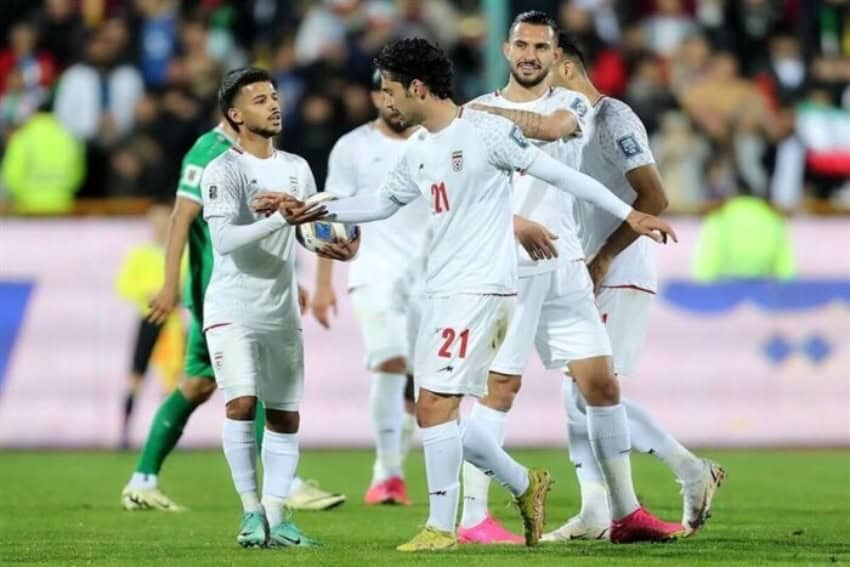
This fact has already had an impact: Iraq, although not directly involved in the conflict between Israel, the United States and Iran, requested that its final qualifying game — due to take place in Monterrey, Mexico, on March 31 — be delayed, pointing out the difficulties right now of traveling out of the Middle East, where thousands of flights have been disrupted as routes are closed for safety reasons and some airlines have canceled all flights in and out of the region until at least the summer.
FIFA has, however, insisted that Iraq meet its commitment, which is perhaps not surprising, given that the date is so close. To date, the Iraqi team is expected to arrive on time in Mexico by private jet. With regional sides Jordan, Qatar and Saudi Arabia already qualified, there might be further logistical problems down the line, but nothing that shouldn’t be solvable.
In the case of Iran, the situation becomes far more complex. While Iran has qualified for its sixth World Cup tournament (and third consecutive appearance), it is at war with one of the hosts. At the moment, the Iranian team is based in Turkey and should have no trouble getting to the United States, where all three of its group matches are currently scheduled. However, will they want to come? Will the U.S. let them in?
The president of Iran’s football federation, Mehdi Taj, suggested last week that the Iranian team would boycott playing games in the U.S., but that is not yet the official policy. And there is some hope in Iran that the team’s games can be switched to Mexico, but FIFA seems against the idea, and time is running out.
The Iranian government might actually be relieved if the national team ends up not participating. Several members of Iran’s women’s national team — in Australia for the AFC Women’s Asian Cup in March — originally accepted an asylum deal from the Australian government after their refusal to sing Iran’s national anthem at a match resulted in threats of prosecution as “wartime traitors” back in Iran. Although only two players ended up taking the asylum deal, it was still an embarrassment for the government in Tehran.
Even before the World Cup begins, the Middle Eastern conflict has already had an impact on Iran’s men’s squad: Striker Sardar Azmoun, considered one of the national team’s biggest stars, plays in the United Arab Emirates. He apparently upset Iranian authorities when he posted a photo of himself standing with Dubai’s ruler, Mohammed bin Rashid Al Maktoum, and was summarily dropped from Iran’s World Cup squad, a decision likely to unnerve many of his teammates.
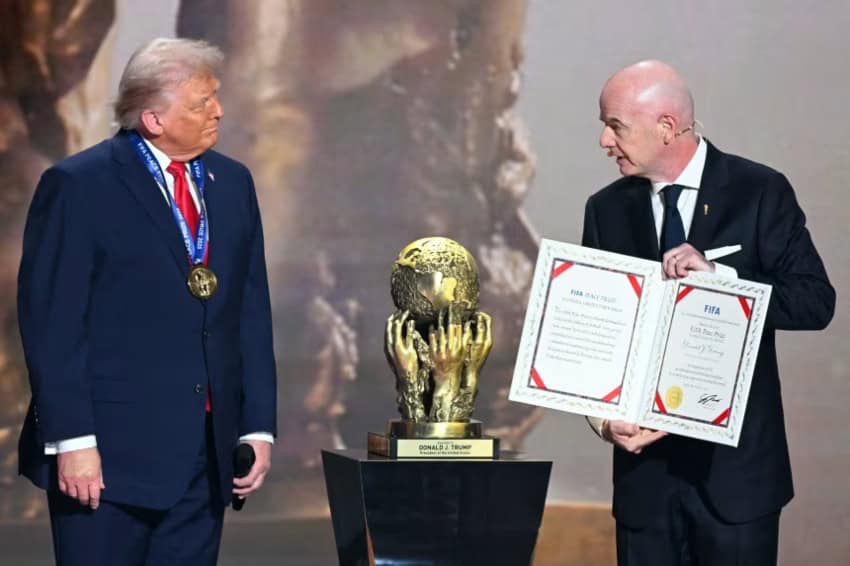
And so there are various possible outcomes due to the Iran conflict right now — including a late-in-the-game Iran boycott to President Trump suddenly canceling the team’s visas. Adding to the uncertainty is FIFA President Gianni Infantino’s very special relationship with President Trump — made clear when Infantino famously invented The FIFA Peace Prize, apparently to stroke Trump’s ego.
FIFA is, hopefully, a little embarrassed that their Peace Prize winner has bombed Venezuela, kidnapped the nation’s president, threatened Cuba and Greenland and launched a sudden attack on Iran that has so far cost nearly 1,500 lives. However, the organization is unlikely to make any decisions that might upset the American hosts.
In all this fuss, meanwhile, people have forgotten the absence of Russia, which has been given an indefinite suspension by both FIFA and the Union of European Football Associations (UEFA) after Russia invaded Ukraine in 2022.
Ukraine, scheduled to open its World Cup campaign in Monterrey on June 14, could still qualify, and it would be interesting to see how the crowd responds to the team. Is the stadium going to be decked in blue and yellow to support Ukraine, or is a war that is dragging into its fifth year going to be marked by crowd apathy? Similarly, if the unpopular war in Iran goes on much longer, will Trump and his inner circle turn up at matches where they are booed by the crowd?
Whatever happens, the 2026 World Cup, like those of 1970 and 1986 that took place in Mexico, will be affected by world politics, and will almost assuredly at no point be boring.
Bob Pateman lived in Mexico for six years. He is a librarian and teacher with a Master’s Degree in History.
Rolling with the punches of informality in Mexico

Being the bougie foreigner that I am, I often get massages. I especially love it because the lady who gives them actually comes to my house with her massage table! For 650 pesos, I relax and let her knead my muscles, achy or not. While most of the things I love about Mexico are not related to prices, this one honestly is. What luxury! What a deal!
The only downside? Well, the business is just her, and she is a person. This means that sometimes things come up, and she cancels, or is late, or even forgets to cancel. It hasn’t happened a ton, but it has enough that I shot back a frustrated message yesterday. “Why can’t you cancel at least a few hours before, or the day before, instead of 20 minutes before? Surely you knew you were going to do the things you’re doing now, which are causing you to not make it here on time, and I arranged my own day around this appointment.”

Being understanding
Normally, I’m a sweetheart and understanding. But I’ve been sick for about a week and just feeling awful, and it’s made me extra grouchy.
In the end, I apologized … especially since the reason she couldn’t make it was because she’d gone with her family to figure out where to bury her recently deceased father. As often happens, things were more complicated than they’d expected, especially since different members of the family had different ideas about where the most appropriate space for him would be. The clock was ticking, and traffic was growing heavier. She just wasn’t going to make it.
But I know that 100% formality can’t be expected in this kind of situation. You can’t expect people who have their businesses as one or two individuals to give the kind of service you’d expect from a gigantic corporation with billions of dollars and the kind of organization that comes with it.
That’s also partly how I’ve been waiting months for a washer and dryer set to get fixed, by the way.
Informality in Mexico
If you’ve lived in Mexico for very long, I’m sure you’ve noticed the kind of informality I’m talking about.
For some things, it’s awesome: you can have your doctor’s WhatsApp and send them a message. You can show up at places a little late and not have to apologize. You can drop your dog off with almost no notice at the kennel on your way out of town. If you don’t feel like keeping plans you made, it’s not too big of a deal to back out, even on the day of.

The list goes on.
For other things, it’s infuriating. A recent example that comes to mind is the lack of supplies at car inspection places here in Veracruz. The state’s answer to getting rid of the tenencia (what used to be a yearly car tax) has been to require inspections of private vehicles every six months. It’s about 800 pesos, and I guess it’s good to make sure that vehicles aren’t polluting too much and that their brake lights are working.
This last time around, we went to about four different places before we were able to get our car verificado. Some were closed even though it was during hours they were supposed to be open. Some had run out of stickers (you put them on your car as a sign you’re up to date) and didn’t know when they’d be getting more. Others’ card readers for payments were not working. It was almost funny. Almost.
‘Better to ask forgiveness’
But such is life in Mexico — at least in the communities that don’t depend on tourism to support their entire economy.
Things are late, people are late. Often, no warning or explanation is given, as most Mexicans tend to live by the maxim, “It’s better to ask forgiveness than to ask permission.”
As a somewhat uppity gringa, I like formality, and I really like punctuality. I know very well that punctuality, which I might consider a branch of formality, is not always of utmost value here. Still, I’m insulted if I’m made to wait around for someone for too long. It’s like temperature regulation — if you grew up with climate control, you’re always going to long for it when you don’t have it, save for moments of purely perfect weather.

But if you want to make good friends here, you can’t spend your time griping at them for not conforming to your own values. I mean, you can explain how you feel: “Changing plans last minute or making someone wait shows a lack of respect for the other person’s time and plans.”
Trying to roll with it
There are a few Mexican friends that I’ve downright given up on. One in particular would not only not cancel beforehand, but she’d wait until I called or messaged an hour into our meeting time to say, “Oh, I got so busy at work and couldn’t go, sorry!”
Which brings me to another thing it took a while to realize here: many people would rather simply not show up than disappoint you directly. They’d rather you feel disappointed by yourself, without them on the phone or in front of you. Perhaps the next time you meet, you’ll have forgotten! (I have not forgotten.)
Thankfully, most people are formal enough with our plans.
In the meantime, I’ve got two choices: I can either roll with it, knowing to expect that some things just won’t happen the way I’d planned, or I can just die mad about it.
I’m working hard on not dying mad about it, and learning more and more to laugh things off instead of hyper-fixating on the way one thing going wrong causes a chaotic chain reaction in my never-ending to-do list.

Some days that’s easier to do than others. But what choice do I have? I’m working on it.
Sarah DeVries is a writer and translator based in Xalapa, Veracruz. She can be reached through her website, sarahedevries.substack.com.
Nintendo’s PancitoMerge is a video game dedicated to Mexican bread

Rarely, if ever, does one utter the words: “Let’s play the Mexican panaderia game on Nintendo.” But thanks to PancitoMerge, an independent video game that was released on Nintendo Switch consoles last month, gamers — and pan dulce aficionados alike — can live out their Mexican bakery video game fantasies.
The game, an interactive ode to Mexico’s pan dulce (sweet bread), was developed by Antonio “Fáyer” Uribe — a Mexican indie game developer and cofounder of HyperBeard Games, who has long advocated for Mexican representation in the gaming industry with platforms like the “Mexican Entertainment System” — and illustrated by Jessica Álvarez, known as Vanila Ryder online, where she has a massive following on Instagram for her pan dulce-themed art.
PancitoMerge - Official Launch Trailer | Latin American Games Showcase TGA Edition 2025

A Mexican Candy Crush?
PancitoMerge offers a twist on the mega-iconic Tetris puzzle format. As the town’s panadero (baker), you are tasked with filling a bread basket full of falling pan dulce for a stream of enthusiastic customers. The catch? While you scramble to serve your customers, each type of pan dulce that drops from the top of the screen, à la the aforementioned Tetris — or, for younger generations, Candy Crush — is a different shape: conchas, bollilos, orejas, puercitos and more.
As a player, your job is to stack them in the correct order and sequence in order to gain points and avoid the bread basket from overflowing.
Nintendo’s official store, which describes the game as “whimsical” and “adorable,” invites gamers to “step into the warm, flour-dusted world where pan dulce takes center stage” and calls the game a “love letter to Mexican culture and the joy of pan dulce… inspired by real treats found in local bakeries, celebrating the warmth, tradition, and creativity of Mexican baking.”
It’s a perhaps appropriately timed ode to Mexican bread culture, on the heels of Richard Hart’s much-lambasted critique of Mexican bread — in which the British baker claimed that Mexico lacked sophisticated, high-quality breads. PancitoMerge proves otherwise — what other nation has made a Nintendo-backed video game based on its distinctive, at times iridescent, bread offerings?
The game has been celebrated by Mexican gamers and culture fanatics who have made viral videos and praised it for its highly decorative pan dulce illustrations and low-stakes, friendly gameplay. The game’s developers even wrote an original theme song for PancitoMerge, which lists off a variety of breads to the tune of a strumming mariachi guitar.

Though the game’s framework is relatively simple, a variety of thoughtful touches add to its appeal. For instance, you can switch the panaderia’s appearance and customers from a traditional look to one based on Dia de Muertos, or to a Japanese-inspired theme. As customers approach your panaderia’s window, you might encounter an anthropomorphic axolotl, a skeleton, or an old señora, each in search of the right pan dulce.
And that’s not all: You can rework your bread basket by giving it a shake, clearing off unwanted bread and creating new patterns and combos. And as you progress through the tasks, you unlock more bread types, and each bread comes with a paragraph-long explanation of the pan dulce’s characteristics and history.
What is pan de melón, one might wonder, for example?
“A popular Japanese pan dulce,” the description tells players, going on to outline the origin of the sweet bread’s name — which, it turns out, doesn’t come from the flavor resembling a melon but from its round shape and color. The game’s flavor texts are actually informative and not simply mindless filler.
As of now, the game is available in Spanish, English, and Japanese, currently is priced at US $7.99 — a bargain by today’s video game industry standards, in which the latest flagship Nintendo games cost US $79.99.
It’s certainly not the most advanced or complex game out there, but that’s part of its appeal, as is its very existence in what isn’t a very deep roster of Mexican-inspired games to begin with.
Mexican culture has been directly referenced in games like Super Mario, Pokémon and more, but rarely has Mexican culture been the centerpiece of an entire game’s design. A few exceptions include Lucha Libre AAA: Héroes del Ring (2010), Taco Master (2011), and Pato Box (2018), the latter being a beautifully rendered game in a black-and-white palette where you play a human with a duck’s head boxing his way through a corrupt organization to claim a world title. Beyond that, Mariachi Legends is slated to release later this year and has been garnering attention for its Mexicanized, action-adventure Metroidvania look and feel. More serious gamers may appreciate world builder Aztec: The Last Sun.
But none of those titles seem to fully satiate, or vividly represent, Mexico’s hunger for quirky gameplay and lighthearted storytelling as much as PancitoMerge. The fact that the game was developed by Mexican creators further gives it a taste of authenticity, care, and imaginative worldbuilding that gamers of any age or background are sure to delight in.
Alan Chazaro is the author of “This Is Not a Frank Ocean Cover Album,” “Piñata Theory” and “Notes From the Eastern Span of the Bay Bridge” (Ghost City Press, 2021). He is a graduate of June Jordan’s Poetry for the People program at UC Berkeley and a former Lawrence Ferlinghetti Fellow at the University of San Francisco. His writing can be found in GQ, NPR, The Guardian, L.A. Times and more. Originally from the San Francisco Bay Area, he is currently based in Veracruz.
Is it crazy to move to Mexico with a middle schooler? A new ‘Confidently Wrong’ podcast
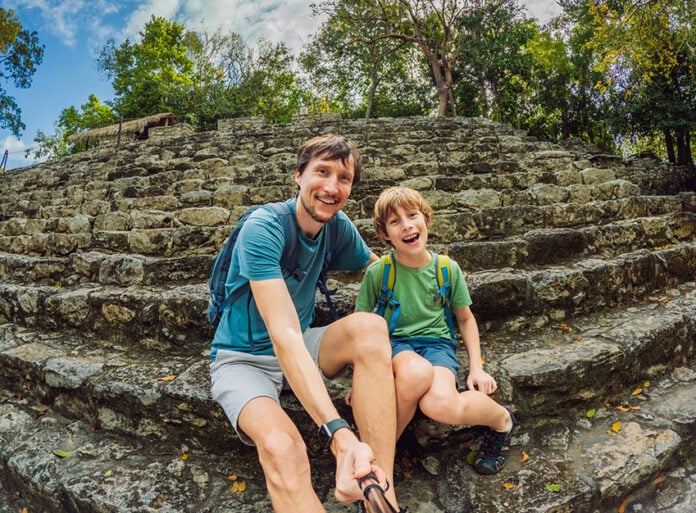
Moving is never easy. Moving with kids is even harder. Moving with kids to another country takes it up yet another level. But moving to another country with a middle schooler? That might just be the holy grail of moving masochism.
It is with that backdrop that we thought we would focus on this episode of Season 2 of our podcast, “Confidently wrong about raising kids in Mexico.” If it can be done with a middle schooler, anyone else should be easy, right? So we talked to the principal of the Middle School of the American School Foundation in Mexico City, as well as her husband, who also has teaching experience and is currently helping with curriculum development at the school.
They both have significant experience teaching expat kids, have taught abroad in Asia, and are now raising their own kids in Mexico. As a result, they bring an honest, unfiltered perspective on what it takes to move abroad with kids.
Check out the latest episode below, or find it on YouTube or Spotify.
CW about raising kids in Mexico: Is it crazy to move to Mexico with a middle schooler? - Episode 7

Travis Bembenek is the CEO of Mexico News Daily and has been living, working or playing in Mexico for nearly 30 years.
Are animal spirits returning to the business community in Mexico? A perspective from our CEO
It’s easy to criticize the performance of the Mexican economy. The Economist magazine did so earlier this week with an article titled “Mexico’s broken economy,” complete with a picture of a man on a horse in front of a table with local beer bottles and Coca-Cola cans. It quoted a professor from Georgetown University in Washington, D.C., who said that the “unreliable supply of electricity is also constraining growth.” I have diligently read and always respected The Economist for nearly 30 years, but found this particular article to be intellectually lazy, superficial and incomplete.
I am by no means suggesting that the Mexican economy is performing at the level it should be — in fact, it is far from it. That being said, I had the opportunity in the past week to attend two separate large business conferences in Mexico City and left feeling upbeat, excited and optimistic.
My wife and I first started meeting with foreign ambassadors and foreign chambers of commerce in Mexico two years ago. It was near the end of both the AMLO and Biden presidencies, and the mood was somber. It was clear that commerce, especially with other countries, was not a priority for AMLO. Ambassadors told us that they stopped encouraging political and business leaders from their home countries to come to Mexico as there quite simply “was no interest from the government” to meet with, listen to or collaborate with foreign leaders. AMLO was clearly focused on Mexican domestic projects like the Maya train, the AIFA airport and the Dos Bocas refinery. He didn’t want to make time for foreigners.
On the U.S. side, I remember hearing the former U.S. ambassador, Ken Salazar, speak at a business meeting. An extremely affable person, he seemingly prioritized his relationship and support for AMLO and his initiatives over what the U.S. political and business community wanted and needed. He talked about how he had recently been to Oaxaca to see the building of the new train and highway projects there. He emphasized the growth and equality that this could bring to the poorer southern areas of the country. Don’t get me wrong, the domestic projects prioritized by AMLO are most certainly game-changing investments for the people living in those parts of the country. But their impact and results will be felt over decades, not years. They are simply not the kind of investments that can “move the needle” for the country in the short or even medium term.
Which brings me back to the meetings of this past week. The first one, the American Chamber of Commerce of Mexico annual meeting, began with a presentation by the new U.S. ambassador, Ron Johnson. Ambassador Johnson started affably enough, even speaking in Spanish for a bit, but then quickly got down to business. He switched to English and while remaining charming, rattled off the areas that the U.S. government was focused on that ultimately would, in his words, even further deepen the relationship between the U.S. and Mexico. His language wasn’t threatening like his boss President Trump’s oftentimes is. Rather, he was direct and crystal clear. Reducing the levels of violence, drug trafficking, human trafficking, cartel influence and unfair trade practices ultimately would be very good for both countries and very positive for the business community.
It felt a little bit like a parent lecturing a child. It hurt a little bit to hear the message, but you knew he was right. The tough love that the U.S. was giving to Mexico, in his telling, would make Mexico a better partner of the United States, and in turn make Mexico better. Now I understand that many people will be cynical upon hearing this, but it’s impossible to suggest that the levels of violence in Mexico have not been a significant drag on the people of Mexico, the business community and the economy as a whole.
At AmCham annual gathering, US ambassador to Mexico strikes optimistic note on USMCA
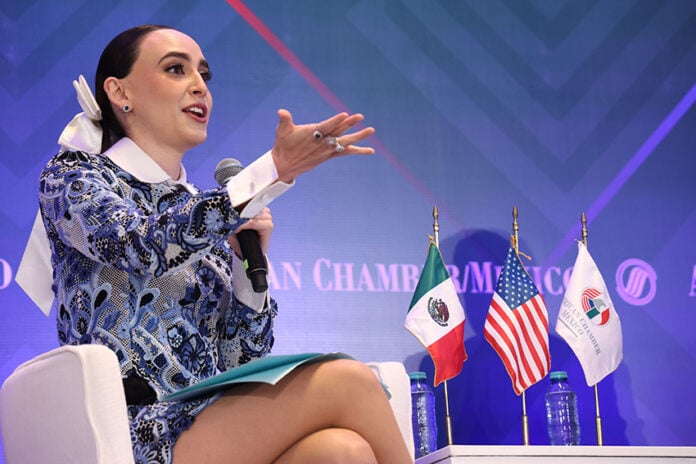
Next up was Altagracia Gómez, the 33-year-old Mexican businesswoman who leads President Sheinbaum’s Business Advisory Council, a group that provides vital input from the business community into government policy decisions. Altagracia was poised, calm and professional as she updated the audience on the progress of Sheinbaum’s ambitious Plan México initiative. She talked about roadblocks to progress and how they were going to overcome them. She talked about what the government was doing to accelerate approvals and better support the business community. As I listened to her give the update, I couldn’t help but think that I was witnessing the style and tone of a businessperson, not a politician. It was refreshing — inspiring really.
Just a few days later, I was invited to attend the first-ever Forum of Binational Trade Chambers in Mexico. Under the leadership of the Indian Embassy in Mexico and in close collaboration with Mexico’s Minister of the Economy, Marcelo Ebrard, a total of 23 chambers of commerce were brought together to form a new working group. The idea of the forum, as well as future meetings, is to work together to set common goals in support of the Plan México program. The goal is for the chambers to work in closer cooperation and collaboration to share best practices, lessons learned, and further enable growth of companies from their home countries in Mexico.
Minister Ebrard kicked off the forum with an update on the progress on the USMCA trade agreement between Mexico, the U.S., and Canada. He talked about the work done to improve trade relations with the European Union, Latin American countries and countries in the Middle East and Asia. Similar to Altagracia just days earlier, he had a calm, confident, optimistic tone. In a time of such global stress, his comments were reassuring. He emphasized and gave examples of how the government was working hard to improve the business climate in Mexico and working closely with the U.S. and other countries to do so.
Mexico has a long way to go to achieve its true economic growth potential. The per capita GDP of the United States — a measure of average economic output per person — is still an incomprehensible 6.4 times that of a person in Mexico. (For a point of reference, U.S. per capita GDP is 1.6 times larger than that of Canada). The previous administrations in both the U.S. and Mexico did not prioritize their business communities or trade between the two countries, and yet commerce still flourished. Both countries are now each other’s leading trading partners, and foreign direct investment is hitting record highs on both sides of the border. Just this week, two large multinationals committed to investing an additional US $1.5 billion in Mexico.
Government policy doesn’t move fast, but what I witnessed firsthand this past week in terms of engagement and commitment from the Mexican and U.S. governments, foreign embassies and chambers of commerce should go a long way towards helping bring some favorable animal spirits to the business community in Mexico. Let’s hope this positive momentum continues!
Travis Bembenek is the CEO of Mexico News Daily and has been living, working or playing in Mexico for nearly 30 years.
Xcaret theme park banned from using Maya culture for marketing, for now
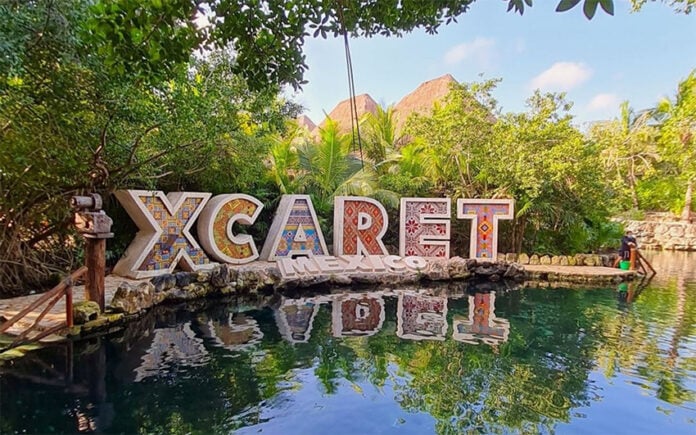
Mexican theme park and resort Xcaret, located in the Riviera Maya near Playa del Carmen, must remove all references to Maya culture from its marketing and advertising campaigns, following a ruling by the Supreme Court (SCJN) in favor of Indigenous communities that had sued Grupo Xcaret.
The court’s decision will stay in effect only until it issues its final resolution, which could take months or even years. Still, it reveals a strong indication of how the SCJN may ultimately decide.
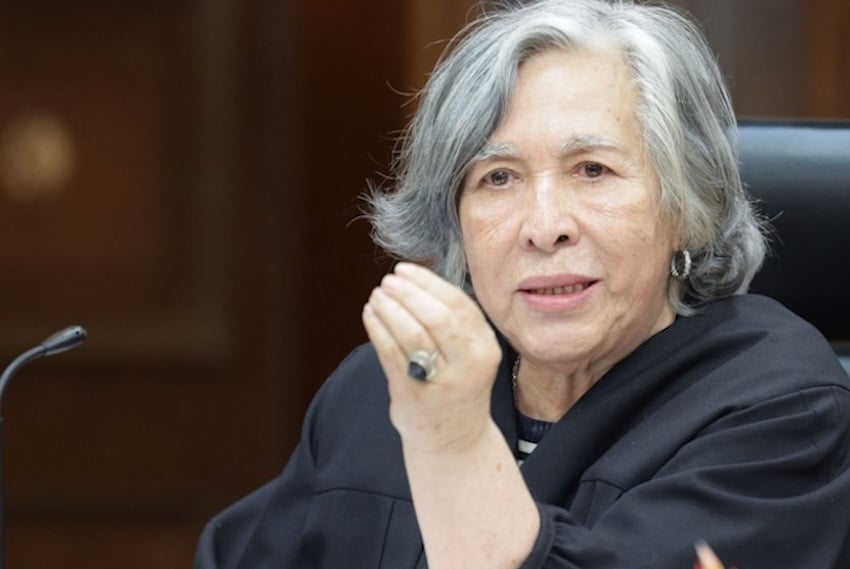
“All cultural heritage of Indigenous and Afro-Mexican peoples and communities will be understood to be reserved by the corresponding people or community and its use and exploitation will be prohibited unless they grant their free, prior and informed consent and in accordance with the law of consultation of Indigenous and Afro-Mexican peoples and communities,” Minister María Estela Ríos González wrote in a statement following the ruling.
The case started in 2022, when members of the Great Maya Council filed a complaint with the Copyright National Institute (Indautor) asking for Grupo Xcaret to refrain from using images and symbols of the Indigenous peoples of the state – a request that poses a major challenge to a company which built its image on cultural references to the Maya.
As part of its procedure, Indautor ordered Xcaret to remove all marketing materials and online content that featured elements of Maya cultural heritage. It also ordered the company to stop any commercial exploitation of these elements while the matter was being resolved.
The newspaper El País reported that Grupo Xcaret complied by removing some advertisements during this period. However, the company brought the case to court, where a judge granted Xcaret permission to display Indigenous imagery again.
The new ruling by the Supreme Court, however, has revoked that permission until the matter is finally solved.
Culture Minister Claudia Curiel de Icaza celebrated the latest decision, saying that it represents “a significant step in the defense of the collective rights of Indigenous peoples, because it reaffirms that their cultural heritage cannot be treated as a resource available for private profit, but is rather a living expression of their identity, their history and their community life.”
Two ministers, however, voted against the resolution. Minister Yasmín Esquivel Mossa defended Xcaret’s interest, arguing that the company had authorization from the Great Maya Council through a five-year contract that included a payment of 15 million pesos (US $829,000) for the use and exploitation of the Maya cultural heritage.
Furthermore, she said the rights of Indigenous peoples and the interests of investors in the tourism sector must be balanced, acknowledging the vital role investment in the hospitality industry plays in the Mexican economy.
With reports from Inversión Turística and El Universal
FIFA president Infantino attends Guadalajara qualifier, signaling confidence in Mexico as World Cup host
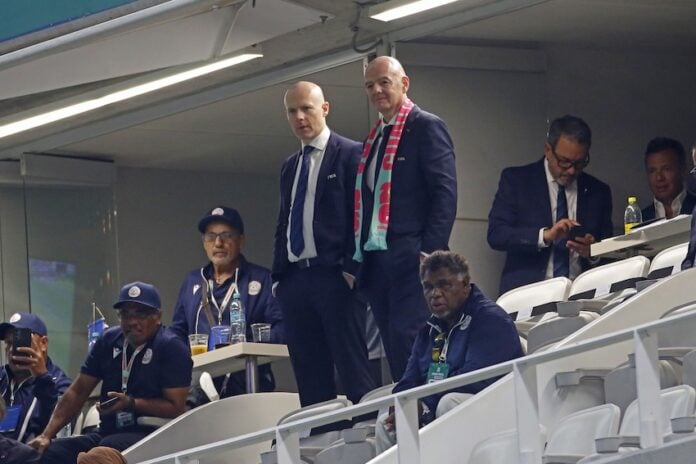
FIFA president Gianni Infantino was in Guadalajara’s Akron Stadium on Thursday night to witness Jamaica’s victory over New Caledonia in a World Cup qualifier.
Just 34 days after a military operation near Guadalajara resulted in the death of notorious drug lord Nemesio “El Mencho” Oseguera, prompting violent repercussions across the country, Infantino’s presence demonstrated FIFA’s commitment to Mexico as host country of the World Cup.
El estadio de Chivas está lleno para ver un Jamaica vs Nueva Caledonia un jueves por la noche, ya se siente el espíritu mundialista.
México será una fiesta jajajaja qué hermoso es el futbol carajo.
— Roberto Haz (@tudimebeto) March 27, 2026
On Monday, the FIFA president is scheduled to meet with President Claudia Sheinbaum at the National Palace to review Mexico’s ongoing preparations for the World Cup which will kick off in earnest at Azteca Stadium on June 11.
Infantino arrived fashionably late to Akron Stadium — he had attended Bolivia’s 2-1 Thursday afternoon win over Suriname at Monterrey’s BBVA Stadium— joining nearly 41,000 fans witnessing Jamaica’s win. He sat in a box seat alongside Mexican Soccer Federation president Mikel Arriola and Guadalajara Chivas owner Amaury Vergara.
Thanks to an 18th-minute goal from Jamaica striker Bailey Cadamarteri, the “Reggae Boyz” move on to face the Democratic Republic of Congo on Tuesday — also in Akron Stadium — for a spot in the 64-nation World Cup field.
The outcome of the match was less critical than the logistics and security operations, both of which were carried out smoothly. FIFA officials will keep a close watch on Tuesday’s match as well.
Thursday’s game marked the first major international sporting event in Guadalajara since last month’s violence, following a March 7 derby between the city’s two first-division clubs that attracted 36,767 fans to the nearby Jalisco Stadium. That game also went off without a hitch.
Infantino is expected to attend Mexico’s friendly against Portugal on Saturday, a game that will serve as the re-opening of Azteca Stadium which has been undergoing an extensive facelift since June 2024.
There have been concerns that the renovations would not be completed in time for the World Cup — five games, including the Cup’s inaugural match, are scheduled at Azteca Stadium — so stadium operations will be evaluated closely.
In Thursday’s contest in Monterrey, Bolivia’s come-from-behind victory sent “La Verde” into a final qualifier against Iraq on Tuesday.
With reports from El Diario de Coahuila, El Informador and ESPN
Signs of life found for 40,000 of Mexico’s 132,000 missing persons
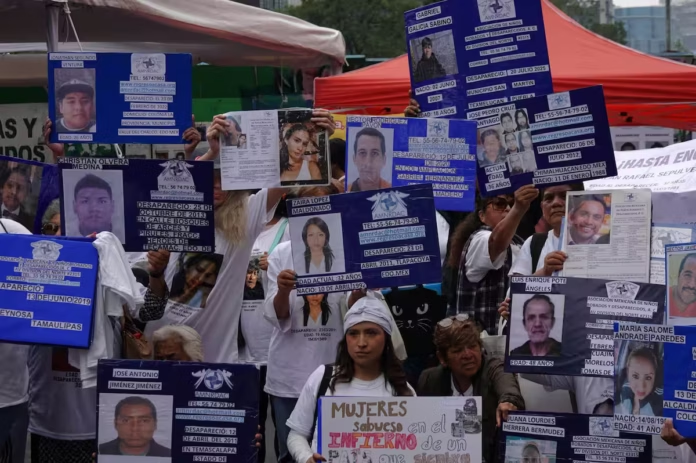
President Claudia Sheinbaum has praised a new report on the government’s search for missing persons, highlighting findings that 31% of the more than 132,000 people currently listed as disappeared might actually be alive.
However, the report also found that official investigations of more than 46,000 of those considered missing have yet to begin due to a lack of data.
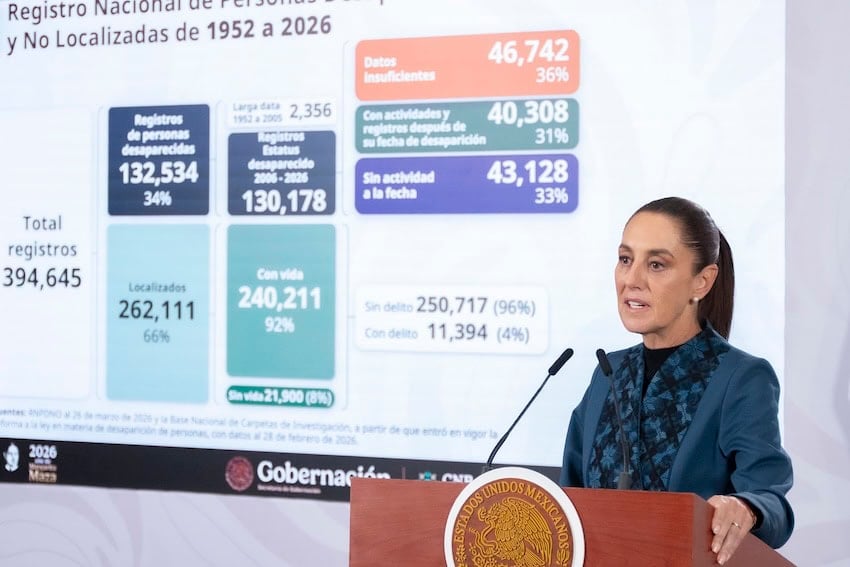
As part of the presentation, Sheinbaum provided an update on the search for missing persons, outlined progress made and challenges faced and explained strategies implemented since the beginning of her administration in October 2024.
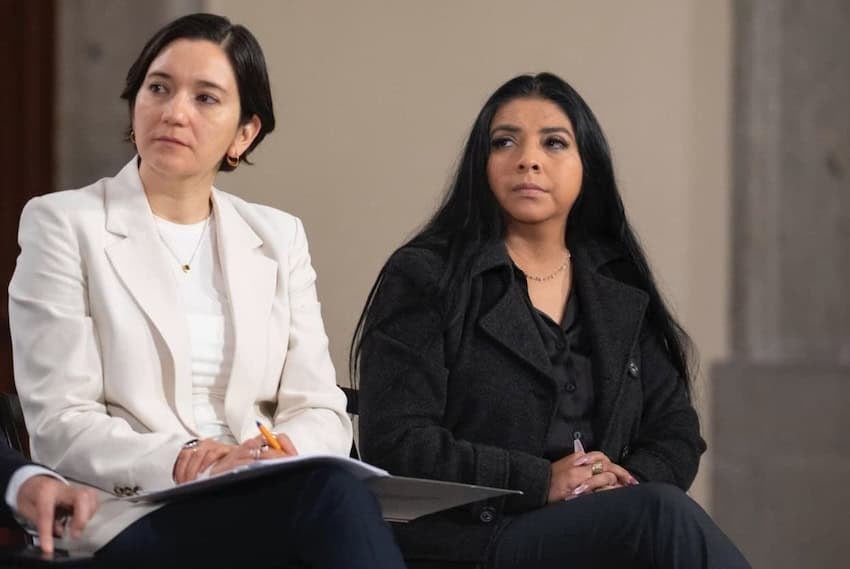
“It is a comprehensive report that seeks to provide clarity on where we are and what actions we are taking,” she said, before turning the dais over to Marcela Figueroa, the executive secretary of the National Public Security System (SNSP).
Figueroa said the National Registry of Missing and Unlocated Persons carried out a year-long review of all the official data on the disappeared from 1952 through 2026.
“Of the 394,645 individual files in our possession, 262,111 have been located, of which 92% were located alive,” she said. “However, this means 132,534 people remain unaccounted for today.”
Of those 132,534 officially labeled as missing, 130,178 have been registered since 2006 when such disappearances began to surge after Mexico formally launched a war against drug cartels.
On the positive side, the SNSP review discovered that there was evidence of legal activity — such as tax filings, birth certificates or phone records — related to 40,308 individuals registered as missing.
“As a result, 5,269 people have been located and their status has been changed from missing to located,” Figueroa said.
With regard to the 46,742 cases that lack sufficient information to initiate a search, Figueroa explained that the existing reports do not include name, sex or date of birth, or lack sufficient detail related to the place or date of disappearance.
Figueroa attributed this issue to the absence of legal parameters for carrying out such registrations, a shortcoming that was addressed by the July 16, 2025, enactment of the General Law on Disappearances.
Even without the descriptive information, Figueroa said, all cases will remain registered with the SNSP. However, the 2025 reform now blocks entries without minimum data.
That leaves 43,128 cases (33% of those still missing) with complete data, but for whom the authorities found no record of activity via cross-referencing of official databases.
These cases are distinct from the 2,356 long-standing cases registered between 1952 and 2005.
All data reviewed was derived from SNSP records through March 26 this year, and from the National Database of Investigation Files records dating to Feb. 28.
The SNSP report further acknowledged that the registry was initially compiled by uploading unverified lists from federal and state prosecutors, search commissions, citizen reports and activist groups, which created duplications and incomplete entries.
Sheinbaum said Interior Minister Rosa Icela Rodríguez holds regular meetings with families of the missing and search groups, while also collaborating with the office in Mexico of the UN High Commissioner for Human Rights, which has provided support and technical advice.
Although activists such as Fernando Escobar of the NGO Causa en Común concede the government’s work is positive, he, and others, question the veracity of the data, especially in light of the recent and more frequent discoveries of clandestine graves.
“The true number of missing persons is becoming increasingly uncertain,” Escobar said.
The continuing rise in disappearances — 193 people have been reported missing this year in Mexico City alone — is also a concern.
With reports from Reuters, Infobae, La Silla Rota and Semanario Zeta
Mexico resumes package delivery to the US after seven-month suspension
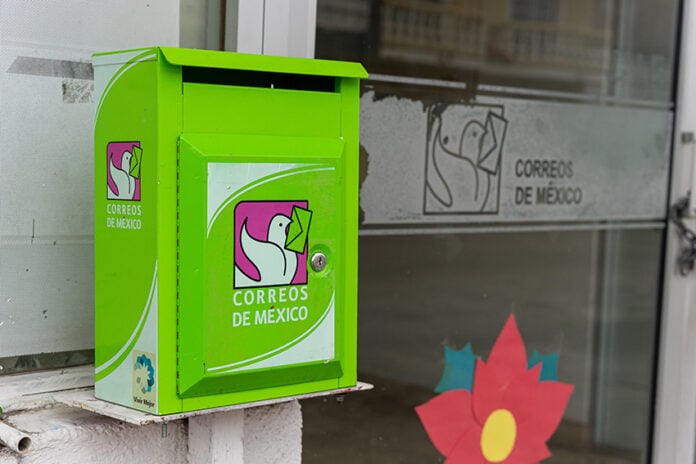
Mexico’s national mail service, Correos de México, resumed package shipments to the United States on Wednesday after a suspension triggered by changes to U.S. customs rules, the Mexican Foreign Ministry and Correos de México announced in a joint statement.
The full suspension began Aug. 27 last year, after the United States eliminated the so-called “de minimis” tax exemption, which had previously allowed packages valued under $800 to enter the U.S. duty-free. The change created uncertainty about how customs duties would be collected on international shipments, prompting Mexico and other countries to pause deliveries while new procedures were established. In September 2025, Correos de México partially restored service, resuming the delivery of letters and documents without commercial value, but packages remained suspended until now.
Under the new arrangements, Correos de México said it will maintain its existing shipping rates. However, senders must comply with new U.S. requirements, including a 10% charge on the declared value of each package, levied by the U.S. government.
Packages are also subject to a maximum declared value of $800 and a weight limit of 20 kilograms (44 lbs). Senders must provide a detailed description of the contents and the country of manufacture of all items included. Shipments must travel directly from Mexico to the United States without routing through a third country.
The resumption of service is welcome news for the many Mexicans who send packages to family members in the United States, as well as for small businesses that rely on Correos de México to export goods. As previously reported, Mexican businesses selling products in the U.S. faced higher costs, reduced supply and stricter customs controls as a result of the suspension.
For readers looking to send packages, Correos de México has published the new requirements and shipping rates on its website. Note that letters and documents without commercial value remain exempt from the new charges, and delivery times to the U.S. may be longer than usual while the new customs procedures are being implemented.
Mexico News Daily
This story contains press release summaries generated by Claude. It has been revised and fact-checked by a Mexico News Daily staff editor.
