Home Blog Page 812

How a Mexican forty-niner turned into the legend of Zorro

0
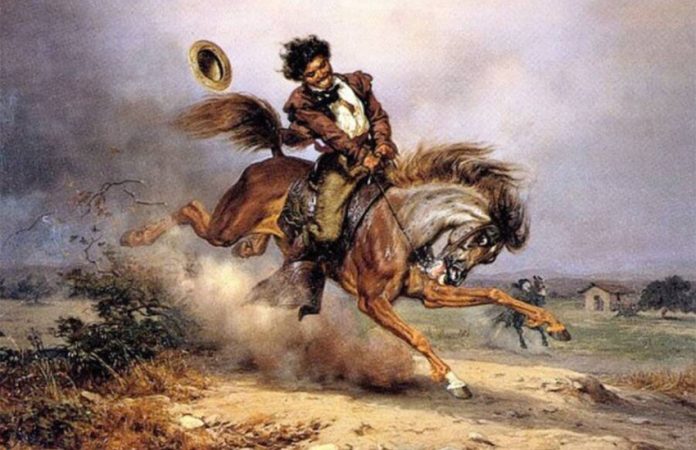
"Joaquín Murieta: The Vaquero," by Charles Christian Nahl.
"Joaquín Murieta: The Vaquero," by Charles Christian Nahl. (Public Domain)

The story of Joaquín Murrieta — the legendary Mexican Robin Hood who inspired the story of El Zorro — has endured and evolved over almost 200 years. To the American authorities in California during the Gold Rush, he was a notorious criminal, but to Mexicans, he was El Patrio: the patriotic avenger who came to symbolize defiance of U.S. oppression.

The facts of Murrieta’s life are elusive, but the story really begins with the Treaty of Guadalupe Hidalgo, signed on February 2, 1848, between the United States and Mexico.  The terms which ended the Mexican-American war forced Mexico to cede more than 50% of its territory — including the present-day states of California, Nevada, Utah and New Mexico; most of Arizona and Colorado; and parts of Oklahoma, Kansas, and Wyoming.
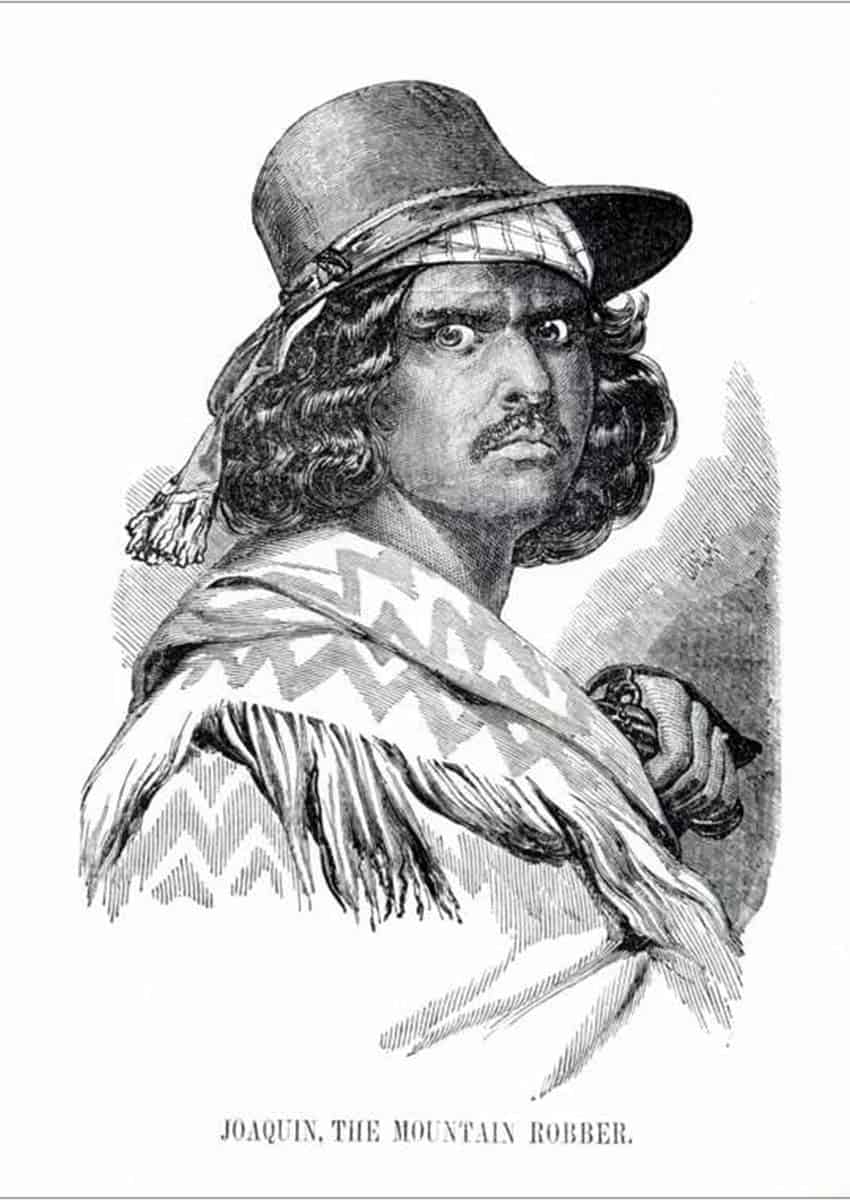
Artists conception of Joaquin Murrieta, El Zorro
An artist’s conception of Joaquín Murrieta. (California State Library)

That same year, Murrieta, at age 18, migrated from Sonora, Mexico, to California with his wife, brothers and three of his brothers-in-law to prospect for gold during the California Gold Rush.  By all accounts, Murrieta was a successful forty-niner, but as a Mexican, he suffered persecution and discrimination. 

Cherokee novelist John Rollin Ridge (Yellow Bird), who wrote “The Life and Adventures of Joaquín Murieta: The Celebrated California Bandit” in 1854, says an assault in 1849 changed Murrieta from a peaceful miner into an outlaw.  

Murrieta and his family were attacked by a group of U.S. miners who stole his land and home, hanged his brother for a crime he didn’t commit, horse-whipped Murrieta and raped and murdered his young wife. 

At the time, authorities in California were engaged in efforts to expel Mexicans from California and turned a blind eye to such attacks. 
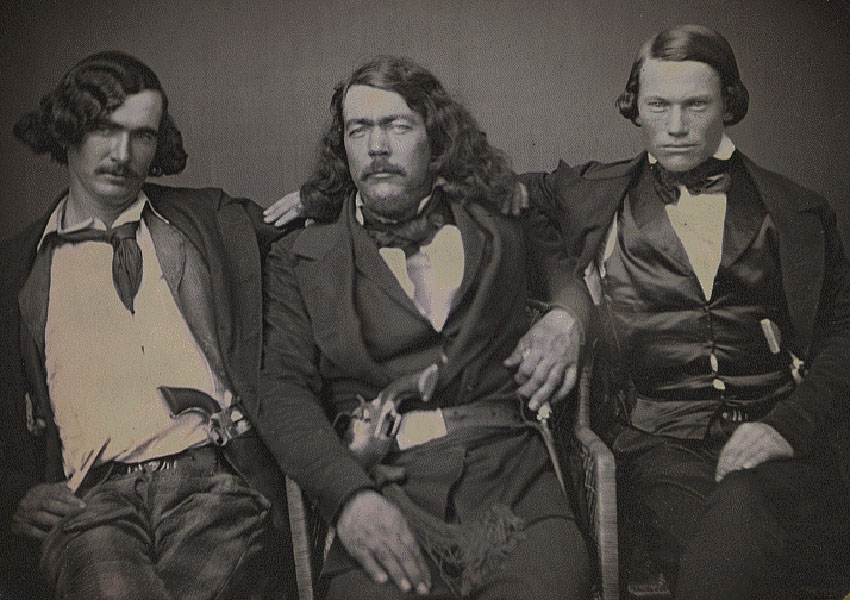
Harry Love, center, posing with two of his California Rangers.
Harry Love, center, who claimed to have captured Murrieta, posing with two of his California Rangers.

Murrieta complained to the authorities, Ridge says, but only suffered more outrage and so decided to avenge his family himself. He vowed to kill every “Yankee” he encountered.

He and accomplice Manuel García, who was known as “Three-Fingered Jack,” formed a gang: The Five Joaquíns, consisting of Murrieta and four other members all named Joaquín. García functioned as Murrieta’s right-hand man.

They quickly moved from horse theft to assaults, robberies and murder.  It is said that in the next few years, they stole more than US $100,000 in gold and 100 horses and killed more than 19 men, including those who had attacked his family. 

After robbing their victims, it was said that Murrieta’s gang would distribute the gold they stole among the poor. The legend of this Mexican Robin Hood grew as more and more stories circulated about Murrieta giving stolen gold to those who needed it most. It made him popular with Mexicans but a dangerous threat to the American authorities.

In 1853, California Governor John Bigler decided to put an end to Murrieta and his gang. An 1853 bill passed in the state legislature labeled The Five Joaquíns criminals and authorized the hiring of 20 California Rangers — all veterans of the Mexican-American War — to track them down. Bigler also put a bounty on Murrieta’s head to incentivize people to turn him in. 

No one did.

The Rangers were led by Captain Harry Love, who was credited with Murrieta’s eventual capture. For months, the Rangers searched for Murrieta and his gang, suspecting that due to Murrieta’s hero status, Mexican families were helping him elude the authorities.

The Rangers finally encountered a gang of armed Mexicans near Arroyo de Cantua, and in the gunfight killed three of them, including Murrieta and Three Fingered Jack.  A California historical landmark plaque now marks the site where Love claimed Murrieta was killed.

Love then cut off Murrieta’s head, as well as Three-Fingered Jack’s right hand, preserving them in jars of brandy. Love thought that exhibiting the body parts would further intimidate Mexicans and send them a message about opposing the authorities. 

Love soon returned to San Francisco and began his grisly exhibitions — displaying the head in Mariposa County, Stockton and San Francisco for $1 a view. He and Bigler thought that these exhibitions would prevent Murrieta from gaining more relevance among oppressed Mexicans, but the opposite was true.
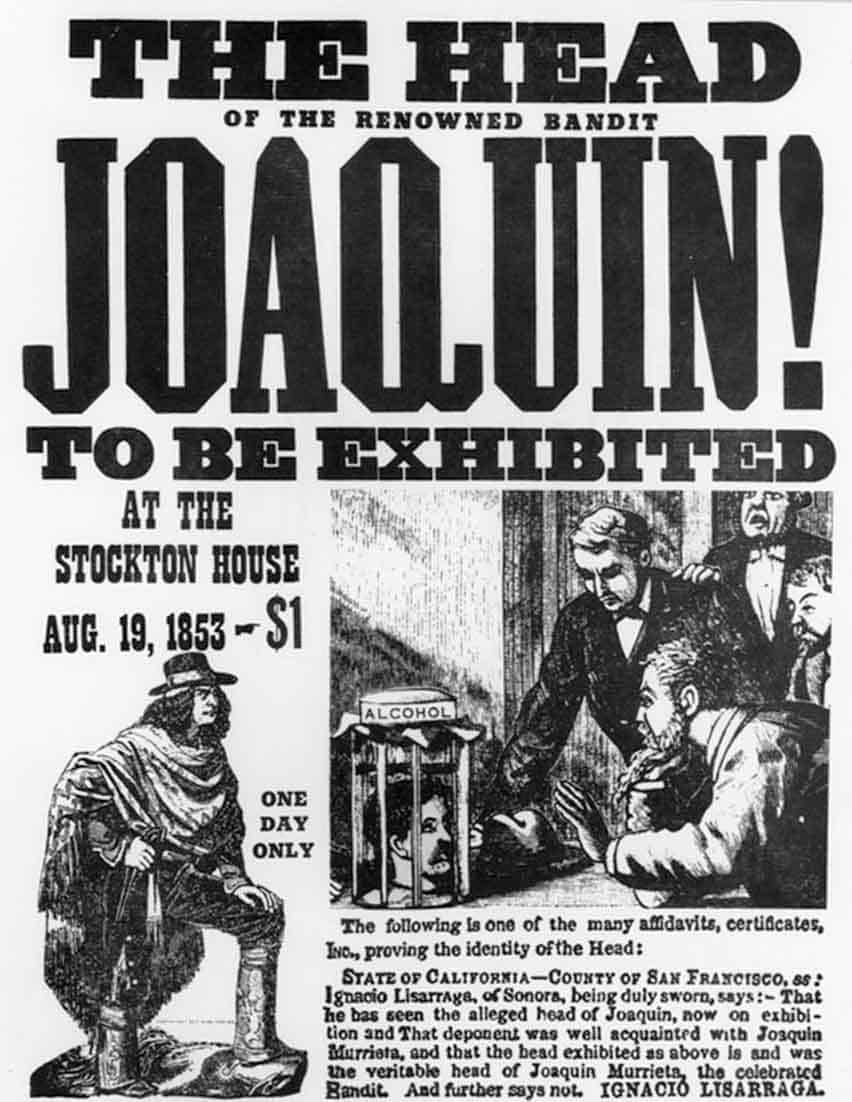
1850s ad for exhibition of Joaquin Murrieta's head
After Murrieta’s supposed capture, Love went around California in the 1850s exhibiting a preserved head that he claimed to be Murrieta’s. (Public Domain)

The legend of the Mexican Robin Hood spread far and wide and became more spectacular with each telling. Mexican Californians identified with this avenging hero’s pain and sorrow and saw him as a crusader against oppression by the “gringos.”   

For the next 25 years, rumors about Murrieta ran rampant: The theft of gold shipments continued after his alleged death, and some said that Murrieta had never been captured or killed — that the Rangers fabricated the whole story to reap the US $5,000 bounty.  

Furthermore, people close to Murrieta — including his own sister — proclaimed that it was not his head. People reported sightings of Murrieta, saying they had just received gold from him.  

Then, in 1875, the San Francisco Herald newspaper received a letter signed by Joaquín Murrieta, claiming he was still alive adding, “I still have my head.”  

No one knows for sure what happened to Murrieta, but some say he didn’t die until the end of the 1870s and that his body is buried in a Jesuit cemetery in the town of Cucurpé, Sonora.

Murrieta’s legend reveals the complicated relationship that existed between Mexico and the United States after the signing of the Treaty of Guadalupe Hidalgo in 1848 — which started the first wave of Mexican migration to the U.S.
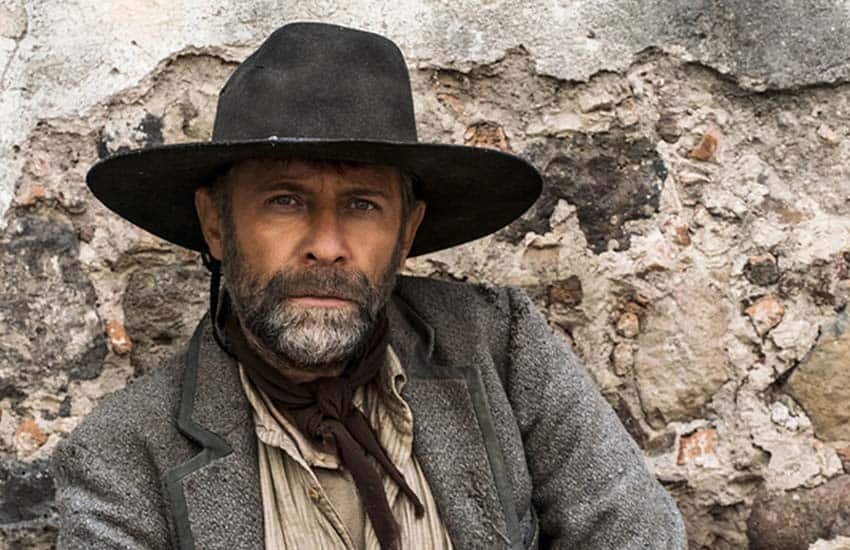
Still from La Cabeza de Joaquin Murrieta series
A new Amazon series, “The Head of Joaquín Murrieta,” featuring an international cast and starring Mexican actor Juan Manuel Bernal, is proof that the legendary outlaw’s story still strikes a chord. (Amazon)

Everyone loves stories of heroes seeking revenge, and especially stories of outlaws stealing from the rich to give to the poor, so Murrieta’s legend has unsurprisingly endured for almost 200 years.  By 1919, Johnston McCulley had recast Murrieta as the character El Zorro in a five-part serial for an American audience, “The Curse of Capistrano,” published by a pulp fiction magazine. In McCulley’s story, Zorro’s real name is Alejandro Murrieta.

Throughout the years, Murrieta’s legend has inspired more than 15 books, including one by Chilean Nobelist Pablo Neruda; five comic strips (including “Batman”); 16 songs; and 20 TV shows, radio programs and movies — one of the most famous being the romanticized film “The Mask of Zorro,” starring Antonio Banderas.

The most recent version of the legend can be seen in the newly released (2023) TV series “The Head of Joaquín Murrieta,” available on Amazon Prime.

Sheryl Losser is a former public relations executive and professional researcher.  She spent 45 years in national politics in the United States. She moved to Mazatlán in 2021 and works part-time doing freelance research and writing.
US company denounces ‘illegal’ takeover of facility in Quintana Roo

0
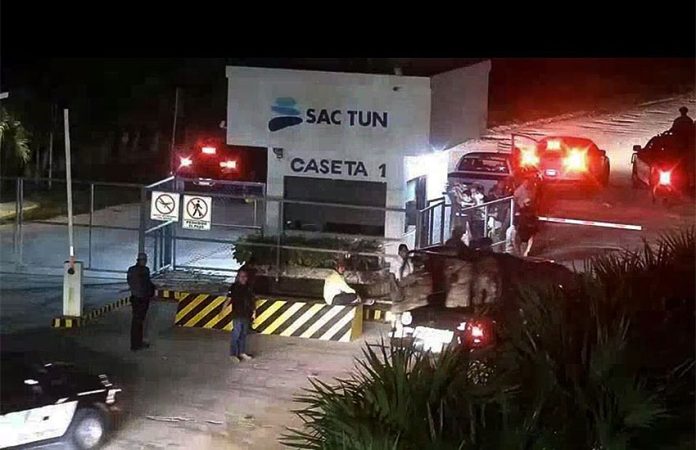
Mexican military arrival at Sac Tun facilities in Punta Venado, Mexico
According to the U.S. company Vulcan Materials, a group of soldiers, Cemex employees, police and "special investigation" officials arrived at the Punta Venado marine terminal of its subsidiary Sac Tun at around 5:30 a.m. (Internet)

A United States company has denounced the “illegal” takeover and occupation of its Quintana Roo marine terminal by federal and state security forces last Tuesday.

The CEO of Vulcan Materials Company, an Alabama-based construction aggregates firm, wrote to Mexico’s Ambassador to the United States, Esteban Moctezuma, to request the immediate withdrawal of government forces and officials.

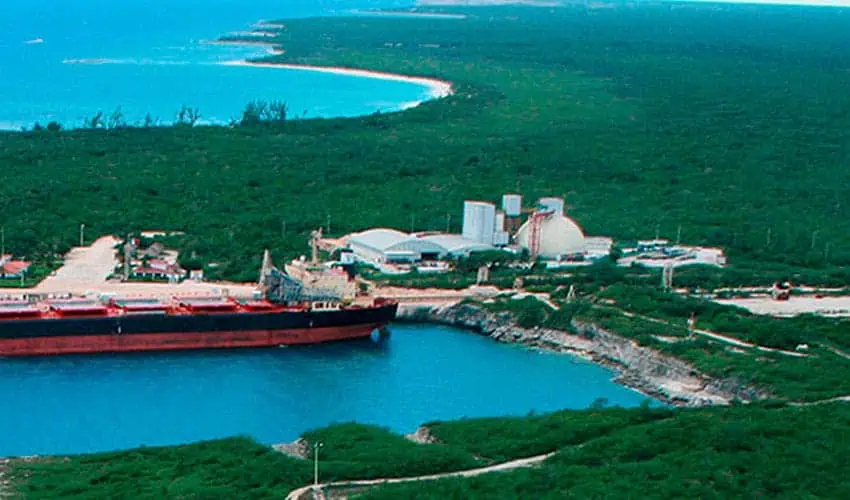
Sac Tun port at Punta Venado, Mexico
The facility being fought over is the Sac Tun company’s marine terminal in Punta Venado, Quintana Roo, near Playa del Carmen. Sac Tun is a subsidiary of Vulcan Materials. (Sac Tun)

“I am writing with great concern to bring to your attention illegal events that transpired on Vulcan/Calica properties this week,” J. Thomas Hill said in his March 16 missive, which was published by Fox News.

“On Tuesday, March 14, at approximately 5:30 a.m. local time, heavily armed naval forces, state police and special investigative forces answering to the state prosecutor, along with Cemex personnel, arrived at the gates of Vulcan/Calica property at Punta Venado in Quintana Roo.”

Calica is the former name of the company Sac-Tun, the Mexican subsidiary of Vulcan. Cemex is a Mexican building materials company. Punta Venado is located just south of Playa del Carmen.

Hill wrote that the security forces told unarmed Vulcan security guards that “they had an order to bring a Cemex vessel into the port to unload cement.”

Vulcan Materials CEO J. Thomas Hill
In a letter to Mexico’s Ambassador to the U.S., Vulcan Materials CEO J. Thomas Hill said that the cohort of military and government officials and Cemex personnel that entered the facility “did not possess… official justifications for the action.” (Vulcan Materials)

“Cemex, the military and police forced entry into our private property. They did not possess or present at that time any court order, warrant or other official justifications for the action,” he told Moctezuma.

“As of today, March 16, we have not been presented a single legal document, court order, or warrant justifying or ordering this act. Government forces and Cemex personnel continue to illegally occupy Vulcan’s private property as Cemex unloads its ship supported by armed military and police forces. I am writing to request that your government immediately order its forces and officials to leave our private property,” Hill wrote.

“The government’s participation in this gross violation of our property rights is yet another example of the government’s arbitrary and illegal treatment of Vulcan and its investments in Mexico,” Hill added. “This occupation must cease immediately.”

The Reforma newspaper published video footage of the property’s takeover. Forbes México reported that Cemex obtained a court order on March 5 that allowed one of its boats to unload cement at the terminal, adding that Vulcan offered to do so on March 23 once the required logistical and safety arrangements were in place.

But according to Hill’s letter, Vulcan had not seen any such court order.

Vulcan said Monday that the security forces were still occupying the property, even though Cemex had apparently completed unloading a shipment of cement on Friday. It also said that “it should be clear that the rule of law is no longer assured for foreign companies in Mexico.”

“This invasion, unsupported by legal warrants, violates Vulcan’s commercial and property rights,” the company said in a statement.

Cemex facilities
Cemex is a private Mexican multinational building materials company headquartered in San Pedro, near Monterrey, Mexico. (Cemex)

Fox News reported that Vulcan filed “a general federal complaint against the Mexican military, Quintana Roo state police, local prosecution authorities and Cemex for acting without a warrant and for breaching a previous federal court injunction concerning the land.”

The U.S. news outlet said that Vulcan provided it with a copy of a March 16 order from a Quintana Roo court that told the military to leave the facility. However, the company’s statement on Monday indicated that this hadn’t occurred.

President López Obrador has maintained a dispute with Vulcan for years, and his government last year shut down a limestone gravel quarry the company operated in Quintana Roo for having allegedly “extracted or exported stone without approval,” according to an Associated Press report.

The president needs Vulcan’s dock to get cement, crushed stone and other materials into the area for the construction of the Maya Train railroad, AP said.

Cemex used to have an agreement that allowed it to use Vulcan’s Quintana Roo terminal, but it expired at the end of last year and negotiations for a new contract broke down.

The federal government has imported ballast from Cuba for the Maya Train project, but ships bringing it to Mexico have had to unload in Sisal, Yucatán, on the other side of the Yucatán Peninsula, because they couldn’t access Vulcan’s terminal.

“López Obrador has offered to buy the property, but talks have apparently not gone well,” AP reported.

The government takeover of the facility triggered criticism from two Republican Party senators. Tennessee Senator Bill Hagerty said that reports of the incident “add to the worrying trend of misguided and counterproductive behavior of President López Obrador.”

“Our important economic and trade relationship with Mexico will suffer significantly if the United States companies that operate in Mexico don’t receive the same treatment granted to Mexican companies that operate in the U.S.,” he told Reforma.

Some U.S. politicians called attention to the incident in tweets and press statements, including U.S. senator for Alabama Kate Britt.


Alabama Senator Katie Britt said in a statement that “this forcible seizure of private property is unlawful and unacceptable.”

“It is shameful that this Mexican presidential administration would rather confiscate American assets than the fentanyl killing hundreds of Americans per day,” she said.

“Mexico should be more focused on going after the cartels than law-abiding businesses and hardworking people. President Biden must raise this directly with President López Obrador and assure the American people that this will not be tolerated.”

A U.S. National Security Council official who spoke with the Bloomberg news agency on the condition of anonymity said that the White House, as always, is concerned about the fair treatment of U.S. companies.

The person also said that U.S. officials have told Mexican government representatives that the failure to comply with trade obligations could affect future efforts to attract investment.

Mexican authorities previously shut down a Veracruz fuel storage terminal owned by U.S. company Monterra Energy. That facility was reportedly closed at gunpoint in September 2021.

U.S. energy companies have also had problems securing the permits they need to operate without encumbrance in Mexico, according to Ambassador Ken Salazar.

The United States and Canada are currently challenging Mexico’s nationalistic energy policies under the USMCA free trade pact, arguing that companies from those countries are being treated unfairly.

Some tension between Mexico and the United States has also arisen over security, with some Republican Party lawmakers criticizing the Mexican government for not doing enough to combat cartels and the flow of narcotics into the U.S., and proposing the use of the U.S. military on Mexican soil.

With reports from Bloomberg, Reforma, Fox News, Forbes México and AP 

AMLO rally marks 85th anniversary of oil nationalization

0
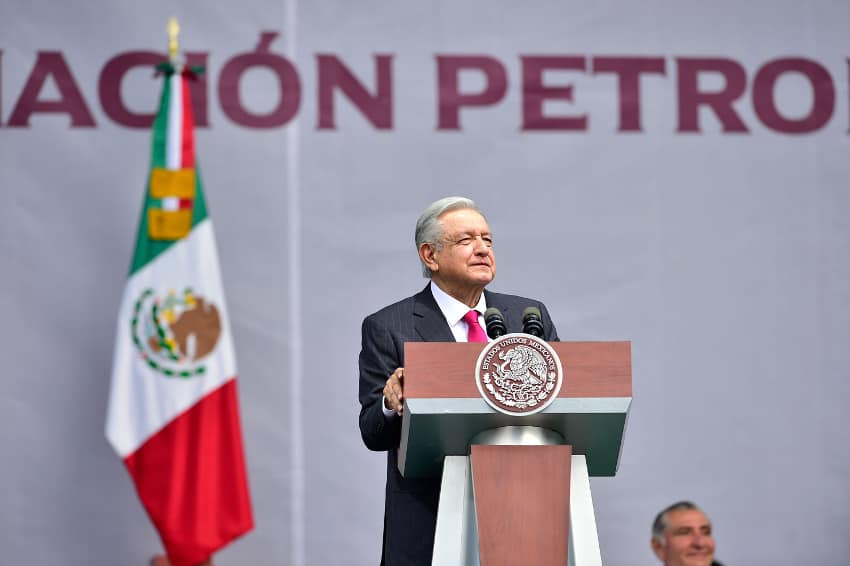
President Andrés Manuel López Obrador in the Zócalo
President López Obrador extolled the accomplishments of President Lázaro Cárdenas, who nationalized Mexico's oil in 1938, and also drew parallels with his own "transformation" of the country. (Gob MX)

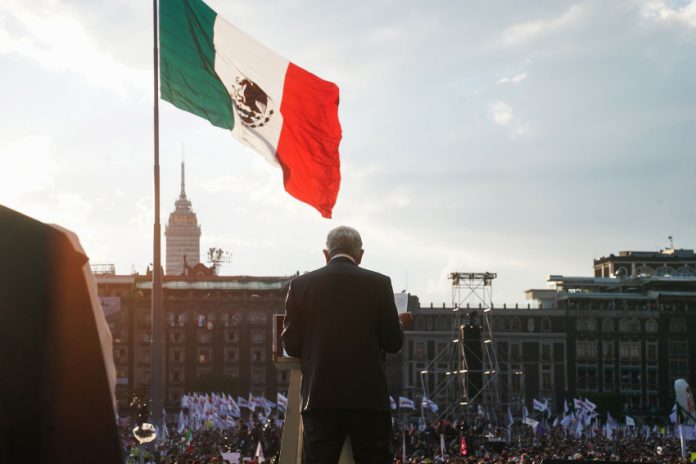
President López Obrador marked the 85th anniversary of the nationalization of Mexico’s oil industry with a detailed and defiant speech at a massive rally in Mexico City’s central square on Saturday.

According to the Mexico City government, 500,000 people descended on the Zócalo to commemorate the anniversary of the day – March 18, 1938 – on which former president Lázaro Cárdenas signed an order that expropriated the assets of foreign oil companies operating in Mexico.

AMLO at 85th anniversary event on Mar. 18
The president gave an hour-long speech at the rally on Saturday. (Gob MX)

Later the same year, the Cárdenas government created the state oil company, Pemex, which López Obrador now claims to be “rescuing” after years of neglect.

“This is an event to commemorate the oil expropriation and it’s a national event,” the president declared at the beginning of an hour-long address before a sea of supporters.

López Obrador offered a glowing assessment of Cárdenas’ 1934-40 government, acknowledging its policies in favor of disadvantaged sectors of the population such as campesinos and its nationalization of assets and resources “that were in the hands of foreigners” since the dictatorial three-decade rule of Porfirio Díaz in the late 19th and early 20th centuries.

“Unlike politicians of the elite, General Cárdenas had sincere and profound love for the people. … There hasn’t been a president in Mexico as close to the humble people as General Cárdenas,” he said.

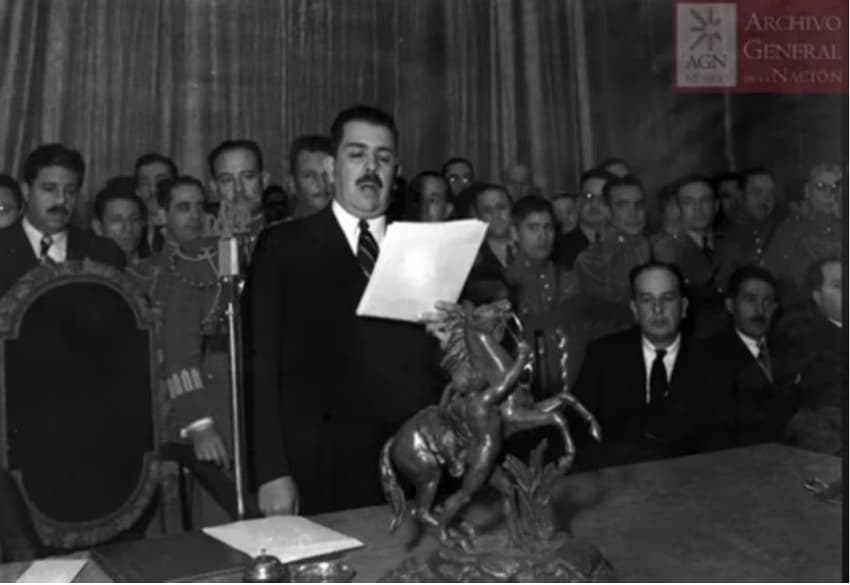
President Lázaro Cárdenas in 1938
President Cárdenas reads the expropriation decree in 1938. (Mexican National Archive)

“… The oil expropriation was supported by the majority of people. In photos from the time the majority presence of humble people [at pro-government gatherings] is noted: Indigenous men and women, campesinos, laborers, teachers, employees and members of the lower-middle class. It was the ordinary people who … cooperated with the government for the payment of compensation to foreign oil companies. How can we forget the many poor women who donated their goats and turkeys for that purpose, and even gave up the modest jewels they possessed.”

In addition to “massive and forceful popular support, the Cárdenas government had another favorable circumstance,” López Obrador said, noting that former U.S. president Franklin D. Roosevelt implemented the Good Neighbor foreign policy and thus “respected the sovereignty of our country” and didn’t oppose the nationalization of the oil industry even though it affected many U.S. companies.

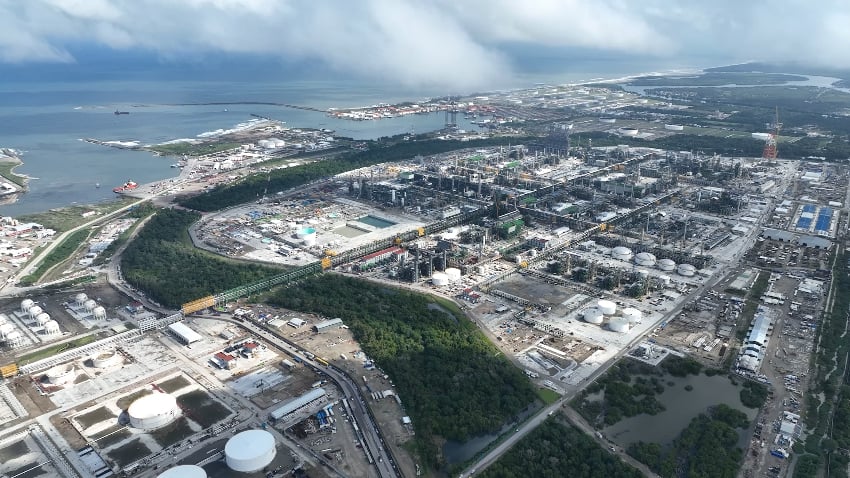
While outlining his own government’s achievements, including its support for the poor through welfare and social programs, the president noted that his administration is pursuing “energy self-sufficiency” and declared that Mexico wouldn’t import any gasoline, diesel or other fuels in 2024 thanks to its investment to rehabilitate existing refineries and build a new one on the Tabasco coast.

“We’re going to process all our own raw material,” he said, referring to crude oil.

Dos Bocas refinery, Tabasco
The Dos Bocas refinery in Paraíso, Tabasco is one of the president’s key infrastructure projects. (Gob MX)

López Obrador – a fierce critic of the former government’s energy reform that opened up the sector to private and foreign companies – also touted a section of the North American free trade pact, the USMCA, which his administration succeeded in having added to the text.

It states, the president noted, that “the United States and Canada recognize that Mexico reserves its sovereign right to reform its Constitution and its domestic legislation, and Mexico has the direct, inalienable, and imprescriptible ownership of all hydrocarbons in the subsoil of the national territory.”

Despite that, the United States and Mexico are challenging Mexico’s nationalistic energy policies under USMCA, arguing that they unfairly disadvantage foreign companies that operate here.

After expressing confidence that the Mexican people will continue to support his government’s “transformation” of the country, López Obrador once again denounced the proposal from some Republican Party lawmakers that the United States military be used to combat Mexican cartels in Mexico.

“First I want to make it clear that it’s no longer the time of [former president Felipe] Calderón or [ex-security minister and convicted criminal Genaro] García Luna. It’s no longer the time of murky links between the government of Mexico and agencies of the United States government. Now there is no simulation, organized crime and white collar crime are really combated because there’s no corruption, no impunity and there are no relations of complicity with anyone,” he said.

“… From here, from this Zócalo, the political and cultural heart of Mexico, we remind the hypocritical and irresponsible politicians that Mexico is a free and independent country, not a colony or protectorate of the United States. They can threaten us, … but never, ever will we allow them to violate our sovereignty and trample on the dignity of our homeland. Cooperation yes, subjugation, no! Interventionism, no!”

Crowd at rally in Mexico City on March 18
AMLO supporters at an event that was described as an “opening salvo” ahead of the 2024 presidential elections. (Graciela López Herrera / Cuartoscuro.com)

Among the officials seated behind the president and cheering him on were Foreign Affairs Minister Marcelo Ebrard, Interior Minister Adán Augusto López and Mexico City Mayor Claudia Sheinbaum, the three leading contenders to become the ruling Morena party’s candidate at the 2024 presidential election.

According to an Associated Press report, many of the government supporters in the Zócalo on Saturday agreed that the event was “the de-facto opening salvo to the 2024 elections,” at which both houses of Congress will also be renewed.

“The important thing is for the ideology of López Obrador to continue,” attendee Alberto Martínez told AP.

“This train is already in motion, somebody just [needs] to get aboard and drive it,” said Martínez, who indicated his preferred candidate was Sheinbaum.

In his speech, López Obrador expressed confidence that whoever secures Morena’s nomination would win the election and perpetuate his government’s policies “in favor of the people and nation.”

Another rally attendee expressed support for the president’s opposition to calls from some United States lawmakers for Mexican cartels to be designated as terrorist organizations and for the U.S. military to be deployed to Mexico.

“They are hypocrites because they don’t do anything to reduce drug consumption [in the U.S.],” Blas Ramos, a 69-year-old electrical engineer, told AP.

He also said he was confident that López Obrador’s so-called “fourth transformation” of Mexico would continue when the president’s six-year term ends in September 2024.

“This is a movement that began a long time ago. We have spent our whole lives waiting for this movement. This movement isn’t over in six years. This is a process that will take 30, 40 years.”

Saturday’s rally came three weeks after hundreds of thousands of people took to the streets across Mexico to protest the federal government’s “Plan B” electoral reform laws and to demonstrate their support for the National Electoral Institute, a key pillar of the country’s democracy.

The Zócalo also filled up with citizens on Feb. 26, but the Mexico City government said that only 90,000 people participated in the demonstration. The difference between that figure and the half a million people said to have been in attendance on Saturday has led some Mexicans to question the accuracy of the Mexico City government’s numbers.

With reports from El Financiero and AP 

Viva Aerobus to be first airline to operate from new Tulum airport

0
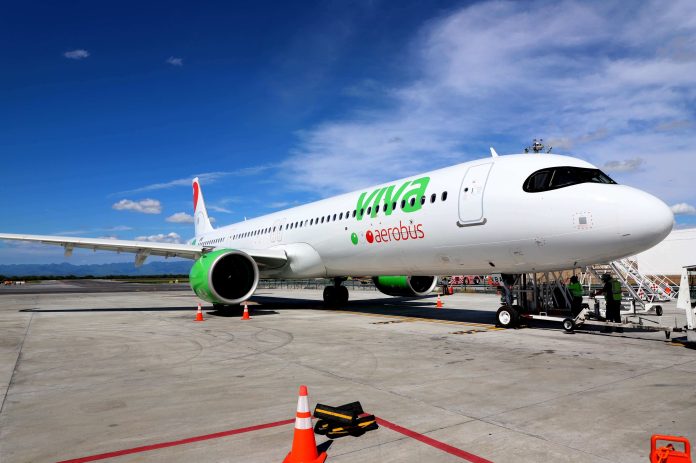
A Viva Aerobus Airbus A321 neo
Viva Aerobus will become the first carrier to service all four of Quintana Roo's major airports. (Viva Aerobus)

Viva Aerobus has confirmed it will be the first airline to operate flights from the new Tulum International Airport.

Head of Viva Aerobus Juan Carlos Zuazua said that the government has informed the company that the terminal will be ready for operation in April 2024. 

An architects rendering of the new Tulum Airport
An architect’s rendering of the new Tulum Airport. (Tulum Airport)

In the announcement, Zuazua said that the Tulum flight will seek to reinforce its Cancún route, a destination that accounted for five million passengers — 25 % of the total volume of Viva Aerobus’ travelers throughout 2022.

The Tulum flight will turn the low-cost airline into the only Mexican carrier flying to Quintana Roo’s four international airports: Cancún, Chetumal, Cozumel and, once open, Tulum.

Zuazua also said that although they would initially operate domestic routes, Viva Aerobus is negotiating an alliance with U.S. carrier Allegiant Air to connect small and medium-sized cities in the United States with the Mexican Caribbean.

Although the proposed terminal is undergoing an environmental evaluation, construction work, including jungle clearance, has begun.

In February, local activists declared the formal public consultation on the airport’s environmental impact a sham, given that at the time of the comment period’s opening on January 9, construction work on the site had already reached 20% completion, according to President López Obrador himself.

With reporting from El Economista

Chichén Itzá and Teotihuacán prepare for spring equinox

0
A tourist celebrates the equinox at the temple of Kulkulcan
Tourists' desire for authenticity and locals' need to make a living and remain in their neighborhoods often creates thorny situations. (Martín Zetina/Cuartoscuro)

The ancient cities of Chichén Itzá and Teotihuacán are set for thousands of tourists today, as crowds gather to celebrate the spring equinox — the official start of the new season.

The National Institute of Anthropology and History (INAH) has launched “Operation Equinox,” to protect and promote the historic sites before one of the busiest days of the year.

The Descent of Kukulkán

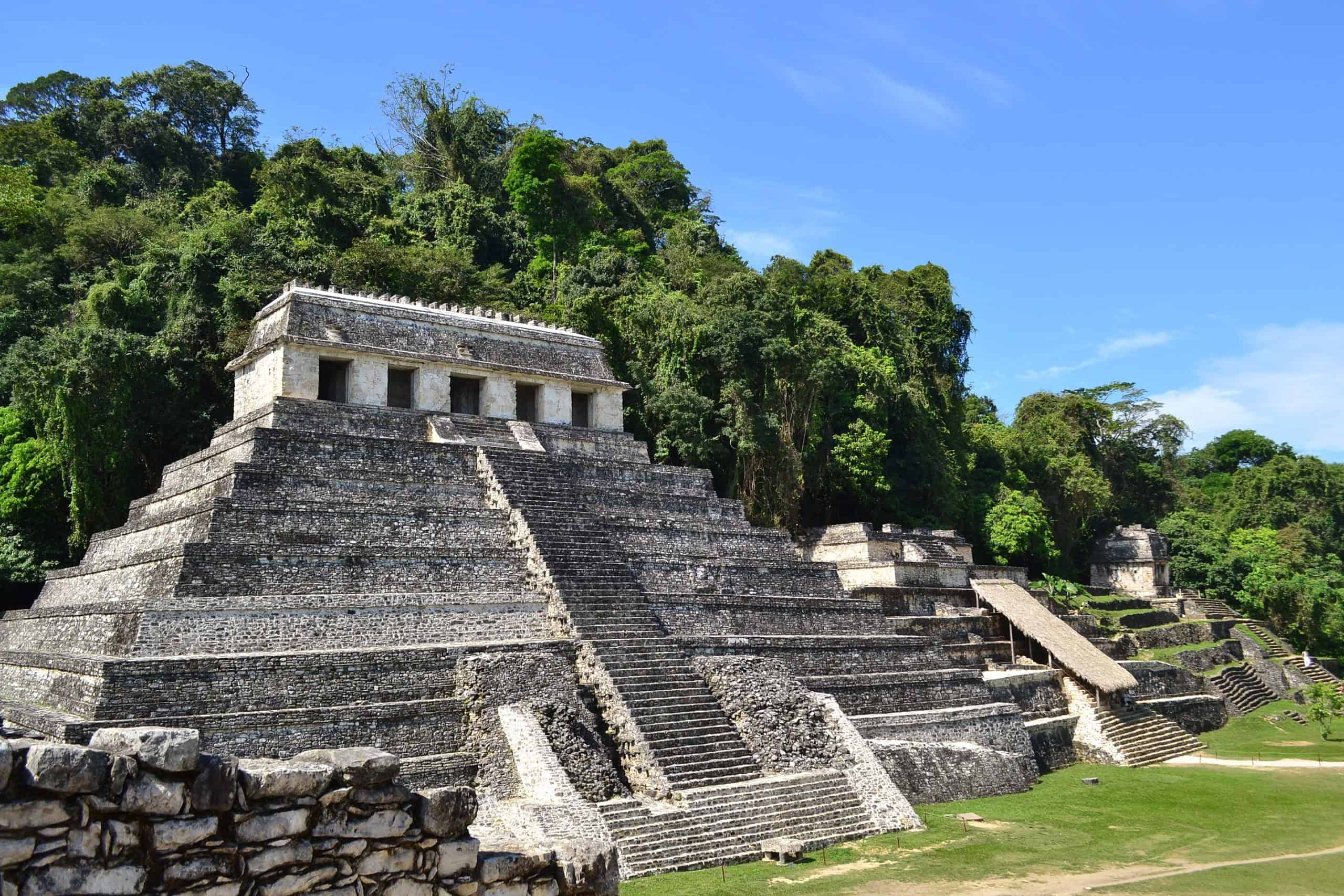
Chichén Itzá, in the state of Yucatán, is home to the world-famous Temple of Kukulkan — which appears to come to life during the equinox, as shadows cast by the design of the temple give the effect of a giant plumed snake slithering down the stairs.

Chichén Itzá will be limited to 15,000 visitors in order to protect the ancient city, which dates from around A.D. 800. It was designated a UNESCO World Heritage Site in 1988.

The snake god Kukulkan was one of the chief Mayan deities, and his “arrival” from the center of the temple marked the beginning of the maize planting season.

At Teotihuacán, located in México state, thousands are expected to arrive from nearby Mexico City in search of a mystical energy associated with the site. At its height, Teotihuacán was one of the largest cities of the ancient world, with a population of over 125,000.

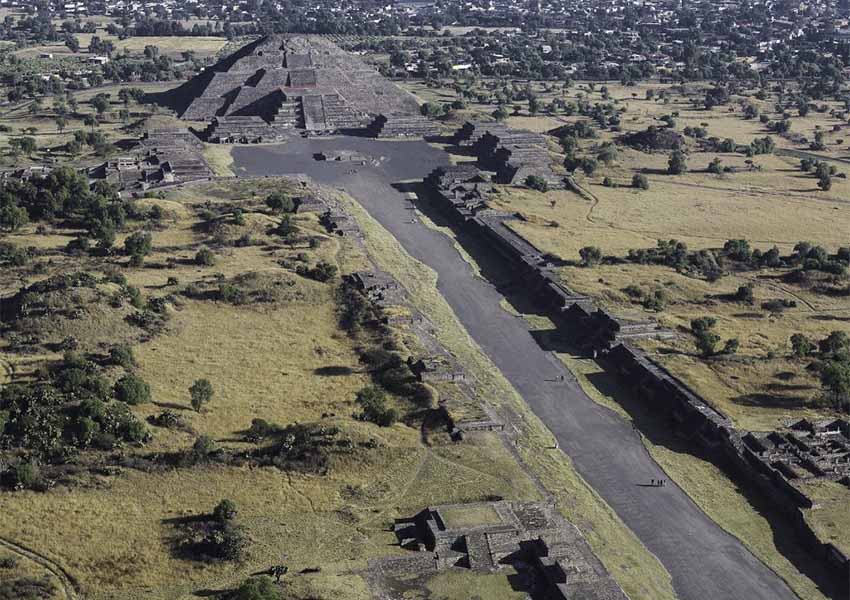
Avenue of the dead in Teotihuacan, Mexico
Visitors to the giant pyramids of Teotihuacán will not be able to climb them. (Ricardo David Sanchéz/Wikimedia)

Operation Equinox specifies that visitors will not be able to climb the enormous pyramids of the sun and the moon, which dominate Teotihuacán. However, this has been the case already in recent years in order to prevent damage to the ancient monuments.

The equinox occurs when the sun is over the equator, and the day and night are almost exactly equal across the globe.

Visitors to the sites are reminded to remain in the designated areas and to not perform religious rites or ceremonies without prior permission from INAH. The measures will last until Mar. 24.

INAH recommends that historians in search of a quieter experience visit the sites at Izamal, Ek’ Balam, Mayapán, Uxmal or Kabah instead. 

With reporting by Infobae and La Jornada

Archaeologists reveal new details about ancient Palenque skeleton

0
The skull of an ancient Mayan woman, "Lady SAS"
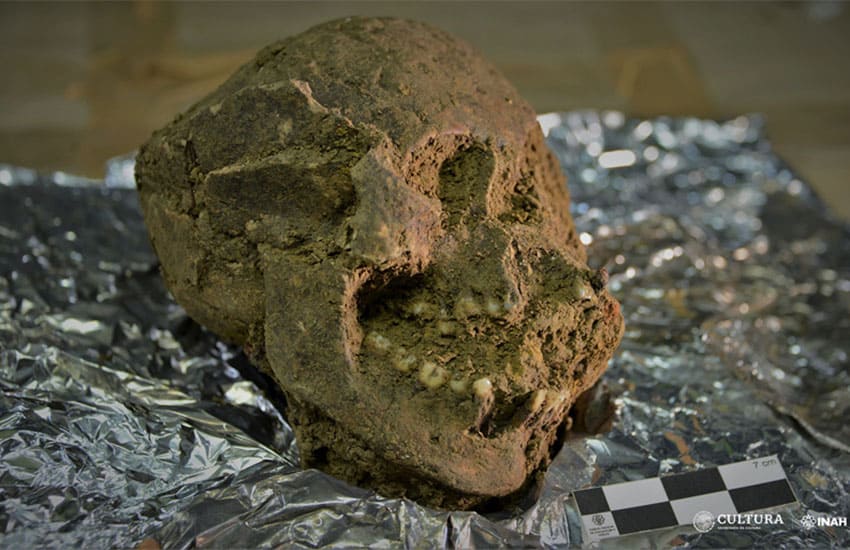
The skull was discovered near some workshops in Palenque, and is believed to be a woman who came to Palenque for marriage. (Photos by Mauricio Marat/INAH).

A skeleton discovered last May at the archaeological site of Palenque was a foreign woman of around 45–50 years of age, according to a new forensic analysis.

A team from the Palenque Archaeological Project (PAP), coordinated by the National Institute of Anthropology and History (INAH), conducted a detailed study of the skeleton dubbed “Lady SAS,” revealing new data about her diet, physiognomy and health.

The tomb of Pakal, in Palenque
Palenque was one of the centers of the vast Mayan empire. (Lousanroj/Wikimedia)

The team — made up of osteoarcheologist Luis Núñez Enríquez and physical anthropologists Miriam Camacho Martínez and Lucía López Mejía — confirmed the skeleton was female through analysis of her pelvic structure and skull features. 

They also noted intriguing differences between the skeleton and other human remains found in the Mayan city. 

“The human burials of Palenque are usually located inside temples or in living areas, and the space where we found this skeleton — a stone tool workshop, as reported by INAH — is neither,” said Núñez.

“One possibility is that she was associated with this activity, and those who worked in the workshop decided to bury her right there.” 

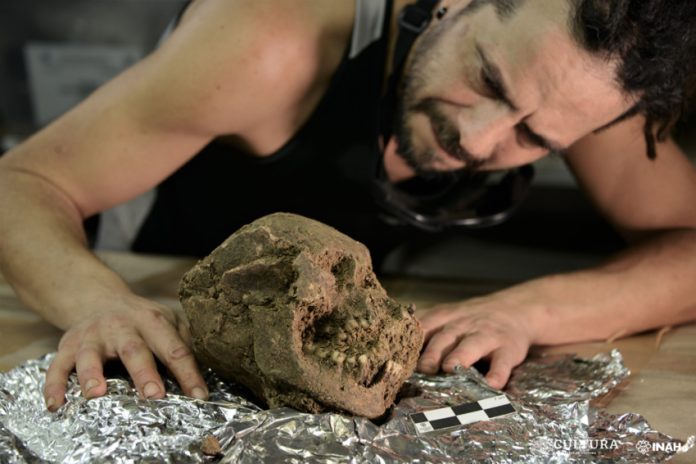
Skull of ancient foreign woman found at Palenque archaeological site
The woman found at Palenque had an intentional skull deformation of the “erect tabular” type, which expanded the skull in width and height., different from the “oblique tabular” modifications typical of city residents. (INAH)

The team also observed that the woman had an intentional skull deformation of the “erect tabular” type, which expanded the skull in width and height. While intentional skull deformations were common among the ancient Mayans, the tribes of Palenque favored “oblique tabular” modifications that lengthened the skull backwards.

This led the team to conclude that “Lady SAS” may have been a foreigner within the kingdom, despite the fact that she was buried close to the site’s urban nucleus. She was found alongside three vessels believed to be burial offerings, which suggests she died between A.D. 800 and 850.

“Thanks to hieroglyphics found at Palenque, we know that women used to arrive at the city… for political relations and for marriage, and that they were women of some importance,” Pablo Alberto Mumary Farto, Doctor of Mesoamerican history at UNAM told Mexico News Daily. 

“This find proves that,” he said. “It is confirmation that women did come [to Palenque] from outside the kingdom, or the Maya-Palenque state.”

Another striking feature of “Lady SAS” was a set of green inlays on her teeth, which were also intentionally filed. Núñez Enríquez observed that many societies around the world practice dental filing and skull modifications, “reflecting codes between people who share a symbolic language — who are of the same ethnic group or practice the same trade.”

“She bears the characteristics of someone who had a certain status — the dental decoration and the jade belongings that were found with her… this discovery is important from an archaeological — an osteological — standpoint because it confirms what we have read on the inscriptions: the arrival of foreign women to Palenque to marry men of a certain social status,” said Mumary Farto.  

Núñez Enríquez also commented that “Lady SAS” had suffered from several pathologies common in pre-Hispanic women, including dental caries, a bone fracture and signs of scurvy caused by vitamin C deficiency in childhood.

However, these illnesses had healed at the time of her death, leading the team to believe she died of natural causes at 45–50 years old — the maximum normal life expectancy in pre-Hispanic Mexico.

“Lady SAS” is one of several archaeological finds to have been discovered during the Program for the Improvement of Archaeological Zones (Promeza). Promeza is being carried out alongside the construction of the Maya Train — a controversial new railroad that will link the archaeological and tourist sites of the Yucatán Peninsula.

Mexico News Daily

US approves merger creating first Canada-US-Mexico railroad

0
Canadian Pacific Railway freight cars
The merger is expected to result in significantly increased levels of rail freight. (Canadian Pacific)

A United States federal regulator approved the first major railroad merger in two decades on Wednesday, creating a railroad that would be the first to operate a single-line service linking Mexico, the U.S. and Canada. 

Canadian Pacific’s US $31 billion acquisition of Kansas City Southern (KCS) was approved after two years of scrutiny by the U.S. Surface Transportation Board. In approving the deal, the board said that the new single-line service would shift about 64,000 truckloads per year to rails from the road, fostering investment in infrastructure, quality and safety.

Kansas City Southern Rail train
The merger between KCS and Canadian Pacific is the largest in two decades. (William Hamlin/Twitter)

The new merged entity will be known as Canadian Pacific Kansas City (CPKC) and will be the parent company to Kansas City Southern México (KCSM), which announced plans to invest US $200 million in Mexico last month.

The new railroad will transport grain from the Midwest to the Gulf Coast and Mexico, as well as intermodal freight goods between Dallas and Chicago. It will facilitate “the trade in automotive parts, finished vehicles and other containerized mixed goods between the United States and Mexico,” the board said. 

The U.S. regulator also said that the merger would not reduce competition and will add more than 800 union jobs in the U.S.

“On balance, the merger of these two railroads will benefit the American economy and will be an improvement for all citizens in terms of safety and the environment,” U.S. Surface Transportation Board Chairman Martin J. Oberman told a news conference on Wednesday.

After service problems and economic damage that followed railroad mergers in the 1990s, regulators adopted tougher rules for major mergers in 2001, making the Canadian Pacific and KCS merger the largest since. The merger plan would combine the two smallest of the major railroads in Mexico, the U.S. and Canada into one entity, forming the sixth-largest carrier behind Canadian National. 

A red Canadian Pacfic locomotive
The new single-service railroad will stretch from Canada to Mexico, providing much-needed infrastructure links between the three countries, according to the U.S. Surface Transportation Board (Canadian Pacific)

When the news of the merger was first announced in 2021, independent railroad analyst Tony Hatch told AP News that the merger should help stabilize the industry overall and should not lead to another round of railroad mergers.

According to Canadian Pacific, it could take control of KCS as soon as April 14. It will take the Alberta-based company about three years to combine the railroads. CPKC will operate around 20,000 miles of track and employ nearly 20,000 people, according to Canadian Pacific. 

“This important milestone is the catalyst for realizing the benefits of a North American railroad for all of our stakeholders,” KCS President and CEO Patrick J. Ottensmeyer said in a statement to shareholders.

Acknowledging the political relevance that railroads and safety have acquired in the U.S. after the derailment of a Norfolk Southern train in East Palestine, Ohio, in February, Oberman added that the merger would improve safety by removing the transport of hazardous materials from roads to railways.

According to the companies, CPKC will bring a new safety standard to the North American rail industry as Canadian Pacific has been the safest railroad in North America for more than a decade.

The Surface Transportation Board said that Canadian Pacific has the highest safety record of any Class I railroad over the last 15 years and that combined, both railroads’ record for preventing perilous material releases exceeds, on average, any data related to road freight or any other railroad service.

The only major impact of the deal would be an increase in noise in places where train traffic is expected to significantly increase, the regulator said. Chicago, Illinois and Laredo, Texas, expect to have the biggest traffic increases, while railways across Iowa are predicted to see more than 14 additional trains daily. The tracks between Kansas City, Missouri and Beaumont, Texas, also foresee an increase of about 12 more trains per day. 

With reports from El Economista, AP News and The New York Times

Mexico’s Sergio ‘Checo’ Pérez wins F1 Saudi Arabian Grand Prix

0
Sergio "Checo" Perez hold the winners trophy aloft at the 2023 Saudi Arabia GP.
The victory in Jeddah is Peréz's fifth career win. (@redbullracing/Twitter)

Mexican race car driver Sergio “Checo” Pérez won the Saudi Arabian Grand Prix in Jeddah, Saudi Arabia on Sunday for his fifth career Formula One triumph and his third in the last two seasons.

In 2022, the 33-year-old Guadalajara native won the Monaco Grand Prix in May and the Singapore Grand Prix in October, finishing the season in second place in the points standings behind Red Bull teammate Max Verstappen.

Sergio "Checo" Perez racing his Red Bull car in Saudi Arabia
The Mexican pilot pulled off a dominant display throughout the Grand Prix. (@redbullracing/Twitter)

Pérez started Sunday’s race in the pole position after winning the qualifying rounds on Saturday, giving him the top starting spot on the Jeddah street circuit for a second straight year — the only two poles of his career.

At the start of the race, he briefly fell behind Fernando Alonso – who scored his 100th podium finish – at the very first turn, but a five-second penalty to the Spaniard for an incorrect starting grid position (which he served during a pit stop) allowed Pérez to reclaim the lead on the fourth of 50 laps — and never look back.

Alonso was briefly handed a further 10-second time penalty for irregularities during his original pit stop, although this penalty was overturned on appeal from his Aston Martin team, ensuring that he kept his 3rd place.

Red Bull teammate Verstappen, who had mechanical issues during qualifying, fought his way back from 15th place at the start to finish in second place, giving the team a 1-2 finish in what is shaping up to be another runaway for the reigning Formula One champions.

Fernando Alonso celebrates 3rd place in Saudi Arabia by leaping from his vehicle
Fernando Alonso scored his 100th career podium, despite a time penalty during the race. (@AstonMartinF1/Twitter)

“Nice job, guys — an excellent result for the team,” said Pérez, who finished about 5 seconds ahead of Verstappen.

In the season-opening Bahrain Grand Prix on March 5, Verstappen of the Netherlands was first and Pérez second.

Formula One has a competition structure that involves 10 teams, with two drivers per team. Driver success is often heavily dependent on the quality of their car, which differs from team to team.

Verstappen is chasing a third straight championship and isn’t worried if it comes down to a fight between him and Pérez. Last season, the two men combined to win 17 of 23 races (including a record 15 wins by the Dutchman).

“The best one will finish in front,” he said.

For his part, Pérez feels he has yet to peak.

“I’m not sure it’s my best weekend with the team,” he said. “Melbourne will be even better,” he added, looking ahead to the next race in Australia on April 2.

Red Bull has now finished 1-2 in three consecutive races, including last year’s finale.

“Let’s keep it up,” Pérez said. “Let’s keep pushing.”

Pérez nearly ended the day joint first in the championship, but Verstappen stole the fastest lap – worth 1 point – at the last moment, denying his teammate the chance to lead the title battle for the very first time. Verstappen now has 44 points to Peréz’s 43.

The race was held on a 6.2 kilometer (3.8-mile) circuit beside the Red Sea, the quickest street track in F1, with average speeds exceeding 250 kmh (160 mph).

“It was tougher than expected,”  Pérez said about the course. Last year, despite having the pole position, he finished in fourth place. “It’s a great start to the season. The most important thing is that we have the fastest car.”

Last year, Pérez raced in the Mexico City Grand Prix on Oct. 30, with hopes high that he could win on home turf. He qualified for fourth in the starting grid and finished third behind Verstappen and British racer Lewis Hamilton.

With reports from CNN.com, Associated Press, Animal Politico and Forbes

Democracy or monarchy? 19th-century Mexico struggled for identity

0
Mural by José Clemente Orozco
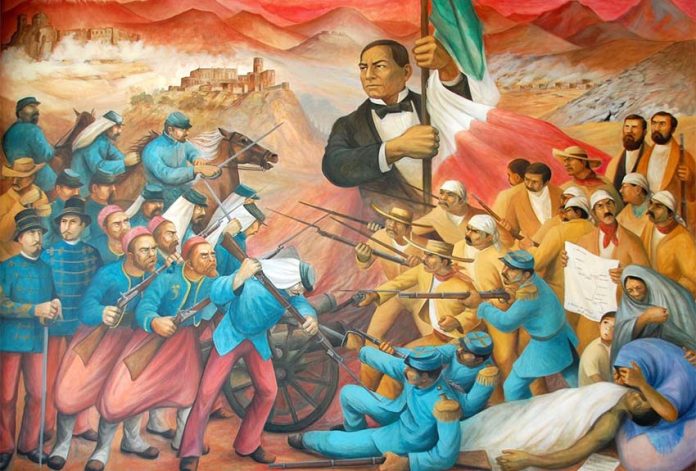
Mural by José Clemente Orozco depicting Benito Juárez during the struggles of his era at the National History Museum.

Benito Juárez is the only individual to have a federal holiday in Mexico. But he is not the father of his country like George Washington, so why?

Juárez’s time was a few decades post-Independence, during a century filled with coups d’etat, flamboyant personalities and foreign invasions. His secular sainthood comes from a lifetime of struggle and establishing the ideals that would shape modern Mexico — even if they’re not always followed.

The post-Independence century was about what Mexico would be. Would it continue its monarchistic ways (favored by the Conservatives) or would it embrace Enlightenment ideas (favored by Liberals)? 

The question began even before the War of Independence started. Napoleon’s invasion of Spain in 1808 horrified the elites of New Spain but also showed that the mother country was not invincible. Miguel Hidalgo’s career as a rebel began by plotting a return of Ferdinand VII to the throne; only later would he demand the ouster of Mexico’s Spanish government.

The Spanish army’s final exit was engineered not by Hidalgo or the mixed-race mestizos who shed much blood but rather by the opportunistic Spanish general Agustín de Iturbide, who would crown himself emperor in 1822. Liberals were appalled, but Conservatives were not happy either; they wanted someone of royal blood. 

Less than a year into Iturbide’s reign, he was ousted by then-Liberal Antonio López de Santa Anna, and the 1824 Constitution was adopted. But over time, Santa Anna became more dictatorial, arguing that Mexico was not ready for democracy. 

Map of New Spain in 1819
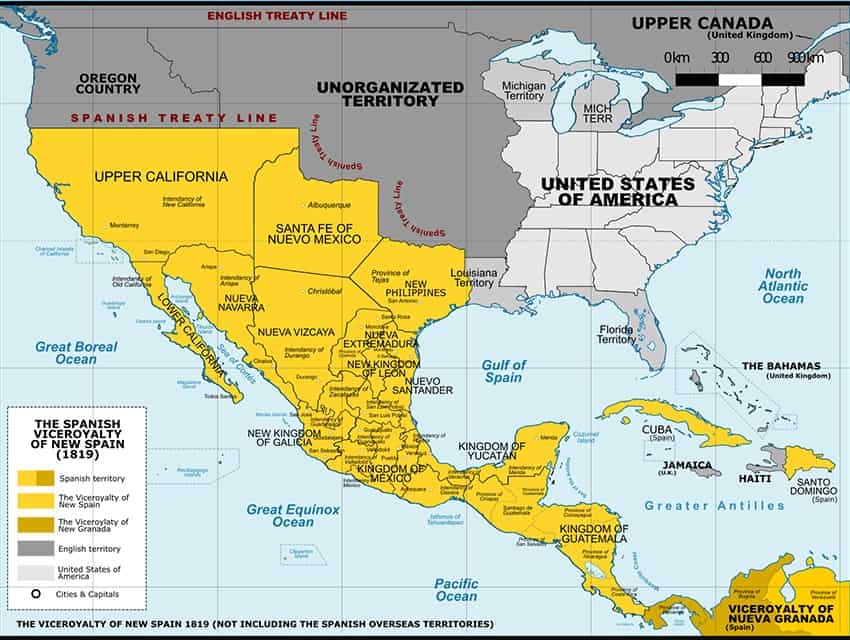
Map of New Spain in 1819, during the War of Independence, showing the extent of the territory that Mexico City once controlled (Giggette/Wikimedia Commons)

But Santa Anna would remain a force to contend with for 25 years — in and out of power. He even came back after losing ½ of the country’s territory to the U.S. He would not be permanently removed until Liberal forces under Juárez and others forced him to resign in 1854, beginning a period called the Reform.

Juárez, et al. were radicals for their time, determined to break the power of the military and the Catholic Church. Their aims led to the 1857 Constitution, but also civil strife called the Reform War. 

The civil war meant two competing governments. When the Conservatives lost, they enlisted foreign help. The French responded, not only because of debts owed them by Juárez but also because it was a chance to take over the country.

The French invaded and installed Maximilian I as Mexico’s second emperor. But his reign would not last long. Despite being of European royal blood, he had Liberal sympathies. In the end, just about everyone hated him.

Juárez and the Liberals retook Mexico City in 1867, restored the 1857 Constitution and executed Maximilian in short order. 

Juárez’s remaining years as president would still be strife-ridden. His main opposition was from Porfirio Díaz, with opposition growing after Juárez ran for and won reelection in 1871.

Juárez died of heart issues the following year, and Díaz saw his chance. Like Santa Anna, he was a Liberal who would devolve into a dictator, maintaining his grip on power for over 30 years, shredding Juárez’s constitution in the process. 

Unlike Santa Anna, Díaz’s reign lacked major wars and was marked by economic and technological developments that benefited the upper classes and foreign investors. Meanwhile, the lower classes suffered horrible working conditions, political disenfranchisement and economic deprivation. 

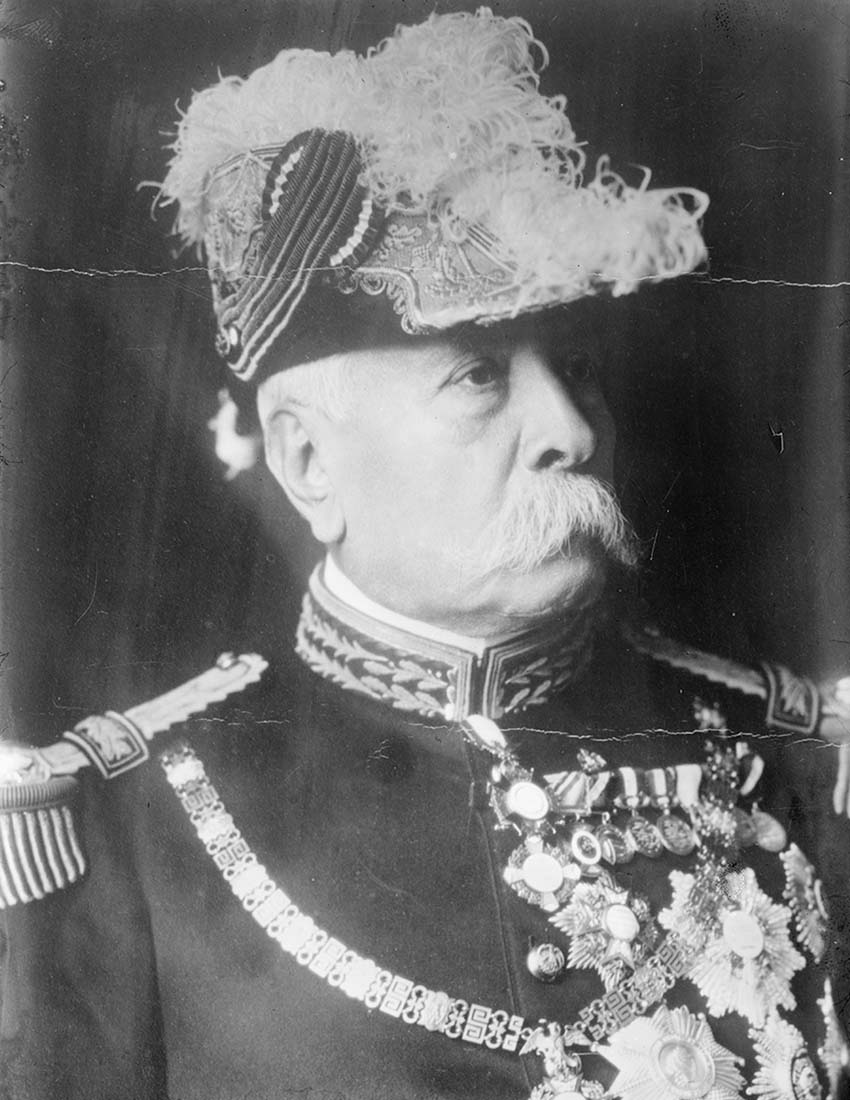
Mexico's President Porfirio Diaz
President Porfirio Díaz’s 30-year dictatorship brought modernizationthat benefitted Mexico’s elites, but not the lower classes. (Bain News Service/U.S. Library of Congress)

All hell would break loose when Díaz reneged on a promise to not run for reelection in 1910, despite being 80 years old. The Revolution was and was not an extension of the turmoil of the past century. Its major contribution would be to replace governments defined by charismatic leaders with a bureaucratic system. The resulting Institutional Revolutionary Party (PRI) would rule Mexico until 2000.

All this internal turmoil would shrink “Mexico” to the borders we know today, with separatists and foreign powers seeing opportunities. Here are some examples: 

  • In the 1820s, Spain reneged on its recognition of Mexico and tried unsuccessfully to retake it.
  • In 1823, Central America declared independence from Mexico City, almost taking Chiapas with them.
  • The first French intervention came in the 1830s, supposedly due to a complaint by a French-born Mexico City baker who lost property.
  • There were two attempts to establish a Yucatán Republic – one in 1840 and again in 1847, but Mexico City retook the region by force both times.

Mexico’s most painful loss was that of Texas and what is now the U.S. Southwest; Spain never subjugated northern tribes such as the Comanche. Unable to convince enough Mexicans northward, they allowed the immigration of English speakers from the U.S.

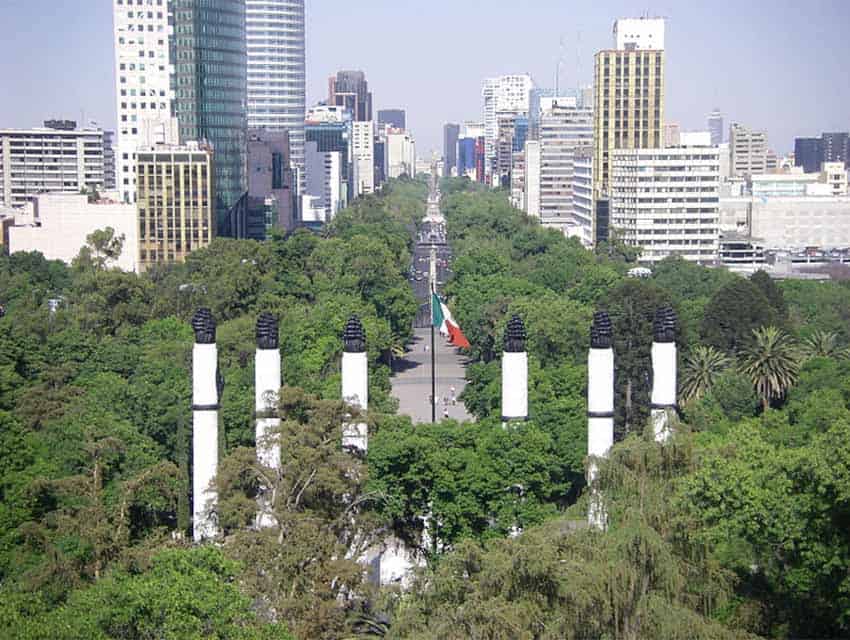
Monument to Los Niños Heroes
View of the monument to the “Children Heros” in Chapultepec Park, Mexico City. It honors six teen military cadets who lost their lives defending their school from invading U.S. troops. (Chivista)

Mexico City hoped that a shared European (as opposed to indigenous) heritage, conversion to Catholicism and Mexican citizenship would produce loyalty, but they were sorely disappointed. In 1836, Anglos and ethnic Mexicans declared themselves Texans and defeated Santa Anna at the Battle of San Jacinto.

Soon afterward, Texas joined the U.S., in part out of concern that Mexican troops would return but also because the Anglos never really changed their identity.

Questions related to the new Texas-Mexico border would give the U.S. the justification to begin the Mexican-American War, which ended with the invasion of Mexico City by U.S. troops, forcing Santa Anna to “sell” almost half of Mexico’s territory. Although some wanted to annex all of Mexico, there were both ideological and practical reasons to not do so. 

With a century of chaos, it is only natural for a country to look for something positive in it for its national mythos, and Juárez fits the bill. His 1857 Constitution was incorporated almost wholesale into the current 1917 Constitution (with an ambitious social agenda added on).

He represents survival against adversity but also selfless dedication to both country and principle since, unlike Santa Anna and Díaz, he did not abandon Liberal principles once in power. 

Leigh Thelmadatter arrived in Mexico over 20 years ago and fell in love with the land and the culture in particular its handcrafts and art. She is the author of Mexican Cartonería: Paper, Paste and Fiesta (Schiffer 2019). Her culture column appears regularly on Mexico News Daily.

Strung along by Oaxaca cheese

0
quesadillas with oaxaca cheese
Mushrooms and arugula are tumbled together with gooey melted Oaxaca cheese to make these unusual quesadillas.

The longer you live in Mexico, the more things become a part of your life that you’d never heard of before, or that previously had been relegated to the category of “exotic specialties.” 

Such is the case for me with Oaxaca cheese. Now I almost always have a ball of it in the fridge, for healthy, high-protein snacking, for cooking, for adding to sandwiches and salads. It’s kind of a mainstay. 

Here in Mazatlán, the weekly mercado orgánico has a vendor that makes and sells balls of fresh Oaxaca cheese (plain or with chipotle or garlic). It’s lovely: soft and firm at the same time, with a delicate, almost milky flavor.

But you can find Oaxaca cheese worth buying in grocery stores too — you just have to read the labels and do your own taste tests till you find one that suits your fancy. Avoid any with too many ingredients; that list should be short and leche de vaca (cow’s milk) should be the first one. 

Sometimes I’ve found that it can be too salty. Here’s a tip: Pull or cut the ball apart into smaller pieces and let sit, refrigerated, in a bowl of water overnight. The excess salt will leach into the water, and your cheese will be more fresh-tasting. 

Queso Oaxaca (waa-haa-kah ) is a simple, unaged cheese, made by double-cooking and curdling milk and then stretching the cheese curds, resulting in the trademark stringiness.

shredded oaxaca cheese
This simple fresh cheese has a delicate, almost milky flavor.

Should you want to make it at home, it’s not difficult, albeit a little time-consuming and exacting. In the state of Oaxaca, where it originated, it’s called quesillo (kay-see-yo), meaning “rope cheese.”

It’s the same process used to make mozzarella, and, yes, it’s what commercial “string cheese” kind of is. I say “kind of” because there are so many added stabilizers, etc. that it bears little resemblance to its purer Mexican cousin.

What to use it for? Anything where you want melty, gooey cheese. It’s a good substitute for mozzarella or Monterey Jack, and, of course, can be eaten for fun just like string cheese (except it tastes better!) Enchiladas, quesadillas, chiles rellenos, grilled cheese sandwiches, lasagna, pizza and other Italian dishes, nachos, migas, molletes — the list goes on and on.

Because Oaxaca cheese is a fresh cheese, you need to eat it quickly. Store in the refrigerator in a covered container of water. It should last seven to 10 days. If need be, you can also freeze it. Just put the unopened package in the freezer and thaw in refrigerator before using.

Choriqueso (“Hangover Helper”)

  • ½ lb. ground pork shoulder
  • 2 tsp. red wine vinegar
  • ¼ tsp. cinnamon
  • 1 tsp. paprika
  • ½ tsp. dried oregano
  • 1/8 tsp. ground cumin
  • 1/8 tsp. cayenne 
  • 1 tsp. grated garlic
  • 1 tsp. salt
  • 1 Tbsp. vegetable oil
  • 1½-2 cups grated Oaxaca cheese (or pulled into strings)
  • Tortilla chips for serving 

Preheat broiler to high. Using your hands, mix pork, vinegar, cinnamon, paprika, oregano, cumin, cayenne, garlic, and salt in medium bowl. Heat oil in 10-inch broiler-safe skillet over medium-high heat; add chorizo mixture and cook, stirring and breaking up the meat until no longer pink. Season to taste with salt. Remove from heat. Top with cheese.

Place under broiler until melted. Serve immediately with tortilla chips for scooping.

Choriqueso
This “hangover helper” cheese dip is just what the doctor ordered!

Carnitas Torta

  • 1 loaf rustic country bread or ciabatta
  • 1½ cups refried beans 
  • About 1½ kilos pork carnitas 
  • 1/3 cup salsa verde
  • 12 oz. Oaxaca cheese, shredded or pulled into strings
  • 1½ cups pickled red onions, drained well
  • 2-3 jalapeño peppers, finely sliced

Use a bread knife to make a hollow “bread boat” by slicing off the top 1-1½ inches of the loaf. Then cut around perimeter of the interior of the bigger bottom piece without breaking through the bottom crust and use your fingers to pull out the excess bread from the inside.

Spread beans on bottom of the bread boat, followed by carnitas, salsa, cheese, onions and jalapeños. Close sandwich. 

Wrap sandwich tightly in aluminum foil. Place between two stiff cutting boards, and then place a heavy weight on top (about 40 pounds). Press down firmly to flatten sandwich evenly; let rest under the weight for at least 4 hours.

When ready to eat, adjust oven rack to center position and preheat oven to 375 F (177 C). Remove weights; slice sandwich through foil into four to six pieces with a bread knife. Unwrap and transfer to baking sheet, pressing the pieces back together to form a full sandwich shape. Bake in oven until hot and cheese has melted, about 15 minutes. Serve immediately.

Smoky Mushroom Quesadillas

  • 2 Tbsp. olive oil  
  • 8 oz. portobello mushrooms, sliced 
  • 1 tsp. minced garlic 
  • 2 green onions, chopped  
  • ½ tsp. coarse salt  
  • ½ tsp. smoked paprika 
  •  ¼ tsp. black pepper 
  • About 2 cups (8 oz.) shredded Oaxaca cheese
  • ½ cup arugula  
  • ½ cup chopped cilantro 
  • 10 (6-inch) corn or flour tortillas
  • Salsa for serving

Heat oil in a large skillet over medium-high heat; add mushrooms. Cook 5 minutes, stirring. Add garlic and green onions; cook 3 minutes. Season with salt, pepper and paprika. Set aside. In a separate bowl, toss arugula and cilantro. 

Wipe out skillet or use a comal; warm over medium heat. Heat a tortilla, flip and layer cheese, mushroom mixture, greens and cheese again on half of one side. Fold tortilla over so melting cheese seals it shut. When tortilla is golden brown on the bottom, flip and cook the other side for another 30 seconds. Repeat with remaining tortillas and ingredients.  

Serve with salsa.

Bean bake recipe
Beans and tomato combine with Oaxaca cheese to make a hearty, satisfying side dish.

Cheesy Tomato-Bean Bake

  • ¼ cup olive oil
  • 3 garlic cloves, thinly sliced
  • 3 Tbsp. tomato paste
  • 3 cups cooked beans or 2 (15-ounce) cans beans (any kind)
  • ½ cup boiling water
  •  Salt and pepper
  • About 1⅓ cups Oaxaca cheese, grated or pulled into strings

Heat oven to 475 F (245 C). In 10-inch ovenproof skillet, heat oil over medium-high. Quickly fry garlic until lightly golden, then stir in tomato paste (being careful of splattering). Stir and fry 30 seconds, reducing heat as needed to prevent garlic from burning. Stir in beans, water and generous pinches of salt and pepper. Sprinkle cheese evenly over top. Bake until cheese has melted and browned in spots, 5–10 minutes. Serve with crusty bread for dipping.

Janet Blaser is the author of the best-selling book, Why We Left: An Anthology of American Women Expatsfeatured on CNBC and MarketWatch. She has lived in Mexico since 2006. You can find her on Facebook.