Home Blog Page 834

Explore a ‘lost world’ at Veracruz’s Enchanted Cave

0
La Cueva del Encanto, Veracruz
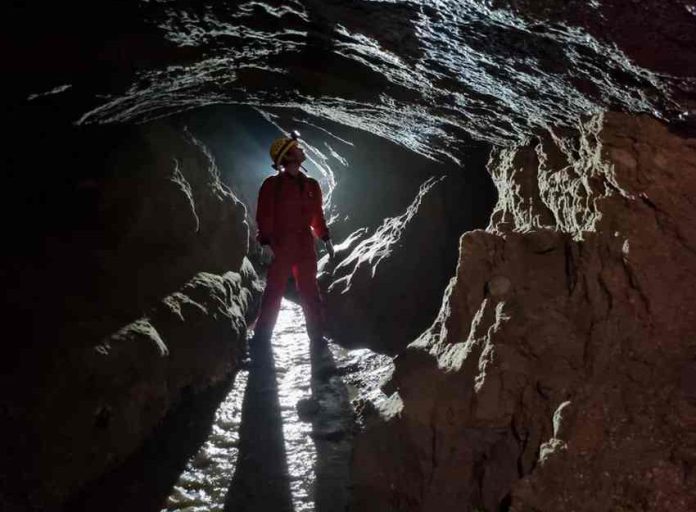
Inside the Enchanted Cave. (Photo: Ramón Espinasa)

One of the hidden rewards of cave exploration in Mexico is the accidental discovery of gorgeous rivers, canyons, hot springs, waterfalls or other natural phenomena on the way to or from a cave — which, on some occasions, may turn out to be a miserable hole in the ground with no redeeming merit whatsoever.

To stumble upon a jewel of natural beauty, as well as a cave of great interest, is good luck indeed.
La Cueva del Encanto
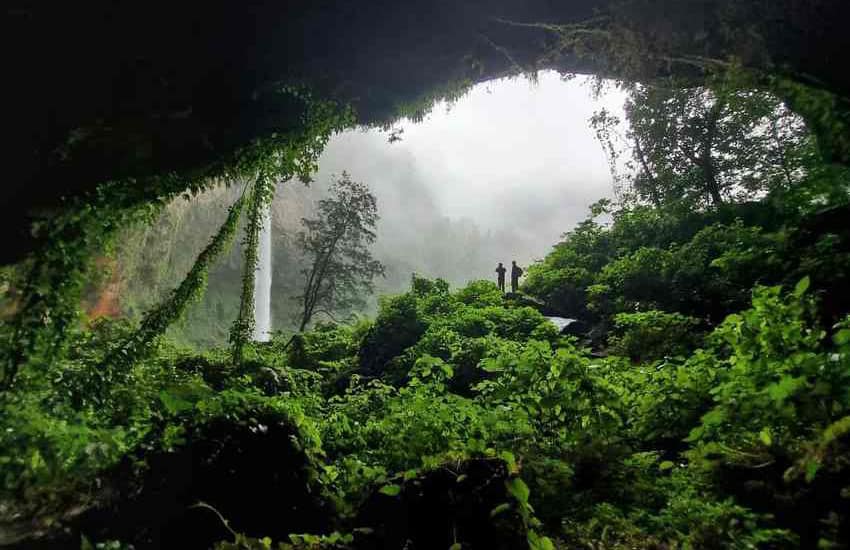
View from the cave entrance. (Photo: Ramón Espinasa)

“But it happened to me recently,” says Mexico City geologist Ramón Espinasa, founder of SMES (Mexican Society for Underground Exploration).

Espinasa is especially interested in lava tubes, caves naturally formed when the surface of moving lava cools, allowing hot, molten lava to flow out from underneath it, creating an underground tunnel or room.

Because the state of Veracruz is home to some of Mexico’s best lava tubes, Espinasa is ever on the lookout for rumors of caves in that state.

“That’s how I came upon a YouTube video presenting a spectacular waterfall in Veracruz, located just outside a cave entrance. Fortunately the vlogger also included footage inside the cave, which I immediately realized was volcanic, but not a lava tube. It looked most interesting.”

Espinasa then organized an expedition to find and map La Cueva del Encanto, The Enchanted Cave, located in a remote area 130 km northwest of Veracruz city. 

Upon arrival in the target zone, the team of speleologists learned how this particular cave had gotten its name.

Legend says that once upon a time, a farmer named Cirilo happened to pass by the cave entrance and noticed a strange light emanating from it. Curious, he walked into the cave and, inside, found a lake filled with crystal-clear water. Swans were swimming in the lake, and every time one of them came near him, it mysteriously transformed into a beautiful woman.

It feels a bit like “Jurassic Park” here with all this verdant greenery. (Photo: Vicente Loreto)

Cirilo decided to stay a while to enjoy this incredible spectacle and only reluctantly left the cavern a few hours later to get back to work.

His sombrero, which he had left outside the cave, was no longer there. Back he went to his milpa, where he discovered his wife looking older and dressed in black. To his surprise, he learned that what had seemed hours to him had been months to his family, which said that he had been gone for a full year and had been presumed dead.

Ready for enchantment, our cave explorers started out on a trail following the Alseseca River, which soon took them downhill.

“This slope was beautiful,” says explorer Vicente Loreto, “with high vertical walls on one side. I think we were in a cloud forest because we began to run into giant ferns. The vegetation was abundant, even lush. One surprise was that we never saw any trash, in spite of the fact that this place is a well-known tourist attraction. People come not only for the waterfall but also for the cave.”
The Bridal Veil Cascade
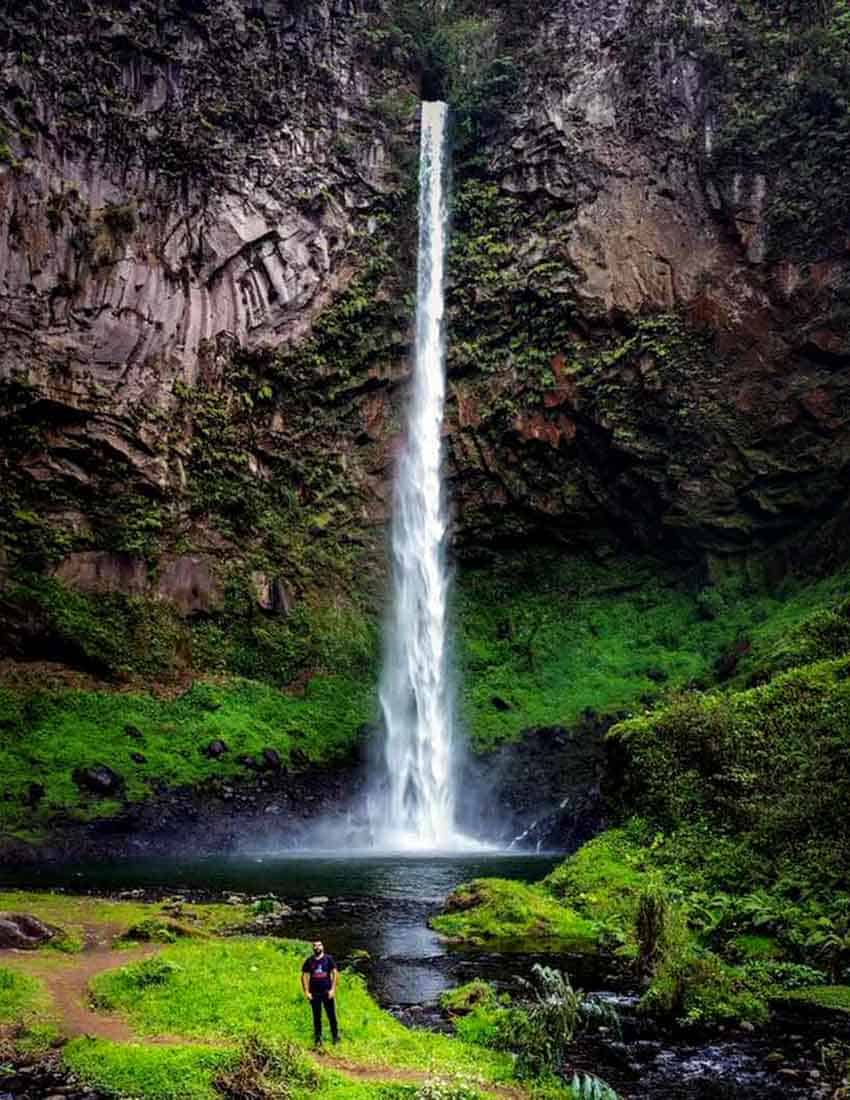
The Bridal Veil Cascade (Photo: Love Veracruz)

At the bottom of the slope, they came to a river with clean, clear water and to the tall, shimmering cascade locally known as El Velo de la Novia, The Bridal Veil.

“The waterfall is beautiful,” says Loreto, “and produces a fine spray that is very pleasant, inviting you to jump into the water. Really, the whole jungle-like scene makes you feel as if you’ve arrived in a lost world. All we needed was to see a big pterodactyl fly out of the cave entrance!”

That entrance — offering a dramatic view of the cascade — was 25 meters wide and 4 or 5 meters high. 

“No sooner did I step into the cave than my headlamp went out,” reports Loreto, and — despite the legend — this was the closest thing to a supernatural event that the team experienced during their entire exploration.
La Cueva del Encanto, Veracruz
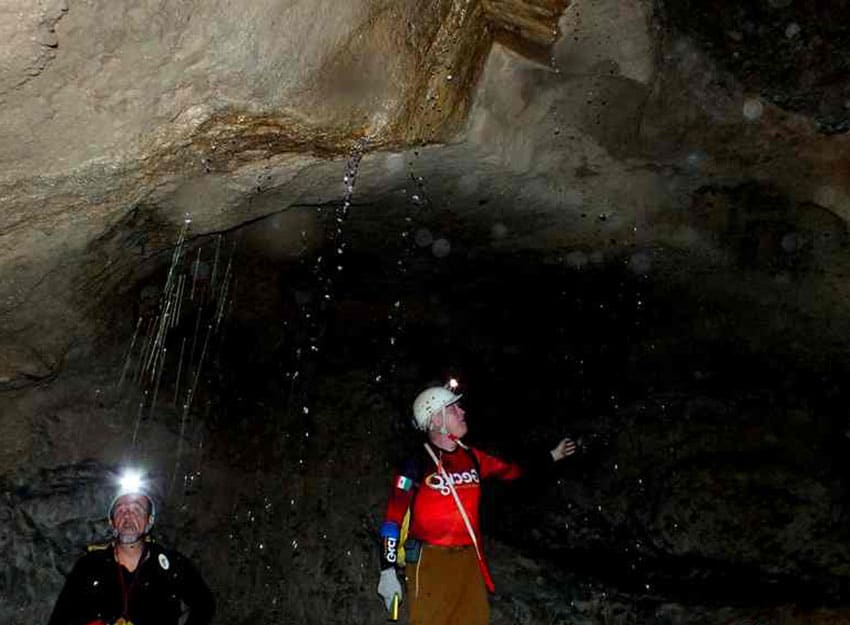
One of two natural showers inside the cave. (Photo: Vicente Loreto)

La Cueva del Encanto turned out to be an easy, one-entrance, walk-through cave, sometimes 15 meters high. The walls were coffee-colored, but in a few places black and red.

In several parts of the cave, the team came upon what looked like large tubes or cylinders in the ceiling that clearly had nothing to do with the formation of the cave.

“When we took a close look at these,” says Loreto, “we saw they were black on top. We came to the conclusion that they were tree molds, that when volcanic ash covered this forest in ancient times, the heat was so intense that the trees were set on fire, not from external combustion but internal.”

As they mapped the cave, which turned out to be 520 meters long, the explorers inevitably found water at the end of every side passage, and in some cases, it was falling down from the ceiling as in a shower.

La Cueva del Encanto, Veracruz
Tree mold, created when hot ash smothered an ancient tree. (Photo Vicente Loreto)

The frequent presence of water in the cave testified as to its origin, according to Espinasa and fellow geologist Chris Lloyd. They explained to me that the most common kind of caves are formed by slightly acidic rainwater slowly eating away at limestone rock under the surface.

The Enchanted Cave, however, which is formed in volcanic debris (tuff), came into being another way. Water seeped down into cracks and began gently washing away tiny particles of ash. This cleared the way for more water to flow, resulting in interconnected “pipes” transporting water to lower locations. 

These piping caves are generally not very big, and it seems Mexico’s Cueva del Encanto — because it is over 500 meters long — will soon be included among the top 10 in Cave Exploring’s list of piping caves around the world.

Delighted to help give international recognition to an obscure Mexican cave and still dazed by the enchantments of a stupendous waterfall, the caving team bade farewell to this lost world, now ready to turn their exploratory talents to the numerous pulque stands they had spotted along the highway.
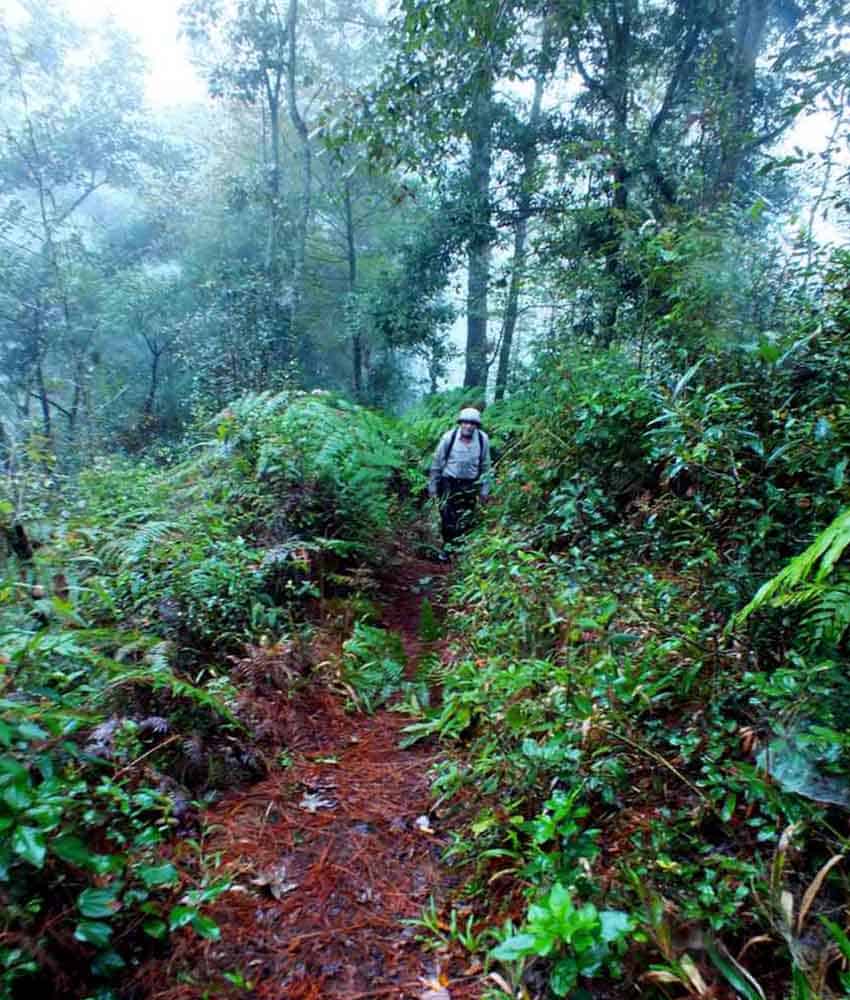
On the trail. (Photo: Vicente Loreto)

Would you, too, like to be enchanted? Check out the map to this site on Wikiloc.

The writer has lived near Guadalajara, Jalisco, since 1985. His most recent book is Outdoors in Western Mexico, Volume Three. More of his writing can be found on his blog.

Presidential decree removes cargo airlines from AICM

0
Estafeta company cargo plane
Cargo services have 180 days to move their operations from AICM. Some services had asked for significantly longer. The Mexican company Estafeta had asked for 16 months. (Konstantin von Wedelstedt/Creative Commons)

The federal government on Thursday published a decree that suspends cargo airline operations at the Mexico City International Airport (AICM).

Air freight carriers will have 108 business days to cease flights to and from the airport, according to the presidential decree published in the government’s official gazette.

DHL trucks at AICM
The international cargo carrier DHL had just opened operations in June. (Photo: Victoria Valtierra Ruvalcaba/Cuartoscuro)

That means they will have until July to move their operations away from Mexico’s busiest airport.

The decree doesn’t force cargo airlines to shift operations to the Felipe Ángeles International Airport (AIFA) north of Mexico City, but that facility would be the most logical alternative.

President López Obrador has said that the new airport – one of his pet infrastructure projects — has the space and security conditions required by cargo airlines. Built by the army on an Air Force base, AIFA is located about 50 kilometers north of downtown Mexico City.

The decision to ban freight carriers from AICM was taken primarily to ease pressure on the facility, which the federal government last year declared had reached saturation point.

However, only about 3% of AICM flights in 2022 were for cargo, data shows.

The period the government has given cargo airlines to move operations away from the airport is significantly less than they were asking for.

Freight carriers requested a minimum of 180 business days to complete the move, although the Mexican company Estafeta specified 16 months as an ideal period of time.

Flights carrying both passengers and cargo will be allowed to continue using AICM, which was used by over 46 million passengers last year.

The federal government is eager to increase usage of AIFA, which has been in operation for 10 months but only serves a small number of airlines operating a limited number of flights.

There are currently no flights between the United States and AIFA, but that will change in May when Aeroméxico will commence a service to Houston.

The airline obtained authorizations from Mexico and the United States to operate the route, despite Mexico’s loss of its Category 1 air safety rating with the U.S. Federal Aviation Administration in May 2021. A consequence of being downgraded to Category 2 status was a prohibition against Mexican airlines adding new routes to the United States until Category 1 status is restored.

With reports from El Financiero, El Universal and Reuters 

Mexican modern meets California chill in San Miguel de Allende golf haven

0
House for sale in San Miguel de Allende
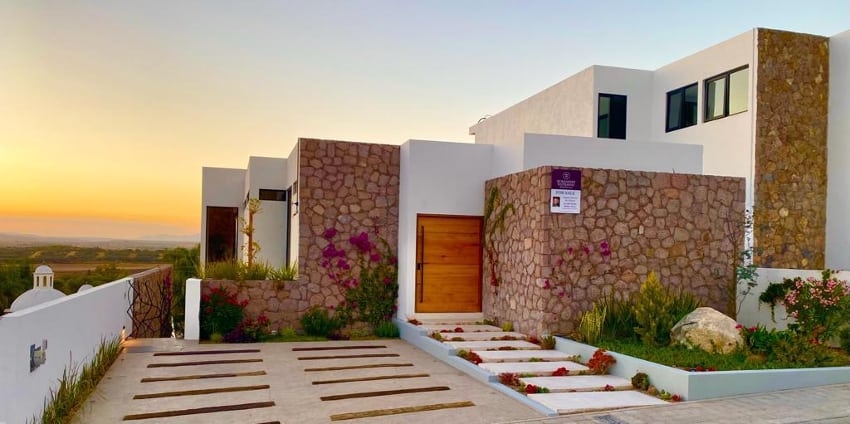
Casa Sunset is located in a coveted golf course development in San Miguel de Allende. (West Realty Group Berkshire Hathaway)

After a satisfying round of golf, imagine yourself strolling back to Casa Sunset, laying your clubs down and heading straight to the plush, open-plan kitchen to pour yourself a well-deserved aperitif.

Malanquín Golf Course San Miguel de Allende
A view of the stunning Malanquín golf course. (La Mesa de Malanquín)

Listening to the hum of the crickets on a balmy Mexican evening, you find the shimmering blue water in the private dipping pool enticing you in to watch the sun go down. If things couldn’t get any better, it’s one of those majestic sunsets where the warm dusk hues sweep across the horizon, accentuating the sprawling green Guanajuato mountains.

This is the moment when you ask yourself, does life get any better than this

Casa Sunset, privately located in the gated La Mesa de Malanquín, is a prime example of the superb designer homes that are popping up throughout the development. It is designed by the renowned Paola Rodríguez – who has worked on signature homes in San Miguel, Cuernavaca, Mexico City, Acapulco, and Puerto Escondido – and developer Gustavo Asp of “Lomas Residencial La Mesa de Malanquín”.

“Paola and Gustavo have created architectural wonders with these homes,” says agent Kelley West, referring to how Casa Sunset beautifully combines modern and relaxed living. 

House for sale in San Miguel de Allende
Casa Sunset brings together Mexican modern design with relaxed living. (West Realty Group Berkshire Hathaway)

Key features:

  • A US $820,000 modern Mexican oasis situated in the Malanquín golf course community with spectacular sunset views of the vast mountain range and the Ignacio Allende reservoir.
  • The first of three new exclusive properties designed by renowned designer Paola Rodriguez and developer Gustavo Asp of ‘Lomas Residencial La Mesa de Malanquín’.
  • This three bedroom, three and a half bath home is spread over 435 m² of construction and boosts an enviable heated infinity plunge pool on the private rear patio.

On the one hand you’re getting a New York City-style penthouse, with its open-plan living areas and contemporary finishes, such as black-lacquered pine cabinets and a black granite countertop in the kitchen. Then there are organic and local Mexican elements like hand-carved stone walls (mined from nearby quarries), complemented by one of the many cozy fireplaces in the main living area, and the characteristic solid cantera countertop in the master bath.

Artistically landscaped outdoor and auto-irrigated indoor vertical gardens with over 400 local succulents, bougainvilleas, bamboos, fruit trees, and lavender bushes let you slip into a calming and sensory oasis.

With its generous 435 m² of construction, three bedrooms, three and a half baths, a stylish kitchen that flows through to the dining room and living room, private rear patio with a heated pool/hot tub, and a floating staircase to die for, Casa Sunset really is the house that keeps giving. 

House for sale in San Miguel de Allende
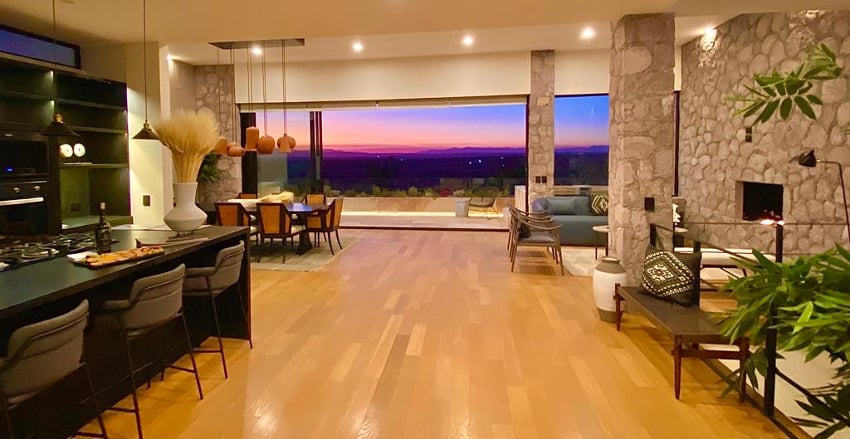
The open floor plan and spectacular views are hallmarks of this property. (West Realty Group Berkshire Hathaway)

Casa Sunset has access to every amenity you can think of on your doorstep, including a wellness center, top-quality gym, swimming pool, tennis courts, and a fabulous community center that includes a delicious restaurant offering meal delivery right your front door.

One of the big attractions for those looking to relocate or invest in a second home in San Miguel is the vibrant golfing community. Although your first impression when picturing golf courses in Mexico is probably not a historic city at 6,200 feet above sea level right in the middle of the country, San Miguel may surprise you.

Malanquín is San Miguel’s original professional 18-hole golf course built 50 years ago. It’s not only a fantastic place to tee-off but also enjoys year-round sunshine, expansive mountain and lake views, has a real family feel with all the leisure activities on offer, and has established itself as one of the most exclusive luxury real estate hubs in town. 

San Miguel sunset
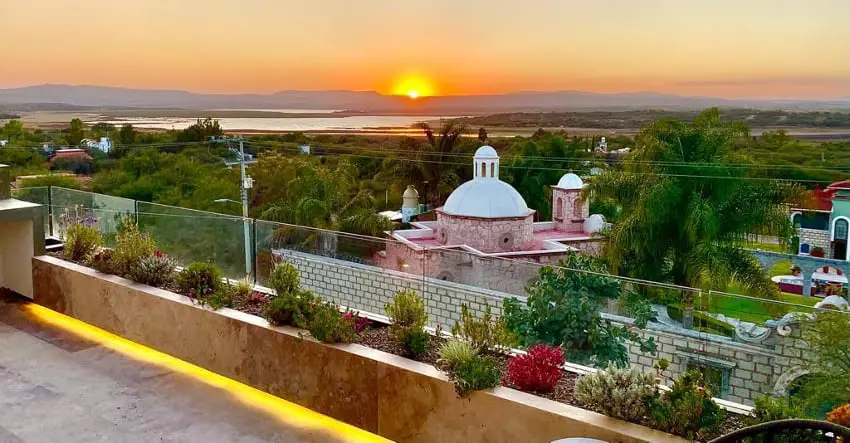
A beautiful sunset view over the reservoir. (West Realty Group Berkshire Hathaway)

The exquisite town of San Miguel de Allende, consecutively crowned the best city in the world by Travel and Leisure, has been enchanting visitors for almost 500 years. It’s a vibrant hilltop city that really has it all, including top-notch culinary experiences, stunning architecture, countless cultural celebrations, and a friendly and welcoming community. 

For more information, contact the listing agent, Kelley West of West Realty Group Berkshire Hathaway.

Mexico loses ground on 2022 Democracy Index

0
Mexico's President Lopez Obrador at a rally with his supporters
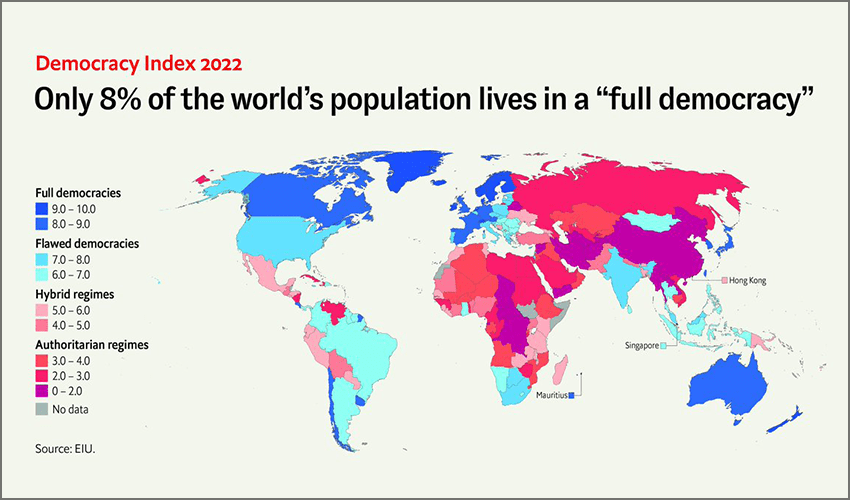
The Democracy Index is published by the U.K.-based Economist Intelligence Unit, a sister company to The Economist news media outlet. With a score of 5.25, Mexico was classified as a "hybrid regime." (Graphic: Economist Intelligence Unit)

Mexico slipped three places to 89th on the most recent edition of a well-established index that assesses the health, or lack thereof, of democracy in almost 170 countries around the world.

For a second consecutive year, the U.K.-based Economist Intelligence Unit (EIU) classified Mexico as a “hybrid regime” on its Democracy Index, published this week.

Economist Intelligence Unit's Democracy Index 2022 graphic
The Democracy Index is published by the U.K.-based Economist Intelligence Unit, a sister company to The Economist news media outlet. With a score of 5.25, Mexico was classified as a “hybrid regime.” (Graphic: Economist Intelligence Unit)

Mexico scored a 5.25 out of 10, which was higher than four — below that is a authoritarian regime on the index — but lower than six — the minimum score for the higher rating of “flawed democracy.”

Mexico’s score was 0.32 points lower than in 2021, the ninth largest decline among the countries assessed, while its ranking was one ahead of Georgia and one behind Hong Kong. Mexico ranked 14th out of 24 countries in Latin America and the Caribbean, where the state of democracy declined for a fourth consecutive year, according to the report.

The index uses expert assessments, public opinion surveys and voter turnout data to provide “a snapshot of the state of democracy worldwide in 165 independent states and two territories,” according to its report.

“… The Democracy Index is based on five categories: electoral process and pluralism, functioning of government, political participation, political culture, and civil liberties. Based on its scores on a range of indicators within these categories, each country is then classified as one of four types of regime: ‘full democracy,’ ‘flawed democracy,’ ‘hybrid regime’ or ‘authoritarian regime,'” the report said.

Election irregularities, government pressure on opposition parties and candidates, corruption, a weak rule of law, harassment of and pressure put on journalists and a judiciary that is not independent are among the features that may be found in a hybrid regime, according to the EIU.

“The region is a global hub for transnational drug cartels, which pose a significant threat to democracy. Drug trafficking erodes state capacity by making corruption extremely lucrative and expands the use of violence by nonstate actors, which, in turn, leads to an erosion of civil liberties as governments seek to address citizens’ demands for more security,” the report said.

Among the other countries that the index listed as hybrid regimes this year are Papua New Guinea, Peru, Ukraine, El Salvador and Nigeria.

Mexico scored above a seven for political participation and just below that number for electoral process and pluralism. Mexico’s scores in the three other categories, however, were lower: 5.59 for civil liberties, 4.64 for functioning of government and just 1.88 for political culture, whose undisputed protagonist is President López Obrador.

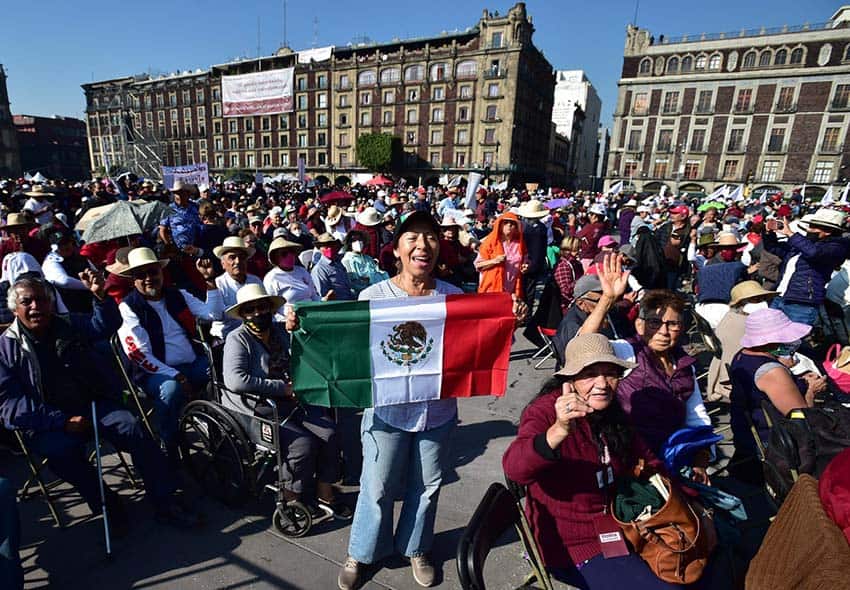
AMLO supporters at rally for celebration of 4th Transformation, Mexico city
One of Mexico’s higher scores on the EIU’s list was a seven for political participation. (Presidencia)

The EIU — a sister company of The Economist newspaper — said that Mexico is undergoing a process of “democratic backsliding” under López Obrador, who has been in office since December 2018 and is a divisive figure, even though polls show he retains the support of a majority of Mexicans.

“Mr. López Obrador has used his position to attack his opponents, including the electoral authorities. In 2022, the government passed a reform that reduces the financing of the electoral authority and restricts its oversight powers, putting election integrity at risk,” the index report said.

The EIU also said that media freedoms in Mexico are “under grave threat.”

It noted that at least 13 journalists were killed in 2022, adding that “Mexican intelligence services routinely spy on journalists and activists,” a charge the president has denied.

“The role of the military in public affairs has expanded greatly under Mr. López Obrador. The government intends to expand the armed forces’ role in the economy and over public security, including by giving them control over the National Guard until 2028,” the EIU said.

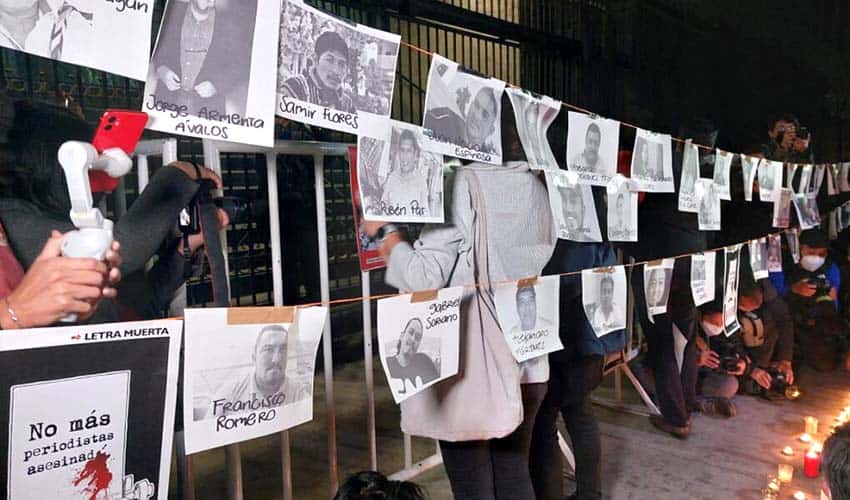
Journalists in front of Mexico's Interior Ministry building protesting lack of safety for media workers.
Journalists protesting in front of Mexico’s Interior Ministry building in Mexico City in January 2022 with photos of media workers murdered in Mexico.

“Mr. López Obrador’s attacks on democratic checks and balances, as well as the growing role played by the armed forces in the economy and security, led to a further downgrade in Mexico’s overall score in 2022, following a decline in 2021.”

A total of 24 countries were classified as full democracies, with Norway, New Zealand and Iceland occupying the top three positions on the Democracy Index.

Canada was among the other countries classed as a full democracy, while Mexico’s other North American trade partner, the United States, was found to be a flawed democracy for a seventh consecutive year.

The index report noted that “the run-up to the change of administration in [the U.S. in] January 2021 was tumultuous, marked by a riot at the U.S. Capitol and attempts by the outgoing president, Donald Trump, and several Republican lawmakers to overturn the election results, citing baseless claims of voter fraud.”

It also said that “election denial is unlikely to disappear from American politics, particularly as some politicians, including Mr. Trump, continue to keep the issue alive ahead of the next elections in 2024.”

The worst performer on the index was Afghanistan, one of 59 countries deemed authoritarian regimes. Myanmar and North Korea ranked second-last and third-last respectively.

Democracy Index 2022: frontline democracy and the battle for Ukraine

This EIU video explainer gives an overview of how the report rated democracies worldwide.

China, Iran, Russia, Venezuela, Cuba, Nicaragua, Vietnam, Haiti and Egypt are among the other countries classified as authoritarian regimes.

Mexico News Daily 

Zihua’s full of great cuisine, so where to start? Take a food tour!

0
Street food taco stand in Zihuatanejo, Mexico
Bring your appetite! Zanca Travelers' food tour of Zihuatanejo will whisk you around some of the resort city's best places to eat — which means both fine dining and the best taco stand in town. (Photos by Elisabeth Ashe)

While food tours — or as some people call them, “foodie tours” — are nothing new to experienced travelers, they are relatively new to the popular Mexican resort destination Ixtapa- Zihuatanejo in Guerrero.

Zanca Travelers tour company owners Vidal Reyes and Sandy Thompson, married for over 24 years, wanted to bring something a little different to Zihuatanejo while promoting local family restaurants. Although the area is home to several annual food events — the Paella Festival, the Tiritas Festival, and the Food and Wine Festival, the couple felt a lack of  food-related activities that tourists visiting the area could access year-round. 

Mexican food tour of Zihuatanejo, Mexico with Zanca Travelers
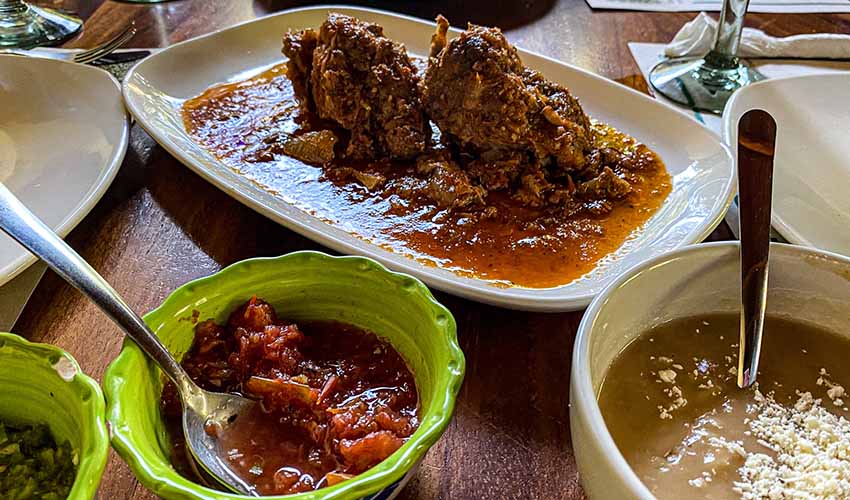
These are just the sides!

Reyes, who was born in Zihuatanejo, and Thompson, who has lived here for nearly 30 years, knew the cuisine in this part of Mexico was exceptional. The restaurants chosen for their Regional Dishes Of The Costa Grande Gastronomical Tour — some of the finest family-owned-and-operated restaurants in the area — had to meet specific criteria: originality, innovation, atmosphere, cleanliness and, of course, high-quality food. Some of the restaurant choices were owned by families Reyes had known all his life growing up here. 

Having experienced food tours in Spain and Canada, I was anxious to see how it would compare to the tours I am a fan of.

After picking up the group of 10 in an air-conditioned luxury van, we made our first of four stops.

Carmelita’s Cafe

This is a local favorite (with me as well). It became internationally famous when U.S. celebrity chef Rick Bayless heaped tweets of praise on owner Carmelita González’s amazing cooking skills, despite the fact that she was not a trained chef but a natural-born one whose humble beginnings were at a stand at the Ixtapa-Zihuatanejo airport many years ago and who specialized in cooking her mother and grandmother’s recipes. 

Our hosts, González and her son, Paco, offered us a choice of interesting drinks, including a jalapeño margarita that everyone agreed was delicious.

First up were tacos dorados de pollo (chicken tacos), accompanied by a bed of guacamole and followed by perhaps the best ribs I have ever tasted. Meanwhile, Paco talked about the restaurant’s history and some of the most important food in the region.

Although everything was delicious, our guides cautioned that there were still three more stops. So we reluctantly crawled into the van to our next location, this time a hole-in-the-wall taco stand on the main drag in downtown Zihuatanejo. 

La Flechita Roja 

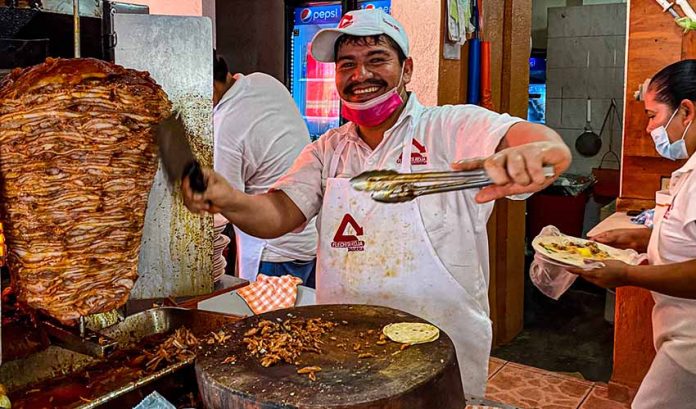
Years ago, the Escobar family made the bold move of keeping their stand open 24 hours a day, which made it a huge hit with late-night partiers, bus drivers, taxi operators — basically anyone out late at night. 

I have driven past this taquería thousands of times in my nearly 26 years living here, and I never once noticed it as anything remarkable. However, one taste of the two kinds of tacos we were offered — tacos al pastor and barbacoa — and I knew that La Flechita Roja taquería would be my go-to taco stand forever. 

The method of preparing and cooking al pastor is based on the lamb shawarma brought to Mexico by Lebanese immigrants but La Flechita’s owners make a pork version.

Depending on the time of day, seating here is hit-and-miss, and people crowded around the lunch-style counter on benches lined the wooden structure as best they could. 

However, it made for a very cozy and authentic atmosphere, and after we finished, the chef insisted we stand behind the grill for a photo-op with him. And then it was on to stop number three.

Visitors on a food tour of Zihuatanejo with Zanca Travelers
By the final restaurant of the day, you’ll be on a first-name basis with your cohorts.

Club M

Our van wound its way through the streets to another hidden gem in the colonia of La Noria, high above the city, for a fantastic view of the Bay of Zihuatanejo. Club M, a little restaurant featuring only a few tables and a bar with high-top stools, gave the impression of being cut out into the rocks mere feet from the street. 

Owner Socorro Agueda was on hand to greet us while one of her family members gave a quick lesson on making tiritas (strips). The fresh strips of swordfish, cooked in lime juice, peppers and onions, slid down our throats — probably among the best preparations I had ever tasted — and were washed down with ice-cold beers. Definitely worth another trip in the future.

Angustina Mezcal and Cocina

The final leg of our tour was this well-known restaurant, located close to Zihua’s Cancha — the municipal basketball court located right on the waterfront. 

As the name implies, mezcal is an important drink at this restaurant, and we were offered two different kinds to go with our food dishes. The first was a mezcal infused with hibiscus, served with corn soup. The second was a mezcalina that complimented the corn tortilla and special guacamole. 

Then, just when we thought we could not eat another bite, our waiter served a delicious pork shank followed by a specialty cornbread for dessert. 

Owner Felipe Meneses was on hand to explain the pairings and to give a little history of the restaurant itself. The Meneses family owns several restaurants and is well-known for their commitment to raising gastronomic awareness of the region through their involvement with events such as Clandestina, a series of pop-up fine-dining events held in secret locations around Ixtapa- Zihuatanejo.

After nearly five hours, our group of 10 had become quite friendly with each other — a bonus of going on food tours, I have found. But as all good things must end, we said our goodbyes, feeling completely satiated and perhaps a little tipsy from the drinks but all in agreement that tours like these are well worth the US $110-per-person price tag. 

  • For more information on this tour and others they offer, contact Zanca Travelers on WhatsApp: +52-755-131-8913 or visit their website

The writer divides her time between Canada and Zihuatanejo.

Human rights commission proposes structural reform to ‘reaffirm autonomy’

0
Mexico's National Commission on Human Rights' President, Rosa Piedra Ibarra.
The National Commission on Human Rights' President, Rosa Piedra Ibarra. (Photo: CNDH/Twitter)

The National Human Rights Commission (CNDH) has proposed an initiative to transform itself into the National Ombudsman’s Office for the Rights of the People, a Constitutional reform that would increase its powers and assert its autonomy from the Senate.

The CNDH argued in public statements that the agency has been plagued by high spending and poor results since its creation in 1990. Reform is necessary to further the transformation that has taken place under current president Rosario Piedra Ibarra, it said.

“Today, with fewer resources, we have the CNDH’s best historical results: more declarations of unconstitutionality are issued, more recommendations, and the number of files has increased significantly,” a statement issued on Jan. 30 said.

“The time has come to consolidate these changes and move forward with its reform. For this reason, [Piedra Ibarra] presented a bill to the Chamber of Deputies and senators to elevate the CNDH to the rank of ombudsman, not only to serve the poor, as has been wrongly suggested, but… to reaffirm its autonomy and enhance the scope of its mission.”

Piedra Ibarra first announced the initiative on Jan. 25, during the presentation to Congress of the CNDH’s annual report for 2022, but she did not make the full text public. According to the CNDH’s subsequent statements, and according to media that have reviewed the initiative, the key reforms it proposes include:

Graph showing number of recommendations per year by Mexico's National Commission on Human Rights
This graph tracks the number of human rights recommendations the National Human Rights Commission has made to the government since 2017. In 2022, it made a total of 302, more than ever before, a point it stressed in its proposal. (CNDH)
  • The institution’s president and advisory council will be elected by the people, rather than by the Senate, and possibility for reelection will be limited.
  • It will be able to demand enforcement of its recommendations, without having to rely on government bodies.
  • It will prioritize direct attention to victims.
  • The CNDH’s statements argue that its current structure reflects the “neoliberal” approach of previous governments who, it claims, lacked interest in human rights. For this reason, it argues, autonomous bodies such as the CNDH became “very costly bureaucratic apparatuses” that only have the power to play a “testimonial role.”

The initiative thus seeks to create a more robust human rights body with greater enforcement capacity, operating under a tighter budget, the statement said.

However, the proposal has been criticized by some observers who argue that the commission has become politicized and is overstepping its mandate to promote the agenda of President López Obrador.

“The CNDH stopped defending victims of human rights violations to become the Ministry of Press and Propaganda for [AMLO’s party] Morena,” Senator Emilio Álvarez Icaza wrote on Twitter.

The language used in the CNDH’s statement, describing the body’s structure as reflecting “neoliberal” ideas, is frequently used by President Lopez Obrador, who uses the adjective to negatively describe previous federal governments, previous presidents and most opponents, who he says don’t have in mind the people’s best interests but rather elites’.

Piedra Ibarra is the daughter of the late Rosario Ibarra de Piedra, a left-wing political activist who fought for justice for Mexico’s missing persons. Daughter Rosario is known as a political ally of AMLO. She has headed the CNDH since 2019, during which time the agency has sided with the president on several contentious reforms.

Mexico's President Lopez Obrador and its National Human Rights Commission President Rosario Piedra Ibarra.
Rosario Piedra Ibarra with President López Obrador at a 2019 CNDH awards ceremony. Critics of Piedra Ibarra claim she’s using her position as CNDH chief to further the president’s agenda. (Photo: Andrea Murcia Monsivais/Cuartoscuro)

For instance, in September, the CNDH declared that it would not challenge legislative reform that put the National Guard under military control, despite concern from many organizations about Mexico’s ongoing militarization.

In October, the CNDH supported AMLO’s controversial bid to reform the National Electoral Institute (INE), which many human rights organizations fear will undermine the independence of the electoral body. The CNDH openly argued that the reform would “vindicate the people’s right to democracy,” claiming that the INE “has only served to maintain vices that… have tainted our electoral processes.”

The INE responded that “the Constitution establishes that human rights protection bodies are not competent when dealing with electoral matters.”

In this context, Mexican media outlet Latinus has pointed out that one implication of the CNDH’s recent initiative would be to give it broad powers to investigate acts and omissions by the INE and Electoral Tribunal in the field of human rights.

The human rights NGO Centro Prodh also criticized the CNDH’s initiative, arguing that its focus on legal reforms and budget reduction is inadequate in the face of pressing concerns surrounding militarization, disappearances and impunity.

“Our fundamental criticism is that autonomy has not been consolidated,” the NGO tweeted. “We don’t support emphasizing only budget reduction, in a context of subordination to the political power of the day.”

Centro Prodh also pointed out that the CNDH lacks the legal power to present initiatives and would have to gain the support of legislators to advance the proposal.

“Instead of advancing in this route, we must open a profound and plural debate about the weakened ombudsperson system,” the NGO argued.

With reports from Latinus, Animal Político and Forbes

Grupo México secures funds to buy Citibanamex, Reuters reports

0
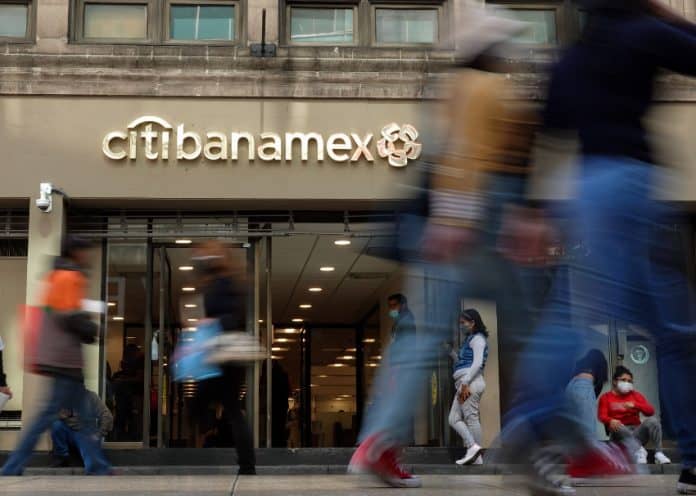
Citibanamex building
The Grupo México conglomerate has been a top contender to purchase the bank for months. (Galo Cañas Rodríguez/Cuartoscuro)

Grupo México has secured US $5 billion in financing for its proposed purchase of Citibanamex, Reuters reported Wednesday.

Citing unnamed people familiar with the matter, the news agency said that several banks including Barclays and HSBC have agreed to provide funding for the conglomerate’s purchase of Citigroup’s Mexican retail bank, commonly known as Banamex.

Reuters described the financing arrangement as a “major milestone in Grupo México’s efforts to put together the deal for Banamex,” which the New York-based Citigroup acquired in 2001.

Its sources said that the transaction would value the bank at between US $7 and $8 billion.

Grupo México, controlled by billionaire businessman Germán Larrea, has interests in areas including mining, transport, infrastructure and entertainment.

While the conglomerate appears set to purchase Banamex, the Reuters sources said the deal isn’t guaranteed as negotiations could break down at the last minute.

Businessman Germán Larrea of Grupo México
Businessman Germán Larrea attends President López Obrador’s 2019 annual report. (Cuartoscuro)

Banca Mifel, a Mexican bank, also found investors to fund a bid to buy Banamex, but Grupo México emerged as the front-runner in recent weeks, the sources said.

They said that Citi had decided to prioritize a deal with Larrea, Mexico’s second richest person.

Carlos Slim’s Inbursa bank, Spain’s Santander and Mexico’s Banorte expressed interest in purchasing Banamex last year, but subsequently dropped out of the contest.

Citigroup announced in January 2022 that it would sell Banamex. The bank, Reuters reported, is offloading its Mexican retail bank as part of CEO Jane Fraser’s efforts to sell some international operations and simplify the business.

Fraser met with President López Obrador in Mexico City on Wednesday but no official information about their discussions was released. The latter made it clear shortly after Citi announced its decision to sell Banamex that his preference was for the bank to be “Mexicanized.”

The president has said that profits made by foreign companies in Mexico are often not reinvested in the local economy.

CEO of Citigroup, Jane Fraser
Jane Fraser, CEO of Citigroup, met with President López Obrador on Wednesday. (Wikimedia Commons)

Writing in the El Economista newspaper on Thursday, columnist Marco A. Mares predicted that an announcement about the sale of Banamex will be made sometime during the first quarter of 2023.

“The most probable” outcome, he wrote, is that Banamex will be majority-owned by Larrea and that a portion of the bank will be placed on the stock market via an initial public offering (IPO). Reuters reported earlier this week that Citi was considering an IPO.

Banamex is Mexico’s third largest bank with over 1,200 branches and some 23 million customers, the news agency EFE reported this week.

With reports from Reuters 

New direct flights announced to Los Cabos, Monterrey and Cozumel

0
The island of Cozumel will be serviced by a direct flight out of Mexico City International Airport (AICM) starting in March. ( Depositphotos)

Three destinations in Mexico will now have more direct flights available.

Los Cabos-Cancún

Starting in May, Los Cabos and Cancún will be connected with a daily VivaAerobus flight, according to the president of the Los Cabos Hotel Association, Mauricio Pérez. The estimated flight duration is 3.5 hours.

Phoenix-Monterrey

Another new direct flight, between Phoenix, Arizona and Monterrey, Nuevo León was launched by American Airlines on Jan. 10. The daily flight, operated on an Embraer 175, departs Phoenix nightly at 7:50 p.m. and arrives in Monterrey at 11 p.m. The return flight takes off at 8 a.m. and arrives at 9:40 a.m.

“Mexico is Phoenix’s number one trade and tourism partner which makes air service to Monterrey increasingly important for our local economy,” said Phoenix Mayor Kate Gallego.

Mexico City (AICM)-Cozumel

Starting on Mar. 26, Cozumel, Quintana Roo will be added to the list of Aeroméxico’s domestic network flying out of Mexico City International Airport (AICM).

The announcement was made by both the airline and the state governor Mara Lezama Espinosa, who highlighted through social media that Aeroméxico was announcing this new route from Mexico City to the “isla de las golondrinas,” or “island of the swallows”, as it is also known.

“With this extraordinary news, more work and income will arrive on the island […] Welcome to Cozumel everybody!” said Lezama on her social media profiles.

In total, the company announced four new direct routes, all departing from the AICM, to Colima, Cozumel, Tepic and Ciudad Victoria.

With reports from Sky Harbor, BCS Noticias

3 hotels evicted from properties in Tulum, guests and all

0
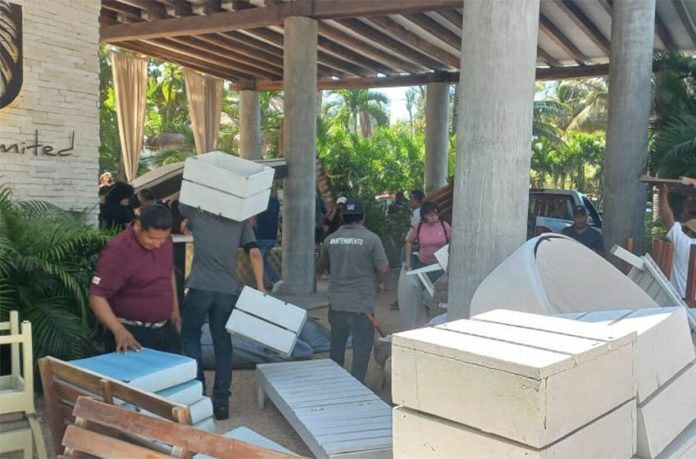
Workers, guests and furniture were thrown out of the hotel Coco Unlimited, before they struck a deal with prosecutors and were allowed to return.
Workers, guests and furniture were thrown out of the hotel Coco Unlimited, before they struck a deal with prosecutors and were allowed to return. Three other hotels were less fortunate. (Via Quinta Fuerza)

Three hotels in the coastal area of ​​Tulum were evicted Wednesday morning, apparently due to a dispute between the properties and the company Santa María S. de R. L.

Workers and even guests had to leave the hotels when agents of the Quintana Roo Prosecutor’s Office and the police began the eviction pursuant to orders of two civil courts based in the municipality of Solidaridad.

The affected hotels were Orchid Beach House, Tatich Tulum and Kuuxum. Although agents of the Prosecutor’s Office also arrived at the hotel Coco Unlimited, the eviction there was suspended. According to the newspaper Milenio, this was the only lodging center in which actuaries and owners reached an agreement for guests and workers to return to the place as well as hotel furniture that had already been evicted.

The newspaper La Jornada Maya reported that the operation lasted more than four hours and ended in the afternoon. Since cargo trucks were parked outside the properties for employees to load the furniture, traffic was affected.

According to La Jornada Maya, the company Santa María S. de R. L. argues it owns the hotel properties. Other hotel owners reportedly said they were surprised to learn that lawsuits between the Pino Suárez ejido and hotels over property ownership continue to take place.

Milenio reported that none of the owners or managers involved in the evictions gave statements about what happened.

With reports from La Jornada Maya and Milenio

Tamales and dressing baby Jesus: Mexican La Candelaria traditions

0
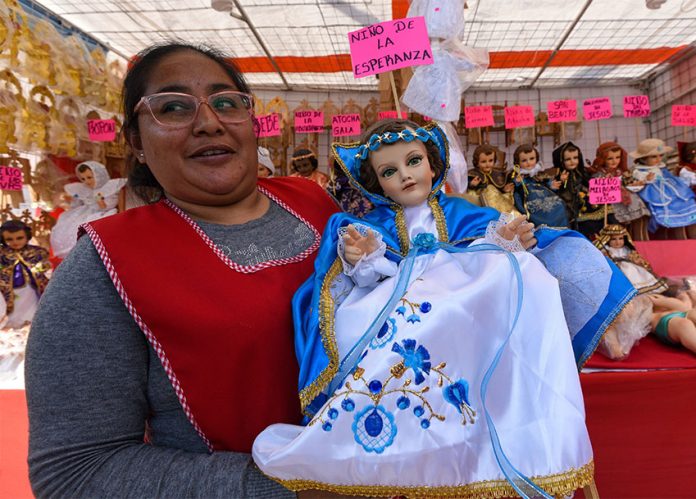
A vendor at the Juárez market in México state displays one of her baby Jesus figurines.
A vendor at the Juárez market in México state displays one of her baby Jesus figurines. (Crisanta Espinosa Aguilar / Cuartoscuro.com)

On Feb. 2, many families across Mexico celebrate Día de la Candelaria, or Candlemas Day, a holiday in which they get together to eat tamales traditionally paid by those who found the baby Jesus figurine inside the Rosca de Reyes.

Although this festivity could be considered a follow-up celebration to Kings Day, La Candelaria has its origins in biblical events: Catholic tradition recounts that the Virgin Mary and baby Jesus went to the temple 40 days after the baby’s birth, so that the mother could be “purified” as mandated by the Law of Moses, also known as the Torah. The Virgin Mary also brought candles to the temple to be blessed, giving the holiday its name.

However, Día de la Candelaria is also influenced by another event. At the end of the 15th century, two shepherds found an image of the Virgin Mary on the seashore of the Canary Islands in Spain. The Virgin was later named Candelaria.

Eventually, baby Jesus’s presentation at the temple, the Virgin Mary’s purification and the commemoration of the Spanish Virgin Mary of Candelaria started to be celebrated together, leading to the modern Día de la Candelaria. This tradition arrived in America as part of the Spanish Conquest.

As usually happens, the tradition evolved in different ways across Latin America. In Mexico, tamales were fortunately added to the festivities because Feb. 2 was also a special day for the Mexica people (ancient inhabitants of today’s Valley of Mexico).

On this date, the Mexicas celebrated the start of the planting season with the blessing of the corn that would later be planted as a tribute to Tlaloc, the god of rain, asking for a good harvest. With the Spanish conquest, the blessing of the corn stopped and instead the Mexicas would only eat tamales.

A person who gets a slice of king cake with a figurine hidden inside on Kings Day is responsible for providing the tamales come Día de la Candelaria.
A person who gets a slice of king cake with a figurine hidden inside on Kings Day is responsible for providing the tamales come Día de la Candelaria. (Graciela López Herrera / Cuartoscuro.com)

The tamal or tamalli means “carefully wrapped” in Náhuatl and according to Fray Bernardino de Sahagún’s book General History of the Things of the New Spain, tamales were eaten by the Mexicas for special occasions and festivities.

Today, many Indigenous communities still bless the ears of corn that will serve as seeds for the planting season.

Another tradition associated with Día de la Candelaria is the dressing-up of baby Jesus dolls and figurines in elaborate costumes. This tradition was also born in Mexico but in more recent times (1912). It mandates that 40 days after Christmas, baby Jesus must be removed from the nativity scene and covered up with fine fabrics. Nowadays, the baby Jesus is dressed up with all types of outfits made from organza, satin, silk, chamois and taffeta and with sequins, pearls and glitter. During the COVID pandemic, baby Jesus figurines even wore face masks.

According to newspaper Milenio, Mexican families dress up their baby Jesus figurines as a way to strengthen their faith in hard and difficult times. Milenio also reported that on average, people spend between 40 pesos and 300 pesos (US $2 to $16) on an outfit for the baby Jesus.

This tradition is mostly celebrated in Mexico City, where there is an area of Talavera Street in the La Mercerd neighborhood dedicated solely to the selling of baby Jesus outfits. The area was designated as a Cultural Corridor in 2011 by then-Mexico City Mayor Marcelo Ebrard.

With reports from Milenio and Infobae