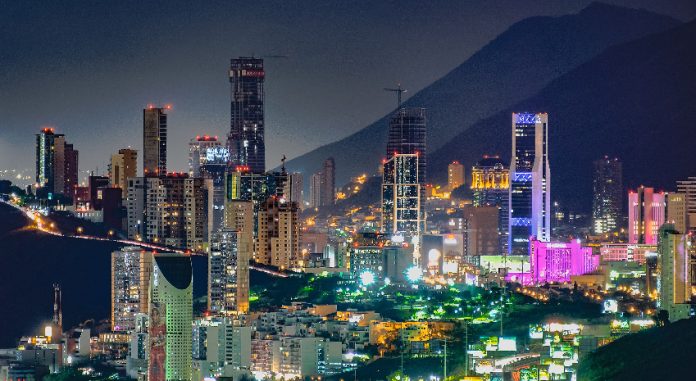
The state of Nuevo León (where Monterrey, pictured, is located) is a major contributor to Mexico's GDP. (Wikimedia Commons)
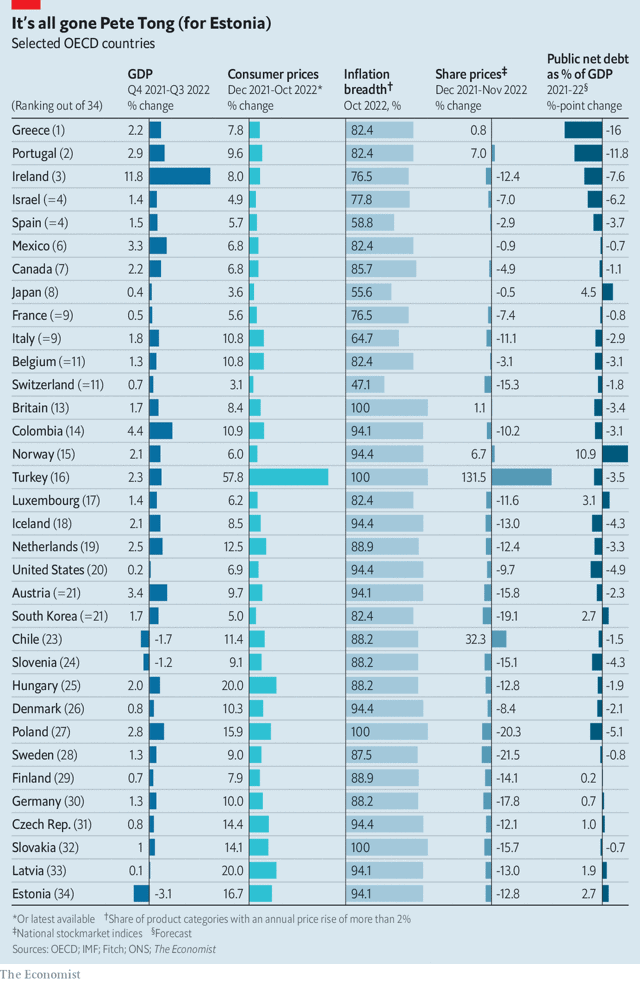
Mexico’s economy was an unexpectedly strong performer in 2022, ranking sixth out of 34 countries analyzed on a list of “2022’s Unlikely Winners,” compiled by British magazine The Economist.
The magazine ranked countries according to five economic and financial indicators – Gross Domestic Product (GDP) growth, inflation, inflation breadth (the share of inflation basket items whose price has risen more than 2% in a year), stock market performance and government debt – and assigned each an overall score. Mexico was beaten only by Greece, Portugal, Ireland, Israel and Spain.
Mexico’s strong performance was due largely to its 3.3% GDP growth between Q4 2021 and Q3 2022 – the fourth highest on the list. Although inflation was high – at 6.8% consumer price growth and 82.4% breadth – it still compared favorably to many other countries analyzed. Mexico’s average share price dropped by 0.9%, while its share of debt to GDP fell by 0.7%.
Mexico came in sixth place in The Economist’s analysis of 34 economies’ performance in 2022. (The Economist)
Overall, the magazine highlighted that, in a year characterized by economic struggles worldwide, some previously weak performers – such as Mediterranean countries – had proven surprisingly resilient in the face of geopolitical uncertainty and global supply shocks.
President López Obrador highlighted the result at his Wednesday morning press conference, boasting that Mexico had come out ahead of Canada, Japan, France, Italy, Belgium, Switzerland, Britain and eventhe United States.
“We’re doing well,” he said. “2023 will be better, much better, because we already have the momentum, and in politics momentum counts for a lot… Mexico is on the list of countries with the most advantages to invest.”
Both AMLO and his supporters on social media took the opportunity to hit back at The Economist for past statements critical of the president, including a May 2021cover story that described AMLO as a “false messiah” who “pursues ruinous policies by improper means.”
“[And now] we are in sixth place in the world in economic performance,” the president said, emphasizing that The Economist “is not sympathetic to us.”
Fact-checkers were quick to point out that The Economist’s list does not include all the countries in the world, but only 34 of the 38 countries that make up the Organization for Economic Cooperation and Development (OECD).
Furthermore, Mexico’s continued strong performance is far from guaranteed. Themost recent figures from the national statistics agency (INEGI) show that Mexico’s economic growth stagnated towards the end of 2022, with the Bank of Mexico now forecasting 2.9% growth across the whole year.Growth predictions for 2023 have been revised downwards several times, with one recent analysis forecasting 1.1%.
A National Guardsman watches over a confiscated truck transporting 31,000 liters of undocumented fuel along the Cárdenas-Coatzacoalcos highway in Tabasco. (National Guard)
State oil company Pemex saw its losses from fuel theft skyrocket during 2022, partially eroding gains made during the early years of President López Obrador’s government.
Total losses between January and September 2022 reached 14.24 billion pesos (US $730.5 million), almost triple the 4.8 billion pesos (US $246.2 million) of losses reported during the same period of 2021.
The company’s annual financial report revealed that its fuel theft losses almost doubled from 3 billion pesos (US $153.9 million) in the first trimester of 2022 to 5.63 billion pesos (USD $288.8 million) in the second, dropping only slightly to 5.61 billion pesos (USD $288 million) in the third.
According to oil industry experts whospoke to El Economista, the sharp increase is likely due to rising demand and prices for fuel, driven by the impact of the war in Ukraine on global energy supplies.
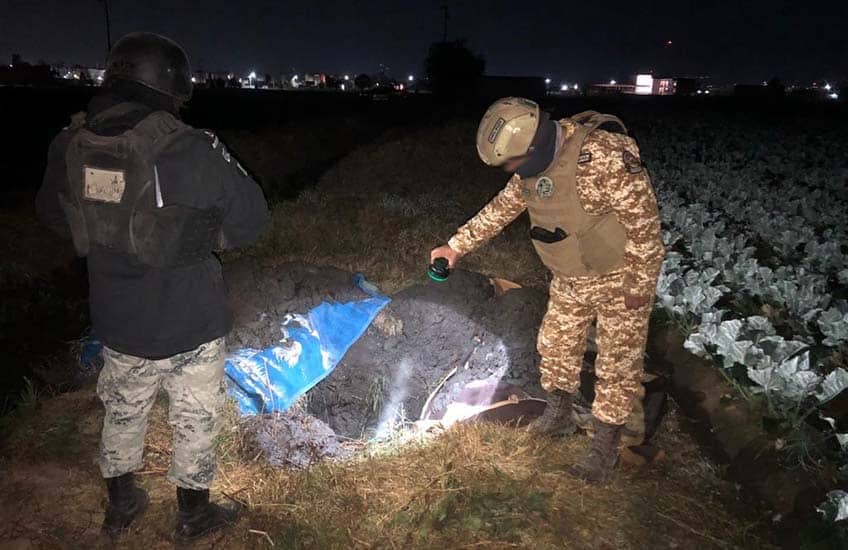
The National Guard and the military have largely been put in charge of stopping fuel theft. Progress has been made, but it’s a game of whack-a-mole, with clandestine taps found nearly daily on private land and in remote areas. (Photo: National Guard/Twitter)
While this factor inflates the value of Pemex’s losses, it has also driven a resurgence of fuel theft. The situation has been exacerbated by the reformation of some previously weakened oil theft gangs, such as the Santa Rosa de Lima Cartel in Guanajuato.
The spiraling rate of theft erodes some of the substantial gains in combating this crime made during AMLO’s presidency.
According to a2019 Pemex report, the company lost 147 billion pesos (US $7.54 billion) to fuel theft between 2016 and 2018, an average of $49 billion pesos (US $2.51 billion) per year. AMLO has prioritized cracking down on oil thieves, including deploying the army and National Guard to secure oil facilities and pipelines.
But although current losses are still well below previous figures, experts argue that the resurgence of the crime suggests that AMLO’s strategy has failed in important ways.
“It had a great impact at that time, even with shortages, but it did not go to the heart of the matter, which is that the Pemex authorities, the company’s union, are involved in gasoline theft,” Raul Benitez Manaut, a security expert at the National Autonomous University (UNAM) told El Economista.
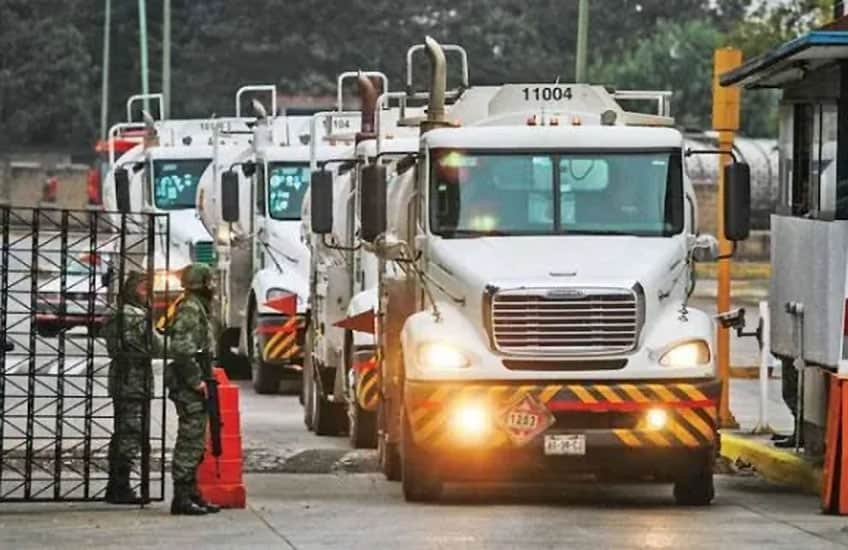
The president made reducing fuel theft a high-profile priority in the early years of his presidency. In 2019, he shut off Pemex pipelines and resorted to moving fuel around the country by military-escorted trucks. (Photo: Sedena)
He claimed that insider knowledge would be necessary to know exactly when fuel is passing through pipelines.
Furthermore, analysts point out that Pemex’s total losses from fuel theft must be even higher than shown in the latest figures, once infrastructure damage is taken into account.
“Every two hours, someone is tapping a pipeline, and Pemex or the army has to go and repair it,” energy expert Ramsés Pech told El Economista. “A lot of money isn’t accounted for because the calculation they’re showing us relates to the stolen fuel, but they’re not including the cost of repairs.”
Two weeks ago, Pemex made the controversial decision torestrict public access to its database of fuel theft incidents. While the company insisted that this is necessary for security reasons, critics have suggested that it may also serve to obscure the true extent of Pemex’s fuel theft problem.
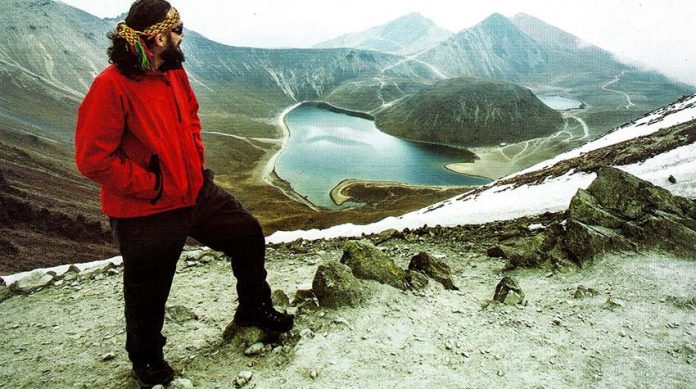
Jorge Alberto Neyra on Mexico’s fourth largest volcano, El Nevado de Toluca, in México state, which features two picturesque glacier lakes. (Photo: Jorge Alberto Neyra)
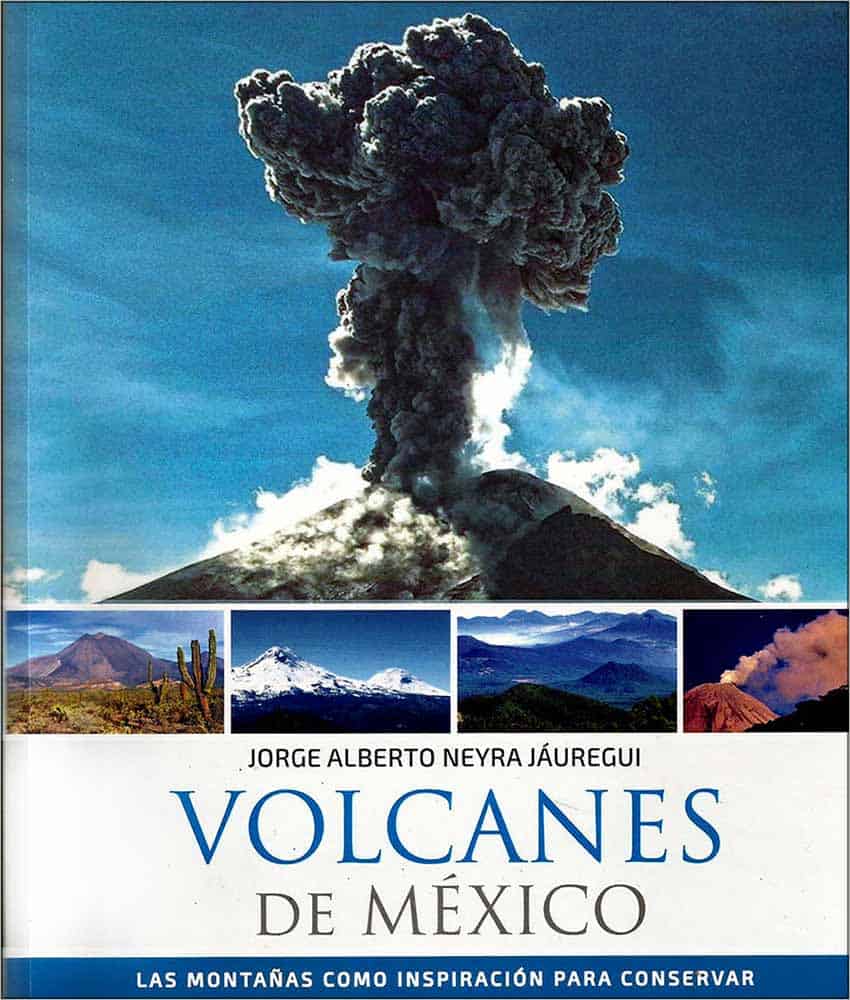
“Volcanes de México” is a beautiful book — written in Spanish — introducing the general public to Mexico’s volcanoes.
The result of over 30 years of exploration and research on the part of author Jorge Alberto Neyra Jáuregui, “Volcanes de México” has 184 pages, each presenting color photographs not only of the volcanoes but also of the flora and fauna you will find when you climb them.
The first 30 pages describe the parts of a volcano, the kinds of volcanoes there are in Mexico and everything that comes out of them, from rivers of lava to pyroclastic flows of hot gases and ash traveling at over 100 kph.
Volcanoes are complex, but Neyra’s language is so clear that everyone, including kids, can understand everything. It is so well-written, in fact, that I must post a warning: this book is dangerous! It could easily turn a perfectly normal child into a volcanologist!
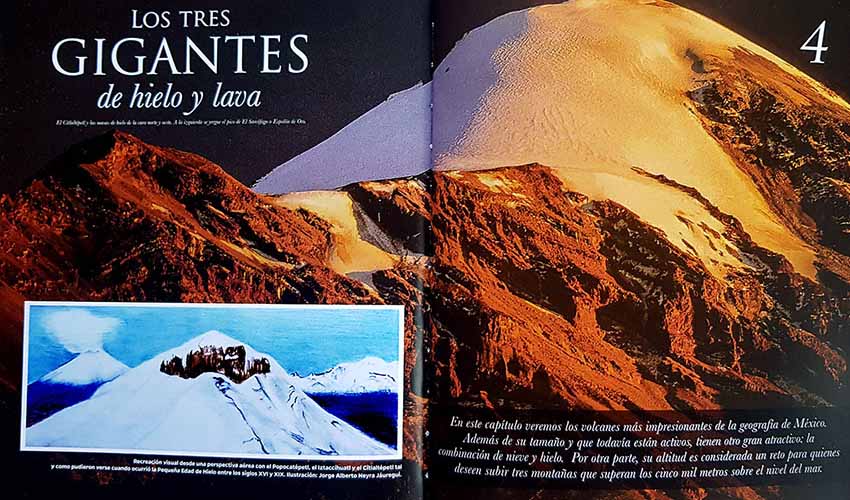
The iconic, and dramatically smoking, Popocatepetl volcano on the cover of Jorge Neyra’s “Volcanoes de México.”
I asked Neyra how many volcanoes there are in Mexico and was quite surprised when he replied that just in the central part of the country, he figured there are over 18,000.
“I haven’t counted them, but I suspect there are actually many more than 18,000,” he said. “I started out visiting the highest ones and then went looking at many others, and of those, I selected 33 for this publication.”
“On the cover of my book,” Neyra went on, “you can see Popocatépetl, our most famous volcano. When I reached the top of it for the first time, I came upon people from all over the world, from the USA, Japan, Europe — all there to climb this Mexican volcano.
“After that, as the years passed by, I discovered the tremendous diversity in Mexico’s volcanoes. There are very different ecosystems. For example, the volcanoes of Baja California in the Sierra de Tres Virgenes are located in an arid zone.”
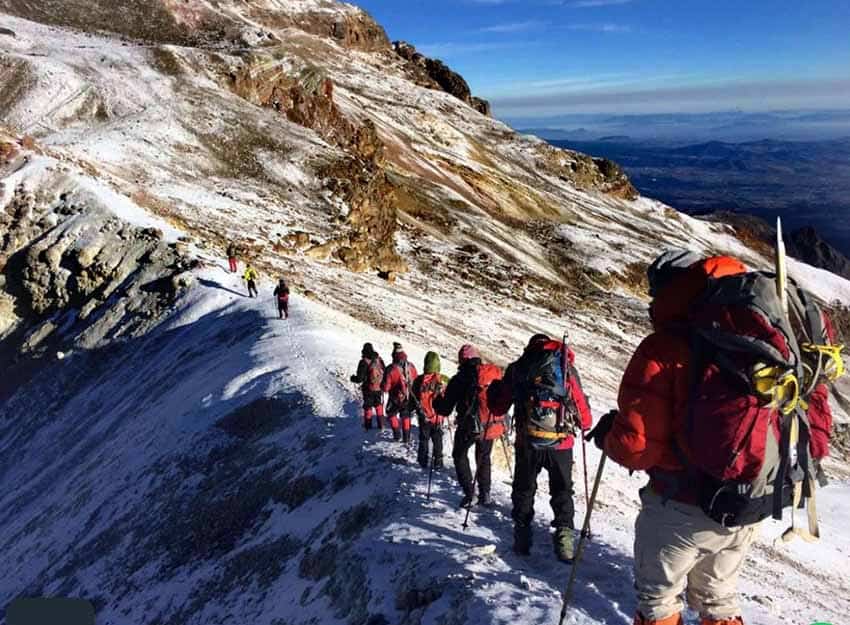
Hikers on their way up the Iztaccihuatl volcano. Reaching the top (5,264 meters above sea level) may take eight hours. (Photo: Jorge Neyra)
“In Michoacán, there’s an area with relatively short-lived volcanoes, and then, of course, we also have snow-covered volcanoes like Orizaba and Iztaccíhuatl,” Neyra said.
Pico de Orizaba or Citlaltépetl, I knew, is Mexico’s highest peak, at 5,640 meters above sea level, but until I read this book, I didn’t know that it is also the highest volcano in all of North America — and that it is covered with Mexico’s most important glaciers.
Orizaba, it seems, is in no way dead, and when it erupted in 1545, it kept right on erupting for a period of 20 years.
These days, the volcano is under careful watch because it is located right along the border between the states of Puebla and Veracruz, putting around 1 million people in danger in the case of renewed activity.
Explorer Jorge Alberto Neyra with his foldout guide to Popocatepetl. ”Here is where I spent the night hanging from a rope in a glacier fissure.”
On page 58 of his book, Neyra introduces us to Caldera La Primavera, unusual because it is a depression rather than a peak — a caldera is what is left after a volcano erupts so forcefully that its peaked shape collapses — and because it is situated right next to Mexico’s second biggest city, Guadalajara.
A great explosion took place in this spot 95,000 years ago, sending 40 cubic kilometers of ash and pumice into the air.
“Although its eruption was prehistoric,” Neyra told me, “new publications indicate that 2,000 years ago it was active. This tells us that it’s important to study these volcanoes, that there could be surprises waiting for us.”
Another of Neyra’s favorite volcanoes is El Chichón in Chiapas, one of two active volcanoes in the state. Unfortunately over 2,000 people died when it erupted in 1982 in a Plinian eruption, where a column of ash rose into the sky over 15 km high. It was a massive explosion with pyroclastic waves that moved at supersonic speeds, killing people instantly.
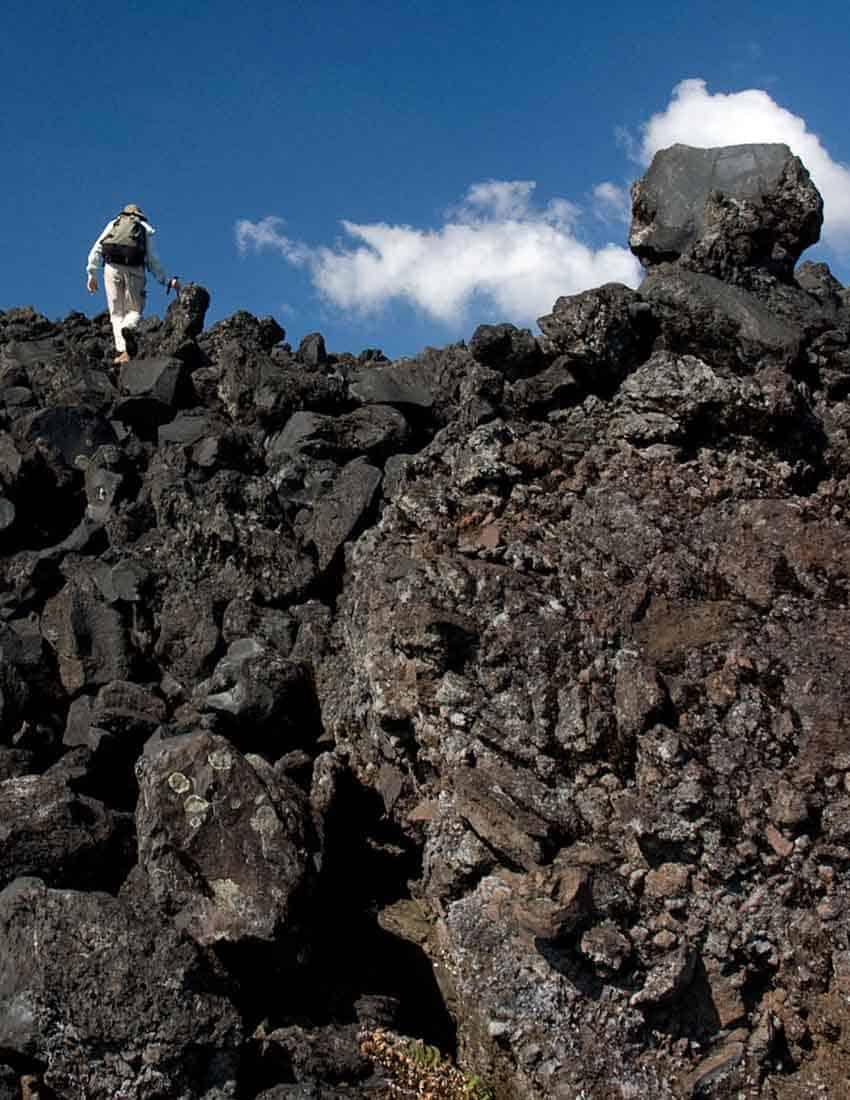
Exploring volcanoes can be dangerous and difficult. A geologist crossing the lava field at Paricutín Volcano, Michoacán.
Today, we see very little activity there, but experts are watching it carefully with one or two seismic stations in the area.
“How did you get interested in volcanoes?” I asked Neyra.
“It all began when I was a teenager,” he told me. “I had joined the Astronomical Society of Mexico, and they told us: ‘To see the stars, you need to go to high places.’ Well, my friend Gerardo Muñoz and I took this literally and decided to hitchhike up to the top of El Ajusco, which is the highest point in Mexico City. So El Ajusco was my very first volcano, and years later, I ended up publishing a guide to it.
“From the Pico del Águila at the top of Ajusco, You have a panoramic view of Mexico City, and the first time I saw it, I had to grab hold of a pine tree because the impact of seeing that monster city laid out beneath me really affected me.
Jorge Neyra presents his book and volcano guides at Guadalajara’s annual International Book Fair. (Photo: Jorge Neyra)
“This was in 1986. A year later, I actually climbed to the very top of Popocatepetl, which was permitted then because it wasn’t as active as it is now.”
His curiosity aroused, Neyra began searching Mexico City’s libraries for information on the natural history of volcanoes in his country.
“But,” he said, “I couldn’t find a thing. So I said to myself, ‘If nothing’s been written, then I’ll write it myself.’ And that’s how my project began. But I never imagined all the complications and ups and downs that would be involved in trying to document so many volcanoes.”
When pressed for an example of the unexpected consequences of volcano hunting, Neyra mentioned an incident in 1990 when he was trapped inside a fissure in the glacier that covers part of Popocatepetl.
Neyra’s book is written in Spanish, but in clear language that even a child could understand.
“I ended up hanging from a rope, spinning in the air. I spent the whole night in that crack until the next morning when Gerardo was able to bring rescuers.”
Thanks to the publication of Neyra’s book, we can all learn a great deal about Mexico’s volcanoes without risking our skins. For information on buying his book and his guides to individual volcanoes, call Neyra at 553 884 4306 or email him at janeyra@hotmail.com.
The writer has lived near Guadalajara, Jalisco, since 1985. His most recent book is Outdoors in Western Mexico, Volume Three. More of his writing can be found on his blog.
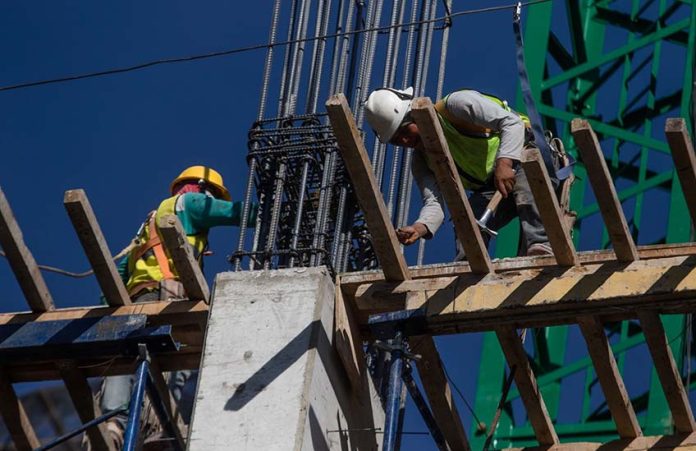
Workers on a construction site in Mexico City's Condesa neighborhood.(Moisés Pablo Nava/Cuartoscuro)
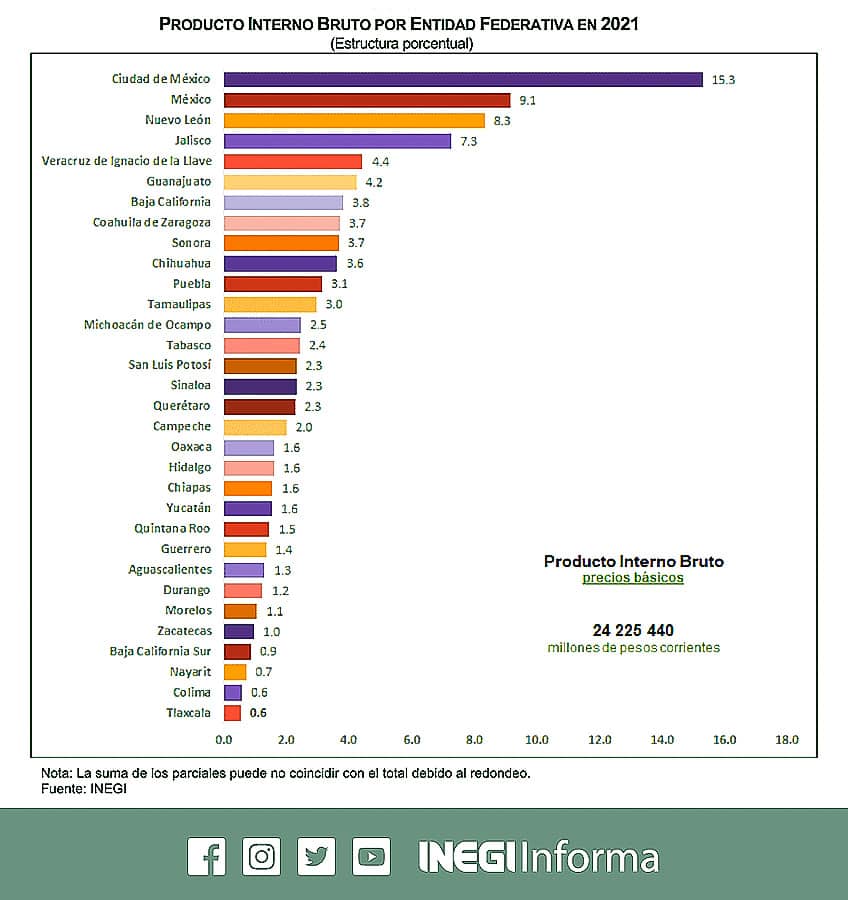
Mexico generated 24.2 billion pesos (USD$ 1.25 billion) of Gross Domestic Product (GDP) in 2021,according to data from the National Institute of Statistics and Geography (Inegi), with a third of the total contributed by just three states: Mexico City, Mexico state, and Nuevo León.
Together, the three states made up 32.7% of Mexican economic activity, mostly concentrated in the services and trade sector. Mexico City generated 15.3 billion pesos (US $787.8 million), Mexico State 9.1 billion (US $468.6 million), and Nuevo León 8.3 billion (US $427.4 million).
The nation’s statistics agency, INEGI, annually calculates each state’s contribution to the total Producto Interno Bruto, or GDP, for the year. (Graphic: National Institute of Statistics and Geography)
INEGI also reported Friday that Nuevo León was also one of the top three contributors to Mexico’s total exports in the third quarter of 2022 (July–September), having contributed 10.2% toward Mexico’s total quarterly exports of US $134.9 million. Nuevo León followed top exporter Chihuahua, which contributed 14.9% and Coahuila, which contributed 11.6%.
Jalisco, Veracruz, Guanajuato, Baja California, Coahuila, Sonora, Chihuahua and Puebla were also significant contributors to GDP: added to the total percentage of GDP coming from Mexico City, México state and Nuevo León, these other eight states helped make up two thirds of the national total.
Services and trade was by far the leading economic sector, generating 15.3 billion pesos (US $787.8 million) of GDP, of which 21.7% was generated in Mexico City. The industrial and mining sector generated 7.9 billion pesos (US $406.8 million), led by Nuevo León, México state and Jalisco. The agricultural and livestock sector contributed 1 billion pesos (USD $51.5 million), led by Jalisco, Michoacán and Sinaloa.
Overall, GDP increased by 4.6% in real terms relative to 2020. Particularly large leaps, of around 16%, were seen in Quintana Roo and Baja California Sur, likely explained by the recovery of tourism after Covid-19 travel restrictions were lifted. The only state to see an economic contraction was Campeche, with a negative growth of -4.1%.
Data suggests that this national growth trend continued into 2022, with the Inegi’s Global Indicator of Economic Activity (IGAE) showing a 4.8% real-term increase between October 2021 and October 2022. However, preliminary figures suggest that this growth may now be tailing off, as the short-term impact of reopening the economy dissipates.
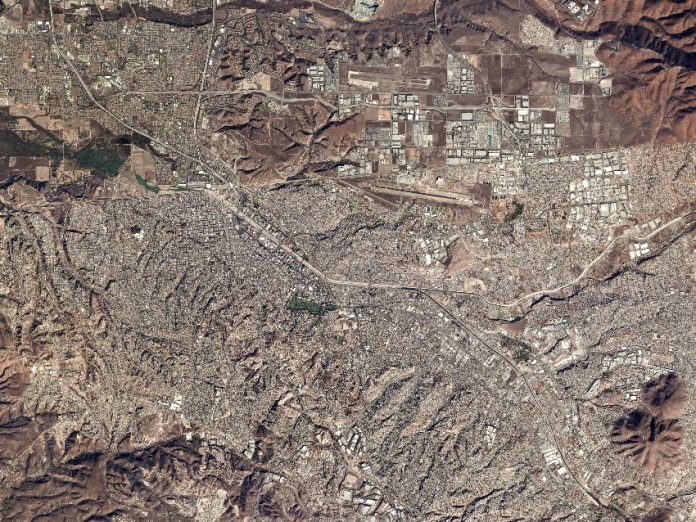
Aerial view of the San Diego-Tijuana metropolitan region. (Wikimedia Commons)
Whenever I travel from Mexico City to my hometown of San Diego, I always fly through the Tijuana International Airport. I take advantage of something that few travelers know: it extends to the U.S. side of the border.
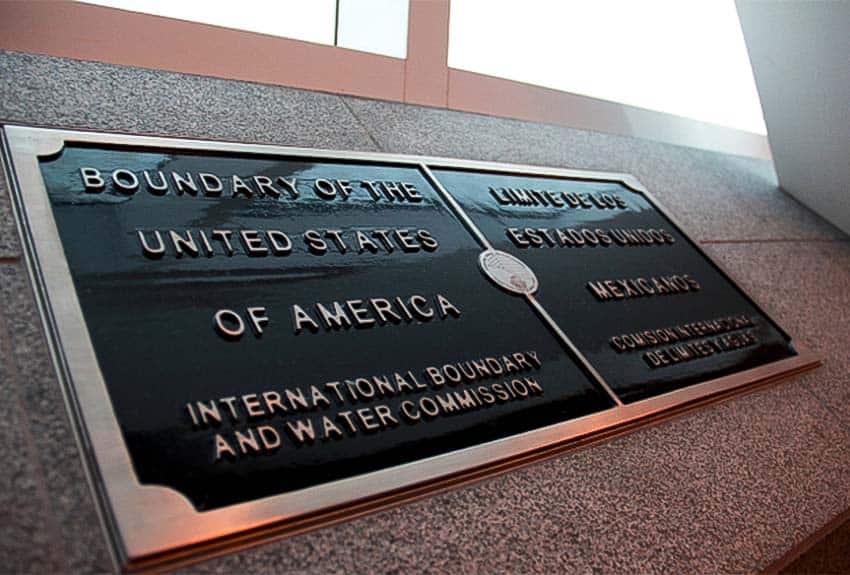
It is built right against the border wall and a sealed bridge travels up and over the physical fence, allowing quick and affordable travel between San Diego and Mexico.
I’m sharing this for a few reasons.
First, it’s a massive travel hack.
If you’re traveling between Southern California and Mexico, it almost always saves you money (it’s a domestic flight within Mexico) and time, thanks to highly expedited customs and immigration cooperation. And with the surging cost of air travel, the savings add up.
The Cross-Border X-press that connects Tijuana International Airport with San Diego, California is a testament to how many people move back and forth between the Mexico-U.S. border daily and how the two cities are slowly becoming one entity. (Grupo Aeroportuario del Pacífico)
Secondly, the Tijuana airport connects to 39 destinations within Mexico, making it easy to fly direct to many airports not serviced by LAX or San Diego. It also has direct flights to China and Japan, a byproduct of the city’s many maquiladoras (export-focused factories for foreign companies, many of which are Asian).
But more importantly, it’s a bright star in the often rocky relationship between my countries of birth and residence, an area of cooperation that has advanced despite (and during) surging nationalism and an example of how San Diego and Tijuana are increasingly becoming a single city separated by a shared border.
In fact, San Diego-Tijuana is one of the world’s largest binational metropolitan areas, with a combined population of 5 million people. And as I witness the ties deepen between Mexico City and other North American cities, my hometown is an example of cutting-edge bilateral collaboration.
Many of the following facts are pulled from the excellent book, “Vanishing Frontiers: The Forces Driving Mexico and the United States Together” by journalist Andrew Selee. The first chapter is dedicated to SD/TJ, which warmed my heart and inspired this article.
The cross-border airport (called Cross Border Express, or CBX) came about when San Diego city planners were looking to expand our airport, which is wedged between downtown and the harbor and constrained to a single runway. This has limited the city’s economic expansion, as larger planes can’t land here. But Tijuana International Airport has much more runway space and capacity for planes large enough to cross the Pacific.
So instead of expanding or relocating San Diego’s airport, they simply built a bridge over the border straight into the Tijuana Airport. Now San Diegans can check into their flight on the U.S. side, breeze through customs and be eating Ensenada-style tacos in Tijuana 20 minutes later.
For Mexicans, the American terminal has car rental agencies; shuttles taking you as far as Disneyland, Los Angeles, Arizona, and Las Vegas; and a relatively smooth immigration experience. It’s also right next door to the Otay Mesa outlet malls for bargain shopping.
CBX was funded by private investors, who took a gamble on the concept. But it’s been a huge hit.
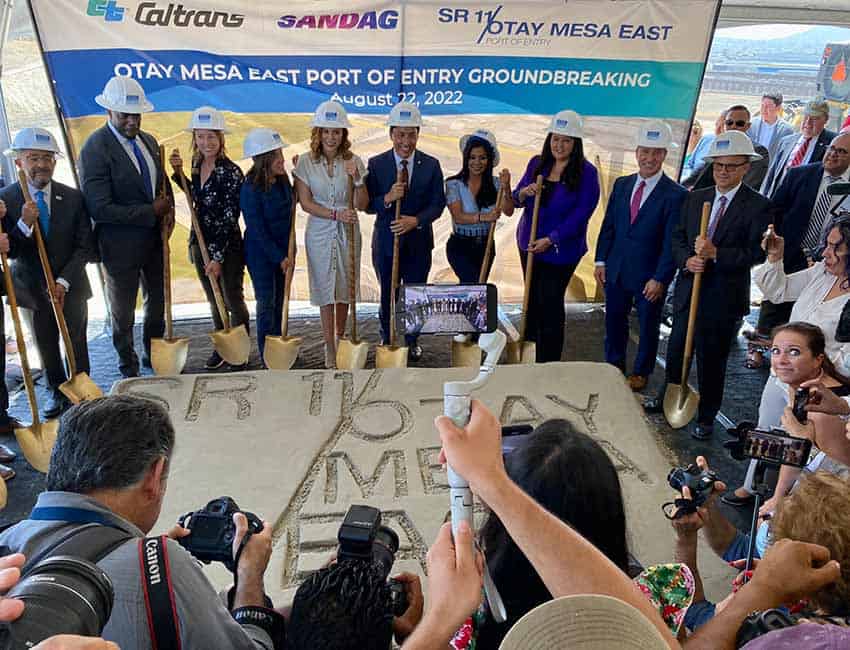
The SR11/Otay Mesa East Port of Entry project, which broke ground on Aug. 22 and will be a new border crossing between San Diego and Tijuana, is just one of many binational projects collaborated on between the two cities. (Photo: SANDAG/Twitter)
I used it shortly after its opening in 2015 on my first trip to Mexico City. Since moving here, it’s become the only way I travel to California. And from what I have witnessed, it’s a common way for Mexican immigrants to visit family back home.
During my recent trip, I was surprised to enter a completely remodeled terminal that was even faster and easier than the previous one. The upgraded terminal cost 2 billion pesos (US $102.5 million) and is 83% bigger, has 75% more capacity and 25% more immigration processing lines.
And with plans to expand service in Asia and Latin America, it’s an example of how the cities are fusing into a major economic region.
After a couple of years of shuttling between Mexico City and San Diego, I’ve come to appreciate these connections even more. It’s no surprise that both San Diego and Tijuana have some of the best craft beer in their respective countries — brewers frequently cross the border to swap recipes. And while Americans fly to CDMX to eat at award-winning restaurants like Pujol or Contramar, the city’s top chefs are building outposts in New York and Los Angeles.
Some other examples include how maquiladoras increasingly send goods back and forth across the border during different stages of production, how the La Rumorosa wind farm east of Tijuana produces green energy for San Diego Gas and Electric, and how the entire state of Baja California is connected to the U.S. power grid — not Mexico’s.
More importantly, the percentage of San Diegans who say their city’s future is closely tied to that of Tijuana has gone up from 9% in 2012 to over 70% now.
But clearly, challenges remain. For too many, the border is still an all-too-real barrier. There are many Mexicans (and other nationals) who are unable to cross the border in pursuit of the American dream. And while these stymied immigrants often settle in Tijuana and enrich the local culture (especially the food), it’s impossible to ignore how much easier it is to travel south than north.
And despite Mexico City’s explosive popularity with millennials, many Americans continue to view the country as a source of violence and unwanted problems, even as Aeroméxico trolls such bigotry in this viral ad from 2018:
Award-winning DNA DISCOUNTS advertisement for "AeroMexico" airlines
Nevertheless, in an era when so many call for more walls, it’s refreshing to see bridges being built between cultures.
This article was originally published on The Missive on Substack. Minor editorial changes have been made to the original.
Marko Ayling is a life-long traveler and the creator and host of Vagabrothers, one of the most trusted and popular travel shows on YouTube, with 1M+ subscribers worldwide. He now writes “The Missive” on Substack, a weekly dispatch of travel tales, reading recommendations, and curated cultural recommendations.
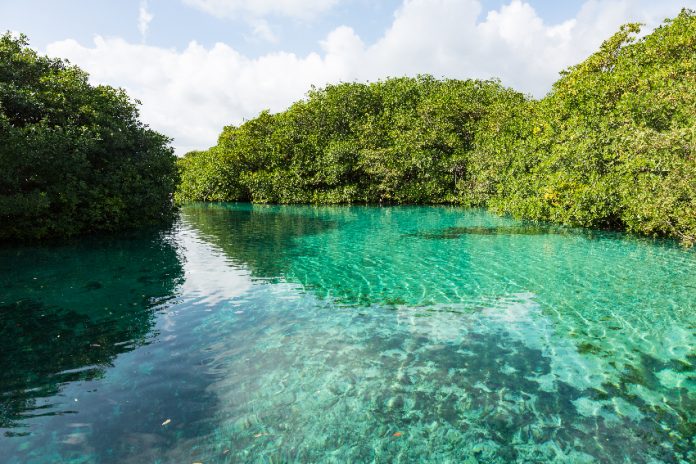
Pristine mangroves in Quintana Roo (Depositphotos)
AICM airport tax to increase in 2023
Effective Jan. 1, 2023, the Airport Use Fee (TUA) at Mexico City International Airport (AICM) will increase by 7.8% for both domestic and international flights. For domestic flights, the TUA will increase from US $26.02 to $28.04, while for international flights, it will go from US $49.41 to US $53.24. This is the biggest jump registered during the current presidential term.
The amount of the TUA is established by the Mexican tax authority (SHCP) and is based on the increase in the consumer price index published by the U.S. Federal Reserve. It can represent up to 60% of the price of a ticket, depending on the airline.
Rates have gone up again for domestic flights
After a price drop during the pandemic, domestic flights rates have gone up again due to the volatility of fuel prices linked to the Russia-Ukraine war. Since 2019, the cost of jet fuel has increased by almost 7% reaching $11.64 pesos per liter.
The average cost of flying the most important domestic route, which connects Mexico City with Cancún, reported an increase of 46.3% in the last three years – meaning that it went from $2,110 pesos in October 2019, to nearly $3,087 in 2022.
In the national airline industry, fuel represents about 32% of operating expenses; however, the proportion climbed to 40% since the war.
Cancún airport breaks 30-million passenger record
“Congratulations 30th million passenger!”
That’s the message of a banner local authorities at Cancún airport used to congratulate Lisa Marie Stickley, a passenger from Indianapolis, U.S., who with husband Chad, helped Quintana Roo break its own record for this year.
Governor of Quintana Roo, Mara Lezama, congratulates the 30 millionth passenger in the Cancún airport on Dec. 28. (Mara Lezama Twitter)
The state’s governor Mara Lezama Espinosa said that in 2019, her government had “discussed the possibility of reaching 26 or 27 million [passengers].” As time went by, she said, “we knew there was the possibility of reaching the 30 million figure we have reached.”
She added that Quintana Roo is not only recovering from the pandemic, but also far exceeding the anticipated passenger traffic.
Lucky Lisa was greeted with mariachis and received two plane tickets, a three-night voucher at Atelier hotels, and different products from stores at the Cancún airport.
Mexico’s first catalog of wine tourism
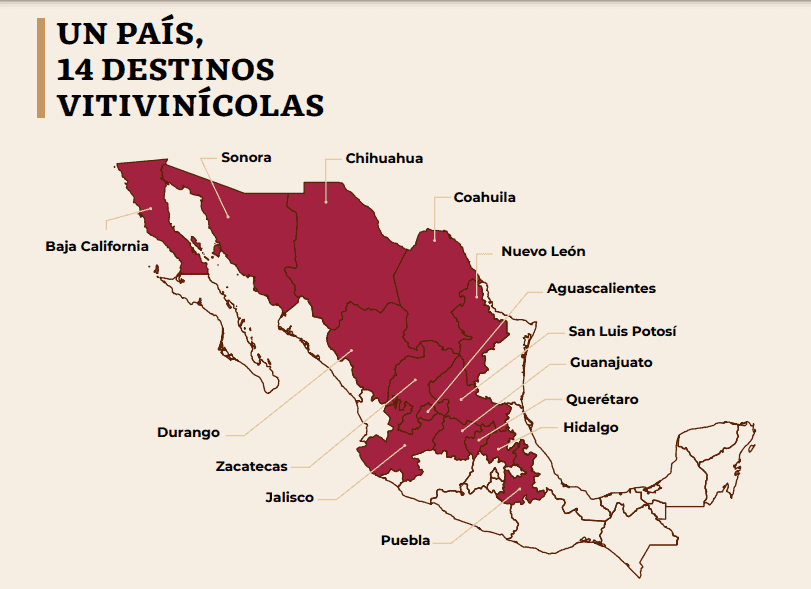
Mexico released its first Catalog of Routes and Wine Tourism Products 2022, created by the Ministry of Tourism, the Mexican Viticulture Council (CMV) and the Ministries of Tourism from the 14 wine-producer states.
A map showing Mexico’s primary wine destinations from the newly published catalog (Sectur)
Minister of Tourism Miguel Torrujo said the catalog seeks to highlight wine tourism in México and attract visitors to the nearby local attractions. It will also encourage readers to learn about pairing and to participate in cheese workshops.
Mexico’s wine industry has won over 1,500 international recognitions and currently has 10 wine tourism routes in the states of Aguascalientes, Baja California, Coahuila, Guanajuato, Hidalgo, and Querétaro.
“Nación de Vinos 2023” in January 2023
The 4th “Nación de Vinos” (Wine Nation) event is happening from Jan. 23-28 in Mexico’s City Campo Marte . The 2023 edition will host wine tastings, workshops, and special dinners that will take guests through a wine and culinary tour of five Mexican states.
More than 80 bodegas and 15 restaurants from across the country will come together to experience the best of Mexico’s wine industry, and restaurants like Pujol (named 5th best restaurant in the world), Rosetta (60th best), Pangea and Contramar will offer exclusive culinary experiences to all attendees.
The event aims for all guests to closely interact with winemakers, chefs and owners of each one of the invited wineries so that they can all share their processes and collaborate.
New ecological reserve announced in Quintana Roo
On Monday, president López Obrador announced that a new ecological park named “El Manglar” will be built nearby El Cid hotel in Puerto Morelos.
“Businessman Julio Berdegué bought some land near El Cid hotel […] and told his children to save 500 hectares of manglers to build a natural park,” said the president, adding that the heirs have come to him saying they wish to donate such a piece of land.
Construction is set to begin in 2023 and the project will complement work on the Maya Train.
A seismic alert loudspeaker in Mexico City on Reforma Avenue. (Moises Pablo Nava/Cuartoscuro.
Residents of areas at risk of earthquakes will receive seismic activity alerts by text message in 2023, authorities announced on Thursday.
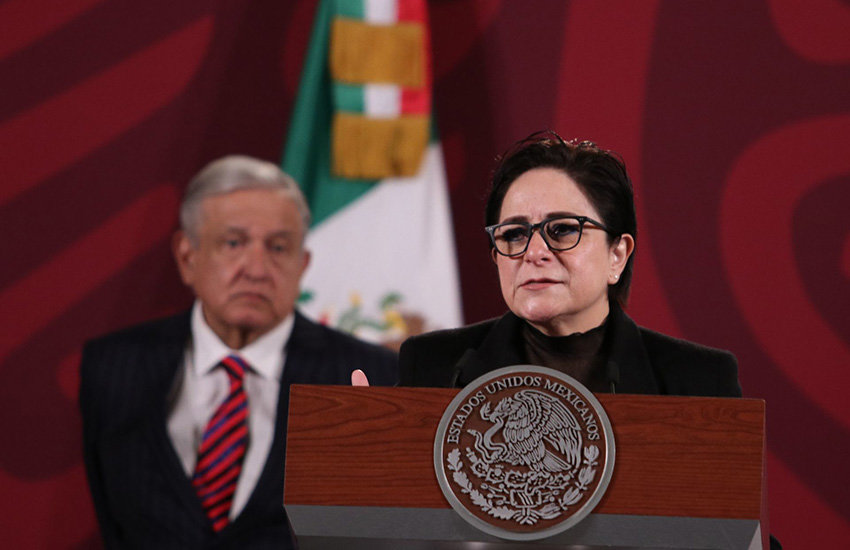
Laura Velázquez Alzúa, head of the National Coordination of Civil Protection (CNPC), explained during President López Obrador’s morning press conference that the CNPC has been working on the technology for the new alert system since 2019.
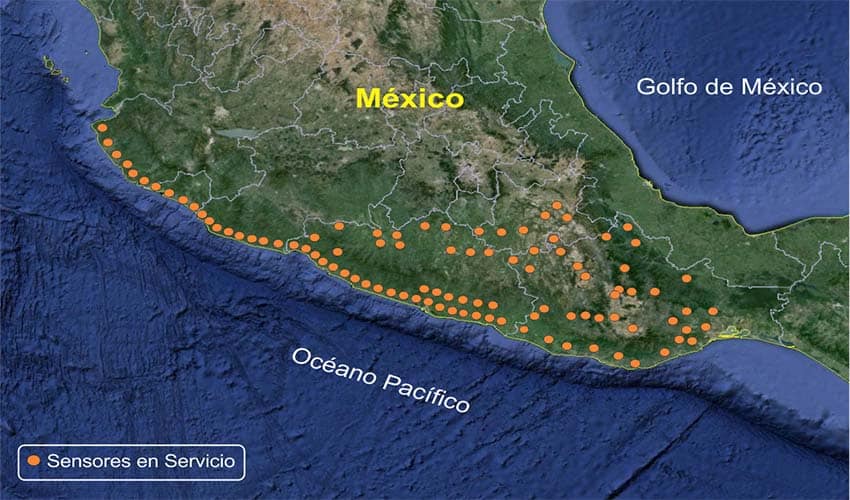
It builds on an existing system that alerts residents of Mexico City and other central regions about earthquakes occurring on the west coast, Mexico’s region of greatest seismic activity. Given that radio waves travel faster than seismic waves, this can give residents of Mexico City around 40 seconds to prepare before an earthquake hits, potentially saving lives.
“Warnings are received through radio receivers here in Mexico City with C5 loudspeakers, which is also the most useful because it alerts the largest number of people,” Velázquez said. “Since 1993, alerts are also made via commercial AM and FM radio and television, and by 2023 it will be through cell phones.”
Head of the federal Civil Protection agency Laura Velázquez said the new alert system has been in the works since 2019.(Photo: Andrea Murcia Monsivais/Cuartoscuro)
Velázquez also announced that the alert system will be extended to the state of Colima during 2023 and 2024.
Colima is one of seven states that the CNPC considers to be at high seismic risk, along with Baja California, Jalisco, Guerrero, Michoacán, Oaxaca and Chiapas. Veracruz, Sonora, Baja California Sur, Nayarit, Mexico City, Puebla, Mexico State, Tlaxcala, Tabasco and Morelos are considered at medium risk.
However, Velázquez emphasized that there were no immediate plans to extend the system to other regions of the country, especially where earthquakes are rare.
“It is completely out of technical consideration to have an alert throughout the country, especially because of the seismic risk in the northwest of the country, which is very low,” she said. “We have to focus on the high-risk areas.”
Map showing where SASMEX has seismic activity sensors placed. Between 1991 and 2022, the national seismic alert system detected more than 10,500 earthquakes. (Photo: SASMEX)
TheMexican Seismic Alert System (SASMEX) was one of several risk-reduction measures undertaken by the Mexican government after the catastrophic earthquake of September 1985.Between 1991 and 2022, it detected more than 10,500 earthquakes, of which 171 were severe enough to generate seismic alert warnings.
Cars being legalized in Tijuana. The forgiveness program began as a pilot last year in Baja California, which requested permission from the federal government for the initiative as a crime prevention measure. (Photos: Omar Martínez Noyola/Cuartoscuro)
A forgiveness program that allows car owners in Mexico to turn their illegally imported cars into legally registered vehicles has been extended until March 2023, President López Obrador announced at his Thursday press conference.
Despite outrage from the automotive industry, the door to registering what is colloquially known in Mexico as an auto chocolate (chocolate car) will not close on Dec. 31, as originally scheduled. The cost to register such a vehicle is 2,500 pesos (about US $128).
Security Minister Rosa Icela Rodríguez Velázquez reported Thursday that approximately 1.1 million older vehicles of foreign origin have already been legalized in 14 states this year.
The program launched in six northern border states and Baja California Sur, a region where illegal importations are highest, in March. The program has since expanded to 141 modules in 14 states, with plans to extend it to all 31 states and the federal entity of Mexico City.
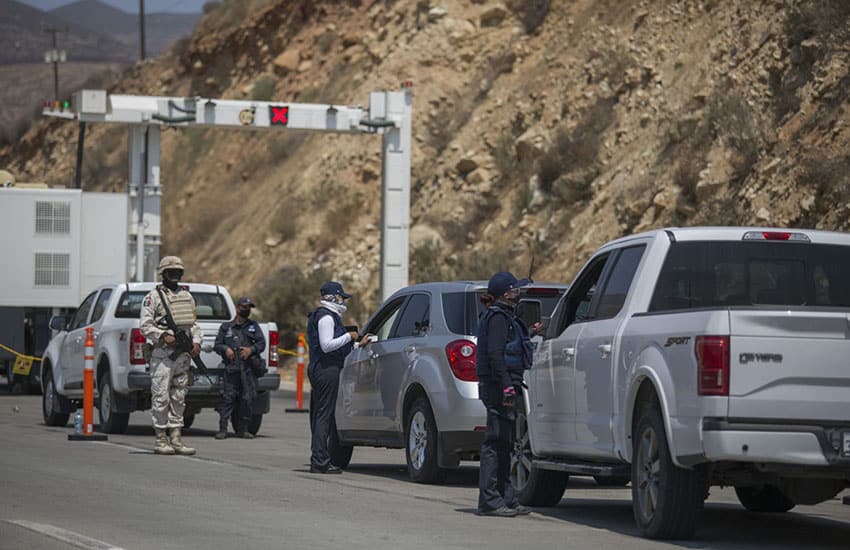
Mexican officials looking for illegal importation of automobiles and other items at the Mexico-U.S. border.
The program this year has brought in approximately 2.6 billion pesos (US $134 million), resources that will allow for road improvements in states where the program has been implemented, López Obrador said.
So far, the federal government has allocated 676.1 million pesos (US $35 million) in revenue from the program to seven states, which have already begun using the funds to pave and resurface highways and streets.
The states where the program currently exists include:
Baja California
Baja California Sur
Chihuahua
Coahuila
Durango
Jalisco
Michoacán
Nayarit
Nuevo León
Puebla
Sinaloa
Sonora
Tamaulipas
Zacatecas.
Baja California has registered the most vehicles of any state at 221,805. Chihuahua (177,383) came in second and Tamaulipas (157,923) third.
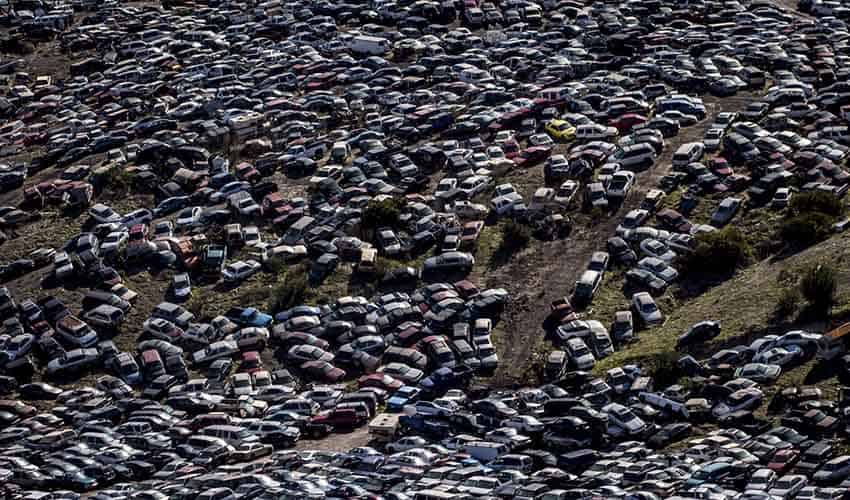
A government lot in Tijuana in 2018 for storing cars confiscated at the border, many of them so-called “chocolate cars.” (File photo)
The vast majority of cars came from the United States; most were properly registered in the U.S. but brought into Mexico without undergoing the proper import procedure. Some cars entered from Central America.
At first, the plan was to regularize only cars that were at least 8 years old, but now, any model from 2017 or earlier is eligible.
A Mexico Business News report noted that “chocolate cars” are generally between 10 and 20 years old and that a recent count determined that there were at least 18 million of them in Mexico, some 25% of the country’s total vehicle fleet, according to the Federal Income Law of 2020.
The Mexican Association of Automotive Distributors (AMDA) has continued to denounce the program as creating unfair competition with cars being legally sold in the country. The group claims the forgiveness program has reduced new car sales in Mexico by 200,000 units this year.
The group also claims that many of the so-called chocolate cars — registered in Mexico or not — no longer meet environmental regulations in the neighboring country and would be considered scrap there.
Rodríguez Velázquez said the registration of such vehicles “has a general benefit of greater security” because a registered car is less likely to be used in the commission of a crime.
First known as “crooked” cars, such illegally imported cars — which over time acquired the name “chocolate” (a Mexican term for a strikeout in baseball) — are vehicles that lack the proper permits and papers and could not be sold or marketed through agencies or dealers.
Owners of chocolate cars can start the regularization process at the Public Vehicular Registry (Repuve) website. Among the many documents required to complete the process is a national identity number, or CURP, to request their initial appointment.
You may have fewer hangovers if you pick additive-free alcoholic beverages. (Depositphotos)
‘Tis the season to imbibe everything handed your way. I’m going to make an educated guess and assume that most things you’re offered between December 12 and January 6 are delightfully filled with fats, sugar, empty carbs and even emptier calories.
If you’re anything like me, you’ve eaten, drunk and justified all of it. Including the treats that would never, on any other day of the year, interest you in the least. Like the candies stuffed in the belly of a bright and colorful piñata, those thick and creamy eggnog martinis, that sweet, dense-as-a-Memory-foam-mattress fruitcake.
My job is not to tell you not to indulge. Just writing this article has me salivating for a rosca de reyes. Let your palate luxuriate in the treats that are actually worthwhile. The bites that bring you back to your childhood, abuela’s special dish you’ve been waiting to savor all year.
I’m simply writing this article to state the following: If you don’t want to come out of the holidays feeling like a sloth, make an effort to cut the bad stuff where you can.
One of the easiest ways to control your caloric intake is through the beverages you choose. Alcoholic beverages are notoriously sneaky, often full of sugar and empty calories. They can slow down your fat metabolism and encourage terrible food choices.
But a glass of wine tastes so good with that bacalao. And a sip of tequila pairs nicely with family gossip.
I couldn’t agree more.
So have your wine! Sip your tequila! Just drink smart and choose additive-free drinks.
Additives are added to nearly everything we eat and drink nowadays. They’re frequently utilized to enhance the flavor of an otherwise watery beverage whose ingredients haven’t been properly cultivated in the name of mass production. Nutritive sweeteners, preservatives, sugars and other extracts are infused into a spirit’s development process. While perfectly legal, the inclusion of colorants and extra sugars isn’t necessarily natural. What’s more, some of these additives may not be synonymous with health.
Below are four of the most common beverages you will encounter this holiday season in Mexico and some additive-free alternatives.
Tequila
There are two basic reasons that tequila contains additives.
Agave plants are being used before they’ve fully matured.
Distillers are moving away from the traditional development process for a more modern and much easier one.
The upside is more tequila can be produced at a faster pace. The downside is the taste can be noticeably altered. To make up for lack of flavor and density, some producers turn to sugars, colorants, extracts and glycerin. By law, tequila brands are permitted 1% unlisted additional ingredients. It might not sound drastic, but 1% is a significant level of unknown content. This shift is conceivably undetectable to the untrained palette. A true tequila connoisseur, however, may notice the difference.
To avoid this, BYOT to your next party and choose from this list of 70 brands that have been arduously tested and deemed additive-free by TasteTequila.
Mezcal
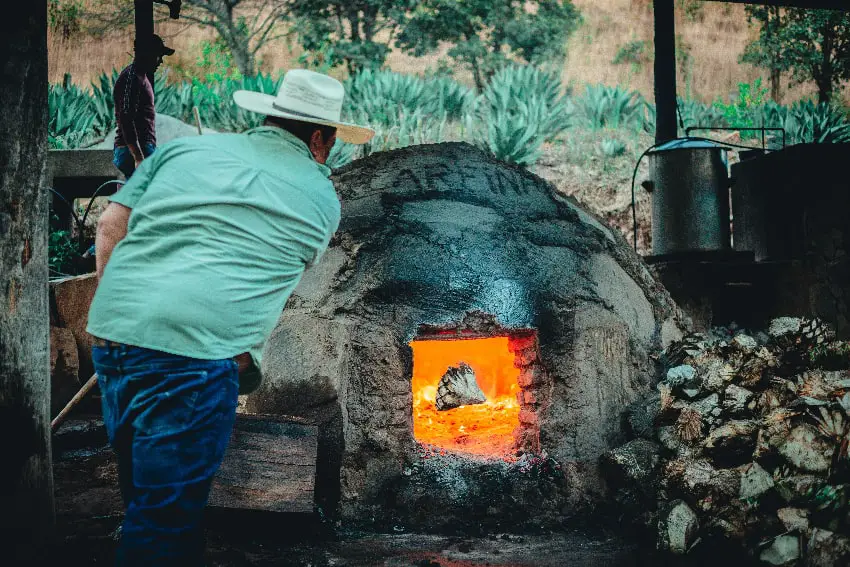
Mezcal is, or should be, additive-free by law. While tequila does not have to be 100% agave-based, mezcal does. The coveted spirit is still produced using only traditional methods, meaning its flavor remains intact and needs no meddling.
Mezcal is still prepared using artisanal methods. (Foto de Mary West en Unsplash)
As any long-time expat in Mexico knows, mezcal is meant to be enjoyed as is. So while that mezcal mule might sound titillating in the moment, it may not be worth it tomorrow.
You may already have a preferred mezcal brand, but if you’re looking for something new or you’re in the mood to experiment, check out Insider’s latest list of the 8 Best Mezcals on the market right now.
Wine
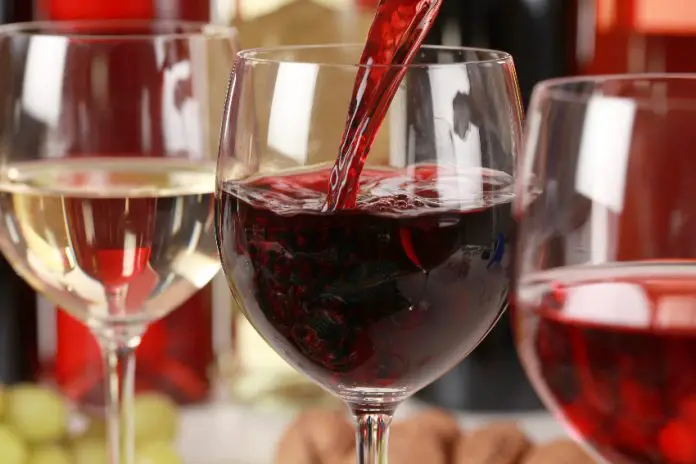
Conventional wines undergo a heavy production process. Commercial yeasts are often used in fermentation while other additives are incorporated to darken the color or sweeten the taste. If you’re vegan, note that animal products such as egg whites, fish bladder or milk proteins might be used during the clarification step. Moreover, vines are known to be sprayed with pesticides even when no pests are present. Many of these extras, in some form or another, could make it to your glass.
Today’s movement toward organic, biodynamic production has eliminated such additives, giving rise to a well-received natural wine industry. This is excellent news for those of us looking for an almost-hangover-free alternative in a country where wine consumption is growing rapidly every year.
Ponche
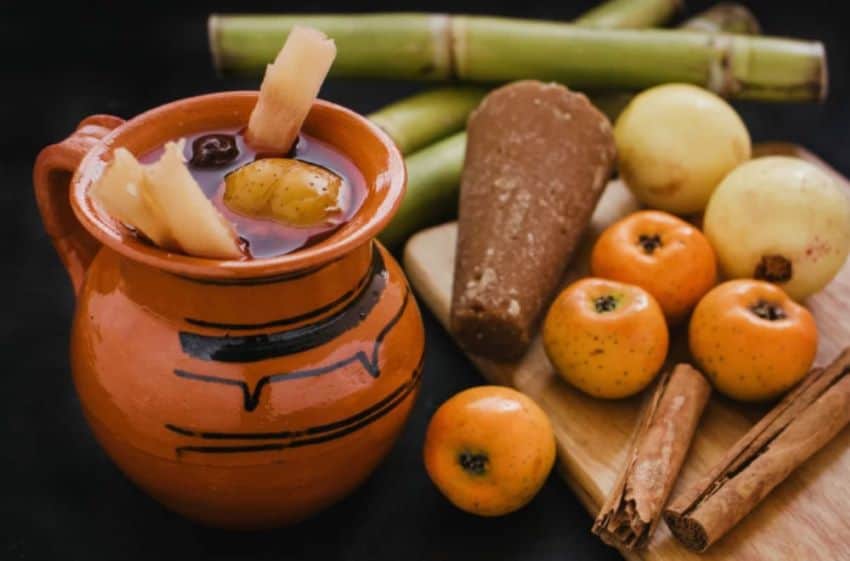
Ponche is a foundational element to anything Navidad-related. It’s delicious, sweet, fruity and chock full of piloncillo or other refined sugars. And guess what? It doesn’t need to be.
Ponche can be made healthier without added sugars.
Ponche can be just as delightful with all of the expected ingredients – fruit, jamaica (hibiscus), herbs, pure sugarcane (which, by the way, may have a variety of positive benefits on your metabolism, pH levels, magnesium levels, antibacterial levels…the list goes on). This Christmas, make your ponche but skip the added sugar. If it still doesn’t feel sweet enough, consider adding pure honey instead of sugar. If you like ponche with a kick, opt for an additive-free spirit or natural wine over brandy.
¡Salud! Wishing you a magical holiday season.
Bethany Platanella is a travel and lifestyle writer based in Mexico City. With her company,Active Escapes International, she plans and leads private and small-group active retreats. She loves Mexico’s local markets, Mexican slang, practicing yoga and fresh tortillas. Sign up for her (almost) weeklylove letters or follow her Instagram account, @a.e.i.wellness.
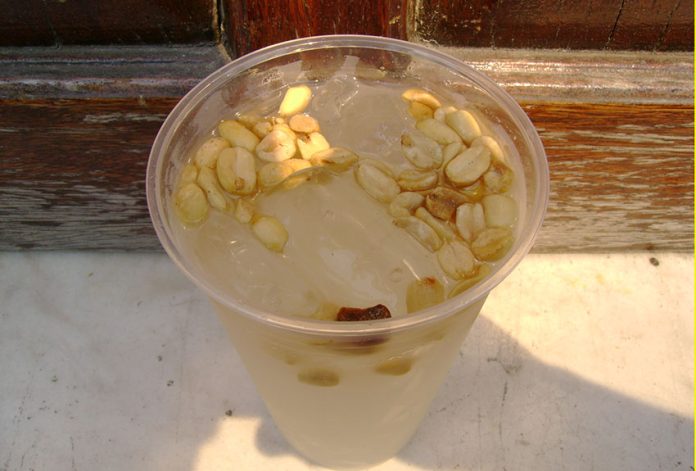
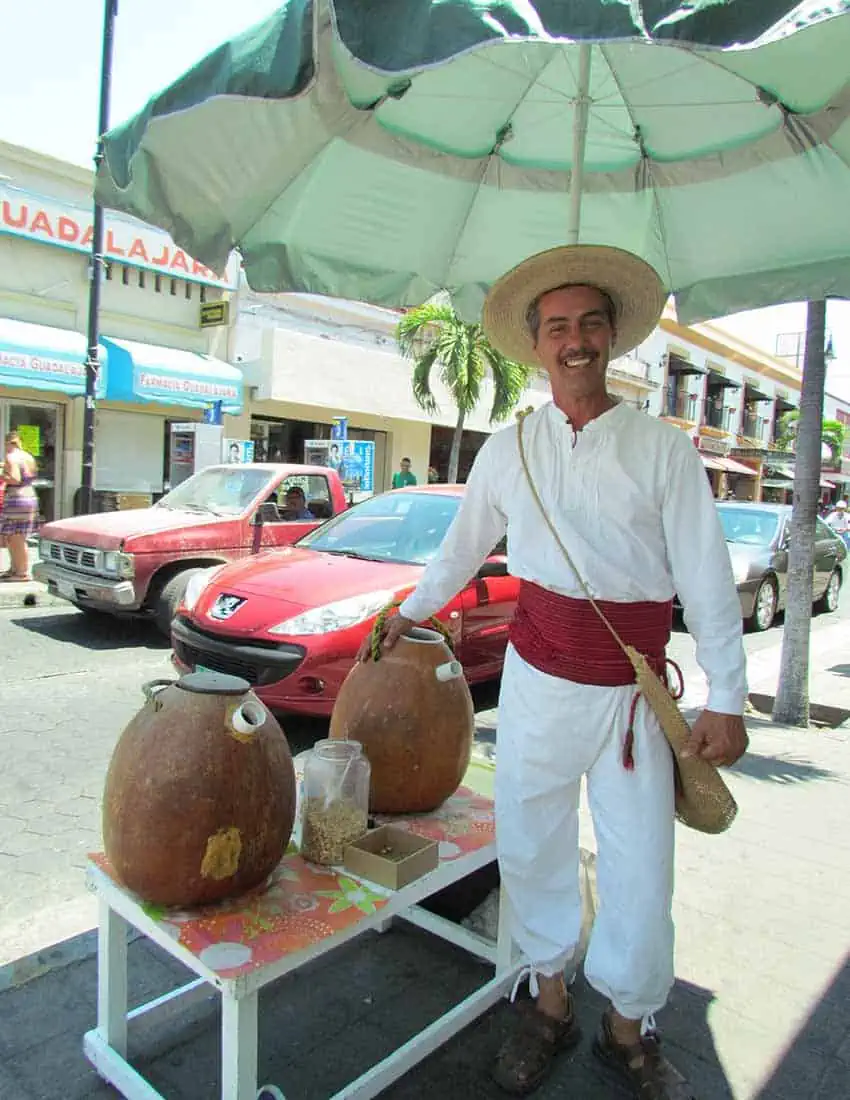
This Phillipines-influenced drink sold in Colima called tuba is the result of the arrival of Filipino migrants during the colonial period who may have also brought with them distillation techniques that allowed mezcal's invention. (Photo: Yaomautzin Ohtokani Olvera Lara/Creative Commons)
With all the coconuts along Mexico’s coast, you might think the tree is a native, but not so.
Their existence here is a testament to Mexico’s colonial connection to Asia, which links two very different beverages in Mexico: Pacific coast tuba and the iconic mezcal/tequila.
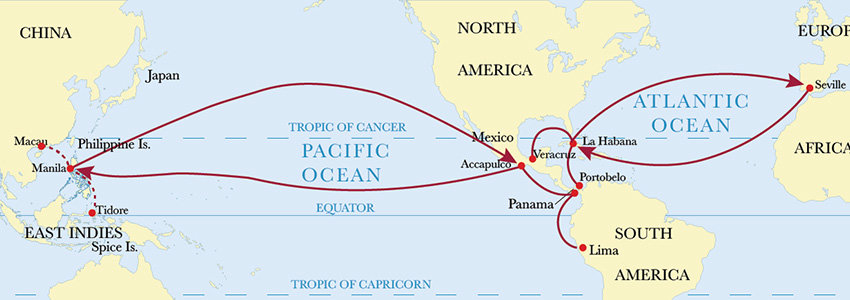
Spain’s conquest of Mexico and the Philippines led to a lucrative sea trade route called the Manila Galleon. It existed to move Asian luxury goods and silver, but it also brought a wave of new foodstuffs to Mexico and about 5,000 mostly Filipino immigrants.
With them, they brought the coconut tree, an important source of building materials, as well as food and alcohol. The new flora did so well that coconut plantations quickly sprung up in the state of Colima and elsewhere, crowding out most of Mexico’s native palms.
The Manila Galleon was a lucrative trade route connecting Spain to its colonies in the Americas and Asia. In the colonial period, native Filipinos came to work in Mexico brought coconuts to Mexico, as well as tuba. (Photo: Philippines Dept. of Foreign Affairs)
To protect certain agroindustries in the motherland, the Spanish crown prohibited the production of alcohol and cooking oil. As part of those prohibitions, Spain ordered Mexico to fell all coconut trees in 1612.
In the end, Madrid neither eliminated the coconut tree nor the making of alcoholic beverages, but the laws did have long-term consequences.
One consequence is that records on this history are spotty and inaccurate. Vino is translated as “wine” in English, but by extension, the Spanish used it to refer to alcohol in general, no matter how or from what it was made. So, many records referred to both fermented and distilled coconut alcohol as “vino de coco.”
Filipino-derived words are better for distinguishing what is being discussed. The Tagalog word ubâ refers to the fermented sap of the coconut tree, which eventually changed in Mexico to tuba. The drink lambanóg is ubâ distilled — a process Mexico’s pre-Hispanic people have traditionally been thought not to know how to do until the Spanish taught them.
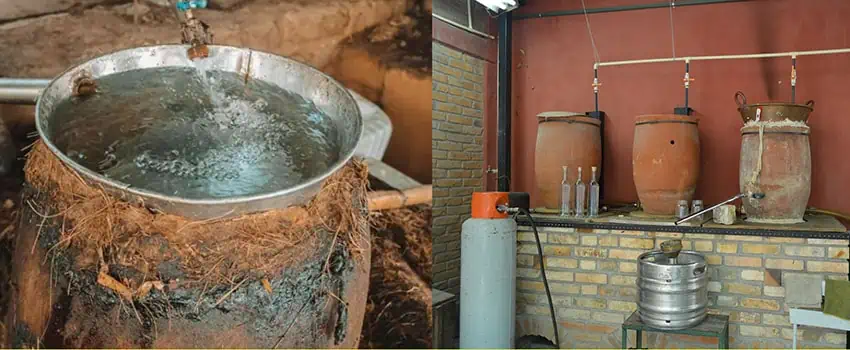
But many pre-Hispanic groups had known about the sugars in cooked agave hearts, and at some point, the Mongolian still, an Asian still, was adapted to this process of turning agave hearts into an alcoholic beverage — nowadays, mezcal.
Today the Mongolian still can be found in use as far away from Colima as Oaxaca and Durango and San Luis Potosí.
Variations on the Mongolian still as it’s found in Mexico. From Oaxaca on the left and from San Luis Potosí on the right. Both have a metal pan to hold the cooling water, which distinguishes it from traditional Arab/European stills.
Most in Mexico have forgotten the Asian origin of the still and associate it with Mexico’s indigenous groups. But its existence in Mexico carries a potential implication that intrigues some historians: did indigenous Mexicans learn how to distill agave hearts into mezcal not from the Spanish but from Filipino migrants?
If Mexico’s indigenous people learned distillation from the Spanish, it seems likely that the traditional still here would be closely related to Arab and European stills, which favor the use of an exposed coil rather than a pan of water. Furthermore, more recent historical research seems to indicate that mezcal is the “godchild” of lambanóg. In 2007, researchers from the Yucatán Center for Scientific Research in Mérida presented a study that asserted to show from botanical, archaeological, and ethnohistoric data that agave distillation began in Colima in the 16th century through adaption of Philippine coconut spirits distillation techniques.
Oddly, current coconut-based drinks and other preparations to be found today on Mexico’s coasts are new inventions mostly inspired by tourism. Coconut palm sap seems to still be collected in Mexico, and there is a drink called tuba in coastal Jalisco and Colima — but it is not ubâ.
The drink is a sweet cocktail that almost certainly has coconut milk, ice and sugar, often topped with nuts and/or dried fruit. It may or may not contain the sap of the coconut tree, fermented or not. If Mexico’s tuba has alcohol in it, it’s very low, much like ubâ.
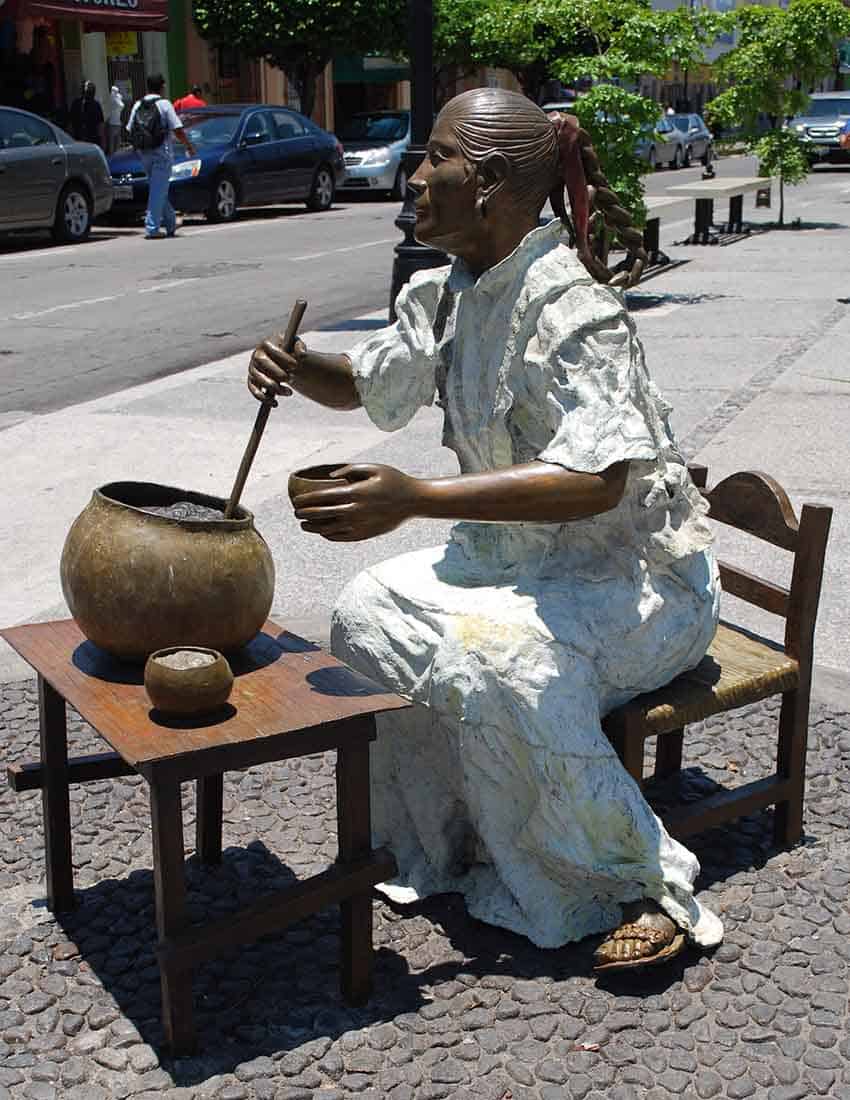
Statue in Colima city dedicated to its heritage of tuba and tuba street vendors.
Authentic or not, tuba is an extremely important part of Colima culture, available on just about every corner. The drink has been so nativized in Colima that most believe that it has pre-Hispanic origins. One vendor in Colima city told researcher Paulina Machuca, writing in the academic publication Encartes, that even King Colimán — the pre-Hispanic leader of the indigenous Colimas — drank it.
Lambanóg seems to have completely disappeared in Mexico. All that is certain is that no one produces or even experiments with a distilled coconut liquor today, according to Mechuca in her 2018 book “El vino de cocos en la Nueva España. Historia de una transculturación en el siglo XVII. (Coconut wine in New Spain: History of a 17th-Century Transculturation).”
It is relatively certain, she says, that lambanóg went into decline by the end of the 17th century, but the lack of records means that it could have disappeared anytime from the 18th century to early 20th. Why is not known either. It may have been the combination of multiple factors.
For one thing, agave grows over most of Mexico and, until recently, was easily harvested wild. The ban on coconut palms meant that other crops took their place for much of Mexico’s modern history. Another is that early Filipino migration ended by the late 17th century. Since then, their descendants have assimilated into the general population.
The coconut and its commercial cultivation has not experienced the comeback that the wine grape has in recent decades. Mexico is the seventh largest producer of coconuts in the world, exporting to the United States and elsewhere. However, it contributes less than 1% of Mexico’s total agricultural GDP.
Hugo Fierro “el indio tubero,” selling the tuba drink in Colima city in 2013. (Photo: Paulina Menchuca/Encartes)
The lack of academic interest in the coconut and its alcoholic derivatives is notable, especially compared to the documentation on mezcal or the pre-Hispanic fermented alcoholic beverage pulque or even beer. But this is changing in places such as the University of Guadalajara and the Colegio de Michoacán.
Mechuca feels that a renewed interest in coconuts historically and commercially is important, but “we need to make sure that new economic projects, [including a revival of lambanóg] does not damage the environment and benefits [local] communities…”
Leigh Thelmadatter arrived in Mexico 18 years ago and fell in love with the land and the culture in particular its handcrafts and art. She is the author of Mexican Cartonería: Paper, Paste and Fiesta (Schiffer 2019). Her culture column appears regularly on Mexico News Daily.