Home Blog Page 862

AMLO vs. the INE, or how to really hold a grudge

0
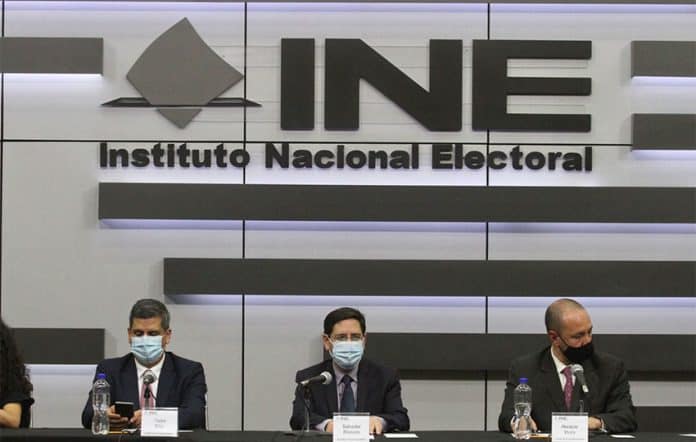
Mexico's elections oversight body the National Electoral Institute
The autonomous National Electoral Institute is the culmination of Mexico's decades-long struggle to ensure clean elections. President López Obrador wants to dismantle it, saying its councillors are corrupt and untouchable. (Photo: Rogelio Morales Ponce/Cuartoscuro)

The president of Mexico is not one to let things go easily.

That he’s the most powerful man in the country does not seem to allow his conscience to relax. There are scores to be settled, correct moral positions to be proved, actions to be justified. 

Many things offend him. News media outlets and even individual journalists; women marching through the streets decrying femicide; companies that compete “unfairly” with the state-owned Federal Electricity Commission (CFE); UN reports that contradict his assurance that corruption and impunity are no longer rampant in Mexico. 

And most recently, an assertion by half a million Mexicans around the country marching in protest that the National Electoral Institute (INE) “shouldn’t be touched.” The president strongly disagrees.

This all started with a proposal for electoral reform in which the INE would be replaced by a new agency called the National Elections and Consultations Institute with a few major alarming features

For one, we’d see the replacement of current electoral officials with those who will be “voted in by the people.” I can’t imagine that enough people would vote to make it an effective strategy, and I’m suspicious that many of the candidates would be chosen by the President and Congress. Why should a voting official be a political position? 

Also, our current INE officials are doing a good job. Democracy in Mexico is working; if it weren’t, to give a dark example, no one would bother with so many political assassinations here because they’d be able to ensure through corruption that the candidates they don’t like simply don’t win.

Why wipe the board clean to put new people in?

One reason, of course, is that President López Obrador has never forgiven the INE for 2006, when he narrowly lost the presidential election. Admittedly, I’ve always thought that they could have and should have done a recount for such a close vote, but you’d think his sweeping win in 2018 would have given AMLO and the INE a chance to kiss and make up. 

But AMLO seems to still be nursing a grudge. 

Another feature of this proposed electoral reform is the reduction of public funding for candidates and parties, which, honestly, I don’t feel I know enough about to opine except to note that their funding will now have to come from somewhere

If we want to avoid money’s influence in politics, ensuring that parties and candidates will end up being funded privately seems a risky move. I’m also weary of so many of AMLO’s  “austerity measures” that are extremely focused on organizations he either has a grudge against or cannot personally see an important purpose for — like the Mexican film industry and the arts in general. 

His own pet projects that have run vastly over budget (Why, hello, Maya Train!) are conspicuously left out of these conversations.

Finally, the reform bill seeks to reduce the number of federal lawmakers, trimming the current Congress of 500 down to 300 and having those 300 elected nationally rather than by district. I’m pretty sure that representation in a democracy is fairly important… isn’t it?

If the president is able to pass this through legislation — mercifully, he doesn’t have the votes for a full-on constitutional reform — my prediction is that this will be a confusing mess the same way his other “scrap it and start over” initiatives have been during his administration’s “fourth transformation” of the country. 

My fear is that the new electoral body will be a great way for the ruling Morena party to make sure election outcomes meet its approval. Mexicans fought hard for an institution that prevents inevitable one-party rule like Mexico had for decades under the Institutional Revolutionary Party (PRI). Many citizens today seem to see no need for a new electoral oversight body when the one they have works pretty well, and I agree.

Personally, I’ve wondered a lot about the president’s inner thoughts and psyche. Is he ill-informed about the reality on the ground for most Mexicans? Is he willfully ignoring the country’s stubborn problems when he insists that things like corruption now exist exclusively in the past?

Mostly, he seems intent on “fixing” institutions and projects by scrapping them completely and starting something new — sure that he can set everything up in a better, fairer way with predictable results.

The airport, Insabi (the replacement for the popular Seguro Popular public healthcare scheme), our recently cemented militarization — there have been a lot of changes around here lately. 

But the airport seems to have been a flop and the healthcare system is still in disarray, COVID-19 having deepened its troubles shortly after its chaotic implementation. Militarization, on the other hand, seems to enjoy wide support. So far, anyway.

If his motivations weren’t so nakedly an attempt to “redo” everything his predecessors had come up with, I might be inclined to give him the benefit of the doubt more often, though I’m wary of policies that throw the baby out with the bathwater. When the reasons seem to stem from personal vendettas, I’m even less trusting. 

We’ve seen this movie before. And AMLO deciding that he’ll be the one to reformulate the electoral system is extra suspicious.

Not everything AMLO has done has been bad, and I still think that he believes that his intentions are mostly good. I was a big supporter for years, and while I’ve since been disappointed by him over and over again, I haven’t completely lost my faith.

His social programs that distribute direct cash assistance have given much-needed help to those in poverty whose lives would be much worse without it. Could more be done? Certainly, and ideas abound regarding specific steps that should be taken to lift many Mexican citizens out of the country’s growing pool of poor people. 

On the other hand, when there are a lot of poor people and you give them money, it’s a great way to stay popular and keep throngs of loyal followers. Just ask the PRI.

And so it was this past Sunday: people were bussed into Mexico City from all over the country to march with the president in support of his policies. The president made a point of saying that it wasn’t about the electoral reforms, even though it was billed as a “counter-march against the conservatives,” his self-proclaimed biggest enemy.

A friend and longtime supporter of AMLO told me before heading out, “This is a critical time for people to come out in support of Peje [AMLO’s nickname].”

Personally, I’m a little more concerned at the moment with Mexican democracy than I am for our president’s feelings.

Sarah DeVries is a writer and translator based in Xalapa, Veracruz. She can be reached through her website, sdevrieswritingandtranslating.com


Migas: the ultimate Mexican breakfast skillet 

0
Migas
This gooey, crunchy everything-but-the-kitchen-sink concoction is the perfect hearty breakfast.

I’m one of those people who loves a hearty, savory breakfast; give me some enmoladas, huevos rancheros or tacos de birria and I’m a happy camper.

Waffles, pancakes, cinnamon rolls and the like are just too sweet for me first thing in the morning. (Although I will take a bite of yours!) So migas — kind of a Mexican scramble — are right up my alley. 

You could call them a cousin of chilaquiles, those beloved breakfast nachos. They begin with a base of tortilla chips, are ultimately smothered in salsa and melted cheese, and can include a host of other ingredients on top — most commonly chicken, eggs, machaca or chorizo.

Migas are different in that although they include fried tortilla strips or pieces, scrambled eggs are the main ingredient, and they’re thoroughly mixed in with everything else. The word migas actually makes sense: it means “scraps” in Spanish, and essentially that’s what they are.

fried tortilla strips
Pro tip: don’t buy these fried tortilla strips, make ’em yourself! We’ll show you how.

Migas are a “top-shelf special” sort of dish, meaning that all those little leftover bits and pieces of things sitting in the fridge can be tossed in with the eggs, tortilla strips (and sometimes salsa), and the result is something hearty and irresistibly delicious. 

Different parts of Mexico have their own way of making migas, and there’s even a Tex-Mex version, which — like American-style burritos — includes specific ingredients like sour cream, avocado, chopped bell peppers, onion and tomato. Salsas can either be mixed into the scramble or added on top once it’s served.

(This can be a source of disagreement as to what’s “authentic,” depending on where in Mexico you are.) There are Spanish and Portuguese versions too, and even vegan migas (nicknamed “vigas”) made with tofu instead of chorizo. If you’re so inclined, you can also use nacho cheese flavor Doritos instead of plain ol’ tortilla strips for a burst of strong, and some might say picante, flavor.

What’s great about this Mexican breakfast skillet is that you can jazz it up or keep it simple. Two things are going to take your migas from mediocre to “mmmm:” the tortilla strips and how you cook the eggs. 

First, the tortilla strips. Do not — repeat, do not! — buy them already fried in a bag. (Unless you’re using Doritos, LOL.) The best are made from tortillas that you bought fresh and have gone stale; fry them yourself. If need be, buy a half-kilo of fresh ones from a nearby tortillería and leave them spread out on a cookie sheet or on plates for a few hours to dry out.

Use kitchen shears to cut them into strips. Tip: as long as you’re going to be making tortilla strips anyway, why not make more to have on hand for snacking, salads or as a topping for chicken or tortilla soup?

To prevent your migas from just being scrambled eggs with stuff in them, you need to thoroughly mix everything while cooking until it becomes a big goopy mess. (Which is what they’re supposed to be.) Eat them on their own, or make tacos.

Migas are comfort food, warm and hearty and easy to throw together; they’re also touted as a hangover remedy, should that be something you’re needing, especially with the holidays upon us. The following is the basic recipe, open for modification as you desire.

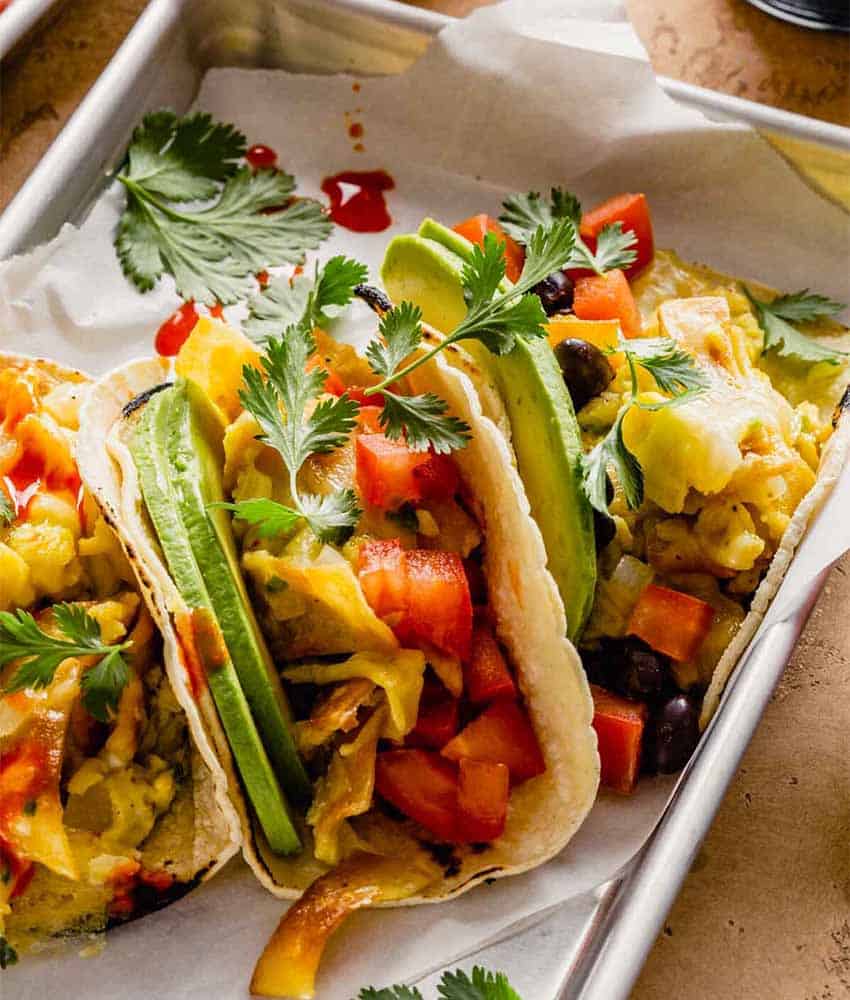
Migas tacos
Migas are even better inside a taco!

Migas

  • 3 large eggs, whisked together
  • 1 tsp. salt
  • About ¼ cup vegetable or corn oil
  • 4 corn tortillas, cut into 1½ x ¾-inch strips, plus more for making tacos
  • ¼ cup diced white onion
  • ¼ cup diced green bell or poblano pepper
  • 1 cup shredded Oaxaca, ranchero, Jack or mozzarella cheese
  • Optional: ¼ cup chorizo, chopped cooked nopales, chopped tomatoes
  • Toppings: sliced avocado, refried beans, grated cotija cheese, chopped cilantro, pickled jalapenos, salsa 

Use an air fryer (see below) or make on the stovetop. In a medium saucepan, heat about 2 inches of oil till hot and shimmering, 350 F (180 C). Add tortilla strips and cook, flipping and stirring constantly, until bubbles slow to a trickle and chips are pale golden brown, about 2 minutes.

Transfer to a plate lined with paper towels, season with salt and set aside.

In the same or a new skillet, heat 2 Tbsp. oil (the remainder from the tortilla strips or new) till hot. Add onions and peppers. Stir frequently until softened. Add eggs, stirring to combine ingredients. Add tortilla strips and salsa if you’d like and any optional ingredients; continue cooking for a few minutes, stirring often, until eggs are cooked to desired doneness. Top with cheese, turn off heat, cover and let sit till cheese melts. When ready to serve, add toppings as desired. For tacos, heat whole tortillas and serve on the side for filling with the migas.

Air-Fryer Tortilla Strips

  • 3-4 corn tortillas, cut onto ¼-inch strips. 
  • 1 tsp. olive or canola oil spray
  • Salt

Preheat air fryer to 375 F. Spray the bottom of the air fryer with cooking spray. Add tortilla strips in a single layer; spray with oil again. Toss, sprinkle with salt and stir again. Set air fryer for 4–6 minutes, shaking the basket halfway through.

Check for doneness: If tortillas strips haven’t reached desired crispiness, cook for another minute, shaking the basket halfway through.

Janet Blaser is the author of the best-selling book, Why We Left: An Anthology of American Women Expatsfeatured on CNBC and MarketWatch. She has lived in Mexico since 2006. You can find her on Facebook.

Huasca: the first Pueblo Mágico and where chilangos escape to the woods

0
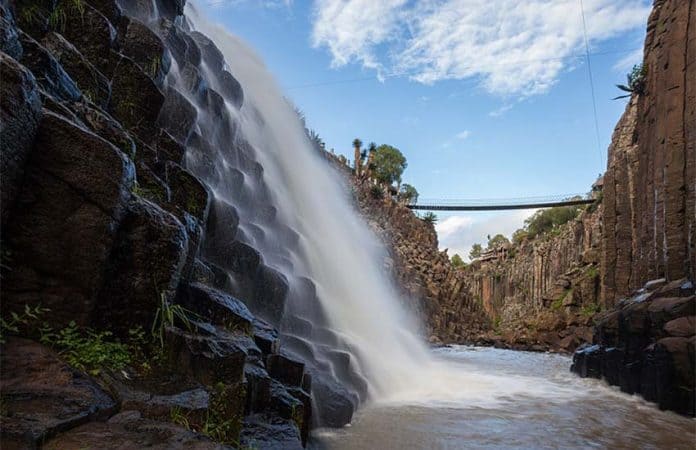
Basaltic prism waterfall in Huasca, Hidalgo, Mexico
A basaltic prisms waterfall, in Huasca, a natural phenomenon just outside town that attracts many visitors. (Photo: Diego Delso/Creative Commons)

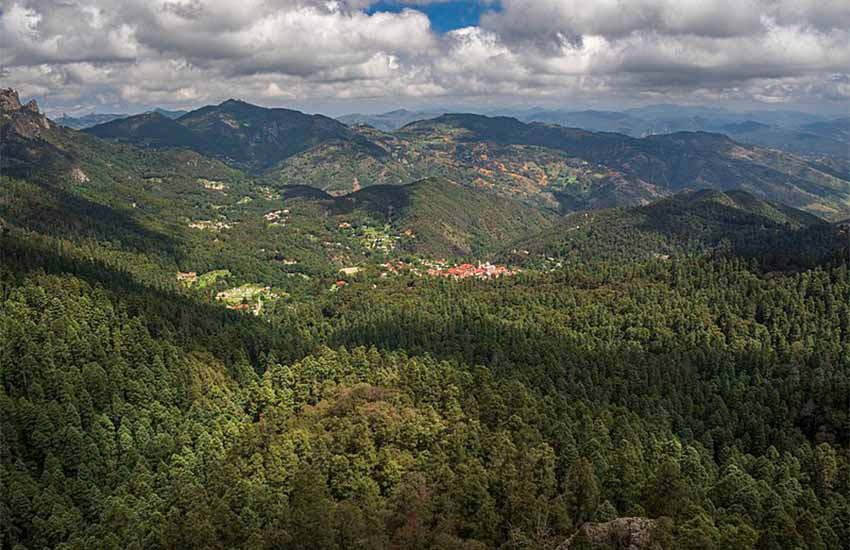
Hidden in the forests north of Mexico City lies Huasca de Ocampo, Hidalgo, the vanguard of the wildly successful Pueblos Mágicos program and a regional boom in ecotourism.

By its nature, tourism takes an already-existing ambiance and commercializes it for outsiders. In the case of Huasca, tourists come to experience quaint stone and wood buildings with red roofs surrounded by hectares of pine forest on craggy mountains, repackaged for weekend convenience.

In 2000, the federal government decided to create Pueblos Mágicos to give some of the many near-ghost towns in Mexico a chance to cut in on the country’s huge tourism industry. Originally, the rules stated that the town in question had to preserve something special in architecture, history or cultures; not be in an area already promoted (like coastal destinations); and have infrastructure such as roads, restaurants and lodging.

It was a huge risk for the tiny town to get that infrastructure created, but the rewards were phenomenal: Huasca was the first to be considered and accepted as a Pueblo Mágico, and in 2001, it was promoted through federal tourism agencies as one of 30 towns to receive the designation. 

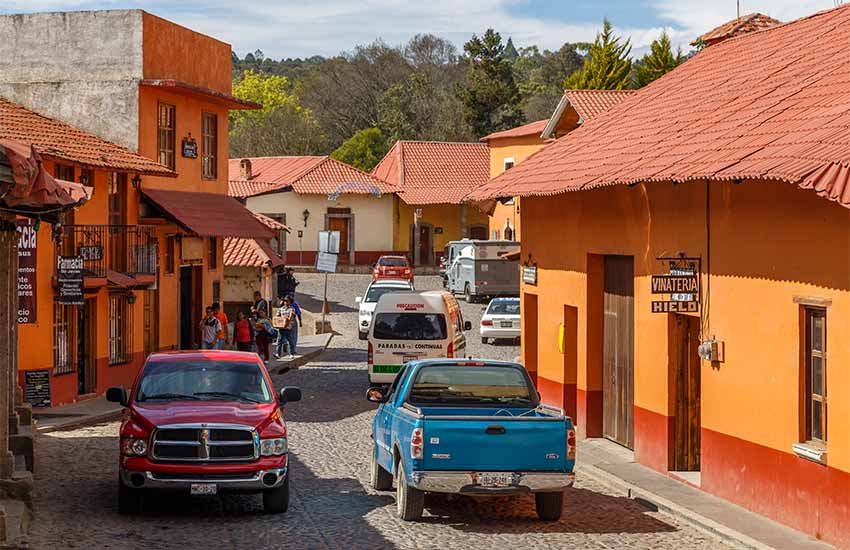
Huasca, Hidalgo, Mexico
Like all Pueblos Magicos, the charm of visiting Huasca is experiencing an older Mexico. But the town has adjusted to tourism and caters to thousands of visitors on the weekends. (Lev Levin/Shutterstock)

In essence, Huasca was everything a Pueblo Mágico was supposed to be — historic, charming, very rural and with a number of other attractions outside the town proper, including two haciendas, a pristine waterfall featuring basaltic prisms and plenty of stunning nature sites only slightly further afield.  

Huasca had been desperately poor since the mining industry collapsed at the end of the 19th century. The mountains north of Pachuca were a rich source of silver and other minerals for several centuries, even spurring English immigration here in the 19th century. But like just about all mining towns, bust followed boom, and by the 2,000s, the town lay forgotten. 

It is hard to overstate the effect the program has had on Huasca and the now 131 other Pueblos Mágicos. Some of Huasca’s old lifestyle can still be seen here on weekdays, with locals going about their normal business, but weekends and holidays are quite different.  The town’s narrow cobblestone streets are jammed with cars and pedestrians with shops, restaurants and street vendors everywhere catering to them.

Huasca’s success as a Pueblo Mágico made inclusion in the program a major priority for many of Mexico’s states. Hidalgo quickly got the nearby (and better-known) town of Real de Monte on the list in 2004, and later Mineral el Chico in 2011. 

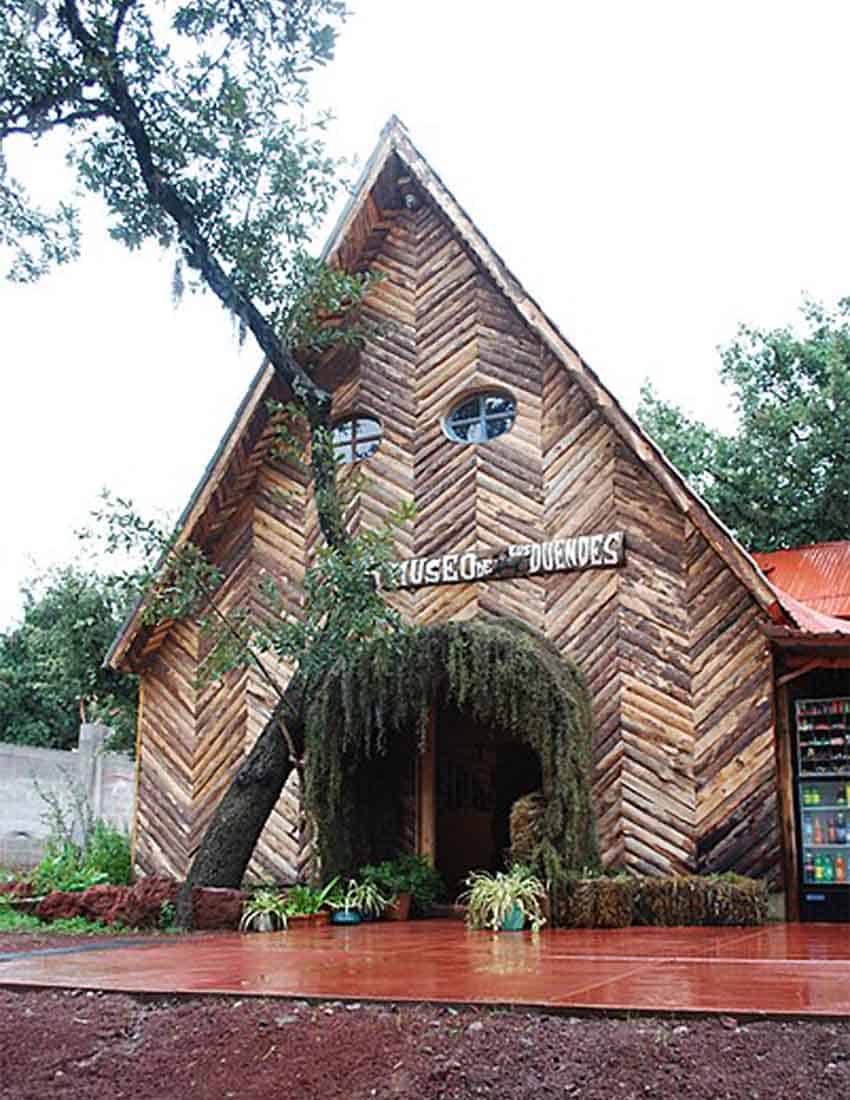
Museum of the Gnomes in Huasca, Hidalgo, Mexico
Huasca’s small Gnome Museum won’t make you a believer, but it’s fun for kids and is near the historic Hacienda San Miguel Regla. (Photo: 2ALG/Creative Commons)

The inclusion of the other towns built on what Huasca had started, with the state bundling them together thematically to promote the region’s shared history, culture and natural beauty, forming what the government calls the Mountain Tourism Corridor, extending from the state capital of Pachuca to the entrance of the El Chico National Park, a natural reserve conserving 2,750 hectares of central Mexican mountain forest. 

The route also promotes other communities such as Epazoyucan, noted for its obsidian, and Cerro de las Navajas, Omitlán de Juárez with its Peña de Zumate and Bandola Falls, local commercial center Atotonilco el Grande, and the thermal springs in Santa María Amajac. 

Huasca already had a few ecotourism businesses when it won Pueblo Mágico status. But the plethora there today is almost all due to the designation. These businesses follow the Mexican idea of ecotourism, with omnipresent zipline and paintball (known as “Gotcha” in Mexico) fields, hiking, guided tours, mountain biking and horseback riding. 

What is striking as you drive in and around the towns is the proliferation of cabins (from rustic to sumptuous) and second homes. The seemingly pristine forest and quaint towns are the initial draws, but visitors — mostly from the Mexico City region — demand a certain level of entertainment and amenities. 

Pinochueco camping site in Hidalgo, Mexico
In the mood for a cabin in the woods, but glamping’s more your style? The Pinochueco campsite has unique treehouse cabins that have been featured in Vogue and Time Out México. (Pinochueco)

There hasn’t been much quality study of the economic and cultural impact of Pueblo Mágico status. The federal government released one study in 2021 that indicates tourism brought in 8.16 million pesos to Huasca, with a similar 6.94 million for Mineral el Chico for the previous year. But Real del Monte, which is larger and easier to get to, brings in 85.52 million pesos. 

All of the above are dwarfed by income figures in other Pueblos Mágicos. Studies on Pueblos Mágicos often exclude Huasca and give only vague indications that the resulting tourism has its pros and cons.

There is no doubt that money is the main benefit, and the tourism may lead locals to value their architectural, natural and cultural attractions more. But it’s also obvious that the economic benefit has not been equally distributed. 

Despite all the development in Huasca due to its Magical Town status, the number of permanent residents (who would pay taxes) has not gone up, and the types of jobs generated are not generally well-paying. Over-visitation has damaged architecture and natural resources, and Huasca recently had trouble supplying enough water during peak periods. 

El Chico National Park, Mineral del Chico, Hidalgo, Mexico
One of other Pueblos Mágicos in Hidalgo’s Mountain Tourism Corridor is Mineral del Chico, which boasts the stunning landscape at El Chico National Park. (Photo: Rafael Saldaña/Creative Commons)

Also, the feel of the three Hidalgo Pueblos Mágicos has changed, a consideration that keeps some communities in other parts of Mexico from pursuing the designation. 

Magical Towns can be a great introduction to rural Mexico, especially any of the first 50 or so to get the designation. Visiting Huasca is an easy reminder of woodland vacations from further north (or, for some, a reminder of why you live south).

Inside the historic center, you can find picturesque strolling and fine dining. For the more outdoorsy, venture to the outskirts. A quick Google search will turn up numerous options.

Political pressure has led to some questionable additions to the Pueblo Mágicos program in later years, but Huasca remains the blueprint of everything that the initiative promised — and in this case, delivered.

Leigh Thelmadatter arrived in Mexico 18 years ago and fell in love with the land and the culture in particular its handcrafts and art. She is the author of Mexican Cartonería: Paper, Paste and Fiesta (Schiffer 2019). Her culture column appears regularly on Mexico News Daily.

Visiting Qatar the hard way: unlicensed

0
Saudi Arabia resident removing his plates by Saudi law at the Qatar border in 1983.
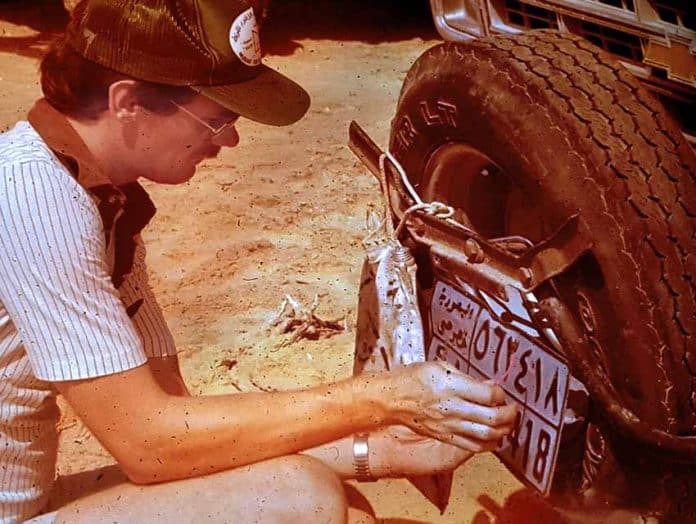
A Saudi Arabia resident removing his license plates in 1983 at the Qatar border. After a Saudi newspaper printed a photo of cars with Saudi plates outside a bar in Qatar, a short-lived law required residents to leave theirs behind when crossing into the UAE.

Qatar, Qatar, Qatar! We see the word everywhere we look right now. But when we hear it spoken, it sounds like Cotter, Cutter, Gutter and, in Mexico, Catarrh.

These pronunciations are common, but not exactly authentic.

I’m not an Arabic speaker, but after living in Saudi Arabia for 13 years, I did learn how to pronounce a Q, the letter qāf.

That Q has to come from down low in the back of your throat where you make a g, but you have to turn the g into a sort of click. Just say, “got tar.” You start off with a guttural click, and you’ve got it — sort of.

Map of Qatar by Nations Online Project
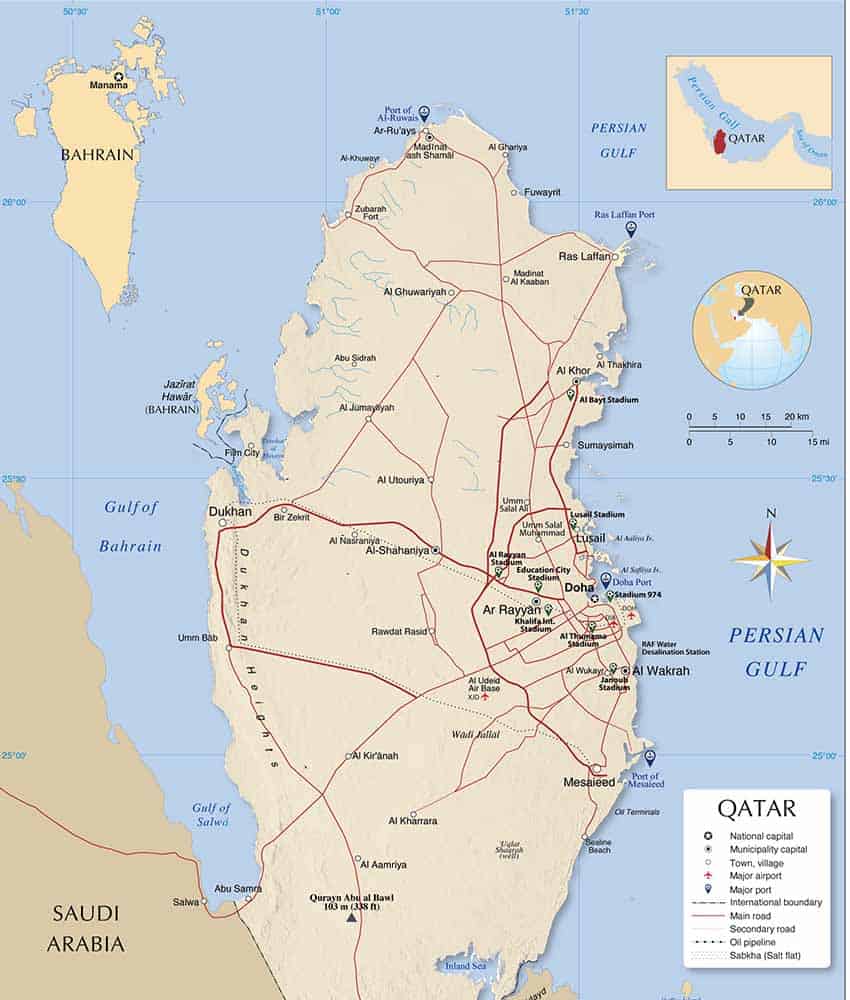
The writer and friends crossed from Saudi Arabia into Qatar via a land border between the two countries in southern Qatar. (Map: Nations Online Project)

Now, let’s go back to the year 1983, when I was living in the Saudi Arabian city of Dhahran. If you think pronouncing Qatar correctly is difficult, good luck with Dhahran! 

When my neighbor Kevin asked my advice on a good place for us to go camping, I said, “Let’s go to Qatar; I have no idea at all what we’ll find there.”

Kevin had a big camper, so we loaded it up with provisions and his two young boys, and off we began on a 290-kilometer journey to Dhahran. It was beastly hot, without a cloud in the sky, which was white rather than blue. 

After three hours, the bleak, desolate landscape was broken by a small building behind a sign saying: “Exit Visa Inspection.”

There was a not-very-big window in front of the building, but we couldn’t see it because dozens of men were crowded around it, all of them attempting — at the same time — to push a handful of passports into the same small opening. 

As the concept of queuing up did not exist in that part of the world in 1983, Kevin and I had to squeeze in among the sweating bodies and attempt to jam our passports into the same little window.

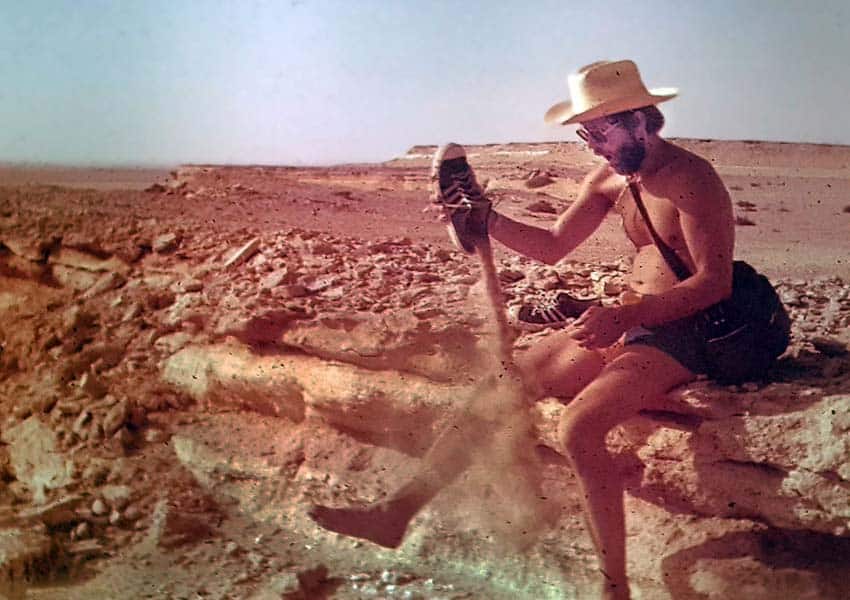
Writer John Pint in Qatar in 1983
“This is why Bedouins wear sandals,” the writer is thinking at this moment.

Several hours later — having received permission to exit the country — we proceeded up the road to the actual border with Qatar, which is a flat peninsula some 600 kilometers long.

A Saudi border guard approached us, and Kevin rolled down the window, allowing precious cool air to escape into the shimmering desert.

“Where you go?”

“Qatar.”

“Mushkila (problem). You leave Saudi Arabia, okay, but license plates no.”

We were tempted to ask “why?” but after years of living in the Middle East, we knew better.

“How can we drive in Qatar with no license plates?”

“You take chance. Maybe lucky.”

We got out of the vehicle and proceeded to remove the license plates. We handed them to the guard, who gave us a receipt and assured us that the plates would be securely locked up in a safe.

Then we rolled across the border into Qatar, where we found another desolate building with another tiny window where you had to stand out in the merciless sun waiting to get your passport stamped.

Writer John Pint traveling by car in Qatar in 1983
A younger John Pint drinking from a self-cooling water bag while enjoying Qatar’s climate. “The taste was disgusting,” he said.

And then, at last, there we were inside Qatar — but there was nothing to see! 

There was no town, no shops, no people… In every direction, the flat desert bled off into the distance — not a tree to be seen, just plenty of nada.

“Isn’t this fun, boys?” quipped Kevin to his utterly bored kids.

Sure that we would soon see a change in landscape, we drove on, but now each of us began to have second thoughts about driving without license plates. 

“If they stop us, they might confiscate the camper,” said Kevin. “They might force us to apply for Qatari plates,” I contributed, “and that could take forever.”

“Why ever did they take our license plates away?” lamented the boys.

It was only after our return to Saudi Arabia that we got an answer to that question: the rumor mill revealed a bizarre story behind what, by then, I was calling “License Plate Lunacy.” 

Saudi Arabia surely has the world’s strictest dry laws. You can’t even find rubbing alcohol in a pharmacy. This has motivated some Saudis to drive across the border to another country just to get a swallow of booze.

One day, a newspaper article appeared that focused on an alleged establishment of ill repute in one of the Emirates and a photo clearly showed that all the cars parked in front of the place had Saudi license plates! This caused a scandal, which the government resolved not by going after the offenders but by forbidding the export of Saudi license plates.

Kevin, his boys and I were among the victims of this curious law, and after mulling over the consequences of driving without license plates, we decided to cut short our not-so-delightful visit to Qatar and to return to Saudi Arabia.

Doha in 1980s
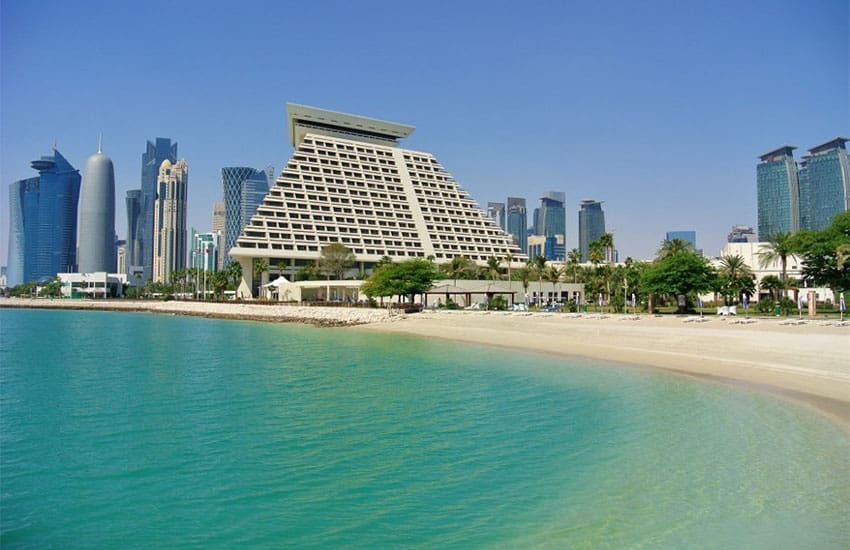
To give an idea of how different Qatar looked back when the writer visited, this is a photo of the Sheraton Grand Doha, located in Doha, in the 1980s. (Photo: Internet)

We went back to the border.

“Where have you been?” asked the guard.

“Qatar,” we replied. “What a place!”

The god smiled. “What you bring back?”

“Nothing.”

“We will see. Everything out!”

Fortunately, it was now getting dark as we removed every single item from the camper and placed all of it on the ground.  Doing this in the scorching sun would have been murder.

This inspection took hours. But nothing haram (forbidden) — such as liquor-filled candies, brewer’s yeast, girly magazines, bibles or Christmas-tree ornaments —  was found.

“Kwais (okay),” said the guard. “Yalla! (You can go).”

“But what about our license plates?” said Kevin, handing him the receipt.

Sheraton Grand Doha
The same spot in Doha today.

“Digiga (a minute),” said the guard.

An hour later, he came back. “License plates in safe. Safe locked.”

As time dragged by, we learned that the key to the safe was in the hands of someone named Abdullah — but where had he gone?

We attempted to sleep, but the heat and humidity were unbearable, even at 2 a.m.

At last, Abdullah turned up, and as the merciless sun rose in the sky, we proceeded back down the road to Dhahran… with impossible-to-forget memories of… (prepare that click in the back of your throat)… Qatar.

The writer has lived near Guadalajara, Jalisco, since 1985. His most recent book is Outdoors in Western Mexico, Volume Three. More of his writing can be found on his blog.

2 foreign-owned manufacturing facilities open in northern Mexico

0
Mergon CEO Pat Beirne (far left) and Coahuila Governor Miguel Riquelme (center) along with other company and state officials at the Mergon inaugeration.
Mergon CEO Pat Beirne (far left) and Coahuila Governor Miguel Riquelme (center) along with other company and state officials at the Mergon inaugeration. (Gobierno de Coahuila)

An Irish plastics company and a United States medical technology company opened new plants in northern Mexico this week.

Ireland’s Mergon Group announced that it had opened phase 1 of a 15 million euro (US $15.8 million) investment near Saltillo, Coahuila, while Becton, Dickinson and Company (BD) inaugurated a US $38.6 million manufacturing facility in Tijuana, Baja California.

Mergon, which makes plastic components for companies such as BMW, Rivian and Xerox, said in a statement Thursday that it expects to create 150 new jobs in the first year of operations at its new facility in Ramos Arzipe, a municipality that borders Saltillo to the north.

“Over the last decade Mergon has become a key design and manufacturing partner for light weight air management systems and clear vision systems to electric vehicle (EV) manufacturers in the US. These companies are forecasting strong growth over the coming years and Mergon is helping them achieve their vision,” the company said.

“The establishment of Mergon Mexico is a strong indicator of future growth for Mergon’s North American operations. A major influence in the selection of Coahuila State was the support of the Federal and local Coahuila State Government, as well as Coahuila’s highly skilled workforce and proximity to key customers,” Mergon said.

It added that its new “purpose-built plant” will allow it “to realize its ambitious growth plans, focusing on the automotive and industrial sectors.”

“I am very excited about the opportunities that Mergon Mexico offers us,” said Mergon CEO Pat Beirne. “We have ambitious plans to grow our North American business, and this is an integral step in achieving that.”

BD, a New Jersey-based company, said in a statement that federal and state government officials attended the opening of its new facility in the Baja California border city on Wednesday.

BD is an American multinational medical technology company. (Shutterstock)

The plant “will produce devices and technologies that help improve medication safety within health care settings,” the company said.

“The new 15,775-square-meter facility is expected to add 500 new jobs over the next two years. Phase I of the facility will create 75 jobs that will be responsible for manufacturing automated dispensing cabinets that health care professionals use to dispense medications to patients. The devices will be exported to countries in North America, Europe, Africa and Asia.”

Julio Duclos, BD’s top executive in Mexico, noted that the plant in Tijuana is the company’s 12th manufacturing facility in Mexico.

The new factory “is a testament to our commitment to Mexico and the strong relationship we’ve built in communities across the country over the past 65 years,” he said.

“The 17,000 BD employees in Mexico are focused on producing high-quality medical devices that are used by health care providers and patients around the world. We look forward to continuing to grow in Mexico.”

Although there are security concerns in some parts of northern Mexico, the region is attractive to manufacturers due to its proximity to the United States and affordable labor costs, among other factors.

Billionaire businessman Carlos Slim predicted last month that the Mexican economy will boom in coming years as more and more foreign companies set up shop here.

Elon Musk, the world’s richest person, visited Nuevo León earlier this year and is believed to be considering a municipality in the metropolitan area of Monterrey as the location for a new Tesla plant.

Mexico News Daily  

Mexico’s last World War II veteran dies at 98

0
Horacio Castilleja Albarrán during his time as an active service member, left, and in 2021, right.
Horacio Castilleja Albarrán during his time as an active service member, left, and in 2021, right. (Sedena)

Mexico’s last World War II veteran — an army radio operator who was a member of an Air Force squadron known as the Aztec Eagles — died on Wednesday.

The Ministry of National Defense (Sedena) announced the death of Sgt. Horacio Castilleja Albarrán, who was 98. It didn’t mention a cause of death.

Castilleja, who joined the army in 1942 at the age of 18, was one of approximately 300 soldiers and Air Force members in Squadron 201, the only Mexican military unit to see active combat in World War II.

The squadron, which included about 30 pilots, fought alongside U.S. forces against the Japanese in the Philippines in 1945.

Mexico declared war on the Axis powers of Germany, Italy and Japan in May 1942 after it lost oil ships to German submarine attacks in the Gulf of Mexico.

Squadron 201 “didn’t have a major effect on the overall outcome of the giant Pacific war 75 years ago,” The New York Times said in a 2020 article, “but by the end of the conflict, these men were hailed as valiant and deadly in their machines, beloved for their ferocity by the Filipinos and Americans alike.”

Members of the military paid tribute to Castilleja during a funeral service at a military cemetery in Mexico City on Thursday.

His contribution to the Allies’ ultimately successful World War II efforts was recognized by the Mexican military, which awarded him the “Service in the Far East” medal and the government of the Philippines, which gave him a presidential award.

“His participation in the Second World War showed the highest levels of patriotism, heroism [and] spirit of service,” Sedena said.

With reports from El Universal, El Siglo de Torreón, La Jornada and AP

Impunity for homicides and femicides remains sky-high, new report finds

0
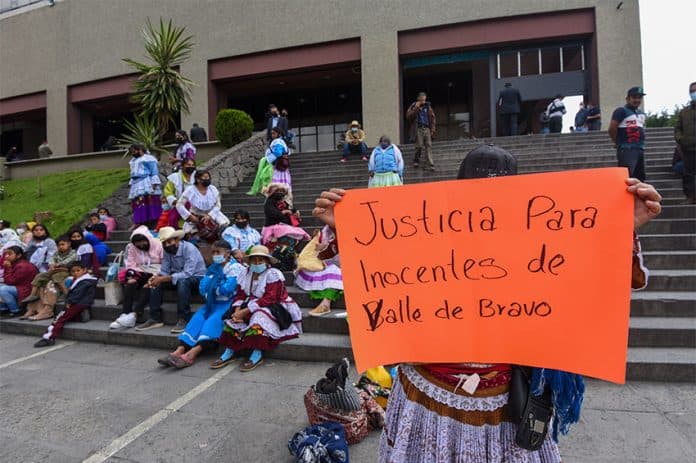
Residents of San Simón de la Laguna, a small town in México state, protest the detention of six community members accused of murder, who have been awaiting trial in Valle de Bravo Penitentiary since 2018. Such dysfunction in the criminal justice system contributes to high rates of impunity.
Residents of San Simón de la Laguna, a small town in México state, protest the detention of six community members accused of murder, who have been awaiting trial in Valle de Bravo Penitentiary since 2018. Such dysfunction in the criminal justice system contributes to high rates of impunity. (Crisanta Espinosa Aguilar / Cuartoscuro.com)

Impunity for serious crimes — a scourge President López Obrador says he is committed to eliminating — remains rife in Mexico.

The perpetrators of the vast majority of homicides committed between 2016 and 2021 and more than half the femicides weren’t convicted in that period, a non-governmental organization said in a new report.

Only 7.2% of homicides committed in the last six years resulted in convictions, Impunidad Cero (Zero Impunity) said in a report published Thursday, meaning that the “accumulated impunity” rate for the crime in a period in which well over 200,000 murders were recorded was 92.8%.

The organization used official data to calculate impunity rates for both homicide and femicide — the killing of a woman or girl on account of their gender.

The impunity rate for femicides during the last six years was 56.6%, meaning that only about four in ten perpetrators of that crime were arrested, convicted and sentenced in the period.

“Less than half of recorded femicide cases have concluded with a conviction since the [new accusatory] criminal justice system began operating,” Impunidad Cero said.

An average of about 10 women are killed everyday in Mexico, but only two of every 10 murders of women were classified as femicides last year.

The perpetrators of many homicides and femicides are never arrested, while suspects who are detained sometimes spend years in jail without facing trial. The failure to arrest murderers in many cases and delays in holding trials both contributed to the high impunity rates in the period analyzed by Impunidad Cero.

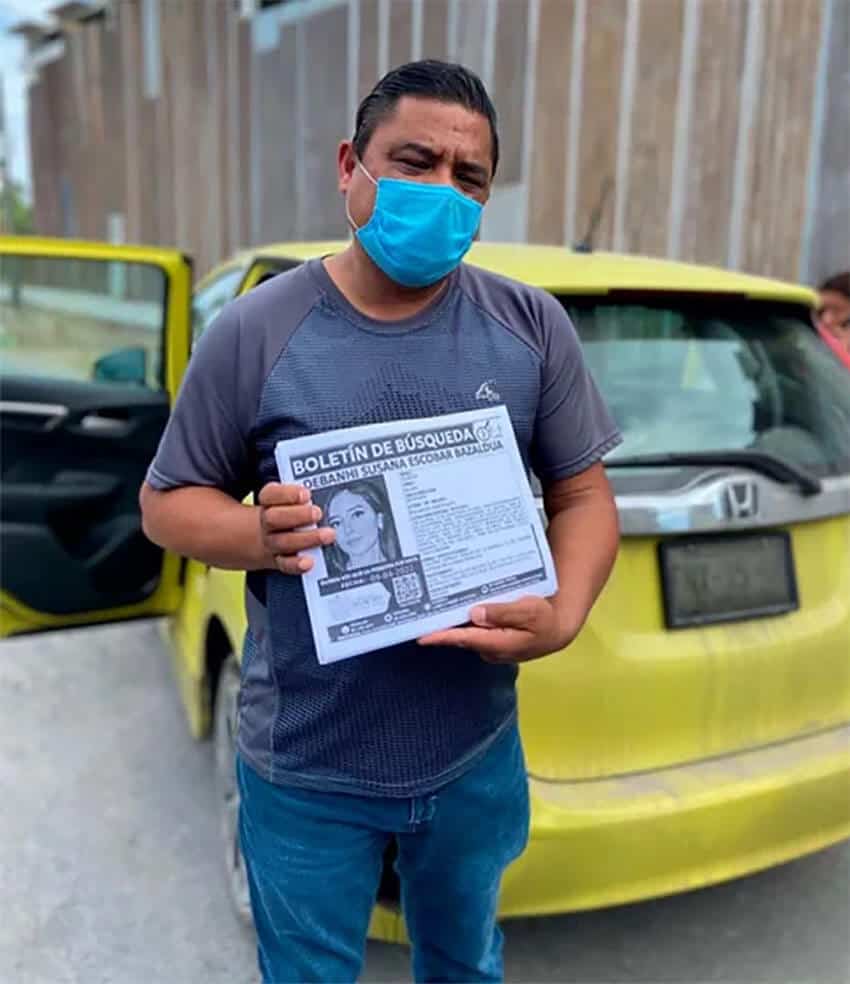
Mario Escobar holds missing person flyers with his daughter, Debanhi's name and image.
Mario Escobar holds missing person flyers with his daughter, Debanhi’s name and image. After Debanhi’s body was found, a femicide investigation was opened but no suspects have been detained. (File photo)

Sixteen of the 32 federal entities recorded impunity rates for homicide that were higher than the national rate in the 2016-21 period, according to the Impunidad Cero report. The rate in Oaxaca was a shocking 100%, while Morelos, Tlaxcala and Colima recorded “accumulated impunity” rates above 99%.

Oaxaca also had a 100% impunity rate for femicides, as did Tlaxcala. Chihuahua and Colima were the only other states with rates above 90%, but four others — Puebla, Morelos, Guerrero and Tabasco — had rates higher than 80%.

“One of the main causes for the alarming levels of impunity in the country is the weak capacity of authorities to investigate and solve crimes,” Impunidad Cero said.

In the introduction to its report, the organization said that “homicides and femicides are a reflection of the extreme violence that affects Mexican society.”

“Mexico is among the countries with the highest homicide rates in Latin America, with … 28 victims for every 100,000 residents. In 2021 alone, 94 victims of homicide were recorded daily, and 10 women were murdered every day. It’s the responsibility of the state to prioritize the investigation of homicides, with a gender perspective, and to impose criminal responsibilities and the corresponding convictions,” Impundidad Cero said.

A “zero impunity” segment in which a senior security official details arrests and convictions of criminals is a regular feature of López Obrador’s weekday morning press conferences, but the figures included in the Impunidad Cero report emphasize that Mexico is nowhere near close to combating its impunity problem.

Countless other reports, including ones by Human Rights Watch and the U.S. Department of State, have detailed the problem.

Maureen Meyer, a senior official with the Washington Office on Latin America, said in August that one of the reasons why there is so much violence in Mexico is impunity.

“You can kill someone with impunity because there are no consequences,” she said.

With reports from Reforma 

300 kg of fentanyl-laced pills found inside coconuts in Sonora

0
Seizure of fentanyl laced pills in Sonora, Mexico
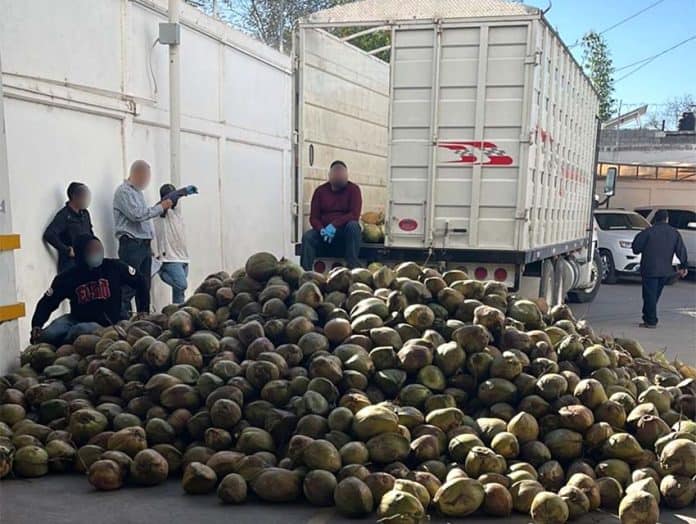
The truck Mexican authorities seized Thursday had hundreds of coconuts that were carefully sliced open to hide fentanyl-laced pills and then reattached together. (FGR)

A load of coconuts on a truck being driven in the northern state of Sonora contained approximately 300 kilograms of pills believed to be laced with fentanyl, according to the agencies that made the seizure on Thursday.

Thousands of blue pills were found in plastic bags hidden inside hundreds of coconuts, which had been cut in half, scraped out and glued back together, a video posted by the Attorney General’s Office (FGR) indicates. In one image, an officer can be seen busting open a coconut by hitting it against the ground.

Two people allegedly transporting the cargo were arrested after their truck was intercepted on a federal highway near Pitiquito, a municipality about 90 kilometers south of Mexico’s border with Arizona. The operation was conducted by several agencies both national and regional.

Few details were provided, aside from an FGR tweet stating that “approximately 300 kilograms of a substance with characteristics of fentanyl” was seized “in a truck that was transporting coconuts.” A press release from the federal office offered several pictures but few additional details.

In this video federal authorities posted on Twitter, images show how the pills were hidden in coconuts.

The newspaper Reforma said the value of the seizure was “about US $60 million,” citing a price of US $200,000 per kilo given recently by Secretary of Defense Luis Cresencio Sandoval.

Fentanyl is “a highly addictive synthetic opioid that is 50 times more potent than heroin and 100 times more potent than morphine,” according to the U.S. Drug Enforcement Agency.

Pills containing fentanyl are “largely made by two Mexican drug cartels, the Sinaloa Cartel and the Jalisco [New Generation] Cartel (CJNG), to look identical to real prescription medications, including OxyContin, Percocet and Xanax, and they are often deadly,” the DEA says on its website.

The two cartels, “using chemicals largely sourced from China, are primarily responsible for the vast majority of the fentanyl that is being trafficked in communities across the United States,” the DEA adds. 

Despite being fierce rivals, the Sinaloa Cartel and the CJNG are getting the chemicals to produce fentanyl from the same suppliers, InSight Crime reported, referring to a report from Mexico’s National Intelligence Center cited in the Milenio newspaper.

The DEA cites figures from the Centers for Disease Control and Prevention (CDC) stating that 107,622 Americans died of drug poisoning in 2021, with 66% of those deaths involving synthetic opioids such as fentanyl. The agency says it seized more than 20.4 million fake prescription pills in 2021.

“The pill form is very scary because they’re made to look like legitimate pharmaceuticals,” Greg Millard, an acting special agent with the DEA, told El Paso, Texas, TV station KTSM.

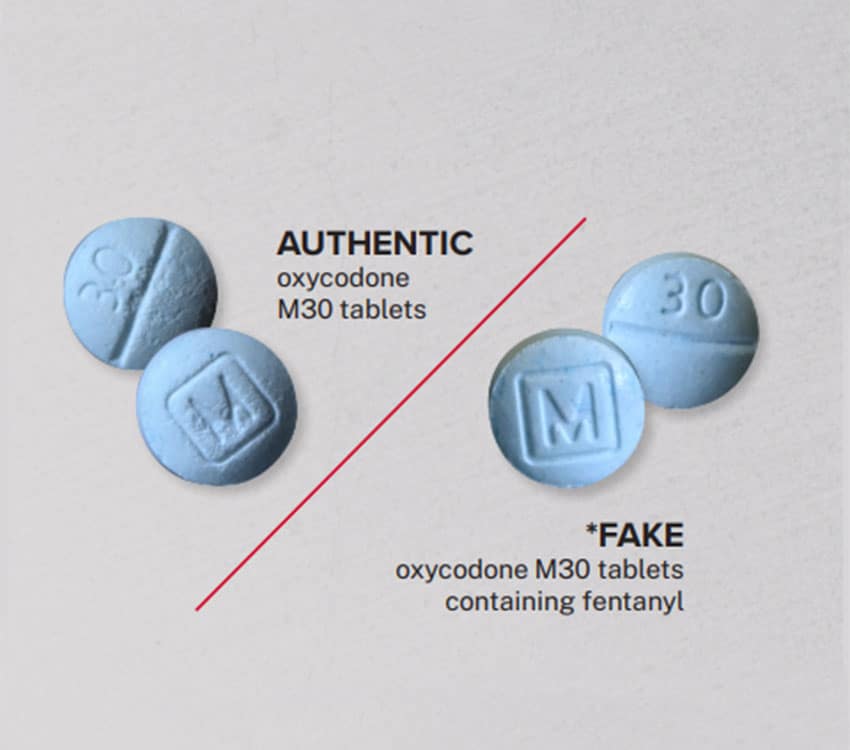
Real and fake prescription medication pills, the latter laced with fentanyl.
Mexican cartels like the Sinaloa and the Jalisco New Generation cartels make often-deadly fentanyl-laced pills that are difficult to distinguish from real prescription medication pills such as Oxycontin, Percocet and Xanax. (Photo: DEA)

“When people buy the pill on the street, they think they’re getting what maybe [is] a pill bought from a pharmacy prescribed by a doctor but sold on the black market,” he added. “However, they’re not. They’re getting a pill made somewhere south of the border containing fentanyl.”

The DEA conducted a laboratory study this year that found that six out of every 10 such fentanyl-laced pills contain a potentially lethal dose of the drug (an increase from four out of 10 in 2021).

“Just two milligrams of fentanyl, the small amount that fits on the tip of a pencil, is considered a potentially deadly dose,” the agency said in its report.

Large amounts of fentanyl, meth and other drugs have been seized recently in Sonora and elsewhereMillard told KTSM that “profit and greed are driving the Mexican drug cartels” to push fentanyl-laced pills.

“It’s easy to produce. It’s easy to get the chemicals,” he said. “With the other drugs [heroin, marijuana and cocaine], you have to grow a plant. … But fentanyl is produced in a laboratory, it’s produced clandestinely. It’s just chemicals mixed together.”

With reports from Reforma and Reporte Indigo

Mexico seeks ‘tangible solutions’ to energy dispute, Economy Minister says

0
The energy dispute centers on Mexican policies that allegedly favor the the Federal Electricity Commission (CFE). Pictured: the CFE's Huexca Thermoelectric Plant in Morelos.
The energy dispute centers on Mexican policies that allegedly favor the the Federal Electricity Commission (CFE). Pictured: the CFE's Huexca Thermoelectric Plant in Morelos. (Gobierno de Morelos)

The federal government has proposed additional talks with its United States and Canadian counterparts to resolve differences over Mexico’s nationalistic energy policies as it strives to avoid an escalation of the dispute.

In July, both the U.S. and Canada requested dispute settlement consultations with Mexico, arguing that the Mexican government is violating the USMCA trade pact with policies that favor state-owned energy companies over private and foreign ones, including many that generate renewable energy.

No resolution was reached in an initial 75-day period of consultations, allowing the U.S. and Canada to request a dispute panel to settle the case, but the three countries agreed to continue talks past the Oct. 3 deadline.

As part of that process, Economy Minister Raquel Buenrostro met with United States Trade Representative Katherine Tai in Washington, D.C., on Thursday.

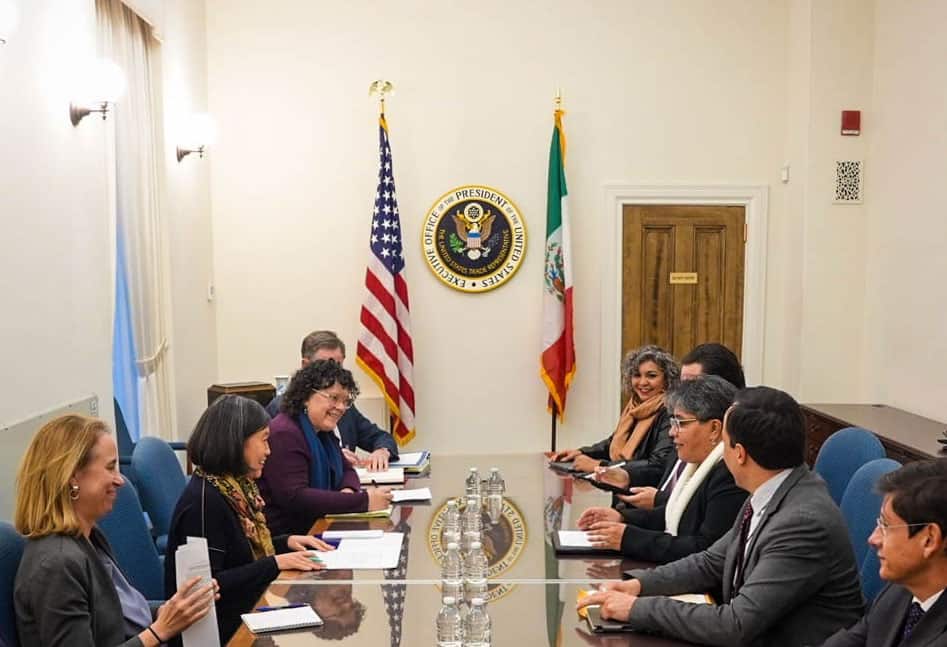
The Mexican and U.S. delegations sit at a conference table with U.S. and Mexican flags in the background.
The Mexican and U.S. delegations, led by Economy Secretary Raquel Buenrostro and U.S. Trade Representative Katherine Tai respectively, met on Thursday in the U.S. capital. (Twitter @AmbassadorTai)

According to an Economy Ministry (SE) statement, Buenrostro proposed establishing “trinational working groups” that would meet in December and early January to “deal with the different aspects of the energy consultations.”

“If this plan is carried out satisfactorily, the progress could be presented at the North American Leaders’ Summit to be held in our country on Jan. 9 and 10, 2023,” the SE said.

“It was highlighted that Mexico seeks to reconcile differences in the consultation phase, without the need of reaching an arbitration panel and [while] guaranteeing national sovereignty.”

If a panel ruled in favor of the U.S. and Canada, those two countries could impose punitive tariffs on Mexican imports.

The SE statement said that Buenrostro — a former tax agency chief who became Economy Minister in October — told Tai that Mexico “has the will to build tangible and mutually satisfactory solutions to all issues,” especially the energy conflict.

“The Economy Ministry team extended an invitation to the team of the Office of the United States Trade Representative to hold the third round of energy consultations in Mexico City in the coming days,” it added.

The ministry also said that Buenrostro expressed Mexico’s willingness to attend to “all aspects” of the energy consultations, “prioritizing those in which a solution can be found more quickly.”

In its own statement, the Office of the United States Trade Representative said that Tai “underscored the urgency of prompt and meaningful progress in our ongoing consultations under the USMCA regarding Mexico’s energy measures and Mexico’s enforcement of its fisheries-related environmental laws.”

The trade officials also discussed Mexico's decision to phase out genetically modified corn imports and the enforcement of laws regulating fisheries.
The trade officials also discussed Mexico’s decision to phase out genetically modified corn imports and the enforcement of laws regulating fisheries. (Christophe Maertens via Unsplash)

Better enforcement of fisheries-related environmental laws could help protect the critically endangered vaquita marina porpoise from illegal fishing.

Tai also “reiterated the importance of the full implementation of the USMCA’s prohibition on the importation of goods made with forced labor” and “stressed the importance of avoiding any disruption in U.S. corn exports to Mexico, including for both feed and human consumption, and adherence to a science- and risk-based regulatory approval process for all agricultural biotechnology products in Mexico,” according to the statement issued by her office.

United States Agriculture Secretary Tom Vilsack met with President López Obrador in Mexico City on Monday, and subsequently released a statement saying that he expressed the “United States Government’s and our producers’ deep concerns around … López Obrador’s 2020 decree to phase out the use and importation of biotech corn and other biotechnology products by January 2024.”

“We must find a way forward soon and I emphasized in no uncertain terms that – absent acceptable resolution of the issue – the U.S. Government would be forced to consider all options, including taking formal steps to enforce our legal rights under the USMCA,” Vilsack said.

The SE said that a delegation of Mexican officials will meet with Vilsack in coming days to discuss biotechnology issues.

In addition to phasing out genetically modified corn imports, López Obrador decreed the elimination of the controversial herbicide glyphosate by 2024.

The president said Tuesday that the ban on GM corn imports for human consumption would be implemented as scheduled, but indicated that shipments of such corn for use as livestock feed could continue past 2024 as an analysis into its impact on health — “even when it’s used as fodder” — takes place.

Mexico News Daily 

Netherlands returns 223 pre-Hispanic artifacts to Mexico

0
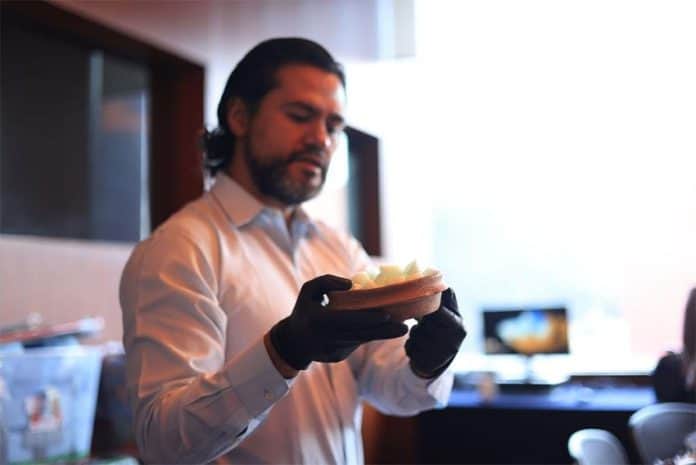
One of 223 pieces returned to Mexico after negotiations with the Netherlands.
One of 223 pieces returned to Mexico after negotiations with the Netherlands. (SRE)


On Thursday, the Ministry of Culture announced that 223 archeological pieces were returned home to Mexico from the Netherlands, thanks to an agreement with the European country.

According to the Ministry, the repatriated artifacts are already under the protection of the National Institute of Anthropology and History (INAH) for analysis, care, conservation and cultural promotion.

An initial inspection of the pieces, carried out by INAH’s experts, confirmed that they are pre-Hispanic artifacts from cultures in western Mexico, the central highlands (also known as the Mexican Altiplano), the Gulf of Mexico and the southeast region of the country. They date from the Mesoamerican Preclassic Period (1200 B.C.-400 B.C.) to the Postclassic Period (A.D. 800-A.D. 1,521).

In the repatriation ceremony, Foreign Affairs Ministry official Bernardo Aguilar Calvo expressed the Mexican government’s gratitude to the deputy ambassador of the Netherlands in Mexico, Anne Le Guellec, for her collaboration in the recovery of the pieces.

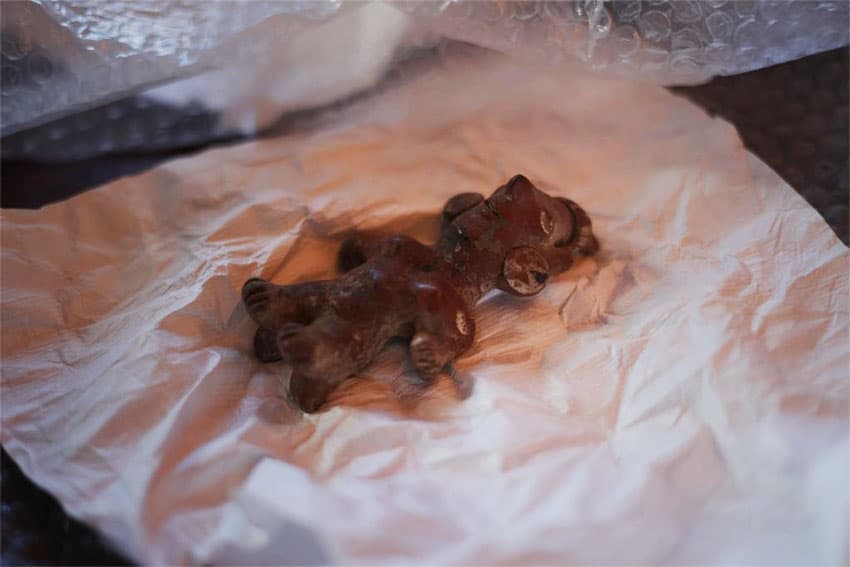
A pre-Hispanic figurine, one of the items repatriated to Mexico.
A pre-Hispanic figurine, one of the items repatriated to Mexico. (SRE)

In turn, the deputy ambassador recognized the positive trend in the international arena to return cultural and heritage objects to their original communities, based on the principles of ethics and respect.

Also present in the ceremony was SRE’s deputy legal consultant, Salvador Tinajero, who described the Netherlands’ support as invaluable to fight illicit trafficking of archaeological and cultural objects.

Mexico’s current administration has prioritized the recovery of national cultural heritage from abroad. According to the national news outlet Aristegui Noticias, around 9,000 national pieces have been recovered since López Obrador took office in December 2018.

As part of the recovery strategy, Mexico has filed lawsuits in different countries against the auction of Mexican pieces. In 2021, the government also launched an international campaign called #MiPatrimonioNoSeToca (#Don’tTouchMyHeritage) promoted by Mexican ambassador in France, Blanca Jiménez Cisneros.

Countries like Guatemala, Honduras, Peru, and Colombia have joined the campaign as they also try to recover heritage that is illegally sold in foreign countries.

In November, two different manuscripts signed by Spanish conquistador Hernán Cortés were also returned to Mexico as part of the country’s efforts to recover its cultural heritage abroad.

With reports from Aristegui Noticias