Home Blog Page 881

In Mexico, every day has become Day of the Dead

0
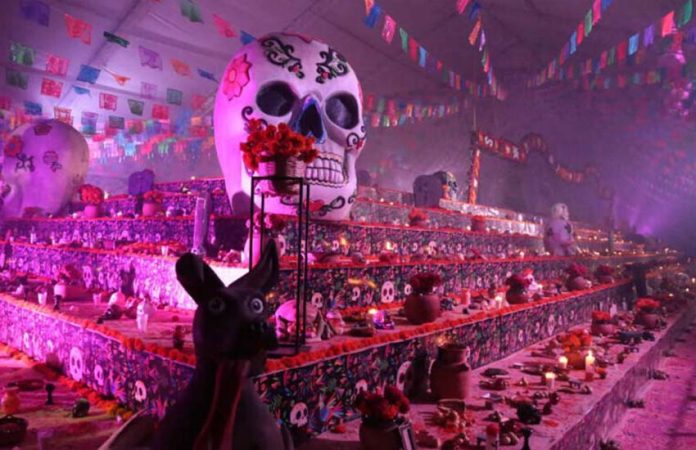
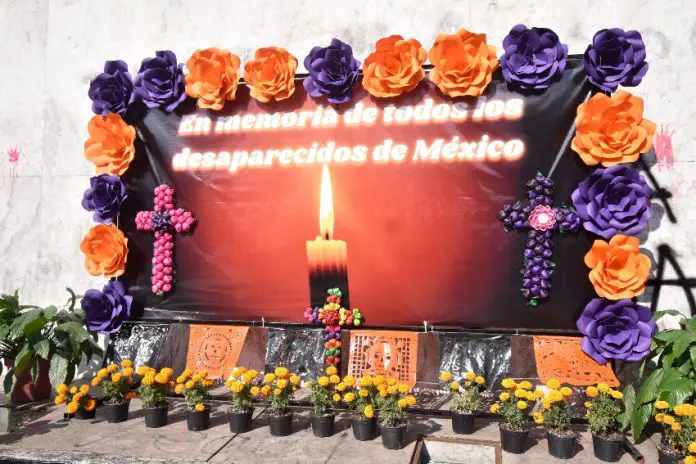
Day of the Dead altar to the disappeared of Mexico
Altar made in honor of the disappeared in Mexico. Foto: Dassaev Téllez Adame/Cuartoscuro.com

Today, our dead symbolically return to life as millions of tiny orange and black-winged, spotted-white monarch butterflies. Our beloved annual migrants return to their homeland. 

And today, we celebrate Día de Muertos in Mexico. A ritual of fondness, eulogy, longing, grief, and joy for our loved ones passed; a day that reminds us that death is, inexorably, part of life.

I doubt there is another day like this one anywhere, in which an entire nation connects  as we Mexicans do wherever we are on the planet to remember and honor our dead: our ancestors, our heroes, our friends, and our beloved ones.  A day when we all chant an emphatic NO to oblivion and proclaim that death is not non-existence but a living, ethereal presence.

This is probably an imprecise, but nevertheless respectful portrait by a Colombian who many years ago transformed into a Mexican; one who is now an orphan, but will fondly remember his parents today at the altar of the dead – an altar adorned with cigarettes and aguardiente, small clay hens, champagne, bread and coffee, some photographs from when they were young and a few marigolds to remember and honor them both.

The Day of the Dead is an odd celebration. A blend of paganism and indigenous defiance that resisted, but nevertheless ended up camouflaging the Christian canon brought to us by Spanish conquistadores from across the Atlantic Ocean in the 16th century.  The Mexica, Mixtec, Texcocoans, Zapotec, and other indigenous peoples adapt to the day with devotion to their past and the Christian calendar. 

Today, our dead return from the afterlife to visit us, accompany and embrace us.  The souls of the “small dead,” the children, arrived on Nov. 1 as the advance party, followed today by the adults as the rear guard.  

To their joy, when arriving at the banquet, the children’s souls will find their toy xoloitzcuintle dogs and little human sugar skulls.

The dead come back to gaze at their own photographs, taken when they were among the living, placed on a colorful altar in their honor – where they see themselves accompanied by those things they most enjoyed seeing, smelling, eating and drinking when they were alive among us.

Today, our home smells of bursera copal and frankincense, as well as honeyed floral aromas.  Today is the day of the sweet calacas and the salt and the water, and of colorful papel picado. The dead’s skeletons turn into the bread of the dead (pan de muerto), which they share with the living.  

Today, floral offerings and remembrances and altars lovingly cover up the frozen gravestones of all graveyards across our country. 

Today — only today — the souls of our beloved pass through from the world of the dead to the province of the living, to quench their thirst — because they have traveled across trails made of marigold petals and candles and the elixir of copal and sweet water lovingly prepared by their families. 

Today, and only today, our newborns, children, adults and elderly can jubilantly wing their way, like monarch butterflies, from the realm of the dead to gather with their families in the world of the living. Today is the day of all souls, of worshipping death and life in accord.  

It is a day for celebration and a day to remember those we buried in their own personal petates – those sleeping mats that are the only belongings we will take with us when we finally leave this world.

Today we favor memories over oblivion, joy over emptiness and pain, or the sorrow caused by the eternal absence left by our dearest dead.  Let us eat and drink the food and beverages our dead most loved.

But let’s not forget, not for a second, that today is also a day to reflect on what is deadly wrong with our beloved country. A day to grieve and raise our voices in anger, and look at ourselves in the national mirror. To see the brutal violence that has for so long devastated hundreds of thousands of families across the land. 

Because Mexico today resembles a graveyard itself. A macabre puzzle of clandestine tombs that scores of mothers have painstakingly traced, in hopes of finding the corpses, or at least some remains, of their dead or disappeared daughters and sons. 

The horrifying video that was displayed in the media on Oct. 27 — of a dog in Zacatecas carrying a human head while wandering on a sidewalk into the night — is the image of brutality, the antithesis of Día de Muertos. It is the image of a country where every day has become Día de Muertos, a Day of the Disappeared; a country that must rise up and engage the immoral forces destroying our families and our great traditions.

In memory of the more than 3,309 children, less than 17 years of age, who have been killed in Mexico between 2021 and 2022, according to the Network for Childhood Rights in Mexico.

Puebla town’s unique Day of the Dead tradition: an altar swap meet

0
Day of the Dead swap meet in Huaquechula, Mexico
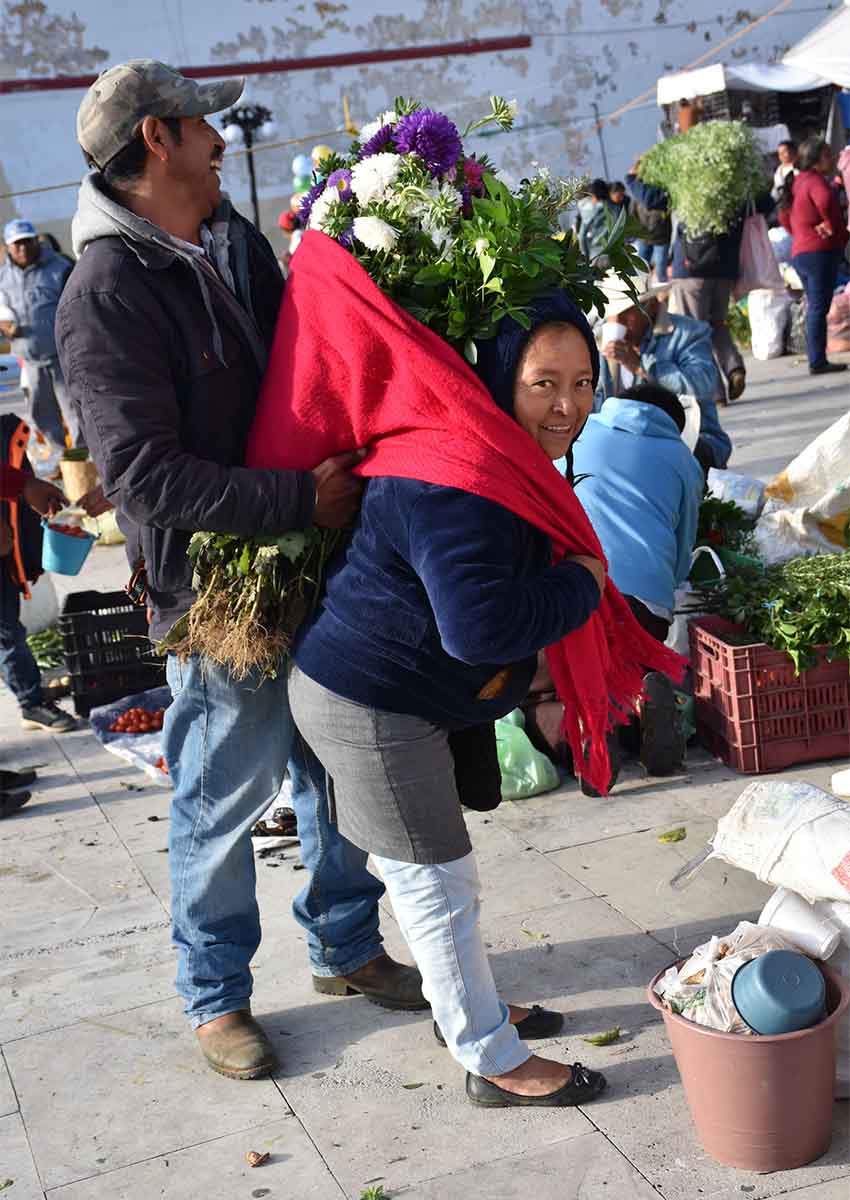
Huaquechula, Puebla, residents wheel and deal for their Day of the Dead altar needs, mostly done via bartering. Photos by Joseph Sorrentino

Although most people outside Mexico believe Day of the Dead is celebrated only on November 1, Mexicans really celebrate “Days of the Dead.” The official days are November 1 and 2, but many places start celebrating as early as a week before with their own local traditions.

In many places, public altars created by the city, artists or local associations sit for days in downtown areas, and the sidewalks are often covered by intricate “carpets,” or tapestries, made of flowers, sawdust, colored sand or other temporary materials.

Huaquechula, Puebla, certainly has its altares monumentales, but it also has a unique tradition I’ve not seen elsewhere: the annual trueque.

A trueque is a market that dates back thousands of years, where people barter for goods. In Huaquechula, people come a few days before Day of Dead to a special trueque with one purpose: to barter for items to put on their altars.

Day of the Dead swap meet in Huaquechula, Mexico
Nearly everyone brings something to swap.

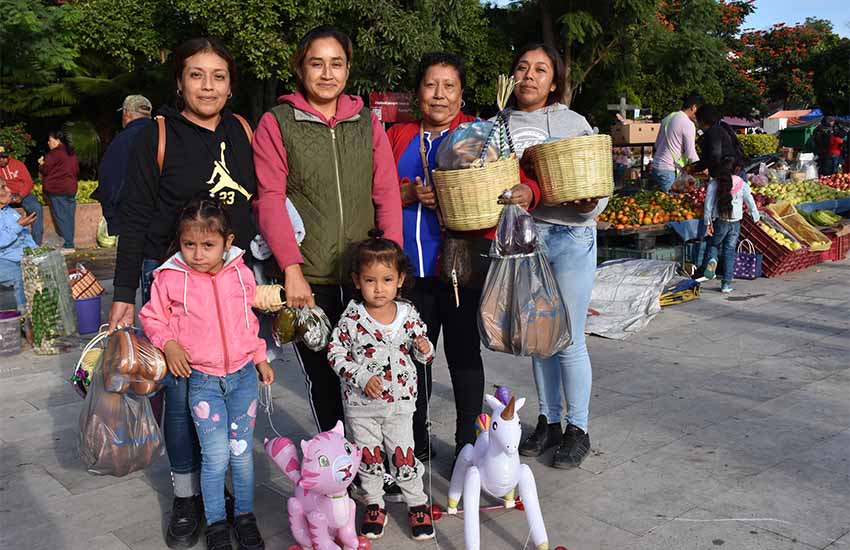
I’d just entered the trueque when I saw Edith Vázquez and her family loaded down with pan de muerto, a Day of the Dead sweetbread that’s a staple on altars. “We traded peanuts and sugar cane for the bread,” Vázquez said.

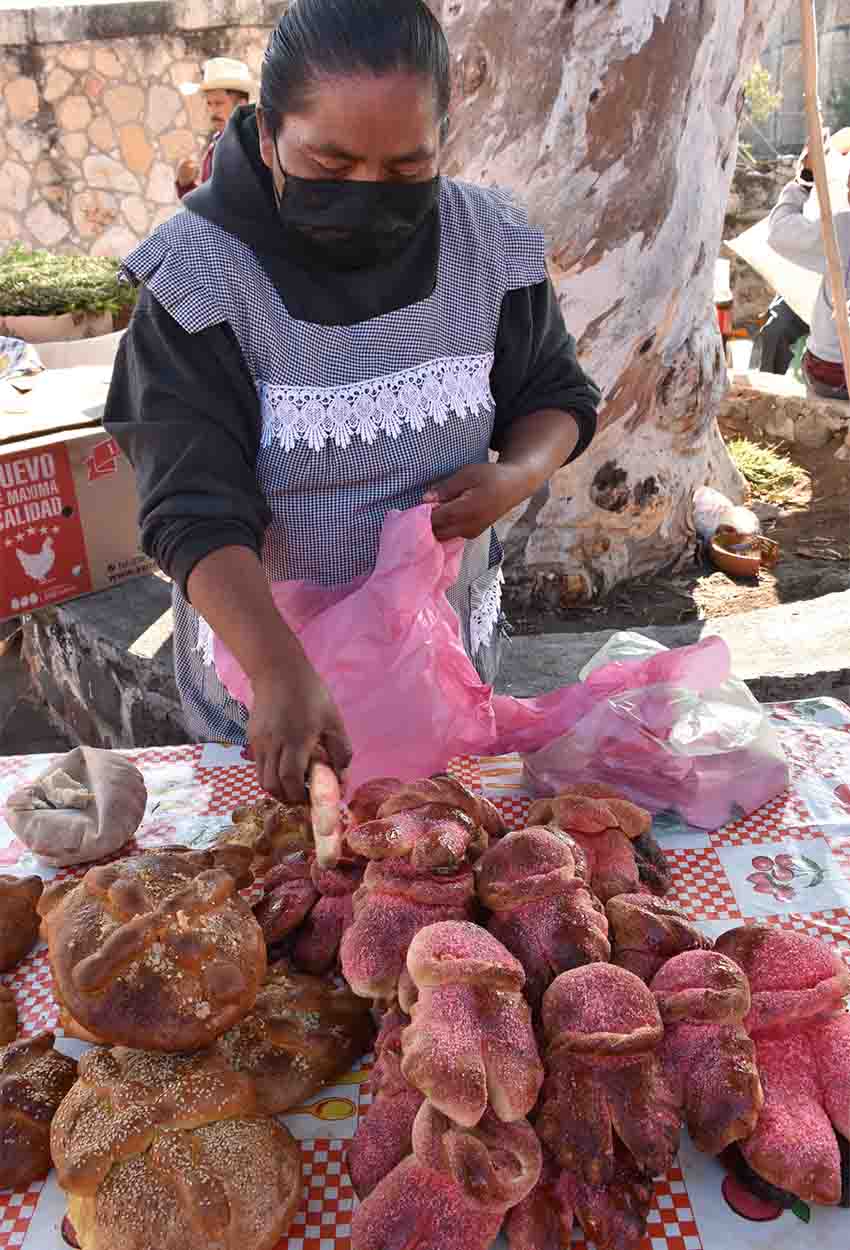
They had three kinds of pan de muerto: round, with dough “bones” on top; muertito, in the shape of a small body and covered with red sugar; and rosquete, which Guillermina Rivera Silva said represents the face of the departed.

Although most of the breads were baked in gas ovens, Conrada Tapia baked hers in a brick oven, using firewood.

“Everything tastes better made that way,” she said, as she offered me a taste. Her breads had a delicious, smoky flavor.

Day of the Dead swap meet in Huaquechula, Mexico
Edith Vázquez and her family came ready to trade.

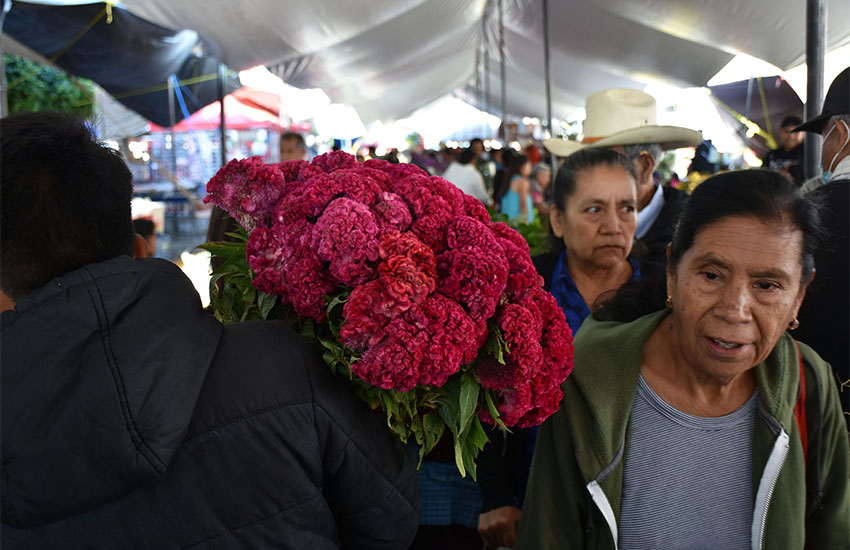
This year, the trueque was filled with people carrying and bartering for the various types of flores de muertos, especially the brilliantly colored cempasúchil (marigold) and terciopelo (cockscomb). Children wandered through with small baskets, seeking sweets or coins.

When asked which she preferred, nine-year-old Jade didn’t hesitate, saying, “Dinero.”

Karen Dominguez was one of the young people who, for a small tip, serve as guides and explain the town’s traditions.

“October 28 is when we remember people who have died in accidents,” she said. “The 31st is for children, Nov. 1 is for adults, and Nov. 2 is when we take flowers to the cemetery.”

Day of the Dead swap meet in Huaquechula, Mexico
Conrada Tapia packing up some muertitos.

Although she didn’t mention it, the 29th is for people who drowned and the 30th  is for the souls of the forgotten.

This year, one street was filled with decorated graves. When I asked where I could get more information about them, I was pointed to Ana María Nevi Santivañez, who told me, “They are not real graves. They are symbolic, dedicated to people who worked on the festival.”

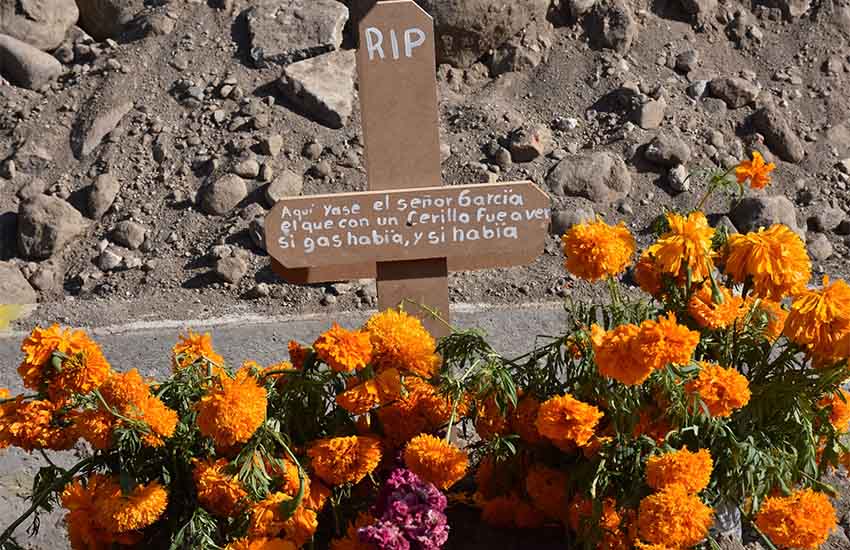
Some were humorous, especially the one for Señor Garcia, whose gravestone said he’d used a match to see if there was gas in his home.

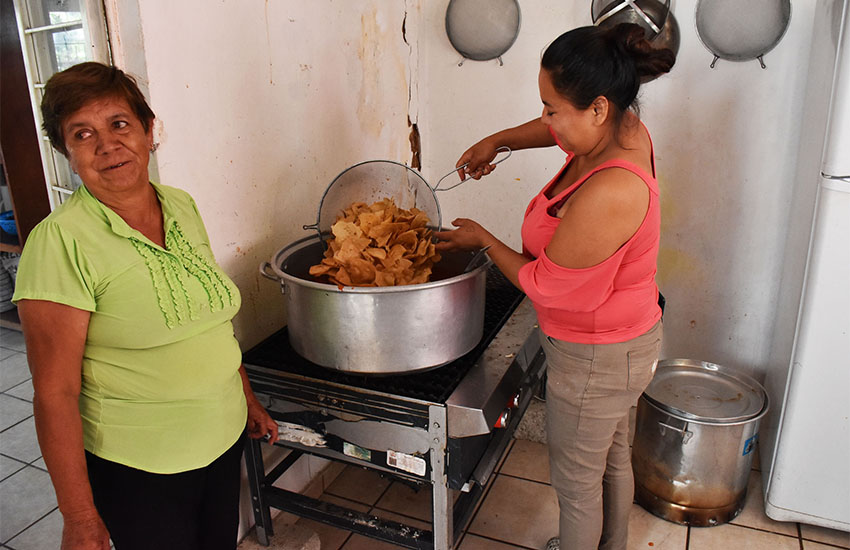
Nevi and her granddaughter, Kendra Caltempan, were preparing meals for all the Day of the Dead festival’s participants, and had been since 6 a.m.

Day of the Dead swap meet in Huaquechula, Mexico
Ana María Nevi Santivañez and her granddaughter, Kendra Caltempan, prepare chilaquiles for 500.

They said they’d be working until midnight, Caltempan said.

“We are cooking breakfast, lunch and dinner for 500 people. Tomorrow, we will prepare mole for 700,” she added.

Of course, this being Mexico, they invited me to try their chilaquiles and café de olla. How could I refuse?

Joseph Sorrentino, a writer, photographer and author of the book San Gregorio Atlapulco: Cosmvisiones and of Stinky Island Tales: Some Stories from an Italian-American Childhood, is a regular contributor to Mexico News Daily. More examples of his photographs and links to other articles may be found at www.sorrentinophotography.com He currently lives in Chipilo, Puebla.


Day of the Dead swap meet in Huaquechula, Mexico
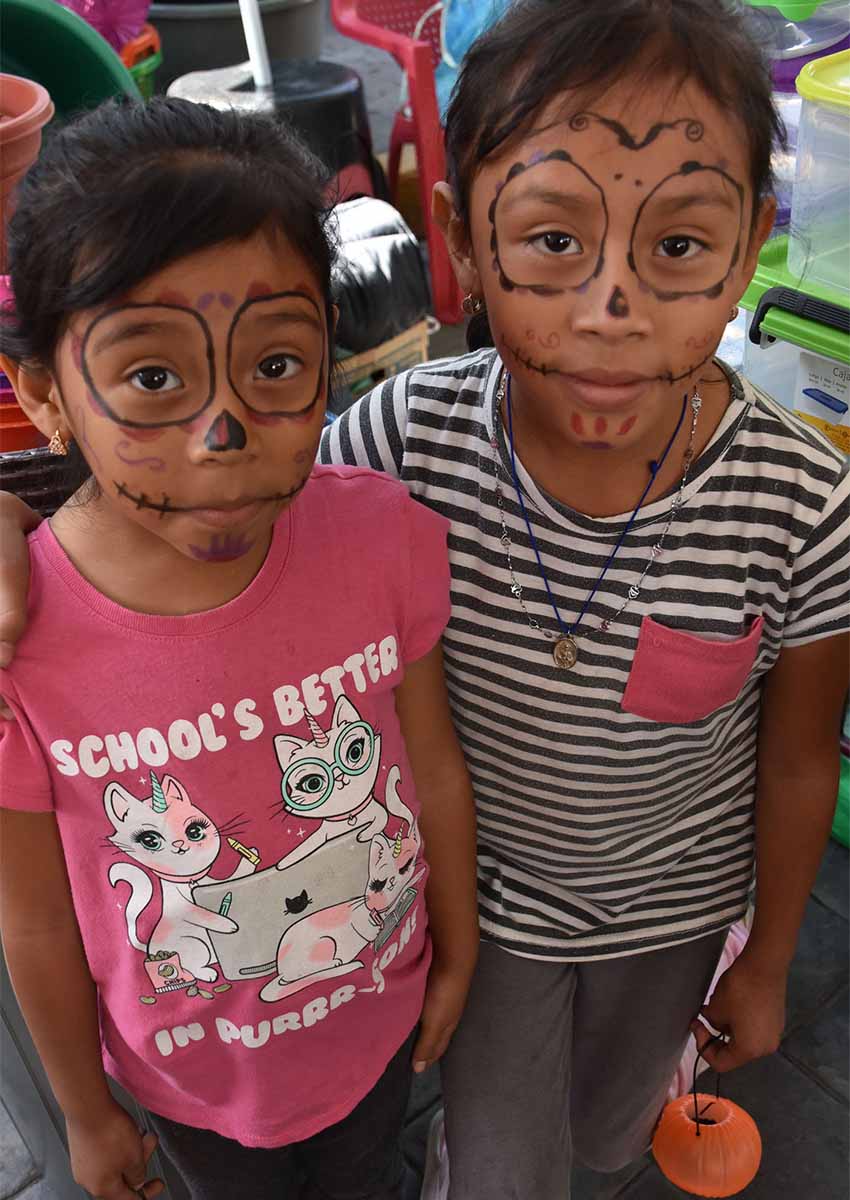
Young attendees celebrate the holiday with Day of the Dead skeleton face paint.


Day of the Dead swap meet in Huaquechula, Mexico
A symbolic grave created as a thank-you to one of the event’s organizers. The marker humorously reads, “Here is Mister Garcia. He, with a match, went to see if there was gas and, yes, there was.”


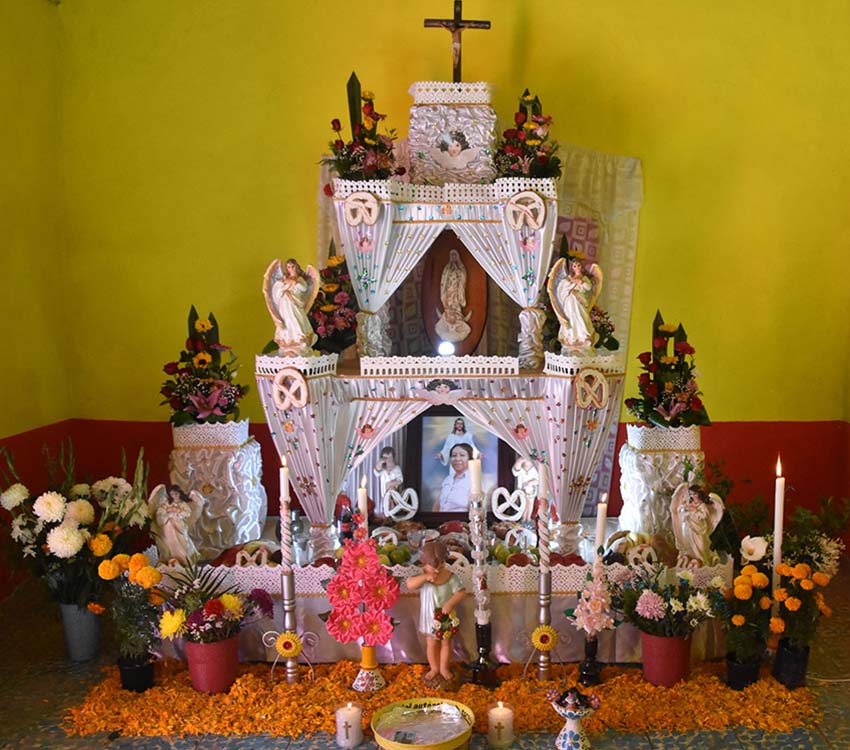
Day of the Dead altar in Puebla, Mexico
Those with homes near the market allow visitors inside their homes to see their altars.


Day of the Dead swap meet in Huaquechula, Mexico
Most folks outside Mexico are familiar with the traditional Día De Muertos marigolds, but another popular flower used is this deep magenta cockscomb.

Cempasúchil flowers are not only used for decorating altars

0
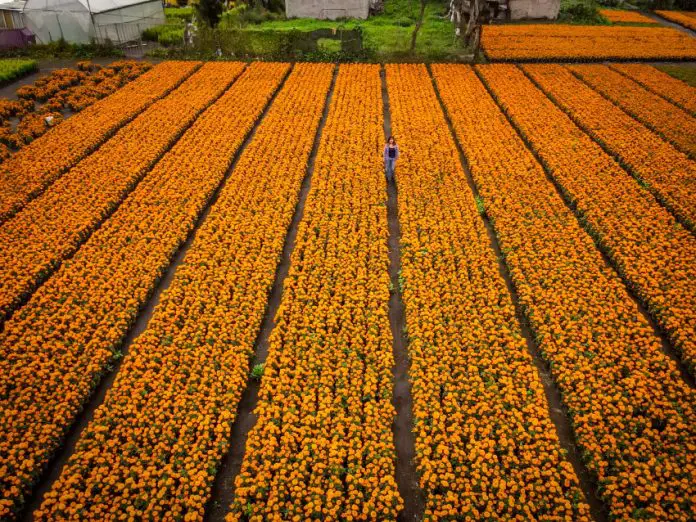
Fields of cempasúchil flowers in the Ejido de San Gregorio Atlapulco, Mexico City.Sedema Twitter

This year’s celebration of Day of the Dead will see many families return to cemeteries that had been closed during the pandemic, bearing food, drinks and of course, flowers.

The cempasúchil (marigold) – which is native to Mexico and grown in various states – is the most ubiquitous of the traditional flowers used to decorate ofrendas and tombs, and has been a symbol of the cycles of life and death since ancient times. 

The Ministry of Agriculture has announced that 27 million plants were harvested this season, equivalent to 20,245 tonnes.

Since 2016, domestic producers have found a new opportunity for additional income by selling leftover flowers to food processing companies. Each season, there is about 30% leftover unsold from the harvest. Major companies like Barcel and Sabritas use the bright carotenoid pigments in the flowers as a colorant in  their food products (cheetos, anyone?) and are seeking to increase the country’s supply of this raw material.

To secure good quality flowers, companies advance 25% of the total payment to growers to buy quality seeds. Then they start planting  in August, when they sow about 35 hectares in greenhouses to ensure they bloom by October. This agreement is known as “contract farming.” 

Today, 90 growers from the areas of Atlixco and Huaquechula sell the flower both as a seasonal ornamental piece for the Day of the Dead, and as a food component after the season ends.

According to industry representative Eduardo Robelo Estrada, quoted in the newspaper El Economista, the objective is to cultivate 65 hectares in the next three years to supply larger companies that export to the U.S.

With reports from El Economista and Excelsior

Cyberattack causes shutdown at communication, transportation and aviation agencies

0
tractor trailer truck in Mexico
The Ministry of Infrastructure, Communications and Transport normally issues federal permits to, among others, transport workers. Paola Edith Lilloa Rodríguez/IStock

The Ministry of Infrastructure, Communications and Transport (SICT) announced Tuesday that it had suspended a range of bureaucratic procedures and other work due to a cyberattack.

In an announcement published in the federal government’s official gazette (DOF), the ministry said that the suspension took effect on Oct. 24 and would remain in force until Dec. 31.

Among the procedures that SICT won’t be completing for the remainder of this year are those related to the issuance and renewal of federal driver’s licenses and the issuance of federal transport permits.

The Federal Civil Aviation Agency (AFAC)– which is part of the ministry – won’t complete procedures related to “authorizations, permits, programs, accreditation, issuance of licenses and training certificates,” SICT said.

Head of Mexico's Ministry of Communications and Transportation with FAA's Billy Nolen
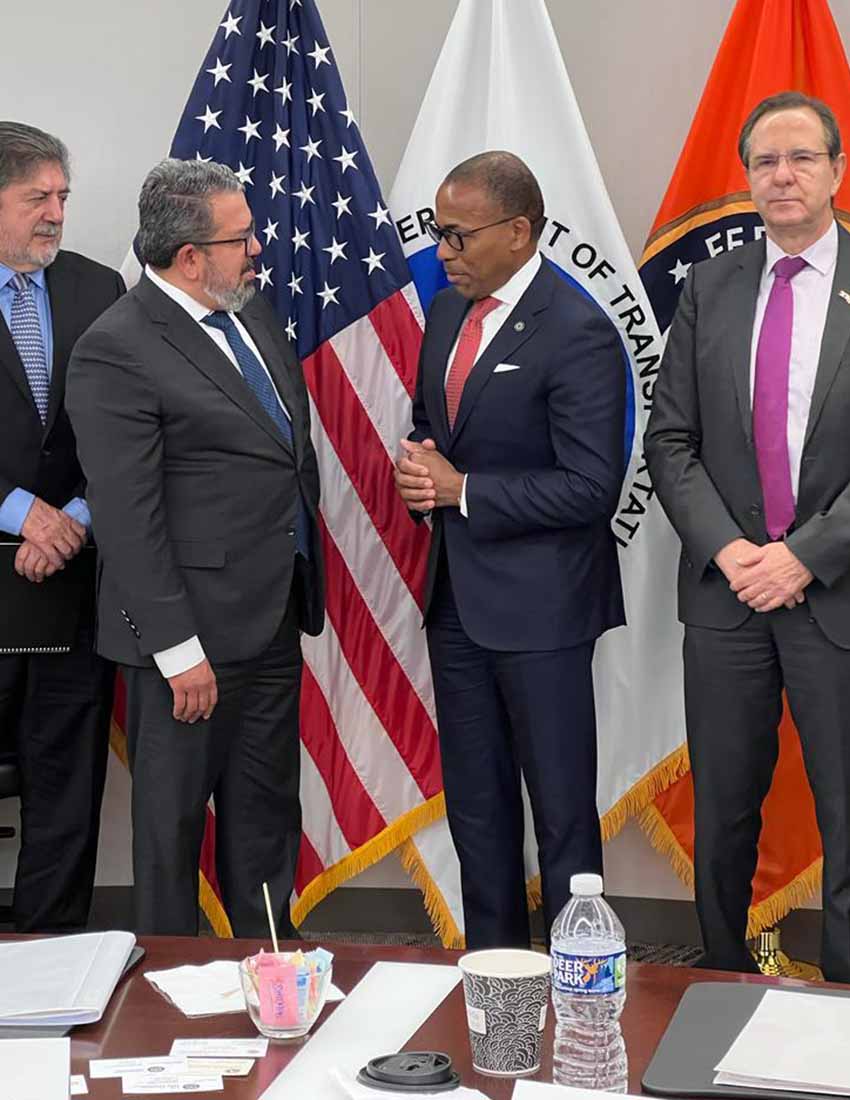
SICT Deputy Minister Jorge Nuño Lara meets with Billy Nolen, acting administrator of the U.S. FAA on October 28 in Washington. SICT’s work moratorium means it will stop issuing permits to airline pilots for the rest of the year.

It also said that psycho-physical examinations for transport operators have been suspended. The usual processing and response times for a wide range of bureaucratic procedures and tasks won’t apply for the rest of the year. SICT and AFAC-issued licenses and permits due to expire between now and the end of the year will remain valid until they can be renewed in 2023.

SICT was the victim of a ransomware attack on October 24, with 110 of the ministry’s computers affected. The work suspension appeared to be related to that attack given that it took effect that day, but the ministry said in the DOF on Tuesday that it had taken action to “protect the systems and information” in light of a cyberattack “identified today.”

It added that “procedures” and “the issuance of federal licenses and certificates for several modes of transport” were affected by the “cyber incident.”

The Ministry of National Defense (Sedena) was also recently targeted by hackers. The Guacamaya hacking group stole a huge trove of emails and documents from Sedena servers and leaked them to media organizations, which have published numerous stories based on the information they received, including ones on López Obrador’s health problems, the government’s plan to create an army-run commercial airline, a soldier’s sale of weapons to a criminal organization and the Mexican military’s planning and operational shortcomings.

With reports from Animal Político 

Category 1 Hurricane Lisa approaches Quintana Roo coast

0
national hurricane center map of hurricane lisa
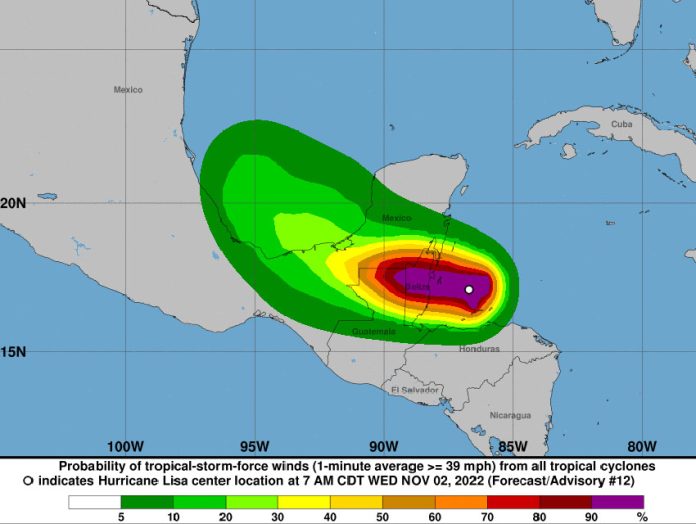
Current NHC predictions say when Lisa makes landfall in Belize, it could bring hurricane force winds to Mexico's southeastern coast and heavy rains to Campeche, Tabasco, northern Chiapas and far eastern Veracruz. National Hurricane Center

A hurricane warning is in effect for southern Quintana Roo as Hurricane Lisa looms off the coast of Belize.

Lisa – a Category 1 storm with maximum sustained winds of 130 kilometers per hour – was 90 kilometers east-southeast of Belize City at 10 a.m. Central Time, the United States National Hurricane Center (NHC) said in an advisory.

A hurricane warning is in effect for the coast of Belize and the coast of Quintana Roo between state capital Chetumal and Puerto Costa Maya, a cruise ship port near the village of Mahahual.

“A Hurricane Warning means that hurricane conditions are expected somewhere within the warning area,” the NHC said. “Preparations to protect life and property should be rushed to completion.”

A tropical storm warning is also in effect for the Quintana Roo coast between Puerto Costa Maya and Punta Allen, a village south of Tulum.

The NHC said that Lisa was moving toward the west at approximately 22 km/h at 10 a.m. CDT. “On the forecast track, the center of Lisa will make landfall in Belize later today and then cross northern Guatemala and move into southeastern Mexico by Thursday,” the Florida-based center said.

“… Some strengthening is forecast before landfall. Rapid weakening will occur after the center of Lisa moves inland.”

The NHC said that Lisa could bring up to 10 inches (25 centimeters) of rain to Belize, northern Guatemala, southern Quintana Roo, southern Campeche, Tabasco, northern Chiapas and far eastern Veracruz. Up to six inches (15cm) of rain is forecast for areas including south-central Campeche.

“This rainfall could lead to flash flooding conditions, primarily across Belize into northern Guatemala, the far southeast portion of the Yucatán peninsula, the southern portion of the Mexican state of Campeche, Tabasco, northern Chiapas and far eastern Veracruz,” the NHC said.

It also warned that a storm surge will likely raise water levels by as much as 4 to 7 feet (between 1.2 and 2.1 meters) above normal tide levels “near and to the north of where the center of Lisa crosses the coast of Belize and extreme southeastern portions of the Yucatán Peninsula.”

Authorities have set up shelters in the southern Quintana Roo municipalities of Othón P. Blanco (which includes Chetumal), Bacalar and Felipe Carrillo Puerto. Quintana Roo Governor Mara Lezama advised residents of that state to take precautions and follow the advice of authorities.

Lisa is the 12th named storm and the sixth hurricane of the 2022 Atlantic Hurricane season. The season began June 1 and runs through November 30.

Mexico News Daily 

En Breve: record remittances, Ford opens R&D hub and the biggest ofrenda in Mexico

0
World's largest Day of the Dead altar in Hidalgo Mexico in 2019
In Tuxtla Gutierrez, Chiapas, folks believe they've built the biggest altar in Mexico, bigger than this Día De Muertos altar in Hidalgo in 2019, still recognized by Guinness World Records as the world's largest. GWR

Remittances up 14% in September 

Mexicans working abroad sent US $5.03 billion home in September, the Bank of México reported Tuesday. It was the fifth consecutive month that remittances exceeded $5 billion and a 14.1% increase compared to September 2021.

Mexican migrants – often described as “heroes” by President López Obrador – sent a record $42.96 billion home in the first nine months of the year, a 15% spike compared to the same period of last year. The majority of the money came from the United States, where millions of Mexicans live and work.

Ford opens R&D hub near CDMX 

United States automaker Ford has opened a US $260 million global technology and business center in Naucalpan, a México state municipality that borders Mexico City.

Ford México announced the opening on Monday, saying on Twitter that the new center will “build the future and promote Mexican talent.”

Ford said in a statement that 9,000 employees will work at the center, albeit not all at the same time: workers will do shifts at home some of the time. In a slick video posted to Twitter, the company said that the center “will house our business operations, global transformation activities and the largest engineering center in the [auto] industry in Mexico.”

Ford has four manufacturing plants in Mexico and employs over 10,000 people here.

COVID-19 the leading cause of death last year

A day before Day of the Dead, the newspaper Reforma published an article with the headline “What do Mexicans die of?”

Data from the national statistics agency INEGI showed that COVID-19 was the number-one killer in 2021, claiming the lives of almost 239,000 Mexicans. Ranking below the disease in spots 2 to 10 were heart disease; diabetes; malignant tumors; influenza and pneumonia; liver disease; cerebrovascular disease; homicides; accidents; and chronic obstructive pulmonary disease.

Mexico’s biggest Day of the Dead altar — and maybe the world’s — is in Chiapas    

The country’s largest Día de Muertos ofrenda (altar) is likely in Tuxtla Gutiérrez, Chiapas, reports the news website La Silla Rota.

The altar was set up on the stairs of the Monumento a la Bandera (Monument to the Flag) in the Chiapas capital.

The stairs are adorned with a huge amount of cempasúchil, or marigold flowers, 1,300 candles and the images of at least 80 prominent deceased people, among other things. The total area of the altar, located in the city’s southwest, is over 1,000 square meters.

Omar Cruz of the city’s carnival committee told La Silla Rota that Tuxtla Gutierrez’s altar is bigger than the one famously built in Hidalgo in 2019, which if true, would likely make the Chiapas capital’s altar a Guinness World Records breaker. But there’s some debate, as Xalapa is also claiming to have built one bigger than Hidalgo’s record holder.

We’ll wait for Guinness to weigh in.

With reports from El Financiero, Reuters, Reforma and La Silla Rota

Acclaimed folk art and artisan fair returns to Chapala after 2-year COVID hiatus

0
Otomi and Guerrero Nahua painting on amate bark paper
This fine painting over rough bark paper, a fusion of Otomi and Guerrero Nahua traditions, is the kind of high-quality art and handcrafts available at the acclaimed fair. Photos by Feria de Maestros del Arte/Facebook

As the long and difficult pandemic eases, one of Mexico’s best handcraft and folk art fairs is returning to Jalisco’s Lake Chapala this month. 

For almost two decades, Marianne Carlson and a dedicated group of volunteers have worked tirelessly to provide some of the country’s best creative hands an outlet to get fair prices from people who truly appreciate their work. 

November 2020 was supposed to be the Feria de Maestros del Arte’s 20th anniversary, but COVID-19 shut everything down. The loss of points-of-sale like this was a disaster for artisans, even though the Feria and other organizations scrambled to find alternatives to keep artisans afloat.

The Feria was inspired by Carlson’s love of Mexican handcrafts, and by the fact that it is so difficult to find and buy fine, authentic wares due to the logistics of getting small lots of merchandise from isolated areas, where artisans often live, to the markets in bigger hubs where people can and will pay decently. 

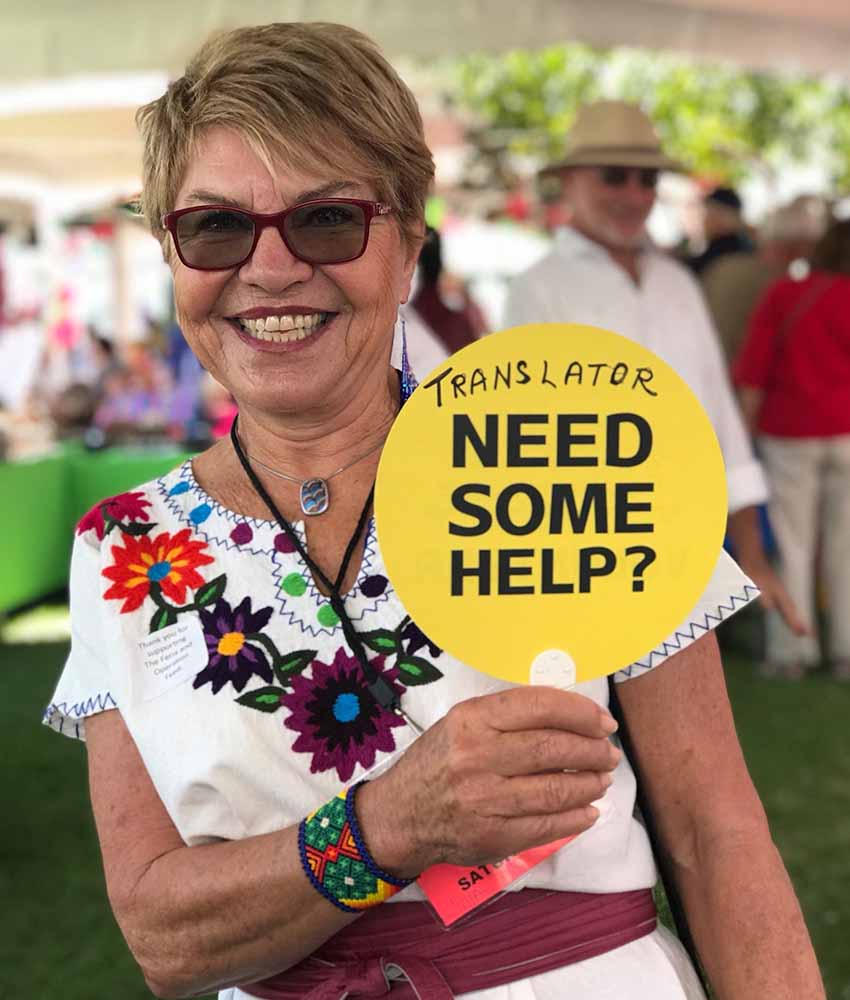
Translator at Feria de Maestros del Arte in Lake Chapala, Mexico
As most buyers are English speakers, the Feria provides volunteer translators to make transactions easier.

Artisans generally do not have the means to get their work to those markets, and even resellers can face financial difficulty despite raising prices to several times what they pay creators. It bodes poorly for the continuation of these cultural and economic traditions.

To help, Carlson set up a small show with six artisans at a Chapala hotel, all of whom sold out. Each year, she added a few more artisans, as well as patrons and sponsors such as the Chapala Yacht Club — which has become the permanent host — and the California-based Los Amigos de Arte Popular, which provides bus transportation for all artisans. 

Carlson has recruited many volunteers as well, most notably those who open their homes so that artisans have a free, decent place to sleep. 

Such support is extremely important because artisans then keep every peso that buyers pay.  The Feria does not keep track of what the vendors earn, but it knows of many stories of how Feria income changed artisans’ lives.

This year, the directors began the planning process again with trepidation. No one knew if authorities would shut down public events again or if sponsors and volunteers would want to come back after so much time. 

The Feria also lost a number of volunteers because of the pandemic, and a few artisans too. But despite being short-handed, Carlson says that everyone has been great and eager to get the Feria back on track.

This year, the Feria will have the celebration that was taken from them in 2020. Carlson is amazed that the event has continued for so long, but so many do not want to see these traditions die. 

Carlson says “never again” after each fair, but “…then something happens, like meeting a new artisan… and I’m back at it again,” she says. 

The Feria de Maestros del Arte is taking place this year November 11–13, and is following Jalisco state COVID guidelines, recommending masks, hand sanitizer and ventilation. More information can be found at the Feria’s website.

  • CORRECTION: a previous version of this article stated the incorrect dates for Feria de Maestros del Arte event. It has been updated to the correct dates.

Leigh Thelmadatter arrived in Mexico 18 years ago and fell in love with the land and the culture in particular its handcrafts and art. She is the author of Mexican Cartonería: Paper, Paste and Fiesta (Schiffer 2019). Her culture column appears regularly on Mexico News Daily.

AMLO remains popular, even with concerns about economy and security: poll

0
The president's approval rating continues to be high Gobierno de México

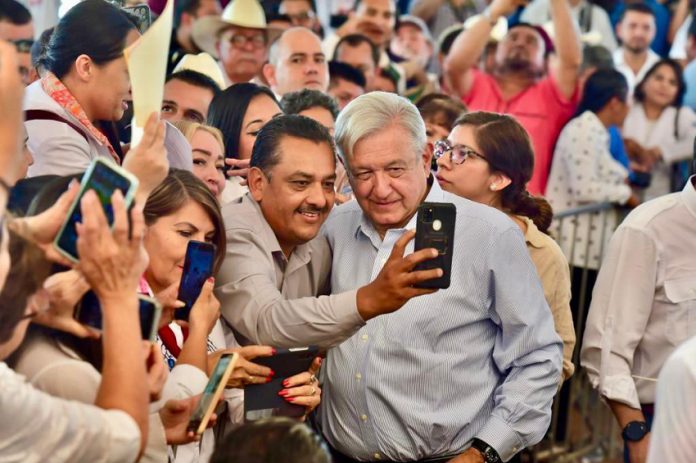
Inflation is above 8% and violence is an ongoing concern in many parts of the country, but President López Obrador retains the support of a majority of Mexicans, a new poll indicates.

Conducted in October, El Financiero’s latest national survey found a 56% approval rating for AMLO, as the president is best known. That result is unchanged from the newspaper’s previous poll conducted in September.

Just over four in 10 of the 1,100 respondents – 43% – disapproved of the president’s performance, giving him a net positive rating of +13.

While AMLO’s approval rating has declined from the high levels seen earlier in his presidency – even as COVID took an enormous toll and the government’s pandemic response came under fire – he remains a popular president almost four years after assuming the nation’s top job.

His enduring popularity is somewhat paradoxical given that most respondents to the latest El Financiero poll disapproved of the way in which the federal government is handling economic and security issues. Asked how they would grade the government’s performance in the areas of economy and public security, 56% said bad or very bad.

Only 31% of respondents said the government is doing well or very well in the former area while just 30% said the same about its performance in the latter.

The Mexican economy is still growing and the peso has appreciated against the U.S. dollar this year, but inflation remains stubbornly high – 8.53% in the first half of October – despite the efforts of the government and the central bank to bring it under control.

Over two-thirds of respondents – 68% – said that higher prices had put them in a bad mood, although that figure was significantly lower than in previous months.

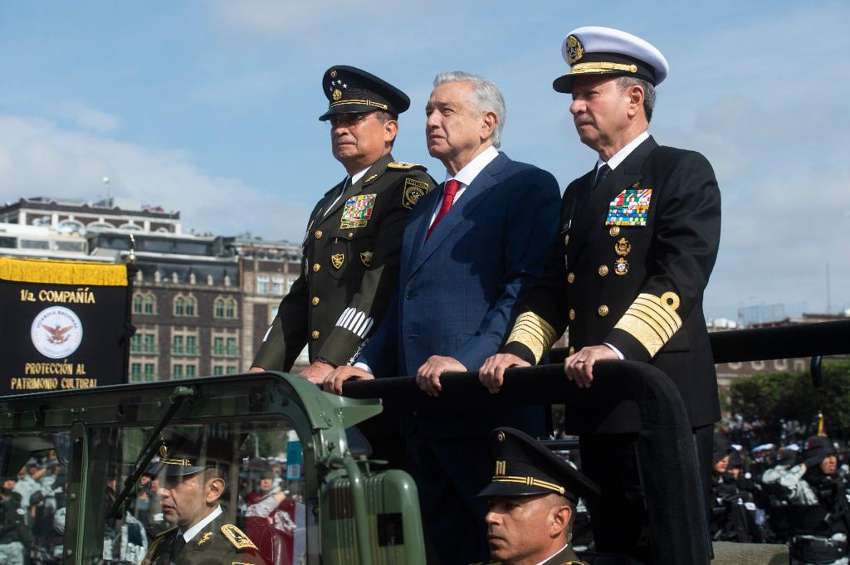
The president, flanked here by the National Defense Minister and the Navy Minister, has doubled down on militarization of public security. Gobierno de México

The percentage of respondents who rated the government poorly for its handling of public security issues declined 4% compared to September, which is perhaps an indication that people recognize that some progress has been made toward making Mexico a safer country. Official data shows that homicides declined 8.1% in the first nine months of the year compared to the same period of last year, but Mexico nevertheless remains on track to record more than 30,000 murders for a fifth consecutive year in 2022.

López Obrador – who before taking office pledged to take the armed forces off the streets – has doubled down on a militarized security strategy, pushing one initiative through Congress that places the National Guard under the control of the army and another than extends the authorization to use the military for public security tasks until 2028.

While there is significant opposition to further militarization of Mexico, a recent survey conducted for the El País newspaper and the broadcaster W Radio found that almost three-quarters of Mexicans agree with the government’s plan to continue using the armed forces for public security tasks until 2028.

The army has also been in the news due to a cyberattack perpetrated by the Guacamaya hacking group that resulted in the theft of a huge trove of emails and documents from the IT system of the Ministry of National Defense.

While AMLO has downplayed the seriousness of the incident, 72% of respondents to the El Financiero poll said that the hacking of Sedena’s servers was very or somewhat serious. Only 28% of those polled said that the government is responding well to the hack, while almost twice as many respondents – 54% – said the opposite. Two-thirds of respondents said that National Defense Minister Luis Cresencio Sandoval should appear in Congress to report on the security breach, something he has so far declined to do.

El Financiero also asked poll participants to offer an opinion about the general course of the country under the leadership of López Obrador, who lost two presidential elections before he finally prevailed in 2018. Just over one-third of respondents – 34% – asserted that Mexico is on the right path, while 33% said the opposite. The other one-third didn’t offer a response one way or the other.

Over half of those polled – 55% – rated AMLO positively for honesty, but only 49% praised his leadership and just 44% expressed the belief that he has the capacity to achieve results for the country. The president has made combating corruption a central aim of his administration, but only 35% of respondents said his government is doing a good job in the area.

El Financiero conducted its poll via telephone with residents of all 32 federal entities, and said that the margin of error was +/- 3%.

With reports from El Financiero

Bisbee’s Black & Blue annual fishing tournament offered record US $11.5 million in prizes

0
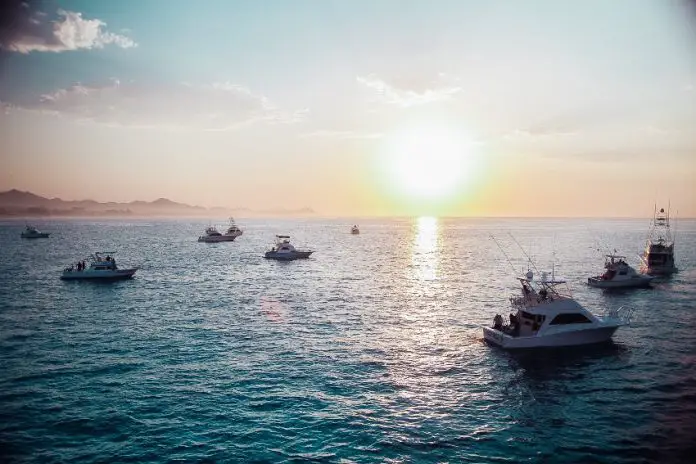
Los Cabos is known as "the marlin capital of the world." @LosCabosTourism Twitter

The 42nd Bisbee’s Black & Blue fishing world tournament wrapped up three days of offshore sportfishing on Saturday in Los Cabos, with a total purse valued at U.S. $11.5 million. The annual event broke international records by awarding the largest amount ever in a single sportfishing tournament.

At the closing ceremony, Wayne Bisbee, son of late founder Bob Bisbee, announced that for the second time in the tournament’s 42 years, three checks each exceeding US $1 million would be handed out.

219 teams competed in the event, the largest of its kind in the world. The winning “El Mexicano” team took home U.S. $3.5 million after angler Adrián Ponce de León (from Veracruz) caught a 461-pound blue marlin on the last day of the tournament.

Dion Beckne, who caught a 449-pound blue marlin aboard the boat “Happy Ending,” claimed second place with a check for U.S. $2.5 million. Finally, a check for U.S. $1.5 million went out to Team R.V. Rentals for a  344-pound blue marlin caught by angler Michael Ciardullo on board “Vida Loca.”

Winners at the Bisbee’s Black & Blue awards banquet. Photo: Bisbee’s Offshore Fishing Tournaments

Known as the marlin capital of the world, Cabo San Lucas has been home to the tournament since it started  in 1982. At the time, six boats competed for a U.S. $10,000 prize in a small event organized by Bob Bisbee, who used the contest to promote a tackle store he owned on Balboa Island in California. 

Bob Bisbee passed away early in 2018 at the age of 85, but his family has built on his legacy. With Wayne Bisbee in charge, they currently produce three tournaments: Bisbee’s East Cape Offshore in Buenavista, which takes place every July, the Los Cabos Offshore Charity Tournament and the Black & Blue tournament every October in Cabo San Lucas.

With reports from Bisbees News, Big Fish and Mexico Daily Post

October records high homicide rate, despite this year’s downward trend

0
State of Mexico police officers on patrol
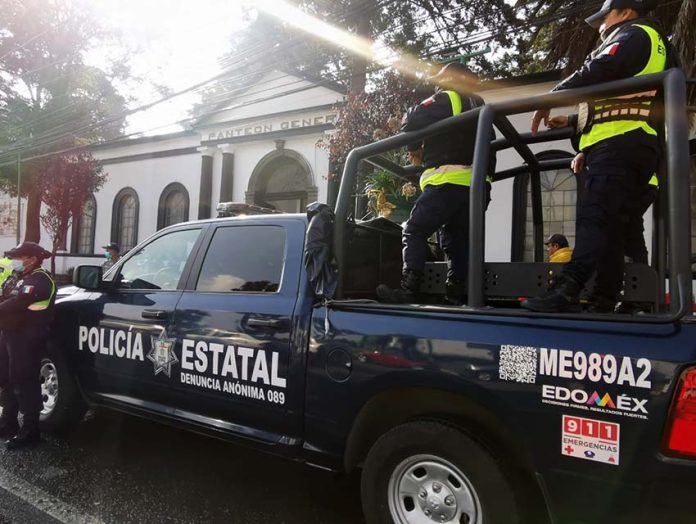
The government's preliminary total of 2,481 homicides yields an average of just over 80 murders per day last month. State of México police

Mexico had another violent month in October with almost 2,500 homicides, preliminary data shows.

The federal government counted a total of 2,481 murders in the 31 daily homicide reports it published last month. The figure is this year’s highest monthly total derived from adding the daily homicide counts, indicating that October could go down as the most violent month of 2022.

Data published by the National Public Security System (SNSP) typically shows that there were more homicides than those recorded in the government’s daily reports in any given month.

Based on SNSP data, May was the most violent month so far this year with over 2,800 homicides. The sum of the daily counts that month was 2,472, while the final SNSP total was about 15% higher. The SNSP will publish final homicide data for October in the second half of November.

The government’s preliminary total of 2,481 homicides yields an average of just over 80 murders per day last month. Among the worst incidents of violence in October was a massacre of 20 people in the Guerrero town of San Miguel Totolapan and the murder of 12 people in a bar in Irapuato, Guanajuato.

The violence continued on Monday with 92 homicides across the country, according to the government’s final daily report for October. Tamaulipas recorded the highest number of murders among the 32 federal entities with 12 victims, followed by Michoacán with nine and Baja California with eight.

SNSP data shows that Mexico is on track to record more than 30,000 homicides for a fifth consecutive year in 2022, despite an 8.1% reduction in murders in the first nine months of the year. There were 23,351 homicides between January and September, with almost half that number occurring in just six states: Guanajuato (Mexico’s most violent state in recent years), Baja California, México state, Michoacán, Jalisco and Chihuahua.

Almost seven in 10 homicides in the same period occurred in just 10 states – the six listed above as well as Sonora, Guerrero, Nuevo León and Zacatecas.

On a per capita basis, Colima was the most violent state in the first nine months of the year with 304 homicides per 100,000 residents. Baja California, which includes the violent border city of Tijuana, ranked second followed by Chihuahua, Zacatecas and Morelos.

With reports from Animal Político, Noticieros Televisa and Expansión