Home Blog Page 9

Sheinbaum explains her call to boycott TV Azteca: Tuesday’s mañanera recapped

0
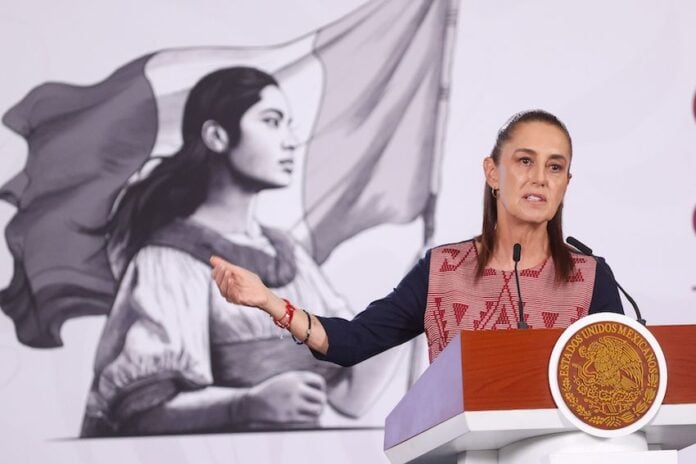
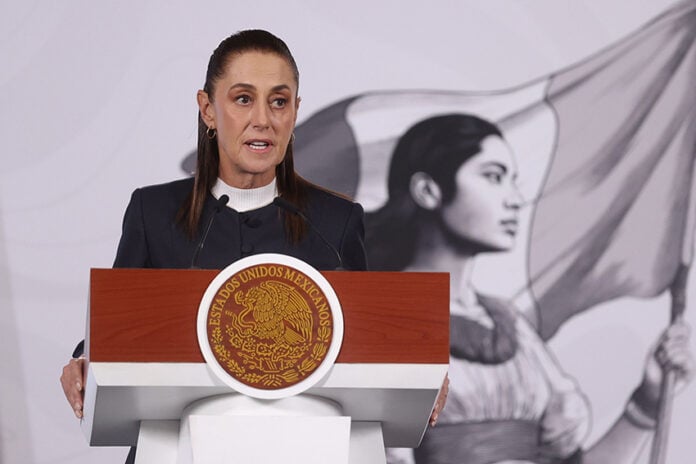
President Claudia Sheinbaum at her May 26 press conference, or mañanera
President Sheinbaum that her comments were a personal opinion, not censorship, after previously telling listeners at her Monday press conference not to watch TV Azteca and joking about a "pathological liar of the week" award for its billionaire owner. (Galo Cañas / Cuartoscuro.com)

Sheinbaum’s mañanera in 60 seconds

  • 📺 TV Azteca dispute: “opinion,” not censorship: Sheinbaum qualified her Monday call to boycott TV Azteca, framing it as a personal opinion rather than a state act of censorship. She accused owner Ricardo Salinas Pliego of weaponizing the network against her government after a large back-tax settlement with SAT, while insisting she has no intention of revoking broadcast licenses.

  • 📈 Record FDI and surging exports: The president highlighted two data points she called “very good news”: Q1 2026 foreign direct investment hit a record US $23.59 billion, up 10.4% year-on-year, and export revenue rose 21.8% in the first four months of the year versus the same period in 2025, yielding a trade surplus of just over $3.5 billion.

  • 🗳️ AMLO’s son praised, heads to Tabasco: Sheinbaum praised Andrés Manuel López Beltrán for his tenure as Morena’s secretary of organization, crediting him with adding roughly 12 million members to the party. He is stepping down to seek a Morena candidacy for federal deputy in Tabasco ahead of next year’s lower house elections.

Why today’s mañanera matters

Today’s mañanera was significant as President Claudia Sheinbaum qualified the call she made on Monday for people to not watch TV Azteca, a large mass media company that operates various television channels.

She declared that her remark was simply an “opinion,” not an attempt at censorship — despite claims to the contrary, including from TV Azteca itself. In calling for a boycott of TV Azteca, the president intensified a long-running dispute with Ricardo Salinas Pliego, the owner of the company, who she accused last year of funding an anti-government protest.

Salinas Pliego poses for a photo with El Salvador President Bukele
Ricardo Salinas Pliego, seen here with El Salvador President Nayib Bukele, is the billionaire businessman behind TV Azteca, Banco Azteca, Elektra and more. (Ricardo Salinas Pliego via X)

Also of note was Sheinbaum’s focus on positive foreign investment and trade data, good news at a time when the Mexican economy is recording anemic growth in annual terms, and contracted on a quarter-over-quarter basis in the first three months of 2026.

Sheinbaum highlights ‘2 pieces of very good news’

During her Q&A session with reporters, Sheinbaum highlighted “two pieces of very good news” that came to light on Monday.

She noted that Mexico received US $23.59 billion in foreign direct investment in the first quarter of the year, a record high and an increase of 10.4% compared to the same period of 2025.

Sheinbaum also highlighted that Mexico’s export revenue increased 21.8% in the first four months of 2026 compared to the same period of last year. She noted that Mexico’s outlay on imports increased 19.9% in the period.

Foreign direct investment in Mexico hit a record high in the first quarter of 2026

Sheinbaum also acknowledged that Mexico recorded a trade surplus of just over $3.5 billion between January and April.

“More exports than imports and record foreign direct investment — two very good pieces of news,” she said.

Sheinbaum accuses TV Azteca of conducting a deceitful ‘offensive’ against her government  

A reporter asked the president about “the barrage of attacks” against her after she called on Mexicans on Monday to not watch TV Azteca, a multimedia conglomerate owned by billionaire businessman Ricardo Salinas Pliego.

“Don’t watch TV Azteca,” Sheinbaum said Monday, before accusing Salinas Pliego of spreading “bold-faced” lies.

Sheinbaum’s call for a boycott of TV Azteca came after a reporter said that a collective promoted by people close to Salinas had launched a campaign against the federal government that includes labeling Mexican officials “narco-politicians.”

TV Azteca responded to the president in a statement, saying that what she said on Monday morning was a “clear attempt at censorship and a direct attack on freedom of speech and freedom of the press.”

On Tuesday, Sheinbaum said that TV Azteca is carrying out an “offensive against the Mexican government with a lot of lies.”

She asserted that Salinas — who appears to have presidential aspirations — decided to use TV Azteca to “attack” her government due to his discontent with being forced to make a large payment to the federal tax agency SAT to cover back taxes.

“Look,” Sheinbaum said.

“They say there is no freedom of speech. There is so much freedom of speech that, from a television network, the government is constantly attacked, even with lies,” she said.

“And there are increasingly more lies. What do we have? The right of reply because we’re not going to get into the issue of taking away [television] licenses,” Sheinbaum said.

“… What we have is this space to be able to say to the people of Mexico what is happening,” she said, referring to her weekday press conferences.

Sheinbaum said that when she called on people not to watch TV Azteca, she was expressing an “opinion,” not carrying out an act of “censorship.”

“It’s an opinion, an opinion. Why? Because we’re not censoring them. Yesterday they were able to say everything they wanted to say on their television programs — in all of them,” she said, adding that TV Azteca commentators on Monday spent their air time criticizing her and the government while disseminating “many falsehoods.”

“They can keep talking, but we also have the responsibility to inform because the right to information is in the constitution,” Sheinbaum said.

“[We have the responsibility] to report what is false and what is true,” she said.

“When I say ‘don’t watch a television network,’ it’s an opinion,” Sheinbaum reiterated.

“But I’m not exercising the power of the state to censor a television network. See the difference. In the past, they did censor and they [TV Azteca] know that. They know that [past] presidents spoke to television and radio stations by phone to tell them to ‘remove that presenter,’… ‘to remove that journalist who is damaging me, who is speaking ill of me,'” she said.

Sheinbaum subsequently accused TV Azteca of playing politics.

“They are not exercising the right to information, but rather playing politics,” she said.

Sheinbaum praises AMLO’s son for his work as a Morena official 

A reporter noted that Andrés Manuel López Beltrán, one of the sons of former president Andrés Manuel López Obrador, decided to leave his position as secretary of organization of the ruling Morena party in order to seek to represent Morena as a candidate for deputy in Tabasco in next year’s federal lower house election. She asked Sheinbaum to offer an opinion on López Beltrán’s organizational work.

“Andrés did a very good job,” the president responded.

She said that López Beltrán helped to increase Morena’s membership by some 12 million people, turning the political party into one of the largest in the world.

“[He did] extremely good work as secretary of organization. He’s a great organizer,” Sheinbaum said.

By Mexico News Daily chief staff writer Peter Davies (peter.davies@mexiconewsdaily.com)

Mexico’s export revenue rose 32.6% in April

2
a factory
Between January and April, the shipment abroad of goods manufactured in Mexico generated revenue of $225.69 billion, a 23.3% year-over-year increase. (Unsplash)

Mexico’s export revenue hit a record high for any month in April, increasing 32.6% annually to US $72.04 billion, according to preliminary data published by the national statistics agency INEGI on Monday.

Meanwhile, Mexico’s outlay on imports increased 24.1% to a record-high $67.52 billion. Mexico thus recorded a trade surplus of $4.52 billion last month, more than nine times larger than the $472.35 million median estimate derived from a Bloomberg survey.

Mexico’s export revenue total in April was the largest for any month since comparable data was first kept in 1980.

The 32.6% year-over-year spike in export earnings was the largest increase for any month since June 2021.

Bloomberg reported that “the surge highlights how the country continues to strengthen its role as a manufacturing hub for the U.S. economy as Washington takes a tougher stance on trade.”

The Trump administration has imposed duties on Mexican vehicles, steel and aluminum, but the majority of Mexico’s exports enter the United States tariff-free under the terms of the USMCA free trade pact, which is being reviewed by its three parties this year. Around 80% of Mexico’s export revenue comes from goods shipped to the United States, while Mexico is now the world’s top importer of U.S. goods.

The 32.6% jump in exports in April came after annual increases of 27.7% in March, 15.8% in February and 8.1% in January.

Export of non-auto manufactured goods surges 45.8% 

INEGI’s data shows that 91.2% of Mexico’s total export revenue in April came from the shipment abroad of manufactured goods.

One country is winning the US-China trade war: Mexico

The total value of exported manufactured goods was $65.68 billion, up 34% from April 2025. The export of non-automotive manufactured goods generated earnings of $49.12 billion last month, up 45.8% from a year earlier.

Auto sector exports brought in revenue of $16.56 billion, an annual increase of 8.2%.

Mexico’s export of agricultural goods generated revenue of $2.22 billion in April, a 0.1% annual increase, while mining sector exports surged 71% to $2.07 billion. The lowest-earning export category last month was oil (crude and petroleum products), which brought in revenue of $2.04 billion, a 7.9% annual increase. Oil revenue increased even though shipments declined due to higher prices for crude.

Mexico’s export revenue increased 21.8% in the first 4 months of 2026 

Between January and April, Mexico exported goods worth $247.62 billion, a 21.8% increase compared to the first four months of last year. In the period, the shipment abroad of manufactured goods generated revenue of $225.69 billion, a 23.3% year-over-year increase. Non-automotive exports were worth $166.77 billion, a 34.4% annual increase, while auto exports were worth $58.91 billion, representing 0.0% change compared to the first four months of 2026. The data on auto sector exports indicates that the U.S. tariffs on light, medium and heavy duty vehicles made in Mexico are hindering the export growth of the country’s automotive industry.

Buoyed by high metal prices, Mexico’s mining sector grew its export income by 87.6% annually to $7.49 billion in the first four months of 2026. Meanwhile, earnings from agricultural exports fell 5.7% to $8.08 billion in the period, while oil revenue dropped 17.2% to $6.35 billion.

Spending on imported intermediate goods increased 29.8% in April

The top line item in INEGI’s report on Mexico’s imports in April is intermediate goods, a category that includes raw materials and semi-finished products, many of which are imported from the United States. Mexico spent $54.22 billion on intermediate goods last month, a 29.8% increase compared to April 2025.

The outlay on intermediate goods accounted for 80.3% of Mexico’s total spending on imports in April.

Spending on imported consumer goods rose 7.7% annually to $8.49 billion even as the outlay on imported fuel (a sub-category of consumer goods) fell 5.3% to $1.53 billion.

Expenditure on imported capital goods, such as machinery, computers and tools, increased 1.3% annually in April to reach $4.79 billion.

Imports increased 19.9% between January and April 

Mexico spent $244.11 billion on imports in the first four months of 2026, a 19.9% increase compared to the same period of last year. The lion’s share of that amount — $194.99 billion — was spent on intermediate goods.

Mexico recorded a trade surplus of $3.5 billion in the first four months of 2026. In the same period last year, Mexico recorded a $314 million trade deficit.

With reports from El Economista, Sin Embargo and Bloomberg

Mexico and US hotels sound alarm over weak World Cup bookings

9
A board member of the Mexican Association of Hotel Chains summed up the current mood: "We had higher expectations, but June with a World Cup is better than June without one." (Fernando Carranza García/Cuartoscuro)

With less than a month to go before the 2026 FIFA World Cup kicks off in Mexico, the National Association of Hotel Chains has warned that occupancy could be significantly lower than anticipated. 

Hotel occupancy in Mexico’s three host cities — Mexico City, Guadalajara and Monterrey — is projected to average between 60% and 65% during the tournament. 

girl with WQorld Cup kick-knacks
Mexico City hoteliers even fear the possibility that occupancy during the World Cup summer might be lower than last year’s Cup-less summer. (Fernando Carranza García/Cuartoscuro)

The forecast varies significantly from the one provided by the consultancy firm Deloitte in February, which estimated an average of more than 80% occupancy across the host cities during the World Cup.  

What’s more, some 80% of tourist arrivals during the period will be coming to Mexico for reasons unrelated to the World Cup, according to the hotel organization.

“We had higher expectations, but June with the World Cup is better than June without it,” said Enrique Calderón, a member of the association’s Board of Directors. 

According to the Mexico City Hotel Association, occupancy estimates are particularly pessimistic in the capital, with current reservations below those of summer 2025.

A similar story is emerging for short-term property renters, as many Airbnb hosts report lower-than-expected occupancy rates during the sporting event, according to the newspaper La Silla Rota. 

Some Mexico City hosts have reported lowering prices due to a lack of bookings, even in the favored neighborhoods of Condesa, Roma and Coyoacán. They attribute the low demand to factors such as the perception of insecurity and generally reduced tourist traffic in all host cities in Mexico, the United States and Canada, the newspaper reported. 

A similar trend in the United States 

In the United States, the American Hotel & Lodging Association (AHLA), which represents more than 32,000 properties, warned in a recent report that the reduced arrival estimate of international fans “threatens the overall economic impact” of the event. 

The AHLA reported that reservations are far below expectations in almost all U.S. host cities and said that this situation contradicts FIFA’s claim that more than 5 million tickets have already been sold.

The AHLA reported that up to 70% of the hotel rooms FIFA had reserved in Boston, Dallas, Los Angeles, Philadelphia and Seattle were canceled and suggested that the high level of FIFA reservations distorted the true perception of demand. 

While some of the major host cities are concerned about their occupancy, others, such as Miami and Atlanta, are optimistic about the influx of fans during the summer months, which is typically their low season for tourism. 

With reports from López-Dóriga Digital, Infobae and Bloomberg Línea

Foreign direct investment in Mexico hit a record high in the first quarter of 2026

4
Marcelo Ebrard
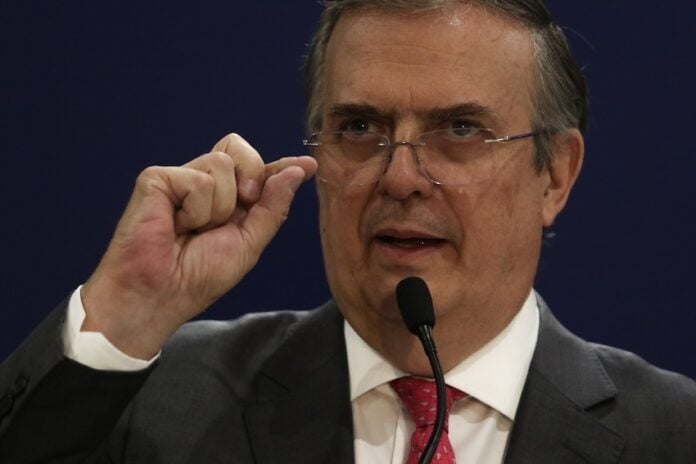
Economy Minister Marcelo Ebrard interpreted the first-quarter record FDI haul as "Foreign investors are reaffirming their confidence in Mexico." (Daniel Augusto/Cuartoscuro)

Mexico registered foreign direct investment (FDI) of nearly US $23.6 billion during the first quarter of 2026, up from $21.4 billion in the same period last year.

The figure, released by the Economy Ministry on Monday, is a record high for any first quarter in Mexico and it comes despite geopolitical uncertainties and a tariff wall created by U.S. President Donald Trump.

mining
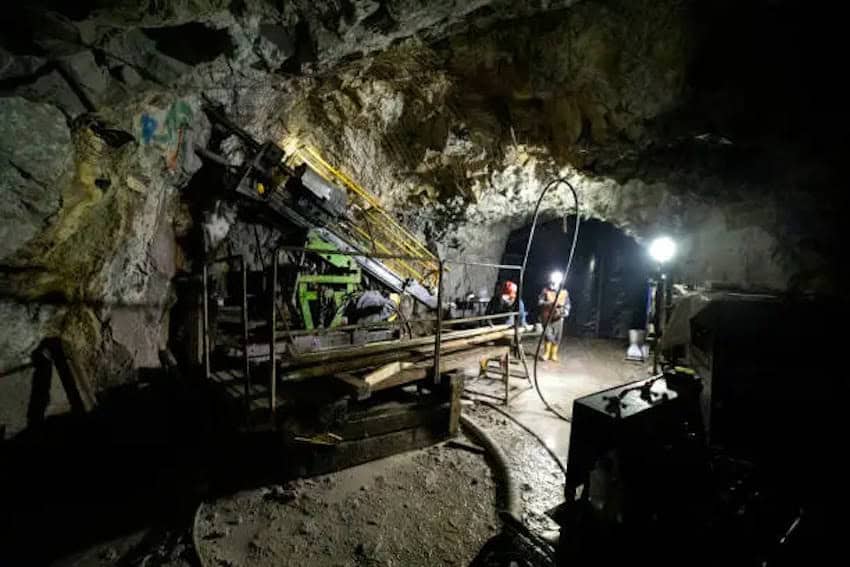
Mexico’s mining industry was an especially strong attractor of foreign capital during the first quarter of this year, accounting for US $3.034 billion, a 39.7% increase over the $2.171 billion in last year’s first quarter. (Unsplash)

“Foreign investors are reaffirming their confidence in Mexico, and FDI projects originating from the United States demonstrate the certainty in the long-term trade relationship under the US-Mexico-Canada Agreement,” Economy Minister Marcelo Ebrard said.

The new record in FDI was achieved even as Mexico’s economy contracted by 0.6% during Q1 2026. 

The first-quarter performance continues a trend for Mexico, which attracted a record US $40.87 billion in FDI last year, a 10.8% year-on-year increase over 2024. And just last month, Kearney’s 2026 Foreign Direct Investment Confidence Index found that Mexico is one of the two fastest-growing FDI markets in the world.

Ebrard broke down the FDI data further: $1.705 billion came from new investments — an increase of 7.5% compared to Q1 2025 — while reinvestments rose 33.5%, to $22.2 billion, in Q1 2026. 

New investments include those in fixed assets and working capital for the regular performance of commercial trade in Mexico, contributions to share capital of Mexican companies by foreign investors and the transfer of shares by Mexican investors to direct investors.

Inflows through reinvested earnings correspond to the portion of profits not distributed as dividends. They are considered FDI because they represent an increase in the capital resources owned by the foreign investor.

Additionally, Mexico recorded a divestment of US $336 million in intercompany accounts (transactions originating from debts between Mexican companies with FDI in their share capital and related companies residing abroad).

One of the most dynamic foreign investment destinations is the financial services sector, which increased year-on-year by 28.8%, rising from $5.321 billion to $6.851 billion.

Additionally, FDI in vehicle manufacturing grew 20.4%, from $3.351 billion in 1Q 2025 to $4.033 billion this year, while investments in mining increased 39.7%, rising from $2.171 billion to $3.034 billion. 

“This dynamism demonstrates that global investors continue to perceive Mexico as a platform for manufacturing expansion and regional integration,” Ebrard said.

As in previous years, Mexico City was the main recipient of this investment, followed by Nuevo León, México state, Baja California and Jalisco.

The United States is the main country from which FDI originates ($10.21 billion), followed by Spain ($3.804 billion), Australia ($1.446 billion), Japan ($985 million) and Canada ($894 million).

With reports from La Jornada, El País and El Economista

Governors Campos and Rocha, both at the center of legal controversies, agree to questioning by Attorney General’s Office

1
Maru Campos and Rubén Rocha
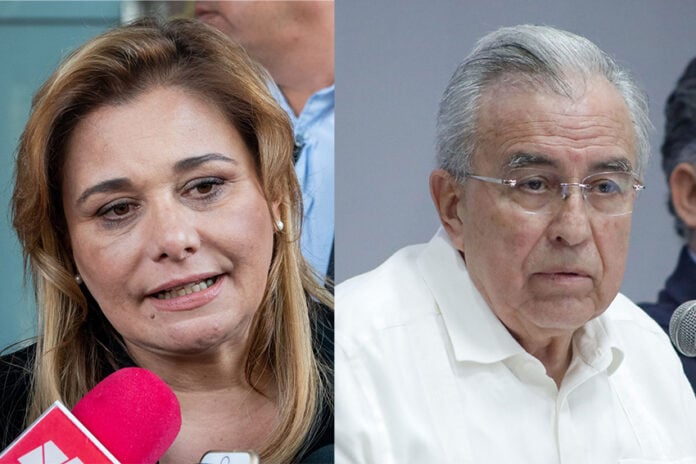
Mexico's Federal Attorney General's Office (FGR) has summoned Chihuahua Governor Maru Campos (L) to an interview in connection with the alleged participation of CIA officers in a drug lab raid in the northern state last month, and former Sinaloa Governor Rubén Rocha Moya (R) to answer questions related to a U.S. indictment charging him and nine other current and former Sinaloa-based officials with drug trafficking. (Cuartoscuro)

The Federal Attorney General’s Office (FGR) has summoned Sinaloa Governor Rubén Rocha Moya to answer questions related to a U.S. indictment charging him and nine other current and former Sinaloa-based officials with drug trafficking.

The FGR has also summoned Chihuahua Governor Maru Campos to an interview in connection with the alleged participation of U.S. Central Intelligence Agency (CIA) officers in a drug lab raid in the northern state last month.

Both governors indicated they will comply with the summonses and appear before FGR officials. Rocha, who is currently on leave, and Campos both deny any wrongdoing.

The FGR released a statement on Saturday to announce that it had summoned Rocha, Campos and other current and former officials. They include Rocha’s nine co-defendants, among whom are Senator Enrique Inzunza and Culiacán Mayor Juan de Dios Gaméz Mendívil, who is also on leave. Rocha, Inzunza and Gámez all represent Morena, Mexico’s ruling party.

Two other defendants, former Sinaloa Security Minister Gerardo Mérida Sánchez and former Sinaloa Administration and Finance Minister Enrique Díaz Vega, turned themselves in to U.S. authorities earlier this month. All 10 of the current and former officials from Sinaloa are accused of colluding with the Sinaloa Cartel on a drug trafficking conspiracy in exchange for political support and bribes.

Also summoned by the FGR is former Chihuahua Attorney General César Jauregui Moreno, who resigned last month amid the fallout from the alleged participation of the CIA agents in the operation in Chihuahua. Two CIA personnel and two Chihuahua security officials were killed in a car accident after the operation took place.

Also summoned by the FGR is former Chihuahua Attorney General César Jauregui Moreno. (chihuahua.gob.mx)

President Claudia Sheinbaum asserted last month that either the Chihuahua government or the Chihuahua Attorney General’s Office requested security collaboration with U.S. authorities. She has said that the CIA officers participated in the drug lab operation without the knowledge or authorization of the Mexican government, violating Mexican laws. Campos represents the National Action Party (PAN), Mexico’s main opposition party.

Regarding the case against Rocha and the other Sinaloa-based officials, Sheinbaum has endorsed the FGR’s view that there is currently insufficient evidence to arrest the defendants and extradite them to the United States. However, she has also pledged that her government won’t protect anyone who has committed a crime.

At her Monday morning press conference, the president acknowledged that the FGR had summoned both Rocha and Campos. However, she said that the FGR is not formally accusing either governor of committing a crime. The FGR will ultimately have to determine whether there is enough evidence to arrest and extradite Rocha and his seven co-defendants in Mexico, and whether there is proof showing that an official or officials in Chihuahua committed a crime by authorizing collaboration between state forces and the CIA. Regarding the Rocha case, Mexican authorities have requested additional evidence from their U.S. counterparts.

Campos is set to be interviewed by FGR officials this Wednesday, May 27. It is not yet clear when Rocha will speak to FGR personnel.

The cases involving Rocha and Campos have created additional tension in the bilateral security relationship between Mexico and the United States. Sheinbaum said on Friday that she told U.S. Homeland Security Secretary Markwayne Mullin last Thursday that Mexican laws and the Mexican Constitution don’t allow joint operations to take place on Mexican soil, as allegedly occurred in Chihuahua last month. She didn’t raise Rocha’s case with Mullin, explaining that it corresponds to the U.S. Department of Justice rather than the Department of Homeland Security.

US security collabs must respect Mexican law, Sheinbaum tells Mullin: Friday’s mañanera recapped

Rocha: ‘The truth will prevail’

In a social media post on Saturday, Rocha acknowledged that he had received a summons to appear before the FGR.

“I say to the people of Sinaloa, to the members of our transformation movement and to our leader and the head of the Mexican state: I am an honest man who has nothing to fear. My life story bears witness to who I am. I will attend to the requirement that has been made of me by @FGRMexico with my head held high and with the certainty that the truth will prevail,” he wrote.

Campos: ‘The political persecution against me continues’

In a video message on Saturday, Campos also acknowledged that she had been summoned by the FGR due to what she called “the drug lab issue.”

“They hadn’t done it but after the interviews in recent days [with other officials], they decided to,” she said.

“How about it? They protect criminals and go after those who try to fulfill our duty,” Campos said.

“Yes, the political persecution against me continues. But, as always, I will continue facing up [to the situation] and fighting for your family, for our country, for Chihuahua and for freedom,” she said.

Mexico News Daily 

Mexico adopts FBI’s CODIS system to help identify remains of the disappeared

1
Hallazgo de restos humanos
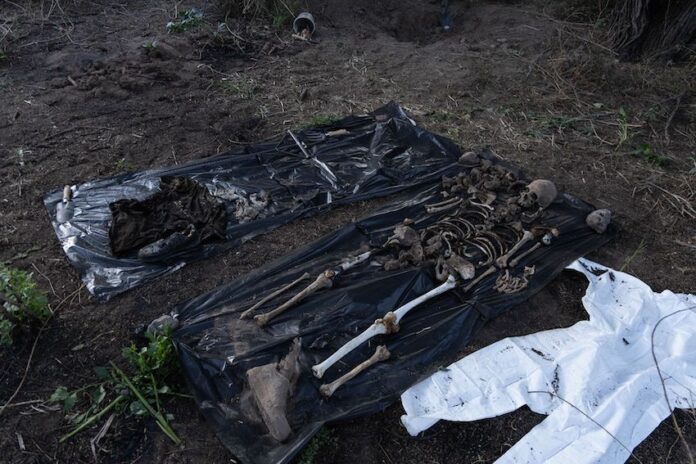
When authorities or citizen searchers find human remains, such as this recent discovery by the volunteer group “Las Escarabajo" in Aguascalientes, the FBI-built system will allow for immediate access to a database of DNA. (Adolfo Vladimir/Cuartoscuro)

Mexico is moving to modernize its forensic identification system as authorities confront an ongoing crisis of disappearances.

The Attorney General’s Office (FGR) is implementing the FBI-developed Combined DNA Index System — known as CODIS — by linking 15 state prosecutor’s offices and forensic institutes to a national database, El Sol de México reported last week.

How Do Missing Person DNA Profiles Enter CODIS?

The newspaper said its information came from a request to Mexican authorities under the country’s transparency laws, which function similarly to the U.S. Freedom of Information Act.

The system was developed by the FBI mainly for crime investigation, but also for linking remains to missing persons, for which it will be used in Mexico.

CODIS allows laboratories to compare genetic profiles and match unidentified remains with relatives of missing persons more quickly.

According to the National Registry of Missing and Unlocated Persons, maintained by the Interior Ministry (Segob) and cited by El Sol, Mexico has 134,101 persons listed as missing or disappeared.

The FGR said states beyond the initial 15 will be added as their laboratories meet international accreditation standards, leaving out for now states such as México and Tamaulipas despite their high numbers of missing persons.

“The truth is that instruments like CODIS are what Mexico needs,” said Mariano Guardado, head of the forensic genetics lab at the National Autonomous University of Mexico (UNAM) School of Forensic Sciences.

Recent events highlight both progress and need, as new discoveries of human remains underscore the urgency.

Authorities last week seized 1.5 tonnes of cocaine off the coast of Chiapas, after which the newspaper Milenio quoted a statement from the U.S. Embassy that read, in part: “… with support from INL Mexico [the U.S. State Department’s anti-narcotics and law-enforcement office in Mexico City], the FBI’s CODIS system will help expedite forensic identification in Mexico.”

Separately, the group Madres Buscadoras de Chiapas (Chiapas Searching Mothers) last week uncovered skeletal remains and clandestine graves at a ranch in the central part of the state, according to TV Azteca.

That finding and others in Morelos last year and in Baja California Sur in March illustrate the scale of unresolved cases that authorities hope CODIS will help address.

With reports from El Sol de México, Milenio and TV Azteca

New ‘México Invita’ app looks to bring World Cup tourism beyond host cities

0
México Invita
Even though the app was launched to serve World Cup visitors, officials have said that México Invita will continue to operate as a mobile tourist guide once the tournament is over. (Sectur/Cuartoscuro)

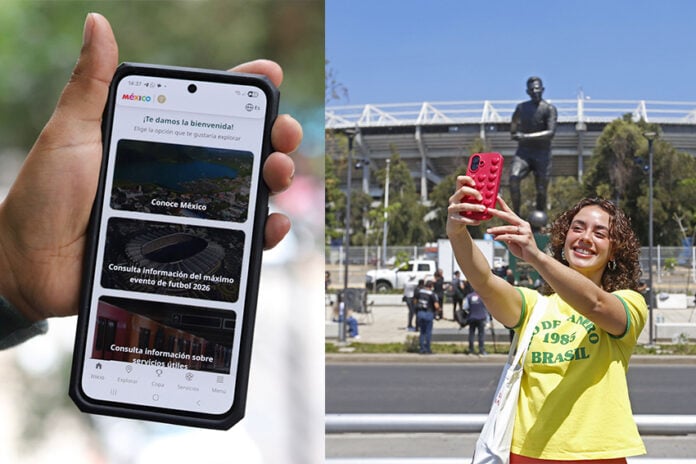
The Mexican government last week launched “México Invita” (Mexico Invites), an official mobile application designed to boost tourism and guide travelers throughout the country during the 2026 FIFA World Cup.

With less than one month to go before the tournament’s opening match on June 11, the app seeks to enhance the tourist experience for national and international visitors in addition to promoting various activities in all of Mexico’s 32 states.

“This application will allow visitors to learn about over 290 tourist routes, discover recommendations for our Magical Towns and access useful information to travel through Mexico in a safer, more practical and connected way,” Tourism Minister Josefina Rodríguez Zamora said during the presentation of the app. 

Beyond providing valuable information about the host cities of Guadalajara, Mexico City and Monterrey, the app contains emergency numbers, contact information for Green Angels (roadside assistance for tourists), a sales point for Maya Train tickets and details about museums and archaeological sites, among other features. 

Once the tournament begins, the app will share useful information about the competition in addition to live updates of all football matches. 

Even though the app was launched to serve World Cup visitors, officials have said that México Invita will continue to operate as a mobile tourist guide after the tournament concludes.

Officials expect that the app will help ensure that the economic benefits generated by the World Cup reach local communities, artisans and businesses linked to the tourism and culinary industries. 

How to download the app and what to expect?

Available in Spanish and English, users can download the app on their phones for free through the App Store (iOS) or Google Play Store (Android).  

Upon opening the app, the main menu displays three options: Discover Mexico; View information about the 2026 World Cup; and View information about useful services. There’s another section called “Tourist Calendar,” where users will find information about cultural events. 

The app features maps with pinned locations of must-see tourism and archaeological destinations, as well as downloadable PDFs with culinary guides.

With reports from Chilango and Expansión

How Tijuana’s award-winning Xicoténcatl Park united a neglected migrant community

2
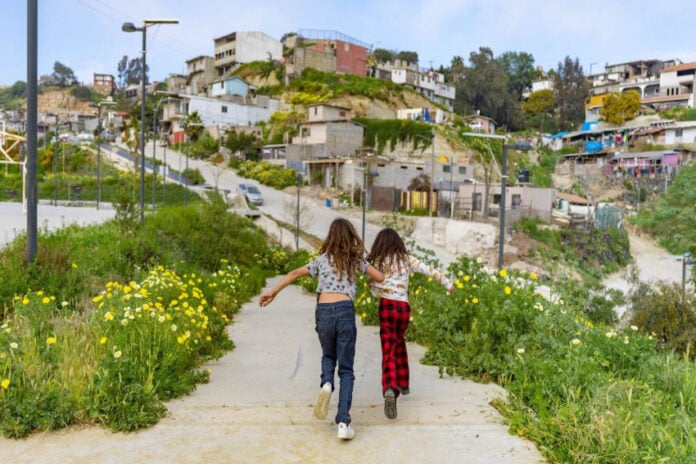
Two Mexican girls seen from behind running through pathway in Xicoténcatl Park on the outskirts of Tijuana, Mexico. In the background is a community built on a hillside of cheaply made, in some cases unfinished concrete homes.
Xicoténcatl Park, on the outskirts of Tijuana, was once a stream bed filled with debris. Now it is a vibrant community space. (Sedatu)

On the outskirts of Tijuana, in an unassuming residential area, sits Xicoténcatl Park, a community space opened in 2020 that’s been noticed worldwide as a best-practices urban renewal project — one that did what these sorts of projects should do, but don’t always: take into account the needs of the community that will use it.

That community is made up of about 5,000 former migrants from Central America, the Caribbean and Africa who were unable to cross the border into the United States and ended up settling in this marginalized area near the Mexico-U.S.border. Today, what started as an irregular encampment on empty land has grown to about 5,000 people inhabiting an urbanized area on a hillside populated by modest homes. Over time, the community began transforming a stream bed facing the community into a makeshift public space by filling it in with debris and leveling the ground for recreational use, a decision that marked the beginning of the park’s story.

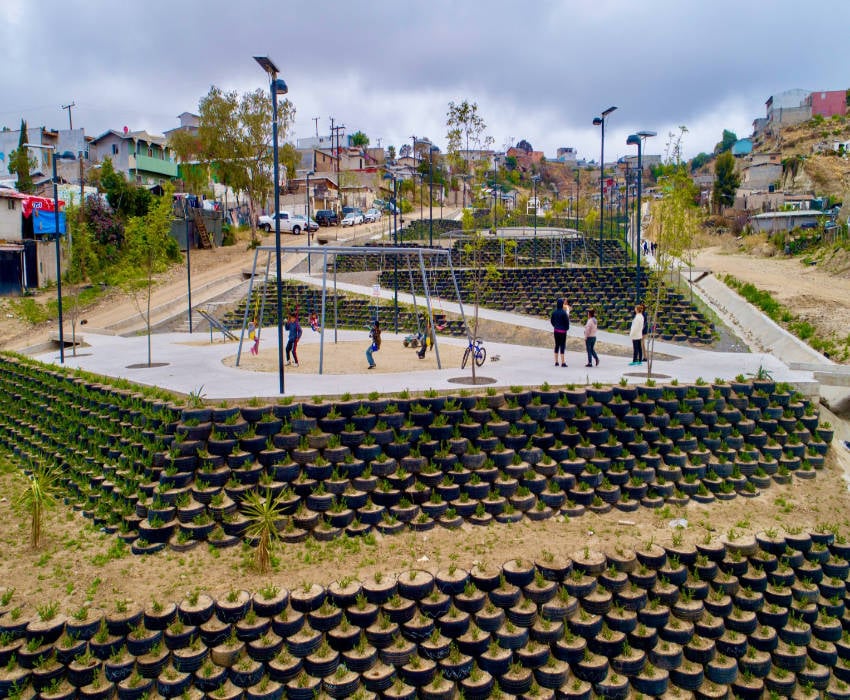
Children and adults on a raised playground created by hundreds of used tires arranged in a pyramid style shape that serves as a base for the playground. The tires are filled with live plants.
Xicoténcatl’s innovative park design transformed a scene of urban blight into a recreation space featuring a soccer pitch, a playground, seating areas and landscaped pathways. Designers used abandoned tires, a pollution problem for Tijuana, to create landscaping, elevated recreation structures and fencing. (Sedatu)

A design pivot 

Initially intending to simply improve urban blight and prevent flooding, Mexico’s Ministry of Agricultural, Territorial and Urban Development (Sedatu) had planned in 2019 to construct sidewalks here and clean the stream bed in order to channel stormwater runoff. However, the situation changed when the project’s contractors arrived and saw what the residents had done.

“We realized that tons of rubble had been dumped into the bed, altering the flow of water, dividing the community and creating areas of extreme violence,” explained Loreta Castro Reguera from Taller Capital, the firm that developed the project in collaboration with the School of Architecture at the National Autonomous University of Mexico (UNAM).

The designers proposed using some of the rubble in the ravine to transform it into a safer, more appealing park space by building platforms. They also championed a popular local construction method called llantimuro, which creates structures like retaining walls and fencing out of piles of used tires arranged in an aesthetically pleasing way.

Border cities like Tijuana receive millions of used tires imported from the United States each year, often abandoned in riverbeds and in marginalized areas in large, unsafe and unsightly piles.  

“The tire-wall system supports the land where the platforms have been built. We created nine descending platforms that now function as public spaces, and these platforms help guide rainwater runoff straight to the sea and have formed one of the city’s largest gardens, connecting people on both sides of the stream,” Castro said.

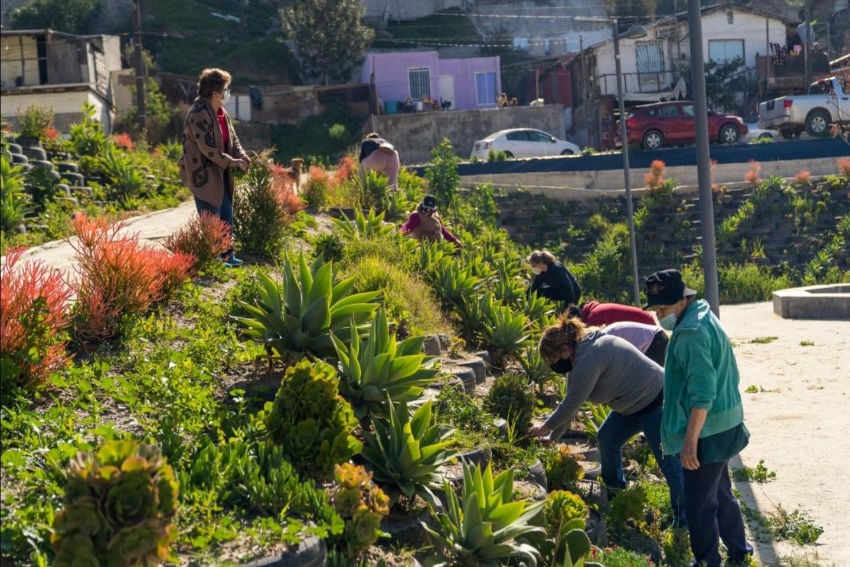
Eight adults in casual clothing tending to the vegetation in the Xicotencatl community park in greater Tijuana, Mexico. They are scattered along different sections of the vegetation, planted in a scaffolded manner along a retaining wall that borders a small street.
Members of the community tend to the park’s plantings. Use and care of the public space has brought together neighbors who were previously separated by an unnavigable stream bed. (Roman Meyer via Tijuana Local/Facebook)

A place for neighbors to meet and connect

Designers used the tires to construct a series of concrete and earth platforms, creating elevation changes of over 15 meters along a length of 390 meters. The tire wall also created habitats for at least 84 trees, 890 shrubs and 13,400 succulents, creating appealing landscaped green spaces. 

The park features multipurpose courts, playgrounds, seating areas, a meditation area and walking paths. The project also constructed perimeter channels to divert rainwater runoff and keep streets clear of water by directing it downstream to less disturbed areas of the Xicoténcatl Stream.

Also, importantly, Xicoténcatl Park by uniting the 5,000 residents living on both sides of the stream bed, has promoted social connections among neighbors.

“It has also fostered a sense of community responsibility for its upkeep,” Castro said.

A multi-award-winning park

Since Xicoténcatl Park’s opening in 2020, its unique context, inspiring story and numerous benefits to the community have earned it international attention.

The project has received eight international awards in countries as varied as Chile, Spain, Ecuador, the United States and the United Kingdom. These awards have included the 2020 Architectural League of New York Award, the 2020–2021 Architectural Review Emerging Architecture Award, the 2020 Quito Pan-American Architecture Biennial Award and the Ibero-American Architecture and Urbanism Biennial Award. It also won an honorable mention at the Seoul Design Award in 2023 and the Make It Circular Challenge, a Dutch competition organized by What Design Can Do in collaboration with the IKEA Foundation, which invited designers, creative entrepreneurs and start-ups worldwide to envision and build a circular society.

Tijuana’s Xicoténcatl Park project exemplifies how specific local needs can be addressed with innovative solutions — which, in this case, brought a better quality of life to one of Tijuana’s often-forgotten communities.

Ana Paula de la Torre is a Mexican journalist and collaborator for various outlets, including Milenio, Animal Político, Vice, Newsweek en Español, Televisa and Mexico News Daily.

Attorney General’s Office summons Governors Rocha, Campos for questioning: Monday’s mañanera recapped

5
Sheinbaum at podium on May 25, 2026
Also of note at today's mañanera was Sheinbaum's confirmation of the news that the Iranian men's national team will make Tijuana its base during the World Cup this June and July. (Moisés Pablo/Cuartoscuro)

Sheinbaum’s mañanera in 60 seconds

  • 🔍 FGR summons governors — but no charges yet: Chihuahua Gov. Maru Campos and on-leave Sinaloa Gov. Rubén Rocha Moya have been called to interview by the Attorney General’s Office (FGR) as part of separate investigations into alleged CIA involvement in a Chihuahua drug lab raid and a U.S. indictment accusing Rocha and other Sinaloa officials of cartel-linked drug trafficking. Sheinbaum stressed that neither governor has been formally accused of a crime.

  • ⚽ 🇮🇷 Iran’s World Cup team may relocate to Tijuana: Sheinbaum said the U.S. does not want the Iranian team to stay overnight on American soil, prompting FIFA to approach Mexico about hosting the squad. Mexico agreed, and Tijuana is now the proposed base for Iran, which will play its three group-stage matches in the U.S. Tourism Minister Josefina Rodríguez and World Cup representative Gabriela Cuevas are coordinating accommodation plans with FIFA.

  • 🦠 Ebola screening measures planned for World Cup: With an active Ebola outbreak in the DRC — whose team plays a group-stage match in Guadalajara — Sheinbaum said Mexico will implement health screening measures for travelers from affected countries, while stopping short of a travel ban. Details on the measures are expected at Tuesday’s mañanera.

Why today’s mañanera matters

At her Monday morning press conference, President Claudia Sheinbaum responded to the news that Chihuahua Governor Maru Campos and Sinaloa Governor Rubén Rocha Moya, who is currently on leave, have been summoned to interviews with the Federal Attorney General’s Office (FGR).

Sinaloa Governor Rubén Rocha Moya
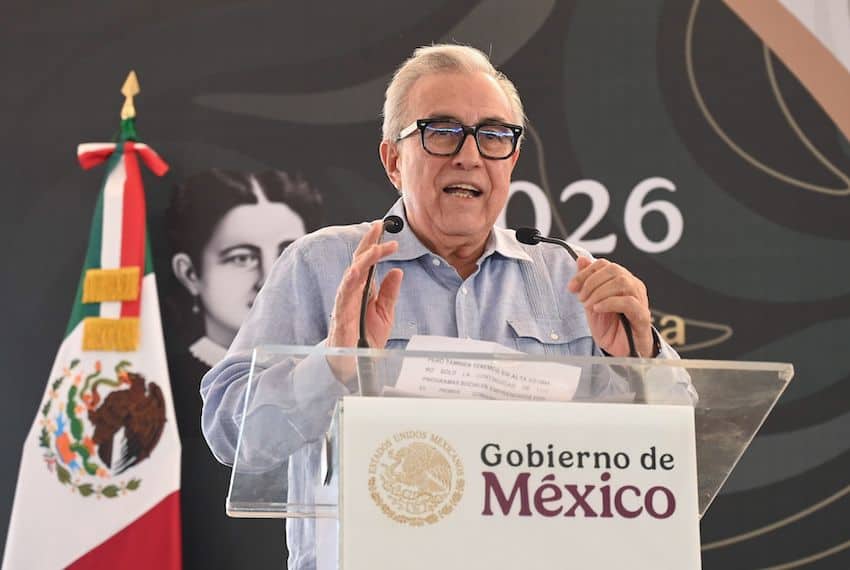
Sinaloa Governor Rubén Rocha Moya is accused of narcotics importation conspiracy; possession of machine guns and destructive devices; and conspiracy to possess machine guns and destructive devices. (Presidencia/Cuartoscuro)

The FGR is investigating the alleged participation of U.S. Central Intelligence Agency (CIA) officers in a drug lab raid in Chihuahua last month. Sheinbaum has said that the CIA officers participated in the operation without the knowledge or authorization of the Mexican government, violating Mexican laws.

The FGR is also conducting an investigation related to a U.S. indictment that accuses Rocha Moya and nine other current and former Sinaloa-based officials of drug trafficking in league with the Sinaloa Cartel.

Both Campos and Rocha have indicated that they will comply with the summonses and appear before FGR officials. Both deny any wrongdoing.

The cases involving Campos and Rocha are among the biggest news stories in Mexico today, and have clear implications for Sheinbaum and the federal government. Rocha is affiliated with Mexico’s ruling party, Morena, and an ally of the president, meaning that the accusation he faces is also tarnishing Sheinbaum. A conviction against the governor in the United States — if he is extradited — would be extremely damaging for Morena and the Sheinbaum administration.

Regarding the alleged CIA involvement in a security operation in Chihuahua, Sheinbaum presumably wants someone to be held to account. It would be politically advantageous for the president, a staunch defender of Mexican sovereignty, if that person were Campos, a representative of the opposition National Action Party (PAN).

In video message, Chihuahua governor insists she did not know of CIA’s presence in her state

Also of note at today’s mañanera were Sheinbaum’s remarks on two issues related to the FIFA men’s World Cup, which Mexico will co-host with the United States and Canada starting June 11.

Sheinbaum: FGR is not accusing Campos or Rocha of committing crimes  

Sheinbaum acknowledged that the FGR summoned both Campos and Rocha.

She noted that “the Chihuahua case” is an investigation into the presence of “foreign agents” — i.e., CIA officers — in the northern border state, two of whom were killed in a car accident after they allegedly participated in a drug lab raid.

Sheinbaum said that the FGR has already interviewed various people in connection with the case, including personnel from the Chihuahua Attorney General’s Office.

“And as part of the procedures, I understand that it also called the governor to an interview. It doesn’t mean she is accused of any issue,” said Sheinbaum, who has personally accused authorities in Chihuahua of requesting security collaboration with U.S. personnel.

Campos has asserted that she didn’t authorize or have knowledge of the presence of CIA personnel in Chihuahua.

Regarding “the Sinaloa case,” Sheinbaum noted that the FGR has also summoned various people to interviews, including Rocha Moya, federal Senator Enrique Inzunza and Culiacán Mayor Juan de Dios Gámez Mendívil, who, like Rocha, is on leave.

She acknowledged that two of the other officials accused by U.S. prosecutors of drug trafficking offenses turned themselves in to U.S. authorities.

Sheinbaum said that the summoning of the Sinaloa-based officials is “part of the investigation” being carried out by the FGR.

“They’re procedures. There is not an accusation against anybody, according to what the Attorney General’s Office has told us,” she said.

Sheinbaum has endorsed the FGR’s declarations that there is currently insufficient evidence to arrest Rocha and the other defendants for the purpose of extradition to the United States.

Iran’s World Cup team set to be based in Tijuana 

A journalist noted that it has been reported that Iran’s World Cup team will be based in Tijuana during the tournament, rather than in Tucson, Arizona, as originally planned.

The BBC reported on Sunday that the president of the Iranian Football Association “says FIFA has approved the country’s World Cup training base being switched from the United States to Mexico.”

“Mehdi Taj said Iran will now be based in the Mexican border city of Tijuana, although the change has yet to be confirmed by FIFA. Iran were given Tucson, Arizona as their World Cup base but the ongoing war in the Middle East and related security concerns has led to uncertainty around their participation,” the BBC wrote.

Sheinbaum said that the United States “doesn’t want the Iranian team to stay overnight” in the U.S., where it will play its three group-stage matches.

She said that a FIFA representative asked the federal government whether the team could stay in Mexico.

“And we said ‘yes, no problem, we don’t have any problem,'” Sheinbaum said.

“So they’re seeking that the base be in Tijuana,” she said.

“… We don’t have any reason to reject the possibility of them staying in Mexico,” Sheinbaum said.

“So we gave them that option,” she said, adding that the Mexican government’s World Cup representative, Gabriela Cuevas, and Tourism Minister Josefina Rodríguez are “reviewing” Iran’s accommodation plans with FIFA.

Mexico to take ‘health measures’ to prevent entry of Ebola during World Cup 

A reporter noted that there is an outbreak of Ebola in the Democratic Republic of the Congo (DRC), whose World Cup team will play one of its three group-stage matches in Guadalajara.

Andrew Giuliani, the executive director of the White House Task Force for the World Cup, told ESPN on Friday that the DRC’s team, which is currently training in Belgium, must isolate for 21 days or risk the ability to enter the U.S. for the World Cup.

“Is there also going to be a special situation with this team here [in Mexico], including with the tourists who come from Africa, from [the Democratic Republic of the] Congo?” the reporter asked Sheinbaum.

“There have to be some particular health measures that are worked on together with the country of origin,” the president responded.

“Obviously if there is a problem of a contagious disease, we have to take health screening measures that guarantee that [foreigners] don’t infect [people] in Mexico,” Sheinbaum said.

She said that health officials will provide details on the measures at her Tuesday morning press conference.

Sheinbaum said that the outbreak of Ebola in African countries — namely in the DRC and Uganda — doesn’t mean that people from those countries “can’t travel” to Mexico.

They can travel, she said, “with all the necessary measures that have to be taken.”

By Mexico News Daily chief staff writer Peter Davies (peter.davies@mexiconewsdaily.com)
Miami court awards Mexico an additional US $578.5M in damages from García Luna’s corruption schemes

4
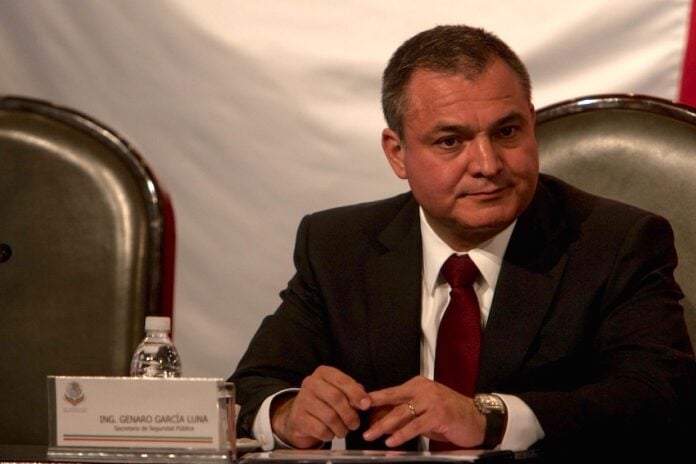
Genaro García Luna in 2011
Genaro García Luna in 2011. (Octavio Hoyos/Shutterstock)

A Miami, Florida, court last week awarded the Mexican government a massive win in a civil suit filed against former Security Minister Genaro García Luna, who is currently serving a 38-year sentence in the U.S. for accepting bribes to help drug traffickers.

Judge Lisa Walsh in Miami-Dade County ordered members of the Weinberg family and related companies to pay US $578.5 million in damages to the Mexican state for losses incurred as a result of their involvement in corruption schemes. Mexico’s Financial Intelligence Unit (UIF) has identified the Weinbergs as frontmen for García Luna.

Former security minister Genaro García Luna gets 38 years in US prison

This ruling adds to the judgments previously obtained against García Luna and his wife, Linda Cristina Pereyra, which were handed down in May 2025, for an amount exceeding US $2.448 billion, the Finance Ministry (SHCP) said in a statement

“During the process, the involvement of individuals and legal entities was proven, who participated in mechanisms aimed at the improper obtaining of public contracts and in the subsequent transfer and concealment of resources,” the statement said.

The May 20 ruling — which lifted the total amount of judgments obtained in favor of the Mexican government for this scheme to more than US $3.067 billion — brought to a close a civil case first filed in September 2021 by the Mexican government.

In its initial complaint, the Mexican government — led at the time by President Andrés Manuel López Obrador — accused Garcia Luna, his wife and their co-defendants of having “concealed funds stolen from the government” and smuggling the money to places like Barbados and the United States.

“Under the direction of the Defendant, the funds unlawfully taken from the Government of Mexico were used to build a money-laundering empire,” the complaint alleged.

After serving as security minister in President Felipe Calderón’s Cabinet from 2006 to 2012, García Luna moved to Florida. His lawyers said he was a legitimate businessman who did consulting in Florida before he was arrested by agents from the U.S. Drug Enforcement Administration in December 2019 on charges of accepting millions of dollars in bribes from the Sinaloa Cartel.

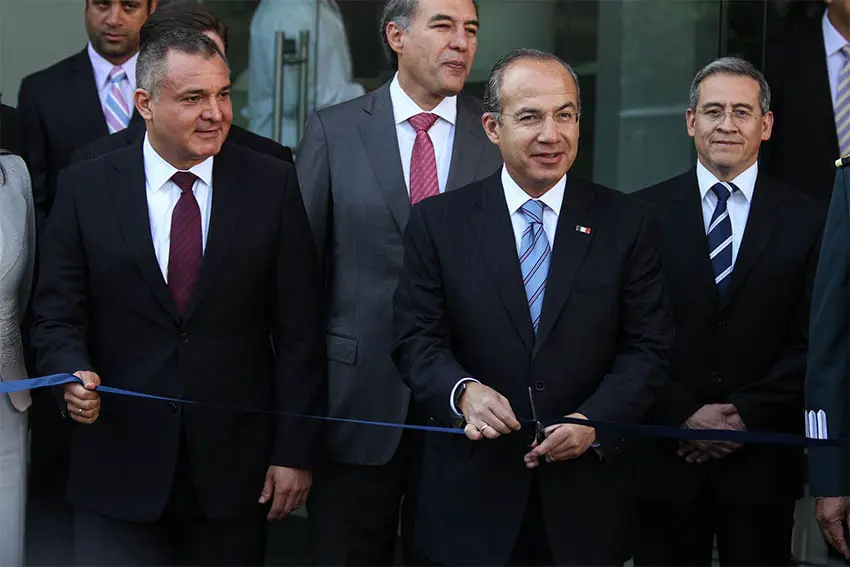
Genaro Garcia Luna standing next to President Felipe Calderon an a ribbon cutting event in 2013.
García Luna, left, was Mexico’s security minister under President Felipe Calderón, center (2006–2012). (Octavio Hoyos/Shutterstock)

Last week’s ruling verified the UIF’s accusation that García Luna and associates set up companies that got 30 dubious government contracts while serving as security minister and for six years afterward.

The contracts were for items such as surveillance, monitoring and communications equipment used in prisons and in intelligence work. The contracts were presumably inflated. In one case, the contract was simply falsified.

The UIF has accused García Luna of channeling money from the government contracts to offshore accounts, many in Barbados, then sending it to Miami to buy high-end condos and vintage cars, while also funding a lavish lifestyle.

Mexico further alleges that García Luna stole millions in taxpayer funds, for which it has pledged to seek restitution. The government is expected to file a legal complaint in Miami, where it alleges some of the illegal activity took place.

With reports from El Economista, Proceso, El Universal, Al Jazeera, The Associated Press and El País