The plant in Altamira, Tamaulipas, is the second to be disconnected this year.
The federal government has dealt another blow to Spanish energy company Iberdrola, disconnecting a power plant it owns in southern Tamaulipas from the state-owned grid.
The National Energy Control Center (Cenace) disconnected the Enertek plant in Altamira on Thursday even though Enertek – an Iberdrola subsidiary – had obtained a court order against such a move. The newspaper Reforma sought comment from Cenace about its actions but didn’t receive a response.
The plant’s permit has expired but Enertek obtained a court order in March that was supposed to stop Cenace from disconnecting it from the grid. The plant, which began operations in 1998, sought to modify its permit last year, but the Energy Regulatory Commission rejected the request.
The disconnection of the 144-megawatt plant comes after Iberdrola’s power station in Pesquería, Nuevo León, suffered the same fate earlier this year.
Iberdrola, which has a presence in 15 states, is one of the largest private energy companies in the Mexican market, but its investment here fell to just US $16.1 million in the first quarter of 2022, a 93% decline compared to five years ago and a 60% drop in the space of a year.
President López Obrador, a staunch energy nationalist determined to “rescue” the state-owned Federal Electricity Commission (CFE), has held the company up as an example of what he calls unscrupulous foreign firms that have “looted” the country. In a variety of ways, his administration has sought to make doing business here difficult for foreign and private energy companies, many of which generate renewable energy from sources such as wind and solar.
The government’s nationalistic energy sector policies triggered challenges by both the United States and Canada under the three-way North American free trade pact known as USMCA.
Víctor Ramírez, an energy analyst, told Reforma that with actions such as Thursday’s disconnection of the power plant in Altamira, the government is forcing companies’ to purchase electricity from the CFE.
“The government is using every trick in the book to avoid competition and block [private energy companies] that can compete,” he said.
“It’s forcing customers to buy from CFE, which isn’t necessarily the cheapest [electricity supplier],” Ramírez said. “… It’s not giving them any other option but to … [purchase power from] CFE, which is contrary to the competition policy that is enshrined in the constitution.”
In Nuevo León, where Iberdrola’s Dulces Nombres plant was disconnected in February, the Spanish firm’s commercial customers were forced to enter into expensive CFE contracts with a duration of at least five years, according to people who spoke with Reforma on the condition of anonymity. The sources said that CFE’s rates were up to 30% higher than those charged by Iberdrola.
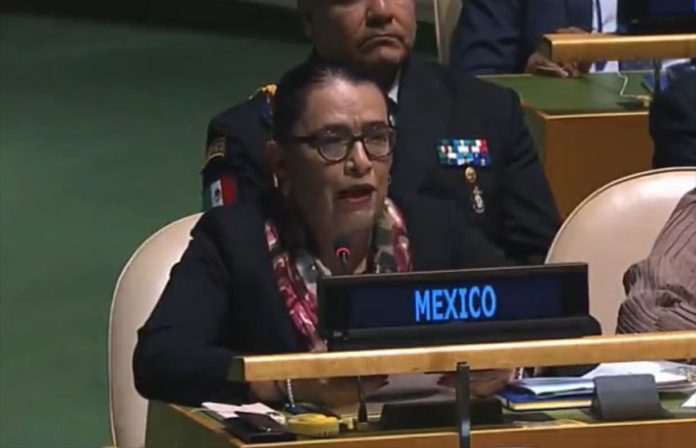
Federal Security Minister Rosa Icela Rodríguez speaks at Thursday's UN Chiefs of Police Summit in New York City. Twitter @rosaicela_
Federal Security Minister Rosa Icela Rodríguez portrayed Mexico as an innocent victim of drug-related violence during an address at a United Nations event in New York on Thursday.
Speaking at the third UN Chiefs of Police Summit, Rodríguez asserted that Mexico doesn’t manufacture the firearms used in cartel-related violence here and that Mexicans don’t consume synthetic drugs such as methamphetamine and fentanyl.
“Do we make the weapons? No. Do we consume the synthetic drugs? No. Do we provide the dead? Unfortunately, yes,” she told a summit event attended by United Nations Secretary-General António Guterres and security officials from around the world.
While Mexicans may not be large consumers of synthetic drugs, Mexican criminal organizations are major suppliers of them to the United States – the world’s largest illicit drug market – and other countries around the world. An article published by The Wall Street Journal this week details how the Sinaloa Cartel and the Jalisco New Generation Cartel came to dominate the supply of fentanyl – a potent synthetic opioid – to the United States.
Security Minister Rodríguez comments on security in Mexico at the summit.
In her address, Rodríguez said that upon taking office in December 2018, President López Obrador “received a nation mired in violence due to the so-called war against drugs undertaken by previous governments.”
The current government decided that the “fire must stop,” she said, asserting that it didn’t take office to “win a war” but to bring peace to the country.
Rodríguez said that “part of the insecurity of my country has its origin in the consumption of drugs around the world.”
“… There are nations that face a public health problem due to the consumption of these substances. As Martin Luther King said, ‘peace is not merely the absence of tension, it is the presence of justice.’ I insist, countries that are consumers [of drugs] and countries that are producers and through which drugs pass have the responsibility to work together to build peace,” Rodríguez said.
The security minister highlighted that the government’s security strategy “prioritizes profound attention to the causes that generate violence and poverty with universal social programs” – the so-called abrazos, no balazos or “hugs, not bullets” approach.
Rodríguez used a different catchphrase to encapsulate the strategy, saying that it could be summarized by López Obrador’s motto, “For the good of all, the poor come first.”
In a three-minute address, she went on to assert that the federal security cabinet is not complicit with organized crime, “as occurred in the past.”
“As an example, it’s enough to say that a few kilometers from here in Brooklyn, a former Mexican security minister is imprisoned,” Rodríguez said, in reference to Genaro García Luna.
She also highlighted that in 2020 López Obrador took a groundbreaking decision to appoint her – a woman – as security minister. “Women are peace builders,” Rodríguez said. “We contribute a lot to peace.”
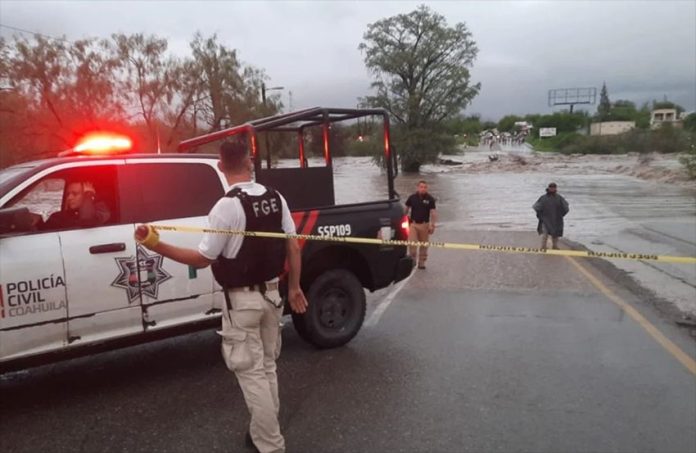
State officials close a flooded road in Múzquiz, Coahuila.
Residents of Múzquiz, Coahuila, awoke to severe flooding Thursday after a storm dumped about 30 centimeters of rain on the municipality.
Thousands of residents in Melchor Múzquiz, the municipal seat, and nearby communities have been affected by the flooding, with some families trapped in their homes due to the abundance of water. Rain continued to fall on Thursday, aggravating the situation.
In a Facebook post on Thursday morning, Múzquiz Mayor Tania Flores declared a state of emergency in the municipality.
In another post in the early afternoon she thanked all the rescuers who risked their lives to save those of others. Accompanying video footage showed a rescue worker carrying a young boy through waist-high water. Behind him, another man assisted an elderly lady.
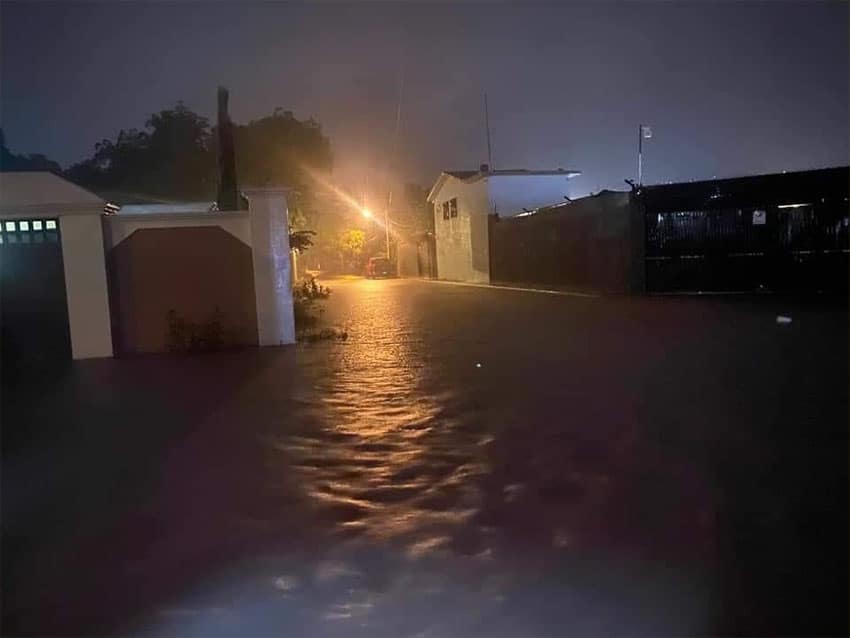
The flooding began early Thursday morning, as seen in this photo taken by a Múzquiz resident.
Government helicopters were also deployed to aid rescue efforts as streets in Múzquiz appeared more like fast-flowing rivers. The newspaper Milenio reported the death of cattle and pets, but no human fatalities had been reported in the municipality by late Thursday afternoon.
“Today we lived through a time of crisis and sadness … [in which] 70% of the population lost everything they had,” Flores wrote in another Facebook post.
“I never thought … we would have such a large natural disaster. … There are thousands of victims in Múzquiz. … I ask everyone in different municipalities for your help. Mayors, deputies, business people and citizens in general, today we need your help,” the mayor said.
She also posted heartfelt video messages to her Facebook page, sobbing as she shared footage of some of the affected areas.
Rescuers help trapped residents escape their flooded homes.
“Move away from flooded areas because [the situation] is critical,” she said in one video. “My heart breaks to see what is happening in Múzquiz.”
Shelters were set up to receive people rescued by authorities and private citizens, who made use of boats, canoes and other watercraft to navigate the flooded streets. Soldiers, members of the National Guard and Civil Protection personnel were among the official rescuers who worked throughout the day.
The newspaper El Universal reported that flooding was higher than one meter in low-lying parts of Múzquiz, part of a coal mining region in Coahuila. The excessive water flowed into homes, stranded vehicles and caused local waterways, including the Sabinas River, to overflow. The flooding closed schools and many businesses in Melchor Múzquiz, located about 140 kilometers north of Monclova and a similar distance southwest of the northern border city of Piedras Negras.
The region has experienced heavy rain in recent days and one person was swept away by floodwaters and drowned in the municipality of Acuña on Tuesday, Milenio said. Also in the region, 10 presumably deceased coal miners remain underground in the municipality of Sabinas almost a month after the mine in which they were working flooded when a wall collapsed during excavation work.
Flooding has also recently affected other parts of northern Mexico, including parts of Sinaloa, where authorities warned that people driving quad bikes or other vehicles recklessly in water-clogged streets will be detained.
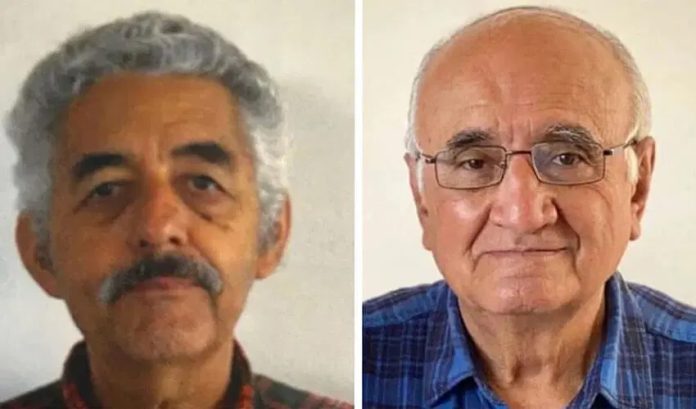
From left to right: Joaquín Mora and Javier Campos were gunned down in a church while sheltering a man pursued by their alleged killer, whom they'd known as a boy. Facebook
Dedicated to Javier Campos Morales, a.k.a El Gallo, and Joaquín César Mora Salazar, a.k.a. El Morita.
I visited Chihuahua’s Sierra Tarahumara for the first time some 15 years ago.
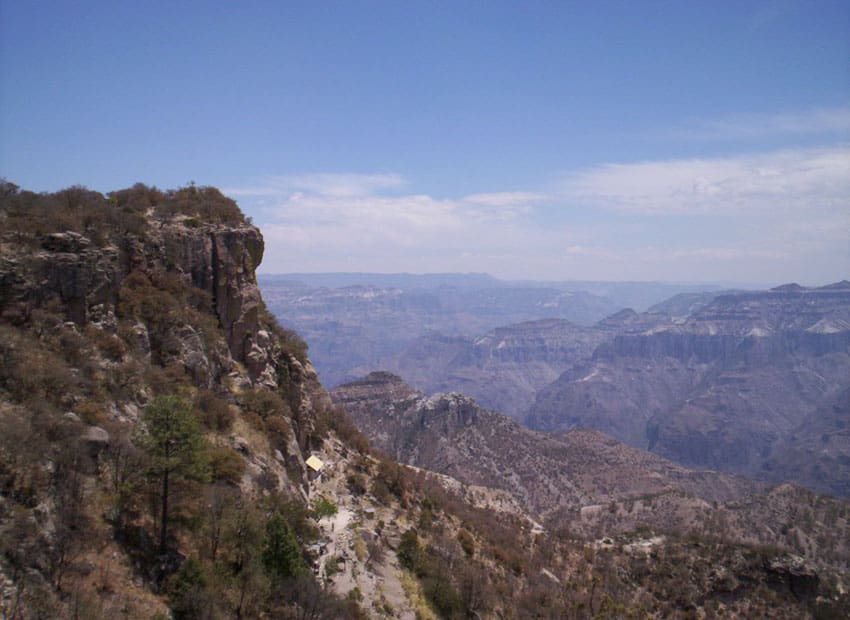
I arrived in Raramuri territory — this indigenous people’s name means “those with light feet” in their language — via El Chepe, one of only three passenger trains that today still exist in Mexico. I climbed onto that old choo-choo at 90 meters above sea level in the state of Sinaloa at the El Fuerte train station near the Gulf of California, gradually climbed in elevation until I found myself winding through the entrails of Copper Canyon and got off a few hours later in the state of Chihuahua at the El Divisadero train station at 2,238 meters above sea level.
The next morning, I was awakened at dawn by the aerial ballet of a dozen of zig-zagging hummingbirds in flight, their joyful 70 wingbeats per second impossible for the human eye to discern; they were right outside my window, overlooking a 2,000-meter-deep precipice. These are my favorite birds. I love their long-bent beaks, disproportionately long wings, and unending rush to get from one flower to the next. We call them “flower-licking birds” in the village where I was born.
Chihuahua’s stunning Copper Canyon complex is the home of the indigenous Raramuri, who are routinely preyed upon by organized crime. Eugenio Barrios
Hummingbirds resemble multicolored butterflies, and from time to time — and without knocking — they sneak through the doorway of my studio/library in Mexico City. They study their own reflections in the glass of my large windows and then suddenly vanish across the terrace and back to the forest while I scribble away.
Late that night, looking through my window at the Mirador Hotel, on the edge of a colossal mountainous abyss, my mind could not shake the images of the three canyons one can see from there. Together with few other canyons, they comprise the Copper Canyon complex: the Urique Canyon (at more than 2,000 meters down, it’s Mexico’s deepest), the Tararecua Canyon and the Copper Canyon.
I recalled that many years back, an American friend, half-seriously and half-jokingly, told me that United States’ Grand Canyon had dreams to be like the Copper Canyon when it got older. “Canyon dreams,” I suppose you might call it.
Truth be told, the Grand Canyon has a long way to go; the Copper Canyon system is four times larger and almost twice as deep as the Grand Canyon.
Lying on the soft, white bedsheet without losing awareness of the shimmering moonlight crawling through my open window, I rested upon my belly a novel about the life of Vlad III, Prince of Wallachia — better known as Count Dracula.
The book’s black cover frames a red Transylvanian dragon with open jaws, from which a sinuous-arrowed tongue emerges. The thing is that, together with wrapping my head around the Big Bang and plate tectonics, vampires are my most irrational fears.
Here I am at one of planet Earth’s most mysterious, secluded and overwhelming natural areas — a portal of canyons through which one can be transported to parallel universes, even if only fleetingly. Meanwhile, the scent outside, the untamed Chihuahuan Desert and its bewildering biodiversity, lull the Raramuri land to sleep, and me as well.
But just over two months ago, on June 20, this idyllic version of the Sierra Tarahumara was suddenly ripped to pieces by a murder.
What happened that day revealed once again, to Mexico and to the world, the sad and brutal reality of day-to-day life in this region, the violence and anguish of a land that seems to belong to no one — much less to “those with light feet” who, for so many generations, have lived in extreme poverty and vulnerability in their mountain home.
I must confess that I have never cared all that much for priests — for a variety of reasons, but mostly because most of those I have met seemed fake, manipulative people who purport to sell, at all costs, a soulless version of Alice in Wonderland. But I always thought that Jesuits were a different breed of priest, that they were the ones who risk living — and dying — for what they believed in, the ones willing to fight for it.
One of the four or five times that I visited the Sierra Tarahumara, I was blessed to briefly meet Javier Ávila Aguirre, whose nickname was El Pato (the duck). He was a legendary Jesuit who since the 1970s has been fighting for Raramuri rights.
Not only did I like El Pato, he inspired me to do more for this forgotten land, though I now regret having done practically nothing.
Javier Campos Morales, a.k.a., El Gallo (the rooster) also made his appearance in this region in the 1970s, to be followed years later by Joaquín César Mora Salazar, known as El Morita (a diminutive of his last name). The two were also Jesuit missionaries — and they both were killed on June 20 at a church in Cerocahui, in the heart of Raramuri country.
When he was 16 years old, El Gallo joined the Jesuits and was ordained in 1972. He devoted the next half-century of his life to a pastoral mission in the Sierra Tarahumara — where he was nicknamed El Gallo because he could cock-a-doodle-doo like no one else. El Morita was 81 years old when he was murdered, having spent the last 23 years of his life in the Sierra, where he always dressed as a cowboy, in jeans and plaid shirts.
El Gallo and El Morita gave their lives for the Raramuri. They both were murdered while trying to help Pedro Eliodoro Palma, a tourist guide who, after being wounded, sought safe haven inside a chapel. He, too, was later murdered — in a series of events that could have been a scene taken from Gabriel García Márquez’s novel, Chronicle of a Death Foretold.
Both Jesuits were assassinated inside the Lord’s house, allegedly by José Noriel “El Chueco” Portillo Gil, a suspected local drug lord who then allegedly stole their bodies in an attempt to conceal the crime.
In the days after the murder, El Pato, the Jesuit I met all those years ago, told reporters that the two murdered priests had known El Chueco from childhood and that after killing them, El Chueco confessed his wrongdoing to another priest and begged for forgiveness.
Why were these two priests in the Sierra Tarahumara murdered? They were not simply killed by a sick, sad man. That is the easy answer.
They were also slaughtered by the insane violence, unpunished corruption and corrosive indifference that we all live among here in Mexico — which every day kills and disappears scores of women, young people, journalists, human rights activists, environmental defenders and many of my other compatriots.
Please take care of yourself, Pato.
Omar Vidal, a scientist, was a university professor in Mexico, is a former senior officer at the UN Environment Program and the former director-general of the World Wildlife Fund-Mexico.
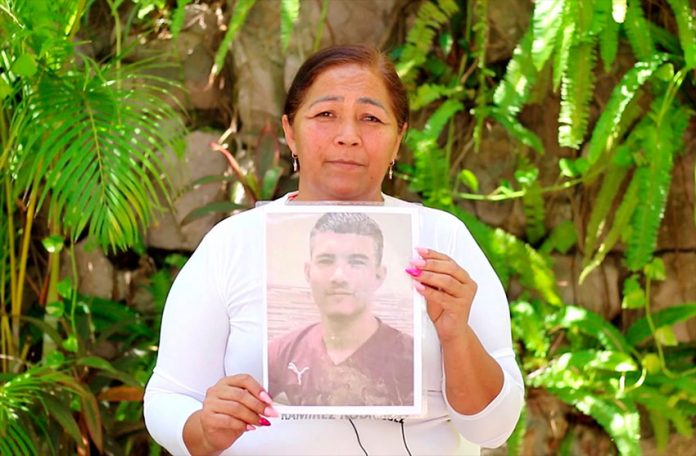
Rosario Lilián Rodríguez holds a picture of her son.
An anguished mother who had been actively and openly searching for her missing son for nearly three years was abducted on Tuesday night and found murdered the next day in her small town in Sinaloa.
Rosario Lilián Rodríguez, a member of the mothers’ activist group “Hearts Without Justice,” was forced into a white truck by armed men shortly after leaving a special Mass that was dedicated to her son Fernando, a 20-year-old who disappeared in October 2019.
Her abduction occurred on the United Nations’ International Day of Victims of Enforced Disappearance, and she was murdered between 9 p.m. that night and the early morning hours of Wednesday, when when her body was found in La Cruz de Elota, a city of 15,600 people about an 80-minute drive north of Mazatlán.
Onlookers reported that she had been forced into a Chevy Suburban, and her body was found on the street.
Sinaloa Governor Rubén Rocha Moya said an investigation is underway and also shared his sympathies on Twitter, writing, “I deeply regret the murder of Rosario Rodríguez Barraza, a tireless fighter like many other Sinaloan women who are looking for their loved ones.”
According to ”Hearts Without Justice,” Rodríguez and her family had been threatened and attacked on previous occasions. “They had already sprayed gasoline on her house to set it on fire, they tried to disappear another son of hers, and on one occasion they took a truck from her and returned it to her the next day,” said a member of the group who requested anonymity out of fear of reprisals.
According to the media portal Pie de Página, La Cruz de Elota is known for its location facing the sea — and for how fearful residents know that it’s best to keep quiet and mind their own business.
According to Rodríguez’s children, their call to 911 after their mother was abducted was to no avail. “They didn’t send a single patrol,” an activist told the reporters whose article appeared in Pie de Página. “We know that 20 minutes make a difference, and nobody did anything.”
Antes de su asesinato, Rosario dejó en este video su único deseo: Encontrar a su hijo desaparecido
In a video filmed earlier this summer, Rodríguez described her son’s disappearance and the lack of government response, before asking for help to locate him.
Several weeks ago, in a short video recorded by the “Until We Find Them” project (#HastaEncontrarles), Rodríguez held a photo of her son Fernando and said, “I don’t know about his whereabouts. I have searched day and night, and … all I know is that he was taken away by armed men in a white car.”
She denounced the prosecutor’s office in Mazatlán and other institutions. “I am waiting for an answer. I am looking for my son. I am not looking for those responsible,” she said.
Rodríguez was a day laborer who worked in the nearby fields cutting chiles, and her son Fernando was a day laborer, too, according to Pie de Página.
Groups of activists, feminists and those who search for the missing spoke out in various public ways after the murder. “We demand justice!!” the collective “For the Voices Without Justice” wrote on Facebook. “We call on the authorities of all levels of government [to take action]. [The criminals] took the life of a person who only demanded the return of her son. Now we become the voice of our partner and demand what she longed so much for — the return of [her son]. We are not going to be silenced.”
The article in Pie de Página, a lengthy investigative piece by two reporters who are members of the #HastaEncontrarles project, said that Rodríguez “was a victim of institutional abandonment: when her son disappeared and they did not look for him; when they threatened her and nobody protected her; when they kidnapped her and nobody answered the calls for her rescue.”
After her son disappeared in 2019, Rodríguez filed a complaint with prosecutors in Mazatlán, but then took it upon herself to investigate, allegedly finding videos, witnesses and other evidence on her own. In the recently taped interview, Rodríguez insisted that her son’s perpetrator was being detained in a prison in San Luis Río Colorado, Sonora, but the Sinaloa Attorney General’s Office told her that was beyond its jurisdiction and nothing could be done.
The peyote cactus is illegally harvested by outsiders.
For the past 25 years, the wild peyote that grows in San Luis Potosi has been steadily decreasing as harvesters pick it illegally for personal and recreational use.
A small, spineless cactus that is native to the dry, desert climates of the southwestern United States and northeast Mexico, peyote is used by the indigenous peoples of the area, the Wixárika, as a psychedelic medicinal plant as part of their religious ceremonies. According to their belief system, the state of consciousness that peyote induces helps them speak directly with their gods and receive messages from them in return.
“The number of rocks you see everywhere, that was how it used to be with peyote in this area,” said Candelario Martínez, a member of the local indigenous community.
Various controls have been implemented to keep the peyote from being illegally collected, but so far they are not working to keep the area safe from the plant’s depletion. In 2000, a pilgrimage route made up of over 140,000 hectares of land and encompassing Real de Catorce, Charcas, Vanegas, Villa de la Paz, and Villa de Ramos was declared a Natural Protected Area, but these federal and state restrictions, in conjunction with efforts by landowners and local farmers, have not stopped the illegal harvest.
Some of the Wixárika ceremonial sites like El Bernalejo have also been vandalized. Locals blame the problem on zero enforcement of local and federal laws as well as the psychedelic tourism industry.
Residents said in interviews that local collectors will dig around the plant and cut it evenly from its root, covering it back up with dirt so that the plant can regenerate, but outsiders pull plants up roots and all both to use and take home to replant. Up until four years ago, plants were relatively plentiful, says one community member, but not anymore.
Mexico City Mayor Claudia Sheinbaum and Foreign Affairs Minister Marcelo Ebrard.
Mexico City Mayor Claudia Sheinbaum is preferred over Foreign Affairs Minister Marcelo Ebrard as the ruling Morena party candidate for the 2024 presidential election, a new poll found.
A national survey conducted by the polling firm Buendía & Márquez for the El Universal newspaper asked 1,000 people to nominate their preferred Morena candidate.
Sheinbaum, a close ally of President López Obrador, was chosen by 31% of respondents, just ahead of Ebrard, who was selected by 29%.
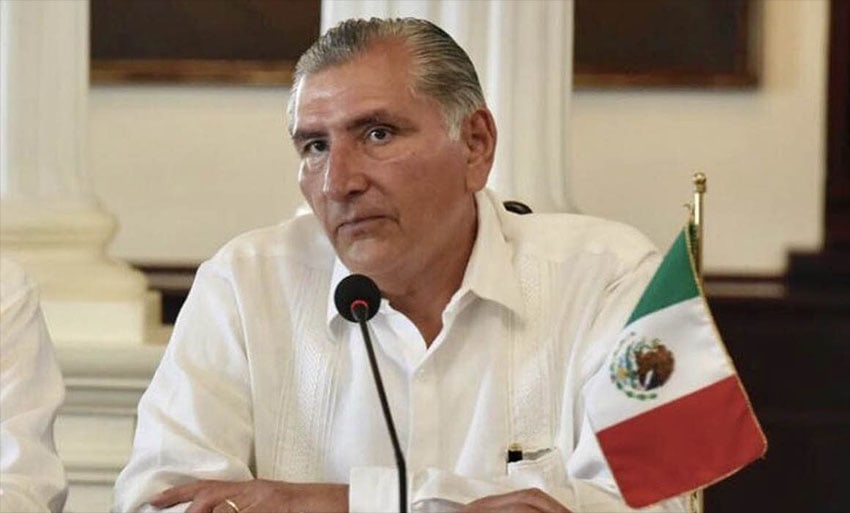
Those polled were given two other options as well: Morena Senate leader Ricardo Monreal and Interior Minister Adán Augusto López. The former was the preferred candidate of 11% of the respondents while the latter was the favorite of 7%.
Interior Minister Adán Augusto López, another possible Morena candidate, trails behind Sheinbaum and Ebrard in popularity.
Ebrard beat Sheinbaum on name recognition, with 68% of respondents saying that they had heard of the foreign minister, who served as Mexico City mayor between 2006 and 2012. Only 53% had heard of the mayor, who was environment minister when López Obrador was Mexico City mayor before going on to become the top official in Tlalpan, a southern borough of the capital.
Almost four in 10 respondents – 36% – said they had a good opinion of Ebrard compared to 33% who said the same about Sheinbaum. The foreign minister also attracted a higher number of negative opinions – 21% – giving him a net positive/negative ratio of +15. Sheinbaum’s ratio was slightly higher at +20 as only 13% of those polled spoke ill of her.
The pollsters also asked respondents to nominate their preferred National Action Party (PAN), Institutional Revolutionary Party (PRI) and Citizens Movement (MC) party candidates for 2024.
Margarita Zavala, a federal deputy and wife of former president Felipe Calderón, came out on top in the PAN contest with 32% support, while Santiago Creel, a deputy and former interior minister, ranked second with 15%.
In the PRI contest, federal senator and former Tlaxcala governor Beatriz Paredes was the favored candidate among 21% of those polled, five points ahead of Alfredo del Mazo, the current governor of México state.
Just over four in 10 respondents – 41% – said they would support a Morena candidate if the presidential election was held on the day they were polled, while PAN and PRI both received 14% support. Those two opposition parties, and the Democratic Revolution Party, will likely field a common candidate at the 2024 election, but the three together only attracted combined support of 30% among poll respondents. The figure for Morena and its allies was a much healthier 49%.
The poll also pitted the possible candidates against each other in mock races. Sheinbaum easily prevailed in the two in which she was the Morena candidate, while Ebrard was a convincing winner in his confected contests.
The 2024 presidential election will be held on June 2, 2024, with the winner to be sworn in four months later.
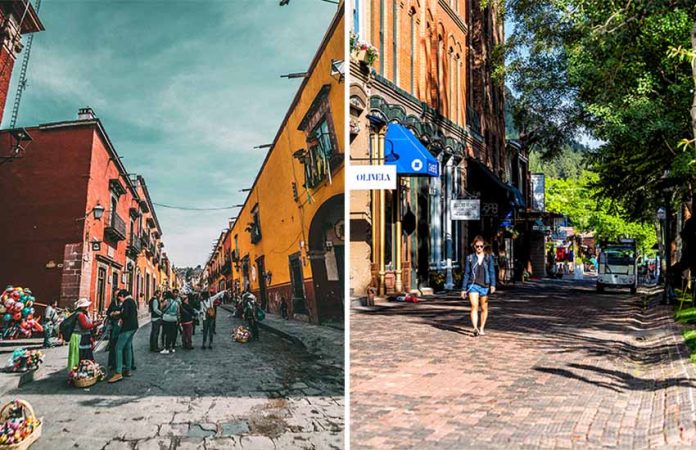
San Miguel de Allende, Guanajuato, left, and U.S. city Aspen, Colorado, right, will soon have a connection. Jezael Melgoza/Unsplash, Kristi Blokhin/Shutterstock
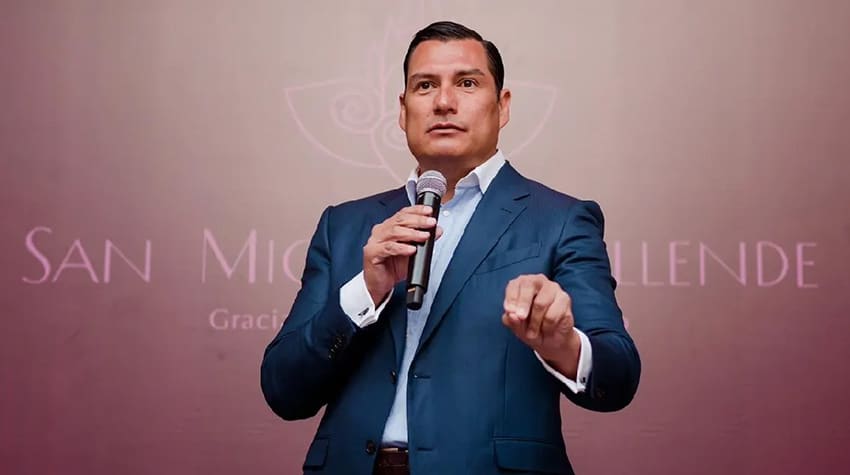
San Miguel de Allende, one of Mexico’s most popular tourist destinations, will enter a partnership with the Aspen Chamber Resort Association (ACRA) this week, when Mayor Mauricio Trejo travels to the United States to sign an official agreement.
The announcement comes as San Miguel is bouncing back full force from the dearth of tourists during the pandemic and hoping to promote itself to a wider set of international travelers — such as groups that include families with kids and travelers looking for pet-friendly options. The UNESCO World Heritage site has typically been known more for attracting retired foreigners, destination weddings and young affluent Mexicans who spend the weekend.
The agreement means that ACRA and San Miguel de Allende will promote each other’s cities as destinations and participate in joint activities like the “Day in SMA” event planned for the Aspen Jazz Festival. Mayor Trejo will continue his working tour of the United States with a trip to New York, where he will sign an agreement for an outpost of the World Trade Center (WTC) company to be established in his city.
Speaking to San Miguel de Allende businesses this week, Mayor Trejo said that the signing of this agreement represented international faith in the safety and security of the city in a moment when violence throughout Mexico is prominent in the press.
San Miguel de Allende Mayor Mauricio Trejo.
“If there was no confidence in San Miguel de Allende, in its residents, this offer … wouldn’t have been accepted,” he said. “In addition, we have a date with the World Trade Center in New York to announce that this international company will be coming to San Miguel.”
The state of Guanajuato recently made national and international news on August 9 after criminal groups responded to the arrest of an organized crime leader by unleashing a night of fiery blockades, arson and shootings in Zapopan, Jalisco, and in Guanajuato cities like Celaya and Irapuato — but not in San Miguel de Allende.
San Miguel de Allende has much lower crime levels than those two cities, but both are within an hour’s drive, and the municipality has not been immune to encroaching violence in the last several years.
Trejo said that his city is becoming an oasis to such violence.
“While other parts of Mexico are burning,” he said, “San Miguel is succeeding.”
CORRECTION: An earlier version of this article contained incorrect information that San Miguel de Allende and Aspen, Colorado, were entering into a sister-city relationship.
The Michoacán state fisheries agency dredges Lake Cuitzeo in 2022. COMPESCA Michoacán
Over 70% of water resources in Michoacán are contaminated, but authorities are indifferent to the problem, according to a scientific researcher at a university in the state capital.
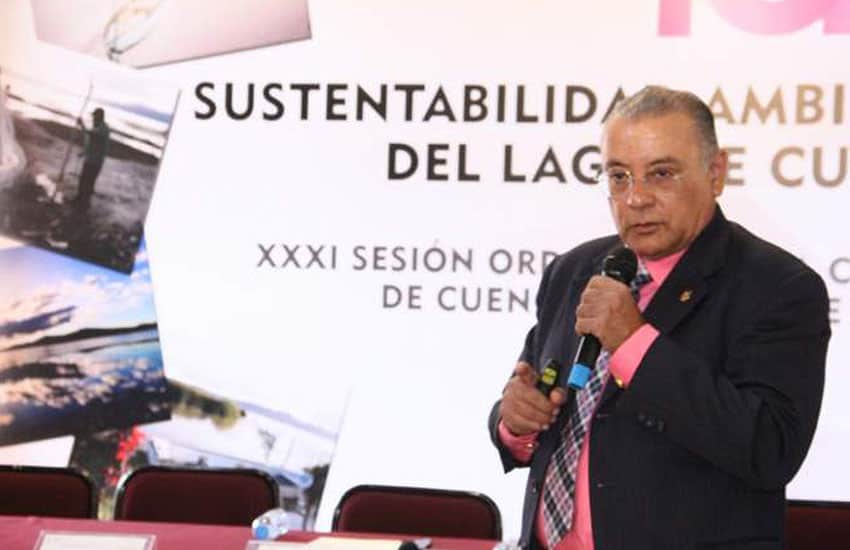
Arturo Chacón Torres, an academic at the Michoacán University of San Nicolás de Hidalgo (UMSNH) in Morelia, said that industry and agriculture are among the polluters of water resources such as lakes and rivers.
“More than 70% of the Michoacán water systems have some degree of contamination,” he told the news website Cambio de Michoacán.
“Basically it’s organic material [that causes the contamination],” Chacón said, apparently using a euphemism for sewage. “[But] there is also industrial contamination and … agrochemicals due to the primary production we have in the state,” he said.
Researcher Arturo Chacón Torres.
In addition to authorities, many everyday citizens and businesspeople are indifferent to the water contamination problem, said the academic, who researches aquatic ecology and other environmental issues.
Chacón said that Michoacán has 18 natural lakes, 270 reservoirs, 44 rivers, 600 springs and some 6,000 wells. Michoacán is a “strategic state for the production of water,” he said. “The problem is that not even Michoacán society has wanted to understand this.”
Chacón added that the state has a water depletion problem in addition to “growing contamination” of its waterways.
Lake Cuitzeo, Mexico’s second largest freshwater lake, has been allowed to run dry, he said. “It should be the most important lake … for supplying water to central Mexico … [but] we let it dry up,” Chacón said.
“Not having mechanisms to clean up and collect [water to replenish the lake] is institutional irresponsibility,” he said, adding that authorities have not shown any concern for fishermen who depended on Lake Cuitzeo for their livelihood or for health risks associated with the drying up of the lake.
Chacón said that “clandestine” pumps have been detected in the lake, explaining that they have been used to extract water for orchards and households. He also said that “clandestine discharges” into the lake have occurred.
Another UMSNH researcher, Alberto Gómez-Tagle, said last year that waste from pig farms and industrial waste from factories are dumped into the lake.
On the surface of the limited quantity of water in Lake Cuitzeo, there are algal blooms that are “potentially toxic” and could cause disease or even death, Chacón said.
Waste from pig farming is also to blame in some cases. Michoacán is in the top 10 states in Mexico for pork production. Michoacán Rural Development and Agriculture Ministry
The academic said that the water volume of Lake Pátzcuaro, Michoacán’s most iconic lake, is only 40% of what it was 30 years ago. The lake, he said, is “quite deteriorated,” with contamination from wastewater and agrochemicals. Chacón also said that the amount of silt in the lake is increasing.
The Lerma River, which runs through Michoacán and four other states, is another concern. The river, which has been described as “biologically dead” and “an enormous stinking sewer,” is contaminated with heavy metals that can cause kidney disease and other health problems.
Chacón said that companies with operations near the river, such as Bayer, Chrysler and Nestlé, contaminate the river. Just touching the water along some stretches is “extremely dangerous” because it’s “very contaminated,” he said, noting that some people have died from illnesses related to the pollution.
The Duero River – which like the Lerma flows into Lake Chapala in Jalisco – “is healthy until [Lake] Camécuaro … but after that we have increasing degrees of contamination until its mouth,” Chacón said, explaining that “it’s heavily polluted by agricultural systems.”
The Balsas River is partially contaminated, the researcher added, but cleaner in Michoacán than some other states through which it runs because there are “no significant human settlements or factories” along it.
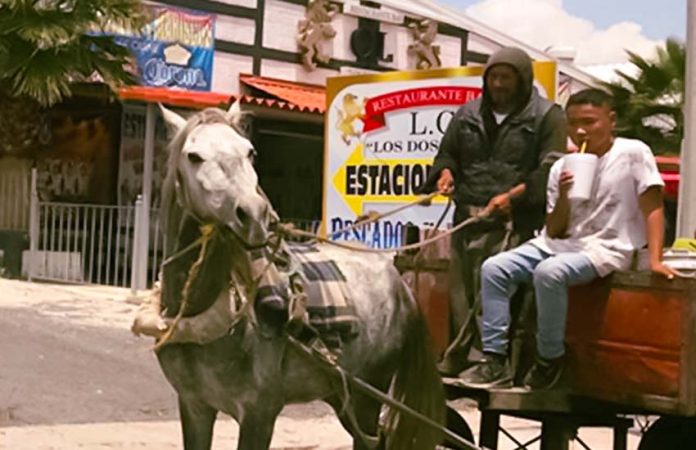
Horses like these are now unemployed in Tultepec, Mexico state, thanks to a city ban that goes into effect Thursday.
Almost 90 horses, mules and donkeys won’t be required to show up for work on Thursday as a ban on the use of animal-drawn garbage carts takes effect in Tultepec, México state.
As of Thursday, trash collectors known as carretoneros (cart drivers) will face fines of almost 1,000 pesos (about US $50) as well as 36 hours of jail time if they defy the ban, which was introduced to protect animal welfare.
Scofflaws could have even have their work permits revoked.
In prohibiting the use of animals in garbage collection, Tultepec — considered Mexico’s fireworks capital — followed the lead of other México state municipalities such as Nezahualcóyotl, Coacalco and Ecatepec. Trash collectors will now have to use motorized vehicles to traverse the streets of Tultepec.
The future of garbage collecting in Tultepc lies in motor vehicles, like this motorcycle being used in the México state municipality of Nezahualcoyotl.
In consideration of that requirement, the municipal government last month approved a 10,000-peso (US $500) payment for carretoneros to help them cover the cost of purchasing a motorbike to pull their carts. Mayor Sergio Luna Cortés acknowledged that the payment “isn’t enough” but stressed that it will nevertheless help the rubbish haulers.
He also noted that authorities are providing them with uniforms and shoes.
Some 30 trash collectors have already bought adapted motor trikes that effectively function as small garbage trucks. The newspaper El Heraldo de México reported that the vehicles cost between 70,000 and 80,000 pesos (US $3,500-$4,000).
Luna indicated that trash collectors have had time to make the transition as authorities reached an agreement with them in March to phase out the use of horse, mule and donkey-drawn carts over a period of six months. But many carretoneros didn’t rush to make a change to the way they have long worked.
Garbage collectors wondering what to do with their beasts of burden can donate them to a local DIF agency’s equine therapy program, like this one in Atizapán, México state.
El Universal reported Wednesday that dozens of trash collectors were continuing to use equines to pull their carts. The newspaper also said that a total of 87 animals would cease pulling garbage carts on Thursday.
Tultepec public services director Mario Torres Roldán said in early August that the garbage collectors could sell their horses, mules and donkeys or donate them to the local DIF family services agency, which runs an equine therapy program. Animals that are in poor health will be taken to a sanctuary, he added.
The official also said that the municipal government was working with veterinarians to worm and shoe the cart-hauling equines.
Torres noted that Tultepec residents generate 60 tonnes of trash a day, 90% of which is collected by the municipal government. The remaining 10% is collected by the independent carretoneros, who work for tips.
“They don’t collect much, but they do help us, of course,” said Torres, who explained that most Tultepec trash collectors live in the neighboring municipality of Tultitlán.
“We’re not stopping them from continuing to work in the municipality, but we are asking that they do so under the right conditions,” he said.