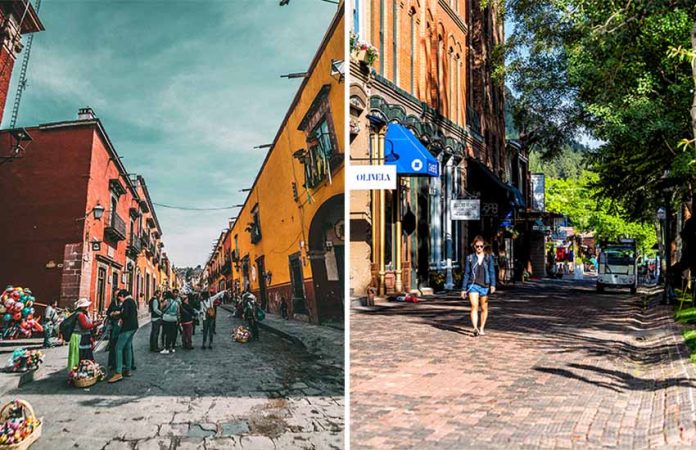
San Miguel de Allende, Guanajuato, left, and U.S. city Aspen, Colorado, right, will soon have a connection. Jezael Melgoza/Unsplash, Kristi Blokhin/Shutterstock
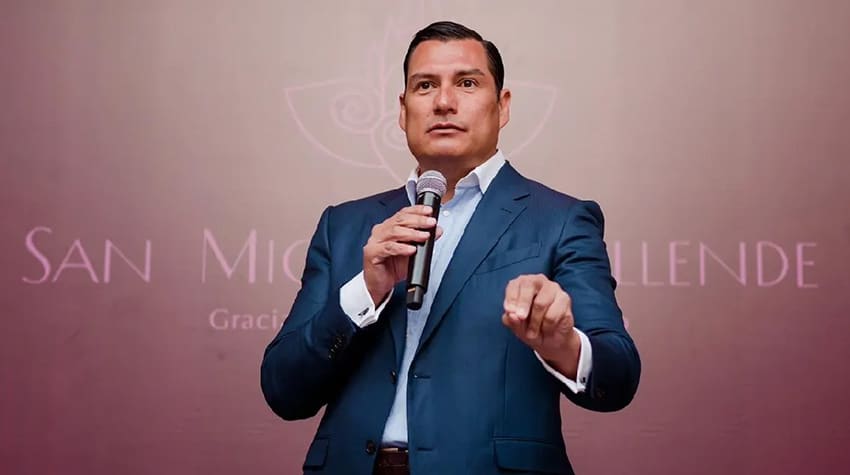
San Miguel de Allende, one of Mexico’s most popular tourist destinations, will enter a partnership with the Aspen Chamber Resort Association (ACRA) this week, when Mayor Mauricio Trejo travels to the United States to sign an official agreement.
The announcement comes as San Miguel is bouncing back full force from the dearth of tourists during the pandemic and hoping to promote itself to a wider set of international travelers — such as groups that include families with kids and travelers looking for pet-friendly options. The UNESCO World Heritage site has typically been known more for attracting retired foreigners, destination weddings and young affluent Mexicans who spend the weekend.
The agreement means that ACRA and San Miguel de Allende will promote each other’s cities as destinations and participate in joint activities like the “Day in SMA” event planned for the Aspen Jazz Festival. Mayor Trejo will continue his working tour of the United States with a trip to New York, where he will sign an agreement for an outpost of the World Trade Center (WTC) company to be established in his city.
Speaking to San Miguel de Allende businesses this week, Mayor Trejo said that the signing of this agreement represented international faith in the safety and security of the city in a moment when violence throughout Mexico is prominent in the press.
San Miguel de Allende Mayor Mauricio Trejo.
“If there was no confidence in San Miguel de Allende, in its residents, this offer … wouldn’t have been accepted,” he said. “In addition, we have a date with the World Trade Center in New York to announce that this international company will be coming to San Miguel.”
The state of Guanajuato recently made national and international news on August 9 after criminal groups responded to the arrest of an organized crime leader by unleashing a night of fiery blockades, arson and shootings in Zapopan, Jalisco, and in Guanajuato cities like Celaya and Irapuato — but not in San Miguel de Allende.
San Miguel de Allende has much lower crime levels than those two cities, but both are within an hour’s drive, and the municipality has not been immune to encroaching violence in the last several years.
Trejo said that his city is becoming an oasis to such violence.
“While other parts of Mexico are burning,” he said, “San Miguel is succeeding.”
CORRECTION: An earlier version of this article contained incorrect information that San Miguel de Allende and Aspen, Colorado, were entering into a sister-city relationship.
The Michoacán state fisheries agency dredges Lake Cuitzeo in 2022. COMPESCA Michoacán
Over 70% of water resources in Michoacán are contaminated, but authorities are indifferent to the problem, according to a scientific researcher at a university in the state capital.
Arturo Chacón Torres, an academic at the Michoacán University of San Nicolás de Hidalgo (UMSNH) in Morelia, said that industry and agriculture are among the polluters of water resources such as lakes and rivers.
“More than 70% of the Michoacán water systems have some degree of contamination,” he told the news website Cambio de Michoacán.
“Basically it’s organic material [that causes the contamination],” Chacón said, apparently using a euphemism for sewage. “[But] there is also industrial contamination and … agrochemicals due to the primary production we have in the state,” he said.
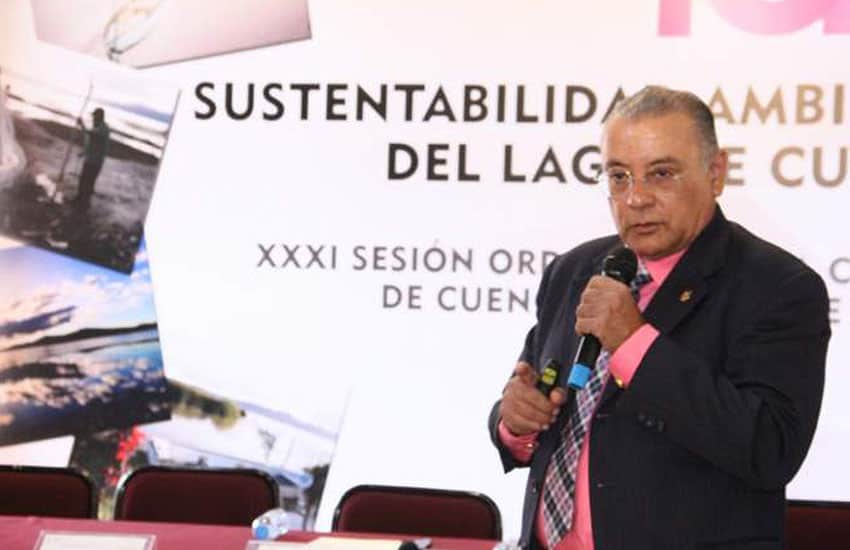
Researcher Arturo Chacón Torres.
In addition to authorities, many everyday citizens and businesspeople are indifferent to the water contamination problem, said the academic, who researches aquatic ecology and other environmental issues.
Chacón said that Michoacán has 18 natural lakes, 270 reservoirs, 44 rivers, 600 springs and some 6,000 wells. Michoacán is a “strategic state for the production of water,” he said. “The problem is that not even Michoacán society has wanted to understand this.”
Chacón added that the state has a water depletion problem in addition to “growing contamination” of its waterways.
Lake Cuitzeo, Mexico’s second largest freshwater lake, has been allowed to run dry, he said. “It should be the most important lake … for supplying water to central Mexico … [but] we let it dry up,” Chacón said.
“Not having mechanisms to clean up and collect [water to replenish the lake] is institutional irresponsibility,” he said, adding that authorities have not shown any concern for fishermen who depended on Lake Cuitzeo for their livelihood or for health risks associated with the drying up of the lake.
Chacón said that “clandestine” pumps have been detected in the lake, explaining that they have been used to extract water for orchards and households. He also said that “clandestine discharges” into the lake have occurred.
Another UMSNH researcher, Alberto Gómez-Tagle, said last year that waste from pig farms and industrial waste from factories are dumped into the lake.
On the surface of the limited quantity of water in Lake Cuitzeo, there are algal blooms that are “potentially toxic” and could cause disease or even death, Chacón said.
Waste from pig farming is also to blame in some cases. Michoacán is in the top 10 states in Mexico for pork production. Michoacán Rural Development and Agriculture Ministry
The academic said that the water volume of Lake Pátzcuaro, Michoacán’s most iconic lake, is only 40% of what it was 30 years ago. The lake, he said, is “quite deteriorated,” with contamination from wastewater and agrochemicals. Chacón also said that the amount of silt in the lake is increasing.
The Lerma River, which runs through Michoacán and four other states, is another concern. The river, which has been described as “biologically dead” and “an enormous stinking sewer,” is contaminated with heavy metals that can cause kidney disease and other health problems.
Chacón said that companies with operations near the river, such as Bayer, Chrysler and Nestlé, contaminate the river. Just touching the water along some stretches is “extremely dangerous” because it’s “very contaminated,” he said, noting that some people have died from illnesses related to the pollution.
The Duero River – which like the Lerma flows into Lake Chapala in Jalisco – “is healthy until [Lake] Camécuaro … but after that we have increasing degrees of contamination until its mouth,” Chacón said, explaining that “it’s heavily polluted by agricultural systems.”
The Balsas River is partially contaminated, the researcher added, but cleaner in Michoacán than some other states through which it runs because there are “no significant human settlements or factories” along it.
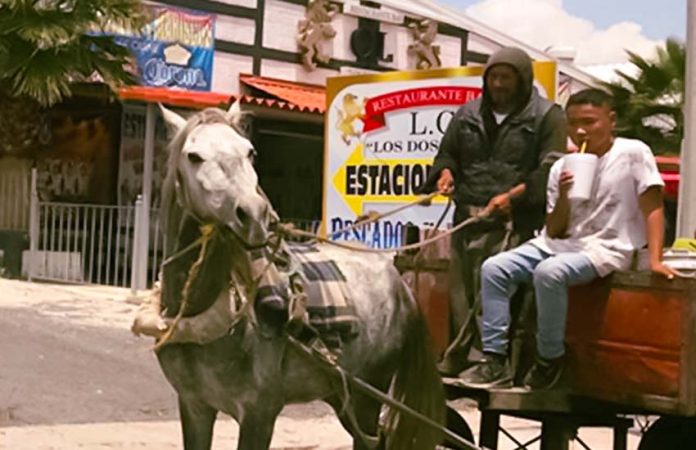
Horses like these are now unemployed in Tultepec, Mexico state, thanks to a city ban that goes into effect Thursday.
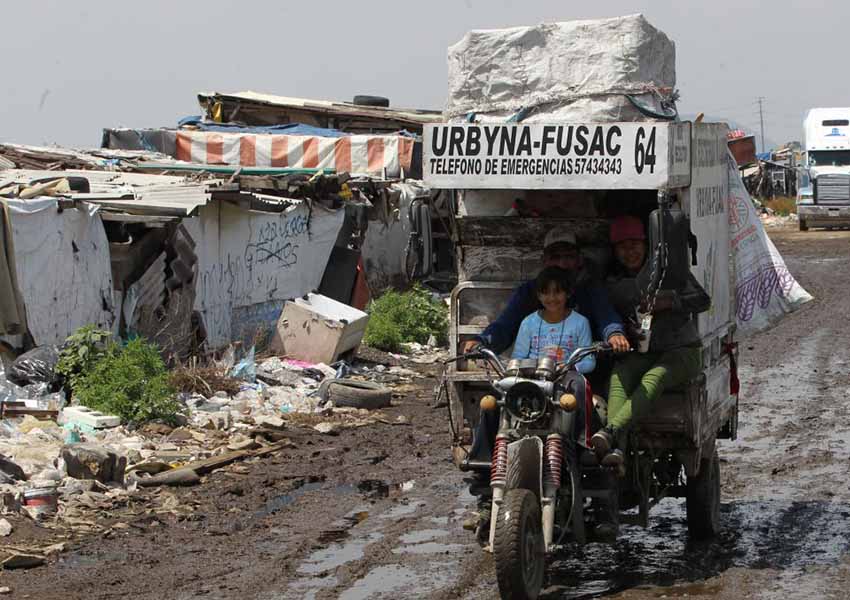
Almost 90 horses, mules and donkeys won’t be required to show up for work on Thursday as a ban on the use of animal-drawn garbage carts takes effect in Tultepec, México state.
As of Thursday, trash collectors known as carretoneros (cart drivers) will face fines of almost 1,000 pesos (about US $50) as well as 36 hours of jail time if they defy the ban, which was introduced to protect animal welfare.
Scofflaws could have even have their work permits revoked.
In prohibiting the use of animals in garbage collection, Tultepec — considered Mexico’s fireworks capital — followed the lead of other México state municipalities such as Nezahualcóyotl, Coacalco and Ecatepec. Trash collectors will now have to use motorized vehicles to traverse the streets of Tultepec.
The future of garbage collecting in Tultepc lies in motor vehicles, like this motorcycle being used in the México state municipality of Nezahualcoyotl.
In consideration of that requirement, the municipal government last month approved a 10,000-peso (US $500) payment for carretoneros to help them cover the cost of purchasing a motorbike to pull their carts. Mayor Sergio Luna Cortés acknowledged that the payment “isn’t enough” but stressed that it will nevertheless help the rubbish haulers.
He also noted that authorities are providing them with uniforms and shoes.
Some 30 trash collectors have already bought adapted motor trikes that effectively function as small garbage trucks. The newspaper El Heraldo de México reported that the vehicles cost between 70,000 and 80,000 pesos (US $3,500-$4,000).
Luna indicated that trash collectors have had time to make the transition as authorities reached an agreement with them in March to phase out the use of horse, mule and donkey-drawn carts over a period of six months. But many carretoneros didn’t rush to make a change to the way they have long worked.
Garbage collectors wondering what to do with their beasts of burden can donate them to a local DIF agency’s equine therapy program, like this one in Atizapán, México state.
El Universal reported Wednesday that dozens of trash collectors were continuing to use equines to pull their carts. The newspaper also said that a total of 87 animals would cease pulling garbage carts on Thursday.
Tultepec public services director Mario Torres Roldán said in early August that the garbage collectors could sell their horses, mules and donkeys or donate them to the local DIF family services agency, which runs an equine therapy program. Animals that are in poor health will be taken to a sanctuary, he added.
The official also said that the municipal government was working with veterinarians to worm and shoe the cart-hauling equines.
Torres noted that Tultepec residents generate 60 tonnes of trash a day, 90% of which is collected by the municipal government. The remaining 10% is collected by the independent carretoneros, who work for tips.
“They don’t collect much, but they do help us, of course,” said Torres, who explained that most Tultepec trash collectors live in the neighboring municipality of Tultitlán.
“We’re not stopping them from continuing to work in the municipality, but we are asking that they do so under the right conditions,” he said.
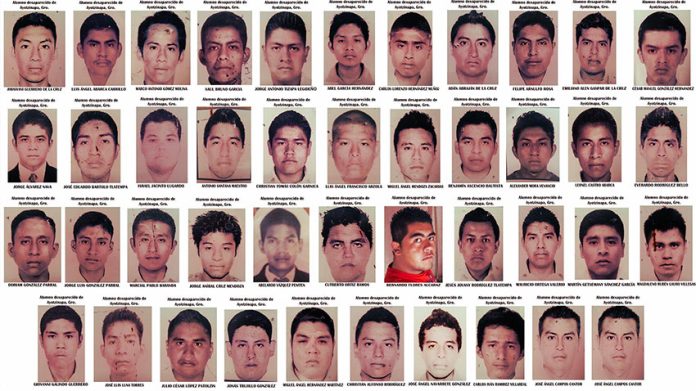
The 43 students who disappeared September 14, 2014 in Guerrero.
The August 19 jailing of former attorney general Jesús Murillo in connection with one of the most disturbing atrocities in recent Mexican history has two possible interpretations, neither of which is encouraging.
One is that the top law enforcement officer in the 2012-2018 Peña Nieto administration was complicit in the September 2014 disappearance and presumed murder of 43 teachers college students in Iguala, Guerrero – the very crime he was in charge of investigating.
The other is that the arrest has more to do with politics than evidence, that it panders to the incumbent president’s supporters while exacting revenge on his predecessors, and confirms his detractors’ suspicions that President Andrés Manuel López Obrador (AMLO) is at heart an authoritarian.
Both are realistic at this point, but a third, alas, is not. There’s little chance that this action, bold as it is, will lead to a credible explanation of what happened that night in Iguala, and with it some kind of justice for the victims and closure for their families.
Murillo faces three accusations — torture, forced disappearance, and what amounts to obstruction of justice or coverup. The general feeling of the punditocracy — mostly anti-AMLO, it should be noted — is that only the torture charge might stick, presumably based on the unspoken assumption that everybody does it.
The other two? Not so much. The commentators mostly agree that to convict the former attorney general of forced disappearance would require strong evidence that he personally participated in it. As for the coverup, the prosecution must overcome the obstacle that Murillo’s November 2014, official version of the events in Iguala, which prosecutors cite as purposefully misleading, is seen to have much in common with the current government’s version.
Even Reforma’s Sergio Sarmiento, one of the more cautious members of the commentariat, had this to say: “If the charges were just for torture, perhaps they’d make sense. But to accuse Murillo of forced disappearance is without rhyme or reason. And to try him for giving a version of the events that fundamentally coincide with what the (current) prosecutor’s office maintains is perverse.”
Of course, the legitimacy of the charges remains to be seen. For now, however, few observers dispute that there’s a certain amount of political propaganda involved with Murillo’s detention. Some say the whole thing is nothing but actos mediáticos — a useful Mexican expression for a “media show,” though it might be more bluntly translated as “publicity stunt.”
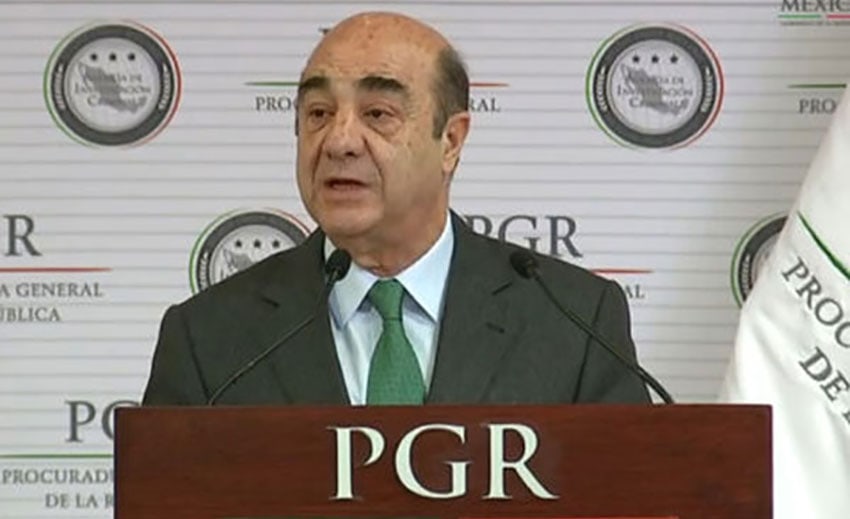
Then-attorney general Jesús Murillo Karam offers ‘the historic truth’ at a press conference in January 2015.
For example, they say, a simple citation might have been sufficient for a 74-year-old former public servant in poor health who seldom left his house. Instead, agents from the FGR (the Attorney General’s Office, a more autonomous version of the office, then called the PGR, that Murillo had headed up) moved into his neighborhood, supported by the navy, to take him in a high-profile operation.
There was a certain Keystone Cops element to the proceedings. According to the online news site Animal Político, the agents started escorting their target’s brother to custody before realizing their mistake and going back for the appropriate Murillo. Then, as they sought permission to hold him, FGR agents got a scolding from the judge for not coming “to the hearing prepared and not giving information clearly.”
But there was never much doubt that the hearing would result in Murillo’s incarceration, as did a second hearing days later. The decision was greased by Mexico’s “preventive detention” system, which you’ll be hearing more about soon as a movement to eliminate it gains steam. Preventive detention permits holding suspects before they are sentenced, or convicted, or tried, or even formally charged.
And said suspects can languish there for years. Just ask the controversial former Federal District interim mayor Rosario Robles, who was an ally of AMLO’s until she wasn’t. She spent three years behind bars without any solid accusations filed. As it turned out, she was finally released on the very day that Murillo was locked up. One out, one in.
As journalist Carlos Loret de Mola, something of a media star himself, put it, “How easy it is to put a rival in jail!”
But this is no mere legal spat between Peña Nieto’s Institutional Revolutionary Party (PRI) and AMLO’s Morena. To grasp the enormity of the issue, you have to harken back to what it was like in the early fall of 2014 with the news that 43 young male students had vanished overnight. The anguish of the parents and the shock of the nation intensified as the PGR’s investigation seemed to stumble along haltingly, with no remains found save for three small body parts, and no satisfying explanation about how something like that could happen.
Less than two months after the event, Murillo issued the results of the investigation: The local police used force to detain the students. They then handed them over to the local criminal organization known as the Guerreros Unidos, who for reasons of their own killed them, burned their corpses, and tossed the bagged remains in the San Juan River. And that, Murillo emphasized, is the whole story. The term he used was “historical truth,” which has since become an ironic codeword for his version.
The cop-crime collusion is not disputed, though the fire-river part is. What’s really at stake, though, is Murillo’s assertion that the tragedy was a purely local affair. The victims’ families, along with the nationwide network of activists supporting them, would have none of that.
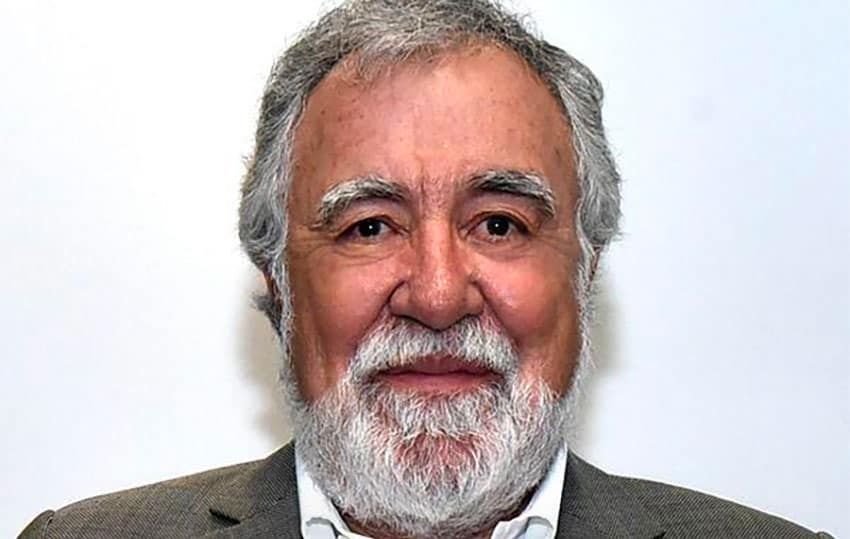
Deputy Minister Alejandro Encinas: It was a crime of the state, he announced the day before Murillo’s arrest.
They knew that the students’ rural teachers college in the Guerrero locale of Ayotzinapa is a longtime hotbed of anti-government activism, spawning among others the 1970s revolutionary Lucio Cabañas, and thus ill-favored by the then-ruling PRI. It is that activism that led the students to commandeer buses in Iguala that day (unacceptable behavior, of course, but hardly grounds for an extrajudicial death sentence).
They also knew that the Mexican army has a strong presence in the area, that it was well aware of the cozy relationship between the Iguala police and the Guerreros Unidos, and that federal operatives are constantly monitoring all activity in Iguala and its surroundings. The massacre could not have taken place, they reasoned, without the federal government knowing about it.
Thus arose the battle cry “It was a crime of the state.” Murillo pooh-poohed the notion: “Iguala is not the Mexican state.”
And there things stood until the day before Murillo’s arrest, when the López Obrador administration released its own version of the events. AMLO’s man in charge of the investigation is Alejandro Encinas, a deputy minister of the interior who, like Robles and AMLO himself, is a former Mexico City mayor. Encinas is soft-spoken and articulate, with a seemingly gracious manner that may remind you of a favorite uncle who gives you a hundred-dollar bill on your birthday.
There was nothing avuncular about his explosive conclusions, though, or how he presented them at a press conference. What happened in Iguala, he said, “constituted a crime of the state.” With those words, he not only validated the activists’ contention by echoing their words, but also overturned eight years of the official position of the federal government. What’s more, he pointed the finger directly at the attorney general, calling his “historical truth” a fabrication intentionally designed to hide the role of the state in the crime.
The next day, Jesús Murillo was arrested and jailed. Scores of other arrest warrants were issued. How it will all turn out remains to be seen, but we do know one thing: Regarding the Ayotzinapa case, the federal authorities and the activists have come closer together.
Video shows drinks being spiked with rum at Sunday's marathon.
Authorities have identified a man who poured rum into sports drinks meant for runners who participated in last Sunday’s Mexico City marathon.
The director of the Mexico City Institute of Sport, Javier Hidalgo Ponce, told the newspaper El Universal that the identity of the drink spiking culprit had been established.
In a video posted to social media, an apparently intoxicated man announces that he is going to pour rum into cups of sports drinks at a hydration station set up for participants in the 42-kilometer race. He said his aim was to get the runners drunk.
The footage shows the man – who doesn’t appear on camera – haphazardly pouring rum into scores of cups on a table at a hydration station in the neighborhood of Polanco.
Un hombre vació media botella de alcohol en las bebidas que se darían a los participantes del Maratón de la #CDMX… pero el Instituto del Deporte ya interpuso una denuncia penal contra la persona.
Hidalgo said that no runners actually drank the spiked drinks because people working at the hydration station realized what happened. He said the offender was drunk and perpetrated the attempted “poisoning” just before 7 a.m. after leaving a night club.
Hidalgo said that the hydration station was located near the 20-kilometer point of the marathon course and that a runner’s consumption of alcohol after running such a distance could be lethal. “We classify this incident as poisoning,” he said.
The official described the mischief-maker as a “classist and racist” person seeking to harm others, but didn’t explain why he used those descriptors. “We’ve detected his name,” Hidalgo said, adding that it would be up to the Mexico City Attorney General’s Office to prosecute him.
Some 19,000 runners participated in Sunday’s race, the 39th edition. Kenyan athlete Edwin Kiptoo won the men’s event, completing the course in two hours and 10 minutes, while Ethiopian runner Amane Beriso Shankule triumphed in the women’s race, crossing the finishing line two hours and 25 minutes after the starting gun.
The municipality of Zacatlán, Puebla, can grow 18 varieties of apples, and most are for sale at its annual apple harvest fair in August. Photos by Joseph Sorrentino
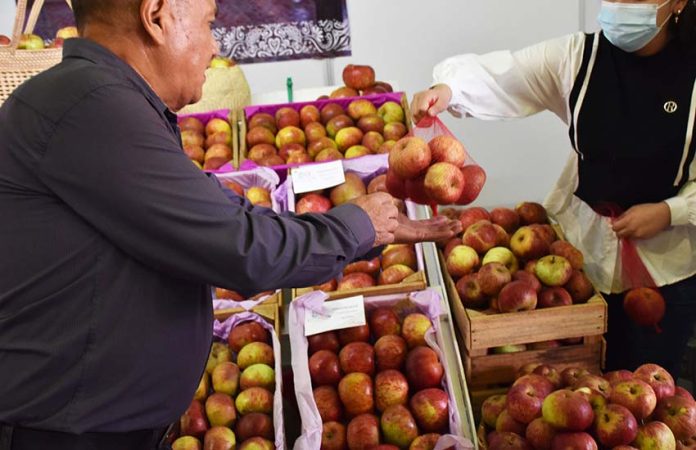
If you like eating apples, then Zacatlán de las Manzanas, Puebla, whose name means Zacatlan of the Apples, is the place for you. And the Feria de la Manzana apple fair is the absolute best time of year to visit.
The fair, which began in 1941, has been held every year since, except for 2020 and 2021, when it was shut down due to the pandemic. It coincides with the apple harvest in Puebla, which typically begins in the end of July and lasts until around the end of August.
The fair made news this year due to a planned addition to the schedule of bullfights, which ended up being canceled after residents protested. But the apple festival — the most important annual event in Zacatlán — is about celebrating Puebla’s harvest with numerous stands filled with apples and other related products. It also features concerts, dances and exhibits.
This year, a long tent located just off the zócalo housed farmers showcasing their apples and vendors a variety of other products. Also under the tent were stands packed with delicious foods and desserts made with apples.
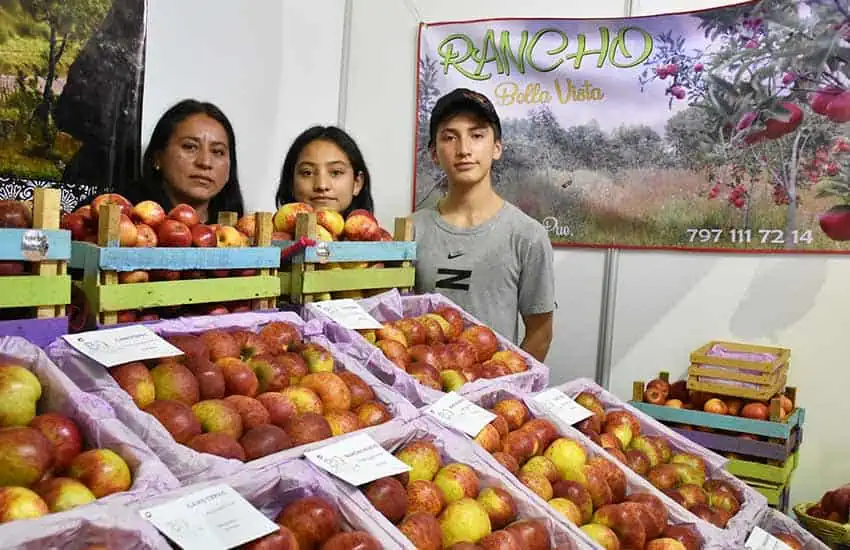
Bella Vista Farm apple grower Irma Ortega Ibarra with her son Jesús Enrique and daughter Anete, who both say they want to stay on the family’s farm when they grow up.
La Casa de Manzana, as well as many other stands and bakeries, featured manzana hojaldrada, a traditional puff pastry with a whole apple inside. Originally, it was just a cored apple.
“Inside it can have blueberry, cream cheese, blackberries, walnuts or raisins,” vendor Angeles Moreno Ramírez explained. The medium-sweet Rayada variety is the apple of choice for these pastries.
Judith Rojas Cruz of Panaderia Betos bakery was selling small apple pies, apple muffins and the pueblo’s famous pan de Zacatlán at an adjacent stand. “There are two kinds,” she said. “There are burras and pan almohada.” She uses different doughs for them, and the tops of the burras are sprinkled with sesame seeds. Both are stuffed with queso ranchero.
Just outside the tent, Jeanete Pérez Hernández was tempting fairgoers with various apple desserts: cheesecake, bread, flan and empanadas. “All of these use Rayada apples because they are more acidic and juicier, not so sweet,” she said. “The other apples do not work as well.”
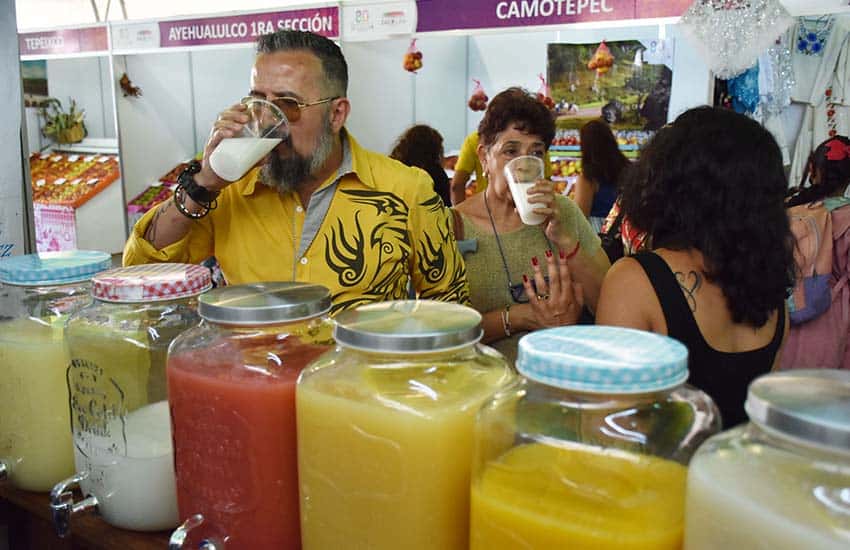
Walking through the fair and around Zacatlán’s streets can work up a thirst, and one stand offered a traditional way to quench it: pulque, a traditional fermented Mexican alcoholic beverage.
“More than 50% of the land in Zacatlán is used to grow agave to make pulque,” Rafael Amador Marquéz told me. He’s part of a fourth generation of pulque makers at Rancho Tepemayuca. At the fair, he was offering plain pulque and a number of curados, made with pulque and fruit or other flavors.
“Coco is my favorite,” said Francisco Arias who had stopped by for a drink, adding, “I come to the fair for the apples, the pastries and the pulque.”
Amador also sold something that’s relatively new: distilled pulque. “It takes 10 liters of pulque to make one liter of distilled,” he said. “First, the pulque is fermented for three months in French oak barrels, and then it is distilled.”
While pulque is usually 2% to 4% alcohol, the distilled version is 38% alcohol. “More time yields more alcohol,” he said simply.
Amador also offers a tour called La Ruta del Pulque that takes people to visit agave growers and shows them how pulque is made.
Walking through the fair works up an appetite, and besides pastry, the best way to satisfy your hunger is with one of Puebla’s most famous dishes: chiles en nogada, a poblano chile stuffed with 11 ingredients, including meat, fruit and nuts. It’s smothered in a salsa made with walnuts and topped with parsley and pomegranate seeds, making it a seasonal dish.
“The season for chile en nogada is July 1 to the end of September,” said Mari Luz Martínez Barrios, chef at Dos Aromas restaurant. “Here in Zacatlán, [we have] all the ingredients needed.”
Francisco Arias enjoys some pulque curado.
That includes Rayada apples, which Martínez prefers because of their consistency.
Although she kindly demonstrated the process for making her chiles en nogada, she begged off giving an exact recipe.
“It is a secret,” she said. “Even if you had it, you would not know how to make it because you do not have all the flavorings.”
But despite all the tasty food and beverages here, the real stars of the feria are, of course, the apples.
Zacatlán can grow 18 types of apples, according to Irma Ortega Ibarra, who along with her husband Jesús Garrido León owns Bella Vista farm. She stood with her children behind a wooden stand holding their three types of apples for sale: Rayada, Gala and Delicia.
“The sweetest is the Gala, and that can be used for juices and salads,” she said. “Rayada is acidic and is used for baking and breads, and Delicia is medium; it is used for wines and sidra (hard cider). Here it is good for growing apples because it is humid,” she explained. “There is much rain, and, in general, there is no need for watering.”
Their farm has been in the family for five generations, Ortega said, and she and her husband plan to pass it on to their children, who seem eager.
“I want to continue [growing apples] because it is enjoyable to be in nature,” said their son Jesús Enrique Garnido Ortega. “I want to continue with a healthy farm.”
Daughter Anete Garnido Ortega plans to learn how to make sidra (hard cider).
Their plans, however, may be challenged in the years to come: although the family had a good harvest this year, climate change has been affecting the apples, they said.
Luciano Cabrera Luna — whose 15-hectare farm (38 acres) in the nearby pueblo of Jicolapa was one of the largest ones attending the fair — also attributes changes she’s noticed in her apples to climate change. “The fruit doesn’t develop adequately,” she said. “If it rains, more of the fruit are large, but now there is less rain and the apples are smaller.”
This year, she planted lima beans, but they didn’t even grow due to a lack of rain.
“It does not rain like before, and if there is a drought, the fruit does not develop,” she said. “Sometimes we have to irrigate each tree, carrying buckets of water to them.” They have to plant new trees every year, Cabrera said.
This year, however, there are plenty of freshly harvested apples still available in Zacatlán, even though the fair has ended. You can find apple stands lining the main road leading into town, and a dozen pickup trucks laden with apples park near the corner of Francisco Cosio and Hermanegido Galeana streets, just a few blocks from the zócalo.
And if you need more of an excuse than apples to make the drive, Zacatlán is one of Mexico’s Pueblos Mágicos and worth a trip any time of year: visit the clock museum, the wine museum, a 16th-century church and ex-convent and a beautiful zócalo ringed with shops, restaurants and coffee shops. A short drive away is Cascadas Tulimán, an ecotourism site with a beautiful waterfall and scenery and paths.
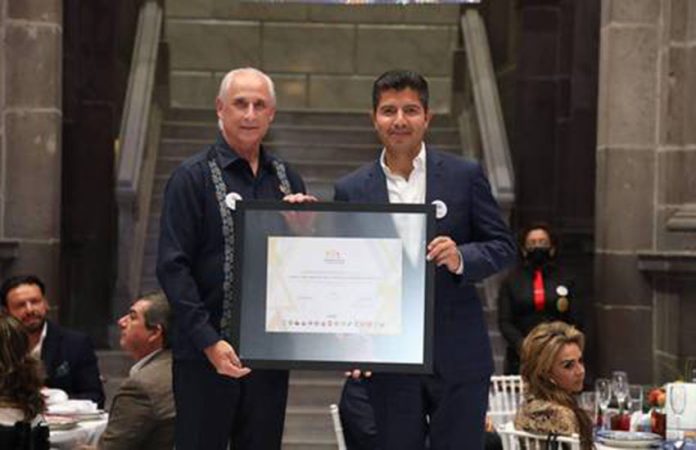
Puebla city Mayor Eduardo Rivera Pérez received the Ibero-American Academy of Gastronomy's award on Sunday. Puebla City council
For the next year, Puebla city has been officially given the title the Capital of Ibero-American Gastronomic Culture.
The award is granted each year to a different cuisine of Ibero-America — Spain, the Caribbean and Latin America — by the Ibero-American Academy of Gastronomy.
The award gives the city a chance to showcase its gastronomy and promote itself as a food destination around the world. Municipal tourism officials already plan to launch a publicity campaign called Puebla, la cocina de México, (Puebla, Mexico’s Cuisine).
Puebla’s capital is the acclaimed birthplace of many of Mexico’s most iconic dishes, including mole poblano, chiles en nogada andtacos arabes, said to be the forerunner in Puebla to Mexico City’s variation, tacos al pastor. A half dozen or so traditional Mexican sweets also claim heritage here, as does Puebla’s famous cemita sandwiches, which were made famous in the city’s central markets.
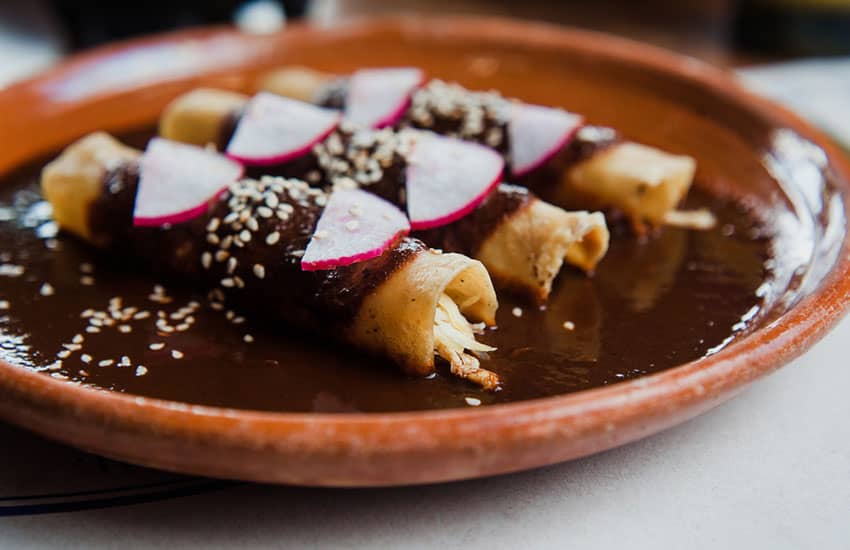
One of Mexico’s most iconic traditional foods, mole poblano sauce hails from Puebla. Marcos Castillo/Shutterstock
The designation by the gastronomic organization recognized the city’s various elements that form its strong culinary tradition: the vast biodiversity of the area’s fields and farms and its traditional dishes developed by Catholic nuns during Mexico’s colonial period as well as the city’s numerous pottery and Talavera workshops.
Past winners have included Spanish cities like Madrid, Zaragoza and Córdoba; Buenos Aires; São Paulo and Miami. In Mexico, Guanajuato was a previous designee.
At Sunday’s award ceremony, Puebla Mayor Eduardo Rivera Pérez extended the recognition granted beyond the city itself.
“The designation of Puebla as the Capital of Ibero-American Gastronomic Culture is not just about the city but also the farm workers, traditional cooks, the restaurant sector, our universities and institutions,” he said.
The Ibero-American Academy of Gastronomy was founded in 2009 to promote the regional cuisine of the Ibero-American world as well as safeguard against the loss of traditions and improve international cooperation.
The president's rating has changed little in the last two years.
Inflation is at a two-decade high and cartels recently ran riot in some parts of the country, but Andrés Manuel López Obrador remains a popular president, according to a new poll.
A poll conducted by the Reforma newspaper between August 23 and 29 found a 61% approval rating for the president, who has now been in office for three years and nine months.
López Obrador’s approval rating among those surveyed by Reforma has remained close to 60% since early 2020. Before then, it was even higher.
One-third of respondents to the newspaper’s latest poll – in which 1,000 people responded to a range of questions – said they disapproved of the president’s performance. The 33% disapproval figure was one point higher than that yielded by the May poll, but lower than those detected a year ago and last December. A graph published by Reforma showed that López Obrador’s lowest disapproval rating was 18% in March 2019 while his highest was 41% in August 2020.
While 61% of respondents to the latest poll approved of AMLO’s overall performance, less than 50% said he was doing a good job in eight of 10 specific areas of governance. In health, 44% of those polled said the president was doing a good job, while the figures for combating poverty and attending to the relationship with the United States were 42% and 36%, respectively.
In those three areas, and social programs (64%) and education (53%), López Obrador had a net positive rating – a sizable percentage of respondents didn’t offer an opinion – but his net rating was negative in the other five. Only 34% of respondents said the president was doing a good job fighting corruption (versus 36% who said the opposite) and his numbers for economy (32% good/36% bad), medicine supply (29%/38%), security (29%/44%) and fighting organized crime (21%/48%) were even worse.
Just over half of those polled this month – 53% – said the Mexican economy has deteriorated over the past year, up from 46% a year ago. The rating agency Moody’s is predicting growth of 2% this year and just 1% in 2023. Meanwhile, inflation reached 8.62% in the first half of August, the highest level since 2000.
About four in 1o poll respondents said their personal economic situation worsened over the past year, and 77% said they have been significantly or somewhat affected by the high level of inflation.
With regard to security, 68% of those polled said they believed that violence has increased over the past 12 months and 66% thought that insecurity in general has worsened. A similar percentage of respondents – 63% – surmised that the presence of organized crime has increased.
Almost seven in 10 of those polled – 69% – declared that a security strategy that makes use of “all the force of the state” is more effective in combating organized crime than the federal government’s current non-confrontational “abrazos, no balazos,” or “hugs, not bullets” approach.
A separate poll conducted earlier this month for the El Universal newspaper found that 80% of respondents were very much in favor (51%) or somewhat in favor (29%) of the armed forces taking a greater role in the fight against organized crime.
The military could soon be effectively bolstered as López Obrador announced earlier this month that he intends to issue a decree to put the National Guard under the control of the army.
With a Pemex authorization earlier this month of US $6.47 billion, the budget for Mexico's newest refinery more than doubled to over US $20 billion.
The final cost of building the new Pemex oil refinery on the Tabasco coast will be just over US $20 billion, according to a government document, more than double the original estimate of $8.9 billion.
The newspaper El Universal reported Tuesday that it obtained a document that showed that the state oil company board authorized an additional $6.47 billion in spending on the project earlier this month.
The cost of building the Olmeca Refinery at the Dos Bocas port had already exceeded the original estimate and the project is now slated to cost just under $20.1 billion.
Asked at his regular news conference on Tuesday how much the cost of the refinery had increased, President López Obrador only conceded an overrun in the US $2 to $4 billion range.
President Lopez Obrador downplayed the news, only conceding an overrun in the US $2 to $4 billion range for the Olmeca Refinery project at Dos Bocas. Presidencia
“Not everything was considered,” he told reporters at his regular news conference. “Anyway, it turned out cheaper than foreign companies estimated,” López Obrador said.
On Tuesday, he said the cost of the refinery increased because all the equipment required to operate it wasn’t originally considered. “For example, the gas pipeline [to the refinery] wasn’t included,” he said.
López Obrador ruled out imposing sanctions on the officials who formulated the original cost estimate and advised journalists and “the entire [Mexican] population” to remain calm because “no one did business for personal gain in the construction of the refinery.”
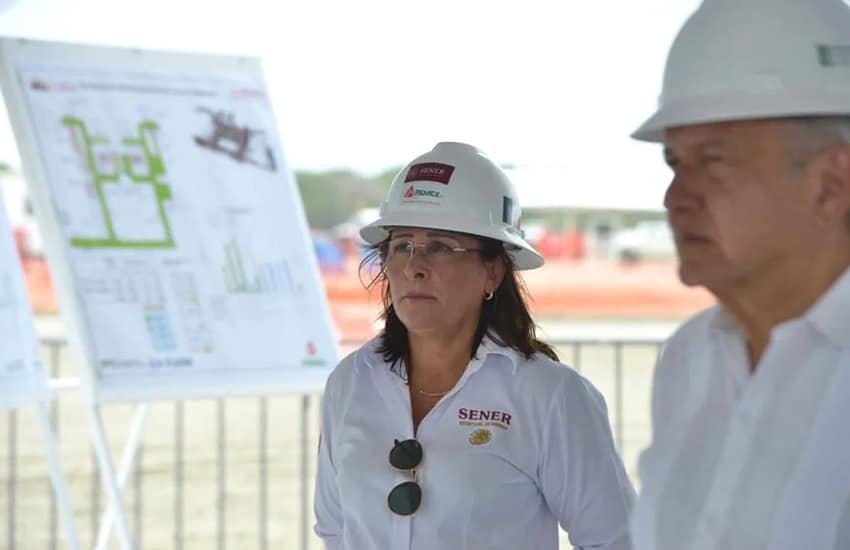
The president also defended Energy Minister Rocio Nahle, who has overseen the project. Government of Mexico
“There is no corruption; it’s no longer the same as before,” he said. “The person in charge of building the Dos Bocas refinery, [Energy Minister] Rocío Nahle, is an upright, honest woman,” López Obrador said.
“If we wanted to build it now, it would cost double, and we wouldn’t finish it in the time in which it was built,” he said. “It’s a great project. … We’re very happy with the project, … we’re going to process 340,000 barrels of crude oil per day. And a refinery hadn’t been built for over 40 years,” López Obrador said, describing its construction as an “unprecedented” feat.
“… Of course, the media that is at the service of vested interest groups, the oligarchy, of those who dedicated themselves to looting and stealing, is in disagreement with everything we do: the [Félipe Ángeles] airport, the refinery, the Maya Train. In disagreement with the pensions for seniors, the scholarships for young people, in disagreement with everything,” he said.
“It must be made very clear that the great difference between the neoliberal governments [of the past and us] – the crux of the matter, … is that corruption is not accepted in this government, corruption is not allowed. … We’re not thieves. The problem of the neoliberal governments is that they were thieves, … and not just the politicians but the business people too, who, in a strict sense, weren’t even business people, they were influence peddlers,” López Obrador said.
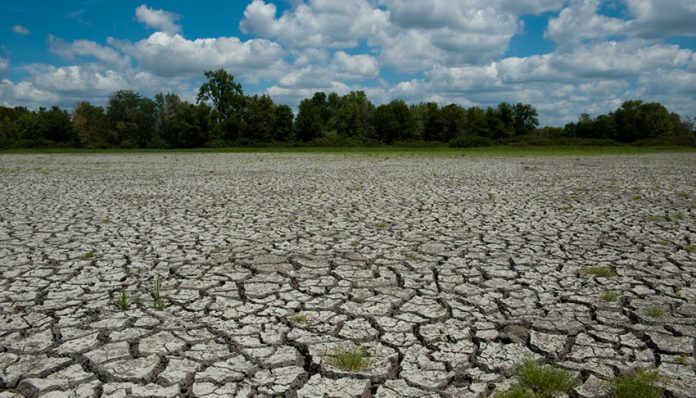
Drought has been devastating to many in northern Mexico.
The abundance of rain in northern Mexico recently has been the answer to many a cattle rancher’s prayers, but for most of them, a significant amount of damage has already been done.
In a report in the newspaper Vanguardia that focused on Coahuila, it was noted that up to 30% of cows in that state had perished this year due to perhaps the worst drought Mexico has seen for 30 years.
The estimate was based on figures from the Regional Livestock Union of Coahuila. “We don’t know exactly how much it is,” said Fernando Cantú González, president of the coalition of 15 livestock associations in the state. “We calculate that what died and what was available for sale represents 20% to 30% of the state’s stock.”
Coahuila, which borders Texas, is flush with prime livestock regions, notably Ocampo, Múzquiz, Sabinas, Villa Unión and Zaragoza. But the lack of rain over the past three years has put a severe crimp on the growth of crops for harvest and plants for foraging. The diminished feed not only means some cows are starving to death, but it also leads to problems such as reduced pregnancy rates, loss of overall health and lower milk production, which hampers the growth of calves.
“This year was the most severe in the last 10 years,” Cantú said, noting that ranches that had never been affected before definitely suffered this year. Reservoirs have been lower, rivers have dried up to reveal cracked beds and the transfer of water to farms has been reduced. Fields that should be teeming with crops are either bare or filled with wilting plants, and cattle that are alive are bony with their ribs protruding.
According to an August 11 report by Reuters, July was the second hottest month in Mexico since 1953, with temperatures in some areas reaching 45 C, according to the national weather service.
In the north especially, the hot weather and drought have left dams either well below capacity or bone dry — devastating in agricultural regions which often do not have access to groundwater. According to Reuters, just 10% of Mexico’s dams were full in mid-July, with many at half capacity or even less.
Alberto Neira, a Coahuilense rancher, was quoted as saying it’s important to remember that even if “a strong tropical storm comes, no matter how much rain falls on us, we will not be able to recover” much of it.
Cantú explained that the lack of rain forces ranchers to sell or slaughter their cattle prematurely, before they might die. Both the lack of food and the early sale means the cows are thinner than they should be, and thus have to be sold at a lower price.
Coahuila is the state with the most serious drought situation, according to Vanguardia, with “80% of the territory” having experienced “severe, extreme or exceptional drought.”
Cantú requested the resumption of government support programs for the region so that livestock production can return to prior levels. He said in previous years there was a program in which heifers were delivered through subsidies from the federal and state governments, with the ranchers paying a share, too.
The Mexican government declared a national emergency in mid-July and announced initiatives to prevent companies like Coca Cola and Heineken extracting so much water in the north. In addition, there was water rationing in Nuevo León and publicized gatherings to pray for rain in Sonora.