Mexía, described as upbeat and professional by friends and coworkers, is survived by her young daughter.
The murder of a doctor in a violence-plagued mountainous region of Chihuahua has not only left the residents on edge, but the heinous shooting also has raised concerns that the remote area has been plunged into a medical crisis.
Massiel Mexía, the bubbly and outgoing mother of a 5-year-old, was shot in her home and later died in the same hospital where she worked, the Rural Welfare Hospital in the community of San Juanito. An IMSS facility, it is located high in the Sierra Tarahumara, a good three-hour journey from the capital of Chihuahua city.
According to the newspaper Milenio, “the hospital staff where [Mexía] worked now live in fear” because there are no municipal or state police, or anyone from the army or National Guard, “that can arrive without taking more than an hour.”
A black bow above the entrance serves as a reminder to doctors, nurses and other hospital staff about an 8 p.m. self-imposed curfew they have established. “From the hospital to the home is the rule,” is their new motto as cited by Milenio.
The hospital is strategically located in the highest part of the mountainous municipality of Bocoyna, and there is no other hospital within 100 kilometers. Pregnant women and people who sustain injuries resulting from crime are among the patients that the hospital treats.
The hospital is already beset by short staffing and union problems, and Mexía’s death has reduced the number of anesthesiologists on staff to only two. Milenio talked to doctors and nurses who are now worried that an anesthesiologist might not always be available.
Moreover, a residency program is ending July 28, meaning a number of helping hands will be leaving to carry out their studies elsewhere; plus, Milenio added, a warning has been issued by the faculty at the medical school of the Autonomous University of Chihuahua to not send any more interns to the dangerous mountain region.
Mexía was remembered as a “true professional” who was “dedicated to her work.”
[wpgmza id=”365″]
According to Milenio, she was killed by an 18-year-old in a gray sweatshirt. He first shot a dog as he was roaming the streets around 5 a.m. Later he entered Mexía’s home and allegedly shot her with the same weapon, an AK-47, also known as a cuerno de chivo (goat’s horn).
Not long thereafter, residents of the area tracked down the alleged killer and severely beat him, then tied his motionless body to a post. Next to him was an AK-47 and a cardboard sign (“in the style of any drug cartel,” Milenio wrote) that read, “This happened to you for having killed the doctor and raped a girl.” The suspect also allegedly committed a rape in the nearby town of Talayotes.
He was arrested and taken to the same hospital where Mexía worked. Reports said he was in a coma, receiving care from the same doctors and nurses who had seen Mexía alive the previous day.
Mexía, who had bought a home in San Juanito just five months ago, was described as irreproachable and a non-drinker by friends and coworkers. They theorized she was not a targeted victim, but rather that she was “collateral damage from the lack of security” in the violent area. She reportedly was shot twice, once in the chest and once in the head at dawn on July 11, but was still able to speak when assistance arrived; she died upon admission to the hospital. Originally from Guasave, Sinaloa, she earned certification as an anesthesiologist 16 months ago. Her daughter, Antonella, is barely 5 years old.
She is the cousin of actor Miguel Martínez, who was on the reality show “Código Fama.”
In a heartfelt message to his cousin, Martínez wrote: “I want to thank you for your little messages and your signs of affection. Thank you for worrying about me and my family … All of us are going to continue to put effort into what we do and make you feel proud, little cousin in heaven.”
The newspaper Terra also quoted Martínez as saying that insecurity “is an issue that a lot of people” have to deal with, but “when we do not experience it in the first person we do not realize it.” He called his cousin “a great woman, a great mother, a great person, always happy, always with the best attitude of making others happy.”
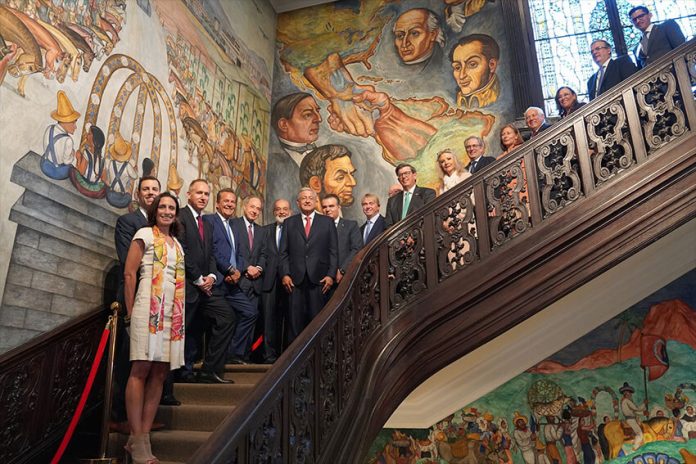
The president poses with politicians and business leaders in the Mexican Cultural Institute in Washington, D.C. Twitter @lopezobrador_
United States companies will invest US $40 billion in Mexico over the next two years, Foreign Affairs Minister Marcelo Ebrard said Wednesday after he, President López Obrador and other officials attended a meeting in Washington with U.S. and Mexican business executives.
Ebrard wrote on Twitter that López Obrador told the U.S.-Mexico CEO Dialogue that U.S. companies have committed to invest $40 billion between now and 2024. “Good news for Mexico,” he added.
López Obrador noted on his social media accounts that he had met with Mexican and United States business leaders at the Mexican Cultural Institute in Washington. “We spoke about economic cooperation, investment, sovereignty and progress with justice,” he wrote.
López Obrador announced last month that 17 U.S. energy companies had committed to invest in solar and wind projects in Mexico.
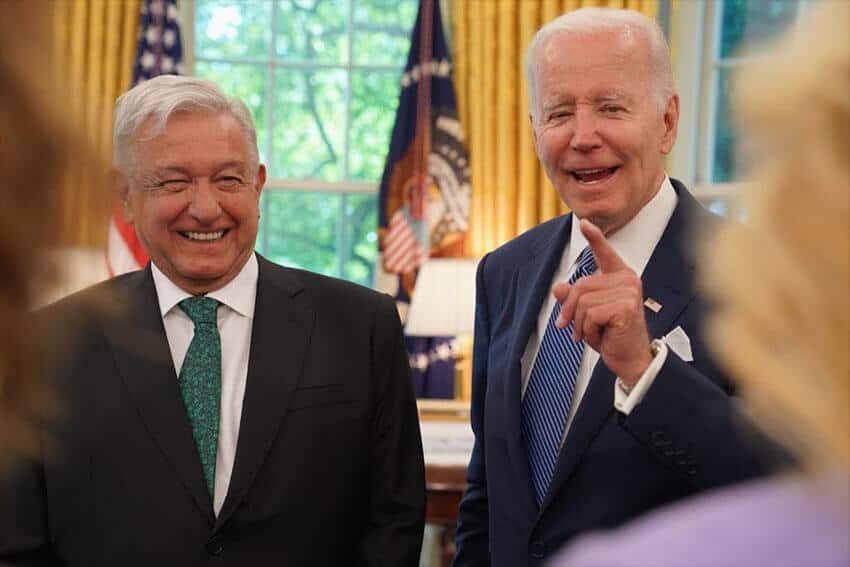
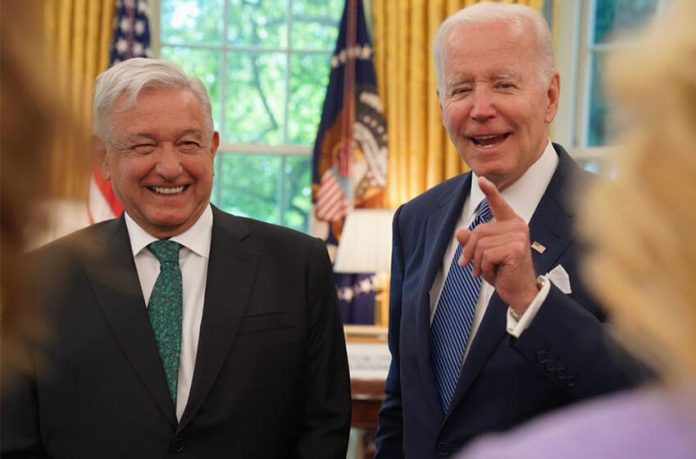
President López Obrador visited with U.S. President Joe Biden in the White House, the day before he met with business leaders. Twitter @lopezobrador_
The United States Chamber of Commerce, which co-hosted the 12th U.S.-Mexico CEO Dialogue with Mexico’s Business Coordinating Council (CCE), said in a statement that the meeting allowed participants to “take stock” of the United States-Mexico-Canada Agreement (USMCA), the free trade pact that took effect in July 2020.
According to the statement, the CEOs “expressed serious concern over the deteriorating investment climate in Mexico,” where the government has been particularly hostile to energy sector companies as it endeavors to “rescue” the state-owned Federal Electricity Commission and state oil company Pemex.
The U.S. Chamber of Commerce said that business executives called on the Mexican government to uphold its USMCA commitments by:
Eradicating energy sector policies that unfairly favor state-owned enterprises at the expense of private sector providers.
Addressing systemic delays and denials in permitting and licensing across key sectors such as hydrocarbons and customs.
Ceasing closures of installations such as energy terminals, mines and quarries in actions often devoid of due process.
Accelerating significantly the pace of approval processes for biopharmaceutical, agricultural biotech, medical device and food products.
CCE president Francisco Cervantes said López Obrador “listened very carefully” to both the U.S. and Mexican CEOs and was “very receptive.”
Economy Minister Tatiana Clouthier, who also attended the meeting, reported on Twitter that the president remarked that he had come to listen to energy companies. Pemex CEO Octavio Romero acknowledged that concerns were raised about Mexico’s energy policies and said that the government “offered to resolve them.”
Speaking to reporters after leaving the meeting, the state oil company chief said the concerns were expressed in “very good terms” and agreed that “we have to speed up a lot of things in order to make [bureaucratic] procedures quicker.”
One major concern of U.S. companies was allayed in April when a proposed electricity reform that would have guaranteed CFE over half the market failed to pass the lower house of Congress.
Wednesday’s business breakfast in the United States capital – which U.S. Secretary of Commerce Gina Raimondo and Secretary of Agriculture Tom Vilsack also attended – came a day after López Obrador met with U.S. President Joe Biden at the White House. The two leaders subsequently issued a joint statement that announced that Mexico would invest US $1.5 billion on border infrastructure between 2022 and 2024.
Ebrard said in an interview that the money wouldn’t be designated to stopping irregular crossings into the United States. It will be used to “modernize ports of entry, guarantee [the efficient functioning of] customs, … [and] facilitate trade,” he said. “We need more technology on the border.”
It is unclear why Volaris will no longer fly the route.
Budget airline Volaris will cease operations between Ciudad del Carmen, Campeche, and Mexico City at the end of the month.
Its last flights between the two cities are scheduled for July 31. Ciudad del Carmen tourism coordinator Nelsy Sánchez Vega confirmed that Volaris was following the lead of Viva Aerobús and dropping flights from Mexico City.
However, Aeroméxico is set to add one additional flight per day to Ciudad del Carmen, according to staff at the city’s airport.
Sánchez told the newspaper Por Esto! that business travelers would be most affected by the absence of Volaris flights. “However, I believe that companies are already preparing for that,” she added.
Sánchez said it was surprising that Volaris had decided to stop flights between the two destinations given that they were generally 80-90% full. The reason for its decision was unclear.
“We’re going to ask for a meeting with the company’s [Ciudad del Carmen] representative to see in what way we can contribute” to a change of heart, Sánchez said, raising the possibility that Volaris was unhappy with the taxes or fees it pays at the airport.
She said that there was no indication the airline was planning to stop flights between Mexico City and Campeche city, located some 200 kilometers from Ciudad del Carmen.
Situated on a narrow island between the Gulf of Mexico and the Términos Lagoon, Ciudad del Carmen is home to large numbers of oil sector workers. Tourists visit the city and surrounding area for the beaches, including those at Isla Aguada, a magical town about 40 kilometers away.
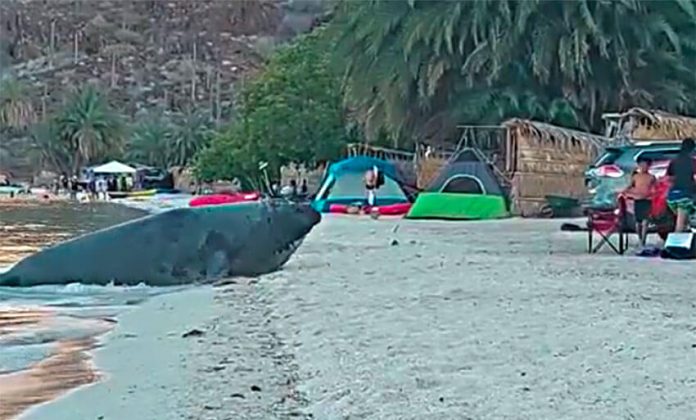
An elephant seal enjoys some beach time in Baja California Sur.
Beach goers on the east coast of the Baja California peninsula have had some unusual company in the past few weeks as a massive female elephant seal has been enjoying the beaches near Mulegé, Baja California Sur.
An unaccustomed sight in this part of the world, it is believed that a combination of the effects of climate change, the search for food and possibly getting lost on its migration route have led this elephant seal to the Baja shores.
While local authorities are asking residents and visitors to keep a polite distance from the animal, the sentiment has not exactly been reciprocated: on Monday, the seal came up onto the El Coyote beach to sunbathe just meters from a family of humans who were there to do the same.
Videos have been circulating all over social media of “encounters” with the new local celebrity in which unaware beach goers have been sent running at the sight of it. Officials believe this was the same elephant seal seen in March on a beach in a nearby part of the Gulf of California.
In the northern hemisphere, elephant seals are generally found along the United States and Canadian coast where the waters are cooler. They are almost never found as far south as Baja California. In the southern hemisphere, they are found in Argentina, New Zealand and South Africa.
The animals can weigh up to 11,000 pounds and — if this particular seal is any example — spend the majority of their time eating and sunning on the beach without much fear of human beings.
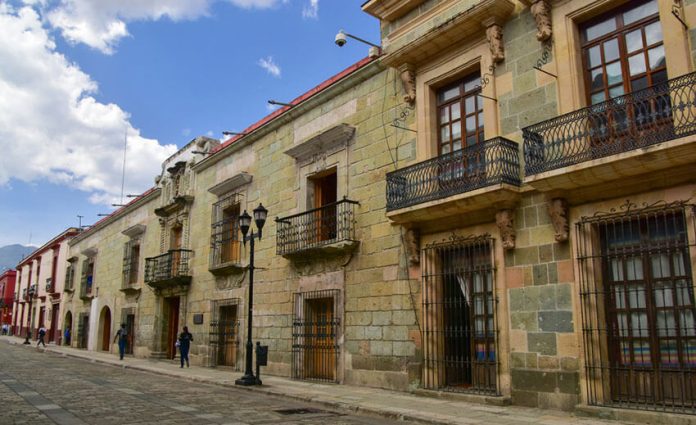
A street in downtown Oaxaca, world's best city. deposit photos
Oaxaca has been named the world’s best city by Travel + Leisure Magazine and is one of three Mexican cities in the top 10. Magazine readers voted San Miguel de Allende as No. 2 and Mexico City No. 6.
A small city, Oaxaca’s capital only has a little over 250,000 residents and sits among the rugged terrain of the Central Valleys region of southwest Mexico. Known for its moles and mezcals, Oaxaca has become one of Mexico’s most popular destinations in the last decade and not just for visiting.
According to Mexico’s National Institute of Statistics and Geography close to 20,000 foreigners live in Oaxaca and that number has only increased since the pandemic as many U.S. residents sought out a place to work remotely that would be relatively close to home.
A separate list for the best resort hotels in Mexico named the Waldorf Astoria Los Cabos Pedregal in Cabo San Lucas as No. 1 and the One&Only Mandarina in Riviera Nayaritas No. 2. Readers’ choice for the five best cities in Mexico included the previously mentioned three as well as Mérida and Guadalajara.
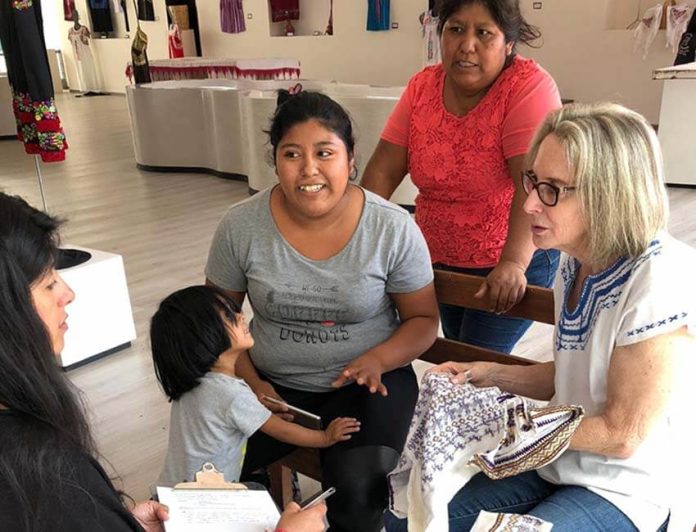
A hopeful artisan (center) signs up for Friends of Oaxacan Art's annual competition. The exposure that winners get has helped some launch full-time careers.
It shouldn’t be surprising that most of Mexican handcrafts’ biggest fans are from the United States. Not only are we geographically close to Mexico, the U.S. has the memory of essential craft arts like quilting to realize what we have lost – and what Mexico struggles to preserve.
Handcrafted items can be found in almost all of Mexico’s states, but none have managed to conserve the range and quality that the highly indigenous state of Oaxaca has. Serious collectors make regular pilgrimages, and a well-developed tourist industry introduces these fine works to new fans. Despite all this, the future of handcrafts is always precarious, as the modern world offers other opportunities to young people.
Arden Rothstein fell in love with Oaxaca in 1961 as a teenager. Although she returned to the States to pursue a career in psychiatry and academia, her love for Oaxaca never waned. With her daughter Anya, she published a book called Mexican Folk Art from Oaxacan Artist Families (2002, 2007, Schiffer books). This book is unique as it lists the contact information of the profiled artisans, which has led to new buyers showing up at families’ homes.
The 2006 teachers’ strikes in Oaxaca caused a freefall in tourism — after what was a run-of-the-mill strike over wages eventually involved riot troops, the seizure of broadcast stations all over Oaxaca and a call for the governor to resign. That summer was economically devastating to both tourism and artisans who depend on it. This prompted Rothstein to contact U.S. writers, art historians, educators and more to join together to help.
Handcrafted rug by Ricard Martínez. FOFA members Daniella Lukashok and Michael Plottel liked Martinez’s rugs so much, they contracted him to make one for their home.
The result is Friends of Oaxacan Folk Art, FOFA for short. Its focus is on the conservation of Oaxacan handcraft traditions into the future, which means working to attract and support young people who choose to shape wood, textiles, clay, metal and more in traditional and innovative ways.
FOFA gives these young artisans a variety of skills through classes, workshops and field trips related to business English, general and online marketing, tourism and Oaxacan and Mexican art history. Since its start, FOFA has grown its community of recognized young artisans to over 150.
FOFA works primarily with governmental and private organizations both in Mexico and the United States to achieve its goals. Its most valuable ally is the State Museum of Popular Art of Oaxaca (MEAPO) and its director, Carlomagno Pedro Martínez.
Pedro has found working with “his neighbors to the north” highly satisfactory because FOFA has had a great impact on Oaxaca’s youth, as it’s able to give them international reach in terms of clientele and technological skills. The collaboration of the two organizations has given Oaxacan folk arts great prestige both inside and outside of Mexico.
Most of FOFA’s work succeeds because it fits in with the cultures of both countries. In the US, FOFA joins with over 200 loyal members, along with SummerStage in Central Park, the Mexican Cultural Institute, the Art Institute of New York, Los Amigos de Arte Popular, Western Union and others eager to learn about and promote Oaxacan culture.
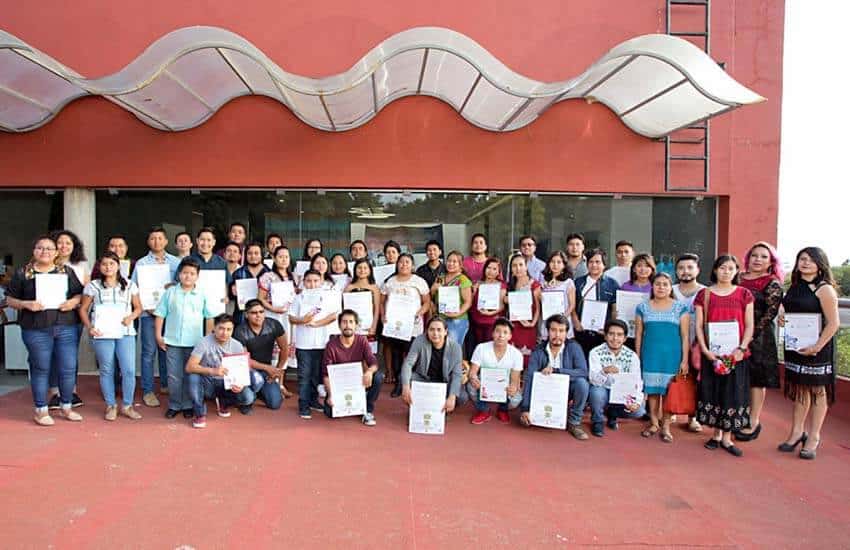
In Mexico, FOFA has adopted the concept of concursos, events where young Oaxaca artisans enter pieces for judging by noted experts and are awarded prizes. Such events do provide an immediate cash benefit, but the real prize is the recognition that winners receive. Certificates and publications in catalogs open doors for years afterward.
Rothstein notes that many past winners from FOFA’s concursos have been able to move their craft from a sideline to something central in their lives.
FOFA’s young artist competition returns this year with a theme of “Finding Hope Through Art,” a reference to the extreme difficulties of the past two years of pandemic shutdowns. As always, the event is held in collaboration with MEAPO, with a public awards ceremony on August 19, 2022.
A group photo of FOFA’s 2018 artisan competition winners.
This year’s competition is the first held since 2018, as the one scheduled for 2020 was canceled. To compensate, FOFA raised the participation age to 35 to allow for those who might be disenfranchised otherwise.
The pandemic has been the biggest challenge for FOFA and the artisans they serve.
The organization’s efforts previously were focused entirely on projects with long-term benefits, taking advantage of strategies that artisans and their markets were already familiar with. The sudden and dire crises caused by a near-complete shutdown of the economy forced everyone to change gears. “We had to postpone a remarkable number of fantastic projects scheduled for 2020, mourn them and then reinvent ourselves,” says Rothstein.
FOFA began with an online photo exhibition dedicated to the crisis and its effect on artisans. From then on, they have worked to put far more emphasis on helping artisans take advantage of the internet.
FOFA has used its own Instagram page to promote individual artisans, but they remain committed to empowering artists’ development of their own businesses, rather than becoming a reseller of handcrafted goods. The difference was to focus on online sales.
During the past two years, many artisan organizations did not want to do face-to-face projects, but FOFA consultants Lorena de la Piedra Ordaz and Diego Morales Toledo realized that taking the risks were necessary, especially in isolated areas of Oaxaca where both knowledge and internet access is hard to come by.
Today, COVID restrictions have eased, and the concurso is back, but Rothstein says that the experience of the past two years will affect FOFA’s activities for years to come; the internet is here to stay and is now a major focus.
The organization has a well-developed website with online catalogs, newsletters and lists of artisans that anyone can access and, unusually, an extensive directory of artisans. They will also provide help in contacting artisans when necessary.
Oaxaca artisan Monserrat Raymundo Sánchez talks about the kind of support she got through FOFA.
Leigh Thelmadatter arrived in Mexico 18 years ago and fell in love with the land and the culture in particular its handcrafts and art. She is the author of Mexican Cartonería: Paper, Paste and Fiesta (Schiffer 2019). Her culture column appears regularly on Mexico News Daily.
The man believed responsible for the June 20 murder of two elderly priests in Chihuahua lived in luxury before he was forced to go on the lam: he owns an opulent home in an otherwise poor town in the Sierra Tarahumara region.
José Noriel “El Chueco” Portillo Gil – the 30-year-old presumed leader of a Sinaloa Cartel-affiliated criminal cell called Gente Nueva (New People) – has a large brick home in the town of Bahuichivo, located about 20 kilometers north of Cerocahui, where the two priests and a tour guide were killed in a church 23 days ago.
According to a Milenio newspaper report, the house is easily the most luxurious in Bahuichivo, which has a population of fewer than 800 people. “The luxurious United States [style] architecture with high-quality finishings and a yard with synthetic grass contrasts with the poverty that this region of Chihuahua, and in particular this locality, suffers,” reported Milenio, which visited the home.
The newspaper also reported that at least a dozen sicarios, or gunmen, formerly lived on a property in front of Portillo’s home where two decidedly less luxurious houses stand. One has five rooms with “dirty beds and mattresses” as well as altars to Santa Muerte (Holy Death), a saint worshipped by many drug traffickers and other criminals.
La lujosa casa en la que ‘El Chueco’ vivía en Chihuahua; una fortaleza de sicarios lo cuidaba
There are more beds, old blankets and small dirty bathrooms in the other home, Milenio said, adding that it appeared to be a safe house where abductees were held. “In a couple of strategic points on this property vantage points were built to watch at all hours … the main entrance to the residence of the ‘boss,’” the newspaper said.
Chihuahua and federal authorities carried out an operation in late April to arrest Portillo at his home, but the alleged criminal leader – who is accused of other homicides including the 2018 murder of a United States citizen – was reportedly tipped off by his criminal cronies and managed to escape.
“We were on the verge of catching him,” said Chihuahua Attorney General Roberto Fierro Duarte. While El Chueco got away, police and navy personnel did seize large quantities of weapons and drugs.
According to state Security Minister Gilberto Loya Chávez, Portillo could still be in the Sierra Tarahumara, despite the commencement of an extensive manhunt in the region three weeks ago. He said Tuesday that authorities are also looking for the suspect in neighboring states and the rest of the country. In addition, an immigration alert aimed at preventing his entry to the United States has been issued.
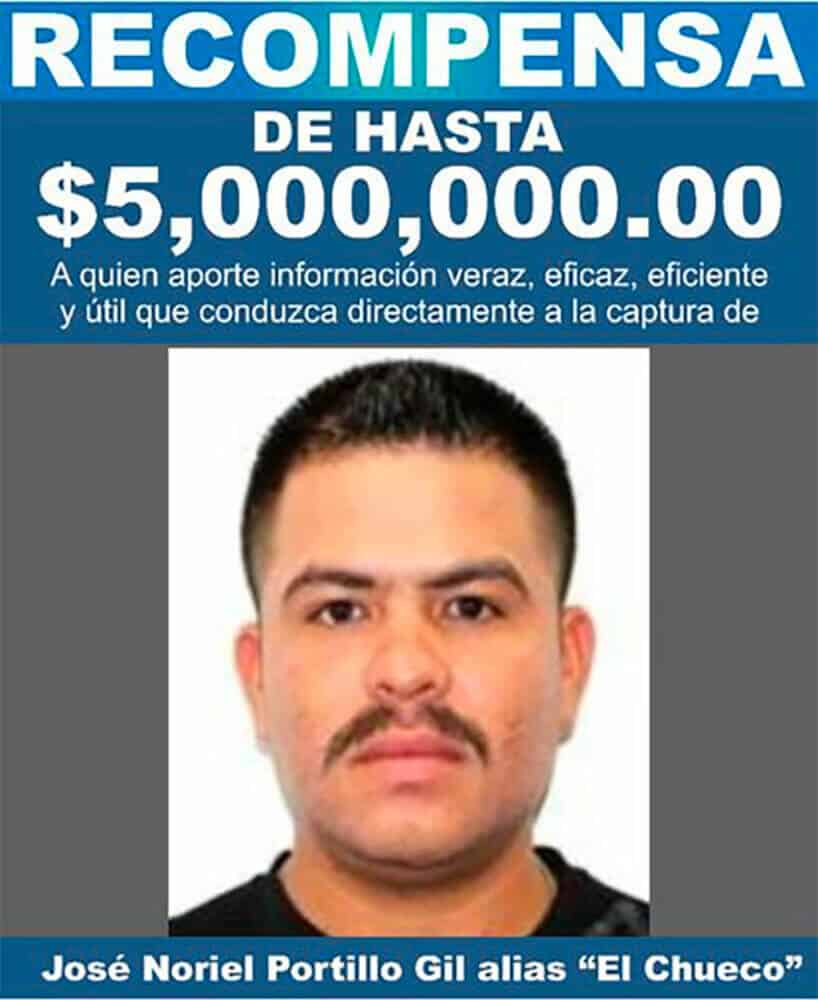
A reward poster for José Noriel Portillo, aka El Chueco.
Loya said that authorities are seeking to break up the group led by Portillo, who allegedly murdered the priests at the tail end of a rampage precipitated by an argument after a baseball game. He said that several people with links to El Chueco’s gang have already been arrested and dozens of firearms have been seized.
Milenio said that Portillo, for whom a reward of up to 5 million pesos is being offered, is currently the most wanted criminal in Chihuahua, and possibly in the entire country. He has some stiff competition in the latter category. Among the other high-profile wanted criminals in Mexico are Jalisco New Generation Cartel leader Nemesio “El Mencho” Oseguera Cervantes and Sinaloa Cartel capo Ismael “El Mayo” Zambada.
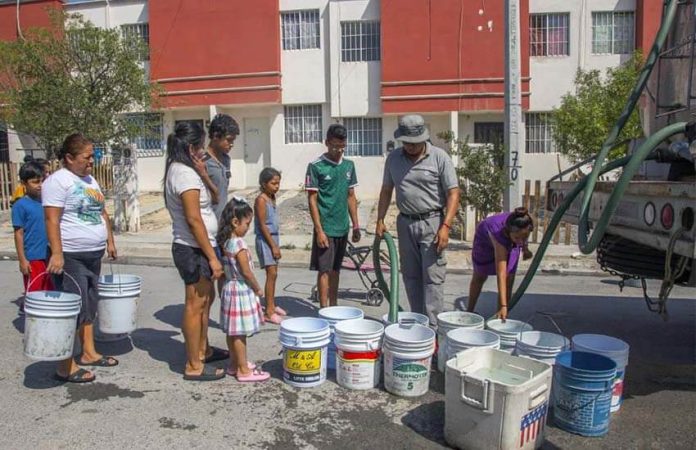
Residents collect water from a truck in Monterrey, Nuevo León, where public water is only available six hours per day, due to drought restrictions.
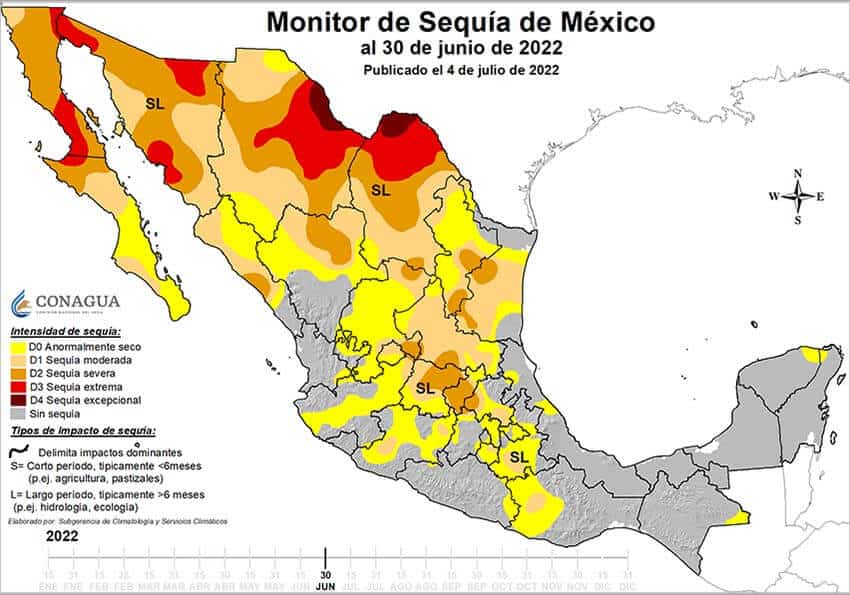
The National Water Commission (Conagua) has declared a drought emergency due to severe, extreme and exceptional drought conditions in different parts of the country.
The authority made the declaration in an announcement published in the federal government’s official gazette on Tuesday.
“The … agreement [declaring the] beginning of an emergency is emitted due to the occurrence of severe, extreme or exceptional drought … in various catchment areas of the country,” Conagua said.
Published on July 4, the commission’s most recent drought report said that 571 of Mexico’s 2,471 municipalities – 23% of the total – are currently experiencing some level of drought. Five municipalities – four in Chihuahua and one in Coahuila – are affected by exceptional drought, while 53 municipalities across five northern states are in extreme drought.
Conagua’s latest drought monitoring map shows northern areas in ‘extreme drought’ (red) and parts of northern and central Mexico in ‘severe drought’ (brown).
An additional 184 municipalities in 17 states face severe drought conditions. All told, almost half of national territory – 47.5% – is affected by some level of drought:
In Aguascalientes, Baja California and Sonora, 100% of municipalities are affected, according to Conagua.
In Coahuila, Chihuahua and Querétaro, more than 94% are experiencing drought.
In San Luis Potosi, over 80% are in drought, while at least 60% of municipalities in Baja California Sur, Guanajuato, Sinaloa and Tamaulipas face drought conditions.
Only 45% of Nuevo León municipalities are in drought, but the metropolitan area of Monterrey is currently experiencing a severe water crisis.
Conagua said in a statement that its emergency declaration allowed it to implement measures to guarantee the supply of water in places with severe, extreme or exceptional drought conditions or those that face a reduction in supply.
It said that temporary limits on water rights could be imposed through reductions of volumes to concession holders in drought-affected areas. Industrial and agricultural concession holders may be temporarily required to yield all or part of their water to third parties or cede their water rights to Conagua, the commission said.
The measures are intended to guarantee the availability of water required by the public in rural and urban areas, Conagua said before calling on residents of drought-affected areas to limit their water use.
Authorities said they believed the gunmen were from Sinaloa, home to the Sinaloa Cartel.
Fourteen people were arrested Tuesday after a gun battle between police and armed civilians in southern Mexico City.
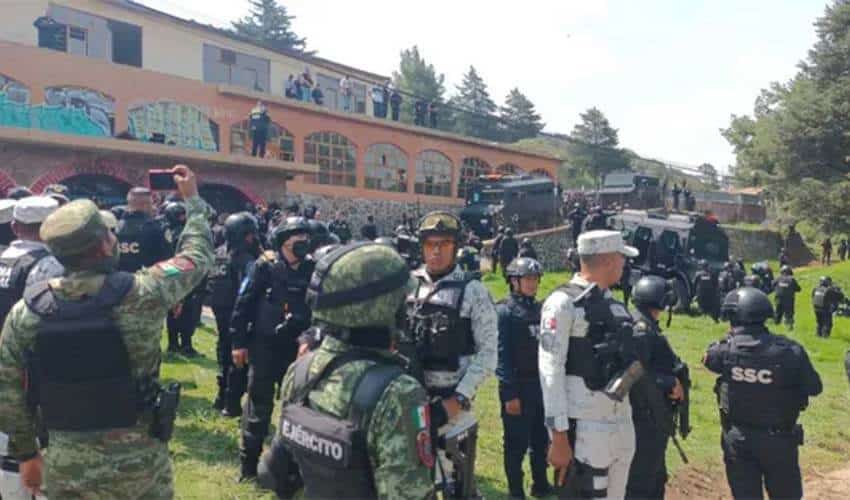
Four officers were wounded in the clash, which occurred on the Mexico City-Cuernavaca highway in the borough of Tlalpan. Videos posted online of the shootout — which involved members of the Mexican army, National Guard and the capital’s police force — showed authorities responding in force with armored vehicles and helicopters.
Mexico City police chief Omar García Harfuch reported the confrontation on Twitter shortly after 3 p.m.
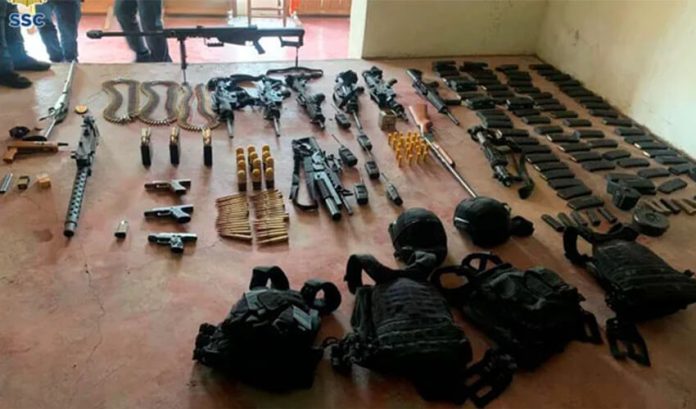
In another post at 4:15 p.m., the police chief said he was in San Miguel Topilejo – where the shootout occurred – and that 14 people had been detained. García also said that two “victims” had been freed and that 13 firearms – including a Barrett .50 and a machine gun – 12 grenades, bulletproof vests, drugs and other weapons paraphernalia were seized. “I acknowledge the bravery of the … [police],” he added.
García – who was targeted in an armed attack in 2020 – said in an interview that one officer was seriously wounded. He also said that some of the people arrested were not from Mexico City. The police chief subsequently told a press conference that authorities believe those detained are from Sinaloa, home of the Sinaloa Cartel.
In addition to Mexico City’s police department, members of the military and the National Guard responded with armored cars and helicopters.
“We believe that it’s a group from Sinaloa, one said he was from Culiacán, others from Sinaloa,” García said.
The gunfight, described as “intense” in one report, shut down the Mexico City-Cuernavaca highway at the 28-kilometer marker. One video posted to social media showed cars lined up near the location where the shootout occurred. As shots ring out, two police officers can be seen sheltering behind their vehicle.
Other videos also captured the sound of gunfire as well as the arrival of additional police cars to the conflict zone. One local described the events as reminiscent of a movie.
The Mexico City Attorney General’s Office announced Tuesday night that it had initiated an investigation into the events in San Miguel Topilejo, while Mayor Claudia Sheinbaum said Wednesday that security would be beefed up in the area.
“I’ve instructed Security Minister García Harfuch to strengthen the presence [of police] and intelligence work in the entire area in coordination with the National Guard,” she wrote on Twitter. The mayor earlier described the conduct of police involved in the clash as “brave and effective.”
Both leaders said after meeting on Tuesday that they're “committed like never before" to modernizing infrastructure on the Mexico-U.S. border. Marcelo Ebrard/Twitter
Mexico will invest US $1.5 billion on border infrastructure between 2022 and 2024, according to a joint statement by President López Obrador and United States President Joe Biden.
According to a joint statement issued after the two leaders met Tuesday in the White House, the two countries are “committed like never before to completing a multi-year joint U.S.-Mexico border infrastructure modernization effort for projects along the 2,000-mile border.”
The joint effort “seeks to align priorities, unite border communities and make the flow of commerce and people more secure and efficient,” the statement said, noting that the U.S. will invest $3.4 billion in 26 projects at its northern and southern borders.
“Mexico has committed to invest $1.5 billion on border infrastructure between 2022 and 2024,” López Obrador and Biden said.
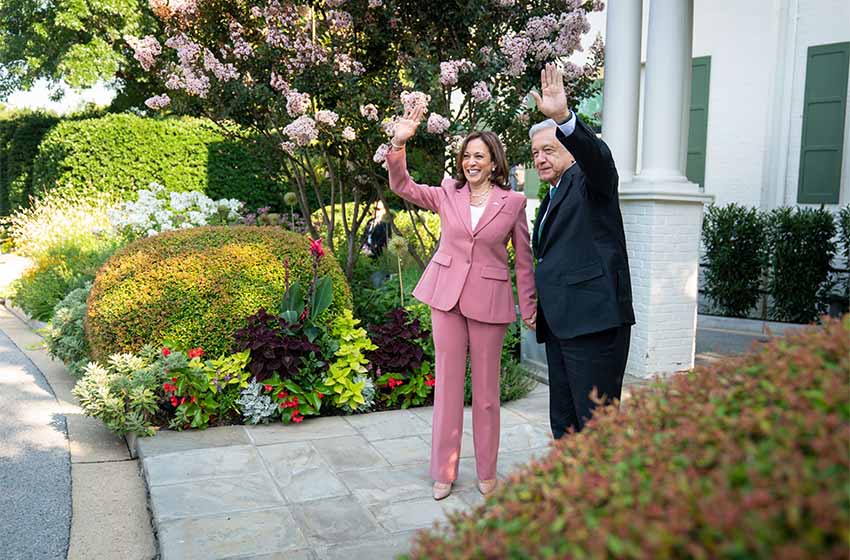
AMLO was greeted at the White House by U.S. Vice President Kamala Harris. White House/ Twitter
A White House source told NBC News that the Mexican government’s $1.5 billion will go toward a range of new construction projects along its northern border to strengthen the United States’ ability to screen and process migrants. The U.S. official said the exact details of the projects are still being worked out but added the money won’t go to the construction of any kind of border wall or barrier. The aim of the projects will be to improve the speed and security of border screening rather than to deter migrants from crossing into the U.S., the source said.
White House assistant press secretary Abdullah Hasan credited Biden for Mexico’s commitment to invest in border infrastructure.
“[Former U.S. president Donald] Trump in his four years couldn’t finish a border wall, let alone get Mexico to pay for it. President Biden just got Mexico to agree to paying $1.5 billion to improve border processing and security through smart, proven border management solutions,” he tweeted.
In their joint statement, López Obrador and Biden also reaffirmed their commitment to the full implementation of the United States-Mexico-Canada Agreement, saying that the Mexican and U.S. governments would “make our supply chains more resilient and expand production in North America” through “active coordination of our economic policies.”
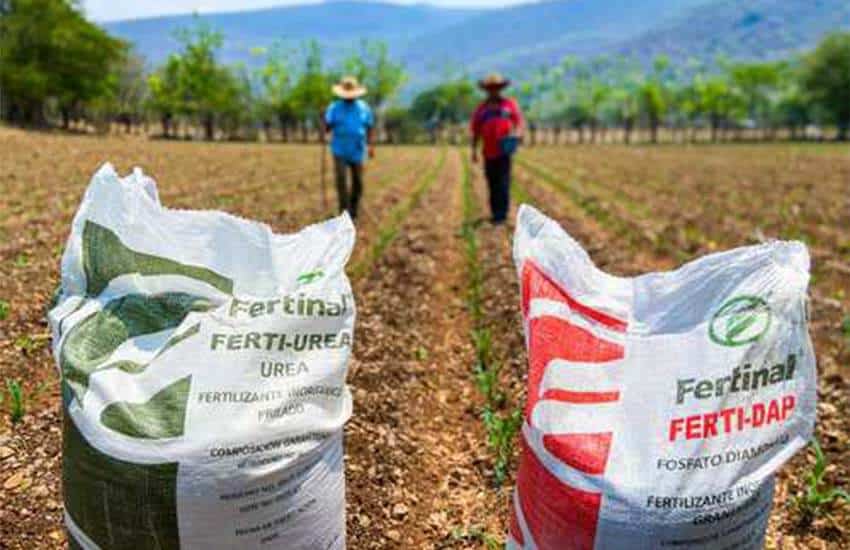
They committed to “jointly combat inflation by accelerating the facilitation of bilateral trade and reducing trade costs” and announced that Mexico will purchase up to 20,000 tons of milk powder from the United States to assist Mexican families in rural and urban communities as well as up to 1 million tonnes of fertilizer for subsistence farmers.
Among other commitments, Mexico and the United States pledged to work together to address climate change and security issues, including the challenges of fentanyl, arms trafficking, and human smuggling, and to reduce levels of drug abuse and addiction.
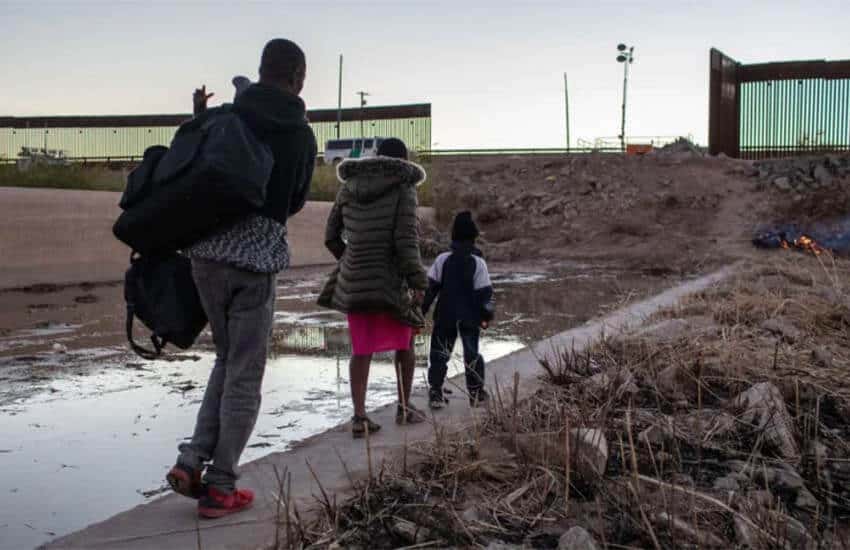
A White House source reportedly said Mexico and the U.S. aim to improve the speed and security of border screening rather than deter migrants from crossing into the U.S. File photo
The two countries also reaffirmed their commitment “to launch a bilateral working group on labor migration pathways and worker protections.”
“… The tragic deaths of migrants at the hands of human smugglers in San Antonio further strengthens our determination to go after the multi-billion-dollar criminal smuggling industry preying on migrants and increase our efforts to address the root causes of migration,” López Obrador and Biden added.
During lengthy remarks in the Oval Office, AMLO spoke about the Bracero Program, under which large numbers of Mexicans worked legally on farms in the U.S. in the middle of the 20th century. “Today, we’re proposing something similar to this program,” he said.
Interior Minister Adán Augusto López Hernández said last month that a formal announcement about a temporary work scheme for 150,000 Mexicans and migrants in Mexico would be made during the president’s visit to Washington, but no such announcement happened.
Martha Bárcena, Mexico’s former ambassador in the United States, said that political conditions in the U.S. made it difficult to get the U.S. government to agree to migration reform. “It’s not that President Biden or the Democrat administration don’t have the political will,” she said.
In an approximately 30-minute response to Biden’s comparatively succinct opening remarks, López Obrador noted that a lot of United States residents have been coming into Mexico to buy gasoline, which is subsidized by the Mexican government.
“We decided that it was necessary … to allow Americans who live close to the border … to get their gasoline on the Mexican side at lower prices,” he said.
“And right now, a lot of the drivers — a lot of the Americans — are going to Mexico … to get their gasoline. However, we could increase our inventories immediately. We are committed to guaranteeing twice as much supply of fuel. That would be considerable support [for U.S. motorists],” López Obrador said. “Right now, a gallon of regular costs $4.78 on average on this side of the border. And in our territory, $3.12.”
AMLO also committed to buying 1 million tonnes of fertilizer from the U.S. to give to Mexican subsistence farmers. Ministry of Agriculture
López Obrador also advocated working toward the elimination of more tariffs and allowing workers, technicians, and professionals of different disciplines to work in the United States. “I’m talking about Mexicans and Central Americans,” he said, adding that they should be given temporary work visas, which in turn would ensure that the U.S. economy doesn’t stall due to the lack of labor.
“It is indispensable for us to regularize and give certainty to migrants that have for years lived and worked in a very honest manner, and who are also contributing to the development of this great nation,” López Obrador told Biden.
“I know that your adversaries – the conservatives – are going to be screaming all over the place, even to heaven. They’re going to be yelling at heaven. But without a daring, bold program of development and well-being, it will not be possible to solve problems. It will not be possible to get the people’s support.”
AMLO – who didn’t attend last month’s Summit of the Americas because Cuba, Venezuela and Nicaragua weren’t invited – said in late June that he would raise the case of Wikileaks founder Julian Assange in his meeting with Biden, but the Mexican president didn’t mention the 51-year-old Australian during his public remarks. The United Kingdom has approved the extradition of Assange to the United States, where he faces espionage charges, but lawyers are challenging the decision.
In response to López Obrador’s comments – which delved deeply into the history of Mexico-U.S. relations – Biden said he agreed with the “thrust” of what his counterpart said and concurred that “we need to work closely together.”
In his opening remarks, the U.S. president said his government sees Mexico as an “equal partner.”
“… For me and my administration, the U.S.-Mexico relationship is vital to achieving our goals of everything from the fight against COVID-19, to continuing to grow our economies, to strengthening our partnerships and addressing migration as a shared hemispheric challenge,” Biden said.
Wikileaks founder Julian Assange’s pending extradition to the U.S. was not mentioned in public remarks, although AMLO had said he would bring up the case with Biden. Chancellor of Ecuador
Although there was no announcement about a new temporary work scheme, the U.S. president highlighted that his administration has already granted visas to a large number of Mexicans and Central Americans.
“My administration is leading the way to creating work opportunities through legal pathways. And last year, my administration set a record. We issued more than 300,000 … [temporary agricultural] visas for Mexican workers,” Biden said.
“We also reached a five-year high in the visas we issued to Central Americans, and we’re on pace to double … [that] this fiscal year,” he added.