Home Blog Page 972

Elite force of ex-cops infiltrated local police in Guanajuato: 150 had links to narcos

0
Undercover National Guard agents used skills from their time as Federal Police officers to infiltrate corrupt municipal police forces.

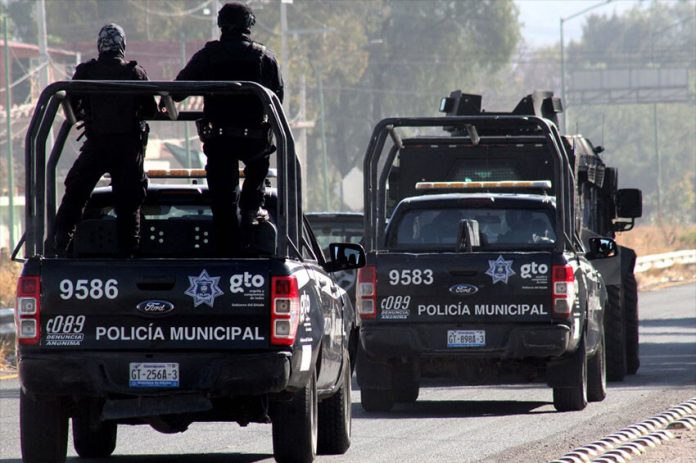
An elite group of former Federal Police (PF) officers has infiltrated municipal police forces in Guanajuato to detect and clean out corrupt cops with links to narcos, according to state authorities.

About 150 “criminals in uniforms” — municipal police officers with links to the Jalisco New Generation Cartel and the Santa Rosa de Lima Cartel — have so far been dismissed as a result of the elite group’s work, said Sophia Huett, executive secretary of the Guanajuato public security system.

According to a Milenio newspaper report, the state government requested federal approval to create the elite group in order to break the control exerted by the corrupt cops in Guanajuato, which has been Mexico’s most violent state in recent years. Formed just over a year ago, it is made up of some 30 former PF officers who previously attended training courses offered by the FBI and DEA in the United States, the National Police of Colombia and anti-gang authorities in El Salvador.

The mission of the ex-federal cops — now members of the National Guard, which superseded the PF — is to purge municipal forces of criminal cops and help reduce violence to a point where Guanajuato is no longer the country’s most murderous entity.  Members of the elite force who spoke with Milenio said that corrupt municipal police provide information to organized crime groups and thwart operations against them, among other collusive conduct.
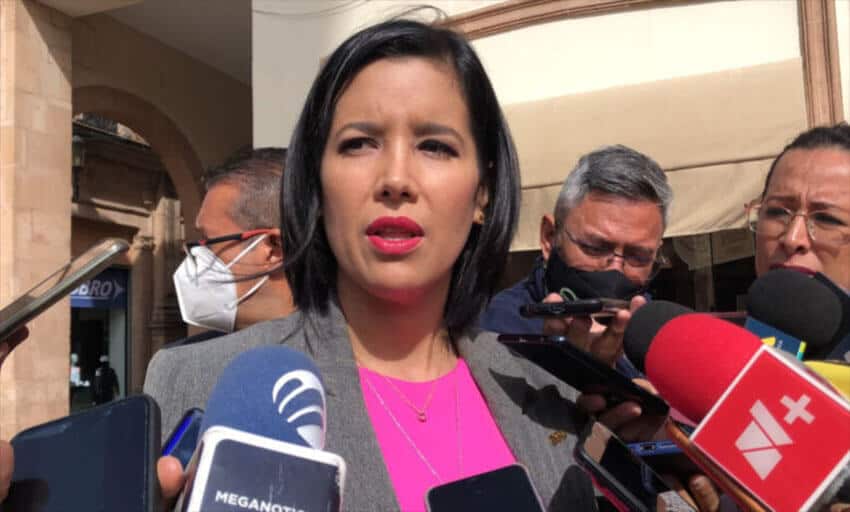
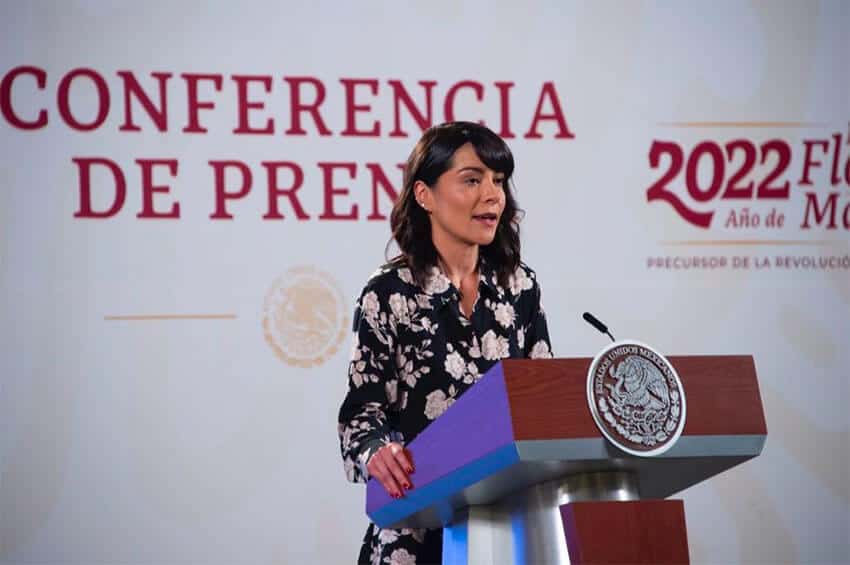
Sophia Huett, chief of the Guanajuato public security system.

One former PF member said that several municipal police in Celaya — the first municipality where a force was infiltrated — were “uniformed criminals.”

He said that some of the corrupt cops were caught committing illegal acts and turned over to the relevant authorities.

In addition to corruption in police forces in Celaya and nearby municipalities such as Apaseo el Grande and Apaseo el Alto, the elite group has also detected that local cops lack training and equipment. An ex-federal cop said that municipal forces were practically laughing stocks.

“A municipal colleague said, ‘I joined out of necessity, to have a job, we were novices in police matters, they gave us a baton and that was our work tool,’” he said. “… Now we have to work intelligently because we’re talking about organized crime,” he added.
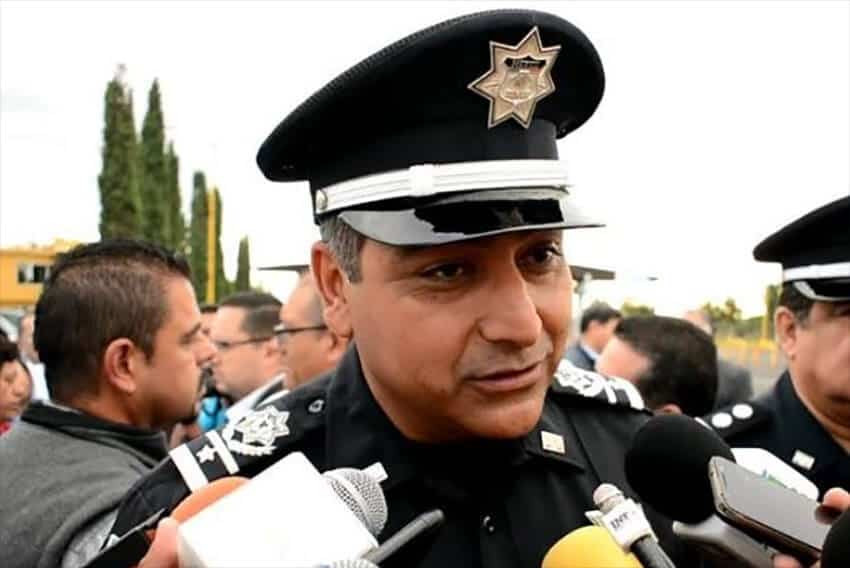
Jesús Ignacio Rivera Peralta, Celaya's security minister, said over 200 officers have been fired since he took the job late last year.
Jesús Ignacio Rivera Peralta, Celaya’s police chief, said over 200 officers have been fired since he took the job late last year.

Jesús Ignacio Rivera Peralta, a 26-year veteran of the PF who now heads up the Celaya police force and has collaborated closely with the elite group, said that some crimes have declined since the ex-PF cops arrived.

“It was said last year that Celaya was the most dangerous city in Mexico and statistically the city where the highest number of municipal police were killed due to crime; today we’re no longer in those positions,” he said.

Rivera, who became police chief late last year, told Milenio that over 200 municipal police in Celaya have been dismissed for a range of reasons, allowing him to have greater control over the force. However, he didn’t specify how many were fired as a result of the elite group’s detection of corrupt conduct.

Huett, the state security official, said that members of the elite group were formerly deployed on special operations in notoriously violent states such as Guerrero, Michoacán, Tamaulipas and Chihuahua. During their deployments, the then-Federal Police officers learned that they couldn’t guarantee security if state and municipal cops weren’t doing their job, she said.

The elite group now working in Guanajuato “generates information that allows … the actions of criminal groups to be detected,” she explained.

“And when you follow the lines of investigation, they take you to more criminals or criminals that were in police forces at some stage or worse still, active [police force] members,” Huett said. “The principal objective of this group is to uncover criminals, wherever they may be.”

It’s not enough to just dismiss criminal cops, the security official added, asserting that officers who “betrayed a commitment or rather disguised themselves as police” should go to jail. “… He who betrays the vocation [must] pay the consequences,” Huett said.

With reports from Milenio
Ex-attorney general arrested over investigation of 43 missing students of Ayotzinapa

0
Jesus Murillo Karam, former
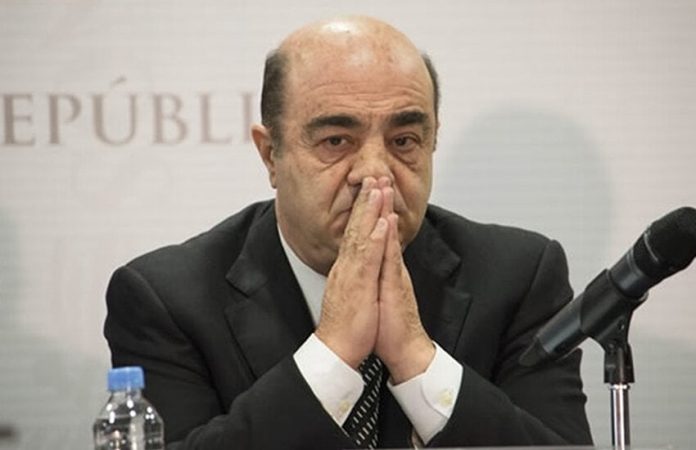
Jesús Murillo Karam was arrested Saturday and remains in preventative custody. He was Mexico's attorney general from 2012–2015. File photo

Former attorney general Jesús Murillo Karam is behind bars after he was arrested Friday in connection with the disappearance and presumed murder of 43 students in Guerrero in 2014.

The federal Attorney General’s Office (FGR) said that Murillo – attorney general between 2012 and 2015 in the government led by former president Enrique Peña Nieto – was detained “without resistance” at his Mexico City home on charges of forced disappearance, torture and obstruction of justice in connection with the abduction of the Ayotzinapa Rural Teachers College students, who disappeared in Iguala on September 26, 2014.

A judge on Saturday remanded the ex-official in preventative custody at the Reclusorio Norte prison in Mexico City after the FGR sought that measure because it considers the suspect a flight risk. Murillo will face another hearing on Wednesday.

His arrest came a day after the federal government published a report detailing the findings of an official inquiry that concluded that the kidnapping and presumed murder of the students was a crime of the state. The remains of just three students have been found and identified.

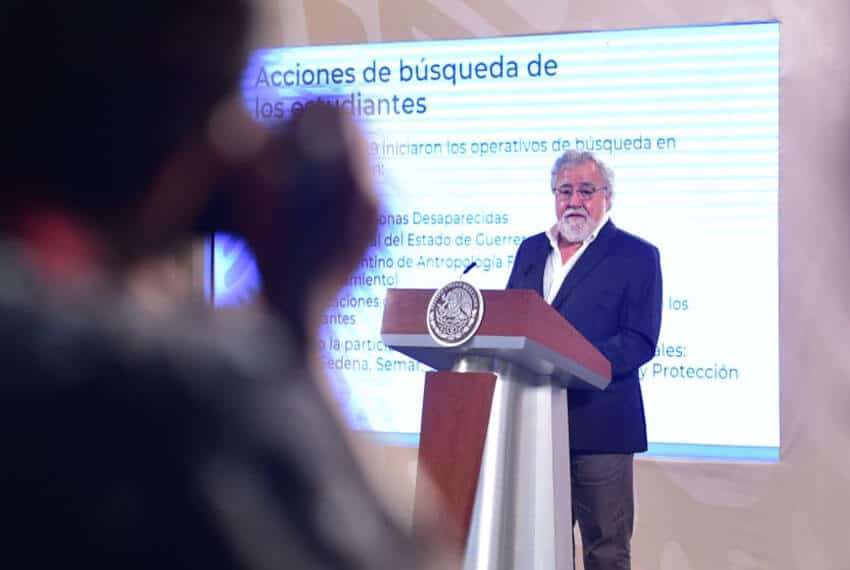
Mexico Deputy Interior Minister Alejandro Encincas Ayotzinapa 43 case
Deputy Interior Minister Alejandro Encinas at a press conference Friday announcing the government’s latest findings. Alejandro Encinas/Twitter

Deputy Interior Minister Alejandro Encinas said Friday that the students were victims of forced disappearance by government authorities and criminal groups. Senior officials in the Peña Nieto government altered crime scenes and concealed links between authorities and criminals in what amounted to a coverup, he said.

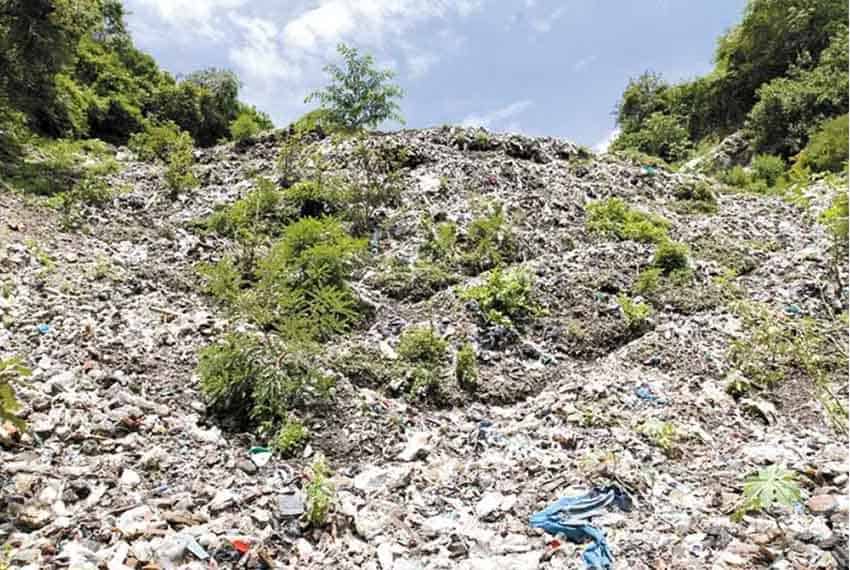
Murillo, also a former federal lawmaker and governor of Hidalgo, is considered the key architect of the so-called “historic truth” in the Ayotzinapa case – that the students, traveling on a bus they commandeered to go to a protest in Mexico City, were intercepted by corrupt municipal police who handed them over to members of the Guerreros Unidos crime gang. The Guerreros Unidos — mistaking them for rival gangsters — killed them, burned their bodies in a dump in the municipality of Cocula, Guerrero, and disposed of their remains in a nearby river, according to the previous government’s official version of events.

The former attorney general told a press conference in January 2015 that that version of events was “a legal certainty.”

However, the “historic truth” has been widely criticized and questioned both within Mexico and internationally. Prosecutors alleged at a hearing on Saturday that Murillo used false evidence to construct the official version of events.

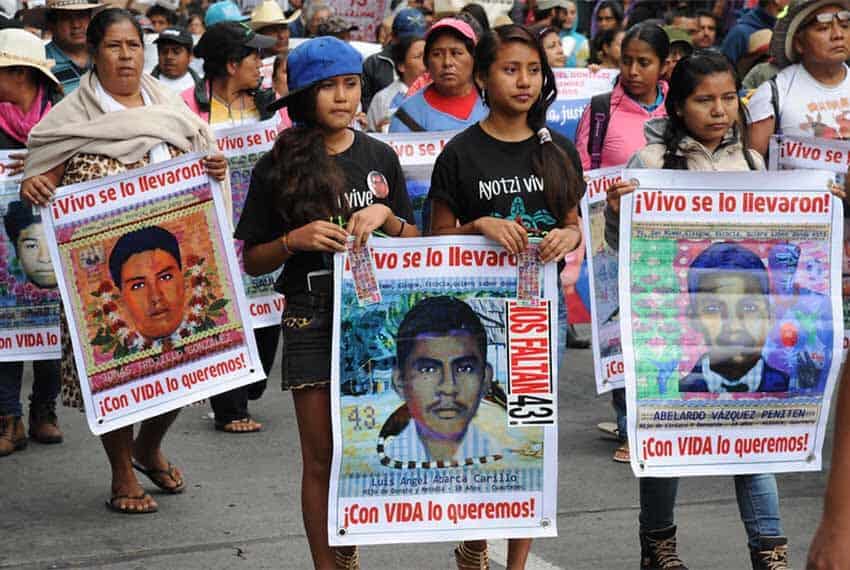
March for 43 missing Ayotzinapa teaching college students
Families of the 43 students who disappeared in 2014, as well as many other Mexicans, were not satisfied with the previous government’s “historical truth” about what happened. File photo

The United Nations said in a 2018 report that 34 people were tortured in connection with the investigation, while prosecutors alleged Saturday that Murillo committed acts of torture against six people in order to obtain false confessions.

Many people have long suspected that the army played a role in the kidnapping and apparent murder of the students, a belief supported by leaked testimony from a suspected Guerreros Unidos leader.

The FGR said in a statement Friday that a México state-based federal judge had issued a total of 83 arrest warrants against 20 military commanders and soldiers belonging to two battalions in Iguala, five administrative and judicial officials in Guerrero, 33 municipal police officers from Huitzuco, Iguala and Cocula, 11 state police and 14 members of the Guerreros Unidos gang.

All are “linked to what occurred in the city of Iguala, Guerrero, on September 26 and 27 of 2014 and later dates,” the FGR said, adding that they are accused of organized crime, forced disappearance, torture, homicide and crimes against the administration of justice.

Supposed dumping site of Ayotzinapa 43 students' bodies in Cocula, Guerrero
The dump in Cocula, Guerrero, where the previous government’s version of events claimed some of the 43 students’ bodies were burned by crime gang members. Screen capture

During the hearing on Saturday, Murillo said he would present evidence during his next court appearance that clearly shows what happened to the 43 normalistas, or teaching students, in September 2014. His lawyer, Javier López García, said the evidence consisted of documents and photographs.

A doctor who has treated Murillo for almost three decades told the same hearing that the 74-year-old has serious health problems. Advising against his patient’s incarceration, Alberto Jonguitud Falcón said that Murillo has high blood pressure and chronic obstructive pulmonary disease, among other problems.

In addition to the former attorney general, authorities believe that 32 other former officials were involved in the fabrication of the “historic truth.”

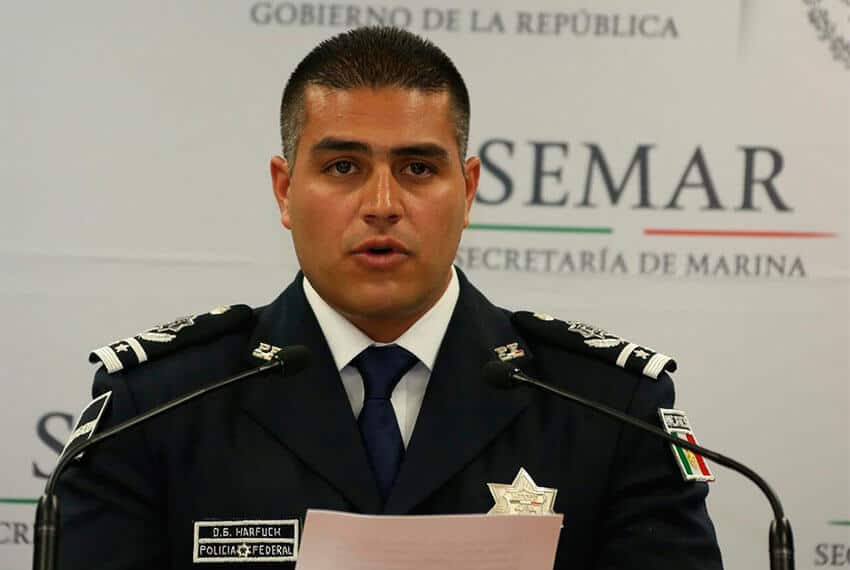
Among them are Tomás Zerón, former head of the now-defunct Criminal Investigation Agency, and Mexico City police chief Omar García Harfuch, a former Federal Police coordinator in Guerrero. The latter on Monday said that he rejected the “absurd” claim that he had participated in a meeting to “conceive the historic truth.”

Mexico City Police Chief Omar García Harfuch in 2014
Mexico City Police Chief Omar García Harfuch, seen here as a Guerrero coordinator for the now-defunct Federal Police, was named by authorities as a possible conspirator. File photo

“Hopefully, those conducting the investigations detain those who did damage to the young men instead of ruining lives and reputations of those of us who do something for our country every day,” García wrote on Twitter.

President López Obrador said Monday that his government’s Ayotzinapa truth commission had not requested that Peña Nieto and former army chief Salvador Cienfuegos be investigated in connection with the students’ disappearance. He told his morning news conference that many people shared “joint responsibility” for the crime, “but those who participated directly are those who are being tried.”

With reports from Milenio, Reforma and El Financiero 

Declaring Mexico safe: the week at the morning news conferences

0
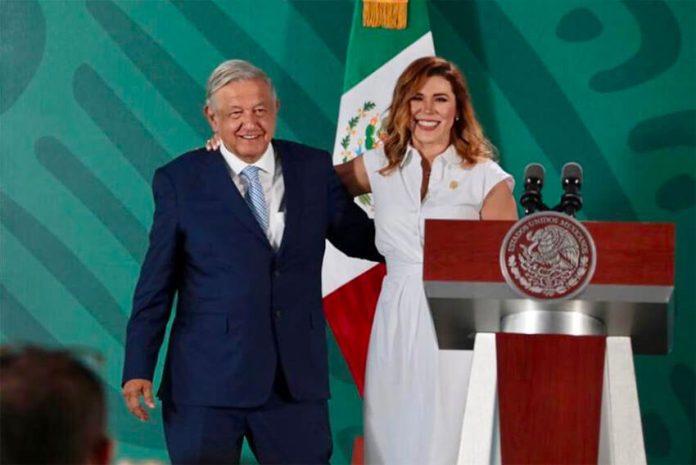
AMLO and Baja California Governor Marina del Pilar
AMLO and Baja California Governor Marina del Pilar at Friday's conference in Tijuana.

Bullets flew, highways were blocked and convenience stores burned on a busy weekend for cartel members. Meanwhile, President López Obrador was in Nuevo León, attending to the water crisis. Attention is required: in Monterrey water has only been running for 6 hours/day since early June.

Monday
“They want us to do badly. They are very desperate and nervous, making propaganda. They use the weekends to manipulate and to distort things … it’s very sensationalist, creating an atmosphere of uncertainty and fear … it was one of the weekends, incredibly, with the fewest homicides. But due to propaganda, the perception is different,” the president assured, after the press focused on cartel chaos on the weekend.

López Obrador said there had only been a relatively modest 196 murders over the weekend and lamented that the 10 trapped miners in Sabinas, Coahuila, on day 12 below ground, had still not been seen, after a rescue attempt was hampered by further flooding.

To ensure their own safety, a journalist had suggested that Mexicans take up arms: the president saw the funny side, allowing himself a chuckle. “Without doubt our adversaries are exaggerating …. There is nothing to fear, we are working and taking care of the people … we must stop dirty propaganda and slander campaigns,” he insisted, and compared the government’s record to the similarly gory security records of his predecessors.

Tuesday

Deputy Health Minister Hugo López-Gatell revealed that after five consecutive weeks of waning COVID-19 cases, the whole country was green on the coronavirus stoplight risk map. However, yellow might be a more appropriate color for a map of Mexico at present amid a fearsome drought.

Fortunately, the environment was a priority for the president, who said his most important act as leader was withholding mining concessions. López Obrador alleged political collusion with mining magnates in Coahuila, the state where a mine collapsed earlier this month. “The owner of the main mining plant in that region [Coahuila] has … 10 or 20 luxury planes. He lent them to the governor of Coahuila … those same [mining] chiefdoms have objected to mine workers protecting themselves and unionizing, they’ve threaten them,” he insisted.

However, despite obstructions, adversaries and “vultures,” who the president said were trying to gain a political advantage from the mining disaster, he remained confident that Mexico was headed in the right direction. “We are starting the fourth transformation of public life, which is a moral economy. Giving preference to the poor, creating jobs, seeking self-sufficiency, recovering the role of public institutions, rescuing Pemex, the Federal Electricity Commission, education, healthcare. That’s what we’re doing and that’s what we’ll continue to do,” he said.

Wednesday

Fake news connoisseur Elizabeth García Vilchis sorted the rotten from the ripe on Wednesday. “The media assure they tell the truest of truths,” García chided, before saying that conservatives were up in arms that another teacher, Leticia Ramírez, had taken over as Education Minister. She then accused a journalist of being a “racist, conservative and neoliberal,” due to an incorrect report on airline routes.

Elizabeth García
Elizabeth García described one journalist as ‘racist, conservative and neoliberal’ for a report she called incorrect during her weekly media lies session.

García added there had been a “mega campaign to generate a perception of generalized violence and lack of governance,” on the weekend, and paused to provide a long list of journalists and media organizations which took part in the alleged collusion.

Later in the conference, the president backed Ramírez as education minister. “Level of schooling, of education, is not synonymous with levels of culture … she’s an exceptional woman,” he said in a retort to critics of Ramírez, before giving the new minister a welcoming hug and kiss on stage.

As for the president, he was already looking forward to being replaced, and winding down. “Here in the city you walk faster. The countryside is quieter, more relaxed … when I finish, I’m going to retire,” he said. “I’m going to the countryside, to sea level. Living at sea level is better for hypertensive people than living at altitude,” the 68-year-old leader informed.

Thursday

López Obrador lamented the murder of the mayor’s son in Celaya, Guanajuato, – a notoriously violent city – before Deputy Security Minister Ricardo Mejía delivered his “Zero Impunity” section on crime. Mejía said 42 people had been arrested after violence in Baja California, Sinaloa, Jalisco, Guanajuato and Chihuahua. In Michoacán alone, a further 167 people had been put behind bars, Mejía confirmed.

To denounce a different class of criminal, a little seen minister took center stage. A food program appeared to be rotten at the core: Minister of public administration, Roberto Salcedo Aquino, reported on AMLO-era corruption allegations into an Agriculture Ministry program. Since 2019, Salcedo said, 38 criminal complaints had been made due to irregularities at Mexican Food Security (Segalmex).

However, it wasn’t only theft, but favoritism that the president was keen to combat. He highlighted that almost all finance ministers had studied at the same university and pondered how many judges had been privately educated. Despite his concerns, the president later insisted he would keep his distance from the courts: “that is a decision for the judiciary. There are things that don’t seem right to me, but we have to respect the decision,” López Obrador said, after the Tamaulipas governor escaped arrest on money laundering and criminal association charges, due to his immunity from prosecution.

Friday

The president delivered the conference on Friday from Mexico’s northwestern extremity, Tijuana, Baja California.

It was sorry reading in the state’s security briefing by Defense Minister Luis Cresencio Sandoval. He said the border state was second for murders, second for kidnapping and first for vehicle theft.

On the national front Security Minister Rosa Icela Rodríguez provided some respite for the president. Icela said crimes were down 29.3% in July compared to when the administration began and that homicide was down 12.8% since the historic maximum in 2018.

The miners in Sabinas, however, appeared to be in grave trouble. The head of Civil Protection, Laura Velázquez, mentioned a geophysical report of the mine and the use of a drone with laser technology, but could offer no word from the 10 men trapped since August 3.

A separate, historic disaster was occupying the president’s mind. Having seen on Thursday the families of the 43 students gone missing from Ayotzinapa, Guerrero, in 2014, he insisted justice would be done. “It’s a very sad thing … painful for parents, but we said from the beginning that we were going to speak with the truth no matter how painful it was. The case is not closed, only the report of the commission was released yesterday. The Attorney General’s Office is going to continue … It will be up to the judges and the Judiciary to deliver justice,” he said, displaying great faith in Mexico’s institutions.

Mexico News Daily

Frustrated with online info on Mexican culture? Artes de Mexico’s expert articles are available in English

0
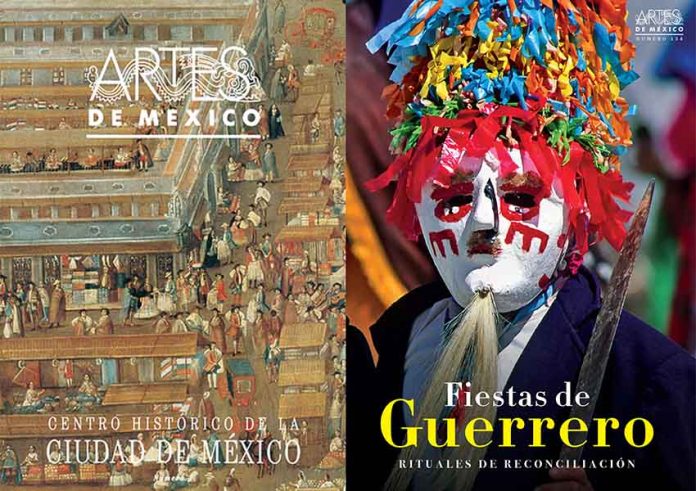
Artes de Mexico magainze
The first issue of Artes de México, left, which focused on Mexico City, and the most current issue, No. 134, right, covering Guerrero's traditional festivals.

I get it. If your Spanish was “all that,” you would be learning about Mexico through local sources.

But what if I told you that there is at least one Mexican publication that makes quality information available in well-translated English?

That would be Artes de México.

In 1988, Alberto Ruy Sánchez and Margarita de Orellana were a young couple looking for a career. The economic crises of the 1980s had not been kind to them. Despite doctorates and foreign work experience, they had to get by with various freelance and other academic gigs.

Artes de Mexico store
Margarita de Orellana in Artes de México‘s store in Mexico City.

Then they found “their reason for living.” They were tasked with reviving a publication that had run from 1955 to 1980.

Published quarterly, Artes de México is neither a magazine nor a book but a hybrid. To distinguish it as such, let’s use the Spanish word revista.

Artes de México recruits experts and other noted writers to write interrelated articles within the issue to provide laypeople with an in-depth look at a thematic topic. Issues remain available as reference works years after publication.

The English language has been important to the publication since its relaunch. “Intuitively, we realized that we had a market [for this type of publication] in the United States because of the number of Mexicans living there,” says De Orellana.

But foreign mass distribution there has not worked out. The English today serves to promote Mexican culture globally. But since it is not the organization’s main focus, translations are in the back, meaning you have to flip back and forth to read the English and look at the excellent photographs.

And despite being called “Arts of Mexico,” the publication actually covers a wide range of cultural topics, walking a middle road between pop culture and the academic. Issues have been dedicated to biodiversity, festivals, holidays, food, clothing, cultural symbols, indigenous cultures, history and, of course, the various arts. It presents information not readily available in other media.

One early issue, for example, focused on legendary cameraman Gabriel Figueroa, who worked on over 200 films during Mexico’s golden age of cinema. He was all but forgotten by the late 1980s. It is fair to say that that issue’s publication helped save Figueroa and his work from oblivion.

De Orellana is proud of the work they have done on topics related to Mexico’s indigenous peoples, saying that other media tend to push politics and propaganda, “… often without knowing the roots of the topic.”

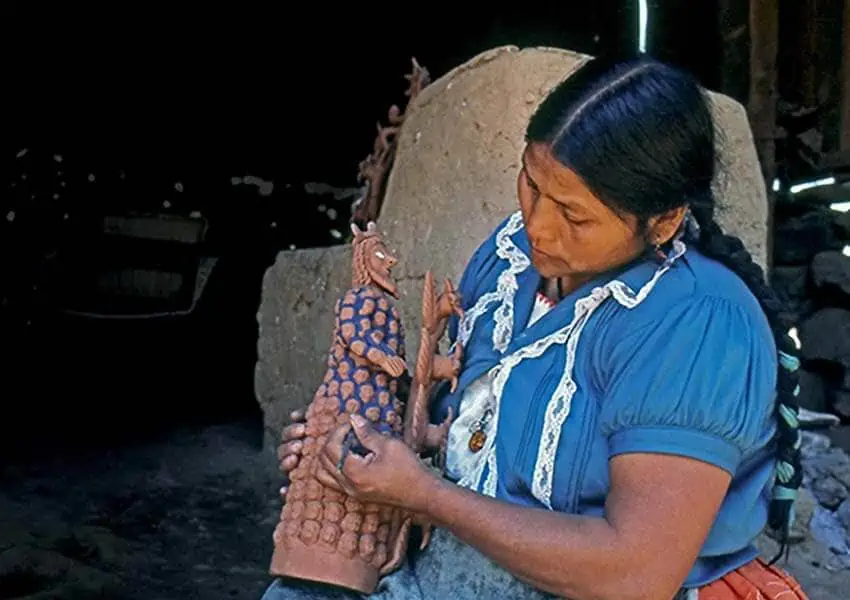
Indigenous woman
From an article on the artisans of Ocumicho, Michoacán. INPI

Octavio Murillo, head archivist for the National Institute for Indigenous Peoples, agrees that the revistas have been important in bringing knowledge about indigenous communities to a wider audience, pointing specifically to issues they did that were related to the Huichol people and pre-Hispanic art.

Certain topic categories have been particularly successful, such as food. There are issues dedicated to the chili pepper, the nopal cactus, tequila, mezcal or pulque. Several have been devoted to chocolate and corn.

The dietary habits of Mesoamerica have been extensively examined. There are also two issues called Seeds of Identity (Semillas de Identidad) highlighting the foods from Mexico that have impacted world cuisine.

Artes de México’s greatest success has been with the country’s handcrafts and folk art, despite some initial resistance by the publication to covering such work. Its first revista on this topic was on Puebla’s Talavera pottery, about which nothing had been published for decades.

De Orellana credits these issues’ popularity to the growing respect that Mexico’s artisans have earned both inside and outside the country.

Gayle Pierce, president of Los Amigos de Arte Popular, the largest Mexican folk art support organization, has supported Artes de México‘s work in this realm for many years. “[It] is a tremendous resource for someone new to the genre or the seasoned collector,” she says.

Artes de México has enjoyed longstanding relationships with education, government and cultural institutions. The revistas are important to both teachers and students, but not just in the humanities; graphic designers study them as well. The publication’s name appears regularly in bibliographies of academic works in both English and Spanish.

However, its future is cloudy.

The onset of commercial internet in the early 1990s has presented Artes de México with the same challenges as other publishers. It now competes with free and nearly unlimited information, with younger generations preferring video. Advertising, the staple of the publication’s original operations, is no longer feasible.

The revista still enjoys support from Mexico’s educated classes. The organization’s ties to traditional cultural and educational institutions mean that the physical publications remain central. But it also means losing touch with many readers under 30. This is a problem that Ruy Sánchez and de Orellana have not yet fully worked out. Artes de Mexico is a nonprofit and has shifted to collaboration with its main supporters in the production of revistas and more traditional books.

They have organized events related to Mexico’s culture, such as a recent forum to discuss a recent ban on rótulos in Mexico City. They have hired a more digitally savvy staff to explore ways to make better use of online tools. On their website, you can read selected articles from various issues, although those are only in Spanish.

But it is more difficult to pay the bills and get the kind of high-quality content still in demand into people’s hands when they are no longer willing to pay 300 pesos or more per issue for four issues per year.

For those of us who still like the idea of a “book” in our hands, there is no indication that Artes de México will abandon physical print anytime soon. Issues of the publication, present and past, are still readily available in many bookstores (including some of Mexico’s biggest bookseller chains), museum shops, book fairs and, of course, from their website.

Leigh Thelmadatter arrived in Mexico 18 years ago and fell in love with the land and the culture in particular its handcrafts and art. She is the author of Mexican Cartonería: Paper, Paste and Fiesta (Schiffer 2019). Her culture column appears regularly on Mexico News Daily.

What can a Satanic church in Veracruz teach us about standing our ground?

0
Catemaco, Veracruz
A Satanic church is being built in Catemaco, Veracruz, and not everybody's happy about it. Robert Briggs/Shutterstock

An image from a book I read as a child has always stuck with me: a little girl (a witch, I think) who was so, so, dirty that when a kindly woman took her in and bathed her, the bathwater turned black from all the dirt.

As a child who didn’t like to bathe (and, yes, even today as an adult who doesn’t bathe as frequently as most and is sometimes teased for it — you can’t tell, I swear!), I would think, “Well! At least I’m not that dirty.”

Bathing, baptizing, cleansing to make new: it’s a theme that’s been on my mind over the past few weeks. Maybe it’s due to the beginning of the school year, which always feels like a new, if not terrifying, opportunity to reinvent oneself. Maybe it’s the trip I just took back to my home country after two and a half years, a refreshing change in perspective of the kind I always welcome. Or maybe it’s that I recently had my first psilocybin trip (spoiler alert: it was awesome; 5/5 would do it again), and I am feeling expansive and optimistic.

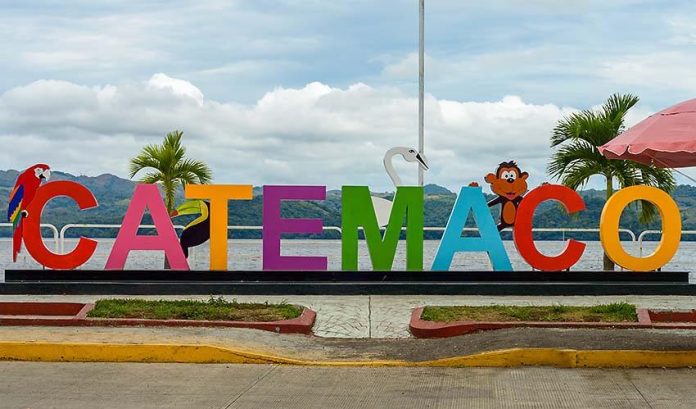
Then, as if on cue, news from Catemaco, Mexico’s official center for all things witchy and mystical, popped up on my screen last week. It wasn’t the news I was expecting: a Satanic temple is under construction!

Oh my.

Catemaco, in my home state of Veracruz, is a curious place. It’s filled with “witches” and opportunities for “cleansings.” You could probably get lashed with some magic branches there and have an egg rolled over you to take out bad energy 20 times a day by different people (who do that for a living!) if you wanted to. Sweat lodges (temazcales), herbalists and psychics abound. I haven’t been there in a while, but I’m pretty sure you could find a few crystal shops too.

Catemaco is also beautiful physically, a fantasy of a rainforest complete with an expansive lake and an island with monkeys on it. Really, what’s not to love?

How much longer it will survive in that state is anyone’s guess, of course. With the aggressive energy policy instated by President López Obrador that just happens to cast renewable energy options aside in the name of supporting our national energy sovereignty, the area is just as threatened as the rest of the country (and world) is and perhaps more, given its proximity to soon-to-be-busy oil refineries in the area.

Honestly, I’m kind of amused. I hold a special place in my heart for the irreverent in the face of power, and I just love a good subversion.

It’s been hard to find much information about this church and the true reasoning for its construction. Most of what I’ve seen in the news is simply higher-ups in the Catholic Church in Mexico making sure to denounce it.

My question is whether or not this is meant to be some kind of a grand, irreverent gesture. I’d also love to know to what degree those planning this temple take themselves and their mission seriously.

In the United States, “Satanists” are not really what we’d consider religious followers; as my sister aptly described them, they’re mostly “snarky atheists.” They use the Hebrew translation of “Satan,” which simply means “adversary,” i.e., a way to counterbalance force.

Satanists in the U.S. often make their presence known when they see the “Christian nation” proponents come out and try to push their agendas for things like prayer in school, the Ten Commandments posted in government buildings, football fields for prayer meetings during a game … you know, that kind of thing.

Basically, they’re a response to those forces and a way to say, “not so fast; the ‘religious right’ to practice your religion collectively in public  — and oblige others to either participate or make their unfaithfulness public knowledge, an isolating move in certain communities — means that you have to let all religions do that, so get ready for us.”

One of the more amusing examples I’ve seen was a collection of “Satanic” coloring books to pass out to elementary school students. Religious freedom, indeed!

So I suspect that whatever this “Satanic church” in Catemaco is, it also has a bit of snark to it.

Having seen plenty of places in Mexico where every indigenous place of worship was literally torn down to have a church built directly over the site, it’s refreshing in a kind of “rooting for the underdog” kind of way to see how this community was able to hold on to its roots a bit more tightly. Whether through an accident of history or subversion, they’re still hanging on and, it appears, going strong.

These are tough times in Mexico. We’re for sure going backward on the environment, and I bet plenty of people would argue that we’re doing the same in many other areas. So maybe a nice, big cleanse is just what we need. And maybe, just maybe, Catemaco can teach us a thing or two about subversively standing our ground when facing the wind.

Sarah DeVries is a writer and translator based in Xalapa, Veracruz. She can be reached through her website, sdevrieswritingandtranslating.com and her Patreon page.

Garlic steals the show

0
garlic
In Mexican cuisine, garlic — ajo in Spanish — is found in a wide variety of dishes. deposit photos

It was a surprise to realize that after three years of weekly columns (!), I hadn’t written about garlic. But as I researched and prepared this story, the reason became clear: garlic is a part of so many recipes, it felt like I had already written about it.

That’s true of just about every type of cuisine, and in Mexico, it’s no different. Perhaps the most classic example is in cacahuates oaxaqueños, an irresistible, spicy garlic-and-peanut snack mix, but garlic (ajo) appears in everything from marinades to salsas.

What’s important to know about garlic is that freshness counts. I can’t bring myself to buy already peeled garlic cloves in a jar or other kinds of prepackaged garlic; I prefer whole heads. What you want to look for are firm heads with no sign of mold or fungus, the biggest issues. Not firm? Look elsewhere.

Although there is a specific growing season for garlic, once dried, it can be stored almost indefinitely in a cool, dry place. (Commercial growers keep it in nitrogen-rich cold storage.) The fridge isn’t the best place, however, unless you live in as humid a climate as I do here in Mazatlán, in which case it’s kind of like damned if you do and damned if you don’t. The cold temperature of the fridge causes garlic to sprout pretty quickly, so do your best to use it up quickly and be ready to replenish when the cloves get soft or you see the germ begin to sprout.

garlic flan
For true garlic lovers, this garlic flan makes quite the savory side dish.

Don’t know what I’m talking about? The germ is that pale green center “piece” in a clove of garlic. It’s what will sprout and grow into a garlic plant. If your cloves are sprouting, they’re really too old to cook with. My farm-girl mother always taught me to remove the germ; she said it was bitter and harsh, and she was right — it is. Using garlic that’s sprouted, even if you remove the germ, will change the flavor of whatever dish you use it in, so resist the urge and, again, keep fresh garlic on hand.

Garlic Flan

  • 2 big heads (not cloves!) garlic
  • 1½ cups heavy cream
  • 3 extra-large eggs
  • 1 tsp. salt
  • Freshly ground white/black pepper

Preheat oven to 400 F (200 C). Wrap garlic in foil; place on baking sheet. Bake for 1 hour. Cool.

Lower oven temperature to 375 F (190 C). Cut garlic heads in half, exposing cloves. Squeeze pulp from skins.

Place in food processor; puree to a smooth paste. Add cream, eggs, salt and pepper. Process again just until smooth, being careful not to overprocess and solidify the cream.

Ladle custard into 6 custard cups or ramekins. Place cups in a deep baking pan. Carefully pour boiling water into the pan two-thirds of the way up sides of cups. Bake until custard is set, 35–40 minutes; do not overcook.

Remove cups from the water bath; allow to sit for 5 minutes. Serve immediately.

Garlic shrimp
This shrimp dish marinated in garlic and chile will be the dish your BBQ guests remember.

Garlic-Chile-Mayo Shrimp

The secret to plump shrimp with a browned crust: stir a little baking soda into the mayonnaise.

  • 6 garlic cloves, minced or grated
  • ½-1 jalapeño or serrano chile
  • ¼ cup mayonnaise
  • 1½ tsp. salt
  • Heaping ¼ tsp. baking soda
  • 1½ lbs. large shrimp, peeled and deveined, tails on, patted dry
  • Optional: Old Bay seasoning

Prepare charcoal or gas grill for high heat. (If you don’t have a grill, you can cook the shrimp in a cast-iron skillet over high heat with the vent on, following the same timing.) Mix garlic and chile into medium bowl; stir in mayonnaise, salt and baking soda. Add shrimp; stir to combine. Refrigerate 15–30 minutes.

Grill shrimp until well-browned, 2–4 minutes. Flip and cook until opaque throughout, 1–2 minutes more. Sprinkle with Old Bay, if using. Serve immediately.

Provençal Garlic Soup

  • 7 cups water, chicken or vegetable stock
  • 4 garlic cloves, minced
  • A bouquet garni (a bay leaf and a few sprigs each parsley and thyme, tied together)
  • Salt and black pepper
  • ¾ lb. Yukon gold or white potatoes, peeled, in ½ -inch dice
  • ½ lb. broccoli florets, broken up into small flowers
  • 2 eggs, beaten
  • 2 Tbsp. chopped flat-leaf parsley
  • 2-3 Tbsp. grated Parmesan

Bring water or stock to a simmer in large saucepan. Add garlic, bouquet garni, salt and pepper, and potatoes. Cover and simmer 15 minutes, until potatoes are tender and broth fragrant.

Provençal-style garlic soup
Bring a bit of the French countryside into your home with Provençal-style garlic soup.

Add broccoli. Simmer uncovered another 5–8 minutes, until broccoli is tender. Then taste soup; adjust seasonings.

Beat eggs in a bowl. Remove a ladleful of soup and whisk it into the eggs to temper them. Turn heat off under the soup and stir in the egg mixture. The eggs should cloud the soup but shouldn’t scramble.

Stir in parsley and serve, topping with Parmesan.

Garlicky Potato Salad

  • 2 eggs, hard-boiled, diced small
  • 1 egg yolk
  • 2 garlic cloves
  • 1 Tbsp. lemon/lime juice
  • 1 cup olive oil
  • ¼ cup sour cream
  • ½ cup finely chopped celery
  • ¼ cup finely chopped red onion
  • 2 lbs. small white or yellow potatoes
  • Salt and black pepper
  • 2 Tbsp. minced chives

Pulse garlic, salt and lemon juice in a blender. Add egg yolk. With motor running, drizzle in olive oil until completely incorporated and thick (like making mayonnaise).

Scrape into a bowl; fold in sour cream, celery and onion.

Cook whole unpeeled potatoes until just tender.

garlic potato salad
Just a couple of garlic cloves take potato salad from ho-hum to a hit!

Drain and cut potatoes into 1½-inch chunks as soon as you can handle them. Transfer still-warm potatoes to large bowl; toss with eggs and two-thirds of the dressing.

Cool or refrigerate. Just before serving, toss with some of the remaining dressing and sprinkle with salt, pepper and chives.

Janet Blaser is the author of the best-selling book, Why We Left: An Anthology of American Women Expatsfeatured on CNBC and MarketWatch. She has lived in Mexico since 2006. You can find her on Facebook.

Changes brought by influx of foreigners in Oaxaca a cause for concern: study

0
woman in Oaxaca City
A new study says tourism's economic benefits to Oaxaca city have taken precedence over the preservation of customs and traditions. alice kotlyarenko/Unsplash

Gentrification fueled by an influx of foreign tourists and residents has had a range of negative impacts on Oaxaca city and its Mexican-born residents, according to a study by a state government-affiliated research center.

Completed by researchers with the Center of Social Studies and Public Opinion (CESOP) at the Oaxaca Congress, the analysis notes that the number of foreign residents in the southern state has increased by more than 400% since 2000.

Many of those residents are in Oaxaca city, while foreign visitors have flooded into the state capital in recent years as it has become an increasingly popular tourism destination known for its varied and unique food, rich culture, pretty colonial streets, and as the home of Mexico’s hippest spirit – mezcal.

Some of those visitors – such as digital nomads from the United States and other wealthy countries – stay in the city for extended periods, renting properties through websites such as Airbnb in central areas including the neighborhoods of Xochimilco and Jalatlaco.

Oaxaca city tourism
Oaxaca has seen a spike in its number of residents by 400% since 2000, with most of them settling in Oaxaca city. JackKPhoto/Shutterstock

As they primarily enter the country on tourist visas, they are not counted in official data on foreign residents, although they are, for all intents and purposes, living here – and changing the face of certain neighborhoods, such as the aforesaid Oaxaca city colonias and Roma and Condesa in Mexico City.

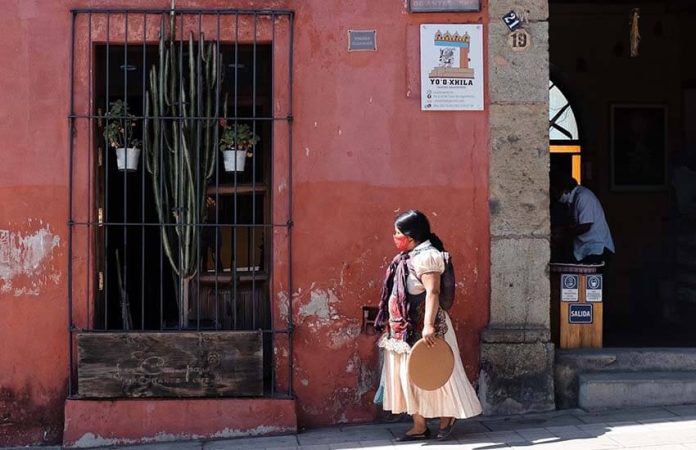
According to the CESOP study, the economic benefits brought about by the presence of foreign tourists and residents have taken precedence over the preservation of social values and customs and traditions in certain parts of Oaxaca city. However, there has been scant consideration of the negative impacts the outsiders generate, the researchers said, among which are higher rents and food prices, noise pollution due to the influx of new businesses (which have taken the place of older, more traditional ones), insecurity, changes to the urban landscape and “symbolic dispossession,” as some locals have been priced out of neighborhoods where they formerly lived.

Xochimilco, Jalatlaco and the tourism precinct based on the Macedonio Alcalá pedestrian street “have suffered enormous changes” as a result of gentrification, according to an El Universal newspaper report on the CESOP study. Buildings that were previously homes and workshops are now restaurants, cafes, stores (including many that cater to well-heeled tourists’ needs and wants) and short-term accommodation advertised on Airbnb and other similar websites.

The researchers, Arturo Méndez Quiroz and Mario Samuel Ceballos, assert that authorities haven’t done enough to mitigate the negative impacts of gentrification or stop them from spreading to other parts of Oaxaca city. For example, there are no regulations on short-term housing offered by online accommodation marketplaces, the researchers said.

Federal and state regulations that “guarantee the balance between urban development and the protection of natural, historic, architectural, cultural and artistic heritage” are urgently needed, the study said. Those regulations should prevent “segregation and territorial exclusion,” Méndez and Ceballos insisted.

In Xochimilco, a traditional – and now trendy – neighborhood, costs for housing and other essentials have increased significantly while local customs and traditions, and the people who practice them, are no longer at the center of the area’s cultural life, having been pushed to the periphery by new arrivals — of both people and businesses.

Facades of buildings in the area have undergone “severe changes” that could even be considered “transgressive of the original architecture,” the study said.

In Jalatlaco – named by Time Out magazine as one of the 50 coolest neighborhoods in the world in 2019 – investors have snapped up old, rundown properties and turned them into tourism-oriented businesses.

“The leather workshops of yesteryear are now occupied by hotels, hostels, gourmet restaurants [and] boutique stores [while] houses have been transformed into numerous cafes,” the study said.

One person who was forced out of the neighborhood due to high rents was Demetrio Barrita, an artist.

“In 2001, he paid 1,000 pesos [per month] for his studio and … in 15 years [the rent] rose to 10,000, which led him to abandon it. The same premises in 2021 rented for 20,000 pesos [about US $1,000] a figure that can be considered very exorbitant,” the researchers said.

They also said that Jalatlaco has been degraded in a cultural and traditional sense by the changes brought about by gentrification.

The study did acknowledge that the influx of foreigners and the associated gentrification is not entirely a bad thing. Among the positives cited were increased revenue for some local businesses, job creation and urban renewal.

With reports from El Universal 

AMLO calls on LatAm leaders to urge halt to ‘interventionism’ by Canada, US

0
'Obsolete policy of intervention and coups must change,' López Obrador said during a videoconference with Latin American leaders.

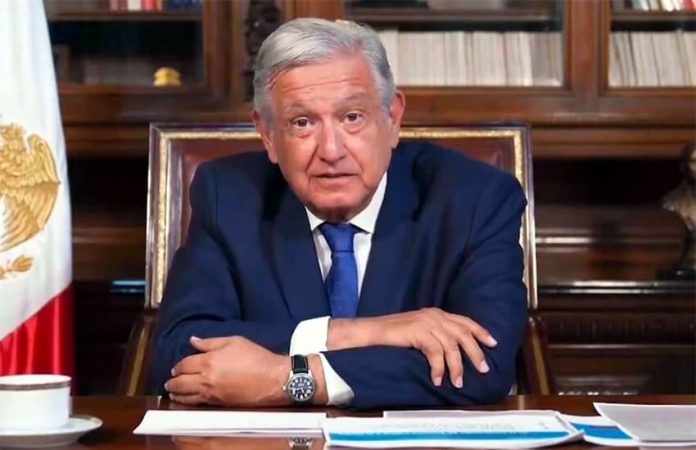
As Mexico’s North American trade partners challenge the federal government’s energy sector policies, President López Obrador has called on his fellow Latin American leaders to urge a halt to United States and Canadian “interventionism.”

“We have to convince the leaders of Canada and the United States … [to] change the policy of predominance that has been imposed, the policy of hegemony, of wanting to intervene in the internal affairs of other nations,” he said Thursday during a virtual meeting of the Community of Latin American and Caribbean States (CELAC).

“This obsolete policy – the interventionism, the coups – must be changed. [The United States and Canada] should respect the sovereignty of [other] countries [in the region] and … [realize] that we need each other,” López Obrador said. “[Together] we can become much stronger as a region in the world.”

The president’s remarks came a month after both the United States and Canada said they were challenging Mexico’s nationalistic energy policies under the three-way North American free trade pact known as USMCA.

Both before and after the two countries requested dispute settlement consultations, López Obrador has played the sovereignty card, asserting that Mexico has the right to make its own decisions about domestic matters.

While the energy confrontation could turn nasty – it might end with punitive tariffs being imposed on Mexican exports – AMLO appears unwilling to water down his plan to strengthen the Federal Electricity Commission and the state oil company Pemex at the expense of foreign firms, which have invested heavily in renewables in Mexico.

After encouraging his fellow Latin Americans to take up the fight to the “meddling” gringos and Canucks, López Obrador reminded them that the U.S. and Canada need workers from other Western Hemisphere countries to ensure their economies grow.

“The United States has a lot of capital, it’s a big market, it’s the same in Canada, but they don’t have [a big enough] workforce. We have that in Latin America, in the Caribbean and it’s no small thing,” said the president, who has pressured the U.S. to offer more visas to workers from Mexico and Central American nations.

“You can’t grow without a workforce. … So, why not complement each other? Why not integrate [in an economic] sense [while] respecting our sovereignties?”

During his address, López Obrador also praised his Argentine counterpart – Alberto Fernández, the current CELAC president, as well as Luiz Inácio Lula da Silva, the former Brazilian president who is aiming to dethrone Jair Bolsonaro at the general election in October.

“My support, my affection to Alberto Fernández; I want Alberto to do very well because Argentina needs a ruler like Alberto – he’s intelligent, honest and sensitive,” he said.

“I also send greetings to Lula, he visited us here and I wish him the best in the upcoming election. We’re respectful of the principle of non-intervention and people’s [right to] self-determination but we can’t hide our affection, our liking of the people of Brazil and its [former] leader Lula, who is going to be a blessing for the people of Brazil,” López Obrador said, expressing optimism that his fellow leftist would reclaim the presidency in Latin America’s largest and most populous country.

Meanwhile, the United States’ top diplomat in Mexico, Ambassador Ken Salazar, asserted that recent violence will have a negative impact on foreign investment here.

“With insecurity, investment here in Mexico from the United States and other countries cools off,” he told reporters on Thursday. “That’s contrary to what should happen under the USMCA dream. There should be more investment, but insecurity is a big factor for business people,” Salazar said.

After a meeting between López Obrador and United States President Joe Biden last month, Mexico and the U.S. pledged to work together to address security issues, including the challenges of fentanyl, arms trafficking, and human smuggling.

Salazar – who has been accused of being too close to AMLO – said it’s time for the bilateral security partnership to yield results.

Former United States President Donald Trump said in a 2019 tweet that the U.S. was willing to help Mexico “wage WAR on the drug cartels” but a U.S. military intervention – like any other foreign meddling in Mexican affairs – is not something that López Obrador, a staunch nationalist, could stomach.

With reports from Reforma 

Challenges aplenty for Mexico’s children, says country’s new UNICEF chief

0
Mexico's UNICEF head, Luis Fernando Carrera Castro,
Mexico's new UNICEF head Luis Fernando Carrera Castro took the position Wednesday.

Mexico’s newly installed UNICEF head has wasted no time in highlighting the nation’s colossal challenges regarding children’s welfare after being named to the position Wednesday.

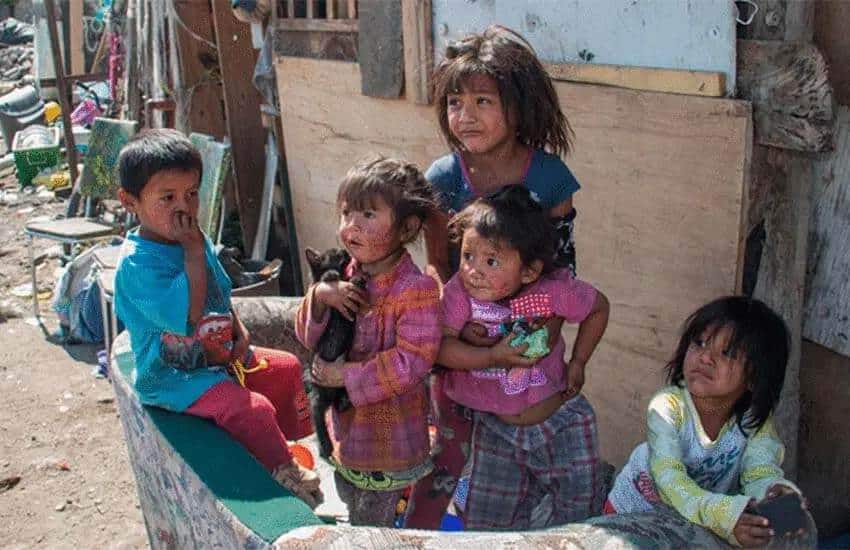
Challenges include the education of minors aged six to 18, poor nutrition, childhood obesity, and the fact that some 40% of Mexico’s children live in poverty, Guatemala native Luis Fernando Carrera Castro told the newspaper El Universal.

“There are several challenges, but those are the priorities,” he said.

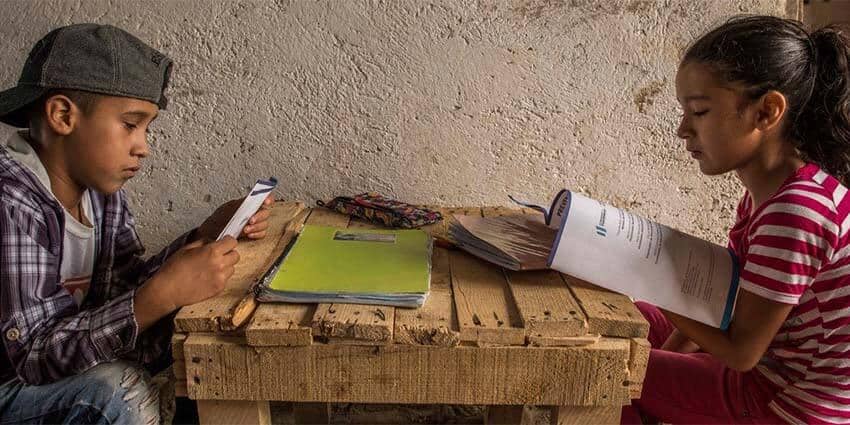
Carrera had much to say in particular about Mexico’s challenges ahead in education, pointing to a UNESCO study in March that addressed Mexican K-12 students losing two years of learning due to the pandemic. 

children doing distance learning
With schools closed due to the pandemic, K-12 students lost two years of education, according to Carrera. UNICEF

“Mexico is among the few [countries] where schools remained completely closed for more than 250 days. On Aug. 30, 2021, the Ministry of Education reopened schools, 18 months after closures,” the report said. 

“In the framework of the pandemic and the closure of schools that occurred globally, it caused an enormous loss of learning, which mainly affected girls and boys who were entering the educational system in 2020 or 2021,” Carrera told El Universal.

“There will be a generation lost due to educational backwardness,” he also said.

“We must work so that basic education students, whether in rural or urban areas, can receive special attention in the recovery period, which can take up to two years, approximately,” he said.

“Girls, boys and adolescents need to go to school,” he said this week when Foreign Minister Marcelo Ebrard formally received him. “They need the opportunities for social contact that the school environment offers and they also need, particularly in the current context, measures to prevent and mitigate risks linked to illness and other threats to their physical and emotional well-being.”

Mexico poverty
Poverty may have increased as much as 7% during the pandemic, the new head of UNICEF in Mexico said.

“Avoiding [a] lag in learning, school dropout and other risks associated with lack of schooling is a national duty toward our children and adolescents, as well as an investment in the future of Mexico,” he added. “Let’s work together, all of us, to make it possible,” he said.

Carrera is also raising concerns about the pandemic’s effects on the nutrition of Mexico’s youth. Millions are plagued by poor nutrition, which in many cases leads to childhood obesity, a problem that has increased over the past two years with a dropoff in the availability of quality food.

“There is evidence that childhood obesity increased during the pandemic,” Carrera said. “Although it is a problem that existed before, it is currently more serious, so priority attention must be given to it, and that means working with educational centers that provide food, with industries that work with and distribute products for girls and boys and work hard on the issue of strengthening food quality.”

“We are talking about reducing the consumption of products that are basically processed or ultra-processed, which are the ones that do the most damage, and sugary drinks or high-calorie foods,” he added.

Carrera said that nutritional problems are just one of the many effects of poverty. And poverty, he added, “unfortunately, is stagnant in the case of Mexico” and “may have increased up to 7%” during the pandemic.

According to El Universal, 40% of Mexico’s children live in poverty, if it’s defined as not having at least one basic need not met, such as running water, decent housing or health care. If it’s based on a socioeconomic level, the newspaper said, “we are probably talking about 30% to 35% of the country’s child and adolescent population.”

“Today, the relative wealth divided by the total population of Mexico would give us a per capita income [US $8,000, according to El Universal] very similar to that of the United Kingdom in 1985,” Carrera told the newspaper. “If one looks at the social indicators at that time for children [in the U.K.], there was a significant difference from Mexico. There was much less poverty, better learning and not so much childhood obesity.”

For these reasons, he added, the problem of inequity in Mexico is immense and does not allow a large percentage of children and adolescents to fully enjoy their rights. “For some, there is too much, and for others there is little,” he said.

UNICEF, which was founded in 1946 and promotes the rights and well-being of children and adolescents in more than 190 countries, has been in Mexico for 65 years. Last month, it opened a new office in Mexicali, Baja California. 

With reports from El Universal

She’s walked 16,526 kilometers and is still going strong

0
Zelzin Aketzalli
Zelzin Aketzalli has completely hiked the Appalachian Trail, Pacific Crest Trail and the Continental Divide Trail. Only 525 other people in the world have done so.

The most famous long hiking trail in the United States is the 4,270- kilometer Pacific Crest Trail (PCT), which stretches from the borders of Mexico to that of Canada, passing through California, Oregon and Washington. People who hike this trail all in one go, end to end, and other ultra-long trails like it, are called thru-hikers.

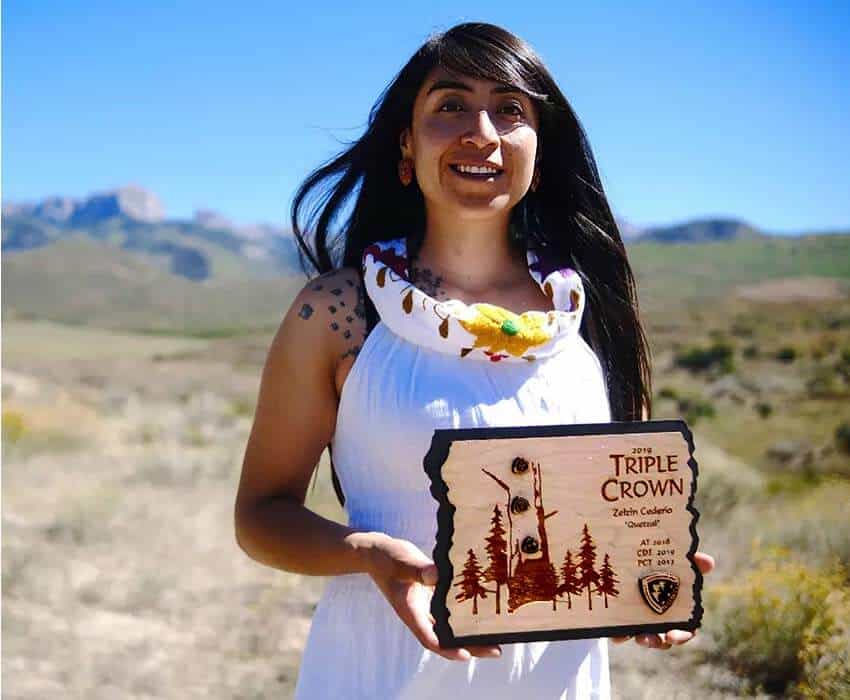
Few have managed to completely hike the PCT, and fewer still have thru-hiked the entire Continental Divide Trail (4,873 kilometers) and the Appalachian Trail (3,540 kilometers), as well. Those few who achieve this feat are awarded the Triple Crown of Hiking by the American Long-Distance Hiking Association-West.

Only 525 people worldwide have done this. And among that select group, there is only one Mexican: Zelzin Aketzalli. 

For my column this week, I’m letting her tell her story, in her own words, translated into English. 

Zelzin Aketzalli Tripe Crown of Long-Distance Hiking Award winner
The American Long-Distance Hiking Association-West gives out the Triple Crown of Hiking Award. Zelzin Aketzalli

I’m from Mexico City, and I lived there almost all my life. I grew up in Iztapalapa, one of the most dangerous barrios, and the most heavily populated, so my family was anything but rich. And  I knew the rough life on the street: I lived in the ‘hood, where you could never get away from drugs, alcohol and crime.

The biggest help I got in childhood was from my father; he taught me to love sports. From [when I was] little, he took me out to swim, to run, to box, to appreciate good sportsmanship. He taught me to take training and competition seriously, to understand the meaning of commitment. All this has stuck with me throughout my life.

At the age of 11, I decided I wanted to be an engineer, to study at the National Polytechnic Institute, a very good school of engineering. I had no money to finance my dreams, so I started working in a tianguis (neighborhood market), helping people put up their stands, hauling around heavy metal poles. That’s how I earned money to buy things like clothes, tennis shoes or a skateboard.

In the tianguis, I did work usually done by a man. I think this experience marked my character. People would make fun of me, but I learned how to stick to my guns.

At 18, I helped a friend organize the first mountain bike team at the Polytechnic Institute. We won several medals. It was all men except for me.

This represented a real challenge for me because they would race down hills really fast. I would do my best to keep up with them until I decided that I would have to train on my own to really know my own skills and my limits. So I began to go off on my own, cycling in the mountains. At first, I was unsure of myself. There were no established mountain bike trails in Mexico at that time, so I had to pay strict attention to details: I needed to remember a particular rock or a certain tree to make sure I was still on the right trail.

I trained for competition, eventually entering a national series of eight races all over the country. I came in third.

All this time, I was studying to be a communications engineer. When the day of my graduation came, I was 23 years old and had been promised a job at a TV channel. To celebrate our graduation, my compañeros planned to party at the beach, but I decided I would do something different, something I wasn’t used to: I would ride my bicycle from Mexico City all the way to Patagonia.

Zelzin Aketzalli Tripe Crown of Long-Distance Hiking Award winner
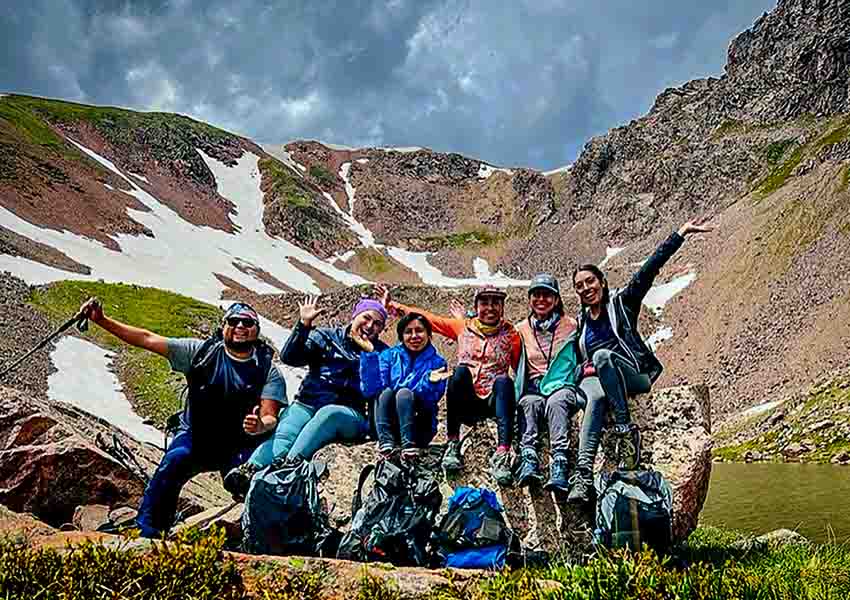
Zelzin Aketzalli, second from right, with friends hiking in Colorado.

To train for this, I decided to cycle to Veracruz, over 200 kilometers away. I did it, but when I arrived there, my whole body hurt. I thought: “It will probably take me two years to get to Patagonia. Is this how I’m going to feel every night? This is not for me!”

So I started looking for something else to put my energy into. By chance just then, along came two cyclists from California who told me all about the Pacific Crest Trail.

I just couldn’t believe such a thing existed: a cross-country sendero (trail), 4,270 kilometers long, where you could test your abilities and nobody would bother you! Well, I researched it and made up my mind right on the spot: I was going to do it!

This was in November 2016, and by February 2017, I had my visa. By April, I was on the trail, covering 40 to 50 kilometers per day. But back when I had been investigating it, I discovered that I would have to deal with snow — and I had never even seen snow in all my life!

So before heading for the United States, I sought out an old friend whom I had known back when I worked in the tianguis. He loved climbing and had hiked the eight highest mountains in Mexico.

I asked him, “Do you know the route for climbing Iztaccihuatl? And he said, “Sí, vámonos!”

Now, I had always been afraid of heights, even at the top of a Ferris wheel. But I was hoping I’d have no problems like that on top of mountains.

However, when we reached the most difficult part of Iztaccihuatl, La Rodilla, [located] at 5,000 meters altitude, I was panicked. “I’d rather just die here,” I told my friend.

Pacific Crest Trail
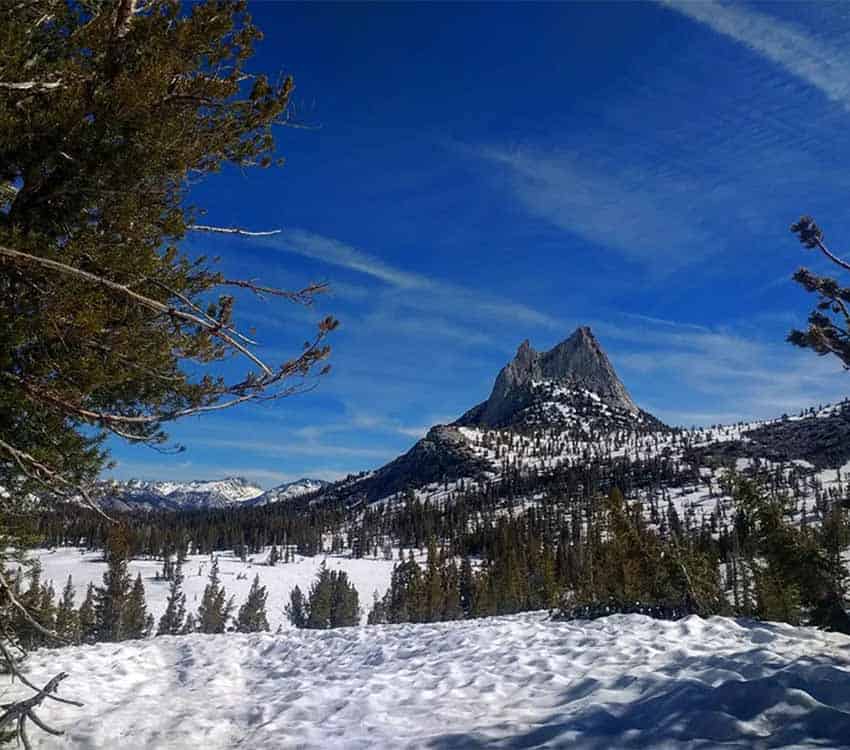
A scenic view along the Pacific Crest Trail. “This,” Aketzalli says, “is the trail that turned my life upside down … in the best way possible.” Zelzin Aketzalli

“Don’t worry,” he replied, “we’re almost there.”

And, finally, I did it: I reached the peak.

Well, I had gone to Iztaccihuatl to get used to snow, but there was no snow up there at all! Sad to say, our volcanoes are drying up here in Mexico.

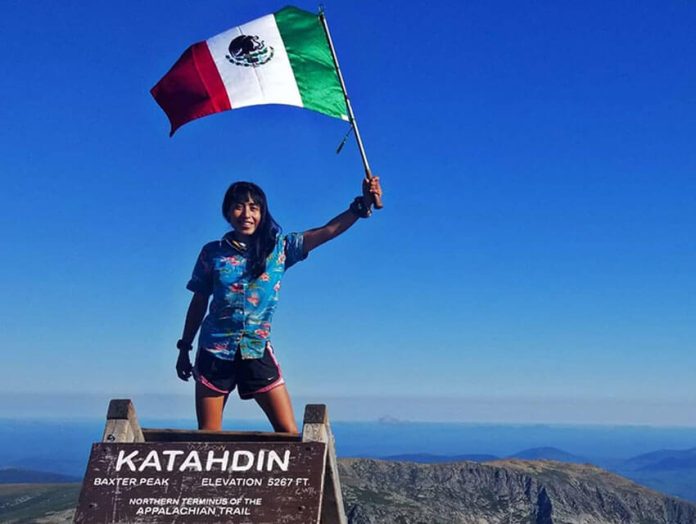
In April 2017, I started out on the PCT using the trail name Quetzal. I didn’t have the right kind of shoes or backpack; in fact, I had bought almost all my gear in the tianguis in Mexico! Still, my aim was to do it as a thru-hike, all in one go. So I didn’t dawdle around. I actually covered 40 to 50 kilometers per day.

I was on the Pacific Crest Trail for 153 days, and at the end, I knew that this was the sport for me. It changed my life, it changed my whole way of thinking and believing; I fell in love with it!

The year I did it was one in which they had the most snow in that part of the U.S., but I wasn’t worried because I didn’t know anything about snow. I was curious.

At that time, I didn’t know a word of English — nothing! One of my objectives on the trail was to learn the language by trying to talk to everyone I met.

We Mexicans are very friendly, and we also love to talk. So I carried a little notebook where I would get people to write expressions I wanted to remember. I got plenty of practice because I met only four Latinos doing the Pacific Crest Trail, that’s all.

Zelzin Aketzalli cycling in Mexico
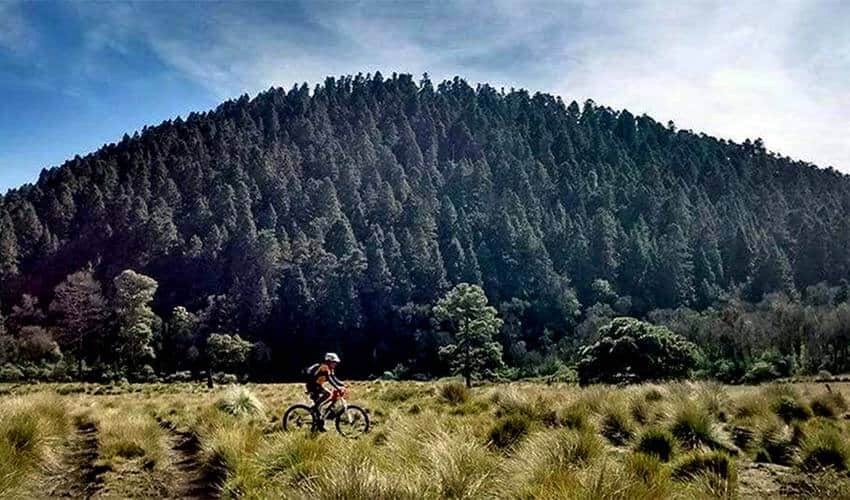
Zelzin Aketzalli cycling in Mexico.

Everyone else was from France, Japan, Germany, England or wherever, and they were all surprised to meet a Mexican trying to do a thru-hike on this trail — and not just a Mexican, but a Mexican woman!

Eventually, I reached the Sierra Nevada of California, the PCT’s most difficult part. Here, everyone was talking about snow conditions, and they were all turning back, but because I didn’t understand English then, I didn’t know I was supposed to stop — so I just kept going! I learned how to use my crampons and ice axe by trial and error.

And 153 days after I started, I finished the trail. Then I did the Appalachian Trail and the Continental Divide Trail, a grand total of 12,674 kilometers.

Zelzin Aketzalli has so far hiked a grand total of 16,526 kilometers. Her new challenge, she says, is to establish the sport of long-distance hiking here.

  • You can keep up with Aketzalli’s current adventures on her website, or follow her on Instagram.

John Pint has lived near Guadalajara, Jalisco, since 1985. His most recent book is Outdoors in Western Mexico, Volume Three. More of his writing can be found on his blog.