Home Blog Page 999

Mexico City rejects Metro crash report, plans legal action against investigator

0
Claudia Sheinbaum
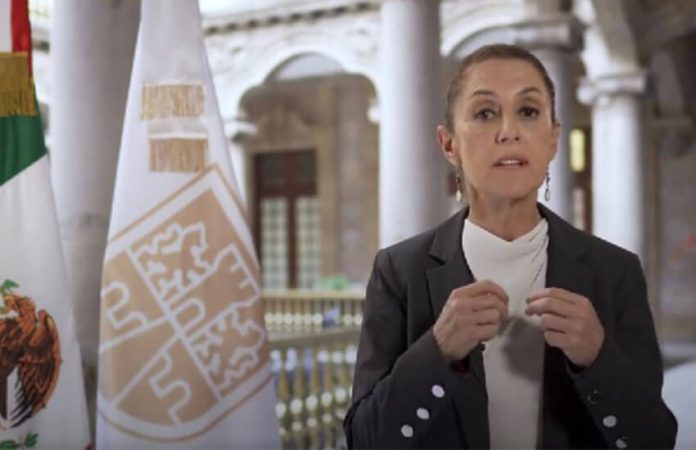
Mexico City Mayor Claudia Sheinbaum, seen in a video she posted on Twitter Tuesday on the 1-year anniversary of the Line 12 crash.

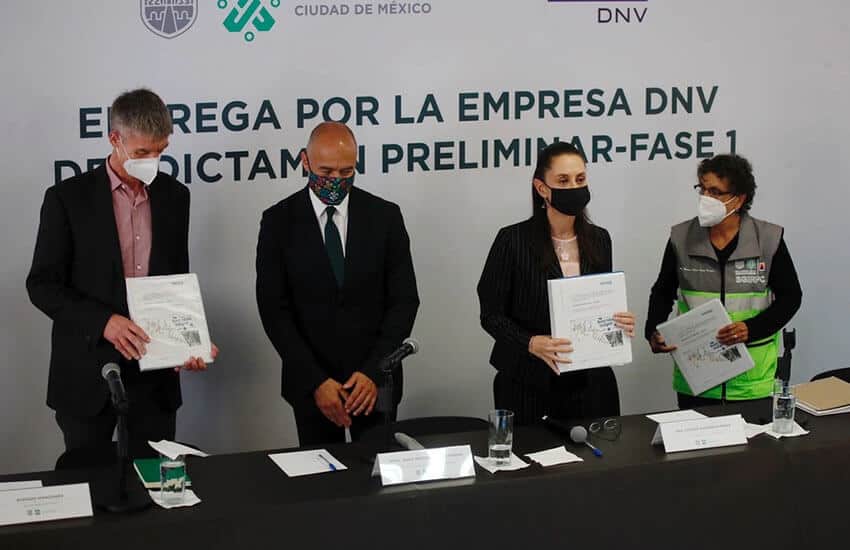
The Mexico City government has rejected the final independent report about the causes of the subway accident that claimed the lives of 26 people last year and filed a civil complaint against the company that conducted the investigation.

Mayor Claudia Sheinbaum described the report prepared by Norwegian company DNV as “deficient” and “poorly executed.”

It has “technical problems” and is “biased and false,” she told a press conference Wednesday.

According to government sources cited by the newspaper Reforma, DNV’s final report, which hasn’t been made public, says that oversights, anomalies and irregularities in the maintenance of Line 12 of the Mexico City subway system during the governments led by Sheinbaum and former mayor Miguel Ángel Mancera – in addition to design flaws and shoddy construction work – contributed to the collapse of an overpass on the line on May 3, 2021.

Two cars of a train plunged toward a busy road in the southeastern borough of Tláhuac due to the collapse. In addition to 26 fatalities, over 100 people were injured in the disaster, the worst ever on Mexico City’s subway system. Line 12, the newest line, was built during the 2006–2012 Mexico City government led by Marcelo Ebrard, who is now foreign minister.
Sheinbaum
Its reputation as a world leader in investigating construction defects gave Sheinbaum confidence, she said when the city hired Norwegian company DNV.

Sheinbaum, who had touted DNV as a world leader in the investigation of construction defects, turned against the company earlier this year because it employs a lawyer who prosecuted a 2012 case against President López Obrador, her political mentor.

She claimed that DNV – a risk management and quality assurance company that operates in over 100 countries – was guilty of a conflict of interest as a result of his employment, an accusation the firm has rejected.

The mayor, a leading contender to become the ruling Morena party’s candidate at the 2024 presidential election, said Wednesday that DNV completed an analysis that “doesn’t correspond to what was originally proposed” and has political purposes.

“We’re not going to accept the distortion of reality. … Why choose this lawyer? Why do they completely change their view from the second to the third report?” Sheinbaum said.

She claimed that “there are a lot of interests behind” the report, asserting that DNV has links to the National Action Party (PAN) and Mexicans Against Corruption and Impunity, a nongovernmental organization that has exposed alleged corruption in the federal government.

Sheinbaum previously pledged to disseminate all of DNV’s findings about the Metro disaster but has not yet released the company’s third and final report. However, she said it would be made public in order to show “how it failed to comply with its own methodology.”
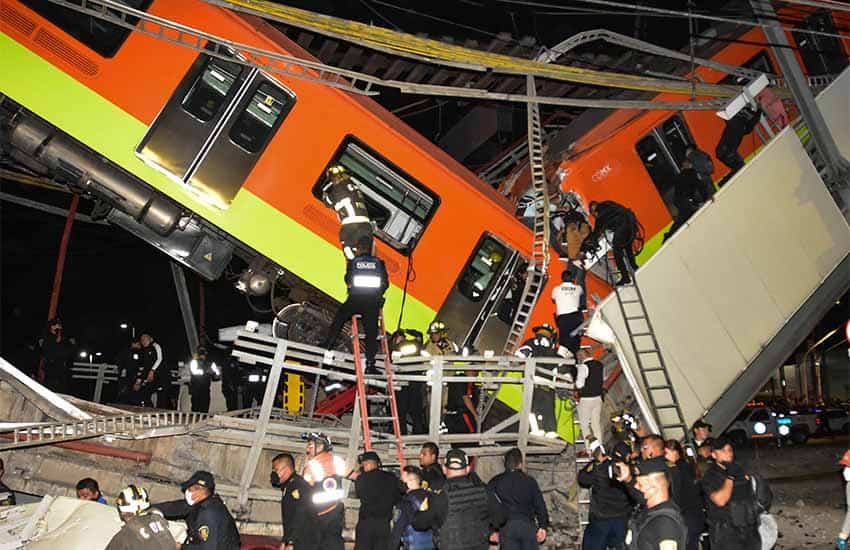
Metro Line 12 accident
The subway overpass collapse in the capital’s Tláhuac borough killed 26 and injured more than 100.

The mayor also said that the firm’s contract with the government was being rescinded and threatened to file a criminal complaint against it.

Some opposition party politicians noted that Sheinbaum’s rejection of DNV was incongruent with her previous praise of it.

“Up to a few days ago, @Claudiashein was praising the Norwegian company DNV, which she contracted for the #Line12 technical studies. Now with the report in hand she changed her opinion and even wants to criminalize them because she didn’t like the results. What is the mayor hiding?” PAN national president Marko Cortés wrote on Twitter.

PAN Deputy Jorge Triana described the mayor’s about-face as “grotesque,” while Democratic Revolution Party national president Jesús Zambrano used the colloquial term “ah caray” to express his surprise about Sheinbaum’s new view about a company she hired due to its “international prestige. ”

One year and two days after it occurred, no one has been held accountable for the accident on the so-called Golden Line, although 10 former Mexico City officials face charges.

The line, which runs between Mixcoac in Mexico City’s southwest and Tláhuac in the southeast and has underground and elevated sections, was built by a consortium of companies that included Carlos Slim’s Carso Infrastructure and Construction, French company Alstom and Mexican firm Ingenieros Civiles Asociados.

Slim, Mexico’s richest person, is covering the costs of repairing the line, which remains closed.

With reports from Reforma, El Financiero and El País
Analysts predict anti-inflation plan will have limited effect: ‘reducing global inflation is very difficult’

0
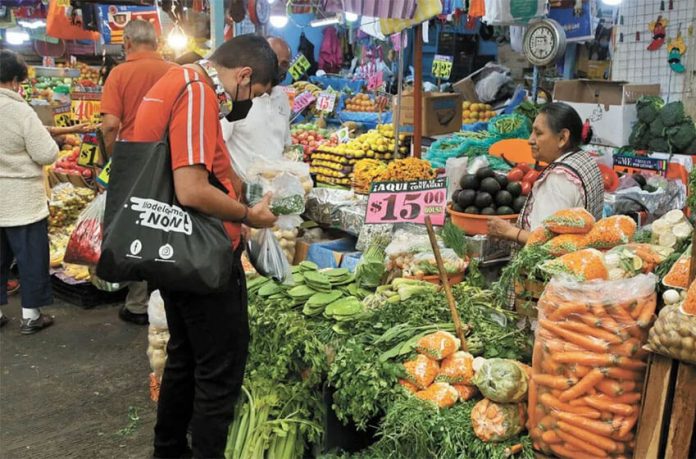
The anti-inflation plan aims to stabilize prices for 24 common food items.

The federal government’s anti-inflation plan will only have a limited effect on reducing consumer prices, according to three financial institutions.

The government announced Wednesday that it had reached an agreement with the private sector to ensure fair prices for 24 basic food items over the next six months without resorting to price controls. The anti-inflation plan also seeks to spur greater production of staples such as corn, beans and rice in order to increase supply.

According to JP Morgan, price stability for 24 basic food items – among which are chicken, beans, milk and potatoes – will only shave 0.4% or 0.5% off Mexico’s end-of-year inflation figure, which is predicted to be 7%. The bank described such an impact as “modest.”

It noted that the prices of some key food products have increased in recent months and are not expected to rise further. The stabilization of the prices of such products at the current high level would therefore help stop inflation increasing further but wouldn’t apply much downward pressure.

BBVA México’s chief economist, Carlos Serrano, agreed that the anti-inflation plan will have a limited impact given that powerful supply shocks are affecting the whole world.

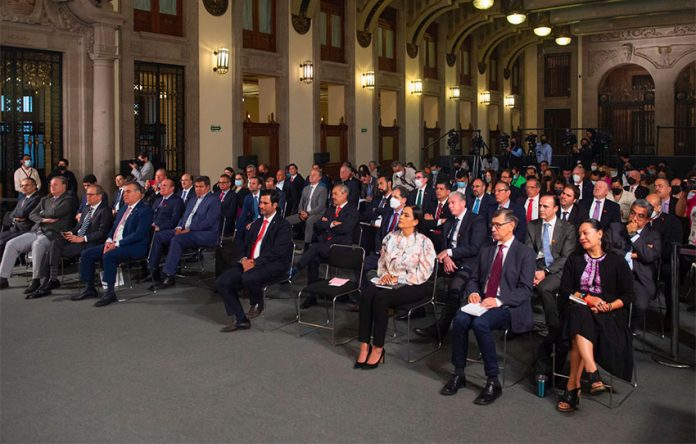
Numerous food industry representatives attended the president's announcement of the anti-inflation measures on Wednesday.
Numerous food industry representatives attended the president’s announcement of the anti-inflation measures on Wednesday.

“Despite the efforts of the government, reducing inflation will be very complicated,” he said.

“The government’s job is extraordinarily complicated because it’s very difficult if not impossible to detach an open economy from global inflationary processes,” Serrano said.

“We believe that the effect [of the plan will be] limited, not because we consider the measures to be bad but because reducing global inflation is very difficult. It’s not as if the United States, Europe, Canada and Latin America aren’t doing anything to reduce inflation. They’re all trying, but it hasn’t been achieved.”

The BBVA economist contended that providing additional financial support to low-income Mexicans would be a better idea than trying to put a lid on the prices of basic food items, an endeavor he described as very difficult. Serrano also suggested that the government should stop subsidizing gasoline because that measure mainly benefits people with higher incomes.

The financial services company Monex said in a note that the implementation of the anti-inflation plan will be a “significant challenge” because the participation of food producers, distributors and retailers will be voluntary.

That said, representatives of numerous food-related businesses indicated their support for the plan by attending President López Obrador’s Wednesday press conference, at which the would-be inflation-busting measures were announced.

Even if the plan is implemented successfully, there will be no immediate or drastic impact on inflation levels, Monex said.

The most recent official data showed that inflation was 7.72% in the first half of April, a figure well above the central bank’s 3% target: the Bank of México predicted in late April that inflation will drop to near 3% by mid-2023.

With reports from Reforma 

Environmental alert lifted in Mexico City

0
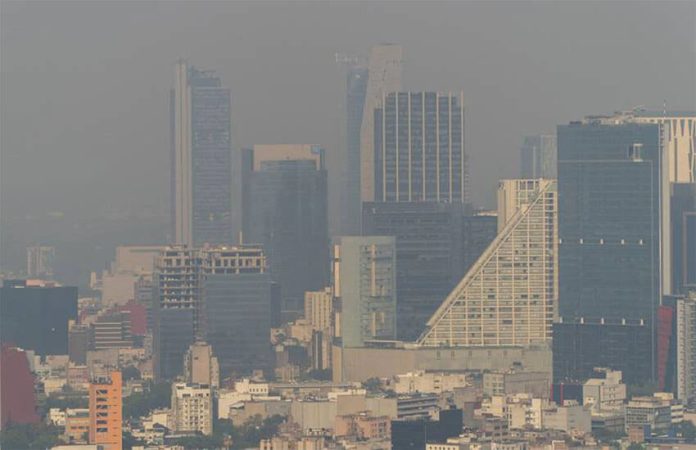
Ozone pollution is high this time of year in the capital, as the weather warms but the rains have yet to arrive.

A phase 1 environmental alert activated in Mexico City Monday due to high levels of ozone pollution was lifted at 8 p.m. Wednesday.

The Environmental Commission of the Megalopolis (CAMe) said that concentrations of ozone had declined due to a reduction in the intensity of a high-pressure system over the Valley of Mexico.

That development allowed for greater ventilation and assisted in the dispersion of ozone, a contaminant that can cause and exacerbate a range of respiratory conditions.

CAMe warned that in “ozone season” – the period of warm and dry weather before the annual rainy season – “the intensity and movement of high-pressure meteorological systems continually change, which could cause new increases in the concentration of ozone.”

The commission also said that other weather conditions can encourage the accumulation of ozone, which develops as a result of nitrogen oxide and hydrocarbon emissions. It consequently called on residents of the greater Mexico City metropolitan area to avoid using their cars as much as possible.

A reduction in the number of vehicles on the road will minimize the risk of air quality deteriorating to bad or very bad on Thursday, CAMe said, noting that “adverse conditions for the dispersion of contaminants” will prevail.

It noted that a maximum temperature of 29 C was forecast for the capital on Thursday as well as “high solar radiation,” which aids the formation of ozone.

In addition to calling on Mexico City residents to reduce vehicle use, CAMe advised capitalinos to avoid the use of products that contain solvents such as aerosols and paint, to repair any gas leaks in their home and to reduce the use of gas by taking short showers and using pots with lids for cooking.

With reports from Milenio

Mexico in fourth place on new index measuring global organized crime

0
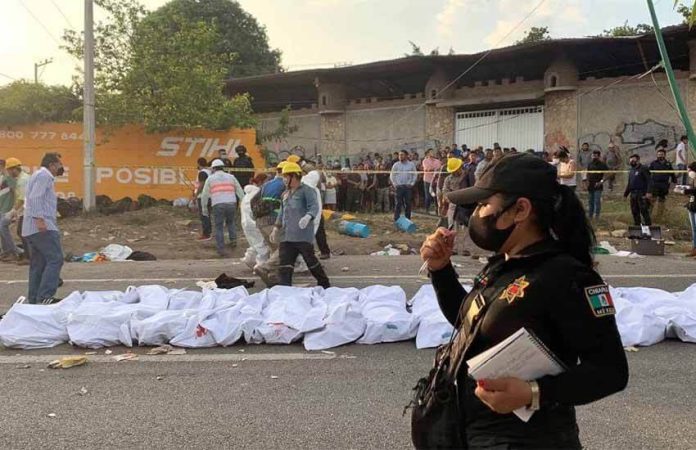
trafficked people's bodies in Chiapas
Bodies of migrants smuggled into Chiapas by traffickers killed when their transport vehicle crashed.

Mexico has the fourth highest levels of criminality in the world, according to a new organized crime index.

Only the Democratic Republic of the Congo, Colombia and Myanmar have higher criminality scores than Mexico on the Global Organized Crime Index 2021, described as the first tool of its kind designed to assess levels of organized crime and resilience to organized criminal activity.

Developed over the past two years by the Global Initiative Against Transnational Organized Crime, a Switzerland-based nongovernmental organization, the index measures organized crime in all 193 United Nations member states.

“The results, which draw from a comprehensive dataset informed by experts worldwide, paint a worrying picture of the reach, scale and impact of organized crime. It is a sobering thought, for instance, that nearly 80% of the world’s population today live in countries with high levels of criminality,” the index report said.

Mexico’s score on the index – made up of criminal markets and criminal actor components – was 7.56.

CJNG
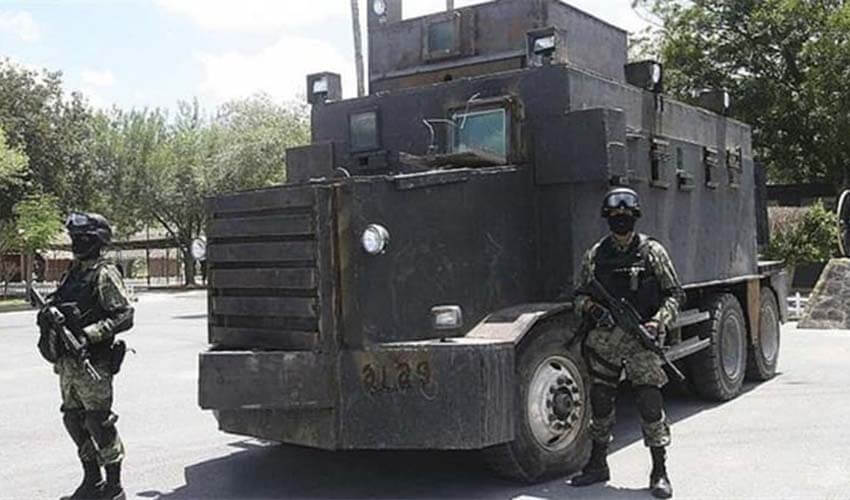
The report said Mexico’s drug-trafficking organizations are among the most sophisticated mafia-style groups worldwide, with military grade weapons and wide networks.

For criminal markets – which considers human trafficking, human smuggling, arms trafficking, flora crimes, fauna crimes, nonrenewable resource crimes and the trade of heroin, cocaine, marijuana and synthetic drugs – Mexico ranked first, or worst in the world, with an average score of 8.

In the criminal actor category – which looks at mafia-style groups, criminal networks, state-embedded actors and foreign actors – Mexico ranked 22nd with an average score of 7.13.

The index’s Mexico summary elaborated on a wide range of organized problems in the country, where large, powerful criminal organizations such as the Jalisco New Generation Cartel and the Sinaloa Cartel operate.

It noted that Mexico is a transit country for human trafficking and that sex trafficking within Mexico and to the United States is “substantial.”

“The pandemic exacerbated collusion between corrupt officials and traffickers preying on migrants through forced engagement in criminal economies or extortion, with officials relying less on bribery and more on organized-crime links for profits,” the summary said.

It also said that Mexico has a well-established arms-trafficking market and that flora and fauna crimes are a significant problem.

“Drug traffickers control timber trafficking in Jalisco, forcing communities to pay quotas for protection,” the summary said.

“… Rosewood trafficking, controlled by Chinese mafias and other groups operating locally and regionally, is significant, and dozens of shipments, primarily destined for the Chinese furniture market, are seized annually across Pacific ports and the Yucatán Peninsula,” it said.

With regard to fauna crimes, the summary said that demand for Mexican wildlife has risen and sought-after species include jaguars, golden eagles, parrots, macaws and reptiles. It also mentioned the illegal trade for totoaba, a fish species whose swim bladder is considered a delicacy in China.

“The trade generates hundreds of millions of dollars annually, with one pound of totoaba swim bladder more valuable than cocaine. Mexico’s illicit sea cucumber trade is also significant, causing violence in Yucatán and Campeche,” the summary said.

Among the other non-drug crimes it mentioned were oil theft and illegal gold and silver mining.

With regard to narcotics, the summary said that most heroin sold in the United States originates in Mexico, especially the northern Golden Triangle region of Chihuahua, Sinaloa and Durango.

Mexico was also cited for timber trafficking.

“Mexican cartels also partake in the production and transportation of methamphetamine and, increasingly, fentanyl. Both are increasingly popular in the U.S., where fentanyl claims tens of thousands of lives annually,” it said.

“… Mexico’s cocaine trade is less consolidated, due to internal fragmentation, but the market is large. Mexican actors serve as key brokers and transporters, and cartels have become more active in the Colombian and Central American cocaine industries. Much of the rival cartel violence relates to control of the northbound shipment routes.”

With regard to criminal actors, the summary said that Mexico’s drug-trafficking organizations are among the most sophisticated mafia-style groups in the world.

“Although cartel fragmentation reduced the number of groups with large international operations, those remaining have networks spanning most of the Americas, even stretching into Europe and Asia,” it said.

“… Drug-trafficking organizations focus on international drug trafficking, generating billions of dollars in revenue annually, but numerous revenue streams, including oil theft, illegal logging, human trafficking, kidnapping and extortion, are deeply entrenched,” the summary said.

It noted that cartels have firearms including military-grade weapons and that conflict is widespread between competing groups and state security forces, “with some groups marking their territory by displaying beheaded and mutilated corpses.”

“Drug cartels control territory in much of Mexico, co-opting the state through bribery and intimidation with the aim of facilitating illicit activity and influencing the democratic process. Politicians are frequently murdered or threatened by mafias attempting to ensure that cooperative politicians hold office,” the summary said.

The index also measured countries’ resilience to organized crime, which was defined as “the ability to withstand and disrupt organized criminal activities … through political, economic, legal and social measures.”

Mexico ranked 112th in that category, which gave each country a score based on 12 indicators including political leadership and governance, national policies and laws and law enforcement. Mexico’s score was 4.46, well below those of Finland and Liechtenstein, which ranked equal first on 8.42.

The Mexico summary said that the “militarized, strong-arm approach to tackling organized crime has produced mixed results.”

“Corruption is rife, causing collusion between law enforcement, judges and criminals. Organized-crime-related violence and criminal impunity are at a record high, with poor access to legal proceedings,” it said.

“… The government lacks a cohesive security strategy, with attempts to address corruption and organized crime seen as highly politicized or as efforts to embarrass past governments. The president is centralizing control across national institutions and has proposed new, technically illegal policies, such as having marines in charge of port customs activities.”

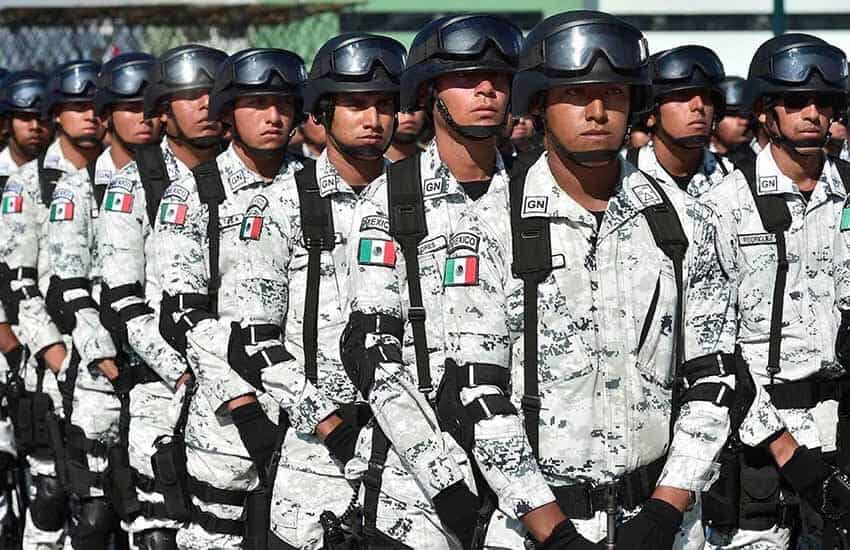
National Guard of Mexico
Mexico’s “militarized, strong-arm approach to tackling organized crime has produced mixed results,” the report said.

The resilience section of the summary also said that structural deficiencies in Mexico’s legal system hamper its ability to fight organized crime and that laws pertaining to organized crime are not well-enforced.

Mexico’s overall criminality score was well above those of its North American trade partners, the United States and Canada, which ranked 66th and 161st on the index, respectively. The country with the lowest criminality score was Tuvalu, a small island nation in the south Pacific.

Mexico News Daily 

Homebuying in Mexico has a learning curve, but it’s doable with good help

0
Ixtapa Zihuatanejo house
An idyllic house on the beach like this home on the coast of Ixtapa-Zihuatanejo comes with some extra regulations that foreign buyers must be aware of.

Potential Mexico homebuyers Sherri and Neil write from New York State:

We have been looking to buy a home in Mexico and have been looking at the Puerto Vallarta area and Los Cabos. As we are big on due diligence, we have found so many varying factors in purchasing here in Mexico, from the notary process (very different than at home) to bank trusts and even just the ability to see a clean title. 

How do we best navigate these very confusing waters? What is the difference between a notary in Mexico and the United States? How can we help ourselves gain a level of confidence to move forward on a purchase? Gracias! 

Ángel Marin Díaz: first, congratulations on wanting to be educated buyers! Often, I see members of the guest community who have fallen in love with a property and a lifestyle — and apparently left their common sense at the border.

The largest obstacle to buying in Mexico is getting over the hump of not knowing what you don’t know. As your question is actually three questions in one, let me break the answers down for you.

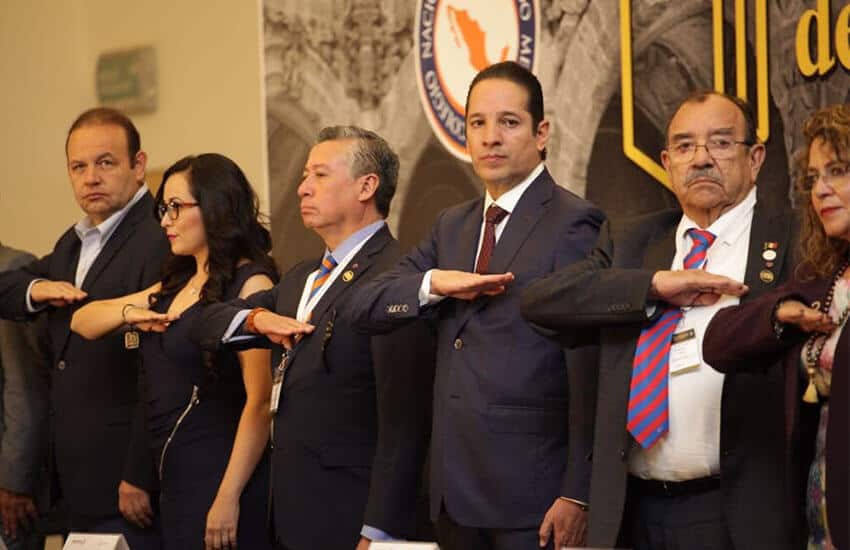
Notarios being sworn in at Colegio Nacional de Notarios
Notarios taking the oath of their office in at the National College of Notarios. They have more responsibilities in Mexico than notaries in the US.

First, you are looking to buy in a beach area as foreigners (I like to use the term “guests”), and beach areas are a restricted zone in Mexico, i.e., a zone within 100 kilometers of the international border and 50 km of the coast. When buying a home in Mexico’s interior — that is, not in the country’s restricted coastal zone — you can put the title (escritura) in your name.

With a beach property, however, you are not allowed, so you will need to hold ownership through a bank trust known as a fideicomiso.

Ownership through this sort of trust is like owning property through an LLC: imagine that you own a company and the company owns a vehicle or property. You are technically the owner of the vehicle or property through the ownership of the underlying corporation.

The fideicomiso gives you all the rights of ownership, such as the right to sell, rent, donate or bequeath.

Second, you ask about the difference between an American notary and a Mexican notario (notary). Mexico is a civil law jurisdiction based on Roman civil law, under which a notario plays a much larger role than a notary in the United States — and has greater responsibility. For example:

Requirements to practice. A Mexican notario must hold a law degree with a specialty in notarial law, have at least three years of experience at a notario’s office and pass a stringent final exam. Those who qualify and pass typically are appointed as a notario by the office of the state governor.

Colonial era home in Mexico
Especially when buying a home with a potentially long history, a title company can help you confirm its ownership and determine that it has no liens on it.

In the United States, on the other hand, a notary does not need a law degree, and becoming a notary is a much simpler process involving filing the necessary documents, paying the applicable fees and not having a criminal record.

Liability. As explained above, in the United States it is not mandatory to be a lawyer to be a notary. A U.S. notary is forbidden from providing any type of legal advice or drafting legal documents.

In Mexico, a notario can provide legal advice, issue judicial opinions, oversee the drafting of legal documents and certify their legal validity, intervene in judicial proceedings and act as an arbitrator or mediator. Thus, in Mexico, a notario can be held liable in both civil and criminal matters.

As you can see, there are great and numerous differences between the roles and the scope of legal powers of Mexican notarios and U.S. notaries.

As to your question about gaining the competency you are looking for, consider hiring, in addition to your notario, the services of a firm dedicated to researching the title of your property thoroughly.

A burgeoning type of business in Mexico, these firms, sometimes called “title companies,” do investigations into your property that a notario is supposed to do but sometimes doesn’t. The 2008 financial crisis unveiled in Mexico the inadequacies of many notarios in terms of doing their due diligence for a property purchase/sale.

Certainly, a notario can (and should) research the property’s title for you thoroughly, but for your peace of mind, a title company with experience in the buying and selling of property to guests in Mexico — and with experience in both the beach areas (restricted zones) as well as the interior — is a good idea.

A title company usually charges a small fee to provide all this due diligence for you, i.e., certify that there is no lien on the property; provide a verification of the title’s authenticity; and do a search for any back taxes or past-due HOA fees owed, probate status, etc. A good full-service title company will also have access to a legal staff to help you navigate your “buy/sell” agreements, deposits, penalty clauses, timeframes, escrow contracts, etc. Other services available might include acting as your power of attorney (facilitated through a notario) and processing your Ministry of Foreign Affairs (SRE) permits.

Finally, a very good title service firm will also have experts on staff to help you plan and reduce future capital gains taxes and provide the immigration services needed to achieve residency in Mexico.

It should be said that under federal law, buyers have the exclusive right to choose their legal representation — their “closing team” — and the notario you work with will ensure that the deed title is recorded at the Public Registry.

Don’t let yourself be bullied into using the seller’s closing team. Having your own legal representation is a key piece of ensuring a proper sale occurs.

Ángel Marin Díaz is the CEO of Inmtec Legal Services; Inmtec Title Services; Inmtec Insurance, Estate Planning, Asset Protection; and AfterLife Medical Advisory by Inmtec. For more information, email info@inmtec.net or phone +52 415-121-9005 or +52 415-121-8943.

  • This article originally appeared in Atención San Miguel. It is reprinted with permission and with minor adaptations.

Almost as many legends surround Zacatecas’ House of 100 Doors

0
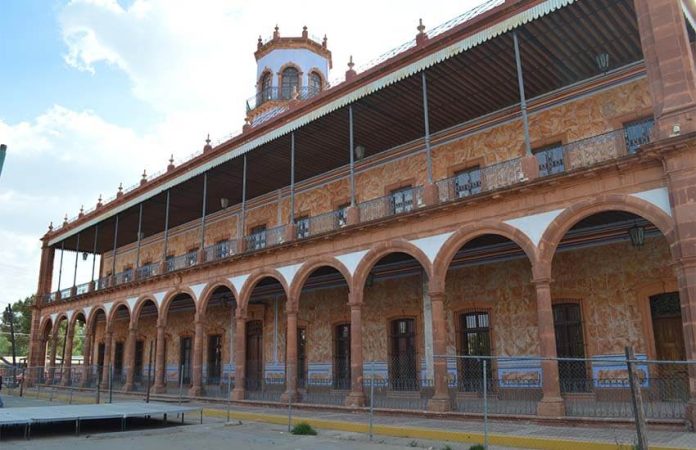
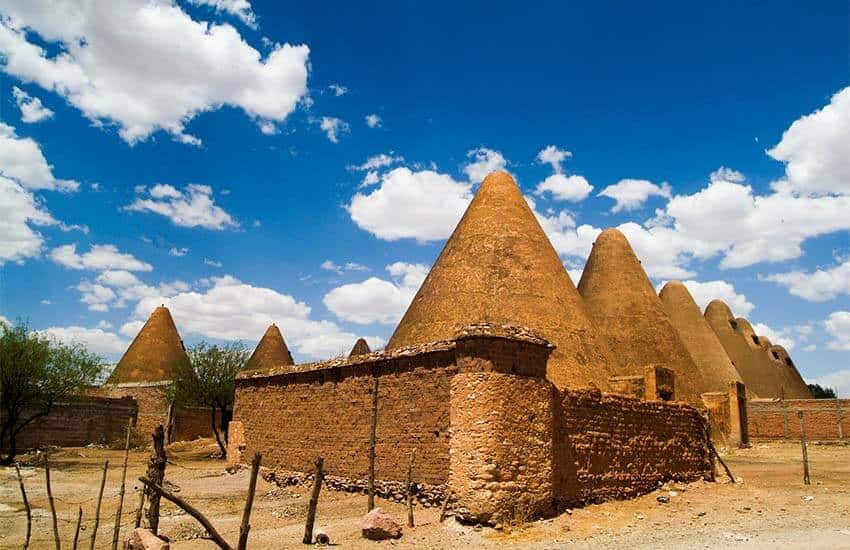
House of the 100 Doors, Tacoaleche, Zacatecas
Facade of the Tacoaleche, Zacatecas, hacienda nicknamed The House of 100 Doors. Alejandro Linares García/Creative Commons

There is a small community outside of Guadalupe, Zacatecas, with the odd name of Tacoaleche, and no, the name has nothing to do with tacos. The name refers to a unit of milk, as it was once common for hacienda owners to pay workers with food rather than money.

By far the most attractive thing in this dusty town is the so-called House of 100 Doors. Covering a quarter hectare, it is a two-story building of adobe with supports of volcanic tuff stone on the ground floor and metal pillars on the upper floor. A church on the plaza and grain storage facilities, simply called The Cones, were built around the same time.

The house is part of the Tacoaleche hacienda formed in the latter 19th century. In 1880, Antonio García inherited a small portion of a much larger estate that belonged to the Count of Jaral for centuries. Shortly after the inheritance, García not only set up his operations, he also fell in love with the daughter of another hacienda owner.

Here is where the legend begins. Like with most legends, there are variations.

The most common version states that the daughter accepted the proposal but only on the condition that the marriage would occur after he built his hacienda house with 100 doors. In all versions, the marriage never happens with various explanations as to why. The two most common have the girl renege on her promise.

Tacoaleche hacienda, Zacatecas, Mexico
The grain storage facilities of the old Tacoaleche hacienda, colloquially named The Cones. Vertice/Creative Commons

One states that she counted the doors to find that there were not 100. Indeed the house does have “only” 99 doors, with an assertion that the 100th is hidden somewhere on a nearby hill. The other states that she never meant to marry García, making the condition because she thought he would never be able to complete the task. A third, unfortunately, has García kidnapping the girl, then locking her in it, because she cheated on him while he built the house.

The house indeed took a long time to build. It was begun in 1891, but one claim states it was finished in four years, another claims not until 1915.

Some blame the Mexican Revolution for García’s failure to marry, which would make sense if indeed the house took 24 years to complete. Some say that Francisco “Pancho” Villa kidnapped García’s father and uncle for ransom and others say that Villa sacked the hacienda.

Either way, it caused the man to go bankrupt.

It is known that García eventually moved to Mexico City, where he died in 1921. His brothers inherited the property, but the federal government eventually expropriated it as part of land reform.

In 1938, it became the Tacoaleche ejido (land held in common), owned by the hacienda’s former workers. This is when stories about the property’s origin became popular regionally.

The church and square became the center of the community of Tacoaleche. Politically, it is part of the Guadalupe municipality, with its seat in the city of the same name just outside the capital of Zacatecas. But although it is only a 15-minute ride away, Tacoaleche is a world away from the municipal seat.

folk art and handcraft center in Tacoaleche, Zacatecas
These days, a research center resides in the building. It’s dedicated to the preservation and evolution of Zacatecas handcrafts and folk art. Subsecretaria de Desarrollo Artesanal de Zacatecas

Like many old hacienda mansions, the House of 100 Doors fell into ruin after everything of value was taken out of it, including the original wooden doors that gave it its name.

While other buildings kept their original purpose, this one was not useful to the new communal owners as a residence. It was used as a jail, a hospital, a school, a movie theater and a party hall before being abandoned completely by the end of the 20th century.

Although García did not die there, there are some rumors that his ghost has been seen at the mansion.

However impractical it might be for local residents, the site is emblematic of southern Zacatecas. The ejido organization began working with arts groups to find a use for the building as well as the funds to restore it.

With over 10 million pesos of support from both the state and federal governments, restoration work was begun in 2007. In 2011, the state opened the Center for Research and Experimentation in Zacatecas Folk Art.

The institution is dedicated to the preservation and evolution of handcrafts and folk arts of the state. It works to research traditional forms and techniques as well as develop new materials, products and more for the state’s artisans. It was founded with a permanent collection of about 200 pieces donated by the federal government, a collection which has grown to over 1,000 works from Zacatecas and other parts of Mexico. The center hosts workshops, sales and academic events.

Although it has been operational for 10 years and is so close to Zacatecas’ only metro area, the folk art center’s location is somewhat odd, and its long-term success is far from assured.

Tacoaleche is considered to be the second-largest community in the Guadalupe municipality, but that is only because of its official population count. In reality, Tacoaleche feels something like a ghost town because so much of its population has migrated to the United States, many of whom never return. Many of the families still there depend on remittances.

Nor are there any nearby hotels or formal restaurants. You pretty much have to go to Guadalupe or Zacatecas city for those. So for those attending events at the center, it is a day trip into the town to participate.

The House of 100 Doors is a good example of the conflicting needs of preserving historical architecture and of the modern realities of the location where historic sites exist. As noble as finding a use for the building is, only the government would put so much money into a project with insufficient local logistics. And at any time, an administration can decide to pull the plug.

Leigh Thelmadatter arrived in Mexico 18 years ago and fell in love with the land and the culture in particular its handcrafts and art. She is the author of Mexican Cartonería: Paper, Paste and Fiesta (Schiffer 2019). Her culture column appears regularly on Mexico News Daily.

Photographer Spencer Tunick brings latest nude photo project to Mexico City

0
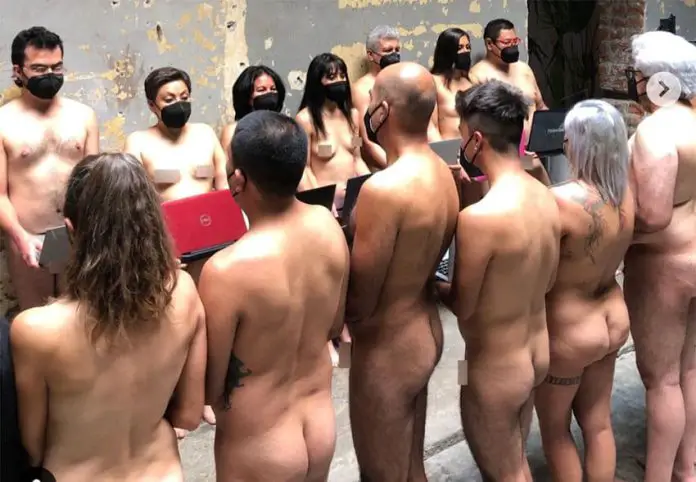
Participants at this week's photo shoot in Mexico City.
Participants at this week's photo shoot in Mexico City. Spencer Tunick/Instagram

Fifteen years after he photographed some 18,000 naked people in Mexico City’s central square, United States photographer Spencer Tunick returned virtually to the capital this week to conclude his pandemic project “Stay Apart Together.”

While he is known internationally for his large-scale nude shoots, Tunick’s latest Mexico City project was a more intimate affair.

Via Zoom, the 55-year-old photographer directed a two-day shoot of some 50 unclad subjects who gathered at a cultural center in the inner city neighborhood of Juárez. Alonso Gorozpe, a creative producer, coordinated the project on the ground.

Over half the participants – chosen from some 300 people who expressed interest in joining the sessions held Monday and Tuesday – indicated that they participated in Tunick’s 2007 shoot in the zócalo, as the capital’s central square is known.

According to the newspaper La Jornada, one of the most striking scenes directed by Tunick from his New York state home involved the participants running out of the cultural center with open laptops in their hands. They removed their face masks in an “act of liberation” as they exited into the open air, the newspaper said.


View this post on Instagram


A post shared by Spencer Tunick (@spencertunick)

The aim of the Mexico City shoot, and the “Stay Apart Together” project of which it is part, is to document human response to the coronavirus pandemic, including people’s capacity to adapt to new experiences such as enforced isolation.

Tunick completed some 50 virtual photography sessions for the project, with participants joining the shoots from locations around the world.

The Mexico City shoot was the first one in which the participants were together rather than in their own homes. The images and footage shot over the past two days could be featured in a documentary about the project that is currently being made.

In addition to his zócalo shoot, Tunick has photographed nude subjects in San Miguel de Allende and Tulum. He captured 100 women wearing nothing but garlands of marigolds in the Guanajuato colonial city in 2014 and 20 unclothed people standing on their heads in the same city in 2016.

During a holiday in Tulum in 2018, Tunick decided to make use of the abundant quantities of sargassum on the beach, photographing some 25 naked people as they crouched in masses of the seaweed.

The photographer said after his 2007 zócalo shoot that “Mexicans are very open-minded” about baring all for the camera. He told those who participated in this week’s shoot that he would like to return to Mexico to work as long as he has a worthwhile project to work on.

With reports from La Jornada 

Government unveils 6-month, production-focused anti-inflation plan

0
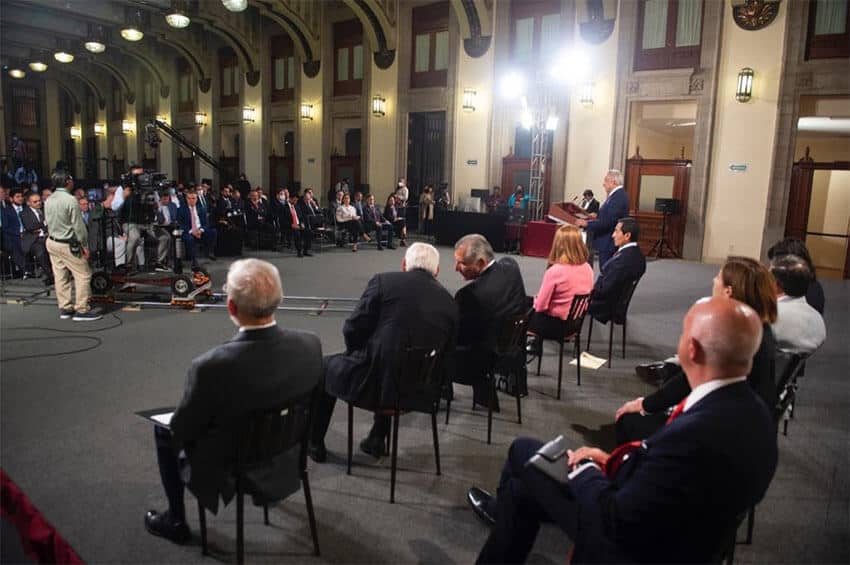
There was a big turnout of private sector representatives
There was a big turnout of private sector representatives for Wednesday's announcement of the plan to fight inflation.

The federal government on Wednesday presented a six-month plan to curb inflation without resorting to price controls.

President López Obrador announced that the government has reached an agreement with the private sector to ensure fair prices for 24 products in the canasta básica, a selection of basic foodstuffs including beans, rice, eggs and sugar.

“A decision was taken to act on food-related issues, convincing, persuading, calling on producers, distributors and retailers to act together [with the government], without coercive measures. It’s not about price controls, it’s an agreement, an alliance to guarantee that the canasta básica has a fair price,” he told his morning news conference.

Without being subject to price controls, the agreement seeks to keep a lid on the prices of products such as cooking oil, tuna, beef, chicken, onions, milk, potatoes, toilet paper and tortillas. It could be renewed if inflation remains high at the end of the year.

Inflation hit a 20-year high of almost 8% in the first half of April.

Finance Minister Rogelio Ramírez de la O revealed a range of other measures that are part of the anti-inflation plan, which seeks to boost production of staple foods and stabilize fuel prices, among other measures.

“We’re now proposing an increase in the production of grains, … [the plan] is focused on corn, beans and rice,” Ramírez said, adding that the government will establish a strategic reserve of corn.

Among the other measures he outlined were an embargo on highway toll increases and the removal of tariffs on a range of imports including many basic products.

The finance minister also said that Carlos Slim – Mexico’s richest person and the owner of telecommunications companies Telmex and Telcel – had committed to not raising internet prices this year. López Obrador said Slim also committed to not increasing the cost of telephone service.

Liliana Mejía Corona, an executive with baked goods company Grupo Bimbo, told the president’s press conference that the price of white bread wouldn’t go up this year, while Alberto Manuel Sepúlveda, a Walmart executive, said that supermarket chains were committed to working with the government to curb inflation and promote citizens’ wellbeing.

Representatives of many other retailers as well as food producers and business organizations attended the press conference in a show of support for the anti-inflation plan.

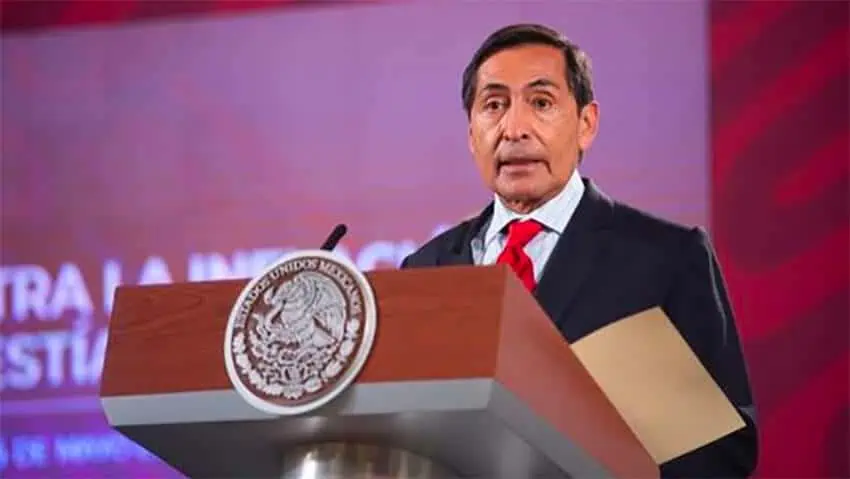
Finance Minister Ramírez
Finance Minister Ramírez said an embargo on highway toll increases is among the measures in the anti-inflation plan.

Ramírez said the government’s expectation was that the plan would have a rapid impact on the prices of canasta básica products. Farmers’ efforts to boost production will be supported by the government’s provision of fertilizer and other incentives.

“We believe that [increasing] supply and the reduction of costs stimulates the competitiveness of the [agriculture] industry,” Ramírez said.

“… We think that we’re going to have a rapid impact on … the price of the canasta básica, that’s the objective,” he said.

With regard to the plan’s six-month duration, the finance minister remarked that it was unclear how long international pressure on prices would last but stressed that the government is giving itself time to hold further dialogue with companies and deal with shortages of certain products.

López Obrador emphasized that the government is “doing something” rather than “standing idly by,” asserting that the anti-inflation plan will help drive inflation down but other measures must be taken as well.

He thanked the private sector for its willingness to collaborate with the government for “the good of our people and country” and addressed the possibility of the central bank increasing its benchmark interest rate – currently 6.5% – due to the high levels of inflation.

An interest rate rise wouldn’t be a good thing for the country, López Obrador said, before stressing that he will be respectful of any decision the Bank of México makes.

“Of course the Bank of México is autonomous, they have to decide and we’ll be respectful of the [bank’s] autonomy … but the less interest rates rise the better so there is investment and we have economic growth. If there is economic growth, there’s employment. If there’s employment, there’s wellbeing. If there’s wellbeing, there’s peace and tranquility,” he said.

With reports from Reforma and Milenio

Government urged to condemn Nazi-themed wedding

0
nazi wedding
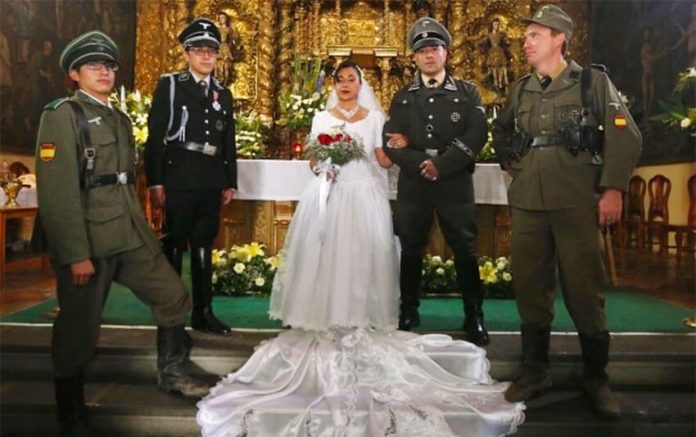
The bride and groom, allegedly a fan of Holocaust architect Reinhard Heydrich, at their wedding in Tlaxcala.

A Jewish human rights organization has urged the federal government to condemn a Nazi-themed wedding that took place in Tlaxcala last Friday.

The Simon Wiesenthal Center said it was outraged by the wedding, which was held in a Tlaxcala church on the 77th anniversary of the date Adolf Hitler tied the knot with Eva Braun.

The center said in a statement that the bride wore a wedding dress with a swastika and the groom was dressed as a Nazi SS officer. In one photo, the bride, identified only as Josefina, sits atop a Volkswagen beetle draped with a Nazi flag. Her new husband, identified as Fernando, stands beside the vehicle.

Shimon Samuels, director for International Relations of the Wiesenthal Center, questioned why the federal government has not denounced the wedding in Tlaxcala, Mexico’s smallest state.

“Mexico has voted for the United Nations resolution that condemns the distortion of the Holocaust and all forms of racism. … It also has exemplary state agencies such as Conapred [the National Council to Prevent Discrimination]. However, there have been no reactions by the state or human rights organizations condemning this outrage. … We expect Mexican authorities to take appropriate measures,” he said.

Nazi flag adorns the newlyweds' Volkswagen Beetle.
Nazi flag adorns the newlyweds’ Volkswagen Beetle.

Ariel Gelblung, the Wiesenthal Center’s Latin America director, said the organization “strongly condemns the distortion and trivialization of the memory of six million Jews murdered in the Holocaust.”

“… Mexico must adopt the International Holocaust Remembrance Alliance definition of antisemitism and incorporate it into its legislation to prevent such hateful behavior,” he said.

According to the Wiesenthal Center’s statement, the groom idolizes Reinhard Heydrich, an SS chief considered a principal architect of the Holocaust. He and his wife have a son called Reinhard and a daughter called Hanna Gertrud, named after Nazi pilot Hanna Reitsch and Gertrud Schotlz-Klink, leader of the National Socialist Women’s League in Nazi Germany

The newspaper Milenio reported that Fernando is a public official, but didn’t say which government he works for.

He told Milenio that he and his wife would have waited until next year to get married if they were unable to find a church that was available on the anniversary of Hitler’s 1945 marriage. Fernado said he and his wife were married in a civil service on April 29, 2016, in Ecatepec, México, where they live and belong to a club whose members reenact wartime events.

Josefina told Milenio that she didn’t know much about the history of Nazi Germany until she met her husband. “I support him because I have a responsible husband,” she said.

Fernando openly admitted that he admires Hitler, who committed suicide alongside Braun the day after they were married.

“I know that for a lot of people Hitler is genocidal, a symbol of racism and violence. But people judge [him] without having information or because they believe in the history of the victors,” he said.

“Hitler was a vegetarian, got his country out of extreme poverty and returned territory lost in the First World War to his people. His people loved him,” he said.

With reports from AFP and Milenio

Mexico, US agree on plan to divert commercial border traffic away from Texas

0
Marcelo Ebrard and Alejandro Mayorkas
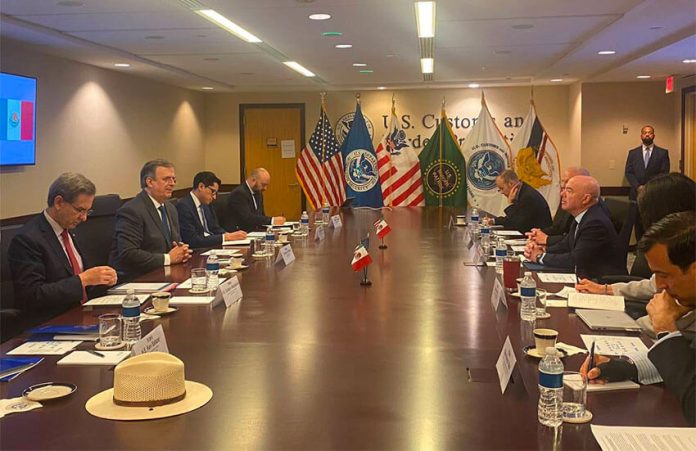
Marcelo Ebrard and Alejandro Mayorkas meet Tuesday in Washington.

The Mexican and United States governments have agreed to divert some northbound cross-border traffic away from Texas to New Mexico in retaliation for the strict vehicle inspection program implemented by the Lone Star State last month.

Some traffic will be diverted to the border crossing between San Jerónimo, Chihuahua, and Santa Teresa, New Mexico.

The crossing, located about 70 kilometers south of Las Cruces – New Mexico’s second largest city – and approximately 25 kilometers west of El Paso, Texas, is set to be expanded to cope with increased commercial vehicle traffic.

The decision to divert some traffic to that crossing was taken Tuesday during a meeting between Foreign Affairs Minister Marcelo Ebrard and United States Secretary of Homeland Security Alejandro Mayorkas in Washington. It will take months to implement, the newspaper Milenio reported.

Ebrard said on Twitter that he spoke to Mayorkas about “new infrastructure for the border with New Mexico in San Jerónimo-Santa Teresa to facilitate binational transport.”

Mexico’s ambassador to the United States, Esteban Moctezuma, and the U.S. ambassador to Mexico, Ken Salazar, were among the other officials who attended the meeting.

Milenio said it was informed by diplomatic authorities that the final decision to expand the New Mexico border crossing was taken after reaching the conclusion that Mexico couldn’t trust Texas as a trade partner.

In early April, Governor Greg Abbott – who claims that the U.S. government isn’t doing enough to secure the border with Mexico – directed Texas authorities to conduct more thorough inspections of all commercial vehicles crossing into the state from Mexico in order to detect drugs and migrants trying to enter the U.S. illegally.

The more stringent vehicle inspection program, which lasted about a week, caused long delays for truckers trying to cross into Texas and generated huge economic losses. It was suspended after Abbott reached agreements with governors of four Mexican border states, who committed to enhancing security measures on the southern side of the border.

Ebrard accused the Texas governor of extortion for his negotiation methods with the governors of Tamaulipas, Nuevo León, Coahuila and Chihuahua, saying that Abbott had attempted to blackmail them, instead of looking for compromise.

“It’s extortion. Closing the border and forcing you to sign whatever I say. That’s not an agreement, an agreement is when you and I agree on something,” he said.

To reduce Mexico’s reliance on border crossings with Texas for the export of products to the U.S., authorities are also considering the possibility of a rail link to the New Mexico border.

“I don’t think we’re going to use Texas any more,” Economy Minister Tatiana Clouthier said last week, referring to a proposed rail link to connect Mexico’s Pacific coast to the northern border via the Bajío region, a manufacturing hub.

“We’re going to seek a [rail] connection to New Mexico because we can’t put all our eggs in one basket and be held hostage by someone who wants to use trade as a political issue,” she said.

President López Obrador accused the Texas government of acting against the principles of free trade in implementing a stricter vehicle inspection program. The measures introduced were “completely contrary to free trade” and amounted to “chicanery” on the part of Texas, he said last month.

“Legally they can do it but it’s really despicable,” López Obrador said. “… Why do they do it? I believe that the governor of Texas aspires to be the Republican Party candidate,” he said, apparently referring to the U.S. 2024 presidential election.

Abbott is already in the race for November’s election to elect a new governor in Texas after winning the Republican Party nomination in April. He is currently serving his second term as governor.

With reports from Milenio